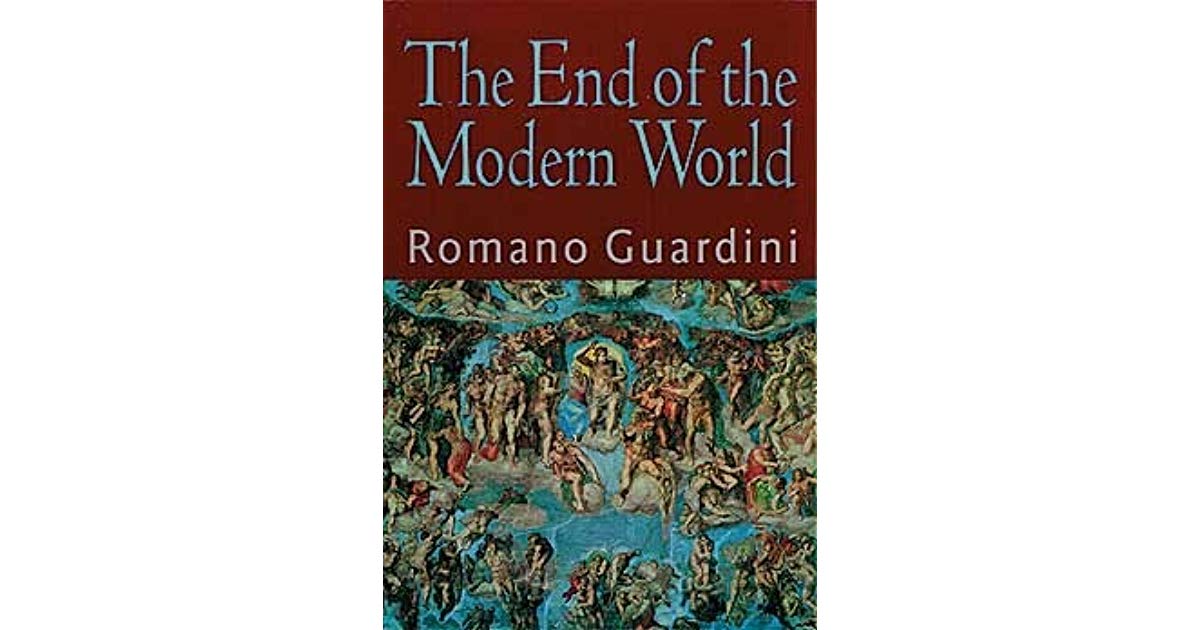
As we quickly exit Advent and even more quickly approach the 12 days of Christmas, I can’t help but think of one of my favorite writers, the Italian-German Romano Guardini, on the meaning of time and the Incarnation.
The world, time, history had begun with Creation; they reached apotheosis in the Incarnation of the Son of God-“the fullness of Time”-and all shall end with the destruction of the world and the Last Judgment. . . . [as such], each moment of time was etched against the sweeping panorama of history. Each present moment gained its uniqueness from the impact of the Incarnation with marked the piercing of time itself by eternity. —The End of the Modern World
May we never take for granted that the “fullness of time” reached its culmination and happened tonight, two thousand years ago, when a humble Jewish mother gave birth to the Son of God. Not in a palace, but in a dung-filled manger, surrounded by the most humble. Thus came our Lord.
A spotless Rose is growing, Sprung from a tender root, Of ancient seers’ foreshowing, Of Jesse promised fruit; Its fairest bud unfolds to light Amid the cold, cold winter, and in the dark mid-night.
The Rose which I am singing, Whereof Isaiah said, Is from its sweet root springing In Mary, purest Maid; For through our God’s great love and might The Blessed Babe she bare us In a cold, cold winter’s night.
“O Herbert, that cadence to A Spotless Rose is not merely ‘one of those things’. Brainwave it certainly is, but it is much more than that. It is a stroke of genius. I should like, when my time comes, to pass away with that magical cadence.”
The O Antiphon for the Magnificat at Vespers on December 23:
O Emmanuel, our king and our Lord, the anointed of the nations and their Savior: come and save us, O Lord our God.
Healey Willan (1880-1968), professor at the Royal Conservatory of Music in Toronto and organist at St. Mary Magdalene Church in the same city, composed a setting of The Great O Antiphons of Advent for the Lutheran Church-Missouri Synod’s Concordia Publishing House in 1957. Here’s Willan’s setting of “O Emmanuel,” as sung by the choir of Christ Church Cathedral in Vancouver, British Columbia:
O come, O come, Emmanuel, And ransom captive Israel, That mourns in lonely exile here Until the Son of God appear.
Rejoice! Rejoice! Emmanuel Shall come to thee, O Israel!
“Behind all these things is the fact that beauty and terror are very real things and related to a real spiritual world; and to touch them at all, even in doubt or fancy, is to stir the deep things of the soul.” (pg. 108)
“These are the myths: and he who has no sympathy with myths has no sympathy with me. But he who has most sympathy with myths will most fully realise they are not and never were a religion, in the sense that Christianity or even Islam is a religion. They satisfy some of the needs satisfied by a religion; and notably the need for doing certain things at certain dates; the need of the twin ideas of festivity and formality. But though they provide a man with a calendar they do not provide him with a creed.” (pg. 109)
“But in reality the rivers of mythology and philosophy run parallel and do not mingle till they meet in the sea of Christendom. Simple secularists still talk as if the Church has introduced a sort of schism between reason and religion. The truth is that the Church was actually the first thing that ever tried to combine reason and religion. There had never before been any such union of the priests and the philosophers. Mythology, then, sought God through the imagination; or sought truth by means of beauty.” (pg. 111)
–G.K. Chesterton, Everlasting Man (Ignatius edition).
I’m sure that many of you well remember that jazz master, Dave Brubeck, died six years ago this month. I always liked him when I was alive, but I’ve certainly got to know him and his art much better since he passed onto the heavenly realm.
Given his extraordinary creativity and his equally extraordinary defense of the humane (especially against racism in the 1950s), I wonder if it’s time we start looking into the possible canonization of Brubeck.
While I have no idea if there are miracles associated with this life, I do know that the man lived and breathed a tangible grace in all that he did. And, not too surprisingly, he found his way into the Catholic Church, adding to an already stunning list of converts over the past century.
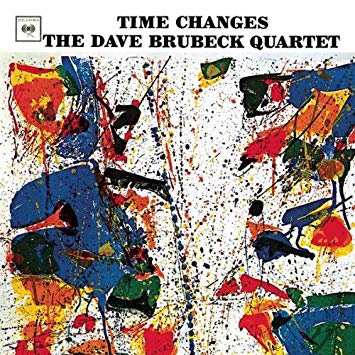
One of my single best purchases over the past year was of the boxed set of his five albums dealing with time, FOR ALL TIME, capturing his recordings from 1959 to 1965. It includes Time Out, Time Further Out, Time In, Countdown, and Time Changes. Unquestionably, his most famous album is the 1959, Time Out, fearing “Take Five.”
Yet, for me, the best album is his truly experimental, Time Changes. I suppose it’s the prog rock inside my soul, but the second side features only one song, the 16-plus minute “Elementals,” a piece that is equal parts classical composition and jazz. I simply can’t get enough of it.
When I listen to it, I feel as though I’m living inside a sacrament. It is just so utterly and deeply graceful.
God definitely touched the soul of Brubeck with something special, and I believe we would be fools to dismiss that gift to Brubeck and, ultimately, to ourselves.
St. Brubeck? Maybe. Let’s ask and find out.
Addendum (found after posting this piece). Brubeck’s agent tried to get him to replace Eugene Wright (a black American) with a white American. Brubeck who had been supporting black musicians since World War II adamantly refused. “Dave refused; the tour was cancelled at a great financial loss; but Dave’s message was clear“–reads a letter from his agent.
I must admit, I’ve been a bit stunned by the negative reaction to President Trump’s announcement of troop withdrawal from Syria. I’ve never been a Trump supporter, but I also wish him and the country well. It’s quite possible that this withdrawal is a bad idea for all involved. Two men I respect immensely–John Zmirak and Eric Metaxas–have been writing this on twitter over the last 24 hours.
There are three terrible problems, though, that the United States has simply not come to grips with. First, we’ve not been in a constitutionally-sanctioned war since 1946, when Congress announced the end of our involvement in World War II. And, second, deeply related to the first, we’ve turned all of our war-making abilities over to the Executive, in direct violation of the letter and spirit of the Constitution. And, finally, third, we’ve been in almost constant war since President Bush’s invasion of Iraq in early 1991.
I’m no pacifist, and I believe war is often inevitable and necessary in this world. Yet, there’s a very good reason why the Founders placed the war-making ability in the hands of Congress, not in the hands of the Executive. If we go to war, it must be because the American people has a whole have decided that we must be at war. We should never take the killing of another–no matter how foreign–lightly. We must wrestle mightily with such decisions. We have avoided all such decisions since 1946.
I’m also aghast at how many people turned a blind eye to Obama’s atrocities abroad but now see Trump’s *reduction* of our presence abroad as a horror for all involved.
Zmirak and Metaxas might very well be right–that we should be in Syria.
If so, those who believe such should make the case to the entire American people, and declare it to the world. As it is, the pro-war forces have had their way for the past 27 years, and I’m tired of it. Very, very tired of it. The pro-war forces are, for all intents and purposes, the boy who cried wolf.



 Spirit of Cecilia
You must be logged in to post a comment.