Roger Simon is a retired Hollywood screenwriter and novelist. I’ve read his previous novel, TheGOAT, about an older man who makes a deal with the devil and becomes the greatest tennis player of all time. It’s very funny and thought-provoking at the same time.
His recently released book, Emet, is more serious. It’s a thriller/fantasy tale told through the eyes of a rabbi, Benjamin Golub. He lives in Nashville, TN, and is a rabbi for a synagogue there. As a fellow Nashvillian, I really enjoyed Simon’s references to real-life locations in our city, as well as his accurate representation of its culture.
One day in 2023, a tornado rips through Nashville, and Benjamin goes to his synagogue’s storm shelter. Also sheltering with him are his wife, Maya, their tweenage grandson, Menahem (Max), and good friends Ed Ristic and Tamara Klein. Tamara is grieving the death of her 23-year-old niece, Allison, who was brutally murdered while out jogging. She blames herself, because she urged Allison to come visit her in Nashville after a difficult breakup. Ed runs a coffeeshop, The Orphanage, and has befriended Tamara. He also fancies himself as a sculptor.
The morning after the tornado blows through, they go outside to take stock of things. The backyard of the synagogue is a mess of fallen trees and mud. Ed has already been there, shoveling mud away from the back wall, and he has created a big pile of mud that is vaguely humanoid. Ed jokes that he could make a statue out of it. Maya reminds Benjamin that it looks like a statue they saw in Prague of a Golem – a mythical being that was brought to life by a Rabbi Loew around 1600. He took some inanimate materials to fashion a humanoid and engraved the word Emet on its forehead, which means “truth”. The legend is that Rabbi Loew used the Golem to protect the Jews living in Prague from pogroms, but it soon got a mind of its own and ended up causing more harm than good.
Max, who is a mathematical and technological prodigy, is fascinated by the story. He is staying with his grandparents, because he got in trouble in school and was suspended.
He had responded to a teacher asking what his pronouns were with “I identify as a donkey. He/haw.” Some of his classmates laughed, but the teacher didn’t think it was funny, and things went south from there.
Simon, Roger. EMET (pp. 32-33). Green Hills Books. Kindle Edition.
Later that evening, unable to sleep, Benjamin gets up and goes out to look at the pile of mud Ed made. You can guess what he does next: he takes a stick and engraves Emet where it looks like a forehead is.
Imagine a black scientist discovered a way to turn black people into white people. What would happen to American society? That is the premise of George Schuyler’s 1931 novel, Black No More. It is very funny and very disturbing at the same time, portraying the extreme racism of early 20th century America in all its horror and absurdity.
This month, (almost) unbelievably, marks 25 years of Burning Shed.
We’d like to issue a heartfelt thank you for your support over the many years and provide some insight into the company and what our plans are for this anniversary year.
‘The Shed’ emerged out of an idea Tim Bowness had for an idealistic online / on-demand label. Peter Chilvers – one of Tim’s musical partners – was experienced in the then mysterious world of e-commerce. Pete Morgan, the final piece of the Burning Shed jigsaw, was running Noisebox, a record label and duplication company (that dealt with releases by Tim and Steven Wilson’s band No-Man).
Over several intense gatherings (fuelled by eggs, chips, beans and the milkiest of coffees), a plan was hatched. After six months of trying to convince a bank that the notion of selling CDs from a website wasn’t witchcraft, that plan was in motion.
Tim brought in the music, Peter created the coding and Pete ‘The Morganiser’ took charge of logistics.
Initially, the idea was to issue elegantly packaged, cost-effective CDR releases – designed by Carl Glover – that allowed artists to experiment and, crucially, generate a little income from their endeavours.
Luckily, the first releases – including albums by No-Man, Bass Communion, Roger Eno and Hugh Hopper – proved to be more successful than anticipated and Burning Shed rapidly evolved. Soon the CDRs became CDs and via word of mouth the company was hosting official stores for artists and labels including Robert Fripp / King Crimson, Stewart & Gaskin / Hatfield & The North, Jethro Tull, XTC, KscopeRecords and many others (including, of course, No-Man and Porcupine Tree).
Peter Chilvers left in 2008 to work with Brian Eno, but Tim and Pete persisted, building the company up. 25 years on, the Shed is driven by the same instincts as it was at the very beginning.
As a “run by artists for artists” company, we try and ensure that the musicians and labels we deal with receive as much money as they can and that deals and accounting are transparent. There are no hidden costs or binding contracts. The idea has always been to release and help globally distribute great music at reasonable prices in the best way possible (to make sure it arrives in perfect condition and on time).
To celebrate our 25th anniversary, from April until next March we’ll be bringing you special releases, merchandise and giveaways including more raffle winners each month.
We’re also putting on a number of events throughout the year, starting with three co-headline gigs by Tim Bowness with Butterfly Mind plus Bruce Soord & Jon Sykes(The Pineapple Thief):
Sun 24 May – Liverpool, Philharmonic Music Room Fri 29 May – Bath Fringe Festival at Rondo Theatre Sat 20 June – London, The 100 Club
Looking forward, we’re in a much more complicated world. When we started, it was relatively easy. Shipping involved a jiffy bag, a label and a stamp. Selling online is now more complex, with electronic customs declarations, tariffs, Brexit, GPSR, GDPR, etc etc. From operating out of the corner of Pete’s office at Noisebox, we now have a warehouse and a truly superb team of people making sure everything runs smoothly.
None of this would have been possible without the support of all the artists and labels we have worked with over the years. Most importantly, it would not have worked without you, our customers.
We know there are many other places to buy music from, so that makes it all the more special that you continue to order from us. Some of you have been with us since the very beginning, some of you have just found us. We are extremely grateful to every one of you, old and new.
I have lived in Nashville, TN, practically all of my life. My parents moved here from Milwaukee, WI, when I was less than a year old. My father was hired in 1961 by Vanderbilt University to start up its Materials Science Department in the Engineering School. Even though I could consider myself a “native” Nashvillian (especially when you take into account the thousands of California refugees that have moved here recently), I have never felt like I am truly am one. It’s a cliche that Nashville is a “big city with a small town feel”, but it’s true. There’s a relatively small circle of everyone who’s anyone, and they all know each other. Still, I managed to keep up with local politics and society gossip through reading the two newspapers, The Tennessean and The Nashville Banner.
Crockett White is a former reporter for The Tennessean, and he obviously spent his career learning all about Nashville’s prominent families’ skeletons in their closets. He utilized that inside knowledge to write West End, a thinly-veiled fictional account of John Jay Hooker’s run for senate in the early 70s. Hooker was a gifted politician who truly had charisma. That word gets thrown around a lot, but very few humans possess it. Hooker had it – even his political opponents acknowledged his gift for connecting with and inspiring practically every person he came in contact with.
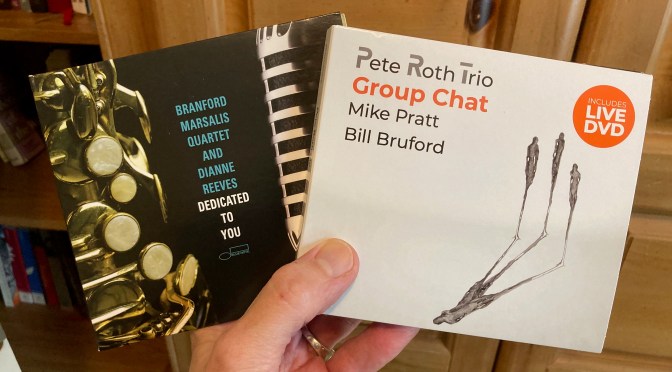
Hitting the St. Cecilia Music Center stage 20 years on from his last visit (and 40 years on from when I first heard him live with his brother Wynton, then with Sting), sax legend Branford Marsalis seemed relieved to have safely made it to Grand Rapids, just one night after two shows further north in snowbound Traverse City. (“Turned right at Cadillac and — whoa!! Where’s Santa?!?”)
But any fear that Marsalis’ tight quartet had been shaken by their brush with a spring blizzard soon vanished; loose and comfortable as their leader teased drummer Justin Faulkner about being the “birthday boy”, they were also focused and ready to play. With a flourish, pianist Joey Calderazzo launched into his postbop workout “The Mighty Sword” — and instantly, the band was in the moment, bringing the sold-out audience with them. Off the knotty head statement, Calderazzo built a two-handed solo to a simmering climax (both his legs were moving, too) that Branford took higher with volcanic soprano licks; meanwhile bassist Eric Revis pushed the pulse onward as Faulkner rolled and tumbled around and across his kit. On the edge of fully free expression, yet always locked into the underlying groove and listening hard to each other, the Quartet’s interplay was riveting and undeniable.
Keith Jarrett’s “‘Long As You Know You’re Living Yours” was up next. A funky highlight of Jarrett’s 1974 album Belonging(which the Quartet covered in full last year for Blue Note), it brought out a rambunctious streak in Branford, progressing from rhythmic subtones to frenetic sheets of sound; Calderazzo answered with deft, deeply swinging gospel. Which then dramatically transitioned into the rich lyricism of his “Conversation in the Ruins”, as both he and Marsalis took wing above Revis and Faulkner’s subdued, flickering rhythms.
Then, the history lesson. With Branford namechecking songwriter Fred Fisher (born Alfred Breitenbach in Germany before he emigrated to the USA), the Quartet timeslipped back to the primal years of jazz with “There Ain’t No Sweet Man That’s Worth the Salt of My Tears” (made famous by bandleader Paul Whiteman with Bix Beiderbeicke on cornet and Bing Crosby singing). Everyone soloed to powerful effect — Marsalis crooning on soprano, Revis gracefully, purposefully walking the bass, Faulkner delighting with a dynamic feast of accents and colors. It was only later that I realized: as bland, as polite – even as patronizing – as this music seems in retrospect, 100 years ago, it was on the cutting edge of American pop culture. Why not take it out for a spin today and see what happens?
“Why not?” turned out to be the throughline of everything the Marsalis Quartet did onstage, always leavened with affection for and attention to the music’s potential and each other. As the night went on, the crowd tuned into it, too: how Jarrett’s melancholic “Blossom” was elevated by Rives’ rhapsodic feature and Calderazzo and Branford’s insistent quotes from “Happy Birthday to You” (said one-upmanship bringing hysterical guffaws from Faulkner); how, nudged by the group’s thoughtful probing, Jimmy McHugh’s “On the Sunny Side of the Street” morphed from a hesitation shuffle through stop time to flat-out rock and back again.
And then, coming to an impasse onstage, Marsalis and Calderazzo asked the audience for multiple shows of hands : “Monk or Ellington?” (Branford after that vote: “Ellington wins. Ellington always wins.”) “Up or down?” (Up.) Which yielded a loping, speedy “It Don’t Mean A Thing (If It Ain’t Got That Swing)” as the last tune — and, announced as for the benefit of the “young musicians” from local high schools in the audience, a downtempo take on the same tune as the encore! Both ways, Branford smoked, Calderazzo swung, Rives flowed — but each drew on varying parts of their vocabulary, to vastly different effect. Though working in the same vein, Faulkner well and truly went to town throughout; his creatively minimalist solo choruses for the encore (first brushes on snare with quarter-note kicks, then entirely on floor tom, ranging from warm caresses to rim cracks to meaty thuds) proved an enticing riot of colors and syncopations. The standing ovations that followed each version were both earned and inevitable.
This lineup of the Branford Marsalis Quartet has worked together for more than a decade. As friend and fellow blogger Cedric Hendrix has observed, that’s rare in jazz circles; the consistent result, whether on record or live, is spectacular internal chemistry – which in turn provides extraordinary opportunities for the music to truly breathe, scaling ever-increasing heights of freshness, invention and resonance. To witness all that, generated by four masters at play, bringing a century’s worth of music to spectacular, technicolor life — well, it’s an experience I’m glad I shared with 600 + others last night!
Last year I read George Eliot’s Middlemarch and very much enjoyed it. It has a deserved reputation of being one of the greatest English novels ever written. So, I decided to start at the beginning of Eliot’s career and read her first novel, Adam Bede. It’s not as good as Middlemarch – very few novels are – but it is quite entertaining in its depiction of English rural life at the turn of the nineteenth century.
The English Department at the school where I teach has a Writer In Residence every year: an author spends 3 – 4 days guest teaching English classes and then speaking to the upper school students at an assembly. This year’s writer was Kevin Wilson, a literature professor at the University of the South in Sewanee, TN and author of several bestsellers, including The Family Fang and Baby, You’re Gonna Be Mine.
In his talk at the assembly, Wilson spoke of his terror of public speaking and how difficult his adolescence was due to his having Tourette’s Syndrome and social awkwardness. However, he managed to turn these personal obstacles into one of the most entertaining and inspiring speeches I’ve ever heard. He had everyone in the auditorium laughing hysterically one moment and wiping away tears the next. When I got home, I told my wife about how great Wilson was, and she said she thought she had recently bought a book of his. Sure enough, she Nothing to See Here in her stack of books to read; she had picked it up on the recommendation of her brother, who raved about Wilson.
Which is a long way of explaining how I ended up reading (and loving) a book I probably never would have been aware of. Readers of this blog have probably figured out that my tastes lean to nonfiction (history, science and technology), mysteries, and classics (especially Victorian literature). I am grateful that a confluence of events led me to Kevin Wilson’s work.
Nothing to See Here is told through the eyes of Lillian Breaker, a young woman who is a cashier at a small-town grocery store in Tennessee. She is very bright, but due to several circumstances beyond her control, she is at loose ends – living in her mother’s attic, smoking pot, and generally wasting her life. Her mother doesn’t really care about Lillian, having a succession of boyfriends, and living from paycheck to paycheck.
What if “Magick” was an accredited science with the most prestigious universities offering courses of study in it? What if Dante, Orpheus, Virgil, et al. really did descend to Hell, and their writings were nonfiction accounts of their experiences? What if T. S. Eliot’s The Wasteland was a travelogue of a real place? Those are the assumptions behind Rebecca Kuang’s enormously entertaining novel, Katabasis.
Cambridge University’s most renowned professor of magick, Jacob Grimes, has died accidentally in a spell gone horribly awry. His two most promising and dedicated graduate students, Alice Law and Peter Murdoch, decide to go to Hell to bring him back. Unbeknownst to each other, they each consider themselves responsible for Professor Grimes’ death. On earth, they have been bitter rivals for Grimes’ attention and favor. Down below, they have to figure out how to work together as they traverse the eight courts of Hell. Based on my description, I admit Katabasis sounds like a young adult fantasy novel. However, it is definitely written for an adult audience, and Kuang’s story gets very dark, very fast.
A former student, Chuck, just posted his favorite albums from 2001. I must admit, of his list, I only knew one of the albums, Dave Matthews Band’s EVERYDAY. Inspired by Chuck, though, I decided to look back over the years from this year. Here’s what I found. Let me know what I’m missing.
[Dear Spirit of Cecilia Reader, greetings! This is the second part of an interview I conducted with the mighty Greg Spawton. Yes, I love the man–as a friend, as an inspiration, and as an artist. Most of this part of the conversation revolves around Greg’s role in the band, the future of the band, and the relationship with InsideOut/Sony. Part III will deal with Woodcut. As you can see, Greg is a man of impeccable integrity, always trying to better himself and those around him. Please enjoy. By the way, if you’re looking for The Spawton Files, Part I, click here. Yours, Brad]
Brad: So let’s switch topics for a moment. I’d like to look at a broad topic, for a moment, a meta topic. You know, as I look back over the long history of Big Big Train, in a lot of ways, I mean, you are obviously the steady character of the band. You’re the still point, to use a T.S. Eliot image. Everything revolves around you. You’re the monastery and everything—all of time—is passing around it in some way [a reference to Walter Miller’s Canticle for Leibowitz]. So, I’m curious, do you still see Big Big Train as a band or do you see it as a project? You and I are both getting up there in age. Do you see BBT continuing some day when maybe you’re not involved?
Greg: That’s really a good question. It’s interesting because it started as a band and then it became a project really especially when it was me and Andy and bringing in who we could to help us finish off what we were doing. So in the kind of mid-period, we were a band. And then when David joined and Nick DVG and Rickard and we got the sort of steady lineup from 2009 from the Underfall Yard album and then started playing live again. It went back to being a band, you know. So it’s been a sort of circular process, really. If anything it’s got even more that vibe now because, of course, we become a proper touring band on a tour bus and all those things. So it is very much the rock and roll lifestyle that I used to read about in books. It’s, you know, the whole Spinal Tap thing; it’s absolutely like a documentary, but it is so much real life, too. So we’ve experienced all these things. So it’s very much a band now.
And of course, I lost, as you know, David a few years ago, and he was my brother in music, really. So that was an incredibly sad and destructive moment to lose him. When I think back on it, if we hadn’t chosen Alberto as our new lead singer, I don’t think anything else would have worked. I think we just happened to get the right guy to actually help me carry this forward because I’m 60 now. And I’ve been doing this a very long time. I remember when we were we were recording Woodcut in the US. With his energy—he’s 20 years younger than me—and his energy to be able to produce and run those sessions, whereas I was sort of watching, thinking I used to be that guy, you know. I used to be that guy, and I think as you get older, the level of your ability to stay on these things becomes slightly diminished, I think. So I need more help. Alberto is the right guy in the right place at the right time. So, we’re already thinking about the album after Woodcut, and that’s how it has to be in the music business.
Brad: You’re already thinking quite a long way ahead.
Greg: I see myself on a tour bus in 10 years time? I don’t know. I mean, I think it depends on some commercial realities here. So if the band continues to grow and is commercially successful enough to warrant touring, yeah, I think I probably could if I’m well enough. I enjoy the lifestyle, so I think I would want to continue to do that.
Would the band continue without me? Weirdly enough, I could see it happening now. In one way, I’m just a bass player and one of the songwriters. So, you know, in one way it’s easy for me to be replaced, but in other ways, as you said, Brad, I’ve been kind of the guy, the old man in the band, and the guy that’s been there from the start. So I don’t know the answer. I think we’d have to see. But I hope to be continuing to do this. The fire hasn’t diminished. I’m still burning with this and I still think we’ve got a lot to offer, andI’m very conscious that bands in the later stages of their career often start writing some albums that are less strong. There are some exceptions to this, like Marillion, for example. But there are many others where the bands and the albums are not quite as good. The fire that drove them early on is gone.
And I don’t feel that way for us. I think Woodcut’s a strong album and the album we’re going to work on after that, I think, has also got the potential to be very strong.
As long as I feel that we’re making good stuff, I want to carry on doing it. But that’s only if we can keep offering good music. I want to keep doing it.
Brad: That’s excellent Greg. That’s exactly the answer I was hoping you would give and, frankly, it’s one of the reasons I’ve liked you for so long. I know that you’re always trying to improve your art, and I just think that’s so critical. I just turned 58, and I understand completely how these things work. In some weird way, I actually feel I’m at the top of my game right now, even though I don’t have quite the energy I did 20 years ago. I just finally feel like I know what I’m doing. You know, when I go into the classroom or when I’m writing, there’s a certain confidence that I have. I had energy 20 years ago, but I didn’t have quite the confidence I have now.
Greg: that’s a really good point that actually. I feel exactly the same. I feel it when I go on stage now. I know the ropes, and I’m pretty much in command of things. When things go wrong, as they do, we just get through it.
You know, the band has a very settled lineup now. We get on well on the tour bus, all those things. That’s really important as the bands I read about where there’s a sort of simmering dislike or hatred amongst some band members. Having to spend 24 hours a day with that person that you fallen out with would be horrible. I’m too old for that. On the tour bus, we’ve got a very good idea if someone’s not feeling great today. If someone’s tired, give them some space, you know, just all the things that make sort of family. Maturity, you’re absolutely right, Brad. Maturity, I think, brings those things to you.
Brad: Yeah, yeah [I say in awe and humility!].
On another topic. I don’t know how much you can talk about this because I’m sure part of this is confidential. But what did InsideOut do for you guys? How does it change the band now that you are with a major label. How much autonomy do you still have for English Electric?
Greg: it turned out have been a bit of a revelation for me, really. I was kind of reluctant to sign to a major label. Especially after having done things myself and with my bandmates for so long. But they’ve [InsideOut] been brilliant. The A&R people there are wonderful. They’re entirely supportive. They’re full of great ideas.
We just launched a new sort of website for Woodcut today and that was entirely their idea. I have no question that it’s in their business interest for us to do well. If I look at it through their eyes, I can see that the older guard, say Steve Hackett, etc.—the generation on from us—may not be making music forever. It will not be making music forever. Obviously they’re looking to see if they can develop even an older band like us to develop us to get to the next level. So I can see it in business terms. I get that. But their personal relationships and the way that they are clearly interested in us, in what we do, has been wonderful as well. I genuinely cannot speak highly enough of them. They’ve been great. With my strange life, you know, where I cam to being a properly professional musician quite late in life.
It’s been quite an eye opener for me to walk through the doors at Sony in London and to kind of see this. I mean, it’s very different. Guys walking around with laptops and, you know, they’ve got an amazing cafe there. It’s a restaurant rather.
Sony is a big, big organization and involved in all areas of the entertainment world. So it’s not just a music thing that’s there. It’s a lot of stuff.
So it’s been really interesting. As for Woodcut, I said to Nick, our manager, we’re going to do a concept album. I was thinking Lamb Lies Down on Broadway and Topographic Oceans. Sony was like, “if that’s what they want to do, that’s fine. They’re a prog rock band.” So, they were brilliant about it, and I think after we delivered the music, they knew it was a good album. It’s been a very interesting experience for me.
And so it’s been an interesting eye-opening experience for me in terms of learning how the business works.
Brad: Greg, let’s come back to that one second. A logistical question. Have you noticed that sales are much different since you’ve been with InsideOut rather than when you were with just English Electric?
Greg: So no, I haven’t. What I have noticed is that they’ve kept us at a high-ish level. The problem is we’re fighting a rearguard action because, of course, the music business is no longer set up on [physical] sales anymore. It’s set up for streaming. And, of course, the streaming sites are partly owned by the record labels. On the one hand, what we used to rely on is diminishing or could be diminishing. And on the other hand, streaming is sort of doing that. Because when we were releasing our albums by ourselves, we were reliant wholly upon this element of the business, the album sales that we were making, the physical product.
Now we get an advance and things like that, so it’s a slightly different set up. And of course, we’re touring and, therefore, there’s income coming from that. All these things. So it’s different for us now. Our income isn’t based on one thing only. It’s based on a whole raft of different things. It’s a fight, and our sales have held up because we’re on InsideOut
If we were not on InsideOut, I think our sales would’ve declined dramatically. InsideOut markets effectively and have opened up markets for us.
We’re all very dead keen to play in Japan, and they’ve been supportive of The Likes of Us going out as a Japanese special edition and similarly with Woodcut. That’s going on with a bonus track in Japanese, which has been fun for Alberto to sing and to get translated.
So, you know, they’ve opened up the world to us a bit more, I think, than the little cottage industry that we were before, and our sales are holding up because of that. Yeah, yeah, bless them.
Brad: I actually have a brother who lives in Tokyo, and he always sends me the Japanese version of your albums. So, I have those as well and very proudly own them!
You must be logged in to post a comment.