[Dear Spirit of Cecilia Reader, greetings! This is the second part of an interview I conducted with the mighty Greg Spawton. Yes, I love the man–as a friend, as an inspiration, and as an artist. Most of this part of the conversation revolves around Greg’s role in the band, the future of the band, and the relationship with InsideOut/Sony. Part III will deal with Woodcut. As you can see, Greg is a man of impeccable integrity, always trying to better himself and those around him. Please enjoy. By the way, if you’re looking for The Spawton Files, Part I, click here. Yours, Brad]
Brad: So let’s switch topics for a moment. I’d like to look at a broad topic, for a moment, a meta topic. You know, as I look back over the long history of Big Big Train, in a lot of ways, I mean, you are obviously the steady character of the band. You’re the still point, to use a T.S. Eliot image. Everything revolves around you. You’re the monastery and everything—all of time—is passing around it in some way [a reference to Walter Miller’s Canticle for Leibowitz]. So, I’m curious, do you still see Big Big Train as a band or do you see it as a project? You and I are both getting up there in age. Do you see BBT continuing some day when maybe you’re not involved?
Greg: That’s really a good question. It’s interesting because it started as a band and then it became a project really especially when it was me and Andy and bringing in who we could to help us finish off what we were doing. So in the kind of mid-period, we were a band. And then when David joined and Nick DVG and Rickard and we got the sort of steady lineup from 2009 from the Underfall Yard album and then started playing live again. It went back to being a band, you know. So it’s been a sort of circular process, really. If anything it’s got even more that vibe now because, of course, we become a proper touring band on a tour bus and all those things. So it is very much the rock and roll lifestyle that I used to read about in books. It’s, you know, the whole Spinal Tap thing; it’s absolutely like a documentary, but it is so much real life, too. So we’ve experienced all these things. So it’s very much a band now.
And of course, I lost, as you know, David a few years ago, and he was my brother in music, really. So that was an incredibly sad and destructive moment to lose him. When I think back on it, if we hadn’t chosen Alberto as our new lead singer, I don’t think anything else would have worked. I think we just happened to get the right guy to actually help me carry this forward because I’m 60 now. And I’ve been doing this a very long time. I remember when we were we were recording Woodcut in the US. With his energy—he’s 20 years younger than me—and his energy to be able to produce and run those sessions, whereas I was sort of watching, thinking I used to be that guy, you know. I used to be that guy, and I think as you get older, the level of your ability to stay on these things becomes slightly diminished, I think. So I need more help. Alberto is the right guy in the right place at the right time. So, we’re already thinking about the album after Woodcut, and that’s how it has to be in the music business.
Brad: You’re already thinking quite a long way ahead.
Greg: I see myself on a tour bus in 10 years time? I don’t know. I mean, I think it depends on some commercial realities here. So if the band continues to grow and is commercially successful enough to warrant touring, yeah, I think I probably could if I’m well enough. I enjoy the lifestyle, so I think I would want to continue to do that.
Would the band continue without me? Weirdly enough, I could see it happening now. In one way, I’m just a bass player and one of the songwriters. So, you know, in one way it’s easy for me to be replaced, but in other ways, as you said, Brad, I’ve been kind of the guy, the old man in the band, and the guy that’s been there from the start. So I don’t know the answer. I think we’d have to see. But I hope to be continuing to do this. The fire hasn’t diminished. I’m still burning with this and I still think we’ve got a lot to offer, andI’m very conscious that bands in the later stages of their career often start writing some albums that are less strong. There are some exceptions to this, like Marillion, for example. But there are many others where the bands and the albums are not quite as good. The fire that drove them early on is gone.
And I don’t feel that way for us. I think Woodcut’s a strong album and the album we’re going to work on after that, I think, has also got the potential to be very strong.
As long as I feel that we’re making good stuff, I want to carry on doing it. But that’s only if we can keep offering good music. I want to keep doing it.
Brad: That’s excellent Greg. That’s exactly the answer I was hoping you would give and, frankly, it’s one of the reasons I’ve liked you for so long. I know that you’re always trying to improve your art, and I just think that’s so critical. I just turned 58, and I understand completely how these things work. In some weird way, I actually feel I’m at the top of my game right now, even though I don’t have quite the energy I did 20 years ago. I just finally feel like I know what I’m doing. You know, when I go into the classroom or when I’m writing, there’s a certain confidence that I have. I had energy 20 years ago, but I didn’t have quite the confidence I have now.
Greg: that’s a really good point that actually. I feel exactly the same. I feel it when I go on stage now. I know the ropes, and I’m pretty much in command of things. When things go wrong, as they do, we just get through it.
You know, the band has a very settled lineup now. We get on well on the tour bus, all those things. That’s really important as the bands I read about where there’s a sort of simmering dislike or hatred amongst some band members. Having to spend 24 hours a day with that person that you fallen out with would be horrible. I’m too old for that. On the tour bus, we’ve got a very good idea if someone’s not feeling great today. If someone’s tired, give them some space, you know, just all the things that make sort of family. Maturity, you’re absolutely right, Brad. Maturity, I think, brings those things to you.
Brad: Yeah, yeah [I say in awe and humility!].
On another topic. I don’t know how much you can talk about this because I’m sure part of this is confidential. But what did InsideOut do for you guys? How does it change the band now that you are with a major label. How much autonomy do you still have for English Electric?
Greg: it turned out have been a bit of a revelation for me, really. I was kind of reluctant to sign to a major label. Especially after having done things myself and with my bandmates for so long. But they’ve [InsideOut] been brilliant. The A&R people there are wonderful. They’re entirely supportive. They’re full of great ideas.
We just launched a new sort of website for Woodcut today and that was entirely their idea. I have no question that it’s in their business interest for us to do well. If I look at it through their eyes, I can see that the older guard, say Steve Hackett, etc.—the generation on from us—may not be making music forever. It will not be making music forever. Obviously they’re looking to see if they can develop even an older band like us to develop us to get to the next level. So I can see it in business terms. I get that. But their personal relationships and the way that they are clearly interested in us, in what we do, has been wonderful as well. I genuinely cannot speak highly enough of them. They’ve been great. With my strange life, you know, where I cam to being a properly professional musician quite late in life.
It’s been quite an eye opener for me to walk through the doors at Sony in London and to kind of see this. I mean, it’s very different. Guys walking around with laptops and, you know, they’ve got an amazing cafe there. It’s a restaurant rather.
Sony is a big, big organization and involved in all areas of the entertainment world. So it’s not just a music thing that’s there. It’s a lot of stuff.
So it’s been really interesting. As for Woodcut, I said to Nick, our manager, we’re going to do a concept album. I was thinking Lamb Lies Down on Broadway and Topographic Oceans. Sony was like, “if that’s what they want to do, that’s fine. They’re a prog rock band.” So, they were brilliant about it, and I think after we delivered the music, they knew it was a good album. It’s been a very interesting experience for me.
And so it’s been an interesting eye-opening experience for me in terms of learning how the business works.
Brad: Greg, let’s come back to that one second. A logistical question. Have you noticed that sales are much different since you’ve been with InsideOut rather than when you were with just English Electric?
Greg: So no, I haven’t. What I have noticed is that they’ve kept us at a high-ish level. The problem is we’re fighting a rearguard action because, of course, the music business is no longer set up on [physical] sales anymore. It’s set up for streaming. And, of course, the streaming sites are partly owned by the record labels. On the one hand, what we used to rely on is diminishing or could be diminishing. And on the other hand, streaming is sort of doing that. Because when we were releasing our albums by ourselves, we were reliant wholly upon this element of the business, the album sales that we were making, the physical product.
Now we get an advance and things like that, so it’s a slightly different set up. And of course, we’re touring and, therefore, there’s income coming from that. All these things. So it’s different for us now. Our income isn’t based on one thing only. It’s based on a whole raft of different things. It’s a fight, and our sales have held up because we’re on InsideOut
If we were not on InsideOut, I think our sales would’ve declined dramatically. InsideOut markets effectively and have opened up markets for us.
We’re all very dead keen to play in Japan, and they’ve been supportive of The Likes of Us going out as a Japanese special edition and similarly with Woodcut. That’s going on with a bonus track in Japanese, which has been fun for Alberto to sing and to get translated.
So, you know, they’ve opened up the world to us a bit more, I think, than the little cottage industry that we were before, and our sales are holding up because of that. Yeah, yeah, bless them.
Brad: I actually have a brother who lives in Tokyo, and he always sends me the Japanese version of your albums. So, I have those as well and very proudly own them!
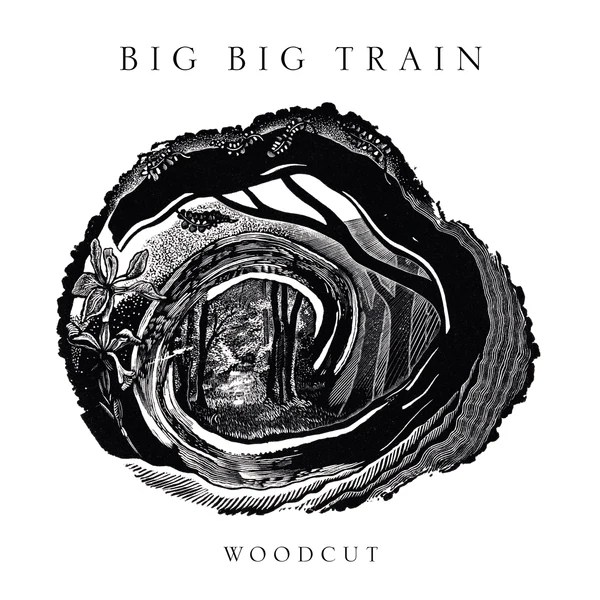
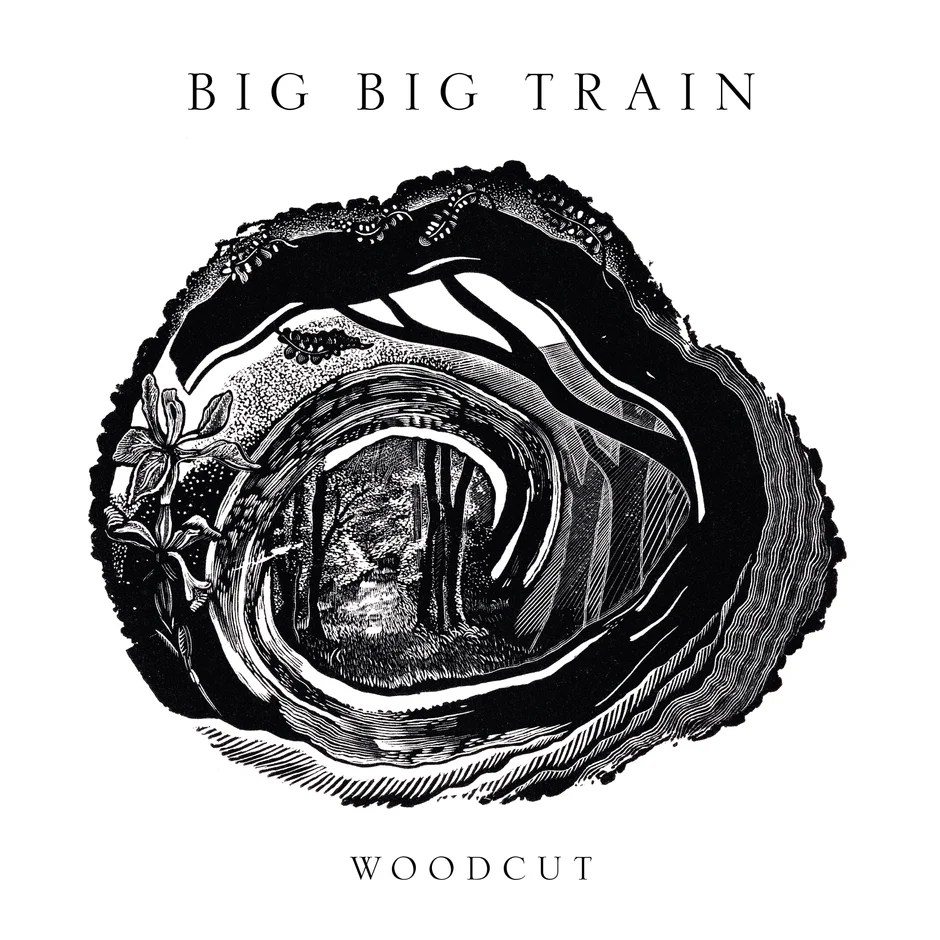
Dear Spirit of Cecilia Readers, whenever Big Big Train offers up a new album, it’s not just yet another release, it’s a major–and not unoften life changing–event. In early February, the band will be releasing a concept album, the sixteen-track Woodcut. Thanks to the good folks at Big Big Train and Insideout Music, we were graced with an advanced review copy of the new album. To say it’s brilliant would be the grand understatement of both 2025 and 2026. Here’s what Tad, Rick, and Brad think about it.
Brad: Hey guys! So great to be reviewing this with you both. As I start to type this, it’s a Sunday morning (I went to Mass last night), and the snow is ever so gently but steadily falling. My cats are prowling around, and I’m sitting in my precious work chair, and I’m also enjoying a great cup of coffee. And, of course, I’m listening to Woodcut. Life is good. Really good.
My journey with the band goes back to 2009 when our own Carl E. Olson the Grand sent me a track from Big Big Train’s The Underfall Yard. I’d never heard of the band, but I was immediately taken with the track Carl shared, “Evening Star.” So taken, in fact, that I immediately bought the album and, much to my surprise, I reached out to Greg Spawton through Facebook. It was potentially presumptuous and obnoxious to do so, but I just had to let this man know what I thought of his music. My first listen to The Underfall Yard wasn’t just a listen to yet another new album, another new band. This was a major moment in my life–akin to hearing Selling England by the Pound or Moving Pictures or Hounds of Love or The Colour of Spring for the first time. My soul was rocked by the very depth and majesty of the art. To this day, The Underfall Yard remains one of my two or three all-time favorite albums, and I never tire of hearing it. Indeed, every new listen is a rewarding one.
And, amazingly enough, rather than chastizing me for invading his privacy, Greg very graciously wrote back to me, and we began a correspondence and friendship that very much lasts through this day. In our correspondence, we’ve shared not only tidbits about life, but books. And, my kids–when younger–colored pictures for him! We even sent him some tree nuts and various seeds from Michigan, hoping he could replant them in English soil.
Amazingly enough, I interviewed Greg last week via Zoom. It was the first time we had actually ever spoken to one another, face to face! God bless, modern technology.
This is a long way of saying, I can’t even imagine the last sixteen years of my life without Greg’s friendship or without Big Big Train as the soundtrack to my life and my writing.
What about you guys? How did you first encounter Big Big Train?
Tad: Well, Brad, I first encountered BBT because of you! We had just connected online through a mutual love of Talk Talk’s Spirit of Eden, and you messaged me that I had to check out this band, Big Big Train. Their website had downloads of most of The Difference Machine and The Underfall Yard (this was before any streaming services), and I was hooked. It wasn’t until I bought hard copies of their albums that I realized Difference Machine and Underfall Yard had different singers!
Like you, The Underfall Yard remains a favorite album of mine, regardless of artist or genre. It is a timeless work of art, suffused with gratitude and grace. That said, they’ve come a long way since then, haven’t they? With the exception of Greg Spawton and Nick D’Virgilio, they are an entirely different group now. The one constant has been the consistently high quality of their music. The only other artist I can compare them to in that respect is Glass Hammer.
Rick: Brad & Tad, thanks for inviting me to join the celebration! As I’ve said elsewhere, despite Prog Magazine’s consistently championing Big Big Train over the years, I didn’t connect with them seriously until 2016. I was searching for a musical mood enhancer one afternoon at work, and I came across From Stone and Steel on Spotify.
Any number of things about that BluRay soundtrack appealed to me: the band was so tight, David Longdon’s singing was so adventurous, the scenarios and soundscapes were so involving. But it was actually the brass that got me. When they slammed into the choruses of “The Underfall Yard” and the lead trumpet soared heavenward at the end of “Victorian Brickwork”, I was hooked! (In fact, I cried during that “Victorian Brickwork” playout that afternoon – and I still do, every time!)
I had to hear more. Folklorewas just out, so I bought it ASAP and loved it. Ditto for the back catalog, including my favorite to this day, English Electric: Full Power. And to cap it all off, I ordered the Stone and Steel Blu-Ray via BBT’s website. Only when I got it, the thing wouldn’t play – due to technical issues with my Blu-Ray player that had already caused American customers plenty of headaches. What was I supposed to do?
That’s where Big Big Train’s amazing fans, the Passengers, came in. With an enthusiastic welcome to BBT’s Facebook group and all the kindness in the world, they steered me toward both a downloadable version of the video and a Blu-Ray player that would play S&S. I was so moved, I figured out how to burn the download version to DVD and shared instructions for doing so with the group – I even got attaboys from band members about that!
It struck me that this was a band and a fandom where you could feel at home, and I started proclaiming the wonders of BBT to anyone who would listen. When my friend Rob Olson saw Sarah Ewing’s Folklore-era band portrait as my laptop’s background screen, he said, “I need to introduce you to another friend of mine . . . “ And that’s how I got to know Brad. So I’ve always considered discovering Big Big Train an event with exponential benefits; when music connects people and builds friendships, it’s an amazing gift.
Brad: I love both stories, guys. Very nice. And, I’m so glad that I served as a BBT evangelist! I’ve been doing everything I can to promote the band since first hearing them in 2009. They’re worthy of being shouted about, to be sure! And, let me note here, Tad, I’m so glad to be reviewing with you, my friend. And, Rick, likewise–I’m so glad to be reviewing with you. Honestly, I think we should make this a permanent arrangement. As much as you guys have time for.
Ok, let’s talk Woodcut. We’ve been–by the grace of Insideout Music, Roie Avin, and the band–given an early look at the album. Wow, just wow. I’m still at that stage where my jaw is on the floor, and I’m just gobsmacked. I’ve now listened to the album, 10-12 times, and it has not in the least grown old. Indeed, each listen has only made me love this album more and more.
Let me admit–and it’s hard to admit–my reluctance to dive into this version of Big Big Train. I was so in love with the David Longdon/Greg Spawton combination that I didn’t want to love a new iteration of the band. I was, sadly and to my shame, very reluctant to allow the new singer to replace the old. For that, I publicly apologize. Frankly, I’m better than such pettiness, and I’m truly sorry I was so hesitant to embrace change. So, Alberto Bravin, I owe you a huge apology. For what it’s worth–coming from a long-time die-hard fan–a belated welcome to the band and all it stands for. After hearing Woodcut, I think you’re absolutely brilliant and so very worthy of the band, and the band worthy of you. Again, who am I to say all of this? Just a hard-headed goofball from the U.S. who should practice what he preaches–love and charity and welcoming–more than he does.
Ok, bless me Father, for I have sinned!
Now, in the moments after absolution . . . I can declare that I think Bravin is simply genius. From what Greg said in an interview with me (which was awesome), the concept really did come from the two men, with Bravin providing the needed inspiration and energy to get the thing written. Musically, the album reflects the whole band, but with Bravin doing the hard work of making it a concept album in terms of intermixing musical themes, and with Greg and Claire Lindley writing most of the lyrics. So, definitely a team effort but moved as a project by Bravin.
If this is what Bravin is capable of doing, then, by all means, keep running. I think the band is in very safe hands.
Tad: Brad, I was the same as you regarding BBT getting a new vocalist, but I am 100% on board the Big Big Bravin Train! He was definitely an inspired choice.
Okay, Brad and Rick, I’m interested to hear your thoughts on Woodcut. I love the way it begins with a short, stately instrumental and then immediately plunges into the first single, The Artist. There is an interplay among the musicians here that is amazing. Greg Spawton’s bass is simply outstanding as it reinforces the staccato riff that underpins the melody. (Rick forgive me, I’m not a trained musician, so I don’t know if I’m getting my terms right!) Bravin’s vocals are terrific here – full of passion while avoiding histrionics. I also love the background vocal harmonies – I don’t think BBT has had any like these before – they are very rich and complex.
The production overall is really nice: multilayered without sounding cluttered. I’m a big fan of the bass, and it’s so nice to hear Spawton’s playing featured prominently in the mix. For comparison’s sake (I know, comparison is the thief of joy), I listened to East Coast Racer immediately after The Artist, and the latter has incredible power. Woodcut’s production is the best of any BBT album to date; it just sounds amazing.
Brad: Thanks so much, Tad. I’m in complete agreement with you. I love Greg’s bass–so utterly driving and mesmerizing–Bravin sounds amazing, the story and the lyrics are just brilliant. During my interview with Greg, he mentioned that there was some concern about the band doing a concept album. I will admit, I’m the very last person to criticize a concept album. From the Moody Blues (Days of Future Passed), Genesis (Lamb Lies Down on Broadway), Pink Floyd (Animals), XTC (Skylarking), Riverside (original trilogy), Rush (Clockwork Angels), Steven Wilson (HAND.CANNOT.ERASE), Coheed and Cambria (the norm, rather than the exception) etc., I’m a huge fan. If I could, I would rather listen to concept albums any day or non-concept albums.
Yet, I probably define concept rather loosely, as, to me, BBT has already written concept albums. The Underfall Yard, English Electric, and Grand Tour are all so tied together as to be concept albums. Am I being too loose in my definition, what do you think?
Any, I love everything about this album. It really soars. The bass, the guitars, the drums, the keyboards (absolutely love the keyboards) and Bravin’s plaintive vocals. It really does all come together rather brilliantly.
Rick: Brad, to tackle one point you raised: there really isn’t a hard and fast definition of a concept album. I tend to think of albums with a start-to-finish, narrative story line – The Who’s Tommy & Quadrophenia, Pink Floyd’s The Wall, Genesis’ The Lamb Lies Down on Broadway, Neal Morse’s Testimony & Testimony 2 – as what that genre was called when it emerged back in the late 1960s: rock operas! On the other hand, albums like the Floyd’s Dark Side of the Moon and Wish You Were Here, Yes’ Tales from Topographic Oceans, the BBT albums you mentioned would be concept albums in my thinking – they focus on common lyrical and musical ideas throughout, but any story they tell is more implicit. Of those two types, I’d call Woodcut a rock opera, just to be a little retro!
I understand the reluctance you both felt to embrace a post-David Longdon Big Big Train; I remember how hollow it seemed to consider the band continuing in the wake of his untimely death. But when I got to interview Alberto Bravin early in 2024, I thought, “this guy has obviously bonded with Spawton; he genuinely loves and respects the band’s legacy; and he’s very much his own man. This could be interesting.” Then The Likes of Us proved to be another first-rate album, one I couldn’t stop listening to, with great music and a lyrical throughline that felt very personal, but also very relatable. And I had the privilege of seeing BBT live twice in the last two years: at their 2024 kick-off North American gig in Fort Wayne, and at a hole-in-the-wall rock club on the west side of Detroit last year. Looking back at those shows, I realized that every single person in the band could hold the stage all by themselves – but also that live, they played off each other constantly and made each other better!
I think that that band chemistry is a big part of why, as an album, Woodcut is so strong; it’s engrossing in a way that feels natural and organic. Tad, you’re right about “The Artist”: those precise, tough band riffs and Spawton’s distinctive bass licks – plus the chiming 12-string guitar – have a powerful impact and really pull you in. And there’s more where that came from in the second single, “The Sharpest Blade”: folk and metal elements that share a harmonic vocabulary, Clare Lindley and Bravin working as lyrical and vocal foils, each urging the other forward. Neither of these songs are clever for the sake of just being clever or showing off musical chops; it’s thoroughly eclectic, heartfelt, slamming stuff!
Something about the album as a whole: I saw that, both in the promo material and on his Substack, Greg mentioned The Lamb and Topographic Oceans as prototypical concept albums. And both of those albums have always had mixed reviews, from the general public, from prog fans, even from the band members themselves. I tend to feel that, lyrically,The Lamb doesn’t quite stick the landing of Gabriel’s surreal storyline, and that Topographic starts great and ends great, but kind of sags in the middle. The measure of Woodcut’s achievement is that it doesn’t have either of those problems. The whole thing jells and builds, through all of its twists and turns and ebbs and flows, from start to finish – and the final destination is well worth the journey, with multiple genuine goosebump moments, in the tradition of “she fliiiiies!”. (Another thing that struck me: The Lamb’s 50th anniversary super deluxe box came out last fall – with a great remaster that clarifies how strongly the music carries the plot – and there’s a Topographic box set coming out the same week as this album. Speaking as one hardcore BBT fan to two others, I can’t help but wish we had a Woodcut super-deluxe box right now!!)
Tad: Rick, thank you for your wonderfully perceptive thoughts! I’m so glad you mentioned “The Sharpest Blade”, as that is my favorite track (at the time of this writing)! I love Clare’s vocals, and the largely acoustic instrumentation is perfect. The melody has a distinct Celtic feel, with a hint of menace to it. It’s a fantastic track!
As for the concept, correct me if I’m wrong, but it seems to concern an artist whose medium is woodcuts. He somehow winds up in a scene he has created with his “sharpest blade”. While this artificial world is beautiful, he is desperate to get back to reality:
I can’t find a way back to the path that leads me home
No place for a man under the shroud
I’m out of bounds (From “Dreams In Black and White”)
The ending is ambiguous, which I like. There are several possible ways to interpret it.
Brad: A huge thank you to you both. Excellent thoughts from both of you. The kind of thoughts that really make me think and really make me question my own perspective.
Rick, it’s quite possible that I’m simply too much of a fanboy here, but I feel like The Lamb delivered everything just perfectly. I say this, however, as someone who has obsessed over this album since I first encountered it. Every time I listen to it, I feel that full immersion. In fact, I so desperately want to immerse myself completely in it. It’s a part of the joy of the album. And, I can just imagine my youth–so there’s a lot of nostalgia involved in this–turnng off the bedroom lights and putting the headphones on, and just losing myself for the duration of the full album. Rael!
As much as I wanted to love Tales from Topographic Oceans, I just never could. I could never immerse myself in the same way. Too many things drew me out–the goofy random bangs and noises, the nonsensical lyrics. I guess I respect what Yes was trying to do, but I can’t embrace it.
As of this writing, I’ve probably listened to Woodcut 15 times, the full-way through. To me, it perfectly captures everything that The Lamb tried to do and completely avoids the “noise” and excess of Tales. The story has me completely hooked, and I very much want to know every nuance of it. From what I can tell, it’s a fairy tale, complete and whole and without apology. It strikes me very much like Tolkien’s Smith of Wooton Major. An artist–one truly gifted by nature and grace–enters into the woods (Fairy, or something akin to Dante’s Divine Comedy), where he encounters truly beautiful and truly perilous things (like Frodo at Galadriel’s mirror). At this point, the artist can choose either the darkness or the light. Not surprisingly, given everything BBT stands for, the story has a happy ending, with the artist choosing the light.
Tolkien said that all good Fairy Stories must end with a “euchatrastrophe”–the surprising ending of pure joy. With the end of Woodcut, we find ourselves with Sam replanting the Shire with the soil of Lothlorien and with Dante seeing the Most Blessed Trinity. In BBT terms, we find ourselves having entered the “Meadowland” of Grimspound. We encountered the truest beauty and the greatest good imaginable, and we didn’t turn away, even in the realization that everything we are is miniscule compared to the majesties of the universe and of the divine. We could’ve run in shame, or embraced the darkness in wrath, but we choose the Good, the True, and the Beautiful. Or, like Wiglaf in Beowulf, we return to the “Meadhall in Winter.”
My sense is that even though Bravin has brilliantly become the front man (and he’s genius, in and of himself), the shadow of David Longdon hangs over this whole album. Just as The Lord of the Rings is the fulfilment of The Hobbit, Woodcut is the fulfillment of Grimspound and The Underfall Yard and English Electric and the Grand Tour. That is, Bravin doesn’t take us out of BBT, he takes us further in. There is harmony and continuity, not discord and revolution. Simply put, we end in euchatastrophe.
Tad: Brad, I can’t add anything to your brilliant analysis, which makes a lot of sense, by the way. They should have had you write the liner notes!
The last thing I want to mention is how well the entire album flows. Even though there are 16 tracks, they segue into each other so well that it’s really one seamless suite of music. This is definitely an album to listen to in its entirety. I’m really impressed with it, and I am so excited for this new chapter in the long story of Big Big Train.
Rick: Brad, as always, you find marvelously apt comparisons! I hadn’t thought of Smith of Wooton Major in this context, but it certainly resonates; Tolkien knew the English legendarium of Faerie well, though he didn’t write fiction based on it till his latter years, and he called it the Perilous Realm for good reason. (Robert Holdstock’s Ryhope Wood series and Susanna Clarke’s Jonathan Strange & Mister Norrell are other outstanding takes on that literary tradition, by the way – though both are inherently darker.) There’s this uneasy, major/minor ambivalence in the music of “The Lie of the Land”, the point in the story where the Artist finds the mystical heartwood, that captures that feel. Beauty and danger, grace and temptation impinge on a life that’s felt stagnant until that point.
And it also resonates that “Meadowlands” is this album’s landing point in the BBT cosmos. If the Spawton/Longdon band had a mission statement, that gorgeous song was it. But I’d argue that, at the end of the album, the landing point is also a launching point. The Artist embraces all the good in what he’s desired, but with everything he’s experienced, he can’t stay at that still point. Like in Leonard Cohen’s classic song “Night Comes On”, he has to “go back, go back to the world” and witness to the joy and the pain he’s lived through. (Didn’t know I was gonna synthesize both of your POVs, guys, but there it is! Eagerly waiting on Andy Stuart’s book on the album to explore his take.)
And Tad, while you’re right about how seamless and organic the album is as a whole, there are so many standout moments in individual tracks, too: more hard-hitting band riffs on “Albion Press”; the breathtaking moment Spawton’s bass pedals kick in on “Arcadia”; how Nick D’Virgilio’s fingerprints are all over “Warp and Weft”, with herky-jerky guitar licks that feel like XTC, a cappella singing a la Gentle Giant or Spock’s Beard, and a lead vocal that remind me of his great solo album Invisible. If your attention ever wanders while you listen, there’s something that pulls you back in right quick.
But again, the entire album flows – especially from “Light Without Heat” through “Last Stand”, an album finale that stands alongside any favorite prog epic any of us could name. That last section especially has it all – expansive musical themes (including callbacks to earlier in the album), inspired solo work (especially from Oskar Holldorff and Rikard Sjoblom) and gripping development in “Cut and Run” that sets up the final, cathartic anthem, with Bravin riding above it all. His vocal on “Counting Stars” is right up there with Longdon’s best moments (ultimately backed by bass pedals and Paul Mitchell’s trumpet, no less – “Victorian Brickwork” re-envisioned?). And then a spiraling, shattering ending that has to be heard to be believed! If I had to sum up my reaction to Woodcut, the first time I heard it, I was definitely impressed; now, on repeat listens, it genuinely moves me. In other words, it does what Big Big Train’s music has consistently done for me for nearly ten years now.
Brad: Tad and Rick, thank you so much! What an amazing discussion. I’ve had the chance to say this elsewhere, but I think that one of the highest compliments we can ever give to art is that art, properly conceived and properly made real, always leads to the formation of friendships and communities. No one in the music world better inspires the creation of friendship and communities than does Greg Spawton and Big Big Train. Their very art makes us better. It makes us more human and, dare I say in this world of shadows, more humane.
For those interested in Woodcut, you can purchase at either Burning Shed or Band Wagon USA. Both sites are linked here.
Kruekutt set the table for looking back at 2025 with his excellent post listing his favorite classical and jazz releases of that year. In the same spirit, here are my favorite albums from 2025.
Maybe it’s a function of getting old, but I tended to stick with familiar artists this past year. There are a few that I trust to always produce excellent music, and I usually devote my limited listening time to keeping up with them.
10. Steven Wilson: The Overview I love everything Wilson releases, even his so-called “pop” albums. The Overview is unabashedly progressive, though, with two side-long tracks that overflow with beautiful melodies. Here’s a conversation Brad Birzer and I had about it.
9. Kevin Keller: Arcadia This is more classical than rock, and it is simply beautiful. Here’s my review of it when it was first released.
8. Dave Bainbridge: On the Edge of What Could Be Bainbridge is a phenomenal guitarist with an immediately recognizable style. He combines Celtic, jazz, and rock elements to create a unique sound. On the Edge of What Could Be is a double album chock full of fantastic songs.
7. The Flower Kings: Love Another excellent album from the Flower Kings. I think they are making the best music of their long career. Here’s the conversation I had with Brad Birzer about our love for Love.
6. Gazpacho: Magic 8 Ball Another one from some old favorites. However, they sound like they’re having a party this time! Here’s the link to our conversation about it.
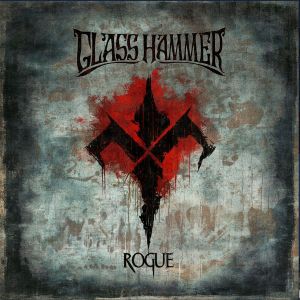
5. Glass Hammer: Rogue Speaking of old favorites, Glass Hammer is a perennial one! Rogue is a fascinating story of a man at the end of his life looking back. Here’s my longer review.
4. Karmakanic: Transmutation Here’s a new one (for me, at least!). This album has spent quite awhile on my stereo, and I think it’s a beautiful work. Led by Jonas Reingold of Sweden, it features John Mitchell on vocals. The epic title track is terrific.
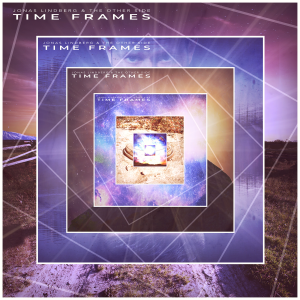
3. Jonas Lindberg and The Other Side: Time Frames Another set of songs that is bursting with fun melodies and top notch musicianship. I had the pleasure of interviewing Jonas, and you can read it here.
2: Echolyn: TimeSilentRadioII & VII Echolyn returns after a long absence with two of their best albums ever. The edit from “Water In Our Hands” is my favorite song of 2025. Here’s our conversation about these albums.
1. Lunatic Soul: The World Under Unsun My favorite album of 2025 (at least for today!). A double disc of uniformly wonderful songs. Everything Mariusz Duda has done under the Lunatic Soul moniker comes to fruition on this fantastic album.
Check out the extraordinarily informative interview our own Erik Heter conducted with Duda here.
I hope you’ve enjoyed this list of albums from 2025 – it was a very good year! Let us know what your favorites were in the comments. Thanks for reading, and I hope you have a wonderful 2026.
I have been a big fan of the progressive rock group Rush since the early ’80s when “The Spirit of Radio” was all over the radio. In fact, Permanent Waves is probably my favorite Rush album. I also enjoy reading musicians’ autobiographies and getting a “behind the scenes” look at how their music is created.
That said, Geddy Lee’s autobiography, My Effin’ Life, is somewhat of a disappointment. Lee is the bassist and vocalist of Rush; he and guitarist (and lifelong best friend) Alex Lifeson wrote almost all of the music to their vast catalog. Drummer Neil Peart was their lyricist. My Effin’ Life weighs in at a hefty 536 pages (the draft was allegedly 1200 pages!), and I was hoping to learn about the genesis of such classic songs as “Natural Science”, “Tom Sawyer”, and “The Big Money” among many others. Lee comes up short on the working details of how they composed their songs, but he doesn’t stint on describing how much and how often they all consumed drugs!
A friend gave me this book for Christmas. I don’t usually read books by politicians, but How to Test Negative for Stupid by Senator John Kennedy (R, Louisiana) is one of the funniest and entertaining memoirs I’ve read in a long time. He is definitely one of a kind, known for the very humorous quips and questions he makes during Senate hearings. He has a thick Southern drawl, which can lead an unsuspecting witness or nominee to underestimate him, but he is smart as a whip.
Practically every page has a laugh-out-loud passage:
For as long as I can remember, one thing has been true about me: I have the right to remain silent, but not the ability. (Page 1)
Most Americans imagine the Senate as this grand theater filled with distinguished lawmakers delivering erudite speeches. In reality, it’ usually empty as a timeshare salesman’s heart. (Page 13)
I observed to a reporter one time that you can lead a person to Congress, but you can’t make him think. (Page 21)
I have been a subscriber to Joel Miller’s excellent Substack, Miller’s Book Review for a couple of years. He never fails to pique my interest in whatever he’s reading, and it doesn’t hurt that he’s a hell of a good writer. So, I was very pleased when he announced that Prometheus Books had agreed to publish his book, The Idea Machine. It’s premise is very simple: How have books changed the world, and what is the history of them? As Miller writes on page 1:
The book, as I argue in the pages ahead, is one of the most important but overlooked factors in the making of the modern world. Why this lack of appreciation – or even awareness? Arguably, the book is a victim of its own success. Familiarity usually breeds more neglect than contempt. We fail to recognize the book for what it is: a remarkably potent information technology, an idea machine.
So begins Miller’s history and appreciation for the written word. He starts at the beginning with ancient Sumerian cuneiform tablets, through ancient Greek and Roman ways of storing and retrieving information on scrolls, the development of codices in Christian medieval Europe, to the explosion of books made possible by the printing press. Along the way, I learned all kinds of fascinating facts.
(Please note that links to online listening are included below, usually in the album title!)
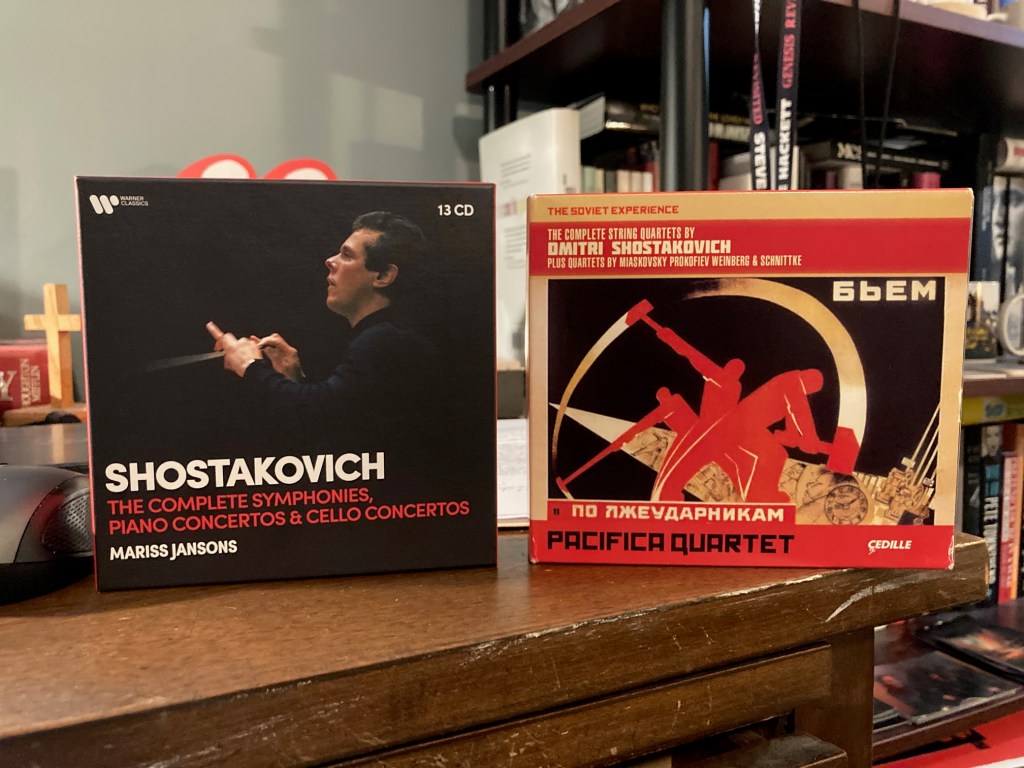
I spent a good chunk of this year digging into the music of Dmitri Shostakovich (2025 was the 50th anniversary of his death). Living in Soviet Russia under Stalin’s iron regime, Shostakovich’s modernistic compositions faced unending attack from jealous rivals and government bureaucrats; public dissent would have been futile, resulting in imprisonment or death for himself and his loved ones. So his 15 symphonies (conducted by Latvian maestro Mariss Jansons in a splendid bargain reissue) walk a thin line between deadpan conformity laced with mocking undertones (#2 “The Fifth of May”, #11 “The Year 1905” and even #5, his most popular work) and striking outbursts of grief in the wake of World War II’s human costs (#7 “Leningrad”, #13 “Babi Yar”). Meanwhile, Shostakovich’s 15 string quartets, composed “for the desk drawer”, were where he let himself go, taking his tragic/satiric outlook to agonized, bleak extremes. In The Soviet Experience, an engrossing bargain box on Chicago’s Cedille label, The Pacifica Quartet (currently resident at Indiana University) provide forceful, rhapsodic performances of Shostakovich’s early quartets #1-4, the expressive, moving #5-8 and #9-12, and the ghostly, late #13-15, plus selected, comparable quartets by Russian contemporaries. If Shostakovich’s music sounds intriguing to you, either of these sets would be excellent ways to gain your footing for further exploration.
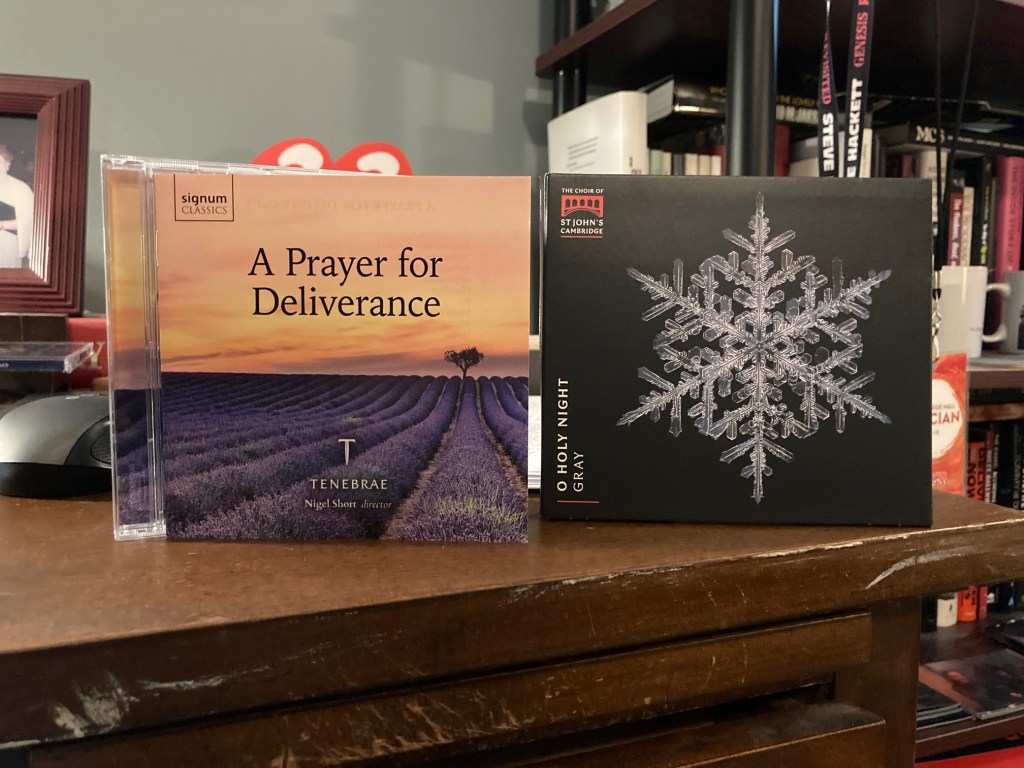
While my most memorable live classical experiences this year (first in Chicago, then in Cleveland) were orchestral, my favorite classical recording was choral: A Prayer for Deliverance, recorded live by the British choir Tenebrae under the direction of Nigel Short. Organized around rich, resonant settings of the Psalms and other texts of mourning and memorial, the program spans two centuries of music and a vast swath of feeling, from the brand-new title work (an anguished interpretation of Psalm 13 by African-American composer Joel Thompson) to Herbert Howells’ peacefully luminous Requiem (incorporating Psalms 23 & 121). It’s a powerful journey from the shock of death to the peace of acceptance — and the hope of resurrection. And since I was privileged to hear the choir of St. John’s College Cambridge when their US tour came to Grand Rapids last spring, I can heartily recommend their fine new Christmas disc O Holy Night (the first spearheaded by the choir’s current director Christopher Gray), centered on Howells’ lush and gorgeous Three Carol-Anthems and Francis Poulenc’s solemnly beautiful Christmas Motets.
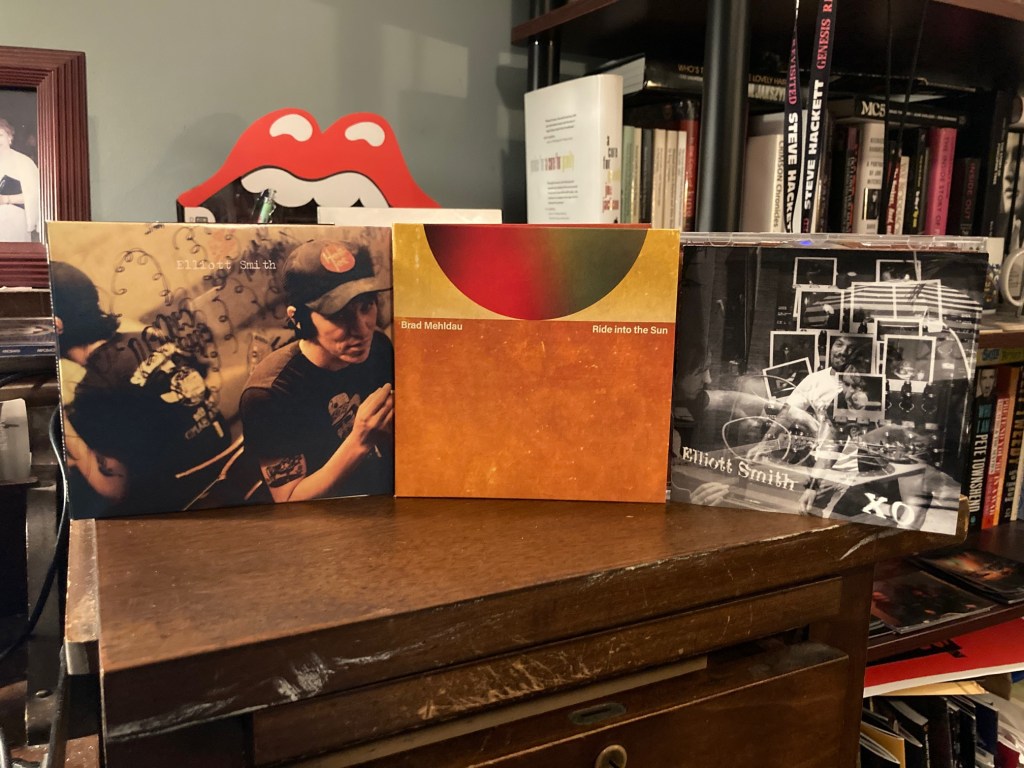
Moving to jazz, my favorite disc of the year has to be pianist Brad Mehldau’s deep dive into the songs of acoustic-grunge cult figure Elliott Smith, Ride into the Sun. Laying down a marker in his eloquent liner notes, Mehldau describes Smith’s work as “sublime music that holds a mirror to our sadness and breathes beauty and meaning into it”. And from a breath-snatching opening take on “Better Be Quiet Now” to the serene two-part title track (plus side quests into similar cult faves Big Star and Nick Drake), Mehldau and his numerous guests prove the point again and again; steeped in late Romantic harmonies and subtly swinging all the while, they unerringly steer Smith’s melodies through the heart of darkness to the sweet consolations of art reflecting on that pain. (Want to hear Smith’s originals? I highly recommend his 1997 indie release Either/Or, where you can hear him straining at the expressive limits of low-fi, and his 1998 major label debut XO, where he unleashes his inner McCartney/Brian Wilson in a dizzying display of studio shock and awe.)
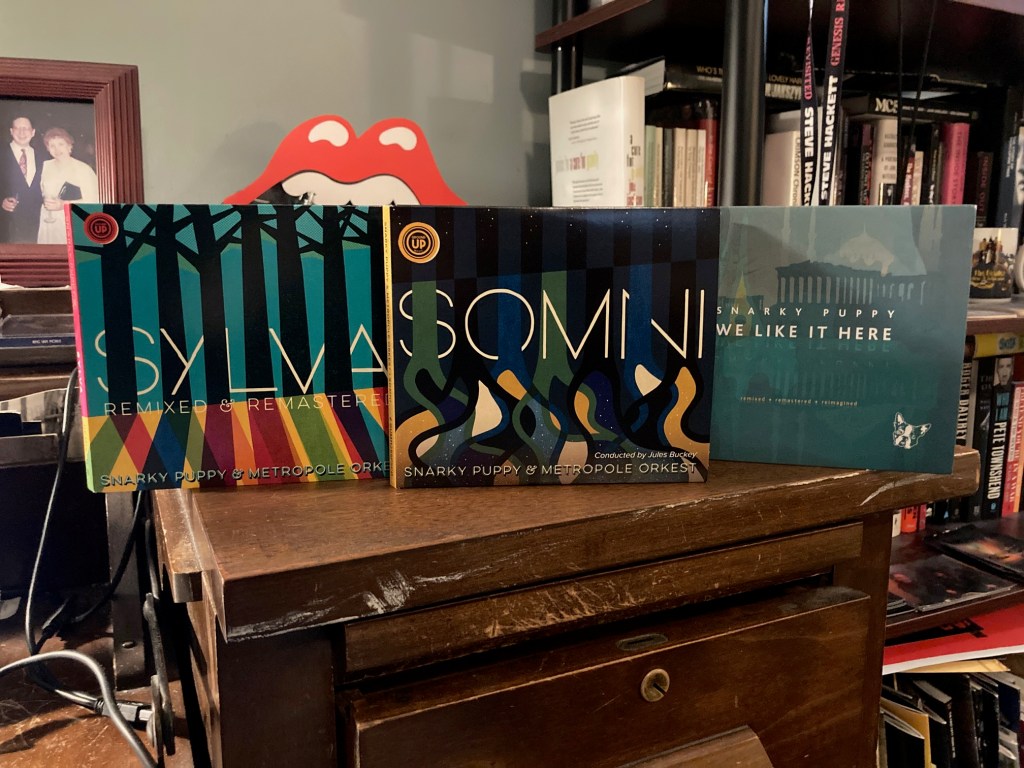
But I have to say that Somni, the latest live collaboration between jazz-fusion big band Snarky Puppy and The Netherlands’ Metropole Orkest isn’t far behind Mehldau’s tribute to Smith. A more noir take on the filmic funk of previous collaboration Sylva (reissued last year, alongside the Puppy’s most popular live-in-studio recording We Like It Here), there’s an embarrassment of riches here, with band and orchestra deployed like interweaving chamber groups, ear-catching fades and dissolves between themes, scorching virtuoso solos on every track, and an endless variety of rhythms. The CD/BluRay version brings the added dimension of watching the musicians (playing in the round) in the moment, from a gently grooving Metropole harpist to Bobby Sparks II’s scorching clavinet/whammy bar solo on “Chimera” to Snarky’s four (!) drummers and three (!) percussionists playing off each other to ecstatic effect on postmodern blues “Recurrent”. The best capture of how immersive live music can be that I’ve seen and heard all year.
And crowding in just behind Mehldau and the Puppy is Touch, the return of Chicago arty post-rock pioneers Tortoise after a nine-year hiatus. Crisply, consistently melodic, the veteran quintet (including avant-jazz guitar ninja Jeff Parker) is subtly beguiling, even gentle at times; but the taut, understated rhythms and layers of textural grit underneath are what hold your attention. From the tolling “Layered Presence” through the ear-grabbing gear shifts of “Axial Seamount” and the squiggly/snarly/wispy “Oganesson” to the levitating movie-theme finale “Night Gang”, this is a fully collaborative vision, always straining toward unlimited vistas, pushing beyond the horizon of what most instrumental groups can conceive. Explore it along with Tortoise’s back catalog; I have a hunch you won’t be sorry!
And these other releases well worth checking out:
Disquiet, three discs of extended, hypnotic studio improvs from the minimalist/ambient/jazz Australian piano trio The Necks.
Motion II, where Blue Note Records all-star quintet Out Of/Into return with a fabulously consistent, frequently thrilling follow-up to last year’s excellent debut.
Off the Record, the newest mash-up from drummer/beatmaster Makaya McCraven, collecting four digital EPs that span a decade. Taking live improvs alongside Tortoise’s Jeff Parker, Out Of/Into’s Joel Ross on vibraphone and British tuba virtuoso Theon Cross (among other huge talents) into the studio, McCraven works hip-hop production magic on dates from Los Angeles (PopUp Shop), hometown Chicago (Hidden Out!), London (Techno Logic) and New York (The People’s Mixtape) recomposing, overdubbing, flying in other instruments and looping key beats for maximum impact. The results are unstoppably propulsive, coolly thoughtful and thoroughly enjoyable even at their wildest.
Joni’s Jazz, a four-disc offshoot of Joni Mitchell’s ongoing Archive series. Mitchell comes by her jazz pretensions honestly, claiming Miles Davis as an early muse, working with bass titan Charles Mingus in his final months, and regularly collaborating with Herbie Hancock and Wayne Shorter over the decades. There are more than a few tedious moments here, where Mitchell swaps out her melodic gift to climb on her lyrical soapbox;, but there are numerous highlights that compensate: check the loose swing of early classics like “Marcie” or “In France They Kiss On Main Street”; the numerous peaks of Mitchell’s genre explorations from Court and Spark through Mingus; later big-band collaborations (“Both Sides Now”); and oddities like “Love” and “The Sire of Sorrow (Job’s Sad Song)” where Mitchell languidly chants paraphrased Scripture while Shorter takes flight above her.
I love old books, but sometimes the gulf between the culture in which a book was written and my own is so great that I fail to get the original intent of the author. Nadya Williams’ new book, Christians Reading Classics, is an invaluable guide to some of the most time-tested classic works from the ancient world, and it can help bridge that cultural divide. It is divided into five parts, in rough chronological order.
Part I is Longing for Eternity, and it covers Homer’s The Iliad, Hesiod’s Theogony and Works and Days, Pindar’s Odes, and the Histories of Herodotus and Thucydides. Each chapter is relatively short but packed with profound insights. For example, in her analysis of The Iliad, Williams writes,
The externally governed nature of this heroic code – that one is only a great hero if this person is recognized by others and has accumulated great prizes of honor, including prizes that are real people! – is a warning to us as we consider how aspects of such a code appeal to our own desires even today. Each of us wants to be declared good – as God once spoke when he created Adam. In fact, we would like to be declared “the Best”, and we would like this coronation to come unconditionally from absolutely everyone around. But our worth and any declaration of goodness, excellence, and ultimately righteousness is to be found in God alone, not in other people’s view of us. The suffering of the heroes in The Iliad and in other ancient epics, where heroes do all they can to be declared “the Best”, is an important warning of what happens if we place our value in others’ opinion of us. It reminds us of the empty promises of this kind of glory – it cannot satisfy. (p. 9)
[Hello Spirit of Cecilia Reader. On December 2, 2025, I had the great privilege of talking with Big Big Train’s main man, Gregory Mark Spawton. As it turns out, Greg and I have been corresponding with one another since 2009–sometimes a rather frequent correspondence that often included gifts of books, etc.–but we’d never actually talked face to face. So, for me, especially, talking with Greg was an absolute thrill. It’s not often that you get to meet your heroes. I would’ve loved to have met Mark Hollis, for example, but that can never be. So, getting to meet Greg is a real treat. And, not surprisingly, he’s as kind and as intelligent as I’d always imagined him to be. We talked for an incredibly long time–a huge thanks to Greg for his time and graciousness–and the transcript of our conversation is 46 pages long in Microsoft Word. I’ve never edited a transcript before, so this has been an experiment. As such–and I hope you’ll all forgive me–I’m going to publish the interview in a series of parts, based on the topics we covered. Here’s the first part of our interview–focused on Greg’s publishing firm, Kingmaker. Please enjoy. Yours, Brad]
Brad: Well, Greg, this is fantastic that we get to talk. I mean, it’s good for my soul to see you and to talk to you. Absolutely wonderful. And you know, I mean, I don’t want to embarrass you, but I really can’t imagine my life or any of my writing without you as my soundtrack, really ever since I heard The Underfall Yard. You guys—you, David, Nick, and everybody—you’ve just been such a part of my life. Yet, it’s amazing to me that this is actually our first time talking, face to face.
You know, I had interviewed David and had a really good time doing that.
I’d like to talk a little bit about Kingmaker and if you could give me a little bit of the history of that, why you got interested in publishing, how many books a year you guys are doing, how that’s going, how it’s tied to Big, Big Train, etc.
Greg: Yeah, well, life’s a bit strange for me because, as you know, until maybe ten years ago, I still had an office job and I was doing music on the side. As it transpired, I was able to quit work and focus on being a musician full time. And then an opportunity arose to do to work in books as well. So my two sort of loves of my life aside from my wife and my kids and my cats are books and music. So I found myself in a position with Nick Shilton, the Big Big Train manager. At the time he was writing a book on Big Big Train and in order to get it published, we thought actually, you know, rather than just go down a self-publishing route, let’s set up a publisher and see if we can also publish some other music-related books.
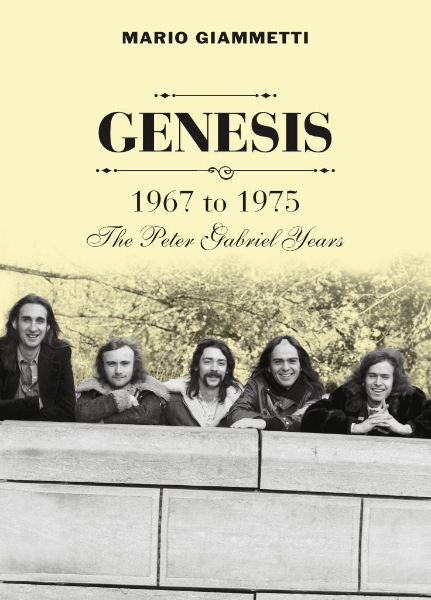
And in fact, before we got round to publishing the first Big Big Train book, we published a book by Mario Giammetti, an Italian journalist and the foremost expert on Genesis. And I’d known Mario for quite some time.
I remember I had an email from him: “Do you know any way I can get into the English publishing industry?” So we had great pleasure in publishing those two volumes on Genesis and a couple of books on Big Big Train.
And hot off the press is a huge book on Peter Hammil and Van der graaf Generator and it is really a really big thing, you know. It’s so detailed. Peter Hammond is one of the most interesting lyricists in progressive rock. So his work for me requires and benefits from quite a detailed analysis, which is what this book does.
Kingmaker is a business, so you know we have to commission or publish books that will not lose money, but, on the other hand, we want them to be things that we would want to read and that we’re interested in.
So that’s our modus operandi, you know. Would we enjoy reading that book and is it going to work for us in terms of business? And it’s been great. It’s been quite a ride. We’ve got a Yes book that we’re working on that we hope will be out next year. And we’re aiming for all of the publications to be as good as they can get in terms of how they’re written and in content. So yeah, it’s been a been a very interesting process.
Of course, you’ve been in the publishing business as an author—a published author for many, many years—but this is much more of a new experience for me.
Brad: I like it, Greg! And I I proudly own the Genesis volumes and I’ve got, of course, the Andrew Wild books—all just really, really excellent. So I’ve enjoyed what you’ve done.
I knew you loved books, but I didn’t realize that you would be so much in love with them that you would become a publisher. So I thought that was great.
Greg: Yeah, it was just one of those moments where me and Nick sort of looked at each other and just said, “let’s see what we can do here.” And then I remember Mario pitching a Genesis book to us. And so we met him in London a few years ago, liked him, got the books translated. In fact, quite a few of our books have started life in the Italian language because there’s a big prog rock community there. It’s probably the second most vibrant market, certainly in terms of 70s prog rock. And, I’m kind of at a reasonable level of Italian now myself. So, I’ve been doing a little bit of translation work.
We’ve got a new book that’s coming out on Tony Banks as the first English language biography of Tony Banks. That’s coming out in February, I think, or January. That’s another great read and it focuses on Tony’s solo work rather than his work with Genesis. It goes through the Genesis years but it focuses on an area of his work that’s not really been talked about much.
If it goes well, we’ll try and get some books together on the other members of Genesis and take it from there and see where we end up.
Brad: Yeah, I pre-ordered the Tony Banks, so I’m very much looking forward to it now.
Greg: So that said, I find Banks a bit of an enigma really because the guy that wrote, say, Firth of Fifth or Madman Moon has also written some quite cheesy pop stuff at times.
There’s nothing wrong pop music. I love pop music, but I love pop music that’s not cheesy and is well crafted.
And some of his music, some of his solo music, has kind of strayed into that and it’s slightly enigmatic for me to find a character or an individual that can do on the one hand something as absolutely sensationally written and composed as Firth of Fifth and then something on the other side of things.
And the biography is critical. It’s a critical analysis of his work. So by no means . . . we’re not putting him up on a pedestal. We tell the truth. And, so it’s interesting for me for that reason.
We’re in awe of what he can do, so we’re not completely critical, you know, just as I’ve written some terrible songs sometimes. We’ve all done it.
We’ve all done it but I struggle with him on that, the same with Mike Rutherford. I can’t see how they can’t see how I think—objectively—elements of their music from the 70s are simply more interesting, at a higher level of art, than some of their later sort of big stuff.
That’s what I struggle with there, you know, that they don’t seem to be able to see that. For me, it’s so obvious, but then we’re not always the best judges of our own material.
Brad: Yeah, I I’m reminded Neil Peart was just horrified when Asia came out—that Carl Palmer could go from ELP to Asia .
Greg: It is, you know, and Nick Shilton’s my manager’s and my publishing partner’s route into prog rock was via Asia. So, you’ll be off his Christmas list now.
Brad: I actually enjoy that first Asia album, especially Sole Survivor.
Greg: I think some of it is pretty good fun, but I, you know, it’s hard for me when you’ve got a band like UK who are still making incredible albums in 1978 and then going to Asia maybe a couple of years later.
I think the problem was the business. The music business was just headed down that money, money, money, commerce, commerce, commerce route. We all live in a capitalistic society and, you know, we have to accept that that’s how things are, but it’s a shame that they throw out the baby with the bath water.
But John Wetton, who wrote a lot of that stuff . . . he liked pop music.
I think we forget that at the root of probably the best prog rock is often very well-crafted songs rather than, you know the sort of extensive instrumentals. I think it’s when you get those two things together, that’s when I love prog rock.
So, for example, a song like Cinema Show—it’s got four or five minutes of really beautifully composed acoustic pop and then it goes into this sort of extended instrumental playout.
So you get the best of both worlds and that’s why I love prog rock really because you know you can do more than just the one thing, but you still, I think, at its best, you should have the song at the core of it in my opinion.
Brad: Thanks, Greg, that’s great. I don’t want to jump into Woodcut yet, but obviously you guys do that with the Woodcut extraordinarily well. Yeah, yeah, you succeed. Believe me.
Back on Kingmaker, do you guys have a set number of books you’re trying to publish a year or is it basically as things come to you?
Greg: we’ve made a decision to do no more than four a year.
Brad: That’s what I figured.
Greg: It’s basically three to four and we’ve got a pipeline of several books ahead so we know we’re going to be in a year’s time. We’re beginning to think of books maybe two or three years hence from now. But it’s hard, you know, it is hard work doing more than that. And I think that the focus has got to be on quality, not quantity, because, you know, we could suddenly go down a different route where we were churning out books.
That’s the interesting thing setting up a publisher—with a bit of a track record now. We get people pitching us books all the time. Nine times out of ten we just say no A) because we don’t think it’s going to work commercially or it isn’t of interest to us or B) because we just don’t have the time, you know, as we want to manage these books through from the beginning to the end and,we’re a small publisher. So you know, it’s a hands-on thing for us.
Brad: just curious about the logistics. Do you actually have a full-time layout person and are you doing the copy editing and who does your printing for you?
Greg: So we got lucky. We found a printer down in Norwich way, in the east of England. Again, a small publishing house printer—they’ve got a really good graphic designer and he’s really focused on getting it right. He will do the layouts for us.
In terms of editing, it depends on the book really. For one forthcoming book, the writer Joe, he kind of edited himself to be honest. He’s a writer editor.
And of course, then we just get Professor Geoff Parks, who’s our completely overqualified proof reader, but he goes through things, you know, proofs, and he’s really very precise in terms of both syntax and grammar and all those things that you need.
In terms of my editing role, yeah, I have actually edited a couple of the books and that’s been fun. [Greg laughs] I’m not a very detailed person. My wife would just laugh at the thought of me doing anything that requires a sense of detail. And of course editing does require that, but I tend to be more of a kind of ideas editor, I think. For example, with Mario, there’ll be times when I’ve said to him, ‘actually there’s an aspect here that I don’t think works’ or ‘I find this interesting and perhaps you could talk a bit more about it.’
That’s the kind of role I’ve had and it’s been nice, and there have been some good friendships made.
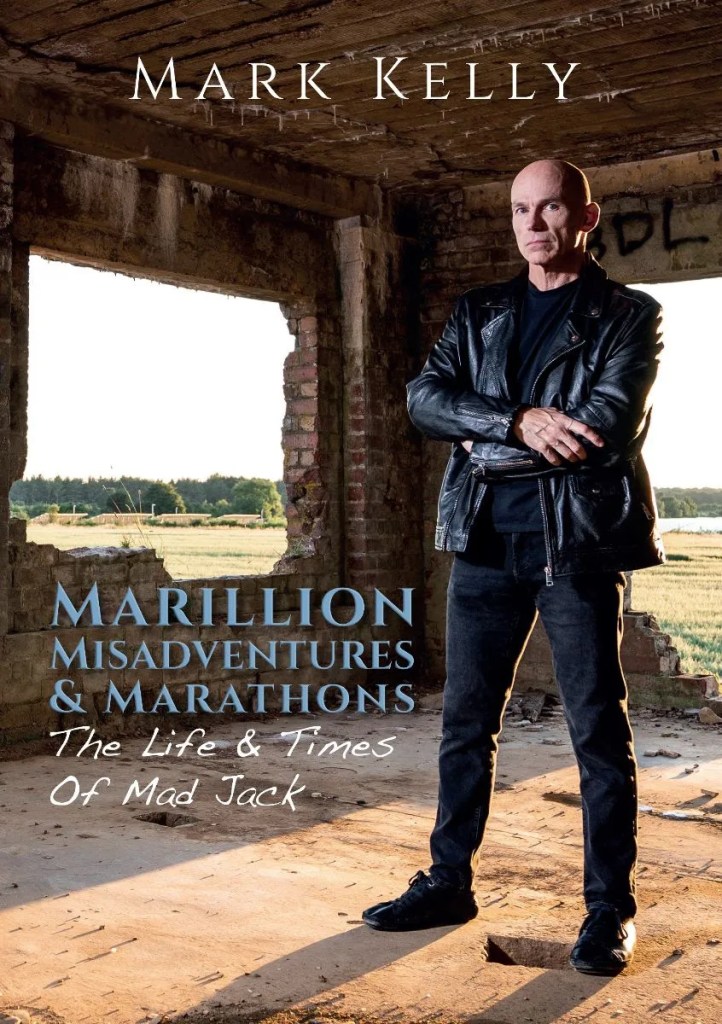
We’ve had a couple of books that have been good that have been ghost written, such as Mark Kelly from Marillion’s book. A great book. It was initially ghost written and then, I think, about halfway through, Mark began to pick up his own voice here, really. I think having been back over the chapters with the ghostwriter, he was able to say, do you know, he was able to assume the voice of the ghostwriter and his own voice. And that was quite interesting because by about halfway through, I could no longer tell who’d written what chapter. Mark’s a really clever guy. He really got it together so it was hard then to tell the difference of what had already been through the ghostwriter or what had just gone straight from Mark. So that was an evolving process as well.
And we’d like to do some more Marillion books because I think they’ve a really interesting story. Very interesting.
Brad: Yeah, I have Steve Hogarth’s two volumes as well, which I I really enjoy. It’s fun to go back to those.
Well, thanks, Greg. That’s fascinating and I’m really glad that’s working out for you guys. I think it’s just a great, great project and I’m really happy to support that.











 Spirit of Cecilia
You must be logged in to post a comment.