“O Come, O Come, Emmanuel”

This is the hymn of the day for the Fourth Sunday in Advent across numerous Christian traditions. Written by the Rev. John Mason Neale, published in his and Thomas Helmore Hymnal Noted, Part II (1854), and revised by Neale in subsequent hymnals until his death, “O Come, O Come, Emmanuel” was based on the series of ‘O” antiphons sung at Vespers from December 17-23.  In the original Latin, the second letters of the seven antiphons spell out the reverse acrostic “ERO CRAS” — “I shall be [with you] tomorrow”, as the Church prepares to celebrate Christ’s birth.

The tune of this hymn has an especially intriguing provenance.  According to the magisterial New Oxford Book of Carols:

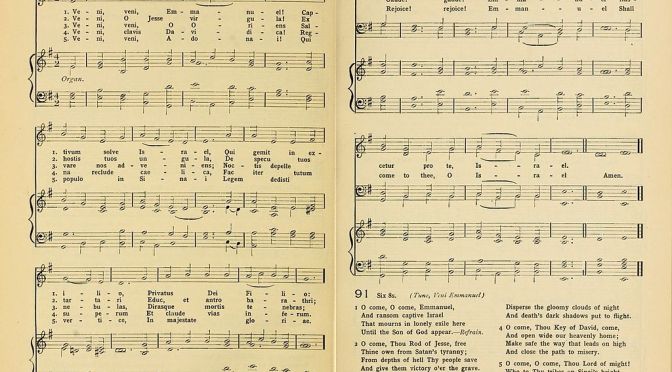
In an article of 1881, Helmore revealed that the source was in face a French missal [in the National Library at Lisbon, Portugal], and that Neale himself, now dead, had copied the tune … Searches failed to locate the hymn in the Lisbon library, and doubts about the authenticity of the tune were only laid to rest in 1966, when Mary Berry (then Mother Thomas More) discovered the tune in another French source, a fifteenth-century Franciscan processional, which was probably copied for a nunnery … Each verse is set out in binatim style on two pages, with the familiar melody on the left and a simple countermelody on the right.

Which (as transcribed and collated with the Latin hymnic version of the antiphons in the NOBC) sounds like this — recorded by the Taverner Consort in the style of a Franciscan procession:

And so — 1300 years on from the origin of the antiphons, 600 years after French nuns sang the hymn in procession, more than 150 years past Neale and Helmore’s translation and transcription — we watch for Christ’s coming with the Church of all ages, and sing:

O come, O come, Emmanuel,
And ransom captive Israel,
That mourns in lonely exile here
Until the Son of God appear.

Refrain

Rejoice! Rejoice! Emmanuel
Shall come to thee, O Israel!

O come, Thou Wisdom from on high,
Who ord’rest all things mightily;
To us the path of knowledge show,
And teach us in her ways to go. Refrain

O come, O come, Thou Lord of might,
Who to Thy tribes on Sinai’s height
In ancient times didst give the Law
In cloud and majesty and awe. Refrain

O come, Thou Branch of Jesse’s tree,
Free them from Satan’s tyranny
That trust Thy mighty pow’r to save,
And give them vict’ry o’er the grave. Refrain

O come, Thou Key of David, come,
And open wide our heav’nly home;
Make safe the way that leads on high,
And close the path to misery. Refrain

O come, Thou Dayspring from on high,
And cheer us by Thy drawing nigh;
Disperse the gloomy clouds of night,
And death’s dark shadows put to flight. Refrain

O come, Desire of nations, bind
In one the hearts of all mankind;
Bid Thou our sad divisions cease,
And be Thyself our King of Peace. Refrain


— Rick Krueger


The O Antiphons: O Key of David

The O Antiphon for Magnificat at Vespers on December 20:

O Key of David and scepter of the house of Israel, you open and no one can close, you close and no one can open: come and rescue the prisoners who are in darkness and the shadow of death.

For their 2016 debut recording Drop Down, Ye Heavens, the London-based student-formed choir Siglo de Oro commissioned a new set of O Antiphons from various British composers, sung in English and set for choir and saxophone.  Here is Francis Pott’s rich setting of “O Key of David”:

O come, Thou Key of David, come,
And open wide our heav’nly home;
Make safe the way that leads on high,
And close the path to misery.

Rejoice! Rejoice! Emmanuel
Shall come to thee, O Israel!

— Rick Krueger

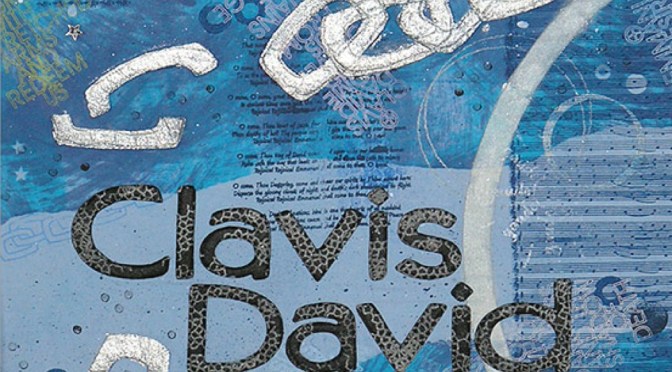
(Image: O Clavis David by Linda Henke, Te Deum Designs.)

The O Antiphons: O Root of Jesse

The O Antiphon for the Magnificat at Vespers on December 19:

O Root of Jesse, standing as an ensign before the peoples, before whom all kings are mute, to whom the nations will do homage: come quickly to deliver us.

Healey Willan (1880-1968), professor at the Royal Conservatory of Music in Toronto and organist at St. Mary Magdalene Church in the same city, composed a setting of The Great O Antiphons of Advent for the Lutheran Church-Missouri Synod’s Concordia Publishing House in 1957.  Here’s Willan’s setting of “O Root of Jesse,” as sung by the choir of Christ Church Cathedral in Vancouver, British Columbia:

O come, Thou Branch of Jesse’s tree,
Free them from Satan’s tyranny
That trust Thy mighty pow’r to save,
And give them vict’ry o’er the grave.

Rejoice! Rejoice! Emmanuel
Shall come to thee, O Israel!

— Rick Krueger

(Image: O Radix Jesse by Linda Witte Henke, Te Deum Designs.)

Geddy Lee: Neil Peart ‘Hasn’t Just Retired From Rush; He’s Retired From Drumming’ – Blabbermouth.net

“I’ve been working on this book for just over two years now, and it’s been great fun — it’s been passion project for me. And it’s been very good for my head. And, in a way, it was really a good break from everything that was going down with RUSH and from the end of that [last] tour, and it threw me into another obsession, which was educational, in terms of learning about my instrument, but also in terms of learning about making a book and what’s involved. So I enjoyed that. Now I will start thinking about what I’m gonna do next and I’ll start playing all those beauties” — referring to his bass guitars — “that are staring at me when I go into my studio.”
— Read on www.blabbermouth.net/news/geddy-lee-neil-peart-hasnt-just-retired-from-rush-hes-retired-from-drumming.html

The O Antiphons: O Adonai

The O Antiphon for the Magnificat at Vespers on December 18:

O Adonai and ruler of the house of Israel, who appeared to Moses in the burning bush and gave him the Law on Sinai: come with an outstretched arm and redeem us.

Healey Willan (1880-1968), professor at the Royal Conservatory of Music in Toronto and organist at St. Mary Magdalene Church in the same city, composed a setting of The Great O Antiphons of Advent for the Lutheran Church-Missouri Synod’s Concordia Publishing House in 1957.  Here’s Willan’s setting of “O Adonai,” as sung by the choir of Christ Church Cathedral in Vancouver, British Columbia:

O come, O come, Thou Lord of might,
Who to Thy tribes on Sinai’s height
In ancient times didst give the Law
In cloud and majesty and awe.

Rejoice! Rejoice! Emmanuel
Shall come to thee, O Israel!

-Rick Krueger

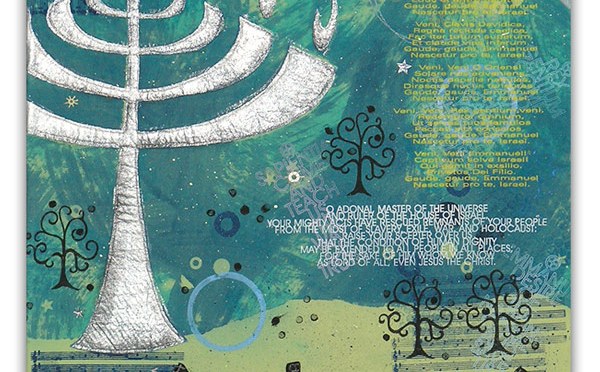
(Image: O Adonai by Linda Witte Henke, Te Deum Designs.)


Christopher Dawson Defines the West

I will happily admit, I never understand when folks try to define the West by skin color, skin tone, ethnicity, or some other random accident of life. It’s not about race, it’s about an idea. The West is, ultimately, about human dignity, liberty, and self-sacrifice.

Here’s Dawson on the issue.

“I still profoundly convinced of the importance of the need for the defence of the West, though it is important not to understand the expression in too narrow a political and geographical sense, as is often done.  In my view the West is a cultural tradition like that of Hellenism and one which has an even wider and more universal mission.  Now if in the time of the Persian War not only Ionia and Thebes had ‘medized’ but Athens also, and Sparta had been left to stand alone, as were after Dunkirk, the Spartans would have been justified in saying that they stood for the defense of Hellenism, even though Hellenism was a far wider thing than Sparta and Spartan culture by itself was not to be identified with Hellenic culture.  And if the Scythians or the Acedonians had risen against Xerxes and attacked his rear, and the Lacedemonians could have accepted their alliance with gratitude without feeling that they had ceased to stand for the cause of Hellenism.  One can extend the parallel by recalling that just as the defence of the West is being carried on today by the Americans and the Australians in the Pacific so in the days of the Persian War, Hiero was defending Hellenism against the Etruscans and the Carthaginians in the Western Mediterranean.  These are the Wars of the Gentiles.  But we must surely admit that there were spiritual issues in the struggle between the Persians and the Greeks, and so it is today though the issues for us are not so simple as for the men who fought at Thermopylae and Plataeae.”

Christopher Dawson to Walter Zander, Gerrards Cross, Bucks, 12 May 1942

The O Antiphons: O Wisdom

From Kevin Hildebrand, kantor at Concordia Theological Seminary in Fort Wayne, Indiana:

An antiphon is a term we see in worship regularly. An antiphon is a refrain that is sung before (and sometimes after and during) a Psalm or other song, and it’s typically is a Bible verse or a historic liturgical text.

The origin of the O Antiphons is around the eighth century. In larger cities and monasteries, it was customary to have services daily (or several times a day), and in the seven days before Christmas Eve, it became a regular practice to sing the assigned O Antiphon before and after the Magnificat ( “My soul magnifies the Lord.”) at the evening Vespers service.

In the twelfth or thirteenth century, these antiphons were paraphrased into metrical, poetic verses which became the hymn, “O Come, O Come, Emmanuel.”

The initial O Antiphon, for Vespers on December 17:

O Wisdom, proceeding from the mouth of the Most High, pervading and permeating all creation, mightily ordering all things: come and teach us the way of prudence.

For their 2016 debut recording Drop Down, Ye Heavens, the London-based student-formed choir Siglo de Oro commissioned a new set of O Antiphons from various British composers, sung in English and set for choir and saxophone.  Here is Will Todd’s thrilling setting of “O Wisdom”:

O come, Thou Wisdom from on high,
Who ord’rest all things mightily;
To us the path of knowledge show,
And teach us in her ways to go.

Rejoice! Rejoice! Emmanuel
Shall come to thee, O Israel!

— Rick Krueger

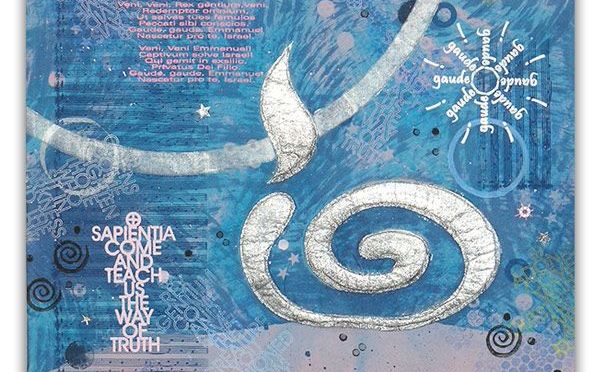
(Image: O Sapentia by Linda Witte Henke, Te Deum Designs)


Under the Watchful Sky ~ The Imaginative Conservative

Under the Watchful Sky ~ The Imaginative Conservative

Under the Watchful Sky ~ The Imaginative Conservative


— Read on spiritofcecilia.com/2018/12/15/under-the-watchful-sky-the-imaginative-conservative/

This was definitely one of my favorite reads of 2018. An excellent book. Tom Clancy with theology!