
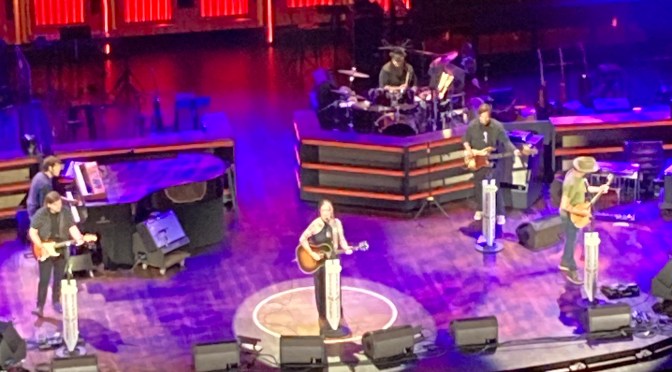
“Country musicians first performed on radio in 1922, and, within a few years, radio stations initiated the first barn dances — ensemble variety programs with the relaxed, chatty atmosphere of a family gathering.”
— the Country Music Hall of Fame & Museum’s exhibit “The Dawn of Country.”
Heading south for our most recent vacation, we finished up in Nashville — and I wasn’t going to visit Music City without taking in at least one show. After catching Ringo Starr at the historic Ryman Auditorium proved prohibitively expensive, I pivoted to the spot all the travel guides (as well as local friends) had recommended in the first place — the weekly Saturday night performance at the Grand Ole Opry.
Make no mistake: coming up on its 98th year, the Opry is a well-tuned corporate machine, effortlessly parting multitudes from their cash with a smile — but it’s also an affordably priced, entertainingly old-school variety show. Broadcast live in multiple formats, the program consciously carries on traditions developed from its radio roots through country music’s ongoing breakout to the broader public (and if you’ve ever wondered where Garrison Keillor got the idea for A Prairie Home Companion, look no further). Regularly booking a mix of promising rookies and seasoned veterans, inviting rising stars to become “family members” and providing an environment open to impromptu guest shots and team-ups, the Opry deliberately claims a gatekeeper role, anointing a core of artists that cover a fairly broad spectrum of what country music is today. With no mass-culture superstars on the bill, September 23rd’s Opry was an enjoyable example of how all this works in practice.
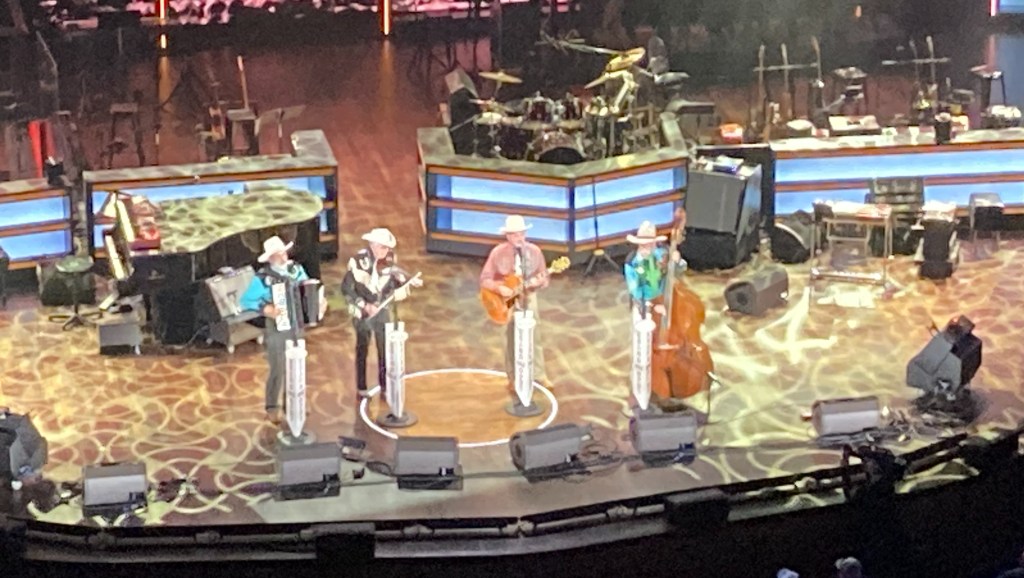
To kick it all off, throwback quartet Riders in the Sky stepped to the mikes, blending smooth harmonies and lively instrumental work into affectionate renditions of vintage cowboy songs and Western swing. There were plenty of corny antics, too; bassist Too Slim provoked fiddler Woody Paul into a face-slapping “Dueling Banjos” duet as guitarist Ranger Doug and accordionist Joey the Cowpolka King looked on in bemusement. (It’s no surprise that, in his true identity of satirical college journalist Fred LaBour, Too Slim convinced the counterculture that Paul McCartney was dead back in 1969.) But after we’d laughed ourselves silly, these long-time Opry members cooled us down with the gorgeous title track off their latest album Throw A Saddle On A Star, then whipped up a fiddle-focused hoedown for an exhilarating finish.
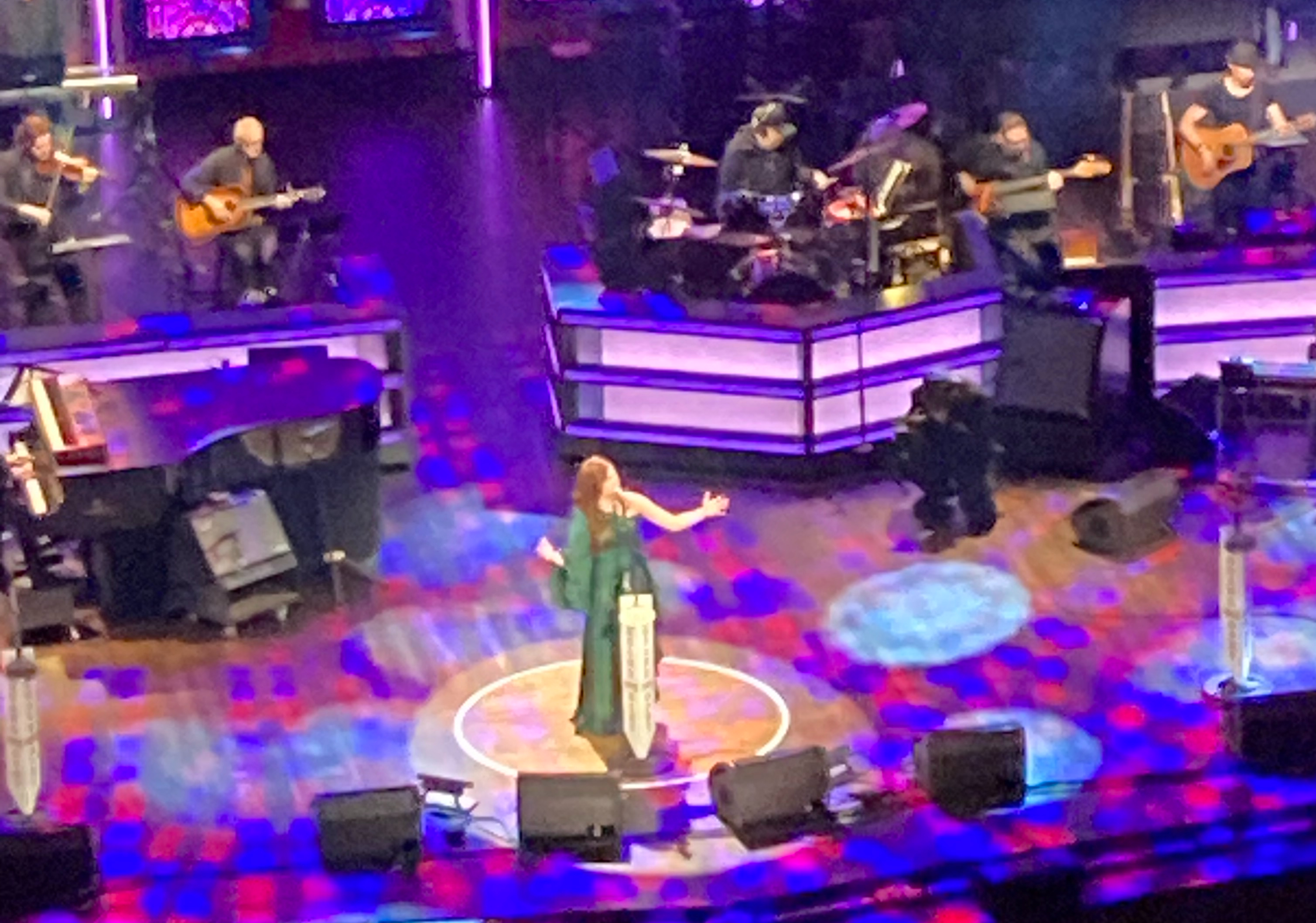
Making her second Opry appearance, vocalist Riley Clemmons was an engaging bundle of nerves, nearly beside herself with excitement that she’d been asked to return. But emotions of the moment and self-deprecating jokes about her advanced age of 23 aside, Clemmons was all business, making the most of her short set. An enthusiastic crooner in the Carrie Underwood mold, she put across her faith-based songs “Church Pew” (her new album’s title track) and “Jesus Cries” with plenty of heartfelt sentiment, ably backed by the Opry’s onstage band and backup singers.
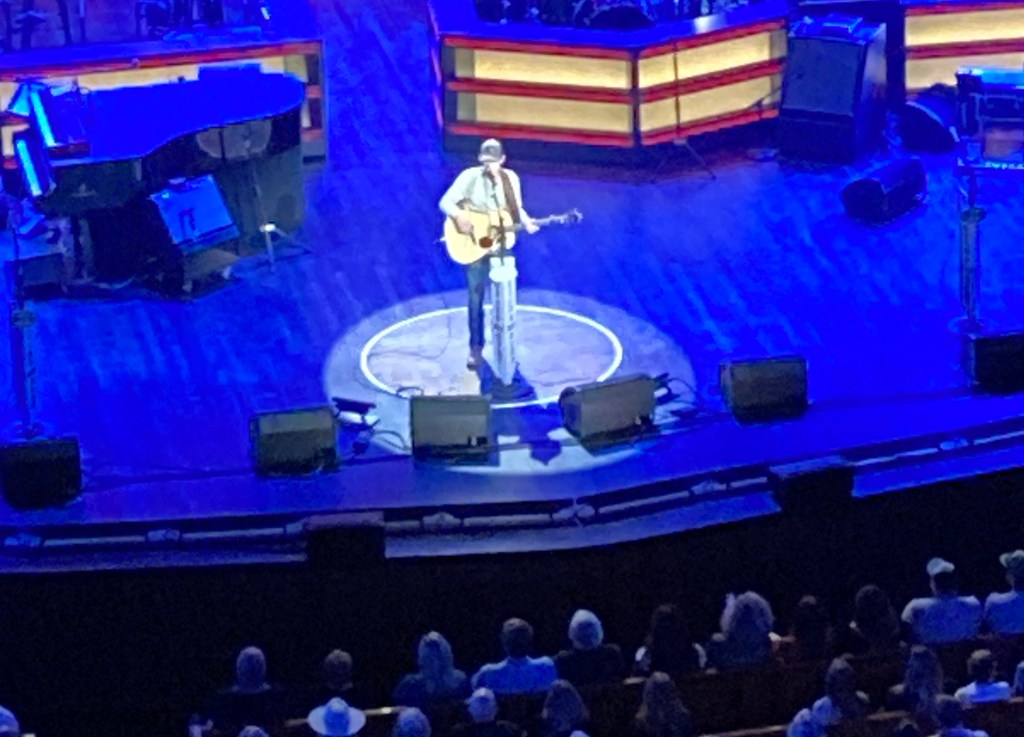
20-year-old singer/guitarist Sam Barber was next up, the first of two debut performers taking the leap from streaming services to the Opry stage. Exhibiting raw yet remarkably well-honed talent, Barber’s unsoftened Missouri accent (complete with occasional growl from the gut) and his determined strumming on “Straight and Narrow” (the first song he wrote, at the age of 16) grabbed the audience hard and strong in his acoustic solo slot.
Recent Opry inductee Charlie McCoy, one of those multi-instrumental Nashville cats who’s played on albums by everybody (Elvis, Dylan, Willie & Waylon, etc. etc. ) in the course of 12,000 sessions, brought the first half of the show to a rousing finish. After laconically drawling a humorous ditty about the consequences of “Thinking with My Heart” (“A heart doesn’t know how to figure out/ Whether to run or to jump/It ain’t got a clue; zero IQ/After all it’s just a pump”), McCoy pulled out his trademark harmonicas for a lyrical film score excerpt, then a lightning-fast “Orange Blossom Special” that nearly left the band eating his dust — and left the audience hungry for more. Cue the intermission!
Second half, second newcomer: RVSHVD (pronounced “Rashad”) made his Opry debut the night after being honored at a homecoming parade in his hometown Wataloochie, Georgia. The man’s look reflected hip-hop fashion, but the tunes told a more complicated story, as RVSHVD’s backing band pounded out the adrenalin ride of his current Chuck Berry-plus-fiddle single “Jukebox Money”, then segued into an midtempo weeper about his lowcountry roots — complete with chorus invoking a red brick church & his late grandma. The verbal dexterity and wit of the most ambitious rappers meshed surprisingly well with the down-home grooves — and the crowd ate it up.
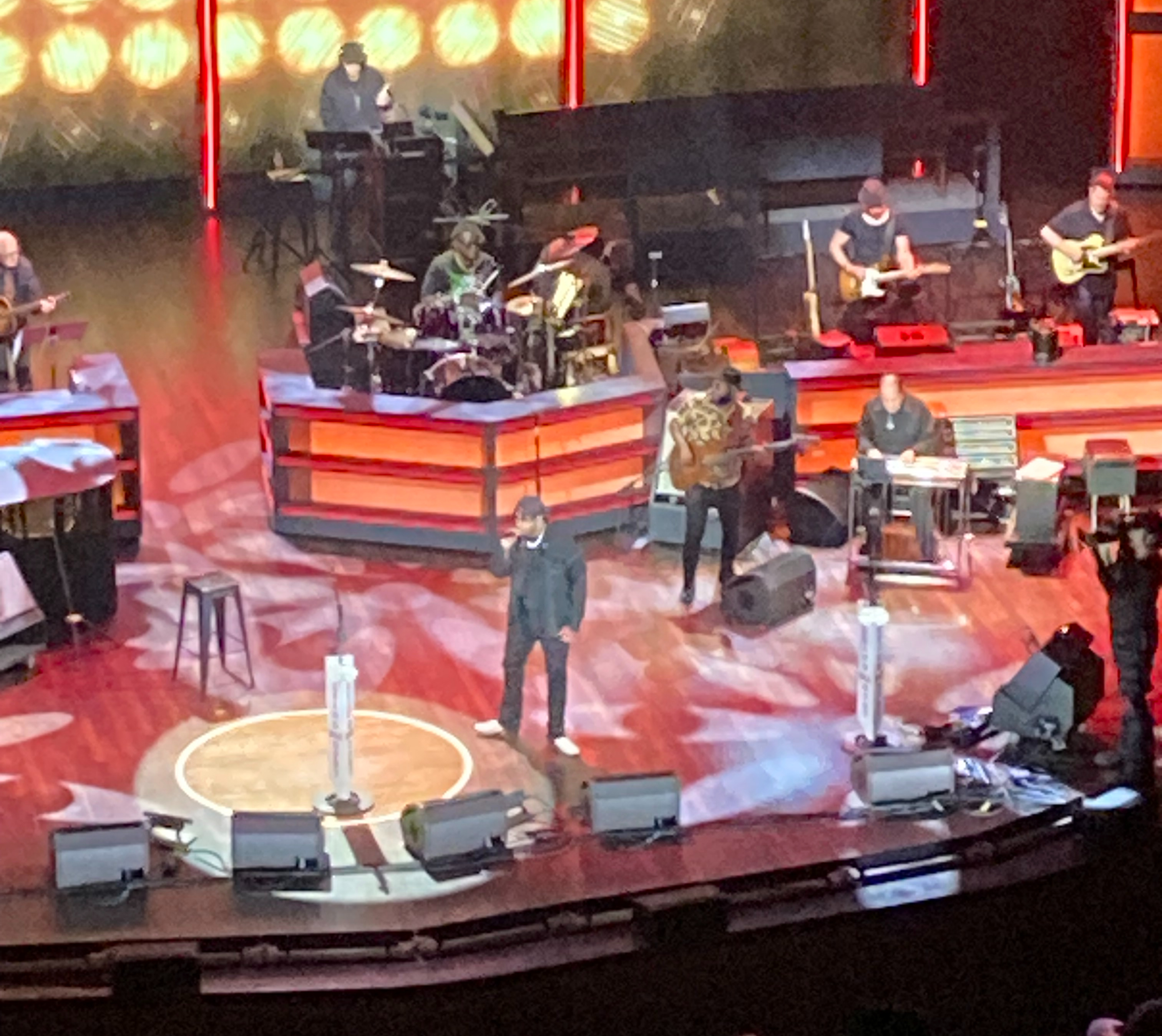
I’d never heard Ashley McBryde before this show, but she was obviously the night’s biggest draw; folks around us were singing along to her recent single “Light On in the Kitchen” and justifiably went nuts when she belted out Pam Tillis’ (“It’s 10’o’Clock) Do You Know Where Your Man Is?”. Attractively confident and obviously honored to be a new member of the Opry, McBryde and her band also offered sassy originals “The Coldest Beer in Town” and “Tired of Being Happy”; the whole set was an appealing mix of the classic tradition and the arena-country crunch of Eric Church and Chris Stapleton. McBryde is the real deal, and I’d go hear her again in a heartbeat.
Then there were closers The Cleverlys. Who knew that the Black Eyed Peas (“Let’s Get It Started”), Radiohead (“Creep”) and Dr. John (“Right Place Wrong Time”) had in reality covered bluegrass classics by this “family band” from Cane Spur, Arkansas? These five guys were very good, very funny and very strange; front man Digger’s deadpan lead vocals recalled Willie Nelson at his smoothest, with “nephews” Ricky Lloyd (bass, kick drum, vocal percussion), Haggis (mandolin, deranged Scottish monologues complete with Lord of the Rings shout-outs), Dale Vernon Dale (banjo, VCR repair) and Wasper (fiddle) keeping the precision-tooled insanity on track through numerically challenged song introductions and Southern stepdad jokes. Their act so beggars description that video from a previous Opry appearance (including announcer Mike Terry’s intro) must be seen to be believed:
So yeah, this isn’t your grandfather’s Grand Ole Opry — though acclimated ears could hear echoes of Gene Autry, Hank Williams, Loretta Lynn and Bill Monroe (among others) in the evening’s artists. Neither frozen in the past nor stranded in the present day, I found a night at the Opry an appealing window into the length and breadth of modern country music, as well as the cameraderie and straightforward entertainment value of its various practitioners. If you’ve got a weekend planned in Nashville, think about it.
— Rick Krueger
Livestreams of the Grand Ole Opry are available via WSM Radio, Sirius XM satellite radio and the Circle All Access streaming channel. WSM also archives previous Opry broadcasts on Soundcloud.
 Spirit of Cecilia
You must be logged in to post a comment.