
The Mommyheads share video for “Coney Island Kid,” prog-influenced title track from new album
New album Coney Island Kid out now!
Photo Credit: Steve RoodProg-pop cult heroes The Mommyheads have released the most ambitious album of their nearly four-decade career, CONEY ISLAND KID, out now via FANFAR! Records in Europe and Mommyhead Music for the rest of the world.
CONEY ISLAND KID marks the venerable NYC-based band’s 15th studio LP and first-ever foray into concept album terrain. Now, the band are pleased share the video for the title track and opening track from the new album.WATCH THE VIDEO FOR “CONEY ISLAND KID”ORDER THE ALBUM CONEY ISLAND KIDGuitarist, singer Adam Elk on the “Coney Island Kid“: The Video for ‘Coney Island Kid’ is a combined edit of 7 different shows from our Sept 2023 tour of Sweden and the US North East. ‘Coney Island Kid’ kicks off the album and firmly establishes the main character as a survivor, witness, fighter, protagonist and escape artist. It’s a 6 minute sonic subconscious deep dive into my childhood neighborhood that hopefully taps into those intense emotions most listeners have for their early memories. Love or hate the place you come from, your feelings for it will eventually need to be addressed to truly understand who you are. We did our best to conjure up the smells and sounds of Coney Island with music and sound design.”THE MOMMYHEADS
CONEY ISLAND KID
(FANFAR! Records / Mommyhead Music)Tracklist:
Coney Island Kid
Artificial Island
Spookarama
Solemn By The Sea
Suburban Office Park
Learning To Live
Why Aren’t You Smiling
Such Beautiful Things
Onset, MA
Soul’s AquariumWATCH THE VIDEO FOR “WHY AREN’T YOU SMILINGLast year saw The Mommyheads reaching new creative heights with GENIUS KILLER, hailed by Bay Area alternative newsweekly The Bohemian as “a tight, self-assured affair that sounds all the more youthful for its maturity.” CONEY ISLAND KID continues in that tradition, opening with an eclectic suite of technicolor prog-pop that uses archetypal Coney Island imagery to convey themes of desperation and soul-searching, complete with pier side ambience.
The skeletal acoustics on “Spookarama” call back to the whimsical woodsy gloom of 1989’s now-classic debut, ACORN, while elsewhere, songs such as the epic title track (arguably the closest the band has come to full-on interpolating Genesis) and the angelic tone poem, “Onset, MA,” see The Mommyheads continue to gracefully channel existential anxiety and progressive influences in equal measure. Having devoted a lifetime to evolution, both in terms of sound and the ever-increasing scope of their ideas, CONEY ISLAND KID stands as perhaps the most cohesive representation of The Mommyheads’ glorious eccentricities thus far.THE MOMMYHEADS:
WEBSITE | FACEBOOK | TWITTER | YOUTUBE
Monthly Archives: October 2023
Celebrating A Classic: Spock’s Beard’s V

In this crazy post, Tad and Brad think hard and deep about Spock’s Beard’s fifth album, appropriately named V. Tad and Brad (my gosh, we rhyme) think the world of this album. As Tad will note, it’s what brought him back to the genre of progressive rock, and Brad will affirm that he loves all things, Spock’s Beard, never having actually left prog rock. Indeed, if truth be told, Birzer thinks that he first encountered Spock’s Beard, THE LIGHT, sometime in 1994, even though the official literature claims a 1995 release date. . .
Brad. My gosh, it was 2000, that year of mystery and chaos that saw the release of the fifth Spock’s Beard album, V. The album, even subconsciously, seems to think that prog needs a new release, a new introduction to the world. Even the opening track wants to invite all new adherents to all things proggy.
At the end of the day, you’ll be fine!!!!!!!!!!!!!!!!!!!!!!!!!
And, to be sure, prog was coming into its third phase. Spock’s Beard, The Flower Kings, and Porcupine Tree had all ushered the genre into its newest phase.
Tad: Brad, it’s hard to believe that V is more than 20 years old! Yes, this one album reintroduced me to the world of prog. I still remember exactly how I discovered it: at the time I read Mojo Magazine regularly, and they had an issue with a Genesis cover story. There was an inset article about “current prog artists to check out”. One of them was Spock’s Beard, so I went to Tower Records (remember when there were record stores?) and, low and behold, there was a copy of V. I popped it into my car’s CD player, and I couldn’t believe the incredible music that poured out!
Up to that point, I was listening to practically every style of music except prog. In high school, I enjoyed Yes, Genesis, ELP, Jethro Tull, Pink Floyd, etc., but once the 80s hit, I quit following that genre. I was flabbergasted to hear a band like Spock’s Beard unapologetically playing progressive rock, but with an updated, contemporary sounding style.
I think what impressed me the most was Neal Morse’s gift for melody. He obviously loved the Beatles, but he didn’t imitate them. Rather, he incorporated their sense of harmony and melody into massive epics that never seemed overlong. I remember in March of 2021 we went down to Florida for Spring Break, and all I listened to for a week was Spock’s Beard! And from there an entire new world of music opened up for me.
Brad: Wow, Tad, what a wonderful memory. Florida and Spock’s Beard! Very nice.
In the early 1990s, I remember wondering what had happened to progressive rock and encountering–through Tracks Records in Bloomington, Indiana–a revival of the genre through Spock’s Beard, The Light.
As I noted above, it seems–at least in memory–to be sometime in 1994. I was a graduate student at Indiana University, then, and I was quite the customer for Track’s. I remember the manager telling me about The Light, but I remember it in the fall of 1994.
For whatever reason, SB remembers the albums as coming out in 1995. Somewhere–and I don’t know where–there’s a discrepancy. At the time, I was thrilled with The Light, and I wanted more. From that point forward, I followed the band. Except for the embrace of the f-word, I absolutely loved The Light.
It’s funny, but since the band was so abrupt in its language, Neal Morse has since sent out a warning about the music. Honestly, though it was his attack on Catholicism–especially through his album Sola Scriptura, that warned me more than his embrace as had the f-word. I don’t mind my kids hearing the f-word, but it was his attack on Roman Catholicism that really chilled me.
As it was, the band, Spock’s Beard, produced some great prog rock and some real straight-forward rock after 1995. It was V, however, that really reminded us all that progressive rock was not only alive but thriving. It was, by far, the most progressive album the band had released since its second release, Beware of Darkness. Yet, to be sure, V is nothing compared to its successor, Snow, which really embraced not only progressive rock, but the Catholic Church (its priests, in particular) as well.
When V came out, I was blown away,. Album number 5 from the band was simply brilliant, and I was so glad to have the progressive rock genre come back in full force. Indeed, when you bring into account the early Flower Kings, it and Spock’s Beard really introduced us to the third wave of progressive rock. Both, somehow, brought us all into the fold of a whole new take on the classic genre.
Tad: Before we get into discussing the music, I want to give a shoutout to the artwork. At first glance, it looks like a businessman walking in a desert past a traffic sign (a sideways V) telling him to go forward while a forked lightning bolt (making a V) pierces the sky behind him. But on closer inspection, you realize he has two shadows (making a V), he must be on an alien planet! The whole scene is worthy of Hugh Symes’ best work for Rush. I love it!
Brad: Agreed. The art is excellent and reminiscent of Hugh Symes. A wonderful comparison.
What surprises me most, however, Tad, is how much of a solo album for Neal Morse this fifth album from Spock’s Beard actually is. If we take the liner notes seriously–and I have no reason not to–Morse wrote every lyric and every song with the exception of the excellent. THOUGHTS (Part II), the most Morse-like of all the tracks! Indeed, the original “Thoughts” appeared on the second Spock’s Beard album, Beware of Darkness, and is credited to. . . no surprise. . . Neal Morse! Indeed, looking over the first six Spock’s Beard’s albums, what is shocking is that all seem to have been written by Neal Morse and Neal Morse almost (not always) solo!
This means, of course, that V really is a Neal Morse album with Spock’s Beard as a mere backing band. I will admit, I’m rather shocked to realize this. I had always thought the band contributed much more to Spock’s than this.
As such, Testimony is a Neal Morse album without Spock’s as a backing band!
That said, and attributed, Spock’s Beard V is an astounding album, whether a Morse album or not. Everything just works perfectly on V. The art, the lyrics, the music, the sequence of songs. All of it, just perfect.
And, though Morse wrote all of this, I’m quite happy with the band. Nick D’Virgilio is especially great at drumming so appropriately for this album.
Tad: Yes, the first six Beard albums were almost entirely Neal Morse projects. I have a DVD, The Making of V, that chronicles his production of V, and it’s very illuminating. It’s clear he has a very specific vision of how he wants every song to sound. He meets with each member of the group to go over their parts. They make minor suggestions, but by and large he is calling all the shots. Even that little woo-wah guitar sound that Alan Morse makes 12 minutes into “At The End of the Day” is due to Neal’s urging.
Speaking of “At the End of the Day”, let’s dive into the songs on this album. “At the End of the Day” is one of my favorite opening tracks, ever. It has it all – driving rock, acoustic passage with soft vocals, and time changes all over the place! At 16:28 in length, it’s not a quick listen, but the time flies – I never get fatigued whenever I listen to it. As with every Morse composition, the catchy melodies fall over themselves as they spill out of my speakers – they are endlessly engaging and captivating. I love this song!
You mentioned “Thoughts (Part II)”, and this song led me to explore the music of classic Gentle Giant, because somewhere I read that the a cappella sections were inspired by that group (I think by “Knots”, off of their Octopus album). I also hear a lot of Kansas in this song. It is another highlight.
Actually, there isn’t a bad track on V. I skipped over “Revelation”, but it deserves some praise – at first listen, you think it’s a relaxed, soft rock ditty, but then it morphs into some of the heaviest rock Spock’s Beard ever produced.
Even though V was only released on CD, I’ve always thought of “All On A Sunday” as kicking off “side 2”. This is such a happy, welcoming song for me. Once again, Morse’s gift for a catchy melody really shines here. “Goodbye To Yesterday” is more sombre, but still beautiful. This song is a showcase for the Beard’s knack for gorgeous vocal harmonies. You can hear how good a singer Nick D’Virgilio is here.
I’ve rambled enough – you’re our resident lyrics expert; what do you think of Morse’s words on V?
Brad: Tad, thanks for such good thoughts. I think your analysis is simply awesome. Fantastic. The DVD “The Making of “V”” sounds excellent. I’ll have to check it out.
I must admit, Tad, when it comes to Neal Morse lyrics, I’m always a bit conflicted. I love his music–composition, tone, flow, etc.–but I find his lyrics less persuasive as it were. Some of this is simply poor bias on my part. I loved the music of The Light, but I was less than taken with the lyrics. As mentioned above, I just think the “f-word” is totally avoidable in songs. To me, its employment is always and everywhere a sign of a lack of imagination. Since then, I’ve been skeptical about his lyrics. I especially disliked the lyrics of Sola Scriptura.
Specifically, as to V, however, I generally like the lyrics, though I find them–again–unpersuasive. When I listen to Big Big Train, for example, I always assume my prevailing attitudes and ideas will be challenged. As I hear V, though, the lyrics are just random words that sound good with the music. In no way have I been challenged in basic assumptions or ideas. I’m more moved by the insertion of a dirty organ than I am by the words.
Here’s section III of the “Great Nothing.”
Come up breathing
Up from the water
Man, he was so submerged
Where’s the feeling?
It must be way under
Far from the spoken word
No, no – no corporate ladder
No hometown parade
The fat cats just keep getting fatter
What does it matter
The thing must be played…
One note timeless…
Don’t let the buzz get you down
Don’t lose your memory or you’ll sink fast and drown
But you can’t seem to sleep for the thoughts in your mind
Since you can’t stand to think you have one hell of a time
Hanging with submergers you drink yourself blind
You think it’s fine
You’ve got time…
What is this all about? I have no idea, and, worse, I’m not that interested in knowing or figuring it out.
Again, Tad, don’t get me wrong. I really like Morse’s music, I just feel less taken with his lyrics. An exception to this is his lyrics for Testimony and Testimony 2. I loved and devoured these lyrics–as they told a story.
Tad: Brad, your points are well taken. As far as the lyrics to “The Great Nothing” go, I believe Morse wrote them as a tribute to his friend and fellow musician, Kevin Gilbert. He was enormously talented, but the music industry never knew how to promote him. He died not too long before V was recorded.
As I’ve mentioned before, I have a hard time paying attention to lyrics , except as they add to the overall sound of a song. It’s a failing of mine – I’m too lazy to get into them! Like you, though, I don’t have a lot of patience for gratuitous profanity when it occurs.
As far as “The Great Nothing” goes, I think, musically, it is one of the greatest songs Spock’s Beard ever recorded. It is one I never tire of listening to, with its various sections of melody. Dave Meros’ bass is outstanding on it, as is Nick D’Virgilio’s drums.
There is one section (the “You missed your calling” one) that sounds like something Paul McCartney could write – it’s that catchy. When I first heard this epic, I had to stop what I was doing and hit “Rewind” on my CD player several times!
They say that hindsight is 20/20, but I get the sense that Morse intended for V to close a chapter in Spock’s Beard’s career. I couldn’t wait for the next album, Snow, but I was very disappointed with it. It sounded so different from anything else they had recorded, and the story kind of creeped me out. Like you, I thought Testimony was a tremendous album – one of Morse’s all-time best. But that’s a topic for another post!
Brad: Thanks so much, Tad. You have excellent responses, of course, and I had no idea that Morse was referring to the work of Kevin Gilbert. Next time I listen to V, I’ll keep that in mind.
Tad: It’s always a blast to bounce thoughts and reactions with you, Brad! I hope our readers take some time to listen to V. It is not available on Spotify (apparently Morse doesn’t like their payment structure), but it is on Apple Music. Here is “The Great Nothing”, via YouTube:
Ultravox’s Rage In Eden, Revisited

In this post, Tad and Brad are joined by Kevin, as we assess the brilliance of Ultravox’s 1981 masterpiece, Rage in Eden. By the way, Tad usually does these intros, so forgive me (Brad!) for making a mess of it.
Brad: Tad and Kevin, so very glad to be doing this review with you. I have a feeling this will be a long one. It was, I must admit, Kevin who really introduced me to Ultravox in the fall of 1986, our freshmen year at Notre Dame. I had, of course, heard of “Vienna” as a single, but I knew very little about the band.
After telling him how much I loved progressive rock (especially Genesis, Kansas, and Yes), Kevin introduced me to Vienna (the album), Rage in Eden, Quartet, and Lament. I must reveal–I feel deeply in love with all of them, but especially with Rage in Eden and Lament.
At the time, Kevin mentioned to me that he loved the lyrics so much he hoped, one day, to write an entire book about “The Thin Wall.” This notion, of course, caught my attention.
But, I must also admit that my love of Ultravox has been deeply personal, too. I was a huge fan of Quartet, and I was listening to it when my wife and I drove to the hospital to deliver our fifth child way back in 2007. She (our baby) died in childbirth, and I still can’t listen to that album. I tried again, recently, and it only brought up terrible memories. In a weird way, I say this as a compliment to Ultravox, as the music means everything to me.
Relatively recently, though, Steven Wilson has remixed and remastered Midge Ure-era Ultravox: Vienna; Rage in Eden; and Quartet.
Tad and Kevin, what do you guys think of Rage in Eden?
Tad: Brad, I am looking forward to discussing this classic album with you and Kevin! I had just begun my junior year in college when it was released, and I still remember my jaw dropping when I first heard the urgent synth beat to “The Voice” fading in to full volume.
By fall of 1981, I was totally immersed in British new wave music, and I loved artists like Thomas Dolby, Gary Numan, The Human League, Depeche Mode, ABC, Howard Jones… well, I could go on forever! Anyway, to my ears there was something that immediately set Ultravox apart, and Rage In Eden became an album that transcended its moment in pop history. I think what struck me the most was the warmth of their music, which arose from three elements: Midge Ure’s powerful baritone vocals, Warren Cann’s excellent drums, and Billy Currie’s violin.
Other synthpop artists, like Gary Numan or Orchestral Manoeuvres In The Dark, could come up with killer hooks, but they also sounded cold and brittle. Ultravox had awesome synth lines that cracked and boomed, but underneath them was a human presence that lent their music accessibility.
Okay, I’ll stop for now and give Kevin a chance to jump in!
Kevin: Thanks Tad. So glad to be a part of this discussion. I came a bit later to this Ultravox album. I was intrigued by the Ultravox when I first caught the video for “Vienna” probably around 1982 or so. Not long after seeing it I found a copy of the album at Hogwild Records in San Antonio. I was completely taken with the sound. And shortly after that a musician friend suggested Rage in Eden. Upon hearing Rage In Eden again today I had the same uncanny sense about it that I was so drawn to so many years ago.
On the one hand, they are unmistakably a part of the early 1980’s oeuvre. The synth sounds by themselves place them among the artists you mention, Tad. And I would agree that unlike Numan and OMD, Ultravox had a warmth and a power that was much more appealing. And Midge Ure’s theatrical way of writing really sets their music apart. The textures and the lyrics are very much about establishing a sense of place and story. It’s as if you’ve stepped into the pages of a novel and UV is providing the soundtrack. And his stories and vocal delivery are so compelling that even after so many years the music is remarkably fresh and engaging.
Another thing that struck me when listening to Rage in Eden again, was the guitar work. The synths are clearly present throughout the mix, but it’s Ure’s guitar that really sets them apart from the schtick of the typical keyboard band. It’s the great blending of his angular phrasing and the sharp tone that shape the overall sonic impression. No doubt he and Edge (U2) were listening to each other, but Alex Lifeson and Geddy Lee of Rush were too. Ultravox was breaking new ground.
Brad: I’m in full agreement with you both. I love the music on Rage in Eden and I also think it’s angular, but I must admit, it’s the lyrics that do the most for me. Take the lyrics to the title track:
We sit and watch these lifeless forms
Stark and petrified
The high suspense of an empty stage drawing in clutching to its breast
With murmured words we sigh and focus on the main facade
Beyond the hard reluctant windows
News from magazines
We wrote their names on books we’d borrowed as if to bring us closer still
And threw it all away to focus on the main facade
Rage in Eden jigsaw sequence
But no-one could see the end
And they were the new gods
And they shone on high
Their heavy perfume on the night sucked them down in red tide
All is through the looking glass focus on the main facade
Rage in Eden jigsaw sequence
But no-one could see the end
Disciples of the new way
Portraits in the new sand
See when they run their longest mile holding caps in wet hands
Eyes upon them try to focus on the main facade
Rage in Eden jigsaw sequence
But no-one could see the end
These lyrics are simply astounding. As many times as I’ve listened to this album since 1986, they continue to grab me, wrestle with me, and turn me into something pathetically receptive.
Or, even better, the lyrics for “The Thin Wall,” here with Bovine Grace!
The sound is on the visions move
The image dance starts once again
They shuffle with a bovine grace and glide in syncopation
Just living lines from books we’ve read
With atmospheres of days gone by
With paper smiles
The screenplay calls a message for the nation
And those who sneer will fade and die
And those who laugh will surely fall
And those who know will always feel their backs against the thin wall
The thin wall
Thin wall
Grey men who speak of victory
Shed light upon their stolen life
They drive by night and act as if they’re moved by unheard music
To step in time and play the part
With velvet voices smooth and cold
Their power games a game no more
And long the chance to use it
And those who dance will spin and turn
And those who wait will wait no more
And those talk will hear the word
And those who sneer will fade and die
And those who laugh will surely fall
And those who know will always feel their backs against the thin wall
The thin wall
Thin wall
The thin wall
And those who dance
The thin wall
And those who talk
The thin wall
And those who sneer
The thin wall
And those who laugh
The thin wall
And those who know
The thin wall
And those who dance
The thin wall
And those who wait
The thin wall
And those who talk
Again, simply astounding. Words that actually mean something. Or, again, “Accent on Youth”:
What is this phase that I am going through
O these precious years
Please take my hand and let me breathe again
Young depressive tears
We stumble blindly chasing something new and something sinful
You take my time you live my life for me
What have I done to rate this penalty
You suck me dry
My body cries
We stumble blindly chasing instant thrills and lasting memories
Accent on youth
Attention
Ascends on you
I scream with frustration and lost control
Open for the blows
My hands fall limp and hang down by my side
Take my soul and go
We stumble blindly chasing dancing lights and others’ wishes
Just let me close my eyes and slip away
Dream a dream alone
You give me just enough rope for the task
Let this man alone
We stumble blindly chasing silhouettes and vacant faces
So well rehearsed our moves once so graceful turn against us
We stalk dark passages, we’re looking for that sweet surrender
Just let me close my eyes and slip away
Dream a dream alone
You give me just enough rope for the task
Let this man alone
We stumble blindly chasing silhouettes and vacant faces
So well rehearsed our moves once so graceful turn against us
We stalk dark passages, we’re looking for that sweet surrender
After thirty-plus years of listening to these words, they still mean everything to me. If I had to find a comparison, I would say that, at the time, only The Fixx were writing lyrics as beautifully wrought and perfectly written for the angular music they were producing.
Tad: Kevin, now that you point it out, of course Ure must have been influenced by The Edge in his guitar style! His choppy, rhythmic lines are very similar to The Edge’s, yet still original. And his solos are so good – flowing and ascending inexorably to a satisfying conclusion. His solo on “Death in the Afternoon” is breathtaking.
Brad, thank you for sharing the lyrics to these songs. As many times as I’ve listened to this album, I’ve never delved into them very far. To me, they always conjured an overall atmosphere of drive and energy, while sounding somewhat claustrophobic (and I mean that in a good way).
I love the way Rage In Eden is sequenced – for example, after the slow dirge of the title track, “Death in the Afternoon” bursts out with incredible energy. The music of that track is paradoxically life-affirming, given its title. And how about the transition from the album’s longest song, “The Stranger Within” to “Accent on Youth”? The former song is one long, relentless groove with subtle synth accents in the background that hypnotically lulls the listener into a relaxed state, until the rapid beat of “Accent on Youth” ups the energy again with a beautiful melody sung with pure joy by Ure. That transition might be my favorite moment of the album.
However, I can’t pick a favorite song, because each one hinges on the next to create an organic whole. I think Conny Plank deserves a lot of credit for the frankly beautiful sound of this album. There is a depth to the soundstage that reveals new and delightful details in the mix. At times it is a massive wall of sound (“The Voice”), and at other times it is a wide-open space, (“Your Name Has Slipped My Mind Again”).
One last point I’d like to make – the album art is some of my all-time favorite. Peter Saville, who also worked with New Order and Factory records, came up with a gorgeous art deco style for Rage In Eden that complements the music perfectly. (See above) It looks sleek, modern, ancient, and classical all at the same time. Due to legal issues, his artwork that graced the 1981 vinyl version wasn’t used on a couple of reissues, but Chrysalis has recently reissued a 5 CD/DVD version that has the original art.
Brad: Tad, you’re most welcome! Good lyrics mean everything to me. So glad to know there are good writers out there. Ultravox is definitely among the best when it comes to words and lyrics. If, as Kevin said, the guitar is angular, so are the words and images the band presents.
And,Tad, I agree with you regarding the organic whole. Every song relies on every other song. A definite completeness to Rage in Eden.
Kevin, I hadn’t thought about The Edge getting his sound, in part, from Ultravox. But, as you pointed out, we do know that Rush was influenced by Ultravox. You can really hear it on “Vital Signs” on Moving Pictures and really all of Signals.
Kevin: I don’t doubt their influence on other bands and songwriters of the time. Ure didn’t invent the chopped chord technique—reggae and ska were everywhere in the English scene—but he brought into it his own colors within the context of the atmospheric keyboard parts. That blend IS the UV sound. And he was also working more with minor chords and almost jazzy voicings. That along with the mostly dry engineering, creates a sort of cubist tapestry.
Which is what makes the final track so striking. “Your Name Has Slipped My Mind Again” is drenched in reverb, echo, and sustain. It’s like a freeze frame at the end of an intense film but the credits don’t flow. Instead, it continues for four-and-a-half minutes frozen in time. None of the parts are synced until the refrain is sung. And then all you can recall of the lyric is the title line and the passionate “oh ohs.”
Which brings me back to the dramatic nature of the writing. He places you in a narrative that leaves you wondering, yet there is a clarity to the storyline. It’s not all smoke and mirrors—or Duran Duran-y drama for drama’s sake. As it concludes you have the distinct feeling that you’ve arrived somewhere with the narrator: somewhere quite mysterious, yet beautiful.
And this cinematic sensibility (which begins with the arrival of Midge Ure on Vienna (1980)) has Ultravox creating great art and continuing the development of progressive rock. They pick up where Yes’s Drama (1980) leaves off and take the genre somewhere utterly new. Though at the time of the release of Rage in Eden Chris Squire and the boys were working on their own new band, Cinema, (which eventually drew in Jon Anderson and morphed into Yes’s 90125) theirs was more of radio-friendly rock. Concurrently Genesis was heading into similar territory with Abacab and Genesis (1983). Ultravox, along with a handful of other like-minded groups, were much more the avant garde creativists and the real inheritors of the progressive rock aesthetic. Less than five years after the release of Ultravox’s Lament, Talk Talk would release their post-rock masterpiece Spirit of Eden.
Which reminds me—I’m glad that you focused in on the lyrics, Brad. Because there is something so compelling about Ure’s writing and the way he brings his sensibilities to each subject. There is a unique sense of place for each individual track on Rage in Eden. If you examine the tracks carefully in sequence you’ll notice that each one has either a slightly or sometimes greatly differing cadence. Which leads to another striking element on the album—the variety in the groove. Even though three of the tracks share a close tempo it’s never in sequence and the other six tunes are quite varied.
It’s interesting, Tad, that you mentioned the transition between “The Stranger Within” and “Accent on Youth.” Rage in Eden really shines in those transitions—like scene changes.
And remarkably, despite it being a classic New Wave album, it’s clear that at least the final track was recorded without a click track. The tempo imperceptibly varies a great deal—as much as 7bpm faster and slower and in that ethereal space. Yet Ure’s vocal, the drum, and the keyboard are pretty tightly in sync after the intro. Which makes it likely that at least these main parts were recorded live in the studio and not overdubbed. Coming on the heels of the incredible ascending key modulations at the end of “Accent on Youth” (one of my favorite musical moments on the whole album), into the great violin solo called “The Ascent”, then the cascading piano and the revved-up glissando at its culmination and suddenly…it cuts off into an echoing gunshot. The variability in the final track’s tempo along with the removal of the rhythmic pulse casts the listener into space—adrift—off a cliff and in descent. It’s one of the most powerfully visual moments on the whole record. A riveting conclusion to the whole album.
Tad: Beautiful insights, Kevin! Midge Ure himself would agree with you; he is quoted as saying, “I think ‘Rage in Eden’ was always one of my favourite albums. There’s a starkness about it, an austere, mystical distance, a coldness to it but a coldness that kind of works.”
I think with that, we can bring our celebration of Rage In Eden to a close. Even though it didn’t chart above 144 in the US, it had a huge influence on the New Wave music scene internationally. I hope our conversation has given Spirit of Cecilia readers some incentives to check out this classic work from the early 80s!
Here is the official video for “The Thin Wall”:
CONFLICT HOW WARS ARE FOUGHT BY GENERAL PETRAEUS and ANDRE ROBERTS review by J. Jordan

Magenta’s Robert Reed and Camel’s Peter Jones join forces once again with new Cyan album‘Pictures From The Other Side.’
| Alongside Luke Machin and Dan Nelson, the second Cyan album will be released on Nov 17th 2023. Video for “Broken Man” out now! |
 |
| Keyboardist and composer Rob Reed, known for his work with Magenta, Kompendium and Sanctuary solo albums, has once again joined forced with Peter Jones, along with Luke Machin and Dan Nelson for a new Cyan album titled Pictures From The Other Side. The second album from the resurrected project is due out on the 17th of November 2023. The new album contains 6 songs, including the epic 17-minute track ‘Nosferatu’. The CD is accompanied by a DVD with a full 5.1 surround mix of the album and a live acoustic performance of songs from the previous album For King And County. Watch the video for the album’s opening track “Broken Man” here: https://youtu.be/ndR-KT3i6Kc?si=tefp9XicW_0w3qKg Pre-order Pictures From The Other Side here: https://tigermothhosting.co.uk/CYANCD2023/ |
| Cyan was originally formed by Robert Reed (Magenta) when in school, back in 1983. After recording some demos at a local studio, the band went their separate ways. Years later, those demos led to the release of ‘For King And Country’ on the Dutch SI music label. It was the first of three Cyan albums released in the 1990s before the project was shelved and Rob went on to form Magenta.20 years later Rob Reed, along with a killer line-up, decided to brush off the cobwebs and successfully release a completely re-worked version of the ‘For King And Country’ album. Cyan has since performed at the 2023 Night Of The Prog festival in Germany, and at the 2022 Summers End and Fusion festivals in the UK. Rob Reed: “I remember that the first Cyan album ‘For King And Country’ was written when I was still in school with a band I formed with some school friends. After I left school, we went our separate ways and it was several years later that I was approached by the record company. After the success of the first album, they wanted a follow-up so I wrote new material for what became ‘Pictures From The Other Side.’ It was more song-based, but included a couple of long epics. Obviously, I was influenced by the classic Prog of Genesis and Yes when writing this originally, but I was also listening to a lot of other bands of the time like It Bites, Simple Minds and Marillion. It’s been great to finally hear this material played by this line-up, it’s a completely different album. Re-written, re-recorded and re-arranged. Hopefully, I’ve brought to the album, everything I’ve learned in my career. Pete Jones: “It’s a joy to be involved in the ongoing resurrection of the Cyan canon and the vision Rob has for these new interpretations. As a vocalist, there’s so much to work with on the new album, with epics like “Broken Man,” which really let me dig deep into my inner Genesis prog vocals. The title track has some great hooks, as does the rest of the album. Tracks like the dark but beautiful “Solitary Angel,” and the vampire world of “Nosferatu,” really call for some vocal gymnastics where I can stretch myself and really go for it. Then there’s “Follow The Flow,” which is just gorgeous. As with all Rob’s stuff, it’s the feeling and emotions which are key to the whole thing. I hope I’ve managed to do my bit with the vocals. We’ve now got a few gigs under our belt, including the recent fabulous time we all had at Night Of The Prog in Loreley. That was a real highlight of the year for me. The live band is sounding really great, with Luke, Dan, Jiffy and the man himself Rob Reed all at the top of their game. As well as doing the vocals, I play sax and whistles, and rhythm guitar which Rob asked me to do in a moment of madness. Ha-ha. All being well, we’ve got some rather special shows in the pipeline for next year. So I’m looking forward to the album coming out, and taking it to the stage!” |
 |
| CD tracklisting: 1- Broken Man 2- Pictures From The Other Side 3- Solitary Angel 4- Follow The Flow 5- Tomorrow’s Here Today 6- Nosferatu DVD consists of: Full album in Dolby Digital and dts 5.1 surround Promo videos The Quiet Room session (live acoustic performance) 1- I Defy The Sun 2- Don’t Turn Away 3- Call Me 4- Man Amongst Men/The Sorceror 5- Snowbound 6- For King And Country Pre-order ‘Pictures From The Other Side’ here: https://tigermothhosting.co.uk/CYANCD2023/ |
  |
  |
| Cyan is:Robert Reed (Magenta / Kompendium / Sanctuary / Chimpan A) Peter Jones (Tiger Moth Tales / Camel / Francis Dunnery’s It Bites) Dan Nelson (Godsticks / Magenta) Luke Machin (Maschine / The Tangent / Karnataka / Francis Dunnery’s It Bites) |
| Magenta/CYAN/TigerMothTales Website https://www.tigermothshop.co.uk/ |
Steven Wilson on Israel

RE :Israel’s Challenge in Responding to a Brutal Surprise Attack

By David Petraeus and Andrew Roberts
Oct. 12, 2023 1:00 pm ET
“The U.S. may now be less interested in Islamist extremists than in China and Russia, but that does not mean the Islamist extremists have lost interest in us. Their lust for blood is undiminished. As soon as they have an opening, they will strike. “
ABSOLUTELY TRUE. THIS IS TRULY THE LONG WAR and the CLASH OF CIVILIZATIONS.
Putin will die, sooner or later, and become a footnote in history. Russia will recede into the sick man of Europe that it is.
But HAMAS hopes to become MARYTRS for the ages -and who knows they might be. Like a poisonous weed, it will be difficult to extirpate them entirely.
Remember the enemy is within -PALESTINIANS have emigrated all over the world.
All we can hope to do is cull the herd periodically IMHO.
But I would place my money on the Jews -they are smart, brave, rich, and united. They have many many friends and admirers.
ISRAEL HAS ENDURED AND WILL ENDURE.
So many Empires oppressed the Jews and they are all in the trash bin of history now.
WHY?
Because MONEY and POWER are not enough and because WISDOM is superior to terror and GOOD WILL TRIUMPH OVER EVIL.
HAMAS IS EVIL.
PRAISE THE LORD and pass the ammunition.
We are going to need plenty of both if we (Western Civilization) are going to survive this century. If we are wise we will have plenty of both.
JUSTICE WITH COURAGE as a Jew taught me IS WORTH TEN THOUSAND MEN.
great article. INFORMATIVE, SOBER and WISE!
RICHARD K. MUNRO Oct 12 2023
ON SHAKESPEARE
(MATTHEW ARNOLD)

“Others abide our question. Thou art free.
We ask and ask—Thou smilest and art still,
Out-topping knowledge. For the loftiest hill,
Who to the stars uncrowns his majesty,
Planting his steadfast footsteps in the sea,
Making the heaven of heavens his dwelling-place,
Spares but the cloudy border of his base
To the foil’d searching of mortality;
And thou, who didst the stars and sunbeams know,
Self-school’d, self-scann’d, self-honour’d, self-secure,
Didst tread on earth unguess’d at.—Better so!
All pains the immortal spirit must endure,
All weakness which impairs, all griefs which bow,
Find their sole speech in that victorious brow.”
Shakespeare, Matthew Arnold
On the estranged friend who calls or writes not
By Richard K. Munro
TRUE FRIENDS NEVER PART ALL TOGETHER
We try to stay connected with friends. You hear an old friend with whom you have fallen out of close contact is seriously ill. You write to him and give him your phone numbers and email and tell him to call or write any time. You offer up a prayer for him and his family. But the rest is silence. Only God knows the reason.
Of course, it is sad to realize I cannot connect with some good friends except via prayer because they are dead.
No more contact is possible this side of paradise.
Classmates I knew in school are dead.
Some died in their 20’s, in their 30’s , in their 40’s some in their 50’s.
My next-door neighbor -a close acquaintance of 20 years but I considered him a friend. He was a really nice guy. He was only 62 younger than I. We are going to his funeral next week.
Three of my really close friends were killed in car accidents by drunk drivers. Two of them were killed within walking distance of my house. I don’t even like to drive that way anymore because that corner has bad associations.
Yes, who can know? Perhaps that person who doesn’t communicate is depressed or embarrassed or just doesn’t care. SCIRE NEFAS ..it is forbidden to know all. Not all can be known.
It is sad of course to be rejected by people but relationships are a two- way street.
Corresponding is difficult but picking up the phone is easy but it is also intimate. Some people don’t want to open up or give answers. So all you can do is be prepared to accept their phone call IF they call. I know someone I cannot call any longer because it is painful. The last four or five times I called that person just BANG hung up on me. So I will never call again. That was almost ten years ago.
All one can do is do the right and humane thing. Then offer up a prayer for our friend of yesteryear.
Many of the men I knew in school and in the Marines are gone -dead.
In 1976 a Sea Knight Helicopter crashed in Quantico and 23 Marines were killed. I didn’t see the crash but I saw the bird take off. The weather was turning bad so our Company Commander said -people grumbled- we would walk back to camp over 20 miles. We arrived when it was almost dark dirty and hungry. But that’s when we found out that one of the previous birds went down.
When on liberty on the USS Trenton there was a collusion and dozens of Marines were killed. I could have been on either one of those trips.
But when the door is closed, when the mail doesn’t arrive, when the phone doesn’t ring when the email box is empty all one can do is pray.
Some people are friends when it is convenient or useful or when they’re coworkers.
Some people are just ships passing in the night. Some signal and some go quietly by.
If one has a single true friend or a single loved one for any period of time one should be grateful. I think I have been luckier than most though less fortunate perhaps than many others.
But I am not jealous.
I am just grateful for the love and close relationships I have known.
And I am thankful for the great classics -the Bible, Shakespeare, Dante, Horace, Cervantes. In my retirement I have plenty of sun, plenty of quiet, baseball on the radio, plenty of music and plenty of books. I have enough money to be generous to our grandchildren -we are blessed to have them- and visit them from time to time. I don’t have the resources or the stamina to travel all over the world but I am very grateful that from 1961-2005 in particular I had the chance to visit many states and provinces and many countries in South America, the Caribbean ,and Western Europe. Next week I will have a chance to visit -again-Washington DC a city which I have visited dozens of times. I spent a year at the University of Virginia so I have seen most of the principal sights. But mostly I will enjoy seeing friends and remembering friends and loved ones. As Thomas Moore sang in the Meeting of the Waters.
Yet it was not that nature had shed o’er the scene
Her purest of crystal and brightest of green;
‘Twas not her soft magic of streamlet or hill,
Oh! no, — it was something more exquisite still.
‘Twas that friends, the beloved of my bosom, were near,
Who made every dear scene of enchantment more dear,
And who felt how the best charms of nature improve,
When we see them reflected from looks that we love.

Many years ago at the old 1407 Club Club in New York City (now long gone) my father and I met the tenor James McCracken. He had just released an album of Scottish and Irish songs -The Meeting of the Waters. He had finished his dinner and generously offered that we finish our coffee with him. My father, in particular, knew his work very well and had seen him perform at the Metropolitan Opera. But we talked about why he made his Scottish-Irish album and he said he had listened to McCormack, Frank Paterson and Kenneth McKellar his entire life and he loved the traditional and popular songs. He said it was important, he believed to cross over from classical to popular music. It was a nice moment. He loved being with genuine fans of his music We loved spending some time with him. From then on when I hear this song I remember my father and James McCracken. But also Thomas Moore and the sentiment of his poem.
My father had been a fine athlete in Scotland (winning a medal for best goalie in the city of Glasgow for his level youth team). But in America, he working at several jobs -almost full-time year-round – from his 12th birthday. So he had no time for sports. He turned ALL of his money to his mother and she would give him 25 cents for the subway and a Saturday movie
My father played on a legendary and ill-starred Football (soccer) team called the St. Anthony Ants of 1924-1925-1926-1927 when they were the champions every year or close to it.
The Ants first ground was a public park situated beyond the southern end of Hamilton Street (now Nethan Street) in Govan (South Glasgow.. It was a humble grass soccer field. It was unenclosed -cold and wet in the winter and had no pavilion, so the players had to change in the League of the Cross Hall in Hamilton Street.
Father Collins (parish priest of St. Anthony’s)and Bishop Donald Macintosh were both avid supporters of the team and helped the boys get shoes and equipment. Both men had studied at the Scots College (then at Valladolid, Spain and in Rome). Both were avid linguists and could speak Italian and Spanish as well as Gaelic, Scots and English. My father loved both men and they were friends of Uncle Johnny Dorian (his fourth-grade teacher and later headmaster of St. Anthony’s.). My father called him Uncle Johnny but he was really my grandmother’s sister’s son so my father’s cousin.
Father Collins married his parents, baptized my father on March 17, 1915, was at his first communion. Father Collins had a very strong influence on my father and his mother, brother and sister visited the Dorian household often and Father Collins and Bishop Macintosh were frequent visitors. My father, his family, and Johnny Dorian and his daughters and the Bishop would listen to recordings of Caruso and John McCormack, chiefly Italian opera but also English, Irish, and Scottish songs. Father Collins and Bishop Macintosh later became close friends with Father Sidney MacEwan, also of Govan and later a successful recording artist. When McCormack died MacEwan was by his side and sang to him the Highland song ISLAND MOON.
I believe my father’s love of languages and classical music, particularly opera began with those Sunday dinners in the 1920s. The legendary great years of the ill-starred ANTS:
Scottish Junior League Victory Cup Winners 1918/19, 1921/22
Glasgow Junior Cup Winners 1918/19, 1921/22,
Elder Cottage Hospital Charity Cup Winners 1923/24,
Scottish Junior Cup Runners-Up 1918/19, 1924/25
Why such a tragic team?
Because so many of their fathers had been killed in WWI and many of my father’s teammates were later killed themselves in WWII many at Dunkirk with the 51st Highland Division, North Africa, and Normandy.
Some died in Nazi slave labor camps. One of the few times I saw my father weep in public was when we went to the Scottish National War Memorial in Edinburgh in 1967. There was THOMAS CRAIG (Cameronians/Scottish Rifles) 4 Dec 1942 (North Africa) KILLED IN ACTION. His teammate and very best friend.
PATRICK QUIGLEY KILLED 10 October 1943 (HLI -Highland Light Infantry -his teammate and cousin)
Many of his Quigley kin had been killed in the Argylls or HLI in the First World War. There was also his “Uncle Johnny” (or American Johnny) Robertson his father’s best friend who had returned to Scotland in 1938 to retire. He was killed in the Glasgow Blitz -6 May 1941. I still have books that belonged to Robertson that he gave my father in 1938, Shaw, Kipling, and Burns. My father as he saw name upon name began to cry uncontrollably. I was frightened.
But I always remember the Scottish people there were very kind and sat with my father and talked to him and comforted him. My father said, “If I hadn’t come to America in 1927 my name would be in the books next to theirs. It was rifles against tanks and they didn’t have much chance. They were always in the front lines in the thick of the fight.” It left a strong impression on me and when we had teas and Empire biscuits afterward he spoke Johnny Robertson and his friends and kinsmen. Immigration had been good for my father but also had caused him personal suffering, pain ,and loneliness. My father always wanted to be an American but knew he was partially a permanent exile. In 1967 my father pointed out the Boer War memorial that that been bomb damaged on 6 May 1941 in Kelvin Grove Park. When I am Glasgow I always go back to visit that spot if only for a few moments. REMEMBRANCE.
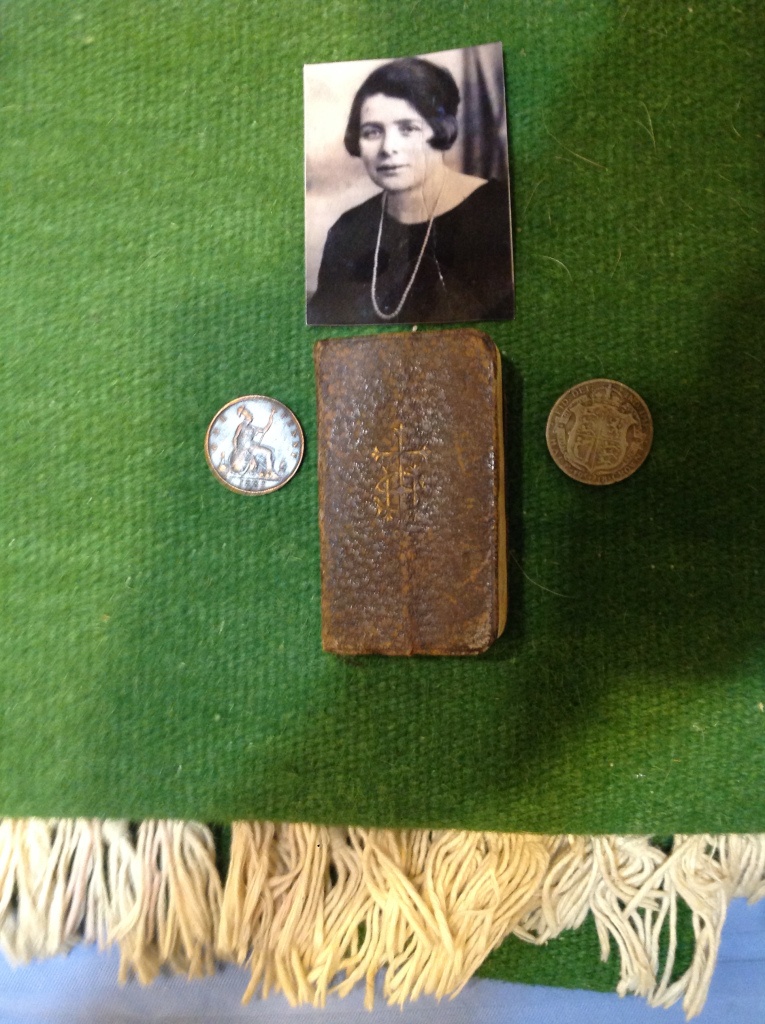
When my father graduated from high school, his grandfather, Jos Munro, his mother, his sister Johnny and his father and his cousin Jimmy Quigley were there. My grandfather gave my father five coins (coins I still have)One is a British Penny (1881) given to my grandfather when he went to sea when he was eight years old. It was all the money he had and his mother said, “Never spend it unless your life depends upon it. Naebody can every say Tommie Munro is penniless. ” He did not see his mother or family for eight years but he held on to the penny virtually his only possession.
Three of the coins were American silver dollars dating from the 1890s and 1920s. These were actual dollars his father and grandfather had earned as a worker in America. The last was very special; it was an English 1918 silver half-crown that my grandmother had sent my grandfather and he kept in his left tunic pocket in his missal. She gave him one for 1914, then another for 1915, then another for 1916, then another for 1917, and the last he had his pocket for Armistice Day 1918. When he returned to Scotland in May 1919 he turned it over to her and it was one of her prized possessions until her untimely death on March 7, 1942. She never saw the Allied victory nor her sons come home from the war. My father gave the missal and the coins to me after my mother died in 2001 and told me the story.
Ne obliviscaris -do not forget.
Mary Munro, the Missal and two of the coins.
SONNET 30
When to the sessions of sweet silent thought
I summon up remembrance of things past,
I sigh the lack of many a thing I sought,
And with old woes new wail my dear time’s waste:
Then can I drown an eye, unus’d to flow,
For precious friends hid in death’s dateless night,
And weep afresh love’s long since cancell’d woe,
And moan the expense of many a vanish’d sight:
Then can I grieve at grievances foregone,
And heavily from woe to woe tell o’er
The sad account of fore-bemoaned moan,
Which I new pay as if not paid before.
But if the while I think on thee, dear friend,
All losses are restor’d and sorrows end.
Look At The Flower Kings Now!

Welcome back, Spirit of Cecilia readers! In this post, Brad Birzer and Tad Wert discuss the new album from the Flower Kings, Look At You Now.
Tad: Brad, I know the Flower Kings are one of your favorite artists in music. They certainly are prolific – when they release an album, it’s usually a double-length one. Look At You Now clocks in at a relatively modest (for them) 67 minutes.
I’m not as big a fan of them as you are, but I certainly respect their talent. That said, I have to say that this album is really attractive to me. It seems more focused and energetic than previous releases. Right off the bat, “Beginner’s Eyes” is a song I bet Yes wishes they could produce these days. It’s majestic and inviting at the same time.
Brad: Dear Tad, you wrote this over a week ago, and I’m just now getting to it. I’m so sorry, my friend. It’s been crazily busy here, but not busy enough to warrant such neglect.
Anyway, I’m so glad you’ve introduced us to the new Flower Kings album, Look at You Now. I first came to the Flower Kings back in the year 2000. A student (now a beloved colleague in the philosophy department) leant me his copy of Flower Power, and I was utterly gobsmacked. I couldn’t believe how nuanced the album was on disk one (the Flower Kings rarely do anything short), and I loved the “b-sides” of disk two. From there, I worked backward and found my way through the band’s entire catalog.
For twenty-three years now, I’ve been fully immersed in everything Roine Stolt (the founder of the band) has done–from the Flower Kings to Kaipa to Transatlantic to The Sea Within to Agents of Mercy. The guy is astoundingly relentless and talented. I’ve even tracked down and purchased–for my personal collection–Flower Kings rarities, all of them beautiful.
The latest album, Look at You Now, is much more laid back than I would’ve expected from the band. If you look at something like Space Revolver (my favorite album from the band), the band is nearly unrestrainable. But for this new album, the band is confident in its mellow state. Even its mellowness, though, has a nice intensity to it.
Tad: Brad, I find it interesting that you characterize Look At You Now as laid back – my first impression was that it had more fire than usual! However, I haven’t heard Space Revolver, so I don’t have the same history to compare Look At You Now to that you do. As I mentioned in the intro to this post, I think “Beginner’s Eyes” is a great song that outdoes anything Yes has recorded in years. Stolt’s guitar really stings in his solo. Another song I found immediately appealing is “Scars”, with its gritty, bluesy intro and infectious groove it lays down. Once again, Stolt’s guitar work is outstanding (assuming he’s the lead guitarist here); the entire song reminds me of something Eric Clapton might have produced at his peak.
I also appreciate the fact that almost all the tracks on this album are relatively short – more than half are under five minutes. Maybe it’s my age, but I’ve lost patience with songs that meander without resolution for more than six or seven minutes. I have a friend who went to a Phish show a couple of nights ago, and he said he had to leave after the first three songs took 45 minutes! Neal Morse is one of the few artists who can hold my interest over a long period of time; most others, not so much. Okay, rant over – as I said, I think the Flower Kings have done a great job paring every song on this album down to its essentials, and I think that makes for a really strong album overall.
Brad: Tad, thanks so much for a great response. I love the rant. I must admit, though, I’m a guy who likes meandering in my music. Phish playing only three songs over forty-five minutes sounds wonderful to me. I’m guessing I would’ve been immersed in the experience.
As to The Flower Kings, this new album is definitely a surprise, especially given the shortness of the songs. But, I very much appreciate and like what the band is doing. I think you’re absolutely right, any band–Yes or The Flower Kings–should be proud of a song like the album opener, “Beginner’s Eyes.” What a delight it is.
As much as I love the dual vocals with the Flower Kings, I also especially like the instrumental passages, and one of my favorite tracks is “Dr. Ribedeaux.” Despite the absence of lyrics, I think this song has the most classical Flower Kings feel to it.
I also love that The Flower Kings are willing to wear their influences so openly. Obviously, “Mother Earth”’s introduction sounds like something Brian May of Queen might have done, and much of the album has a Yes fan–as you were implying above.
And, Tad, before we close this review, I must encourage you to listen to Space Revolver. It’s most certainly a top 15 prog album for me. It’s wacky and gorgeous, all at the same time.
Regardless, I’m so glad to have The Flower Kings in the world. Roine Stolt is my favorite viking hippie!
Tad: Brad, I love “Sr. Ribedeaux” as well! A great instrumental workout. In sum, I think Look At You Now is a worthy addition to the extensive Flower Kings catalog. In my opinion, one of their best, and well worth checking out if someone isn’t familiar with their work. And I promise to give Space Revolver a listen – you have yet to steer me wrong with your music recommendations!
 Spirit of Cecilia
You must be logged in to post a comment.