
[Dear Spirit of Cecilia Reader, greetings! This is the second part of an interview I conducted with the mighty Greg Spawton. Yes, I love the man–as a friend, as an inspiration, and as an artist. Most of this part of the conversation revolves around Greg’s role in the band, the future of the band, and the relationship with InsideOut/Sony. Part III will deal with Woodcut. As you can see, Greg is a man of impeccable integrity, always trying to better himself and those around him. Please enjoy. By the way, if you’re looking for The Spawton Files, Part I, click here. Yours, Brad]
Brad: So let’s switch topics for a moment. I’d like to look at a broad topic, for a moment, a meta topic. You know, as I look back over the long history of Big Big Train, in a lot of ways, I mean, you are obviously the steady character of the band. You’re the still point, to use a T.S. Eliot image. Everything revolves around you. You’re the monastery and everything—all of time—is passing around it in some way [a reference to Walter Miller’s Canticle for Leibowitz]. So, I’m curious, do you still see Big Big Train as a band or do you see it as a project? You and I are both getting up there in age. Do you see BBT continuing some day when maybe you’re not involved?
Greg: That’s really a good question. It’s interesting because it started as a band and then it became a project really especially when it was me and Andy and bringing in who we could to help us finish off what we were doing. So in the kind of mid-period, we were a band. And then when David joined and Nick DVG and Rickard and we got the sort of steady lineup from 2009 from the Underfall Yard album and then started playing live again. It went back to being a band, you know. So it’s been a sort of circular process, really. If anything it’s got even more that vibe now because, of course, we become a proper touring band on a tour bus and all those things. So it is very much the rock and roll lifestyle that I used to read about in books. It’s, you know, the whole Spinal Tap thing; it’s absolutely like a documentary, but it is so much real life, too. So we’ve experienced all these things. So it’s very much a band now.
And of course, I lost, as you know, David a few years ago, and he was my brother in music, really. So that was an incredibly sad and destructive moment to lose him. When I think back on it, if we hadn’t chosen Alberto as our new lead singer, I don’t think anything else would have worked. I think we just happened to get the right guy to actually help me carry this forward because I’m 60 now. And I’ve been doing this a very long time. I remember when we were we were recording Woodcut in the US. With his energy—he’s 20 years younger than me—and his energy to be able to produce and run those sessions, whereas I was sort of watching, thinking I used to be that guy, you know. I used to be that guy, and I think as you get older, the level of your ability to stay on these things becomes slightly diminished, I think. So I need more help. Alberto is the right guy in the right place at the right time. So, we’re already thinking about the album after Woodcut, and that’s how it has to be in the music business.
Brad: You’re already thinking quite a long way ahead.
Greg: I see myself on a tour bus in 10 years time? I don’t know. I mean, I think it depends on some commercial realities here. So if the band continues to grow and is commercially successful enough to warrant touring, yeah, I think I probably could if I’m well enough. I enjoy the lifestyle, so I think I would want to continue to do that.
Would the band continue without me? Weirdly enough, I could see it happening now. In one way, I’m just a bass player and one of the songwriters. So, you know, in one way it’s easy for me to be replaced, but in other ways, as you said, Brad, I’ve been kind of the guy, the old man in the band, and the guy that’s been there from the start. So I don’t know the answer. I think we’d have to see. But I hope to be continuing to do this. The fire hasn’t diminished. I’m still burning with this and I still think we’ve got a lot to offer, andI’m very conscious that bands in the later stages of their career often start writing some albums that are less strong. There are some exceptions to this, like Marillion, for example. But there are many others where the bands and the albums are not quite as good. The fire that drove them early on is gone.
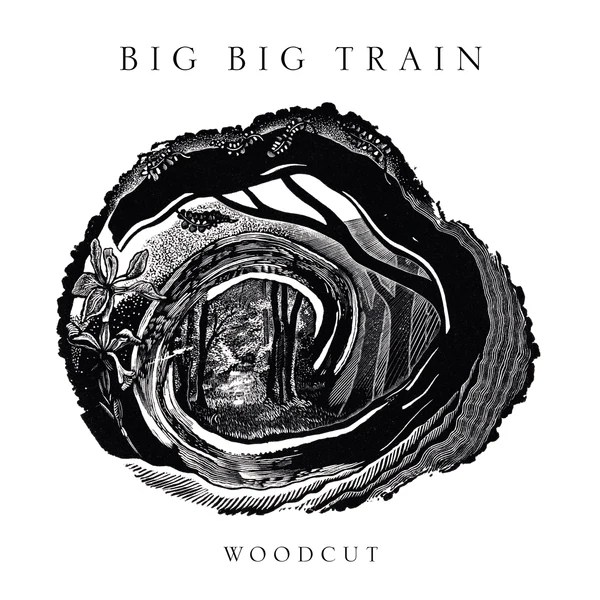
And I don’t feel that way for us. I think Woodcut’s a strong album and the album we’re going to work on after that, I think, has also got the potential to be very strong.
As long as I feel that we’re making good stuff, I want to carry on doing it. But that’s only if we can keep offering good music. I want to keep doing it.
Brad: That’s excellent Greg. That’s exactly the answer I was hoping you would give and, frankly, it’s one of the reasons I’ve liked you for so long. I know that you’re always trying to improve your art, and I just think that’s so critical. I just turned 58, and I understand completely how these things work. In some weird way, I actually feel I’m at the top of my game right now, even though I don’t have quite the energy I did 20 years ago. I just finally feel like I know what I’m doing. You know, when I go into the classroom or when I’m writing, there’s a certain confidence that I have. I had energy 20 years ago, but I didn’t have quite the confidence I have now.
Greg: that’s a really good point that actually. I feel exactly the same. I feel it when I go on stage now. I know the ropes, and I’m pretty much in command of things. When things go wrong, as they do, we just get through it.
You know, the band has a very settled lineup now. We get on well on the tour bus, all those things. That’s really important as the bands I read about where there’s a sort of simmering dislike or hatred amongst some band members. Having to spend 24 hours a day with that person that you fallen out with would be horrible. I’m too old for that. On the tour bus, we’ve got a very good idea if someone’s not feeling great today. If someone’s tired, give them some space, you know, just all the things that make sort of family. Maturity, you’re absolutely right, Brad. Maturity, I think, brings those things to you.
Brad: Yeah, yeah [I say in awe and humility!].
On another topic. I don’t know how much you can talk about this because I’m sure part of this is confidential. But what did InsideOut do for you guys? How does it change the band now that you are with a major label. How much autonomy do you still have for English Electric?
Greg: it turned out have been a bit of a revelation for me, really. I was kind of reluctant to sign to a major label. Especially after having done things myself and with my bandmates for so long. But they’ve [InsideOut] been brilliant. The A&R people there are wonderful. They’re entirely supportive. They’re full of great ideas.
We just launched a new sort of website for Woodcut today and that was entirely their idea. I have no question that it’s in their business interest for us to do well. If I look at it through their eyes, I can see that the older guard, say Steve Hackett, etc.—the generation on from us—may not be making music forever. It will not be making music forever. Obviously they’re looking to see if they can develop even an older band like us to develop us to get to the next level. So I can see it in business terms. I get that. But their personal relationships and the way that they are clearly interested in us, in what we do, has been wonderful as well. I genuinely cannot speak highly enough of them. They’ve been great. With my strange life, you know, where I cam to being a properly professional musician quite late in life.
It’s been quite an eye opener for me to walk through the doors at Sony in London and to kind of see this. I mean, it’s very different. Guys walking around with laptops and, you know, they’ve got an amazing cafe there. It’s a restaurant rather.
Sony is a big, big organization and involved in all areas of the entertainment world. So it’s not just a music thing that’s there. It’s a lot of stuff.
So it’s been really interesting. As for Woodcut, I said to Nick, our manager, we’re going to do a concept album. I was thinking Lamb Lies Down on Broadway and Topographic Oceans. Sony was like, “if that’s what they want to do, that’s fine. They’re a prog rock band.” So, they were brilliant about it, and I think after we delivered the music, they knew it was a good album. It’s been a very interesting experience for me.
And so it’s been an interesting eye-opening experience for me in terms of learning how the business works.
Brad: Greg, let’s come back to that one second. A logistical question. Have you noticed that sales are much different since you’ve been with InsideOut rather than when you were with just English Electric?
Greg: So no, I haven’t. What I have noticed is that they’ve kept us at a high-ish level. The problem is we’re fighting a rearguard action because, of course, the music business is no longer set up on [physical] sales anymore. It’s set up for streaming. And, of course, the streaming sites are partly owned by the record labels. On the one hand, what we used to rely on is diminishing or could be diminishing. And on the other hand, streaming is sort of doing that. Because when we were releasing our albums by ourselves, we were reliant wholly upon this element of the business, the album sales that we were making, the physical product.
Now we get an advance and things like that, so it’s a slightly different set up. And of course, we’re touring and, therefore, there’s income coming from that. All these things. So it’s different for us now. Our income isn’t based on one thing only. It’s based on a whole raft of different things. It’s a fight, and our sales have held up because we’re on InsideOut
If we were not on InsideOut, I think our sales would’ve declined dramatically. InsideOut markets effectively and have opened up markets for us.
We’re all very dead keen to play in Japan, and they’ve been supportive of The Likes of Us going out as a Japanese special edition and similarly with Woodcut. That’s going on with a bonus track in Japanese, which has been fun for Alberto to sing and to get translated.
So, you know, they’ve opened up the world to us a bit more, I think, than the little cottage industry that we were before, and our sales are holding up because of that. Yeah, yeah, bless them.
Brad: I actually have a brother who lives in Tokyo, and he always sends me the Japanese version of your albums. So, I have those as well and very proudly own them!
 Spirit of Cecilia
You must be logged in to post a comment.