All posts by Richard K. Munro

BIOGRAPHY: Richard K. Munro April 4, 2023 I am a retired teacher of English, Spanish & history. I taught in public and Catholic schools for over 34 years. I am a California Certified teacher of Social Studies, Spanish and English. I was a Mentor Teacher in the Kern High School District. I hold a BCC (Bilingual Certificate of Competence). I have always been interested in foreign languages and bilingualism probably from the time as a young man realized that the Roman Empire was a de facto bilingual empire (Latin and Greek) and from the experiences of my father who spoke Spanish and Tagalog as a US Army officer during World War 2. My father encouraged me to study Spanish as it was a practical and important universal language. I attended public schools in New Jersey excelling in AP US history and AP Spanish. At the recommendation of my high school Spanish teacher, I began my university studies in Soria, Spain with the University of Northern Iowa. We American students lived with Spanish families and pledged not to speak English with each other or anyone else for the entirety of the course (10 weeks). I became aware of the value of total immersion in a foreign language. I am fluent in Spanish and Portuguese and have a good competency and reading knowledge of Latin, Italian, and many other languages. In my retirement, I am studying Greek via DUOLINGO and Teach Yourself Books. Like my father, uncles, and other relatives who served during WW2, I volunteered to serve in the US military. I hold an honorable discharge from the US Marines. My parents were naturalized Americans and the first in their families to graduate from high school and go on to college. During WW2 my immigrant grandfather help build US Navy ships and Liberty Ships. My parents and grandparents impressed upon me from an early age the importance of national unity, patriotism and deep gratitude for the opportunities America has afforded us. My specialty became English literacy for newcomers (emphasizing phonics, diction, and grammar) and sheltered English immersion Social Studies (history) for English learners. I believe in voluntary high-quality Dual Immersion instruction and the importance of the teaching foreign languages. My daughter is a Dual Immersion Spanish/English k-6 teacher and my son is a AP Spanish teacher 9-12. I am married with three children. My wife is an immigrant and a naturalized US citizen. For many years I was an AP Reader in Spanish (adjunct faculty) for ETS. In 2004-2005 I was the ISI Renshaw Fellow at UVA and a University Supervisor. I taught at Bakersfield College for four years as an adjunct professor in Spanish. I have a New Wine Credential; I taught high school catechism in English and Spanish for over 20 years. I voluntarily tutored many immigrants pro bono for citizenship tests and for those who attended junior college. My wife and I have co-sponsored immigrant families in our community who have gained US residency. I studied history, political science, and Spanish at NYU (BA with honors) and was awarded the Helen M Jones Prize in history. I achieved my 5th Year teaching certificate at Seattle University and was certified as English teacher as well as Spanish and Social Studies. I hold an MA in Spanish Literature from the University of Northern Iowa. In addition to teaching, I have worked in private industry as a tour guide, a construction worker and as a customer service representative for the Bank of America (five years). I have published articles in newspapers, Military History magazine, Calliope, and Cobblestone. I was author of “Spying for the Other Side, KIM PHILBY” which appeared in the McGraw Hill Anthology of World History. I have authored one-act plays for youth such as "Euripides' Trojan Women” (Calliope),"Romans on the Rhine", "Clad in Gold Our Young Mary" , "Beneath Alexandria's Sapphire Sky" among others. I have edited galleys of several books and have done research for authors notably Andrew Roberts in CHURCHILL WALKING WITH DESTINY and his THE LAST KING OF AMERICA: GEORGE III. I began my career primarily as a Spanish teacher specializing in Spanish for Native Speakers and AP Spanish and AP Spanish Literature teaching in Washington State and California. However, I also coached sports (baseball and soccer), advised for the local “We the People team” and filled in by teaching the occasional summer ESL or US history class. As a bilingual teacher of course, I attended meetings and conventions for bilingual teachers. There Stephen Krashen and others taught that a student could be taught Math, Social Studies, Language Arts and Science in their native languages (rather than English) and that knowledge and literacy would “transfer.” I came to call this Phoney Bilingual Education or NENLI (Non-English Native Language Instruction) Many teachers I met favored a “late exit” approach which meant keeping students in so-called bilingual classes deep into high school. I was skeptical. For me 1995-1996 was the turning point. I was asked to fill in for three ESL classes that had been previously taught by another bilingual teacher. I was shocked by what I found. The students were reading mostly in Spanish and doing journals (in ungrammatical Spanish) only. The students chatted in Spanish the whole period and English was rarely if ever heard. I was told the goal of ESL classes was literacy. I clashed with the local administrator who would not provide me English language dictionaries, bilingual dictionaries or English language material. I bought a box of American heritage dictionaries out of my own pocket and taught using newspaper articles and comics. I protested that the student transcripts indicated the classes were English classes so they should be taught and tested in English for those classes. To do otherwise was, in my opinion, intellectually dishonest, even fraudulent. I continued to inform myself and read books and articles by Linda Chavez and Rosalie Porter especially FORKED TONGUE by Porter. At the time our high school graduation rate was falling and one of the major reasons was students could not pass 11th grade US history or 12th grade Government and Economics. The Bilingual Coordinator had the answer: alternative paths mini-classes (all in Spanish) via Migrant Education. I was asked to teach US history and World History with Spanish language history books. These books were ordered via supplementary budgets and so evaded the normal book approvals via the district. I refused to use those books. Instead, I volunteered to teach US history with English language books (with numbered paragraphs and bilingual glossaries). The school was very divided on this issue; I had at one time the support of the Social Studies chairmen and the school principal but not the vice principal and bilingual coordinator. I was very successful, and the students were very grateful. In one history class, every single student passed his or her English proficiency test and graduated from high school. Over time, however, I became increasingly at odds with the Bilingual Establishment some of whom accused me, publicly, for being a “racist”, “English-only”, a “white supremacist” and “anti-immigrant.” I responded of course that my conscience was clear as I had dedicated my life to help immigrants and newcomers of many races and religions, spoke Spanish and other languages, and that my wife was an immigrant! In 1997 Ron Unz came to our town to promote his new referendum English for the Children. To my surprise, I felt sympathy for most of what he said and so volunteered. I actively campaigned with Unz , Henry Gradillas, and Jaime Escalante in English and Spanish for Bilingual Education reform with English for the Children in California 1997-1998. I helped produce bilingual radio commercials and appeared on Spanish-language and English-language television. During this period I met Rosalie Porter and later worked with her as an advisor in the successful English for the Children campaigns in Arizona and Massachusetts. I have been associated with ProEnglish for many years as an advisor eventually being invited to join the Board of PRO-ENGLISH. I believe local communities should have some choice as to what kind of educational programs they want to provide and what languages they teach. I also deeply believe in La Conviviencia. La Conviviencia is an almost untranslatable Spanish concept. It means living, communicating and working together and thereby gaining mutual respect and comprehension. I believe in La Conviviencia; we must live together as good neighbors. We have many problems in this world, even enemies; but with our neighbors and friends we should live in peace. I believe in the policy of the Buen Vecino (the Good Neighbor) and in la Conviviencia (peaceful coexistence) of different cultures, languages, and religions. Diane Ravitch wrote “a society that is racially diverse requires…a conscious effort to build shared values and ideals among its citizenry.” This includes the recognition that English is and should be our official national language. The language of the rule books, Federal courts and juries must be in English. In addition, the Uniform Code of Military Justice, contracts, official documents, our laws and constitutions must be in English though translations can be provided. I believe English should be the official and national language of the United States. I do not believe we can or ought to be an officially bilingual or multilingual nation. This does not mean in any sense that languages other than English should not be taught or used, however. It should be clear that I have never been an English-only person but a multilingual person who is pro-immigrant and believes in voluntary multilingualism. America needs English but it also needs knowledge of other languages for cultural and educational reasons as well as for national security reasons. My entire family is multilingual and multicultural, and I hope we carry on this heritage into future generations of American Munros and Mendozas in a prosperous, peaceful and United States of America.

On ThE POWER OF IDEAS and the REVOLUTIONARY MIND OF THE FOUNDERS

https://www.theamericanconservative.com/articles/bradley-thompson-birzer-america-revolutionary-mind-founders/

Where Bailyn and Wood gave too much credence to the power of ideas (again, as somewhat determinisms and deterministic), Thompson wrestles with the much more difficult problem of individual free will. After all, imagine a world in which every single person—past, present, and future—is a moral agent. The world gets very, very complicated, very, very quickly.” Very well, done , Brad. I read this book recently. Ideas are of course very important. But some people believe it is one idea or new ideas that transform everything. But the world is very very complicated. Individuals are complicated. Communities are complicated. Economic environments are complicated. Political and military necessity are complicated. Of course, individual persons and peoples are changed by their interaction with new ideas. But as free individuals they decide to accept the idea or reject the idea or adapt the idea as they see fit. And something always remains of the old ideas and old cultural patterns. Some old ideas and old cultural patterns are very enduring. I was never raised to think emancipation of slaves or anti- slavery views or ideas began with English Quakers. One of the earliest anti-slavery voices is St. Patrick in his letter to Coroticus and the Bible itself has the seed of universal equality that long predates the Declaration or the Enlightenment. And the idea of individual dignity, the right to the self determination of small nations (or clans) and religious pluralism peacefully coexisting all existed outside of America and before the Enlightenment as well. One of the oldest Jewish communities in the British Isles is in Glasgow. Jews were expelled from England but never from Scotland and Scotland had in effect, curiously TWO established churches the Episcopal Church (Anglican Communion) and the Presbyterian Church of Scotland (Calvinist). But the result of this incomplete hegemony meant that religious minorities continued to exist in the shadowlands between the Episcopal Church and the Church of Scotland from which fractured many denominations the Free Churches of the 19th century.
People learned to have a Protestant Trail (Edmund Burke’s father and paternal grandfather were of the Anglican Communion -Church of Ireland but his mother and sisters and cousins were all raised Roman Catholics. It was the kind of compromise people made to survive. My parents were married in the Episcopal Church and the Roman Catholic Church. It allowed them to be switch hitters. That sounds like nothing now but then one had to be prepared to serve the yoke and to take part in Anglican ceremonies on board ship or while on military service. My son appeased the bold state by having a civil marriage in Arizona but he celebrates his later marriage date, in Mexico, in the Catholic Church as his true wedding anniversary. Similarly my parents had two wedding dates but only one wedding anniversary. We often look at European History as one of religious monoliths of Protestant Kingdoms and Catholic Kingdoms but the reality on the ground was more complex. Some of that complexity and religious pluralism was imported into America. The Eisenhower family (Swiss German in origin) descended from a splinter Protestant group persecuted both by Lutherans and Catholics. I cannot but help thing that his family history helped make Ike the perfect man for a great Allied coalition. Something always remains of the past. The past is never merely a tabula rasa. Education (ideas) are strong but as the old saying goes “the blood is strong” as well.

My family, I think, always respected education but we had little of it generally speaking because were were among the lower orders of society. Before my father graduated from Manual Training HS in 1933 no one in my family had ever gone past the sixth grade except for the odd cousin who became a priest. My father only knew one close family relative who was a a high school and college graduate and this was his mother’s sister’s son John (“Uncle Johnny”) Dorian who was in fact his fourth grade teacher and later schoolmaster of St. Anthony’s in Govan and much later the Superintendent of Catholic Schools in Glasgow. But even if my family was not formally educated they showed some talent as multilingual scouts in the British Army in India and North America. We excelled as soldiers (we were a fierce people) and colonial administrators. We tended to be the assistant mechanic, first mates and NCO’s if we were not fishing or shipbuilding in the old country. Being of the lower orders we were more likely to intermarry with local peoples than the English ruling class.

As an example of the clash of ideas, my entire life I have tried to understand how the Reformation could have happened and its tragedy (the sectarian hatreds and jealousies the persecutions and counter persecutions, the Thirty Years War etc etc.) After many years I think I understand the outrages and disappointments and injustices that may have caused some people to become disillusioned with the Catholic Church. I have experienced distrust and disillusionment myself. Yet my very devout wife being my anchor I never drifted far and today we listened to and repeated the Rosary as my ancestors had also for over 1000 years. So as much as I have changed here is something that my grandparents and great-grandparents would have recognized immediately. Some ideas and values endure. Something of the old always remains.

I also believe that Christianity is permanently fractured and all the king’s horses and all the king’s men could not put the wee frees (independent churches) together again. But there are good aspects to this fracture. The independent churches vary enormously in practice, belief and theology. It could be that in some environment (Communist China or Soviet Russia) hierarchical churches cannot function properly or freely and in such repression “Bible Christians” or “Evangelical Christians” might thrive better. Christianity does not put all its eggs in one basket. I know different church traditions by personal experience as I was the product of a mixed marriage. Part of my family was Roman Catholic (my father’s side) and the other half were not Lutherans or Russian Orthodox and some people might believe but “Free Church” in the North of Scotland and Scandinavia among seafaring peoples the “Free Church” persuasion was very common.

As a small boy talking about religious differences was something no one ever did and I senses there were some wounds there.

But I as grew up I realized both sides of the family had something in common. They both were from communities that belonged non-established Churches and so were both religious and linguistic minorities. They also were unified by a deep skepticism for modern secular ideas especially Marxism and Communism. And they both came to America, in a large part because, as religious minorities their legal and economic opportunities were limited in the old country. America was the land of the free with work and bread for all. I can’t speak for other people and other people’s family but I have noticed one key factor in the descendants of my grandparents. Those who believe and practice a religion have families and those who do not tend to be childless.
Brad Bizer writes:
“For probably every reader of The American Conservative, Thompson’s points—however beautifully and expertly articulated—might seem obvious. After all, these are points that Socrates, Cicero, Thomas Aquinas, Thomas More, and Friedrich Hayek all could have made. Yet, in the modern academy, so enamored with horrific ideas of determinism, Thompson is nothing if not revolutionary in his insistence on these things. Not only is Thompson gloriously correct, but again, it is worth noting, he has just complicated history, recognizing that history turns not on some predestined pivot, but on the moment-to-moment moral decisions every human being makes in every aspect of his life. Life is messy.”

Here both Thompson and Birzer hit home runs. Social determinism, economic determinism, racial determinism, sexual determinism are , in fact, false and evil ideas. One thing life has taught me is that religion and cultural values are not enforced by coercion or even taught but they are caught by the atmosphere of the home and taught not by (la mano dura) mere authority alone but by love. I sing songs my grandfather and great grandfather loved; songs my parents loved. I say prayers and repeat proverbs that have been among the people of my race and line for time immemorial. I love music and poetry because we all loved music and poetry. The music and poetry is deeply imbued with a love of nature, a love of natural love between men and women in families, of the great virtues, politeness, fidelity, prudence, justice, generosity, compassion, gratitude, purity, humor, a deep desire for freedom, courage and a deep faith. I would hope to think my forefolk would recognize in my and my family some of the same virtues they extolled and lived. I did not learn these virtues, primarily in American public schools or universities but in spite of them. I was prepared for college life and military life by my intense home-schooling. Every American should be intensely home-schooled ESPECIALLY those who attend public schools and universities. Even after so many years I remember the intense shock to learn that most schools and universities were like in the days of the Penal Years virtually enemy institutions. And I think it is much worse today. People with conservative or traditionalist views need to keep their heads down. But I survived the 20th century. It was not easy but I survived as a soldier and laborer like my father and grandfather and great grandfather before me. I did not feel at home in the universities nor in the Anglophone world of New York or Boston. So like my father, like my grandfather, like my great grandfather I remembered we were a cosmopolitan people an amphibious people. So I took a wife who had not a single word of English and zero feminist or Marxist influence. Her aunt was a charming singing nun; she had two uncles who were missionary priests. Everyone one in her family was against our marriage. After all I was a foreigner and a heretic a soldier not to be trusted. But I knew her ways and their ways and checkmated their doubts. I spoke to them in their language. When I came to ask for my wife’s hand in marriage Father Cirilio, a Jesuit priest who was a close friend of mine came with me. He vouched for my character and my faith background. And we were married on June 9, 1982 on the feast of St. Columba, patron saint of the Gaels. They questioned my faith but I told the Bishop of the Burgo de Osma that we were Catholics when most Spaniards were Moors. And that we fought the Moors and Scottish Knights with the heart of Robert the Bruce (long buried in Spain). I told them I was their friend and their Ally. We both had a memory of Christendom and I told them no one in my family every looked towards London but always to Rome. And that were very grateful for Spain. For you see the priest that baptized my father (Father Collins) and the priest that baptized my father’s mother both spoke Spanish and had been educated at the Scots College (then at Valladolid). No objection was made and we lived happily ever after. Mrs. Munro, of course, now speaks English is a naturalized US citizen and is an honorary but only honorary member of the Anglosphere. She remains deeply attached to her tradition faith -which we share-and the language and cultural traditions of the Hispanophere or la Hispanidad. In a long journey some things have to be left behind but the most essential things are faith, a certain economic security and freedom.

I don’t look at Colonial America as being a Little England in America. I don’t look at the Founding Fathers as Englishmen although of course George Washington and Franklin were very English in origin and so were some others. But Jefferson and Monroe were deeply Celtic (Monroe was mostly of Scottish Highland and Welsh origin; and Jefferson himself was of Welsh and Scottish Origin -one of his ancestors signed the Declaration of Arbroath in Scotland). Then there is Witherspoon (Scots) Paterson (Irish) and so on. Only about 49% of the population were of English origin in 1775. People of non-English origin signed the Declaration (Paca and Carroll) all were nominally subjects of the King and but Anglicans were a distinct minority even of those of English origin. Those who came to America were the religions minorities of Europe and the British Isles, French Huguenots, English Quakers, Irish Presbyterians (so-called Scots-Irish), Gaelic speaking Highlanders (both Catholic and Protestant -Catholics tended to settle in Canada and Protestants in North Carolina) German Moravians, Dutch Jews, Swiss Mennonites. Jorge Ferragut (later known as George Farragut father of Spanish-speaking Admiral Farragut) was a hero of the Revolution. He spoke English of course but taught Spanish to his children (his wife was of southern Irish origin). General Winfield Scott’s people fought against the British; his people of course had been doing that for generations. He was descended from Scottish Jacobites who oddly enough believed the Hanoverians to be illegitimate. They stubbornly refused to give consent to the German Laddies as they called them. It is said -this has not been entirely proven- that a piper who fought at Culloden played Jacobite pibrochs at Yorktown.

We like to think there was a uniform belief or fealty towards the British Monarchy but in fact many American colonists were indifferent or even hostile to the Anglican Church and the Protestant Hanoverian Ascendency of England. One of the results of the American Revolutionary period was the Quebec Act which led to the tolerance of the Catholic Church in Canada. And the American Revolution and the French Revolution had the effect ironically of strengthening the Catholic Church in America, England and Canada because of the many exiled French Catholics (life Father Dubois) , Father Hassett, the Duponts. This would eventually lead to Catholic Emancipation in England in the early 19th century and later by 1859 Jewish Emancipation.

Ideas are important in history but so are customs. and traditions. And something always remains. Even of a culture, language, religion or race considered to have been extirpated and wiped out. Stubbornly there are always those lone survivors those lone rebels with a a long memory. Stevenson, not an Englishman as Arthur Conan Doyle was not an Englishman -he came from a Scottish Catholic family- said, “For that is the mark of the Scot of all classes: that he stands in an attitude towards the past unthinkable to most Englishmen, and remembers and cherishes the memory of his forbears {his race and line} good or bad; and there burns alive in him a sense of identity with the dead even to the twentieth generation.” (From the Weir of Hermiston). Once I was provoked to a fight in school. My mother said I should do nothing and ignore the bully. That I should turn the other check. By my father said, “Remember the people you came from. Remember the courage of your ancestors. Teach that laddie a lesson that he will never forget. Let him learn not to touch the cat but with a glove. Remember you have with you the Mire-catha (the ancient blood lust/battle frenzy). Take care not to kill you opponent. Don’t lose your self-control. Do only what is necessary for your honor. ” And like a medieval Scottish Knight I was sent into singular combate. And so I suffered my first and only school suspension. But I bloodied and defeated the foe and was never bothered again. The Men of Munro began their historic life as warriors, Christian Crusaders fighting Pagan Vikings and Moors. And something of that deep faith and something of that ferocity still remains. I have a strong identity. I am an American by choice, I was a US Marine by choice (a volunteer), I am a Christian in the Roman Catholic tradition by choice but I still retain a more ancient identity. For over a thousand years we were men of the north of Ferindonald and when we saw the ancient beacon light ablaze to gather to fight the foe “Caisteal Folais Na Theine” we gathered and followed our chief to the field where our laurels were gathered before. It is hard for many Americans or Europeans to believe but Toynbee recognized it. We were for over thousand years an independent nation and clan the very last Iron Age Peoples of Europe. The last White Barbarians. The memory of that clan loyalty, that Regimental loyalty, the memory of deep oaths and sacred oaths, of battles lost and won is very, very deep. To us the Gairm (the Call to arms) has long been a sacred thing. I might change my nationality. I might change my religion (though very doubtful) but am and always will be of the Seventh Son of Hugh, of the Men of the Halo River for that is my true race and line the race and line not of Briton or Vass (Viking) or Saxon or Frank but of the Gaels and my clan (though I am descended from many famous clans) is the clan of my father. I will always be a Gael and a Munro. I will always be above all that “leal ‘n true mon. ” And if my children have not this identity I care not because I know something will remain because the teaching is strong and the blood is strong. Both will call to them. Being born in a garage does not make one an automobile. One is as one is bred and raised.

A FAREWELL SONG

(these are the last notes of an Auld Sang)

By Richard K. Munro

I can’t remember a time that I did not know this song by heart.  This farewell song is from the point of view of the soldier who will be executed: When he sings, “ye’ll tak’ the high road and I’ll tak’ the low road” in effect he is saying that you will return alive, and I will return in spirit.  

Why was there a rebellion or Rising as it was called in 1745?

At the time in Scottish history when “Loch Lomond” was a new song, the United Kingdom (which united Scotland, England, and Wales) had already been formed.

But some Highland Scots (Gaels) wanted a Scottish Stewart, not an English King to rule.  Many called George II  a “wee German laddie” and felt the current government was illegal and unconstitutional.

But like the American Civil War the Scots themselves were divided.  Many remained loyal to the Crown (the Hanoverians) but others felt it was now or never so rose up in rebellion.   

 It was called the “Cause of True Honour” but of course it was doomed to failure.  

What chance could a handful of tribesmen have against an Empire and “Britannia’s sons with their long-range guns”?

As my Auld Pop used to day “we won all the songs but lost all the battles.”

Many’s the lad fought on that day
Well the claymore could wield,
When the night came silently lay
Dead on Culloden’s field.

Burned are our homes, exile and death
Scatter the loyal men…….

Led by their Bonnie Prince Charlie (Prince Charles Edward Stuart) the Highland army gained some early victories by dint of daring and sheer courage.

But his army of 7,000 Highlanders were utterly defeated on April 16, 1746 at the famous Battle of Culloden.  It was the last battle fought on British soil.

In the aftermath of the battleThe Duke of Cumberland (called “The Butcher”) led brutal reprisals and indiscriminately burned the homes and farms of  any Highlander whether or not they had participated in the rebellion.    
 
YOU CAN READ ABOUT THIS in ANDREW ROBERT’S NEW BOOK on  George III THE LAST KING OF AMERICA which comes out this fall.   It was my privilege and honor to have helped Professor Roberts with the research of the book and its editing.    So take it from me this is a wonderful and original book a real tour-de-force!
https://www.penguinrandomhouse.com/books/612529/the-last-king-of-america-by-andrew-roberts/
 
 « Drumossie moor, Drumossie day,

  A waefu’ day it was to me !

For there I lost my father dear,

  My father dear and brethren three.

Arnold Toynbee said this was the last day of the European Iron Age when the last tribes of White Barbarians (as he called them) were subdued.   

The aftermath led to the Highland Clearances ,mass emigration and the suppression of the Gaelic language and Highland dress.

It is this same battle that directly gives rise the LOCH LOMOND song.

After the battle, many Scottish soldiers were imprisoned within England’s Carlisle Castle, near the border of Scotland. “Loch Lomond” tells the story of two Scottish soldiers who were so imprisoned.

One of them was to be executed, while the other was to be pardoned.

According to Celtic legend if someone dies in a foreign land, his spirit will travel to his homeland by “the low road” – the route for the souls of the dead. In the song, the spirit of the dead soldier shall arrive first, while the living soldier will take the “high road” in the Land of the Living over the mountains, to arrive afterwards.  

But the pardoned soldier knows he will never meet his comrade again, in the land of the living,  and that their defeatedd cause  is finished and “will never know a second Spring.”

He remembers his happy past, “By yon bonnie banks … where me and my true love were ever wont to gae [accustomed to go]” and sadly accepts his death “the broken heart it ken nae [knows no] second Spring again.”

The lyrics intertwine the sadness of the Highland soldier’s plight his deep love for his country and his comrades with beautify imagery of Loch Lomond’s stunning natural beauty under Ben Lomond (a ben is a mountain).

My family emigrated from Scotland en masse 1923-1948 so I grew up in Kearny, NJ and Brooklyn, NY among many immigrants.

They passed on to me a love of the traditional and national music of Scotland but also the sad wisdom of these songs which are filled with that the Highlander calls CIANALAS  a word that could be translated as deep nostalgia but also a connectedness to the past and heritage and an awareness that the greatest distance between people and places is not the miles but TIME.     

One of the lessons you learn from the traditional songs is to persevere, to endure defeat, exile and disappointment and that you have to be prepared to say goodbye to the places and the people you love and that nothing endures forever.   

So my parent’s home and my grandfather’s home and his Auld Regiment are now part of “Yesterday’s Seven Thousand Years”.   I know  there is no home to go back to.   But while never forgetting the past I face firmly towards the future and I am very grateful for the safe harbor that America has been to my immigrant family, my children and my grandchildren.

My mother used to say, “Life and love are brief moments in time so let us tell the people we love NOW and appreciate them WHILE they ARE here with us.” 

Ah, yes, how sweet was then my mother’s voice in the Martyr’s Psalm.       

Tomorrow is my last day of instruction.  

My last full day at West High and in the Kern High School district.

So  I bid adios and goodbye  and farewell. 

SLAN LIEBH GU BRATH.  SEMPER FI.

We will see you at sundown.

Richard Keith Munro

(Ricardo Munro)

GREAT ROMANTIC MOMENT

Odysseus embraces Penelope as the Soldier Returns and his Odyssey is over

“Now from his breast into the eyes the ache

of longing mounted, and he wept at last,

his dear wife, clear and faithful, in his arms,

longed for as the sunwarmed earth is longed for by a swimmer

spent in rough water where his ship went down

under Poseidon’s blows, gale winds and tons of sea.

Few men can keep alive through a big serf

to crawl, clotted with brine, on kindly beaches

in joy, in joy, knowing the abyss behind:

and so she too rejoiced, her gaze upon her husband

,her white arms round him pressed as though forever.”

― Homer, The Odyssey

POEM: LOCH NA GARR

Lord Byron (1788–1824).  Poetry of Byron.  1881.
 
I. Personal, Lyric, and Elegiac
Loch Na Garr essentially about childhood, what the Gael calls ancestry (dualchas), heritage (dualchas) sense of place (duthchas).
Byron contrasts the green landscaped civilized fields of southern England, with the wild, windswept craggy East Highlands
Byron himself wrote:
“I allude here to my maternal ancestors, “the Gordons,” many of whom fought for the unfortunate Prince Charles, better known by the name of the Pretender. This branch was nearly allied by blood, as well as attachment, to the Stuarts. George, the second Earl of Huntley, married the Princess Annabella Stuart, daughter of James I. of Scotland. By her he left four sons: the third, Sir William Gordon, I have the honour to claim as one of my progenitors.”
Byron also referred to  Lochnagar in The Island:

The infant rapture still survivied the boy,
And Loch-na-gar with Ida looked o’er Troy.[7]
— The Island: Canto II, stanza XII, lines 290-291

As the Penguin Book of Scottish Verse says:
“There are few major English poets who can be heard sung in peasant bothies among the more native fare, but Byron’s Lachin A Gair is a popular favourite, and those sophisticated critics who sneer at the poem but don’t know the tune should hear it sung by a farm-labourer’s ‘tenore robusto. “

Or I daresay David Solley or Kenneth McKellar
 AWAY, ye gay landscapes, ye gardens of roses!  
In you let the minions of luxury rove;
Restore me the rocks, where the snow-flake reposes,  
Though still they are sacred to freedom and love:
Yet, Caledonia, beloved are thy mountains,       
 5  Round their white summits though elements war;
Though cataracts foam ’stead of smooth-flowing fountains, 
 I sigh for the valley of dark Loch na Garr. 

Ah! there my young footsteps in infancy wander’d;  
My cap was the bonnet, my cloak was the plaid;       
 10On chieftains long perish’d my memory ponder’d, 
 As daily I strode through the pine-cover’d glade:I
sought not my home till the day’s dying glory 
 Gave place to the rays of the bright polar star
;For fancy was cheer’d by traditional story,        
15  Disclosed by the natives of dark Loch na Garr.

 “Shades of the dead! have I not heard your voices  
Rise on the night-rolling breath of the gale?”
Surely the soul of the hero rejoices,  
And rides on the wind o’er his own Highland vale.        
20Round Loch na Garr while the stormy mist gathers, 
 Winter presides in his cold icy car:
Clouds there encircle the forms of my fathers;  
They dwell in the tempests of dark Loch na Garr. 

“Illstarr’d, though brave, did no visions foreboding        
25  Tell you that fate had forsaken your cause?”
Ah! were you destined to die at Culloden,  
Victory crown’d not your fall with applause:
Still were you happy in death’s earthy slumber,  
You rest with your clan in the caves of Braemar;      
  30The pibroch resounds, to the piper’s loud number, 
 Your deeds on the echoes of dark Loch na Garr. 

Years have roll’d on, Loch na Garr, since I left you,  Years must elapse ere I tread you again:
Nature of verdure and flow’rs has bereft you,       
 35  Yet still are you dearer than Albion’s plain.
England! thy beauties are tame and domestic  
To one who has roved on the mountains afar:
Oh for the crags that are wild and majestic!  
The steep frowning glories of dark Loch na Garr!        40 

ZOOM STUDENTS GO ZOOM, ZOOM ZOOM….

by Richard K. Munro

Until last year I had never heard of “Zoom” as teaching tool or “Canvas.” I had done some online training classes and some correspondence classes via email and via snail mail with the occasional phone call. I remember writing an illustrated poem in elementary school that went like this “THE PLANE WENT ZOOM, ZOOM, ZOOM then crashed and went BOOM, BOOM, BOOM! ” I thought it was exciting and realistic but I remember it did not that the approval of the classroom teacher.

I am a classroom teacher in the trenches. Now of course I am teaching students as if they were on a distant moon or Mars or in the Space Lab. I have done virtual teaching since March 18 2020. All I will say is that it is better than in March 2020 and it is better than nothing.

But it should go without saying that online technology creates a barrier or affective filter that discourages and impedes comprehension and learning. No one would think to try to teach a foreign language by phone or merely via emails. Students who do not hear well, comprehend aural English and who do not type or word process quickly and accurately are at severe disadvantage.

All that side we are doing VIRTUAL testing of the English Proficiency Tests this year (via ETS) https://www.elpac.org/ We teachers have to learn a test interface for distant testing.
Students have to use a special ten digit student # for the ELPAC they cannot past this number nor can it be sent via email. Students must have the APP for the secure test browser on their Chromebook or computer
If they don’t they are out of luck. Even so even with a school

Chromebook technical difficulties are not unusual especially due to the quality of the internet connection. The Secure Test Browser requires a fast and continuous Internet speed.


Then students have to use their first name (first letter capitalized)
type in there unique student ID # for the ELPAC
then type in a unique session # for their grade level or the reading, writing and listening test they are doing. Believe me this is complicated If one thing goes wrong or the internet is slow everything crashes.
So far 40 % of students in my class have not been able to log on even to begin a test.
Of those who have tested only about 30% have finished all the required tests. Some are incomplete because the test froze while they were testing. Some are incomplete because despite numerous attempts day after day during class and after school they could not log on via their Chromebooks.

I am a good soldier. I try to do my best. I monitor for HOURS (often after my regular school day) WITHOUT ANY PAY to make sure the students can finish tests. Sometimes I have to spend 3, 4, 5, 6 hours monitoring ELPAC my camera and their camera MUST BE ON and IS RECORDED so that students can finish the test. I have taken to having my ,lunch and coffee during testing because it is too much trouble to log off or pause the test.

And of course the students have to sign a form that they can’t use any materials or phones or aides during the test. But let’s be honest I can see the person who is front of the camera and I recognize that person. I montior what they are doing and how long they do it. But such a test is NOT SECURE. Really it should be considered INVALID.

It is HORRIBLE how much school time is spent merely on test prop for EL PAC all readings all assignments mimic the ELPAC and that is all we do. But don’t forget we have to give other tests like the STAR READING test (fortunately a snap to take and administer just a link no layers of “security”)

But the word is the State of California has paid millions for these tests and ETS is desperate that they tests be given because they want them to be renewed for next year and the year after that.

It would be logical to suspend this testing in this plague year. We could have easily done practice tests to familiarize students for a future year and left it at that.

But soon my journey of the cross will be over and so will the Calvary of the students. We will begin to meet in person April 6-April 12th. But with a difference. Some students will still be at home since attendance in person is voluntary. So teachers have to do distance learning and in person learning simultaneous. We will be equipped with additional cameras, speakers and a Plexiglas protector on our desks. We will have to wear a mask at all times while teaching. In April and May we will dedicate ourselves to literature (Homer) and poetry (including Shakespeare). I have Audible books on tape and electronic versions of all the books and poems. Students will listen and recite proverbs and poems to improve their diction and they will write short responses to literature and keep vocabulary notebooks.

But it appears they will remain on a distant moon and I on my distant spaceship. Some students will report to classrooms (computer labs) with teacher aides but many will continue distance learning from home.

As I said , it is better than nothing but the truth is the Matthew effect is quite evident. The Rich get richer and the poor get poorer.

Without constant supervision and close encouragement, many students are distracted and demoralized. For many the entire year has been a loss. Poles and Jews in forced labor camps during WWII have learned more. And I am sure that you are away how disastrous it was for youth to lose out on education from 1940-1945.

Covid 19 has been as bad as war and worse than the Great Depression.

I only hope schools will return to normal by Fall. There is a future for distance learning, of course. But it works best with fluent, motivated mature and highly motivated students.

It is a poor choice for k-6, for English Learners, for neophyte foreign language learners, immature, easily distracted and marginally motivated students. If a student has a poor home environment then that student does not even have the advantage of a bright, clean, secure environment

YES, BY ALL MEANS STANDARDIZED TESTING SHOULD BE SUSPENDED UNTIL FURTHER
NOTICE.

But no one pays any attention to me. So I carry on as in the Ypres Salient and do my duty.

But I mourn the massive casualties all about me.

Some students are being destroyed have been discouraged and have dropped out. Many are working in the field, in packing sheds in kitchens etc. The Plague Year has been a sad year. A year of suffering, loss and tragedy.

On Brad Birzer’s 9/11 Talk

19 Years After 9/11

Wonderful, Brad. Thanks for sharing your talk with us. Of course, I knew of 9/11 and flight 93 -93 is a mystical number symbolizing courage as it was the Regimental number of the Thin Red Line of Heroes at Balaklava the 93rd Highlanders. Let’s Roll indeed. I like to think in the deep heartland of America there are still brave souls who will say Let’s Roll when big things are at stake. And of course, I know of Gettysburg (I have visited three times in my life the first time in 1961) but never thought or even knew about the connection of Hillsdale to Gettysburg -that is a great particular fact to know and one that shines credit on the heritage of Hillsdale. 9/11 remains strongly in my memory. I used to live in New York City (when I was at NYU) and I had been to the WTC numerous times. In 1993 I bought a Library of America book on the Debates on the Constitution there. It is strange and frightening that all those strong, powerful places were obliterated. Our bodies are fragile vessels but we forget civilization itself is also vulnerable and fragile. Nothing is permanent. Except perhaps the fame of our forefathers so I say NE OBLIVISCARIS….DO NOT FORGET the men who were SAN PEUR (without fear) who fought not for conquest or domination but for liberty.

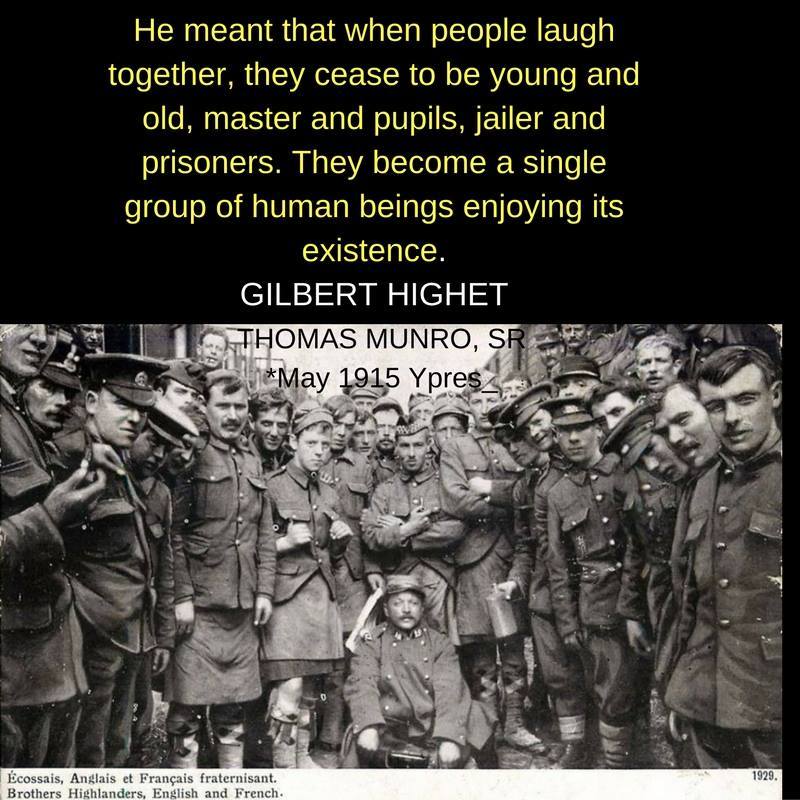
Some years ago Andrew Roberts was going on a series of talks to promote his book WALKING WITH DESTINY. I asked him how many in total and he said 93. I told him that was a lucky number. He asked why then I said ask Kipling the 93rd were the Thin Red Line of Heroes. He laughed. He understood immediately (he knew my grandfather won the Military Medal at 2nd Ypres while serving with the Argylls and that my grandfather knew Willie Gallacher -the Scottish Communist and Major Ricketts (the man who composed the River Kwai March- Col.Bogey).

So old Highlanders have old memories. 42nd Highlanders (Black Watch) 91st Highlanders (Spain) 93rd Highlanders (India/Russia/South Africa). By the way, Scottish veterans of Balaklava fought at Bull Run, Antietam and Gettysburg also The 79th Highlanders was a Union Regiment. Of course, the Auld Regiments are part of family and clan history. To some historians, a regimental number is just a number on a map. To those of us who remember it is a story of the Teuchters (the Tough Ones) fighting it out with mire cath (the ancient battle frenzy). When Wallace and Bruce fought we were there. We were there at Guadalcanal, El Alamein, Dunkirk, D-Day, Korea.

“Heroes’ blood and tears bid us hold our ancient glory of free lands and of bold lands HIGHLANDS and LOWLAND ye ancient and ye free lands. Faith that dare not lie but would die for home and kithland….”.. Our splendid ancient heritage is something we shall never forget. We are not ashamed to have pride of name and descent. We face firmly towards the future and never forget the past. We contribute our measure of courage and character to the American melting pot.

A Time for WhisKY

Richard K. Munro's avatarSpirit of Cecilia

By Richard K. Munro

Thomas Munro, Srto his left “AMERICAN JOHNNY Robertson to his right the young boy is his nephew Jimmy Quigley 16 at the tjme.

It’s Five O’Clock. “Whisky is liquid sunshine.” said Shaw.

Like most Highland natives, Auld Pop had a vague knowledge of a thing called barbecue, but had never actually eaten any. He was, however, intimately familiar with whiskey. In fact from 1914-1933 he often made his own. I do not know and have no knowledge if he ever sold any of his poteen. I do know he used to say, “Prohibition? What’s that? No excise officer ever kept a Highland man from his dram.” “Does love make the world go around? Well aye, mon. “Strrruth! . But whiskey makes it go around twice as fast. Aye! An’ gies a mon a sonsie gizz, aye! ThAAt’s a sonsie face – a jolly, smiling face!.

He…

View original post 698 more words

Spanish memories: anchovies, music, laughter and Coca Cola

by Richard K Munro rmunro3@bak.rr.com

I taught AP Spanish for years and Spanish for Native Speakers. One of the works I taught was PYGMALION (in Spanish) plus many other plays from the Quintero brothers and others. I always taught 2-3 plays per semester and fragments of novels as well as short stories newspaper articles and essays. Usigli was popular but no question the most popular plays were from Shaw and the Quintero brothers. I knew about Spanish versions of the Quiet Man, the Sound of Music and of course MY FAIR LADY from my years of living and studying in Spain. I studied four summers in Spain and lived in Madrid for two years. Ironically if I had not married I probably would have stayed in Madrid much longer. A bonnie place wi’ a sporran fu’ of Yankee siller. Madrid es buena cuando la bolas suena. Like the character in A Song of Sixpence by A. J. Cronin about the coming to manhood of Laurence Carroll and his life in Scotland and Spain. I had a brief moment in paradise in Spain (studying in Valladolid, Soria, Salamanca and Madrid). It was in the Cronin book I learned about the Scots College (formerly in Vallodolid now in Salamanca). Most of the teachers and priests of my father’s parish in Scotland 1915-1927 were educated there including FATHER COLLINS. Not a great book but very entertaining with some lyrical descriptions.

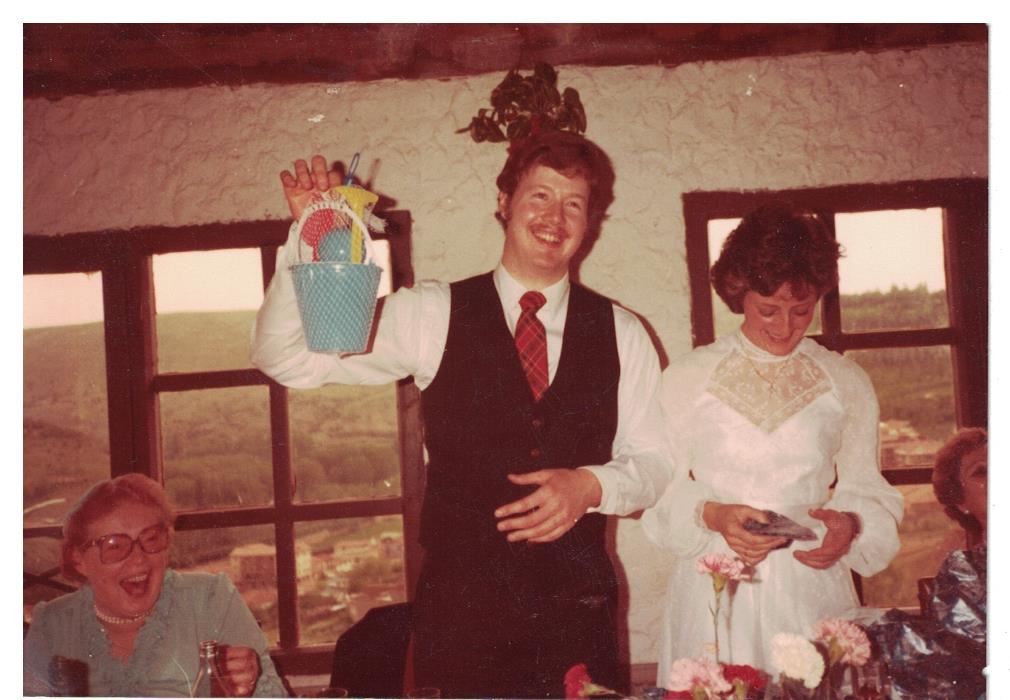
Ruth Munro, Richard K Munro and Mrs. Munro on St. Columba’s Day June 9, 1982 the happiest day of my life Soria , Spain. Auld Pop was not there and Don Benigno was not there. I like to think they met in heaven on that day for a dram or too.

Spanish memories: my wife and used to listen to light classics and zarzuelas at her Grandparent’s house in Soria, Spain (c. July 1973) and drink Coca-Cola and eat anchovies. Don Benigno was a very cultivated man.

Don Benigo a retired country doctor was the only Spaniard I ever met who knew immediately Munro was a Scottish Highland name (and not Italian). I said how did he know that? He got up and got a book from his shelf and started to read to me THE LAST OF THE MOHICANS (in Spanish) Three of the main characters were Scottish Munros. He said, in a joke, that all his life he was waiting to meet an authentic Scottish Munro. We all laughed.

Later my wife gifted me the book which I still have. I now think that Don Benigno hoped I would marry his granddaughter. Many happy memories of visiting his house, listening to classical music, and playing chess. The tapas were always great! He never served me alcohol though I was only 17.

In memory, I can taste the rich old cane sugar Coca-Cola (I haven’t tasted the like in many years) and the salty anchovies.

In memory, I hear the ghost of a tune CONCIERTO ARANJEZ.

What is the greatest distance between two points?

Time of course. But it is wonderful to have had over 50 years of continuous memories and friendship.

Nothing like it.

another old favorite I used to sing with my mother. She said it was true in my case as I only found love outside the Anglosphere. Why? Perhaps because the Spanish lassies were a little more traditional. They helped me survive the 20th century which was not easy for me despite my massive “privilege”

THE cANCEL CULTURE AND MORALITY and caring about all black lives

BY RICHARD K. MUNRO

https://www.news-journal.com/opinion/navarrette-cancel-culture-means-more-freedom-not-less/article_810809d4-cdca-11ea-84f5-bf300465f179.html?fbclid=IwAR1mZX7uohK4i9DdfqgIpDzHkO6DZMALCm_E9X9HXUL_wIyqIzv__6gC0wQ

It’s all good. If you want to spout off in ways that some folks are going to find offensive, you have to pay the piper.” So Ruben Navarrette is not worried about the cancel culture.

Yes, Ruben Navarrette except for one thing. The foul lines are being constantly moved. I believe in sacramental tradition marriage; even five or ten years ago this would not have been a radical statement (President Obama claimed his supported this view until he “evolved”). But today, in many quarters just to say this is homophobic and yet I have never opposed the legality of Gay Marriage or ever written or said anything anti-Gay. I just believe that secular marriage offered by the government is meaningless to me. I am a Christian traditionalist and I believe “God made man in his own image in the image of God created he him, man and woman alike.” I believe marriage means openness to children.

So I can peacefully coexist with Gay Marriage or “marriage equality” just like I peaceably exist with the legality of abortion on demand. I have a strong reverence for life so my personal beliefs are to sympathize with the Pro-life side but I don’t think we will ever have a constitutional amendment abolishing or prohibiting abortion because 1) abortion exists in nature (miscarriage) 2) many people if not most belief abortion is an acceptable form of birth control and fanatically support their individual right to have one. 3) new drugs and abortifacients will make abortion a private matter no longer practiced in clinics. The only thing I can do is pray for and support a pro-family pro-life culture (especially in our personal family life). But I know people have to choose to have reverence for life. I just believe that life is a better choice than death.

Nothing I can say or do will dissuade them but I still believe that inducing an abortion of a healthy child is morally selfish and evil. To me it is a great tragedy -a far worse tragedy than the death of a single African-American by an overzealous policeman. All black lives matter born and unborn. That’s a slogan you will never see. And If I publicized it I would come under withering attack. Yet Martin Luther King jr. would probably have agreed with me.

So perhaps you don’t agree with my point of view but 1) I have no desire to force my opinion on others 2) it is my right to freely express my opinion and to practice my private religion and teach that morality to my children and grandchildren by my words and by my example. Right is right and wrong is wrong. The killing of a prisoner by overzealous policemen is wrong and those responsible should be brought to justice. But there is so many more African-Americans being snuffed out in abortion clinics by far and killed by gang shootings. So in my view, focusing on the relatively few (9 last year) of police killings of unarmed Black men is doing nothing to help America or the African-American community.

Caring about all black lives is not, and cannot be construed as supporting White Supremacy. I am not a White Supremacist and I have opposed White Supremacy my entire life. I believe in the melting pot. It is not by chance my godson is African-American and none of my grandchildren are white but all are Mexican-American. My daughter dated an African-American man in college and I never said a single thing about it. I was happy he treated my daughter with respect and provided her with a certain security when she went on long car trips. She broke up with him but not because of his race but because of his character. He was superficially charming but undisciplined he couldn’t finish school or hold down a job. But my daughter followed what I taught her: judge each person as they come as an individual not by their race or class. I taught my children to be “color blind” but today of course even that notion comes under attack as “racist” something I find unbelievable. My Catholic faith teaches me than we are all one human family. Being obsessed with race and believing racial differences are important is the mark of a racist person (such as a White Supremacist). But my conscience is clear. People can call me any name they want but I stand justified with my maker and know I do not teach nor support evil.

My father’s angel mother:Mary Munro

My father was educated in Scotland up to age 12 1/2. When my father finished the sixth grade in Scotland in 1927 his mother was told he had only two choices “the Army or the docks.” She was so horrified at this news that she reportedly answered angrily, “Och no, there is a third choice, America!.” So she decided finally to immigrate in October 1927 and they came on the SS Transylvania via Ellis Island. My father said, “All that I am or ever hope to be, I owe to America and to my angel mother.” Love wins out and endures.

I like to think if Mary Munro were looking down from heaven would see my wife and my daughter and daughter in law and say,:


    “Love conquers all. Faith never dies.
    One generation passeth away, and another generation cometh; but the earth abideth forever… The sun also ariseth….”

Mrs. Munro (Mary Munro) circa 1915 in Glasgow Scotland. She volunteered to work in a munitions factory after her two broths and brother in law were killed on the Western Front serving with the Highland Light Infantry.
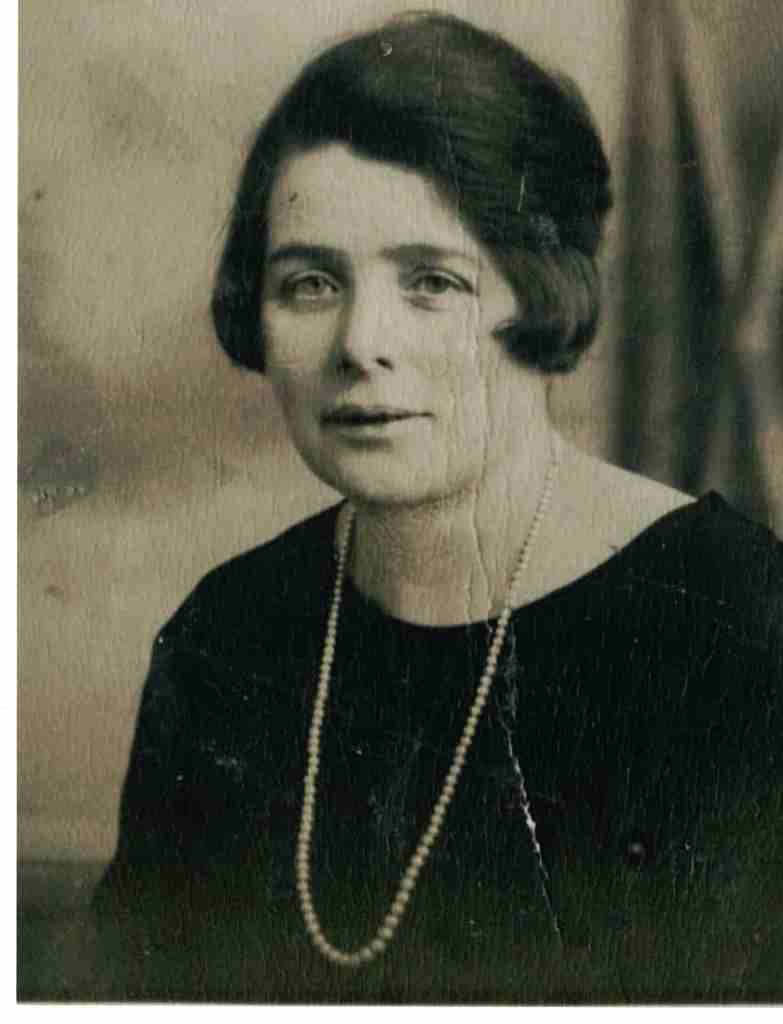
Mary Munro circa 1920’s
family portrait March 17, 1915 St. Anthony’s. Her husband THOMAS MUNRO, SR was served in the trenches at Ypres. My grandfather had been listed as missing in action when my father was born on March 10. Mary Munro held off the baptism a few days until she heard the news her husband had been saved by Indian soldiers and his friend American Johnny Robertson.