BIOGRAPHY: Richard K. Munro April 4, 2023
I am a retired teacher of English, Spanish & history. I taught in public and Catholic schools for over 34 years. I am a California Certified teacher of Social Studies, Spanish and English. I was a Mentor Teacher in the Kern High School District.
I hold a BCC (Bilingual Certificate of Competence). I have always been interested in foreign languages and bilingualism probably from the time as a young man realized that the Roman Empire was a de facto bilingual empire (Latin and Greek) and from the experiences of my father who spoke Spanish and Tagalog as a US Army officer during World War 2. My father encouraged me to study Spanish as it was a practical and important universal language.
I attended public schools in New Jersey excelling in AP US history and AP Spanish. At the recommendation of my high school Spanish teacher, I began my university studies in Soria, Spain with the University of Northern Iowa. We American students lived with Spanish families and pledged not to speak English with each other or anyone else for the entirety of the course (10 weeks). I became aware of the value of total immersion in a foreign language. I am fluent in Spanish and Portuguese and have a good competency and reading knowledge of Latin, Italian, and many other languages. In my retirement, I am studying Greek via DUOLINGO and Teach Yourself Books.
Like my father, uncles, and other relatives who served during WW2, I volunteered to serve in the US military. I hold an honorable discharge from the US Marines. My parents were naturalized Americans and the first in their families to graduate from high school and go on to college. During WW2 my immigrant grandfather help build US Navy ships and Liberty Ships. My parents and grandparents impressed upon me from an early age the importance of national unity, patriotism and deep gratitude for the opportunities America has afforded us.
My specialty became English literacy for newcomers (emphasizing phonics, diction, and grammar) and sheltered English immersion Social Studies (history) for English learners.
I believe in voluntary high-quality Dual Immersion instruction and the importance of the teaching foreign languages. My daughter is a Dual Immersion Spanish/English k-6 teacher and my son is a AP Spanish teacher 9-12. I am married with three children. My wife is an immigrant and a naturalized US citizen.
For many years I was an AP Reader in Spanish (adjunct faculty) for ETS. In 2004-2005 I was the ISI Renshaw Fellow at UVA and a University Supervisor. I taught at Bakersfield College for four years as an adjunct professor in Spanish. I have a New Wine Credential; I taught high school catechism in English and Spanish for over 20 years. I voluntarily tutored many immigrants pro bono for citizenship tests and for those who attended junior college. My wife and I have co-sponsored immigrant families in our community who have gained US residency.
I studied history, political science, and Spanish at NYU (BA with honors) and was awarded the Helen M Jones Prize in history. I achieved my 5th Year teaching certificate at Seattle University and was certified as English teacher as well as Spanish and Social Studies. I hold an MA in Spanish Literature from the University of Northern Iowa. In addition to teaching, I have worked in private industry as a tour guide, a construction worker and as a customer service representative for the Bank of America (five years).
I have published articles in newspapers, Military History magazine, Calliope, and Cobblestone. I was author of “Spying for the Other Side, KIM PHILBY” which appeared in the McGraw Hill Anthology of World History. I have authored one-act plays for youth such as "Euripides' Trojan Women” (Calliope),"Romans on the Rhine", "Clad in Gold Our Young Mary" , "Beneath Alexandria's Sapphire Sky" among others.
I have edited galleys of several books and have done research for authors notably Andrew Roberts in CHURCHILL WALKING WITH DESTINY and his THE LAST KING OF AMERICA: GEORGE III.
I began my career primarily as a Spanish teacher specializing in Spanish for Native Speakers and AP Spanish and AP Spanish Literature teaching in Washington State and California. However, I also coached sports (baseball and soccer), advised for the local “We the People team” and filled in by teaching the occasional summer ESL or US history class.
As a bilingual teacher of course, I attended meetings and conventions for bilingual teachers. There Stephen Krashen and others taught that a student could be taught Math, Social Studies, Language Arts and Science in their native languages (rather than English) and that knowledge and literacy would “transfer.” I came to call this Phoney Bilingual Education or NENLI (Non-English Native Language Instruction) Many teachers I met favored a “late exit” approach which meant keeping students in so-called bilingual classes deep into high school. I was skeptical.
For me 1995-1996 was the turning point. I was asked to fill in for three ESL classes that had been previously taught by another bilingual teacher. I was shocked by what I found. The students were reading mostly in Spanish and doing journals (in ungrammatical Spanish) only. The students chatted in Spanish the whole period and English was rarely if ever heard. I was told the goal of ESL classes was literacy. I clashed with the local administrator who would not provide me English language dictionaries, bilingual dictionaries or English language material. I bought a box of American heritage dictionaries out of my own pocket and taught using newspaper articles and comics. I protested that the student transcripts indicated the classes were English classes so they should be taught and tested in English for those classes. To do otherwise was, in my opinion, intellectually dishonest, even fraudulent.
I continued to inform myself and read books and articles by Linda Chavez and Rosalie Porter especially FORKED TONGUE by Porter.
At the time our high school graduation rate was falling and one of the major reasons was students could not pass 11th grade US history or 12th grade Government and Economics. The Bilingual Coordinator had the answer: alternative paths mini-classes (all in Spanish) via Migrant Education. I was asked to teach US history and World History with Spanish language history books. These books were ordered via supplementary budgets and so evaded the normal book approvals via the district. I refused to use those books. Instead, I volunteered to teach US history with English language books (with numbered paragraphs and bilingual glossaries). The school was very divided on this issue; I had at one time the support of the Social Studies chairmen and the school principal but not the vice principal and bilingual coordinator. I was very successful, and the students were very grateful. In one history class, every single student passed his or her English proficiency test and graduated from high school.
Over time, however, I became increasingly at odds with the Bilingual Establishment some of whom accused me, publicly, for being a “racist”, “English-only”, a “white supremacist” and “anti-immigrant.” I responded of course that my conscience was clear as I had dedicated my life to help immigrants and newcomers of many races and religions, spoke Spanish and other languages, and that my wife was an immigrant!
In 1997 Ron Unz came to our town to promote his new referendum English for the Children. To my surprise, I felt sympathy for most of what he said and so volunteered. I actively campaigned with Unz , Henry Gradillas, and Jaime Escalante in English and Spanish for Bilingual Education reform with English for the Children in California 1997-1998. I helped produce bilingual radio commercials and appeared on Spanish-language and English-language television. During this period I met Rosalie Porter and later worked with her as an advisor in the successful English for the Children campaigns in Arizona and Massachusetts. I have been associated with ProEnglish for many years as an advisor eventually being invited to join the Board of PRO-ENGLISH.
I believe local communities should have some choice as to what kind of educational programs they want to provide and what languages they teach. I also deeply believe in La Conviviencia. La Conviviencia is an almost untranslatable Spanish concept. It means living, communicating and working together and thereby gaining mutual respect and comprehension. I believe in La Conviviencia; we must live together as good neighbors. We have many problems in this world, even enemies; but with our neighbors and friends we should live in peace. I believe in the policy of the Buen Vecino (the Good Neighbor) and in la Conviviencia (peaceful coexistence) of different cultures, languages, and religions.
Diane Ravitch wrote “a society that is racially diverse requires…a conscious effort to build shared values and ideals among its citizenry.” This includes the recognition that English is and should be our official national language. The language of the rule books, Federal courts and juries must be in English. In addition, the Uniform Code of Military Justice, contracts, official documents, our laws and constitutions must be in English though translations can be provided.
I believe English should be the official and national language of the United States. I do not believe we can or ought to be an officially bilingual or multilingual nation. This does not mean in any sense that languages other than English should not be taught or used, however. It should be clear that I have never been an English-only person but a multilingual person who is pro-immigrant and believes in voluntary multilingualism. America needs English but it also needs knowledge of other languages for cultural and educational reasons as well as for national security reasons. My entire family is multilingual and multicultural, and I hope we carry on this heritage into future generations of American Munros and Mendozas in a prosperous, peaceful and United States of America.
I dislike and distrust RUTHLESSNESS, CRUELTY TO THE YOUNG OR WEAK, COLDNESS to our neighbors and loved ones, INDIFFERENCE to the old, sick or poor, HARD-HEARTEDNESS and INSENSITIVITY.
Give me a person who is of a softer heart and open ear. Nil am fear crua gan croí báúil nó cluaise (not the hard man without a sympathetic heart or ear).
What is sympathy? It is an emotional participation in the feelings of others and let us not forget there is a pleasure to be found and a appeal as a result of those feelings.
Compassion is the opposite of cruelty which rejoices in the suffering and humiliation of others and egoism which is indifferent to the suffering and humiliation of others. Hasta los pobres tiene derecho al honor y dignidad as the Spanish say; even the poor have the right to honor and dignity.
I dislike and distrust RUTHLESSNESS, CRUELTY TO THE YOUNG OR WEAK, COLDNESS to our neighbors and loved ones, INDIFFERENCE to the old, sick or poor, HARD-HEARTEDNESS and INSENSITIVITY.
Give me a person who is of a softer heart and open ear. Nil am fear crua gan croí báúil nó cluaise (not the hard man without a sympathetic heart or ear).
What is sympathy? It is an emotional participation in the feelings of others and let us not forget there is a pleasure to be found and a appeal as a result of those feelings.
Compassion is the opposite of cruelty which rejoices in the suffering and humiliation of others and egoism which is indifferent to the suffering and humiliation of others. Hasta los pobres tiene derecho al honor y dignidad as the Spanish say; even the poor have the right to honor and dignity.
I believe men and women who do not know mercy miss much of the joy and happiness to be found in life.
There is sadness in pity -commiseration- but there is happiness mingled together with compassion whose example generates generosity and love from others.
Sadness devoid of hatred for anything but injustice and unhappiness and suffering is a good thing, a humane thing.
My father and me at our wedding on St. Columba’s Day June 9, 1982. I am wearing Auld Pop’s Munro tartan tie. I still have it and the tie my father was wearing that day. The ladies to my father’s left are my mother, Ruth L. Munro and in the back Juanita Donado Perez my beloved mother in law. A grand lady and like my grandmother lost her husband when very young (at age 26). My wife was like my mother “the widow’s curly haired daughter who was the loveliest of the throng.”
I know what it is to love a father and to lose a father.
“Death leaves a heartache no one can heal, love leaves a memory no one can steal.” is an old Irish saying.
NE OBLIVISCARIS..DO NOT FORGET.
People you love never die entirely. They live in your mind in, the way…
“I can skirt the boundary of Italian, but the interior of the language escapes me. I don’t see the secret pathways, the concealed layers. The hidden levels. The subterranean part. At Hadrian’s Villa, in Tivoli, there is a gigantic network of streets, an impressive and imposing system that is entirely underground. This complex of passages was dug to transport goods, servants, slaves. To separate the emperor from the people. To hide the real and unruly life of the villa, just as the skin hides the unsightly but essential functions of the body. At Tivoli I understand the nature of my Italian project. Like visitors to the villa today, like Hadrian almost two millennia ago, I walk on the surface, the accessible part. But I know, as a writer, that a language exists in the bones, in the marrow. That the true life of the language, the substance, is there.”
“I am” is reportedly the shortest sentence in the English language. Could it be that “I do” is the longest sentence?” ― George Carlin
John Coltrane & Johnny Hartman / “My One and only Love”
In memoriam: Mrs. T.
Rainer Maria Rilke wrote: “To love is good, too: love being difficult. For one human being to love another: that is perhaps the most difficult of all our tasks, the ultimate, the last test and proof, the work for which all other work is but preparation.” Victor Hugo wrote: “When you shall have learned to know, and to love, you will still suffer. The day is born in tears. The luminous weep, if only over those in darkness.” On March 31,2020, the much beloved wife of a Terry Teachout died. She had been very sick and recently had had major surgery. She did not die of coronavirus though these are time of plague and death and people are painfully separated from loved ones and sometimes these same loved ones are snatched away. Terry wrote, very movingly, “To lose the love of your life at the very moment when you expected her to be saved is painful beyond words, beyond belief, beyond understanding. To be comforted as I have been comforted is…well, it, too, “passeth all understanding.” I wrote to him “My dear fellow you have my sincerest condolences. ‘six angels at her back, two to sing, and two to pray and two to carry her soul away.’ May God bless you both and let it be a comfort you knew true love this side of paradise. Requiescat in pace domine T. (Mrs. T) Pax vobicum. Ave et vale.” Events like these remind us that no one is untouched by human tragedy. Yet the story of Mr. and Mrs. T. also reminds us that love is the raison d’ etre of our brief lives on earth. Many cling to a low level of consciousness and selfishness and they seek only hedonist pleasures, fleeing from pain and difficulties. Brave Terry Teachout is that leal n’ true mon, a good husband -a mensch-who stayed to know and cherish true love until the very end despite every difficulty. What a great example he is to us all. My parents were also an example to me; they were married for 59 1/2 years separated only by war and death. I only vaguely understood what love was as a young man but over the years I slowly began to understand love more deeply and broadly. I knew love was good but how to find it and how to keep it and make it grow?
As a very young boy I heard the word “divorced” at elementary school. I had never heard it before. I imagined it meant something like giving Christ a poke with a spear; it was after all “the vorced”( worst). At home I had never heard this d-word but I was ashamed to ask at school because everyone else seemed to know what it was. But I knew it was bad. No kid ever smiled saying, “Hey, guess what kids? My parents are divorced!” As soon as I came home I asked Auld Pop, my Scottish grandfather, what this strange dark utterance was and what it could mean. He looked at me with surprise, paused a moment and answered, “Dinna worry aboot thAAt, laddie! That’s something they do in Amerrrica! Aye!” But I was confused,and said, “But, Pop, we ARE living in America now.’ He responded immediately, “That doesn’t mean we have to pick up their bad habits, aye! ‘Strrruth!” He didn’t want to talk about it any more. So in hour household, four-letter words, divorce , euthanasia, abortion, the New York Yankees, Communism and cannibalism were taboo. My father said I could marry anyone I liked, thin or fat, fair or dark, Christian or Jew but never a Communist. Like my parents Auld Pop had been married for 32 1/2 years and separated only by war, by part of the Great Depression, when he worked in America as bird of passage, and by death. But as I grew up I heard more and more about that dread social disease but thanks be to God it never came close to home something for which we were all very glad. My parent’s marriage was like the Rock of Gibraltar. How did it get that way? How did it stay that way?
I can’t even imagine what my grandfather or parents would have thought of Gay Marriage or “marriage equality.” I am sure they would have been dumbfounded at the the statute definition of marriage in California since January 1, 2015:
Marriage is a personal relation arising out of a civil contract between two persons, to which the consent of the parties capable of making that contract is necessary.
So that is Society’s law and idea of civil marriage and of course I can and I will peacefully coexist with this law. I have no interest in the marriage patterns of other individuals and other religions. I have zero interest in the social contracts of consenting adults and what they do in the privacy of their own homes. I hope they are very happy with their personal choices and beliefs. But it doesn’t change my deep belief that secular society (the State) does not value nor understand traditional marriage or sacramental marriage. Changing the definition of marriage in the dictionary to me does not change the etymology of the word nor its traditional meaning.
And everything I write about marriage and marital love I write about from the point of view of a traditional Christian marriage. Not Muslim, not Jewish, not Buddhist, not Atheist not secular. I am not telling anyone how they should lead their lives, lead their love lives or lead their marriages. I just invite those who are sympathetic to consider the joys and strengths of true spousal love between a man and a woman. But people need to choose. The tragedy comes when one person is serious about his or her marriage vow and the other is not. For this reason, I believe husband and wife should share the same religious faith. Husband and wife should decide in what religious tradition they are going to raise their children.
If I have a criticism of my parent’s marriage it was that they never made a decision to belong to any church community one way or another after marriage as part of their own articles of peace. But it hurt us all to some degree as we only had our small family community and no extended community to belong to. It didn’t bother me as a small child but as I grew up I felt the lack and was alienated from others due to my relative agnosticism and disbelief. I felt the need to identify with one specific tradition or another. I had traditional values and mores but did not belong to a community which held similar beliefs. My father tried to be a philosopher and a good Catholic without God or a church community but that was all right only for him. My mother suffered (quietly) because of the lack of a church community. So as an adult I was baptized as a Christian in the Roman Catholic rite and my wife and I were married sacramentally in the Roman Catholic church. Two of our three children are married and both married in the Roman Catholic church.
Love is a joyous. Love is spontaneous, sincere and honest. Love is merciful as our heart is open to the feelings of others, especially those who are hurting, lonely or distressed. My mother, Ruth Munro, was a RN, a loving mother and a gentle teacher. Singing she had the voice of an angel and speaking in person or on the phone she had a sweet and kindly voice. She had what is called a sonsie face (which means goodnatured, happy, attractive) “Hel-OOOH!” she would say and “TA-TA! Too-da-loo!” (Goodbye). God gave her a sensitivity for the suffering of others and a passion to help them. During the war she tended to seriously wounded soldiers who were far from their homes and families and who had literally hours or minutes to live. Some were as young as nineteen. She sat with them to the very end, talking to them gently praying with them. Some were blind; most responded to her voice though some were silent except for their labored breathing. Then they died. She saw to it their bodies were treated with dignity. They say God’s love is completely pure and unselfish not expecting anything in return. My mother’s love for her dying patients had to be close to this kind of love.
So true love is spontaneous and never a unhappy duty. Perhaps this is true of eros or agape which are perhaps the most intense loves. But we have a duty to love others and other things. What would love be without faithfulness? What would freedom be if men did not love it faithfully to death? Unfaithful love is a selfish love, a love that forgets what it has loved or once loved. Unfaithful love is often, if not always, somewhat dishonorable. It lacks commitment. Marital love has to have gratitude, friendship, memory and deep commitment. Love grows with youth and beauty but also with the years. It is a wonderful thing, to have memories of love and friendship going back 20,30,40,50 years. Sang the Scottish bard Burns:
My love is like a red, red rose That’s newly sprung in June: My love is like the melody That’s sweetly played in tune.
How fair art thou, my bonnie lass, So deep in love am I; And I will love thee still, my dear, Till all the seas gang dry.
Till all the seas gang dry, my dear, And the rocks melt with the sun; I will love thee still, my dear, While the sands of life shall run.
And fare thee weel, my only love. And fare thee weel awhile! And I will come again, my love, Though it were ten thousand mile.
I recited Burn’s poem from memory and translated it at my wedding on St. Columba’s Day (June 9, 1982) . Then I sang it a cappella. The Spanish band didn’t know many Scottish songs but when I finished they played my surprise and delight surprise of all Scots and Americans present AULD LANG SYNE which everyone recognized. Everyone cheered and applauded. My wife then gave me red sash with the coat of arms of her home province (Soria, Spain) with a handknit woolen purple thistle and a kelly green woolen shamrock (representative of my Gaelic and Christian heritage) sewed upon it. The coat of arms has a castle and a fragment of the poem to Soria by the poet Antonio Machado in his book Campos de Castilla:
¡Soria fría, Soria pura, cabeza de Extremadura, con su castillo guerrero arruinado, sobre el Duero; con sus murallas roídas y sus casas denegridas!
Soria cold!, Soria pure! head of Extremadure!, with her ruined warrior castle upon, the old Duero with its worn away eroded walls and its blackened houses!
The band then played Que Viva España!
A very happy and joyous memory!
I still have that sash with its symbols representing the marriage of two traditions in one, that of our common Christendom. The Gael I think, and I speak here as a Gael not as an American, has a strong memory of Christendom and therefore feels at home in Italy, Spain, France and Portugal or Latin America. It is a cognate fact that no Munro of my race or line has married an English-speaking woman in many generations and this includes my son. What is it that makes us travel the fringe of the English-speaking world and feel at home with Gaelic-speaking women, French-speaking, Italian speaking and Spanish speaking women? Part of the reason must be culture. My people were not city dwellers but Islanders and Highlanders. They were more traditionalist and not avant-garde. So perhaps modest women, more traditionalist women appealed to them and to me. And coming from a multilingual background speaking English was not a prerequisite. I love the English language and read it and write it and speak it every day but I love other languages equally well. Now, that we are isolated during this plague year I notice that I might go many hours without hearing or speaking English. Of course, I lived in Spain on and off for years and went weeks and months without speaking or hearing English from anyone (I still wrote letters and read in English every day). So it was in the cards for me that my spouse would probably not be monocultural and would have traditionalist values and a love for classical and traditional music. The coat of arms of Soria was fitting a proper because in way Antonio Machado (representing poetry, the Spanish language and Spanish literature) brought me to Spain. Machado and I have a few things in common (though of course he is a great poet and I am not). Like Machado I loved Soria. Like Machado I walked the same hallways and sat in the same classroom where he taught now called the Instituto Antonio Machado and like Machado I married a Sorian native. We still have close ties to Soria and it is a well known place to all of children. One of our daughters was baptized in an ancient church where El Cid and his wife Ximena worshipped. In normal years my son leads pilgrimages with his students in Spain during the summer.
Antonio Machado by Joaquin Sorolla. Like Machado my wife was a native of Soria, Spain
What is love? Love is not just an emotion or a passing feeling. Love is not just lust or sex. Love is not only nor primarily physical or sexual. C. S Lewis wrote: “poster after poster, film and film, novel after novel associate the idea of sexual indulgence with the ideas of health, normality,youth, frankness and good humour. Now this association is a lie.” It’s a lie because the Hugh Heffner love is a very narrow love. I was struck by the fact he would wake up with women whose names he did not know and that he did not share his PIN numbers with them? If he had been poor or old or sick would these young women have shared their bodies with him? Probably not which means, essentially, Hefner bought their companionship. That’s not true love. True love means we respect the one one love especially in the power and use of sex. True love cannot be forced like a man demanding a woman give in to him sexually whenever he wants regardless of her feelings or health. True love, mature love is patient ad requires discipline, self-control and sometimes sacrifice.
One of my favorite “sex stories” -strictly PG- was when I was in Scotland some years ago with my brother-in-law who was born in Panama but educated in America and so spoke English fluently. I told him I would be his interpreter in Scotland. He was annoyed by this and couldn’t imagine why he would need an interpreter. After all isn’t England part of Scotland? Isn’t Scotland an English-speaking country? The answer to the first question is no and the answer to the second question is sometimes. On the first night we were in Scotland, the very first Scottish person my brother-in-law ever met was a sonsie red-haired Scottish waitress who asked him, “Sir, do you want stars?” My brother in law was perplexed and looked up at the starry night and said to her, “Yes, it is a nice evening.” She repeated, “Stars, sir wad ye like stars?” Again my brother-in-law hesitated, speechless.
I intervened on his behalf, “I said to the young woman , ” Yes,we would be delighted to have some appetizers! May I have the Bill o’fare?” She smiled gave us the menu and took our order. She had said, starters or star’ers! It sounded like “stars” to the uninitiated. Now for the rest of the story.
My brother in law still didn’t believe he needed an interpreter in Scotland and a few days later we were in Edinburgh. We stopped at a very posh shop for sweets on the Royal Mile and were attended by an absolutely ravishing dark-haired Scottish woman in her early 20’s. My brother in law handed her some sweets and biscuits and she said to him, “Sir, do you want sex?” He hesitated and she repeated, “Sir, do you want sex? ” He looked at me and I said, “She wants to know if you want a bag with your purchase?” (sacks=sex). This time my brother in law could not help but chuckle. He said, to me, afterwards “What a country! You are right -maybe I do need an interpreter! How is it they don’t get mixed up themselves?” I replied, “That’s easy. They don’t talk about it. They just do it!” Now my sister and brother-in-law were laughing heartily.
So, my brother-in-law said, “What else to the Scots do?”
“Hoot mon, ” I said playfully. “The Scots play “neive-nick-nack” a guessing game with their closed fists and if you are lucky it might end up in “neukie.” Once again my Latin brother-in-law had a blank look on his face. He said “what in Heaven’s name is THAT?? ” To which I responded waving a bag of candy, “Neukie, mon! SACKS! (sex)
My sister laughed and laughed. “Aye,” she said, “Like wantin’ pumped the nicht? Whan thir is nae much oan telly.” (TRANSLATION Do you feel like sex tonight? There isn’t much on TV) Now the Scots around us just howled with laughter. It was contagious. We laughed and laughed. I couldn’t help but wave the bag of sweets and said, “Sir, wad ye like sex? How aboot it , Sir, Sex?” He laughed and laughed and is probably still laughing when he thinks about it. Sex like sacks is just a word. But all words are better with a laugh. Love and marriage need to have a few laughs from time to time. It’s essential.
Sex is only a small part of love or a relationship perhaps the easiest part particularly for young people. Viktor Frankl wrote:” Normally, sex is a vehicle of expression for love. Sex is justified, even sanctified, as soon as, but only as long as, it is a vehicle of love. Thus love is not understood as a mere side-effect of sex; rather, sex is a way of expressing the experience of that ultimate togetherness which is called love.”
If love were just sex one could just relieve one’s urges with a sexbot or sex doll and just get it over with.
Doesn’t seem a very happy way of loving. To me it seems very dull. The lowest bordello would be more engaging. “This is a recording. (robot voice) I love you. Bang, bang, Marine? Pleasure me again, Dirk! ” What existential loneliness to be all alone in a dark room, humping a lubed-up sexbot! The tragedy and pathos of Johnny Guitar would not have worked with a robot. An ageless sexbot cannot ever compete with an aging Joan Crawford pushing 50 with many years and sorrows etched on her face with a body that has known much sexual action but with a heart empty of true love.
There is much more to marriage and love then merely sex. A relationship built mostly on youthful lust will probably fail. The Highlanders of old had a lovely saying: “Tis modesty the true beauty of womankind.” (Is i ‘n aileantachd maise nam ban) Youth cannot believe age will come but it will come. ” Beauty ’tis like the rainbow, when its shower is past its glory is gone. But beauty remains for the bard, he sees her in youth, unchanged, unmarred.” True love outlasts the brief fires of youth. Youth passes away, drop by drop, breath by breath unseen, in a sigh, in a flash – together with the youth and its strength.
Paul Coelho in Na margem do rio Piedra eu sentei e chorei (By the River Piedra I sat and wept) ,wrote: “Those who are truly enlightened, those whose souls are illuminated by love, have been able to overcome all of the inhibitions and preconceptions of their era. They have been able to sing, to laugh, and to pray out loud; they have danced and shared what Saint Paul called ‘the madness of saintliness’. They have been joyful – because those who love conquer the world and have no fear of loss. True love is an act of total surrender.” When men and women love one another they can love generously or thoughtlessly and selfishly. The less selfish the love, the purer and more long lasting it is.
Leo Tolstoy, in Anna Karenina wrote of this broader love: “I think love, both kinds of love, which you remember Plato defines in his “Symposium” – both kinds of love serve a touchstone for men. Some men understand only the one, some only the other. Those who understand only the non-platonic love need not speak of tragedy. For such love there can be no tragedy. “Thank you kindly for the pleasure, good bye,” and that’s the whole tragedy. {Expense of spirit in a waist of shame} And for the platonic love there can be no tragedy either, because there everything is clear and pure.”
Loving should be wonderful, without shame or regret and is best of all when it is fruitful. My Auld Pop (Thomas Munro, Sr) used to speak of “Dud in the Mud” neukie (i.e. sex). There is a way of loving that is lustful, shameless, vile and unfaithful. I think C.S.Lewis came closest to explaining the wide splendor of love by saying there were four loves and sexuality (eros) was only one and perhaps not the most enduring. My father took delight in the girl he loved (Ruth, my mother) and was strongly attracted to sexually as a woman (eros) but also as a person with a good character and mind (philia love). And he told my son (who laughed heartily), “Forget all that. Your grandmother was a knockout. She was irresistibly sexy. That’s where it all started. I had to have her in my life or die.” Perhaps that’s how it all began but my father of course loved my mother for much more than her figure.
My father loved my mother as I did for her selflessness and her broad kindness, spontaneous feeling and charity for others . It was clear to my father when he met my mother in 1940 when she was working tirelessly as a nurse in the ICU in the Norwegian Hospital and the night shift that she worked as she felt an deep and intense social and communal obligation towards all the people of society, young and old, rich and poor. He asked my mother where she got such energy and devotion . My mother, who knew the Bible backwards and forward said: “In all things I have shown you that by working hard in this way we must help the weak and remember the words of the Lord Jesus, how he himself said, ‘It is more blessed to give than to receive.’” (Acts 20:35) and “I was a stranger, and ye took me not in: naked, and ye clothed me not: sick, and in prison, and ye visited me not.” (Matthew 25:43). My mother believed every man, woman and child had within a spark of divinity, a deep humanity and these sacred bonds connected every soul. And as brothers and sisters it was only decent and proper to treat each individual person you met with respect, goodness, generosity and kindness. If ever a person exemplified philanthropia that natural proclivity to love others, it was my mother Ruth L Anderson, RN. If every a person exemplified Agape love it was she and I think my father recognized that in her also.
Viktor Frankl who knew true love briefly as a young man -his wife was murdered during the Holocaust- wrote:
Love is the only way to grasp another human being in the innermost core of his personality. No one can become fully aware of the very essence of another human being unless he loves him. By his love he is enabled to see the essential traits and features in the beloved person; and even more, he sees that which is potential in him, which is not yet actualized but yet ought to be actualized. Furthermore, by his love, the loving person enables the beloved person to actualize these potentialities. By making him aware of what he can be and of what he should become, he makes these potentialities come true.
I think back on the love and marriage of my parents -married for fifty nine and a half years separated only by war and death. My father said their love was born in passion and eros but said he had been moved as to how kind she was to others including other patients, other nurses, pet dogs, the newspaper boy on the street. He noticed how much others loved my mother. (she was a very sweet, kindly soul).
I would like to write that he was so moved by her faith and goodness that he went through a conversion and became a practicing Christian and a member of a Church community his entire life. But that was not so for a number of reasons. Reasons that are very instructive.
My father had been raised as a Catholic up to the age of 12, in Scotland. He went to a Catholic school, most of his friends and teammates on his football (soccer) team were Catholic (if not all) and he was popular and well-liked. Not so in America. From almost the beginning he was alienated by the people in his American parish which was heavily Italian, Polish and especially Irish-American. As recent immigrants with strong accents he and his elder brother Jos were ruthlessly tormented and attacked after school by these so-called brothers in Christ. It got to the point my father and uncle would leer at the families of the other boys as they went in the Church but not enter themselves. This violence was a very hurtful form of hypocrisy. Worst of all the Irish-born priest of his American parish had a deep hatred of the British, the British Army and all Protestants.
Of course, most of my father’s family, including his father (and all his Catholic relatives) had served in the British Army (even his Irish relatives). My father had been aware of sectarian hatred in Scotland but he had never met the more virulent Northern Irish kind. So his relationship with his American parish priest was very tenuous (though his mother and sister were loyal and practicing Catholics). My father and uncle took them to church every Sunday but stayed outside and smoked. So even though my parents fell in love almost immediately upon dating their relationship was without family conflict and direct hostility from some family members and clergy. That was something they had to overcome.
So my father was indifferent to his Catholic faith by 1940 at age 25. My mother , of course, came from a Free Church (Evangelical Protestant) background. Her family hated the Pope and the Catholic Church the way my father’s parish priest hated the King of England, and Protestants, especially British protestants.
But my father loved his mother and my mother loved my father so they agreed to get married in the local parish church. Now, in Scotland mixed marriages were fairly common. My grandmother had never seen any hostility to marriage with a person who agreed to marry in the church and raise the children as Catholics. So she innocently set up an appointment for her son to see the priest. And as a dutiful and loving son my father went.
My father tried to be very respectful but from the start the priest was very aggressive. My mother came with her best friend, Katherline Law Brennan, who was of Irish and Scottish descent BUT she her parents and grandparents were all Protestants – they had come from the North of Ireland. (At little bit like Fawlty Towers “Whatever you do DON’T MENTION the war!”) So the priest said: (incredibly) “And who is this? I have never seen her in this parish at all!” My father said, “Father, this is Kay Brennan, Ruthie’s classmate from high school and her best friend.” “Also a Protestant? ” the priest growled. “Yes, father but we are not going planning to marry in her church or my wife’s church but in your church. My mother’s church.” “And NOT YOUR CHURCH, young man? NOT YOUR CHURCH.?”
And then he said the most unkindest cut of all. The priest said, “I don’t see why you have to drag a Proddy dog off the street when there are so many fine Catholic girls in the parish.” Those were his exact words. No wonder the Irish Civil War was such a bitter internecine conflict!
At that my father grew angry and shouted at the priest, “You are lucky, father that there are women present and you are an old man because if they were not the case I would make you wish you were a Protestant Son of a Bitch instead of a miserable excuse for a Christian and a hypocritical Catholic Son of A Bitch. ”
Needless to say, others came to the rescue of the priest and basically my father was thrown out the church. Kay Brennan got in between them and said, “Gentlemen, NO MORE OF THIS.” In those days no man would hit a lady. So blessed are the peacemakers. And whoever said, “God is love” had never been to Belfast in Northern Ireland. There nationalist hatred and pride cancelled out all charity. I think the roots of C.S.Lewis’ ecumentical Christian feeling was based on the sectarian hatred he had to have known as a boy in Ireland.
My mother was completely overwhelmed with grief at the whole nasty incident. She innocently thought that agreeing to marry in the Catholic church would satisfy everyone and that there would be no problem. Now she was weeping uncontrollably say, “Now we can never get married, Never! And Tommy you can’t get married in MY church they are as wicked and as bigoted as that Irishmen! Oh, God help me I have never been so unhappy.”
The only one who was completely cool and collected was Kay Brennan. Kay said, “I know what to do. Let me make a few phone calls.” She left my father and mother in a bar when they nursed a beer. After a short while she came back and said, “We are all taking a ride to Manhattan. Tommy, buy some flowers. Your and Ruthie are getting married. TODAY.” Kay told me later she never saw such a smile on my father’s face. My mother’s face just showed astonishment.
This is where my parents, Thomas and Ruth Munro married on the afternoon of June 14, 1941. They had one witness, Katherine Law Brennan our closest family friend and godmother.
So they went by subway from Bay Ridge to 34th street and walked a few blocks to Little Church Around the Corner (Church of the Transfiguration), an Episcopal church on 1 29th street between Madison and Fifth Avenue and got married there on Flag Day June 14, 1941.
There was a very simple ceremony. My mother had a bouquet of flowers. They wore nice clothes but nothing special. The Anglican priest declared them man and wife (he was aware of the difficulties my mother had endured) He said, “Everyone is welcome here. Even Scots.” He gave my father a wink. And Kay Brennan was the witness.
Kay said, “Now you are legal. What does it say in the old Book? “Wherefore they are no more twain, but one flesh. What therefore God hath joined together, let not man put asunder.” “Matthew 19:6” my mother added.
They then went home to his mother’s house in Brooklyn and granny said, smilingly, when they came “And how was the meeting Father X? I know he is a difficult Irishman but….”
Total silence. Then granny saw the wedding ring.
My father said, “it didn’t work out, Mother. We tried but that Irish bastard….” Tommy she chastised him for his coarse language and said quietly but firmly shaking her head. “And , Tommy….. Ruthie you are NO’ MARRIED in the eyes of the Churrrrch!” That was a mortal sin to her. Something impossible. Something unforgiveable.
They didn’t argue with her at all. And loving son that he was my father said, “Mother, don’t worry I will fix everything. Ruthie wants to get married in the Catholic Church, don’t you Ruthie? ”
And my mother who had never once in her life thought about the possibility of being married in the Catholic church, and after that morning had every reason NOT to get married in the Catholic Church said, said. “Of course, Tommy and I are making plans.” That was the kind of woman she was. She wasn’t going to hate Mrs Munro or the entire Catholic Church for one well let’s say it one bad egg.
Sacred Heart Church in Brooklyn where my parents were married a second time to make it “official” for granny
Fortunately the Scottish immigrant community was very diverse so Mrs. Munro and my father found a Scottish Roman Catholic priest, a certain Father Garvey (known affectionately as Father Gravy) of whose mother had been an Anglican Scottish Episcopalian or Church of Ireland -anyway his mother was Protestant- and he was known as the go to guy for mixed marriages. I heard he even married Jew and a Gentile girl once. So he married my parents “officially” at his church (Sacred Heart) but they always celebrated the first one as their anniversary. They were not planning on any honeymoon at all but as destiny conspired they drove to Florida and caught a flight to Cuba unders somewhat unusual circumstances. But that’s another story! They lived happily ever after.
So my parents never really had a wedding part of any kinds or wedding gifts. They had Scotch meat pies and beer at Mrs. Munro’s house with a few guests but none of my mother’s relatives not even her mother. I think she was considered a scarlet woman by her strict church community.
Pale Anglicans after all all were just one notch higher than Roman Catholics and you couldn’t get lower than than except of course a Jew or Communist (they hated them too). Proof you don’t need a big wedding to have a good marriage. They had only one witness at their first marriage (my godmother) and only two witnesses at their “official” (to my grandmother) Catholic wedding a week later (my grandmother and my father’s sister.)
I still find it unbelievable my mother’s mother did not go to either celebration (even though my mother was an only child) My uncles Norman and Donald (we called them uncles but they were in fact my mother’s cousins) said they would have gone if they had known. As a matter of fact from June 14,1941 until August 1948 when my eldest sister was born my mother’s mother had no contact with my mother and father at all.
As a result my sisters and I were raised as lukewarm non-denominational Christians and sectarian differences were not argued over or discussed. We did have some religious education via the Bible my mother took us to see the TEN COMMANDMENTS, QUO VADIS and BEN HUR. We did attend church services occasionally but never formally belonged to any church. And like my mother I was not baptized until I was an adult .
I gradually learned that the Episcopal Church (Anglican) of my relatives was slightly different from the Roman Catholic Church -it had fewer statues and children though I didn’t know why. And my mother had close ties with her cousins Norman and Donald so they gradually began what could only be described as a slow and painful reconciliation with the Calvinist and non-baseball side of the family. And that as the old Tom Lehrer song went “the Protestants hate the Catholics, and the Catholics hate the Protestants, and the Hindus hate the Moslems and everybody hates the Jews.” That song I understood immediately. When visiting my mother always attended the religious services of the people she was visiting and insisted we go with her and behave. She taught me it was good manners to respect the religions of others in so far as it was possible. So I didn’t know much about religion except that it seemed to cause problems and that sectarian hatred and jealousy was something to be avoided.
There is a warmth of natural affection what C.S. Lewis called the humblest love or storge (natural affection) as well as philia love (friendship) for sharing many interests. Viktor Frankl also wrote: “For the first time in my life I saw the truth as it is set into song by so many poets, proclaimed as the final wisdom by so many thinkers. The truth – that Love is the ultimate and highest goal to which man can aspire. Then I grasped the meaning of the greatest secret that human poetry and human thought and belief have to impart: The salvation of man is through love and in love.” My father felt the same. His greatest joy was in his marriage and in his love for his wife, his family and his grandchildren. He was faithful his entire married life. All that was more important than career or money. He sacrificed career opportunities to provide us a stable home and a stable education. He drove a 1954 Ford for many years only selling it when it couldn’t pass the state inspections (due to a minor problem not the engine). He didn’t care about fancy cars. The fanciest car he ever had was a 1978 Oldsmobile that he got through work and then he kept it for almost 20 years. He spent most of his money on books, tapes, records going to the opera, plays, concerts and foreign travel for educational reasons. He also liked baseball and we went to many games together as a family. He didn’t like camping out but liked day hikes. He especially enjoyed outings to museums like the Cloisters or the Metropolitan Museum of Art or concerts or plays or the occasional “good movie.” As as boy our next door neighbor was tenor Bill Tabbert (once well-known for South Pacific) and we played with his children Chris and Cappy. I remember we went to a patriotic concert to see Bill Tabbert and Robert Merrill. One thing my never did (and my mother I know suffered because of this) as join a church community ANY church community. He only went to weddings or funerals. My mother attended Mass with my father’s sister for as long as she lived and had many Catholic friends. She belonged to a Church bowling league. But she never joined the Catholic Church herself. Her two cousins (we called them unclsa) were brought up in the same Free Church Calvinist Church as she but left it as soon as they were adults. I think they were influenced by the shabby treatment of my mother’s mother and her sister and the church community of my mother.
One of the cousins, Donald, married an Irish-American girl and became a Catholic . He was a devout Catholic to the day he died. The other Norman, became an Episcopal Deacon. Norman and Donald warned my father that that having a lack of community might be fine for HIM but it was hard on Ruthie and it might come back to hurt the children. ‘They don’t belong to anyone, Tom. You have a wonderful family but it is completely insular. Kids grow up. They need to meet nice young men and nice young girls with similar values.” But at that time (late 50’s early 60’s) my father felt that most Americans had good values and his children could choose their own faith freely on their own when they grew up. But the 60’s were a shock for him.
THOMAS MUNRO JR. (1915-2003; CIRCA 1937 age 21 UPON GRADUATION FROM BROOKLYN COLLEGE
Ruth L Munro, RN (nee Anderson) circa 1940 age 24
So my parents had a tumultuous early marriage and were separated for most of the war years 1943-1946. A. J. Cronin wrote: “Life is no straight and easy corridor along which we travel free and unhampered, but a maze of passages, through which we must seek our way, lost and confused, now and again checked in a blind alley. But always, if we have faith, a door will open for us, not perhaps one that we ourselves would ever have thought of, but one that will ultimately prove good for us.” And in the early 1930’s my parents were like “ships that pass in the night.” They graduated from the same high school in the same year but never met or saw each other as far as I know. Then the years rolled by 1934,1935, 1936, 1937, 1938, 1939, 1940. The poet Dunbar wrote:
O Earth, O Sky, O Ocean, both surpassing, O heart of mine, O soul that dreads the dark! Is there no hope for me? Is there no way That I may sight and check that speeding bark Which out of sight and sound is passing, passing?
But there is I think a strange force behind destiny. A loving force. In 1940, seven years after they had graduated from the same high school they were introduced by a strange quirk of fate. My mother was working as a Registered Nurse in the Norwegian Hospital (4520 Fourth Avenue,Brooklyn ; its modern incarnation is the NYU Langone Hospital). My father, who had graduated from Brooklyn College in 1937, was working the night shift at City Bank. One late night as he was returning home to Brooklyn by car another car was driving at a high speed in the wrong lane straight at my father’s car. He veered to avoid a head-on collision but instead smashed into a light pole totally his car. There were no seat belts in those days. The other driver did not stop. My father was bleeding from his head and unconscious when he was taken by ambulance to the nearest hospital which was, as the fates would have it, the Norwegian Hospital.
And who was the nurse on the night shift?
Ruth Anderson, of course. Who else?
Miss Ruth L. Anderson a pretty 24 year old nurse born of immigrant parents. Her father Eric Anderson was killed in an industrial accident at the end of World War One when she was a baby so she never knew her father.
When my father woke up in the hospital he thought he saw and angel in heaven. So that was not going to be his last day but in a way the very first day of the rest of his life. “No man can avoid the spot where birth or death is his lot.” is an old Highland saying (Bheir foid a bhreith ‘s bhais fear gu aite air eiginn) . Can any question the curious phenomenon that some people come into your life, almost by chance and then your entire life changes? La forza del destino my father would say, it’s-the force of destiny! You cannot escape destiny!
A favorite opera of my parents based on the work by Spanish playwright the Duque de Rivas
According to my mother’s stories, my father slept all day so he could stay up all night and could be able to talk to her. Since he had worked incessantly since age 12 this was , in effect, his first vacation in his life. It was not love at first sight, certainly not on my mother’s side. They became acquainted those nights; learned that they had, by coincidence, graduated from the same high school and did not live far from each other. My father now had the phone number and address of my mother and he called her about a week after he left the hospital to ask her for a date.
My mother was very charming and polite but turned him down. She said, quite truthfully, she had another previous engagement but that my father as welcome to call another time. My father called a second time and again my mother said, she was sorry but she had an engagement but perhaps next week. My father was starting to think he was getting the cold shoulder and he told us later he was only going to call her one time more time and then tear up her number. (we didn’t believe him) So he called my mother again (trying to be as calm as possible). This time she accepted. She said she would have accepted the other times but she wasn’t going to drop everything -her friends- for some eager guy.
I think one of the nights she went to the movies with my godmother, her best friend Katherine Law Brennan. Kay and my mother used to joke it was a good thing they didn’t make plans for the movies the week of her first date! Kay had gone on a trip with her father. I always thought his was an amazing story because if they had never had that first date I wouldn’t be here now!
Kay was a lovely woman and a great patriot who served her country for many years (I won’t say more than that). I see her large portrait in our living from from where I sit. It looks down kindly upon us every morning, every afternoon, every night. She was one of the most important influences not only in my parent’s lives but in our lives. She went to NYU and I went to NYU. When I graduated from Marine Corps OCS she was there. She gave me a Japanese Naval Lieutenant’s Samurai Sword captured at Saipan by the Marines. Naturally, she came to OUR weddings as well but sadly never married herself. Yes, there was once a US Marine but that is another story…..that did not come true. for her. ) She had an especial love for US Marines and as she visited dozens if not hundreds of US Embassies she was always glad to see them and often shared drinks with them.
My father when he told the story said said rejection is part of life. You are going to get turned down for jobs and dates your whole life. Don’t take it personally. It doesn’t mean that you are worthless and that you will never get a job or date.
So times love and opportunity are not in the cards. So go play another time with other players. “Patience and shuffle the cards” (paciencia y barajar” said Cervantes.
But this time luck was on his side. So they began a courtship which lasted about 8 months.
Everything happens for a reason, they say, and it is all part of God’s plan for us as Mairi MacInnes told me once. I have been lucky in life to have had many good Christian friends and encouragers from many persuasions Catholic , Orthodox and Protestant.
Challenges will come but we must see them for what they are—opportunities we have to respond to. Each choice we make leads new paths and new persons or in this case my father’s future mate. My father was strongly of the belief that one should not “play the field wildly” with partners who could distract you and keeping finding your life partner. “MORES CVIQVE SVI FINGVNT FORTVNAM” he liked to quote Cornelius Nepos “Character is fate ” . In other words we each find the destiny and path created by our character,
My mother hadn’t dated much before my father. I know she didn’t date at all in high school. She grew up in a very religious household and I remember she said she had an adult baptism at age 21 in her church. Her mother and father both belonged (I think they were converts) to a small Free Church what we would call Evangelical Protestant today. They were very Calvinist and very socially conservative. They didn’t dance or place cards or gamble or play with dice. I remember she said they would practice hymn but with nonsense words because it was considered a sacrilege to sing the hymns except on the Sabbath. Frankly, as a small boy my mother’s mother and her sister scared me and I dreaded spending weekends with them. It meant no baseball cards, no stratomatic baseball, no TV. I used to smuggle toy soldiers in my coat and then stay in the bathroom for hours “washing”.
I remember my mother said once she had a boyfriend who used to go skiing on weekends and he would claim to get snowed in and so stood her up. He called long distance and begged for forgiveness but my mother told him “Listen, Buster. Get lost!) She said she didn’t like the idea of waiting up nights for an itinerant boyfriend. What would he be like as a husband? My mother said calling when you say you’re going to is the very first brick in the house you are building of friendship, love and trust. If a man can’t lay this one brick down you know you are never going to have any lasting relationship. My mother had her rules for dating also which were based on common sense and respect.
HERE are Ruth Munro’s Rules for Dating:
1. You can look but don’t touch the merchandise 2. Never take out your false teeth on the first date. (a lot of people had bad teeth in those days) 3. Never say: “Do you have any aspirin? I have a splitting headache”… you can save that for later. 4. Never talk about politics ,religion or individual denominations. Let hints come out naturally. They can hate you later.
Thomas Munro, jr in later years; the author Richard K. Munro wearing the Munro tartan kilt his mother gave him; Mrs. Munro (Ruth L. Munro nee Anderson)
5. Never order the most expensive thing on the menu. Let him do it. 6. Don’t tell your date: “What a slob you are!” Just take mental notes and make polite suggestions. 7. Never say: “How much money do you make anyway?” You can tell a lot by someone’s manner, clothes and way of speaking. And money isn’t everything.
8) Be open to try something new but stick to beer or ginger ale on the first date.
9)Never be afraid to say, No, No thank you and I prefer not to.
10) Shake hands when you say goodnight unless you want to encourage him. Save your kisses for people you really like.
My mother said all good dates will have at least three things: food and or drink, some entertainment and and least some suggestion of affection. Her advice was to go slow and play hard to get. She said as one began a series of dates one could gradually reduce the entertainment,the quality of the food and drink and then show more affection if you thought the relationship was going someplace.
Like my father she worried if I dated someone who was that older and wiser woman. She said of one female companion I actually brought home, “Where did you pick her up. She is not spring chicken! . She is 30 if she is a day.” But wise woman she was she later said, “She was good for you but just not the right girl for you.” Of course, THAT ONE: she lied about her age the first time I met her (she was 29 not 23 and I was 22.) THAT ONE lied about her male relationships (she had quite a few and could have been classified as a courtesan). Naturally, I didn’t want to share ‘neukie’ with anyone. I could forgive the past. I could forgive ten or twenty extra pounds. But I couldn’t tolerate or forgive current and constant infidelity. Yes, she as true to me in her fashion which meant when she felt like it. Not a girl like mother! My father said, “When you finish with her get a blood test!” I did. Thank God I was clean.
My mother said to beware of a relationship where the physical affection was the entertainment. Men of course love relationships like that and when I was a young man I was not much different. If you had told me to jump off the Brooklyn Bridge to get a girl into bed I would have done it. As I said my father was a lapsed Catholic. He rarely if ever talked about religion to anyone. Many people knew him his entire life and never knew he had been born, raised and educated a Catholic. He was very closed lipped about his private life. I remember once were were in Ireland and someone asked if we were Catholic and he just lied and said, “Of course, not. The name is Munro. We’re Protestant.” He said to me privately soon afterwards, “This is Northern Ireland. You never tell the truth to strangers. Answer what you think is the safest answer. The woman had a picture of the Queen of England on the wall. What do you think she was? We are just passing through. We are not here for theological or political discussions.” My father was, normally very truthful but he was pragmatic and wise.
I know what my parents did on THE date in 1941 (when my mother said yes) because it became part of family lore. They went to see Wendy Hiller and Rex Harrison in Manhattan in the film version of Shaw’s play Major Barbara. Going to and from the theater on the long subway rides from Brooklyn my parents talked about concerts they had attended as well as films and plays they had liked such as Pygmalion with Leslie Howard and Wendy Hiller (still an excellent film though it is hard to watch without thinking of MyFair Lady its musical clone).
I remember my mother saying of my father “he and I always had something to talk about movies, plays, poetry, books, music” and she was very impressed my father knew who Wendy Hiller was -my mother’s favorite actress. Hiller is not well-known today because she was primarily a stage actress.Joel Hirschorn described Hiller as “a no-nonsense actress who literally took command of the screen whenever she appeared on film”.
Both my parents before getting to know each other had seen Hiller independently in the hit play Love on the Dole in 1936 in New York. They had also seen Leslie Howard and Humphrey Bogart in 1935 in Robert Sherwood’s Petrified Forest. They both loved Shaw and Shakespeare and I have to first book of poetry my father gifted my mother, the Rubaiyat of Omar Khayyam. And of course they both loved the Brooklyn Dodgers as well!
My father didn’t have much money or a big job but my mother said, “I felt he had potential.” He never really made much money until after the war when he got an MBA at NYU on the GI Bill. My mother was impressed with my father’s character he helped support his own family and still lived with his mother whom she came to know very well. The religious difference in their backgrounds was never a problem for them. My father’s mother had many Protestant neighbors and friends in Scotland -Jewish ones also. There was a Gaelic choir in Govan she and her sister Annie sang in and some of the people were Protestant of different denominations. And when the war came in 1914 all the men in Govan served together Catholic, Protestant and Jews. The HLI (Highland Light Infantry) had Protestant, Catholic and Jewish Chaplains. I know my grandmother and her sister attended the funerals of Scottish Jewish soldiers during the war. My father best friend, Manny Sussman, who served with the RAF during WWII was an English Jew.
Ironically, as I said, my mother and father had gone to the same high school Manual Training High School in Brooklyn (now defunct) and graduated the same year but had never met each other though they had some friends in common (Alexander Scourby and Alfred Drake who also had some of the same teachers; they were later well-known actors). I think an important reason they never met in high school is that my father worked many hours after school at several jobs and so had no time for social events. He worked nights at slaughter house that used to be where the United Nations is today. Sometimes he would have blood stains on his homework papers and Mr. Sullivan his 11th grade teacher angrily chastised him for the stains on his essays. My father innocently, would say, “I am very sorry sir but in the semi-darkness of the slaughter house I can’t be sure if it is sweat or blood falling on the paper.” Mr. Sullivan was taken aback when hearing this and after that never even got angry with my father even if on hot afternoons he fell asleep in the back of the classroom. Tattletales would say, “Mr. Sullivan, Tommy Munro is sleeping!” Mr. Sullivan said, “Mr. Munro works more in a hour than you work in a week. I sure he had had a hard night working in the slaughterhouse. But I know he will turn in his homework tomorrow. How about you? Let him sleep a while in peace. The bell will ring soon.” And when the bell rang, my father would apologize to Mr. Sullivan but the kindly teacher said, ” Never mind that now. Go catch your train home to your family.” So my father had to work since age 12 but he attended school regularly, concentrated and persevered and tried to complete all his assignments. He did well enough to graduate and go on to college getting A’s in French, English and Latin and what he would say “reasonable” grades in science, math or shop (where he had to make horseshoes).
This is where Ruth Anderson trained as a nurse in the 1930’s and where she met my father when he was a patient there in 1941.Nurses in the 1930’s giving the Florence Nightingale Pledge (some what different today: here is the 1935 version my mother would have said.
I solemnly pledge myself before God and in the presence of this assembly to pass my life in purity and to practise my profession faithfully. I will abstain from whatever is deleterious and mischievous, and will not take or knowingly administer any harmful drug. I will do all in my power to maintain and elevate the standard of my profession and will hold in confidence all personal matters committed to my keeping and all family affairs coming to my knowledge in the practice of my calling. With loyalty will I aid the physician in his work, and as a missioner of health, I will dedicate myself to devoted service for human welfare
My parents loved faithfully, passionately and joyously especially when they were young. But how can this kind of love last? He would quote the Greek Euripides his favorite poet: “Never say that marriage brings more joys than tears.” He often spoke of unhappy marriages and mediocre marriages. What is needed? My father gave me some advice. Number one was this: to get to know the parents of my love interest and something of her background, education and upbringing. My father also told me never to date a girl who would be a good mate. He also said never to marry for money or advantage (alone). He said you should only marry someone you love and trust and want to spend the rest of your life with (ideally). The generation of ’68 in a nutshell hated their parents most shamefully, cutting themselves off from this tradition all too often. I observed to my shock young people who did not honor, love or respect their parents. To me, that was the ultimate in ingratitude. Society can only survive if children honor their parents. A society that does not honor parents and elders is doomed.
So as many people became more secular in the 1960’s I gradually become less of an Atheist/Pagan and more of an agnostic Christian/Jewish sympathizer. Society became more radical I became more conservative.
My father was a pragmatic Scot. He said get to know a girl’s mother or aunts and take a good look at them. He warned me that most young women aged 16-25 had sex appeal. But what would they look like in 20 or 30 years? My father bluntly said: “Look at the mother, always look at the mother. ” Could you possibly be sexually attracted to the mother of your potential beloved? Did she have any charm or sex appeal left?” One had to allow for the inevitable toll of years and for most women a more matronly figure in later years. But what he told me something that is certainly true: most young women have considerable sexual attractiveness for a few short years but this peak does not last long. A happy passionate relationship in the springtime of youth is, my father said, a bonnie thing, a touching thing. But he said that kind of love is fueled mostly by sex (eros). He said that wasn’t enough for a relationship or marriage to last over the long haul. Getting to know the mother and older female relatives could give you a reasonable good idea of what the potential beloved would like like when she was 40 or 50 and after 2, 3, 4 children.
Some women he said were exceeding beautiful in their peak years (16-25) but had as he put it “low lifetime batting averages.” Other women, he said, had the talent or discipline to maintain their beauty at a high level throughout many years. They had as he put it “high lifetime batting averages.” Over a twenty five year career who would you rather have on your team, Norm Cash or Hank Aaron? Warren Spahn or Jim Nash? Deborah Kerr or Shelley Winters? Julie Andrews or Anita Ekberg? I got the picture. The baseball and Hollywood metaphors sufficed. My father, by the way, never used coarse or sexual language when speaking of women which is why he preferred baseball metaphors. I understood Earned Run Averages, batting averages, the Big Stick and getting to first base.
It went without saying that neither he nor I would ever marry a woman who did not want children. Marriage to us, to our way of thinking, meant openness to children. Of course, it was always interesting to realize my father was not a Catholic in a way but in another way he was very Catholic in his values. I used to joke with him that that he was a Greek Philosopher, a Catholic Greek philosopher without God. So I have traditional values. FOR ME. People have to make their own choices in life. I have nothing against people who get divorced. It is a very personal question. Perhaps some marriages are intolerable and need to be dissolved. What do I know?
I feel I have been luckier than most. Today we have Gay Marriage. I still believe, personally that sacramental marriage is between one woman and one man. But I can accept and peacefully coexist with secular society’s modern customs. But now I know people who have been divorced from their husbands and now are remarried to another woman whom they call their husband. And God bless them if they are faithful friends and lovers and happy. It’s not for me but I respect their choices.
I have always loved women and never been interested in anything (physically)except females from about the age of 16 to 60. I have always had many female friends by the way. In fact most ot the people I have corresponded with in my life were women with a few exceptions.
Julie Andrews and Christopher Plummer circa 1964. Both had very high lifetime batting averages.
Many young women seem like enchanted princesses;many young men act and seem like Prince Charming at the start. But the slim or sexy zaftig princess can change into a wicked, nagging queen without a shape. Then what? And the ex-Prince Charming perhaps balding, smelly and portly himself thinks only about his career and sexual satisfaction loves his wife less and less. As the years go by many active men meet younger women and sexier women by comparison to his aging, boring nagging wife. The temptation to cheat is very great especially if he is living in a morose marriage that seems to drag on and on punctuated by petty squabbles.
The ex-Prince Charming blames the ex-Princess for letting herself go. She blames him for not paying attention to her. She wants companionship, happiness in joint activities as a family and trips and in the end some kindness and passion. He wants to play golf and do activities with his male friends or business associates. The Ex-Princess is no longer what the husband desired and if they have no children in common that could cause additional resentment. And often end in a bitter divorce.
I have seen a lot of marriages -childless marriages- break up for this reason. A man I knew married an absolute knockout -she won beauty contests- but she was career minded and didn’t want any children. At first he didn’t want any either. So they led a self-indulgent yuppie lifestyle. But that man came to know the godchildren of his parents and began in his 30’s to think about wanting a family.
By this time his wife was pushing 40 (she was slightly older) and had gained, easily 50, 60 pounds since they were married They argued constantly and it was obvious it was a troubled relationship. I could be wrong but a formerly beautiful woman might especially resent being called “tubby” or “thunder thighs” in front of company. What a transformation! Eros had fled completely !
So they were divorced.
Eros is essential but needs to be reinforced by other loves. But Eros cannot be entirely absent in normal happy marriage. Once again my father said the main reasons for divorce were three: 1) not believing marriage was a sacrament to death to us part 2) too much money and too much sex (infidelity)3) not enough money and not enough sex (money and sexual problems).
Most men I know are genuinely grateful for their home and families. Sharing kids helps families stay together but it is not enough in itself. Most women who let themselves go have had multiple pregnancies, Some women I have met (such as Pamela Harriman whom I met in 1976 with Averell Harriman) work had at being in great shape but have few or no children. It is easier to keep your figure if you don’t have any kids . So in my opinion a man has to accept his wife’s somewhat matronly figure past 40 or so if she has had two or more children. Then some women breastfeed. For a year or more you have a wee one demanding “chichi”(milk) . (some women report that breastfeeding helps them keep their weight down). Once the kid is weaned they still take up a lot of time. It is then when many women neglect (to some extent) their husbands.
The husband if he is smart will understand and try to do everything he can to make his wife’s life easier. But more than one man began to stray after his wife’s pregnancies. I don’t believe men are, by nature, monogamous. They have to work at it and exercise self-discipline. I have been tempted by available single women but I avoided making big mistakes by frankly saying I was married. Viktor Frankl wrote: “…. today’s society is characterized by achievement orientation, and consequently it adores people who are successful and happy and, in particular, it adores the young. It virtually ignores the value of all those who are otherwise, and in so doing blurs the decisive difference between being valuable in the sense of dignity and being valuable in the sense of usefulness. If one is not cognizant of this difference and holds that an individual’s value stems only from his present usefulness, then, believe me, one owes it only to personal inconsistency not to plead for euthanasia along the lines of Hitler’s program, that is to say, ‘mercy’ killing of all those who have lost their social usefulness, be it because of old age, incurable illness, mental deterioration, or whatever handicap they may suffer.” The leal n’ true mon -the mench- is a faithful lover.
As Shakespeare wrote (sonnet 116 a sonnet my father knew by heart):
Let me not to the marriage of true minds Admit impediments. Love is not love Which alters when it alteration finds, Or bends with the remover to remove. O no! it is an ever-fixed mark That looks on tempests and is never shaken; It is the star to every wand’ring bark, Whose worth’s unknown, although his height be taken. Love’s not Time’s fool, though rosy lips and cheeks Within his bending sickle’s compass come; Love alters not with his brief hours and weeks, But bears it out even to the edge of doom. If this be error and upon me prov’d, I never writ, nor no man ever lov’d.
Ambrose Bierce said love was a temporary insanity curable by marriage. If one is speaking only of Eros (sexual) love he might have had a case. I have come to believe that marriage cannot be about usefulness. There has to be humor. I think my parents laughed an joked every day. I try to share a joke or funny cartoon with my wife every day. Agatha Christie said “An archaeologist is the best husband a woman can have. The older she gets, the more interested he is in her.” Of course, Fulton Sheen wrote “It takes three to make love, not two: you, your spouse, and God. Without God people only succeed in bringing out the worst in one another. Lovers who have nothing else to do but love {eros}each other soon find there is nothing else. Without a central loyalty life is unfinished.”
Storgic love (spontaneous daily affection) should be there, philia love is necessary any long marriage is a long friendship and eros (desire) or its memory has to have been a part of any successful marriage. “Its flashes are flashes of fire, a most vehement flame.” (Song of Songs 8:6).
But as Peter Kreeft wrote “A marriage made wholly of the fire of eros with none of the surrounding walls of affection would not be livable for long. ” My father often said of my mother: “This is my beloved and this is my friend” (Song of Songs 5:16) .There has to be acceptance and forgiveness in marriage. One can’t find fault with the other. I think a couple should work together as a team. There has to be agape love and self-giving. My mother had agape love from the very first day of her marriage in in the long years afterwards. And with only prayer and only love my father came close to embracing the four loves. But not quite I think. In one of his last talks to me, he was much chastened but sighed and said, “It is too good to be true.”
W. H. Auden said:
“In my own person I am forced to know How much must be forgotten out of love, How much must be forgiven, even love.”
One has to have patience in a marriage.
People fail. They make mistakes. Everyone makes mistakes. Everyone gets older -if they are lucky.
Song of Songs 7:10-13
10 I belong to my beloved, and his desire is for me. 11 Come, my beloved, let us go to the countryside, let us spend the night in the villages.[a] 12 Let us go early to the vineyards to see if the vines have budded, if their blossoms have opened, and if the pomegranates are in bloom— there I will give you my love. 13 The mandrakes send out their fragrance, and at our door is every delicacy, both new and old, that I have stored up for you, my beloved.
AVE et VALE Tommie Munro (March 10, 1915- September 27, 2003)
My father had said the day before the Ruthie had sung to him in his dreams. She sang, he said:
16 My beloved is mine and I am his; he browses among the lilies. (Song of Songs 2:16)
My sister had served him his favorite breakfast and he said with a smile, “Pat, I think this is the best breakfast I have ever had!” Then he put his head on the table and spoke no more. On his final day -I was many thousands of miles away- I paused my car a short while by my house and watched as the sun set. “There it goes, Hooker,” my father used to quote from a favorite Gary Cooper movie, “and each day it takes someone with it. Today it is me. ” Somehow I knew he was dead.
Ruth Anderson my jo, Ruth, We clamb the hill thegither, And monie a cantie day, Ruth We’ve had wi’ ane anither; Now we maun totter down, Ruth, And hand in hand we’ll go, And sleep thegither at the foot, Ruth Anderson, my jo!
And when I came home after a very short time the long distance call came from Munich, Germany. “Jaja” was gone. As so we had heard the last notes a a “sweet auld sang.” I had several great consolations: our children who loved and knew both their grandparents, and my own beloved wife to whom I said,”I love you! I am so glad I am not alone on this day, in this moment.” I was so glad Ruthie and Tommie Munro taught me the secrets of an enduring love. An Irish bard sang:
Beauty ’tis lke the rainbow
when the shower is past
its glory is gone.
But beauty remains for the bard
He sees her in youth,
unchanged, unmarred
And loves her all the more.
“John Anderson My Jo” based on the Robert Burns poem by James Stokeld (1877)‘Y’know, I’m glad we kept it small.’
In this brilliant account of the literary war within the Cold War, novelists and poets become embroiled in a dangerous game of betrayal, espionage, and conspiracy at the heart of the vicious conflict fought between the Soviet Union and the West
During the Cold War, literature was both sword and noose. Novels, essays, and poems could win the hearts and minds of those caught between the competing creeds of capitalism and communism. They could also lead to blacklisting, exile, imprisonment, or execution for their authors if they offended those in power. The clandestine intelligence services of the United States, Britain, and the Soviet Union recruited secret agents and established vast propaganda networks devoted to literary warfare. But the battles were personal, too: friends turned on one another, lovers were split by political fissures, artists were undermined by inadvertent complicities. And while literary battles were fought in print, sometimes the pen was exchanged for a gun, the bookstore for the battlefield.
In Cold Warriors, Duncan White vividly chronicles how this ferocious intellectual struggle was waged on both sides of the Iron Curtain. Among those involved were George Orwell, Stephen Spender, Mary McCarthy, Graham Greene, Aleksandr Solzhenitsyn, John le Carré, Anna Akhmatova, Richard Wright, Ernest Hemingway, Boris Pasternak, Gioconda Belli, and Václav Havel. Here, too, are the spies, government officials, military officers, publishers, politicians, and critics who helped turn words into weapons at a time when the stakes could not have been higher.
Drawing upon years of archival research and the latest declassified intelligence, Cold Warriors is both a gripping saga of prose and politics, and a welcome reminder that–at a moment when ignorance is all too frequently celebrated and reading is seen as increasingly irrelevant–writers and books can change the world.
We have nothing for always. We all know you can’t take it with you.
In Gaelic there is no word for permanent possession. Tha airgead agam nam phòcaid means I have money (temporarily) at me in my pocket. Tha bean agam aig an taigh; I have a wife (temporarily)at me at the house. Tha agus foghlam agam; I have learning at me (an education). Tha glòir agus buaidh agam. There is glory and victory at me (temporarily) Tha ìmpireachd agam. There is an empire at me (temporarily)
Similarly, the Greek philosophers taught us that nothing in life is ours to keep PERMANENTLY—not our children, not our family, not our beloved mothers, not our wives and husbands not our loyal dogs and cats. not piano, not our books, our material possessions, not our youth and vitality, not our beauty, not our pains, sorrow and losses or minor triumphs, not our brain nor our memory. You are lucky if you keep your wits late in life as your hair goes gray and limbs grow old.
My father often quoted from memory Sophocles:
OEDIPUS AT COLONUS:
Dear son of Aegeus, to the gods alone
Is given immunity from eld and death;
But nothing else escapes all-ruinous time.
Earth’s might decays, the might of men decays,
Honor grows cold, dishonor flourishes,
There is no constancy ‘twixt friend and friend,
Or city and city; be it soon or late,
Sweet turns to bitter, hate once more to love.
If now ’tis sunshine betwixt Thebes and thee
And not a cloud, Time in his endless course
Gives birth to endless days and nights, wherein
The merest nothing shall suffice to cut
With serried spears your bonds of amity.
My mother used to say, life and love are just brief moments in time so we should love each other today and be kind to each other today so as to have no regrets.
The door is locked forever and beyond it I cannot go or even knock. I still know my mother’s phone number 201 992 4871 but it has been disconnected for over 20 years now.
But I have only a few regrets. I called her at least once a week. She used to say, “this is costing money!” and I answered, “it’s cheaper than cocaine, whiskey and beer. I will cut back on them.” She laughed. She never once hung up on me.
I was was not the worst son in the world though not the best. I could have done more and been less selfish. I showed gratitude however. And we sang songs together and had a few laughs. We went to ballgames and picnics and hikes and museums. And my parents lived to know their grandchildren and they them. That was a great blessing. And soon I will see my grandchildren again. They are far away now -hundreds of miles. But I am happy they are safe.
God willing, they may get to know and remember me.
My father and me at our wedding on St. Columba’s Day June 9, 1982. I am wearing Auld Pop’s Munro tartan tie. I still have it and the tie my father was wearing that day. The ladies to my father’s left are my mother, Ruth L. Munro and in the back Juanita Donado Perez my beloved mother in law. A grand lady and like my grandmother lost her husband when very young (at age 26). My wife was like my mother “the widow’s curly haired daughter who was the loveliest of the throng.”
I know what it is to love a father and to lose a father.
“Death leaves a heartache no one can heal, love leaves a memory no one can steal.” is an old Irish saying.
NE OBLIVISCARIS..DO NOT FORGET.
People you love never die entirely. They live in your mind in, the way they always have lived within you. If you remember them well enough, they will speak to you and sing to you in your dreams. When you open an old book, a letter or note will drop out and you will hear their voice again.
The Silent Ones can still guide you, like the milky gleam of long-extinguished stars guided Odysseus or St. Brendan in dark nights and distant seas. When I look up from my desk I see books, art reproductions and curios that had been gifted to me or had belonged to my parents.
I have a full-sized reproduction of ATHENA MOURNING I picked up in Greece in 1975. My mother asked if she could keep it by her front door for as long as she lived. How could I say no? So I did not take possession this until after 2001 and 2003 when my mother and father passed away.
When I look from my dining room table I see the old Hamilton upright where we all sang, joyously, old songs while my mother played. It gave us pleasure, then, to sing songs that had been favorites of Aunt Annie (whom I never met she died in Scotland in 1936), Auld Pop, Auntie Nelsie, Granny Andy. It gives pleasure now to sing songs that my mother and father loved and when I sing it is the only time I forget that they have died. For they live in song and in memory.
“How sweet was then my Mother’s voice in the Martyr’s psalm. Noo a’ are gane and we will meet nae mair aneath the Rowan Tree.”
a favorite song of Auld Pop “REMEMBERING YOU” This was one of my oldest Scottish records and I listened to this with my grandfather after we saw Kenneth McKellar sing in 1959. After my grandfather’s death I played this hundreds of times. I don’t have many LP’s but I still have this one and a mono LP of “The Tartan”.
Loch Maree is one of the loveliest spots in Scotland and we have spent wonderful days and nights there. This was a song we have sung day and night around Loch Maree.
‘
I have many books and pictures of the history of the Argyll and Sutherland Highlanders which was my grandfather’s regiment 1914-1919. He served the entirety of the war ending up in Constantinople in 1919. He mustered out in Glasgow in May 1919 but soon would be exiled to America in an attempt to support his family from 1920-1927. He suffered his own Journey of the Cross and his own American Odyssey.
My father loved Shakespeare and this was quoted by Robert Kennedy when speaking of his beloved fallen brother from Romeo and Juliet: ‘
When he shall die, Take him and cut him out in little stars, And he will make the face of heaven so fine That all the world will be in love with night And pay no worship to the garish sun.
My father died Sept 27, 2003 in Germany of all places (he was visiting my sister Pat when he fell and broke his hip in 2001 he never fully recovered). Curiously, I could never forget this day because I have known this date for most of my life. Some years ago my father and saw an exhibit to Medal of Honor winners in Washington DC with my uncle Norman (Major Norman Eliasson) and Norman pointed out the DOUGLAS MUNRO -not a close relative but a Munro-who was awarded the Medal of Honor for his actions at Guadalcanal on September 27, 1942. My father said, “That’s a date you should always remember.” Then later I went to my sister-in-law’s birthday while she was studying to be a nurse in Tarragona, Spain -the only time I happened ever to coincide with her birthday while I lived in Spain. It was on September 27. And the afternoon of the day my father died my sister turned over her “poetic quote of the day calendar”. On September 27, it had a quote of Robert Burns. It was the only Scottish author in the entire collection. Truth is stranger than fiction. But it goes without saying Sept 27 is a day I will remember as long as I live. We all know the date of our death, of course, we just don’t know the year. But the date is waiting for us up there somewhere. Ten days away, a hundred, a thousand, ten thousand. Only God knows. But the date is there waiting for us.
I was lucky enough to spend but three weeks with my father in Germany in that last summer of 2003 before he died and we had a lot of laughs our last night together. It was a happy time though we all sensed it was last note of an “auld sang.” We sang a lot of songs, told a lot of stories and had a few drinks. He said goodbye to me at the airport the next morning. I remember it all as if it were yesterday. I remember the last day I saw my mother as well and Auld Pop.
And my father had a good death. He did not suffer. He lingered a day or so in the hospital listening to his favorite songs and arias. My sister said she could see tears forming at his eyes so she knew he was listening.
My father had a stroke when he was 63 in 1978 and almost died but recovered by about 90%. So those last 26 years were a special gift. My mother was an RN and she nursed him back to health. He was 89 when he died and until he was 87 he was very vigorous and healthy often traveling to Europe and California. His last ten years he just stopped driving. He felt his reflexes and vision were not good enough.
My father’s illness had a big impact on my life because I had to drop everything and think about supporting myself. I had been accepted to some graduate programs but without any significant financial aid so I passed and spent the next ten years in exile myself often on the fringe of the English-speaking world. From then on I did all I could so my father would not worry about me or worry about bills. He always would call me and say, “How’s yer wee JO-B? (Joe-b)”. He felt if you had a job and money coming in your could advance in life or at least not be homeless.
It was not as easy as I thought it would be. I had almost no money no car and no phone. I only had a PO box. I worked at many jobs which included unloading rail cars and digging ditches. In a way it was a prison sentence and exile. I just carried on hoping for the best. I felt I was sinking into poverty and there was only one way out. Hard work. Eventually, my economic life stabilized to the point I could return to school but it was a near thing. For years I simply did not have the time , money or energy to return to school. That’s a lesson I share with my student’s: “the early learning ’tis the bonnie learning and you will never be younger to learn.” For many of us life gives us only so many cards so you have to play them when you can.
How long will we live? Some of it is sheer luck. One of the healthiest and athletic men I ever met was General Pershing’s grandson. He was killed in his 20’s in Vietnam and it was a shock to me. I had a science teacher in high school and he was killed in a motorcycle accident when he was just in his 30’s. At OCS a Sea Knight helicopter crashed and 23 Marines were killed. So you never know. Of course, Auld Pop killed many men and probably saw hundreds if not thousands of men die. He saw his commanding officer killed as dawn broke May 10, 1915 (Captain Dick MacDonald Porteous: “Auld Port”. He said after that the NCO’s and subalterns fell so quickly they didn’t even learn their names. By 1917 his company had no officers, no NCO’s just one Acting Corporal (him). He always said, “Save yourrrr luck for when it counts because soonerrr or laterrrr you will rrrroll snake eyes,” Auld Pop was a great believer in luck and he believed everyone had only so much luck. So you shouldn’t ever tempt the devil. He believed in the Devil and in the power of evil:
There’s a wicked spirit Watching ‘round us still, And he tries to tempt us Into harm and ill.
“Sain yersel’ frae the Deil and the Kaiser’s grenadiers” (Shield yourself or make the sign of the cross to save you from the Devil and the Germans) Tapa leat AUld POP would say, ‘ LUCK TO YOU!” To him that was the best thing you could wish anyone.
Genes are an advantage of course. “The Blood is strong” as the old Highland saying goes. But lifestyle is also important. Auld Pop died at 76 but he smoked three packs a day and had been gassed in the Great War so his lungs were shot by the early 1960’s. Today with transplants and medicine they might have been able to extend his life. HIs father lived until he was 86 so most of my forebears (if they were not killed in war or lost at sea) lived until their 80’s or 90’s. So I figure I have an even chance to make it to 80 or 90. If not, as Auld Pop used to say, “What’s the differ?” because you will never know the difference.
And we can count it as a blessing we knew our father and loved our father over many years. I had the blessing of the friendship and love of my father for almost 50 years. By contrast, my wife’s father died when she was four and she has no memory of her father. My mother was three when her father was killed and she had no memory of him also. She only knew him from family stories, old photographs and from his record collections.
So I am stoically satisfied. I am much closer to the end of my career than the beginning of it. This distance learning is somewhat bizarre to me. It is partially effective but in education, it is the Matthew effect. The rich get richer (reading Defoe, Dickens) and the poor get poorer (doing little or nothing). One cannot expect a reluctant student to become an ardent autodidact and this is partially what a home schooling student has become. All one can do is light a candle and pray for them. I have been a teacher a long time I know you cannot command anyone to learn. All you can do is encourage them and invite them to learn.
I hope to live long enough to get to know my grandchildren so perhaps they will love me more and have some memories of me. It is not likely I will live long enough to see them graduate from college or have a career or get married. It is highly unlikely I will personally know my great-grant children but I bless them all the same and say TAPA LEIBH (good luck to them!)
One of the things I plan to do in these days is to write a philosophical and biographical letter to each of our grandchildren to be opened when they graduate from high school, college or get married. I will write it in the languages I know so they will know that part of my life. I might even record part of it.I also will prepare music and readings for my funeral Mass. I hope when that date comes it will be a celebration of life and a bonnie gathering of the clans.
After all I survived the 20th century.
I know I won’t survive the 21st century.
But as Auld Pop used to say: ” Ye canna live foriver”
He loved Kipling and would quote fragments by heart
“When first under fire an’ you’re wishful to duck, Don’t look nor take ‘eed at the man that is struck, Be thankful you’re livin’, and trust to your luck
And march to you front like a soldier!”
So we, here, now, have to soldier on as well.
and:
“When the cholera comes – as it will past a doubt – Keep out of the wet and don’t go on the shout, For the sickness gets in as the liquor dies out,
An’ it crumples the young British soldier.
Crum-, crum-, crumples the soldier . .”
This time of plague will end.
And most of us will be here at the end.
So be thankful we are living and trust to our luck.
This was played at the funeral of “American” Johnny Robertson (killed 1941), Private Jimmy Quigley (died 1951) , Acting Corporal Thomas Munro, Sr (died 1963) and Lt Thomas Munro jr (died 2003.
The Flowers of the Forest; many of Auld Pop’s pals and close relatives died in defense of the Ypres Salient. Another powerful lament dating back to Flodden in 1513 when the cream of the Highland manhood was wiped out in a single day including the very last Gaelic speaking King of Scotland.
This lament is for Donald Bàn MacCrimmon who was killed at the Rout of Moy in 1746. It was his death and the death of his cause but symbolically the death or near extinction of Gaeldom as well.
Tuireadh Mhic Criomain
MacCrimmon’s Lament
Dh’ aidh cèo nan stùc mu aodann chuilinn
The mist of the stacks is about the face of the Cuillinn
‘Us sheinn a’ bheinn-shith a torman mulaid
And the fairy woman has sung her sad song
Gorm shuilean ciuin san Dun a’ sileadh
Gentle blues eyes in the fort are crying
O’n thriall thu bhuainn ‘s nach till thu tuille
Since you left, and will never return
Sèist:
Chorus (after each verse):
Cha till, cha till, cha till Maccrimmain
He will never return MacCrioman
An cogadh no sìth cha till Maccrimmain
In war-time or peace he will never return
Le airgiod no ni cha till Maccrimmain
With neither money nor possessions he will return
Cha till e gu bràth gu la na cruinne
He will never return ’til judgement day
Tha osag nam beann gu fann ag imeachd
The sigh of the hills is weakly departing
Gach sruthan ‘s gach allt gu mall le bruthach
Each stream and brook go slowly down the hillside
Tha ealtainn nan speur feadh geugan dubhach
The birds of the sky are sad in the branches
A caoidh gu’n d’fhalbh ‘s nach till thu tuille
Lamenting that you left and will never more return
Cha chluinnear do cheòl san Dun mu fheasgar
Your music will not be heard in Dunvegan in the evening
‘Smac-talla nam mùr le muirn ga fhreagairt
And the echo of the ramparts mourning in answer
Gach fleasgach us òigh, gun cheol gun bheadrach
Each handsome man and maiden without music or merriment



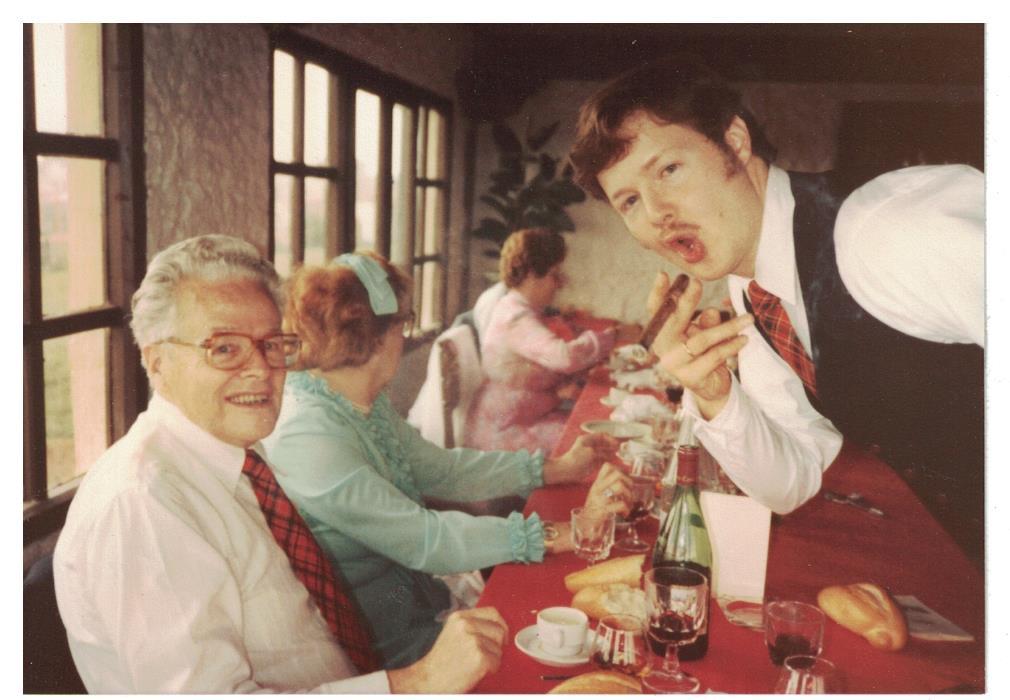

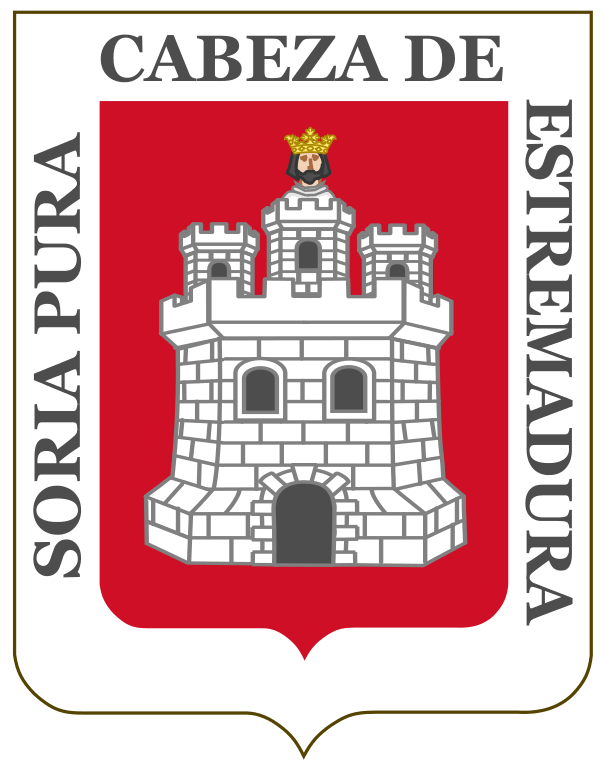


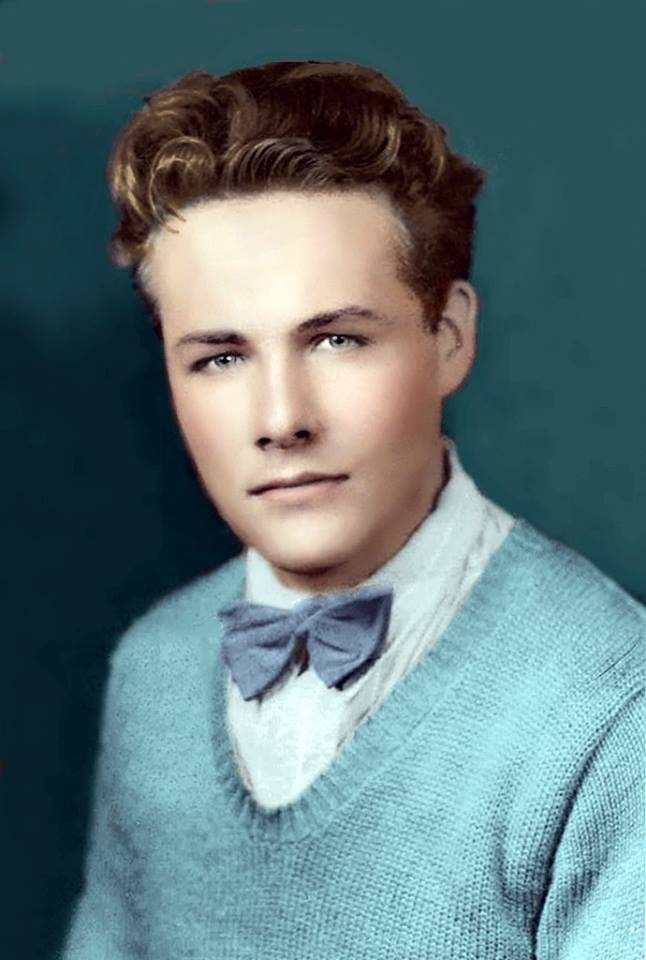


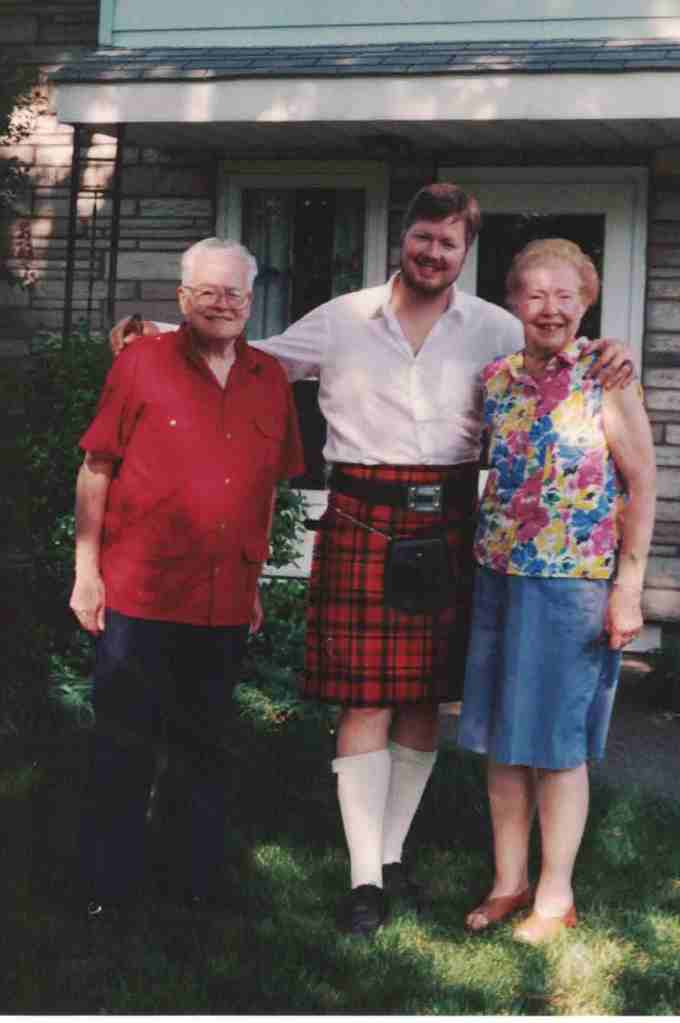
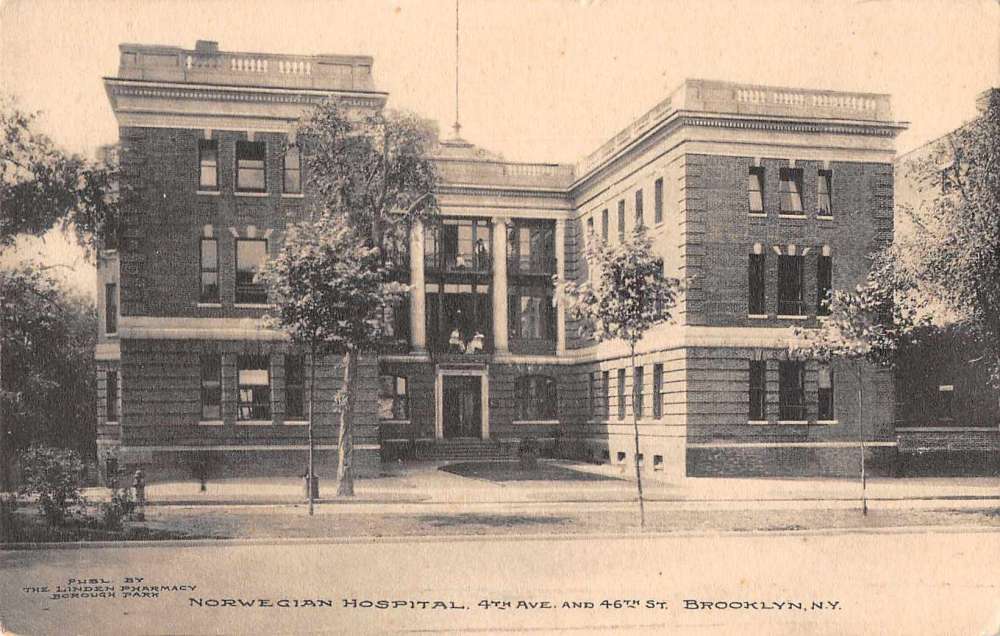


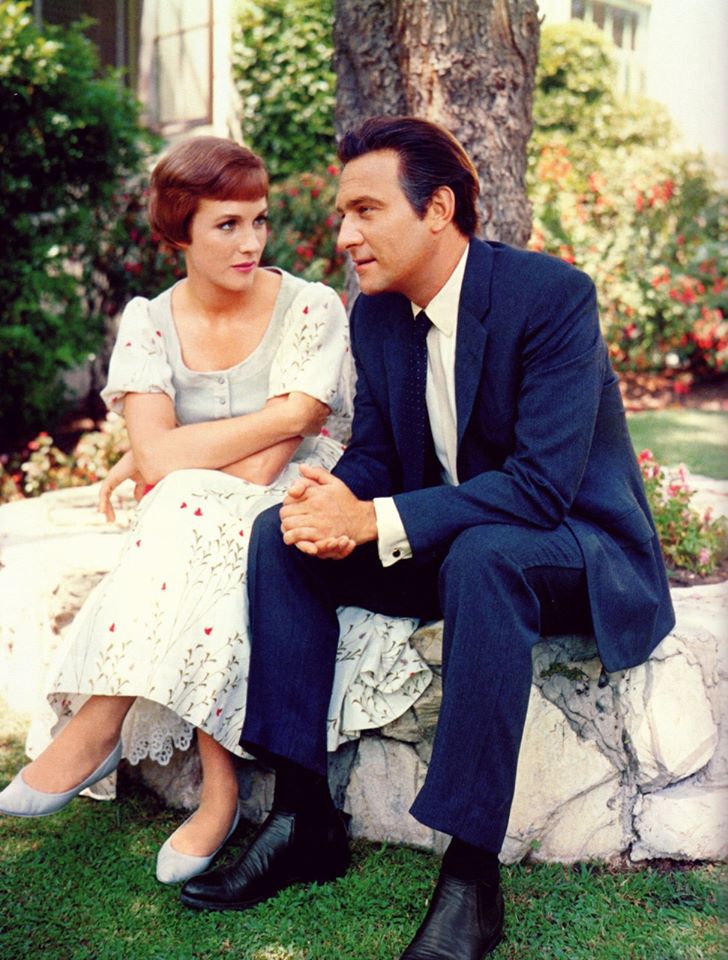

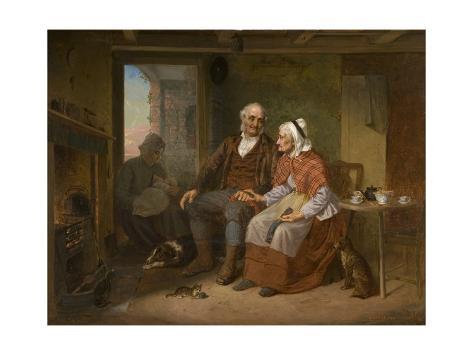


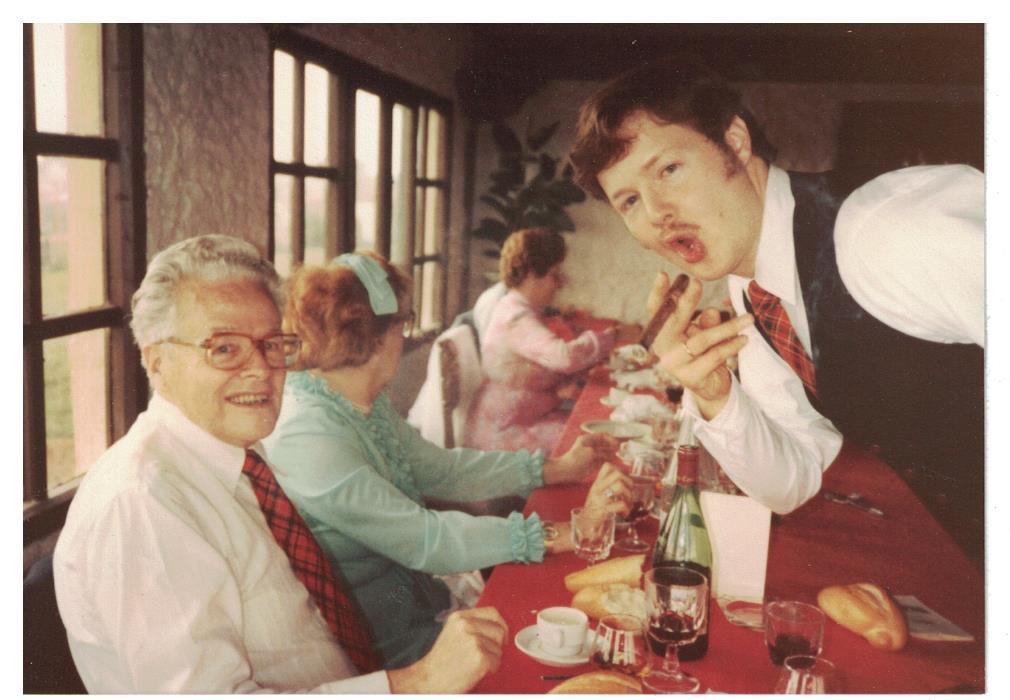


 Spirit of Cecilia
You must be logged in to post a comment.