


View original post 2,265 more words

View original post 2,265 more words
WORTH READING AGAIN
READ MYRON MAGNET’S THOUGHTFUL PIECE.
No one captures the tragic paradox of culture more poignantly than the twentieth century’s greatest poet, William Butler Yeats, who came away from the carnage of World War I fearing that we humans “are but weasels fighting in a hole”:
Civilisation is hooped together, brought
Under a rule, under the semblance of peace
By manifold illusion; but man’s life is thought,
And he, despite his terror, cannot cease
Ravening through century after century,
Ravening, raging, and uprooting that he may come
Into the desolation of reality:
Egypt and Greece, good-bye, and goodbye, Rome!
As our own civilization ravens and uproots, only to come into the desolation of false and lying illusion, so far more farce than tragedy, that’s my worry, too. Watching the hard-eyed troops surge by in Communist China’s 70th anniversary parade in October, the rank upon rank of fit young men and…
View original post 135 more words
READ MYRON MAGNET’S THOUGHTFUL PIECE.
No one captures the tragic paradox of culture more poignantly than the twentieth century’s greatest poet, William Butler Yeats, who came away from the carnage of World War I fearing that we humans “are but weasels fighting in a hole”:
Civilisation is hooped together, brought
Under a rule, under the semblance of peace
By manifold illusion; but man’s life is thought,
And he, despite his terror, cannot cease
Ravening through century after century,
Ravening, raging, and uprooting that he may come
Into the desolation of reality:
Egypt and Greece, good-bye, and goodbye, Rome!
As our own civilization ravens and uproots, only to come into the desolation of false and lying illusion, so far more farce than tragedy, that’s my worry, too. Watching the hard-eyed troops surge by in Communist China’s 70th anniversary parade in October, the rank upon rank of fit young men and women toting high-tech weaponry and marching with eager determination, as if treading down all before them, it was hard not to wonder how we’d fare if we ever had to fight them, given President Xi Jinping’s undisguised imperial designs. As I watched, I couldn’t help remembering the 2016 photos of American sailors kneeling in humiliated submission on the deck of their U.S. Navy patrol vessel, which they had allowed diminutive Iranian gunboats to seize without firing a single shot in the Persian Gulf. Did they not believe, had they not been taught, that they had anything worth defending?
Myron Magnet, City Journal’s Editor-at-Large, is a National Humanities Medal laureate.

But it did not make me hate all the Jews, perhaps to the contrary.
By RICHARD K. MUNRO
OCTOBER 1969 When I knew for certain I would never attend Columbia University.

Dennis Prager has been a great influence on my faith life and in my appreciation for Jewish religious culture and traditions. Like my father he went to Brooklyn College and like my uncles went to Columbia; like them he was deeply alienated by Columbia’s increasing radicalism and secularism from mid 1960’s on. Like my father both in Glasgow and in Brooklyn, Prager came into close contact with persons of the Far Left as well as the Orthodox Jewish community. My parents had Jewish friends their entire lives. My father played football as a boy against Jewish schools in Glasgow and many Jews served in the British Army in WWI and WWII both in Scottish and English regiments. My father’s best friend and neighbor of almost 50 years was Manny Sussman, an emigrant from England who served in the RAF during WWII. They often discussed Commentary Magazine, the news of the day, books and authors. They attended concerts at the local YMHA (as it was called then).


Recently I wrote to an Israeli friend of mine about the resurgence of anti-Jewish hatred and propaganda. Anti-Semitism is like a many-headed hydra of ignorance and prejudice. Courage and knowledge are needed to combat it so as not to repeat the catastrophic mistakes and omissions of the past. I believe anti-Semitic hatred is like Socialism ultimately rooted in jealousy and deep envy.
There is a fable, recounted by Gilbert Highet in THE CLASSICAL TRADITION of a dispute between a spider and a bee.
The spider reproaches the bee, who has broken his web, with being a homeless vagabond with no possessions, living on loot; and he boasts that he himself is the architect of his own castle, having both designed it and spun the material out of his own body. (This was the reproach which the moderns aimed at the ancients, calling them copyists, the thieves of other’s thoughts. while themselves claimed to be entirely original in all they wrote). The bee replies that it is possible to rely exclusively on one’s own genius, but that any creative artist who does will produce only ingenious cobwebs, with the addition of the poison of selfishness and vanity; while the bee, ranging with infinite labour throughout all nature, brings home honey and wax to furnish humanity with sweetness and light.
p285-286 The Classical Tradition
Cultures like the Palestinian Arab culture which are too inward or closed, feeding and engendering on themselves alone are often marked with hubris and the deep venom of prejudice and hatred for others who are more successful politically, militarily, technically or economically. The bee is a metaphor for not only the indefatigable worker but the undogmatic cosmopolitan thinker who ranges with infinite labor throughout the whole world and its history and thought. Swift, to whom we owe the fable did not directly mention Horace but Highet detected in his work the echo of Horace’s poem in which “he compared himself to the hard-working bee, gathering sweetness from innumerable flowers.”
I have an ancient and proud heritage, but my people did not invent the alphabet nor the Ten Commandments.
I am in awe of the Gifts of the Jews, the Greeks and the Romans and the English people too and the Americans who are my adopted people. The life of the mind we owe to the Greeks. The life of political order and justice we owe to the Romans, English and Americans. The life of love and faith we owe to the Jews and the Great Teacher, Jesus of Nazareth, who was, of course, a Jew.
If we believe falsely that we owe nothing to others or other nations we are vain and wrong. Hamas apologists and so-called Palestinian nationalists cannot admit their own culpabiilty for their situation and cannot bring themselves to admit the Jews, not they, are the true indigenous people of the Holy Land. Judaism and Christianity thrived in the Holy Land long before the arrival of the Arabs and Islam in the 7th century AD.
It is truthful and humble to admit that the heritage of mankind is very diverse but there are great apogees of cultural achievement of which my race and line were only observers and minor players.
I could of course, “hate all the Jews” also because it is easy to do. I have suffered slights at the hands of individual Jews. I got turned down for a date once by a beautiful Jewish woman who thought I was “medieval” (too traditional). She laughed at me. Another time I accompanied a Jewish girl home to the South Bronx from a party at NYU -just as courtesy- and the father would not let me in and said to my daughter cannot and will not ever date a Goy. I was shocked and somewhat insulted as I was not even dating the young woman in question merely escorting her home. (Later in class the young woman apologized for her father and tried to explain his feelings). But it did not make me want to “hate all the Jews” but instead learn more about their traditions and culture.
My father had Scottish relatives who were killed in Palestine in the 1940s and probably were assassinated by Irgun gunmen. Very sad. We also had relatives killed in Northern Ireland by IRA gunmen. Very tragic when you think those soldiers were sympathetic to the plight of the Jews in Palestine and to the Irish in Northern Ireland. They had liberated the Concentration Camps in 1945 and as Catholic Gaels they sympathized with the plight of the Irish Catholics in Northern Ireland. But they were Unionists and British soliders and it was war. I am not going to hate all the Irish because of the actions of a few extremists. I am not going to hate all the Jews for all time because of one personal slight or the tragic death of a doomed British soldier long ago. He was just an orphan of Empire waiting out his military service and hoping to emigrate to Brooklyn to be sponsored by my family. And war killed him. It was not a Jewish conspiracy. He just as easily could have been killed by an Arab Nationalist. He just was doing his duty and was in the wrong place at the wrong time.
Perhaps one thing my primitive people (the Gaels) -we were as Toynbee noted the last White Barbarians of Europe- gave to the world was a sense of justice, deep loyalty, deep memory and deep courage in defense and above all a willingness to make the supreme sacrifice for our families, our communities our nation our gallant allies.
Yes, perhaps the Gael has been eclipsed by other more talented, more temperate and inspired nations in most fields of human endeavor. But in the ancient Mire-catha (Battle Frenzy) in the cause of his brothers and sisters, in the cause of freedom and Independence others perhaps equal the Gael in righteous combat but none surpasses him. ‘
We may not understand all the wisdom of the great but we love and revere great discoverers and minds greater than our own. Yes, many people surpass the Gaels in many things but in gratitude to our teachers, friends and forefolk and in remembrance of their achievements and sacrifice few equal our passion, devotion and love.
The great compliment, my grandfather taught me was to be a Highland Gentleman, a leal n’ true mon (an duine dileas).
A Highlander is leal n’ true to his word,to his Regiment,to his family clan, his Nation, his nation’s Allies, to his God. “Dread God and obey his commandments; that is the whole duty of man.” That is the Munro motto and the oldest Bible reference I ever knew.
From my earliest boyhood I knew the foundation of our civilization and moral culture began with the Old Book which my father called the Hebrew Scriptures.
I knew the Bible was not an English book at all but a translation from the Jews, Romans and Greeks.
I have tried to understand anti-Semitism but it never made any sense to me that any Christian should be an anti-Semite because Mary, Jesus and Joseph and all the apostles and their ancestors and family were Jews.
But I think my people (I am speaking of the Gaels or Scots) were a cosmopolitan hard-working people who ranged throughout the world. They knew English was not the only language nor the oldest language of the world so they learned other languages wherever they went.
They knew England was beautiful,admirable in many ways, successful, rich and powerful but it was not the only country in the world nor was it best at ALL THINGS; in fact the genius of the British people was that it adapted the best of many peoples.
They knew there was much to admire and love in other countries were they lived and worked -Canada, the USA, Australia, New Zealand, Chile, Cuba, Spain, Italy, India and Africa. It is, perhaps peculiar to the Scot (or Gael) of all classes, that he remembers and cherishes the memories of his forefolk good or bad; and there burns in him a sense of identity with the dead of his race and line even to the tenth or twentieth generation. “Cuimhnich air na daoine bho tainig tusa” (remember the people you came from was a saying I heard hundreds of times until it was etched into my memory and soul).
My Israeli friend said to me: “I’m not sure where to start so as to answer your beautifully written post, so I’ll start by saying that you are too modest!
Every nation has good people and bad people and, while it is true that the percentage of Jewish Nobel Prize winners is extremely high for the very small percentage of the Jewish population in the world, there is a beautiful IJewish saying (I learned from Dennis Praeger).:
“Behaving correctly comes before studying the Torah.”
We are (were?) the People of the Book, but it is far more important to be leal’n true like your brave nation, the Gaels .”
Aye an’ when one kens what that means and has meant it gars ane to greet. (stirs the bosom and brings tears to the eyes, aye saut tears blin’ the e’e).
“La a’bhlair, ‘s math na cairdean”
THE DAY OF BATTLE ‘TIS GOOD TO HAVE FRIENDS ; this every Highland soldier knew. And it was a terrible burden for the survivors to remember the courage, sacrifice, suffering, blood, toil, sweat and tears all for the sake of freedom and independence. Freeman’s blood and tears have always told our story. Bydan Free (forever free!)
NE OBLIVISCARSIS…not not forget. My father’s best friend TOMMY CRAIG killed in North Africa in 1942. The played soccer (football) together against Jewish and Protestant schools in Glasgow in the 1920s.
Yes, if there is one thing I learned from my father and grandfather who were both Scotsmen born and bred with deep roots in Gaeldom, it was that the highest and most noble virtue a man could aspire to was being a good man, a brave man, a loving man, a generous man and a man who was “leal n’ true” to those who loved him and whom he loved. Until the death. From my father and grandfather I learned poems and songs and traditions. They loved music and poetry:
OUT of the womb of time and dust of the years forgotten,
Spirit and fire enclosed in mutable flesh and bone,
Came by a road unknown the thing that is me forever,
The lonely soul of a man that stands by itself alone.
This is the right of my race, the heritage won by my fathers.
Theirs by the years of fighting, theirs by the price they paid,
Making a son like them, careless of hell or heaven,
A man that can look in the face of the gods and be not afraid.
Poor and weak is my strength and I cannot war against heaven.
Strong, too strong are the gods; but there is one thing that
I can
Claim like a man unashamed, the full reward of my virtues,
Pay like a man the price for the sins I sinned as a man.
Now is the time of trial, the end of the years of fighting,
And the echoing gates roll back on the country I cannot see
If it be life that waits I shall live forever unconquered.
If death I shall die at last strong in my pride and free.Vimy Ridge, 1916
From “CREED” in A Highland Regiment (1917)
Ewart Alan Mackintosh (TOSH)
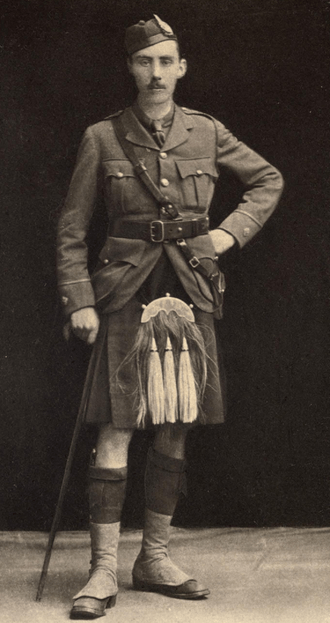
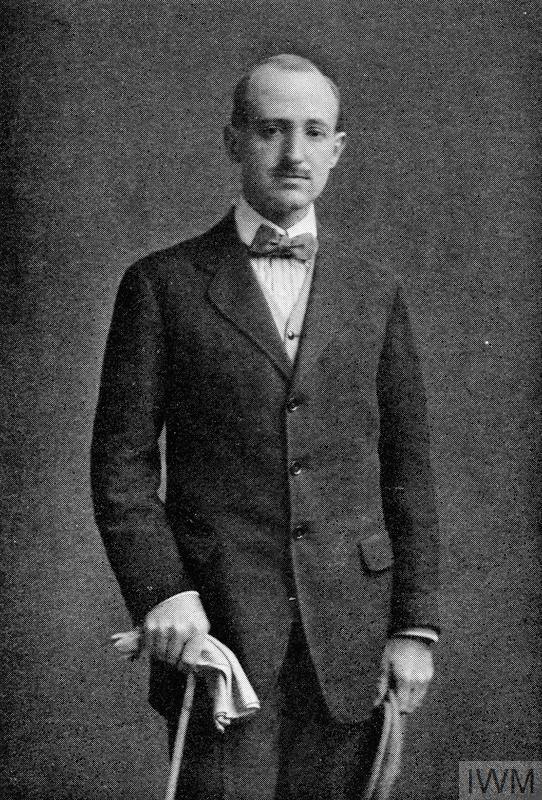
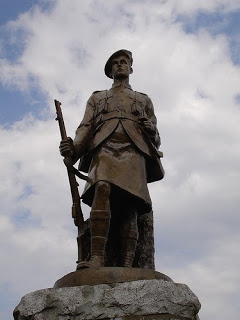
Lieutenant Ewart Alan Mackintosh MC -TOSH- to his men (4 March 1893 – 21 November 1917) was a war poet and an officer in the Seaforth Highlanders from December 1914.
Mackintosh was killed whilst observing the second day of the second Battle of Cambrai, 21 November 1917. NE OBLIVISCARIS…do not forget.



http://robertburns.org/works/61.shtml’
FROM ” Epistles to J . Lapraik”
Lapraik was a minor Scottish songwriter and poet but he was a lover of Scottish songs and poems and hence a man after Burns’ heart. Here Burns describes his method at producing poetry straight from the heart. Burns shows great sincerity, honesty, modesty and courage. Burns had earlier made an apology in the Preface to the Kilmarnock Edition at his lack of Latin and Greek. Burns also had very little knowledge of French or Gaelic (but certainly more than many as proved by his French quotations and Gaelic names and titles). Burns states his natural response to the world might have more poetic relevance than the (by then) almost hackneyed references to classical allusions. Burns humorously compares his poetic talents to those of university educated scholars whom he says in brilliant imagery go in as “stirks” (Bullocks) and come out as asses! How amusing, now to think people thought Burns semi-literate and unable to distinguish between the genres of poetry or prose (he as a master of both). These epistles are rich in the “lallans” (lowland) vocabulary of the Scots. Only Shakespeare, I believe, had contributed as many unique phrases and vocabulary to English and Burns essentially translated an entire Scots tradition in English with his own unique combination of rich Scots expressions and English. He valued the harmonic poetic and music treasures of the Scots thus preserving forever ,as a kind of causeway, English literature and ancient Scots literature making them one tradition.
***
I am nae poet, in a sense;
But just a rhymer like by chance,
An’ hae to learning nae pretence;
Yet, what the matter?
Whene’er my muse does on me glance,
I jingle at her.
Your critic-folk may cock their nose,
And say, “How can you e’er propose,
You wha ken hardly verse frae prose,
To mak a sang?”
But, by your leaves, my learned foes,
Ye’re maybe wrang.
What’s a’ your jargon o’ your schools-
Your Latin names for horns an’ stools?
If honest Nature made you fools,
What sairs your grammars?
Ye’d better taen up spades and shools, (taken up spades and shovels)
Or knappin-hammers. (stone-breaking hammers)
A set o’ dull, conceited hashes
Confuse their brains in college classes!
They gang in stirks, and come out asses, (the go in bullocks…)
Plain truth to speak;
An’ syne they think to climb Parnassus (since)
By dint o’ Greek!
Gie me ae spark o’ nature’s fire,
That’s a’ the learning I desire;
Then tho’ I drudge thro’ dub an’ mire (puddles and mud)
At pleugh or cart, (plough/plow)
My muse, tho’ hamely in attire,
May touch the heart.
Burns who “jingled” at his Muse later (Second Epistle To J. Lapraik) has the Muse assume the form of a worn-out servant girl.
The tapetless, ramfeezl’d hizzie, (Heedless, wornout hussy or wench)
She’s saft at best an’ something lazy: (Soft)
Quo’ she, “Ye ken we’ve been sae busy
This month an’ mair,
That trowth, my head is grown right dizzie,
An’ something sair.”
***
Nature, according to Burns places little value on material wealth. Amusingly he says the rich will return as savage, hungry wolves and the poor as gentle souls united by love and friendship. Clearly the meek shall inherit the earth.
***
O mandate glorious and divine!
The ragged followers o’ the Nine,
Poor, thoughtless devils! yet may shine
In glorious light,
While sordid sons o’ Mammon’s line
Are dark as night!

Many years ago I was reading Don Quixote in the original Spanish for the first time. I remember I encountered the word “Latino” for the first time. So there are “Latinos” in Don Quijote. But wait! The way Cervantes meant the term it didn’t mean “Latino” but “Latinist” that is someone who could read and write Latin. Ruben Navarrette writes:
“Of course, I speak about what the Latino literati has been referring to cryptically — and often angrily — as “the book.”
The book is “American Dirt,” and it’s a novel, which is to say that the admittedly riveting story it tells — about a Mexican woman and her son who leave their comfortable life in Acapulco and head for the U.S.-Mexico border as they flee drug cartels — never happened.
How fitting, then, that this make-believe story would be written by a make-believe Mexican.
New York City-based Jeanine Cummins was born in Spain, but only because her Navy father was stationed there. She has lived her entire life in the United States, where she has identified as “white” and studied English in college.
Cummins does have a Puerto Rican grandmother. But she doesn’t appear to have spent much time over the years identifying as Puerto Rican.”
Of course, you know being born in Spain and having a Puerto Rican grandmother DOES make one (if one wants to claim it) officially Hispanic. Of course, as we know there are elites among Hispanics themselves so i don’t need to list them.
Suffice it to say if one’s father is a medical doctor and one’s mother was a teacher in a private Catholic academy and one graduates from a private Jesuit academy one is very privileged and more likely to succeed in an American high school or junior college.
Only a small minority of my students are high school graduates (from overseas) but those who are or who graduated from the 8th grade in Mexico or Central America usually have an advantage and usually graduate from high school and go on to college. It is an advantage, even if one knows little English, to have studied Latin, to know the parts of speech, to have a high level of cultural literacy in one’s native language as compared to someone with a very spotty elementary education or perhaps not even a native Spanish speaker (being a native speaker of an indigenous language).
I grew up speaking two languages (other than English), including Spanish (my father and uncle could speak Spanish reasonably well -my father read, Garcia Lorca, Machado and Cervantes in the original -he was an avid amateur linguist). But I never once claimed to be of Hispanic origin (because I am not) or even a national from another country (though I have strong cultural and linguistic ties to the Gaeltacht). None of my grandparents or great-grandparents were native English-speakers.
Of course, by heritage, I am a Gael but I know and have always known that I am the last of my race; my children and grandchildren will all be part of la raza cosmica. At this point every person in my family under the age of 40 is a native Spanish speaker and most are Mexicans or Mexican-Americans. How they identify themselves in the future is up to them. I just take for granted they will not speak my language or know much if anything about their paternal grandfather’s culture. The languages of Empire and the highest utility triumph. That’s why Gaulish and Celtiberian are extinct and most Native American dialects. Spanish and English are world languages as my language is not and I cannot lament the disappearance of our language (only a few people over age 60 speaking it in our family now and no one under the age of 64). As my grandfather told me more than 50 years ago -and he did not speak to me in English- “We lost the war. English is the language of the banks and the long-range guns.”
The languages of the big battalions and Empires always have an advantage over scattered broken tribes and clans. My English-speaking friends cannot understand the persistence of Spanish. I tell them it was CREATED and FORMED as a universal language of Empire. The Empire might be gone but the roots of that culture and thickness of the trunk are both deep and wide. In North American Spanish is the only possible rival to English. In my opinion, Spanish will survive into the 22nd century.alongside of English.
My language probably will not. The writing was on the wall for the Gaels long ago -Flodden, Kinsale and Culloden. The last leaves of that linguistic tree will fall sometime this century.
Will Durant lives “Through their volumes on the history of civilization, Will and Ariel Durant tapped into a large audience in the United States—readers that presumably had more than a vestigial interest in culture. The series paralleled the introduction of courses in Western Civilization by American colleges designed, as David Gress argued in From Plato to NATO, to make sense of the crisis brought on by World War I. By contrast, academics had long sought to ground their approaches to society and culture in scientific method with its prestige and claim to understanding. An older tradition of philosophical history as belle lettres did not suit this cultural moment.”
William Anthony Hay is professor of history at Mississippi State University and the 2019-20 Garwood Visiting Fellow for the James Madison Program at Princeton University. He is also the author of Lord Liverpool: A Political Life, and The Whig Revival, 1808-1830.
https://www.lawliberty.org/liberty-classic/finding-meaning-in-history/
BY RICHARD K. MUNRO
RE: “US Drive for Test Scores has stifled student’s creativity” by Theodora Kalikow.
I am only a humble rural school master (I chiefly teach immigrant kids) but I want you to know that I think you are on to something. Public schools have a public purpose that goes beyond the achievement of a small academic elite. Non mihi, non tibi sed nobis. (Not for me alone not for you alone but for all)
Diane Ravitch’s books have had a great influence on me as an individual and as a teacher. Books such as the LANGUAGE POLICE, LEFT BACK, and the LIFE AND DEATH OF THE AMERICAN SCHOOL SYSTEM remain compelling reading. Dr. Ravitch of course is more than a statistics maven; she is a woman of learning and culture who cares deeply about America, America’s schools and our civic culture. Hence she has edited splendid books which I use as supplements in my English and history classes: the AMERICAN READER and the ENGLISH READER. I think those books should be on the required curriculum of every college in America they are that good. I enjoy re-reading them myself and find myself referring back to them all the time. That , to me is the mark of an enduring classic. Many of Ravitch’s books are and will be classics.
In that spirit, we taught academic subjects such as reading, English, writing, mathematics, science, history, international languages and so on, but we also provided field trips, sports and physical education, music and art, plus opportunities for leadership, volunteering and community involvement.
Of course, we need high academic standards but we also need well-rounded individuals who gain REAL LIFE EXPERIENCE not merely academic knowledge.
Of course we have a responsibility to what I call the “AP elite” but we also need to help all students begin to assimilate to American life and prepare for life as adults and citizens. This is why I as a teacher am the advisor to the Hispanic Bible Club which meets three times a week during my lunch hour and our Academic Decathlon team during my Monday lunch hour. In other years I have volunteered to help the “We the People” Constitution team. The experience students get in running club meetings, doing fund raisers, having guest speakers in areas of their interest, seeing special movies going on class trips. Students who are involved in school activities are much less likely to commit suicide, use drugs or drop out of school. Students become closer to teachers –and learn a lot from them- in these informal voluntary setting. It is a great opportunity for teachers to mentor youth.
Excessive emphasis on standardized MC tests is providing students a diet of academic junk food. Standardized tests have the virtue in that they are easy to correct and easy thus to use in a common measuring stick but they do not accurately reflect true growth in the classroom and academic engagement.
In fact, I believe, standardized tests help destroy interest in reading and learning. It certainly makes me as a classroom teacher hate the “testing regime”. I give the tests they make me use because I am a good soldier but I believe the amount of time spent on these tests (about 20% of all class time) is excessive. I do feel for the students who struggle to concentrate on these mind-numbing tests on language conventions and reading comprehension of basically random, sterile, lifeless nothing prose.
I have seen the test regime bring CFA (Common Formative Assessments). As an ELD (English Language Development) teacher I believe foisting college prep multiple choice tests on immigrant kids –test that use language and vocabulary that the students have never seen- is harmful. I try to palliate the situation by using the CFA’s as “practice” for the CST’s (State Standards Tests) but I tell the students I will never consider them the full basis of their grades.
I never give multiple choice tests on my own preferring to encourage critical thinking and writing.
On a recent test on the origins of WWII for my ELD World History class the emphasis was understanding how dictators (fascist but also a communist –Stalin) and policies like appeasement led to WWII. Rather than merely asking a series of questions to mere sentences I had a series of political cartoons (from the 1930’s ) on themes such as the Japanese invasion of Manchuria, Hitler’s annexations of Austria and Czechoslovakia and the 1939 Russo-German Pact. I also included an extra credit part on Picasso’s Guernica which included a reproduction of the painting.
I found it very interesting that more students could explain Picasso’s painting rather than the Russo-German Pact which always confuses students because the focus of the book is the Axis Alliance and of course later Stalin becomes an Ally and an enemy of Hitler. Some of the responses were very interesting and moving; some knew it hung in a New York museum until Spain became a democracy and one girl even remembered it hung in the Reina Sofia annex at the Prado. That was just a fact I mentioned in passing in class discussion but it shows to me that the students enjoyed moving away from the big picture policy questions to a more humanist viewpoint.
I felt it was very important to make some mention (even though it is not on the California History Standards ) of Franco, the Spanish Civil War and Picasso’s Guernica.
I use Guernica a motif for total war in which there are no front lines and civilians including women and children can be targets.
I link this to the modern phenomenon of terrorism where every body is a target. Teaching about Picasso is cross curricular; linking the Spanish Civil War and WWII to the origins of modern terrorism is, in my view, one of purposes of history. The standardized tests are not like this at all and focus on superficial knowledge and “gotcha” artificial questions such as “all of the above’ or which one does NOT belong.
Standardized tests DO HAVE SOME VALUE, especially when they are authentic instruments like the CSET (elementary school teacher’s exams) Praxis or AP exams. All of these exams have written portions which in my view authentic those tests and validate the broad “dip stick” value of batteries of multiple choice tests. The foreign language tests in AP and Praxis require a spoken and listening portion.
But standardized tests should not be the ultimate goal. They are not education in themselves nor do they represent what is the best of what education is. The goals of education should not be high test scores or high grades (both can be achieved by fakery and cheating) but
1) the formation of character and self-control.
2) the cultivation of intellect
3) the development of judgment
4) inspiration of delight in the right things; that is to say the elevation of tastes
5) teaching about citizenship (civic virtue) and the common good. This includes teaching the youth to have a sense of gratitude for our great and free nation and the sacrifices of patriots and heroes who made this freedom possible.
Education can never be merely about individual achievement; it also must be about developing a sense of common democratic values and respect for due process of law and respect for others. Vijaya Lakshmi Pandit wrote in THE SCOPE OF HAPPINESS:
<< Education is not merely a means for earning a living or an instrument for the acquisition of wealth. It is an initiation into a life of the spirit, a training of the human soul in the pursuit of truth and the practice of virtue.>>
I always tell my students that there are two educations: One is the practical one; how to make a living (most of us have to do this. The other, perhaps more important is HOW TO LIVE and HOW TO UNDERSTAND LIFE, LOVE and DEATH.
I believe this with every fiber of my body.
I very much appreciated your remarks and hope your college uses holistic measures for the admittance of your students not only GPA’s.
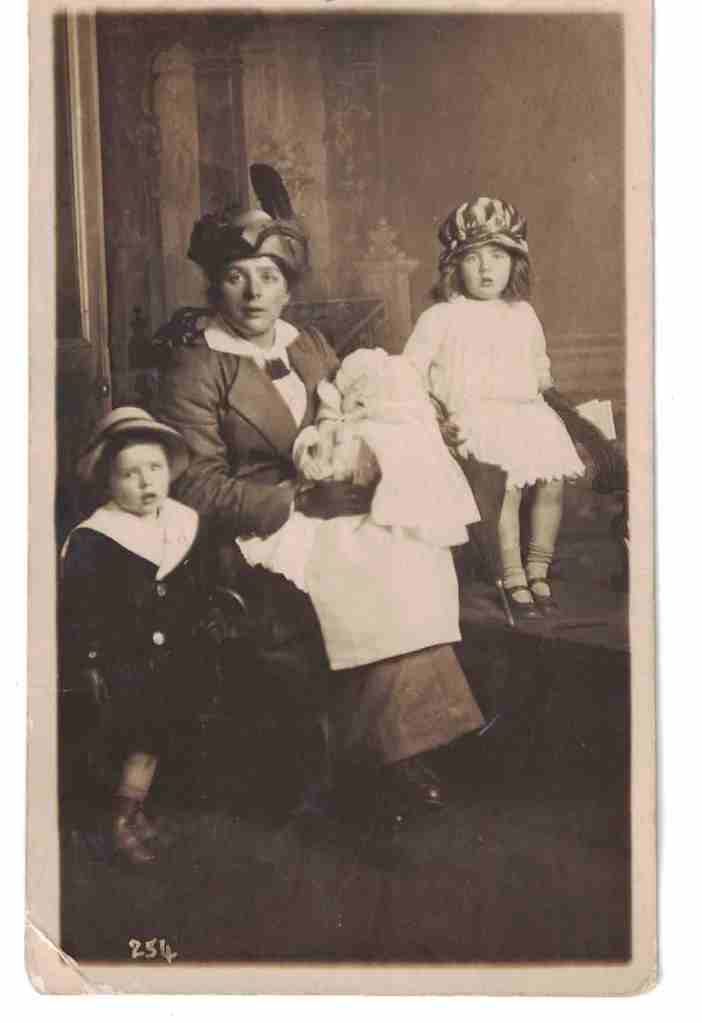


A very warm eulogy to Himmelfarb the scholar and author and Bea Kristol the wife, companion, friend and woman. I have read many of her books and have never ceased to be impressed by her learning and analysis. The Victorian age is not that far away from me. My grandparents were born in the Victorian Age. My grandfather told me about the The 1897 Diamond Jubilee; he was a boy apprentice in the Merchant Marine and saw some of the celebrations in India and China. He remembered her death in 1901. He told me that Queen Victoria was almost universally loved and admired especially in Scotland. Soldiers loved Queen Victoria because she honored them and the bravest among them with the Victoria Cross. She symbolized the motherland.When I think of my parents and grandparents I think of people who took responsibility for their lives. They were not wealthy or even middle-class but they worked hard to be RESPECTABLE lower upper working class even if that mean long stints at sea and working as birds of passage in Latin America, Canada and the United States. I never once heard my grandparents curse or use foul language. And to them the family was indeed, as Himmelfarb wrote, a :”sacred place”. My grandparents had little formal education; they could not read or write their native language but were reasonably literate in English. They were, by today’s standards, good readers. Both my grandmothers studied the Bible or Missal assiduously. My grandfather quoted Burns and Kipling freely. They were country folk by birth and so there were no doubts in their generation as to belief in God, his Commandments and heaven. They were tempted by Socialist and Marxist ideas in their youth but disagreed fundamentally with Socialism on issues like patriotism, the Empire and Christianity (all of which my grandparents were sure were benevolent and good). Both my grandfathers were heavy drinkers -when they got the chance- but their wives were completely teetotal.
It was the practice for the men not to drink heavily except Saturday nights. They routinely turned over all their wages to their wives (so did the children) and the wives handed out money for some amusement such as picnics, attendance at the movies, concerts or ball games. My paternal grandfather was proud of the history of his Regiment and showed me in the atlas they many places they fought and who among kinsmen and friends won decorations especially the Victoria Cross. They emulated and admired middle-class ethics and values. Courage, politeness, civility , graciousness, generosity and integrity were bywords for Victorians like my grandparents. The highest compliment was to be considered lady-like and for a man to a “a Highland gentleman.” So Himmelfarb was exactly right that the Balmoralism of the Queen and the Victorian values she represented were emulated by working class people.
I know they were all united by their love of the monarchy, the flag, the Empire and Commonwealth. My grandparents were separated only by war and be death. To them marriage vows were sacrosanct. I remember one of the worst things my grandfather would say of a man was “he has naepoosh” (no push/no ambition). The highest honor was to be a “leal n’ true mon.” (what Bea Kristol would probably call a “mensch”. It is not an exaggeration to say they probably attended church or religious gatherings over 200 times a year. My grandfathers were avid readers of newspapers and enjoyed military bands, concerts and recordings of famous artists like Marjorie Kennedy-Fraser, Caruso, Rachmaninoff or John McCormack. They were very proud to be British in origin (they became naturalized Americans) and very proud to have served as soldiers of the Queen in many famous Regiments (most now disbanded and with Yesterday’s Seven Thousand Years). When King and Country needed them in 1914 they answered the call (An Gairm) from far off India, Australia, America, Canada and so in Glasgow alone 200,000 men volunteered for service. A large percentage were men who were Canadian citizens or USA citizens who returned for what they considered “the cause of True honour” -defending the motherland.
They did not have much education but they valued education opportunities for their children and grandchildren. Thanks to my grandparents (maternal and paternal) my father was the first in his family to graduate from high school and then go to college (Brooklyn College as the fates would have it). My mother was the first in her family ever to graduate from high school and she went on to become a RN. My parents succeeded in life and their children and grandchildren too in part because of the values that were passed on.
Himmelfarb is right that poverty is “a matter of mind and spirit as of the pocket.” My father’s mother scrubbed and washed the steps of her tenement regularly. Her home was always immaculate. She made sure her husband and children had clean clothes to wear especially on a Sunday. She had to do all the washing by hand with a washboard and usually with cold water. She was proud that she always gave something at church. She and her generation sacrificed to send money to help build the Oban Cathedral (finished in 1959). Most of the money came from overseas Gaels. Wherever they went they help build churches and communities.
And yet these were people who suffered cold and real hunger many days of their lives. It was very common, at the end of the month or in a bad season, not to eat at all for days or merely eating turnips and porridge and hot tea without sugar. When my grandmother came to America by steamer everyone survived on crackers, butter, marmalade and hot tea, two or three times a day. But she never complained and always said grace at meals. One of the virtues she taught us was to HAVE GRATITUDE. Americans today could learn much by studying the lives and morals of Victorians and the works of Gertrude Himmelfarb. Victorians were brave, hard-working, tough, generous, noble, loyal, loving and ambitious. Even their failings leaned towards virtue’s side. They were not great, prosperous and free by accident. Himmelfarb recognized that the key to their greatness was moral principles and moral character which informed their lives and actions.
By Richard K. Munro
So Julian Castro (have you noticed? ) is out of the 2020 presidential race. I can’t say I was ever impressed or intrigued by him. Mr. Castro’s lack of Spanish fluency was just one factor about his education and background. Another factor would be his diction in English and what kind of education or culture he displayed in his speeches. What logic he used. What values he has. Obviously, speaking and studying Spanish was not a high value for him. Everyone in our family speaks Spanish. Like our religious faith it is a high value for us. Yesterday we had dinner with friends and spent the entire afternoon talking and joking in Spanish. We are Hispanophiles or native Spanish speakers from Chile, Peru, Spain and Mexico. All of us are fluent in English and comfortable in the Anglosphere but there is no question that the ladies in the room felt more at home in Spanish, their home languages. In my extended family, Spanish and French are the predominant languages. Only a small cohort -those born and educated in the USA or Canada-are fluent English-speakers. So when we get together on holidays Spanish is the predominant language with some small lapses into French, Scots or Gaelic for some older people. As time goes by the Scots quotient diminishes to only one, two or three people (all over 60 years of age) I don’t expect most Irish Americans to speak Irish Gaelic or Scots to speak Scots Gaelic BUT their attitude towards the language IS important to me. It is hard for me to like someone who dislikes my language or my wife’s language. I don’t like crude nativism. For most of my life, I would say my language has been the subject of scorn, humor, and satire. People laughed. People thought it was useless, silly even ugly. They said it had absolutely no utility whatsoever. I have strong memories of being publicly mocked and the cruelty of my classmates.The end result is most of the time I keep my knowledge to myself. But I know this: those of us who are multilingual in my family started off speaking two or three languages and branched out from there. Being open to other languages made it easy and desirable to learn to read, write and speak in languages other than English. I realize few understand my language and fewer have any interest in it whatsoever. But I cherish my friends who love the old language, it’s music, literature and song.But knowing other cultures and speaking other languages seems very important to me. Someone who is so parochial as not to know any other language. -even a passing acquaintance or reading knowledge of a language- demonstrates to me a serious educational failing. Similarly, so one who demonstrates zero interest in religion or ethical values merely political ones seems a very flat personality to me. I am sure Julian Castro is a nice fellow and a man who seeks justice for others -good characteristics). However, I have to say he never impressed me by leadership, moral character or intellect. To me, he was just another marginally prepared and marginally educated politician. If I am mistaken I would be glad to be corrected by him or by others.
But I would need a lot of evidence to change my opinion.
 Spirit of Cecilia
You must be logged in to post a comment.