BIOGRAPHY: Richard K. Munro April 4, 2023
I am a retired teacher of English, Spanish & history. I taught in public and Catholic schools for over 34 years. I am a California Certified teacher of Social Studies, Spanish and English. I was a Mentor Teacher in the Kern High School District.
I hold a BCC (Bilingual Certificate of Competence). I have always been interested in foreign languages and bilingualism probably from the time as a young man realized that the Roman Empire was a de facto bilingual empire (Latin and Greek) and from the experiences of my father who spoke Spanish and Tagalog as a US Army officer during World War 2. My father encouraged me to study Spanish as it was a practical and important universal language.
I attended public schools in New Jersey excelling in AP US history and AP Spanish. At the recommendation of my high school Spanish teacher, I began my university studies in Soria, Spain with the University of Northern Iowa. We American students lived with Spanish families and pledged not to speak English with each other or anyone else for the entirety of the course (10 weeks). I became aware of the value of total immersion in a foreign language. I am fluent in Spanish and Portuguese and have a good competency and reading knowledge of Latin, Italian, and many other languages. In my retirement, I am studying Greek via DUOLINGO and Teach Yourself Books.
Like my father, uncles, and other relatives who served during WW2, I volunteered to serve in the US military. I hold an honorable discharge from the US Marines. My parents were naturalized Americans and the first in their families to graduate from high school and go on to college. During WW2 my immigrant grandfather help build US Navy ships and Liberty Ships. My parents and grandparents impressed upon me from an early age the importance of national unity, patriotism and deep gratitude for the opportunities America has afforded us.
My specialty became English literacy for newcomers (emphasizing phonics, diction, and grammar) and sheltered English immersion Social Studies (history) for English learners.
I believe in voluntary high-quality Dual Immersion instruction and the importance of the teaching foreign languages. My daughter is a Dual Immersion Spanish/English k-6 teacher and my son is a AP Spanish teacher 9-12. I am married with three children. My wife is an immigrant and a naturalized US citizen.
For many years I was an AP Reader in Spanish (adjunct faculty) for ETS. In 2004-2005 I was the ISI Renshaw Fellow at UVA and a University Supervisor. I taught at Bakersfield College for four years as an adjunct professor in Spanish. I have a New Wine Credential; I taught high school catechism in English and Spanish for over 20 years. I voluntarily tutored many immigrants pro bono for citizenship tests and for those who attended junior college. My wife and I have co-sponsored immigrant families in our community who have gained US residency.
I studied history, political science, and Spanish at NYU (BA with honors) and was awarded the Helen M Jones Prize in history. I achieved my 5th Year teaching certificate at Seattle University and was certified as English teacher as well as Spanish and Social Studies. I hold an MA in Spanish Literature from the University of Northern Iowa. In addition to teaching, I have worked in private industry as a tour guide, a construction worker and as a customer service representative for the Bank of America (five years).
I have published articles in newspapers, Military History magazine, Calliope, and Cobblestone. I was author of “Spying for the Other Side, KIM PHILBY” which appeared in the McGraw Hill Anthology of World History. I have authored one-act plays for youth such as "Euripides' Trojan Women” (Calliope),"Romans on the Rhine", "Clad in Gold Our Young Mary" , "Beneath Alexandria's Sapphire Sky" among others.
I have edited galleys of several books and have done research for authors notably Andrew Roberts in CHURCHILL WALKING WITH DESTINY and his THE LAST KING OF AMERICA: GEORGE III.
I began my career primarily as a Spanish teacher specializing in Spanish for Native Speakers and AP Spanish and AP Spanish Literature teaching in Washington State and California. However, I also coached sports (baseball and soccer), advised for the local “We the People team” and filled in by teaching the occasional summer ESL or US history class.
As a bilingual teacher of course, I attended meetings and conventions for bilingual teachers. There Stephen Krashen and others taught that a student could be taught Math, Social Studies, Language Arts and Science in their native languages (rather than English) and that knowledge and literacy would “transfer.” I came to call this Phoney Bilingual Education or NENLI (Non-English Native Language Instruction) Many teachers I met favored a “late exit” approach which meant keeping students in so-called bilingual classes deep into high school. I was skeptical.
For me 1995-1996 was the turning point. I was asked to fill in for three ESL classes that had been previously taught by another bilingual teacher. I was shocked by what I found. The students were reading mostly in Spanish and doing journals (in ungrammatical Spanish) only. The students chatted in Spanish the whole period and English was rarely if ever heard. I was told the goal of ESL classes was literacy. I clashed with the local administrator who would not provide me English language dictionaries, bilingual dictionaries or English language material. I bought a box of American heritage dictionaries out of my own pocket and taught using newspaper articles and comics. I protested that the student transcripts indicated the classes were English classes so they should be taught and tested in English for those classes. To do otherwise was, in my opinion, intellectually dishonest, even fraudulent.
I continued to inform myself and read books and articles by Linda Chavez and Rosalie Porter especially FORKED TONGUE by Porter.
At the time our high school graduation rate was falling and one of the major reasons was students could not pass 11th grade US history or 12th grade Government and Economics. The Bilingual Coordinator had the answer: alternative paths mini-classes (all in Spanish) via Migrant Education. I was asked to teach US history and World History with Spanish language history books. These books were ordered via supplementary budgets and so evaded the normal book approvals via the district. I refused to use those books. Instead, I volunteered to teach US history with English language books (with numbered paragraphs and bilingual glossaries). The school was very divided on this issue; I had at one time the support of the Social Studies chairmen and the school principal but not the vice principal and bilingual coordinator. I was very successful, and the students were very grateful. In one history class, every single student passed his or her English proficiency test and graduated from high school.
Over time, however, I became increasingly at odds with the Bilingual Establishment some of whom accused me, publicly, for being a “racist”, “English-only”, a “white supremacist” and “anti-immigrant.” I responded of course that my conscience was clear as I had dedicated my life to help immigrants and newcomers of many races and religions, spoke Spanish and other languages, and that my wife was an immigrant!
In 1997 Ron Unz came to our town to promote his new referendum English for the Children. To my surprise, I felt sympathy for most of what he said and so volunteered. I actively campaigned with Unz , Henry Gradillas, and Jaime Escalante in English and Spanish for Bilingual Education reform with English for the Children in California 1997-1998. I helped produce bilingual radio commercials and appeared on Spanish-language and English-language television. During this period I met Rosalie Porter and later worked with her as an advisor in the successful English for the Children campaigns in Arizona and Massachusetts. I have been associated with ProEnglish for many years as an advisor eventually being invited to join the Board of PRO-ENGLISH.
I believe local communities should have some choice as to what kind of educational programs they want to provide and what languages they teach. I also deeply believe in La Conviviencia. La Conviviencia is an almost untranslatable Spanish concept. It means living, communicating and working together and thereby gaining mutual respect and comprehension. I believe in La Conviviencia; we must live together as good neighbors. We have many problems in this world, even enemies; but with our neighbors and friends we should live in peace. I believe in the policy of the Buen Vecino (the Good Neighbor) and in la Conviviencia (peaceful coexistence) of different cultures, languages, and religions.
Diane Ravitch wrote “a society that is racially diverse requires…a conscious effort to build shared values and ideals among its citizenry.” This includes the recognition that English is and should be our official national language. The language of the rule books, Federal courts and juries must be in English. In addition, the Uniform Code of Military Justice, contracts, official documents, our laws and constitutions must be in English though translations can be provided.
I believe English should be the official and national language of the United States. I do not believe we can or ought to be an officially bilingual or multilingual nation. This does not mean in any sense that languages other than English should not be taught or used, however. It should be clear that I have never been an English-only person but a multilingual person who is pro-immigrant and believes in voluntary multilingualism. America needs English but it also needs knowledge of other languages for cultural and educational reasons as well as for national security reasons. My entire family is multilingual and multicultural, and I hope we carry on this heritage into future generations of American Munros and Mendozas in a prosperous, peaceful and United States of America.
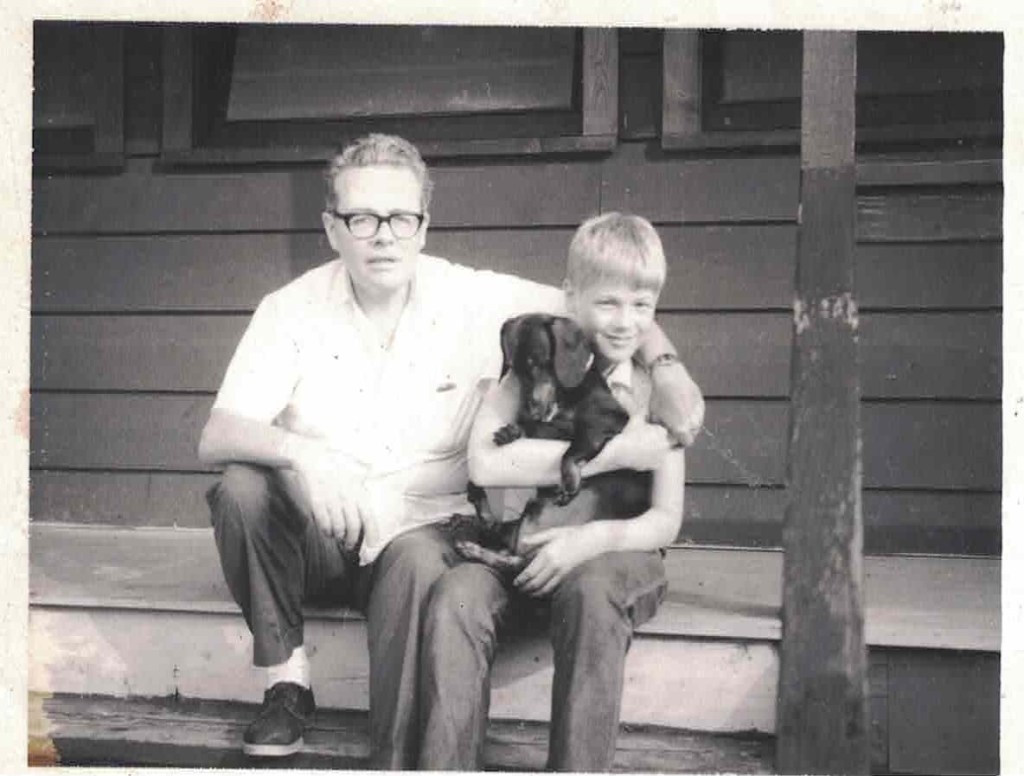
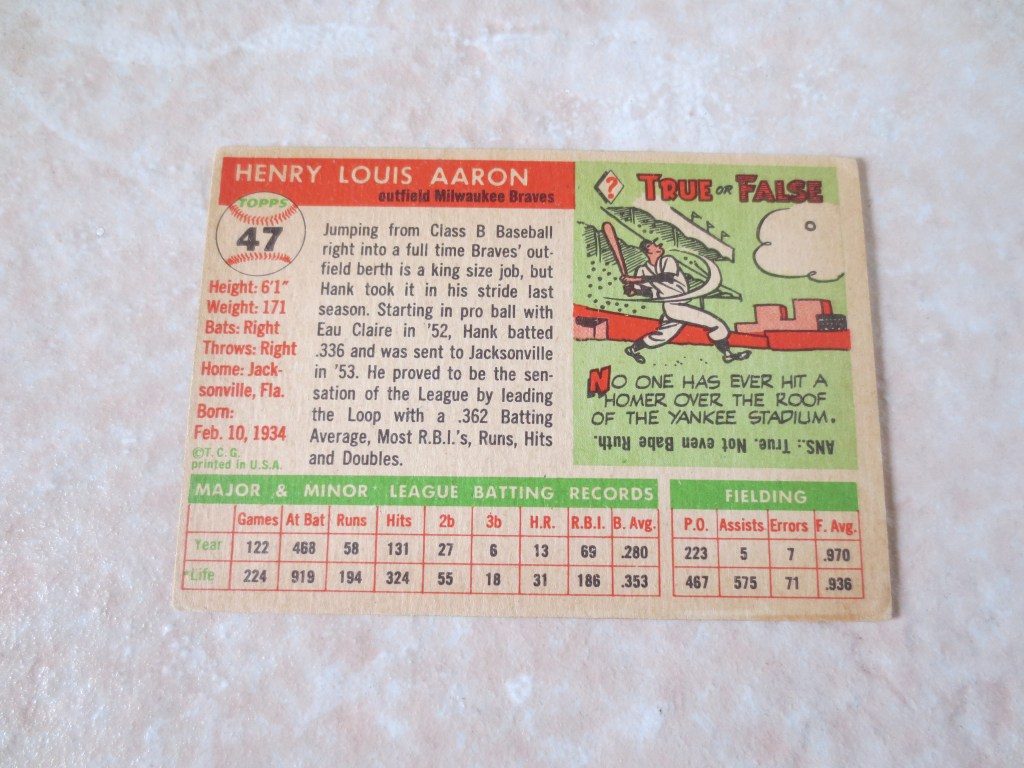
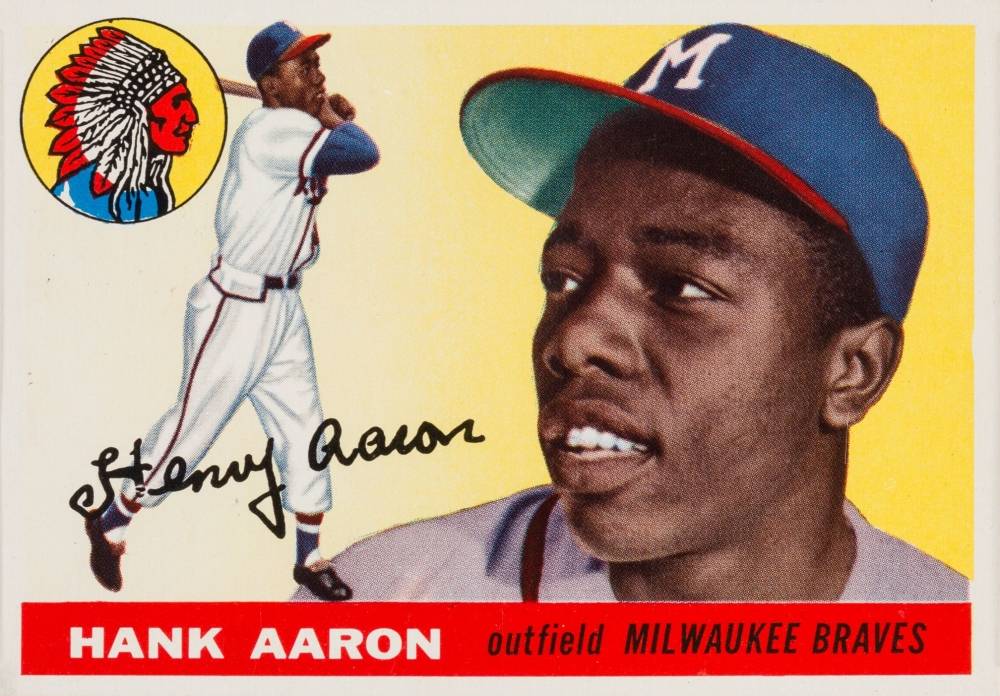
Thomas Munro, Jr and Richard Munro at Camp Watonka circa 1967 with our dog Albert II.WINSTON CHURCHILL DURING THE SECOND WORLD WAR IN THE UNITED KINGDOM The Prime Minister Winston Churchill poses outside 10 Downing Street, London, England Churchill retired in 1955.famous scene from 1955 film THE SEVEN YEAR ITCHHank Aaron’s 1955 baseball card. Ironically it mentions Babe Ruth under the T/F1955 D uncirculated Washington quarter.1955 Hank Aaron TOPPS baseball card.
Richard K. Munro (That’s me!) was born in New Jersey, Dec 12, 1955 just after midnight. I was named after Richard Strauss, the famous composer and one of my mother’s uncles whose name was Rickard. As a boy I was often called Rickard, Ricardo or Ricky Ricardo. My sisters had both been born in Brooklyn. We moved to Livingston, NJ in 1958.
1955 Brooklyn Dodgers won their first and only World Championship against the Yankees. My mother was pregnant with me and my grandfather (Auld Pop) said, “Ruthie, it’ll be a boy for sure!” (all my cousins and siblings were girls). I went to Ebbets Field in 1955 in utero.
1955 was Hank Aaron’s 2nd year and first big homer year (27HR, 106 RBI and .314 average). He later became my favorite player. I first saw him play at the Polo Grounds vs the Mets in 1962.
1955-D quarter was fairly rare. Mintage at Denver was only : 3,182,400 I know this because in the 1960s in order to complete a Boy Scout project I had to have all the coins of 1955. I tried all summer to find a 1955 D but in the end I bought an uncirculated one. I have all the years of silver quarters from 1932-1964 but lack some of the 1932 S and D coins. I lost interest in coin collecting when they switched to cupronickel coins. After 1966 it became harder and harder to find old coins in circulation. I still like silver coins but do not actively collect coins in a serious way anymore but I give half dollars as gifts or tips for fun.
Rosa Parks was arrested after refusing to give up her bus seat to a white passenger…this I know from history books.
I know Eisenhower was the US president in 1955. In 1955, President Eisenhower planned the interstate highway system. It would begin in 1956. Initially planned as a way of moving troops and military hardware from one end of the nation to the other. Gas was very cheap less than 30 cents a gallon.
In April 1955 Churchill retired as Prime Minister. The leaders my parents and grandparents praised and talked about the most were FDR, Churchill, Eisenhower, MacArthur, and John F. Kennedy. My father met MacArthur in the war and my uncle served under Eisenhower in ww2 and met Ike while Ike was president of Columbia University.
The St. Lawrence Seaway opened I always loved maps and geography and this was always mentioned by my elementary school teachers just like the Panama Canal or Suez Canal.
The USS Nautilus became the first operational nuclear-powered submarine I know this because I made a plastic model of it as a boy. I also know the name because it was the name of Captain Nemo’s submarine in the 1954 film 20,000 Leagues under the Sea based on Verne’s work. One of my favorite films as a boy.
Jonas Salk’s polio vaccine is declared safe and effective I was inoculated with the polio vaccine in elementary school.
The Soviet Union and its Eastern Bloc allies signed the Warsaw Pact I know this because NATO was founded in 1949 and I taught World History for many years. Every year we made maps of the Warsaw Pact/ Nation and East and West Berlin. I know it ended in 1991. I know Germany became fully independent in 1955 and joined NATO in that year.
Dr. Martin Luther King, Jr. became a leader in the first major event of the U.S. civil rights movement, a bus boycott in Montgomery, Alabama. I heard a lot about him as a boy and remember his assassination in 1968 and Robert Kennedy’s famous speech.
World War II Allies signed a treaty restoring Austria’s independence.
Murder of Emmett Till This I did not know until many years later, It was never mentioned in school or in AP US history as far as I know. I was aware of JIm Crow and lynchings in the Old South, however. A horrific tale really.
BAD DAY AT BLACK ROCK with Spencer Tracy was a notable 1955 film.
The Desperate Hours by William Wyler Humphrey Bogart and Frederic March
THE LADY and THE TRAMP was one of the great Disney musical cartoons
12 Angry Men and Inherit the Wind were famous plays that opened in 1955. I later saw the film versions.
Lord of the Rings by Tolkien was published.
Surprised by Joy by CS Lewis was published.
The Wasteland was published by T S Eliot
Mister Roberts (John Ford) starring Henry Fonda was a notable film one of Jack Lemmon’s early films
“Seven Year Itch” was a notable Marylyn Monroe comedy by Billy Wilder one of my favorite directors. Marilyn Monroe famously appears in a scene where her white dress is accidentally blown up around her legs when she walks over a subway grate in New York City.
I know I LOVE LUCY was one of the top TV shows in 1955 because my parents mentioned that was their favorite TV show of the 50s. Later I saw it in re-runs.
There are numerous individuals who have positively influenced my life but the one who led to a dramatic change in my future prospects personally and professionally was Mr. Eli Gorelick of Livingston High School. He was my AP Spanish teacher 1970-73. He was born in Cuba of Sephardic Jews who had lived in Salonika and Constantinople. So his people were Ladino-speaking, originally. He was a Korean War veteran and passionate for music, literature, plays and sports. He transformed me from a mediocre Spanish student more focused on Latin and history than Spanish. He did it by incorporating authentic Spanish culture via music, sports, movies, and cuisine. I was fascinated by the history of Spain including the Arab conquest and Jewish Spain during the Convivencia. It was he who recommended the (then) wonderful and challenging University of Northern Iowa program in Spanish. I was a strong AP Spanish student but Mr. Gorelick felt there was no substitute for living and studying in Spain to gain authentic Spanish fluency. So I did and it changed my life. Spanish (along with typing and authentic bilingualism) ) was my one real expertise and it always helped me get job opportunities. Spanish was and is a very practical language second only to English. Along the way, I married a Spanish woman. We have three children and so far four grandchildren. All of them are bilingual and native Spanish speakers. From my early years, I realized what it took to cultivate children who were authentically bilingual (indeed potentially multilingual). We made many sacrifices but I believe it has paid off and will pay off. Two of our children are teachers (one is a k-6 Dual Immersion teacher and another is a high school AP Spanish teacher as well as a tutor/mentor for a professional Sports team. When he interviewed for his job the people were astonished at his total fluency in Spanish and his complete command of sports and particularly baseball terminology. The roots of that fluency were with Mr. Gorelick who had us read EL DIARIO sports page in Spanish and listen to Buck Canel broadcast Yankee games and the World Series. Mr. Gorelick is no longer with us but I will never forget him and he is a great example of how a teacher can change lives for the better.
Richard Munro, Thomas Munro, Jr and Ruth Munro MADRID SPAIN CASA DEL CAMPO ZOO circa 1980
“It’s not enough to not teach hatred, and it’s not enough to simply teach tolerance. A more promising solution is direct and routine contact with those who look different or worship differently or speak different languages. ” JOHN MORROW
Yes and as the Spanish say CONVIVIENCIA a word translated as “peaceful coexistence or living and interacting every day together and getting to know and have a basic respect and affection for.”
One of the reasons, I suspect, you looked at “Negroes” (the 1950s and early 1960s term) as others is that you lacked conviviencia. I came from a cosmopolitan immigrant family but even for us our CONVIVIENCIA was limited via some groups in the NYC area.
My parents knew many Jewish friends, many Cuban friends (interestingly multiethnic), and many British friends but my father had only one close relationship with an African American (he and his wife were the only African Americans at my father’s retirement party in 1976). I remember they talked about meeting Jackie Robinson in the 1960s and having seen the Dodgers play in the 1940s and 1950s. I mentioned to my wife the other day the only racially diverse group I knew as a boy were the Cubans and Brazilians we knew in New Jersey and New York chiefly from sports (baseball and AYSO soccer). My father and I went to see (in color) the 1970 World Cup on closed-circuit TV in Harrison, NJ (in Portuguese). Almost everyone there except for us was Brazilian or Latin American. I also mentioned that I did not have a single African-American teacher k-12 or in the university (NYU). I had many Hispanic teachers by contrast (chiefly Cuban and Puerto Rican). The first time I had daily interaction and CONVIENCIA with African Americans was 1975-1977 when I served in the United States Marine Corps. I knew African American officers and NCOs and we worked closely together, trained together, and listened to sports on the Armed Forces Radio together. Today we have African-American friends and neighbors and coreligionists (we are Roman Catholic). As a Catholic, I have never attended a segregated Mass in my life if you exclude visits to rural Ireland in the 1970s.
And the world has changed dramatically since 1959. We recently attended the wedding of our godson (an African American of Irish and French Canadian origin) to Mexican American woman of French and Spanish origin. Very diverse population at the wedding. Soon my daughter will be attending a Hindu wedding for Indian-Americans. Soon we will be attending a local wedding of one of my daughter’s high school classmates. The bride is African-American (a graduate of Yale) and the groom is Australian.
Our son is married to a Mexican immigrant; our daughter is married to a naturalized Mexican immigrant. All of our grandchildren are racially mixed (and growing up as native Spanish speakers). I have met dozens of African immigrants (millions have immigrated from Africa to the USA in recent decades). I asked a number of them if they had been reluctant to emigrate to the USA because of her systemic racism. Most had experiences in other countries (Japan, France, Britain) and said the USA was the least racist and classist country in the world. Most appreciated the almost complete religious and political tolerance.
Most say they rarely experienced overt racial discrimination in daily life and in their jobs. Many have intermarried (or their children have intermarried) with Whites, Hispanics and Asians.
So from where I stand the Melting Pot (perhaps somewhat segregated 100 years ago) bubbles on.
I think only through CONVIVIENCIA and intermarriage can we overcome or diminish racial animus and prejudice over time. I am generally optimistic.
However. class prejudice and national prejudice will endure in some form.
People will always be prejudiced in favor of the rich, the young, and the slender and scorn the less rich, the less young, and the less slim. People will prefer their religion and their native language over the languages and religions of others.
President Obama’s daughters are beautiful, well-connected, and wealthy. Those factors, not their racial ancestry, give them many advantages. I doubt very much if their lives and careers (today and tomorrow) will be hampered by systemic racism.
I could be wrong of course.
I have lived a long time.
Some people have treated me with fairness and justice and others have not.
No one ever asked me for my resume or offered me a job.
I think it is not easy to be a first-generation American with a slight foreign accent without any money or family connections.
My father was the first and only one in his family to graduate from high school and go to college (Brooklyn College). During WW2 he rose in the ranks from E1 to O2 serving from 1942-1946 (remaining in the reserves until 1953). In my father’s time it was definitely an advantage to have been a military veteran (he went to NYU business school on the GI Bill).
By contrast, my experience as a veteran was very mixed. Many people have shown prejudice and negative attitudes towards my service. I was told, for example, not to list my military experience on my resume something I was reluctant to do. But when I did not include my military experience I got interviews and when I did have my military experience on my resume I did not get interviews.
Naturally, I gravitated towards places and jobs where my military experience was valued because I was proud of my service. I am prouder of having graduated from Marine Corps OCS than NYU.
I worked in construction for five years and the man who hired me was former Marine DI. Then later I worked at a bank and the man who hired me was a Korean War Air Force vet.
After years of struggle to get a full-time job a former Army Major (Korean War veteran) hired me as a full-time high school teacher in Arvin, California. I got the job because I had the qualifications because I spoke Spanish (most of our players were Spanish-speaking) I was willing to coach Soccer and baseball because I was willing to teach night school because I was willing and able to support the high school JROTC program and because I was willing to move to rural Kern County. For over 32 years I taught mostly poor and immigrant students. I taught History, English and Spanish for Native Speakers. I founded the AP program at my high school and taught AP Spanish, AP Spanish Literature and AP US History.
My first job after the military and college was unloading railcars (something I did gladly and successfully I was young and strong then).
I worked very hard at many jobs so as not to fall out of the middle class ( I felt at age 21-26 my middle-class existence was very precarious). I did not have a phone, just a PO box and a 1972 Chrysler with over 100,000 miles. I never was quite homeless (slept in the back of the car or camped out showering at truck stops) and had very little money.
But I was careful with my money, stayed sober (usually), and worked nights for years eventually getting my 5th Year Certification in Spanish, Social Studies, and English which led to a solid career in k-12 education with some stints in JC and as an adjunct professor for ETS grading AP exams. I have taught in Spain, Virginia, Washington State and California. All of our three children are college graduates. All three worked during college (IHOP etc.), and all three are fluent in Spanish and English. We made many personal sacrifices to raise our children as educated Spanish and English native speakers. Two are teachers and one is an engineer. I can honestly say sending three children to college was a group effort. We helped, their siblings helped and our children helped themselves by hard work and modest lifestyles.
Since I retired I have reviewed LATIN by completing two books of Latin readings and then by studying MODERN GREEK and ITALIAN. I also review Scottish Gaelic, GERMAN, SPANISH and PORTUGUESE about 10-15 minutes each. Those languages I have studied formally and know reasonably well. It takes me about 25-30 minutes to do a Greek lesson and only about 10-15 minutes to do Italian so I figure Greek is twice as hard as Italian. I find language study engrossing. I lose myself in “Grammar Land”
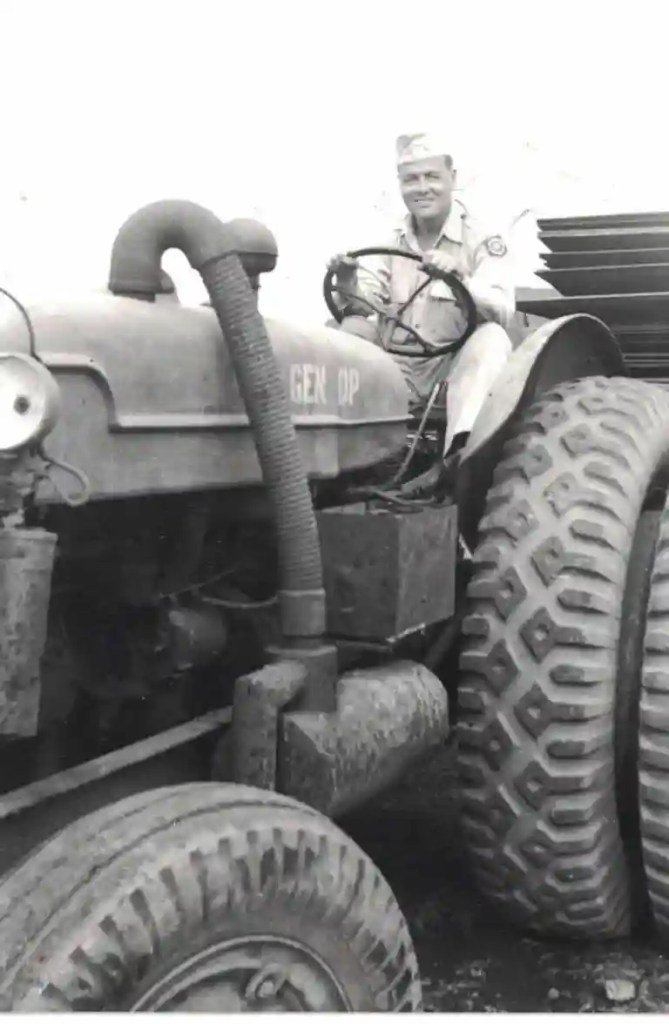
Thomas Munro jr. circa 1945 in Manila while serving in the US Transportation Corps. The cagardores called him the GOOD LIEUTENANT (Mbuti Teniente)
“Some people bring out the best in people. Try to be that person. It especially happens when you believe in greater values than merely your own self-interest. When you believe in something bigger than yourself -in your school, your nation, in the human brotherhood, in God, in your school, your Regiment, your unit- you rise to the occasion because you are part of a team with a definite goal and you don’t want to let down your comrades in arms.
Remember you can’t do it by yourself and you owe a lot to your family, your country, your Regiment, your school, your team, your friends, your teachers. Above all, cultivate the virtue of gratitude. One can never promote one’s own highest good without at the same time furthering the good of others. A life based on narrow self-interest cannot be considered honorable by any measurement.
God made us strong only for a while so that we can help others. Our human social contract is not only with the few people with whom we have daily dealings and with whom our personal lives are immediately entwined, nor to the rich or the prominent or the famous or the well-educated but is with all our human brethren. View yourself as a citizen of the world as well as an American -Kosmopolites- and act accordingly. This is the only life you have this side of paradise. Don’t be an S.O.B. ”
“Mbuti Teniente” (the Good Lieutenant) THOMAS MUNRO, Jr. 1915-2003 1st Lt. USAR 1942-1953 US military police 1942-1943; US Transportation Corps 1944-1946, Pacific Theater. Hawaii, Guam, Tinian, Saipan, and the Commonwealth of the Philippines.
He was a kind and generous soul. He was a wise man who valued wisdom over wealth. He was a faithful husband and a good father. I remember the afternoon he died. I recalled an old Western we both loved. GARDEN OF EVIL. Richard Widmark, the gambler is mortally wounded. The sun is setting. He says to Gary Cooper “THERE IT GOES HOOKER. Every day it takes someone. Now it’s me.” I stopped the car and watched the sunset. remembering my father and realizing I would never again wake to a morning with my father but grateful he was in my life for 47 years.
A large pro-Palestine rally in Paris today attracted thousands even though the government said the gatherings were banned amid a surge in antisemitic attacks. The protesters vandalized historic French monuments. pic.twitter.com/TvbsuxNZDV
“The U.S. may now be less interested in Islamist extremists than in China and Russia, but that does not mean the Islamist extremists have lost interest in us. Their lust for blood is undiminished. As soon as they have an opening, they will strike. “
ABSOLUTELY TRUE. THIS IS TRULY THE LONG WAR and the CLASH OF CIVILIZATIONS. Putin will die, sooner or later, and become a footnote in history. Russia will recede into the sick man of Europe that it is. But HAMAS hopes to become MARYTRS for the ages -and who knows they might be. Like a poisonous weed, it will be difficult to extirpate them entirely. Remember the enemy is within -PALESTINIANS have emigrated all over the world. All we can hope to do is cull the herd periodically IMHO. But I would place my money on the Jews -they are smart, brave, rich, and united. They have many many friends and admirers. ISRAEL HAS ENDURED AND WILL ENDURE. So many Empires oppressed the Jews and they are all in the trash bin of history now. WHY? Because MONEY and POWER are not enough and because WISDOM is superior to terror and GOOD WILL TRIUMPH OVER EVIL. HAMAS IS EVIL. PRAISE THE LORD and pass the ammunition. We are going to need plenty of both if we (Western Civilization) are going to survive this century. If we are wise we will have plenty of both. JUSTICE WITH COURAGE as a Jew taught me IS WORTH TEN THOUSAND MEN. great article. INFORMATIVE, SOBER and WISE!
We try to stay connected with friends. You hear an old friend with whom you have fallen out of close contact is seriously ill. You write to him and give him your phone numbers and email and tell him to call or write any time. You offer up a prayer for him and his family. But the rest is silence. Only God knows the reason.
Of course, it is sad to realize I cannot connect with some good friends except via prayer because they are dead.
No more contact is possible this side of paradise.
Classmates I knew in school are dead.
Some died in their 20’s, in their 30’s , in their 40’s some in their 50’s.
My next-door neighbor -a close acquaintance of 20 years but I considered him a friend. He was a really nice guy. He was only 62 younger than I. We are going to his funeral next week.
Three of my really close friends were killed in car accidents by drunk drivers. Two of them were killed within walking distance of my house. I don’t even like to drive that way anymore because that corner has bad associations.
Yes, who can know? Perhaps that person who doesn’t communicate is depressed or embarrassed or just doesn’t care. SCIRE NEFAS ..it is forbidden to know all. Not all can be known.
It is sad of course to be rejected by people but relationships are a two- way street.
Corresponding is difficult but picking up the phone is easy but it is also intimate. Some people don’t want to open up or give answers. So all you can do is be prepared to accept their phone call IF they call. I know someone I cannot call any longer because it is painful. The last four or five times I called that person just BANG hung up on me. So I will never call again. That was almost ten years ago.
All one can do is do the right and humane thing. Then offer up a prayer for our friend of yesteryear.
Many of the men I knew in school and in the Marines are gone -dead.
In 1976 a Sea Knight Helicopter crashed in Quantico and 23 Marines were killed. I didn’t see the crash but I saw the bird take off. The weather was turning bad so our Company Commander said -people grumbled- we would walk back to camp over 20 miles. We arrived when it was almost dark dirty and hungry. But that’s when we found out that one of the previous birds went down.
When on liberty on the USS Trenton there was a collusion and dozens of Marines were killed. I could have been on either one of those trips.
But when the door is closed, when the mail doesn’t arrive, when the phone doesn’t ring when the email box is empty all one can do is pray.
Some people are friends when it is convenient or useful or when they’re coworkers.
Some people are just ships passing in the night. Some signal and some go quietly by.
If one has a single true friend or a single loved one for any period of time one should be grateful. I think I have been luckier than most though less fortunate perhaps than many others.
But I am not jealous.
I am just grateful for the love and close relationships I have known.
And I am thankful for the great classics -the Bible, Shakespeare, Dante, Horace, Cervantes. In my retirement I have plenty of sun, plenty of quiet, baseball on the radio, plenty of music and plenty of books. I have enough money to be generous to our grandchildren -we are blessed to have them- and visit them from time to time. I don’t have the resources or the stamina to travel all over the world but I am very grateful that from 1961-2005 in particular I had the chance to visit many states and provinces and many countries in South America, the Caribbean ,and Western Europe. Next week I will have a chance to visit -again-Washington DC a city which I have visited dozens of times. I spent a year at the University of Virginia so I have seen most of the principal sights. But mostly I will enjoy seeing friends and remembering friends and loved ones. As Thomas Moore sang in the Meeting of the Waters.
Yet it was not that nature had shed o’er the scene Her purest of crystal and brightest of green; ‘Twas not her soft magic of streamlet or hill, Oh! no, — it was something more exquisite still.
‘Twas that friends, the beloved of my bosom, were near, Who made every dear scene of enchantment more dear, And who felt how the best charms of nature improve, When we see them reflected from looks that we love.
Many years ago at the old 1407 Club Club in New York City (now long gone) my father and I met the tenor James McCracken. He had just released an album of Scottish and Irish songs -The Meeting of the Waters. He had finished his dinner and generously offered that we finish our coffee with him. My father, in particular, knew his work very well and had seen him perform at the Metropolitan Opera. But we talked about why he made his Scottish-Irish album and he said he had listened to McCormack, Frank Paterson and Kenneth McKellar his entire life and he loved the traditional and popular songs. He said it was important, he believed to cross over from classical to popular music. It was a nice moment. He loved being with genuine fans of his music We loved spending some time with him. From then on when I hear this song I remember my father and James McCracken. But also Thomas Moore and the sentiment of his poem.
THE MEETING OF THE WATERS (IRISH SONG)
My father had been a fine athlete in Scotland (winning a medal for best goalie in the city of Glasgow for his level youth team). But in America, he working at several jobs -almost full-time year-round – from his 12th birthday. So he had no time for sports. He turned ALL of his money to his mother and she would give him 25 cents for the subway and a Saturday movie
My father played on a legendary and ill-starred Football (soccer) team called the St. Anthony Ants of 1924-1925-1926-1927 when they were the champions every year or close to it.
The Ants first ground was a public park situated beyond the southern end of Hamilton Street (now Nethan Street) in Govan (South Glasgow.. It was a humble grass soccer field. It was unenclosed -cold and wet in the winter and had no pavilion, so the players had to change in the League of the Cross Hall in Hamilton Street.
Father Collins (parish priest of St. Anthony’s)and Bishop Donald Macintosh were both avid supporters of the team and helped the boys get shoes and equipment. Both men had studied at the Scots College (then at Valladolid, Spain and in Rome). Both were avid linguists and could speak Italian and Spanish as well as Gaelic, Scots and English. My father loved both men and they were friends of Uncle Johnny Dorian (his fourth-grade teacher and later headmaster of St. Anthony’s.). My father called him Uncle Johnny but he was really my grandmother’s sister’s son so my father’s cousin.
Father Collins married his parents, baptized my father on March 17, 1915, was at his first communion. Father Collins had a very strong influence on my father and his mother, brother and sister visited the Dorian household often and Father Collins and Bishop Macintosh were frequent visitors. My father, his family, and Johnny Dorian and his daughters and the Bishop would listen to recordings of Caruso and John McCormack, chiefly Italian opera but also English, Irish, and Scottish songs. Father Collins and Bishop Macintosh later became close friends with Father Sidney MacEwan, also of Govan and later a successful recording artist. When McCormack died MacEwan was by his side and sang to him the Highland song ISLAND MOON.
I believe my father’s love of languages and classical music, particularly opera began with those Sunday dinners in the 1920s. The legendary great years of the ill-starred ANTS:
Scottish Junior League Victory Cup Winners 1918/19, 1921/22 Glasgow Junior Cup Winners 1918/19, 1921/22, Elder Cottage Hospital Charity Cup Winners 1923/24, Scottish Junior Cup Runners-Up 1918/19, 1924/25
Why such a tragic team?
Because so many of their fathers had been killed in WWI and many of my father’s teammates were later killed themselves in WWII many at Dunkirk with the 51st Highland Division, North Africa, and Normandy.
Some died in Nazi slave labor camps. One of the few times I saw my father weep in public was when we went to the Scottish National War Memorial in Edinburgh in 1967. There was THOMAS CRAIG (Cameronians/Scottish Rifles) 4 Dec 1942 (North Africa) KILLED IN ACTION. His teammate and very best friend.
PATRICK QUIGLEY KILLED 10 October 1943 (HLI -Highland Light Infantry -his teammate and cousin)
Many of his Quigley kin had been killed in the Argylls or HLI in the First World War. There was also his “Uncle Johnny” (or American Johnny) Robertson his father’s best friend who had returned to Scotland in 1938 to retire. He was killed in the Glasgow Blitz -6 May 1941. I still have books that belonged to Robertson that he gave my father in 1938, Shaw, Kipling, and Burns. My father as he saw name upon name began to cry uncontrollably. I was frightened.
But I always remember the Scottish people there were very kind and sat with my father and talked to him and comforted him. My father said, “If I hadn’t come to America in 1927 my name would be in the books next to theirs. It was rifles against tanks and they didn’t have much chance. They were always in the front lines in the thick of the fight.” It left a strong impression on me and when we had teas and Empire biscuits afterward he spoke Johnny Robertson and his friends and kinsmen. Immigration had been good for my father but also had caused him personal suffering, pain ,and loneliness. My father always wanted to be an American but knew he was partially a permanent exile. In 1967 my father pointed out the Boer War memorial that that been bomb damaged on 6 May 1941 in Kelvin Grove Park. When I am Glasgow I always go back to visit that spot if only for a few moments. REMEMBRANCE.
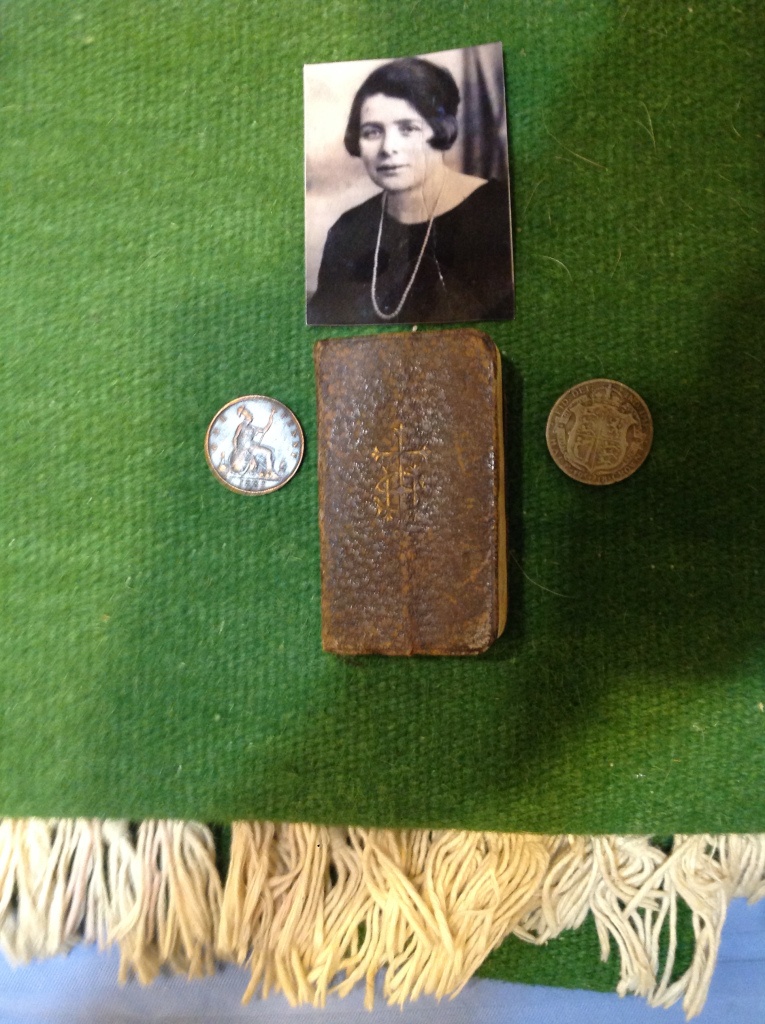
When my father graduated from high school, his grandfather, Jos Munro, his mother, his sister Johnny and his father and his cousin Jimmy Quigley were there. My grandfather gave my father five coins (coins I still have)One is a British Penny (1881) given to my grandfather when he went to sea when he was eight years old. It was all the money he had and his mother said, “Never spend it unless your life depends upon it. Naebody can every say Tommie Munro is penniless. ” He did not see his mother or family for eight years but he held on to the penny virtually his only possession.
Three of the coins were American silver dollars dating from the 1890s and 1920s. These were actual dollars his father and grandfather had earned as a worker in America. The last was very special; it was an English 1918 silver half-crown that my grandmother had sent my grandfather and he kept in his left tunic pocket in his missal. She gave him one for 1914, then another for 1915, then another for 1916, then another for 1917, and the last he had his pocket for Armistice Day 1918. When he returned to Scotland in May 1919 he turned it over to her and it was one of her prized possessions until her untimely death on March 7, 1942. She never saw the Allied victory nor her sons come home from the war. My father gave the missal and the coins to me after my mother died in 2001 and told me the story.
Ne obliviscaris -do not forget.
Mary Munro, the Missal and two of the coins.
SONNET 30
When to the sessions of sweet silent thought I summon up remembrance of things past, I sigh the lack of many a thing I sought, And with old woes new wail my dear time’s waste: Then can I drown an eye, unus’d to flow, For precious friends hid in death’s dateless night, And weep afresh love’s long since cancell’d woe, And moan the expense of many a vanish’d sight: Then can I grieve at grievances foregone, And heavily from woe to woe tell o’er The sad account of fore-bemoaned moan, Which I new pay as if not paid before. But if the while I think on thee, dear friend, All losses are restor’d and sorrows end.











 Spirit of Cecilia
You must be logged in to post a comment.