BIOGRAPHY: Richard K. Munro April 4, 2023
I am a retired teacher of English, Spanish & history. I taught in public and Catholic schools for over 34 years. I am a California Certified teacher of Social Studies, Spanish and English. I was a Mentor Teacher in the Kern High School District.
I hold a BCC (Bilingual Certificate of Competence). I have always been interested in foreign languages and bilingualism probably from the time as a young man realized that the Roman Empire was a de facto bilingual empire (Latin and Greek) and from the experiences of my father who spoke Spanish and Tagalog as a US Army officer during World War 2. My father encouraged me to study Spanish as it was a practical and important universal language.
I attended public schools in New Jersey excelling in AP US history and AP Spanish. At the recommendation of my high school Spanish teacher, I began my university studies in Soria, Spain with the University of Northern Iowa. We American students lived with Spanish families and pledged not to speak English with each other or anyone else for the entirety of the course (10 weeks). I became aware of the value of total immersion in a foreign language. I am fluent in Spanish and Portuguese and have a good competency and reading knowledge of Latin, Italian, and many other languages. In my retirement, I am studying Greek via DUOLINGO and Teach Yourself Books.
Like my father, uncles, and other relatives who served during WW2, I volunteered to serve in the US military. I hold an honorable discharge from the US Marines. My parents were naturalized Americans and the first in their families to graduate from high school and go on to college. During WW2 my immigrant grandfather help build US Navy ships and Liberty Ships. My parents and grandparents impressed upon me from an early age the importance of national unity, patriotism and deep gratitude for the opportunities America has afforded us.
My specialty became English literacy for newcomers (emphasizing phonics, diction, and grammar) and sheltered English immersion Social Studies (history) for English learners.
I believe in voluntary high-quality Dual Immersion instruction and the importance of the teaching foreign languages. My daughter is a Dual Immersion Spanish/English k-6 teacher and my son is a AP Spanish teacher 9-12. I am married with three children. My wife is an immigrant and a naturalized US citizen.
For many years I was an AP Reader in Spanish (adjunct faculty) for ETS. In 2004-2005 I was the ISI Renshaw Fellow at UVA and a University Supervisor. I taught at Bakersfield College for four years as an adjunct professor in Spanish. I have a New Wine Credential; I taught high school catechism in English and Spanish for over 20 years. I voluntarily tutored many immigrants pro bono for citizenship tests and for those who attended junior college. My wife and I have co-sponsored immigrant families in our community who have gained US residency.
I studied history, political science, and Spanish at NYU (BA with honors) and was awarded the Helen M Jones Prize in history. I achieved my 5th Year teaching certificate at Seattle University and was certified as English teacher as well as Spanish and Social Studies. I hold an MA in Spanish Literature from the University of Northern Iowa. In addition to teaching, I have worked in private industry as a tour guide, a construction worker and as a customer service representative for the Bank of America (five years).
I have published articles in newspapers, Military History magazine, Calliope, and Cobblestone. I was author of “Spying for the Other Side, KIM PHILBY” which appeared in the McGraw Hill Anthology of World History. I have authored one-act plays for youth such as "Euripides' Trojan Women” (Calliope),"Romans on the Rhine", "Clad in Gold Our Young Mary" , "Beneath Alexandria's Sapphire Sky" among others.
I have edited galleys of several books and have done research for authors notably Andrew Roberts in CHURCHILL WALKING WITH DESTINY and his THE LAST KING OF AMERICA: GEORGE III.
I began my career primarily as a Spanish teacher specializing in Spanish for Native Speakers and AP Spanish and AP Spanish Literature teaching in Washington State and California. However, I also coached sports (baseball and soccer), advised for the local “We the People team” and filled in by teaching the occasional summer ESL or US history class.
As a bilingual teacher of course, I attended meetings and conventions for bilingual teachers. There Stephen Krashen and others taught that a student could be taught Math, Social Studies, Language Arts and Science in their native languages (rather than English) and that knowledge and literacy would “transfer.” I came to call this Phoney Bilingual Education or NENLI (Non-English Native Language Instruction) Many teachers I met favored a “late exit” approach which meant keeping students in so-called bilingual classes deep into high school. I was skeptical.
For me 1995-1996 was the turning point. I was asked to fill in for three ESL classes that had been previously taught by another bilingual teacher. I was shocked by what I found. The students were reading mostly in Spanish and doing journals (in ungrammatical Spanish) only. The students chatted in Spanish the whole period and English was rarely if ever heard. I was told the goal of ESL classes was literacy. I clashed with the local administrator who would not provide me English language dictionaries, bilingual dictionaries or English language material. I bought a box of American heritage dictionaries out of my own pocket and taught using newspaper articles and comics. I protested that the student transcripts indicated the classes were English classes so they should be taught and tested in English for those classes. To do otherwise was, in my opinion, intellectually dishonest, even fraudulent.
I continued to inform myself and read books and articles by Linda Chavez and Rosalie Porter especially FORKED TONGUE by Porter.
At the time our high school graduation rate was falling and one of the major reasons was students could not pass 11th grade US history or 12th grade Government and Economics. The Bilingual Coordinator had the answer: alternative paths mini-classes (all in Spanish) via Migrant Education. I was asked to teach US history and World History with Spanish language history books. These books were ordered via supplementary budgets and so evaded the normal book approvals via the district. I refused to use those books. Instead, I volunteered to teach US history with English language books (with numbered paragraphs and bilingual glossaries). The school was very divided on this issue; I had at one time the support of the Social Studies chairmen and the school principal but not the vice principal and bilingual coordinator. I was very successful, and the students were very grateful. In one history class, every single student passed his or her English proficiency test and graduated from high school.
Over time, however, I became increasingly at odds with the Bilingual Establishment some of whom accused me, publicly, for being a “racist”, “English-only”, a “white supremacist” and “anti-immigrant.” I responded of course that my conscience was clear as I had dedicated my life to help immigrants and newcomers of many races and religions, spoke Spanish and other languages, and that my wife was an immigrant!
In 1997 Ron Unz came to our town to promote his new referendum English for the Children. To my surprise, I felt sympathy for most of what he said and so volunteered. I actively campaigned with Unz , Henry Gradillas, and Jaime Escalante in English and Spanish for Bilingual Education reform with English for the Children in California 1997-1998. I helped produce bilingual radio commercials and appeared on Spanish-language and English-language television. During this period I met Rosalie Porter and later worked with her as an advisor in the successful English for the Children campaigns in Arizona and Massachusetts. I have been associated with ProEnglish for many years as an advisor eventually being invited to join the Board of PRO-ENGLISH.
I believe local communities should have some choice as to what kind of educational programs they want to provide and what languages they teach. I also deeply believe in La Conviviencia. La Conviviencia is an almost untranslatable Spanish concept. It means living, communicating and working together and thereby gaining mutual respect and comprehension. I believe in La Conviviencia; we must live together as good neighbors. We have many problems in this world, even enemies; but with our neighbors and friends we should live in peace. I believe in the policy of the Buen Vecino (the Good Neighbor) and in la Conviviencia (peaceful coexistence) of different cultures, languages, and religions.
Diane Ravitch wrote “a society that is racially diverse requires…a conscious effort to build shared values and ideals among its citizenry.” This includes the recognition that English is and should be our official national language. The language of the rule books, Federal courts and juries must be in English. In addition, the Uniform Code of Military Justice, contracts, official documents, our laws and constitutions must be in English though translations can be provided.
I believe English should be the official and national language of the United States. I do not believe we can or ought to be an officially bilingual or multilingual nation. This does not mean in any sense that languages other than English should not be taught or used, however. It should be clear that I have never been an English-only person but a multilingual person who is pro-immigrant and believes in voluntary multilingualism. America needs English but it also needs knowledge of other languages for cultural and educational reasons as well as for national security reasons. My entire family is multilingual and multicultural, and I hope we carry on this heritage into future generations of American Munros and Mendozas in a prosperous, peaceful and United States of America.
So today was Vin Scully’s last game ever at Dodger stadium and there was a thrilling extra-inning game won by a clutch homer by Charlie Culberson. I wish my father and Auld Pop could have been here to enjoy it with us!
My cousin Helen Munro (born 1943) was discussing how she lived to keep score at home with Auld Pop and listening to Red Barber and then Vin Scully. She went many times to Ebbett’s Field as did my parents but I went only once (in utero in August 1955 (see my mother’s ticket below!)
My grandfather came to love baseball with his friend “American” Johnny Robertson and they saw many big league games and Texas league games together in the 1920’s and 1930’s. I know also they played shinty while with the Argylls in Greece and on at least one occasion played baseball with Canadians and Americans (while wearing kilts!!!).
To the left of my grandfather THOMAS MUNRO Sr. you can see AMERICAN JOHNNY ROBERTSON and to his right a very young boy his nephew JIMMY QUIGLEY
Auld Pop, it is said had quite a wallop. So I know he played the game in America probably pre 1910 and certainly in the 1920’s when he was in his early 30’s.
I know his favorite player was Zack Wheat and Wheat played for the Dodgers in the 1910’s and 1920′. Auld Pop’s favorite players were Wheat, Duke Snider (he passed on an autograph) , Jackie Robinson, Johnny Podres and Gil Hodges. He saw the Yankees play many times (he always rooted against them). He saw Bob Feller no-hit the Yankees and Joe Dimaggio in 1946 and some years ago my son and I met Bob Feller in Bakersfield and had a nice talk with him (he signed our books and memorabilia for no charge)
So Auld Pop saw many great moments at Ebbets field and even lived long enough to see them on color TV in 1959 and in April 1962 at Dodger stadium. So my father and Auld Pop saw (and met in person at the ballpark and in Brooklyn many Dodger players many future Hall-of-Famers).
But Auld Pop could only go to so many games; he followed the Dodgers on the radio day to day with Red Barber (up to 1953) and later Vin Scully and by reading the Daily News and Red Smith in the Herald Tribune.
But Vin Scully played a very important part of Auld Pop’s life.
One curiosity that my cousin told me about this past week is that Auld Pop would NEVER go to July 4th games or celebrations. He would stay home by himself and listen to Scully and Barber on the radio. he would retreat to my father’s cellar den which he called his dugout or bunker. It was soundproofed. He would sip on beer and Four Roses whiskey and smoke. He just couldn’t stand to hear fireworks or the noises of firecrackers and cherry bombs. My cousin Helene Munro -Auld Pop called her Buntie- said the noise made him very anxious and sometimes even give him uncontrollable tremors. She remembered seeing him on the edge of his bed, shaking and she would (she was just a girl at the time) say she would stay home with him and she ladled whiskey into him and held his hand until he calmed down or fell asleep. But listening to baseball was calming to him and he taught Helene and my father the basics of the game and how to keep score.
He used to read to me Red Smith articles just as much as comic books or the Bible and he used to show me the intricacies of the box score. One of my favorite books was the classic MY GREATEST DAY BASEBALL.
This was a gift from Auld Pop, December 25, 1959. After he died my father read it to me also. I still have my copy. Edit
All reactions: 2You and Jorge Orrantia
I was thrilled that Auld Pop had seen so many greats players. Both my father and Auld Pop read the book to me. It was a gift from him for Christmas , 1959. After he died I cherished that book like I cherished his collection of Scottish records.
Life was tough on Auld Pop. He suffered the loss of many friends and loved ones and was lonely at the end of his life -he was the last surviving member of his squad, his company and his Regiment. He suffered the loss of the Dodgers when they left Brooklyn. But he always had baseball in the newspapers and on the radio.
Even on the 4th of July when he huddled alone or with my cousin in “the dugout” or “Jaja’s Bunker.” On those days, listening to Vin Scully, my cousin said Auld Pop would not drink to excess and even laugh and joke and tell stories. My cousin Buntie (little Button) and I were very close to Auld Pop as some of you know. As a little boy, I had no idea how his entire life had been an odyssey of survival and a veritable journey of the cross. Later I learned more. He went to the Western Front in January 1915 and at 2nd Ypres suffered 36 continuous days of vicious combat , ambushes and bombardment. For a few days he was missing in action in No Man’s Land doomed to death or a fate as German POW. But the Leal n’ True men and the Dins -led by American Johnny Robertson came to his rescue. So he survived.
And thanks to them my father, my cousin, my mother my sisters and I could enjoy so many great moments with Auld Pop. And some of the best were at the ballpark, with the newspaper and with Vin Scully and the other announcers on the radio (at later TV but in those days there were few games on TV).
Baseball was a very soothing hobby and pastime for Auld Pop and the sweetest cream was the dulcet voice , good humor and conviviality of Vin Scully whom my grandfather would see sometimes at a distance in Mass on Sundays in Brooklyn.
Vin always went to Mass with his mother and father and I think my Auld Pop told my cousin they would go Saturday night or Sunday morning. My Auld Pop -so my cousin told me- very much appreciated Vin’s salute to veterans on Memorial Day etc. And on the 4th of July when Auld Pop dare not leave the house there was Vin Scully “It’s time for Dodger baseball!
and
“Hi, everybody, and a very pleasant good (afternoon/evening) to you, wherever you may be.”
Next Auld Pop and Johnny Robertson, Vin Scully was the most beloved “legendary” heroes. He was the Bard of Brooklyn, and Irish Minstrel. He was the voice of the Dodgers and the voice of Baseball. Vin Scully was truly the Babe Ruth of sports broadcasting. Thanks for so many great memories as the announcer of so many games and six World Series.
Ne obliviscaris. Do not forget. You meant so much to veterans and disabled people who weak in limb and endurance could not go out as freely as they might have wished. You were their best friend and better than any whiskey or doctor or pill.
I close with some great Scully moments: It’s a mere moment in a man’s life between the All-Star Game and an old timer’s game.
During the 1980 Major League Baseball All-Star Game held at Dodger Stadium
It’s a passing of a great American tradition. It is sad. I really and truly feel that. It will leave a vast window, to use a Washington word, where people will not get Major League Baseball and I think that’s a tragedy.
(At the end of the last NBC Game of the Week, October 9, 1989).
Ah, yes, baseball is an acquired taste and it has to be taught and savored.
***
Scully: A little roller up along first; behind the bag! It gets through Buckner! Here comes Knight and the Mets win it!
Famous call from Game 6 of the 1986 World Series
***
(Roberto) Clemente could field the ball in New York and throw out a guy in Pennsylvania.
I saw Clemente play many times; hyperbole but almost the truth! Of course, he would have to be playing on the border!
***
And to me his most legendary call.
I heard this recording at the Hall of Fame with my father. My cousin (living in LA at the time and keeping score) heard it live.
This is from the radio transcript of 1965. This is Vintage Vin:
” It is 9:46 p.m.
Two and two to Harvey Kuenn, one strike away. Sandy into his windup, here’s the pitch:
Swung on and missed, a perfect game!
(Crowd cheering for 38 seconds)
On the scoreboard in right field it is 9:46 p.m. in the City of the Angels, Los Angeles, California. And a crowd of twenty-nine thousand one-hundred thirty nine just sitting in to see the only pitcher in baseball history to hurl four no-hit, no-run games. He has done it four straight years, and now he caps it: On his fourth no-hitter he made it a perfect game. And Sandy Koufax, whose name will always remind you of strikeouts, did it with a flourish. He struck out the last six consecutive batters. So when he wrote his name in capital letters in the record books, that “K” stands out even more than the O-U-F-A-X.”
Word-for-word transcription of Scully’s call of the ninth inning of Sandy Koufax’s perfect game on September 9, 1965.
***
There is only one word for Vin Scully: INVINCIBLE. Thanks for 67 years of companionship and laughs and much simple happiness and joy. We will miss you, Vin Scully and we will never forget you.
You will remain an American and a Dodger and a Baseball legend.
Do you believe that English is easy or hard? Most would say English is a very difficult language. It is like learning two languages at the same time. Nabokov, who learned English as an adult said famously, “learning English was like moving from one darkened house to another on a starless night during a strike of candlemakers and torchbearers.” I think Nabokov captured exactly the fear and confusion of people trying to learn English from scratch. Yet, Nabokov following another ESL student Joseph Conrad survived and became one of the great English language authors. Yes, English can be weird(peculiar). It can be understood through tough thorough thought, though! (Yes, that is correct English!) Can anyone think that English is (facile) easy, that is to say, it can be learned by a little effort or effortlessly? No. The truth is this: some things about English are easy and others are, to put it mildly, devilishly difficult.
The grammar of English is relatively simple. The word order (syntax) of English is regular. However, spelling English words and pronouncing English words can be a challenge as compared to the Spanish German, or Italian languages which are mostly phonetic. The scope of English vocabulary and the variety of its dialects is daunting. Spanish has regional dialects but none is so far removed from standard Spanish as English or American dialects are from Standard English.
But English is not a remote or exotic language but a language firmly in the mainstream of European/Western languages. Therefore, if we use an etymological or “historical” approach to vocabulary development it will help the English speaker learn Spanish or French words but, furthermore, since many common Spanish or French words have cognates in academic English. Similarly, a Spanish or French speaker can also better (ameliorate) his or her English vocabulary the same way.
Of course, English has a huge (enormous) vocabulary. It takes much reading and study to understand and acquire these words and learn to PRONOUNCE them clearly. But, compared to other languages its grammar is relatively simple.
On the other hand, though READING English words may be easy to recognize and interpret, you have four jobs with every English word:
1)to understand the basic sense or meaning of a word (denotation)
2)to know how to pronounce it correctly; its diction (orthoepy)
3)To know how to spell the word (orthography)
4) To understand additional senses of meanings of a word (connotations) or words that sound alike (homophones and homonyms!)
Number one and two are the most critical.
Many people have difficulty with English spelling (#3) their entire lives. Spelling is just a matter of practice and simple memorization.
Spanish is like a disciplined Roman Army organized, regular with very few silent letters. English is more like a chaos of tribes or charismatic church revival by the river or clandestine poker game in a speakeasy. No one would ever say English was uniform or behaved like an Anglican tea or church service! English is more like a rodeo! Or New York baseball fans crying in unison, “BUM! BUM! BUM!” when the umpire made a bad call.
Number four –connotations- is very important and comes from regular reading, study, and analysis of words. Besides learning the connotations of words the learner must learn many idioms (or expressions) plus attain a certain level of cultural literacy so as to understand references and allusions found in stories, articles, and books.
English has an extraordinary richness (or wealth) of vocabulary, idioms, and expressions. It is not unusual for a word to have many synonyms that mean the same or NEARLY the same thing but each word may have a different nuance or shade of meaning that gives that word a special tone or a positive or negative connotation.
A house is a basic need or shelter, as is a residence or a habitation but a shack, hovel, shanty, cabin, tenement, wickiup, wigwam, teepee and Motel 6 do not evoke the same meaning as palace, mansion, palazzo, villa, country house, chateau, townhouse, penthouse apartment or Hilton Hotel. It should be obvious to anyone that the first group represents very humble habitations while the second group represents domiciles of varying degrees of luxury.
Reading English is not that difficult but understanding spoken English and speaking English clearly are difficult problems.
I will present shortly another essay specifically on HOW TO LEARN ENGLISH, to PRONOUNCE IT and TO SPELL IT.
THOMAS MUNRO Sr. circa 1939 with his beloved dog Fuzzie
I once asked my Highland grandfather if it bothered him that most of his grandchildren did not speak Gaelic or have any interest in Scottish Heritage. He said it would bother him if had no grandchildren at all. In a long journey, some things must be left behind.
In a long journey, one has to carry the essentials: The ability to communicate, the ability to adapt, the desire to work, the necessity to love and serve others. To enjoy things of beauty like nature, music, and sport. To dread God and obey his commandments.
THOMAS MUNRO SR with his beloved FUZZY picked up as a puppy in GALVESTON, TEXAS 1923. Inseparable for almost 20 years.
I asked him when I was a young boy how he celebrated Christmas as boy (he was boy apprentice at sea). He said he “cleaned up the drunken vomit of the gude for nocht (good for nothing) sailors.” When we watched westerns he would say of the bad guy with a black hat “Aye, he’s the BADJIN (Bad ane). Shane, now he is the GOODJIN “(good one). He would say AYE IT’S TIME FOR THE GUDE WARDS (good words/ prayers). When I was sad and disappointed he would say. Och man, it’s no the end of the WARLD!!! AYE!!! Dinna fash yersel!
(DON’T WORRY). This too shall pass.
And you know what they say: being born in a garage doesn’t make you a car. I wouldn’t mind visiting Scotland again (I haven’t been there since 2005 and have been lucky enough to have visited it a few times 1967-2000 as well) but I have no burning desire to return and no family and few friends to greet me.
Cianalas is the Highland word for it -that place you are connected to by heritage where joy and sadness mingle.
But it is quite true. You can’t go home again.
The greatest distance between two points is time. New York, Glasgow, Argyll, Inverness, Glenties, Ferindonald represent lost worlds to me. So is Seattle, Washington where we lived for seven years.
There is some warmth of memories in all of those places -places where my family lived for over one thousand years but I know them well enough to know they all belong to the past and are not likely to have any place in my future and the future of my children.
They are now part of Yesterday’s Seven Thousand Years.
We may sing of them and memory remembers the ghost of a tune and the ghost of a kiss and the Silent Ones.
But the Silent Ones greet forever as they greet no more.
Gars ye tae greet,aye. “But the broken heart it kens no second spring again thought the waeful heart cease not from its greeting.” (grieving; lamenting -that’s Scots dialect)
But then I am speaking only to myself.
“The world is hard and cruel. We are here none knows why, and we go none knows whither. We must be very humble. We must see the beauty of quietness. We must go through life so inconspicuously that Fate does not notice us. And let us seek the love of simple, ignorant people. Their ignorance is better than all our knowledge. Let us be silent, content in our little corner, meek and gentle like them. That is the wisdom of life.” (The Moon and Sixpence, W. Somerset Maugham)
It is sad when you know your mother’s email and phone number and you know no matter how long you wait there will never be a return message or call.
Phone numbers disconnected and ideas for conversations that would never take place. The past is a door that is irrevocably shut closed.
I used to call my mother long distance at least once a week and she would say “this is costing money” and I told her it was cheaper than a cocaine habit and in any case I know each day is a gift.
I told her I would call her now for a modest amount. The time is coming, I said to her, that no matter how much I would spend the door would be locked and the phone disconnected. She would be silent on the line for a moment. She understood.
Life and love are just a brief moment in time.
My mother used to say that. I half believed it.
Now I have learned it.
I thought winter would never come but winter came and the snow is general.
Love those about you and tell those dear ones in your life that you LOVE THEM often and NOW. And of course, NE OBLIVISCARIS do not forget. Remember them always.
We Munros were a theater, concert, art and movie-loving family. I have always loved movies but it was not until 1978-1979 that we began collecting movies on VHS and later DVD and BLUE RAY. I still prefer having a pristine version of a classic movie with all the extras so that I can learn the back story of the film, the director and the actor. I have a book that belonged to my father and there is an inscription that says: “To Dad and his magic box and all the joys it unlocks.” Dad always called the VCR “Munro Theater” or the “Magic Box.” That is an allusion to an old British Technicolor film with Robert Donat as William-Friese-Greene, one of the pioneers of movies and color film. Of course, it is an example of a movie my father talked about and when it came on TV he encouraged us to watch it. My parents loved all the arts but music, drama, and poetry were their favorites. But it had to be the Seventh Art (the movies) they loved the most and they shared this love with the family from our earliest years.
By contrast, my father had a very utilitarian view of cars. He had a free and clear 1954 Ford for almost 20 years. Then he bought a red Opal. He bought a 1964 Chrysler Station wagon for my mother that we had for years and Pamela drove it off to California where it died. The only time I went to the car dealership with my father was twice. Once in 1972 when he bought a Chrysler New Yorker, new. A nice car but not super luxurious. Then my father some years later went to a VW dealer who offered my father $50 for the used Chrysler, a V-8 engine in good condition -only about 60,000 miles. My father said, “You have to be kidding.” The man said, “No one wants a gas guzzler like that anymore.” My father turned to me and said, “Do YOU have $50?” I said, “Probably not, maybe $30.” My father said, “Give me the money!” I did -in front of the salesman. My father said the car is yours.” That car I eventually drove west via Texas. The point is my father didn’t care about ostentatious cars. He did care about art, literature, books, theater, and good movies. And that plus travel is where he spent most of his money.
My father and mother must have visited Greece two or three times, Italy two or three times, Spain about half a dozen times, France several times, and Germany, where my sister and brother-in-law eventually lived about twenty times. My father saw the best opera in all the great European capitals. We saw plays in Dublin, London, and New York. They went to Shakespeare Festivals. My father never once as far as I know, saw an NBA basketball game or an NHL Hockey game but he was very fond of baseball saw many World Series Games (1949-1969), and enjoyed World Cup Soccer as well, which was his favorite sport as a boy. But my father always had a great love of the movies, not television per se but the movies.
My parents went to see a movie on their first date (Wendy Hiller in MAJOR BARBARA with Rex Harrison and Robert Morley). Kay Brennan and Ruth Munro went to the movies and theater after graduating from Manual Training High School in 1933. My father also graduated from MTHS the same year and they had some of the same teachers but did not have any classes together and they did not meet until 1940!
But one of my father’s many jobs in the 1930s was as a movie usher in a cinema (I forget which one I think it was the Roxy in Manhattan a huge movie palace). So he learned something about projecting movies and saw many movies dozens of times. In those days a hit movie might run for 26 weeks 52 weeks or more! So when it came the top movies of the 1930s Dad was practically an expert. He knew when they premiered and where and which one was a hit and which one won Oscars etc. He saw Hollywood Stars in person such as Clark Gable who was promoting a new movie called Red Dust (later remade in color as Mogambo by John Ford).
In those days Hollywood stars would make personal appearances in the big movie houses (that had 2500-4000 seats or more) in big cities like New York, Philadelphia, Chicago, and San Francisco. And of course in those days almost all the stars began on Broadway. Today there are stars like Kristen Bell (FROZEN) who began on Broadway but also Meryl Streep (whom we saw live on the stage on Broadway in 27 Wagons Full of Cotton and Chekov’s THE CHERRY ORCHARD. My father saw Leslie Howard and Humphrey Bogart in the original stage version of Sherwood’s excellent play THE PETRIFIED FOREST, he saw Walter Houston on the stage (and met him), ABE LINCOLN OF ILLINOIS (also by Sherwood) with Raymond Massey (he reprised the role for the film) both my parents saw Maxwell Anderson’s fine play Mary of Scotland (1933-1934) with Helen Hayes; Katherine Hepburn played Mary in the movie version (1936).
My mother and father were fond of British films so I was familiar with many of the stars in the show like Robert Donat (The 35 Steps; The Ghost Goes We West; The Inn of the Sixth Happiness) Peter Ustinov (Spartacus; Quo Vadis; the Sundowners), Laurence Olivier (Rebecca, 49th Parallel, Spartacus) Glynnis Johns (49th Parallel, Mary Poppins, The Sundowners, Rob Roy the Highland Rogue) Dennis Price (Kind Hearts and Coronets), Marius Goring (A Matter of Life and Death or Stairway to Heaven). My father considered these the great directors: David Lean, John Ford, Alfred Hitchcock, Billy Wilder, John Houston, Charlie Chaplin, Fritz Lange, Stanley Kubrick, Frank Capra, George Cukor, William Wyler, Richard Attenborough, and Michael Powell. He never cared really for Cecil D. Demille (The Ten Commandments).
We always looked for stars and my father and mother talked about them and gave us a backstory. Such as Hollywood star Robert Montgomery ( NIGHT MUST FALL/ HERE COMES MR. JORDAN; THEY WERE EXPENDABLE; he was the father of Elizabeth Montgomery of Bewitched). Montgomery was a volunteer ambulance driver during the Dunkirk evacuation in 1940, a US Naval officer in the Pacific, and at D-Day; my father knew him during WWII and had a framed picture that said, “To Tom from Bob Montgomery.” Later Montgomery was a media TV advisor to President Eisenhower, and you can see him in the first-ever color broadcast of a president on 22nd May 1958. The USA started broadcasting color in late 1953 and some live news events or sports events were broadcast in color such as the World Series. Color videotaping began in the USA in 1958 and the footage with Montgomery and Eisenhower is the earliest known color videotape to exist. It is interesting to me that my kinsmanNorman Eliasson knew Ike personally at Columbia in the later 1940s and my father had met Robert Mongomery who was one of his favorite actors.
Another WWII veteran we heard about was Jimmy Stewart (IT’S A WONDERFUL LIFE; THE SHOP AROUND THE CORNER) who enlisted in the Army Air Corps and led bombing missions over Nazi Germany. Sadly his stepson, also a patriot, was killed in action during the Vietnam war. Clark Gable was considered the King of Hollywood; both Dad and Kay saw him in person in New York. Kay took this photo in about 1940.
Gable had been married to CAROL LOMBARD one of the most elegant beauties and comediennes. She was killed in a plane crash while selling war bonds. He was to have gone on an early flight but she and others gave up their seats to servicemen. She never lived to see the triumph of her last film TO BE OR NOT TO BE one of the funniest satires of theater, WWII and the Nazis ever made. After her death, CLARK GABLE, though over 40 years old volunteered for the US Army Air Corp where he supervised training films and also flew combat missions over Nazi Germany.
Claude Raines (Casablanca), Ronald Colman, and Basil Rathbone (Robin Hood/Sherlock Holmes, The Last Hurrah) were all decorated WWI veterans serving in the London Scottish and Liverpool Scottish. Roland Colman was a real family favorite in films like LOST HORIZON, TALE OF TWO CITIES, CHAMPAGNE for CAESAR, A DOUBLE LIFE -his Oscar-winning role. Colman also recorded all the Sonnets of Shakespeare and my father had all his records and later made tapes. I used to make my father laugh by imitating Colman’s dreamy English accent. “My dear…perhaps I could be a WRITER. And if I were king, I would to all the world happiness bring.”I have listened to Colman’s recordings of Shakespeare dozens of times.
One of the nice things about Audible is the chance to hear educated British speakers and some of Colman is available also. We always had some books or poems on records but cassettes really were somewhat cumbersome and fragile. You couldn’t take them in cars because they literally would melt with the heat! LPs are in fact more durable and have better sound.
Another WWII veteran we heard about was David Niven (SEPARATE TABLES his Oscar-winning role with Wendy Hiller (also won an Oscar) Rita Hayworth, Deborah Kerr, Burt Lancaster, Rod Taylor, AROUND THE WORLD in 80 DAYS, 55 Days At PEKING, The Guns of Navarone, ENCHANTMENT and one of my mother’s favorite movies STAIRWAY TO HEAVEN or A MATTER OF LIFE AND DEATH. Niven was a REAL hero, not just a movie hero (he served as a Major in the Commandos as well as the HLI serving in total of 11 years in the British Army.
If you read my friend Andrew Robert’s great biography on Winston Churchill, which I helped edit in 2017-2018, you will see a few Hollywood and movie star mentions. On page 697 Andrew added Tyrone Power as the star of BLOOD AND SAND (which was a favorite of Churchill’s. These Hollywood details were not in the original manuscript. I think I was more familiar with classic movies than Professor Roberts but of course much of this knowledge I owed to my father. I told Roberts Tyrone Power was a star on Broadway but like Niven, he was the kind of man Churchill would have admired -he left Hollywood to volunteer as a Marine aviator, saw action in the Pacific (shot down at Iowa Jima), and remained in the Marine Reserves until the end of his life (even during the Korean War). I also believe Churchill saw Power on the stage in the 1950s in MISTER ROBERTS (He was not in the movie version). I learned this from my father so Dad would have smiled to see the reference. It is the same with the references of Leslie Howard who personally knew Churchill and who worked undercover for MI6 in Spain and Portugal. Page 426 has a note I suggested. Churchill made an allusion in one of his letters to “Gone with the Wind” and the note says “Margaret Mitchell’s novel, published in 1936 was in the process of being made into an Oscar-winning movie, starring Clark Gable, Churchill’s favorite actress Vivian Leigh and his friend Leslie Howard.” On page 760 Roberts says “the splendid propaganda movie IN WHICH WE SERVE” which I also suggested as both a fine movie and one of the great WWII films. I double-checked every date, literary reference, and movie reference in the book and many many commentaries and suggestions some of which were incorporated or which influenced his final manuscript. Roberts was very appreciative and said, in his dedication to my autographed edition, “Thank you for helping SO MUCH with this book.” So some footnotes on Condor FW planes, the Punic Wars, John F. Kennedy, and the USA electoral college owe a lot to me. It is a great book and Roberts deserves all the credit in the world but I did help on what will probably be the greatest Churchill biography of this century. It is a modest feather in my cap.
My father bought his first color TV in late 1959. For most of my early life, we had only one TV so we usually watched things together, especially on Saturday night. Saturday mornings Pat and I as I have mentioned elsewhere often would see cartoons (many in color but not all). NBC Saturday Night at the Movies was the first TV show to broadcast in color relatively recent feature films from major studios though most were still Black and White The series premiered in 1961 and ran until October 1978 so it covered my entire youth before VHS or DVDs or cable was available. It began with a roll of drums (later they gave it other theme songs) . It was probably our favorite all-family activity and I remember some of the movies vividly such as the tip-top western GARDEN OF EVIL (with Gary Cooper, Susan Hayward, and Richard Widmark), directed by Henry Hathaway That was one of those films that never seemed to be on TV again and I think I only saw it twice my entire life until I bought the DVD (it was never on VHS). I remember seeing THE DESERT FOX also directed by Henry Hathaway (the Story of General Rommel with James Mason) and it made a great impression because it had the July 20, 1944, Hitler assassination plot but also because my father told stories of guarding Afrika Korps prisoners in 1943 in New Orleans when he was a Sgt in the Military Police. And Auld Pop (Thomas Munro, Sr) talked about when he took German prisoners at 2nd Ypres (He had good relations with German Pow’s and had some trench art -ashtrays- made of artillery shells. The following week I went to the local hobby store to buy packs of AIRFIX AFRIKA KORPS and 8th Army toy soldiers. I refought dozens of desert battles plus Tobruk, El Alamein, and so on. A curious detail is Mrs. Rommel gave her husband’s scarf for Mason to use in DESERT FOX and in its quasi-sequel THE DESERT RATS.
I used to play toy soldiers with Christ Tabbert (our neighbor) who was the son of tenor William Tabbert (of South Pacific fame). I loved war movies like WWI WHAT PRICE GLORY (John Ford) with James Cagney, adventure movies like DESTINATION GOBI (Richard Widmark), spy movies like FIVE FINGERS (James Mason). My mother liked musicals (I paid less attention to them usually playing with toy soldiers on the carpet) but WITH A SONG IN MY HEART (Susan Hayward) and There IS NO BUSINESS LIKE SHOW BUSINESS. One of my favorites was the baseball comedy IT HAPPENS EVERY SPRING with Ray Milland (DIAL M FOR MURDER). I was so taken by it that I read the book by Valentine Davies when I was only seven or eight years old. I was a precocious reader. I read Caesar’s Gallic Wars when I was 9 and Xenophon’s Anabasis when I was 10. I read Alan Moorehead’s books (from my father’s library) on the Desert War (the March to Tunis).
IT HAPPENS EVERY SPRING was by the same author Valentine Davies who wrote MIRACLE AT 34th Street. I didn’t see Miracle at 34th Street on NBC because I think all “holiday movies” (Wizard of Oz etc) were on CBS usually once a year at Christmas or Thanksgiving. I know I saw the DESERT RATS (1953) because it starred again James Mason, the 8th Army and the Afrika Corps. Another great WWII thriller was DECISION BEFORE DAWN with Richard Basehart and Oskar Werner about a German soldier volunteering to be a spy for the Allies. One might have thought Kay Brennan would say something about this as she had lived in Hungary, Germany and Austria but when it came to her mysterious life and spy pictures she was completely closed mouth. She talked garrulously of baseball films or Bogart films or Westerns but not spy films. My uncle (cousin) Norman Eliasson, who worked for the DOD for 30 years said, Kay Brennan my godmother and her friend Jack Stewart were both spies with the CIA. I knew Jack Stewart well. -I had dinner with his wife (a great baseball fan) many times at his NY apartment. Once, just by chance, I saw him with two younger men walking in Washington DC near Lafayette’s Square. Jack was very surprised to see me but he was very friendly. He introduced each man as Agent X and Agent Y (he used real names I don’t know if they were fake or not). But it was very peculiar. He spent his life at the UN (I had drinks with him there several times(and traveling around the world for the US government. But Norman said the real undercover agent was Kay Brennan. Her cover was she was a photographer and she lived off the rent from the pharmacy and building in Brooklyn she had inherited from her father. But Norman said, for a Commerical photographer, she didn’t have a lot of published works (I did see an exhibition at the Kennedy Center featuring her photos of the Middle East). And she visited almost every British and American Embassy in the world and was on a first-name basis with the Ambassadors. She brought back exotic hats (some of which I have) and fossils.
We may never know.
All I know is when I published an article on Kim Philby (a major Communist spy) she did not congratulate me. She said she didn’t like it. Maybe someone gave her heat for it. She certainly never spilled any beans about him to my parents or me. But she was the very last US citizen to have a drink with him (he escaped by jumping off the balcony then he fled to Russia but some rat line). So who knows? It is one of those Munro family mysteries. We have our share of heroes, madmen, spies, and black guards. Two common strands are pride and boldness (sometimes reckless). The other might be gluttony and periodical laziness unless prodded.’
There were only a few ways to see movies when I was a kid:
1) see it first run at the cinema (if in New York City or Philadelphia, this was a very special event or in the local cinemas in Livingston or Montclair NJ
2) see it on TV usually CBS or NBC if it was a “big movie”
3) see it in an art theater in New York City like the Little Carnegie. NYC used to have a love of “art movie houses” that played older classics, British and Foreign movies. After 1978 we began to watch VHS movies my father taped or professional VHS tapes we bought once the prices came down.
I have great memories of going OUT to the Cinema as a kid (it was a special event) but also watching movies at NBC Saturday Night at the Movies or The CBS late show. Of course, MILLION DOLLAR movie was a series which began in NYC, on local station WOR-TV 9, in 1955 and ran until 1966 It featured top-tier movies (GARY COOPER/ JIMMY STEWART/ JOHN WAYNE) and each feature would run for an entire week, airing twice nightly. So literally, if I were on vacation I could see a movie several times in a week. I also liked the so-called show “The Sons of Hercules” which were color but cheaply made Italian sword-and-sandal films by giving them a standardized theme song for the opening and closing titles. So you could see the same movie two or three times. The theme music was the Tara Theme from GONE WITH THE WIND but I didn’t know this until I saw GONE WITH THE WIND for the first time in 1967 in a cinema.
But rarely if ever did we see movies at school though I can remember a few exceptions. In grade school, we saw DRUMS ALONG THE MOHAWK (1939) a John Ford film (quite good) about the American Revolution, and in Junior High (Heritage Junior High) we saw two films (after school in the auditorium) I think that were quite popular but campy) FANTASTIC VOYAGE (a science fiction movie) and ONE MILLION YEARS BC. Both films featured RAQUEL WELCH who was the number one sex symbol at that time. In One Million Years BC she said only a few words but showed off her stunning figure in an animal-skin bikini. It seemed every adolescent kind had her poster from that movie. I never had a poster myself but I saw it many times! In High School, the only movie I can remember seeing was LOS OLIVIDADOS which we saw on a field trip to a Spanish movie theater in New York City.
EARLY MEMORIES of memorable movie outings included seeing Cinerama movies. These were treated as a big theatrical event, with reserved seating and printed programs, sometimes a live show (such at the RKO Music Hall), and audience members often dressed in their best attire for the evening. People didn’t dress like slobs in those years especially going to the theater or church. I remember seeing movies at the old CRITERION on 1514 Broadway. The very last movie I saw there was with my boyhood friend Tommy Hess and the movie we saw was PATTON (1970) and the year before we saw TRUE GRIT (1969) with his parents who lived in Connecticut. We would sometimes meet in NYC or I would take the train to Stanford. It was a long drive and my parents visited only once or twice. The Criterion was big it had over 1500 seats.
Another theater I remember was the Warner Theater at W. 47th st. My father took my and my school friends to see the 70 mm version of “It’s a Mad, Mad, Mad, Mad World. for my 8th birthday in December 1963. I remember he drove us in his station wagon (which he parked at the Port of Authority) and then we stopped at Walgreen’s store so we could buy candy bars to (sneak) into the movie theater. My father didn’t mind paying top dollar for a premiere run but not $5.00 for a chocolate bar. I bought a giant Baby Ruth bar that lasted me the whole movie. When I was a kid I like Juicy Fruit gum, Hershey’s Chocolate, and Baby Ruth bars.
Once we went to the Boyd Theatre in Philadelphia. I think my father had a business associate nearby. The Boyd Theater was the only venue for 3-strip Cinerama movies in the 1950s and 1960s. I remember we visited Independence Hall and saw the Liberty Bell in the morning and then in the late afternoon after a lunch at the legendary BOOKBINDERS we went to see the Western Blockbuster HOW THE WEST WAS WON with Jimmy Stewart, Gregory Peck, John Wayne, Walter Brennan and Debbie Reynolds -SINGING IN THE RAIN)
“How the West Was Won” in 1963 ran for 39 weeks to sold-out houses. My parents had to buy the tickets weeks in advance. Previously The Boyd Theatre hosted many of Philadelphia’s first run 70mm Roadshows like “Ben Hur” (with Charlton Heston appearing in-person to promote the film, 1959), “Judgment at Nuremberg”(1961), “Becket”(1964) and “Doctor Zhivago”(1965). But except for DR ZHIVAGO I didn’t see any of those movies at that time I only heard about them. But my father as he traveled around America (he financed construction and mining equipment as well as diners) he saw movies in all of America’s great movie houses. I know he saw THE SEARCHERS in Chicago with his partner Herb Katcher who was the brother of Leo Katcher (Hollywood writer). I remember them talking about it at the 1407 Club and other great films they saw together. The went on business trips Herb never flew after WW2 and they took the train so they saw films in Chicago or Atlanta like Exodus (my father thought it was only so so), Ben Hur, NORTH BY NORTHWEST, EL CID, The LAST HURRAH, and Judgment at Nuremberg with Spencer Tracey.
We weren’t far from Philadelphia and we went to museums and ballgames there later when my sister Pat went to Swarthmore and after college, she lived in Pennsauken, NJ (South Jersey). One memorable movie memories was seeing THE LONGEST DAY in December 1962 in NYC also for my birthday. I think I saw it two or three times (once in New York and later in New Jersey). John F. Kennedy loved THE LONGEST DAY and the early JAMES BOND MOVIES. In fact, he helped popularize the James Bond novels in America in the 1950’s and early 1960’s. The last film he ever saw at the White House was FROM RUSSIA WITH LOVE.
I didn’t see the early James Bond films like DR NO and FROM RUSSIAN WITH LOVE. But my father did on his business trips. I think my parents thought the films were too sexy for me. They wouldn’t let me see LORD OF THE FLIES either But I do remember GOLDFINGER which we saw sometime after Christmas, 1964 at the DeMille Theater in New York City. To promote the film, the two Aston Martin DB5 sports cars were also showcased at the 1964 New York World’s Fair (which we saw). I had a little toy gold Austin Martin with its ejector sheet. Naturally, I added this car to my African armies and shot out German soldiers dozens of times from high places. I still have it and the ejector seat still works!
Following the opening at the DeMille Theater, demand for the film was so high that the theater stayed open twenty-four hours a day for around-the-clock showings from Christmas Eve straight through until after New Year’s Day. That was unheard of then and would be impossible today but the Demille Theater was the only theater in New York (and I think North America) showing the movie. They say people flew from London or Montreal Canada to see GOLDFINGER. It was a lot of fun a popcorn movie but of course, it was not really a serious movie at all.
I remember the LIFE MAGAZINE ISSUE with cheesecake photos of the Golden Girl. Those movies were quite risque for its time and it was the first time I heard the expression PUSSY GALORE which to me was just a name. A pussy was a cat. My parents laughed but didn’t explain it to me. I didn’t find out until years later when I was in basic training in the Marine Corps.
But that is another story. Let me say I never heard my parents or grandparents curse or use ethnic slurs though occasionally they had to explain them. My mother used to say (of Mr. Brown), “He is a nice Negro gentleman” or “Be kind to the Negro Gentleman.” That was considered polite circa 1960-1963. It was considered bad manners to say “Black” or “African” and no one ever said, “African American”. Some people -my mother’s mother said “Colored People” but my parents told me even that was old-fashioned. They never used the N-word. The first time I heard it was in the movie TO KILL A MOCKINGBIRD with Gregory Peck (1962).
In the later ‘60s and early ‘70s, the era of these big blockbusters was ending. We saw MY FAIR LADY and MARY POPPINS and they were big hits. But the GREATEST STORY EVER TOLD (1965) was not. We went to see the FALL OF THE ROMAN EMPIRE (1964) not bad really but in a practically empty movie theater.
The same was true with KHARTOUM ( a good film with Charlton Heston) though his PLANET OF THE APES was a big hit). We saw the BATTLE OF BRITAIN (1969) but no one went to see it. I remember seeing YOUNG WINSTON (1972)- an excellent film- twice or more but each time in a practically empty theater. When I was in college I saw ISLANDS IN THE STREAM (good film) but now one went to see it and it almost vanished. I also saw THE BRIDGE TOO FAR (a 1977 war drama) but it was a bust (though a fine film); everyone wanted to see STAR WARS which I liked but thought was childish. I always liked STAR TREK more. I remember going alone because I couldn’t even get a date to go with me. But I wanted to see it in a big screen so I did. I now have it’s DVD and of course I read the Cornelious Ryan book it is based on.
Of course, Spain has a role in my movie-going experience. In 1964 we stayed at the Rex Hotel on the Gran Via (then Jose Antonio) and next to this hotel was a big movie theater called the REX also and it was showing TAMBORES LEJANOS LA MEJOR CREACION DE GARY COOPER (Distant Drums). I remember the huge hand-painted marquee. I remember my father reading it to me from the sidewalk and when the girls went to some modern art museum he took me to see the film which was VO version (in English with Spanish subtitles). I mention this because I was 9 1/2 years old and I could already count in Spanish from 1-20 and repeat back phrases my father would teach me. He wasn’t fluent in Spanish but he could get by as his French and Italian were very good. He could read EVERYTHING and communicate anything he wanted. I was young and foolish and scared off by Spanish seafood (I wouldn’t touch it) so my father and I would go to the California Bar next to the Rex Hotel and I would eat a hamburger. Later at a nice restaurant, I would have bread and butter and french fries.
But I began the habit of going to the movies in Spain and when I lived in Soria (summer of 1973) or traveled in Spain or lived in Madrid I went to see many films (mostly classic films) in dubbed Spanish versions or VO original version. HIGH NOON, DR ZHIVAGO, JOHNNY GUITAR, SPARTACUS, CABARET, SUPERMAN. It’s A MAD MAD MAD WORLD and others. I didn’t have a TV in my room on Calle Las Huertas in Madrid but I saw movies at Bodas Reales, 5. I learned a lot of Spanish by listening to the radio and going to the movies. By the time I studied in Soria, I had studied Spanish formally for five years, got a 5 on the AP Spanish test (they didn’t have Literature in those days), and a 730 on the Achievement Test. I remember years later my own children did much better scoring 760 and 780 and Ana “AP Ana” got a 5 on AP Spanish Literature, AP Spanish, and an 800 on the Spanish Achievement test. So Spanish and language scholarship runs in the family! So even in our travels, movies played a part in our education. When I traveled in Spain I was often alone but I was never alone when I was writing letters, reading or going to the movies! Juanita, my mother-in-law (Yaya) and I and had some good discussions about classic movies. When she was going with her husband she and he saw HIGH NOON (Uno Solo el Peligro) and later JULIUS CAESAR and she said these were among his favorite movies. He played chess and liked to read and had some books in his library like Sinhue the Egyptian (also a movie but so so, Mutiny on the Bounty and The LAST OF THE MOHICANS. I own the leather-bound Carlos Perez volume which my wife Cari gave to me. I offered her 1000 pesetas because I loved reading it but she said that wasn’t necessary and that if I liked it I could keep it. Little acts of generosity and affection moved my heart and of course, I would return to Madrid and Soria again and again. If I could have earned a living there I could have stayed. I was happy living in Spain but of course, everywhere is wonderful if you have a pocket full of Yankee dollars.
Calling money “Yankee Dollars” of course comes right out of John Wayne movie dialogue! There is no question that movies were a big part of my early education and were a hobby I shared with my parents and grandparents and sisters and cousins.
Sometimes were laughed together and once we all sobbed uncontrollably as during David Copperfield (1935). The hero a young boy walked for days and miles to his aunt’s home with almost no food and sleeping on the side of the road and in the rain and he said, “AND I WALKED ALL THE WAY!. ” I will never forget how everyone including my mother’s mother broke down and sobbed and bawled for about five minutes. I think their own struggles and losses made them identify with the main character.
My old battalion commander who shall remain nameless at this time once said to me “Why have one girl when you can have them all!”
I answered humbly I rather have one good one than 100 bad ones.
Some enchanted evening, you may see a stranger, You may see a stranger across a crowded room, And somehow you know, you know even then, That somehow you’ll see here again and again.
Some enchanted evening, someone may be laughing, You may hear her laughing across a crowded room, And night after night, as strange as it seems, The sound of her laughter will sing in your dreams. Who can explain it, who can tell you why? Fools give you reasons, wise men never try. -RICHARD RODGERS SOUTH PACIFIC
Is love at first sight possible? Do people really meet and in moments later know they have met someone special? Yes, I believe it. There is a lot of evidence for it! LOVE is very powerful. I believe it happens all the time when we least expect it. John Joseph Powell in the SECRET OF STAYING IN LOVE wrote: “Do you believe in true love? Do you believe in love at first sight? Do you believe in love lasting forever? I think that these love stories will renew or reinforce your faith in love… They are the most famous love stories in history and literature, they are immortal. “It is an absolute human certainty that no one can know his own beauty or perceive a sense of his own worth until it has been reflected back to him in the mirror of another loving, caring human being.” Yes, no one can know true happiness unless they know the love of a husband and wife or of a child. I know when i first saw my grandchildren it was love at first sight! But I am going to write mostly of romantic love today.
The German author Herman Hesse described love at first sight in his charming novel GERTRUDE: “I already thought on that first evening of our meeting how glorious it would be to spend one’s whole life regarded by those beautiful, candid eyes, and how it would then be impossible ever to think or do ill.”
Victor Hugo believed in it when Gringoire saw the beautiful gypsy ESMERALDA in the THE HUNCHBACK OF NOTRE-DAME: “If he had had all Peru in his pocket, he would certainly have given it to this dancer; but Gringoire had not Peru in his pocket; and besides, America was not yet discovered. (p. 66)
This is the actress MAUREEN O’ HARA (1939) as Esmeralda in the film HUNCHBACK OF NOTRE DAME. Who with eyes and heart in breast could not fall in love with such a smile?
Shakespeare believed in love at first sight and described it beautifully:
“Oh, she doth teach the torches to burn bright! It seems she hangs upon the cheek of night Like a rich jewel in an Ethiope’s ear, Beauty too rich for use, for earth too dear. So shows a snowy dove trooping with crows As yonder lady o’er her fellows shows. The measure done, I’ll watch her place of stand, And, touching hers, make blessèd my rude hand. Did my heart love till now? Forswear it, sight! For I ne’er saw true beauty till this night.”
The Finnish author Mila Waltari believed in love at first sight. By the way he was a favorite author of Cari Munro’s Spanish father Carlos Perez (Juanita Perez told me and had his book in Spanish translation). I never met him of course but talked to his father Don Benigno in 1973 and 1976 and I own a book that belonged to Carlos called the LAST OF THE MOHICANS in Spanish. Waltari wrote: “Today I saw you and spoke to you for the first time. It was like an earthquake; everything in me was overturned, the graves of my heart were opened and my own nature was strange to me. I am forty, and I believed I had reached the autumn of life. I had wandered far, known much and lived many lives. The Lord had spoken to me, manifesting Himself in many ways; to me angels had revealed themselves and I had not believed them. But when I saw you I was compelled to believe, because of the miracle that happened to me.”
Arthur Conan Doyle believed in love at first sight: “From the first day I met her, she was the only woman to me. Every day of that voyage I loved her more, and many a time since have I kneeled down in the darkness of the night watch and kissed the deck of that ship because I knew her dear feet had trod it. She was never engaged to me. She treated me as fairly as ever a woman treated a man. I have no complaint to make. It was all love on my side, and all good comradeship and friendship on hers. When we parted she was a free woman, but I could never again be a free man.” (From the Return of Sherlock Holmes).
Here is love at first sight that is unrequited. It happens sometimes. The person is married. The circumstances are too difficult the age difference is too big. I met a beautiful woman who was very fond of me but she was a youthful 42 and I was 19. We parted as friends. And I thought I had no one in the world to love so I wrote (true) to my Spanish friend Cari whom I had not seen in two years but with whom I carried on a regular correspondence from 1973 until 1982!
Of course, the idea is romantic. Wonderfully romantic but then I have always been a romantic. Italian operas are romantic. Scottish and Irish songs are romantic and are full of stories of the FORCE OF DESTINY. Today I think we are living in a more hedonistic and less romantic age and dating is very difficult. It almost seems too good to be true that an instant attraction and electric feeling could change our lives forever. And the old saying is very true: “Better to have loved and lost then never have loved at all.” So if you feel that strong attraction you should act on it. Robert Burns sang of one of the most beautfiul girls he had ever seen:
This Mary Morison – I first heard it sung in concert and later on recordings by Kenneth McKellar.
This is love at first sight:
O Mary, at thy window be ! It is the wish’d, the trysted oor. Those smiles and glances let me see, That mak the miser’s treasure poor, Sae blithely wad I bide the stoure, A weary slave frae sun tae sun, Could I the rich reward secure – The lovely Mary Morison.
Yestreen, when to the trembling string The dance gaed thro, the lichted ha’, Tae thee my fancy took its wing, I sat, but neither heard nor saw: Tho’ this was fair, and that was braw, And yon the toast o’ a’ the toon, I sigh’d and said amang them a’ – ‘They are na Mary Morison!’
O Mary canst thou wreck his peace Wha for thy sake wad gladly dee? Or canst thou break that hert o’ his Whase only faut is loving thee? If love for love thou wilt na gie, At least be pity to me shown: A thought ungentle canna be The thought o’ Mary Morison.
She was the TOAST OF THE TOWN and immortalized by the poem. I have been to her gravestone. In Mauchline, Scotland not far from the tavern where Burns wrote the poem in her honor.
Poor wee lassie! She died of a fever and no one could save her and that was the end of sweet Mary Morrison! Not even 21 and never married! Sad she had many gifts but health and strength of body were not hers. .But I think she must have felt the thrill of being loved and admired as least for a while and perhaps was waiting for her majority to say yes. The story of Mary Morrison tells us that no one is master of the line of his or her life.
When you find love TAKE IT! Don’t delay! You may never have another chance.
Poosie Nancy’s one of Robert Burns’s pubs. I have been there and had dinner and a few drinks afterward. I recited his poems and as the evening wore on we walked to the graveyard to see the stone of MARY MORRISON:
Ilan Stavans wrote in a recent WSJ article “How We the People Built American English (March 3, 2023) that Theodore Roosevelt was on his deathbed when he “announced there was only one language for Americans and that was the English language.” Stavans gives the impression that TR was an “English-only” monoglot when in fact TR though an American nationalist was a multilingual cosmopolitan thinker. TR was fluent in German and French and could get by in Portuguese and Spanish. But TR was aware of the dangers of a chaotic polyglot society and for that reason, he felt English should be America’s national and official language. In his book, The People’s Tongue on which his essay was based Stavans asserts that Proposition 227 was passed in 1998 “eliminating the teaching of students in any language other than English.” This assertion, which has been made many times by opponents of Official English is false. Prop 227 had no effect on the teaching of Foreign Languages (a requirement in California high schools) or Dual Immersion k-6 schools with parental permission. A well-known example is the Sherman Academy in San Diego. Official English is not English-only and allows for flexibility on the federal, state and local level.
TR was aware of the constitutional implications of a romantic bilingualism or multilingualism that could lead to separatism, inter-ethnic violence even civil war. E. D. Hirsch has noted “multilingualism enormously increases cultural fragmentation, civil antagonism, illiteracy, and economic-technological ineffectualness.” Some bilingual societies have been successful or reasonably successful. We have the example of the Roman Empire, the Vatican, Finland and the Aland Islands, Switzerland , Canada, Belgium, Malta, Philippines, India, South Africa and Spain. The European Union has 24 official languages. English remains an official EU language despite the fact the UK has left the EU. The EU embraces official multilingualism and therefore has no one official language for its laws or constitution. This is a critical problem for EU because there is no universal agreement on translations and interpretations. The Vatican has Italian and Latin as official languages but the Church produces liturgical texts in Latin, which provide a single clear point ofreference for translations into all other languages. Less successful bilingual/multilingual states over time include the Austro-Hungarian Empire, Sri Lanka, Ruanda, Lebanon, Cyprus, Kenya and the Ukraine.
Diane Ravitch wrote of America as “a society that is racially diverse requires…a conscious effort to build shared values and ideals among its citizenry.” This should include the recognition that English is and should be our official national language. These shared values of America’s Union will be forged by our public and quasi-public institutions, which include our military, our sports, our houses of God, our press and media, voluntary organizations. our jury box and courthouse as well as our schools. The language of the rule books, Federal courts and juries must be in English (though of course interpreters can be used when necessary). In addition, the Uniform Code of Military Justice, contracts, official documents, our laws and constitutions must be in English (though translations can be provided).
So “official English” does not mean “English only.” States may use other languages or translations for public safety. States, even states with official English, may offer DMV tests in multiple languages if they choose. The states and federal government can allow and encourage dual immersion schools and the teaching of foreign languages. Denny’s can offer (voluntarily) menus in as many languages as it likes so as to welcome tourists and others.
However, we as a society must be aware of the costs of official bilingualism/multilingualism both monetary and political. We dare not take our freedom, our prosperity, and our national unity for granted. America’s democratic pluralist experiment continues but it may yet be defeated if we do not exercise care. Even Stavans says “to create a nation, you need a language. “ The USA is an English-speaking nation and we should enshrine this fact nationwide in law. This is why Pro English supports making English our official national language.
I never grew up with Mexican jokes; growing up in the New York metropolitan area there were , then, very few Mexicans and Mexican Americans. I remember Tio Pepe was one of the few well-known restaurants which served any Mexican fare at all. Spanish, Portuguese, Greek, Italian, and Cuban (Criollo) restaurants were much more common. I only made it through college by .99 cent and 1.99 cent plates of Arroz a la Cubana. There was a strong Latin presence which included French-Canadians, Haitians, Cubans, Puerto Ricans, Dominicans, Brazilians, and Central and South Americans. And of course these groups were mixed with Greeks (born in Panama) Portuguese (Born in Africa), Irish (born in South Africa), Jews born everywhere. I knew many Spanish-speaking Jews in New York in the 1960s and 1970s. Some were from Argentina,, some from Cuba, some from Costa Rica. Some were of Greek/Jewish/Ladino origin. I knew a teacher born in Cuba whose family had been Ladino-speaking Jews in Salonika and Constantinople prior to 1914. Can anyone deny the world is one big bubbling melting pot?
When I was a boy there was still a fashion of making ethnic jokes however and I noted many anti-Catholic stories in which the Irish priests were always drunk and turning up with choir boys in their beds who had been frogs. I never liked cheap or mean humor.
I noted that the Cubans and Brazilians were really the only fully integrated groups; almost all the African-American friends and acquaintances I had were Latin (Latino).
In New York, in the 1970s there was almost no nativist feeling and the concept of what was “Latin” was broader. It’s possible that there was some anti-Gay feeling but I have no memory of that because no one ever talked about it. We were normal young people. The boys liked shapely young girls and vice-versa. Living in Greenwich Village one had some contact with the Gay Community. I had some friends who might have been Gay but they never talked about it or acted out in any way. I considered that to be someone’s personal business.
Many Spanish-speaking persons of color considered themselves Latinos and not Black. Among the common people, the terms used by people were Boricua, or Latin or in Spanish “Hispano o Latino”.
Spanish-speaking people did not naturally use the term “Hispanic” however and of course, no one had ever heard of LATINX (sic)
It seems to me Cubans and Puerto Ricans were much more likely to call themselves “Hispano” . Cubans and Puerto Ricans usually have much closer ties to Spain being officially Spanish as recently as 1898. ‘
Hispanic is a relatively modern word -I only heard “Spanish” as a youth. The word Hispanic is still rare beyond government and census documents.
Hispanic is still an artificial government term essentially invented circa 1970.
People, it seems to me, prefer to call themselves by their name of national origin which is natural.
It doesn’t bother me if people call me Irish (I am part Irish) but my people were Islanders and considered themselves Gaels or called themselves by their tribal or clan name. Clans were legally independent kingdoms or regions until 1746. There was much loyalty to the Chief and a strong remembrance of the Stewarts.
My people did not consider themselves Europeans or British either. Europe was “Roinn-Eorpa” the mainland. British people to them were Welsh people and of course, the Saxon was English.
Anglo was never a word that meant anything to me but English and sometimes protestant as in the term Anglo-Irish. Anglo-American meant a person of English descent.
I must admit even to this day I prefer “English-speaking” to Anglo because I am
not an Anglo-Saxon. But I am proudly an Anglophile as I am Hispanófilo. My children are Latins or Hispanic Americans but I have never claimed to be what I am not. The Anglo-Saxons were the traditional enemy of the Gael. Calling a Gael an Anglo-Saxon is like calling a Pole a Russian or an Alsatian a German. The Irish word for Irishman or Highlander is “Gael”(Gaidheal in “Erse”) by the way.
Even most “Germans” did not originate in “Germany” but other places such as Russia, Romania, Poland, Switzerland and Austria.
But even Mexican Americans are a divided people. They are severely divided by class. Mexico itself is as divided by class as England or Spain today, perhaps more so as England is more egalitarian today.
I see discrimination against those Mexicans who are, obviously, of African origin. I see discrimination against Mixtecos who do not speak Spanish well (they speak an indigenous language of Mexico). I see discrimination against Latins who do not Speak Spanish well.
I remember a young girl in my class -a huerita (fair-skinned girl) who was 100% of Mexican ancestry was taunted at not being Mexican by MEXICAN BORN students because she spoke so little Spanish (her parents and grandparents speak Spanish, but she and her brothers and sisters so far removed from Mexico did not speak Spanish.) They called her “pocha.” “Pocha” is somewhat derogatory for someone who is a “faded” Mexican that is someone very Americanized (anglicized).
But her skin color had nothing to do with her language: I know many darker Hispanics who don’t speak a single word of Spanish and have completely distanced themselves from their Catholic heritage believing it is not an important part of their heritage. Some have converted to Islam.
Once again, as a Gael, I find this strange because my identification as a Christian is the single most important and ancient part of my heritage. My surname, like many Gaelic surnames, is a Christian surname with a specific meaning and is a direct allusion to the early days of the Saints and Scholars of my people.
I could not imagine being a Christian in the Roman Catholic tradition without acknowledging my debt to the martyrs and saints who preserved and protected Western Civilization and the world itself. So for me, my Catholic heritage is something indestructible and essential even more so than my national origin, citizenship or “race”.
As a young man I dated young women of many races and backgrounds but most were Christian and most were Roman Catholic. I never dated a girl because she was of one faith tradition or nationality but because 1) they were likeable 2) they were attractive physically and more or less my age.
I never found the Catholic church to be asegregated place quite the contrary. “Here come the Catholics,” said Joyce , “here comes everybody”.
I still have difficulty with the American idea that race is a color and not a culture or nationality.
Exactly what do you call the grandchildren of a woman of Spanish, American and Filipino origin whose grandchildren are -brace yourselves- of Mexican, Irish, German, Polish, and English origin. She was multilingual -she grew up in the Philippines and is a native Spanish speaker as well as a Tagalog (Filipino) speaker and none of her grandchildren speak anything but English.
What do you call them except Americans?
When my grandfather spoke of the French race or the English race or the German race or the Turkish race or the Spanish race -I am quite sure he never used the word “Latin” or “Hispanic” his entire life he was speaking of cultures, languages and nationalities not what Americans call “race.”
I still laugh when I recall him speaking of the “Gallachers” as a “treacherous race.” By that, he meant they were not “leal n’ true men” from the North but a people apart -urban deracinated Irishmen who no longer had the traditional Gaelic values.
To a “Teuchter” like him they were “soupers” or “pochos.”
Similarly, ladies who were highly anglicized were “South o’ the Dyke” Lassies in other words more English than the English themselves. The men were “toffs”. A good examples were David Niven or Deborah Kerr.
Every community has its terms to identify “the other”.
Every community has it words of self-identification. And at different times people try to pass into one culture or another. Cultural diffusion and assimilation happen over time and over the generations One thing is certain. The Melting Pot bubbles on.
1) Casablanca appeals to such a wide audience because it is a skilled mix of many genres:
a) It is a romantic film (one of the great romantic films of all time)
b) It is a war film that clearly highlights “why we fight” (the Allied Cause vs. Axis)
c) It is a drama of intrigue and spies involving terror, murder and flight.
d) It is a drama of D.P’s (Displaced Persons or immigrants) trying to get visas
e) It is a character study centering on Rick Blaine (Bogart)
f) It is about seduction
and sexual abuse: characters are
coerced into sexual activity they don’t want to do.
g) It is also a musical journey into popular and national music of the time making the film almost a musical.
h) It is full of ironic lines and comedy relief (the pickpocket; the elderly couple trying to speak “perfect English” like an American; Captain Renault undecided how Urgarte died).
2) Diegetic sound is the sound that you might logically expect to hear in a film scene such as the dialogue, the singing, the clinking of glasses, the sound of a gunshot. Non-diegetic sound is clearly dubbed or added artificially to a film –the characters can’t hear it. This includes the music score. The leitmotif
[1] of “As Time Goes By” is very powerful. So is the scene with the dueling nationalistic songs the Die Wacht Am Rhein [2](Nazi song) and the Marseilles (song of the French Revolution). Consider the role of music within the film (diegetic and non-diegetic).
What effect does music have on our understanding of key scenes?
a recurrent theme throughout a musical or literary composition, associated with a particular person, idea, or situation. “As Time Goes By” is a leitmotif in
Casablanca
[2]
Dear fatherland {VATERLAND}, put your mind at rest,–dear fatherland, put your mind at rest,–Firm stands, and true, the Watch, the Watch at the Rhine!––Firm stands, and true, the Watch, the Watch at the Rhine!
Much, as your waters without end, Have we our heroes’ blood to spend…
…the German youth, pious, and strong…
[3]Redemption
the action of saving or being saved from sin, error, or evil.
Everyone is in need of redemption. Our natural condition was characterized by guilt: “all have sinned and fall short of the glory of God” (Romans 3:23
). See also
Psalm 130:7-8
Luke 2:38
; and
Acts 20:28
[4]
Catharsis: release, liberation , purification
3) One of the things that make Casablanca great is that it speaks to that place in each of us that seeks some kind of inspiration or redemption
[3]. On some level, every character in the story receives the same kind of catharsis[4]
and their lives are irrevocably changed. Rick’s change is the most obvious in that he learns to live again, instead of hiding from a lost love. He is reminded that there are things in the world more noble and important than he (such as freedom; the Allied cause) and he wants to do his part. Symbolically he represents isolationist America which is turning like FDR (after the Atlantic Charter) to Britain, Churchill, De Gaulle and the Allied Cause.
a) . Louis (Captain Renault), the womanizer and opportunistic scoundrel gets his redemption by seeing the sacrifice Rick makes and is inspired to choose a side, where he had maintained careful neutrality so as to save his own skin (and profit from the situation).
b) The stoic Resistance leader Victor Lazlo gets his redemption by being shown that while thousands may need him to be a hero, there is someone he can rely upon when he needs inspiration in the form of his wife, who was ready to sacrifice her happiness for the chance that he might survive the Nazi terror.
c) Ferrari, the local organized crime leader gets a measure of redemption by pointing Ilsa and Lazlo to Rick as a source of escape even though there is nothing in it, materially, for him. We cannot but think that his heart is touched by the beauty and tender love of Ilsa.
d) Ilsa herself has a bad conscience; she has kept her sin (her adultery, her temptation) from her husband and realizes she can overcome this if she accepts her husband’s forgiveness. Rick may be sexier than the older Lazlo but Lazlo has fame and money and will probably offer a better life than Rick. She won’t stay 26 forever!
e) Then there is the beautiful young Bulgarian refugee; she is considering cheating on her husband with Captain Renault to get the exit VISA. We have to think she is also offering herself to Rick as well. Rick is so moved by her suffering that he lets her husband win at roulette (this may be symbolic of American generosity in Lend Lease for the Allies).
Is redemption important for young people? Can a former Nazi find redemption? (Think Schlindler) Can the bad student today or the drug abuser of today or the greedy businessman (think Scrooge) really change their lives? What about you?
Casablanca shows a number of competing motivations through Character positions. Think about what motivates each character (money, power, sex, friendship, patriotism)and how some of them are actively repressing desires and the costs and benefits(opportunity costs) of these courses of action. How do the characters give a modern audience a deeper insight as to the suffering of the DP’s (Displaced Persons or Refugees without papers) and what it must have been like during WWII?


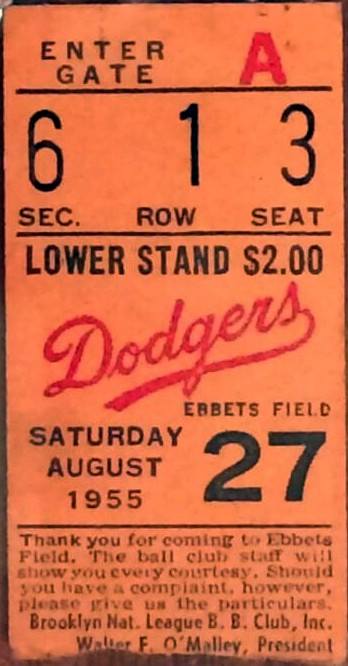
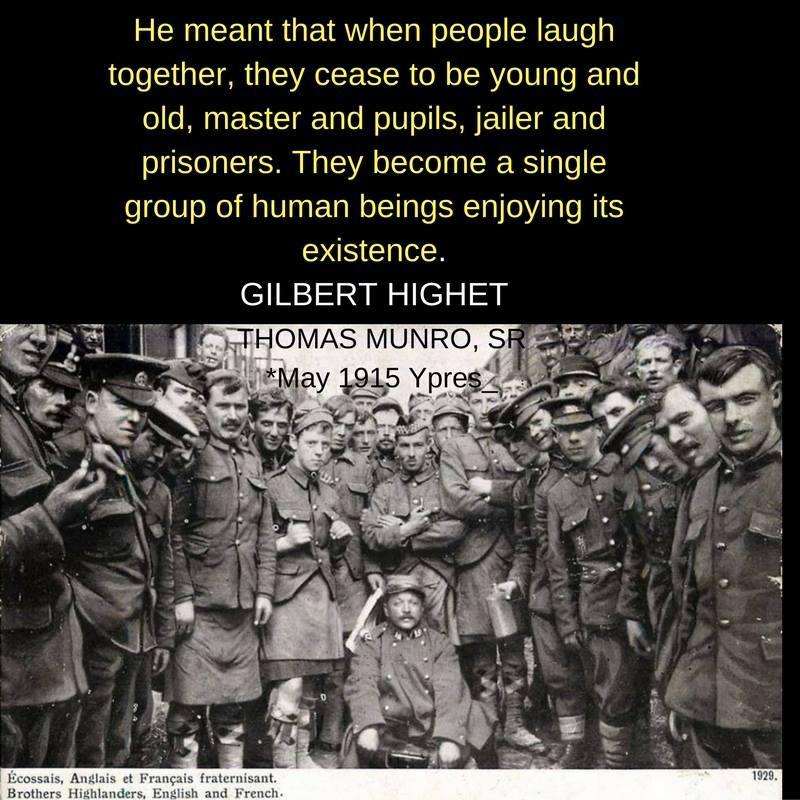


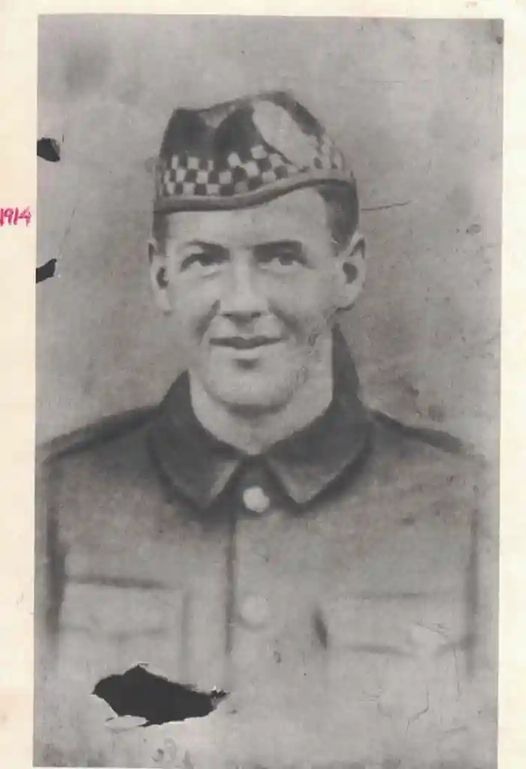
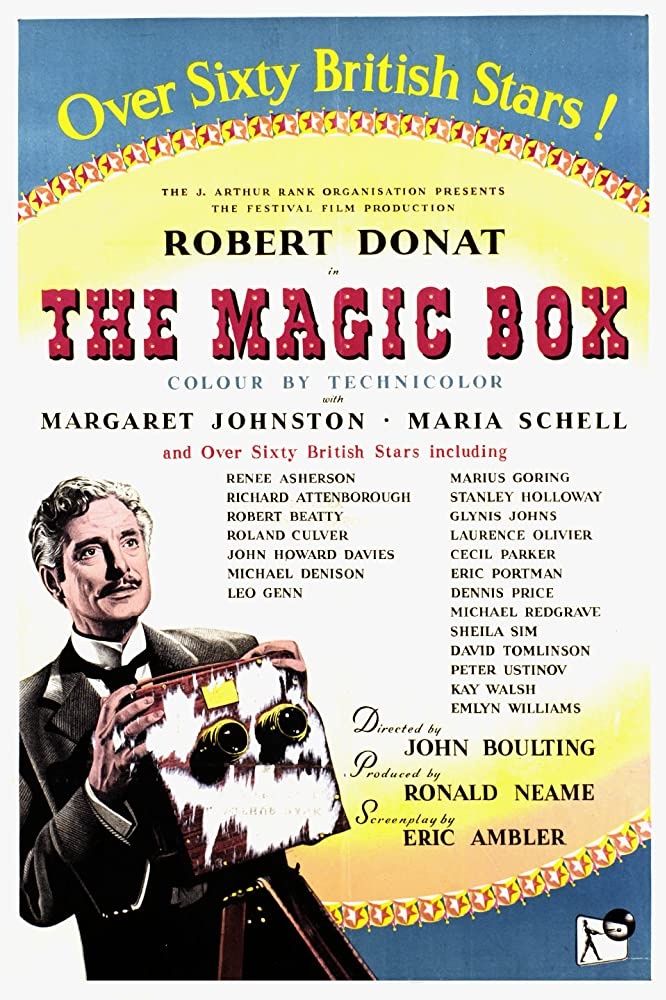

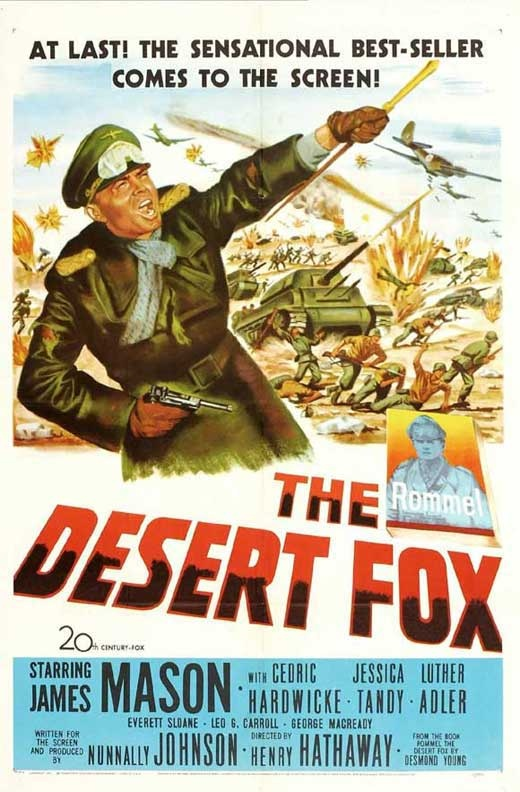
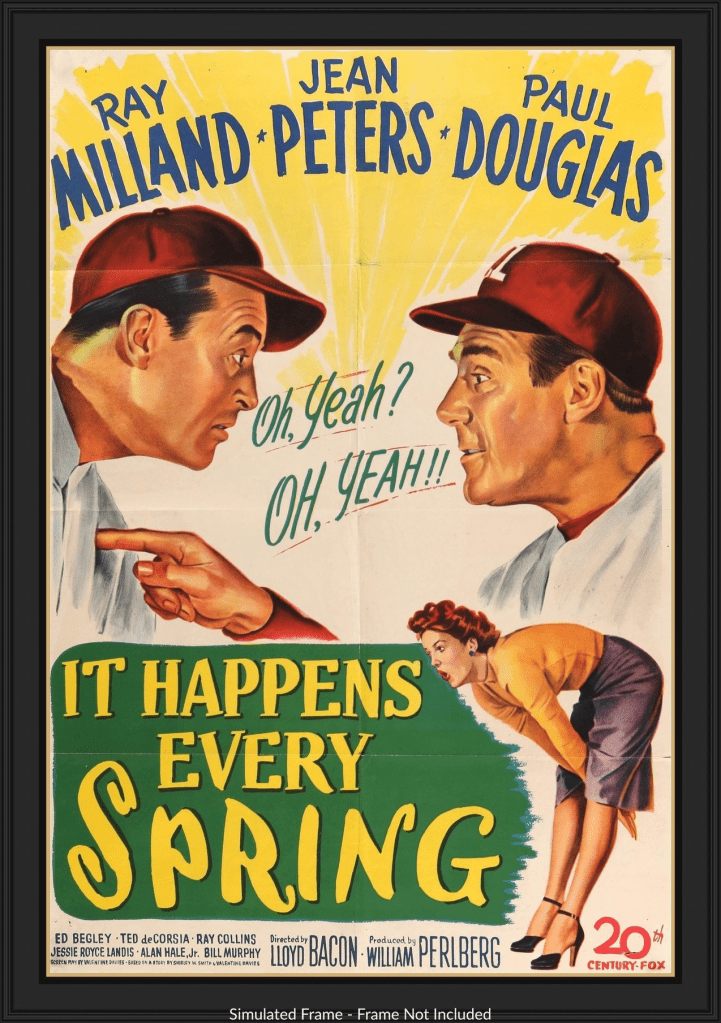


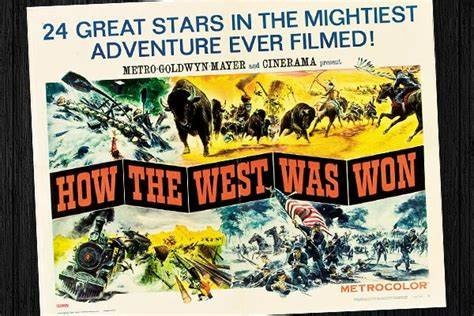

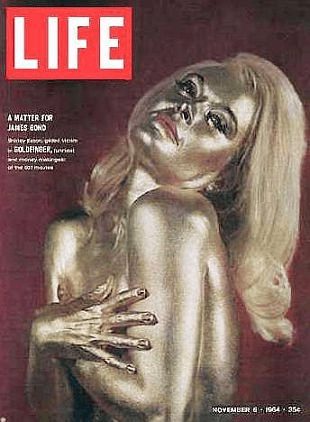
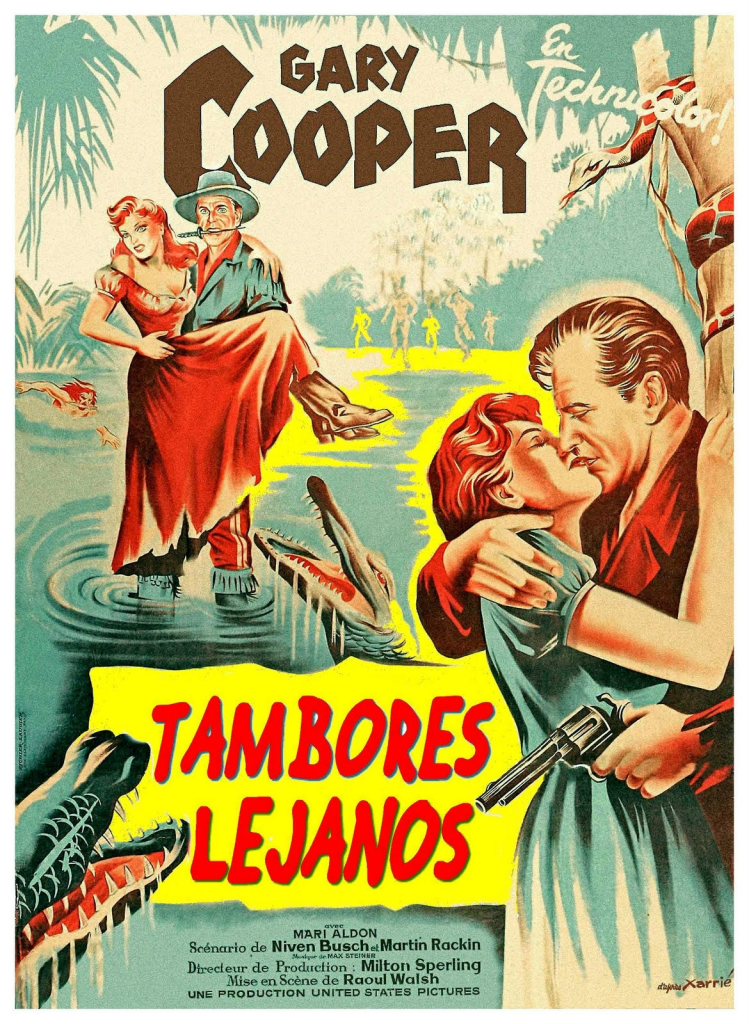


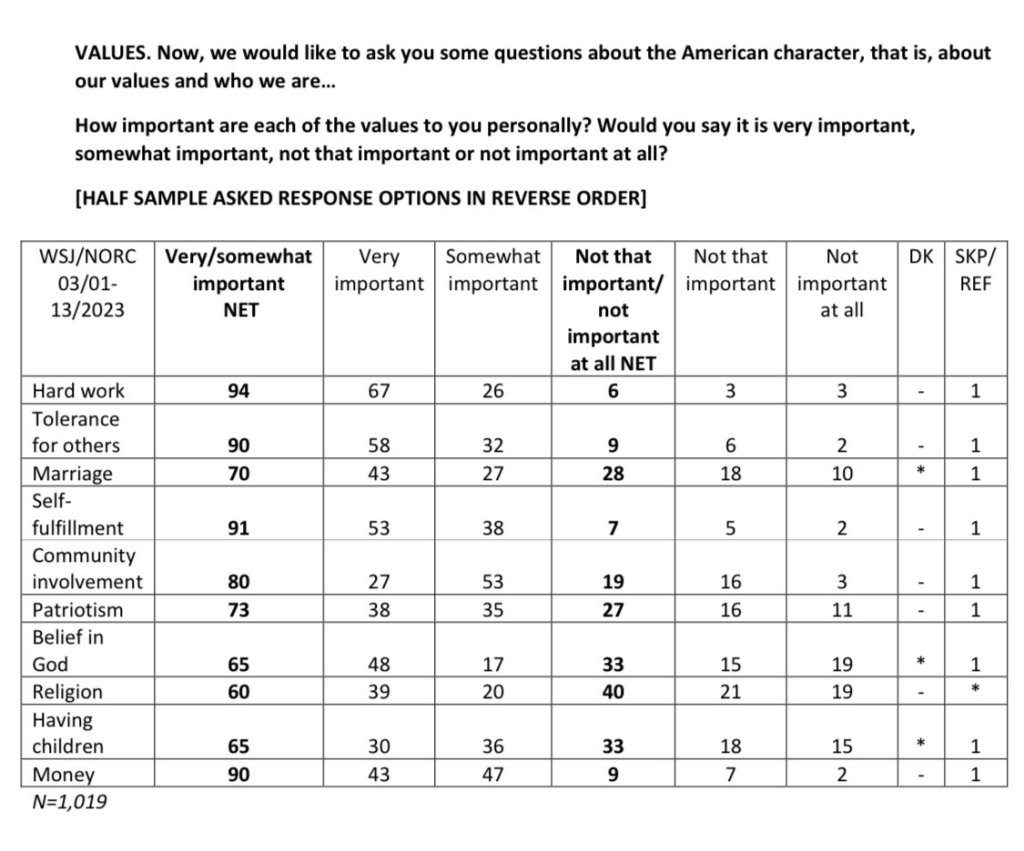
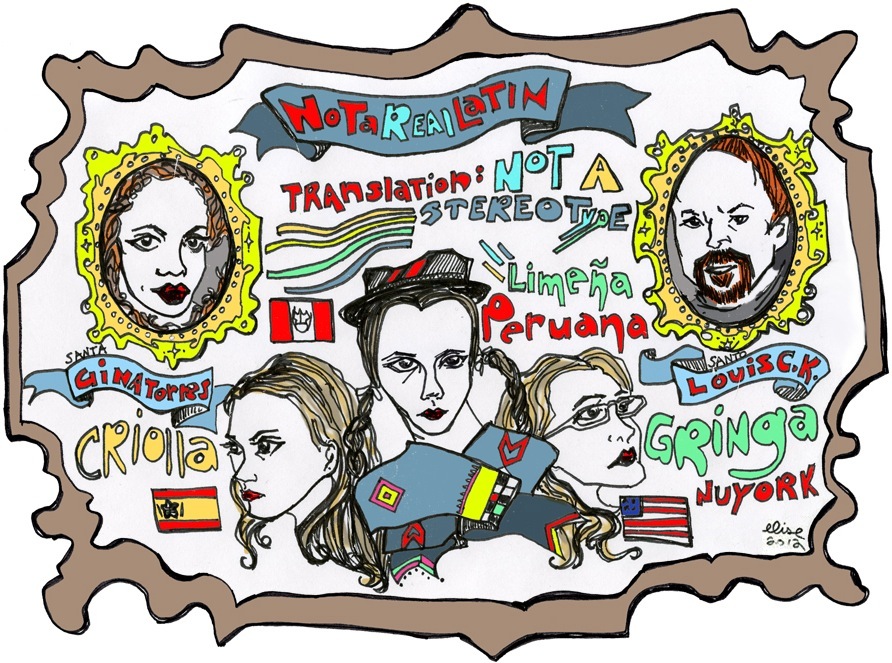


 Spirit of Cecilia
You must be logged in to post a comment.