
All posts by Richard K. Munro
PAUL JOHNSON 1928-2023 by ANDREW ROBERTS COMMENTARY MAGAZINE
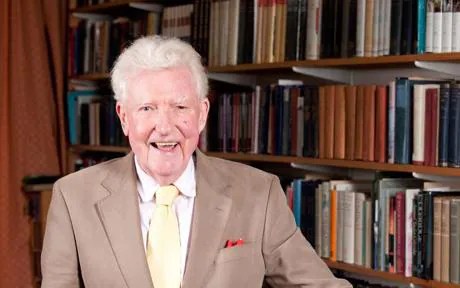
March 2023
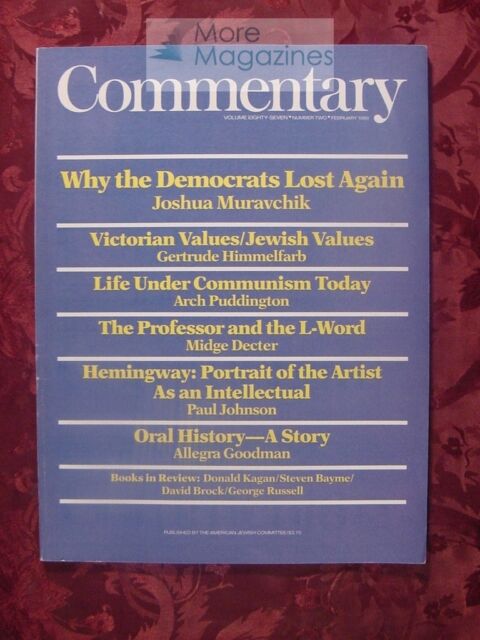
Paul Johnson, 1928–2023
Re: PAUL JOHNSON 1928-2023 by ANDREW ROBERTS
Dear Sir/Madam:
Andrew Robert’s valedictory for his late friend Paul Johnson captured the essence of the soul and great humanity of the man.
We all know Johnson as world-class author who wrote many times for COMMENTARY and who published highly readable and important books such as THE HISTORY OF THE JEWS, THE INTELLECTUALS, A HISTORY OF THE AMERICAN PEOPLE, THE BIRTH OF THE MODERN and a personal favorite I have read many times THE QUEST FOR GOD. His books sold millions and were translated into over 20 languages.
Some years ago, I was working with Andrew Roberts doing research and helping him with the galleys of his book CHURCHILL: Walking with Destiny. Paul Johnson happened to come up and I mentioned to Andrew that years prior I had written a letter to Paul Johnson concerning A HISTORY OF THE AMERICAN PEOPLE.
I had noted some mistakes in chronology and made some suggestions on how Johnson could make a good book even better. To my surprise Paul Johnson had honored me with a signed personal letter. He thanked me for my suggestions and references to sources he had not known. Johnson said he would try to incorporate them in a future edition of his work and that he really appreciated my loyal readership and my attention to detail.
Andrew Roberts said to me “that is just like Paul. Always kind and generous with others.”
I am nobody, a retired rural schoolmaster. I am not a scholar of high degree.
But I will never forget how PAUL JOHNSON treated me with respect as a serious person. I will cherish his letter to me.
PAUL JOHNSON was a great man who was willing to learn not only from books but also from the man in the street, from old and young, from fellow parishioners, from Jewish scholars and rabbis and from citizens all over the world of many faith traditions and languages in the Republic of Letters.
Paul Johnson is gone from us. But his pleasant voice, deep learning and joie de vivre endure in his books and taped interviews for instruction and as an example for us today and for future generations. He shall not wholly die.
NE OBLIVISCARIS do not forget PAUL JOHNSON.
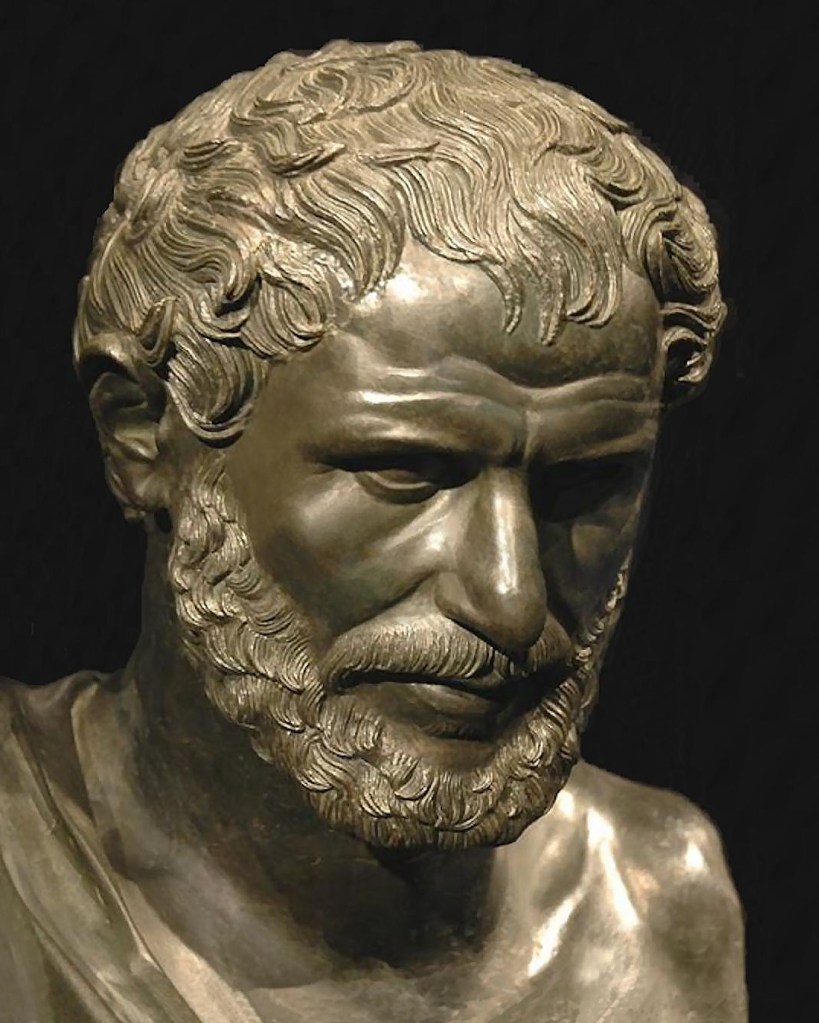
| William (Johnson) Cory. 1823–1892 |
| 759. Heraclitus |
| THEY told me, Heraclitus, they told me you were dead, | |
| They brought me bitter news to hear and bitter tears to shed. | |
| I wept as I remember’d how often you and I | |
| Had tired the sun with talking and sent him down the sky. | |
| And now that thou art lying, my dear old Carian guest, | 5 |
| A handful of grey ashes, long, long ago at rest, | |
| Still are thy pleasant voices, thy nightingales, awake; | |
| For Death, he taketh all away, but them he cannot take. |
Lament for the Death of a Bullfighter, four-part poem by Federico García Lorca, written in Spanish as “Llanto por Ignacio Sánchez Mejías” (“Lament for Ignacio Sánchez Mejías”) and published in 1935. Each part of the poem is written in a different poetic meter, and each addresses a different aspect of the goring and death of a bullfighter who had been Lorca’s friend. A haunting and powerful elegy, it is Lorca’s greatest poem. It contains the famous insistent refrain “A las cinco de la tarde” (“At five in the afternoon”). THIS IS ONE OF THE GREATEST MODERN ELEGIES
FRAGMENT FROM
Llanto por Ignacio Sánchez Mejías – Federico García Lorca
4. Alma ausente
No te conoce el toro ni la higuera,
ni caballos ni hormigas de tu casa.
No te conoce el niño ni la tarde
porque te has muerto para siempre.
No te conoce el lomo de la piedra,
ni el raso negro donde te destrozas.
No te conoce tu recuerdo mudo
porque te has muerto para siempre.
El otoño vendrá con caracolas,
uva de niebla y montes agrupados,
pero nadie querrá mirar tus ojos
porque te has muerto para siempre.
Porque te has muerto para siempre,
como todos los muertos de la Tierra,
como todos los muertos que se olvidan
en un montón de perros apagados.
No te conoce nadie. No. Pero yo te canto.
Yo canto para luego tu perfil y tu gracia.
La madurez insigne de tu conocimiento.
Tu apetencia de muerte y el gusto de su boca.
La tristeza que tuvo tu valiente alegría.
Tardará mucho tiempo en nacer, si es que nace,
un andaluz tan claro, tan rico de aventura.
Yo canto su elegancia con palabras que gimen
y recuerdo una brisa triste por los olivos.
.
ENGLISH TRANSLATION BY RICHARD K. MUNRO, MA
(please note this version has only a fraction of the lyricism and emotion of the original).
Absent Soul
The bull knows you not, nor the fig tree,
nor the horses, nor even the ants in thine own house.
The child and the afternoon know thee not
because thou hath died now and forever.
The back of the stone knows thee not
nor the black silk,
where thou wert smashed into pieces
Thy mute memory does not know thee
because thou hath died now and forever
The autumn will come again with snails,
juicy grapes and clustered hills,
but no one would want to look into thine eyes
because thou hath died now and forever.
Because thou hath died now and forever,
like all the dead of the earth,
like all the dead who are now neglected
Just like a pile of dogs! snuffed out dead dogs!.
Nobody knows thee. No. But I shall sing of thee!
I will sing of thy style and grace
Of the great maturity of thy intelligence
Of thine appetite for death despite its taste in thy mouth.
The sadness within thy happy courage!
Many years will pass – if ever-before there might be born
an Andalusian so distinctly individual, so rich in adventure!
I sing of his elegance with words that groan,
and I remember a breeze so sad across the olive groves.
TEACHING YOURSELF ENGLISH or ANOTHER FOREIGN LANGUAGE
Essay on language learning
By Richard K. Munro, MA
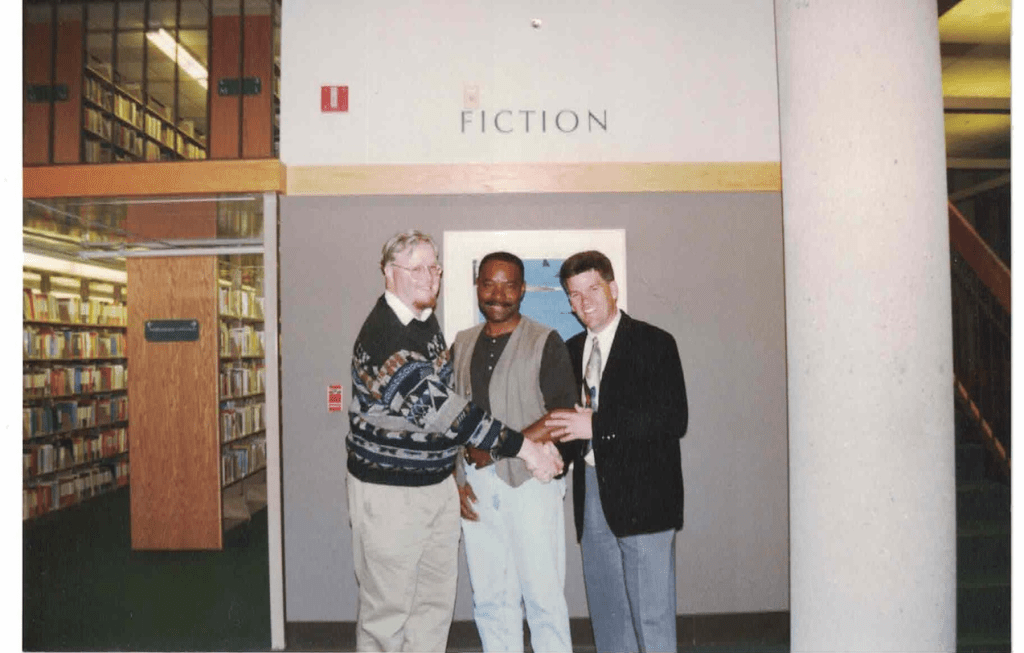
Richard K. Munro with star students!






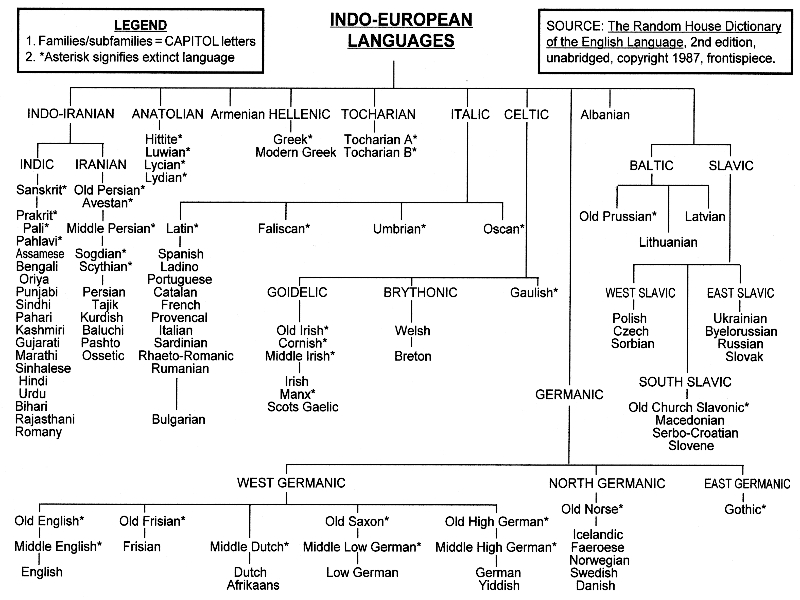
I have studied foreign languages for most of my life. I have also taught AP Spanish, Spanish for Native Speakers, and English as a Second Language to learners from many backgrounds. I began to learn Spanish when I was eight years old. My father would read to me the Spanish language ads on the New York City Subway. I would repeat after him and after a while, through repetition, I memorized a series of simple phrases. ¡ Cuidado! la vía del tren es peligrosa! (BE CAREFUL! The train track is perilous or dangerous! ) So began my early language learning experiences. They have continued, essentially all of my life and I continue to learn new languages while reviewing the old ones I have learned.

My father taught me how to count in Spanish (and Tagalog). My father had studied Latin, French and German in high school and college so he taught himself the basics of Spanish and Tagalog while serving in Puerto Rico and the Philippines. He served in the U.S. Army Transportation Corps and almost all of his cargadores (laborers) were native Filipinos who had a little Spanish but virtually no English. His foremen were Malaking Tony (Big Tony) and Maliit Tony (Little Tony). The numbers of Spanish and Tagalog are the same phonetically except that orthography was changed to make up for letters that are not part of the Tagalog or Filipino alphabet. For example, “cuatro” (4) is written in Tagalog as “kuwatro” “cinco” (5)as “singko,” “seis” (6) as “sais,” “ocho” (8) as “otso,” “nueve” (9) as “nuwebe,” and “diez” (10) as “diyes” and so forth. His men all called him Mbuti Teniente (the Good Lieutenant). He was one of the few American officers who learned the local language; he attended weddings and baptisms and was very close to the local community which had a Spanish priest and an Irish priest. He was there on July 4, 1946 when the Philippines voted for independence. Malaking Tony and Maliit Tony were very unhappy at the result even ashamed. They told my father -with tears in their eyes- “Teniente if all Americanos like you we put another star on the flag!” There is no question that my father felt that he owed his life to the loyalty and courage of such men. The philia love they achieved as comrades was made possible by communicating in common languages Spanish and Tagalog. My father always said knowing another language could save your life.
My father used to say to me (frequently) “Halika rito, Ricardo! (come here, Ricky) or in Spanish Ven aquí ! Kamusta ka (How are you!) or ¿Cómo está? Bilisan mo (hurry up) or de prisa! Bakit hindi ka nagtatrabaho (why aren’t you working!) ¿ por qué no trabajas? mabuti ! Good! Bueno!
My father’s business dealing took him to Puerto Rico and other Spanish-speaking countries and I had to good fortune to accompany him. I got to hear him ask for directions (todo derecho STRAIGHT AHEAD the man pointed NOT TO THE RIGHT) order in restaurants and we went to baseball games (la pelota) at Bithorn Stadium in San Juan. We saw Roberto Clemente play in Winter Ball and I called out to him in Spanish, and he smiled and waved back. Back in New York, we listened to baseball (and soccer games) on the radio in Spanish. In those years all the Yankee games and the World Series were broadcast in Spanish, and we would listen to the World Series simultaneously in English and Spanish. Buck Canel (the baseball and sports announcer) was thus one of my early Spanish teachers. First came the names and the numbers and then the baseball and soccer jargon. Of course, at the stadium, I found it useful to use Spanish to talk to Spanish-speaking players like Felipe Alou and Rico Carty and so obtain their autographs. Better than any autograph was the friendly interaction with a baseball hero. A language is truly a bond that unites men (humanity). If one speaks another’s native language one has obtained a shortcut to that person’s heart and sympathy. Mar an teanga tá an croí the Irish say: “as the tongue so is the heart!”
While visiting Spain father took me to an adventure film at the old Rex Theater on the Gran Via. It was dubbed in Spanish. The film was DISTANT DRUMS (Tambores Lejanos). It was the first time I had seen Gary Cooper in the movies and a big screen technicolor western. It was the first movie I had ever seen in Spanish. It was a revelation. I only understood it in part, but I was able to follow the story and even picked up some more Spanish words. The theater had a beautifully painted marquee in Spanish. The marquee my father read it out loud to me said I still remember La major creación de GARY COOPER (Gary Cooper’s greatest creation). My father told the ticket taker in Spanish “Uno Sólo el peligro fue la mejor. “(High Noon) who responded Vd.Lleva la razón pero esta es muy Buena! High Noon was probably Coop’s best but this Florida adventure was great fun as it featured Seminole Indians, pirates, alligators, and wild fauna of all types. Sort of a Mogambo goes to the Everglades. Yes, I began to learn the animal names in Spanish! The film featured the famous Castillo San Marcos!
Later in New York we occasionally went to foreign language movies and later we saw DVDs that were dubbed or VO with English or Spanish subtitles. Even today I often see movies in foreign languages just to practice and expose myself to new languages. Recently I saw a good WW2 movie on Netflix (with English subtitles) called Narvik (Norwegian: Kampen om Narvik lit. ’The Battle for Narvik’) The languages used in the film were German, Norwegian, and English. The main character (Kristine Hartgen) spoke all three. It worked as a patriotic adventure film but also was a rare example of a film that demonstrated the usefulness of being multilingual. I know a little German and have never studied Norwegian but found myself picking up words and phrases. I have seen some films like THE BRIDGE OVER THE RIVER KWAI in five languages. Netflix is an excellent resource and has many languages. I recommend watching in the VO (original version) with English subtitles and then a dubbed version also with closed captions or subtitles in English or the target language.
Languages always fascinated me. I cannot remember a time when I did not speak or understand at least a little of other languages. My mother could speak (and sing) in several languages). My father was a great lover of opera, so I heard, as a boy many operas and art songs in Russian, Italian, French, German, and some in Spanish. My uncles, both graduates of Columbia University and WW2 veterans were fluent in German and often visited. Our next-door neighbor Frank David, also a WW2 veteran was a German Jew and naturally a native German speaker. He personally witnessed Kristallnacht or the Night of Broken Glass. I was fascinated to witness them speak about their German experiences which included the liberation of Nazi concentration camps. Speaking German my uncle probably saved the lives of young German boys press-ganged into the SS in the final days of the war. He and his men refused to take them POWS and returned them to their mothers. Frank David served in the US Army as an interpreter. His family escaped because of his father’s international business dealings and savings invested in Switzerland. But it was a close thing. The Nazis confiscated their car, their house, and German savings. Once again, a multilingual family was able to maneuver and adapt and so survived. Frank’s brother (Albert David) became a professor of English at an American university specializing in Chaucer and Old English.
My father had a vast personal library of foreign language books. I inherited the Spanish, Latin, and Greek books my sister inherited the German and French books. He also had LP’s of poetry such as Moses Hades reading in Latin, some ancient Greek, German, French, Garcia Lorca in Spanish, plus complete Linguaphone Spanish and Portuguese sets (Books with 50 recorded lessons each on 45s). So my father was an amateur linguist who could read, write, and speak (in order of his fluency)
- French (He read Zola, Martin Du Gard, Victor Hugo, Moliere, Flaubert, Proust)
- German (He read Goethe, Mann, Hesse, Heine, Schiller, Rilke)
- Latin (Caesar, Cicero, Vergil, Horace, Catullus Ovid Seneca)
- Ancient Greek (some Modern Greek) New Testament, Homer, Euripides, Sappho, Plato, Aeschylus, Sophocles , Epictetus, Marcus Aurelius , Xenophon, Thucydides, Callimachus
- Italian (he read Dante in the original)
- Spanish (He read Cervantes, Machado, and Garcia Lorca in the original)
- Russian (He read Pushkin and Tolstoy in the original)
- Tagalog (chiefly spoken)
Greek and Russian were the most difficult because of the alphabet. But of course, the Russian alphabet is derived from Greek so knowing Greek is an advantage in learning Russian. Like my grandfather (who served in the British Army) my father knew a little spoken Yiddish, Arabic, Hindi, and Punjabi. My father was a little ashamed that he knew so little Gaelic, the language of his grandparents, but in his time, Gaelic was not studied in schools. Gaelic has a reputation (underserved) as being a “hard language”. But it is phonetic along its own lines and has only ten irregular verbs. Late in life, my father took an interest in Gaelic place names, slogans, and Gaelic words in the Scots dialect (which he knew quite well). He enjoyed it when I read and interpreted Gaelic poetry and songs for him. He very much enjoyed the SONGS OF THE HEBRIDES. However, my father felt studying Gaelic or Latin was interesting but not “Big Languages” like Spanish or English to be studied formally with university degrees. The primary law of economics is scarcity. One had scarce money and limited time so one should be credentialed in “Big Languages” and not spend too much time and money on “small languages.” So, my early language learning years were dedicated principally to English, Spanish, and Latin then German and Portuguese, but I always maintained an interest in Scottish Gaelic and studied it on the side. Of course, it was with some regret I abandoned the classics in college (Greek and Latin) but for someone like me who had no money and a need to earn his daily bread, English and Spanish were much more practical. There are for example over 60,000 Spanish teachers in the USA alone. There are about 1,000,000 ESL teachers plus over 1,250,000 English teachers. I have taught in all three areas. I found there was a great demand for certified English teachers who were trained as foreign language teachers and bilingual in Spanish.
So rather than forbidding Gaelic, my father encouraged me to study Gaelic as a hobby. He bought me my first Gaelic book TEACH YOURSELF GAELIC and Dwelly’s Gaelic-English Dictionary at Rizzoli’s bookstore in New York. But the language he encouraged the most was Spanish a language that was spoken every day in New York and many places in the USA and the Americas.

My father was very fond of the series TEACH YOURSELF BOOKS. They are (still) widely available and affordable. I think they are a great supplement to any language study. My father had the TY (I still have these original volumes) in Ancient Greek, Modern Greek, Italian, German, Scottish Gaelic, Irish (Gaelic), Spanish, and Latin. Many come with recordings, but I use them primarily for reading practice and grammar explanations. I highly recommend the Teach Yourself Books (and dictionaries).
I learned from my father and the many wonderful foreign language teachers I had in the USA and Spain that:
- Learning languages is fun. Language learning can be a very absorbing pastime. And of course, it is always useful to communicate with others when one travels. Yes, it can be hard work but believe me there are a lot of laughs along the way. I think it was Woody Allen who joked that being bisexual immediately doubles your chances for a date on a Saturday night! Similarly, being bilingual or multilingual makes it far easier to meet and date, and do business with a wide variety of individuals. People, customers, and business associates are usually favorably impressed by your kindness and seriousness of purpose in understanding their culture and dealing with them. The maître d’s ,aunts, and prospective mothers-in-law genuinely liked me, trusted me more, and eagerly fed and entertained me because I made valiant attempts to speak their native tongue. Speaking another language made dating, business dealings and diplomacy much smoother. I have struck up friendships with musicians and artists by writing to them in their native languages (never using English).
- Knowing a foreign language (especially a “Big Language” like English or Spanish) is practical and a credential just like certification in computers, typing or a degree in accounting or chemistry. It’s worth something on your resume. In my own life, I have worked for major banks, coached immigrant youth, served in the military worked for ETS and worked in schools and colleges. One skill that gave me an edge was my skill in language. I could work the phones in Spanish or English. I could work in customer service or interpret. I could work as a Tour Guide. I have been to Toledo and the Prado Museum, for example, dozens of times.
- The earlier one is introduced to a language the better. The way a child learns its first (or second language) is a very good method. A child learns grammar and vocabulary unconsciously by listening to and interacting with speakers of a language. The younger a child is the more likely they can assimilate the accent of a native speaker. Unfortunately, that is not possible for most of us! But there is no shame whatsoever in having a slight foreign accent. In fact, if one speaks clearly, I think a slight foreign accent can be charming even exotic. I had a former student who studied engineering at Cal Poly. He had been an English learner and in the 9th grade hardly knew a word of English. He concentrated, persevered, and studied hard. He became fluent in English. In fact, while at college a professor asked him what part of Canada he was from and then what private academy he had studied at. His English was so good he didn’t think he was Hispanic! Things that work with children also work with adults. We can learn a lot by listening to and interacting with native speakers. And we adults have advantages, however, that children do not have which helps us learn multiple languages. We can read and study more easily. Also, adults can understand grammar and the relationship between languages more easily. We know that every language builds complex words from the simple basic roots of a language. I know that English helps one learn German languages and the relationship of Romance languages with English and each other. Some language teachers place little or no emphasis on accentuation or grammar. This is a mistake if carried to an extreme. It is not necessary for the average learner to be as expert in a language as a teacher or professional translator. My old Spanish teacher told me that “accents were but the shine on the car but verbs were the motor!” But grammar and orthography are important. Knowing a standard language and correct grammar is not so much to create elegant speech as it is to make clear what the relationship is among words. Grammar and diction link words together and give them precise meanings. Therefore, we must understand grammar to a greater or lesser extent. I never understood grammar until I studied Latin and Spanish. But it began to be clear to me when I studied foreign languages and began learning moods, tenses, and parts of speech. When one learns a foreign language, one learns more about one’s native language.
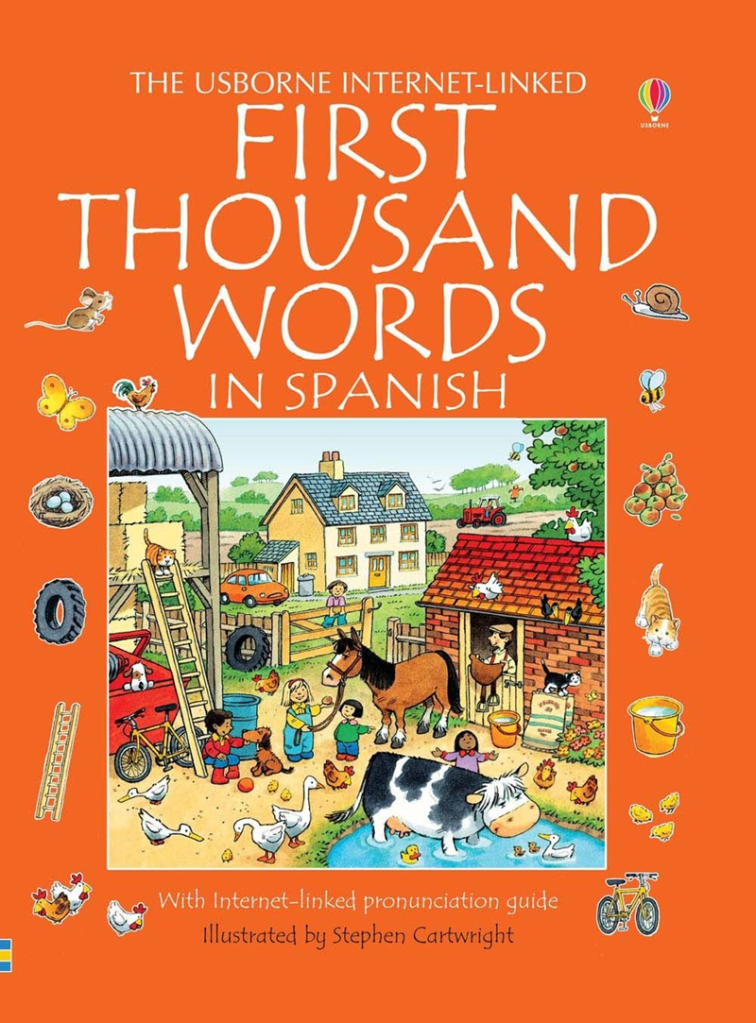
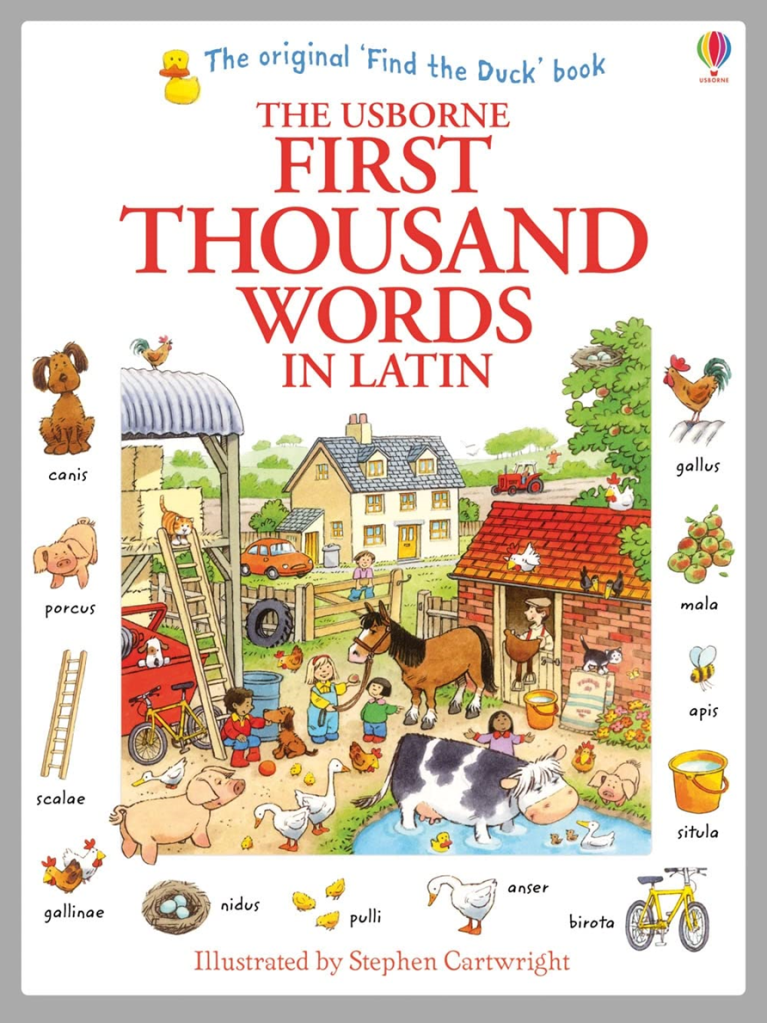
- 4) Learning languages requires more than anything else steady attention and effort. To become competent in a foreign language one must make a serious almost daily commitment over a long period of time -usually years. You must like the language you are studying and maintain a positive attitude. As the Gaels say “beag is beag is fhearr an ceum mor.” Little by little every day -ten or fifteen minutes is better than one big step once a week or once a month. There is no such thing as “instant Spanish” or “instant English.” When I study a new language, I keep daily notes books of new vocabulary and make study cards. I don’t always take notes, however. In the early morning or at night in bed, I do some review listening and speaking exercises and don’t worry about taking notes. However, during my daily language sessions at my desk, I have a cup of sharpened pencils and colored pencils plus my Teach Yourself grammars and Collins dictionaries at hand. I often interrupt my Duolingo sessions to look up words in the dictionary to learn (and write out) related words and additional nuances or translations. In Linguaphone, the text was illustrated, and the pictures helped make the meaning of the sentences clear. Using pictures and color coding is a very good help to language learning. A wonderful resource for language learning is the colorful series My First Thousand Words series by Usborne. It is an excellent (and humorous) supplement. One can buy it new or find used versions on ABE books. It is available in major languages such as Spanish, English, and French but also in Latin, Hebrew, and Irish (Gaelic). I have several and use color coding to put in translations of other languages. For example, in my Irish book, I have written in the Scottish Gaelic equivalents in red ink (the two languages are closely related). In my Spanish book, I have written the Italian equivalents.
- 5) If one wants to gain a high level of fluency sooner or later, one must immerse oneself in the target language. I was a good high school student (I studied Latin and five years of Spanish) But what really helped me was spending one entire summer -almost every day- listening to all 50 lessons of my father’s Linguaphone course in Spanish. The following fall I was enrolled in Spanish III and everyone including my teacher noticed my improved Spanish vocabulary and accent. My high school AP Spanish teacher, a native Cuban Mr. Eli Gorelick encouraged me to seek advanced studies in Spain. Then I spent another summer studying in Spain for ten weeks via the University of Northern Iowa’s summer program in Spain. In that ten-week time, I was totally immersed in Spanish. I later studied three more summers in Spain gaining my MA in Spanish. Later I lived and worked in Madrid for almost two years. I used to go months at a time without speaking or hearing any English at all (I read newspapers, and books and corresponded in English however). Living in a Spanish-speaking country where Spanish was a prestige language was a great experience. I became an adjunct professor for a local Junior College and also for ETS in Spanish and for many summers graded recordings of students and student essays. Since that time, I have heard or spoken or read Spanish every day of my life.
My father used recordings to help him with his language learning. But primarily he read newspapers, periodicals and literature. He was interested in what Gilbert Highet called “culture languages”. He rarely wrote or read anything in Tagalog or Chavacano (the Spanish creole language he heard in Manila in the 1940s. His interest in those languages was strictly utilitarian while he was on active service overseas. But he enjoyed meeting speakers in those languages during his lifetime.
Whatever system you use it is good to do listening, speaking, reading, and writing practice regularly. I presently use or have used DUOLINGO in Latin, Modern Greek, Spanish, Portuguese, Scottish Gaelic, and Italian. Other online programs are very good also and some people recommend Babbel. I didn’t choose Babbel because they didn’t offer Latin and Scottish Gaelic, but Duolingo did. You can try Duolingo for free (I did for about six months) but eventually I subscribed to avoid ads and have more features. I am a big fan of Duolingo but I supplement it with Teach Yourself books. Be aware that some languages are more developed than others in Duolingo. Spanish, English, and Italian have more activities (Stories, dialogues, and readings) than Modern Greek or Scottish Gaelic. Teach Yourself has wonderful resources and some (like New Testament Greek) are free to download. Here are some links:
Duolingo – The world’s best way to learn a language
Learn Languages with Pimsleur on the App Store (apple.com)
For English Learners and for English literacy I used materials from
LANGUAGE! – Comprehensive Literacy Curriculum (Grades 4-12) (voyagersopris.com)
Vocabulary Morphology Curriculum – Suffixes, Prefixes & Roots (voyagersopris.com)
6) Learning a foreign language can benefit your health! I think I was rather shy and withdrawn as a young boy. But learning a new language gave me the confidence to overcome shyness and psychological barriers and helped me to get to know people. When you are studying and using a new language you are exercising your brain. So, your brain becomes stronger. Studying languages can even help one recover from a brain injury. When my father was 63 he suffered a massive stroke and lost the ability to read and speak. It was devastating to him. But he made an almost full recovery. I strongly believe my father’s dedication to language study may have helped him recover from his massive stroke. Most of his nurses happened to be Filipino and they spoke Tagalog among themselves, and my father listened to them. One morning after weeks of total silence he responded to them by speaking in Tagalog. They were astonished! That was the first language he used after his stroke. Then he began to speak the Scottish dialect (his boyhood tongue). At first, he couldn’t speak American English -I remember he couldn’t remember to say “The boy bounces the ball” he said “the illie (lad) was a-stotin’ the ba’’ (Scots dialect). Then gradually he began to understand and speak and read and write in American English. We all broke out laughing when we visited him one day and he said, a la Humphrey Bogart: “Si-down, pal and listen to the music.” Gradually, he returned to studying and reading the languages he had studied. The doctor said it was a remarkable recovery and it was possible that my father’s white matter and language portion of his brain were very highly developed, so it might have helped his mind reconnect. This theory has also been supported by studies at the University of Edinburgh. In any case, studying a foreign language hinders not and can have many positive benefits.
The researchers found that when the brain is challenged when people speak more than one language, this experience will inspire cognitive reserve, which would enhance the brain’s ability to deal with damage caused by a stroke and other diseases. Bilingual people can switch between two languages, when they stop using one, it is necessary to activate another language to communicate,” Thomas Bak, one of the study authors at the University of Edinburgh, said, “This switch allows the brain to continuously evolving, thus becoming factors in helping stroke patients to have rehabilitation. Apart from showing better recovery on brain function after a stroke, bilinguals who are able to speak more than one language also perform better in stroke sequelae tests, including tests of attention, gather and organize information.
See also How Learning a New Language Can Benefit Your Health (languagenetworkusa.com)
Learning second language ‘slows brain ageing’ – BBC News
When one studies a foreign language the first thing you hear if you decide to study English, Persian, Greek, Korean, Turkish, Russian or Chinese people will say that language is “hard” or “easy”. In realty one CAN make generalizations about languages but it is difficult to be accurate. The most important factor determining whether a language is “hard” or “difficult” is not the foreign language itself but WHERE one is coming from. Spanish is not hard if one already speaks Italian or Ladino. Hebrew is not that difficult if you already speak a related language like Arabic. Russian is easier if you speak Polish or Ukrainian. German is easier if you speak English (especially Scots English). Languages that are closely related to our own tend to be easier both in alphabet, in grammar and vocabulary. Modern Greek is not that much harder than Italian or Spanish BUT learning a new alphabet is a strong affective filter. I take twice as much time to study Modern Greek than Italian and feel compelled to take many more notes. But Greek has the added benefit of teaching roots words that have entered many modern languages: chorus, poly-, bio-, hypnotic, myth, Bible, school, academy, idol, poet, poetry, rhetoric, aesthetic, music, rhythm, hygienic, alphabet, sympathetic, irenic, hubris, emphasis, antithesis, hypothesis, cosmos, onyx, copper (Cyprus), colon, delta, chaos, diploma, fantasy, phantom, thermos, ethos, dogma, stole, pneumonia, asthma, kudos, crisis, character, scene, pathos, zone, psyche, genesis, diagnosis, criterion, orchestra, idea, pragmatic, cinema, coma, thorax, dyspepsia, nectar, aphasia, echo, nemesis, hero, catastrophe, tyrant. Even though Greek and Latin are not as commonly spoken or taught as previously they remain very powerful “culture languages” and therefore are of immense intrinsic interest.
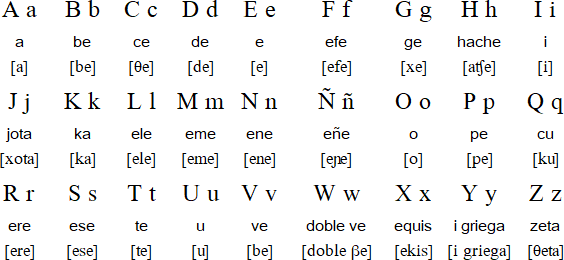
When one learns a language the first thing one should do is determine what language family the language belongs to. Most European languages come from a common linguistic heritage that language group called Indo-European. Some of the oldest written languages in that language family are Sanskrit (from India), Greek and Latin. Indo-European languages subdivide into these families ROMANCE, GERMANIC, SLAVIC, INDIC, IRANIAN, CELTIC, HELLENIC (Greek) and ALBANIAN. Let’s look more closely at some of the biggest sub-families and languages. Romance languages include:
French Catalán Spanish Italian Portuguese Romanian
All of these languages derive from Latin and use a Latin alphabet. In all of these countries, Latin remained an important culture language until relatively modern times. If one speaks Spanish then Italian is relatively easy to speak, read and understand because the languages are so closely related. The grammars of Romance languages are similar but most importantly a high proportion of words will be recognizable to speakers of another Romance language. These words are called cognates. More of this later.

One might ask if one is an English speaker, how does this help me? English isn’t a Romance language it is a Germanic language. But only about 40% of everyday words in English are Germanic. About 60% of English words are of Greco-Latin origin.
Here are the Germanic languages:
German Afrikaans
Dutch Swedish
Icelandic English
Norwegian
Danish
Another big language group is the Slavic which includes
Russian Serbian
Croatian Czech
Slovak Bulgarian
Ukrainian Polish
Other big Indo-European language families are Indic languages spoken in India and Pakistan such as Urdu, Hindi and Punjabi. These languages do not use a Latin alphabet, but the spoken versions of these languages are relatively closely related to Spanish, English and yes, Gaelic. I remember stories of the Highland soldiers in World War One speaking a Gaelic/Hindi/English patois with the Indian soldiers and being able to communicate on a basic level. More recently I have had Punjabi speakers in my Spanish classes and many of them became top students. For one thing, most were multilingual to start with (speaking English and Indian languages). If one speaks two or three languages it is easier to learn another! Then they quickly realized how many Spanish words were similar to Hindi or Punjabi. Later they invested in local gas stations, sandwich shops and retail stores and work in farming and many are completely fluent not only in English but in Spanish.
Linguaphone books come with a bilingual glossary to help teach the words of the lessons and readings. There on online dictionaries also but I myself don’t want to open and close windows when I am listening to audible books or doing Duolingo. There is no question if one studies a foreign language, one needs access to a good dictionary. I think for beginners a small pocket dictionary is just fine (such as Collins Gem). I occasionally use online dictionaries and even GOOGLE TRANSLATE but when I study, I am usually completely focused on the language I am studying. I keep notebooks of vocabulary and write down new vocabulary. I do this with a pencil.
I also use colored pencils to underline or star verb endings or grammar points or misspellings I make. If a word is more difficult or completely new to me, I usually write it out three times (in pencil) then highlight or circle it in red pencil and add asterisks. I also make little drawings (in color) of objects and animals such as FOUR RED CHAIRS , the BLACK CHAINS, THE YELLOW PENCILS, GRAY SHARK or BLACK CAT, the ORANGES, the Green Book to help me.
I also use antonyms or synonyms or similar words to reinforce learning. I use a forward slash to indicate opposite words such as EASY/DIFFICULT. I use the equal symbol = to indicate translation or synonyms such as Problema=problem (also trouble). I use (≠)The not equal sign (also called the inequality sign) to indicate a false cognate or a translation problem. The Greek words Αντιπαθητικός (antipathitikós/unlikeable)and συμπονετικόςd (symponetikós / likable)are antonyms but also are close cognates to English (simpatico /nice; sympathetic) and Spanish related words (simpático/antipático) .
When studying vocabulary cognate study is vital. I have many Spanish and English bilingual dictionaries on word usage and cognates that go “beyond” any basic dictionary. According to the Cambridge Dictionary, the definition of a cognate is “a word that has the same origin as another word, or is related in some way to another word.”
Three categories of cognate exist (the divisions are for Spanish/English):
- Perfect cognates (cognados perfectos) 5-10%
- True cognates (cognados verdaderos) 85-90%
- False cognates (Cognados falsos) 5-10%
When the meaning, spelling, and sound is identical, as in animal and (el) animal, we call them perfect cognates. The only difference is in pronunciation.
A true cognate is a word that is “either spelled the same or similar and often sounds alike in both languages.” In other words, it’s similar but not identical. An example includes “action” in English and acción in Spanish. Both words have similar sound and spelling and they (generally) have the same meaning (acción does mean “action,” but it can also mean “stock” or “share” in financial terms).
Here are some other cognates:
| ENGLISH | SPANISH |
| patio | patio |
| rodeo | rodeo |
| attractive | atractivo |
| invisible | invisible |
| lesson | Lección |
| reality | Realidad |
| Fiction | ficción |
| Pecadillo | Pecado (sin) |
| Colaboration | la colaboración |
Usually, the more sophisticated the word it the more likely it is a true cognate or perfect cognate. such as TOPOGRAPHY. Common everyday words are more likely to be false cognates or partially false cognates.
When one studies Spanish, English, French, Portuguese, German or Dutch one consistent pitfall is the problem of false friends or false cognates. False cognates are misleading because they apear to be the same but can have totally different meanings or translations. These words can be totally false or partially false. Here are some examples from Spanish:
- Sin in Spanish means without and has no relationship whatsoever with the English noun “Sin”.
- Once (1) and once (11)
- Library is not librería(bookstore). A library is a biblioteca
- Grocery (food store) is not grosería rudeness or coarseness
- Pan (skillet/ sartén is not pan (bread)
- To rest is not “restar” which means to subtract and to deduct.
- Red (color) is not “red” (net)
- Out of control does not mean autocontrol (self control)
- Embarrassed is not embarazda (pregnant)
- Gracious is courteous but not gracioso (funny)
When in doubt assume the cognate is or could be a similar word or exactly the same. Some of these words represent direct borrowings from Latin or Greek like radio (la radio Sp. or ραδιόφωνο GR “radiophone”) and teléfono(Sp.) τηλέφωνο GR (tiléfono/telephone. Of course, some slang English words used in German (ex “cool”) Spanish or Modern Greek may not be standard words. Time will tell. I used to tell my students who often used the slang word “raite” (“ride”) that if someone wrote a Nobel Prize winning work called the “Último Raite de Arvin” (the Last Ride from Arvin then they could probably use it on the AP Spanish test but until then it was best to avoid that word however useful and stick to standard Spanish and say “paseo” or simply “llevar en carro” or even medio de transporte. But there is no question “raite” is a borderland Spanish word in every day use.
Each language has its own special challenges or problems. So I will write separate essays on English learning.

PEOPLE DON’T RESPOND WELL TO AGGRESSIVE BEHAVIOR and INSULTS
By RIchard K. Munro
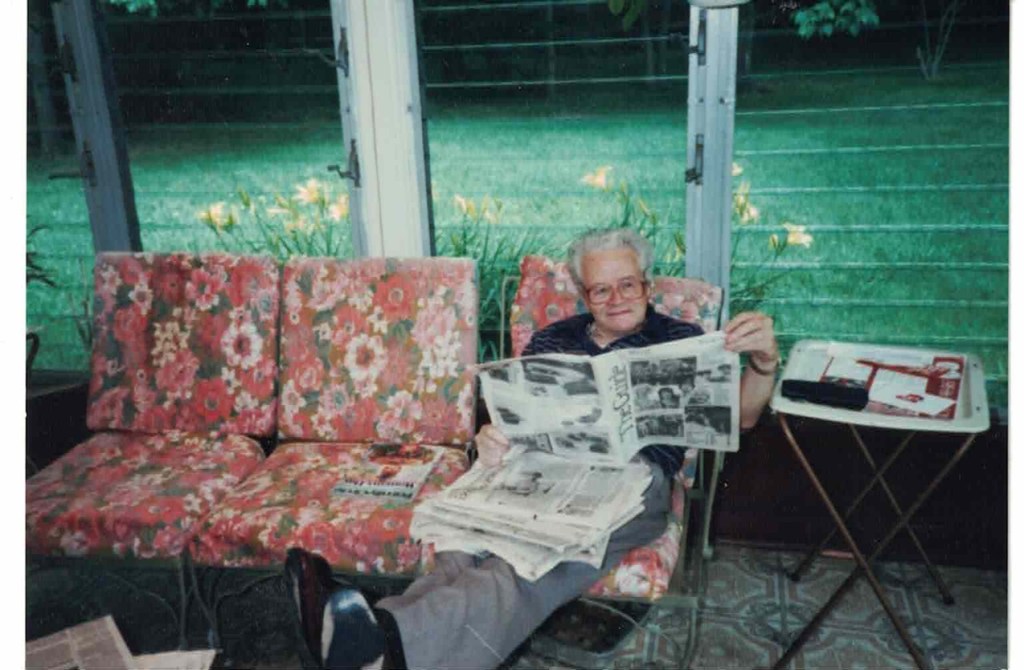
THOMAS MUNRO, JR relaxing in the patio of his garden circa 1980

HW BRANDS: “As a rule, people don’t change their beliefs by being insulted or demeaned. They don’t become angels by being yelled at…”
I would say this is axiomatic.
Rule #1 in a civil society is to treat people civilly and with respect. This is one of the reasons why we are polite and why we learn other languages. Insisting that everyone ONLY speaks YOUR language and showing no interest in the language and cultures of others is not a way to make friends and influence people. If you REALLY want to change people it is usually best to shut up and pray for that person. That does more go than attacking and arguing with people. After all, you are not perfect either.
Rule #2 don’t go out of your way to insult people and their pastimes.
I don’t like bizarre hair or tattoos or profane language. Some sports don’t appeal to me. I certainly have zero interest in fantasy leagues and sports betting. But I don’t fight with people or argue with them. I avoid their company, yes, or ignore them. (It’s easy I am nearsighted). I don’t like golf but agree it has great charm and beauty. I have enjoyed miniature golf and have even played a few rounds myself, but I decided long ago I did not want to spend so much time and money away from home and family. I glance at the sports page for about 5 minutes. I am aware there are championships and leagues out there somewhere, but I am not obsessed with every team sport that there is.
I enjoy other pastimes more.
Rule#3 society and its norms have changed drastically, and I am not always happy about that but I live and let live.
I cultivate my own garden and turn off shows and spectacles I do not like. I used to love to go to the movies but now have almost completely fallen out of the habit. For one thing, they don’t make movies for mature adults it seems. For another, if they make a film that might prove to be entertaining (TOP GUN MAVERICK) I can watch it on pay per view for a few dollars.. I recently saw DEVOTION (it was ok I would say 2 1/2 stars). It was pro-Navy and patriotic BUT completely banal and predictable including racists Southerners bullying and taunting black man character. They called him aJackie Robinson. Most films do not do a good job at handling racism. DEVOTION went out of its way to show SOME SOUTHERNERS and MOST AMERICANS were friendly even warm to African American characters. But all the interactions with neighbors and police were negative. The film did a reasonable job showing the camaraderie and purpose of the US military. The main character (rather unbelievably) spoke fluent French. I enjoyed DEVOTION but would not recommend it to anyone really and would never watch this film again. I primarily paid for it because I wanted to support a film that was (I was told )pro-American and patriotic.) But I am trying to be completely truthful about the film. DEVOTION was harmless and of minor interest to people interested in military history.
Rule #4 VOTE WITH YOUR POCKETBOOK and YOUR FEET.
I don’t like LAX airport or JFK so I don’t ever go there.. There are cities and states that scunner me so if I can I avoid them completely. I buy books from authors I like and yes, still buy music from my favorite musicians and yes, still subscribe to a few periodicals and a daily newspaper WSJ in part because I want to support artists and authors I like. I read a lot of book reviews and at my age decide if it is worth my time and money to buy a book I might not even finish. Most ephemeral books I read via e-books now. I no longer buy paperbacks and have given most of my paperbacks away because the print is too small to read. If a book has lasting appeal, I will buy a hardback or even a deluxe leather-bound edition. But all my books are meant to be read. I hope most are passed on and cherished. I have books that date back to the 19th century and early 20th century and many from circa 1933-1980. From 1942-1948 there is a big gap due to military services. I have quite a number of books from 1940.
Reverence for Life in a hard-hearted World
By Richard K. Munro
It’s a brave new world where children can access abortion pills (abortifacients) without a doctor’s prescription and without parental notification or consent. It seems reasonable to me that at the very least parents should be notified if their child has a major medical treatment or is prescribed powerful drugs. It seems to me drugs like this should not be administered without a doctor.
An abortifacient is defined as “an agent (such as a drug) that induces abortion.” However, manufacturers often market these drugs as “contraception” so as to obfuscate what these drugs actually do. Many Americans use abortion and abortion pills as a preferred form of birth control.
65 % of American women use or have used artificial birth control.
91 percent of Americans believe birth control should be made free and widely available if abortion is restricted or banned. Among those who are anti-abortion rights, 61 percent agree. There is no question the majority of Americans want access to artificial birth control. There is little argument there. The argument is over two questions:
- is abortion a form of birth control that should be freely available to all without restriction or limits for all ages (including minors without parental consent)? Condoms, IUDs, and the abortifacient morning-after pill are given to students in high schools – including those under age 16 – free of charge and without parents’ knowledge or consent in many places. Is this right? Some do not think so.
- Can or should states restrict or limit access to abortions for minors without parental consent or notification? Some think there can be reasonable restrictions on abortion. Abortion is legal most places in the United States during the first and second trimesters of pregnancy. Most abortions are done during the first trimester of pregnancy. The first trimester refers to the first 12 weeks of pregnancy. Some states allow abortions until the 24th week, which is at the very end of the second trimester. Some people think there is an unlimited right to abortion even in the third trimester. But that is a minority. In the third trimester, just 19 percent of Americans believe most or all abortions should legal. according to a poll. But a recent poll indicates 80% of American believe abortion should be illegal in the third trimester.

If a person is considering abortion, there are two ways of ending a pregnancy: in-clinic abortion and medication abortion (also known as the “abortion pill”). The percentage of abortions done with U.S. Food and Drug Administration-approved mifepristone pills rose from about 44% in 2019 to 54% in 2020. This number will continue to grow as in clinic abortions become less common. On Jan. 3, the Food and Drug Administration expanded the distribution of abortion pills to retail pharmacies.

Under the new regulation, certified pharmacies can distribute mifepristone — which is used in conjunction with misoprostol, a more easily accessible drug, to end a pregnancy — in person or through the mail to patients who have a prescription from a certified provider. President Biden’s Department of Justice, meanwhile, has assured the US Postal Service (USPS) that it can continue to deliver packages of abortion pills nationwide, even in states that restrict or limit abortion.
In Texas, for example abortion is restricted except for life-threatening medical emergency, and anyone under 18 requires parental permission or a judicial bypass. I have personally met with young people who were pro-life speakers from Texas. In both cases the mother came very close to terminating the pregnancy (in one case the young person showed a Costco card and in another a fake ID). In both cases parents and or uncles and aunts intervened to demonstrated the young women was not of age of consent. They promised to welcome the children into their family. In both cases the young women decided to carry the babies to term. I met these beautiful and strong young people. I was, personally, haunted by the fact that if they had been Californians their lives would have been snuffed out and thus these two citizens would not exist.
Since the Dobbs ruling, pro-choice advocates say there has been a growth in self-managed abortions — via abortion pills that are obtained through avenues that skirt the law — in restrictive states. Once again I think young women should have reasonable access to birth control but young people should also be aware of the risks of some medical treatments. I think it reasonable that some drugs should be available at pharmacies only with a doctor’s prescription.

Incredible as it seems In 1963, the United States Department of Health, Education and Welfare shared the widely held definition of abortion as “all the measures which impair the viability of the zygote at any time between the instant of fertilization and the completion of labor.” (emphasis mine; a direct quote).
Indeed, until the mid-1960s, most doctors and scientists acknowledged that human life began at the moment of fertilization of the ovum by the sperm somewhere in the Fallopian tube.
How times have changed!


In 1965, the American College of Obstetricians and Gynecologists published its first Terminology Bulletin, stating: “Conception is the implantation of a fertilized ovum.” (Emphasis mine).
This change of medical terminology as far as I can determine was not based on new scientific findings.
The modern definition of conception was a political decision to appease Planned Parenthood and birth control activists.

Reverence for Life affords us a fundamental principle of morality, namely, that good consists in maintaining, assisting and enhancing life, and to destroy, to harm, or to hinder life is evil. So I would say LIFE is a better choice than DEATH.
I have no opposition to those who want to remain celibate their entire lives.
I have no opposition to those who want to use birth control to remain childless or limit the children they have.
If people choose to use abortion or abortifacient drugs for birth control that is their choice.
Abortion will always exist because it exists in nature and some people want to use it as a form of birth control. But in the final analysis, LIFE is a better CHOICE than death.
I would respect Planned Parenthood more if they boasted how many lives they saved and gave up for adoption (they actively discourage giving children up for abortion -they wouldn’t make any money that way).
Abortion should be legal but I think it should also be rare.
Yes, it is a person’s right to choose (within reason) to have a child or children.
But next year and next century and for 1000 years more it will be a heartbreaking tragedy that so many innocent lives are snuffed out like so many wet matches. Morally to abort without a very strong reason (to save the life of the mother etc.) will always remain an immoral act and a human tragedy.
Why The Last Valley was so controversial
By Richard K. Munro


The other day I got the sad news that CHRISTIAN ROBERTS who had appeared in TO SIR WITH LOVE (with Sidney Poitier) and THE LAST VALLEY (with Michael Caine and Omar Sharif) passed away in December 2022. Andrew Roberts, his nephew, wrote a very moving obituary in the Telegraph. TO SIR WITH LOVE is a very well-known film but THE LAST VALLEY which an excellent and unusual film has been very little seen especially in the USA. Why would that be?
The opening prologue sums up that era of internecine warfare forcefully and concisely: “The Thirty Years War began in 1618. It started as a religious war – Catholics against Protestants. But in their relentless pursuit of power, princes of both faiths changed sides as it suited them and in the name of religion butchered Europe.”
But THE LAST VALLEY was controversial in its time and still remains largely unknown to the general public. Why?
Because The Last Valley was considered by many to be blasphemous and atheistic.
The Last Valley was boycotted by evangelical churches and Roman Catholic Church. I remember there were ads put out against it in major newspapers and religious newspapers. It was not shown on TV for years. I don’t think it was ever released on VHS.

Finally, it came out in DVD and we saw it again. Still, I think it was a great and moving film. The Last Valley had to courage to deal with an actual human quandary. How the poor and the weak can survive an invasion of well-armed and ruthless mercenaries. Michael Caine’s captain could have been a Nazi officer or a Russian officer of today in Ukraine.
The Last Valley was one of the most popular movies at the British box office in 1971. However, it was an expensive flop overall. It earned rentals of $380,000 in North America and $900,000 in other countries, recording an overall loss of $7,185,000.
Rentals in the USA and Canada were less than $500,000!!!!
So I would say the boycotts were effective you could see it in New York and San Francisco and LA (briefly) but that was about it.
My father and I went to see it in NYC -heck it was a Michael Caine movie! He and I were the only ones in the theater! It closed almost right away.
Many people attacked James Clavell’s script because he was a well-known atheist.
Personally, I thought it was a very honest film and thoughtful film it did not take the side of the Protestants or the Catholics really but had a lot of complexity. THE LAST VALLEY is also endowed by the ethereal music of the John Barry soundtrack. Barry seemed to capture the mood of the era.
The nihilism and atheism of the captain (Caine) were totally believable. after all the violence he had seen and all the treacherous and corruption of Christian leaders both Catholic and Protestant.
The film was an equal opportunity offender in that way.
The main characters in THE LAST VALLEY were traumatized by the violence and killing they had seen and committed. Such a brutal experience could shake the values of the most serious Christian or Jew.
Traumatic experiences can affect different individuals in different ways.
NIGHT one of the great Holocaust books showed hows the experiences and suffering of Elie Wiesel deeply scarred him and turned him into an atheist. On the other hand, Viktor Frankl in MAN’S QUEST FOR MEANING another excellent Holocaust book- became more religious.
In the Gulag Archipelago Solzhenitsyn became more religious by his experience. C. S. Lewis to me the greatest Christian apologist of the 20th century became deeply religious because of his great war experiences. Others became disillusioned and joined the “Lost Generation.”
I gain my philosophy of life from Epictetus and Marcus Aurelius as well as Lincoln, Churchill, and CS Lewis. I am influenced by Judeo-Christian teachings naturally but do not consider myself a man of ONE BOOK or
Homo unius libri (Thomas Aquinas). Aquinas is reputed to have said “hominem unius libri timeo” I fear the man of a single book. I think the Bible is great but recall that the New Testament is just one great book of Greek Literature out of many. Though many do not recognize it the New Testament paraphrases Greek literature and philosophy.
My father and I often discussed religious and philosophical themes and he used to say I VOTE YES but heaven and eternal life IS TOO GOOD TO BE TRUE. HE WISHED THERE WAS A JUST JUDGE AND THAT HITLER AND STALIN WERE BURNING IN HELL. But in truth, he felt they were just as dead and senseless as Julius Caesar. They were beyond pain and punishment. Still, I hope there is a God and I hope he punishes the wicked.
So I suppose my father tended toward the skeptical even more than me. THE LAST VALLEY was most controversial when it comes to explaining the process of granting indulgences by Roman Catholic priests. In that era their authority was almost complete. Per Oscarsson, a prestigious Swedish veteran of stage and screen in his homeland gave a splendid and singular performance as Father Sebastion (the fanatical priest).


Omar Sharif plays the role of an educated stranger to the valley and is entirely credible. Vogel delicately uses his brains, not his brawn. Vogel must find a way to keep the soldiers from massacring the villagers while maintaining peace with the headman., yet at the same time maintaining an uneasy peace with the headman. This was one of Sharif’s great performances. In a supporting role, we have Arthur O’Connell always a very convincing actor.
I thought the script of the LAST VALLEY was intelligent and brilliant and all the acting was first-class. Michael Caine’s performance was unforgettable. I can’t think of any other film that dealt with the 30 Years’ War. I think we all can agree that the wars of religion were a great tragedy perhaps as bad as World War 1. The only thing worse would have been the complete conquest of Europe by the Ottoman Turks!
And of course, in a way the 30 Years war continued in Ireland until recent times.
Sectarian hatreds and prejudices are extremely harmful.
None of us is perfect and the honest man agrees religion can be a positive influence or a negative influence.
I think people should choose for themselves (as adults what religion if any they want to practice).
Anglican or Catholic or Jewish any tradition could be good and could have a beneficent effect on children and family life.
I perhaps would not show the LAST VALLEY to my grandchildren NOW (aged 1 to 5) but by the time they are in high school or college, they SHOULD SEE IT.
I am not in favor of boycotting books or movies although I would say some books and movies should not be shown to k-6 students. Some are PG PG 13 etc.
The Last Valley was rated PG and was suitable for all audiences.
I showed PART of Schindler’s list to my high school students but never showed the entire movie but I recommended it. I thought the entire movie was too much. And of course in our district, one could show clips without parental permission but not R films. You could show an R film if you had parental permission or gave students a chance to opt-out.
I thought ALL the students should watch at least SOME of the film. Similarly I think The Last Valley is a film every person interested in history and the history of religious conflict should watch. I am glad I saw it in 1971 and I would see it again. It is in my film library next to TO SIR WITH LOVE, The Lilies of the Field, The Keys of the Kingdom The Mission, the Sound of Music, and Miracle on 34th Street.
The Rise and Fall of an American Boobacracy?
BY RICHARD K. MUNRO



JOHN MERROW
For generation after generation, most Americans have not learned to read with fluency. Today most Americans apparently read only when they have to. The numbers are daunting:
- Roughly 21% of American adults are illiterate, and another 33% read at or below a 6th grade level;
- Americans between the ages of 15 and 44 spend ten minutes or less a day reading books;
- More than half of adult Americans haven’t read a full book in over a year, and
- Young people are reading less than half the number of books that older generations read.
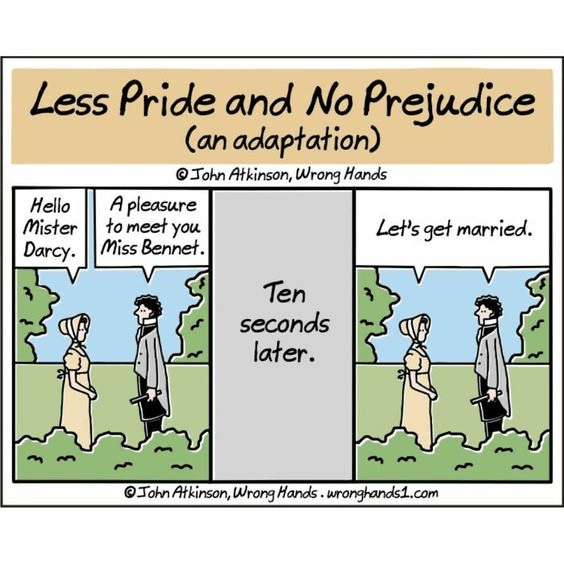
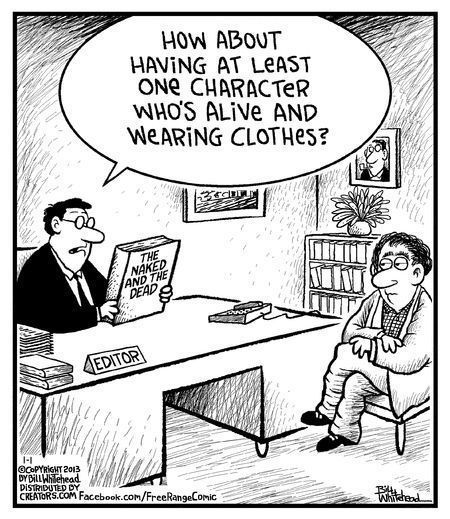
I included a few cartoons so we can laugh a little before we weep.
As a retired teacher I can tell you literacy has been gradually and continuously declining in America since the 1920s and 1930s. My grandfather, for example, had very little formal education. He went to sea as a boy apprentice circa 1894 at age 8. Of course, in those days on British merchant ships the boy apprentices slept apart from the sailors and were tutored by the captain in reading, basic math, and navigation. He was very good at basic math and tutored my cousin in high school and helped her graduate. She is grateful to this day. He died the day she graduated from high school.
They read the King James Bible, Scott, Shakespeare, Dickens, and Burns. One thing they did not do much of was writing so my grandfather was ashamed that he could not spell and write fluently. He often would have a friend write letters for him and then he would copy them out line for line. I suppose that way he improved his writing gradually over the years. He had a very good-looking signature. But I don’t think he ever read a book in his entire life. He was an avid newspaper and magazine reader, however. He loved to study maps and atlases. He knew all the classes of naval vessels (he built a few) and he knew British aviation and German aviation and American aviation and production figures. My father was a college graduate but he always believed his father had deep experience, knowledge, and wisdom even though he lacked degrees and diplomas. I remember as a boy he read two or three newspapers every day (Daily News, Post, Herald-Tribune plus LIFE magazine and National Geographic). He could smoke and read quietly for hours. Of course, he read to me. He read Kipling, he read comic books (Superman and Classics Illustrated), he read Greek Myths, He knew some Gaelic but was almost completely illiterate in that language. Similarly, he knew Scots very well but could not spell or write the way he spoke. But my grandfather was no unusual. His working friends all avidly read newspapers and political tracts (some were pro-Communist). Similarly my father’s mother probably never read a single book in her whole life But one book she knew very well was the Bible. She was a devout Christian in the Roman Catholic tradition and it was not unusual for her to attend Mass seven days a week. What she knew about art and music she mostly got from the church. She had relatives who were teachers and priests and she had great respect for learning. She was a very humble woman. My father was greatly influenced by his uncle who was a teacher and later by his Jewish teachers and professors at Manual Training HS in Brooklyn and Brooklyn College.
Unlike his father, my father was a very serious reader and an amateur linguist as well. He studied Latin and French in High School and German and French in College. He taught himself SPANISH, TAGALOG, Italian, Ancient Greek and Modern Greek, as well as Russian. His reading endurance was remarkable. He read all of Dickens, all of Shaw, all of Stevenson, all of Twain. All of Shakespeare, All of Dante all of the Greek playwrights all of Cicero, all of Caesar, all of Xenophon all of Homer, Cervantes, all of Zola. of Balzac, all of Victor Hugo. All of Dante, all of Will Durant, All of Barzun, All of Gilbert Hight all of Orwell I could go on. I was lucky enough to inherit most of his books I still have a long way to go but in 50 years have made some progress.
My wife is a reader my cousin is a reader we all read the newspapers and Reader’s Digest (for light reading) My daughter a k-6 teacher reads dozens of books every year and belongs to book clubs. Like her mother, she reads in Spanish and English. Her small children are already playing with books and being read to. They see their parents and grandparents reading, My four-year-old granddaughter was going over a book of dinosaurs and animals and recognized dozens of animals in English and Spanish EXCEPT Cheetah or Guepardo. She said it was a leopard and I pointed out how big cats were different. Jaguars, Leopards, Lions, and Pumas . She has a little toy Noah’s Arc and she lines up the animals and compares and contrasts them. She knows colors and the things animals eats. She loves going to the ZOO. This is how one develops readers. By example and by reading with them and to them.
I told my students that you don’t get vocabulary by watching TV shows like “Friends” I made a charter of vocabulary, and verb tenses of three different works #1 was a random “Friends” episode #2 was a play by G B Shaw #3 was the vocabulary in a book like Tale of Two Cities, Tom Jones, For Whom the Bell Tolls or 1984 by Orwell. One could spend MONTHS studying and commenting on the vocabulary and cultural allusions of the books. Years even. Pyramus and Thisbe we see in OVID, FIELDING, Cervantes, SHAKESPEARE, for example
“Friends” had zero biblical allusions zero historical zero literary allusions and less than 8th-grade vocabulary. Mostly it had low-brow off-color humor. But it was very clear the education and vocabulary one would receive from a TV show like this would be very limited.
Of course, one could watch something a little higher up on the cultural scale, Laurence of Arabia, Great Expectations, the King’s Speech. But it is not a coincidence that some of the greatest films are derived from plays and books. But generally, movies and documentaries are just summaries. ELMER GANTRY (1960_ was a fine film but only half or less than the book. FOR WHOM THE BELL TOLLS (1943) was a faithful adaptation of Hemingway’s novel but one needed the book to understand the background and the characters. It’s a rare movie that is better than the book. Three examples I can think of are John Ford’s GRAPES OF WRATH, John Ford’s THE MAN WHO SHOT LIBERTY VALANCE, John Houston’s TREASURE OF SIERRA MADRE and STANLEY KUBRICK’s PATHS OF GLORY. I read the original books but they were not nearly as memorable as the film versions.
So one should read to gain vocabulary, facts, and information. This could be the nutritional value of foods or the rules of a game or how to plant a rose bush or olive tree. This could be on how to maintain basic hygiene to reduce illness and avoid the flu, VD or Covid 19.
One should read to sharpen your mind and learn from the experiences of those in history or stories. Years ago I saw the FILM ENCHANTMENT with David Niven and Teresa Wright. My mother encouraged me to read the book which I did the Rumer Godden novel, “Take Three Tenses” This book was very important for me and for my life because it taught me a very important lesson: When you find love and happiness don’t let it pass you by. Take a chance and tell the person how you feel don’t be full of regrets like the Old General who lost the love of his life basically so he could advance his career. A few times I met women who were really worthwhile and special women. Sometimes the mutual chemistry and magnetism were not there. So the relationship never developed or we broke up. But when you find that love, that friendship, that laughter that joy, that trust you have to take a chance. You can’t put off love forever do it by your 20s or early 30s at the latest. Rummer Godden may not be the greatest author in history but she knew about some important things and she woke me up to the fact what was I doing wasting my life with people and women who could not make me happy? I knew who I loved and just needed to prove to her that I could make her happy and secure. So we fell in love and lived happily ever after. And I thank my mother (and David Niven) and Rummer Godden for teaching me the way to make good choices. But it all started with reading.
Reading teaches empathy and makes one more compassionate for the sufferings of others. I remember the book THE EDGE OF SADNESS and THE KEYS TO THE KINGDOM and saw the glory and the tragedy of the life of priests and missionaries. I had some interest in the priesthood and missionary work because I liked teaching and helping people. But I could never be celibate because especially when I was 17-25 I just loved women and wanted to be with them! I didn’t want all women however I would be happy with one.
Sometimes I have to travel by myself and wait in airports. I once spent five hours on a layover in Dallas and eight hours at Barajas Airport. But neither were bad experiences because I had books to read. There were clean bathrooms, cafés restaurants and places to sit. So I read and drank coca-cola or coffee and then strolled and then snacked and then ate supper with a book or newspaper. Before I knew it I was on my plane. If I hadn’t anything to read it might have been dreadful but I always have a supply or reading materials old and new. Reading is a great companion and sweet distraction. Fernando Pessoa, the Portuguese poet was right when he said “literature is the most agreeable way of ignoring life.” I once spent six weeks on Madeira. I had some hedonistic fun. But what I enjoyed most was reading every morning and most afternoons in the garden of the small hotel where I was staying. I had an entire suitcase of books that I carried around all over Portugal and Spain including one concise Oxford Dictionary and a small Collins Portuguese and Spanish dictionary. When I finished with the books I mailed them by boat back to America and filled up my suitcase with the books I picked up. The Casa Del Libro in Madrid naturally had a magnificent collection of Spanish, Latin, Greek, and French books but they also had an entire floor dedicated to English language books. They had a complete collection of Penguins and Everyman books plus many others. I must have read hundreds of Penguins when I lived in Spain. I still have a few by Walter Scott and Rex Warner and Michael Grant but most I gave away. They were just disposable paperbacks after all. I still have paperbacks and I still enjoy reading print versions of magazines Commentary, National Geographic, Baseball Digest, and Reader’s Digest but I mostly read electronic versions of newspapers and books unless I really want to study and read a book deeply. Some books I have on Audible books, hardcover, and e-book versions. I enjoy adventure tales and westerns and many I listen to on Audible books. But authors I meet on Audible books I often turn to and read their other books. If a movie or audible book encourages you to get to know an author that’s great. What one usually finds is reading is the most satisfying way to experience a book. I know I remember MORE when I read a physical book than when I read an electronic book or listen to a book. Having a physical book makes it easier to reference, write notes or re-read. I find I rarely re-read e-books unless they are very special. One thing is certain. I cannot live without books. People who live without books are missing out on some of the best things in life.
PLIGHT OF THE PENURIOUS ADJUNCT
By Richard K. Munro
I have been an adjunct professor on the fringes of Academe at Seattle University, Bakersfield College and UVA. I knew a friend who was an adjunct professor at NYU for 7 years. But pathways to a solid career in academia were few and far between it seemed to me.
One of the things I noticed was that marriage and family life were almost impossible under those circumstances. Molto honore poco contante as the Italians say. I was called Professor Munro for $22 an hour no benefits and no future pension. I would say it was an interesting experience, but I truly enjoyed teaching HS much more.
My HS AP students were superior (generally speaking) to my adult JC students. I also had greater freedom to choose my curriculum. At the JC one was mandated to teach the book everyone used. Most were overblown and overpriced. They charged students over $250 dollars for materials for Spanish 1a and 1B. Talk about price gouging. Another reason college is too expensive.
From my JC students I gained private police officers they were astonished that I used inexpensive materials $10.95 for Teacher Yourself Spanish books and CD’s and $7.95 for Collins dictionary. I told them all they needed were those tools, notebooks, colored pencils, and index cards and they could learn any language but they had to invest 3-5 years.
Of course, my colleagues at the JC didn’t really like HS teachers. They resented I took students away from them (AP students tested out). They always resented I taught police officers at 5AM. Working people found it difficult to advance via JC scheduled classes a 1Pm or 4PM what everyone wanted to teach. But to me it was interesting work (meeting people in a different lines of work) and it helped pay the mortgage in the summer.
I studied Spanish for five years in Junior High and High school plus four years in the university and four years in Graduate school (Summers in Spain) I loved studying in Spain (half my teachers were Spanish and the other half were Cuban Americans) and having the opportunity to travel in Western Europe. Of course, Spanish changed my life it was my one expertise besides typing that was always in demand. I worked for the Bank of America, the Marine Corps, and in construction. Knowing Spanish was always advantageous. It kept me in the Caribbean and the Mediterranean, everyone else went to Okinawa. I remember Woody Allen joked that being bisexual doubled your chance on a Saturday night; for me speaking another language doubled or tripled my chances for a date. I also think I might have been less garrulous and more polite as a non-native speaker.
JC students were easy to handle, however. I made a choice to be a very competitive k-12 teacher. Instead of a narrow education, I had a broad education. I was certified to teach in English, Spanish, and Social Studies with a bilingual certificate of competence. And I coached soccer and baseball. I enjoyed that when I was young.
At one time I gained 30 credits toward my Ph.D. at UVA but I cut my losses (maxed out my pay grade). It was not a matter of doing the academic work. It was just too costly for very few opportunities. I studied at the Curry School. D- intellectual atmosphere IMHO.
I had 35-year-old PhDs who had never heard of Barzun or Highet or even Will Durant. And you could forget about Spanish or French or British literature. Most seemed to have never read a real book in their lives. They loved the Pedagogy of Oppression by Paulo Freire (complete crap and an evil book). I was a TA for an adjunct who taught a class on intelligence (not in the Curry Schoo). and that was ok I graded about 300 final exams. As an AP teacher, I was good at that. UVA outside of the the Curry School was solid but compared to NYU or Oxford or Salamanca low wattage.
K-12 I earned great benefits for my family plus one year of sabbatical (I spent at UVA and traveled) plus a solid pension I am enjoying now.
I got an MA in Spanish literature in Spain and enjoyed that very much.
Most graduate work in Teacher Ed was merely jumping through hoops it didn’t thrill me. I could have easily gotten an MA in education (I think I was 15 credits short but I did a 5th-year certification and instead of an MA in education I chose an additional certificate in English. In the long run that turned out to be a very good choice.
K-12 education had its flaws -I found it frustrating that most Administrators didn’t really care about education or standards. To many, I was just a cog to fill in a schedule. I worked as a utility player. I taught over dozen preps in three subject areas. I stayed employed but was not happy not being able to teach one curriculum and really getting to know it.
I taught AP US history for five years and AP Spanish and Spanish Literature for 12 years but the demand was not there. They don’t even teach AP at my former school. Everything is via computer and via JC concurrent credit. The bottom line is kids don’t write essays, and don’t research. Now they say kids have AI do their essays and HW.
Brave New World!
The demand and summer schoolwork was in ESL so I gradually specialized in ESL Social Studies and ESL English (all levels).
The advantage was I had mostly immigrant students who were so grateful not to be in Venezuela, El Salvador, Egypt Burma Syrian Russia, or Iraq that they were very happy (and most serious students).
My favorite classes were Spanish for Native Speakers and English as a Second Language.
Most were very enthusiastic.
My least favorite classes were make-up summer school for football players in World History. Administrators would tell me x y and z needed an A or B to be eligible. My response was you should be talking to them not me. Of course, I never taught again for that administrator (he was later fired for indiscretions anyway).
Another least favorite class merely a potboiler was Spanish 1 for Americans. My only interesting students were a pair of Yemeni sisters who were fascinated by Arabic words in Spanish and made for me (I still have a series of posters in Arabic Spanish and English educational and moral quotes of Muhammed). Of course, they were model students. 100% attendance. They also became fluent in Spanish and work at their parent’s local 7-11. Each one had ten children I think.
We have a growing Muslim community. Every Muslim student I knew married and had children. I had one male student who had 8 children by the time he graduated from HS (his wife lived in Yemen and emigrated at age 16). As far as I know, she still speaks no English.
Too many American students just were goof-offs in my experience. It was all I could to tolerate them. OF course, the Administrators didn’t care as long as everyone got at least a D or C.
I also tutored a few football players, privately in Spanish but I did that as a favor.
My best private students were police officers and firemen. They WANTED to learn.
I also tutored the children of teachers in AP US government and AP US History and AP European History. I had a certain reputation everyone I had got a 5. But it was a great experience with kids who wanted to excel.
Unfortunately, I never taught AP European history in HS myself but two of my children studied it in HS (and got 5’s). My own children were AP Scholars. I respect AP because it is a rigorous curriculum. To get a 5 in AP Spanish Literature is no easy matter. To get 5s simultaneously in AP Calculus AP Environmental Science AP US History AP European History and AP English is rare and a true intellectual achievement.
But most Americans were intellectually lazy especially when it came to foreign languages, in my experience. Two of my children are teachers by the way -one is a K-6 Dual Immersion teacher and the other is a HS AP Spanish teacher (who teaches IN his class JC college-level classes also for some extra money. He also tutors Minor League Baseball players for good money for a MLB club. Like me, they went for financial security and tenure via k-12 education. I got tenure after #1 getting a clear credential #2 three years of certified satisfactory work. Of course, you CAN get laid off in k-12 education. But if you are a math teacher, science teacher, or bilingual teacher you will probably stay employed and get a lot of extra work.
I had a wonderful junior HS teacher in Ancient History and I asked him why he wasn’t a PhD in College – He knew Italian, Latin and Greek- He showed me his wife and family four kids -he said you have to make choices I chose personal happiness and family life.
I have no regrets.
Personally, I am very glad I did not hang out in graduate school for years.
Most of my graduate school was really in Spain in a non- college atmosphere. Most of the women I dated were museum docents American express travel agents, nurses or neighbors. Most were readers and well-educated esp by American standards a high school graduate in France or Spain or Italy was at least equivalent to most AA or BA’s in America.
Thinking back very few of the women I dated were college students. or even English-speakers. After age 21 I never dated an English-speaking American girl ever again. Most I met did not have my values and interests. Some of course only wanted to marry for money -big money. I suppose I was naive. I wanted to marry for love and friendship. My own wife had zero money. I didn’t care about that. I promised I would provide a secure life and would work hard. Most college educated American women I met wanted to give away sex -they would be angry if you turned them away but few I met were interested in marriage and children. To me, however marriage and family life were chief goals. I met a lot of semi-educated “Sangerites” (ZPG hard core). Sexual suicide.
For whatever reason, I was seen as very attractive to Latins in the Americas and in Europe.
I think that is because I came from an immigrant family.
My mother and her mother grew up on an Island with 300 people and my father’s mother grew up in rural Argyll. She went to Mass almost daily.
All were devoutly religious and very traditional wives and mothers. They were mostly horrified and shocked by the mores and manners of American women. They would not allow their children to be babysat by American teenagers for example. The mothers of the Latin and Greek women I dated always liked me and welcomed me. I courted the women I dated and showed them great respect. I always respected the parents and grandparents.
I was a gentleman and considered good marriage material. I used to attend religious services with the relatives and parents of the women I dated. They respected that. I didn’t mind attending Greek Orthodox, Evangelical services or Catholic services. I found it interesting. In the service I attended Jewish services and was very friendly with the Naval Chaplain (he lent me books).
I knew a Jewish business associate of my father’s -I liked him- but was shocked when he said he would not allow me to date his (very attractive) daughter. I told him if I dated a Jewish girl -for example, the grandchild of a Holocaust survivor or an Israeli it would be to marry her and if I would marry such a woman I would convert to Judaism and raise our children in the Jewish faith. I was sincere. He was amazed. I think I gained his respect. I believe a couple should have the same faith and raise the children in the faith of the most religious. One of my relatives, by the way, IS JEWISH now as he converted upon marriage a decision I deeply respect.
I lived happily ever after so it worked out for me.
Staying away from the Adjunct Life was a smart decision.
Nice place to visit but you wouldn’t want to live there.
TRUE EDUCATION and the VIRTUES
by Richard K. Munro
I agree with the Greco-Roman philosophers that wisdom is, eventually, chief among virtues. However, wisdom is a virtue which comes later in life and slowly. Wisdom is a slow growth. It is not, then, first among the virtues we can hope to impart or encourage in the youth.
Cicero said: “Beginning with the bonds of affection between family and friends, we are prompted to move gradually further out and associate ourselves firstly with our fellow citizens and then with every person on earth.”
So what is early education? Child rearing (or breeding) is the product of one’s personal associations in the home, in one’s neighborhood, one’s community and one’s school. Rearing or bringing up the youth presupposes properly coordinating the habits of the young and subordinating the wild, the unhygienic, the selfish and the baser instincts of our single but riven race. A people, a nation or a civilization must have its moral education, its code of civility and norms as well as its time of formal instruction or schooling.
There is a Spanish saying of which I am fond: “Para la virtud, la educación; para la ciencia la instrucción” which means “First teach virtue, manners, good habits and civility; then school for knowledge.” This saying has long fascinated me because it implies that formal education (instruction; schooling) must be preceded and accompanied by what we used to call “breeding” or “upbringing” or training in manners, socially acceptable behavior, politeness, or civility.
In America and the English-speaking world there is much confusion today as to the role of parents, community and school in the rearing, training and education of children and youth and this confusion is reflected in our opaque, modern usage with silly and synthetic expressions like “parenting”, “empowering” etc. which are cut off from the Aristotelian concepts which were once the basis of all Western schools.
In the division favored traditionally by the French and Spanish, we can clearly perceive the influence of Thomistic and Greek philosophy (particularly Aristotle and Plato). So in Spanish one can say without any irony that one’s grandparents were bien educados (polite, generous and courteous) but sin instrucción alguna (without formal schooling -even illiterate).
Himmler was formerly schooled, a wise Spanish nurse said to me, but muy maleducado (without social graces, without a moral conscience, boorish and rude, in short, a barbarian).
Haim Ginott made a very wise observation in his wonderful book Teacher and Child :
On the first day of the new school year, all the teachers in one private school received the following note from a principal:
Dear Teacher:
I am the survivor of a concentration camp. My eyes saw what no man should witness.
Gas chambers built by learned engineers
Children poisoned by educated physicians/
Infants killed by trained nurses.
Women and babies shot and burned
By high school and college graduates.
So I am suspicious of education.
My request is: Help your students become human.
Your efforts must never produce learned monsters, skilled psychopaths, educated Eichmanns.
Reading, writing and arithmetic are important only if they serve to make our children more humane.
Ginott is saying that moral and character education (what the Spanish know as ‘”educación”) is really more important even than academic achievement or excellence because it is what makes people respectful, merciful, decent and fully human or humane.
The Spanish language makes it very clear that education is a process of socialization and ethical development which is accompanied by and followed by “aprendizaje” (which means learning but also “apprenticeship”) which leads to a higher intellectual development called formal education or instruction (formación o instrucción).” The French have the same concept and a similar vocabulary and speak of ‘bonne éducation’ (good manners) or “politesse et civilité” (politeness and civility) as important virtues. Formal schooling is sometimes called “education” or “études” (studies) but especially “instruction et formation” (schooling and academic training). Language helps shape our ideas and our perspectives. It for this reason I believe the well-educated person will have training in one or more languages besides English. There is no question that foreign language study sharpens the mind as to the nuances and shades of meaning of words.
WHY I LOVE HISTORY
Why I love history and think it is so important”
By Richard K. Munro
I love history because history is fascinating and so full of so many dramatic stories. History well told is beautiful and exciting.
And often “truth is stranger than fiction.”
The Roman poet Martial, who traveled to many lands and saw many wonders said, “He who loves history lives twice”. History, I believe, makes us wiser as history offers a multitude of examples about how leaders and societies react in the crises of domestic struggles, economic challenges, and war.
Winston Churchill said “Study history, study history. In history lies all the secrets of statecraft.” History provides essential knowledge about the emergence of our national instructions, our culture, our sports, our constitution, and our democratic values.
History is important because it helps us understand the present so we can analyze events more clearly and make better decisions now and in the future. History also provides all of us an identity as individuals and as a people so as to unify us as Americans.
Lincoln, the president who saved our union, said, “Fellow citizens, we cannot escape history.” We ignore it at our peril. Without history, we could lose our freedom, our national independence and our personal identity leaving us only with disunity, ignorance, and despair.
 Spirit of Cecilia
You must be logged in to post a comment.