BIOGRAPHY: Richard K. Munro April 4, 2023
I am a retired teacher of English, Spanish & history. I taught in public and Catholic schools for over 34 years. I am a California Certified teacher of Social Studies, Spanish and English. I was a Mentor Teacher in the Kern High School District.
I hold a BCC (Bilingual Certificate of Competence). I have always been interested in foreign languages and bilingualism probably from the time as a young man realized that the Roman Empire was a de facto bilingual empire (Latin and Greek) and from the experiences of my father who spoke Spanish and Tagalog as a US Army officer during World War 2. My father encouraged me to study Spanish as it was a practical and important universal language.
I attended public schools in New Jersey excelling in AP US history and AP Spanish. At the recommendation of my high school Spanish teacher, I began my university studies in Soria, Spain with the University of Northern Iowa. We American students lived with Spanish families and pledged not to speak English with each other or anyone else for the entirety of the course (10 weeks). I became aware of the value of total immersion in a foreign language. I am fluent in Spanish and Portuguese and have a good competency and reading knowledge of Latin, Italian, and many other languages. In my retirement, I am studying Greek via DUOLINGO and Teach Yourself Books.
Like my father, uncles, and other relatives who served during WW2, I volunteered to serve in the US military. I hold an honorable discharge from the US Marines. My parents were naturalized Americans and the first in their families to graduate from high school and go on to college. During WW2 my immigrant grandfather help build US Navy ships and Liberty Ships. My parents and grandparents impressed upon me from an early age the importance of national unity, patriotism and deep gratitude for the opportunities America has afforded us.
My specialty became English literacy for newcomers (emphasizing phonics, diction, and grammar) and sheltered English immersion Social Studies (history) for English learners.
I believe in voluntary high-quality Dual Immersion instruction and the importance of the teaching foreign languages. My daughter is a Dual Immersion Spanish/English k-6 teacher and my son is a AP Spanish teacher 9-12. I am married with three children. My wife is an immigrant and a naturalized US citizen.
For many years I was an AP Reader in Spanish (adjunct faculty) for ETS. In 2004-2005 I was the ISI Renshaw Fellow at UVA and a University Supervisor. I taught at Bakersfield College for four years as an adjunct professor in Spanish. I have a New Wine Credential; I taught high school catechism in English and Spanish for over 20 years. I voluntarily tutored many immigrants pro bono for citizenship tests and for those who attended junior college. My wife and I have co-sponsored immigrant families in our community who have gained US residency.
I studied history, political science, and Spanish at NYU (BA with honors) and was awarded the Helen M Jones Prize in history. I achieved my 5th Year teaching certificate at Seattle University and was certified as English teacher as well as Spanish and Social Studies. I hold an MA in Spanish Literature from the University of Northern Iowa. In addition to teaching, I have worked in private industry as a tour guide, a construction worker and as a customer service representative for the Bank of America (five years).
I have published articles in newspapers, Military History magazine, Calliope, and Cobblestone. I was author of “Spying for the Other Side, KIM PHILBY” which appeared in the McGraw Hill Anthology of World History. I have authored one-act plays for youth such as "Euripides' Trojan Women” (Calliope),"Romans on the Rhine", "Clad in Gold Our Young Mary" , "Beneath Alexandria's Sapphire Sky" among others.
I have edited galleys of several books and have done research for authors notably Andrew Roberts in CHURCHILL WALKING WITH DESTINY and his THE LAST KING OF AMERICA: GEORGE III.
I began my career primarily as a Spanish teacher specializing in Spanish for Native Speakers and AP Spanish and AP Spanish Literature teaching in Washington State and California. However, I also coached sports (baseball and soccer), advised for the local “We the People team” and filled in by teaching the occasional summer ESL or US history class.
As a bilingual teacher of course, I attended meetings and conventions for bilingual teachers. There Stephen Krashen and others taught that a student could be taught Math, Social Studies, Language Arts and Science in their native languages (rather than English) and that knowledge and literacy would “transfer.” I came to call this Phoney Bilingual Education or NENLI (Non-English Native Language Instruction) Many teachers I met favored a “late exit” approach which meant keeping students in so-called bilingual classes deep into high school. I was skeptical.
For me 1995-1996 was the turning point. I was asked to fill in for three ESL classes that had been previously taught by another bilingual teacher. I was shocked by what I found. The students were reading mostly in Spanish and doing journals (in ungrammatical Spanish) only. The students chatted in Spanish the whole period and English was rarely if ever heard. I was told the goal of ESL classes was literacy. I clashed with the local administrator who would not provide me English language dictionaries, bilingual dictionaries or English language material. I bought a box of American heritage dictionaries out of my own pocket and taught using newspaper articles and comics. I protested that the student transcripts indicated the classes were English classes so they should be taught and tested in English for those classes. To do otherwise was, in my opinion, intellectually dishonest, even fraudulent.
I continued to inform myself and read books and articles by Linda Chavez and Rosalie Porter especially FORKED TONGUE by Porter.
At the time our high school graduation rate was falling and one of the major reasons was students could not pass 11th grade US history or 12th grade Government and Economics. The Bilingual Coordinator had the answer: alternative paths mini-classes (all in Spanish) via Migrant Education. I was asked to teach US history and World History with Spanish language history books. These books were ordered via supplementary budgets and so evaded the normal book approvals via the district. I refused to use those books. Instead, I volunteered to teach US history with English language books (with numbered paragraphs and bilingual glossaries). The school was very divided on this issue; I had at one time the support of the Social Studies chairmen and the school principal but not the vice principal and bilingual coordinator. I was very successful, and the students were very grateful. In one history class, every single student passed his or her English proficiency test and graduated from high school.
Over time, however, I became increasingly at odds with the Bilingual Establishment some of whom accused me, publicly, for being a “racist”, “English-only”, a “white supremacist” and “anti-immigrant.” I responded of course that my conscience was clear as I had dedicated my life to help immigrants and newcomers of many races and religions, spoke Spanish and other languages, and that my wife was an immigrant!
In 1997 Ron Unz came to our town to promote his new referendum English for the Children. To my surprise, I felt sympathy for most of what he said and so volunteered. I actively campaigned with Unz , Henry Gradillas, and Jaime Escalante in English and Spanish for Bilingual Education reform with English for the Children in California 1997-1998. I helped produce bilingual radio commercials and appeared on Spanish-language and English-language television. During this period I met Rosalie Porter and later worked with her as an advisor in the successful English for the Children campaigns in Arizona and Massachusetts. I have been associated with ProEnglish for many years as an advisor eventually being invited to join the Board of PRO-ENGLISH.
I believe local communities should have some choice as to what kind of educational programs they want to provide and what languages they teach. I also deeply believe in La Conviviencia. La Conviviencia is an almost untranslatable Spanish concept. It means living, communicating and working together and thereby gaining mutual respect and comprehension. I believe in La Conviviencia; we must live together as good neighbors. We have many problems in this world, even enemies; but with our neighbors and friends we should live in peace. I believe in the policy of the Buen Vecino (the Good Neighbor) and in la Conviviencia (peaceful coexistence) of different cultures, languages, and religions.
Diane Ravitch wrote “a society that is racially diverse requires…a conscious effort to build shared values and ideals among its citizenry.” This includes the recognition that English is and should be our official national language. The language of the rule books, Federal courts and juries must be in English. In addition, the Uniform Code of Military Justice, contracts, official documents, our laws and constitutions must be in English though translations can be provided.
I believe English should be the official and national language of the United States. I do not believe we can or ought to be an officially bilingual or multilingual nation. This does not mean in any sense that languages other than English should not be taught or used, however. It should be clear that I have never been an English-only person but a multilingual person who is pro-immigrant and believes in voluntary multilingualism. America needs English but it also needs knowledge of other languages for cultural and educational reasons as well as for national security reasons. My entire family is multilingual and multicultural, and I hope we carry on this heritage into future generations of American Munros and Mendozas in a prosperous, peaceful and United States of America.
College is not for everyone. And College is not for everyone right away. I did not go to college right after high school (unless you count a 10-week summer program with the U. of Northern Iowa) in Spain (I did earn 3 college credits). But then I stayed in Spain for a period of time. I got my BA from NYU. I should have gotten at MA (perhaps) at that time I took many graduate level classes in Spanish, political science and history for undergraduate credit. I commuted so NYU (much cheaper then) was economical (then). But graduate school in the liberal arts seemed then overpriced. I was tired of school (but not reading and learning). So, I served in the Marines and later traveled in Europe and Latin America. I worked in private industry for a period of time but after ten years returned to school to get a Teacher’s Certificate and get into an MA program with the University of Northern Iowa (in Spain). I had only a few marketable skills. One of the best things I did in high school was studying typing (at night school). I became competent and so typed all my own papers in college in English and Spanish. Working at the bank as I did for five years and in the military, it was useful to be able to type. Unfortunately, I came to the computer late but when I did word processing it was a strong skill for me.
Another expertise I had was being bilingual in Spanish and English. Living and studying in Spain greatly strengthened my Spanish (I also studied Portuguese) I worked in Spain as a tutor, translator, and tour guide. I transacted all my business in Spanish.
I do not regret traveling and visiting Portugal, Spain, France, Greece, Italy, Germany, Ireland and Britain. I mostly lived in Spain which was relatively inexpensive then. I could not afford to live in NYC in the 1970s but I could live in Madrid and my rent was $100 a month! I had no car but had a EURAIL PASS so I could travel inexpensively all-over Western Europe. In Madrid, Lisbon, Paris, and Barcelona I used the metro and public buses. i had no phone. I had no TV. I did have a radio cassette player. I had a PO box at American Express. I could also cash personal checks at AMEX. Most of my mail was sent to Madrid but I could also pick up mail in Funchal, Lisbon, Barcelona, Rome, Paris if I so desired. I loved living in Europe. I read a lot of books in English, Spanish esp. I went to plays, concerts and opera. I went to soccer games. I visited museums and historical sites all over Western Europe including battlefields. The only reason I came back from Europe, really, was because I wanted to get married and have a family.
I am grateful that America gave me (and my father and grandfather who were immigrants) economic and professional opportunity. I returned to college 2004-2005 on an ISI scholarship at UVA. I earned thirty post graduate credits (and maxed out my pay scale in preparation for my retirement) but cut my losses. I could have academically earned a PhD but to do so I would have had to sell my house cash in my retirement and struggle for years to finish the program and support my family. It just wasn’t in the cards. I had three children to help get through college. I paid my own way for graduate school.
We helped our kids (they worked too) for undergraduate. They paid their own way for graduate degrees which were career specific (engineering, or teaching certificates). If you have a clear career goal college could be a very good choice. If you have no clear goals, then I would suggest
1) working
2) doing 1 tour of service in the military
3) going to a Community College -you can transfer to a four year college later.
My son in law took TEN YEARS to get his BS in Engineering. He started at JC and got his AA degree and then finally went to college full time in Mechanical Engineering. He works for a major Aerospace manufacturer. He is highly skilled and only getting more so as his career progresses. After HS he worked at Sprouts but never gave up his goal. One of the advantages of doing a program over ten years is you can pay as you go. He borrowed no money for living expenses or tuition. My daughter worked on average 35 hours a week at IHOP when she was in college. With her AP credits she graduated in 4 years and gained a K-6 teaching credential with a bilingual certificate. Having her expertise helped her get a job right away. Most of us have to work for living. It is important for young people HS or beyond to GET WORK EXPERIENCE. For too many College is a debilitating hedonistic experience. If you have to work and study you will be more serious. If you are paying your own way and have bills to pay you will be more serioius.
“To the extent their grades and scores reflect hard work, maybe. But grades and test scores are at least equally reflective of innate abilities and early opportunities, for which the students themselves deserve no credit. They simply won the genetic and socio-economic lottery.”
MUNRO: TRUE to a certain extent. If one’s parents are well-educated, economically successful, and cosmopolitan the children MAY have an advantage IF they are not slackers. But sometimes they are and so crash and burn.
There is no question if you have money and connections, you have an advantage in an acting career for example but in classical music I think talent, training and natural ability make the classical music world more of a meritocracy. More Asians per capita are successful in the classical music field because they come from a culture that has emulated the high musical culture of the West more than other groups. Similarly the Italians seem to produce the best tenors and sopranos because singing is so deeply part of their musical tradition. The idea of having quotas for minorities is silly and harmful for classical music, medical school, engineering school the sciences etc.
And when it comes to piping it is just a cognate fact the very best pipers are Scottish or Irish then British then English speaking (Canadian/Australian/USA etc) of Celtic origin.
There may be a few great Israeli or African American pipers but I haven’t heard or seen any.
On the other hand I HAVE heard and seen great Indian and Gurkha pipers because those groups have many generations of close contact with Highland Regiments and so it is an integral part of its military culture. Piping and Pipe bands have public competitions and so are highly meritocratic.
I think the biggest difference is students from poor families or modest families have less of margin of error for failure. Students from upper class or upper middle-class families can start over at age 30 or 35 and still hope to have decent job or career. IF the are not hopelessly alcoholic or drug addicted.
You speak of STUDENTS but when I think of meritocracy I also think of ATHLETES, FIRST RESPONDERS and the MILITARY. Both these fields favor , generally speaking, true meritocracy.
No team wants to lower standards and so be a losing team. They may have female batting coaches or even female managers but unless a female can find a way to compete on the field successfully (always a possibility) teams will not have quotas for their starting lineups.
If one does not have a mediocratic approach (fitness, strength, health, sight, hearing etc) for FIRST RESPONDERS or the MILITARY one threatens public safety and national security.
When I was a young Marine everyone and I mean everyone knew the Marines were tougher, fitter and more highly motivated than the Army because they had higher standards and a strong ethos of training, pride of unit and identity. We were all volunteers and tended to be healthier, more motivated, and more physically fit than your average American. It meant something to be a MARINE and it still does to have been a US Marine just like it means something to be a Ranger or Navy SEAL.
If one lowers the standards (and I think the Marines have lowered standards to certain extent then man for man (or Marine for Marine) preparedness is someone lessened. One of the reasons the Marines held on at the Chosin Reservoir and at Guadalcanal is because the Marines were deep in soldiers trained as infantrymen. When down to the last platoon every Marine was a trained infantryman and familiar with small arms and unit defense.
Even Marine mechanics, cooks and pilots are trained as infantrymen. More recently we have the example of the Battle of Bastion in Afghanistan. Marine pilots, navigators and mechanics quickly and efficiently sallied out as INFANTRY to fight of terrorist infiltrators.
“Perhaps this is all a waste of breath. Elites have historically devised schemes for reproducing themselves. Sometimes the reproduction is literal, as when the children of elites are introduced to each other and pair off and have children. College selection serves this purpose very effectively, given that college is a time and place when many young people find their mates or at least figure out what they are looking for in a mate.
Whatever system is established for handing out scarce goods—prestigious diplomas, for instance—the smart and the rich will find ways to game the system. That’s what brains and money do. And they’ll end up with the prize.
But, please, don’t make us pretend they deserve it. “
MUNRO:
NO IT IS NOT A WASTE OF BREATH. It is a very important topic. Society has to decide how much it is going to invest in EDUCATION, ATHLETICS and the MILITARY and who is going to get the “glittering prizes”. Scarcity is a universal law. We have scarce slots and scarce resources. We have to invest wisely so as to have the best engineers, best scientists, foreign language teachers, doctors, soldiers, Airmen, Marines, sailors, firefighters etc. For the sake of social harmony and societal peace when may have to address diversity issues but having AUTHENTIC HIGH STANDARDS IS GOOD FOR INSTITUTIONS AND SOCIETY. HAVING LOW STANDARDS OR OPEN ADMISSION IS BAD FOR INSTITUTIONS AND FOR SOCEITY IN THE LONG RUN.
I am glad you pointed out LEGACY entrances into universities. That is the OLD AFFIRMATIVE ACTION. Everybody knows it. But one wonders how small the number of White Males at university would be WITHOUT LEGACY Admissions. The number of males and White Males particularly had precipitously declined in the USA (and other places) And of course under the strictures of Affirmative Action schools and individuals were tempted to fiddle with the system by finding alternative paths of entry to select schools via athletics sometimes via obscure sports. In some cases we know these athletic CV’s were falsified or exaggerated. Sometimes the students athletes never even played a single game. The whole charade was to get INTO the college. And there is no question that CHILDREN of ELITES may intermarry and so maintain family wealth.
Some individuals will always have the edge over other individuals due differences in WEALTH, SOCIETAL CLASS, BEAUTY and YOUTH. It is of course, better to be YOUNG, BEAUTIFUL, HEALTHY and RICH than to be OLD, UGLY and SICK. It is better to KNOW PEOPLE and have connections than to be an isolated newcomer without a reputation or connections. I will say this, however, there is ALWAYS CHALLENGE and RESPONSE. Men and women who come up the hard way gain wisdom, strength and confidence that cannot be gained any other way. In other words there is no Royal Road to Geometry or Marine Corps OCS at Quantico.
About fifty years ago I heard a concert given by the Scottish tenor Kenneth McKellar. He sang of course, mostly Scottish songs -some were fabulous poems by Burns, Scott, and Byron -others were fun ditties. But one song he sang I will never forget as it made such an impression on me. McKellar made some comments on Scots going to sea and ship building and that everyone in the hall probably had an ancestor or relative who was in the Merchant Marine or Navy. I remembered that my Scottish grandfather had gone to sea himself on a tall ship circa 1895 when he was eight years old. The song McKellar sang was Sea-Fever by John Masefield (music by Ireland)
I must go down to the seas again, to the lonely sea and the sky,
And all I ask is a tall ship and a star to steer her by;
And the wheel’s kick and the wind’s song and the white sail’s shaking,
And a grey mist on the sea’s face, and a grey dawn breaking.
I must go down to the seas again, for the call of the running tide
Is a wild call and a clear call that may not be denied;
And all I ask is a windy day with the white clouds flying,
And the flung spray and the blown spume, and the sea-gulls crying.
I must go down to the seas again, to the vagrant gypsy life,
To the gull’s way and the whale’s way where the wind’s like a whetted knife;
And all I ask is a merry yarn from a laughing fellow-rover,
And quiet sleep and a sweet dream when the long trick’s over.
The first time I heard this song I did not understand it completely.
But I did not know that “a trick” was a sailor’s turn at the helm for a few hours.
Later I realized the “long trick” was life itself and that the “quiet sleep and sweet dream” was death.
I have read the poem dozens of times in the last fifty years and heard the song in recordings by McKellar and many other times. Today I appreciate the lovely imagery of the poem and the lure of adventure and excitement that is the sailor’s life but also how lovely it is to experience nature in person. I know the word WHETTED means sharpened. I know the whale’s way is the deep blue ocean.
Reading the poem, I have some idea of what my grandfather experienced before the mast in the late 19th century. The song is forever linked to memories of my grandfather and to Kenneth McKellar and my parents who took me to see him perform at Kearny High School in Kearney New Jersey so long ago.
Poetry like prayer is important for our inner lives. We will all have challenges and disappointments in life. We will all know sickness (how dreary!) and the death of loved ones (how heart breaking!). We will feel an intense emotion, but we won’t know what to say. We will be at a loss for words or an explanation. But the bard and songster can put our feelings into words and provide some consolation. In this poetry comes close to religion.
Many times, people have come close to Sergeant Death in bombings of cities (I knew people who survived the London Blitz and one who was buried alive for three days). Many times, in battle under a bombardment men huddled closely and put their hands over the bible in their front pocket or grabbed hold of their rosaries. It is almost unbelievable to read that regiments like my grandfather’s (The Argyll and Sutherland Highlanders) were under continuous attack for thirty-six days during 2nd Ypres (1915). The soldiers repeated the Hail Mary and the Our Father over and over and Psalm 23. The freethinkers among them did not argue, in fact one said “GIE ME THEM BEADS!”. They repeated together an ancient poem that some had not said since boyhood:
1)The Lord is my shepherd; I shall not want.
2 He maketh me to lie down in green pastures: he leadeth me beside the still waters.
3 He restoreth my soul: he leadeth me in the paths of righteousness for his name’s sake.
4 Yea, though I walk through the valley of the shadow of death, I will fear no evil: for thou art with me; thy rod and thy staff they comfort me.
5 Thou preparest a table before me in the presence of mine enemies: thou anointest my head with oil; my cup runneth over.
6 Surely goodness and mercy shall follow me all the days of my life: and I will dwell in the house of the Lord for ever.
And they found great comfort in these words. I am sure many thought back to their mothers and loved ones and quiet and safe times back home. Many found comfort in those words as no words of their own could have brought them.
I remember the day my mother died at age 86. On New Year’s Day she unexpectedly had a heart attack. She lingered a few days in the hospital but before we knew it she was gone. It was one of the saddest days of my life.
I will never forget when my mother said to us, “This time I don’t think I am going to make it.”
My immediate reaction was to take her by her hand now cold and weak and say with her the OUR FATHER, the Hail Mary and repeat the 23rd Psalm that she had taught me as a child. She smiled an angelic smile and was not worried about her death and her parting from this world. She instead was WORRIED FOR US! She said she would be waiting on the other side in paradise, but we would suffer many years of separation. That was my mother all over always concerned for others more than herself!
My mother had a Good Death. There is such thing as a Good Death. She did not suffer. She was not alone when she died, and he lived a long life mostly in good health.
Before my mother’s death I found it very difficult to deal with the deaths of loved ones but after her death I found a new wisdom and a maturity to endure without losing control.
My mother was very glad to have met and known and loved her three grandchildren and only wished she had more time with them. But she was happy to know they were safe and in happy homes and had a good start at life. She was happy they knew their own father.
My mother never knew her father. He was killed when she was three years old so she had no memory of him. But she heard stories about him from her mother and aunt. She had some of his books -one was a book with illustrations of Theodore Roosevelt’s adventures in Africa and South America. The book had his signature in it ERIC ANDERSON. She also had his Bible that had some favorite parts starred or underlined in pencil. She also had some of his record collection -he loved music. Songs by John McCormack music by Rachmaninoff.
My mother later saw McCormack and Rachmaninoff perform in person in New York. She enjoyed the concerts very much and it gave her special pleasure to know her father had appreciated and loved those artists and now she was sharing that appreciation!
We all at some time in the mysterious future may have to endure some experience absolutely outside our present scope. Many a man has lived happily until something made him for the first time think about committing suicide.
Such a man or woman might be able to understand himself or herself and rise above such dark thoughts if for example he knows music Rachmaninoff wrote when he too had such self-destructive thoughts and conquered them. Rachmaninoff had a happy, successful, and prosperous early life but when the Russian Revolution came, he lost all his savings and property and many of his friend were killed in the war or murdered by the Communists. He came to America as a penniless immigrant without friends or connections. Then he fell sick with the Spanish Flu and more of his friends and neighbors died including his son-in-law. He recovered in 1919 and began to earn money as a concert pianist. And just by dint of hard work and his musical talent he rebuilt his life and gained some financial security. Before he died, he became a US. citizen.
Even if we are not called to endure such extremes there are those about us, perhaps very close ,who will face situations: drug abuse, alcoholism, a car crash, mugging, sudden wealth, divorce, sudden unemployment, poverty, old age and humiliations.
Poetry, I think, teaches wisdom and creates a deeper sympathy in our hearts.
Poetry, like prayer, has a special power and is something we will need in our lives.
Poetry, prayers, and songs have always been immensely valuable to me. It is my antidote to depression, loneliness, and fatigue.
I have often said the only time I forget that my mother is dead is when I play and sing the songs, she taught me.
We will all suffer personal loses in this life because no man and no woman are mastets of the line of his or her life.
We are all mortal. Genesis 3:19
By the sweat of thy face shalt thou eat bread,
till thou return unto the ground;
for out of it wast thou taken:
for dust thou art,
and unto dust shalt thou return.
So here’s an idea. Find a poetry anthology. Find a poem. Find a quotation. Perhaps a fragment of a poem or anonymous ballad.
Any poem. Any song. Write it down. Say it. Memorize it. Then when you feel down in a funk you can say it to yourself or look it up and find it and read it again. You can say it in your head or on your tongue.
And you will find that poetry is magic. It restores love. It restores joy. It Connects to memory. It gives us laughter and tears.
It reminds us that life and love are just brief moments in time and that one day “the long trick” will be over. But we are not to be afraid for in our final sleep there is no pain or torment only deep peace.
I was surprised to see a piece on Robert Burns who is one of my favorite poets. He was also, as H.W. Brands probably knows, a favorite poet of Abraham Lincoln. Some people, if they think of him at all remember Burns as an author of romantic lyrical poems which he was.
But as you have pointed out Burns was much more. Burns was a great and original thinker who lived on the cusp of the modern age (he once took a trip on a steam powered boat) but who lived with a close tie to the Iron Age of Scotland which ended abruptly on April 16, 1746 as Toynbee pointed out some years ago. The history of Scotland that Burns knew was a series of disasters and defeats punctuated by some extraordinary victories. He was aware that some secured much less of the world’s material goods and security and others secured more than, perhaps their respective merit deserved. Burns may not have known of so-called White Privilege but he did know the privilege of rank.
“The rank is but the guinea’s stamp, the man’s the gowd (gold) for a’ that. “
Burns lived on the edge of poverty and saw sickness and early death all around him. Mary Morison, “the toast of the town” was known to be among the most beautiful women in Mauchline, Scotland from age 16 to 20.
Yestreen when to the trembling string
The dance gaed thro’ the lighted ha’
To thee my fancy took its wing,
I sat, but neither heard nor saw:
Tho’ this was fair, and that was braw,
And yon the toast of a’ the town,
I sigh’d, and said amang them a’,
“Ye are na Mary Morison.”
O Mary, canst thou wreck his peace,
Wha for thy sake wad gladly die?
Or canst thou break that heart of his,
Whase only faut is loving thee?
If love for love thou wilt na gie
At least be pity to me shown:
A thought ungentle canna be
The thought o’ Mary Morison.
Mary Morison died at age 20 she had the gift of beauty but not health or longevity.
Burns was wise but the power of his poetry is in its absolute truthfulness. Wordsworth recognized that Burn’s leading characteristic was his utter sincerity and almost absolute truthfulness. Wordsworth acknowledged few masters but of Burns he said:
Whose light I hailed when it first shone
and showed my youth
How verse may build a princely throne
On humble truth.
Burns was the son of workers from the lower levels of society and through education and talent made a name for himself. He commented on Society -both high and low-on Nature homely or beautiful with the clearest eye and the warmest Scottish heart. Burns touched life at myriad points seeing the pretence of hollowness of the men and women he met and also the sterling core of their virtues
Yes once upon a time, there was a lad born in Ayr: Robert Burns.
To go to that rude cottage of Ayr the birthplace of Burns so near the Brig o’ Doon, is to experience a secular epiphany as to the essential equality of all humanity. It is to experience awe at the true mystery of talent and genius. It is an affirmation at what secret treasures can be found hidden anywhere among any class, gender or race IF individuals are given a a proper upbringing and decent education and chance to develop, discover and explore their God-given gifts.
As Burns’ father knew it is hard to be poor . At the age of 19 Burns’ father was a homeless migrant farm laborer but he was proud he could read, write and cipher and always carried the Old Book with him. But Agnes Brown (Mrs. Burns) and her husband kept their entire family of seven under one roof and surrounded the children’s lives with care and tender love. Both mother and father displayed a piety that was neither excessive nor harsh unlike the extreme Calvinism that was the mode of the established clergy of his time. In Burn’s house physical labor was incessant, food and fuel were scarce. But education and religion were not neglected; they were held rather by the Burns family as an essential, sacred duty. And Mrs. Burns “sang so sweet” Rab oft “couldna” sleep as she crooned “the Auld Scots sangs” to him. Burns had no shame of his very humble origin:
From scenes like these old Scotia’s grandeur springs
That makes her loved at home, revered abroad
Princes and lords are but the breath of kings
An honest man’s the noblest work of God.
As John Masefield has written
I have seen flowers in stony places
and kindness done by men with ugly faces
and the gold cup won by the worst horse at the races;
So I trust too.
Sir Walter Scott, who met Burns as a boy at Adam Fergusson’s home in Edinburgh said meeting Burns was like meeting Vergil in person. He described Burns as a man of “dignified plainness and simplicity…his person was strong and robust…there was a strong expression of sense and shrewdness ..his eye was large and of a dark cast, which glowed (I say literally glowed)…when he spoke with feeling or interest. I never saw such another eye in a human head, though I have seen the most distinguished men of my time.”
Burns had no Gaelic but he read McPherson’s translations and adaptations . In addition to writing his own lyrics, Burns was a preserver, without pay, of ancient airs and songs of Scotland. Burns heard Gaelic song in the Highlands and no doubt at Ferguson’s Edinburgh home These ancient rhapsodies were interpreted for him and brought him into contact with centuries of verses praising the country, the mist-covered mountains, the flowers the birds…
Beneath the milk-white thorn that scents the evening gale…
…..flow gently sweet Afton, among they green braes, flow gently, I’ll sing a song in thy praise…
{Och} But pleasures are like poppies spread, you seize the flower, its bloom is shed
or like the snow-fall in the river a moment white then melts forever..”
In a sense Burns is a Scottish Hemingway literary but appealing to men.
Unlike Hemingway however, Burns is equally appealing to women whom Burns did not recognize as inferior to men or merely sex objects but something complementary. If not as physically strong they were if anything, worthier in some ways than men and worthy of love, protection and sacrifice:
For you sae douce ye sneer at this
ye’re nought but senseless asses, O
the wisest man the warl’ e’er saw
he dearly lov’d the lasses, O
Auld Nature swear, the lovely dears
Her noblest works she classes, O
Her prentice han’ she try’d on man
and THEN she made the lasses, O.!
Green grow the rashes, O
Green grow the rashes O
The sweetest hours that e’er I spend
Are spent among the lasses, O!
The Regiment and male bonding was great but family life, led by a good woman was the center of all that was good and clean:
To make a happy fireside clime
To weans and wife
That is the true pathos sublime
Of human life.
Burns looks firmly towards the future and democracy but he never forgot his own and his people’s past. Had he lived he might well have emigrated to America as did his direct descendants. (Filmmakers Ric and Ken Burns are direct descendants of Robert Burns. ) Burns speaks to the world, if they would hear, about the true meaning of liberty and the nobility of man -an woman too- who dwell in every land and every walk of life.
Burns suffered with the poor and oppressed be they colonials , blacks slaves from Senegal , Scots, Chinese or English or French or American factory workers.
“Man’s inhumanity to man”, he wrote , “makes countless thousands mourn”.
Wrote Burns: “Whatever mitigates the woes or increases the happiness of others, this is my criterion of goodness; and whatever injures society at large, or an individual in it, this is my measure of iniquity.”
Burns preaches not irreligion but tolerance for skeptics as well as for all faiths and denominations. Burns sings not just of woman’s beauty but of her rights and of her mind and the equality of these tender souls created in the image of God.
All that Scotland had done and suffered, the memory of her heroic but disastrous history, the heads bloodied but unbowed, the strong valiant, manhood of her Highland men, the deep sonsie lyric womanhood and pragmatism of her lassies, the memory of dualchas araid, the splendid ancient Gaelic heritage, the songs of the Hebrides, the beauty of Scotland’s nature and her scenery -of Highlands, lowlands and Islands, may have vanished without trace without the unconquerable spirit of Robert Burns.
And the British people and people ‘round the world would have been for the poorer.
Yes, all this could have been utterly destroyed by mindless uniformity, the depressing deracination of the urban poor, the manufactured ugliness of slum upon slum and a numb proletarian anomie, had Scotland been left without the Scottish and Celtic renaissance led by Burns.
Truly the pen and the heart and the lips are mightier than the sword! NE OBLIVISCARIS do not forget the poet.
There can be no question that commerce and political union tend to favor the Big Languages and marginalize other “little” languages such as Scottish Gaelic, Irish Gaelic, Navajo , Quechua, etc. I think mankind has a tendency towards monolingualism. Certainly nationalists, almost invariably, favor one official national language. So I do not believe a little Babel is built into the human soul.
Quite the contrary. One has to invest in and work at maintaining a bilingual household or to encourage polyglotism. I know this from personal experience. There are varying levels of bilingualism or multilingualism in our family. I think it highly likely that all our grandchildren will be bilingual at the very least.
However, a healthy bilingualism is possible over a long term: Switzerland is a good example. Canada (English and French) is another. The United States seems to be permanently bilingual Spanish/English in some regions. Another example would be Israel (Hebrew and English).
But I would say that Israel did not have to reach into the past to revive Hebrew. Hebrew has always been a language that has been studied and spoken aloud. In modern times it merely replaced Yiddish or Ladino. But we recall Yiddish and Ladino were often written with Hebrew characters.
Some say “Official bilingualism”, as it is called in Anglophone Canada, detracts from multiculturalism because it unfairly prioritizes French over other minority languages. Scottish Gaelic is still spoken in Nova Scotia but has diminished greatly since 1900 and has had little government support. The same is true for Canada’s indigenous languages.
But French like English is a Big Language or culture language not unlike Latin or Greek in their time.
St. Patrick could (probably )speak at least two Celtic dialects -Old Irish and British) but he wrote almost exclusively in Latin.
Why?
Because Latin was a “Big Language” or culture language in a way Irish Gaelic was not. Latin, Greek and Hebrew were Big Languages because they were languages of the Bible, a vast literature, laws etc.
So historically Big Languages (languages that are commercially or culturally important) are more likely to be a Koine or lingua franca) and so therefore much more likely to survive over a long period of time.
Italian is a lesser Big Language and so is German BUT both these languages are such powerful cultural languages (with a vast literature and musical culture) that their songs will be sung for centuries all over the world. Arabic, Chinese, Portuguese all seem to have a guaranteed future for religious, political and demographic reasons.
I have been a student of languages all of my life and now in retirement I am studying Modern Greek and Ancient Greek as well as reading Latin every day.
Most of the languages I study have strong associations with literature, poetry, and song. I have read most international literature in translation, of course, but when I have read poetry or songs in their original, I know that translations are not sufficient, so I try whenever possible to study bilingual texts and the original versions.
Each language is indeed God’s work of art whether they be Big Languages or not. Official bilingualism may not be possible everywhere, but language studies are very important for educational, cultural and national security reasons. The greatest way we can appreciate and respect another culture and people is by learning that culture’s language. that we should respect the cultures and languages of others. Personally, my own life and education have been greatly enriched by the study of languages. My understanding of English grammar and vocabulary has been heightened by my studies of Latin, Greek, Gaelic, German, Spanish and Portuguese. I have a hobby for the all of the days that remain to me and I think my language studies help keep my brain sharp.
“And one morning before dawn on a hot day in July, without informing a single person of his intentions, and without anyone seeing him, he armored himself with all his armor and mounted Rocinante, wearing his poorly constructed helmet, and he grasped his shield and took up his lance and through the side door of a corral he rode out into the countryside with great joy and delight at seeing how easily he had given a beginning to his virtuous desire.” CERVANTES
I think it was C.S. Lewis who said that one should read at least one old book for every one or two new books. Now, I love old books and the classics and when it comes to literature (drama, novels, poetry) i favor the classics. I enjoy the Beatles but if one reads their songs as poems and literature, they are quite minor when compared to the greatest songwriter ever produced by the British Isles, namely, Robert Burns. The Beatles are like nice picture postcards or cotton candy, but they are not deeply wise and as moving as, for example, as Shakerspeare, Cervantes or Tirso de Molina or Calderon de la Barca or even El Duque de Rivas.
But I always come back to Don Quixote. Instead of going back to watch “video thrillers” like The Sopranos or Stranger Things (both enteraining in their own ways) consider doing something else like reading or re-reading a classic poem or book (something over 100 years old). We have Netflix series today and movies but during the Renaissance people were engaged by the Arthurian Romance like Amadis de Gaula circa 1535 and numerous sequels. These stories all followed a similar pattern: the beautiful and virtuous damsel, incredibly handsome and brave and noble chivalrous knights, evil and treacherous villains, impossible quests. As literacy developed with the printing press the romance was what the reading public adored.
It is not insignificant that some of the Spanish Conquistadors of the 16th century named places they discovered from names that directly came from chivalric romances, for example: California. Cervantes turned this world on its head. Instead of fantasy he seemed to say I will show you the real world the real Spain, real places and real people the Spanish people and their culture. And he did. Don Quixote is a serious and tragic book but it is also one of the funniest books every written! Cervantes gave us unforgettable stories and characters and much more to laugh about and to think about.
Another thing Cervantes did was move away from stories merely focused on the court and aristocratic life to daily life of the ordinary people of Spain. We remember Don Quixote as the first novel but it was one of the first and still the greatest on the road narratives. Whomever Don Quixote finds on his travels, a nobleman, a common innkeeper, a barber, a bandit, a soldier, prisoner, a moor, or a prostitute Cervantes showed dignity and humanity in everyone.
Don Quixote proclaimed: “It is not the responsibility of knights errant to discover whether the afflicted, the enchained and the oppressed whom they encounter on the road are reduced to these circumstances and suffer this distress for their vices, or for their virtues: the knight’s sole responsibility is to succour them as people in need, having eyes only for their sufferings, not for their misdeeds.”
And of course, Don Quixote has the delightful travelling companion the everyman of the people, Sancho Panza. It is interesting to note that Shakespeare, who was a contemporary of Cervantes, mostly wrote of the higher echelons of society, the captains and the kings, the queens, the nobility, MacBeth, Brutus, Caesar Cleopatra or Mark Anthony. The commoners are to be found in Shakespeare, of course, I recall the Gravedigger in Hamlet, Bottom, Feste the Jester, Malvolio but the nobles and elites predominate.
Here, Cervantes is more modern than Shakespeare who was so grounded in the aristocratic classics like Plutarch’s Lives. Shakespeare seemed to know, instinctively, that the “groundlings” loved to vicariously enjoy the life of lords and ladies. “
In English-speaking America the delightful Lazarillo de Tormes is not as well-known as Don Quixote but I have always considered it an important precursor and I believe inspiration to Don Quixote. In one episode the Hidalgo of Toledo, reminds us of a younger Don Quixote. And like Don Quixote, Lazarillo de Tormes is a road story. The primary difference is that it is rather more episodic than Don Quixote and the remarkably interesting sympathetic and tragic character of the Hidalgo only appears in one episode. So this picaresque novel is really more a series of interrelated stories than a complete novel. But like Don Quixote Lazarillo is ironic and intensely funny.
But in addition, like Don Quixote, Lazarillo de Tormes is very realistic and continually makes reference to the dress, food, customs of 16th century Spain. In many ways, Lazarillo de Tormes is one of the first psychological works. In its humor and satire on Spanish society. I recommend to anyone who reads Don Quixote to spend a few evenings to read Lazarillo de Tormes. “ni oro ni plata te puedo dar, pero sí muchas enseñanzas para vivir.” “No hay tal cosa en el mundo para vivir mucho que comer poco.” These are quotations of the penniless Hidalgo. “Neither gold nor silver can I give you but many lessons for life” and “There is nothing is the world to live well as to eat little.” This is what the Hidalgo says when his poverty causes Lazarillo and him to fast.
Cervante’s characters are full of wise commentaries on life:
“All I know is that while I’m asleep, I’m never afraid, and I have no hopes, no struggles, no glories — and bless the man who invented sleep, a cloak over all human thought, food that drives away hunger, water that banishes thirst, fire that heats up cold, chill that moderates passion, and, finally, universal currency with which all things can be bought, weight and balance that brings the shepherd and the king, the fool and the wise, to the same level. There’s only one bad thing about sleep, as far as I’ve ever heard, and that is that it resembles death, since there’s very little difference between a sleeping man and a corpse.”
Don “Quixote says: “Destiny guides our fortunes more favorably than we could have expected. Look there, Sancho Panza, my friend, and see those thirty or so wild giants, with whom I intend to do battle and kill each and all of them, so with their stolen booty we can begin to enrich ourselves. This is noble, righteous warfare, for it is wonderfully useful to God to have such an evil race wiped from the face of the earth.” “What giants?” Asked Sancho Panza. “The ones you can see over there,” answered his master, “with the huge arms, some of which are very nearly two leagues long.” “Now look, your grace,” said Sancho, “what you see over there aren’t giants, but windmills, and what seems to be arms are just their sails, that go around in the wind and turn the millstone.” “Obviously,” replied Don Quijote, “you don’t know much about adventures.”
Sancho doesn’t know the fictional world of chivalric knights like someone today who does not know the world of Star Wars or The Lord of the Rings.
There is a wonderful old Highland saying “is i ‘n ailleantachd maise nam ban” (the truest beauty of womankind is in their modesty). Immodesty is like drunkenness is unattractive. Character is perhaps the most important element of beauty. Cervantes wrote:
“Remember that there are two kinds of beauty: one of the soul and the other of the body. That of the soul displays its radiance in intelligence, in chastity, in good conduct, in generosity, and in good breeding, and all these qualities may exist in an ugly man. And when we focus our attention upon that beauty, not upon the physical, love generally arises with great violence and intensity. I am well aware that I am not handsome, but I also know that I am not deformed, and it is enough for a man of worth not to be a monster for him to be dearly loved, provided he has those spiritual endowments I have spoken of.”
“It is a science,” said Don Quixote, “that comprehends in itself all or most of the sciences in the world, for he who professes it must be a jurist, and must know the rules of justice, distributive and equitable, so as to give to each one what belongs to him and is due to him. He must be a theologian, so as to be able to give a clear and distinctive reason for the Christian faith he professes, wherever it may be asked of him. He must be a physician, and above all a herbalist, so as in wastes and solitudes to know the herbs that have the property of healing wounds, for a knight-errant must not go looking for someone to cure him at every step. He must be an astronomer, so as to know by the stars how many hours of the night have passed, and what clime and quarter of the world he is in. He must know mathematics, for at every turn some occasion for them will present itself to him; and, putting it aside that he must be adorned with all the virtues, cardinal and theological, to come down to minor particulars, he must, I say, be able to swim as well as Nicholas or Nicolao the Fish could, as the story goes; he must know how to shoe a horse, and repair his saddle and bridle; and, to return to higher matters, he must be faithful to God and to his lady; he must be pure in thought, decorous in words, generous in works, valiant in deeds, patient in suffering, compassionate towards the needy, and, lastly, an upholder of the truth though its defence should cost him his life. Of all these qualities, great and small, is a true knight-errant made up;”
The greatest and noblest of the virtues Cervantes teaches us comes from love and friendship:
“I will buy a flock of sheep, and everything that is fit for the pastoral life; and so calling myself the shepherd Quixotis, and then the shepherd Pansino, we will range the woods, the hills and the meadows, singing and versifying….Love will inspire us with a theme and wit, and Apollo with harmonious lays. So shall we become famous, not only while we live, but to make our loves as eternal as our songs. ”
The idea of romantic love has an attractive and rich history in classical literature.
Robert Burns and Walter Scott come to mind immediately
Highland lad my love was born (Burns)
A Highland lad my love was born,
The Lalland laws he held in scorn,
But he still was faithfu' to his clan,
My gallant, braw John Highlandman.
Chorus:
  Sing hey my braw John Highlandman!
  Sing ho my braw John Highlandman!
  There's not a lad in a' the lan'
  Was match for my John Highlandman.

With his philibeg an' tartan plaid,
An' guid claymore down by his side,
The ladies' hearts he did trepan,
My gallant, braw John Highlandman.

We ranged a' from Tweed to Spey,
An' liv'd like lords an' ladies gay,
For a Lalland face he feared none,
My gallant, braw John Highlandman.

They banish'd him beyond the sea
But ere the bud was on the tree,
Adown my cheeks the pearls ran,
Embracing my John Highlandman.

But, och! they catch'd him at the last,
And bound him in a dungeon fast.
My curse upon them every one,
They've hang'd my braw John Highlandman!

And now a widow, I must mourn
[The pleasures that will] ne'er return ;
No comfort but a hearty can,
When I think on John Highlandman.

Here it is performed by the famous and talented Highland composer and bardess Mairi MacInnes.  Her modern Gaelic songs and compositions are very admired.
BURNS. “My Love is Like a Red Red Rose” . This is a famous song. My father and grandfather knew this poem by heart and both recited it the day of their wedding. I sang it at my wedding in Spain and translated it to Spanish.
Walter Scott: JOCK O’ Hazeldean is an old favorite I sang with my mother at our Hamiliton upright piano countless times or in long rides back from Shea Stadium after a baseball game in the 1960s.
Why weep ye by the tide, ladie,
  Why weep ye by the tide?
I'll wed ye tae my youngest son,
  And ye'll shall be his bride;
And ye'll shall be his bride, ladie,
  Sae comely tae be seen;"
But aye she loot the tears down fa'
  For Jock o' Hazeldean.
Then we have also Victor Hugo’s The Toilers of the Sea, Shakespeare’s Romeo and Juliet, Wagner’s Tristan and Isolde, Verdi’s magnificent La forza del destinoThe Force of Destiny)
The libretto was based on a Spanish romantic drama, Don Álvaro o la fuerza del sino (1835), by Ángel de Saavedra, El Duke of Rivas. It is very interesting to note that La Fuerza del Sino deals with the theme on racism and class prejudice as well as interracial love.
Unforgettable in the story of romantic love we have Heine’s love poems and the Schubert and Hugo Wolf music settings for them. My mother used to sing Heine’s famous song. She said it almost made on forget German beastliness entirely and remember a better world and the best part of German culture.
And there are an infinite number of parodies and burlesques of romantic stories including Tom Jones as well as Don Quixote. A Funny Thing Happened on the Way to the Forum comes to mind (Stephen Sondheim) as well as Learner and Loewe’s Brigadoon, My Fair Lady, Gigi and Camelot.
“If the spark doesn’t come, that’s a pity; but we do not read the classics out of duty or respect, but only out of love.” said Italo Calvino. “All that can be done is for each of us to invent our own ideal library of our classics; and I would say that one half of it would consist of books we have read and that have meant something for us and the other half of books which we intend to read and which we suppose might mean something to us. We should also leave a section of empty spaces for surprises and chance discoveries.”
Italo Calvino also wrote:
“The classics are those books which constitute a treasured experience for those who have read and loved them; but they remain just as rich an experience for those who reserve the chance to read them for when they are in the best condition to enjoy them. For the fact is that the reading we do when young can often be of little value because we are impatient, cannot concentrate, lack expertise in how to read, or because we lack experience of life. This youthful reading can be (perhaps at the same time) literally formative in that it gives a form or shape to our future experiences, providing them with models, ways of dealing with them, terms of comparison, schemes for categorizing them, scales of value, paradigms of beauty: all things which continue to operate in us even when we remember little or nothing about the book we read when young. When we reread the book in our maturity, we then rediscover these constants which by now form part of our inner mechanisms though we have forgotten where they came from. There is a particular potency in the work which can be forgotten in itself but which leaves its seed behind in us. “
So let us return to the classics and often.
A classic to me is something of surpassing literary beauty that touches upon themes of universal human importance such as timeless truths. There are many books on family relationships; one of the greatest of course is the Old Testament another is the Odyssey. Both books illustrate that the traditional family is the essential foundation of any civilization and culture. My father and I often talked about marriage and choosing a mate and the importance of chilldren. My father often said “marriage did not mean sex or money or advancement but openness to children and deep frienship.” He was married for 59 1/2 years separated only by war and, finally, death. When spoke of marriage he referred to the classics such as Pride and Prejudice, A Tale of Two Cities Little Dorrit and the Four Loves by C.S. Lewis. My father emphasized that one should not marry or have a relationship based on sexual attraction alone. One should marry someone at the right time for the right reasons. I loved a girl once but did not ask her to marry me because I had no job and very little to offer her. I did offer her my friendship and worked hard to be worthy of her love. In the end, we married and lived happily ever after. But I only asked her to marry me at the right time and in the right place.
“The classics are a treasury of the world’s accumulated wisdom that counteract trendy ideas and modern ideologies Just as there is great art, great music, and great architecture that evokes wonder and enlarges the mind,” wrote Mitchell Kalpaka. He said also that. “the classics too possess the power to reach the depths of the mind, heart, and soul in a way that films and media can never penetrate.”
Movies ARE wonderful because they are an easy shared experience. I love classic movies and grew up watching them with my parents and grandparents at places like the Little Carnegie in New York City, on Saturday Night on the Movies or the CBS LATE Show and later on VHS tapes. I will never forget seeing the 1935 David Copperfield one dark and rainy evening almost 60 years ago with my entire family including my mother’s mother. At one poignant point when David finally reaches his aunt after much suffering and travail the entire family broke down in tears including all the children. I can never re-read Dickens without remembering movie and TV versions of his works. But the books are greater and deeper than the films. The films are like canned soup and toast compared to a homemade Thanksgiving or Christmas dinner.
Ford’s The Grapes of Wrath is a powerful unforgettable film about how poverty almost destroyed family bonds beneath the wheel but Steinbeck’s book is far deeper. Richard Brook’s Elmer Gantry is a wonderful introduction to the 1927 novel by Sinclair Lewis but it is less than half the story (read the entire book!). All Quiet on the Western Front is a 1930 American film based on the 1929 by German novelist Erich Maria Remarque and was Directed by Lewis Milestone. It was the first Oscar Winner for Best Picture winner based on a novel and to its credit it comes very close to the spirt of the novel. My grandfather, who was a World War I combat veteran said the book and the movie came closest to the experience of the combat soldier as any he knew. For Whom the Bell Tolls (see the uncut version) is a 1943 American film produced and directed by Sam Wood and starring Gary Cooper, Ingrid Bergman, unforgettably Akim Tamiroff as Pabloi and , Katina Paxinou as Pilar. The film is a noble attempt but the main character Robert Jordan (an American teacher of Spanish) is only partially characterized in the film, but the film does summarize the main action. El Sordo’s Last Stand is powerfully recreated for example. However, the education of Robert Jordan during the Spanish Civil War his experience with fanatical Communists as well as Spanish Nationalists and his love for Spain and the Spanish people are only partially illustrated. Once again, the film is a good introduction to the book but the book is far deeper. The late Hugh Thomas, an expert on the Spanish Civil war felt the two best books and essential books on the Spanish Civil War were For Whom the Bell Tolls by Hemingway and Homage to Catalonia by Orwell. Anna Karenina by Leo Tolstoy has been filmed several times (I remember the Garbo/March version and the 2012 Keira Knightley, version.) I read Anna Karenina as a young man and was moved by its modernity with its honest themes of adultery, passionate erotic love, humanity, and life in Russia plus I think elements of mental illness.
But nothing beats a great book—not even great movies or operas based on books.
Sed in primis ad fontes ipsos properandum, id est graecos et antiquos. (“Above all, one must go to the sources themselves, that is, to the Greeks and the Ancient authors” ERASMUS)
So we must return to CERVANTES, DANTE, HOMER, VERGIL and SHAKERSPEARE and other greats and near greats. I would never say Rumer Godden’s 1945 A Fugue in Time, made into the film Enchantment in 1948 starring David Niven and Teresa Wright is the greatest book every written but I will say this for the book. It is very accessible and I am fond of it. There is a lot of room for lesser classics and sentimental favorites. And it had a very important influence on me personally. I saw the film first and read the book. Because of the book I realized as Conan Doyle did there were decisive moments in our life. “Now is the dramatic moment of fate, Watson, when you hear a step upon the stair which is walking into your life, and you know not whether for good or ill.” Sometimes you have to take a chance. Sometimes you have only a narrow opportunity to get to know someone and to express your true feelings to that person. Loves and friendships can wash away and be lost forever. We all have regrets and have all made mistakes but if one can say one is happy at the end of one’s life and if one has had much love and contentment in one’s personal life one can count oneself blessed. This lesson the Bible and the great classics teach us.
The power to tax is the power to destroy. We left NY and NJ because the real estate taxes were exhorbitant. I now have no close relatives there. Everyone moved to Nevada, Arizona, North Carolina and Florida. We live in California where the tax situation is not ideal but thanks to Prop 13 our real estate tax is reasonable and under control which is important now that we are retired. Still gradually our real estate taxes, trash and insurance go up every year. We should be OK but If Prop 13 were rescinded we would sell and take all our savings and property out of state.
I knew a semi-retired doctor in NYC who owned his home free and clear and owed almost $50,000 in real estate tax. He sold his house invested in CD’s and moved away. He was cashing in $20,000 a year in CD’s just to pay his taxes. He said if he stayed in New York five more years he would be flat broke. That is wrong. Now he lives out of state in an apartment and pays zero real estate tax. Previously he paid NEW JERSEY STATE INCOME TAX, NEW YORK CITY INCOME TAX and NEW YORK STATE INCOME TAX as well as FEDERAL INCOME TAX. And he was a man who saved his money his whole life, paid off his home and made a very good salary at his medical profession. But he could not afford to be retired in NYC. Public housing is now the largest single landlord in NYC (about 8%). NYC is becoming a city of the few who are ultra rich and the poor. But taxes and crime are also driving younger New Yorkers and retired New Yorkers out of the region. A recent poll stated : “My family would have a better future if we left New York City permanently.”
The poll found 59% of respondents strongly or somewhat agreed with the statement, while 41% somewhat or strongly disagreed.
Chicago and New York are losing so many people and businesses due to oppressive almost confiscatory taxes AND declining public safety and services. I haven’t been back to either city since the 1990s and I have no intention of living there or even visiting there again. Almost everyone I knew in school has moved out of state.
So back to my first point. The power to tax is a necessary power of the state, city and federal government. But when the state confiscates the savings and property of the retired middle class it is going too far and people will vote with their feet and pocketbooks.
“Troubles indeed abound, but troubles have always abounded. We humans have always got past them, albeit not always quickly or easily.” (HW BRANDS) Yes I too have confidence in the ability of mankind to respond to new challenges with new inventions and life-saving medicines and technologies. I believe we must have hope and optimism about the future. I believe Good will triumph ultimately over evil.
Humans are rational and have God-given power to search for the truth and to behave in accordance with Right and Wrong. As we seek knowledge we must be grateful but also humble.
As we seek knowledge we should have awe for the mystery of our existence, for the world itself for day and for night and the cosmos above.
I know my life has not many days or years left but I am satisfied as I have children and grandchildren and I derive much joy and hope from them. My greatest wish is that they are able to live happy, productive and secure lives.
It seems reasonable that they will have a good chance for such a life
But I know all cannnot be known so I do what I can and for the rest I have the last weapon of the weak and the old: prayer.
The Old Book teaches us that life is a continuous struggle for doing what is right and understanding what is right. But only God can accomplish the greatest things.
“Except for the Lord the watchman waketh in vain.” History and life is ever new. We can move ahead. We can pray. We can grow better or worse. Certainly we can learn from history and life. And I think history gives up hope.
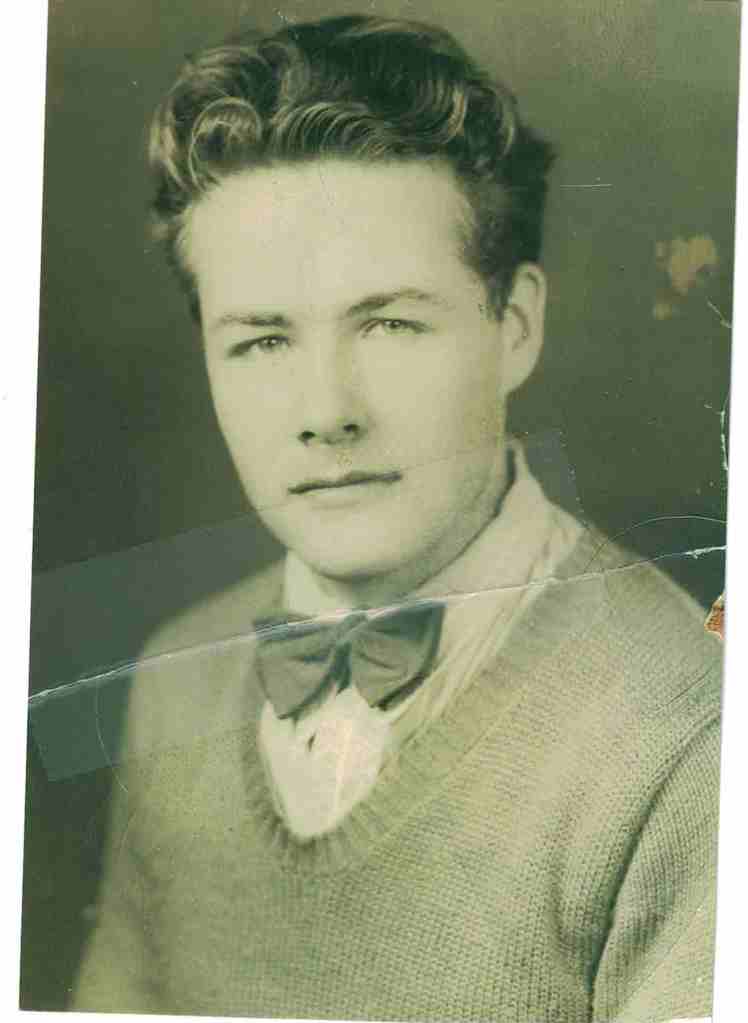
Thomas Munro jr (1915-2003) in 1937 upon graduation from Brooklyn College
I have studied Booker T. Washington and Dubois. Both had a case but it all depends on where you are in your life and who you are. I think Dubois is a rather tragic figure. Let us not forget he left the USA to live in Africa and became a Communist by the end of life. By many measures, Booker T. Washington was a happier and more successul figure in America as an American. Washington adapted to the world in which he lived; I think he accepted the fact that progress in racial relations would take generations. But in the mean time, Washington thought, African Americans have to take personal responsiblity for their education and training and their habits and be economically stable and successful. With economic success other opportunties would come.
Thomas Munro, Jr. as a 1st Lt in Manila during WW2 while serving with the US Army (the Transportation Corps)
My father worked in a slaughter house at night when he was in high school. To do so he had to sacrifice any social life or any sports (even though he had been a soccer star in his native land). This experience had a strong influence on his entire life. He learned to be almost completely self-sufficient and I would say socially isolated.
For example, he chose to have no friendships or social relationships with the workers at the slaughter house with the exception of some older workers who befriended him and looked after him while he slept returning home on the Manhattan to Brooklyn subway at 3AM. He was lucky in that his mother and sister fed him, shopped for any sundries he needed and washed and ironed his clothes. My father turned over HIS ENTIRE paycheck to his mother. She would give him $1.50 so he could see movies and have a small snack.
My father’s chief relaxations were reading, Saturday movies and Sunday baseball games with his father. He usually went alone to the movies. I don’t remember him ever saying he went to baseball games with his friends or alone. He had a few American acquaintences but really he had no intimate friends. This was big change from his early life when he was a popular athlete and had many many close friends. Sadly, he was separated by emigration from most of his close friends and many were killed in WW2. My father’s early life from age 12 was focused almost completely on working to support his family as his father had lost his job in 1932 and did not go back to work until 1937. My father continued his industriousness after high school and studied at Brooklyn College where he graduated in 1937. Soon the war came and but my father continued in his pattern of perseverence. He began miltary service as a E-1 private and worked his way up to corporal and finally an NCO in the MPs. From there he went to OCS and became a 2nd Lt. He went overseas in 1943-46 and rose in rank to 1st Lt. After the war he went to NYU on the GI bill and had a career in business in which he was reasonably successful in achievement a stable career. I think he could have advanced economically much more if he had sacrificed his family life and intellectual life. But he chose to focus on his private family life and his private intellectual life. Others would bar hop or play golf on business trips. My father would read Homer in the original Greek in his hotel rooms in Atlanta. His chief hobbies were opera (listening and collected historial recordings), literature, languages, classic movies, plays and baseball. I think my father was somewhat lonely except for the close friendship with my mother and her friends. In someways he lived the solitary isolated life of a prisoner but he was never bored and I think he was happiest when he escaped into his music and books. We are shaped by our environment and its challenges but we also are shaped by individual choices in how we respond to those challenges. I never once saw my father inebriated. He drank beer and wine but not spirits. He believed in moderation. He smoked cigarettes for about 25 years but quit in his 40s and smoked only cigars. He loved smoking cigars. But on the advice of his doctor he quit cigars also in his 50s. He lived a reasonably long life and a very healthy one until he was 87 when he fell and broke his hip. Thereafter he declined physically but remained mentally sharp until the very end. His very last words were “I think this is the best breakfast I have ever had.” He suffered a stroke and lingered a few days in the hospital. He was listening to Wotan’s farewell (Lieb wohl) in the hospital. I was not present but my sister said he reacted and there were tears falling from his eyes. My father’s last lesson to me is that there is such a thing a a Good Death. If one can say goodbye to one’s loved ones and die without pain and suffering in bed surrounded by loved ones and beautiful music then one can say one has experieced a Good Death.
“Perhaps Washington and DuBois were both right — whether someone chooses education or commerce, the important thing is that there is opportunity in both for anyone willing to put in the hard work to find it.” It all depends on the situation one finds oneself in. As a man who was in his youth a soldier and construction worker paid by the piece and later as a teacher. I found necessity meant I had to get a reasonably paying job immediately. So there are times you have to cast the bucket down where you are. Once I had some savings and had established my credit and had a free and clear car I felt the confidence to make gradual career changes. I took a pay cut to work at a bank. I remember I earned only $7.23 an hour! But the bank meant REGULAR HOURS and FLEX TIME and was across the street from a university. I then spent five years at the bank and had as a goal going back to school for an advanced degree. At first I thought I would get an MBA but then I realized I would prefer something where I could use my love of languages, literature and history. So I got a 5th Year Certification as a k-12 teacher. I was certified in English, Spanish and Social Studies. I thought my multiple certificaiton would make my job transition easier but in fact I had almost no job offers. So I considered job offers ANYWHERE -Alaska, Texas, California and even Australia. And by being open to emigration to a new location I was able to get a steady job. It is all about CHALLENGES and RESPONSE. I could not have made the change WITHOUT having sacrificed and made an investment in my PAPER CREDENTIALS. Of course I could have expanded my paper credentials even more but I had to consider the economic return on investment.
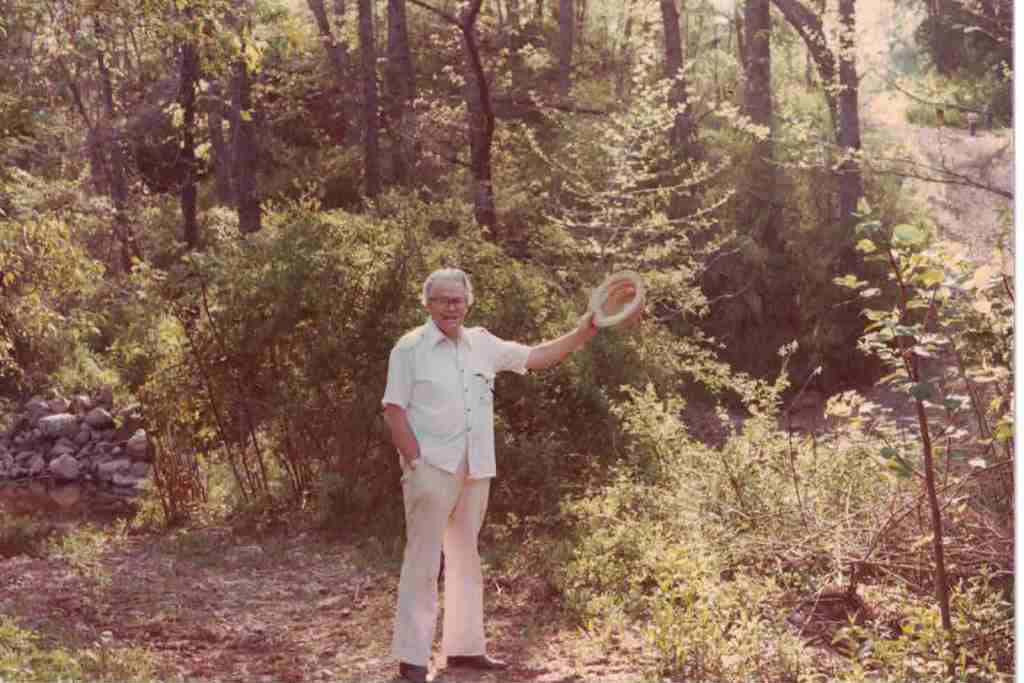
Thomas Munro in retirement later in life circa 1978 aged 63


 Spirit of Cecilia
You must be logged in to post a comment.