Grateful for my beloved wife, son, daughter-in-law, grandchildren and siblings. Also a lover of theology, music, history, philosophy, classic novels, science fiction, fantasy and Looney Tunes.
The O Antiphon for the Magnificat at Vespers on December 19:
O Root of Jesse, standing as an ensign before the peoples, before whom all kings are mute, to whom the nations will do homage: come quickly to deliver us.
Healey Willan (1880-1968), professor at the Royal Conservatory of Music in Toronto and organist at St. Mary Magdalene Church in the same city, composed a setting of The Great O Antiphons of Advent for the Lutheran Church-Missouri Synod’s Concordia Publishing House in 1957. Here’s Willan’s setting of “O Root of Jesse,” as sung by the choir of Christ Church Cathedral in Vancouver, British Columbia:
O come, Thou Branch of Jesse’s tree, Free them from Satan’s tyranny That trust Thy mighty pow’r to save, And give them vict’ry o’er the grave.
Rejoice! Rejoice! Emmanuel Shall come to thee, O Israel!
The O Antiphon for the Magnificat at Vespers on December 18:
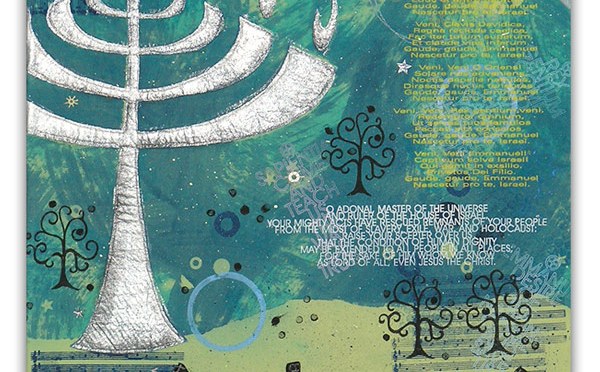
O Adonai and ruler of the house of Israel, who appeared to Moses in the burning bush and gave him the Law on Sinai: come with an outstretched arm and redeem us.
Healey Willan (1880-1968), professor at the Royal Conservatory of Music in Toronto and organist at St. Mary Magdalene Church in the same city, composed a setting of The Great O Antiphons of Advent for the Lutheran Church-Missouri Synod’s Concordia Publishing House in 1957. Here’s Willan’s setting of “O Adonai,” as sung by the choir of Christ Church Cathedral in Vancouver, British Columbia:
O come, O come, Thou Lord of might, Who to Thy tribes on Sinai’s height In ancient times didst give the Law In cloud and majesty and awe.
Rejoice! Rejoice! Emmanuel Shall come to thee, O Israel!
An antiphon is a term we see in worship regularly. An antiphon is a refrain that is sung before (and sometimes after and during) a Psalm or other song, and it’s typically is a Bible verse or a historic liturgical text.
The origin of the O Antiphons is around the eighth century. In larger cities and monasteries, it was customary to have services daily (or several times a day), and in the seven days before Christmas Eve, it became a regular practice to sing the assigned O Antiphon before and after the Magnificat ( “My soul magnifies the Lord.”) at the evening Vespers service.
In the twelfth or thirteenth century, these antiphons were paraphrased into metrical, poetic verses which became the hymn, “O Come, O Come, Emmanuel.”
The initial O Antiphon, for Vespers on December 17:
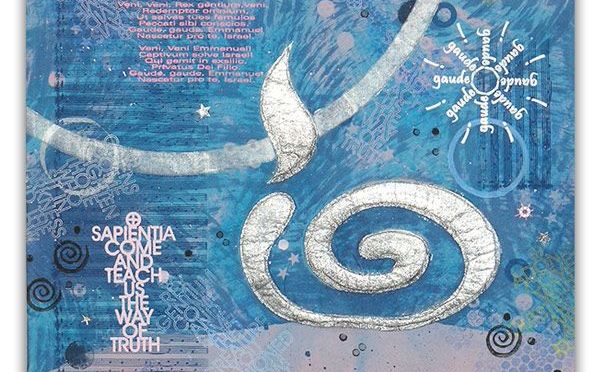
O Wisdom, proceeding from the mouth of the Most High, pervading and permeating all creation, mightily ordering all things: come and teach us the way of prudence.
For their 2016 debut recording Drop Down, Ye Heavens, the London-based student-formed choir Siglo de Oro commissioned a new set of O Antiphons from various British composers, sung in English and set for choir and saxophone. Here is Will Todd’s thrilling setting of “O Wisdom”:
O come, Thou Wisdom from on high, Who ord’rest all things mightily; To us the path of knowledge show, And teach us in her ways to go.
Rejoice! Rejoice! Emmanuel Shall come to thee, O Israel!
Born in Trier in A.D. 340, Ambrose was one of the four great Latin Doctors of the Church (with Augustine, Jerome, and Gregory the Great). He was a prolific author of hymns, the most common of which is Veni, Redemptor gentium (“Savior of the Nations, Come”). His name is also associated with Ambrosian Chant, the style of chanting the ancient liturgy that took hold in the province of Milan. While serving as a civil governor, Ambrose sought to bring peace among Christians in Milan who were divided into quarreling factions. When a new bishop was to be elected in 374, Ambrose addressed the crowd, and someone cried out, “Ambrose, bishop!” The entire gathering gave their support. This acclaim of Ambrose, a 34-year-old catechumen, led to his baptism on December 7, after which he was consecrated bishop of Milan. A strong defender of the faith, Ambrose convinced the Roman emperor Gratian in 379 to forbid the Arian heresy in the West. At Ambrose’s urging, Gratian’s successor, Theodosius, also publicly opposed Arianism. Ambrose died on Good Friday, April 4, 397. As a courageous doctor and musician he upheld the truth of God’s Word.
The Collect of the Day:
O God, You gave Your servant Ambrose grace to proclaim the Gospel with eloquence and power. As bishop of the great congregation of Milan, he fearlessly bore reproach for the honor of Your name. Mercifully grant to all bishops and pastors such excellence in preaching and fidelity in ministering Your Word that Your people shall be partakers of the divine nature; through Jesus Christ, Your Son, our Lord, who lives and reigns with You and the Holy Spirit, one God, now and forever. Amen.
And for an evening meditation to cap this very musical week of commemorations, St. Ambrose’s hymn O lux beata Trinitas (“O Trinity, Most Blessed Light,”) as set to the 16th-century German tune “O heilige Dreifaltigkeit” and translated into English by John Mason Neale:
From the Lutheran Church-Missouri Synod’s calendar of commemorations for December 6:
Of the many saints commemorated by the Christian Church, Nicholas (d. A.D. 342) is one of the best known. Very little is known historically of him, although there was a church of Saint Nicholas in Constantinople as early as the sixth century. Research has affirmed that there was a bishop by the name of Nicholas in the city of Myra in Lycia (part of Turkey today) in the fourth century. From that coastal location, legends about Nicholas have traveled throughout time and space. He is associated with charitable giving in many countries around the world and is portrayed as the rescuer of sailors, the protector of children, and the friend of people in distress or need. In commemoration of “Sinte Klaas” (Dutch for Saint Nicholas, in English “Santa Claus”), December 6 is a day for giving and receiving gifts in many parts of Europe.
Benjamin Britten’s cantata Saint Nicolas was written for the 1948 centenary of Lancing College in Sussex (an independent secondary boarding school on the south coast of England). As Paul Spicer writes,
The cantata portrays the life of the fourth-century Bishop of Myra in a work of great poetry and sensitivity. It was conceived and composed with semi-amateur performance in mind and the technical demands of the choral and orchestral writing are appropriately straightforward. The audience also gets to join in two well-known hymns, “All people that on earth do dwell” and “God moves in a mysterious way.”
For Saint Nicholas’ day, enjoy this performance of the cantata by tenor Robert Tear, the Choir of Kings’ College Cambridge and the Academy of St. Martin in the Fields, all conducted by Sir David Willcocks:
O man! The world is set for you as for a king!
Paradise is yours in loveliness.
The stars shine down for you, for you the angels sing,
Yet you prefer your wilderness.
You hug the rack of self,
Embrace the lash of sin,
Pour your treasures out to bribe distress.
You build your temples fair without and foul within:
You cultivate your wilderness.
Yet Christ is yours. Yours!
For you He lived and died.
God in mercy gave His son to bless you all,
To bring you life,
And Him you crucified
To desecrate your wilderness.
Turn away from sin! Ah!
Bow down your hard and stubborn hearts!
Confess, yourselves to Him in penitence
And humbly vow your lives to Him, to holiness.
John (ca. 675-749) is known as the great compiler and summarizer of the orthodox faith and the last great Greek theologian. Born in Damascus, John gave up an influential position in the Islamic court to devote himself to the Christian faith. Around 716 he entered a monastery outside of Jerusalem and was ordained a priest. When the Byzantine emperor Leo the Isaurian in 726 issued a decree forbidding images (icons), John forcefully resisted. In his Apostolic Discourses he argued for the legitimacy of the veneration of images, which earned him the condemnation of the Iconoclast Council in 754. John also wrote defenses of the orthodox faith against contemporary heresies. In addition, he was a gifted hymnwriter (“Come, You Faithful, Raise the Strain”) and contributed to the liturgy of the Byzantine churches. His greatest work was the Fount of Wisdom which was a massive compendium of truth from previous Christian theologians, covering practically every conceivable doctrinal topic. John’s summary of the orthodox faith left a lasting stamp on both the Eastern and Western churches.
John’s two most famous hymns (both translated into English by his Victorian counterpart, priest & hymnographer John Mason Neale) are: “Come Ye Faithful, Raise the Strain”, usually sung to the tune Gaudeamus Pariter by 16th-century Bohemian musician Johann Horn:
and “The Day of Resurrection”, set here to the tune Lancashire by Neale’s British contemporary, organist Henry Smart:
This week, as I’ve done every year since 1990 (with one notable exception*), I’ll have my head, voice and heart immersed in the Grand Rapids Symphony’s annual Holiday Pops concerts, as part of the GR Symphony Chorus. The Symphony, Chorus, Youth Chorus, Embellish Handbell Ensemble, baritone Justin Hopkins and conductor Bob Bernhardt come together for five shows (Thursday, & Friday nights, two shows on Saturday, a Sunday matinee) in DeVos Performance Hall.
This is always an enjoyable week for me — there’s nothing quite like knowing that the audience is already on your side! Whether they’ve attended before or not, they’re looking forward to the familiar set pieces — a carol or two by British composer John Rutter, soundtrack excerpts from John Williams’ Home Alone, Santa coming onstage for some jokey byplay, Leroy Anderson’s swinging “Sleigh Ride”, and a big singalong. It’s a time when our Chorus director, Dr. Pearl Shangkuan, reminds us that this is many folks’ only Symphony concert of the entire year — and our job is to blow them away, with the same precision and intensity we bring to Mozart, Bach or Mahler!
This isn’t to say the audience is only after a good time, with just the secular, sentimental side of the holidays. Sacred carols are a major part of the mix every year (including the singalong), in solid arrangements by choral stars like Mack Wilberg, director of the Mormon Tabernacle Choir. And a few years back, the conductor decided to switch out Handel’s “Hallelujah Chorus” from the program’s closing spot (where it had been since at least 2003) in favor of “White Christmas.” This well-intentioned change lasted one show; instant feedback from that Thursday’s opening night crowd brought Handel back to the finale slot, where he’s remained ever since.
And Holiday Pops in Grand Rapids consistently means more than favorites and fluff; for example, this year the GR Symphony’s Youth Chorus premieres two new pieces by their accompanist and director. Leah Ivory’s The Star brings tantalizing West African vocal and percussive traditions to the West Michigan concert stage; and Sean Ivory’s setting of a liturgical poem for Hanukkah, Ma’oz tsur, is dedicated to the Tree of Life Synagogue shooting victims, inspired further by the words of the nurse who treated the shooter:
I wanted him to feel compassion. I chose to show him empathy. I felt that the best way to honor his victims was for a Jew to prove him wrong. Besides, if he finds out I’m Jewish, does it really matter? The better question is, what does it mean to you?
Love. That’s why I did it. Love as an action is more powerful than words, and love in the face of evil gives others hope. It demonstrates humanity. It reaffirms why we’re all here. The meaning of life is to give meaning to life, and love is the ultimate force that connects all living beings. I could care less what [the shooter] thinks, but you, the person reading this, love is the only message I wish instill in you. If my actions mean anything, love means everything.
Love deeply. Love blindly. Love faithfully. Love selflessly. Love unexpectedly. Love without question. Love with every breath. Love so that even when the world seems as dark as it did in Pittsburgh, love casts light.
And Symphony Chorus gets in on the serious fun as well, performing the thrilling, highly syncopated setting of Gloria in Excelsis from Dan Forrest’s new multi-movement choral suite Lux – The Dawn from On High:
So, all in all, I’m thinking this should be another week to remember! If you’re anywhere near Grand Rapids, Michigan, come on down to DeVos Performance Hall for a beautiful concert of holiday music that will furnish both high spirits and rich nourishment for your soul! Details and tickets here.
— Rick Krueger
* I took a sabbatical from Symphony Chorus the year I got married. My wife approved — but she also let me go back the next year!
Among his numerous contributions to the Christian church, the hymns of St. Ambrose, bishop of Milan (340-397) have pride of place. Veni redemptor gentium (Come, Redeemer of the Gentiles), indirectly attributed to Ambrose by St. Augustine, remains in the Roman Liturgy of the Hours to this day, as the hymn for the Octave before Christmas.
O come, Redeemer of the earth,
and manifest thy virgin-birth.
Let every age in wonder fall:
such birth befits the God of all.
Particularly popular in medieval Germany, Veni redemptor gentium was one of the initial hymns Martin Luther (1483-1546) adapted for congregational use in the wake of the Reformation. Translated into German as Nun komm, der Heiden Heiland with a metricized melody, it first appeared in the Erfurt Enchiridion of 1524. Swiftly, it became the Hymn of the Day for the First Sunday in Advent in Lutheran churches; over the centuries, it’s been set for organ and/or choir by numerous composers. Of course, the cantata and chorale prelude settings by Johann Sebastian Bach (1685-1750) stand out:
But the legacy of this ancient hymn continues into the modern day, with organ settings by modern composers such as Paul Manz (1919-2009) …
… and its numerous English translations, including the composite version found in 2006’s Lutheran Service Book. In the video below, the hymn begins at 1:57, following a Luther quote spoken over a chorale prelude by Dietrich Buxtehude (1637-1707).
Savior of the nations, come, Virgin’s Son, make here Your home!
Marvel now, O heav’n and earth, That the Lord chose such a birth.
Not by human flesh and blood, By the Spirit of our God,
Was the Word of God made flesh—Woman’s offspring, pure and fresh.
Here a maid was found with child, Yet remained a virgin mild.
In her womb this truth was shown: God was there upon His throne.
Then stepped forth the Lord of all / From His pure and kingly hall;
God of God, yet fully man, His heroic course began.
God the Father was His source, Back to God He ran His course.
Into hell His road went down, Back then to His throne and crown.
For You are the Father’s Son / Who in flesh the vict’ry won.
By Your mighty pow’r make whole / All our ills of flesh and soul.
From the manger newborn light / Shines in glory through the night.
Darkness there no more resides; In this light faith now abides.
Glory to the Father sing, Glory to the Son, our king,
Glory to the Spirit be / Now and through eternity.
From Lutheran Service Book’s Daily Lectionary for November 30:
‘In the year that King Uzziah died I saw the Lord sitting upon a throne, high and lifted up; and the train of his robe filled the temple. Above him stood the seraphim. Each had six wings: with two he covered his face, and with two he covered his feet, and with two he flew. And one called to another and said:
“Holy, holy, holy is the LORD of hosts; the whole earth is full of his glory!”
And the foundations of the thresholds shook at the voice of him who called, and the house was filled with smoke.’ (Isaiah 6:1-4)
Or, to put it another way (especially if you’re Martin Luther assembling his Deutsche Messe in the 1520s):
Isaiah, mighty seer, in days of old
The Lord of all in Spirit did behold
High on a lofty throne, in splendor bright,
With robes that filled the temple courts with light.
Above the throne were flaming seraphim,
Six wings had they, these messengers of Him.
With two they veiled their faces, as was right,
With two they humbly hid their feet from sight,
And with the other two aloft they soared,
One to the other called and praised the Lord:
“Holy is God, the Lord of Sabaoth!
Holy is God, the Lord of Sabaoth!
Holy is God, the Lord of Sabaoth!
His glory fills the heavens and the earth!”
The beams and lintels trembled at the cry,
And clouds of smoke enwrapped the throne on high.
(English translation from The Lutheran Hymnal, 1941, alt.)




 Spirit of Cecilia
You must be logged in to post a comment.