
“So to make a complicated matter as simple as possible, an anarchist is somebody who regards the existing, post-Westphalian form of the state as illegitimate. This does not commit the anarchist to any particular course of political action. An anarchist need not be a revolutionary, for example. Nor does it mean the anarchist is opposed to all forms of rules and hierarchies. Anarchists frequently make a distinction between government and governance. All human societies need the latter, both as a means of checking the passions and inculcating virtuous habits. But the former is simply one way of achieving the latter, and historically considered, a relatively young and untested one at that.”
Category Archives: Republic of Letters
Steve Hogarth Marillion eonmusic Interview September 2019
For an album that was rushed, there’s so much depth on it, not least with ‘Out of This World’, which was about Donald Campbell and the Bluebird tragedy.
I wrote those words many, many years ago even before I met or joined Marillion. I just had a handful of words about the Bluebird, and they were just my recollections of my mother crying when she saw it on the news, and I was sitting there wondering what she was crying about. She explained to me what was going on, and that strange lobster-shaped craft doing a back-flip in the water and a man losing his live, and it never really left me.It’s a very haunting song.
Dave Meegan, our produce always maintained that song was haunted. Strange things happened in the studio, and it was beset with technical difficulties at every stage. Overdubs kept going missing off the tapes, and even when he came to mix it, things had gone missing. But we had to keep going trying to find them, and it was all full of clicks, and it would drive him up the pole! It was dragged kicking and screaming into the world against its’ own will. It was a strange, strange track.
— Read on www.eonmusic.co.uk/steve-hogarth-marillion-eonmusic-interview-september-2019.html
j. michael straczynski’s works
JMSNews had added a really nice overview of J. Michael Straczynski’s works. JMS is one of my favorite writers, and nothing he writes is unimportant.
http://jmsnews.com/home/works?fbclid=IwAR0wMT5zQduAthAcZIha3_lDp2oVaG9JxkRb4zyWVygohYBdRT8SvAwD_No
Flower Kings, Republicans, and Oranges
So, I will freely admit, I love The Flower Kings. But, the band isn’t exactly subtle. An elephant atop a house of cards ready to squish the oranges!?!? Come on, Swedish friends. You can be much more creative than this. Yes, Trump is the Orange Man; yes, the Republicans are placing their hopes on a house of cards. . . . We get it.

“Secrets of Blackmoor: The True History of Dungeons & Dragons” ~ The Imaginative Conservative
The films tells the story of Arneson in the 1960s and the 1970s, following his war gaming club centered in the Twin Cities and out of the many colleges of the area, but especially the University of Minnesota. Convincingly, the film explains that what would be Dungeons & Dragons—coming to game stores in 1974–actually originated in Arneson’s basement between, roughly, 1969 and 1971. The war gamers, all avid and intelligent, began to experiment with actual individual personality in games. Rather than simply moving troops around a map, why not send in a spy or an assassin?
— Read on theimaginativeconservative.org/2019/09/secrets-of-blackmoor-true-history-dungeons-and-dragons-bradley-birzer.html
Tool de Force: Tool’s New ‘Fear Inoculum’ Was Worth the Wait
We’ve been waiting. Oh man, have we been waiting – over thirteen years, to be exact. I 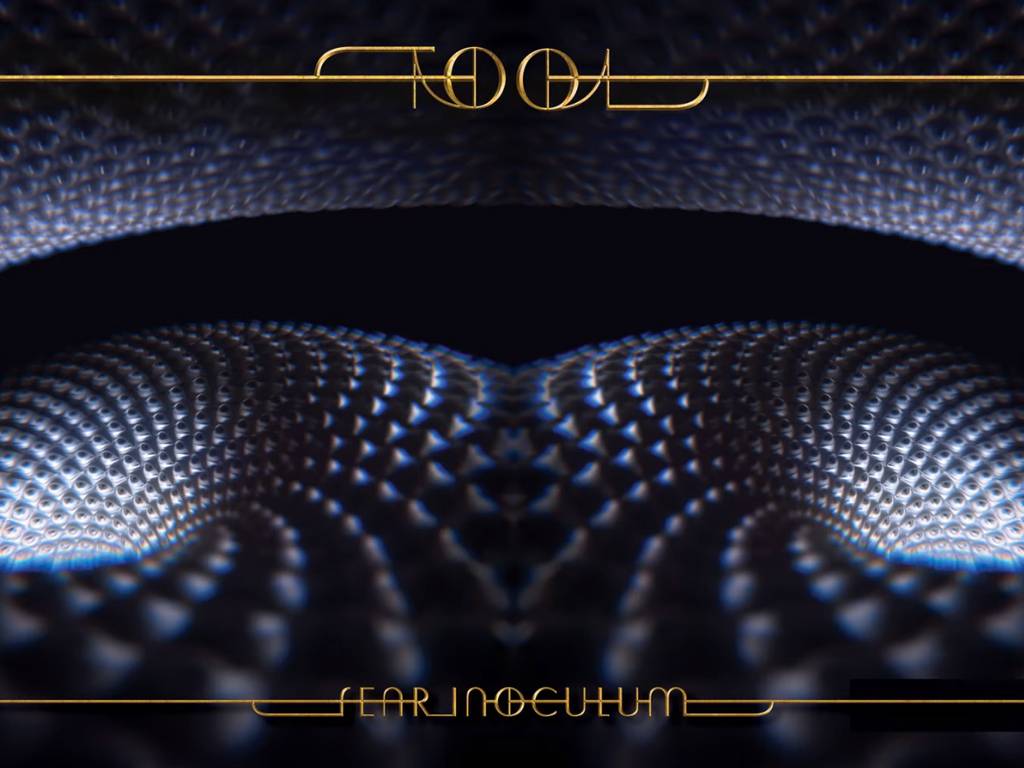 had begun to believe that the title of the their last album – 10,000 Days – was Tool telegraphing us the time it would take to see the next one. Thankfully, they beat that by a good fourteen years. Better yet, what they have finally delivered has made the wait all the more worth it.
Fear Inoculum – the digital version, anyway – clocks in at a hefty one hour and twenty-seven minutes. Not only is the album itself long, but six of the album’s ten tracks eclipse the 10-minute mark, with the longest clocking in at over fifteen. But it’s not merely the duration of the album or that of the individual tracks that is significant here. Every second counts on Fear Inoculum, which is more consistent in its excellence from start to finish than any of their previous releases.
Lyrically, the album continues the trend of introspection and contemplation started on 2001’s Lateralus, while dispensing with the rage-fueled catharsis of previous works dealing with institutional decay (Intolerance), the decadence of Los Angeles (Aeneima), or humanity’s lamentable will to fight each other over any and everything (Right in Two). On Fear Inoculum, Tool focuses in on the inner struggle of facing one’s fears (the title track, 7empest) and dealing with one’s aging and mortality (Invincible, Descending).
From a musical perspective, Fear Inoculum is stunning in its quality. The soloing in Adam Jones guitar work is as dynamic as its every been, while in plenty of other places he dishes out scores of power chords as meaty as a thick, sizzling ribeye. Danny Carey’s drumming exceeds even his own typical excellence, combining the rhythmic intricacy of Bill Bruford at his best while also employing plenty of Bonham-esque heavy thuds right when appropriate. Justin Chancellor’s bass work provides a nice, thick bottom to the music, wrapping perfectly around Carey’s drumming while keeping the listener engaged in guessing where the next beat will fall.
Although the album is stacked with good tracks, there are two in particular that stand out for me. Invincible is the first of these tracks. This one is positively infectious; it just gets into your bloodstream. The first seven minutes are a textbook example of slowly building tension. After the explosion, the song slows down, although Carery’s heavy drumming is active underneath, before the band makes one final, mad dash to the finish line. Throughout, the aging warrior tries to hang on to what was as Father Time strips it away.
Tears in my eyes chasing Ponce de Leon’s phantoms.
So filled with hope I can taste mythical fountains.
False hope, perhaps,
But the truth never got in my way before now.
Feel the sting. Feeling time bearing down.
7empest is the penultimate track on the album and possibly the ultimate track in Tool’s catalog. In its fifteen-plus minutes of running time, it encapsulates virtually everything that makes Tool great. After a delicate intro of about a minute and a half, Jones guitar snarls and lets the listener know that go time is rapidly approaching. Carey’s drums join in, and soon enough, the band punches it, the g-forces pushing the listener back into their seat from the sudden acceleration. The music builds to a first climax, before transitioning into a middle phase notable for Jones’ hypnotic, exotic soloing. Meanwhile, Carey’s drumming and Chancellor’s bass work provide a solid underpinning. A brief, (relatively) mellow interlude follows before the song picks up the pace and the band brings it to a close. It’s a very satisfying listen.
In fact, the whole album is a very satisfying listen. Fear Inoculum is an album that breaks enough new ground to sound fresh while still having the recognizable Tool 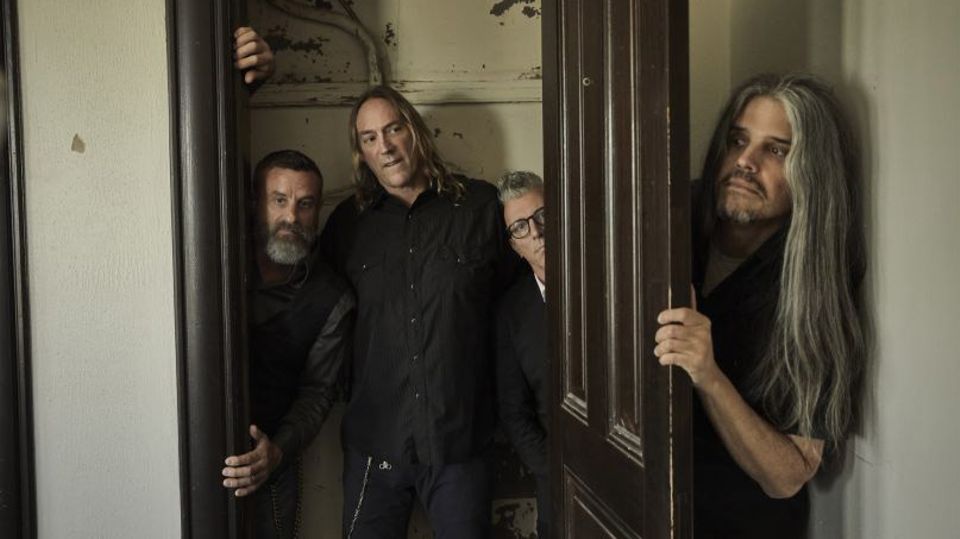 sound. Lyrically, it is by far the most mature album they have made, perhaps owing to the wisdom accumulated over the years (most definitely including those from the last album to this one). After such a long delay, it’s fair to wonder when we will see the next Tool album, much less if we’ll see another Tool album. Should this turn out to be Tool’s swan song, they will have gone out on the highest of high notes. You can’t ask for much more than that.
Rush: ‘A Farewell to Kings’ Graphic Novel Tells Story of 1997 Classic – Rolling Stone
Fantoons, an L.A. studio known for creating rock-themed animation, has released a new full-length graphic novel that chronicles the making of Rush’s 1977 prog-rock classic, A Farewell to Kings. Spanning 144 pages, fully authorized by the band, and based on interviews with Rush guitarist Alex Lifeson and Kings producer Terry Brown, the richly illustrated comic offers a detailed account of the writing and recording of the LP that contained future Rush classics like “Closer to the Heart” and “Xanadu.”
— Read on www.rollingstone.com/music/music-news/rush-farewell-to-kings-graphic-novel-882168/
1619, Slavery, the Founding, and All That ~ The Imaginative Conservative
For nearly fifty years, we have taught American children that the three greatest determinants in history are race, class, and gender. Virtue is scoffed at; “Great Men” are mocked; and free will is ignored. Should we be shocked—do we even have the right to be shocked—that our press, our culture, and our educators are obsessed with race? In every way, we are a far more racist society than we were in, say, 1989. Everything evil we now call “racist,” whether the thing is actually racist or not. Racist has come to be synonymous with evil and wrongdoing. Aside from the fact that this severely diminishes and attenuates the true challenges to true racism, it is also demonstrably false, especially in regard to our history as an American people.
— Read on theimaginativeconservative.org/2019/09/1619-project-slavery-founding-bradley-birzer.html
REVIEW: SAND and STEEL a new d-day history by Peter Caddick-Adams
I am finishing the second of PETER CADDICK-ADAMS STEEL books (AND and STEEL). I have read hundreds of WWII books and have enjoyed these immensely. I have learned a lot that I did not know (African-American experience in England pre D-Day for example). not to mention interviews I had never read before. I think this book, so well written, will be a cornerstone of D-Day literature.Congratulations. A great companion to all the fine D-Day books I have read from THE LONGEST DAY to Six Armies in Normandy etc.
I know good history having read almost all of David Howarth, Alan Moorehead, Cornelius Ryan, John Keegan, Andrew Roberts, Alex Kershaw,, Stephen Ambrose, Michael Grant plus of course the classic historians including Churchill I am impressed by a work that 1) is compelling and well-written 2) fair to all sides 3) accurate ( I haven’t found one typo or historical error 4) full of new information and new insights. If anyone would ask me why read STEEL and SAND and I would say it is like reading a whole new book about D-Day, ITS ORIGINS, and its aftermath. Of course, I recognize some of the same source material in other books but PETER CADDICK-ADAMS always bring a fresh approach. This book is highly recommended. Now I want to read all of his WWII books!
Headlong Into Darkness: Social Media as Plato’s Cave ~ The Imaginative Conservative
And, yet, why not the opposite? Why can’t social media be about spreading the Gospel, 280 characters at a time; or about the release of information on how to adopt children from war-torn countries; or why not a Platonic dialogue; or how to get the local homeless person much needed food and shelter; or how to plant better tomatoes, or… Like almost everything technological, social media can be good or bad. Sadly, it seems to have gone the wrong direction in recent years. Much of what has happened with social media reminds me of promises made in the 1950s that television would revolutionize the teaching of children. It did, but not in the ways promised.
— Read on theimaginativeconservative.org/2019/09/social-media-plato-cave-bradley-birzer.html


You must be logged in to post a comment.