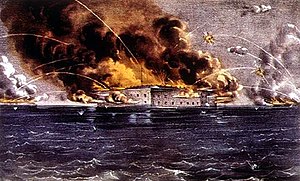
A detailed account of Robert Anderson’s choices in Charleston, late 1860 to April 13, 1861.

A detailed account of Robert Anderson’s choices in Charleston, late 1860 to April 13, 1861.
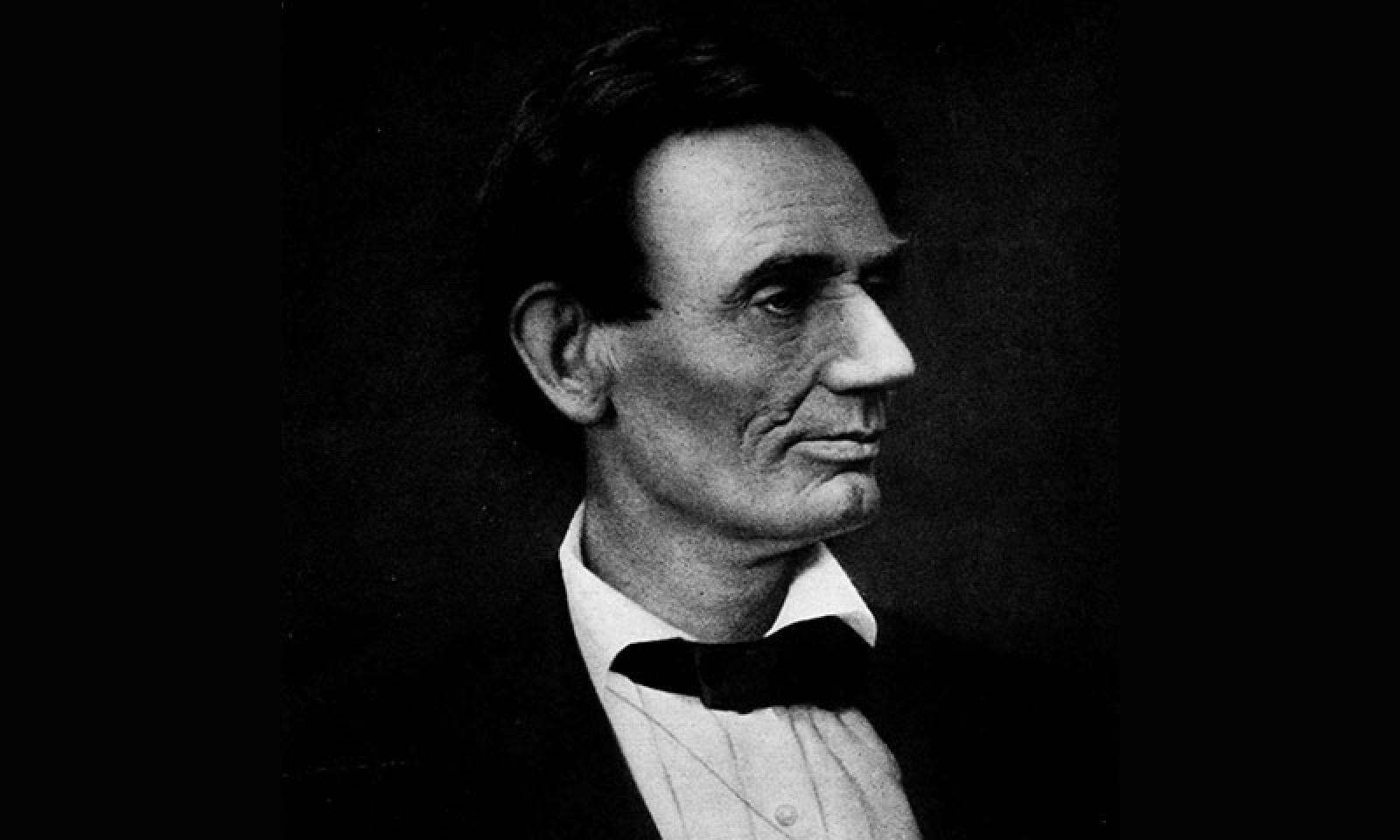
A lecture examining the conflicting ideas of the Free Soiler (North) and the Socialist (South).
The best book writing software can be tricky to find. Writing tools are not all created equal but we’ve discovered the most valuable writing software.
— Read on self-publishingschool.com/book-writing-software-best/
Throughout history, of course, tyrants and demagogues have always manipulated language for their own self-interest and political advantage. Perhaps no tyrants in history did this with more skill than did the caesars in maintaining the language, institutions, and symbols of the Roman Republic while establishing the iron-fisted rule of the executive. To be sure, others have done the same. The grand sociologist Robert Nisbet went so far as to describe the entire history of the political state as the history of euphemism. What is surprising in 2019, then, is not that politicians and bureaucrats manipulate language, but rather that American and western societies as a whole have fallen for the propaganda so easily and readily. Even with blatant warnings from Ray Bradbury and George Orwell, we have still fallen hard. Critical words—such love, myth, and imagination—have become things they were never meant to become, inverted, converted, and ripped apart until almost unrecognizable from their original meanings. Lesser words—such have gay, faggot, and dogma—have taken on entirely new meanings as well.
— Read on theimaginativeconservative.org/2019/02/on-loving-definitions-bradley-birzer.html
By almost any objective standard, the institution of the U.S. Presidency is a failure. Certainly at a moral level as well as by the intent of the founding fathers, who worried collectively about creativity a “foetus of monarchy,” no right-minded person could defend the institution. Generally, it has been led by incompetents, many of them immoral or incapable of moral agency toward the good.
Even a cursory glance at Article II of the U.S. Constitution reveals that the framers worried most about a presidency getting out of hand. Hence, the office originally had next to no power, with restrictions on almost everything. Yet, today, the office possesses the greatest amount of power ever entrusted to a single person. At the tips of the president’s fingers reside not only the largest and most lethal military arsenal ever assembled by humanity, but also access to the most intimate information about every single American citizen.
There is nothing in the 1787 Constitution that allows for a “national emergency” to be declared by the president, nor does it allow for “executive orders.”
Yet, we take each of these things as a matter of course.
To my mind, only five to seven men have been worthy of the office–and I speak here from a constitutional standpoint, not a policy one–Washington, Jackson, Lincoln, Cleveland, Coolidge, Eisenhower, and Reagan.
And, yet, we have a federal holiday dedicated to the failure and horror of the whole thing. Sickening.
In a move that garnered significant media attention, the Association for Library Service to Children, a division of the American Library Association, voted at the ALA Annual Conference in New Orleans to remove the name of children’s book author Laura Ingalls Wilder from a popular award. The decision came months after a task force set out to consider the long-running scholarly discussion around “anti-Native and anti-black sentiments” in Wilder’s work. And predictably, the change touched off a chorus of critics who portrayed the move as political correctness run amok.
“Stripping Wilder’s name from this award,” Dedra McDonald Birzer wrote in the National Review, “creates a slippery slope for excising all literature that doesn’t adhere to a strict definition of ‘inclusivity,’ whether or not that inclusivity accurately reflects American history.”
Even William Shatner weighed in, getting into a Twitter beef with librarians over the change. Yes, Captain Kirk himself.
— Read on www.publishersweekly.com/pw/by-topic/industry-news/libraries/article/78830-the-top-10-library-stories-of-2018.html
My beautiful wife, Dedra, quoted in Publisher’s Weekly!
My recent essay for The Imaginative Conservative, titled “Suicide and Secularism on a Wednesday Afternoon”, was posted, fittingly, this past Wednesday. It reflects on the tragic story of “the tragic suicide of Tara Condell, a twenty-seven-year-old Manhattan dietitian who hanged herself in her apartment after posting a note online that is, in so many ways, a damning indictment of the widespread lie that health, a good job, a comfortable life, and an eclectic range of interests and pursuits are sufficient to provide meaning and purpose in this life.”
I write:
In Percy’s first novel, The Moviegoer (which won the National Book Award in 1962), the young movie-going Binx Bolling states that “the malaise is the pain of loss. The world is lost to you, the world and the people in it, and there remains only you and the world and you no more able to be in the world than Banquo’s ghost.” Ms. Condell, for her part, readily admits having “a great life on paper,” filled with good meals and wide travel, but confesses: “However, all these facets seem trivial to me. It’s the ultimate first world problem, I get it. I often felt detached while in a room full of my favorite people; I also felt absolutely nothing during what should have been the happiest and darkest times in my life.”
Percy, like Eliot, recognized that the core problem is not one of mere morality—even though the jettisoning of basic Judeo-Christian morality is a key symptom and “an ontological impoverishment”—but a failure to really know what it means to be human. Secularism assumes that comfort is a necessity, but the Judeo-Christian tradition warns that comfort and the belief that one has “arrived” are often just strains of an undetected poison. The average person, wrote Percy in the essay “Diagnosing The Modern Malaise,” “has settled everything except what it is to live as an individual. He still has to get through an ordinary Wednesday afternoon… What does this man do with the rest of the day? the rest of his life?”
At 3Arena, the music of Roland Orzabal and Curt Smith sounds as pristine as ever
— Read on www.irishtimes.com/culture/music/tears-for-fears-review-sad-bangers-from-a-brilliantly-gloomy-band-1.3778833
Only better with age!
Is Your Heart Full of Joy?
— Read on www.ncregister.com/blog/elliott/is-your-heart-full-of-joy
Winston Elliott continues his brilliant streak of writing. Enjoy and be filled with joy.
February 13th & 14th were the 68th anniversary of one of the cruelest allied acts of World War II, which most Americans still consider our Good War. On Tuesday evening, February 13, 1945, and for much of the next day, British and American heavy bombers pulverized the defenseless city of Dresden, Germany. The destruction was complete, worse even than the firebombing of Tokyo and the atomic devastation of Hiroshima and Nagasaki. There is till much dispute over the number killed in Dresden, and why it was ordered, and how it can or could be justified. Winston Churchill, who must take responsibility for the bombing, if not necessarily for its extent or precise timing, himself called it an act of terror a little over a month later, and then tried to minimize it in his memoirs of the war.
— Read on theimaginativeconservative.org/2013/02/willson-bombing-of-dresden.html
One of America’s horrific crimes.
 Spirit of Cecilia
You must be logged in to post a comment.