
Bringing the online fan community together in support of Marvel’s Daredevil
to #SaveDaredevil!
— Read on www.renewdaredevil.com/
Category Archives: Republic of Letters
What Will History Books Say About 2018? – POLITICO Magazine
16 top historians predict the future.
— Read on www.politico.com/magazine/story/2018/12/28/what-will-history-books-say-about-2018-223561
When Winston, Gleaves, and I Met: A Humanist Platoon
When Gleaves Whitney, Winston Elliott III, and I came together for the first time, 19 years ago. Our little platoon.
“As I’ve had the chance to note several times, here and elsewhere, I first met the Publisher of The Imaginative Conservative, Winston Elliott, back in the summer of 1995. I still remember that meeting rather clearly, even though the Houston humidity should’ve created a haze around the moment. I’ve also noted how Gleaves Whitney’s 1991 Intercollegiate Review piece on decadence introduced me to serious cultural and conservative criticism. I devoured that article on a transatlantic Christmas flight to meet my then girlfriend (now, just friend) in Denmark. I have not, however, had a chance to write about the first time I finally stood in the same room and ate at the same table as Winston and Gleaves. This first meeting of the three of us was in the summer of 1999, once again in Houston.”
https://theimaginativeconservative.org/2018/12/meeting-christian-humanism-bradley-birzer.html
How Rush Kept Me Alive | The American Conservative
To say that the album changed my life would be a trite understatement. It radically altered my understanding of the world, not only by its words but by its example. To this day, I can remember the smell of that album sleeve, glossy, thick, and oily, quite different from the cheap paper-thin sleeves prevalent among so many commercial albums. With three kinetic photos of the band members on the right side of the sleeve, white lettering giving credit on a black ground on the left side, and all of the lyrics on the alternate side, I devoured every word and image. Something profound spoke to my eager and open 13-year-old mind.
— Read on www.theamericanconservative.com/articles/how-rush-kept-me-alive/
On the Surface, Hungary Is a Democracy. But What Lies Underneath? – The New York Times
Hungary has the trappings of a 21st-century European democracy, but uses its devices to exert the same kind of control as the autocracies of the Cold War.
— Read on www.nytimes.com/2018/12/25/world/europe/hungary-democracy-orban.html
The NYT is absolutely obsessed with Hungary. Sadly, it ignored the country while under communist rule.
The Question

- Drawn by my 15-year old, Maria Grace. Homage to Ditko, O’Neill, and Timm.
Guardini on the Incarnation
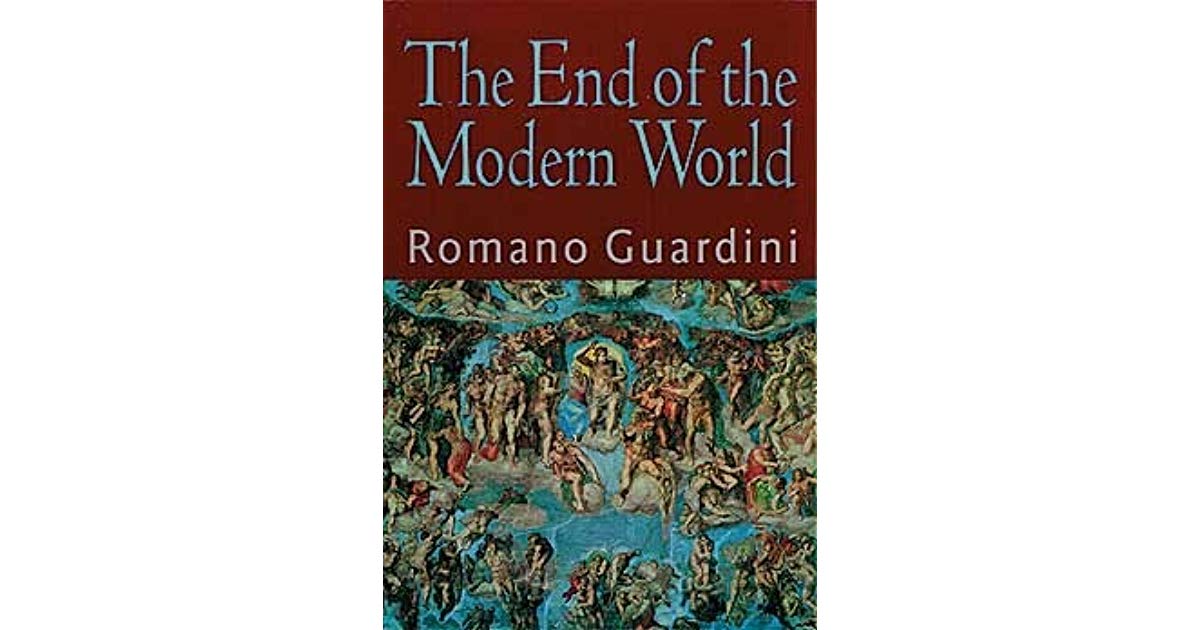
As we quickly exit Advent and even more quickly approach the 12 days of Christmas, I can’t help but think of one of my favorite writers, the Italian-German Romano Guardini, on the meaning of time and the Incarnation.
The world, time, history had begun with Creation; they reached apotheosis in the Incarnation of the Son of God-“the fullness of Time”-and all shall end with the destruction of the world and the Last Judgment. . . . [as such], each moment of time was etched against the sweeping panorama of history. Each present moment gained its uniqueness from the impact of the Incarnation with marked the piercing of time itself by eternity. —The End of the Modern World
May we never take for granted that the “fullness of time” reached its culmination and happened tonight, two thousand years ago, when a humble Jewish mother gave birth to the Son of God. Not in a palace, but in a dung-filled manger, surrounded by the most humble. Thus came our Lord.
Women’s March Roiled by Accusations of Anti-Semitism – The New York Times
As the second anniversary of the Women’s March approaches, charges of anti-Semitism are overshadowing the movement and plans for more marches.
— Read on www.nytimes.com/2018/12/23/us/womens-march-anti-semitism.html
The Left eats its own.
Chesterton on Myth (Quotes)

“Behind all these things is the fact that beauty and terror are very real things and related to a real spiritual world; and to touch them at all, even in doubt or fancy, is to stir the deep things of the soul.” (pg. 108)
“These are the myths: and he who has no sympathy with myths has no sympathy with me. But he who has most sympathy with myths will most fully realise they are not and never were a religion, in the sense that Christianity or even Islam is a religion. They satisfy some of the needs satisfied by a religion; and notably the need for doing certain things at certain dates; the need of the twin ideas of festivity and formality. But though they provide a man with a calendar they do not provide him with a creed.” (pg. 109)
“But in reality the rivers of mythology and philosophy run parallel and do not mingle till they meet in the sea of Christendom. Simple secularists still talk as if the Church has introduced a sort of schism between reason and religion. The truth is that the Church was actually the first thing that ever tried to combine reason and religion. There had never before been any such union of the priests and the philosophers. Mythology, then, sought God through the imagination; or sought truth by means of beauty.” (pg. 111)
–G.K. Chesterton, Everlasting Man (Ignatius edition).
A Visit to the Brubeck Archives « JazzEd Magazine
A Visit to the Brubeck Archives « JazzEd Magazine
— Read on www.jazzedmagazine.com/articles/featured/a-visit-to-the-brubeck-archives/
 Spirit of Cecilia
You must be logged in to post a comment.