A spotless Rose is growing, Sprung from a tender root, Of ancient seers’ foreshowing, Of Jesse promised fruit; Its fairest bud unfolds to light Amid the cold, cold winter, and in the dark mid-night.
The Rose which I am singing, Whereof Isaiah said, Is from its sweet root springing In Mary, purest Maid; For through our God’s great love and might The Blessed Babe she bare us In a cold, cold winter’s night.
“O Herbert, that cadence to A Spotless Rose is not merely ‘one of those things’. Brainwave it certainly is, but it is much more than that. It is a stroke of genius. I should like, when my time comes, to pass away with that magical cadence.”
The O Antiphon for the Magnificat at Vespers on December 23:
O Emmanuel, our king and our Lord, the anointed of the nations and their Savior: come and save us, O Lord our God.
Healey Willan (1880-1968), professor at the Royal Conservatory of Music in Toronto and organist at St. Mary Magdalene Church in the same city, composed a setting of The Great O Antiphons of Advent for the Lutheran Church-Missouri Synod’s Concordia Publishing House in 1957. Here’s Willan’s setting of “O Emmanuel,” as sung by the choir of Christ Church Cathedral in Vancouver, British Columbia:
O come, O come, Emmanuel, And ransom captive Israel, That mourns in lonely exile here Until the Son of God appear.
Rejoice! Rejoice! Emmanuel Shall come to thee, O Israel!
The O Antiphon for Magnificat at Vespers on December 22:
O King of the nations, the ruler they long for, the cornerstone uniting all people: come and save us all, whom you formed out of clay.
For their 2016 debut recording Drop Down, Ye Heavens, the London-based student-formed choir Siglo de Oro commissioned a new set of O Antiphons from various British composers, sung in English and set for choir and saxophone. Here is Gareth Wilson’s yearning setting of “O King of the Nations”:
O come, Desire of nations, bind In one the hearts of all mankind; Bid Thou our sad divisions cease, And be Thyself our King of Peace.
Rejoice! Rejoice! Emmanuel Shall come to thee, O Israel!
The British composer Gerald Finzi (1901-1956, pictured above) did write a “ceremonial ode” For St. Cecilia in 1946-47, setting a text by Edmund Blunden (1896-1974). But, with your indulgence, this month’s Cecilian Ode post veers in a different direction! According to his publisher, Finzi’s “Christmas scene” In terra pax, composed in 1954-56:
conflates Robert Bridges’s poem Noel: Christmas Eve, 1913 and Luke 2: 8–14. Finzi suggested that the Nativity ‘becomes a vision seen by a wanderer on a dark and frosty Christmas Eve, in our own familiar landscape’. In terra pax is a masterpiece in miniature, Finzi’s pacifism at its heart, and his belief that men and women of goodwill should live harmoniously. Weaving through the music are three ideas: the pealing of the bells with their joyous message, a phrase from the carol The First Nowell, and the alleluia refrain from the hymn ‘Lasst uns erfreuen’.
Why not spend 16 minutes with this ravishingly beautiful evocation of the first Christmas in the here and now? The complete text of In terra pax follows the work:
A frosty Christmas Eve when the stars were shining
Fared I forth alone where westward falls the hill,
And from many a village in the water’d valley
Distant music reach’d me peals of bells aringing:
The constellated sounds ran sprinkling on earth’s floor
As the dark vault above with stars was spangled o’er.
Then sped my thoughts to keep that first Christmas of all
When the shepherds watching by their folds ere the dawn
Heard music in the fields and marveling could not tell
Whether it were angels or the bright stars singing.
And there were shepherds, abiding in the fields, keeping watch over their flocks by night.
And, lo, the angel of the Lord came upon them, and the glory of the Lord shone round about them: and they were sore afraid.
And the angel said unto them, Fear not: for, behold, I bring you good tidings of great joy, which shall be to all people.
For unto you is born this day in the city of David a Saviour, which is Christ the Lord.
And this shall be a sign unto you; Ye shall find the babe wrapped in swaddling clothes, lying in a manger.
And suddenly there was with the angel a multitude of the heavenly host praising God, and saying, Glory to God in the highest, and on earth peace, good will toward men.
But to me heard afar it was starry music
Angels’ song, comforting as the comfort of Christ
When he spake tenderly to his sorrowful flock:
The old words came to me by the riches of time
Mellow’d and transfigured as I stood on the hill
Heark’ning in the aspect of th’ eternal silence.
(This is an appendix to a series exploring the Cecilian Ode, a uniquely English poetic and musical genre that spans the centuries from the late 1600s to the present. Check out previous Odes here and here; look for a new ode on or about the 22nd of each month!)
Eala earendel, engla beorhtast, ofer middangeard monnum sended, ond soðfæsta sunnan leoma, torht ofer tunglas, þu tida gehwane of sylfum þe symle inlihtes! …
swa þec nu for þearfum þin agen geweorc bideð þurh byldo, þæt þu þa beorhtan us sunnan onsende, ond þe sylf cyme þæt ðu inleohte þa þe longe ær, þrosme beþeahte ond in þeostrum her, sæton sinneahtes; synnum bifealdne deorc deaþes sceadu dreogan sceoldan.
“Hail shining ray! Hail brightest of angels
and illumination of the soothfast sun
sent over middle-earth to all mankind,
more brilliant than the stars—always
you light up every season of your own self! …
so now needfully your own creation
abides you faithfully, so that you send us
the bright sun, and that you come yourself
to illuminate those who for the longest time,
shrouded in shadow and in darkness here,
reside in the everlasting night—
enfolded in our sins, they have had to endure
the dark shadows of death.”
If admirers of J.R.R. Tolkien feel a familiar frisson here — well, they should! In Cynewulf’s expansion of “O Dayspring” — specifically, in the word “earendel” — we find one of the deepest linguistic roots of Tolkien’s Middle Earth legendarium. From that word sprang the work of his heart that occupied him for nearly six decades — The Lord of the Rings, The Hobbit, and The Silmarillion. Tolkien even riffs on Cynewulf (and thus indirectly on today’s antiphon) on pp. 248-249 of The Silmarillion:
Hail Eärendil, of mariners most renowned, the looked for that cometh at unawares, the longed for that cometh beyond hope! Hail Eärendil, bearer of light before the Sun and Moon! Splendour of the Children of Earth, star in the darkness, jewel in the sunset, radiant in the morning!
Healey Willan (1880-1968), professor at the Royal Conservatory of Music in Toronto and organist at St. Mary Magdalene Church in the same city, composed a setting of The Great O Antiphons of Advent for the Lutheran Church-Missouri Synod’s Concordia Publishing House in 1957. Here’s Willan’s setting of “O Dayspring,” as sung by the choir of Christ Church Cathedral in Vancouver, British Columbia:
O come, Thou Dayspring from on high, And cheer us by Thy drawing nigh; Disperse the gloomy clouds of night, And death’s dark shadows put to flight.
Rejoice! Rejoice! Emmanuel Shall come to thee, O Israel!
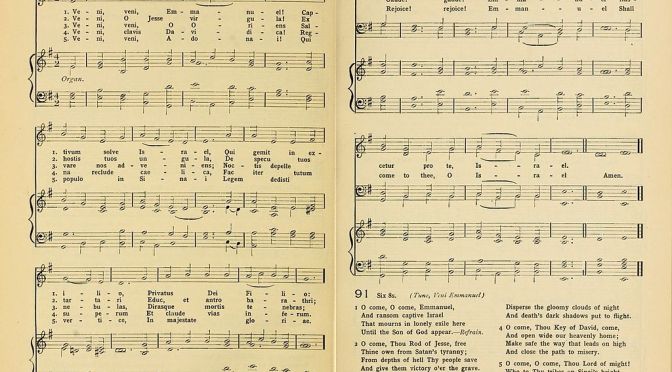
This is the hymn of the day for the Fourth Sunday in Advent across numerous Christian traditions. Written by the Rev. John Mason Neale, published in his and Thomas Helmore Hymnal Noted, Part II (1854), and revised by Neale in subsequent hymnals until his death, “O Come, O Come, Emmanuel” was based on the series of ‘O” antiphons sung at Vespers from December 17-23. In the original Latin, the second letters of the seven antiphons spell out the reverse acrostic “ERO CRAS” — “I shall be [with you] tomorrow”, as the Church prepares to celebrate Christ’s birth.
The tune of this hymn has an especially intriguing provenance. According to the magisterial New Oxford Book of Carols:
In an article of 1881, Helmore revealed that the source was in face a French missal [in the National Library at Lisbon, Portugal], and that Neale himself, now dead, had copied the tune … Searches failed to locate the hymn in the Lisbon library, and doubts about the authenticity of the tune were only laid to rest in 1966, when Mary Berry (then Mother Thomas More) discovered the tune in another French source, a fifteenth-century Franciscan processional, which was probably copied for a nunnery … Each verse is set out in binatim style on two pages, with the familiar melody on the left and a simple countermelody on the right.
Which (as transcribed and collated with the Latin hymnic version of the antiphons in the NOBC) sounds like this — recorded by the Taverner Consort in the style of a Franciscan procession:
And so — 1300 years on from the origin of the antiphons, 600 years after French nuns sang the hymn in procession, more than 150 years past Neale and Helmore’s translation and transcription — we watch for Christ’s coming with the Church of all ages, and sing:
O come, O come, Emmanuel,
And ransom captive Israel,
That mourns in lonely exile here
Until the Son of God appear.
Refrain
Rejoice! Rejoice! Emmanuel
Shall come to thee, O Israel!
O come, Thou Wisdom from on high,
Who ord’rest all things mightily;
To us the path of knowledge show,
And teach us in her ways to go. Refrain
O come, O come, Thou Lord of might,
Who to Thy tribes on Sinai’s height
In ancient times didst give the Law
In cloud and majesty and awe. Refrain
O come, Thou Branch of Jesse’s tree,
Free them from Satan’s tyranny
That trust Thy mighty pow’r to save,
And give them vict’ry o’er the grave. Refrain
O come, Thou Key of David, come,
And open wide our heav’nly home;
Make safe the way that leads on high,
And close the path to misery. Refrain
O come, Thou Dayspring from on high,
And cheer us by Thy drawing nigh;
Disperse the gloomy clouds of night,
And death’s dark shadows put to flight. Refrain
O come, Desire of nations, bind
In one the hearts of all mankind;
Bid Thou our sad divisions cease,
And be Thyself our King of Peace. Refrain
The O Antiphon for Magnificat at Vespers on December 20:
O Key of David and scepter of the house of Israel, you open and no one can close, you close and no one can open: come and rescue the prisoners who are in darkness and the shadow of death.
For their 2016 debut recording Drop Down, Ye Heavens, the London-based student-formed choir Siglo de Oro commissioned a new set of O Antiphons from various British composers, sung in English and set for choir and saxophone. Here is Francis Pott’s rich setting of “O Key of David”:
O come, Thou Key of David, come, And open wide our heav’nly home; Make safe the way that leads on high, And close the path to misery.
Rejoice! Rejoice! Emmanuel Shall come to thee, O Israel!
The O Antiphon for the Magnificat at Vespers on December 19:
O Root of Jesse, standing as an ensign before the peoples, before whom all kings are mute, to whom the nations will do homage: come quickly to deliver us.
Healey Willan (1880-1968), professor at the Royal Conservatory of Music in Toronto and organist at St. Mary Magdalene Church in the same city, composed a setting of The Great O Antiphons of Advent for the Lutheran Church-Missouri Synod’s Concordia Publishing House in 1957. Here’s Willan’s setting of “O Root of Jesse,” as sung by the choir of Christ Church Cathedral in Vancouver, British Columbia:
O come, Thou Branch of Jesse’s tree, Free them from Satan’s tyranny That trust Thy mighty pow’r to save, And give them vict’ry o’er the grave.
Rejoice! Rejoice! Emmanuel Shall come to thee, O Israel!
The O Antiphon for the Magnificat at Vespers on December 18:
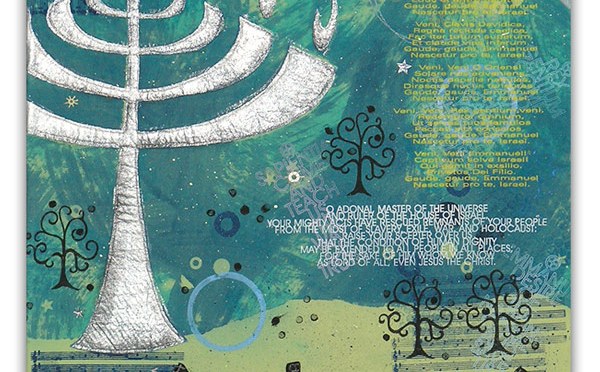
O Adonai and ruler of the house of Israel, who appeared to Moses in the burning bush and gave him the Law on Sinai: come with an outstretched arm and redeem us.
Healey Willan (1880-1968), professor at the Royal Conservatory of Music in Toronto and organist at St. Mary Magdalene Church in the same city, composed a setting of The Great O Antiphons of Advent for the Lutheran Church-Missouri Synod’s Concordia Publishing House in 1957. Here’s Willan’s setting of “O Adonai,” as sung by the choir of Christ Church Cathedral in Vancouver, British Columbia:
O come, O come, Thou Lord of might, Who to Thy tribes on Sinai’s height In ancient times didst give the Law In cloud and majesty and awe.
Rejoice! Rejoice! Emmanuel Shall come to thee, O Israel!







 Spirit of Cecilia
You must be logged in to post a comment.