
Tag Archives: language-learning

The USA as an English-speaking and Spanish-speaking nation.

SPANISH IS NOT GOING AWAY

By Richard K Munro

PERCENTAGE OF SPANISH SPEAKERS PER STATE

All of our children speak Spanish (we live in Southern California); we all speak English , of course, but I think it true to say we all speak, read and talk in Spanish every day. One has contact with native Spanish speakers by phone or in person virtually every day. There are neighborhoods that are majority Spanish-speaking in New York, Miami, San Antonio (Texas) and other places in California. But only 10-15% of the state-wide population are Spanish-speaking in states where Spanish is most common. However, the USA borders deep Spanish-speaking hinterlands in the Caribbean and the rest of the Americas.

Colorado like Washington State may be on the periphery of the Spanish-speaking world -but Miami , San Antonio, Los Angeles, New York City are not. LA and NYC are among the largest Spanish-speaking cities in the world and have their own Spanish-language newspapers and media. I , in fact, learned a lot of Spanish reading Spanish language newspapers and listening to World Series and World Cup games in Spanish.

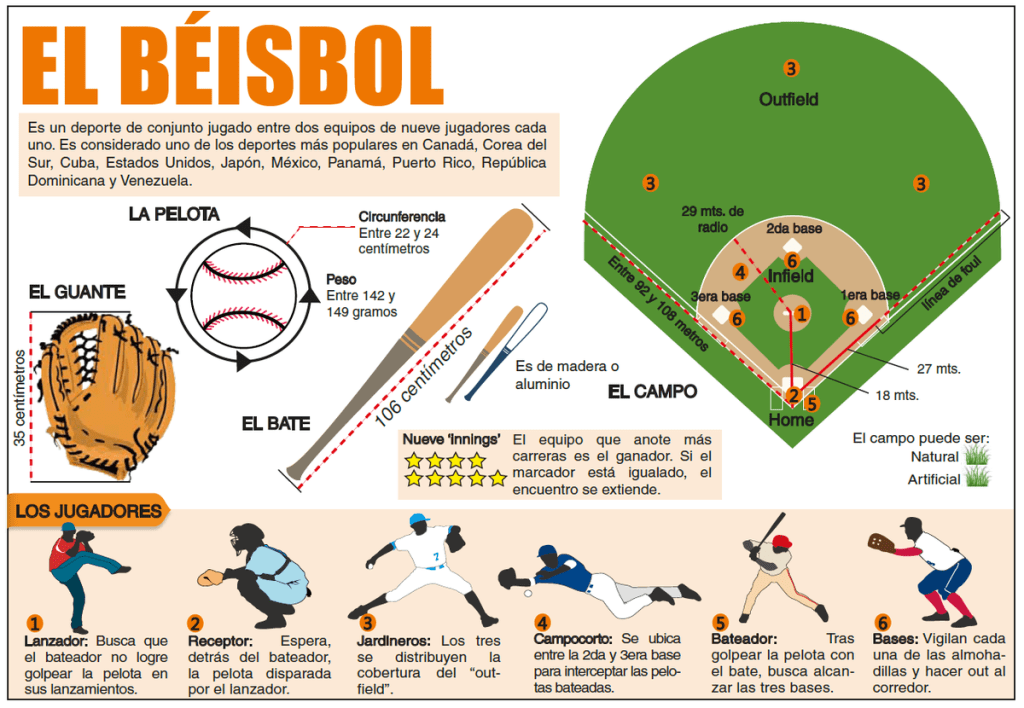
I prefered Vin Scully when I hear the Dodgers but every single game is broadcast in Spanish and when we are the house of friends we hear the game in Spanish. We watch World Cup Soccer (Football) games in Spanish. Both baseball and soccer are very popular in USA Hispanic communities. MLB has all the scores and news in Spanish as well as English. https://www.mlb.com/es/news You can get the rule book in Spanish. Teams like the Dodgers actively recruit Spanish-speaking players from Latin America and have special tutors to help integrate them and make them feel at home. Many managers and scouts for the Dodgers and other teams speak Spanish.
We watch English movies with Spanish subtitles and Spanish movies with English subtitles. We also watch French and Italian films and shows with English subtitles.

I believe, by the way that English should be the official language of California (which it is) and English should be the official language of the USA.

But Spanish is not going away that is a certainty.

Not in my lifetime or the lifetime of my children. It will remain an important second language for many Hispanic Americans and be the primary language of private religious practices and family life.

One thing I DO NOT BELIEVE is that monolingual Spanish speakers will ever become a majority of the population of any state in the Union. Spanish-speaking populations will become more and more Americanized and bilingual over time and some will intermarry and not preserve their Spanish.

But as long as there is immigration from Spanish speaking countries and as long as the birth rate for Hispanic women remains over 2.1 Spanish will endure in the USA and in the Americas.

It’s Italian, German, and Gaelic I am worried about -those languages are endangered in North America. Ultra-minority languages will tend to disappear. Last I saw fewer than 500 people speak Gaelic in California. But Spanish is not alone there are many other competitors for large minority second languages. In many places, it has strong competition with Chinese, Vietnamese, Hindi, Punjabi and others. At Dodger stadium, I often hear Japanese. But Spanish is useful and taught in virtually every city and county in the USA. So after English, it is the language most familiar to Americans and is likely to remain so.

Learning and Memory

by Richard K. Munro

IT IS PART OF THE HUMAN CONDITION THAT WE HAVE TO LEARN AND REMEMBER THINGS. Active rehearsal is a way of attending to information to move it from short-term to long-term memory. During active rehearsal, you repeat (practice) the information to be remembered. If you repeat it enough, it may be moved into long-term memory though the old adage USE IT OR LOSE IT is quite true. There is an old Gaelic saying that goes like this BEAG IS BEAG IS FHEARR AN CEUM MOR which means in learning a language many small steps (daily steady work) is better than one big step (cramming before the exam once a week).

For example, this type of active rehearsal is the way many children learn their ABCs by singing the alphabet song or the way we learn the Our Father in church. In psychology, active rehearsal refers to a cognitive process of actively and consciously repeating information in order to commit it to memory.

This type of rehearsal is often contrasted with passive rehearsal, which involves simply exposing oneself to the information repeatedly without active engagement such as merely reading or skimming.

When I first started studying languages, I studied regularly but very inefficiently. I did poorly on vocabulary quizzes because I only reviewed the words as listed in the textbooks. I usually got the first words and last words but did poorly with verbs or idioms or unusual words in the middle.

I realized later that COPYING THE WORDS and REPEATING THEM ORALLY helped me remember them. It is also helpful to correct errors large and small and write them down. It is helpful to break up the lists and shuffle the words. Later I kept notebooks of new words and idioms. To study for comprehensive exams I made study cards (English on one side and the target languages -Spanish in my case on the other). It is good to go from Spanish to English (the easiest) to English to Spanish (more difficult). I used COLOR CODING for verb endings and practiced questions and answers in different tenses.

Active rehearsal has been found to be a more effective memory strategy because it requires more cognitive effort and engagement. In language learning engagement and having a positive motivation are very important. Most learners give up before really gaining much proficiency. Learning a foreign language is really like conquering Munros in Scotland (not a clan but MOUNTAINS). It takes YEARS to bag dozens of MUNROS and great endurance and dedication. There is no such thing, really, as INSTANT FRENCH or INSTANT SPANISH.

Here are some common examples of active rehearsal:

1)Repeating a phone number or address to oneself in order to remember it. I find I know very few phone numbers now since I rely on my smart phone but it is still important to memorize some numbers such as your SSN, home address and some key phone numbers.

2)Writing out important information multiple times in order to commit it to memory.

3)Rehearsing a speech or presentation by practicing it aloud several times. Recording a speech.

4) Creating flashcards with key information and actively testing oneself on the information. I color-coded my flashcards with categories like CONVERSATION, VERB TENSES, IDIOMS, FALSE COGNATES, PARTS OF SPEECH, AGREEMENT OF GENDER AND NUMBER, TRANSLATION PROBLEMS.

5) Mentally repeating key concepts or terms in a class lecture in order to commit them to memory. I often created my own MNEMONIC devices to remember faster such as subjunctive triggers: WIDE (wish, impersonal expressions, doubt or denial, emotion. ) Some like ROY G BIV are part of education lore but it is useful to create one’s own for specific purposes. ORG a MEAN FAM AR EFFORT is one I always taught my students. The Keys to memory:

ORG (ORGANIZATION) have a notebook with some organization by subject material and topic

MEAN (MEANINGFULNESS) what you are learning has to seem useful, amusing, practical or important to you, to society or your community.

FAM (FAMILIARITY) If you have some familiarity with a subject it is an advantage. If you know Spanish then Italian is easier. I igrew up in New York so I heard a lot of Yiddish and Spanish. My parents and their friends often spoke Scottish dialect so I found German and Gaelic were not completely foreign to me.

AR (ACTIVE REHEARSAL) different forms of study and practice.

EFFORT Steady effort is essential for learning or achievement in any human endeavor.

Overall, active rehearsal involves a conscious and intentional effort to repeat information, terms, vocabulary and facts in order to commit them to memory. By actively engaging with the information, individuals can better engrave it into their long-term memory and improve their ability to recall it later.

One last note. I have studied many languages over the years and in my retirement continue to study new languages. But every day I can I review OLD LANGUAGES, LANGUAGES THAT I KNOW WELL for at least 10 minutes. I no longer take notes for these languages but practice speaking, reciting , reading, and reciting. Of course, my reading contemporary books and articles I learn new vocabulary such as DRONE. I knew what a drone was traditionally but now DRONE has a completely new meaning. One should never stop learning and improving one’s memory and mind. And use it or lose it.