All of our children speak Spanish (we live in Southern California); we all speak English , of course, but I think it true to say we all speak, read and talk in Spanish every day. One has contact with native Spanish speakers by phone or in person virtually every day. There are neighborhoods that are majority Spanish-speaking in New York, Miami, San Antonio (Texas) and other places in California. But only 10-15% of the state-wide population are Spanish-speaking in states where Spanish is most common. However, the USA borders deep Spanish-speaking hinterlands in the Caribbean and the rest of the Americas.
Colorado like Washington State may be on the periphery of the Spanish-speaking world -but Miami , San Antonio, Los Angeles, New York City are not. LA and NYC are among the largest Spanish-speaking cities in the world and have their own Spanish-language newspapers and media. I , in fact, learned a lot of Spanish reading Spanish language newspapers and listening to World Series and World Cup games in Spanish.
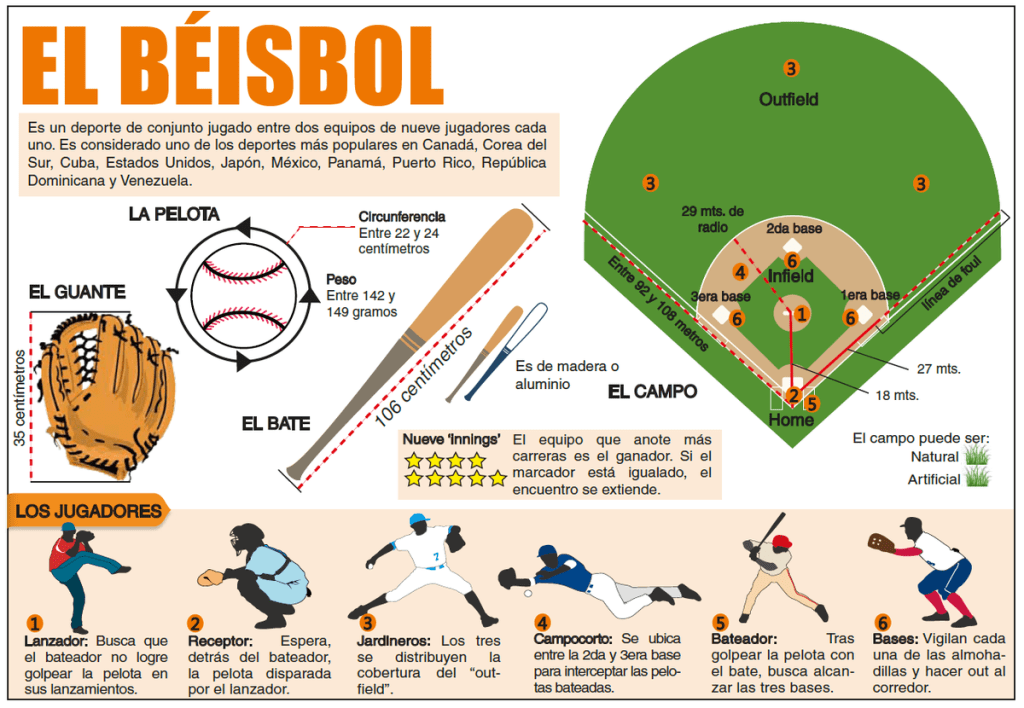
I prefered Vin Scully when I hear the Dodgers but every single game is broadcast in Spanish and when we are the house of friends we hear the game in Spanish. We watch World Cup Soccer (Football) games in Spanish. Both baseball and soccer are very popular in USA Hispanic communities. MLB has all the scores and news in Spanish as well as English. https://www.mlb.com/es/news You can get the rule book in Spanish. Teams like the Dodgers actively recruit Spanish-speaking players from Latin America and have special tutors to help integrate them and make them feel at home. Many managers and scouts for the Dodgers and other teams speak Spanish.
We watch English movies with Spanish subtitles and Spanish movies with English subtitles. We also watch French and Italian films and shows with English subtitles.
I believe, by the way that English should be the official language of California (which it is) and English should be the official language of the USA.
But Spanish is not going away that is a certainty.
Not in my lifetime or the lifetime of my children. It will remain an important second language for many Hispanic Americans and be the primary language of private religious practices and family life.
One thing I DO NOT BELIEVE is that monolingual Spanish speakers will ever become a majority of the population of any state in the Union. Spanish-speaking populations will become more and more Americanized and bilingual over time and some will intermarry and not preserve their Spanish.
But as long as there is immigration from Spanish speaking countries and as long as the birth rate for Hispanic women remains over 2.1 Spanish will endure in the USA and in the Americas.
It’s Italian, German, and Gaelic I am worried about -those languages are endangered in North America. Ultra-minority languages will tend to disappear. Last I saw fewer than 500 people speak Gaelic in California. But Spanish is not alone there are many other competitors for large minority second languages. In many places, it has strong competition with Chinese, Vietnamese, Hindi, Punjabi and others. At Dodger stadium, I often hear Japanese. But Spanish is useful and taught in virtually every city and county in the USA. So after English, it is the language most familiar to Americans and is likely to remain so.
I was a classroom teacher for over 34 years. Mostly 9-12 but also junior college. I graded AP exams for almost 18 years. What keeps a teacher motivated? What makes a teacher great?
#1 A teacher has to believe in his school, his community, his country and in a larger sense his civilization. I am and always have been grateful my my country and the freedoms and opportunities that it afforded me.
#2 A good teacher has to believe in his subject material like a doctor believes in health. If a teacher is enthusiastic and knowledgeable in his subject area(s) this will influence students in a positive way. It is unfortunate that one must deal with a lot of indifference and anti-intellectualism in American education. But having done what men must a teacher suffers and endures many things for many days and many years. Enduring a lack of respect for his profession is one of those things.
#3 a good teacher is flexible and can “fill in” temporarily as a substitute or tutor but should know his assigned subject as well as possible and continue to improve his knowledge and expertise.
I was very strong as a Foreign Language (Spanish) and ESL (English teacher) and I taught Social Studies as well (mostly to immigrant English learners). I was not a great baseball or soccer coach BUT I shared my love of the games with my students and used the sports to promote English and character building. I am proudest that my teams were composed of eligible players. I cared more about their academic performance and personal happiness than winning championships.
#4 A good teacher cares for his students. He gets to know them and understands his or her background and community.
His love is a philia love kind of love for his students. He wants what is best for them and helps them as much as possible. I encouraged an amateur interest in classic movies, documentaries, literature, history and reading about sports and sports officiating. Teaching in a rural area many of my students joined the military. A few went to the service academies. Once five students from one class came back to visit from Camp Pendleton (USMC) in uniform. I was very proud of them. We sang the MARINE HYMN together from memory. The greatest burden I experienced as a teacher was to attend funerals of students killed in Iraq and Afghanistan. But I remained proud of their service.
A good teacher avoids having intimate relationships with his students outside of the classroom. I never dated a teacher or dated a student. One avoids temptation. It will be there especially for younger teachers in their 20s and 30s. But if you love your students you will not hurt them. You will want to see them happy and successful.
#5 A good teacher works well and collaboratively with colleagues in his department and throughout the school. However, he stands up for order and tells the truth about school discipline or lack of it and school safety or lack of it. Once I backed up a student -one who had never been suspended or disciplined- for fighting in a soccer game. His mother had been cursed and reviled in a most despicable way. So he lost it. The referee had not heard it BUT I DID. I went to the principal and school board to say YES expelling him for the team permanently was an acceptable behavior but not expelling him from school when he was so near graduation and it was a first offense. Especially when the student who started the fight was not disciplined in any way. The student never played another game but later graduated.
It was not popular for me to say -it was embarrassing for some-I would grade our school security at D+ (we had no fences, could not lock our classrooms from the inside and were told we had to keep our doors unlocked at all times). I always knew a school massacre was always a possibility and one gun and one unlocked door away. A good teacher tells the truth not for his sake but for the sake of the community and the school’s integrity. One has to know WHEN to throw the gauntlet and when to challenge the Teacher’s Union or Administrators. Be prepared for retaliation and ever lasting enmity. One thing I learned was that if one doe not have the department chair and administrators on his side it is best to “vamoose.” You have to have someone batting for you on the administration side.
#6 No question a good teacher will volunteer for many school and community assignments and not expect financial recompense in most instances. For years I tutored former students who were in JC or college or gave them advice for research papers. I was a Church catechist for over 20 years. I didn’t leave for doctrinal differences. I left because under a new regime they wanted me to “guide” non-academic classes with no Scripture or Bible readings. I felt I was not needed for arts and crafts. So I resigned. I don’t think I will go back. A good teacher must know when to vote with his feet. I was a strong advocate of ETS and AP classes and exams for almost 30 years. But I left in the end. My last ETS memory was not being complimented for my high productivity but chastised for going to the bathroom twice in the morning and twice in the afternoon. Not smoking breaks but calls of nature for a teacher past 60. I decided then and there that I was finished with ETS and AP. I served on many juries over the years (with ZERO compensation; I lost money on transportation and food). But I now have a medical exemption and think it unlikely I will ever return as a juror. I served my time as a soldier, as juror, as a teacher, as a coach. I worked very hard as a classroom teacher tutoring on Saturdays and working many nights and summers. But I never neglected my own children’s education, my wife or my home. It is one of the reasons I never took up golf.
It is hard but a good teacher must accept disappointments and if his school or assignments are unacceptable he must MOVE (apply for a transfer) or RETIRE. I have done both. There were times I wanted to quit but I could not as I was hostage to fortune as it was essential to have health insurance and economic security for my family. But when things were bad I prepared to make a strategic retreat over time and I exercised this smoothly. It helped that I had a free and clear car and money in the bank and solid credit.
I still am interested in education but am now retired. I have no interest to return to the classroom though I still promote education and encourage it in others. But I have decided to spend the rest of my life continuing MY OWN EDUCATION and doing things I never had the time for like studying Italian and Greek. I swim every day. Spend time in my garden. Listen to entire baseball games and read all the box scores. Read only to inform myself and for pleasure. Listen to podcasts. See a movie (at home) now and then especially the old classics. I spend as much time as possible with my grandchildren. When they are here I put away my phone do not watch sports but play games with them, do puzzles and swim in the pool. I enjoy having breakfast and dinner with them (no phones no TV or electronic devices). I tell them stories. I speak to them in several languages and encourage them to be budding polyglots. All are fluent in two languages and have been introduced to several more through music and cultural events.
#7 LAST BUT NOT LEAST. A good teacher does not sacrifice his family life or faith life for his school. A good teacher has balance in his life. HE TAKES CARE OF HIS HEALTH. And he prepares for a life beyond and outside of the classroom, school, and education.
I agree with the Greco-Roman philosophers that wisdom is, eventually, chief among virtues. However, wisdom is a virtue that comes later in life and slowly. Wisdom is a slow growth. It is not, then, first among the virtues we can hope to impart or encourage in the youth. The very first virtues, I think, a child can learn are politeness, thankfulness (gratitude) and obedience.
Cicero said: “Beginning with the bonds of affection between family and friends, we are prompted to move gradually further out and associate ourselves firstly with our fellow citizens and then with every person on earth.”
So what is early education? Child rearing (or breeding) is the product of one’s personal associations in the home, in one’s neighborhood, one’s community, and one’s school. Rearing or bringing up the youth presupposes properly coordinating the habits of the young and subordinating the wild, the unhygienic, the selfish, and the baser instincts of our single but riven race.
A people, a nation or a civilization must have its moral education, its code of civility and norms as well as its time of formal instruction or schooling.
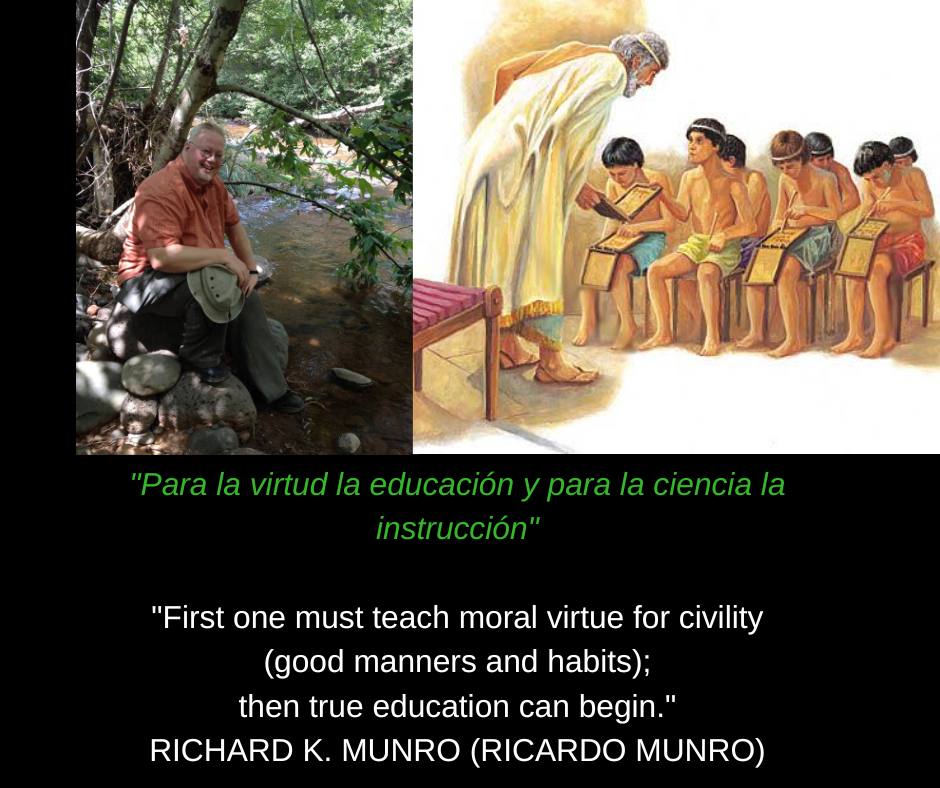
There is a Spanish saying of which I am fond: “Para la virtud, la educación; para la ciencia la instrucción” which means “First teach virtue, manners, good habits and civility; then school for knowledge.” This saying has long fascinated me because it implies that formal education (instruction; schooling) must be preceded and accompanied by what we used to call “breeding” or “upbringing” or training in manners, socially acceptable behavior, politeness, or civility.
In English, there is much confusion today as to the role of parents, community, and school in the rearing, training, and education of children and youth, and this confusion is reflected in our opaque, modern usage of silly and synthetic expressions like “parenting”, “empowering” etc. which are cut off from the Aristotelian concepts which were once the basis of all Western schools.
In the division favored traditionally by the French and Spanish, we can clearly perceive the influence of Thomistic and Greek philosophy (particularly Aristotle and Plato). So in Spanish one can say without any irony that one’s grandparents were bien educados (polite, generous and courteous) but sin instrucción alguna (without formal schooling -even illiterate). Himmler was formerly schooled, a wise Spanish nurse said to me, but muy maleducado (without social graces, without a moral conscience, boorish and rude, in short, a barbarian).
Haim Ginott made a very wise observation in his wonderful book Teacher and Child :
On the first day of the new school year, all the teachers in one private school received the following note from a principal:
Dear Teacher: I am the survivor of a concentration camp. My eyes saw what no man should witness. Gas chambers built by learned engineers Children poisoned by educated physicians/ Infants killed by trained nurses. Women and babies shot and burned By high school and college graduates. So I am suspicious of education. My request is: Help your students become human. Your efforts must never produce learned monsters, skilled psychopaths, educated Eichmanns. Reading, writing and arithmetic are important only if they serve to make our children more humane.
Ginott is saying that moral and character education (what the Spanish know as ‘”educación”) is really more important even than academic achievement or excellence because it is what makes people respectful, merciful, decent and fully human or humane. The Spanish language makes it very clear that education is a process of socialization and ethical development which is accompanied by and followed by “aprendizaje” (which means learning but also “apprenticeship”) which leads to a higher intellectual development called formal education or instruction (formación o instrucción).” The French have the same concept and a similar vocabulary and speak of ‘bonne éducation’ (good manners) or “politesse et civilité” (politeness and civility) as important virtues. Formal schooling is sometimes called “education” or “études” (studies) but especially “instruction et formation” (schooling and academic training). Language helps shape our ideas and our perspectives. It for this reason I believe the well-educated person will have training in one or more languages besides English.







 Spirit of Cecilia
You must be logged in to post a comment.