
Research, I see now, was a way for me to explore without limits of environment, without considerations for weather, and without borders. Additionally, my mind needed something that demanded lots and lots of attention. I suppose even at age eleven, I had more than a bit of OCD as well as a perfectionist streak. Add in that domestic life was, more often than not, horrific on the home-front, I was eager to escape—whether to Carey Park or to the public library.
— Read on theimaginativeconservative.org/2019/02/on-loving-research-bradley-birzer.html
Monthly Archives: February 2019
John Brown (Full Lecture)
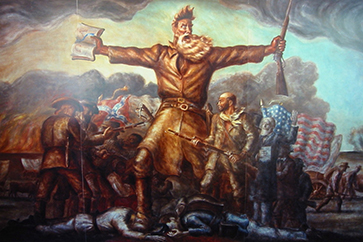
Edmund Burke on Revolution (Full Lecture)

Why Edmund Burke matters, and what he thought of revolutions.
Secession and Fort Sumter (Full Lecture)
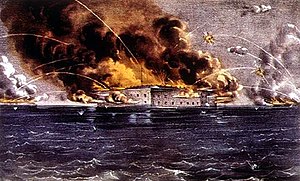
A detailed account of Robert Anderson’s choices in Charleston, late 1860 to April 13, 1861.
Abraham Lincoln and George Fitzhugh (Full Lecture)
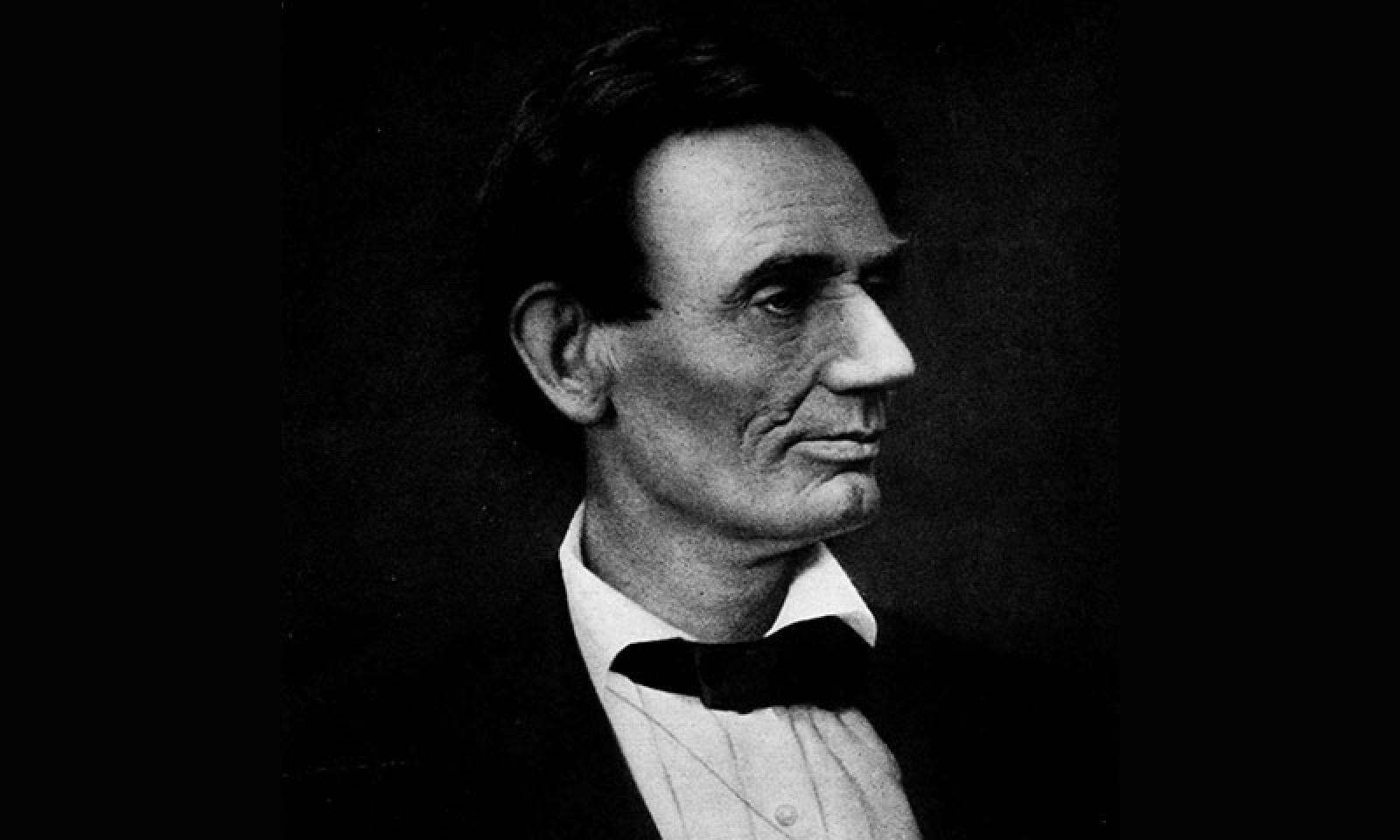
A lecture examining the conflicting ideas of the Free Soiler (North) and the Socialist (South).
Pope Benedict XVI on C.S. Lewis, 1988

“Long before the outbreak of terrorism and the invasion of drugs, the English author and philosopher, C.S. Lewis, called attention to the grievous danger of the abolition of man which lies in the collapse of the foundations of morality. He thus gave stress to humankind’s justification upon which the continuance of man as man depends. Lewis shows the continuance of the this justification with a glance at all the great civilisations. He refers not only to the moral heritage of the Greeks and its particular articulation by Plato, Aristotle, and the Stoa. These intended to lead man to an awareness of reason in his being and from that to insist upon the cultivation of ‘his kinship of being with reason.’ Lewis also recalls the ideas of the Rta [sic] in early Hinduism which asserts the harmony of the cosmic order, the moral virtues and the temple rituals. He underscores in a special way the Chinese doctrine of the Tao: ‘It is Nature, it is the Way, the Road. It is the Way in which the universe goes on. . . It is also the Way in which every man should tread in imitation of that cosmic and supercosmic progression, conforming all activities to that great exemplar. Modern mankind has been persuaded that human moral values are radically opposed one to another in the same way that religions are. In both cases the simple conclusion is drawn that all of these are human inventions whose absurdity we can finally detect and replace with reasonable knowledge. This diagnosis, though, is extremely superficial. It hooks on to a series of details which are set up in random fashion, one next to the other, and so it arrives at the banality of its superior insight. The reality is that the fundamental institution concerning the moral character of being itself and the necessity for harmony between human existence and the message of nature is common to all the great civilisations; and thus the great moral imperatives are also a possession held in common. C S Lewis expressed this emphatically when he said: ‘This thing which I have called for convenience the Tao, and which others may call Natural Law, or Traditional Morality or the First principle of Practical Reason, or the First Platitudes, is not one among a series of possible systems of value. It is the sole source of all value judgements. If it is rejected, all value is rejected. If any value is retained, it is retained. The effort to refute it and to raise a new system of value in its place is self-contradictory.’ Morality has been eroded and man as human being has worn away with it. It is no longer prudent to ask why one should hold fast to this kind of survival. Once more I would like to have C S Lewis put in a word. He saw this process already in 1943 and described it with keen accuracy. He discerns in it the old compact with the Magician: ‘ . . . give up our soul, get power in return. But once our souls, that is, our selves, have been given up, the power thus conferred will not belong to us . . . It is in Man’s power to treat himself as a mere “natural object” . . . The real objection is that if man chooses to treat himself as raw material to be manipulated, as he fondly imagined, by himself, but by mere appetite, that is, mere Nature, in the person of his dehumanized Conditioners.’ Lewis raised this warning during the second World War because he saw how, with the destruction of morality, the very capacity to defend his nation against onslaught of barbarism was imperiled. He was objective enough, though, to add the following: “I am not here thinking solely, perhaps not even chiefly, or those who are our public enemies at the moment. The process which, if not checked, will abolish man, goes on apace among Communists and Democrats, no less than among Fascists.” This seems to me to be a common of great import. Lewis refers as well to the law of Israel, which unites cosmos and history and intends above all to be the expression of the truth about man as much as the truth about the world. An appreciation of the great civilisations discloses differences in detail; but starker by far than these differences is the great common strain which reveals itself as early evidence of the human business of living: the teaching of objective values which are manifest in the being of the world; the belief that there are attitudes which are true in accord with the message of the All and therefore good and that there are other attitudes as well which are contrary to being and thus are wrong for good and for all.”
–Edited down version of a speech by then Cardinal Ratzinger.
Taken from Cardinal Ratzinger’s “Fisher Lecture” at Cambridge University, January 25, 1988. See “Cardinal Ratzinger in Cambridge,” BRIEFING 88, vol. 18, no. 3 (5 February 1988); reprinted in the CANADIAN CSL JOURNAL no. 63 (Summer 1988), 4-5.
Best Book Writing Software: 13 Writing Tools For Authors [2019 Update]
The best book writing software can be tricky to find. Writing tools are not all created equal but we’ve discovered the most valuable writing software.
— Read on self-publishingschool.com/book-writing-software-best/
On Loving Definitions ~ The Imaginative Conservative
Throughout history, of course, tyrants and demagogues have always manipulated language for their own self-interest and political advantage. Perhaps no tyrants in history did this with more skill than did the caesars in maintaining the language, institutions, and symbols of the Roman Republic while establishing the iron-fisted rule of the executive. To be sure, others have done the same. The grand sociologist Robert Nisbet went so far as to describe the entire history of the political state as the history of euphemism. What is surprising in 2019, then, is not that politicians and bureaucrats manipulate language, but rather that American and western societies as a whole have fallen for the propaganda so easily and readily. Even with blatant warnings from Ray Bradbury and George Orwell, we have still fallen hard. Critical words—such love, myth, and imagination—have become things they were never meant to become, inverted, converted, and ripped apart until almost unrecognizable from their original meanings. Lesser words—such have gay, faggot, and dogma—have taken on entirely new meanings as well.
— Read on theimaginativeconservative.org/2019/02/on-loving-definitions-bradley-birzer.html
Why Celebrate the Presidents?
By almost any objective standard, the institution of the U.S. Presidency is a failure. Certainly at a moral level as well as by the intent of the founding fathers, who worried collectively about creativity a “foetus of monarchy,” no right-minded person could defend the institution. Generally, it has been led by incompetents, many of them immoral or incapable of moral agency toward the good.
Even a cursory glance at Article II of the U.S. Constitution reveals that the framers worried most about a presidency getting out of hand. Hence, the office originally had next to no power, with restrictions on almost everything. Yet, today, the office possesses the greatest amount of power ever entrusted to a single person. At the tips of the president’s fingers reside not only the largest and most lethal military arsenal ever assembled by humanity, but also access to the most intimate information about every single American citizen.
There is nothing in the 1787 Constitution that allows for a “national emergency” to be declared by the president, nor does it allow for “executive orders.”
Yet, we take each of these things as a matter of course.
To my mind, only five to seven men have been worthy of the office–and I speak here from a constitutional standpoint, not a policy one–Washington, Jackson, Lincoln, Cleveland, Coolidge, Eisenhower, and Reagan.
And, yet, we have a federal holiday dedicated to the failure and horror of the whole thing. Sickening.
The Top 10 Library Stories of 2018/Publisher’s Weekly and Dedra!
In a move that garnered significant media attention, the Association for Library Service to Children, a division of the American Library Association, voted at the ALA Annual Conference in New Orleans to remove the name of children’s book author Laura Ingalls Wilder from a popular award. The decision came months after a task force set out to consider the long-running scholarly discussion around “anti-Native and anti-black sentiments” in Wilder’s work. And predictably, the change touched off a chorus of critics who portrayed the move as political correctness run amok.
“Stripping Wilder’s name from this award,” Dedra McDonald Birzer wrote in the National Review, “creates a slippery slope for excising all literature that doesn’t adhere to a strict definition of ‘inclusivity,’ whether or not that inclusivity accurately reflects American history.”
Even William Shatner weighed in, getting into a Twitter beef with librarians over the change. Yes, Captain Kirk himself.
— Read on www.publishersweekly.com/pw/by-topic/industry-news/libraries/article/78830-the-top-10-library-stories-of-2018.html
My beautiful wife, Dedra, quoted in Publisher’s Weekly!
 Spirit of Cecilia
You must be logged in to post a comment.