
My family immigrated to the USA in the 1920’s; my father came in via Montreal , Canada (they were imposing quotas then so he was denied entry into Ellis Island) but my mother and grandmother came via Ellis Island in 1923. So the cities that loomed big in my imaginationas a child were the ones they always talked about –Glasgow, Scotland and Brooklyn, NY. I was denied the chance to be born in either place like mysisters and cousins were but instead ended up being bornin Englewood, New Jersey.
Our school connections so to speak were slender because my family was not, upon the whole very well educated. My father did graduate from Brooklyn College, however,in 1937 and attended business school at NYU after WWII. My godmother , Kay Brennan, with whom I was very close,graduated from NYU. And I had two cousins (I always called them uncle) who graduated from Columbia University in the late 40’s and early 50’s. My sister attended Barnard College, Class of ’69. So I heard a lot about Columbia University (I was intended to go there until the tempestuous 60’s ) and I heard a lot about the professors there (Highet, Allan Nevins, Moses Hades, Jacques Barzun, Lionel Trilling and even heard storiesabout Eisenhower when he was the presidentof Columbia.
Now Imagine a time when a professor ofclassics at Columbia University was given a weekly radio show and the only stipulationwas that he confine himself to “books of a highstandard or else open up some question of broad literary or social interest.”
The show was broadcast Tuesday evenings at 9:05 p.m. on WQXR 96.3 (FM) in New York City.
Still there though I am sure it is much changed. http://www.wqxr.com/cgi-bin/iowa/index.html
Highet’s show aired coast to coast and ran through 1959.
This was just before my time but my father recorded some of them on his 3M Reel to Reel recorder. Some of them are available on CD’s through audio-forum or second hand. They are precursor to podcasts. They are well-worth the effort and the modest expense to have if for nothing else to listen to while swimming or driving.
Highet edited his radio talks into essays and published them in five volumes: People, Places, and Books (1953), A Clerk of Oxenford (1954), Talents and Geniuses (1957), The Powers of Poetry (1960), and Explorations (1971). I have all of these books and have read them all with great pleasure. Even edited for print these essay are Pliny-like or Cicero-like in their conversational tone.
Highet’s essay on the Gettysburg Address is the best I have ever read. His short biography of the “Old Man” (George Washington) is worthy of Plutarch. Another favorite essay is “Summer Reading” from Talents and Geniuses. Without identifying them further, Highet mentions Thomas Mann, Leo Tolstoy, Ernest Hemingway, Céline, Malaparte, Spengler and Toynbee, among others!!! All are names most educated readers would have recognized in the nineteen-fifties, even without having read their work except in a college or high school anthology. I have only met one politician in my life who ever read Toynbee and that was Ron Unz but aside from Prop 227 he was not successful as a politician and seems to have become a recluse. I haven’t heard from him for years but I was in close contact with him from 1997 -1999. Some of his published articles drew on information and research I provided him.
Highet was a great linguist he knew German, Latin, French and Greek, but occasionally he showed himself to be a lowlander; I remember he had one essay on Scottish words –he and his wife Helen MacInnes were both Scottish born-but he himself never thought to study Gaelic and he makes the foolish mistake of thinking some of these words are ‘nonsense words’ when they are clearly adaptations of Gaelic words. I remember also he makes the foolish (and untrue) assertion that St. Patrick and St. Columba were NOT Roman Catholics. But that was an old post Reformation canard and a common prejudice at one time in Scotland. But Highet was an lowlander of the lower upper middle class Scotland born in the Edwardian age (1906); his father –if I recall correctly- was the head of the Telegraph Service for the West of Scotland. In other words his father made his living sending telegrams for English lords and Anglo-Scottish lords , ladies and gentleman. No one in my family ever sent or received a telegram –unless it was a notice that someone was killed in action. Telegrams were always associated with death only. Photographs were very rare marriages only and soldiers and sailors before they faced the big guns and swallowed lead for the English captains.
His best known books have to be his translation of Werner Jaeger’s Paideia (in three volumes, The Art of Teaching (1950) which is unpopular at Teacher’s Colleges but has never been out of print, Man’s Unconquerable Mind (1954), and The Classical Tradition: Greek and Roman Influences on Western Literature (1949). He also wrote dozens in not hundreds of book reviews for the Book of the Month Club and I have a few stuck in volumes. They are still great reading.
Highet seemed to recognize that New York Cities public schools were going down hill in the 1950’s but he still presumed his audience had a cultural literacy which is scarcely to be expected today. The cultural literacy of my students, for example, is almost nil. They have never HEARD of any of those authors, or Guadalcanal, the Gettysburg Address, polio, small pox, the Wizard of Oz, and many ask in what part of Mexico is Spain! They know who Hugo Chavez is and Che Guevara but not Eisenhower or Winston Churchill.
The Left is winning over the youth to socialism , abortion , promiscuity, birth control and Gay Marriage. Today’s immigrants are assimilating much more slowly. They still celebrate the victories of Mexican or Spanish soccer teams and they hardly know who the Lakers or Dodgers are. They don’t listen to English language media or read newspapers of any kind. This will have tremendous cultural and political implications which we are feeling already in Southern California.
Very soon a man or woman will not be electable unless he or she has a Hispanic surname and SPEAKS Spanish. Demography is destiny.
The Alemani took over Bavaria and the Slavs took over the Balkans and almost displaced the Latins completely (except for a few pockets of Rumanian). Es ist eine alte geschichte. (its an old story as my father used to say; I heard a lot of German as boy as my father and uncles were fluent in German and my sisters both studied German rather than Spanish.) But like Auld Pop I never liked the Germans; he always said “the Hun is at your throat or at your feet.” He ought to have known of course since he reportedly killed (with a few of his cronies) over 30 Germans in one day. The only people he disliked more than the Germans were the Turks and close behind the Arabs; he liked nearly everybody else especially the Dins (Indian soldiers) even the Tallies (Italians) though he remembers them running away more than fighting.
Highet shows himself to be an elitist (he and his wife were quite prosperous and owned a house in the Hamptons). He assumes summer time means leisure: “Peaceful evenings. Lazy week-ends. And, sometimes, quite long periods of emptiness. Vacant days,” and so on. I never went on Spring break in my life and most summers –even as a teacher- I have worked and scraped to pay bills. Occasionally I have a Saturday afternoon off but that’s about it.
Highet was certainly a reader. One summer he rented a house on Cape Cod and discovered 20 years’ worth of Readers Digest in the house – all 240 volumes. Of course, Highet had his own book MAN’S UNCONQERABLE MIND condensed for the Reader’s Digest. I can’t imagine any wordsmith today ADMITTING they read the Reader’s Digest.
Highet gives good advice on authors:

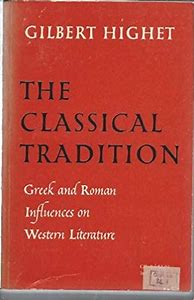


Highet gives good advice on authors:
NUMBER #1
“…it is also valuable to push directly through the works of a good author, trying to see them as a single creation, appreciating their wholeness and their uniqueness and leaving the details for later study.”
I have followed his advice with a few authors, Highet himself., Conrad, Hemingway, Orwell, Twain Cervantes, but not quite Chesterton Dickens or Shakespeare. I consider Highets’s best essays on par with anything Orwell or Chesterton wrote.
Highet recommends it to his listeners/readers seeking suggestions for summer reading: Choose an “important author” and read all of his orher work. He argues that such a regimen helps readers to “escape from themselves.”
NUMBER # 2
Highet, suggests reading about “one single important and interestingsubject: for instance, the paintings of the cave men; or the agony ofmodern music; or the rebirth of calligraphy; or recent theories of thecreation and duration of the universe.”
Highet was not a creationist though he seemed to be at least aconventional Pale Anglican (his family was, surely ScottishPresbyterian or Scottish Episcopalian).
Number #3
“…we might read a large selection of poems and prose passages selected in order to illuminate one single aspect of the world. One such volume would go into a pocket or a handbag and yet last all summer.” Ravitch’s AMERICAN READER or ENGLISH READER for example.
Highet’s also says this and it shows to me how he is closer to VictorianScotland than he is to 21st century America:
“…one might decide to spend the summer with a single great or at least a single interesting man. For example, every doctor should know The Life of Sir William Osler by Harvey Cushing, and after reading that fine book he would enjoy himself if he went on to read Osler’s own writings. Osler never tired of complaining that most doctors had minds toolimited and too confined to the physical symptoms which they observedin the routine of their practice. He kept trying to enlarge his own mind and spirit, and his books will therefore enlarge the mind and spirit of his readers, whether they are of the medical profession or not.”
It seems to me Mr. Highet lived in a happier, more sane world in which scholars and teacher could safely assume SOME of their students, neighbor and readers. sought pleasure and “self-improvement” in the books they read, and that they would find it.
Book reading seems today almost as much a minority pleasure as in Fahrenheit 451. I am sorry to say but Mr. Obama and Mr. Trump have never given me any indication they have ever read a REAL BOOK in their lives.
Their biblical and literary and historical references are so pedestrian (and often WRONG) that they frankly scare me. Do they KNOW ANYTHING without a speech writer or a teleprompter> George W. Bush didn’t know much either but at least he was no poseur and he, apparently tried to read on a regular basis. He knows the Bible reasonably well. Some of his books are biographies or histories by Andrew Roberts or books like George MacDonald and C.S. Lewis. These books are quite intellectual.
Sometimes I DO think we came to the wrong country. I have always lived as a religious and linguistic minority (an invisible one unrecognized by the state). Most people do not even know we have a language and history and a name.
I remember my father’s favorite line from the Robert Donat film THE GHOST GOES WEST (which he always did with a broad –braid- Scots accent): FAYTHER I DINNA LIKE AMERICA (in the film gangsters were shooting back and forth their tommy guns) I have to admit sometimes we did not like America or felt odd here.
When I was about 7 or 8 I first heard the word “DIVORCED” in public school. I had no idea what it meant. I thought it was something bad perhaps giving a spear thrust to the Son of Mary on the Cross. When I asked my Scottish immigrant grandfather he said, “Dinna worry aboot THAT! That’s something they do in AMERRRICA!!!” And I responded, “But Auld Pop, we ARE in America, now!” “Aye, he said,”that doesn’t mean we have to pick up their bad habits.”
My grandfather was separated from his wife only by war and death and the same was true for my parents who were married 59 1/2 years. I have to admit two things terrified me as a young man: 1) my American born wife would divorce me 2) she would abort my first born son. Growing up in the New York City area I was surrounded by Sangerites. Planned Parenthood was their Temple of Mithras.
Most Yankee dames I met seemed to belong to another civilization. Many laughed and called me “medieval.” So as a young man I was not lucky in love. But my grandmother said, “Dinna fash yersel! There lot’s of fish in the sea! There’s many a man of your race and line wha na married with a South O’ the Dyke Lassie (English woman) but wi’ a Frenchie or Irish lassie!” So after the age of 21 I never again dated an English-speaking woman nor a person who dwelled outside of what I knew as Christendom. My people always were at home in the Latin world because we still had a very strong memory of Christendom. I never had a chance to meet Polish ladies as a young man (except Scottish-Polish ladies of which there are many believe it or not) but later in life I liked all the Poles I met who were working in Spain, Scotland or America, especially the young women.
My father’s favorite Highet book had to be Poets in a Landscape (1957) which is about the geography of Roman poets in Italy. He and my mother went to Italy several times and visited most of the places described by Highet so the volume I own is filled with bills from Italian Hotels and postcards. Two of those trips I took also so I remember Horace’s Villa, especially. Horace has always been a great favorite. My father did not study with Highet but he did correspond with him and I have several signed letters addressed to my father by Highet. In my father’s time he knew a few people who were reasonably famous. He met Jackie Robinson in the old 1407 Club (now Abigael’s a fine kosher restaurant serving margarine ). One of his friends was trying to be an early pioneer of talk radio –he recorded a pilot show with my father and his partner talking about the RISE AND FALL OF THE THIRD REICH. He served with Lt. Commander Robert Montgomery in the Pacific and saw movies with him. My father had a photo signed by Montgomery that said “TO TOM from his friend BOB MONTGOMERY.” They were not close friends and never saw each other after the war but Dad was proud of that and always loved Robert Montgomery. He met Gen. MacArthur once. He saw John F. Kennedy in a parade from his office window in the 1960 campaign. He was good friends with Bill Tabbert (a charming but hard-drinking actor and lyric tenor who never got over being passed over for SOUTH PACIFIC). When Ezio Pinza died –Pinza would have insisted Bill get the job- his career died.
My uncle –who served Highet many times in the Faculty Dining Room said that Highet was a snob and often ate alone while reading a book. In one famous anecdote Eisenhower was listening to the World Series –I think it was 1948 or 1949-and Highet came in and said, “Turn off that damn baseball.” Ike glared at him and Highet said, “Excuse me!” and left. One of my uncles liked baseball and the other didn’t and they always said “Baseball was an acquired pleasure” which I guess means it isn’t for everyone. My Auld Pop went to sea when he was 8 and never played football (soccer); he had played shinty as a boy and as a young man played some baseball in America while working as a bird of passage.
There is no honor in pro sports anymore and so I no longer take as much pleasure in them as I did when I was a young man. I was once an ardent fan of baseball, particularly, and also football(soccer) but now I would rate myself no more of a fan perhaps than Highet was in 1949! In any case, there is no question, my father and Highet would have gotten along famously because even though my father was a business man he was meant to be a scribe for Columba or scholar at Balliol College. He was never as happy as when he was reading his Greek authors in the original.
Anyway for me it is a pleasant way to spend a Saturday evening looking through my books, writing and listening to the Lebeque sisters play their piano duets and rounding off the evening with some sweet ballads by some old favorites Anne Lorne Gillies –Jock O’ Hazeldean and her friend Kenneth McKellar, Jo Stafford (one of my mother’s favorite’s) singing MY HEART IS IN THE HIGHLANDS and of course Mairi MacInnes singing FEAR A BHATA (the Boatman, THIS FEELING INSIDE (I am a Gael) , Mendocino and the EVERLASTING GUN. And Wendy Weatherby’s SUNSET SONG and TWO LOVES; she is a great a talented cellist and composer. And Maggie MacInnes too of the Barra MacNeills she is.

Grand people all though Jo Stafford and Kenneth McKellar are now in the land o’ the leal.
To him who that farthest away went the fondest music he ever knew was Tuigainn dachaigh (Going Home) a very lovely tune! Very poetic and tender is the Italian “Casa mia casa mia per piccina que tu sia,tu mi sembri una badia. (My house, my house, for your baby, you look like an abbey to me.) A sentiment my father learned from his Parish priest Father Collins and my father shared with my mother in 1941 and I shared with my future wife -who had not a syllable of English like my grandmothers and great-grandmothers when they were young. But she didn’t mind. We dwelled in the same warm world of Christendom and to us, Mary, the Son of Mary and the Saints of old were not strangers. I think Gilbert Highet may have smiled at all that be he would have understood. After all his wife was of the race and line of MacInnes like so many of my dearest friends and kinsmen and comrades of my Auld Pop.



 Spirit of Cecilia
You must be logged in to post a comment.