My Mood This Morning

This has been a schizophrenic week for me. The beauty of a new semester and teaching things that really matter, the gorgeous early Autumnal weather, and the horrors of a Mass shooting in Minnesota. The latter has really, really affected me.

So, here I am on a Saturday morning, trying to reconcile all these things, and music becomes the medicine.

Enjoy.

Kevin Keller’s Arcadia – 37 Minutes of Musical Joy

Close shot of sun at sunset, Brussels, Belgium

I’ve been writing the praises of contemporary composer Kevin Keller for years now. It has been fascinating to see his evolution from an extremely talented “ambient” composer/musician into one of the most vital and engaging classical music composers in America.

Keller’s Evensong, which was released in 2023, was a beautiful set of chamber choir pieces. He has just released its sequel, Arcadia, which primarily features the vocals of Sofia Campoamor, backed by a small choir and piano with string trio. As is usual with Keller, he augments this traditional musical setting with discreet and tasteful electronic touches. There simply is no other contemporary composer who can combine ancient musical styles and instrumentation with 21st century electronics as skillfully and satisfyingly as Kevin Keller.

All of the songs in Arcadia are sung in Latin, which creates a reverent and calming atmosphere throughout. The opening track, Arcadia 1, is “Et Vidi Caelum” (“And I Saw the Sky”). Hushed acapella vocals begin the song and are soon joined by various acoustic and electronic instruments. As the melody develops slowly and deliberately, the listener is transported into a state of bliss. I know I’m sounding hyperbolic, but this is some of the most beautiful music I’ve ever heard. The only thing I can compare it to is Thomas Tallis’ “Spem In Alium” or some of J. S. Bach’s fugues.

The second track, “Et Nox Ultra” (“And Night Is Over”) is a sprightly and wordless chant with a rhythmic bed of synths. It is full of anticipation for a new day. Arcadia 3, “Me Solum Me Invenio” (“I find myself alone”) is, appropriately, sung by Ms. Campoamor solo while accompanied by Keller on organ.

Kevin Keller and Sofia Campoamor

In Arcadia 4, “In Tenebris” (“In darkness”), the choir returns to sing a gentle lullaby accompanied by piano and string trio. As this song progresses, it becomes more insistent in its rhythm, but it maintains its control. It is one of the longer tracks at 6:22, and there is a beautiful, long coda that brings it to rest.

Arcadia 5 is “Mare, Littus, Flammam” (“Sea, Shore, Flame”), and you can hear waves gently washing ashore as Ms. Campoamor sings a melody that, to my ears, is full of longing. Her vocal is supported by a cello and soft electronics.

My favorite track is Arcadia 6: “In Equo Fugit” (“She flees on horseback”). It is introduced by a gentle pulse that is soon joined by the choir who sing an extraordinarily beautiful melody. I’m having a hard time conveying how delightful Keller’s music is here – it really is ineffable!

The final two tracks are “Et Lux Perpetua” (“And Eternal Light”) and “Veni Intus” (“Come Inside”) They bring our journey to a close with a very satisfying sense of returning to the comfort of a beloved sanctuary.

There is something very timely about the art Keller is creating these days. We live in such contentious times, which are exacerbated by social and news media.  Arcadia is a balm for the souls of people who need a respite from the 24/7 anxiety that our contemporary culture has a tendency to induce.

Spending 37 minutes listening to Kevin Keller’s Arcadia  is a great way to reset oneself – it is restorative and reminds us that true beauty still exists. I admire how Keller utilizes centuries-old forms of music to compose and perform new and refreshing music. He recognizes the precious worth of classic art, while building on it and adding his unique and immediately recognizable style. Here’s hoping Arcadia sparks a renaissance in contemporary classical music. Keller is planting a seed that promises to bear fruit to a world that is starved for music with lasting substance and beauty.

Arcadia is produced and performed by Kevin Keller. Sofia Campoamor sings lead vocals, while Katherine Wessinger, Danya Katok, and Wendy Baker form the choir. Sarah Zun plays violin, Angela Pickett viola, and Laura Metcalf cello.

You can purchase Arcadia at https://www.kevinkeller.com/arcadia.

Cather’s Death Comes For The Archbishop: A Good and Faithful Servant

I enjoyed Willa Cather’s My Antonia so much, I immediately started reading her Death Comes For The Archbishop. They are completely unrelated to each other, except they are both concerned with how people lived on the frontier of nineteenth century America. Death Comes For The Archbishop is set in the mid-1800s in the new territory of New Mexico. A young Roman Catholic priest, Jean Marie Latour, has been named bishop to this enormous, wild, and mostly lawless area of the southwest. He sets up his base in the small settlement of Santa Fe. 

From the title, one might think this is a mystery novel, but it is not that at all! Rather, it is the story of how two Roman Catholic missionaries from France serve various peoples with grace, sensitivity, and love. Latour’s best friend, Father Joseph Vaillant, accompanies him in his new placement. They first met in seminary in Clermont, France, and became fast friends, even though they are almost polar opposites. Physically, Fr. Vaillant is short, unattractive, and full of restless energy. Fr. Latour is tall, handsome, graceful and intellectual. Where there is a spiritual need, Vaillant wants to rush in to address it, while Latour tends to observe, take stock of the situation, and consider the long game.

Cather makes the point that these two approaches complement each other, and both are necessary for effective ministry (I owe this insight to Joel Miller’s excellent review of Death Comes For The Archbishop on his Substack, Miller’s Book Reviews.) The ministry Latour and Vaillant are assigned is daunting to say the least: a huge territory that encompasses most of what is now Arizona, New Mexico, and Colorado. There are villages of Catholics that have not seen a priest in years. Men and women have paired up, without being married. Their children have not been baptized. 

Another pressing issue is Father Martinez of Taos, a very powerful and corrupt priest who refuses to recognize the authority of Bishop Latour. When Latour visits him, he flaunts his women and children and asserts that celibacy can no longer be enforced. He is also responsible for inciting a raid on the new American authorities where several men and women were brutally slaughtered by natives. As the famous Kit Carson relates to Latour, 

Our Padre Martinez at Taos is an old scapegrace, if ever there was one; he’s got children  and grandchildren in almost every settlement around here.
(Location 855, Standard ebooks edition)

Martinez tries to set up a schismatic church, but rather than force the issue, as Vaillant urges, Latour chooses to let Martinez slowly lose influence and followers as the true Church reasserts itself in the region.

While reading Death Comes For The Archbishop, I was impressed with the efforts these French Catholics take to serve their parishioners. They traveled literally thousands of miles on horseback through some of the most inhospitable land on earth. Often, there were no roads, let alone any maps, and every trip was life-threatening. And yet, Latour’s and Vaillant’s love for their flock enabled them to effectively administer to a diocese that was thousands of square miles in size.

One of Latour’s most impressive qualities is his ability to connect with wildly different groups of people. He relates to the lowliest Mexicans in his diocese, the wealthy landowners, and the various indigenous peoples like the Hopis and the Navajo. He forges deep friendships with members of all these constituencies. As far as the Native Americans go, he respects their traditions and doesn’t try to make them “European”. There is one fascinating chapter where he and his Indian guide, Jacinto, get caught in a deadly snowstorm. Jacinto manages to reach shelter in a cave. There is something about the cave that immediately causes Latour much discomfort. Jacinto tells Latour he must never reveal that he has been in this cave. He sees Jacinto carefully fill in a hole in the wall from which a stench is issuing. Latour is aware of tales that Jacinto’s tribe has offered human sacrifices to a “giant serpent” who lives in the mountain. However, once again, Latour doesn’t press the issue, and we never learn just what it is that causes Latour his distress.

Vaillant feels called to go to believers in Arizona, and there is constant tension between Latour’s desire to have his best friend nearby and allowing him to satisfy his calling. As the novel progresses, both men see the hand of God in the decisions they make. Early on, there’s an interesting conversation between them about the Virgin of Guadalupe:

“Where there is great love there are always miracles,” he [Latour] said at length. “One might almost say that an apparition is human vision corrected by divine love. I do not see you as you really are, Joseph, I see you through my affection for you. The Miracles of the Church seem to me to rest not so much upon faces or voices or healing power coming suddenly near to us from afar off, but upon our perceptions being made finer, so that for a moment our eyes can see and our ears can hear what is there about us always.”
(Location 572, Standard Ebooks edition)

Just like in My Antonia, Cather does a masterful job of describing the beauty of the southwest desert. She truly is a visual artist whose medium is words:

The sky was as full of motion and change as the desert beneath it was monotonous and still – and there was so much sky, more than at sea, more than anywhere else in the world. The plain was there, under one’s feet, but what one saw when one looked about was that brilliant blue world of stinging air and moving cloud. Even the mountains were mere anthills under it. Elsewhere the sky is the roof of the world; but here the earth was the floor of the sky. The landscape one longed for when one was far away, the thing all about one, the world one actually lived in, was the sky, the sky!
(Location 224, Standard Ebooks edition)

As the title says, death does eventually come for Archbishop Latour, but not before we have an opportunity to reflect on a life well-lived. He served God and the Church to the best of his ability, and he left an extraordinary legacy in the wild expanse of southwest America. I’m not a Roman Catholic, but this book made me profoundly grateful for the unsung heroes of that Church who risked everything to bring the Faith to the most inaccessible areas of the world. Cather’s novel is a beautiful tribute to them.

A Debate On Depeche Mode

Greetings, Spirit of Cecilia readers! In this post, Brad Birzer and Tad Wert discuss a musical artist that may surprise you: Depeche Mode. These boys from Basildon, England burst on the scene in 1981 with the bouncy synthpop hit, “Just Can’t Get Enough”, and their first album, Speak and Spell, was a big hit. At the time, they seemed to be just one among many British synthpop groups that were popular due to MTV exposure in the US. Vince Clarke was their songwriter and synthplayer, while Martin Gore and Andrew Fletcher also handled synths and Dave Gahan provided vocals. They were famous for performing live without any guitars or drums. They also appeared to be doomed to “one-hit wonder” status when leader Vince Clarke left immediately following Speak and Spell. However, they had a secret weapon in Martin Gore, who stepped up and began writing songs. After the tentative album A Broken Frame was released, they added multitalented Alan Wilder to the lineup and released their first really great album, Construction Time Again, which contained the massive hit, “Everything Counts”. 

Depeche Mode has ended up outlasting all of their ‘80s synthpop peers, releasing music of surprising depth and beauty despite suffering trials that would end most artists’ careers: Alan Wilder left in frustration after Songs of Faith and Devotion, Dave Gahan survived a near-death experience from a heroin overdose, and Andrew Fletcher passed away in 2022. And yet, Gore and Gahan continue to release new music, and they remain an outstanding live act. 

Brad, I think you wanted to focus on later-era Depeche Mode, beginning with Black Celebration. Kick off the discussion!

Brad: Hello, Tad!  My friend, my colleague, my writing partner, my fellow progling.  Always great to dialogue with you.  

Ok, I admit, I’m pretty uninformed when it comes to Depeche Mode.  Of course, I’m familiar with them–as any child of the 1980s would be–but I don’t know them, really know them!  That is, whereas I knew everything there was to know about Rush or Talk Talk or, later, Big Big Train, I know next to nothing about the band.  I didn’t study their history or analyze their lyrics to any great degree. That is, I never obsessed over the band or considered them “my band.”  They evoked in me some fascination rather than loyalty.  And, when I did look them up prepping for this discussion, I find that they consider themselves Marxists.  Not a winning point for me, to be sure.

That said, in high school, I was rather taken with Black Celebration (the lyrics still resonate with me, and I very much like the production and the flow of the songs–all of which struck me, at the time, as rather proggy), though I’ve not listened to it in years–though I am now as I’m typing this.  I also bought Music for the Masses, which I appreciated but didn’t love.  And, like almost everyone our age, I had a copy of 101.  From my memory, everyone owned Black Celebration and, even more so, 101.  They were just a standard part of one’s music collection at the time.
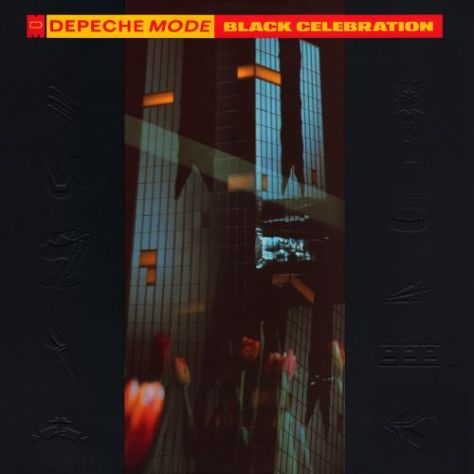
Before I get to Songs of Faith and Devotion, let me just note that I’m very much enjoying my re-listen to Black Celebration as I type all of this.  It’s been years and years since I last heard it. I had forgotten that the songs really bleed one into another which is something I always appreciate.  And, even though this album dates back to 1986, the production and engineering is impeccable.  And, again, my memory did not deceive me–this is a very proggy album.  Even the second track, Fly on the Windscreen, seems to reference Peter-Gabriel Era Genesis.  Even the fourth track, the Gospel-tinged “Sometimes,” seems like a fragment, much like Yes’s “White Car” does on Drama.  A pop album would’ve never taken a risk like that.  Track number five, “It Doesn’t Matter Two,” sounds very much like Trevor Horn produced it.

Then, side two begins with the sixth track, “A Question of Time,” a brilliant track musically, but with very disturbing lyrics.  Track seven, “Stripped,” while again quite disturbing in its lyrics, is quite proggy in its dirge-like drive.  It merges quite nicely into a poppy eighth track, “Here is the House.”  The ninth track, “World Full of Nothing,” one against quite innovative musically, is deeply disturbing lyrically–a song about the loss of sexual innocence.  “Dressed in Black,” track 10, is about lust, and track 11, the final track, “New Dress,” is about social conformity and celebrity adoration and rather humorous in its scathing cultural critique.

Tad, what can I say?  I’m glad to have returned to Black Celebration, an album of fascinating music and deeply disturbing lyrics.  Because of the lyrics, I probably won’t return to this album again anytime soon.

Tad: Yes, Brad, I agree – there is always tension between the wonderful melodies Martin Gore conjures up and his very dark lyrics. I was not aware that they consider themselves Marxists – hopefully that was a youthful phase that they outgrew! 

As I’ve mentioned before, for me personally, lyrics take second place behind music. However, there are times when the darkness of Gore’s lyrics are unavoidable (“Blasphemous Rumours” being the most obvious example). I have all of Depeche Mode’s albums, and Black Celebration has never been high on my list. Your pointing out its proggy aspects has piqued my interest, however, and I am listening to it now as I write. 

“Stripped” has always been my favorite song from this album – the music itself is very stripped-down, and the tune is quite simple and arresting. I think Gahan’s and Gore’s vocals work together beautifully, and I love the way the production gradually adds layers of sound, while that clanking rhythm track never lets up. It also contains a great line that has turned out to be extremely prescient:

“Let me hear you make decisions without your television

Let me hear you speaking just for me”

Replace “television” with “social media” and you have our current culture nailed.

Black Celebration was followed by one of my favorite albums of theirs – Music For The Masses. The opening track, “Never Let Me Down” is probably my all-time favorite song. The opening hook is simply incredible, and I never tire of hearing it. Also, this is the album Martin decided to branch out and play some guitar! It’s interesting how incorporating that instrument immediately adds warmth to their music.

“Sacred” is a very nice song where Gore uses ecclesiastical images and metaphors to illustrate his love for someone. I think this is the album where Alan Wilder came into his own as far as contributing to the overall sound. Every song is chock-full of interesting samples (and sometimes perverse ones, like the wheezing accordion that opens “I Want You Now”!) and the array of synth sounds is employed in a more orchestral manner. “To Have and To Hold” is one of the most menacing and claustrophobic tracks they ever recorded, and it makes the more open and melodic “Nothing” a positive relief, despite the utter nihilism of the lyrics. And, again, there’s some really nice guitar work in “Nothing”. Overall, I think Music For The Masses is their strongest album to this point, even with the inclusion of the now-cringy “Little 15”.

Another reason I like MFTM is it was the album behind the tour documented in the 101 film. I love this movie! It captures mid-80s America very well. What I like most about it is that it doesn’t take itself seriously. There is a lot of humor throughout, and the footage from the final concert at the Rose Bowl is absolutely stunning. It makes it clear why Depeche Mode was such a popular band, even though they got relatively little airplay on the radio in the US. They put on an incredible show and earned their fans through touring.

On a side note, there is a scene in 101 where they go shopping on Lower Broad in my hometown of Nashville, and the sight of a leather-clad bleached-blonde Martin Gore buying country music cassettes in Ernest Tubb’s record store cracks me up every time! The sweet little lady cashier doesn’t bat an eye at him as she informs him that they can ship music all over the world.

Following Music For The Masses was the album that turned Depeche Mode into massively huge international stars – Violator. Do you have only thoughts on that one, my friend?

Brad: Tad, I’m so sorry, I really, really dislike Violator, so I’m probably not the one to review it.  I heard it when it first came out, and I thought it was ok.  Listening now, however, to it is, for me, painful.  I very much dislike “Personal Jesus,” “Enjoy the Silence,” and “Policy of Truth.”  I especially dislike the kind of spoken rather than sung lyrics, and I really dislike the lyrics, overall.  The only song I like–and I do like it quite a bit, musically–is “Waiting for the Night” though its lyrics seem creepily sexual.  I also somewhat like the final track, “Clean,” though I wish, lyrically, this song had come first and had erased the previous lyrics of the album.

Again, I apologize, Tad.  I’m not trying to be a spoilsport here.  But, the album just annoys me exceedingly.

On a more positive note, I need to listen to Music for the Masses.  I’m guessing–and it is a guess–that I’ve not heard it since 1987 or so?  I actually remember buying it at my local record store in Hutchinson, Kansas, and the record store owner actually gave me a hard time for it.  That cracked me up rather than bothered me, but I didn’t take to the album.  

Reading your review, though, makes me want to go back and listen to it.  I very much appreciate your enthusiasm.  I do remember liking “Never Let Me Down Again” and “Strangelove” and “Pimpf.”  I’m sure I misunderstood the album, though, as I thought–at least back in the late 1980s–that it was a Gay anthem, something like “We are the Champions” by Queen.

Regardless, I did really like Songs of Faith and Devotion, though I think the production is off a bit.  Whereas the production on Black Celebration is really crisp, Songs of Faith and Devotion sounds like the band was recording under heavy blankets.  It could definitely use a Steven Wilson remix!

That said, I like the album both lyrically and musically.  I actually really like the use of guitar on this one.  I especially like “Higher Love,” the final track.  A beautiful way to conclude the album.

Tad: Okay, Brad, tell us how you really feel about Violator 😄! I happen to enjoy it a lot. I agree with you about “Personal Jesus”; it was the album’s big hit, and I have never understood its popularity. It has always struck as being stupidly simplistic: twangy faux-country guitar with the shouted tagline, “Reach out and touch me!” Like you, I think “Waiting for the Night” is a good song. I imagine it as the theme song of a low budget vampire movie.

However, I have to disagree with you about “Enjoy the Silence”. I think this is a great song, with a fantastic guitar line. Instead of cheesy twang, it has just the right amount of reverb. The song’s hook is very good, but I’ll admit the lyrics are troubling: “Vows are spoken to be broken” sounds like a pathetic pickup line. I can overlook them, because the melody line is so strong. As the song progresses, it just takes off and soars. 

I also like “Policy of Truth” because of its slinky bassline and swooping synths. Once again, I ignore the lyrics and just appreciate the wicked groove of this track. I cannot listen to it and sit still! 

Okay, with Songs of Faith and Devotion, three years had elapsed since Violator. Dave Gahan had moved to Los Angeles and got caught up in the rock scene there. When they reconvened to record Songs, he was lobbying for a rawk and roll record. They decided to rent a villa in Spain and live and record there together. Hot young producer Flood was hired to oversee things. It was a disaster. Gahan was using heroin, Gore was barely speaking with Alan Wilder, who was doing yeoman’s work with Flood trying to pull things together. Fletcher was caught in the middle. All things considered, it’s amazing they got enough good music to release an album.

When I first heard Songs, I didn’t like it at all. Over the years, though, I’ve grown to appreciate it for what it is: an attempt to inject some raw emotion and energy into their music. I think Gahan’s vocals on “Condemnation” are some of the finest of his career. And I believe “Higher Love” is one of their all-time greatest songs. It is just so beautiful how it begins barely audible and inexorably builds to an amazing climax. It truly is a song of faith and devotion. 

The SOFAD tour is legendary for the excessive indulgences Depeche Mode engaged in. After it concluded, Alan Wilder announced he was leaving the group. Dave Gahan overdosed in America, and he went into rehab. It was three years before they began work on what is another all-time favorite album of mine: Ultra. Once again, it’s a miracle they were able to cobble an album together. With Wilder gone, they were once again a trio, and the onus was on Martin Gore to come up with some decent songs. I think he delivered, but apparently Dave was barely able to sing anything. According to Tim Simenon, the producer, they had to cut and paste some of his vocals into the digital tracks line by line. That said, there are some fantastic songs here: “The Love Thieves”, “It’s No Good”, “Useless”, “Sister of Night”, and another all-time favorite, “Home”, which is sung by Martin. When I hear it in the context of the album’s genesis, I have to believe “Home” is Martin’s song of concern and caring for his friend Dave, who was struggling to overcome his drug addiction.

I love the way Ultra flows – there are a couple of short instrumental tracks that link and set up larger ones, and they help create a unified work. Ultra was a transitional album that proved Martin, Dave, and Andrew could still make great music as a trio, and it allowed them to regain their balance. 

Brad: Wow, Tad, I had no idea about any of this regarding the band.  I had no idea about the drugs, the fights, etc.  All totally new to me.  And, admittedly, it doesn’t make me like the band any more than I already didn’t.  

As to Ultra, though, I think this is by far the best thing I’ve heard from the band, and I’d go even beyond this–it’s a truly great album.  From its opening moments to its conclusion, this album really grips me.  I had no idea that Gahan was so out of it–for the vocals perfectly match the production and flow of the album, though I like the instrumental tracks the best.  I especially like “Home” with its orchestration and aching vocals, the quirky but proggy “Uselink” and “Jazz Thieves” and “Jr. Painkiller,” and the triumphant “Freestate.”

Again, though, Tad, I apologize.  I generally don’t like reviewing music I don’t like, and I just find myself in very little sympathy with this band.  C.S Lewis once said that no one unsympathetic to a genre should review within that genre.  He was talking about literature, but I think it applies to music as well.  

For what it’s worth, though, I very much appreciate your enthusiasm, and I very much appreciate that I had a chance to revisit the band, despite my own negativity.

Tad: And I appreciate your candor, Brad. It’s funny how you and I are completely in sync with so much music and so many artists, but we have wildly divergent takes on this one group. Thank you for taking the time to listen and give them a chance. 

After Ultra, they took an extended hiatus, and finally released Exciter in 2001. It’s not bad, but with the exception of “Dream On”, nothing really grabs me. There is a new maturity and confidence in their music, I think. They are all healthy and seem to be comfortable making an album on their own schedule. 

I will close with a brief word of praise for Exciter’s followup, Playing the Angel. This is the last “great” Depeche Mode album in my opinion (at least up to this point – they’re still releasing music!). From the opening screech of “A Pain That I’m Used To” through the bluesy “John The Revelator” and moody “Nothing’s Impossible”, this is a very good album with no filler. The best track is the single, “Precious”, which seems to be a father’s lament for an ailing child. It has a beautiful melody, and the lyrics are quite tender.

I saw Depeche Mode live on their Spirit tour, and they were full of energy as they connected with the audience. Now that Andrew has passed away, it’s just Martin and Dave carrying the torch. Dave has contributed several nice songs to the last few albums, which has relieved Martin, I imagine. 

So there you have it, SoC followers – two very different perspectives on one of the longest-lived and popular groups from the ‘80s. Next, Brad and Tad will discuss another big ‘80s act, Boy George and Culture Club! Okay, I’m kidding – we will NOT be covering that one; there are some limits to even Tad’s tolerance for ‘80s pop music.

Willa Cather’s My Antonia: A Beautiful Ode to Prairie Life

I’ve been intending to read Willa Cather’s My Antonia for a few years, since my writer and historian friend, Bradley Birzer, raved about it. (You can read his brilliant take on Cather here.) It’s in the public domain, so I had no excuse and downloaded a free copy. And here I have to confess that I regret having waited so long to read it! From the opening sentence, I was captivated by Cather’s clear and succinct prose. 

The Antonia of the title is a young Czech woman whom the narrator, Jim Burden, sees on a train heading out to Nebraska in the late 1800s, probably around 1880. Jim is ten years old, both his parents have died, and he is leaving his home in Virginia to live with his grandparents on their farm on the prairie. Antonia Shimerdas is fourteen, and she is traveling with her family – newly arrived to America – who hope to make a new life farming in the same vicinity as the Burden’s. Her family consists of her father, mother, older brother Ambrosch, and her little sister, Yulka. From the start, they are at a disadvantage, because they overpaid for a sod house and land that they hope to farm. Poor Mr. Shimerdas is out of his depth – he was a skilled weaver back in Eastern Europe, and he knows nothing about farming. Ambrosch is a haard worker, but mistrustful and a little devious. Mrs. Shimerdas is very proud and has an extremely difficult time adjusting to their new circumstances. For Antonia, however, life is a grand adventure. She and Jim immediately strike up a friendship, and she quickly picks up English. Her openness and sincere delight in everyone and everything around her are her best qualities. 

As I read My Antonia, I was really struck by how important community was to prairie dwellers. During the first winter, a severe snowstorm hits, and Jim’s grandmother, Jim, and their indefatigable hired hand, Otto, brave the elements to bring some food and supplies to the Shimerdas. It’s no exaggeration to say this act of neighborly kindness saves Antonia’s family from starvation.

The prairie itself is a major character in the book. I loved Cather’s vivid descriptions of it in all seasons. Here’s one set in autumn:

All those fall afternoons were the same, but I never got used to them. As far as we could see, the miles of copper-red grass were drenched in sunlight that was stronger and fiercer than at any other time of the day. The blond cornfields were red and gold, the haystacks turned rosy and threw long shadows. The whole prairie was like the bush that burned with fire and was not consumed.
(Location 488, Standard Ebooks Edition)

Each chapter is a self-contained vignette that adds up to a powerful and satisfying whole. Jim’s grandparents decide to rent their farm and move to the local town of Black Hawk, so Jim can attend school. Antonia doesn’t go to school, because Ambrosch insists she work on their farm, as well as hire herself out to other farms when they need an extra hand. She is very proud of her ability to do a man’s work, but she regrets not getting a good education.

Grandfather Burden gets Antonia a job keeping house for his neighbors in town, the Harlings, and Antonia thrives there. She helps with the children, the cooking, and the cleaning. She also falls in love with dancing under a big tent that is set up in the town square for that purpose. Jim also enjoys dancing with the girls and Antonia on the weekends. Their friendship deepens as they both grow older, but it never tips over into romance. It comes close, though! 

Another important aspect of prairie life was faith. Here’s how the Burden’s celebrate one Christmas:

On Christ­mas morn­ing, when I got down to the kitchen, the men were just com­ing in from their morn­ing chores—the hors­es and pigs al­ways had their break­fast be­fore we did. Jake and Ot­to shout­ed “Mer­ry Christ­mas!” to me, and winked at each oth­er when they saw the waf­fle-irons on the stove. Grand­fa­ther came down, wear­ing a white shirt and his Sun­day coat. Morn­ing prayers were longer than usu­al. He read the chap­ters from St. Matthew about the birth of Christ, and as we lis­tened, it all seemed like some­thing that had hap­pened late­ly, and near at hand. In his prayer he thanked the Lord for the first Christ­mas, and for all that it had meant to the world ev­er since. He gave thanks for our food and com­fort, and prayed for the poor and des­ti­tute in great cities, where the strug­gle for life was hard­er than it was here with us. Grand­fa­ther’s prayers were of­ten very in­ter­est­ing. He had the gift of sim­ple and mov­ing ex­pres­sion. Be­cause he talked so lit­tle, his words had a pe­cu­liar force; they were not worn dull from con­stant use. His prayers re­flect­ed what he was think­ing about at the time, and it was chiefly through them that we got to know his feel­ings and his views about things.
(Location 951, Standard Ebooks Edition)

Life was very hard, yet for most people young Jim came into contact with, there was much joy. People had few possessions, yet they had rich lives. As the quote above makes clear, those living on the prairie considered themselves better off than city dwellers. They were responsible for their own entertainment; for example, Mrs. Harling and her daughters were accomplished pianists who loved to play for people. When a traveling troupe comes to town one summer to offer dancing lessons, all the families flock to them and make it a festive event. I would say the defining feeling of the time was optimism – in a relatively young America everyone had boundless hope and a belief that they could succeed.

In the final section of the book, Jim – who has gotten a law degree and moved to New York City – returns to Nebraska to see if he can find Antonia. He does, and he gives us this tender portrait of her in her middle age:

She was a battered woman now, not a lovely girl; but she still had that something which fires the imagination, could still stop one’s breath for a moment by a look or gesture that somehow revealed the meaning in common things. She had only to stand in the orchard, put her hand on a little crab tree and look up at the apples, to make you feel the goodness of planting and tending and harvesting at last.
(Location 3684, Standard Ebooks Edition)

My Antonia  is deservedly a classic of American literature. As Jim and his friends mature, so does the country, becoming less agricultural and more urban. The pace of life increases, and modernity begins to intrude. My Antonia is a paean to a bygone era of American life when life was fraught with peril, but also held out almost infinite promise. In our own day, it’s common for neighbors on the same street of a city to not know each other at all. In Antonia’s time, everyone knew everyone and felt some responsibility for each other’s welfare. At the close of the first quarter of the twenty-first century, we have so much in terms of material comfort, but we have lost much, as well.

Vacationing with the Sublime

Sublime, noun or adj. 9. Of a feature of nature or art: that fills the mind with a sense of overwhelming grandeur or irresistible power; that inspires awe, great reverence, or other high emotion, by reason of its beauty, vastness, or grandeur.

– Oxford English Dictionary

Since 2019, my wife and I have made biennial efforts to route our long vacation toward one of the USA’s national parks. (She saw the Ken Burns film; I read Neil Peart’s travel books.) For this year’s trip, we ended up circling the Great Lakes, with a side quest to visit college friends in upstate New York. And while our trek had plenty of normal vacation fun — and even a few proggy moments — it struck me looking back how much time we spent in the presence of the sublime. (It cropped up on our 2024 vacation, too!)

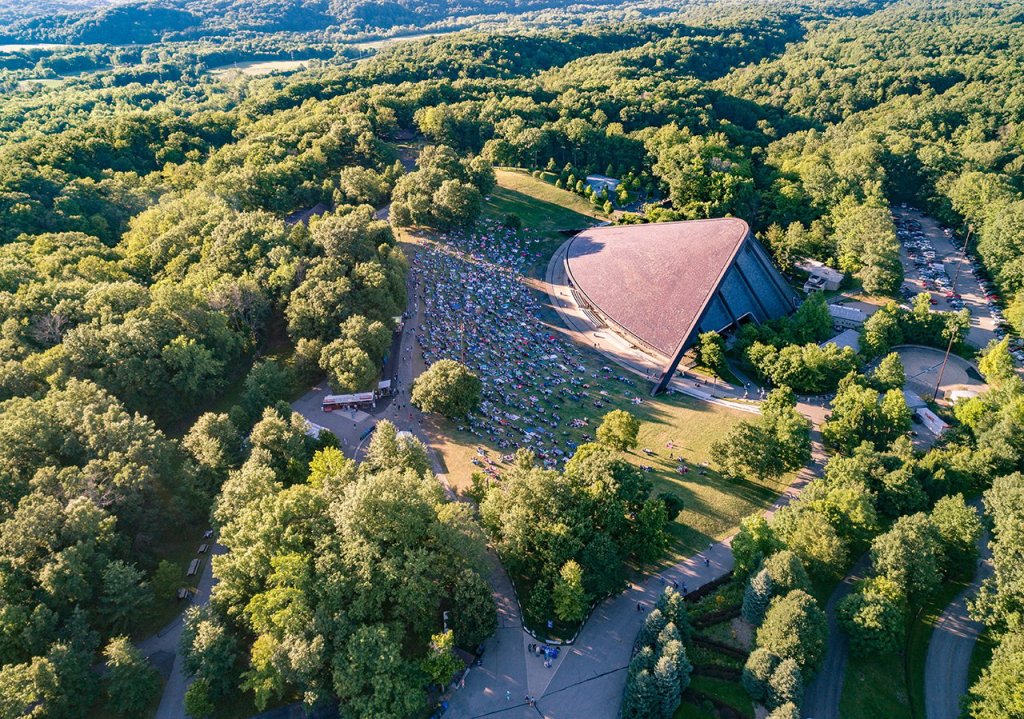
The core destination on our eastward journey was Ohio’s Cuyahoga Valley National Park. A unlooked-for haven of forests, rivers, byways and trails situated between Cleveland and Akron, entering the park cast us back to the era when mule-drawn shipping plied the Ohio & Erie Canal, passing settlements and small towns on the way to the Mississippi River. But our initial destination within Cuyahoga Valley, Blossom Music Center, casts a distinctly modern silhouette on this pastoral scene.

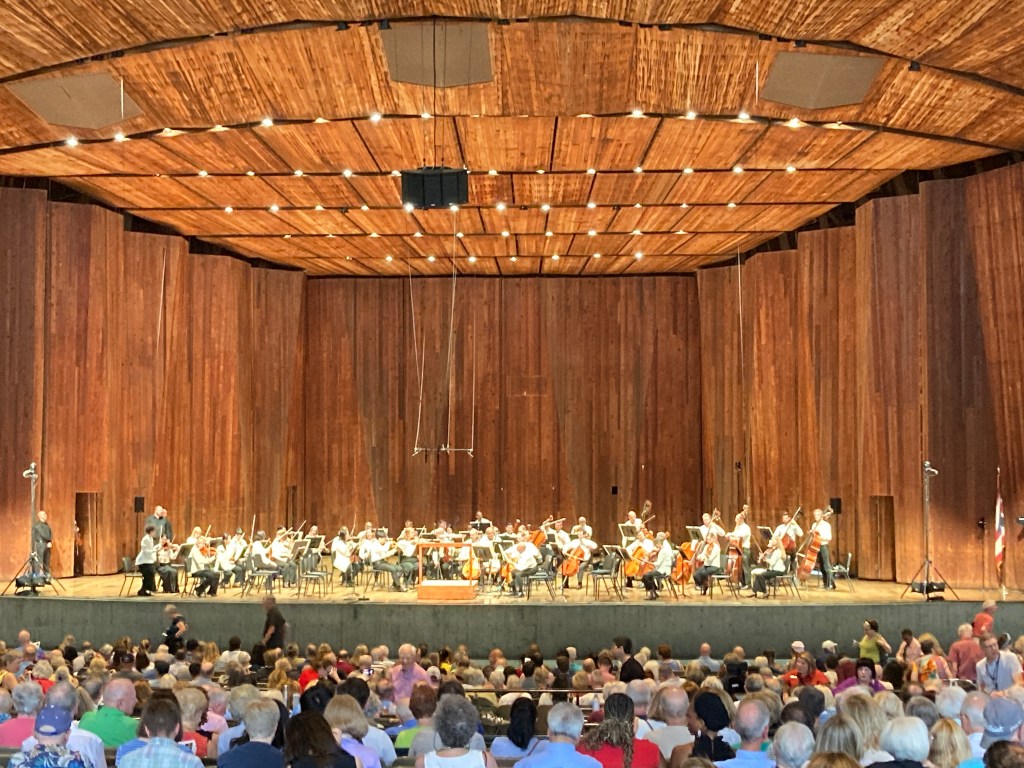
The Cleveland Orchestra has long been considered one of America’s top five symphony organizations, alongside New York, Boston, Philadelphia and Chicago. Since the late 1960s, they’ve played summer concerts on Blossom’s 800-acre grounds. On the Saturday night we attended, 4,000 folks filled the pavilion and dotted the expansive lawn as a remarkably youthful orchestra took to the faux-rustic stage for a challenging program.

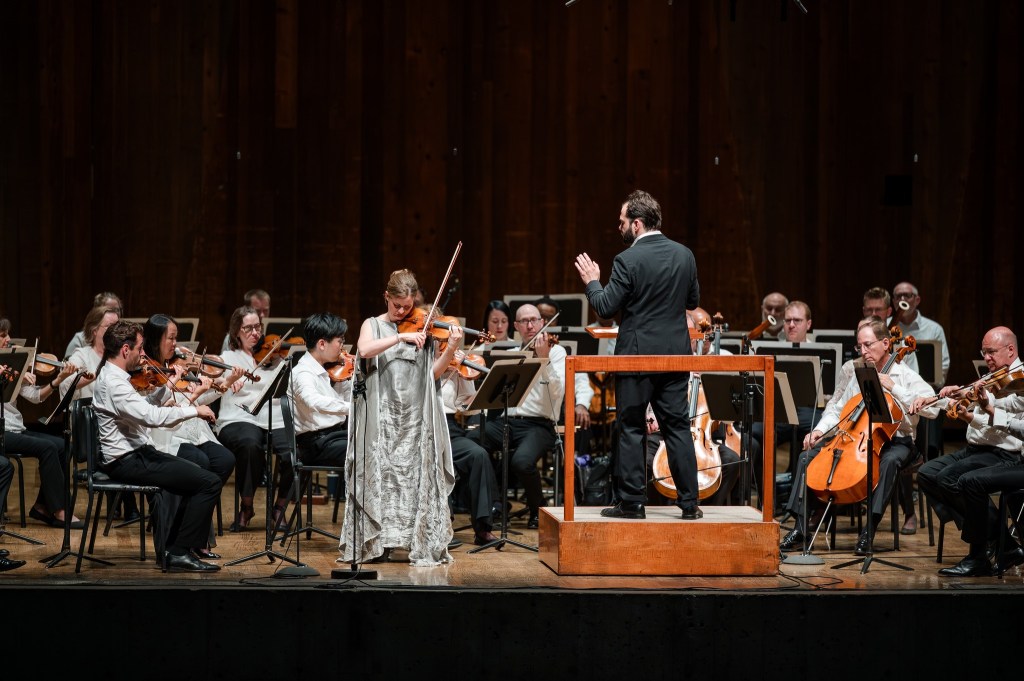
With young Czech conductor Petr Popelka on the podium, German violin phenom Veronika Eberle tackled one of the monuments of her instrument’s repertoire, Beethoven’s Violin Concerto. Twice as long as any similar work of the period, the Concerto stands out for its focus on cooperation between soloist and orchestra instead of contention. Eberle proved more than equal to the broad, lyrical span of the work, graciously in tune with her colleagues through the Allegro’s subtle, sonorous build, the Larghetto’s placid thematic variations and the vivacious, folksy Rondo. A well-deserved standing ovation led to Eberle dashing off a Bartok duet with concertmaster Joel Link. Then Popelka proved himself a maestro to watch and hear with a sprightly, energetic reading of Schumann’s “Spring” Symphony. Music, audience and surroundings came together for a thoroughly delightful evening. The rain that had threatened throughout even held off until after the concert!

(Click here to hear Eberle’s recording of the Beethoven with the London Symphony Orchestra. Click here to hear Popelka conduct symphonic works by Czech composer Biedrich Smetana. Young musicians like these fill me with hope for the future of orchestras and their historic repertoire! A month remains in TCO’s Blossom season; full info is here.)

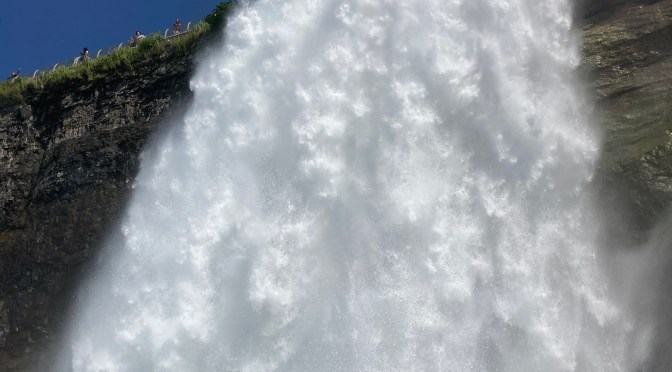
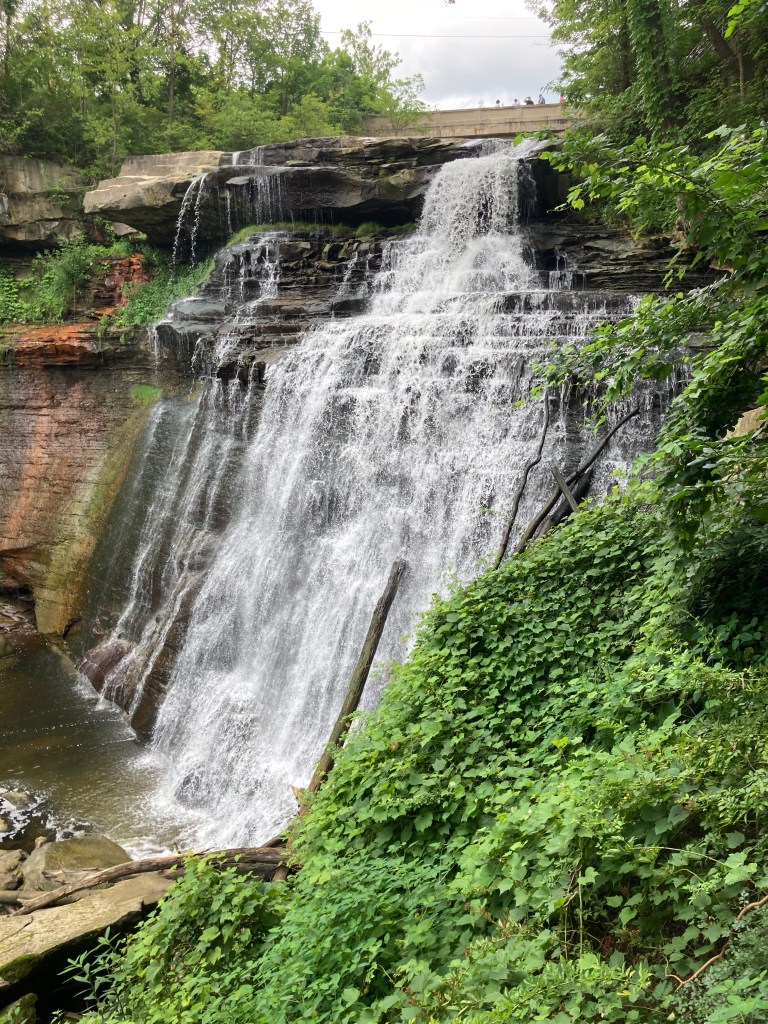
After an evening’s rest, the park called and we answered, hiking to and around the breathtaking Brandywine Falls (a hop, skip and jump from our B&B):

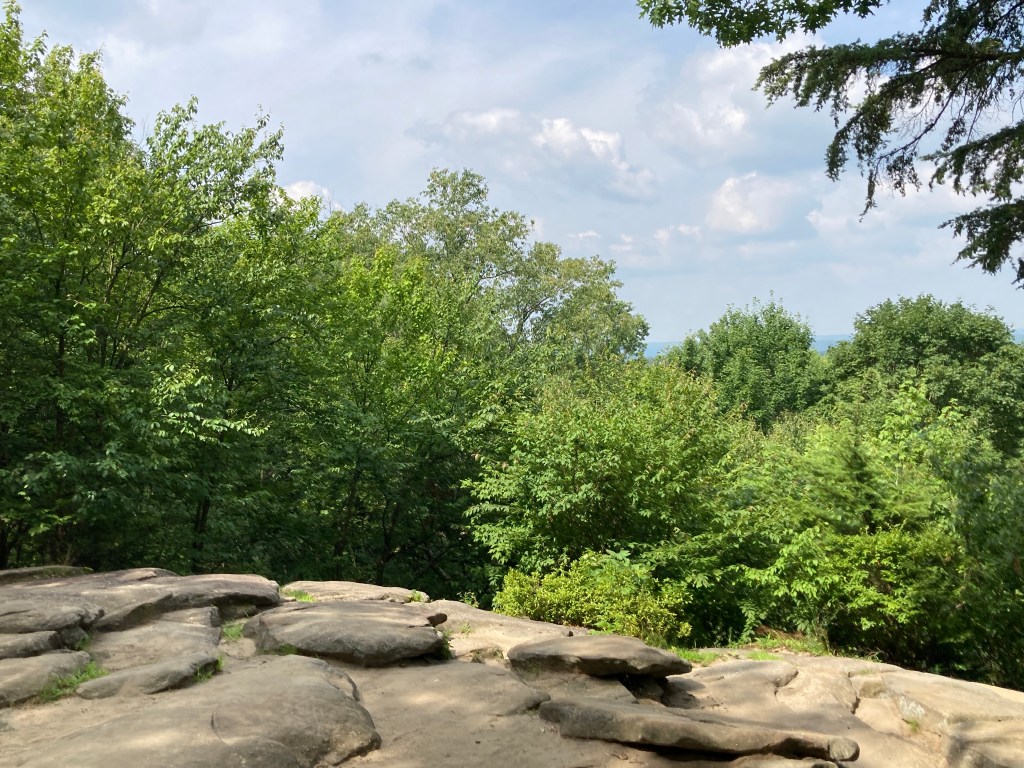
On our outbound journey the next day, we hiked The Ledges, a massive rock outcropping with its own ecosystem, actual bat caves, and a spectacular overlook of the Valley’s forests.

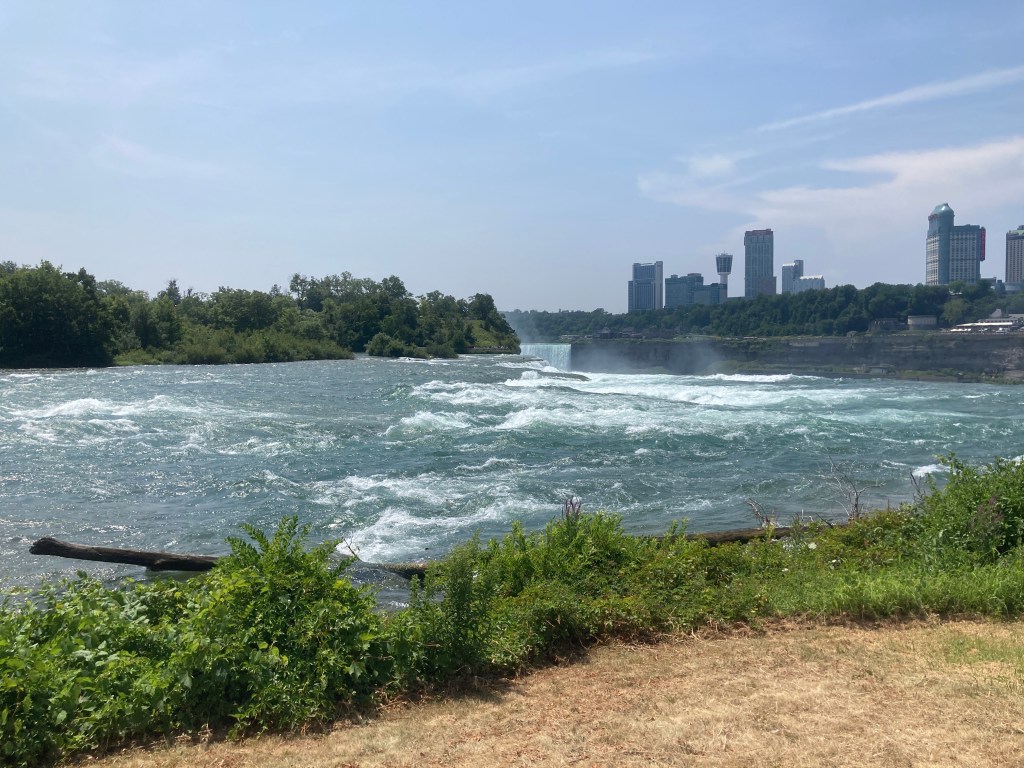
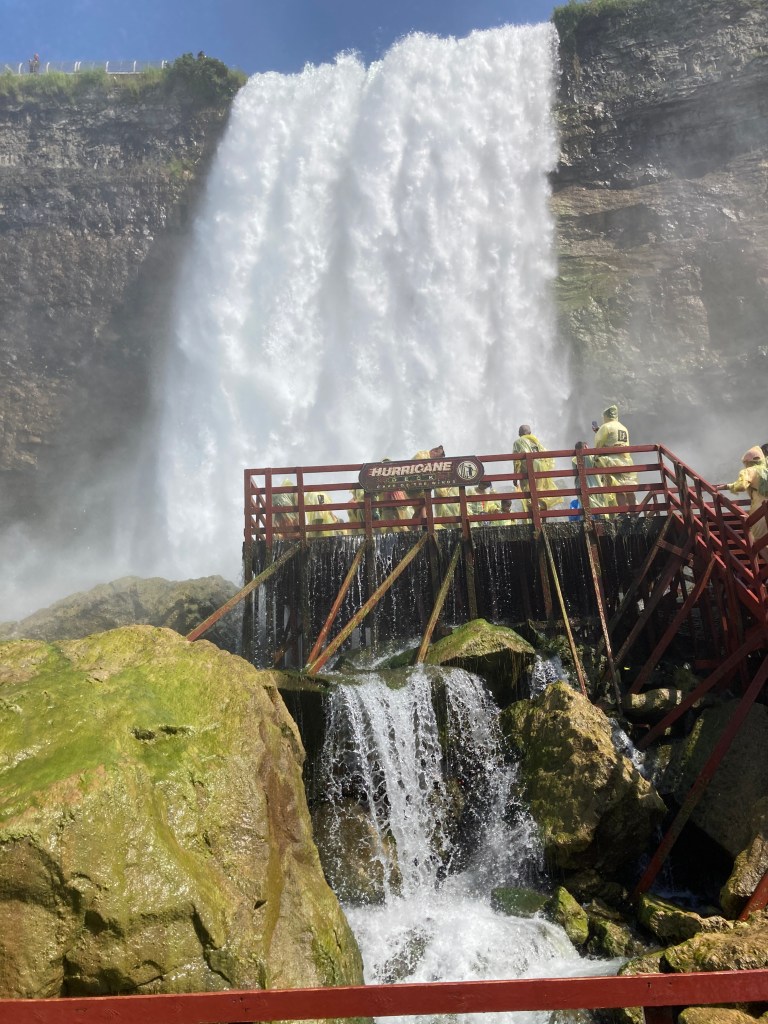
Following time with our friends, we tackled the sublimest of the Sublime for our wedding anniversary: the American side of Niagara Falls, experienced from multiple angles via New York’s expansive state park (the oldest in the country), a boat trip on the Maid of the Mist, and a river-level viewing platform where the now-obliterated Cave of the Winds once beckoned.

And it’ll surprise no one that, cutting back through Canada to head home, we stopped at the annual Stratford Festival for a taut, spellbinding production of Shakespeare’s The Winter’s Tale. One of the Bard’s late tragicomic romances, this one’s got it all: just in the first half, there’s jealousy and skullduggery, messages from the gods, false accusations with fatal results, plus the most notorious stage direction in theatrical history, “Exit, pursued by a bear.” How Shakespeare fashions a happy ending from of these tangled threads (hint: a flash-forward of 16 years is involved) is a marvel in and of itself, but a company that can pull off such a drastic vibe shift is even greater cause for wonder. As usual, Stratford was up to the task, with veterans (Graham Abbey’s hapless Leontes, Sara Topham’s noble Hermione, Yonna McIntosh’s searing Paulina, Tom McCamus’ country clod facing off with Geraint Wyn Davies’ citified rogue Autolycus) and new recruits (an enthusiastic Marissa Orjalo and a passionate Austin Eckert as young lovers Perdita and Florizel, Christo Graham’s show-stealing Clown) giving it their all under Antoni Cimolino’s sure-footed direction. If there’s finer theater on this continent, I’d be hard-pressed to find it. (The Winter’s Tale runs through September 27 at Stratford; see it for yourself!)

— Rick Krueger

In Concert: The War and Treaty’s Shock, Awe and Ecstasy

The War and Treaty with the Grand Rapids Symphony, Frederik Meijer Gardens Ampitheater, Grand Rapids Michigan, August 1, 2025.

From the moment Michael Trotter Jr. & Tanya Trotter hit the stage, they aim to overwhelm. Treading tested paths blazed by their forebears — classic soul duos like Ike & Tina Turner come to mind — even the name of their act — The War and Treaty — zeroes in on their music’s target — the ups, downs, triumphs and tribulations of life as lovers, together or apart. Having built an intense local following from their indie start in Albion, Michigan through their current major label success, the Trotters took no prisoners on this summer night; backed by their tight seven-piece band and supported by an orchestra for only the second time, they delivered their core message to a willing, welcoming crowd throughout two engaging sets of shock, awe and ecstasy.

A typical War and Treaty tune like “Stealing a Kiss” or “Teardrops in the Rain” (both from their latest release Plus One) starts at a low simmer: Michael or Tanya take the first verse, building the tension inherent in whatever tale they’re spinning; their partner turns up the heat with an answer verse. By the time the pair hit a harmonized bridge, they’re coming to a boil; all that’s left is a steamy duet chorus to take themselves and the audience even higher. Whether song is about meet-hot attraction (“Carried Away”), break-up regrets (“Reminiscing”), or even post-messup healing (“Home”) it’s a sure-fire approach that pulls you right in. Anchored by Michigan native Max Brown on guitar and driven by brothers Terrence “Slim” Holmes on organ and Johnathan “Bam” Holmes on drums, every song was driven by a potent, bluesy groove laced with down home touches; responding to conductor Duo Shen’s deft baton, the Grand Rapids Symphony furnished sweetness and spice as required — whether from silky strings, plaintive woodwinds or smoky brass.

Not that The War and Treaty couldn’t stoke the flames on their own; sending the orchestra on a break, the Trotters and their band consolidated their hold on the crowd with a handful of tunes never before heard in the States. The uptempo scat-swing of “Crazy”, the drop-beat reggae of “Bare Knuckles” and the confessional ballad “Hey Judith” (a song for Tanya’s late mom) testified to the couple’s omnivorous taste and impressive range — and the band’s intense jamming provided flexible, sturdy support for even more intense vocal flights of fancy.

One costume change (and the return of the Symphony) later, it all came to a head in an exhilarating final run — gathering momentum with “America the Beautiful” sung and arranged a la Ray Charles’ classic version, then slamming into the double-time, tambourine-whacking gospel of “Call You By Your Name” and the call-and-response finale (complete with audience participation) “Can I Get an Amen”. Though Nashville is their current base of operations, you can tell that The War and Treaty think of West Michigan as home; returning for the second local gig of their biggest year to date, they came, saw, and conquered, leaving a transported crowd hungry for more.

— Rick Krueger