Category Archives: LITERATURE

Ultimate Prizes: The Third Book of Starbridge

I’m rereading Susan Howatch’s Starbridge Series, and I am noticing all kinds of details and themes I missed the first time around. The series chronicles three Church of England clerics: Charles Ashworth, the traditionalist theologian with a privileged background; Jonathan Darrow, the pious monk with incredible psychic gifts but potentially dangerous pride; and Neville Aysgarth, the Starbridge Archdeacon from Yorkshire who is a Modernist that dislikes any whiff of “Popery”.

The first book, Glittering Images, was narrated by Ashworth, and we soon learn that he is not the perfect man he appears to be. He suffers a breakdown, and through the effective counseling of Darrow, is able to emerge whole. Book two, Glamorous Powers, is narrated by Darrow, and he is shown to be extremely complicated. He also suffers a breakdown, and is healed by the empathetic counseling of his college rival, Francis Ingram. Near the end, Darrow butts heads with Neville Aysgarth, and it’s clear there is an immediate antipathy between them.

In the third book, Ultimate Prizes, Aysgarth is the narrator, and we see Jon Darrow from his perspective. But before Darrow enters the scene, we learn how Aysgarth is a young, ambitious Archdeacon with a gift for administration. It is set in 1942, and he is married to the perfect wife, Grace. They have five children – four sons and a daughter. The fifth child, Alexander, was a surprise, and Grace is exhausted taking care of him and their toddlers. She is unable to attend the social functions Aysgarth needs to “get on” in his career.

At one significant social event, a dinner with the bishop, Aysgarth meets a young socialite, Dido Tallent, and he is swept off his feet. He knows that to commit adultery is career suicide for a clergyman, so he resists his desire, but poor Grace soon realizes that something is wrong. Meanwhile, another character from Glittering Images shows up, the wily old Alex Jardine, who resigned his bishopric suddenly. He has mentored Aysgarth and assisted in his swift rise through the Church hierarchy, and he warns him to avoid all contact with Dido. Aysgarth takes strong offense to this advice and agrees to her request that he be her spiritual advisor.

To continue reading this review, click here.

Cecilia in Proghalla, Ep. 2: Phil Keaggy and Kevin Belmonte

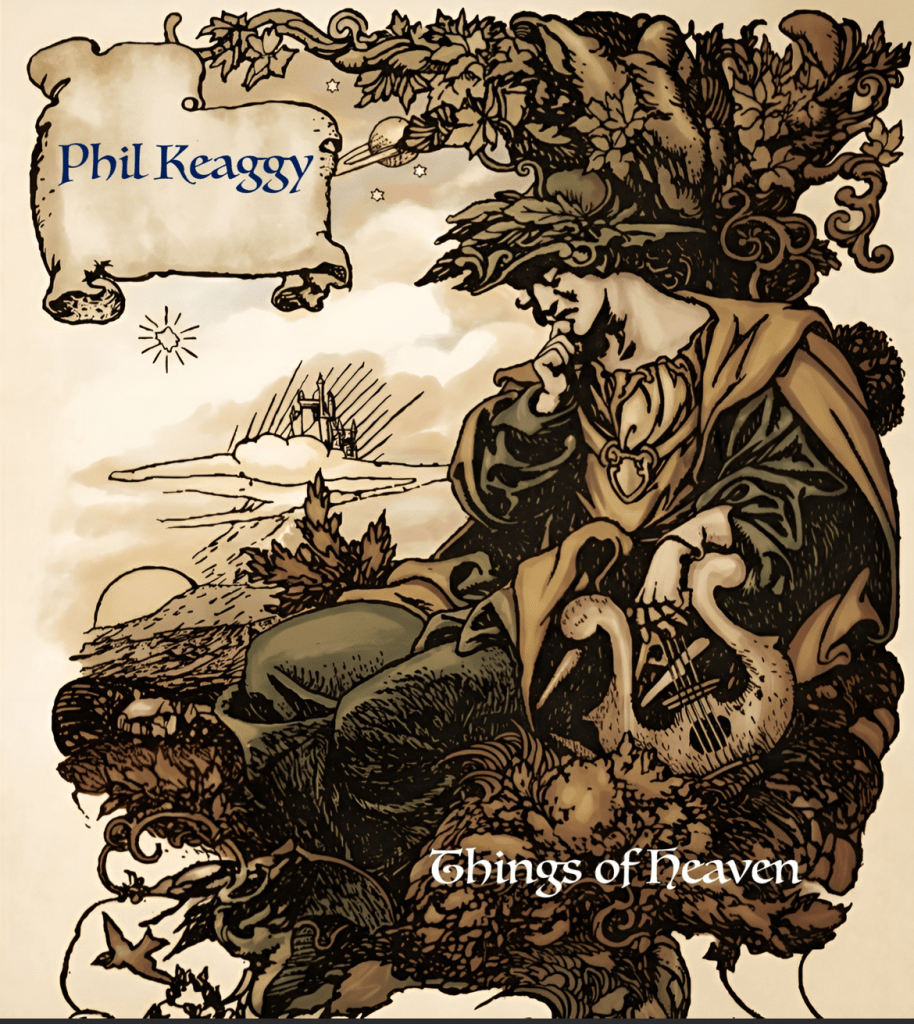
In Episode 2 of Cecilia in Proghalla, Brad Birzer, Kevin McCormick, and Tad Wert have a wide-ranging conversation with the incredibly talented musician Phil Keaggy, and his gifted collaborator, author and poet Kevin Belmonte. They have a new album: Things of Heaven, that is a beautiful set of songs celebrating everything from Paul McCartney’s lost and then found Hofner bass to Easter and Christmas.

Along the way, we touch on Kevin’s new book, G K Chesterton on Life, and Phil’s fascinating career in music. Give it a listen:

Le Fanu’s Ghost Stories: Classic Gothic Horror

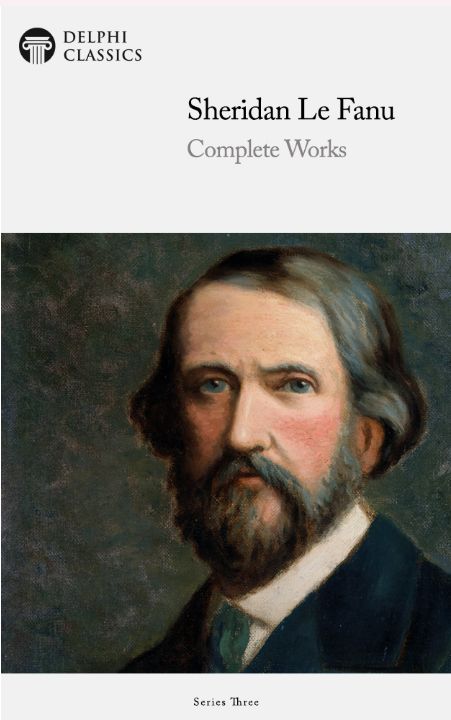
Sheridan Le Fanu was an Irish author writing at the same time as Charles Dickens. He specialized in Gothic tales of helpless young women trapped in desperate situations and some pretty spooky ghost stories. Ghost Stories and Tales of Mystery was his first collection of short stories. It was published anonymously in 1851, and it consists of two ghost stories and two Gothic ones.

The first story, The Watcher, is about a retired navy officer, Sir James Barton, who is engaged to be marries to an eligible young woman. Everything is going extremely well for Captain Barton, except that when we walks home from visiting his fiancée one evening, he hears some footsteps following him. Every time he turns around, the street is empty, but as soon as he resumes walking, the footsteps also resume.

He soon receives a brief letter that reads as follows:

“Mr. Barton, late Captain of the Dolphin, is warned of danger. He will do wisely to avoid —— Street — (here the locality of his last night’s adventure was named) — if he walks there as usual, he will meet with something bad. Let him take warning, once for all, for he has good reason to dread
“The Watcher.”

The mysterious Watcher continues to shadow Captain Barton, to the point that his mental and physical health decline to an alarming degree. It turns out Captain Barton has some skeletons in his closet that have come back to haunt him, literally!

To continue reading my review, click here.

R H Benson’s Lord of the World: A Tale of the End Times

Robert Hugh Benson’s 1907 novel, Lord of the World, might be the first dystopian novel of the modern era. Robert Hugh was the brother of E. F. Benson, the master ghost story teller and author of the hysterically funny Lucia novels. He was a Roman Catholic priest, and Lord of the World is his depiction of what would happen if the antichrist came to power.

Lord of the World begins in a future England with Fr. Percy Franklin and Fr. Francis meeting with a very old man, Mr. Templeton, to learn from him what life was like in the past. It turns out that the “Individualist Party”, which is basically the Conservative Party, has been reduced to almost nothing by the “Humanist Party” which is basically Marxist. The world is divided into three regions of influence: the Eastern Empire (Asia), the West (Europe and Africa), and America (North and South). Euthanasia is widespread, and polite people don’t talk about any life after death. Of Christianity, only Catholicism remains (and it is confined to Ireland and Rome), because the Protestant denominations succumbed to the ideology of humanism.

To continue reading, click here.

Roger Simon’s Emet: A Spiritual Thriller

Roger Simon is a retired Hollywood screenwriter and novelist. I’ve read his previous novel, The GOAT, about an older man who makes a deal with the devil and becomes the greatest tennis player of all time. It’s very funny and thought-provoking at the same time.

His recently released book, Emet, is more serious. It’s a thriller/fantasy tale told through the eyes of a rabbi, Benjamin Golub. He lives in Nashville, TN, and is a rabbi for a synagogue there. As a fellow Nashvillian, I really enjoyed Simon’s references to real-life locations in our city, as well as his accurate representation of its culture.

One day in 2023, a tornado rips through Nashville, and Benjamin goes to his synagogue’s storm shelter. Also sheltering with him are his wife, Maya, their tweenage grandson, Menahem (Max), and good friends Ed Ristic and Tamara Klein. Tamara is grieving the death of her 23-year-old niece, Allison, who was brutally murdered while out jogging. She blames herself, because she urged Allison to come visit her in Nashville after a difficult breakup. Ed runs a coffeeshop, The Orphanage, and has befriended Tamara. He also fancies himself as a sculptor.

The morning after the tornado blows through, they go outside to take stock of things. The backyard of the synagogue is a mess of fallen trees and mud. Ed has already been there, shoveling mud away from the back wall, and he has created a big pile of mud that is vaguely humanoid. Ed jokes that he could make a statue out of it. Maya reminds Benjamin that it looks like a statue they saw in Prague of a Golem – a mythical being that was brought to life by a Rabbi Loew around 1600. He took some inanimate materials to fashion a humanoid and engraved the word Emet on its forehead, which means “truth”. The legend is that Rabbi Loew used the Golem to protect the Jews living in Prague from pogroms, but it soon got a mind of its own and ended up causing more harm than good.

Max, who is a mathematical and technological prodigy, is fascinated by the story. He is staying with his grandparents, because he got in trouble in school and was suspended.

He had responded to a teacher asking what his pronouns were with “I identify as a donkey. He/haw.” Some of his classmates laughed, but the teacher didn’t think it was funny, and things went south from there.

Simon, Roger. EMET (pp. 32-33). Green Hills Books. Kindle Edition.

Later that evening, unable to sleep, Benjamin gets up and goes out to look at the pile of mud Ed made. You can guess what he does next: he takes a stick and engraves Emet where it looks like a forehead is.

To continue reading my review, click here.

George Schuyler’s Black No More

Imagine a black scientist discovered a way to turn black people into white people. What would happen to American society? That is the premise of George Schuyler’s 1931 novel, Black No More. It is very funny and very disturbing at the same time, portraying the extreme racism of early 20th century America in all its horror and absurdity.

To continue reading my review, click here.

Crockett White’s West End: All The King’s Men, updated

I have lived in Nashville, TN, practically all of my life. My parents moved here from Milwaukee, WI, when I was less than a year old. My father was hired in 1961 by Vanderbilt University to start up its Materials Science Department in the Engineering School. Even though I could consider myself a “native” Nashvillian (especially when you take into account the thousands of California refugees that have moved here recently), I have never felt like I am truly am one. It’s a cliche that Nashville is a “big city with a small town feel”, but it’s true. There’s a relatively small circle of everyone who’s anyone, and they all know each other. Still, I managed to keep up with local politics and society gossip through reading the two newspapers, The Tennessean and The Nashville Banner.

Crockett White is a former reporter for The Tennessean, and he obviously spent his career learning all about Nashville’s prominent families’ skeletons in their closets. He utilized that inside knowledge to write West End, a thinly-veiled fictional account of John Jay Hooker’s run for senate in the early 70s. Hooker was a gifted politician who truly had charisma. That word gets thrown around a lot, but very few humans possess it. Hooker had it – even his political opponents acknowledged his gift for connecting with and inspiring practically every person he came in contact with.

To continue reading, click here.

George Eliot’s Adam Bede: Love Conquers All (except Class)

Last year I read George Eliot’s Middlemarch and very much enjoyed it. It has a deserved reputation of being one of the greatest English novels ever written. So, I decided to start at the beginning of Eliot’s career and read her first novel,  Adam Bede. It’s not as good as Middlemarch – very few novels are – but it is quite entertaining in its depiction of English rural life at the turn of the nineteenth century.

To continue reading this review, click here.

Kevin Wilson’s Nothing to See Here

The English Department at the school where I teach has a Writer In Residence every year: an author spends 3 – 4 days guest teaching English classes and then speaking to the upper school students at an assembly. This year’s writer was Kevin Wilson, a literature professor at the University of the South in Sewanee, TN and author of several bestsellers, including The Family Fang  and Baby, You’re Gonna Be Mine

In his talk at the assembly, Wilson spoke of his terror of public speaking and how difficult his adolescence was due to his having Tourette’s Syndrome and social awkwardness. However, he managed to turn these personal obstacles into one of the most entertaining and inspiring speeches I’ve ever heard. He had everyone in the auditorium laughing hysterically one moment and wiping away tears the next. When I got home, I told my wife about how great Wilson was, and she said she thought she had recently bought a book of his. Sure enough, she Nothing to See Here  in her stack of books to read; she had picked it up on the recommendation of her brother, who raved about Wilson.

Which is a long way of explaining how I ended up reading (and loving) a book I probably never would have been aware of. Readers of this blog have probably figured out that my tastes lean to nonfiction (history, science and technology), mysteries, and classics (especially Victorian literature). I am grateful that a confluence of events led me to Kevin Wilson’s work.

Nothing to See Here is told through the eyes of Lillian Breaker, a young woman who is a cashier at a small-town grocery store in Tennessee. She is very bright, but due to several circumstances beyond her control, she is at loose ends – living in her mother’s attic, smoking pot, and generally wasting her life. Her mother doesn’t really care about Lillian, having a succession of boyfriends, and living from paycheck to paycheck.

To read the rest of my review, click here.

R. F. Kuang’s Katabasis: A Descent Into Hell

What if “Magick” was an accredited science with the most prestigious universities offering courses of study in it? What if Dante, Orpheus, Virgil, et al. really did descend to Hell, and their writings were nonfiction accounts of their experiences? What if T. S. Eliot’s The Wasteland was a travelogue of a real place? Those are the assumptions behind Rebecca Kuang’s enormously entertaining novel, Katabasis

Cambridge University’s most renowned professor of magick, Jacob Grimes, has died accidentally in a spell gone horribly awry. His two most promising and dedicated graduate students, Alice Law and Peter Murdoch, decide to go to Hell to bring him back. Unbeknownst to each other, they each consider themselves responsible for Professor Grimes’ death. On earth, they have been bitter rivals for Grimes’ attention and favor. Down below, they have to figure out how to work together as they traverse the eight courts of Hell. Based on my description, I admit Katabasis sounds like a young adult fantasy novel. However, it is definitely written for an adult audience, and Kuang’s story gets very dark, very fast.

To read my full review, click here.