
All posts by Richard K. Munro
The greatest day of my young, innocent happy life
By Richard K. Munro
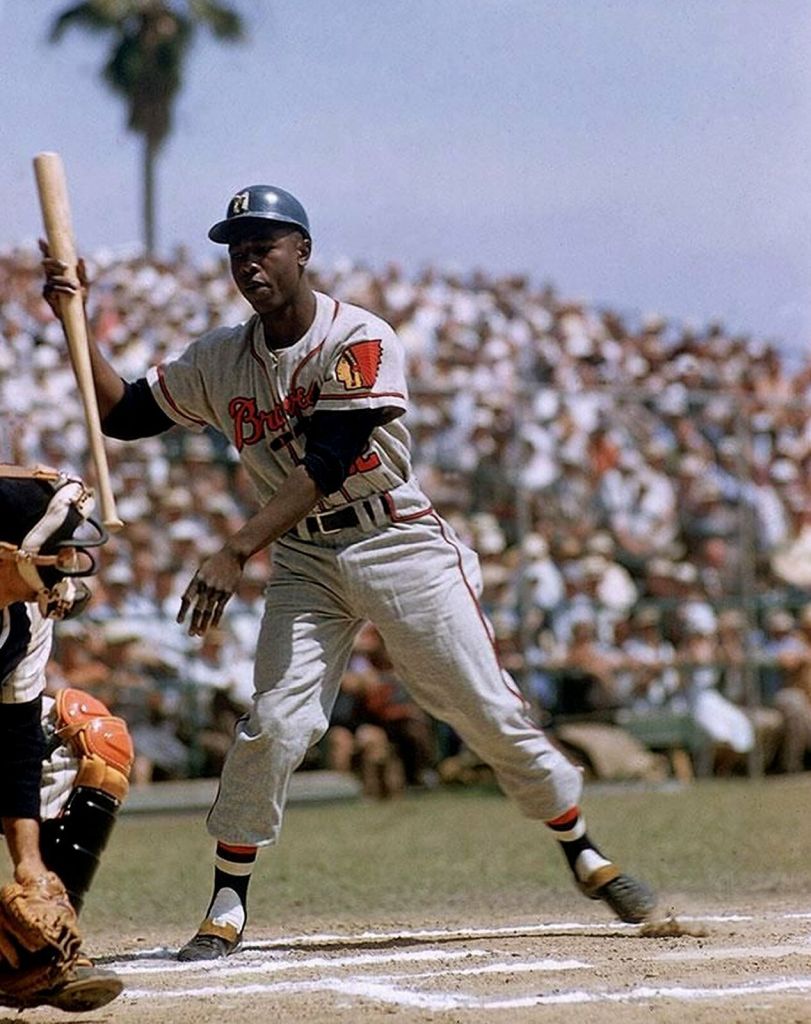
When I was a kid (about 12) I wrote a short essay: “THE GREATEST DAY IN MY LIFE” It was about my friendship with Hank Aaron from afar. He knew me, in a way, I always had the same banner out there “NAIL ‘EM DOWN Hammerin’ Hank.” He always waved at us when he went out to right field.
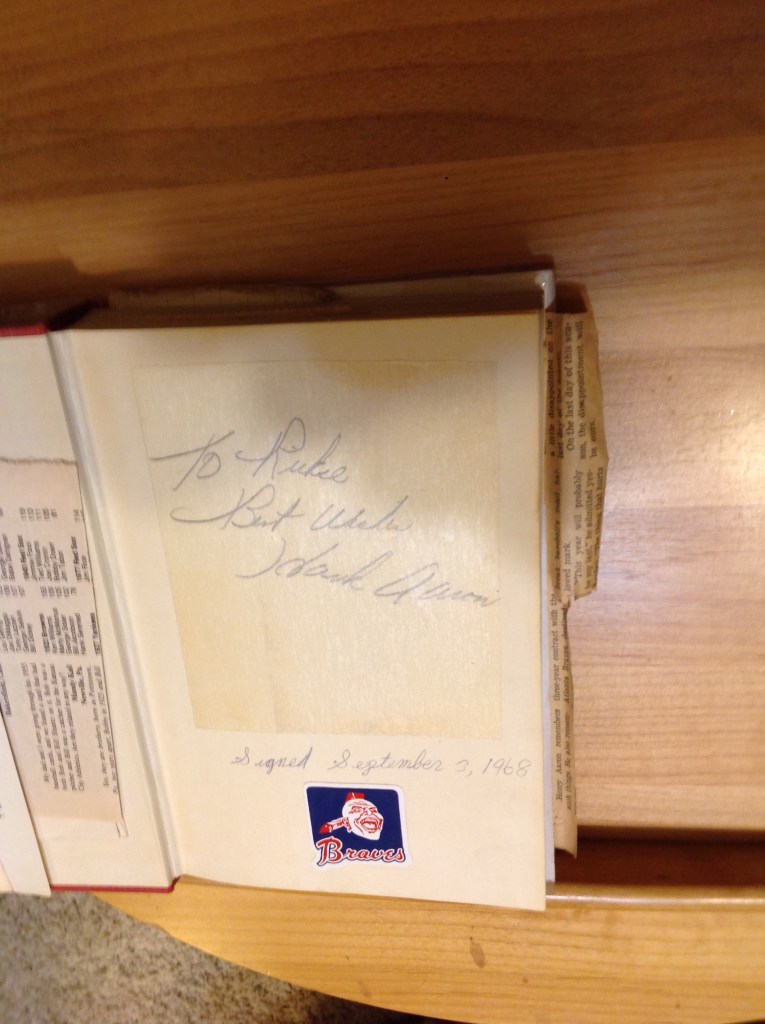
And when the cop said, “This kid has your book on its first day out! What do you think? Could you sign it for the kid? ” Hank said, “What’s the kid’s name?”Rickey” , said the big good natured cop. The game was about to begin. He signed it and they passed to book down the dugout from player to player and back to the cop and then to my dad and me. He signed it with my Dad’s scorecard pencil.
My dad actually apologized he didn’t have a pen and I said, “Dad, nothing could be better than Hank Aaron to sign his book with my Dad’s scorecard pencil.” To top it all off the game was just about to begin.
The first man walked and the second man struck out. Then the announced him: “NOW BATTING, number 44 Hank Aaron”: Hank was all business at bat. No distractions.
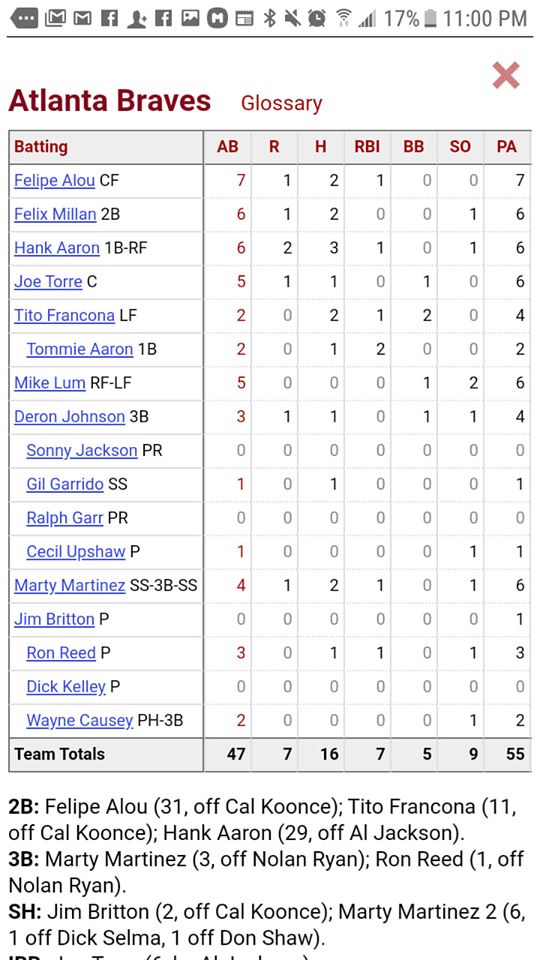
The first pitch was a ringing double down the left field line for an RBI. I couldn’t have been more thrilled. Here was my baseball hero and here he came through right then and there when he knew I was watching!
At 2nd base, Hank doffed his hat. I knew he doffed it for me.
So I wrote about it for school and said, THIS WAS THE GREATEST DAY IN MY LIFE
. As a young boy I loved baseball and my favorite baseball player of all time was Hank Aaron of the Milwaukee Braves and later Atlanta. We were Dodger fans, of course, but the Dodgers moved away and I sought authentic Yankee Killers and my father entranced me with stories of the 1957 World Series. If you watch the 1957 official films you can see my father and some Dodger fans rooting for the Braves. Always was an NL fan primarily. My father loved Duke Snider and my grandfather loved Zac Wheat! But they saw all the great players of the 1920’s 30’s 40’s 50’s and early 60’s and told me all about them. The greatest part of baseball was sharing those days and nights with Auld Pop, my grandfather, my mother, my sisters, boyhood friends too but especially my father. We spent a lot of time together and I went to more baseball games with him than anyone else. Looking back I realize he really went out of his way on work nights and when he was on business trips in Philadelphia, Baltimore and Atlanta to get me in on some baseball games.
Once he and his business associate set me up with a beautiful southern girl. I was very polite to her. After the game, he asked her, “How did the evening go?” She sighed. “He’s already deep in love!” The man said, “Yeah? With who?’ “With Hank Aaron and baseball!” And though she was a very pleasant young woman I didn’t ask for her autograph or her address. After all, she had never heard of Babe Ruth or seen the Braves play. I was young enough (12) not to be distracted by feminine charms. What was a girl compared to BASEBALL? Of course, a few years later I skipped a few ballgames. After all, a woman is a woman.
And Hank Aaron had retired.
My mother said, “You aren’t going to miss the big game?”
I told her, “I have a rendevouz with a beautiful dame.”

“Does she like baseball?”
“Frankly, mom, I haven’t got around to that. All I know is have a date with a beautiful, dusky, dark-haired girl with a fetching smile who speaks English reasonably well with a slight Spanish accent.”
“So for a Latin lover you will miss the big game!”
“Mom, I will read the box score in the morning! You can tell me about any big plays.”
And I added, ” I will let you how my game will go. I expect to get , at the very least to second base. After all she is eager and twenty.”
At twenty I would not have written the same story as the GREATEST AND MOST MEMORABLE NIGHT of my life. She liked me so much we went to a Bosox Yankee Double Header at the old Yankee Stadium. We had a brief romance in our innocent way.
Perhaps the night or the game was memorable to her but I have forgotten her name. But I remember this.
She held my hand and kissed me goodnight.
And I never lied to her or caused her to cry. And there is no doubt, I remember the box scores and ball players more than the women of those years. But it was the time I suppose. Few of the women I met liked baseball or really wanted a serious relationship. And those were two things I knew would be part of my life: baseball and one girl to be my lifetime companion. God shone on me of course.


“Here comes the fieldmarshall!”
By Richard K. Munro
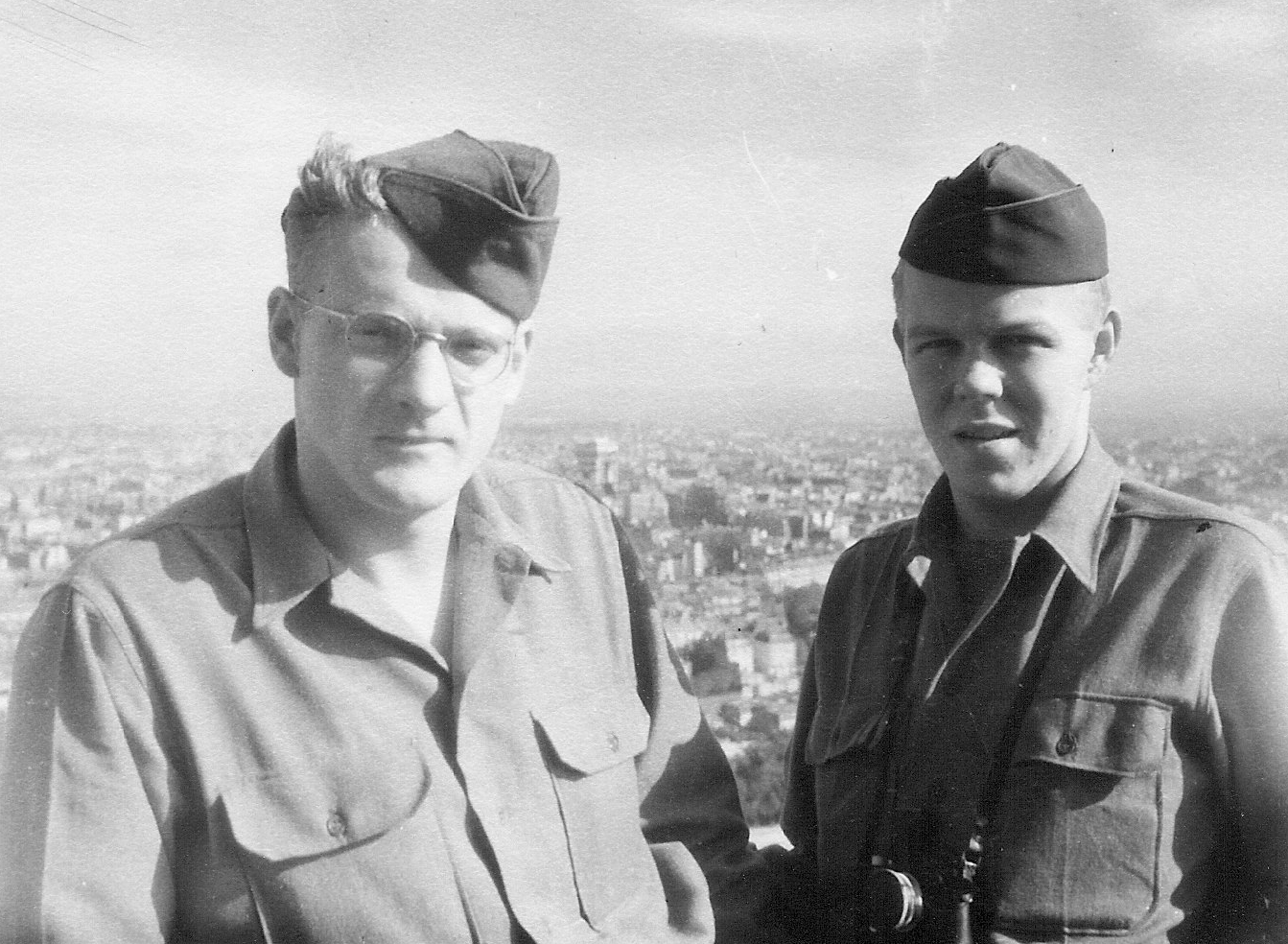
My uncle (Norman Eliasson) served with the 10th Armored Division and used his German to pass through the German lines in December 16, 1944 thus avoiding capture and possible execution. His plan was simple he said, “Achtung!Deutsche Soldaten der 1. SS-Panzer-Division Leibstandarte-SS Adolf Hitler Hierkommt der Feldmarschall! (“Men of the… here comes the Field Marshall!”) The Germans all stood to attention –obeying orders as my uncle had hoped- so my uncle and his fellow American soldiers drove right through the front lines in their jeep without a single shot being fired until they were long gone !
My uncle did get in trouble getting through the American lines because the American soldiers of the101st Airborne quizzed him about baseball and my uncle who had not grown up in America knew very little about the game. He had been to Ebbets field however and managed to name some Dodger players. But what really convinced them was his knowledge of Jewish delicatessens in New York, the subways and the streets. My uncle had been a delivery boy during high school! And of course, he could speak a little Yiddish as well (very similar to German).

https://www.thestate.com/news/local/military/article14388251.html
A TIME FOR WHISKY
By Richard K. Munro

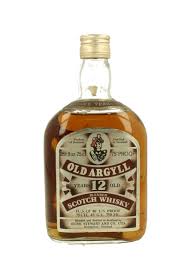
Like most Highland natives, Auld Pop had a vague knowledge of a thing called barbecue, but had never actually eaten any. He was, however, intimately familiar with whisky. In fact from 1914-1933 he often made his own. I do not know and have no knowledge if he ever sold any of his poteen. I do know he used to say, “Prohibition? What’s that? No excise officer ever kept a Highland man from his dram.” “Does love make the world go around? Well aye, mon. “Strrruth! . But whisky maks it go around twice as fast. Aye! An’ gies a mon a sonsie gizz, aye! ThAAt’s a sonsie face – a jolly, smiling face!.

It’s Five O’clock. The soldiers were finally on leave from the Ypres Salient in 1915.
“Whisky is liquid sunshine,” said Robertson.
Munro said: “I hae always felt that distant train whistles heard in the dead of night are God’s way of letting us know the best days are fast runnin’ awa! .Time’s chariot is running by.
An’ the broken hairt it kens nae second spring again, though the weary warld dinna cease frae its greeting. Aye, we are a’ togither tonicht for a wee while. But the parting day is comin’. The whiskey, and romance eventually runs out and the night will soon turn to day. Aye. Ye are a leal n’ true mon, Johnny. You stood by me and Jimmy here in a very dark moment. You and the lads and the Dins- were willing to brave the shadows ‘ death. Medal o no’ yer the bravest mon o’ the Regiment. If Auld Port were here today, he wad understand.” Their Captain, Auld Port, had been killed a few days before on May 10, 1915. One of the finest and bravest men they ever knew and a fine officer.
“Aye”, said Johnny.
“Aye,” said Jimmy
Auld Pop said, “here’s a toast to the Ants and to Auld Port!
TO AULD PORT! TO THE ANTS! they said. The Auts were the men of Company A, Argyll and Sutherland Highlanders. Many came from the St. Anthony’s parish in Govan.
It was dark that night in in the distance they could hear the thud of the German guns round Wipers (Ypres).
Auld Port, Captain Dick MacDonald Porteous had led them in many a trench raid but would never do so again.
That morning, as dawn broke Auld Port was killed. They told his parents it was a stray bullet.
Auld Pop, who was there, said, “it was a Jairmen sniper for sure. Aye. “
He used to have conservations with his Argyll Squaddies, Jimmy Quigley and American Johnny Robertson. Hae ye a smoke?” he asked. “Aye!” said Johnny,
““Matches?” he asked.
“Enough to burn Rome,” said Johnny.
“Whiskey?” he said
“Enough whiskey for the a river of pain, loss and sorrow For the Abhainn nam Manach itself -that’s the River Beauly for a Lallan laddie like ye, Johnny! “
“Are ye fou, Johnny lad?
” “No’ yet, Tommie!”
“An’ ye, young Jimmy?
“Chan eil fos tamuill beag Brathair mathair!”
Johnny, and what’s That? I ken it’s yer mither-leed (language).
Auld Pop: “He says, not for a little while yet, uncle!”“
Said Johnny To be or not to be, drunk on whisky, that is the question in the rright-true Saxon tongue.
( a distant train sounds its horn)
Auld Pop grew thoughtful
May 1915 Lang Syne.
Lochaber No More (funerals for an Argyll. “LOCHABER NO MORE” that was known to be played during WW1 Military funerals with Gun Volley at specific parts of this tune.
Lyrics for “Lochaber No More” :
FAREWELL to Lochaber, farewell to the glen,
No more will he wander Lochaber again.
Lochaber no more! Lochaber no more!
The lad will return to Lochaber no more!
The trout will come back from the deeps of the sea,
The bird from the wilderness back to the tree,
Flowers to the mountain and tides to the shore, But he will return to Lochaber no more!
O why should the hills last, that never were young,
Unperishing stars in the heavens be hung;
Be constant the seasons, undrying the stream,
And he that was gallant be gone like a dream?
Brave songs will be singing in isles of the West,
But he will be silent who sang them the best; T
he dance will be waiting, the pipes will implore,
But he will return to Lochaber no more!
Child of the forest! profound is thy sleep,
The valley that loved thee awakes but to weep;
When our fires are rekindled at dawn of the morn,
Our griefs burn afresh, and our prayers are forlorn;
The night falls disconsolate, bringing no peace,
No hope for our dreams, for our sighs no release;
In vain come the true hearts and look from the door,
For thou wilt return to Lochaber no more!
Neil Munro
)



LOOK to GOD’S PROVIDENCE with Humility

Auld Pop (Thomas Munro, Sr.) said we should always look to God’s providence with great humility. In all our affairs and business of a family and nation we had to depend upon His blessing.
Both my father and Auld Pop believed that the family was the basis of our culture and civilization and If God were not acknowledged there we would have no reason to expect his blessing. Auld Pop often said the “best laid plans o’ mice an’ men aft gang agley.” For enriching a family or nation some are so grasping and avaricious and Midas-like that they forget what really matters which is love and the happiness of one’s race and line.
Yes, that was an expression I often heard that we should have pride in our race and line (as Munros and as Gaels) and that we should “Dread God” (Biodh T-eagal Dhe Oirre; we should reverence unto God: this is the ancient Munro motto of course).
Money was important, of course, because one needed bread “but man did not live on bread alone” and also “what does it profit a man if he gains the whole world and loses his soul?”
I think it was very clear to me that my father and grandfather were unfailing opponents of the passion for wealth, advancement in society or the preoccupation with material things. Neither man played golf or spent more time than necessary with business associates preferring to spend their holidays and weekends entirely with their wives and children. My father and grandfather taught me to read and write before I went to school and gave me the rudiments of Spanish, Latin, French and Gaelic at home. They considered children to be God’s gifts, a heritage, a blessing and special a reward : a thousand treasures in one.
They often spoke of “our splendid ancient heritage” which I suppose was our entire civilization of music, poetry, literature, art, language, song and our faith and free institutions. The both loved art and music. They saw great artists in person like John McCormack, Laurence Tibbett , Rachmaninov and enjoyed concerts and recordings.
My father and Auld Pop also lived through the Great Depression and had memories of the Highland Clearances and the Great Hunger of the 1840’s. They had seen war, experienced hunger, exile and immigration and knew that there was no absolute security to be found in material wealth anywhere at any time. At best money could be a cushion but over and over I was told the “man was the gold and that a man could not be measured by the colour of his skin, or by his speech, or by his clothes and jewels, but only by the heart” (from Mika Waltari)
Real wealth was richness of experience, joy in friends and family and delight in conviviality, one’s garden, sport, music, verse, art and literature.
A deed of mercy:The quality of mercy is not strained. It droppeth as the gentle rain from heaven

The quality of mercy is not strained.
It droppeth as the gentle rain from heaven
Upon the place beneath. It is twice blest:
It blesseth him that gives and him that takes.
‘Tis mightiest in the mightiest; it becomes
The thronèd monarch better than his crown.
His scepter shows the force of temporal power,
The attribute to awe and majesty
Wherein doth sit the dread and fear of kings;
But mercy is above this sceptered sway.
It is enthronèd in the hearts of kings;
It is an attribute to God Himself;
And earthly power doth then show likest God’s
When mercy seasons justice. Therefore, Jew,
Though justice be thy plea, consider this:
That in the course of justice…
View original post 724 more words
REcurring payments info
O death, where is thy sting? O grave, where is thy victory?
Brad Birzer wrote:
“love one another. Be good to one another. Love your neighbor as you love yourself. It’s not enough to say “I love you.” Show it, mean it, live it. Does your neighbor need a friendly ear? Does the homeless man (for whatever reason he’s homeless) need a crust of bread? Does that stray cat need to be loved? After all, even that skanky cat is a creature made by God for a purpose beyond mere existence. Every time one of my cats jumps in my lap and distracts me from writing, I am reminded that EVERY living creature has a purpose. “
Brad Birzer wrote “we’re all going to die. Yes, gentle reader, I mean YOU. You will die. Maybe not today, and maybe not tomorrow, but someday. When Edmund Burke passed away, he gave a rousing speech.
Never succumb to the enemy; it is a struggle…
View original post 2,422 more words
O death, where is thy sting? O grave, where is thy victory?
Brad Birzer wrote:
“love one another. Be good to one another. Love your neighbor as you love yourself. It’s not enough to say “I love you.” Show it, mean it, live it. Does your neighbor need a friendly ear? Does the homeless man (for whatever reason he’s homeless) need a crust of bread? Does that stray cat need to be loved? After all, even that skanky cat is a creature made by God for a purpose beyond mere existence. Every time one of my cats jumps in my lap and distracts me from writing, I am reminded that EVERY living creature has a purpose. “
Brad Birzer wrote “we’re all going to die. Yes, gentle reader, I mean YOU. You will die. Maybe not today, and maybe not tomorrow, but someday. When Edmund Burke passed away, he gave a rousing speech.
Never succumb to the enemy; it is a struggle for your existence as a nation; and if you die, die with the sword in your hand; there is a salient, living principle of energy in the public mind of English which only requires proper direction to enable her to withstand this or any other ferocious foe; persevere till this tyranny be overpast.
“O death, where is thy sting? O grave, where is thy victory?”
I know the feeling on thinking perhaps people are waiting for me in the great beyond. Some years ago while I was coming out of cancer surgery at Cedar Sinai hospital I had this strange dream that I was visiting World War One battlefields, Ypres in particular. In the dream I walked into the past and into the trenches -it was so very real -i could smell the cordite and hear the rata-tat-tat of the machine guns And I saw my grandfather in the trench wearing his kilt and glengarry. (Auld Pop) and I spoke with Auld Pop and his comrades in the Argylls. He looked at me and said only, “your time has not come yet.” Then ,in my dream, I was wounded on the wrist and in the armpit with shrapnel and taken away quickly by stretcher. When I started coming to the nurse said I was talking about strange place names and how I had to get back to the front. It was a very vivid dream. Had I come close to the shadowline of death?

My mother also visits me sometimes in my dreams. I think of our last moments together when we said the Hail Mary and the Our Father she taught me together and how weak her hand was. I remember her telling me that her death would be harder for me because I would have long years of waiting but she would be there just on the other side. That she would see her father Eric Anderson whom she never knew. He was killed on August 8, 1918. We named our daughter Erica after her great grandfather. Our son Ian is named after Captain Ian Munro, MC killed October 30, 1918. Ne obliviscaris. Do not forget.
Some say there is nothing after death but nothingness. But I think life, dreams and love prove otherwise. Men die but their families and communities live on. Men die but their immortal souls linger. We are a community and we remember others and we retain in deepest gratitude a profound respect for the dignity and worth, the deep love, the unbreakable loyalty in the actions and the sacrifices of others who struggle now and who came before us. It is difficult to retain tradition and a respect for tradition in an indifferent and sometimes hostile world. But I like to think something always remains. Some things are passed on. You cannot command these things. All you can do is carry the tattered banner in your lifetime and remember and love and tell people the story. But they have to choose to remember and listen. The young are so busy and so distracted by the Pied Pipers of technology that one feels we have spawned an alien race, a race that knows not character, nor loyalty, nor modesty nor respect.
However, Christians must have hope and optimism about the future.
We must believe the demons will be conquered and what we are experiencing is a mortal storm even if there are some casualties. Maybe, this time, ourselves. Auld Pop, Captain Ian Munro, Eric Anderson and Ruthie Munro all faced greater challenges with fewer resources and medical technologies we have today. Some survived 1918 and some did not.
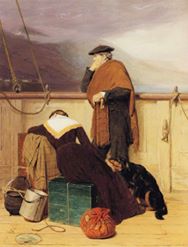
Emigration and exile are common themes in Irish and Scottish songs:
“Castles are sacked in war
and Chieftains are scattered far
But truth and honor are fix-ed stars.
And when it comes down to it prayer and daily praise of God is a very key response. Today some people would like to blot out the harshness of human evil and natural disaster and divorce God from it all. They would demand that God end all suffering, disease and injustice and until he does that they would not consider him worthy of praise.
The Auld Book teaches us instead about our continual need to struggle for life and what is right what proclaiming only God can accomplish it. Thomas Munro, Sr. was a watchman in the trenches for many a dark night and many a dark day 1914-1919. He saw friends and allies killed and blasted to smithereens all around him. Psalm 117 he said: “Except for the Lord the watchman waketh in vain.” He did not fear death because Lady Death was always near. He almost expected to die a hundred times.
Auld Pop was a loyal man. Loyal to his family, his country, his flag, his regiment. When the Communists came to his neighborhood to damn his service to damn his religion and damn his country he never wavered. To have wavered would have been to be disloyal to his wife, her church, his family, his fallen comrades, his country and the Allied Cause. He was loyal to his God and he knew God required of him a personal response of loyalty, affection obedience and communication. He had no job when the war was over and didn’t know where to turn. To join Willie Gallacher, his erstwhile friends and the Communists? His pal “American Johnny Robertson” convinced him to come with him to America and stay clear of the Reds. That friendship that decision changed all of our lives mostly for the good.
While under the guns he and his nephew Jimmy Quigley held on the rosary and prayed continuously to God. He told the amusing story how his pal Johnny Robertson, a man who was a freethinker and never darkened the door of a church if he could help it saw them together praying with the Padirin (the rosary) and came over to them and said for the first time in his life, “Gie me them beads!” And the three of them huddled together under the withering German fire. Seconds later the place where Johnny had been was blown away and everyone to the left of them had been killed. All Johnny could say, was” Munro, it looks to me you are one lucky bastard. I am staying here!” Auld Pop replied, “Ye hae to save yer luck for when it counts. Sooner or later everyone rolls snake-eyes. Aye. If it God’s will we survive this warrr then we will surrrvive. Och, Aye!”
They were prepared to die every day but were never alone.
They knew, one way or another, they had to carry on, they had to survive not for themselves alone but for their families, the Allied Cause and for freedom.

They knew from personal experience that no one is untouched by tragedy. One day they ambushed a German platoon and wiped it out. Most of the fallen German soldiers were boys no more than 16 years old. It haunted my grandfather for the rest of his life. He killed many enemy soldiers but those deaths affected him the most. He would dream about their faces and be tormented thinking they might have been able to take some prisoners but they were outnumbered and terrified so they killed.
My grandfather was a very gentle and kind man. He suffered a lot in his life -war, unemployment, exile, the early death of his wife of 32 years but tragedy reminded him to be compassionate and not to inflict pain and suffering on others for no reason. One of the great lessons of suffering is how we respond to it.
I think back on Auld Pop and think he was asked to suffer and endure the unacceptable. One by one almost all his Scottish pals of August 1914 were killed, invalided out or horribly maimed. Until there were only three left. One Johnny Robertson survived without a scratch. He returned to Scotland in 1938 marry the widow of a former comrade he had been supporting while working in America. And his fate? Johnny was killed in his own bed, in his own house by the Nazi Blitz of the Clyde in May 1941. When my grandfather got the telegram in America he had a complete breakdown and went on drunken spree and nobody knew where he was for days. When my father and uncle found him at 222 Dean St in Brooklyn where he used to live with Johnny Robertson in the 1920’s and he insisted Johnny was there just upstairs and he couldn’t understand why they wouldn’t let him in.
My father told him, “Pop, Johnny is dead. Here is the telegram. Come home, Pop. Mother is waiting for you. She is worried sick.” Auld Pop broke down and wept uncontrollably. He recovered and went on to build ships for the Allies six and seven days a week for years.
Tragedy in our lives can force us to endure and discover resources that we never imagined we had. “Many a good horseman has fallen off and gotten back on again,” Auld Pop used to say.
Spiritual power is an inner strength that manifests itself in this world as the ability to transcend danger and fear of death. “It is the spirit that gives life; the flesh is useless. The Words I have spoken to you are spirit and life.” (John 6:63) . When I was a small boy I asked Auld Pop if he had been afraid of dying in battle. He said, “Och, I was too busy to think on it, to tell ye the trrrruth. My greatest fear, I think was failure. Letting doon the other lads. Letting doon the Regiment. My country. The Allied Cause. We held on to the tiniest part of Little Belgium and the Hun never took the Ypres Salient. Aye, we held. We did our duty to King and Country and the Allied Cause. ” He took some satisfaction in that and the service during the Second World War building ships for the Allies. He loved to speak of the Immortal memory of Robert Burns but in a way he spoke of his native land and his Regiment, that “Thin Red Line of Heroes” the same way. Auld Pop knew when he died he would not be forgotten; he knew he was loved. He knew there were no monuments to HIM but in a way the whole world was a monument to his comrades, to his Regiment and to his generation that fought and won two world wars.
He knew that Good would triumph over Evil in the end. He knew that faith and spiritual power could transcend the material world and its evils especially if we cultivated the deathless part ourselves. He taught me his regimental motto in 1959: “Ne obliviscaris….do not forget.”
Leal n’ true until the very end. When Auld Pop returned home to Scotland, briefly in 1919 -he spent most of his adult life in exile-the Regimental band played THE SOLDIER’S RETURN. It was my father’s first memory of his father and he recounted it many times. His mother Mary said: TOMMY, THIS IS YOUR DADDY and he saw a big giant of a man in a kilt, with a glengarry on his head and medals on his chest. He was glad he was not one of the fatherless wee babes:
When wild war’s deadly blast was blawn,
And gentle peace returning,
Wi’ mony a sweet babe fatherless,
And mony a widow mourning;
I left the lines and tented field,
Where lang I’d been a lodger,
My humble knapsack a’ my wealth,
A poor and honest sodger.
***
“The wars are o’er, and I’m come hame,
And find thee still true-hearted;
Tho’ poor in gear, we’re rich in love,
And mair we’se ne’er be parted.”
Quo’ she, “My grandsire left me gowd,
A mailen plenish’d fairly;
And come, my faithfu’ sodger lad,
Thou’rt welcome to it dearly!”
For gold the merchant ploughs the main,
The farmer ploughs the manor;
But glory is the sodger’s prize,
The sodger’s wealth is honor:
The brave poor sodger ne’er despise,
Nor count him as a stranger;
Remember he’s his country’s stay,
In day and hour of danger.
The Argyll monument at YPRES has an inscription La a’bhlair, ‘s math na cairdean ON THE DAY OF BATTLE ‘TIS GOOD TO HAVE FRIENDS.AYE, ‘S truth. It also says CRUACHAN -its a famous Munro (mountain) in Scotland that many an Argyll and his kin has climbed. It’s a symbol of the lands of the Mountains white high covered with snow -Alba. Sair ghaisgich a cogaidh mhoir (BRAVE WARRIORS of the GREAT WAR)
Na Laoich a chaidh romhainn
(THE HEROES WHO CAME BEFORE US) ne obliviscaris…do not forget.


RULES FOR SURVIVING THE GREAT WAR 1914-1919
A wonderful message that my friend Richard Munro shared about his grandfather, Thomas Munro: RULES FOR SURVIVING THE GREAT WAR (1914-1919).

He wore a kilt (with a canvass cover) every day for almost five years. He used to kill bugs that crawled up his legs with his cigarettes; he said it took practice to burn the bugs off with out burning yourself. He also said tobacco smoke helped keep the bugs away. Auld Pop was a quiet man but touch not that cat but with a glove. He had killed his first man at age 10 with a Martini-Henry rifle (a Sumatran Pirate); He and his mates killed so many Germans they literally lost count. Once they killed about 50 Germans in less than 10 minutes wiped out a whole platoon before they got off a single shot. It was not for nothing the Germans called them the “Ladies from…
View original post 431 more words
 Spirit of Cecilia
You must be logged in to post a comment.