BIOGRAPHY: Richard K. Munro April 4, 2023
I am a retired teacher of English, Spanish & history. I taught in public and Catholic schools for over 34 years. I am a California Certified teacher of Social Studies, Spanish and English. I was a Mentor Teacher in the Kern High School District.
I hold a BCC (Bilingual Certificate of Competence). I have always been interested in foreign languages and bilingualism probably from the time as a young man realized that the Roman Empire was a de facto bilingual empire (Latin and Greek) and from the experiences of my father who spoke Spanish and Tagalog as a US Army officer during World War 2. My father encouraged me to study Spanish as it was a practical and important universal language.
I attended public schools in New Jersey excelling in AP US history and AP Spanish. At the recommendation of my high school Spanish teacher, I began my university studies in Soria, Spain with the University of Northern Iowa. We American students lived with Spanish families and pledged not to speak English with each other or anyone else for the entirety of the course (10 weeks). I became aware of the value of total immersion in a foreign language. I am fluent in Spanish and Portuguese and have a good competency and reading knowledge of Latin, Italian, and many other languages. In my retirement, I am studying Greek via DUOLINGO and Teach Yourself Books.
Like my father, uncles, and other relatives who served during WW2, I volunteered to serve in the US military. I hold an honorable discharge from the US Marines. My parents were naturalized Americans and the first in their families to graduate from high school and go on to college. During WW2 my immigrant grandfather help build US Navy ships and Liberty Ships. My parents and grandparents impressed upon me from an early age the importance of national unity, patriotism and deep gratitude for the opportunities America has afforded us.
My specialty became English literacy for newcomers (emphasizing phonics, diction, and grammar) and sheltered English immersion Social Studies (history) for English learners.
I believe in voluntary high-quality Dual Immersion instruction and the importance of the teaching foreign languages. My daughter is a Dual Immersion Spanish/English k-6 teacher and my son is a AP Spanish teacher 9-12. I am married with three children. My wife is an immigrant and a naturalized US citizen.
For many years I was an AP Reader in Spanish (adjunct faculty) for ETS. In 2004-2005 I was the ISI Renshaw Fellow at UVA and a University Supervisor. I taught at Bakersfield College for four years as an adjunct professor in Spanish. I have a New Wine Credential; I taught high school catechism in English and Spanish for over 20 years. I voluntarily tutored many immigrants pro bono for citizenship tests and for those who attended junior college. My wife and I have co-sponsored immigrant families in our community who have gained US residency.
I studied history, political science, and Spanish at NYU (BA with honors) and was awarded the Helen M Jones Prize in history. I achieved my 5th Year teaching certificate at Seattle University and was certified as English teacher as well as Spanish and Social Studies. I hold an MA in Spanish Literature from the University of Northern Iowa. In addition to teaching, I have worked in private industry as a tour guide, a construction worker and as a customer service representative for the Bank of America (five years).
I have published articles in newspapers, Military History magazine, Calliope, and Cobblestone. I was author of “Spying for the Other Side, KIM PHILBY” which appeared in the McGraw Hill Anthology of World History. I have authored one-act plays for youth such as "Euripides' Trojan Women” (Calliope),"Romans on the Rhine", "Clad in Gold Our Young Mary" , "Beneath Alexandria's Sapphire Sky" among others.
I have edited galleys of several books and have done research for authors notably Andrew Roberts in CHURCHILL WALKING WITH DESTINY and his THE LAST KING OF AMERICA: GEORGE III.
I began my career primarily as a Spanish teacher specializing in Spanish for Native Speakers and AP Spanish and AP Spanish Literature teaching in Washington State and California. However, I also coached sports (baseball and soccer), advised for the local “We the People team” and filled in by teaching the occasional summer ESL or US history class.
As a bilingual teacher of course, I attended meetings and conventions for bilingual teachers. There Stephen Krashen and others taught that a student could be taught Math, Social Studies, Language Arts and Science in their native languages (rather than English) and that knowledge and literacy would “transfer.” I came to call this Phoney Bilingual Education or NENLI (Non-English Native Language Instruction) Many teachers I met favored a “late exit” approach which meant keeping students in so-called bilingual classes deep into high school. I was skeptical.
For me 1995-1996 was the turning point. I was asked to fill in for three ESL classes that had been previously taught by another bilingual teacher. I was shocked by what I found. The students were reading mostly in Spanish and doing journals (in ungrammatical Spanish) only. The students chatted in Spanish the whole period and English was rarely if ever heard. I was told the goal of ESL classes was literacy. I clashed with the local administrator who would not provide me English language dictionaries, bilingual dictionaries or English language material. I bought a box of American heritage dictionaries out of my own pocket and taught using newspaper articles and comics. I protested that the student transcripts indicated the classes were English classes so they should be taught and tested in English for those classes. To do otherwise was, in my opinion, intellectually dishonest, even fraudulent.
I continued to inform myself and read books and articles by Linda Chavez and Rosalie Porter especially FORKED TONGUE by Porter.
At the time our high school graduation rate was falling and one of the major reasons was students could not pass 11th grade US history or 12th grade Government and Economics. The Bilingual Coordinator had the answer: alternative paths mini-classes (all in Spanish) via Migrant Education. I was asked to teach US history and World History with Spanish language history books. These books were ordered via supplementary budgets and so evaded the normal book approvals via the district. I refused to use those books. Instead, I volunteered to teach US history with English language books (with numbered paragraphs and bilingual glossaries). The school was very divided on this issue; I had at one time the support of the Social Studies chairmen and the school principal but not the vice principal and bilingual coordinator. I was very successful, and the students were very grateful. In one history class, every single student passed his or her English proficiency test and graduated from high school.
Over time, however, I became increasingly at odds with the Bilingual Establishment some of whom accused me, publicly, for being a “racist”, “English-only”, a “white supremacist” and “anti-immigrant.” I responded of course that my conscience was clear as I had dedicated my life to help immigrants and newcomers of many races and religions, spoke Spanish and other languages, and that my wife was an immigrant!
In 1997 Ron Unz came to our town to promote his new referendum English for the Children. To my surprise, I felt sympathy for most of what he said and so volunteered. I actively campaigned with Unz , Henry Gradillas, and Jaime Escalante in English and Spanish for Bilingual Education reform with English for the Children in California 1997-1998. I helped produce bilingual radio commercials and appeared on Spanish-language and English-language television. During this period I met Rosalie Porter and later worked with her as an advisor in the successful English for the Children campaigns in Arizona and Massachusetts. I have been associated with ProEnglish for many years as an advisor eventually being invited to join the Board of PRO-ENGLISH.
I believe local communities should have some choice as to what kind of educational programs they want to provide and what languages they teach. I also deeply believe in La Conviviencia. La Conviviencia is an almost untranslatable Spanish concept. It means living, communicating and working together and thereby gaining mutual respect and comprehension. I believe in La Conviviencia; we must live together as good neighbors. We have many problems in this world, even enemies; but with our neighbors and friends we should live in peace. I believe in the policy of the Buen Vecino (the Good Neighbor) and in la Conviviencia (peaceful coexistence) of different cultures, languages, and religions.
Diane Ravitch wrote “a society that is racially diverse requires…a conscious effort to build shared values and ideals among its citizenry.” This includes the recognition that English is and should be our official national language. The language of the rule books, Federal courts and juries must be in English. In addition, the Uniform Code of Military Justice, contracts, official documents, our laws and constitutions must be in English though translations can be provided.
I believe English should be the official and national language of the United States. I do not believe we can or ought to be an officially bilingual or multilingual nation. This does not mean in any sense that languages other than English should not be taught or used, however. It should be clear that I have never been an English-only person but a multilingual person who is pro-immigrant and believes in voluntary multilingualism. America needs English but it also needs knowledge of other languages for cultural and educational reasons as well as for national security reasons. My entire family is multilingual and multicultural, and I hope we carry on this heritage into future generations of American Munros and Mendozas in a prosperous, peaceful and United States of America.
I was a classroom teacher for over 34 years. Mostly 9-12 but also junior college. I graded AP exams for almost 18 years. What keeps a teacher motivated? What makes a teacher great?
#1 A teacher has to believe in his school, his community, his country and in a larger sense his civilization. I am and always have been grateful my my country and the freedoms and opportunities that it afforded me.
#2 A good teacher has to believe in his subject material like a doctor believes in health. If a teacher is enthusiastic and knowledgeable in his subject area(s) this will influence students in a positive way. It is unfortunate that one must deal with a lot of indifference and anti-intellectualism in American education. But having done what men must a teacher suffers and endures many things for many days and many years. Enduring a lack of respect for his profession is one of those things.
#3 a good teacher is flexible and can “fill in” temporarily as a substitute or tutor but should know his assigned subject as well as possible and continue to improve his knowledge and expertise.
I was very strong as a Foreign Language (Spanish) and ESL (English teacher) and I taught Social Studies as well (mostly to immigrant English learners). I was not a great baseball or soccer coach BUT I shared my love of the games with my students and used the sports to promote English and character building. I am proudest that my teams were composed of eligible players. I cared more about their academic performance and personal happiness than winning championships.
#4 A good teacher cares for his students. He gets to know them and understands his or her background and community.
His love is a philia love kind of love for his students. He wants what is best for them and helps them as much as possible. I encouraged an amateur interest in classic movies, documentaries, literature, history and reading about sports and sports officiating. Teaching in a rural area many of my students joined the military. A few went to the service academies. Once five students from one class came back to visit from Camp Pendleton (USMC) in uniform. I was very proud of them. We sang the MARINE HYMN together from memory. The greatest burden I experienced as a teacher was to attend funerals of students killed in Iraq and Afghanistan. But I remained proud of their service.
A good teacher avoids having intimate relationships with his students outside of the classroom. I never dated a teacher or dated a student. One avoids temptation. It will be there especially for younger teachers in their 20s and 30s. But if you love your students you will not hurt them. You will want to see them happy and successful.
#5 A good teacher works well and collaboratively with colleagues in his department and throughout the school. However, he stands up for order and tells the truth about school discipline or lack of it and school safety or lack of it. Once I backed up a student -one who had never been suspended or disciplined- for fighting in a soccer game. His mother had been cursed and reviled in a most despicable way. So he lost it. The referee had not heard it BUT I DID. I went to the principal and school board to say YES expelling him for the team permanently was an acceptable behavior but not expelling him from school when he was so near graduation and it was a first offense. Especially when the student who started the fight was not disciplined in any way. The student never played another game but later graduated.
It was not popular for me to say -it was embarrassing for some-I would grade our school security at D+ (we had no fences, could not lock our classrooms from the inside and were told we had to keep our doors unlocked at all times). I always knew a school massacre was always a possibility and one gun and one unlocked door away. A good teacher tells the truth not for his sake but for the sake of the community and the school’s integrity. One has to know WHEN to throw the gauntlet and when to challenge the Teacher’s Union or Administrators. Be prepared for retaliation and ever lasting enmity. One thing I learned was that if one doe not have the department chair and administrators on his side it is best to “vamoose.” You have to have someone batting for you on the administration side.
#6 No question a good teacher will volunteer for many school and community assignments and not expect financial recompense in most instances. For years I tutored former students who were in JC or college or gave them advice for research papers. I was a Church catechist for over 20 years. I didn’t leave for doctrinal differences. I left because under a new regime they wanted me to “guide” non-academic classes with no Scripture or Bible readings. I felt I was not needed for arts and crafts. So I resigned. I don’t think I will go back. A good teacher must know when to vote with his feet. I was a strong advocate of ETS and AP classes and exams for almost 30 years. But I left in the end. My last ETS memory was not being complimented for my high productivity but chastised for going to the bathroom twice in the morning and twice in the afternoon. Not smoking breaks but calls of nature for a teacher past 60. I decided then and there that I was finished with ETS and AP. I served on many juries over the years (with ZERO compensation; I lost money on transportation and food). But I now have a medical exemption and think it unlikely I will ever return as a juror. I served my time as a soldier, as juror, as a teacher, as a coach. I worked very hard as a classroom teacher tutoring on Saturdays and working many nights and summers. But I never neglected my own children’s education, my wife or my home. It is one of the reasons I never took up golf.
It is hard but a good teacher must accept disappointments and if his school or assignments are unacceptable he must MOVE (apply for a transfer) or RETIRE. I have done both. There were times I wanted to quit but I could not as I was hostage to fortune as it was essential to have health insurance and economic security for my family. But when things were bad I prepared to make a strategic retreat over time and I exercised this smoothly. It helped that I had a free and clear car and money in the bank and solid credit.
I still am interested in education but am now retired. I have no interest to return to the classroom though I still promote education and encourage it in others. But I have decided to spend the rest of my life continuing MY OWN EDUCATION and doing things I never had the time for like studying Italian and Greek. I swim every day. Spend time in my garden. Listen to entire baseball games and read all the box scores. Read only to inform myself and for pleasure. Listen to podcasts. See a movie (at home) now and then especially the old classics. I spend as much time as possible with my grandchildren. When they are here I put away my phone do not watch sports but play games with them, do puzzles and swim in the pool. I enjoy having breakfast and dinner with them (no phones no TV or electronic devices). I tell them stories. I speak to them in several languages and encourage them to be budding polyglots. All are fluent in two languages and have been introduced to several more through music and cultural events.
#7 LAST BUT NOT LEAST. A good teacher does not sacrifice his family life or faith life for his school. A good teacher has balance in his life. HE TAKES CARE OF HIS HEALTH. And he prepares for a life beyond and outside of the classroom, school, and education.
Knowing when it is time to “unplug” -get off electronic devices is really a question of temperance and moderation. For one thing one has to make an effort (I certainly do) to be physically active. When I go for walks or swim I never carry music or the phone.
I unplug or leave my phone charging in the bedroom. I never use my phone or have it on when we are having dinner (breakfast is different) or have guests. When I go out to dinner with my wife I never have my phone out.
I have a smart phone and I use it a lot every day, however. I use it to listen to podcasts, to read the WSJ, to listen to audible books and to study languages via Duolingo. But I do all my correspondence and reading on my NOOK or on my PC not on my phone. I like a full size keyboard.
AndI turn my phone off in the evenings and at night. When I study on the porch I don’t answer the home phone or text messages. Some people may watch videos on their phone but I don’t. I sometimes listen to music on my phone but more often listen to books or podcasts. I think it is important that we be masters of our pleasures and not a slave of addictions. Moderation is a virtue.
To use things that give us pleasure is fine. But not to the point we are disgusted with them or screaming with a headache! I love to read and study languages and I can spend three or four hours on Duolingo studying or reviewing languages. I keep notebooks of my newest languages.
But I have three basic rules for Duolingo:
1) I don’t begin unless I have read the morning paper WSJ and listened to my favorite podcasts
2) I always go for a short walk and do some cleanup in the pool and garden before I start
3) once I finish my basic studies, I do not go back to my phone to begin again but only read and review my notebooks after that or read something else. I will not stay up all night. I feel that late night sessions are not effective anyway. If I am tired I stop.
I also love to listen to baseball games (usually on the radio via MLB at bat in English or Spanish) but I limit myself to ONE FULL GAME a day. I could easily listen to 9 hours a day, but I limit myself to checking the standings, line scores and box scores of most teams. I only listen to my favorite team and top teams (because I want to get to know them better before the championship series).
So, I enjoy languages and baseball MORE because I limit the time, I spend with each. And baseball also is a language review for me because I listen to some games in Spanish. I try to read or listen to Spanish at least one or two hours a day. I have ONE PLACE I write (at my desk) and two places to read and study: in my armchair or on my easy chair on the porch. I have no television in my library, only a radio and CD player plus the computer which has SPOTIFY.
We have only one TV, so this limits my TV time. I often watch YOUTUBE for World News of podcasts in the morning or late evening when my wife is not watching anything. We often watch baseball games together and World Cup soccer and sometimes Olympic sports but are not obsessed with watching every minute of every sport. If I don’t have time to watch a game, I am happy to read the scores in the paper or on the phone.
I don’t spend a lot of time on the phone limiting my talks to close friends and family. For example, if my wife is aways visiting family I call or text her at least once or twice a day. I prefer to communicate via FB or IM or text. I like to share articles and Audible books via text or X. I am not a big fan of ZOOM meetings, but I enjoy the occasional FACETIME with my grandchildren. I also decide to spend time with my wife just to keep her company. My wife and I almost always watch the news and Jeopardy together but I like to watch war movies and war news and she does not so we do those separately. The last time we went to the movies she chose the Barbie movie, which was fine with me. I enjoyed it. It was amusing at times and had a certain element of nostalgia. I go out of my way to share the TV with my wife and sometimes watch what she is watching. If I really am not interested, I sit with her and read quietly from my NOOK. I enjoy reading on my NOOK but i take pleasure in reading physical magazines and books as well especially those with maps and color illustrations (such as National Geographic, Ancient Warfare or San Diego Zoo Magazine). I am not on social media all day long (I don’t have FB on my phone) but I do check it at least once a day for at least thirty minutes or so via my PC. I think it is necessary to unplug some days and some hours. When I visit my grandchildren, I never use my phone in their presence but just do things they like to do , do art , play , read together, sing, go for walks or watch cartoons.
So, there is nothing wrong with electronics if one is not addicted and on them and answering messages all day long. When I was a teacher, I NEVER used my phone or answered email except during lunch, during my prep period or before and after school. I think phones and electronic devices should be severely limited, even prohibited in many school settings but that is a topic for another time!
Daily writing prompt
How do you know when it’s time to unplug? What do you do to make it happen?
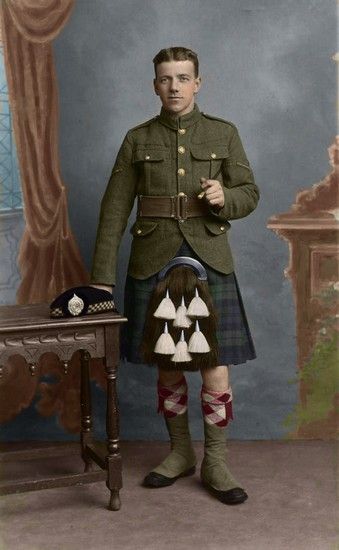
I see an old photograph of a Scottish Highland soldier of the Great War and I cannot but thing of my grandfather and his many lost comrades. They were brave and loyal and good and he survived and they did not. Auld Pop as we called him suffered a great loneliness. In the distance of time I see that now. He filled that loneliness with incessant smoking and drinking. As a veteran and as an immigrant he suffered constant distress or discomfort from his smashed social connections. He was reasonably happy with his family and grandchildren but he suffered great sorrow when he remembered his loyal and true wife (who predeceased him) and his comrades in arms. I think today we would say he suffered from posttraumatic stress syndrome.
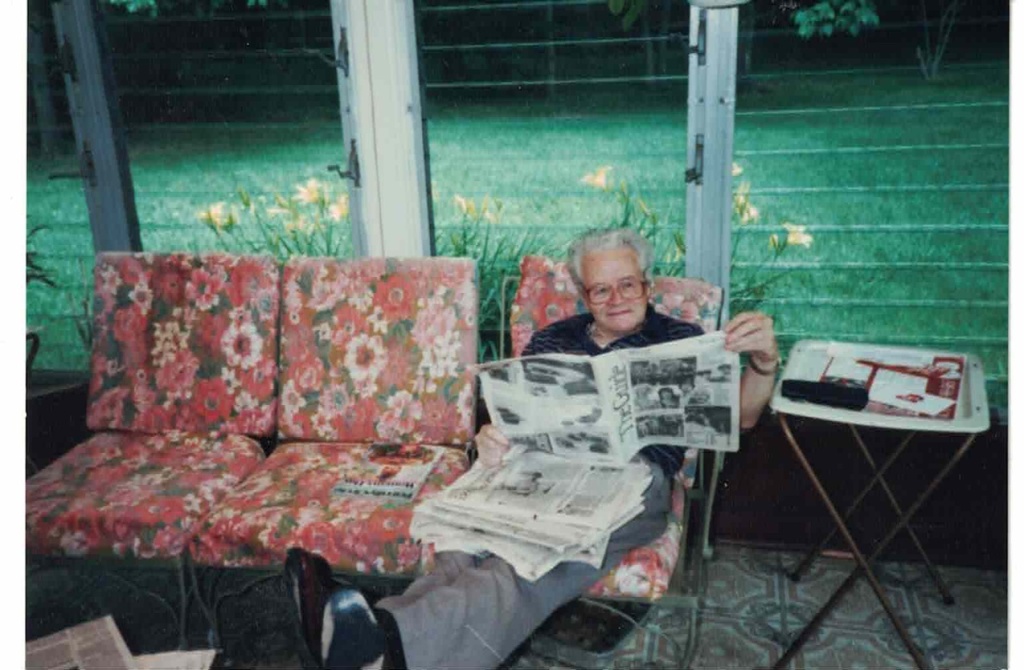
I often think of Yesterday’s Seven Thousand Years as I know the past is no more but we still have now and the future, however uncertain is still to come. Yet there is always memory. To think is to remember our lives and experiences and our friendships. And the sweetest friendships are the warm friendships of people you could rely on through thick and thin. When I was a small boy I had a deep and loving friendship with my grandfather who taught me the alphabet and how to read. From him I learned Scottish dialect and heard many stories of war and adventure and baseball heroes (he loved Zach Wheat, Pete Reiser, Duke Snider, Jackie Robinson and the Brooklyn Dodgers). He taught me how to keep score and told me stories of Babe Ruth the 1927 Yankees (Murder’s Row) whom he had seen in person. Baseball was one of his constant companions. He went to many games. He listened to games on the radio. He kept score. He read the statistics and box scores in the newspapers.
My Scottish grandfather had only a few life long friends. In early life in Scotland he had many close friends. Sadly most were killed 1914-1919. When he remembered old comrades he would speak of their virtues and the highest virtue was to be a ‘leal n’ true mon” (a mensch; a loyal and true man).
So there is no question fidelity and loyalty were things he valued. People who make you laugh and who are kind are people that get into your heart and you never forget them. So fidelity is very praiseworthy if one is faithful within reason to someone or something that is good and honorable. My grandfather and father can no longer help me in any way but I feel a responsibility to remember them out of gratitude for the time and love they invested in me.
One hopes for fidelity in friendship and if one finds friendship and fidelity as well as love in marriage then one is blessed. I can honestly say my wife is my very best friend. We have been friends for over 50 years and married for almost 42 years.
One of sad things of life is that people even people you love come and people go. They die. They move away. Some remember you but to others you are it seems an afterthought. Their email bounces back. Their phone number is disconnected. When that happens all you can do it be thankful for the good times and offer up a prayer. You cannot know what they are or have experienced. Sadly, of course, most of the time the silence is due to inconvenience and indifference.
You have to work hard at keeping a friendship especially if one lives far away. People today are not moored to one place and neither are you so they drift in and out of your life. Nicholas Sparks wrote: {They are} “almost like characters in a favorite book. When you finally close the cover, the characters have told their story and you start up again with another book, complete with new characters and adventures. Then you find yourself focusing on the new ones, not the ones from the past.” That is certainly what we have to do though when one is old and retired it is more difficult to make new friends. One is lucky if one has the love of one’s children and grandchildren.
The secret of true friendship I think is gratitude and fidelity. We feel indebted to our friends because really we owe them nothing and what we share are memories of common travails, common laughter, companionship, odd stories and experiences.
I say to my friends THANKS FOR BEING THERE WHEN I NEEDED YOU. THANKS FOR EXISTING. THANKS FOR THE MEMORIES. Thanks for being that LEAL N’ TRUE MON (or LASSIE!).
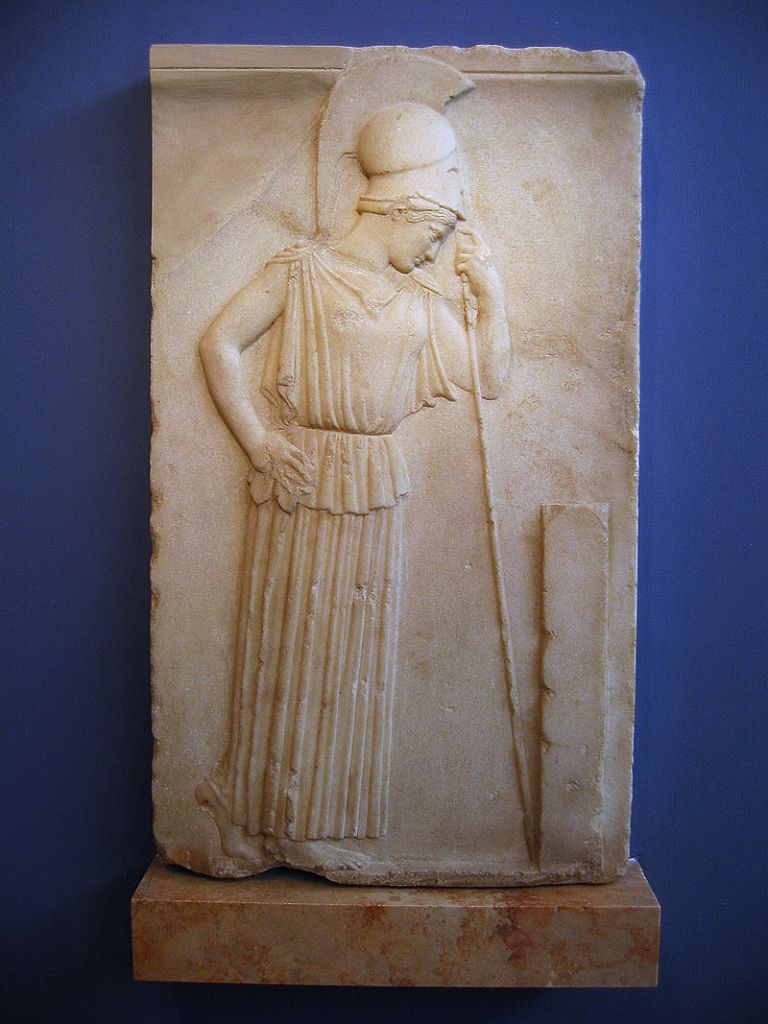
Of course, my most intimate collections are the collections I have in books in several languages. I have over 500 books in Spanish, about 10 in Portuguese, about 50 in Scottish Gaelic, about 20 in Latin (which I read) and about 20 in Ancient Greek (which I am learning to read.) I have a few books in Italian, French and German (languages which my father knew but in which I am weaker), I have over 3000 books in English including some signed by the authors Such as William Styron, E.D. Hirsch jr, Diane Ravitch, Andrew Roberts. I had a book signed by Kenneth Roberts but I solid it years ago to pay a few bills. I had picked it up in a garage sale in Kirkland, Washington -they were just giving away some books- and I sold it years later for about $400. I was sorry to see it go but glad I had read it. I hope my books find a nice home when I am gone. Some are worthy of being preserved. I also have some museum replicas of classical art which I picked up over the years. The most special, I would say is a full sized museum replica of Athena Mourning (Greek: Σκεπτομένη Αθηνά).
It is said, that Athena is reading a list of fallen Athenian soldiers and sailors. I have always had an interest in public monuments and this is one of the great ones. It is made of white Parian marble and dates from the 5th century BC It is only 0.48 meters high . Today it is displayed at the Acropolis in Athens, with inventory no. 695. I picked it out in Athens and carried it in a box on my lap on the plane flight from Athens. My mother asked me if she could display it on the hall of her home “as long as she lived.” Of course, as a dutiful son I obeyed. In 2004 after almost forty years in her house -which is not longer in the family- my sister packed it up and mailed it to us in California. She looks over my right shoulder as write.
I also have a large collection of CD’s mostly classical music. I used to have hundreds of LP’s but have given most away as I now longer can pay them and they took up too much space but I still kept about 30 or so for Auld Lang Syne and for the liner notes. I also have a large collection of DVD (mostly of classic films). These have value only for me but I enjoy having them. Today, however, I mostly watch movies streamed on TV or listen to Spotify.
I have also a collection of fossils and minerals I collected in early youth. One of the most interesting to me is a piece of native copper. It struck me that this is why copper like gold is one of the most ancient metals known to man as it occurs unlike iron or silver in nature.
I have in a box with autographs of baseball players I collected with my son circa 1966-1992 including many Hall of Famer players such as Bob Feller, Hank Aaron, Nolan Ryan, Yogi Berra. Some are on cards, some are on baseballs. The best part of that collection is the memories of how we collected them including meeting and talking to the players in person. The nicest players I ever met were FELIPE ALOU (then with the Braves -I saw him play in the 1962 World Series) and BOB FELLER. My son and I talked to Bob Feller for over an hour when he came to Bakersfield. We talked about his career but also WW2. He would sign anything for free and he signed a book I brought plus a photo for my son. I also have a few Hartland Baseball Statues. I had many more but sold quite a few to pay some bills. I had a Ted Williams from 1961 Yankee Stadium that my father bought for $1.95 and I sold it for $450. I made over $1000 when I sold my Hartlands but I could not bear to part with them all -and some were very common and only worth $50-100 each. So they remain.
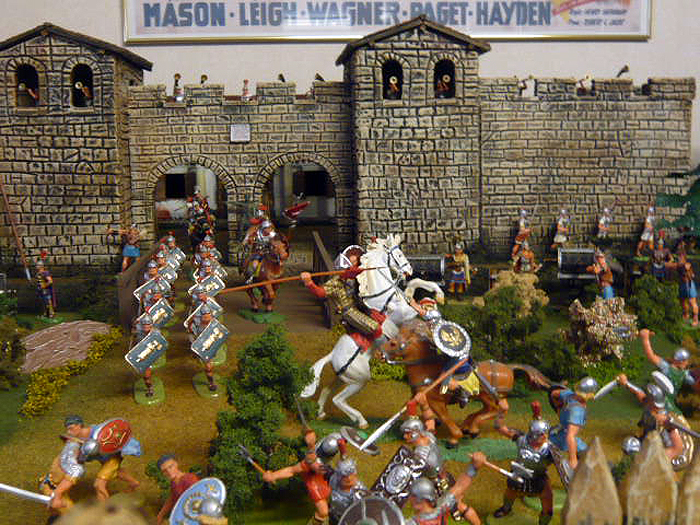
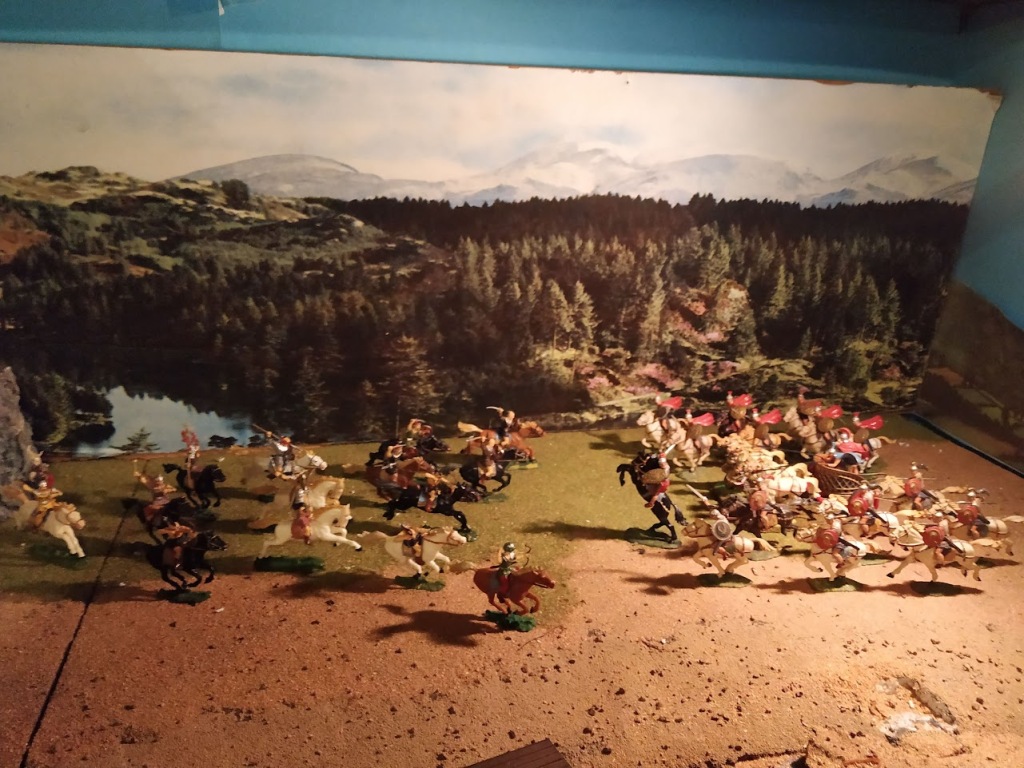
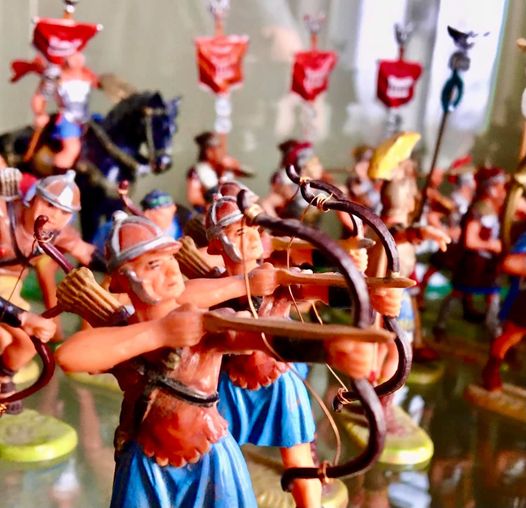
Since early boyhood I was fascinated by toy soldiers and military miniatures. Some I painted myself during long hot summers on the porch while listening to baseball games on the radio. But the most colorful and impressive are my Elastolin Roman soldiers. These are German made circa 1963-1972. They were not easy to come by and getting extra weapons then pre Internet was very difficult They are very sturdy and colorful if somewhat romanticized and fanciful . To accompany then I have some “barbarians” (Huns, Goths, Normans). I have complete set of Elastolin Romans including a ballista and a four horse chariot. These I have displayed in a glass case as if they were in fierce battle (four levels) About thirty years ago my mother lovingly pack them in boxes and sent them to me from New Jersey. Naturally, she was instrumental in acquring them over the years. In 2000 she and I went to Germany and we visited a Roman history exhibit. They displayed some dioramas with Elastolins!
In the gift show they did not have Elastolins but they has Bully Romans which are quite nice.
Elastolin Romans in battle
My mother bought me a handful and one, the centurion is now in command of a sailboat I have in my pool. I call it the RHINE PATROL. When I see it go back and forth I think of my late mother who said, “LOOK RICKY, ROMANS!” She died January 4, 2001 but I have many memories of her and collections that she encouraged and helped make. After all the years the memories of her love and laughter are more precious than the objects themselves. I was a good son but I know I could have been a better son. But I do know one of the great delights in her life and that of my father was for them to know our three children -all of whom have memories of them.
“What is it, namely, that connects the temporal and eternity, what else but love, which for that very reason is before everything and remains after everything is gone.” (Works of Love, Søren Kierkegaard)
In all its varied forms -C.S. Lewis wrote of the Four Loves- love is the raison d’etre of man’s life.
Love is, perhaps, the most powerful force we encounter in ourselves and in others. Collections are interesting especially as they often recall passions, travels and love. They may not have much material value but the have a strong educational and sentimental value. I read Caesar’s Commentaries in 1965 and Xenophon’s Anabasis in 1966 chiefly because of my interest in classical history sparked by my Elastolins.
Huns and Roman cavarly in desperate battle for empireRoman archers
“What is it, namely, that connects the temporal and eternity, what else but love, which for that very reason is before everything and remains after everything is gone.”
Works of Love, Søren Kierkegaard
In all its varied forms -C.S. Lewis wrote of the Four Loves- love is the raison d’etre of man’s life. Love is, perhaps, the most powerful force we encounter in ourselves and in others.
The Great Teacher said, “do not judge, and you will not be judged; do no condemn and you will not be condemned. Forgive, and you will be forgiven.” (Luke 6:37).
We are all quick to judge others; as a teacher it is my job to judge the progress and performance of a student. I have long noted that a student’s seriousness and behavior have a direct relationship to his or her learning or lack of it. Loud disturbances -and electronic devices-disrupt and distract us from the learning process.
But not all can be known.
All tests and all reports are merely superficial dipsticks.
Of the things that are tenuously known in this world what could be more unknown and uncertain that a man’s inner character?
We must, as adults, and as teachers, exercise forbearance. We must tolerate misbehavior -especially yesterday’s misbehavior- and we must forgive. For in the final analysis it is not about us (the teachers); it is about them (the students), the class and ultimately society.
These are the cohorts we send out and it is they to whom will pass the banner and the torch which will burn long after we are dust.
Lao Tzu said: The good man is the teacher of the bad and the bad man is the lesson of the good.”
I used to ask my father why there were such bad and cruel people in the world. He responded “to teach us never to be SOB’s like them. This is the only life you have this side of paradise. Don’t be an SOB.” (Thomas Munro, jr 1915-2003) ‘
Thomas Munro jr on his patio circa 1980s.
Although people may appear vile and repulsive who can know their hidden motives? As long as a person does not harm another(and respects the rights of others to learn) we can tolerate small failings.
Mr. Sullivan was my father’s 11th grade English teacher at Manual Training High School in Brooklyn, NY. My father had come to New York at age 12 from Scotland in 1927.
But on very hot days in June -there was no air conditioning- sometimes my father fell asleep.
Mr. Sullivan had angrily chastised my father for having dark stains on his homework until he was told that they were blood splatters from work. My father often completed his homework during his break in the middle of the night. After he learned my father was working nights in the slaughterhouse (where stands the UN today) Mr. Sullivan didn’t complain or awaken my father when he (occasionally) fell asleep 7th period. My father never missed a day of school and always turned in his homework and did well on exams.
Despite the odds my father persevered and graduated from high school (the first ever to do so in his family). Later he rose from the ranks to become an officer in the US Army and after the war obtained his MBA from NYU on the GI Bill. He was , by the way, forever thankful to America and FDR for his opportunities.
I only saw my father cry in public twice. Once was when we went to the Scottish War Memorial in Edinburg in 1967. There in big silver books were listed the names of the dead. Many of his schoolmates and teammates from Glasgow had been killed in action while serving with the 51st Division at Dunkirk or in North Africa. When he saw there names he could not help but break down weeping. “Rifles and some dynamite against tanks! If I hadn’t come to America I would have been with them. And maybe my name would be in the book! But no children of mine would ever come to see the name of their father! No just one life or a dozen or a hundred were lost but thousands.”
I remember the Scottish people there comforted my father and said many kind things. They talked about 1914-1919 and 1939-1945. Many had family members or friends who had been killed. It remains an indelible memory.
I have had only one broken bone in my life (a left index finger). I was playing third base in Babe Ruth baseball and was about 15 or 16. A player had hit a double and was trying to stretch it to a triple. The outfielder made a quick and accurate throw right to me and I caught it. The runner was out by five feet. However, he did not slide but ran right into me at full speed. I still tagged him out and held on to the ball, but he hit me right on the glove. Despite being inside the leather glove my index finger was broken which meant the end of my baseball season for that year. I didn’t realize then that my hardball baseball days were soon over and after age 17 I rarely if ever played hardball.
Later while working in construction or serving in the military I had some cuts and bruises and injuries but the most serious health difficulties were from infections and disease. Generally speaking, though I have spent most of my life in reasonably good health. I don’t smoke and rarely drink any alcohol. I am very happy with tea, coffee and water! I enjoy swimming and walking and gardening but avoid sports like biking or skiing where I think now I would be in danger of serious injury.
I call excessive reliance on technology in eduction THE SCANTRON GOD. Quick, easy but ultimately corrupt and superficial. In my schooling, professional life, and career as a full-time classroom teacher I have experienced a sea change in my work, schooling, and writing due to technology. I began with paper and pencils and chalkboards and NO PHONES NO SMART WATCHES NO COMPUTERS almost no electronics or audiovisual and ended my teaching career with Smartboards, YOUTUBE, Smartphones, Laptops, and ZOOM classes. Some of the changes have been very beneficial. Others much less so.
For example, access to the internet, X, FB, and my blog has made it very easy to read news highlights, get access to shared articles and book reviews, and write. I have edited several best-selling books (for well-known authors) completely online all via WORD and email. In high school, I studied languages with tapes, 45 records, and textbooks. Cassettes in particular were very inefficient and fragile; I much preferred 33 or 45 records. Now I can study multiple languages on Duolingo on my phone with my Bose Microlink almost anywhere. I can listen to my audible books on my phone wherever I go and at any time. I can do my taxes electronically. I can read on my Barnes and Noble Nook on my PC, on my phone, or on my NOOK e-reader (Like a Kindle). I still like real dictionaries and real books but I rarely if ever buy paperbacks today (because the print is too small for me and on my NOOK I can adjust it). But I would say 90% of the books I buy are e-books the others are hardbacks. Similarly, I still listen to my CD collection but mostly to ITUNES or SPOTIFY (often via my phone). I long ago donated my 33 record collection not because the sound was inferior but because it became too expensive and difficult to have the necessary tuners and needles.
I still subscribe to paper copies of two magazines and one local paper but read the WSJ online on my pc or on my phone. The main reason I gave up on my paper subscription of the WSJ is because I could not count on it arriving on time if at all. One month 16 times the paper did not arrive! The WSJ offered to mail me copies but what good is that? I wanted to read TODAY’S NEWS, so I switched to online only. I have the added benefit of LISTENING to articles and reading comments from others. I still print out book reviews and articles that are interesting to me or of enduring interest. I read articles in magazines but almost always send letters to the editor via GMAIL. I enjoy reading physical copies of colorful illustrated magazines like SAN DIEGO ZOO , ANCIENT WARFARE, OR NATIONAL GEOGRAPHIC. But I have noticed the young people in my life do not subscribe to newspapers or magazines and rarely read anything serious. It seems to me that they are mesmerized by video games, TICTOK, and Instagram.
I learned to type on a manual Remington typewriter in high school in the early 70’s. There were no PCs then nor any internet. I typed all my college and graduate school papers myself. I did a lot of reading of periodicals and paperbacks. When I lived in Europe I had an entire suitcase with a private library of dictionaries, and some hardcovers but mostly paperbacks. I did a lot of writing and re-writing, but I was never late for an assignment and learned to type proficiently at 50, then 60 then 70 wpm in Spanish and English. Being an efficient typist makes correspondence and writing much easier even with a PC. I prefer a full sized keyboard for serious writing.
All of my tests in high school except for outside tests like AP tests or SATs were handwritten with number 2 pencils or pen. No multiple choice. In fact, in my entire career as a Spanish student 1970-1991 I never once had a computer test or a multiple-choice test. I remember my high school Spanish teacher used to say I want to know what you know, how you know it, and not what you can guess. I kept vocabulary notebooks with quotations and grammar notes. I made study cards from 3 by 5 index cards. We had to do dictations, long exams, essays, and oral reports.
One result was the AP Spanish test and Achievement Test in Spanish (SAT II) were, frankly easy for me. Later I was an AP Reader for ETS in Spanish and was one of the best-ranked scorers of essays and short answers. My knowledge of vocabulary, grammar, orthography, and accentuation was highly developed due to my highly qualified Spanish and Cuban teachers and their traditional instruction. I studied in Spain at the university and worked as a Tour Guide. My first class at NYU in 1974 was Don Quixote and all the other students were native Spanish speakers including a Spaniard (a soccer player) I got an A. In college and graduate school all my Spanish classes were civilization or literature classes. All my finals were in blue books done by pen or pencil.
I knew people who tried to cheat their way through Spanish but most of them dropped out after two years because the more advanced the work the more difficult it was to cheat and fake. With phones, cameras, and the internet it is easier to cheat and fake than ever. I never cheated in Spanish and tried to learn honestly because I enjoyed Spanish and wanted to learn. It took me a while to learn how to study and practice efficiently. I began to study verb paradigms and made color-coded study cards. I listened to Spanish-language commercials and sporting events. I learned the concept of the comparative study of cognates, partially false cognates, and false cognates. In my first two years, I averaged a B. But by my third, fourth, and fifth year, I was getting A’s on everything. Spanish became my favorite and my best subject even more than history, English, or biology.
Getting certified as a K-12 teacher in Spanish, Social Studies and English was easy for me because I had had many AP classes and was an avid reader. I always corresponded with my friends and family via letters. It is not an exaggeration that from 1966-1980 I wrote and received hundreds if not thousands of letters some of them twenty pages long. I had to study seriously to ensure my passing my CBEST (California basic tests for teachers) in the Math and English proficiency but I did it the first time.
I took the GRE in 1989 with paper and pencil and did well. Later, in 2004 I had to take it again online. I was working full time so didn’t have a lot of time to practice the computer format. Writing was easy because it was like email and word processing, which I did all the time. But Math was awkward because I was used to answering with paper and pencil skipping the ones that were harder and returning to finish the test and double-check my work. With the computer test, this was not possible, and I had trouble timing my test. I finished too fast, being afraid not to finish, and was sent down “pathways” and was unable to skip questions or go back. I was never a genius at math, but I got a 690 on my SAT in 1972. When I took the GRE in 2004 my math score fell over 200 points. It made me very aware that computer testing and ZOOM classes were an affective filter that threw curveballs at students not accustomed to electronic tests. Clearly the elite “laptop class” of the middle class and upper class have a considerable built-in advantage over poorer students.
I got my BA in 1978 and it was a disadvantage to miss out on the PC revolution. It took me a few years to catch up. But I couldn’t afford a PC or printer. I didn’t have a cellphone either (a flip phone ) until 2004. I carried dimes and quarters and a calling card for emergencies!
In the mid-1980s I got a job with a bank. At first, they had handwritten files but gradually they were transitioning to computers and computerized customer service. So that was my first introduction to the regular use of computers.
One change I saw right away with new technology was the ability of management to erase past histories and fake credit histories. I had a VIP in my portfolio, and he was a chronic collection problem. He would charge way beyond his limits and not pay for months at a time. I knew this because we still had files and paper advices. His file was as thick as an old Yellow Page phonebook (now also obsolete). But he never charged off and the bank NEVER reported any delinquencies for him on his lines of credit and credit card. The credit line was over $100,000 a lot of money to me today and in the 1980s even more. Mr. X who was a local celebrity who owned sports teams and billboards always paid off eventually but as far as I could see, he never had his interest rates increased or paid late penalties. The bank always corrected his delinquencies.
Yet little old ladies would find their VISA accounts closed if they were past due 30 days THREE TIMES. They could not have their credit reports revised very easily. When you included late charges they were charged 40% interest. Then our regional bank was bought out by a national bank and customer service went down to almost zero and interest and penalties skyrocketed. Technology made banking easier, but it also made it easier for people to engage in wire fraud, credit fraud and theft. This appears to be the case in the Shohei Ohtani gambling scandal where, apparently his translator accessed his accounts to pay off gambling debts unbeknownst to the slugger.
I know someone who lost over $10,000 in one afternoon after losing her debit card in Las Vegas. Somehow someone had accessed her PIN. This can happen easily if someone uses a camera to record your finger movements or a telescope to spy on you. And of course, as a debit card does not have the protection of a credit card; she lost all that money. So technology gives us great convenience but it makes theft and fraud easier. Especially for older people not as familiar with the technology.
I myself have LIFELOCK and have frozen my credit just to be safe. Someone accessed (via an insurance hack?) my social security number which puts me at risk for fraud. Some years ago I bought a $16 breakfast at DULLES AIRPORT in Washington DC. I used my credit card as I wanted to save my cash for the trip. Somehow someone stole the front and back of my card. By the time I reached my destination, the crooks had charged me $49.99 every hour on the hour and I only became aware of the problem when my card was dead -frozen. (fortunately, I always have a backup card and backup cash). I didn’t have to pay of course but the bank had over $5000 in losses. Sometime afterward someone applied for an Autozone card in my name and began charging up to the limit. Fortunately, by this time I had LIFELOCK and was notified and nipped the problem in the bud. They did not use my home address but an address I had never heard of. Once again, I did not have to pay anything but spent hours on phone calls and business letters to Synchrony Bank (Autozone was a private label for Synchrony Bank). Shortly afterward someone applied for an American Express card with my name but due to LIFELOCK this application was blocked. So technology is convenient but also has its vulnerabilities I never use a DEBIT card and have my accounts isolated from each other. I do not activate PINs for most of my accounts. I also monitor all my bank accounts and credit cards closely. I only use ATMs at major banks and pay cash for many casual purchases especially at airports or when traveling.
In the early 90s, I got a used IBM 286 with floppy disks and this helped me edit letters to the editor and free-lance articles. However, due to the Internet, the market for free-lance articles has almost dried up. I used to make $800-$1000 a year prior to 2005. But not anymore. Perhaps with YOUTUBE and substacks there are new ways to make money but there is no question the market has changed irrevocably.
In 1997 I finally got a phone (landline), PC, and internet in my classroom. So I began my teaching career without any phones or whiteboards but just a mimeograph machine and chalkboards. One advantage was one of total tranquility, especially before school and after school. No emails, no phone calls, no interruptions no announcements. I used to have to call the parents of my students at home in the evening or write them notes to request a personal meeting. My grades were private and done by hand in a grade book. We kept attendance by turning in absent sheets. Students more than 20 minutes later were considered cuts, not tardies.
I think it is much more difficult for students to cheat when none of the tests or quizzes are multiple-choice. Students had to clear their desks of everything including hats and could not have any phones or electronic devices out. Students had to respond to dictation and make class presentations. Whenever possible I quizzed students individually. I also required that students keep notebooks and do assigned homework. This was for practice but also as a way to see who was cheating on exams and quizzes. Usually, cheaters were greedy for perfect scores and had no classwork to offset their grades.
Essentially, I was completely in control of my classroom and classroom discipline. Students without passes who were late had to knock on the door and ask permission to enter. I often would let them stand outside a minute or two and would then open my door and spend of moment or two interrogating the students as to why they were late. Students who were not in their seats at the bell were marked tardy. In the first half of my career, I had few discipline problems. I went seven years without filling in a single referral. With technology and distractions and delays and declining respect and civility in part due to problems associated with technology, the last five years of my teaching career were much more stressful and saw serious fights and discipline problems. But most importantly academic standards have, overall, in my humble opinion, collapsed especially for average and poor students. (I realize there is an AP and laptop elite -they are doing as well as ever).
In my opinion, k-12 students should not be allowed to have or use phones during the school day. The phones should be collected and locked up at the entrance of the school. There is no need for every class period to be via computer. Every classroom has a phone for communication and virtually every teacher and school employee has a phone for emergencies. With smartphones everywhere you meet new pathologies. Such as
Instrusions in class. Students find out Mr X or Ms. Y is absent so they cut their class and intrude on another class. Substitutes have a list and photos of class lists but don’t recognize these students who are , usually, disrupting the class for fun. Often the teachers have to call security to try to establish order and of course the perpetrators can easily slip out of class. Most never get caught or punished in any way.
Groups and gangs can communicate to organize a fight during lunch or after school or a theft via smartphones.
Smartphones are a distraction as students are constantly sharing pictures, and answering messages. It goes without saying they use them to cheat. Students take pictures of exams and share them via the internet. A good classroom teacher has to stay one step ahead. I caught a lot of cheaters but I don’t fool myself to say I caught every one. I could tell when students were not engaged and not progressing in learning. This is when one individual quiz or a one on one interview were helpful.
4) Just like there is credit fraud there is also grade modification and fraud. This can come from students adult aides or even in some situations the administration. I always printed out my grades and kept them in a secure place in folders for three years. One has to be very security conscious. I never communicated with students EXCEPT on school email and or on the school phone. I never texted students though occasionally parents texted me when were were on a class trip or Saturday sports or events.
5) Zoom classes and zoom zombies. No question zoom classes are better than nothing but they are a very poor substitute for live classes. Zoom teaching favors laptop elites who respond well. In my experience, AP students behaved almost like college students or adults and concentrated during presentations and communicated with teachers. They completed all their assignments and tests. How ever the middle and bottom collapses. We have ZOOM ZOMBIES. Students are not required to turn on their camera. The only requirement is respond for daily attendance. Then many students just vanish from the face of the earth. They don’t participate or answer emails or complete any work. In my entire 34 year career SOME STUDENTS would REFUSE to take tests or show up to take tests but a very small minority. With ZOOM ZOMBIES 25% 33% 50% would not even attempt to answer one question. I had one student “with perfect attendance” who did not complete one sentence, one paragraph or one definition the entire academic year. Zoom classes are OK for highly motivated students but they are no substitute for face to face learning and teaching. Universities that switch to Zoom classes should be required at the very least to refund 50% of their tuition. 80% would be more like it. The worst thing about ZOOM classes is that unless I knew the student from before I had no relationship with those students. Tutoring (I used to tutor students at least 5 hours a week or more outside of class) dropped to almost zero.
6) AI computers and smartphones can be used for cheating. I feel personal phones should be restricted during school hours and prohibited absolutely during formal testing. I remember discovering GOOGLE TRANLATE. Students would turn in short essays that were merely pasted on translations from Google Translate. The problem was they could not read them aloud and did not know the vocabulary of their essays. I knew the students were cheating but I ignored this and thanked them for their work. I then said that was merely step one of the assignment. Step two was to create a glossary of the vocabulary in the essay. Step three was to use at least 15 new words in complete original sentences (in class). Students could use hard-cover dictionaries but no electronic devices. Step four was to make a presentation of examples of vocabulary to the teacher or to the class.
7) Teachers must have some oral questions and answering, oral presentations, dictations, and written exercises with paper and pencil in class. You cannot rely entirely on scantron tests or take-home assignments. When classes are 100% online as in some Canvas Zoom classes in my opinion one must schedule exams over a week and orally test each student. Otherwise the testing has no integrity and no validity.
Yes, in my life and career I have experienced great changes in the home, workplace and school. There is no going back to a world of ONLY pencils, chalk and pens. A world without phones, TVs, Internet, electronic statements and credit cards. But I don’t always want processed food and I sometimes want to use CASH and USE CHANGE. I enjoy podcasts but sometimes I want to listen to the radio alone or play the piano by myself or sing in the shower. I don’t want to go in my motorboat I might like to swim in a pool or at the beach.
In addition, I would argue that chalk, pencils, and pens are still valuable tools for learning and entertainment. Every day I read and study languages. I use colored pencils to fill in composition books. One page is for grammar notes or vocabulary. The other page is for sentences, paragraphs and translations. The target language is in BLUE PENCIL (red for important or spelling or pronunciation prompts. English notes are always in #2 pencil. If I make notes or comparison to other languages I will use other colors for example this word is similar to German or Spanish or Greek or is a false friend (false cognate). I also draw pictures of vocabulary -happy faces, sad faces, mountain peaks, sailboats, fruit, animals, furniture houses cars etc. I draw action words (verbs), colors, antonyms and synonyms. I know physically writing in COLORS and repeating words and keeping notebooks helps me learn and remember the Greek alphabet and new vocabulary words.
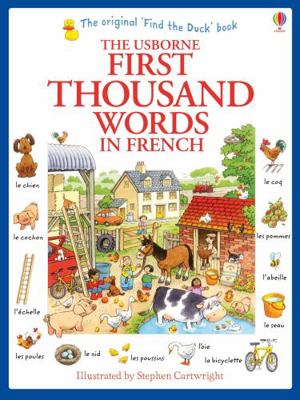
When I play with my grandchildren we use playdoh, magnetic letters and numbers, picture books. We look at maps. We still use colored chalk to write on the sidewalk and play games. I have sets of 8 by 10 color photo cards and I asked them questions. What color is it? What is it in Spanish? Do you know the English word? Usually they do. They have been introduced to Portuguese, French, German, Latin and Greek. For fun, orally I will quiz them on animals in different languages (and the sounds they make). I , explain that most scientific words and animal and plant words are the same in western languages because they are Greek or Latin in origin. PROBLEM or RICE , TIGER OR LION OR COCA COLA TEA or COFFEE or AUTO or COMPUTER are virtually universal vocabulary words. They have toy animals and toy dolls and toy kitchens. They enjoy the colors and physicality of this play and create their own stories and games.
As Mandel wrote “How many advances, liberations, revolutions, hailed as new epochs in human affairs, are really progressions from Scylla into Charybdis? “ Technological change is inevitable. We have cars and electric motorbikes. We have machine guns. Semi-automatic pistols. We have videogames. We have vaccines and antibiotics. We have birth control and abortion pills (RU486). We vote via computer. But we should be aware that every change is not necessarily for the better and when it comes to living healthy and happy lives. In learning and voting INTEGRITY and HONESTY are very important values perhaps the most important of all. If technology breeds theft and fraud and cheating and makes us less healthy and less safe we should be aware of it and limit it and control it for the good of the individual and society. Carl Sagan wrote “Many of the dangers we face indeed arise from science and technology—but, more fundamentally, because we have become powerful without becoming commensurately wise. The world-altering powers that technology has delivered into our hands now require a degree of consideration and foresight that has never before been asked of us.” One thing is certain technology is just a tool. It will not make us happy healthy or wise unless we lead balanced lives. A balanced life is not entirely dependent on drugs, chemicals, electronics and computers.












 Spirit of Cecilia
You must be logged in to post a comment.