
The Rush frontman tells his family’s incredible survival story for International Holocaust Remembrance Day this Sunday.
— Read on q1043.iheart.com/featured/jim-kerr-rock-roll-morning-show/content/2019-01-23-how-geddy-lees-grandmother-saved-her-family-during-the-holocaust/
All posts by bradbirzer
This Guy Won’t Stop Photoshopping Himself Into Kendall Jenner’s Photos And It Makes Them 10 Times Better | Bored Panda
As twins, Kirby and Kendall Jenner have a unique bond. However, you could say that it’s a bit… imbalanced.
— Read on www.boredpanda.com/man-photoshops-himself-kendall-kirby-jenner/
Truly one of the funniest things I’ve ever seen or read. So much better than the news.
U.S. Civil War Intro (Full Lecture)
And, me on hyperdrive! So excited to be teaching Civil War again.
Colonial America III (Full Lecture)
Here’s the third lecture of the semester. American Heritage, Spring 2019. This lecture, the third in a continuing set on Colonial America. Mostly a comparison of New England and Virginia, with a brief discussion of Maryland’s attempt at religious freedom.
Geddy Lee Refuses to ‘Live Off the Fumes’ of His Past: Interview
Well, one thing you do learn over time—and especially playing so many different instruments—is that your sound comes from here in your fingertips. [Lee makes a gesture with his hands, like playing bass.] You know, you can put Jaco Pastorius’ bass in your hands and you can make a couple of notes that sort of sound like Jaco, but the longer you play it, the less you will sound like Jaco. Only Jaco sounds like Jaco, and [with] most great players, the same thing is true. And that’s a transportable thing, because it’s your personality coming out with the instrument in your hands. So that’s something that’s been reinforced by this collection for me
— Read on ultimateclassicrock.com/geddy-lee-future-interview/
Say what you want about his voice, Geddy Lee is brimming with talent, energy, and integrity. My hero.
Colonial America, Part II (Full Lecture)
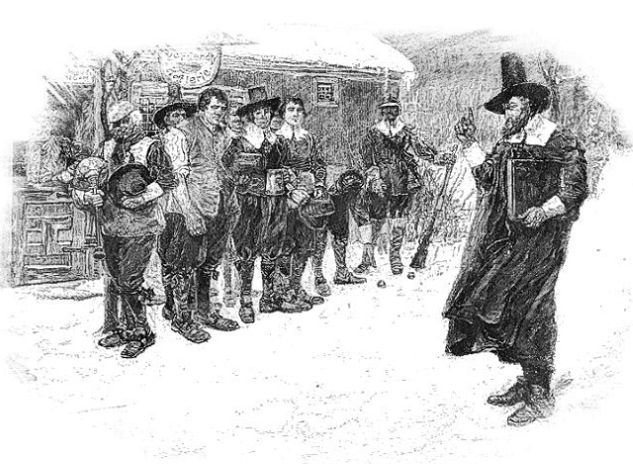
And, just in case you’re waiting eagerly (who wouldn’t!!!), here’s the second lecture of the semester for American Heritage.
Colonial America, Part I (Full Lecture)

My first full lecture of the 2019 Spring Semester. American Heritage–lecture one, on the English colonies.
The House of Usher & the House of Poe ~ The Imaginative Conservative
Throughout his 40 tormented years of life, Edgar Allan Poe was widely hailed as a genius for the black brilliance of his art. He is the undisputed master of the macabre and the father of the supernatural and psychological thriller. Conjured over a century ago, Poe’s phantasmagorias remain unparalleled to this day in their rich, velvety, cerebral, and suffocating horror. For any civilized reader, there is no better way to usher in the howling fall than with “The Fall of the House of Usher,” a tale observing its 175th anniversary of publication this September; and there is no better way to encounter the terrors of this tale than with a glimpse of the terrors of its teller.
— Read on theimaginativeconservative.org/2019/01/house-of-usher-house-of-poe-sean-fitzpatrick.html
Exploring Dante’s Florence: A City Recalls its Exiled Poet | National Review
So we weren’t just tourists in Florence. We were Dante tourists. We made a point of walking down Via Dante Alighieri. We ate at restaurants with names like Trattoria Pizzeria Dante and Ristorante Dante e Beatrice. We made like geeks when we came across inscriptions of Dante’s words on the sides of buildings. (The Dante Plaques, a booklet by Foresto Niccolai, describes 34 of these inscriptions, mounted around the city in 1907 and still prominent today.) My wife would whip out her phone, open her Kindle app, and look up the reference.
— Read on www.nationalreview.com/2019/01/florence-italy-art-architecture-poet-dante-alighieri/
Cuba, 60 Years On — Misery Is Communism’s Only Real Legacy | Investor’s Business Daily
Today the Revolution continues to be a police state that brutally represses any form of dissidence, and its reforms have yielded nothing but failure. As the well-respected economist Carmelo Mesa-Lago has shown, the private sector represents no more than 7% of GDP. The country is severely undercapitalized (gross capital formation is one half of Latin America’s average); and agricultural and industrial production has shrunk in the last decade. The island’s largest source of foreign exchange continues to be the export of professional services, that grotesque euphemism
— Read on www.investors.com/politics/commentary/cuba-castro-communism-misery/
 Spirit of Cecilia
You must be logged in to post a comment.