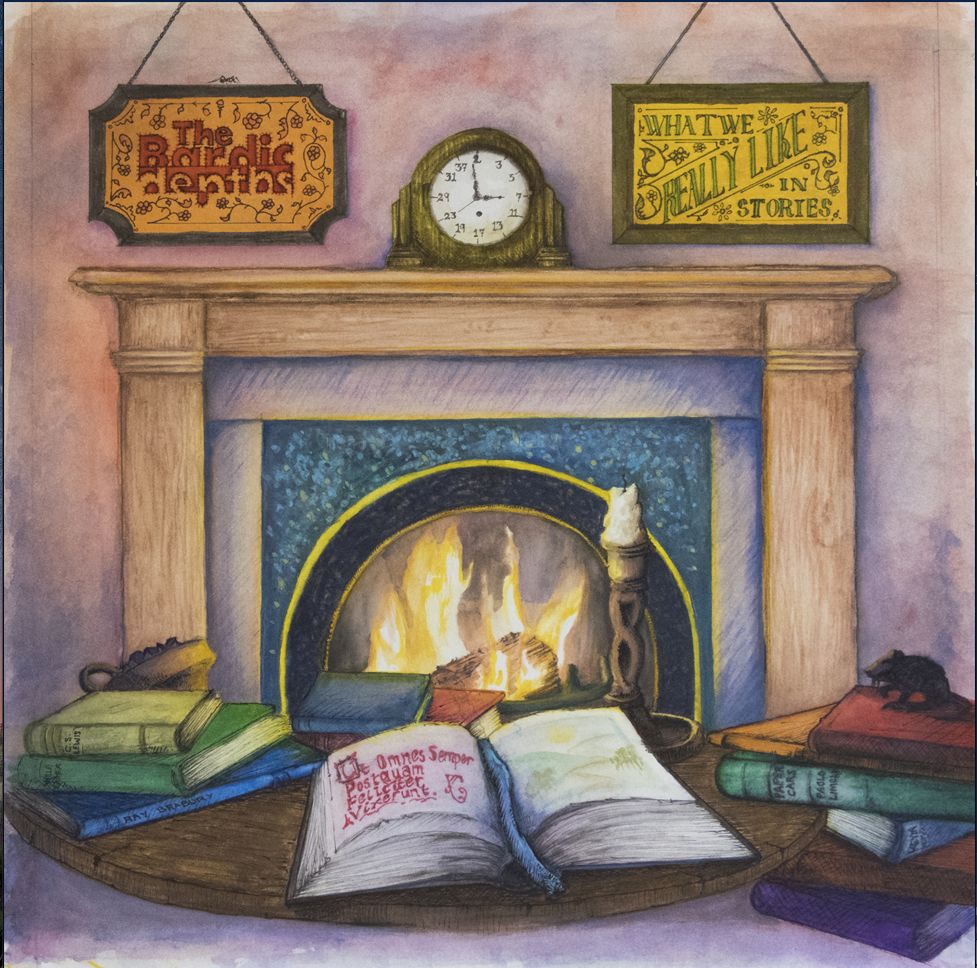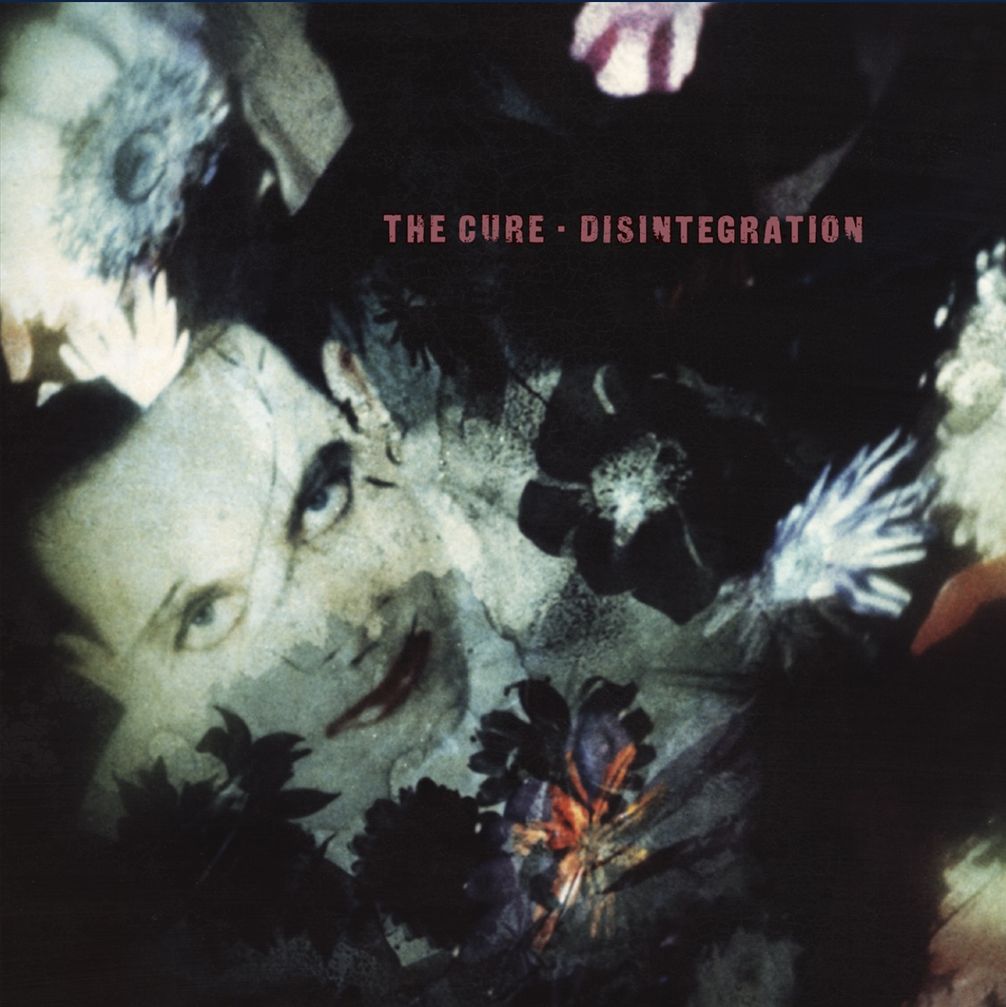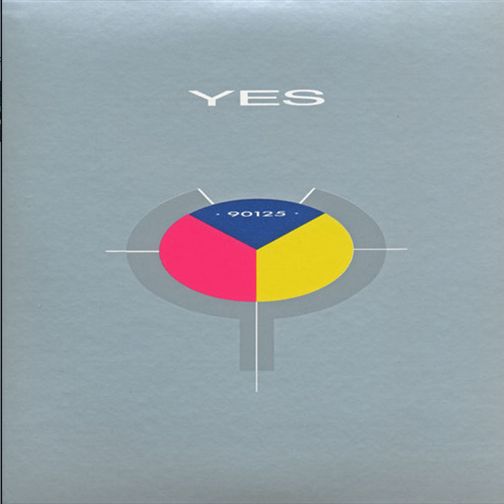
The embedded video above is the complete album of music and poetry for Christmas from Jeff Johnson. Merry Christmas!
All posts by Thaddeus Wert
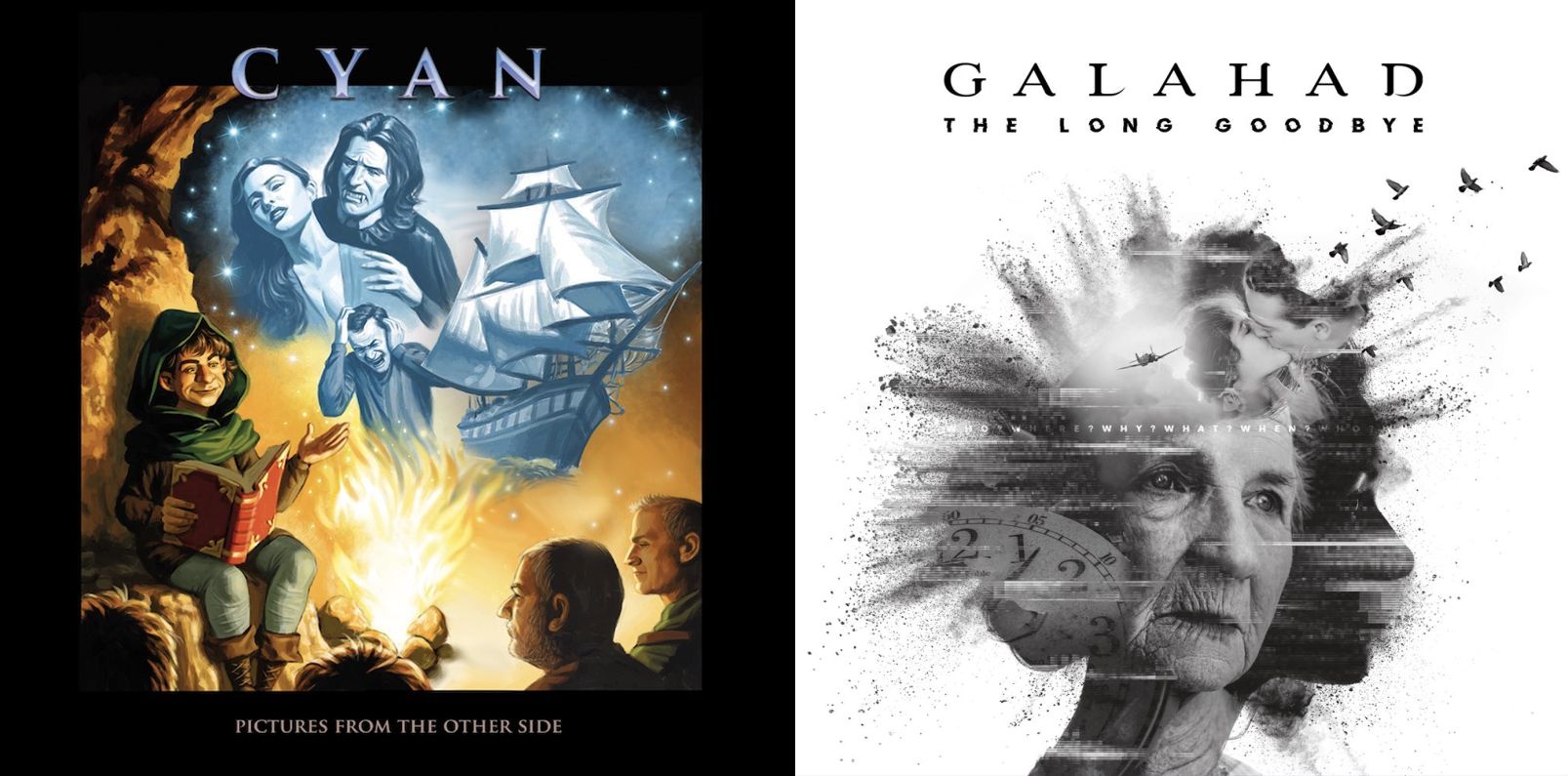
Cyan and Galahad: Double Fun and Greatness

There are two new releases that have created a buzz here at Spirit of Cecilia: Cyan’s Pictures From the Other Side, and Galahad’s The Long Goodbye. The usual Proglings take some time to share their impressions.
Tad: Gentlemen, I suggested we pair these two albums together, because in some unexplainable way they seem to complement each other. To my ears, both are extremely enjoyable listening experiences, and I’m eager to see what you think of them.
I’ll start things off with Cyan’s Pictures From the Other Side. This is a resurrection of an old Rob Reed (Magenta) project, but it is a totally new sound. What immediately leapt out to me was Peter Jones’ (Camel) terrific vocals. He has a bit of that Peter Gabriel/David Longdon vibe, and he is incredibly powerful. Angharad Brinn joins him on several songs, and her soprano melds beautifully with Jones’ baritone.
The first song, “Broken Man” is an awesome starter to the set – it begins so softly I can barely hear it, then what sounds like Celtic bagpipes show up, and then the entire band explodes! The melody is first-rate, as well as the lyrics:
A broken man always knows what he’s lost
A broken man always counting the cost
A broken man on his knees always prays out loud,
“Give me one more, give me one more chance.”
Brad: What a great suggestion, Tad. When it comes to Cyan, it’s hard to do better than either Rob Reed or Peter Jones. Both are men with incredible vision and incredible integrity, exuding class. I, too, am really taken with “Broken Man” as the opening track. I’m so glad that the band didn’t turn it into a three-minute pop song, but instead gave it some real life. I say this as a compliment–the song lingers when it should linger. It comes to a head when it should come to a head.
As to influences, I hear a lot of Big Country, a lot of U2, and a lot of The Call. Not sure if Reed or Jones would see it that way, but all three bands sound like forerunners to me.
It’s probably unfair of me–of all people to say this–but the second track, the title track, “Pictures from the Other Side,” sounds very much like a Bardic Depths song.
“Solitary Angel,” track three, just feels like solid rock, a Journey-esque ballad, but with a bit of Marillion (vocals, especially) thrown in.
Track four, “Follow the Flow,” continues in a ballad-esque way, soft but captivating. Again, I’m hearing a lot of Marillion in this track. Delicate without being prissy.
Again, track five, “Tomorrow’s Here Today,” continues the intense but soft sound. And, again, I can only state this is precious in the best sense. I feel like I’m holding the most fragile flower imaginable while listening to it. Then, about ½ through the song, it really, really picks up, becoming a rather blistering prog and rock song. Excellent guitar work here, but also keyboards, bass, and drums. The last third of the song feels a bit like a Yes/Jon Anderson track.
Not surprisingly, given its name, the sixth and final track, “Nosferatu,” rocks, possessing a Glass Hammer or post-Neal Morse Spock’s Beard sound. At nearly 18 minutes long, this track gives everything a prog fan would want. An amazing journey through music. The keyboards and guitar are especially well-finessed! Towards the end of the song, there’s even a glorious Star Wars moment! Or, maybe it’s inspired by Queen. Regardless, it’s epic.
Tad: Brad, that is very perceptive of you to make the connection to 80s groups like U2, The Call, and Big Country. I did a little research, and these songs were actually first done on Cyan’s second album in the early 90s, and then rerecorded for this album.
I agree with you that the overall sound of Pictures From The Other Side is good, solid rock. It is definitely prog, but prog grounded in the tuneful hard rock of the 70s and 80s. I think we both give it a strong recommendation for our readers.
Okay – on to Galahad’s latest! Brad, I am so impressed with the music Galahad is producing these days. I thought their previous album, The Last Great Adventurer, was terrific, and the song, “Blood, Skin, and Bone” off of it was just fantastic.
Their latest offering, The Long Goodbye, is just as strong. The title track, in particular, really moved me. I think it is about saying goodbye to a loved one who is dealing with senile dementia, and it is an outstanding track.
I also think the first three songs are a 1-2-3 tour de force. The opening track, “Behind the Veil of a Smile” is a synth-laden beauty that sets the energy level at high. It has an addictive hook for a melody, and I hit “Repeat” a couple of times before I even listened to the rest of the album! The second song, “Everything’s Changed” is just as good – a perfect mix of retro synths and crunchy guitars. The third track, “Shadow In The Corner” is my favorite. Once again, it starts with some retro-sounding synths and sequencers before a killer guitar riff jumps in. This is the kind of music U2 should be making now! As a matter of fact, I think that’s what links the Cyan album to this one – they both take what’s best from 80’s rock and combine it with 21st century production sensibilities. In both cases, there is no question of sounding nostalgic or cheesy – both groups have an appreciation for the music that was made nearly 40 years ago (Oh my gosh, can you believe that?!) and have brought it into the contemporary prog scene.
Brad: Dear Tad, I very much appreciate your enthusiasm regarding the new Galahad. I must admit, it’s taken me a bit longer than usual to appreciate. I’m on several listens now, and I like it very much, but I’m still–even after numerous listens–surprised by just how electronic the album is. Galahad has had this side to them as far back as I can remember, but it was always on the sides and in parts of the albums rather than at the core.
“Behind the Veil of a Smile” reminds me very much of Steven Wilson and Porcupine Tree but without Wilson’s trademark scratchingly-hard guitars. And, I very much appreciate the lyrics, which Galahad always excels at writing.
Track two is really pop excellence, reminding me a bit of New Order, especially from the mid-1980s. The refrain, “everything is changed and nothing will ever be the same again. . . the same again” is pop perfection.
I like very much how track three, “Shadow in the Corner,” steps back from the hyperactivity of the first two songs and gives us something intense and low. Again, I’m very much reminded of New Order and, even possibly, all the way back to Joy Division, especially at the beginning of the track. After about a minute, it resumes hyperactivity, becoming a more “mainstream” Galahad song.
Track Four, an acapella-esque folk song, “The Righteous and the Damned,” lovingly takes us back to Galahad’s masterpiece, “Empires Never Last.” The middle of the track sounds very central European, right before becoming a brilliant flaring guitar track that sounds very much like Fish-era Marillion.
The longest song on the album, track five, the title track, “The Long Goodbye” incorporates a number of different musical styles. As you note, Tad, the song deals with the very difficult topic of dementia and Alzheimers. It is a beautiful wrought exploration of the subject, and Galahad should be praised for handling it with such class and delicacy.
Track six, “Darker Days“ takes us back to pretty straight-forward Galahad electronica, sounding here like a harder version of 1980’s Asia.
The album ends with “Open Water,” a gorgeous and gentle tune and ballad–absent all electronica and ending the album on a positive note.
Tad, I’m in full agreement with you, Galahad has very successfully bridged the past and the present with The Long Goodbye. What seemed jarring to me on the first listen now seems incredibly complex and clever on the 10th listen. This album took a bit to grow on me, but now that it has, I’m deeply thankful for it.
Tad: Brad, I don’t have as much experience hearing Galahad’s music as you do, so your perspective is very interesting. The Last Great Adventurer was my first exposure to them, so, as far as I’m concerned, the electronics are all good! I hear the New Order vibe you mention, and I think that is a feature. Hopefully, we’ve put enough distance between us and the 80s to appreciate the innovation and variety in music that blossomed during that decade. Yes, some music from then can sound “dated”, but that doesn’t mean it wasn’t great music.
Okay! So it looks like we have two thumbs up for both Cyan’s and Galahad’s new offerings. Dear Spirit of Cecilia readers, take some time to check these two albums out. And, like Brad, give yourself time to really absorb them. They will repay the effort – we promise!
A Christmas Carol for Today
Merry Christmas, S.o.C. readers and followers! In the spirit of the season, we would like to share this beautiful song by Stephen Herreid, “Father Aeneas Bails You Out”.
It tells the story of a Roman Catholic priest who bails out a friend from jail during an apocalyptic war in the near future – “Washington was blown to hell”. Sounds depressing, but it is actually full of hope and affirmation of life. Herreid sings of how some things are eternal – truth, charity, and Christian love. As Father Aeneas explains to his friend, “You should belong somewhere on Christmas Eve”.
As Oliver Anthony’s “Rich Men North of Richmond” proved earlier this year, there is a real hunger for straightforward songs that aren’t afraid to tell the truth. It doesn’t take a fancy recording studio and expensive instruments to create powerful art. May Steven Herreid’s new Christmas carol be a blessing for you and yours this season.
Rush’s Permanent Waves and Exit…Stage Left – An Appreciation

Greetings, SoC readers! In our latest symposium, Brad, Erik, Kevin, and Tad discuss a true prog classic: Rush’s 1980 album, Permanent Waves, with a side trip to their live album, Exit…Stage Left.
Tad: Gentlemen, let me state right off the bat that Permanent Waves is my favorite Rush album. I know it’s not their “best”, but it is the one I listen to most often. I love the way it bridges earlier albums like A Farewell To Kings and Hemispheres to future masterpieces like Moving Pictures and Power Windows. Also, it’s the first album where Geddy tones down his banshee wail a bit, paving the way for mass acceptance.
Erik: Tad – while Moving Pictures is my favorite Rush album, I certainly think a good case can be made for Permanent Waves. And to give it due credit, I don’t think Moving Pictures can be made by Rush without them first making Permanent Waves. As you mention, it serves as a bridge from their previous works to what they became in the 1980’s.
One thing that Permanent Waves represents to me is Rush learning how to trim the fat, so to speak. Over previous albums, Rush had become more ambitious in their musical output, from both a compositional standpoint as well as their experimentation with different sounds, including keyboards. Although this phenomena began almost as soon as Peart joined the band, they really turned it up to 11 starting with 2112. It culminated with Hemispheres, which included the side-long suite that gave the album its title as well as the incredibly complex instrumental, La Villa Strangiato (and I must mention it also contained my favorite anti-commie song of all time, The Trees). When compared to these previous albums, Permanent Waves seems relatively stripped down. Indeed, members of the band stated that they were exhausted making Hemispheres and were looking to scale things back at the time they recorded Permanent Waves.
In doing such an album, Rush added the final piece to their repertoire that made Moving Pictures possible – the ability to be economical with their music and the balancing of that with larger ambitions. Indeed, there were not-so-subtle hints that they were doing this on my two favorite pieces from the album, Jacob’s Ladder and Natural Science. Both of these songs show the ambition that drives some of the best progressive rock, while also showing enough restraint to attain the aforementioned balance.
I have a few other observations I’ll make in my next entry, but for now, I’ll turn the floor over to one of the other participants here.
Brad: Dear Tad, Erik, and Kevin! From the blistering guitar attack in the opening moments of Permanent Waves (Spirit of Radio) to the final, sighing ambient sounds (Natural Science), this album is a stunner. It’s so utterly different from all the Rush albums that preceded it, and, yet, in some mysterious way, it’s a perfect continuation of Rush music and magic.
As I’ve mentioned before, I didn’t come to Rush until the spring of 1981. I was a seventh grader at Liberty Junior High in Hutchinson, Kansas, and I had done something to earn detention. Detention meant an extra period after school in the school library. None of this really mattered–my mom wouldn’t get home from work until 5, so she’d never know that I was in detention, and the library was my favorite place at the junior high.
I don’t even remember what I did to earn detention, but I’m sure it had something to do with me talking too much in class.
Regardless, my fellow detainees were Troy and Brad (a different Brad). One of them had a Genesis Duke lapel pin (on his jean jacket), and we started talking progressive rock. I was quite familiar with Genesis, Yes, and Kansas, but I’d never heard of Rush. Troy and Brad assured me that I had to listen to Moving Pictures, the latest album from Rush. Despite detention, I immediately went out and bought the album. I was immediately hooked!
From there, I worked backward, encountering the beauty that is Permanent Waves. I loved the six songs, I loved the cover and the artwork, and I especially loved the lyrics.
Strangely, though, it wasn’t until I first met Kevin McCormick that I became obsessed with the lyrics for “Natural Science”. As a gift to me, Kevin (in his beautiful and distinctive penmanship) wrote out the lyrics of the song for me. I carefully folded those lyrics and kept them in my wallet for decades. Indeed, they shaped my whole outlook on life. I’m a practicing Catholic, but, thanks to Peart and Kevin, I will also always be an idealistic Stoic.
Since I have the floor, I’ll also add this. Tad, I love that you included Exit Stage Left in this discussion. Rush, I think, at least up through Different Stages always bookended the various styles of their music with a live album. After Vapor Trails, Rush began to release live album after live album, thus changing their previously careful M.O. All to the good, I say, as I want more Rush rather than less Rush.
Still, back to Exit Stage Left. If I had to list my ten favorite live albums of all time, Exit would be among them. Maybe not number one, as I think the production values of the album sound dated at this point. But, the music. So glorious. And, the transitions from song to song are just extraordinary.
I especially appreciate the transition on side three of the double album, Broon’s Bane to The Trees to Xanadu. Heaven itself! I realize that the album came from several different concerts, but I would’ve loved to have been at any one for the Permanent Waves and Moving Pictures tours.
Tad: Erik, I think you nailed one of the most attractive characteristics of Permanent Waves – there is absolutely no fat; it’s the leanest album of their career! Even the relatively long tracks, “Jacob’s Ladder” and “Natural Science” (7:27 and 9:19 respectively) are models of conciseness. Brad, I agree with you that “Natural Science” is a keeper. It is my favorite song on the album. When Alex starts an arpeggiated riff and Geddy first sings
Wheel within wheels in a spiral array
A pattern so grand and complex
Time after time we lose sight of the way
Our causes can’t see their effects
is one of their greatest musical moments. And of course, I have to appreciate Peart’s hopeful take on humanity:
The most endangered species, the honest man
Will still survive annihilation.
Another favorite song – and this might be a surprise to you all – is “Different Strings”. It’s so unlike anything Rush had recorded before – understated, elegant, and, well, hushed in its sound. I love how Geddy utilizes harmonics on his bass to underline the melody, while Alex pulls off a lazy, loping guitar solo.
“Entre Nous” is simply a beautiful song, both in melody and lyrics. There is perfect balance in it between the heavy guitar riff at the beginning and Alex’s delicate touch during the chorus. Meanwhile, Neil’s lyrics are very mature – it’s impossible for two individuals to fully know and understand each other, but it is possible to grow close via mutual respect.
Erik: Great, stuff guys! I am happy that we all have agreement on Natural Science and Jacob’s Ladder.
Another fond memory I have of this album was that it marked the time when I really started to hear Rush on the radio frequently. I had been a Rush fan for about two years at this point, but only occasionally heard them on the radio, with songs like “Fly By Night,” “Closer to the Heart,” and “Working Man.” I don’t recall ever hearing anything off of “2112” or “Hemispheres” on the radio in those days. But starting with Permanent Waves, Rush broke through on my preferred FM rock station quite forcefully, starting with the ironic hit The Spirit of Radio. I call it ironic because the song was basically a call for artistic integrity over going for the lowest common denominator to have hits, and yet this song might have been Rush’s biggest hit up to that time. I certainly heard it on the radio much more than any of their previous music. Entre Nous and Freewill also got plenty of radio airplay. On the latter of those two, along with The Spirit of Radio, I was also able to get a preview of Permanent Waves when I caught my first Rush concert at Rupp Arena in Lexington, KY, in September of 1979. Oddly, I remembered Freewill more than the hit song.
Increased radio airplay is another way that Permanent Waves presaged what was to come the following year with Moving Pictures, as it exposed Rush to a wider audience that was receptive to the follow-on. Another aspect of the music that I noticed here was the incorporation of certain sounds not found on previous Rush albums, particularly the reggae-influenced interlude found on The Spirit of Radio. Similar sounds found their way onto the next two albums with Vital Signs in Moving Pictures, and Digital Man on Signals. I’ve read elsewhere that the members of the band were listening to The Police quite a bit around this time, and these reggae excursions are evidence of that. They serve as more evidence of the manner in which Permanent Waves served as a turning point that teed up Rush for what was to come.
Onto Exit … Stage Left now. If this is not my favorite live album of all time, it is certainly in the top five. Between February and October of 1981, no album of mine was in more heavy rotation than Moving Pictures. It took another Rush release – the live album we are discussing – to change things. This was just such a stellar live album, great recording and great sound throughout.
Brad, you and I are going to be doing a Vulcan mind meld on what proved to be side three of the vinyl edition of Exit … Stage Left – Broon’s Bane, to The Trees, and into Xanadu. While all four sides of that album received plenty of play by me, none received more than this epic side three. And as for Xanadu itself? This is my favorite version, which I strongly favor over the studio version. The latter was a bit dry in its sound and production overall, while the live version here smoothed out the rough edges without losing any of the punch or dynamics of the original.
But to give the other sides their due, mention must be made of a rousing version of Closer to the Heart, which received more than a little well-deserved airplay of its own. Freewill and Jacob’s Ladder also make respective appearances, coming off well in the live setting. And of course, we have the rousing intro on side one with The Spirit of Radio. In short, Exit … Stage Left perfectly encapsulates the Rush era that played out between their previous live album and this one. In sound, setlist, and performance, it’s really hard to find a better live album than this, and I’m not sure I ever have. Insert chef’s kiss -here-. 🙂
Brad: Tad, I’m completely with you on Entre Nous and Different Strings. Each shows a side of Rush rarely seen but always appreciated. Erik, I really appreciate your enthusiasm, especially for the various sides of Exit. . . Stage Left. Somehow, the band just really captured its best self with that live album. As much as I appreciate all Rush live albums (and I own them all in various formats), it’s always Exit. . . Stage Left that I go back to the most. It’s one of my-all time favorite live albums as well.
Overall, though, I must state, as much as I love Permanent Waves (and I do), in hindsight, the album really feels like a transition album, itself pointing to something else. In this case, it’s pointing toward Moving Pictures and Signals but, I think, also to the very angular Grace Under Pressure. Power Windows and Hold Your Fire seem well beyond Permanent Waves, taking both new wave and jazz fusion in fascinating directions.
Natural Science, though, is the one exception to this transition idea. It seems it could’ve only existed on Permanent Waves. Nothing like it had ever come before and really nothing like it would ever come again. Not only is the song perfectly constructed, but Neil’s stoic lyrics really hit the peak of his writing. I think Camera Eye off Moving Pictures was probably an attempt at a sequel to Natural Science. Yet, as gorgeous as Camera Eye is, it simply doesn’t possess the power (more refined than raw) of Natural Science.
Kevin: Hear, hear! To all you gents for your wonderful reflections on this tremendous recording and its live cousin! Once again I’m late to the party–but with good reasons. 1)It’s recital time for the guitar studio, so my time is limited and 2) I plan to give a more complete treatment of this masterpiece on these Spirit of Cecilia pages in the coming days. However, to this already detailed commentary here, I would just like to add that, for me, Permanent Waves is the masterpiece and Moving Pictures is the unusually powerful sequel.
Lemme’ e’splain…no, there is too much, Lemme summup: It’s not only that without Permanent Waves there would be no Moving Pictures, though Erik’s observation is true enough. But it is precisely the beautifully blended nature of the artistry of Permanent Waves where its genius lies.
Moving Pictures captured a nearly global audience; its themes of personal independence and encounters with modernity make it universally relatable in the global modern age. This combined with the new-found confidence the band discovered upon really breaking through to regular radio play, as Tad so rightly states. Furthermore, Exit…Stage Left followed quickly on MP’s heels right when MTV was just launching. The engaging live videos from these songs suddenly reached an enormously broad audience they might have otherwise missed in the times of the radio ghettos of the early eighties. Neil Peart stated many times that this was when Rush had found its sound.
And as much as I love that sound, it’s heavy: musically, thematically, and aurally. I miss the whimsy of their earlier recordings. Permanent Waves retains some of that whimsy both in its sound and in the lyrics. There is a personal touch found on the album that I sense as more intimate than on Moving Pictures. That touch certainly returns on subsequent albums, but there is something magical about the combination of sounds and wonders on Permanent Waves. Brad notes in his own inimical style, the opening flurry of Spirit of Radio–it’s brilliant! Not only musically, but it’s a bright, shimmering sound—“a shifting shaft of shining.” And it shimmers throughout the album.
Here these young travelers are forging through completely new territory as a band. They don’t know exactly what they are doing or where they are going, but that’s the genius of it. The magic is created through the instincts of three musicians who have spent countless hours on the road together. They’ve tried to carve their own sound, but have gotten lost in the trees (and the fountain of lamneth). Finally they arrive at this creative space with all of their skills and ideas intact and they simply let loose!
The resulting work of art resounds with the spirit of youth, the confidence of the road warrior, and the slight uncertainty of the as-yet unwise sage. It’s a joy to listen to and still has an incredible power, both spiritual and musical, after so many years. So Hear Hear!: To the boys in Morin-Heights in that Canadian autumn weaving the fabric of our dreams!
Brad: Kevin, what great thoughts. So glad you joined the conversation. It wouldn’t be a Rush conversation without you! I very much look forward to your fuller thoughts on all this.
Tad: One last thing I’d like to add – I love the cover art for Exit…Stage Left! I think it is the first time Hugh Syme incorporated visual puns, and boy, this cover is packed with them. There are images from every previous Rush album, and when I first saw it I was like a kid in a candy store.
Gentlemen, thank you for your wonderful insights into Permanent Waves and Exit…Stage Left. I think most diehard Rush fans would agree that this period in the group’s long career was a peak. And, it was nice to see them finally break through to a much wider audience. They never looked back, did they?
Steve Hackett’s Golden Anniversary Celebration

Brad Birzer and Tad Wert are having a listen to Steve Hackett’s new live set, Foxtrot at 50. Here are their reactions to this latest offering from one of the most important artists in the world of prog.
Tad: Ok, Brad, you are the one who wanted to discuss this album. I had not heard it before you shared it with me, and I am really impressed. For a guy in his 70s, Mr. Hackett can really cook on the guitar! He has assembled a crack band for this tour, and I love the format: a mix of solo and Genesis tunes on the first disc, followed by a complete performance of Genesis’s classic album, Foxtrot.
I think it’s terrific how Hackett has come into his own the past few years. While Genesis seems to have effectively retired from the music scene, and Peter Gabriel releases an album once a decade or so, Steve Hackett has built a thriving career on his solo albums as well as offering contemporary takes on classic Genesis cuts.
Brad: Dear, dear Tad. So glad to have this conversation with you, my friend. A few years ago–back when we were with Progarchy–I had the chance to interview Steve Hackett. Somehow, I’d messed up the time (yes, me being a humanities guy, big surprise!), and I was an hour off. It didn’t matter. I think I had messed up Hackett’s dinner time, and he was still a total gentleman with me. I had already loved the guy, but this made me love him even more. So very gracious.
Over the past 11 years, Hackett has done a brilliant job of re-imagining Genesis, 1970-1977. In 2012, he released Genesis Revisited II, including contributions from Steven Wilson and Neal Morse. I think this was an album that helped define a moment in progressive rock history–a recreation of prog wave 1 into prog wave 3. Since then, Hackett has continued to make his own music, but he does so by reforming the past rather than revolutionizing it. In other words, Hacket holds the distinction of being a man of piety–one of the three most important virtues for the republicans of Rome.
Genesis Revisited II is a gorgeous album.

Since then, he’s been releasing live albums with his band. In each live album, he has excellently mixed his own original and new genius music with that of the music of Genesis. Honestly, it feels like he never left Genesis (Peter Gabriel-era and immediately post-Peter Gabriel era). Instead, his music–especially the newer material–feels like an incredible extension of what Genesis did so gloriously in the early to mid-1970s. Again, as noted above, there’s that brilliant level of piety, a virtue I hold in highest esteem.
I’m proud to proclaim Hackett’s music as simply the best of past and current prog!
As the latest album indicates, Hackett and his superb live band had decided to celebrate Foxtrot, now a little bit over the half-century mark in age. As such, the band plays, live, Watcher of the Skies, Time Table, Get ‘Em Out by Friday, Can Utility and the Coastliners, Horizons, and Supper’s Ready.
While all six songs are extraordinary, it’s the deftness of the last three that really make one long prog track, a contrived track worthy of celebration. Even thematically, these last three songs go together, looking at and examining the sycophancy surrounding King Canute to the Apocalypse and the second coming of Our Lord, Jesus Christ (the “eternal Sanctuary man”!).
I’ve often joked that I want Big Big Train to play Supper’s Ready at my funeral. However, hearing Hackett’s live version, I might want his band. Or, better yet, maybe Big Big Train and Steve Hackett’s live band playing at my funeral. I’d also like Supper’s Ready to be a forty-minute version (complete with Spawton’s brass band) rather than the typical 28-plus minute version.
And, for what it’s worth, Tad, I absolutely love to bake bread. One of my favorite things in the world. What does this have to do with Genesis? Here’s my explanation. Foxtrot is my go-to album when I’m baking. It’s exactly the right length of time and has the right cadences to not only mix the bread but to knead it and set it into the oven, allowing it to rise. So, no album has more permeated my kitchen than Foxtrot. I assume my kids associate it with the smell of yeast and beer (to raise the bread properly).
Tad: Brad, what a wonderful application of Foxtrot! I agree that Hackett does not merely recreate the old masterpieces of Genesis’s heyday, but he reforms them, updates them, and puts his personal stamp on them. I see that Nad Sylvan is the vocalist. He sounds terrific – he has a bit of Peter Gabriel’s rasp, but he also makes these familiar songs new and interesting.
For a live album, I am really impressed with how good the sound is overall. There is some venue ambience, but the instruments and vocals are all clean and well-defined. The audience is obviously attentive, appreciative, and respectful. The “Watcher of the Skies” on this album is really stunning, and then comes “Time Table”, which is even better!
Finally, I love having such an excellent performance of “Supper’s Ready” that was recorded with the most up-to-date technology.
Brad: Yeah, Tad, I’m not exactly sure how Hackett does it, but he does have the uncanny ability of melding his own music–whether from the 1970s or from his most recent album–with that of early Genesis. Maybe his sound from Genesis was so unique in its contributions, but he simply continues to contribute to that sound. . . which NEVER sounds dated. In fact, if there’s one thing that can be stated with absolute certainty is that Hackett is always and everywhere a class act. A true gentleman in prog world.
I would like to note here that I think his original tracks, Ace of Wands, Tower Struck Down, and, especially Shadow of the Hierophant sound not just as good as Genesis, but sound as if they could’ve come from Gabriel-era Genesis itself.
I especially love Shadow of the Hierophant, a classic progressive rock track.
You mentioned Nad Sylvan as the perfect singer for Hackett’s latest incarnation, and I couldn’t agree more. On Shadow, he has Amanda Lehmann sing, and she has a gorgeous voice. While this isn’t from Foxtrot at Fifty, it does capture perfectly the power of the song live:
Lehmann, drummer Gary O’Toole, and bass pedalist Nick Beggs especially make this version come alive.
Tad: Well, Brad, I think we can both agree that Mr. Hackett is enjoying a well-deserved career renaissance! I really appreciate the fact that he is nurturing so many younger musicians on his tours. There are very few people whose career has spanned so many years and remain vital, creative artists. May Steve Hackett have many, many more years to delight us!
Hounded by Kate Bush’s Hounds of Love

In this post, Tad Wert, Carl Olson, Erik Heter, Kevin McCormick, and Bradley Birzer review that 1985 classic, Hounds of Love, by the inimitable Kate Bush! She was brilliant then, and she remains brilliant to this day. We are honored, and humbled, to consider her music as 1980’s perfection. God bless, the Fairlight!
Brad: Tad, Erik, Kevin, and Carl, so good to talk to you again. As always, a true pleasure. Hounds of Love was my introduction to Kate Bush. I realize that several of her albums had appeared before Hounds of Love, but it was Hounds of Love that awakened my soul to excellent music in 1985. At the time, I was a senior in high school. And, I mean this without hyperbole. I had loved Rush, Yes, Genesis, Thomas Dolby, ABC, and The B-52s prior to discovering Kate Bush, but it really was Hounds of Love that made me realize what music could accomplish. I really liked side one of the album, but I was deeply in love with side two: “The Ninth Wave.”
The fact that so many outlets gave it a high review suggested to me (then, as well as now) that prog was a delight for all concerned, even if they shunned prog in their formal reviews. Bush’s Hounds of Love was ultimate prog for those who hate prog!!!
Tad: Brad, thank you for suggesting we discuss this wonderful album! I have fond memories of it as well – for me, 1985 was one of the greatest years for music ever. Just consider some of the albums released that year: Arcadia’s So Red The Rose, Bryan Ferry’s Boys and Girls, Clannad’s Macalla, Cocteau Twins’ ep Aikea-Guinea, The Cure’s The Head On The Door, The Dream Academy’s eponymous debut, Joni Mitchell’s Dog Eat Dog, Marillion’s Misplaced Childhood, New Order’s Low-life, Orchestral Manoeuvres in the Dark’s Crush, Prefab Sprout’s Two Wheels Good, Propaganda’s A Secret Wish, R.E.M.’s Fables of the Reconstruction, Scritti Politti’s Cupid and Psyche ‘85, Simple Minds’ Once Upon a Time, Talking Heads’ Little Creatures, Tears for Fears’ Songs From the Big Chair, The Waterboys’ This Is The Sea, … I could go on and on! It was a watershed year, when it seemed like the sky was the limit when it came to what you could hear on the radio. Warm jangly guitar rock rubbed shoulders with icy British synthpop, while there was a revival of psychedelic rock happening (remember Prince’s Around The World In a Day?) and girl groups like the Bangles were breaking into the bigtime.
And yet, despite the incredibly high bar that was being set by all of these artists, Kate Bush’s Hounds Of Love really stood out as an exceptional work. Like you, Brad, this album was the first time I heard her music. I was working in a record store at the time, and when it came in, our import buyer immediately put it on the store sound system. As those whooping synths that introduce “Running Up That Hill” came blasting out of the speakers followed by her unique voice, I knew this was something special.
I confess that I was prejudiced against Ms. Bush at the time, due to my copy of The Rolling Stone Record Guide, which I considered the definitive authority on all things rock. I remember it brutally panned her earlier albums, and described her voice as sounding like a “Hoover vacuum cleaner”. I think 1985 was the year I tossed my book in the trash, because its biases against any music with a hint of complexity were too great to ignore! As time has passed, Rolling Stone Magazine’s original critical faves and pans have become simply embarrassing.
Anyway, rant over! I’m happy to say that “Running Up That Hill” was an immediate cure for my initial anti-Kate Bush prejudice.
Brad: And what a rant it is/was! Astounding, Tad. So glad you put her into context: Tears for Fears, Songs from the Big Chair; Brian Ferry, Boys and Girls; New Order, Low Life. Astounding stuff. From every direction, astounding stuff. And, as great as Tears for Fears, Brian Ferry, and New Order, Kate Bush still delivers the best. Well, I’m not sure that Hounds of Love is better than Songs from the Big Chair, but I can still admit that one is worthy of the other. What a year 1985 was! Incredible.
Carl: Yes, great rant! Before getting to Bush and Hounds of Love, I want to give a rousing “Hear, hear!” to this: “Rolling Stone Magazine’s original critical faves and pans have become simply embarrassing.” I clued into that after reading their stupid “reviews” of Queen and Kansas, two of my favorite groups of my late teens (and still on regular rotation, all these years later). Plus, the albums they seemed to laud and drool over were, for me, almost all incredibly boring (and usually overtly leftist politically, which only added to the boredom). C’est la vie!
I graduated from high school in 1987, and didn’t hear anything by Kate Bush until late 1988, when I saw the film “She’s Having a Baby.” The movie itself was so-so overall, but the delivery scene, during which Bush’s song “A Woman’s World”—specifically written and created by Bush for the John Hughes’s film—played, was powerful. I was simply stunned by the song, which was both strikingly ethereal and emotionally raw. It was simply beautiful. And that voice! There was no other voice like that.
I got a copy of The Sensual World album (1988) as soon as it came out–and then bought everything else by Bush, including The Hounds of Love. There simply wasn’t anyone else like Bush; her music was (and is) remarkably unique, idiosyncratic in the very best way. And while I certainly have favorite songs, Bush has always been an Album Artist for me. I’ll say more about a couple of songs later, but here’s my highest praise for Bush: really good artists, even great artists, will create wonderful and memorable albums. But the truly best artists create complete worlds. They transport you somewhere, somehow. And that’s what Bush has always done for me: she demands complete and absolute attention, with characters and narratives that are wild, rich, bewildering, poignant, and always engrossing.
Tad: Thanks, gentlemen, for affirming my anti-Rolling Stone polemic. Back to the music! Carl, you hit the nail on the head when you assert that Kate Bush creates complete worlds. Hounds of Love sounds like nothing else, and it transcends its time. From those afore-mentioned whooping synths to the spritely melody of “The Morning Fog”, we are invited to explore her world of maternal love, dreaming, cloudbusting, witchhunting, and Celtic dancing, among other things.
As I’m listening to this album again, it’s hard to pick out any individual song for special attention. Every track has its beautiful moments – each one adds to the overall atmosphere of ecstatic joy on side one, and mysterious suspense on side two. Side two is a suite entitled “The Ninth Wave”, and the back cover of the album has the following quote from Tennyson’s “The Coming of Arthur”:
“Wave after wave, each mightier than the last
‘Til last, a ninth one, gathering half the deep
And full of voices, slowly rose and plunged
Roaring, and all the wave was in a flame”
If any other artist quoted Alfred, Lord Tennyson, I would consider them unbearably pretentious, but not Ms. Bush. In her hands, it makes perfect sense.
Brad: I remember hearing Kate Bush for the first time–again, Hounds of Love–during the fall semester of my senior year of high school. Some friends and I, all deeply rooted in progressive rock, were always looking for New Wave music that somehow touched on all things prog. We found it in some of Thomas Dolby, U2, Wang Chung (To Live and Die in L.A. soundtrack), INXS, and in lots of Rush, post-Gabriel Genesis, and Yes, etc.
But, we also found side two of Kate Bush’s Hounds of Love to be extraordinary. Bush wasn’t just playing at being progressive, this side of the album, “The Ninth Wave,” as Tad noted above, was nothing but prog–-whole and complete and utterly compelling. To this day, I never get tired of side two of the album.
To be certain, I never tire of side one, either, but I’m more drawn to side two. “Running Up That Hill”–the opening track of the album–has been a Birzer family car mix staple for at least twenty years now. We, as a family, already loved Stranger Things, but we were completely blown away by Season 4’s gorgeous integration and employment of the song, itself always waiting to be fulfilled by the most noble heroism.
Additionally, my freshman year of college saw the release of Kate Bush’s greatest hits compilation, The Whole Story, and I devoured it. As it happened, my junior year of college, a good friend, Greg Scheckler, made a mixtape of all pre-Hounds of Love Bush. Why I’d not already explored her pre-1985 music at that point remains an autobiographical mystery to me. I still treasure that cassette that Greg made me, and I followed up by buying the complete catalogue of her work.
[To this day, I proudly own all of her CDs–separately and as a part of a comprehensive two-box set, complete with b-sides and live renditions]
Carl, I loved “She’s Having a Baby” when it came out. I saw it three or four times, believe it or not. I was a total John Hughes junkie! And, I loved “The Woman’s Work” from Kate.
Regardless, I despise Rolling Stone–aside from the articles by P.J. O’Rourke–and always have. Not only is it predictably leftist, but it’s predictably boring. Its weird hatred of Rush and then love of Rush at the end of the band’s career is nothing short of bizarre.
But, back to “The Ninth Wave.” Here, Kate Bush is at her absolute best, rivalled only by disk two of her later album, Aerial. As many times as I’ve listened to “The Ninth Wave,” I’ve never totally understood it. And, it’s in the mystery of the whole concept that titilates me. I think if I knew exactly what Kate Bush wanted, I’d be a bit disappointed.
As it is, it strikes me that a woman is lost, trying to navigate by various means–some supernatural (“Waking the Witch”), some by invoking the weirdest of the Beatles “(Watching You Without Me”), some by folklore (“Jig of Life”), and some by utterly natural means (“Hello, Earth”)–well, with a little German devil thrown in.
Hello earth
Hello earth
With just one hand held up high
I can blot you out
Out of sight
Peek-a-boo,
Peek-a-boo, little earth
With just my heart and my mind
I can be driving
Driving home
And you asleep
On the seat
I get out of my car
Step into the night
And look up at the sky
And there’s something bright
Traveling fast
Look at it go
Look at it go
Hello earth
Hello earth
Watching storms
Start to form
Over America
Can’t do anything
Just watch them swing
With the wind out to sea
All you sailors
(Get out of the waves, get out of the water)
All life-savers,
(Get out of the waves, get out of the water)
All you cruisers,
(Get out of the waves, get out of the water)
All you fishermen
Head for home
Go to sleep, little earth
I was there at the birth
Out of the cloudburst
The head of the tempest
Murderer
Murder of calm
Why did I go?
Why did I go?
Tiefer, tiefer
Irgendwo in der tiefe
Gibt es ein licht
Go to sleep little earth
All of it comes together in the album’s final track, the gentle and harmonious “The Morning Fog.” All seems well, as the protagonist is “born again” and remembers her unwavering love for her mother, her father, and her brothers. Indeed, all “loved ones.” What better way to end the album? No, not possible. It is the perfect ending to a perfect album.
That said, I still gravitate toward disc 2 of Aerial. . . .
Erik: Before I start in on the main topic, please let me chime in (pile on?) on the rant again on the vapid, droll, banal, and way-past-its-sell-by-date Rolling Stone, staffed by reviewers that write reviews for other reviewers in the hopes to look cool. I’d more trust Britney Spears’ opinion on the implications of quantum mechanics before I’d trust a music review from Rolling Stone at this point.
Now, to the subject proper. When Brad asked me to participate in this, I had to sheepishly admit that I had never heard Hounds of Love or any Kate Bush album for that matter, risking my credentials in the prog-lovers club. That turned out to not be entirely true, as once I looked at the track listing for this album, I quickly realized, thanks to the Netflix show Stranger Things and wider cultural echoes it made, that I had heard the first song on this album a number of times. But alas, that was the only song, so I’m going to be coming at this album from the perspective of a newcomer.
So far, I’ve only given it one listen (but have more planned tomorrow!). So for now, I’m going to add a few initial impressions.
To the surprise of exactly nobody, I will first start by saying Kate has an incredibly beautiful voice, with a vocal range that only a few possess. She can seamlessly transition between soft and subdued to exceptionally powerful and just as easily slide anywhere within that range. She uses her voice to such great effect as not only a vehicle to deliver her lyrics, but as an instrument in the larger orchestra. Some of the backing vocal arrangements in this album are simply otherworldly. I’m always a sucker for innovative vocal arrangements and good harmonies – think Good Vibrations by The Beach Boys, Leave It by Yes, and Seven Bridges Road by The Eagles. Kate has several tracks on this album with vocal arrangements – all of her own, multi-tracked voice – that stand with the best of any of them.
Another initial impression of this album is the way many of the songs combine catchy hooks associated with pop songs with the complexity of prog. The artists that can pull that off are few and far between, but Kate again shows another area in which she shines. Two tracks where this really hit me were The Big Sky and the album’s closer, The Morning Fog. The former includes some of the vocal arrangements that I have discussed above, and if I may paraphrase a line from a Eurythmic song, those arrangements have gotten into me like a poison dart. After even a single listen, I can’t get them out of my head – nor do I want to. “The Big Sky” also has a nice, thumping bass line that propels the listener along. With respect to the latter track, there is something about it that draws me in, and I can’t quite place my finger on it. The Morning Fog is somewhat subdued, but in a way that demands the listener’s attention. And in a glorious, wonderful contradiction, it sounds very much like something from 1985 while also sounding like nothing at all from 1985. I absolutely love that.
So there you have it – my very first impression of Hounds of Love – and boy, it’s a good one. I’m looking forward to digging into this and finding more hidden treasures. I’ll be sure to tell you about them in my next entry!
Tad: Erik, it is so nice to get the reactions and perspectives of someone who has never heard Hounds Of Love. I tend to have the same taste in music you do – I love a good hook! So, I agree that “The Big Sky” and “The Morning Fog” are exceptionally good tracks. When the chiming opening of “The Morning Fog” bursts out, after following the dense, dark, and mysterious “”Ninth Wave” songs, it is a cathartic moment for me. Brad, I love your characterization of it as a “born again” moment.
I’d like to mention Kate’s use of samples and processed vocals. That was something relatively new in 1985, and I think she does a nice job of employing them judiciously. They all serve the song, and they aren’t included for the sake of novelty. Let’s face it, by the mid-80’s there was an undeniable “sound” of echoing drums, soaring synths, and choppy guitars that, 40 years later, sounds pretty dated. Ms. Bush avoided that pitfall, and as a result Hounds Of Love is timeless in its allure.
Brad, like you, I’m not sure what the core meaning of “The Ninth Wave” is, and I don’t think I want to know. As you so aptly put it, the mystery of the concept is what’s key.
Kevin: One observation if I might sneak in here. I find Kate Bush’s storytelling craft to be most compelling. While there are many great songwriters over the last sixty years of modern popular music, Kate Bush uniquely approaches her subjects as a narrator walking her audience through wonderful short stories. If she’s then a songwriter, she’s just as much a screenwriter. Her albums play like great short films. Her lyrics are frequently dialogues with which she brings her listeners into intimate conversations or moments. What sets her music apart is her ability to lower her guard through her characters engaged in intense exchanges and fleeting moments. And she is totally invested in revealing that narrative–whatever the subject may be. It is no surprise that her first success was with the quite unusual (even to this day) and not-so-subtly literary “Wuthering Heights.” She’s a powerful storyteller and knows how to encase those stories in these extraordinary soundtracks.
Carl: Always fascinating to hear first impressions of great music (or books, art, film, etc.), Erik, and I enjoyed your observations!
Last night, I revisited the exceptional 2015 biography (nearly 500 pages long!) titled Under the Ivy: The Life & Music of Kate Bush by Graeme Thomson. I highly recommend it for anyone with any interest in Bush. Thomson highlights some aspects of Bush’s work and this album in particular that helped put a few of my final thoughts in perspective.
He reports (the book is very well sourced, as he talked to many of the musicians who worked with Bush over the years) that Bush writes most songs very quickly—sometimes in just hours or a few days—but that it is the production, playing, and arranging that takes months, even years. And part of that, which is so evident in Hounds of Love, is her ground-breaking use of the Fairlight, electronics, and using eclectic instrumentation and vocals.
He also emphasizes that Bush is remarkable for her vision of what she wants an album to be sonically, stylistically, etc. That should not be passed over too quickly, as there are many exceptional musical artists who simply don’t possess that quality. For example, the fantastic singer/songer-writer Seal (I’m a huge fan, as Brad knows well), has frankly admitted in recent interviews that he happily turned over song sequencing and related decisions to the legendary producer (and musician) Trevor Horn because he (Seal) simply doesn’t see that as an ability he possesses. Many have emphasized (rightly) that Bush set a new standard for women in “pop/rock” music; I’d say she simply set a new standard, regardless of sex.
Thomson also hits on something I was already going to mention, which is how deeply this album draws upon nature. Water, for example, is referenced throughout; it obviously has a huge role in the second half of the album. This is connected, without doubt, to both Bush’s Catholic upbringing (she no longer considers herself Catholic, but has spoken about Catholicism’s “powerful, beautiful, passionate images”) and her longtime interest in mythology, folklore, the occult, and so forth. Her eclectic musical tastes and styles seems to reflect her quite syncretistic approach to religion and spirituality.
As a practicing Catholic, I find this quite intriguing and if I ever had a chance to talk to her (completely theoretical, obviously), I would be most interested in her worldview and how that informs her artistry. And that is because she has always struck me as someone whose entire work flows from how she sees reality; that is, she doesn’t write and create music for a certain audience. She just creates—and what she has created has been one of most unique and timeless bodies of “popular” music we’ll ever have the privilege of hearing.
Erik: Carl, Bradley, Kevin, and Tad, thanks for all your kind words – and thanks even more for bringing me into this discussion. For in doing so, you have introduced me to something that has just blown me away in a way that only the truly great albums are capable of doing.
Between my last post and this one, I gave Hounds of Love a couple more listens, and did a little research as well. My initial impressions have only been reinforced, while new ones have come to me to lead to an even deeper appreciation.
For example, while I had read above that this album had (at least in its vinyl incarnation) a pop side and a progressive side, my additional listens made that all the more clear. While the first five tracks have more of a pop bent (and I don’t mean that in any disparaging sense at all), it’s the last seven tracks where Kate really begins experimenting. Her voice is positively lovely and mesmerizing in the opening track of this sequence, And Dream of Sheep. The next track, Under Ice, is haunting, ominous, and … beautiful, beginning with the staccato string section that dominates the song. Is she dreaming here? I’m not sure, but the ‘wake up!’ that sets the next track in motion suggests as much. Waking the Witch might be the most offbeat track on the album, with some interludes that are suggestive of similar ones from Pink Floyd’s Echoes. Watching You Without Me is another track that draws one in and demands to be listened to, while also having a subdued quality to it. It’s almost like a whisper. Kate then does another sharp turn into Celtic-flavored folk on Jig of LIfe – completely unexpected and yet it works so perfectly. Hello Earth is an incredible track, beginning with Kate in her beautiful, soft voice, and transitioning through different moods. The inclusion of just a touch of the Celtic folk from the track before and the addition of the choir add flavor to this song. And as I mentioned above, The Morning Fog that closes the album is a thing of pure beauty.
One of the things that really jumps out at me is the temporal context in which it was made. While 1985 produced some excellent music, the kind of music that appears on much of Hounds of Love, especially The Ninth Wave that makes up the second vinyl side was terribly out of fashion. Yet Kate was obviously undeterred, determined to make the album she wanted to make, to make music on her terms. Not only did she do it, but she managed to receive commercial success and critical acclaim in doing so at precisely a time few others would have (and I’m not referring to just the nimrods at Rolling Stone). Artistic integrity and having the courage of one’s convictions are beautiful things in and of themselves, and Kate shows it in spades here.
I was previously unaware that Kate was also the producer of this album. That really jumped out at me, since in taking on this role she assumed complete responsibility for the finished product. Many musical artists, even great ones, need the right producer to turn their creative inspiration into a finished product. To use one example, 90125 from Yes isn’t the same album without Trevor Horn. Self-producing is fraught with pitfalls. And yet, here is Kate, not merely avoiding these pitfalls, but taking on the role that bridges the gap between creative inspiration as an input and a masterpiece as an output, and executing flawlessly.
The producer’s role is even more impressive when you consider the technical innovations that are found on this album from start to finish. As Tad mentioned above, innovations such as samples and processed vocals were relatively new in 1985, so employing them on a project this ambitious was not without risk, to say the least. Combining synthesizers, Celtic folk instrumentation, and choral arrangements was equally risky. And these risks were taken in the context of making music that was unlike anything else contemporary to 1985. And despite all these risks, the album is a complete artistic triumph, a masterpiece that still reverberates, as evidenced by the resurgence of its leadoff track thanks to Stranger Things (which was insisted upon by one of its stars, 80’s child Winona Ryder, who described herself as “obsessed” with Kate Bush).
So guys, if you were trying to make me a Kate Bush fan, congratulations – mission accomplished. I’m going to spend more time absorbing this album, but I’ll happily take your recommendations on where to go next. Thanks again!!
Tad: And with Erik’s ringing endorsement of Kate Bush’s Hounds of Love, we’ll bring our symposium to a close. You can purchase a hard copy of this album from our friends at Burning Shed. Buying music from them helps support artists like Ms. Bush.
Here’s the video for “Running Up That Hill”:
The Luminous Beauty of Brice Soord’s Luminescence

Brad Birzer, Carl Olson, and Tad Wert are all big fans of Bruce Soord (check out Brad and Tad’s earlier dialog on the deluxe reissue of The Pineapple Thief’s first 7 albums!). Bruce has released his third solo album, Luminescence, and so, of course, we had to share our thoughts on it.
Tad: Brad and Carl, I really enjoy Soord’s solo work; sometimes I think he saves some of his best songs for it! They tend to be more lowkey and relaxed than his music with The Pineapple Thief – more straightforward rock/pop. I’ve been listening to Luminescence quite a bit, and I find it very charming. “Olomouc” is a winner, in my opinion, with its lush string accompaniment. On the other hand, the stripped-down (and aptly titled) “So Simple” is a real gem of acoustic beauty that ends too soon. What are your first impressions?
Carl: Gents! A couple of quick thoughts about Soord’s impressive, beautiful album. I expected it to be “good,” but I’ve become a bit obsessed with it, having now listened to it at least 30 times or more. The songs are subtle, but perfectly constructed. The playing and production are both exceptional: warm, intimate, engaging. There are a lot of layers, but also a lot of space, which is no small feat sonically. I especially like the combination of electronica sounds and beats with acoustic guitar (see “Lie Flat”). Vocally, Soord is both understated and emotive in perfect pitch (both musically and emotionally). Who knew a “prog” guy would create such a remarkably good pop album?
Brad: Tad and Carl, great to be talking with you both! And, what a beautiful album to discuss. I only started listening to it about a week ago, but I’ve been listening to it non-stop. Carl, I will admit, I’m not surprised that Soord–a prog guy–could create such a remarkably good pop album. The album, for what it’s worth, reminds me very much of mid-period Tears for Fears, especially Raoul and the Kings of Spain. Soord, like Roland Orzabal, is really a master of mixing beautiful melodies in complex ways. Tad, I think “charming” is exactly the right word for this album.
Carl: I cannot speak to the Tears for Fears comparison (although I completely believe you!), but will bring up two artists that this album brings to mind, in very positive ways. The first is Charlie Peacock, a very eclectic American singer, songwriter, producer, keyboardist, etc., who is known for his work in contemporary Christian music, but has worked in jazz, country, Americana, and more. He’s a brilliant producer/writer, as can be heard on the 2021 album “Skin and Wind,” which mixes electronic and acoustic instrumentation—including strings—brilliantly, in the service of concise songs filled with longing and questioning, just like Soord’s fabulous album. The other is the better-known Duncan Sheik, especially his first three albums (1996, 1998, and 2002), which were quite successful commercially. Their voices are similar, and songs such as Soord’s “Instant Flash of Light” is very “Sheik-ish,” right down to the really lovely small chamber strings. These comparisons are, in my book, very high compliments.
Tad: Holy cow, Carl, your evocation of Charlie Peacock brought back some nice memories! I was very much into his music in the early to mid-90s, and now that you mention it, there is a lot of similarity between his style and Soord’s. And, Brad, you also made a connection I hadn’t thought of, but is very true: TFF’s Raoul and the Kings of Spain is a worthy ancestor and influence of this album.
Carl, you mentioned Soord’s use of electronica, and I’d like to jump off of that to say a little bit about another song I really, really, like: “Nestle In”. It begins with a police siren wailing, and as it becomes slightly distorted, a gentle wash of electronica begins to pulse. Soord’s vocals are mixed up front, and if you listen on headphones, it’s as if he were singing right at your shoulder. Whoever is playing drums on this track is outstanding – beautiful fills as Soord sings “The storm is approaching/And no one dares to look”. The distorted siren returns, and the song is over. I know my description makes it sound like it is cacophonous and noisy, but it isn’t at all. It’s oddly comforting, as a song entitled “Nestle In” should be.
Brad: Tad, the first time I heard “Nestle In,” I was immediately sure that a police car had just passed by, and I offered up a quick prayer for the person involved in whatever altercation there might be!
Then, I realized my mistake.
Also, Tad, I should note that I think both Orzabal and Soord share an absolute earnestness in their music. I especially think the influence is strong with Tears for Fears’ “Falling Down,” arguably the most earnest (the beautiful) song Orzabal has written.
Carl, thanks, too, for such good insights. I’m not familiar with the artists you mentioned, but it sounds like I should be.
I must admit, as much as I love the entire Soord album, I’m most partial to the album opener, “Dear Life.” The song just immediately grabs me and wants me/begs me/asks me to listen to the rest of the album.
I like the lyrics, too:
This sight
Barely changed
Just the shadows cast over our remains
With the wounded leaves
We’re still clinging on for dear life
Don’t wish it away
Don’t wish that it will all be over
In the sweetest blink of an eye
This light
The reddest glow
Barely time to dry those saddest eyes I know
After all we have seen
We’re still clinging on for dear life
For this dear life
They’re not only nice lyrics, but they match the music, perfectly.
Carl: All three of us had a similar experience with “Nestle In”! I live in the country and we never heard police sirens. But when the song first came on, I was out of my chair and opening the door: “What is that…?”
I continued to be really riveted by the combination of intimacy and space in this album. Tad, you highlighted this perfectly in saying it’s like Soord is singing at your shoulder. It would be fascinating to talk to Soord about how he recorded and produced the album. It sounds so incredibly good.
Every song is excellent, but “Lie Flight” is probably my favorite, at least at the moment. It’s deceptively simple, but with a wonderful drums/bass sound that really locks you in. I tend to like lyrics that allow multi-interpretations/levels, and these certainly fit the bill:
Finally I’ve made some sense of it all
How could I not have known this all before?
I’m coming home
Is it too late for me?
It plays so differently with one eye on the soul
It could be about a romantic relationship. Or could it be about something more spiritual, pertaining to God and transcendence? “It plays so differently with one eye on the soul” is so good; it’s both simple and very mysterious. And maybe that’s this album’s greatest attribute: it’s immediate and accessible, but really mysterious at the same time.
Tad: Okay, since we began this discussion, I bought a hard copy of Luminescence (if I find an album I really love, I don’t trust streaming services to keep it always available). I’ve had some time to go over the lyrics, and they seem to be documenting the collapse of a relationship. There is a consistent theme of loss and regret running through every song. However, I like the tack you take, Carl, and I’m going to assume there’s a higher yearning involved here.
Also, that drummer I singled out for praise is Soord himself! The only instruments he doesn’t play are the strings that accompany him on several songs.
I have one more thing to add to our conversation – I have fallen in love with two songs near the end of the album: “Stranded Here”, and “Read to Me”. To my ears, they go together, because the acoustic guitar line from the former flows seamlessly into the latter. Soord has overdubbed a couple of acoustic guitars in this mini-suite, and their interplay is simply wonderful.
Gentlemen, it looks like this is a good place to wrap things up. Gentle readers, please take our advice and give Bruce Soord’s Luminescence a listen!
Here’s the video for the first single, “Dear Life”:
Celebrating A Classic: Spock’s Beard’s V

In this crazy post, Tad and Brad think hard and deep about Spock’s Beard’s fifth album, appropriately named V. Tad and Brad (my gosh, we rhyme) think the world of this album. As Tad will note, it’s what brought him back to the genre of progressive rock, and Brad will affirm that he loves all things, Spock’s Beard, never having actually left prog rock. Indeed, if truth be told, Birzer thinks that he first encountered Spock’s Beard, THE LIGHT, sometime in 1994, even though the official literature claims a 1995 release date. . .
Brad. My gosh, it was 2000, that year of mystery and chaos that saw the release of the fifth Spock’s Beard album, V. The album, even subconsciously, seems to think that prog needs a new release, a new introduction to the world. Even the opening track wants to invite all new adherents to all things proggy.
At the end of the day, you’ll be fine!!!!!!!!!!!!!!!!!!!!!!!!!
And, to be sure, prog was coming into its third phase. Spock’s Beard, The Flower Kings, and Porcupine Tree had all ushered the genre into its newest phase.
Tad: Brad, it’s hard to believe that V is more than 20 years old! Yes, this one album reintroduced me to the world of prog. I still remember exactly how I discovered it: at the time I read Mojo Magazine regularly, and they had an issue with a Genesis cover story. There was an inset article about “current prog artists to check out”. One of them was Spock’s Beard, so I went to Tower Records (remember when there were record stores?) and, low and behold, there was a copy of V. I popped it into my car’s CD player, and I couldn’t believe the incredible music that poured out!
Up to that point, I was listening to practically every style of music except prog. In high school, I enjoyed Yes, Genesis, ELP, Jethro Tull, Pink Floyd, etc., but once the 80s hit, I quit following that genre. I was flabbergasted to hear a band like Spock’s Beard unapologetically playing progressive rock, but with an updated, contemporary sounding style.
I think what impressed me the most was Neal Morse’s gift for melody. He obviously loved the Beatles, but he didn’t imitate them. Rather, he incorporated their sense of harmony and melody into massive epics that never seemed overlong. I remember in March of 2021 we went down to Florida for Spring Break, and all I listened to for a week was Spock’s Beard! And from there an entire new world of music opened up for me.
Brad: Wow, Tad, what a wonderful memory. Florida and Spock’s Beard! Very nice.
In the early 1990s, I remember wondering what had happened to progressive rock and encountering–through Tracks Records in Bloomington, Indiana–a revival of the genre through Spock’s Beard, The Light.
As I noted above, it seems–at least in memory–to be sometime in 1994. I was a graduate student at Indiana University, then, and I was quite the customer for Track’s. I remember the manager telling me about The Light, but I remember it in the fall of 1994.
For whatever reason, SB remembers the albums as coming out in 1995. Somewhere–and I don’t know where–there’s a discrepancy. At the time, I was thrilled with The Light, and I wanted more. From that point forward, I followed the band. Except for the embrace of the f-word, I absolutely loved The Light.
It’s funny, but since the band was so abrupt in its language, Neal Morse has since sent out a warning about the music. Honestly, though it was his attack on Catholicism–especially through his album Sola Scriptura, that warned me more than his embrace as had the f-word. I don’t mind my kids hearing the f-word, but it was his attack on Roman Catholicism that really chilled me.
As it was, the band, Spock’s Beard, produced some great prog rock and some real straight-forward rock after 1995. It was V, however, that really reminded us all that progressive rock was not only alive but thriving. It was, by far, the most progressive album the band had released since its second release, Beware of Darkness. Yet, to be sure, V is nothing compared to its successor, Snow, which really embraced not only progressive rock, but the Catholic Church (its priests, in particular) as well.
When V came out, I was blown away,. Album number 5 from the band was simply brilliant, and I was so glad to have the progressive rock genre come back in full force. Indeed, when you bring into account the early Flower Kings, it and Spock’s Beard really introduced us to the third wave of progressive rock. Both, somehow, brought us all into the fold of a whole new take on the classic genre.
Tad: Before we get into discussing the music, I want to give a shoutout to the artwork. At first glance, it looks like a businessman walking in a desert past a traffic sign (a sideways V) telling him to go forward while a forked lightning bolt (making a V) pierces the sky behind him. But on closer inspection, you realize he has two shadows (making a V), he must be on an alien planet! The whole scene is worthy of Hugh Symes’ best work for Rush. I love it!
Brad: Agreed. The art is excellent and reminiscent of Hugh Symes. A wonderful comparison.
What surprises me most, however, Tad, is how much of a solo album for Neal Morse this fifth album from Spock’s Beard actually is. If we take the liner notes seriously–and I have no reason not to–Morse wrote every lyric and every song with the exception of the excellent. THOUGHTS (Part II), the most Morse-like of all the tracks! Indeed, the original “Thoughts” appeared on the second Spock’s Beard album, Beware of Darkness, and is credited to. . . no surprise. . . Neal Morse! Indeed, looking over the first six Spock’s Beard’s albums, what is shocking is that all seem to have been written by Neal Morse and Neal Morse almost (not always) solo!
This means, of course, that V really is a Neal Morse album with Spock’s Beard as a mere backing band. I will admit, I’m rather shocked to realize this. I had always thought the band contributed much more to Spock’s than this.
As such, Testimony is a Neal Morse album without Spock’s as a backing band!
That said, and attributed, Spock’s Beard V is an astounding album, whether a Morse album or not. Everything just works perfectly on V. The art, the lyrics, the music, the sequence of songs. All of it, just perfect.
And, though Morse wrote all of this, I’m quite happy with the band. Nick D’Virgilio is especially great at drumming so appropriately for this album.
Tad: Yes, the first six Beard albums were almost entirely Neal Morse projects. I have a DVD, The Making of V, that chronicles his production of V, and it’s very illuminating. It’s clear he has a very specific vision of how he wants every song to sound. He meets with each member of the group to go over their parts. They make minor suggestions, but by and large he is calling all the shots. Even that little woo-wah guitar sound that Alan Morse makes 12 minutes into “At The End of the Day” is due to Neal’s urging.
Speaking of “At the End of the Day”, let’s dive into the songs on this album. “At the End of the Day” is one of my favorite opening tracks, ever. It has it all – driving rock, acoustic passage with soft vocals, and time changes all over the place! At 16:28 in length, it’s not a quick listen, but the time flies – I never get fatigued whenever I listen to it. As with every Morse composition, the catchy melodies fall over themselves as they spill out of my speakers – they are endlessly engaging and captivating. I love this song!
You mentioned “Thoughts (Part II)”, and this song led me to explore the music of classic Gentle Giant, because somewhere I read that the a cappella sections were inspired by that group (I think by “Knots”, off of their Octopus album). I also hear a lot of Kansas in this song. It is another highlight.
Actually, there isn’t a bad track on V. I skipped over “Revelation”, but it deserves some praise – at first listen, you think it’s a relaxed, soft rock ditty, but then it morphs into some of the heaviest rock Spock’s Beard ever produced.
Even though V was only released on CD, I’ve always thought of “All On A Sunday” as kicking off “side 2”. This is such a happy, welcoming song for me. Once again, Morse’s gift for a catchy melody really shines here. “Goodbye To Yesterday” is more sombre, but still beautiful. This song is a showcase for the Beard’s knack for gorgeous vocal harmonies. You can hear how good a singer Nick D’Virgilio is here.
I’ve rambled enough – you’re our resident lyrics expert; what do you think of Morse’s words on V?
Brad: Tad, thanks for such good thoughts. I think your analysis is simply awesome. Fantastic. The DVD “The Making of “V”” sounds excellent. I’ll have to check it out.
I must admit, Tad, when it comes to Neal Morse lyrics, I’m always a bit conflicted. I love his music–composition, tone, flow, etc.–but I find his lyrics less persuasive as it were. Some of this is simply poor bias on my part. I loved the music of The Light, but I was less than taken with the lyrics. As mentioned above, I just think the “f-word” is totally avoidable in songs. To me, its employment is always and everywhere a sign of a lack of imagination. Since then, I’ve been skeptical about his lyrics. I especially disliked the lyrics of Sola Scriptura.
Specifically, as to V, however, I generally like the lyrics, though I find them–again–unpersuasive. When I listen to Big Big Train, for example, I always assume my prevailing attitudes and ideas will be challenged. As I hear V, though, the lyrics are just random words that sound good with the music. In no way have I been challenged in basic assumptions or ideas. I’m more moved by the insertion of a dirty organ than I am by the words.
Here’s section III of the “Great Nothing.”
Come up breathing
Up from the water
Man, he was so submerged
Where’s the feeling?
It must be way under
Far from the spoken word
No, no – no corporate ladder
No hometown parade
The fat cats just keep getting fatter
What does it matter
The thing must be played…
One note timeless…
Don’t let the buzz get you down
Don’t lose your memory or you’ll sink fast and drown
But you can’t seem to sleep for the thoughts in your mind
Since you can’t stand to think you have one hell of a time
Hanging with submergers you drink yourself blind
You think it’s fine
You’ve got time…
What is this all about? I have no idea, and, worse, I’m not that interested in knowing or figuring it out.
Again, Tad, don’t get me wrong. I really like Morse’s music, I just feel less taken with his lyrics. An exception to this is his lyrics for Testimony and Testimony 2. I loved and devoured these lyrics–as they told a story.
Tad: Brad, your points are well taken. As far as the lyrics to “The Great Nothing” go, I believe Morse wrote them as a tribute to his friend and fellow musician, Kevin Gilbert. He was enormously talented, but the music industry never knew how to promote him. He died not too long before V was recorded.
As I’ve mentioned before, I have a hard time paying attention to lyrics , except as they add to the overall sound of a song. It’s a failing of mine – I’m too lazy to get into them! Like you, though, I don’t have a lot of patience for gratuitous profanity when it occurs.
As far as “The Great Nothing” goes, I think, musically, it is one of the greatest songs Spock’s Beard ever recorded. It is one I never tire of listening to, with its various sections of melody. Dave Meros’ bass is outstanding on it, as is Nick D’Virgilio’s drums.
There is one section (the “You missed your calling” one) that sounds like something Paul McCartney could write – it’s that catchy. When I first heard this epic, I had to stop what I was doing and hit “Rewind” on my CD player several times!
They say that hindsight is 20/20, but I get the sense that Morse intended for V to close a chapter in Spock’s Beard’s career. I couldn’t wait for the next album, Snow, but I was very disappointed with it. It sounded so different from anything else they had recorded, and the story kind of creeped me out. Like you, I thought Testimony was a tremendous album – one of Morse’s all-time best. But that’s a topic for another post!
Brad: Thanks so much, Tad. You have excellent responses, of course, and I had no idea that Morse was referring to the work of Kevin Gilbert. Next time I listen to V, I’ll keep that in mind.
Tad: It’s always a blast to bounce thoughts and reactions with you, Brad! I hope our readers take some time to listen to V. It is not available on Spotify (apparently Morse doesn’t like their payment structure), but it is on Apple Music. Here is “The Great Nothing”, via YouTube:
Ultravox’s Rage In Eden, Revisited

In this post, Tad and Brad are joined by Kevin, as we assess the brilliance of Ultravox’s 1981 masterpiece, Rage in Eden. By the way, Tad usually does these intros, so forgive me (Brad!) for making a mess of it.
Brad: Tad and Kevin, so very glad to be doing this review with you. I have a feeling this will be a long one. It was, I must admit, Kevin who really introduced me to Ultravox in the fall of 1986, our freshmen year at Notre Dame. I had, of course, heard of “Vienna” as a single, but I knew very little about the band.
After telling him how much I loved progressive rock (especially Genesis, Kansas, and Yes), Kevin introduced me to Vienna (the album), Rage in Eden, Quartet, and Lament. I must reveal–I feel deeply in love with all of them, but especially with Rage in Eden and Lament.
At the time, Kevin mentioned to me that he loved the lyrics so much he hoped, one day, to write an entire book about “The Thin Wall.” This notion, of course, caught my attention.
But, I must also admit that my love of Ultravox has been deeply personal, too. I was a huge fan of Quartet, and I was listening to it when my wife and I drove to the hospital to deliver our fifth child way back in 2007. She (our baby) died in childbirth, and I still can’t listen to that album. I tried again, recently, and it only brought up terrible memories. In a weird way, I say this as a compliment to Ultravox, as the music means everything to me.
Relatively recently, though, Steven Wilson has remixed and remastered Midge Ure-era Ultravox: Vienna; Rage in Eden; and Quartet.
Tad and Kevin, what do you guys think of Rage in Eden?
Tad: Brad, I am looking forward to discussing this classic album with you and Kevin! I had just begun my junior year in college when it was released, and I still remember my jaw dropping when I first heard the urgent synth beat to “The Voice” fading in to full volume.
By fall of 1981, I was totally immersed in British new wave music, and I loved artists like Thomas Dolby, Gary Numan, The Human League, Depeche Mode, ABC, Howard Jones… well, I could go on forever! Anyway, to my ears there was something that immediately set Ultravox apart, and Rage In Eden became an album that transcended its moment in pop history. I think what struck me the most was the warmth of their music, which arose from three elements: Midge Ure’s powerful baritone vocals, Warren Cann’s excellent drums, and Billy Currie’s violin.
Other synthpop artists, like Gary Numan or Orchestral Manoeuvres In The Dark, could come up with killer hooks, but they also sounded cold and brittle. Ultravox had awesome synth lines that cracked and boomed, but underneath them was a human presence that lent their music accessibility.
Okay, I’ll stop for now and give Kevin a chance to jump in!
Kevin: Thanks Tad. So glad to be a part of this discussion. I came a bit later to this Ultravox album. I was intrigued by the Ultravox when I first caught the video for “Vienna” probably around 1982 or so. Not long after seeing it I found a copy of the album at Hogwild Records in San Antonio. I was completely taken with the sound. And shortly after that a musician friend suggested Rage in Eden. Upon hearing Rage In Eden again today I had the same uncanny sense about it that I was so drawn to so many years ago.
On the one hand, they are unmistakably a part of the early 1980’s oeuvre. The synth sounds by themselves place them among the artists you mention, Tad. And I would agree that unlike Numan and OMD, Ultravox had a warmth and a power that was much more appealing. And Midge Ure’s theatrical way of writing really sets their music apart. The textures and the lyrics are very much about establishing a sense of place and story. It’s as if you’ve stepped into the pages of a novel and UV is providing the soundtrack. And his stories and vocal delivery are so compelling that even after so many years the music is remarkably fresh and engaging.
Another thing that struck me when listening to Rage in Eden again, was the guitar work. The synths are clearly present throughout the mix, but it’s Ure’s guitar that really sets them apart from the schtick of the typical keyboard band. It’s the great blending of his angular phrasing and the sharp tone that shape the overall sonic impression. No doubt he and Edge (U2) were listening to each other, but Alex Lifeson and Geddy Lee of Rush were too. Ultravox was breaking new ground.
Brad: I’m in full agreement with you both. I love the music on Rage in Eden and I also think it’s angular, but I must admit, it’s the lyrics that do the most for me. Take the lyrics to the title track:
We sit and watch these lifeless forms
Stark and petrified
The high suspense of an empty stage drawing in clutching to its breast
With murmured words we sigh and focus on the main facade
Beyond the hard reluctant windows
News from magazines
We wrote their names on books we’d borrowed as if to bring us closer still
And threw it all away to focus on the main facade
Rage in Eden jigsaw sequence
But no-one could see the end
And they were the new gods
And they shone on high
Their heavy perfume on the night sucked them down in red tide
All is through the looking glass focus on the main facade
Rage in Eden jigsaw sequence
But no-one could see the end
Disciples of the new way
Portraits in the new sand
See when they run their longest mile holding caps in wet hands
Eyes upon them try to focus on the main facade
Rage in Eden jigsaw sequence
But no-one could see the end
These lyrics are simply astounding. As many times as I’ve listened to this album since 1986, they continue to grab me, wrestle with me, and turn me into something pathetically receptive.
Or, even better, the lyrics for “The Thin Wall,” here with Bovine Grace!
The sound is on the visions move
The image dance starts once again
They shuffle with a bovine grace and glide in syncopation
Just living lines from books we’ve read
With atmospheres of days gone by
With paper smiles
The screenplay calls a message for the nation
And those who sneer will fade and die
And those who laugh will surely fall
And those who know will always feel their backs against the thin wall
The thin wall
Thin wall
Grey men who speak of victory
Shed light upon their stolen life
They drive by night and act as if they’re moved by unheard music
To step in time and play the part
With velvet voices smooth and cold
Their power games a game no more
And long the chance to use it
And those who dance will spin and turn
And those who wait will wait no more
And those talk will hear the word
And those who sneer will fade and die
And those who laugh will surely fall
And those who know will always feel their backs against the thin wall
The thin wall
Thin wall
The thin wall
And those who dance
The thin wall
And those who talk
The thin wall
And those who sneer
The thin wall
And those who laugh
The thin wall
And those who know
The thin wall
And those who dance
The thin wall
And those who wait
The thin wall
And those who talk
Again, simply astounding. Words that actually mean something. Or, again, “Accent on Youth”:
What is this phase that I am going through
O these precious years
Please take my hand and let me breathe again
Young depressive tears
We stumble blindly chasing something new and something sinful
You take my time you live my life for me
What have I done to rate this penalty
You suck me dry
My body cries
We stumble blindly chasing instant thrills and lasting memories
Accent on youth
Attention
Ascends on you
I scream with frustration and lost control
Open for the blows
My hands fall limp and hang down by my side
Take my soul and go
We stumble blindly chasing dancing lights and others’ wishes
Just let me close my eyes and slip away
Dream a dream alone
You give me just enough rope for the task
Let this man alone
We stumble blindly chasing silhouettes and vacant faces
So well rehearsed our moves once so graceful turn against us
We stalk dark passages, we’re looking for that sweet surrender
Just let me close my eyes and slip away
Dream a dream alone
You give me just enough rope for the task
Let this man alone
We stumble blindly chasing silhouettes and vacant faces
So well rehearsed our moves once so graceful turn against us
We stalk dark passages, we’re looking for that sweet surrender
After thirty-plus years of listening to these words, they still mean everything to me. If I had to find a comparison, I would say that, at the time, only The Fixx were writing lyrics as beautifully wrought and perfectly written for the angular music they were producing.
Tad: Kevin, now that you point it out, of course Ure must have been influenced by The Edge in his guitar style! His choppy, rhythmic lines are very similar to The Edge’s, yet still original. And his solos are so good – flowing and ascending inexorably to a satisfying conclusion. His solo on “Death in the Afternoon” is breathtaking.
Brad, thank you for sharing the lyrics to these songs. As many times as I’ve listened to this album, I’ve never delved into them very far. To me, they always conjured an overall atmosphere of drive and energy, while sounding somewhat claustrophobic (and I mean that in a good way).
I love the way Rage In Eden is sequenced – for example, after the slow dirge of the title track, “Death in the Afternoon” bursts out with incredible energy. The music of that track is paradoxically life-affirming, given its title. And how about the transition from the album’s longest song, “The Stranger Within” to “Accent on Youth”? The former song is one long, relentless groove with subtle synth accents in the background that hypnotically lulls the listener into a relaxed state, until the rapid beat of “Accent on Youth” ups the energy again with a beautiful melody sung with pure joy by Ure. That transition might be my favorite moment of the album.
However, I can’t pick a favorite song, because each one hinges on the next to create an organic whole. I think Conny Plank deserves a lot of credit for the frankly beautiful sound of this album. There is a depth to the soundstage that reveals new and delightful details in the mix. At times it is a massive wall of sound (“The Voice”), and at other times it is a wide-open space, (“Your Name Has Slipped My Mind Again”).
One last point I’d like to make – the album art is some of my all-time favorite. Peter Saville, who also worked with New Order and Factory records, came up with a gorgeous art deco style for Rage In Eden that complements the music perfectly. (See above) It looks sleek, modern, ancient, and classical all at the same time. Due to legal issues, his artwork that graced the 1981 vinyl version wasn’t used on a couple of reissues, but Chrysalis has recently reissued a 5 CD/DVD version that has the original art.
Brad: Tad, you’re most welcome! Good lyrics mean everything to me. So glad to know there are good writers out there. Ultravox is definitely among the best when it comes to words and lyrics. If, as Kevin said, the guitar is angular, so are the words and images the band presents.
And,Tad, I agree with you regarding the organic whole. Every song relies on every other song. A definite completeness to Rage in Eden.
Kevin, I hadn’t thought about The Edge getting his sound, in part, from Ultravox. But, as you pointed out, we do know that Rush was influenced by Ultravox. You can really hear it on “Vital Signs” on Moving Pictures and really all of Signals.
Kevin: I don’t doubt their influence on other bands and songwriters of the time. Ure didn’t invent the chopped chord technique—reggae and ska were everywhere in the English scene—but he brought into it his own colors within the context of the atmospheric keyboard parts. That blend IS the UV sound. And he was also working more with minor chords and almost jazzy voicings. That along with the mostly dry engineering, creates a sort of cubist tapestry.
Which is what makes the final track so striking. “Your Name Has Slipped My Mind Again” is drenched in reverb, echo, and sustain. It’s like a freeze frame at the end of an intense film but the credits don’t flow. Instead, it continues for four-and-a-half minutes frozen in time. None of the parts are synced until the refrain is sung. And then all you can recall of the lyric is the title line and the passionate “oh ohs.”
Which brings me back to the dramatic nature of the writing. He places you in a narrative that leaves you wondering, yet there is a clarity to the storyline. It’s not all smoke and mirrors—or Duran Duran-y drama for drama’s sake. As it concludes you have the distinct feeling that you’ve arrived somewhere with the narrator: somewhere quite mysterious, yet beautiful.
And this cinematic sensibility (which begins with the arrival of Midge Ure on Vienna (1980)) has Ultravox creating great art and continuing the development of progressive rock. They pick up where Yes’s Drama (1980) leaves off and take the genre somewhere utterly new. Though at the time of the release of Rage in Eden Chris Squire and the boys were working on their own new band, Cinema, (which eventually drew in Jon Anderson and morphed into Yes’s 90125) theirs was more of radio-friendly rock. Concurrently Genesis was heading into similar territory with Abacab and Genesis (1983). Ultravox, along with a handful of other like-minded groups, were much more the avant garde creativists and the real inheritors of the progressive rock aesthetic. Less than five years after the release of Ultravox’s Lament, Talk Talk would release their post-rock masterpiece Spirit of Eden.
Which reminds me—I’m glad that you focused in on the lyrics, Brad. Because there is something so compelling about Ure’s writing and the way he brings his sensibilities to each subject. There is a unique sense of place for each individual track on Rage in Eden. If you examine the tracks carefully in sequence you’ll notice that each one has either a slightly or sometimes greatly differing cadence. Which leads to another striking element on the album—the variety in the groove. Even though three of the tracks share a close tempo it’s never in sequence and the other six tunes are quite varied.
It’s interesting, Tad, that you mentioned the transition between “The Stranger Within” and “Accent on Youth.” Rage in Eden really shines in those transitions—like scene changes.
And remarkably, despite it being a classic New Wave album, it’s clear that at least the final track was recorded without a click track. The tempo imperceptibly varies a great deal—as much as 7bpm faster and slower and in that ethereal space. Yet Ure’s vocal, the drum, and the keyboard are pretty tightly in sync after the intro. Which makes it likely that at least these main parts were recorded live in the studio and not overdubbed. Coming on the heels of the incredible ascending key modulations at the end of “Accent on Youth” (one of my favorite musical moments on the whole album), into the great violin solo called “The Ascent”, then the cascading piano and the revved-up glissando at its culmination and suddenly…it cuts off into an echoing gunshot. The variability in the final track’s tempo along with the removal of the rhythmic pulse casts the listener into space—adrift—off a cliff and in descent. It’s one of the most powerfully visual moments on the whole record. A riveting conclusion to the whole album.
Tad: Beautiful insights, Kevin! Midge Ure himself would agree with you; he is quoted as saying, “I think ‘Rage in Eden’ was always one of my favourite albums. There’s a starkness about it, an austere, mystical distance, a coldness to it but a coldness that kind of works.”
I think with that, we can bring our celebration of Rage In Eden to a close. Even though it didn’t chart above 144 in the US, it had a huge influence on the New Wave music scene internationally. I hope our conversation has given Spirit of Cecilia readers some incentives to check out this classic work from the early 80s!
Here is the official video for “The Thin Wall”:
Look At The Flower Kings Now!

Welcome back, Spirit of Cecilia readers! In this post, Brad Birzer and Tad Wert discuss the new album from the Flower Kings, Look At You Now.
Tad: Brad, I know the Flower Kings are one of your favorite artists in music. They certainly are prolific – when they release an album, it’s usually a double-length one. Look At You Now clocks in at a relatively modest (for them) 67 minutes.
I’m not as big a fan of them as you are, but I certainly respect their talent. That said, I have to say that this album is really attractive to me. It seems more focused and energetic than previous releases. Right off the bat, “Beginner’s Eyes” is a song I bet Yes wishes they could produce these days. It’s majestic and inviting at the same time.
Brad: Dear Tad, you wrote this over a week ago, and I’m just now getting to it. I’m so sorry, my friend. It’s been crazily busy here, but not busy enough to warrant such neglect.
Anyway, I’m so glad you’ve introduced us to the new Flower Kings album, Look at You Now. I first came to the Flower Kings back in the year 2000. A student (now a beloved colleague in the philosophy department) leant me his copy of Flower Power, and I was utterly gobsmacked. I couldn’t believe how nuanced the album was on disk one (the Flower Kings rarely do anything short), and I loved the “b-sides” of disk two. From there, I worked backward and found my way through the band’s entire catalog.
For twenty-three years now, I’ve been fully immersed in everything Roine Stolt (the founder of the band) has done–from the Flower Kings to Kaipa to Transatlantic to The Sea Within to Agents of Mercy. The guy is astoundingly relentless and talented. I’ve even tracked down and purchased–for my personal collection–Flower Kings rarities, all of them beautiful.
The latest album, Look at You Now, is much more laid back than I would’ve expected from the band. If you look at something like Space Revolver (my favorite album from the band), the band is nearly unrestrainable. But for this new album, the band is confident in its mellow state. Even its mellowness, though, has a nice intensity to it.
Tad: Brad, I find it interesting that you characterize Look At You Now as laid back – my first impression was that it had more fire than usual! However, I haven’t heard Space Revolver, so I don’t have the same history to compare Look At You Now to that you do. As I mentioned in the intro to this post, I think “Beginner’s Eyes” is a great song that outdoes anything Yes has recorded in years. Stolt’s guitar really stings in his solo. Another song I found immediately appealing is “Scars”, with its gritty, bluesy intro and infectious groove it lays down. Once again, Stolt’s guitar work is outstanding (assuming he’s the lead guitarist here); the entire song reminds me of something Eric Clapton might have produced at his peak.
I also appreciate the fact that almost all the tracks on this album are relatively short – more than half are under five minutes. Maybe it’s my age, but I’ve lost patience with songs that meander without resolution for more than six or seven minutes. I have a friend who went to a Phish show a couple of nights ago, and he said he had to leave after the first three songs took 45 minutes! Neal Morse is one of the few artists who can hold my interest over a long period of time; most others, not so much. Okay, rant over – as I said, I think the Flower Kings have done a great job paring every song on this album down to its essentials, and I think that makes for a really strong album overall.
Brad: Tad, thanks so much for a great response. I love the rant. I must admit, though, I’m a guy who likes meandering in my music. Phish playing only three songs over forty-five minutes sounds wonderful to me. I’m guessing I would’ve been immersed in the experience.
As to The Flower Kings, this new album is definitely a surprise, especially given the shortness of the songs. But, I very much appreciate and like what the band is doing. I think you’re absolutely right, any band–Yes or The Flower Kings–should be proud of a song like the album opener, “Beginner’s Eyes.” What a delight it is.
As much as I love the dual vocals with the Flower Kings, I also especially like the instrumental passages, and one of my favorite tracks is “Dr. Ribedeaux.” Despite the absence of lyrics, I think this song has the most classical Flower Kings feel to it.
I also love that The Flower Kings are willing to wear their influences so openly. Obviously, “Mother Earth”’s introduction sounds like something Brian May of Queen might have done, and much of the album has a Yes fan–as you were implying above.
And, Tad, before we close this review, I must encourage you to listen to Space Revolver. It’s most certainly a top 15 prog album for me. It’s wacky and gorgeous, all at the same time.
Regardless, I’m so glad to have The Flower Kings in the world. Roine Stolt is my favorite viking hippie!
Tad: Brad, I love “Sr. Ribedeaux” as well! A great instrumental workout. In sum, I think Look At You Now is a worthy addition to the extensive Flower Kings catalog. In my opinion, one of their best, and well worth checking out if someone isn’t familiar with their work. And I promise to give Space Revolver a listen – you have yet to steer me wrong with your music recommendations!
You must be logged in to post a comment.