Richard Munro, Thomas Munro, Jr and Ruth Munro MADRID SPAIN CASA DEL CAMPO ZOO circa 1980
“It’s not enough to not teach hatred, and it’s not enough to simply teach tolerance. A more promising solution is direct and routine contact with those who look different or worship differently or speak different languages. ” JOHN MORROW
Yes and as the Spanish say CONVIVIENCIA a word translated as “peaceful coexistence or living and interacting every day together and getting to know and have a basic respect and affection for.”
One of the reasons, I suspect, you looked at “Negroes” (the 1950s and early 1960s term) as others is that you lacked conviviencia. I came from a cosmopolitan immigrant family but even for us our CONVIVIENCIA was limited via some groups in the NYC area.
My parents knew many Jewish friends, many Cuban friends (interestingly multiethnic), and many British friends but my father had only one close relationship with an African American (he and his wife were the only African Americans at my father’s retirement party in 1976). I remember they talked about meeting Jackie Robinson in the 1960s and having seen the Dodgers play in the 1940s and 1950s. I mentioned to my wife the other day the only racially diverse group I knew as a boy were the Cubans and Brazilians we knew in New Jersey and New York chiefly from sports (baseball and AYSO soccer). My father and I went to see (in color) the 1970 World Cup on closed-circuit TV in Harrison, NJ (in Portuguese). Almost everyone there except for us was Brazilian or Latin American. I also mentioned that I did not have a single African-American teacher k-12 or in the university (NYU). I had many Hispanic teachers by contrast (chiefly Cuban and Puerto Rican). The first time I had daily interaction and CONVIENCIA with African Americans was 1975-1977 when I served in the United States Marine Corps. I knew African American officers and NCOs and we worked closely together, trained together, and listened to sports on the Armed Forces Radio together. Today we have African-American friends and neighbors and coreligionists (we are Roman Catholic). As a Catholic, I have never attended a segregated Mass in my life if you exclude visits to rural Ireland in the 1970s.
And the world has changed dramatically since 1959. We recently attended the wedding of our godson (an African American of Irish and French Canadian origin) to Mexican American woman of French and Spanish origin. Very diverse population at the wedding. Soon my daughter will be attending a Hindu wedding for Indian-Americans. Soon we will be attending a local wedding of one of my daughter’s high school classmates. The bride is African-American (a graduate of Yale) and the groom is Australian.
Our son is married to a Mexican immigrant; our daughter is married to a naturalized Mexican immigrant. All of our grandchildren are racially mixed (and growing up as native Spanish speakers). I have met dozens of African immigrants (millions have immigrated from Africa to the USA in recent decades). I asked a number of them if they had been reluctant to emigrate to the USA because of her systemic racism. Most had experiences in other countries (Japan, France, Britain) and said the USA was the least racist and classist country in the world. Most appreciated the almost complete religious and political tolerance.
Most say they rarely experienced overt racial discrimination in daily life and in their jobs. Many have intermarried (or their children have intermarried) with Whites, Hispanics and Asians.
So from where I stand the Melting Pot (perhaps somewhat segregated 100 years ago) bubbles on.
I think only through CONVIVIENCIA and intermarriage can we overcome or diminish racial animus and prejudice over time. I am generally optimistic.
However. class prejudice and national prejudice will endure in some form.
People will always be prejudiced in favor of the rich, the young, and the slender and scorn the less rich, the less young, and the less slim. People will prefer their religion and their native language over the languages and religions of others.
President Obama’s daughters are beautiful, well-connected, and wealthy. Those factors, not their racial ancestry, give them many advantages. I doubt very much if their lives and careers (today and tomorrow) will be hampered by systemic racism.
I could be wrong of course.
I have lived a long time.
Some people have treated me with fairness and justice and others have not.
No one ever asked me for my resume or offered me a job.
I think it is not easy to be a first-generation American with a slight foreign accent without any money or family connections.
My father was the first and only one in his family to graduate from high school and go to college (Brooklyn College). During WW2 he rose in the ranks from E1 to O2 serving from 1942-1946 (remaining in the reserves until 1953). In my father’s time it was definitely an advantage to have been a military veteran (he went to NYU business school on the GI Bill).
By contrast, my experience as a veteran was very mixed. Many people have shown prejudice and negative attitudes towards my service. I was told, for example, not to list my military experience on my resume something I was reluctant to do. But when I did not include my military experience I got interviews and when I did have my military experience on my resume I did not get interviews.
Naturally, I gravitated towards places and jobs where my military experience was valued because I was proud of my service. I am prouder of having graduated from Marine Corps OCS than NYU.
I worked in construction for five years and the man who hired me was former Marine DI. Then later I worked at a bank and the man who hired me was a Korean War Air Force vet.
After years of struggle to get a full-time job a former Army Major (Korean War veteran) hired me as a full-time high school teacher in Arvin, California. I got the job because I had the qualifications because I spoke Spanish (most of our players were Spanish-speaking) I was willing to coach Soccer and baseball because I was willing to teach night school because I was willing and able to support the high school JROTC program and because I was willing to move to rural Kern County. For over 32 years I taught mostly poor and immigrant students. I taught History, English and Spanish for Native Speakers. I founded the AP program at my high school and taught AP Spanish, AP Spanish Literature and AP US History.
My first job after the military and college was unloading railcars (something I did gladly and successfully I was young and strong then).
I worked very hard at many jobs so as not to fall out of the middle class ( I felt at age 21-26 my middle-class existence was very precarious). I did not have a phone, just a PO box and a 1972 Chrysler with over 100,000 miles. I never was quite homeless (slept in the back of the car or camped out showering at truck stops) and had very little money.
But I was careful with my money, stayed sober (usually), and worked nights for years eventually getting my 5th Year Certification in Spanish, Social Studies, and English which led to a solid career in k-12 education with some stints in JC and as an adjunct professor for ETS grading AP exams. I have taught in Spain, Virginia, Washington State and California. All of our three children are college graduates. All three worked during college (IHOP etc.), and all three are fluent in Spanish and English. We made many personal sacrifices to raise our children as educated Spanish and English native speakers. Two are teachers and one is an engineer. I can honestly say sending three children to college was a group effort. We helped, their siblings helped and our children helped themselves by hard work and modest lifestyles.
Since I retired I have reviewed LATIN by completing two books of Latin readings and then by studying MODERN GREEK and ITALIAN. I also review Scottish Gaelic, GERMAN, SPANISH and PORTUGUESE about 10-15 minutes each. Those languages I have studied formally and know reasonably well. It takes me about 25-30 minutes to do a Greek lesson and only about 10-15 minutes to do Italian so I figure Greek is twice as hard as Italian. I find language study engrossing. I lose myself in “Grammar Land”
Thomas Munro jr. circa 1945 in Manila while serving in the US Transportation Corps. The cagardores called him the GOOD LIEUTENANT (Mbuti Teniente)
“Some people bring out the best in people. Try to be that person. It especially happens when you believe in greater values than merely your own self-interest. When you believe in something bigger than yourself -in your school, your nation, in the human brotherhood, in God, in your school, your Regiment, your unit- you rise to the occasion because you are part of a team with a definite goal and you don’t want to let down your comrades in arms.
Remember you can’t do it by yourself and you owe a lot to your family, your country, your Regiment, your school, your team, your friends, your teachers. Above all, cultivate the virtue of gratitude. One can never promote one’s own highest good without at the same time furthering the good of others. A life based on narrow self-interest cannot be considered honorable by any measurement.
God made us strong only for a while so that we can help others. Our human social contract is not only with the few people with whom we have daily dealings and with whom our personal lives are immediately entwined, nor to the rich or the prominent or the famous or the well-educated but is with all our human brethren. View yourself as a citizen of the world as well as an American -Kosmopolites- and act accordingly. This is the only life you have this side of paradise. Don’t be an S.O.B. ”
“Mbuti Teniente” (the Good Lieutenant) THOMAS MUNRO, Jr. 1915-2003 1st Lt. USAR 1942-1953 US military police 1942-1943; US Transportation Corps 1944-1946, Pacific Theater. Hawaii, Guam, Tinian, Saipan, and the Commonwealth of the Philippines.
He was a kind and generous soul. He was a wise man who valued wisdom over wealth. He was a faithful husband and a good father. I remember the afternoon he died. I recalled an old Western we both loved. GARDEN OF EVIL. Richard Widmark, the gambler is mortally wounded. The sun is setting. He says to Gary Cooper “THERE IT GOES HOOKER. Every day it takes someone. Now it’s me.” I stopped the car and watched the sunset. remembering my father and realizing I would never again wake to a morning with my father but grateful he was in my life for 47 years.
Black Friday has come and gone, leaving a trail of vinyl & silicon breadcrumbs at indie record stores. And, as typical of previous years, there’s been more than a smattering of fine jazz released, as the archives of artists, legendary venues and European broadcasters give up their secrets to the delight of listeners worldwide. Four quite special sets caught my ear this time around . . .
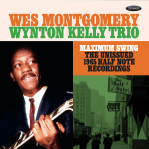
Resonance Recordings continues its deep dive into the music of guitarist Wes Montgomery; Maximum Swing: The Unissued 1965 Half Note Recordings catches him live in New York City, backed by the Wynton Kelly Trio. Pianist Kelly and drummer Jimmy Cobb were key players on Miles Davis’ game-changing Kind of Blue; teaming with a round robin of bassists that includes once-and-future Miles sidemen Paul Chambers and Ron Carter, they launch plenty of lean, thrusting grooves and hypnotic vamps that give Montgomery room to take off. And does he ever: whether on untitled 12-bar jams, highlights of Miles’ book like “Impressions” and “No Blues”, standards from Broadway (“All the Things You Are”) and bebop (“Birks’ Works” and “Cherokee”), or his great original “Four on Six”, Wes is endlessly inventive, spinning out fleet, angular licks, spiky chordal excursions and his trademark octave lines in fluent, inspired fashion. The shape-shifting finale “Star Eyes” is a real highlight, but every track has its thrills, showing that this group’s classic album from the same year, Smokin’ at the Half Note, was only the tip of the iceberg.
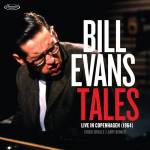
Montgomery isn’t the only jazz legend whose riches producer Zev Feldman has been excavating; released on Elemental Music, Tales: Live in Copenhagen 1964marks his 11th cache of buried treasure from Bill Evans (the main pianist on Kind of Blue). Plowing his own furrow after leaving Miles, Evans steered the piano trio format away from solos with backup toward a conversation of equals, an ideal he pursued the rest of his life. This album presents that ideal in perhaps its purest form; caught on tape by Danish radio and TV, bassist Chuck Israels and drummer Larry Bunker drive the music onward as much as their nominal leader, while Evans complements his partners’ vibrant ideas with shimmering backing and radiant flights of fancy. Multiple takes give up the secrets of pensive weeper “My Foolish Heart”, bittersweet waltz “How My Heart Sings” and speedy flagwaver “Sweet and Lovely”, grounded in a supple rhythmic bedrock, unlocking the melodic and harmonic possibilities only master players in tune with each other can find. Immediately, immensely appealing, but with subtle delights galore beneath the surface.
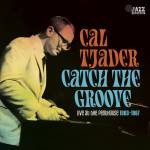
From the 1950s on, vibraphonist Cal Tjader won plaudits for his forward-looking emphasis on Latin rhythms – though recognition of his innovations faded as the sound became more mainstream. Feldman’s Jazz Detective label aims to right the balance with Catch The Groove: Live at the Penthouse 1963-67 — and succeeds brilliantly! In all six sets (originally broadcast from the Seattle club), Tjader lays down his jazz credentials through standbys like Ellington’s “Take The A Train”, Miles’ “On Green Dolphin Street” and Milt Jackson’s “Bags’ Groove”, then cooling down to a warm hush on ballads “It Never Entered My Mind” and “The Shadow of Your Smile”. But when percussionist Armando Peraza (later the beating heart of Carlos Santana’s most popular bands) brings the rhythms to a boil on “Morning of the Carnival”, “Cuban Fantasy” and Tjader originals “Davito” and “Leyte”, the results are spectacular! Throughout, the playing of Tjader and his sidemen is solid, strong and tasty — even heating up the Association’s “Along Comes Mary” for an unexpectedly spicey closer.
Before his passing earlier this year, one of piano giant Ahmad Jamal’s last public acts was to authorize Jazz Detective’s releasing three double-disc sets from the Penthouse archives; the last in the series, Emerald City Nights: Live at the Penthouse 1966-68, is another towering monument to his unique blend of conceptual chops and melodic mass appeal. Teaming with Jamil Nasser on bass and Frank Gant on drums, Jamal swiftly grasps the essence of every tune, then unfurls spontaneous variations that polish their inherent possibilities to a persistent dazzle. Catchy rhythmic vamps, daring harmonic reinventions, ample space for Nasser and Gant to strut their stuff — it’s all here, along with heaping helpings of precision filigree and gutbucket swing. You’ll never quite hear chestnuts like “Misty” and “Autumn Leaves” the same way again — and when Jamal turns the samba “Quiet Nights of Quiet Stars” into an uptempo barnburner and backspins a ballad like “Where Is Love” into hipster territory, you’re gonna want more! (Good thing there’s three volumes, eh?)
Beyond Feldman’s extensive explorations, we’ve also been gifted with the third in a series of Brubeck Editions, “new, officially authorized releases of great music featuring Dave Brubeck and his many musical collaborators”. The Dave Brubeck Quartet Live from the Northwest, 1959 gathers hotel and college dates from Multmonah, Oregon recorded by legendary engineer Wally Heider — although, with the game changing Time Out album in the can but as yet unreleased, there was nary a 5/4 tune on the horizon. Instead, Brubeck leans into standards and originals where he can sound like a one-man big band with his two-fisted block chords, launch into spontaneous counterpoint with saxophonist Paul Desmond, or ride the dynamics of “Basin Street Blues”, “These Foolish Things” and “The Lonesome Road” from a whisper to a roar — all hurtled along by the nimble propulsion of bassist Eugene Wright and drummer Joe Morello. The whole set is a marvelous example of four talents locked onto each other’s wavelengths, working as one; liner notes from Brubeck’s sons Darius, Dan, Matt and Chris offer up rich insights to underline the virtuoso interplay and effortless momentum on display.
Merry Christmas, S.o.C. readers and followers! In the spirit of the season, we would like to share this beautiful song by Stephen Herreid, “Father Aeneas Bails You Out”.
It tells the story of a Roman Catholic priest who bails out a friend from jail during an apocalyptic war in the near future – “Washington was blown to hell”. Sounds depressing, but it is actually full of hope and affirmation of life. Herreid sings of how some things are eternal – truth, charity, and Christian love. As Father Aeneas explains to his friend, “You should belong somewhere on Christmas Eve”.
As Oliver Anthony’s “Rich Men North of Richmond” proved earlier this year, there is a real hunger for straightforward songs that aren’t afraid to tell the truth. It doesn’t take a fancy recording studio and expensive instruments to create powerful art. May Steven Herreid’s new Christmas carol be a blessing for you and yours this season.
Greetings, SoC readers! In our latest symposium, Brad, Erik, Kevin, and Tad discuss a true prog classic: Rush’s 1980 album, Permanent Waves, with a side trip to their live album, Exit…Stage Left.
Tad: Gentlemen, let me state right off the bat that Permanent Waves is my favorite Rush album. I know it’s not their “best”, but it is the one I listen to most often. I love the way it bridges earlier albums like A Farewell To Kings and Hemispheres to future masterpieces like Moving Pictures and Power Windows. Also, it’s the first album where Geddy tones down his banshee wail a bit, paving the way for mass acceptance.
Erik: Tad – while Moving Pictures is my favorite Rush album, I certainly think a good case can be made for Permanent Waves. And to give it due credit, I don’t think Moving Pictures can be made by Rush without them first making Permanent Waves. As you mention, it serves as a bridge from their previous works to what they became in the 1980’s.
One thing that Permanent Waves represents to me is Rush learning how to trim the fat, so to speak. Over previous albums, Rush had become more ambitious in their musical output, from both a compositional standpoint as well as their experimentation with different sounds, including keyboards. Although this phenomena began almost as soon as Peart joined the band, they really turned it up to 11 starting with 2112. It culminated with Hemispheres, which included the side-long suite that gave the album its title as well as the incredibly complex instrumental, La Villa Strangiato (and I must mention it also contained my favorite anti-commie song of all time, The Trees). When compared to these previous albums, Permanent Waves seems relatively stripped down. Indeed, members of the band stated that they were exhausted making Hemispheres and were looking to scale things back at the time they recorded Permanent Waves.
In doing such an album, Rush added the final piece to their repertoire that made Moving Pictures possible – the ability to be economical with their music and the balancing of that with larger ambitions. Indeed, there were not-so-subtle hints that they were doing this on my two favorite pieces from the album, Jacob’s Ladder and Natural Science. Both of these songs show the ambition that drives some of the best progressive rock, while also showing enough restraint to attain the aforementioned balance.
I have a few other observations I’ll make in my next entry, but for now, I’ll turn the floor over to one of the other participants here.
Brad: Dear Tad, Erik, and Kevin! From the blistering guitar attack in the opening moments of Permanent Waves (Spirit of Radio) to the final, sighing ambient sounds (Natural Science), this album is a stunner. It’s so utterly different from all the Rush albums that preceded it, and, yet, in some mysterious way, it’s a perfect continuation of Rush music and magic.
As I’ve mentioned before, I didn’t come to Rush until the spring of 1981. I was a seventh grader at Liberty Junior High in Hutchinson, Kansas, and I had done something to earn detention. Detention meant an extra period after school in the school library. None of this really mattered–my mom wouldn’t get home from work until 5, so she’d never know that I was in detention, and the library was my favorite place at the junior high.
I don’t even remember what I did to earn detention, but I’m sure it had something to do with me talking too much in class.
Regardless, my fellow detainees were Troy and Brad (a different Brad). One of them had a Genesis Duke lapel pin (on his jean jacket), and we started talking progressive rock. I was quite familiar with Genesis, Yes, and Kansas, but I’d never heard of Rush. Troy and Brad assured me that I had to listen to Moving Pictures, the latest album from Rush. Despite detention, I immediately went out and bought the album. I was immediately hooked!
From there, I worked backward, encountering the beauty that is Permanent Waves. I loved the six songs, I loved the cover and the artwork, and I especially loved the lyrics.
Strangely, though, it wasn’t until I first met Kevin McCormick that I became obsessed with the lyrics for “Natural Science”. As a gift to me, Kevin (in his beautiful and distinctive penmanship) wrote out the lyrics of the song for me. I carefully folded those lyrics and kept them in my wallet for decades. Indeed, they shaped my whole outlook on life. I’m a practicing Catholic, but, thanks to Peart and Kevin, I will also always be an idealistic Stoic.
Since I have the floor, I’ll also add this. Tad, I love that you included Exit Stage Left in this discussion. Rush, I think, at least up through Different Stages always bookended the various styles of their music with a live album. After Vapor Trails, Rush began to release live album after live album, thus changing their previously careful M.O. All to the good, I say, as I want more Rush rather than less Rush.
Still, back to Exit Stage Left. If I had to list my ten favorite live albums of all time, Exit would be among them. Maybe not number one, as I think the production values of the album sound dated at this point. But, the music. So glorious. And, the transitions from song to song are just extraordinary.
I especially appreciate the transition on side three of the double album, Broon’s Bane to The Trees to Xanadu. Heaven itself! I realize that the album came from several different concerts, but I would’ve loved to have been at any one for the Permanent Waves and Moving Pictures tours.
Tad: Erik, I think you nailed one of the most attractive characteristics of Permanent Waves – there is absolutely no fat; it’s the leanest album of their career! Even the relatively long tracks, “Jacob’s Ladder” and “Natural Science” (7:27 and 9:19 respectively) are models of conciseness. Brad, I agree with you that “Natural Science” is a keeper. It is my favorite song on the album. When Alex starts an arpeggiated riff and Geddy first sings
Wheel within wheels in a spiral array A pattern so grand and complex Time after time we lose sight of the way Our causes can’t see their effects
is one of their greatest musical moments. And of course, I have to appreciate Peart’s hopeful take on humanity:
The most endangered species, the honest man Will still survive annihilation.
Another favorite song – and this might be a surprise to you all – is “Different Strings”. It’s so unlike anything Rush had recorded before – understated, elegant, and, well, hushed in its sound. I love how Geddy utilizes harmonics on his bass to underline the melody, while Alex pulls off a lazy, loping guitar solo.
“Entre Nous” is simply a beautiful song, both in melody and lyrics. There is perfect balance in it between the heavy guitar riff at the beginning and Alex’s delicate touch during the chorus. Meanwhile, Neil’s lyrics are very mature – it’s impossible for two individuals to fully know and understand each other, but it is possible to grow close via mutual respect.
Erik: Great, stuff guys! I am happy that we all have agreement on Natural Science and Jacob’s Ladder.
Another fond memory I have of this album was that it marked the time when I really started to hear Rush on the radio frequently. I had been a Rush fan for about two years at this point, but only occasionally heard them on the radio, with songs like “Fly By Night,” “Closer to the Heart,” and “Working Man.” I don’t recall ever hearing anything off of “2112” or “Hemispheres” on the radio in those days. But starting with Permanent Waves, Rush broke through on my preferred FM rock station quite forcefully, starting with the ironic hit The Spirit of Radio. I call it ironic because the song was basically a call for artistic integrity over going for the lowest common denominator to have hits, and yet this song might have been Rush’s biggest hit up to that time. I certainly heard it on the radio much more than any of their previous music. Entre Nous and Freewill also got plenty of radio airplay. On the latter of those two, along with The Spirit of Radio, I was also able to get a preview of Permanent Waves when I caught my first Rush concert at Rupp Arena in Lexington, KY, in September of 1979. Oddly, I remembered Freewill more than the hit song.
Increased radio airplay is another way that Permanent Waves presaged what was to come the following year with Moving Pictures, as it exposed Rush to a wider audience that was receptive to the follow-on. Another aspect of the music that I noticed here was the incorporation of certain sounds not found on previous Rush albums, particularly the reggae-influenced interlude found on The Spirit of Radio. Similar sounds found their way onto the next two albums with Vital Signs in Moving Pictures, and Digital Man on Signals. I’ve read elsewhere that the members of the band were listening to The Police quite a bit around this time, and these reggae excursions are evidence of that. They serve as more evidence of the manner in which Permanent Waves served as a turning point that teed up Rush for what was to come.
Onto Exit … Stage Left now. If this is not my favorite live album of all time, it is certainly in the top five. Between February and October of 1981, no album of mine was in more heavy rotation than Moving Pictures. It took another Rush release – the live album we are discussing – to change things. This was just such a stellar live album, great recording and great sound throughout.
Brad, you and I are going to be doing a Vulcan mind meld on what proved to be side three of the vinyl edition of Exit … Stage Left – Broon’s Bane, to The Trees, and into Xanadu. While all four sides of that album received plenty of play by me, none received more than this epic side three. And as for Xanadu itself? This is my favorite version, which I strongly favor over the studio version. The latter was a bit dry in its sound and production overall, while the live version here smoothed out the rough edges without losing any of the punch or dynamics of the original.
But to give the other sides their due, mention must be made of a rousing version of Closer to the Heart, which received more than a little well-deserved airplay of its own. Freewill and Jacob’s Ladder also make respective appearances, coming off well in the live setting. And of course, we have the rousing intro on side one with The Spirit of Radio. In short, Exit … Stage Left perfectly encapsulates the Rush era that played out between their previous live album and this one. In sound, setlist, and performance, it’s really hard to find a better live album than this, and I’m not sure I ever have. Insert chef’s kiss -here-. 🙂
Brad: Tad, I’m completely with you on Entre Nous and Different Strings. Each shows a side of Rush rarely seen but always appreciated. Erik, I really appreciate your enthusiasm, especially for the various sides of Exit. . . Stage Left. Somehow, the band just really captured its best self with that live album. As much as I appreciate all Rush live albums (and I own them all in various formats), it’s always Exit. . . Stage Left that I go back to the most. It’s one of my-all time favorite live albums as well.
Overall, though, I must state, as much as I love Permanent Waves (and I do), in hindsight, the album really feels like a transition album, itself pointing to something else. In this case, it’s pointing toward Moving Pictures and Signals but, I think, also to the very angular Grace Under Pressure. Power Windows and Hold Your Fire seem well beyond Permanent Waves, taking both new wave and jazz fusion in fascinating directions.
Natural Science, though, is the one exception to this transition idea. It seems it could’ve only existed on Permanent Waves. Nothing like it had ever come before and really nothing like it would ever come again. Not only is the song perfectly constructed, but Neil’s stoic lyrics really hit the peak of his writing. I think Camera Eye off Moving Pictures was probably an attempt at a sequel to Natural Science. Yet, as gorgeous as Camera Eye is, it simply doesn’t possess the power (more refined than raw) of Natural Science.
Kevin: Hear, hear! To all you gents for your wonderful reflections on this tremendous recording and its live cousin! Once again I’m late to the party–but with good reasons. 1)It’s recital time for the guitar studio, so my time is limited and 2) I plan to give a more complete treatment of this masterpiece on these Spirit of Cecilia pages in the coming days. However, to this already detailed commentary here, I would just like to add that, for me, Permanent Waves is the masterpiece and Moving Pictures is the unusually powerful sequel.
Lemme’ e’splain…no, there is too much, Lemme summup: It’s not only that without Permanent Waves there would be no Moving Pictures, though Erik’s observation is true enough. But it is precisely the beautifully blended nature of the artistry of Permanent Waves where its genius lies.
Moving Pictures captured a nearly global audience; its themes of personal independence and encounters with modernity make it universally relatable in the global modern age. This combined with the new-found confidence the band discovered upon really breaking through to regular radio play, as Tad so rightly states. Furthermore, Exit…Stage Left followed quickly on MP’s heels right when MTV was just launching. The engaging live videos from these songs suddenly reached an enormously broad audience they might have otherwise missed in the times of the radio ghettos of the early eighties. Neil Peart stated many times that this was when Rush had found its sound.
And as much as I love that sound, it’s heavy: musically, thematically, and aurally. I miss the whimsy of their earlier recordings. Permanent Waves retains some of that whimsy both in its sound and in the lyrics. There is a personal touch found on the album that I sense as more intimate than on Moving Pictures. That touch certainly returns on subsequent albums, but there is something magical about the combination of sounds and wonders on Permanent Waves. Brad notes in his own inimical style, the opening flurry of Spirit of Radio–it’s brilliant! Not only musically, but it’s a bright, shimmering sound—“a shifting shaft of shining.” And it shimmers throughout the album.
Here these young travelers are forging through completely new territory as a band. They don’t know exactly what they are doing or where they are going, but that’s the genius of it. The magic is created through the instincts of three musicians who have spent countless hours on the road together. They’ve tried to carve their own sound, but have gotten lost in the trees (and the fountain of lamneth). Finally they arrive at this creative space with all of their skills and ideas intact and they simply let loose!
The resulting work of art resounds with the spirit of youth, the confidence of the road warrior, and the slight uncertainty of the as-yet unwise sage. It’s a joy to listen to and still has an incredible power, both spiritual and musical, after so many years. So Hear Hear!: To the boys in Morin-Heights in that Canadian autumn weaving the fabric of our dreams!
Brad: Kevin, what great thoughts. So glad you joined the conversation. It wouldn’t be a Rush conversation without you! I very much look forward to your fuller thoughts on all this.
Tad: One last thing I’d like to add – I love the cover art for Exit…Stage Left! I think it is the first time Hugh Syme incorporated visual puns, and boy, this cover is packed with them. There are images from every previous Rush album, and when I first saw it I was like a kid in a candy store.
Gentlemen, thank you for your wonderful insights into Permanent Waves and Exit…Stage Left. I think most diehard Rush fans would agree that this period in the group’s long career was a peak. And, it was nice to see them finally break through to a much wider audience. They never looked back, did they?
Brad Birzer and Tad Wert are having a listen to Steve Hackett’s new live set, Foxtrot at 50. Here are their reactions to this latest offering from one of the most important artists in the world of prog.
Tad: Ok, Brad, you are the one who wanted to discuss this album. I had not heard it before you shared it with me, and I am really impressed. For a guy in his 70s, Mr. Hackett can really cook on the guitar! He has assembled a crack band for this tour, and I love the format: a mix of solo and Genesis tunes on the first disc, followed by a complete performance of Genesis’s classic album, Foxtrot.
I think it’s terrific how Hackett has come into his own the past few years. While Genesis seems to have effectively retired from the music scene, and Peter Gabriel releases an album once a decade or so, Steve Hackett has built a thriving career on his solo albums as well as offering contemporary takes on classic Genesis cuts.
Brad: Dear, dear Tad. So glad to have this conversation with you, my friend. A few years ago–back when we were with Progarchy–I had the chance to interview Steve Hackett. Somehow, I’d messed up the time (yes, me being a humanities guy, big surprise!), and I was an hour off. It didn’t matter. I think I had messed up Hackett’s dinner time, and he was still a total gentleman with me. I had already loved the guy, but this made me love him even more. So very gracious.
Over the past 11 years, Hackett has done a brilliant job of re-imagining Genesis, 1970-1977. In 2012, he released Genesis Revisited II, including contributions from Steven Wilson and Neal Morse. I think this was an album that helped define a moment in progressive rock history–a recreation of prog wave 1 into prog wave 3. Since then, Hackett has continued to make his own music, but he does so by reforming the past rather than revolutionizing it. In other words, Hacket holds the distinction of being a man of piety–one of the three most important virtues for the republicans of Rome.
Genesis Revisited II is a gorgeous album.
Since then, he’s been releasing live albums with his band. In each live album, he has excellently mixed his own original and new genius music with that of the music of Genesis. Honestly, it feels like he never left Genesis (Peter Gabriel-era and immediately post-Peter Gabriel era). Instead, his music–especially the newer material–feels like an incredible extension of what Genesis did so gloriously in the early to mid-1970s. Again, as noted above, there’s that brilliant level of piety, a virtue I hold in highest esteem.
I’m proud to proclaim Hackett’s music as simply the best of past and current prog!
As the latest album indicates, Hackett and his superb live band had decided to celebrate Foxtrot, now a little bit over the half-century mark in age. As such, the band plays, live, Watcher of the Skies, Time Table, Get ‘Em Out by Friday, Can Utility and the Coastliners, Horizons, and Supper’s Ready.
While all six songs are extraordinary, it’s the deftness of the last three that really make one long prog track, a contrived track worthy of celebration. Even thematically, these last three songs go together, looking at and examining the sycophancy surrounding King Canute to the Apocalypse and the second coming of Our Lord, Jesus Christ (the “eternal Sanctuary man”!).
I’ve often joked that I want Big Big Train to play Supper’s Ready at my funeral. However, hearing Hackett’s live version, I might want his band. Or, better yet, maybe Big Big Train and Steve Hackett’s live band playing at my funeral. I’d also like Supper’s Ready to be a forty-minute version (complete with Spawton’s brass band) rather than the typical 28-plus minute version.
And, for what it’s worth, Tad, I absolutely love to bake bread. One of my favorite things in the world. What does this have to do with Genesis? Here’s my explanation. Foxtrot is my go-to album when I’m baking. It’s exactly the right length of time and has the right cadences to not only mix the bread but to knead it and set it into the oven, allowing it to rise. So, no album has more permeated my kitchen than Foxtrot. I assume my kids associate it with the smell of yeast and beer (to raise the bread properly).
Tad: Brad, what a wonderful application of Foxtrot! I agree that Hackett does not merely recreate the old masterpieces of Genesis’s heyday, but he reforms them, updates them, and puts his personal stamp on them. I see that Nad Sylvan is the vocalist. He sounds terrific – he has a bit of Peter Gabriel’s rasp, but he also makes these familiar songs new and interesting.
For a live album, I am really impressed with how good the sound is overall. There is some venue ambience, but the instruments and vocals are all clean and well-defined. The audience is obviously attentive, appreciative, and respectful. The “Watcher of the Skies” on this album is really stunning, and then comes “Time Table”, which is even better!
Finally, I love having such an excellent performance of “Supper’s Ready” that was recorded with the most up-to-date technology.
Brad: Yeah, Tad, I’m not exactly sure how Hackett does it, but he does have the uncanny ability of melding his own music–whether from the 1970s or from his most recent album–with that of early Genesis. Maybe his sound from Genesis was so unique in its contributions, but he simply continues to contribute to that sound. . . which NEVER sounds dated. In fact, if there’s one thing that can be stated with absolute certainty is that Hackett is always and everywhere a class act. A true gentleman in prog world.
I would like to note here that I think his original tracks, Ace of Wands, Tower Struck Down, and, especially Shadow of the Hierophant sound not just as good as Genesis, but sound as if they could’ve come from Gabriel-era Genesis itself.
I especially love Shadow of the Hierophant, a classic progressive rock track.
You mentioned Nad Sylvan as the perfect singer for Hackett’s latest incarnation, and I couldn’t agree more. On Shadow, he has Amanda Lehmann sing, and she has a gorgeous voice. While this isn’t from Foxtrot at Fifty, it does capture perfectly the power of the song live:
Lehmann, drummer Gary O’Toole, and bass pedalist Nick Beggs especially make this version come alive.
Tad: Well, Brad, I think we can both agree that Mr. Hackett is enjoying a well-deserved career renaissance! I really appreciate the fact that he is nurturing so many younger musicians on his tours. There are very few people whose career has spanned so many years and remain vital, creative artists. May Steve Hackett have many, many more years to delight us!
Today is a day full of symbol and meaning (as, admittedly, all days should be, from Creation to Apocalypse) and rich in history. Importantly, in the Catholic and Eastern Orthodox traditions, it’s the Feast of St. Cecilia, a martyr as well as the patron saint of music, a guardian of all that is beautiful in this vale of tears and sorrows.
My own family history is tied intimately to St. Cecilia. In the 1920s, my maternal grandfather’s oldest sister, Cecelia, contracted tetanus. The entire western Kansas farm community came together to collect the $200, a huge sum of money, necessary to purchase the shot. Some men then drove to Kansas City to purchase the shot. When they returned, they administered the medicine, but fate had outraced them across the Great Plains. Aunt Cecilia died a few days later, on May 19, 1927, just four months shy of her 21st birthday. She had also been seriously involved with a local boy torn between a love for her and a longing to enter the priesthood. Needless to write, he spent his career administering the sacraments.
Much to my regret, I never asked my grandfather about Aunt Cecelia, and my grandmother never knew her. The events of her life are now completely lost, outside of her tragic death which seems to have defined her very existence. I have visited Aunt Cecelia’s grave many times in my life; frankly, it’s one of my favorite spots in the known universe. She rests under a gravestone with her oval picture embedded in it. Though the porcelain containing the picture is cracked and chipped, the image intrigues me. Despite the distance from her to me, her eyes reveal much. She looks at me with penetrating intelligence and with more than a bit mischievousness. Aunt Cecelia has even visited me a time or two in my dreams, but she is always merely playful. She’s never spoken to me, even under the drug of Morpheus. Her grave faces east in the windswept and dramatic valley of Pfeifer, Kansas, under the shadow of the gothic church built stone by stone by my ancestors, Heilige Kreuz.
In some way I could never explain rationally, I love Aunt Cecelia. I’m eager to hear her speak to me, to tease me, and to look at me through those mischievous eyes.
I think of my grandfather, the single finest man I ever knew, and how close he had been to her, and I think she must have been a truly fascinating woman. From dreams to visits to the Pfeifer cemetery, she has always been a presence in my life, though hers had been so brief and had ended over forty years before mine began. My wife and I named our fifth daughter after her, slightly changing the spelling. Like her name sake, our Cecilia Rose’s life ended all too tragically and all too soon.
Yet, another reason to consider the importance of November 22. Famously, three prominent twentieth-century figures exited time and entered eternity forty-eight years ago today: John F. Kennedy; Aldous Huxley; and C.S. Lewis. The strange coincidence of their deaths ties them together. Kennedy will always be an enigma. In the public mind, he will remain an Arthurian symbol, though in corrupt form. His ruthless womanizing will (or should) always taint our memory of him. Indeed, justly, one should more readily associate him with Lancelot than with Arthur.
Despite his many oddities, Huxley gave us one of the most damning and accurate appraisals of modernity possible in his work of science fiction from the early 1930s, Brave New World. In this dystopian world, a sanitary but sexually-promiscuous and genetically-engineered population with names such as Benito, Shaw, and Marx, reverenced Henry Ford’s production methods by making the “sign of the T.” As one leader noted, “We have the World State now. And Ford’s Day celebrations, and Community Sings, and Solidarity Services.” With the exception of a small reservation of primitives—syncretic pagan-Roman Catholics—in New Mexico, the world resembles a factory. “Primroses and landscapes, he pointed out, have one grave defect: they are gratuitous. A love of nature keeps no factories busy.”
Five years younger than Huxley, C.S. Lewis also wrote of dystopias in his brilliant That Hideous Strength. Published two years before Orwell’s similar anti-totalitarian masterpiece, Lewis’s novel is a theistic 1984. The story revolves around a group of academic and bureaucratic conditioners–known as the N.I.C.E. (National Institute for Coordinated Experiments) who take over a small but elite English college as a prelude to a takeover of Britain. To stop “That Hideous Strength,” a new King Arthur emerges in the form of a philology professor, Dr. Ransom. With the aid of a small group of friends, he awakens Merlin from a fifteen-century sleep. Modernity perplexes Merlin. In a telling conversation,
This is a cold age in which I have awaked. If all this West part of the world is apostate, might it not be lawful, in our great need, to look farther . . . beyond Christendom? Should we not find some even among the heathen who are not wholly corrupt? There were tales in my day of some such: men who knew not the articles of our most holy Faith, but who worshipped God as they could and acknowledged the Law of Nature. Sir, I believe it would be lawful to seek help even there. Beyond Byzantium.
To which Ransom responds:
You do not understand. The poison was brewed in these West lands but it has spat itself everywhere by now. However far you went you would find the machines, the crowded cities, the empty thrones, the false writings, the barren books: men maddened with false promises and soured with true miseries, worshiping the iron works of their own hands, cut off from Earth their mother and from the Father in Heaven. You might go East so far that East became West and you returned to Britain across the great ocean, but even so you would not have come out anywhere into the light. The shadow of one dark wing is over all.
It would be difficult to ignore the prophetic elements of Huxley and Lewis, as our culture drowns in its sexualized and pornographic advertising, clothing, and entertainment.
Our Republican politicians continue to pander to the lowest common denominator as they gradually dismantle the Republic in favor of a flabby empire without purpose or meaning. Indeed, for many of our leaders, “democracy” has become a term of religious significance and intensity, and “freedom,” not the natural law as St. Paul told the Christians of Rome, “is written in the hearts of every man and woman on this earth.” Our Democratic politicians have no regard for the dignity of the human person as they advocate, without the slightest hint of remorse, the murder of the least of us.
With only a very few exceptions, our academics remain trapped in their own subjective realities, publishing only for each other.
Our corporations pursue their “dreams of avarice” as we walk through the Wal-marts of the world, mesmerized by Muzak and the shrines to the materialist gods, made, of course, in the People’s Republic of China.
Abroad, things remain wretched. Europe falls prey to a centralized bureaucracy of its own secular devising, mobs shout without purpose, and its citizens of a Christian heritage no longer seem capable of being fruitful and multiplying.
Russia, over two decades after the fall of communism, remains a nightmare—economically, culturally, and politically. Its leader at the beginning of the 21st century is a former member of the KGB, an operative, during the 1980s, in East Germany. As chess master Garry Kasparov claimed in early December, 2007, Putin and his followers are “raping the democratic system.” Things have not improved in the last four years.
Indeed, despite the western victory in the Cold War, systems of tyranny remain alive and well throughout Asia, Africa, and Latin America. Under the leadership of the three presidents following Ronald Reagan, the West failed to explain the demise of capitalism or lay a solid foundation for a post-Communist world. Instead, the leaders of the United States treated the fall of communism in Eastern Europe and Russia as just one more passing event in the history of the world. 1989 should be remembered in history as one of her greatest dates, an annus mirabilis, and, yet, scholars ignore its implications and the significance of its leaders, most of whom where Christian. Even more tragically, numerous governments throughout the world kill and torture Christians daily outside of the western hemisphere, while Cuba remains the important and tragic exception within this hemisphere.
It all seems terribly bleak right now, the world swirling around the abyss and Americans only pushing it faster and faster.
And yet, no matter how terrible things might look on this November 22, the symbols, history, and myths surrounding this day offer much in the way of hope. Communities “share symbols and myths that provide meaning in their existence as a people and link them to some transcendent order,” political theorist Don Lutz has written. “The shared meaning and a shared link to some transcendent order allow them to act as a people.” Indeed, the man “who has no sympathy with myths,” G.K. Chesterton argued, “has no sympathy with men.” One cannot, it seems, separate men from myths.
The choice is ours: We can choose corrupt symbols and myths suited to our pursuits, our lusts, our own wills, and our petty nationalisms, or we can choose those attached to what is eternally true and dignifies the uniqueness of each person, made in the Image of God. Indeed, no matter how corrupt and bleak and depressing the world may appear, we can always turn to the many Cecilias and the Laura Smiths of the world and see the goodness that is possible through grace and love. Properly remembered, these true symbols and true myths can re-orient our souls, our cultures, and perhaps even the world itself toward right order.
This day, of all days, should teach us this.
*****
All great systems, ethical or political, attain their ascendancy over the minds of men by virtue of their appeal to the imagination; and when they cease to touch the chords of wonder and mystery and hope, their power is lost, and men look elsewhere for some set of principles by which they may be guided. We live by myth. ‘Myth’ is not falsehood; on the contrary, the great and ancient myths are profoundly true. The myth of Prometheus will always be a high poetic representation of an ineluctable truth, and so will the myth of Pandora. A myth may grow out of an actual event almost lost in the remote past, but it comes to transcend the particular circumstances of its origin, assuming a significance universal and abiding. Nor is a myth simply a work of fancy: true myth is only represented, never created, by a poet. Prometheus and Pandora were not invented by the solitary imagination of Hesiod. Real myths are the product of the moral experience of a people, groping toward divine love and wisdom—implanted in a people’s consciousness, before the dawn of history, by a power and a means we never have been able to describe in terms of mundane knowledge.— Russell Kirk, “The Dissolution of Liberalism,” Commonweal (January 7, 1955), 374
In this post, Tad Wert, Carl Olson, Erik Heter, Kevin McCormick, and Bradley Birzer review that 1985 classic, Hounds of Love, by the inimitable Kate Bush! She was brilliant then, and she remains brilliant to this day. We are honored, and humbled, to consider her music as 1980’s perfection. God bless, the Fairlight!
Brad: Tad, Erik, Kevin, and Carl, so good to talk to you again. As always, a true pleasure. Hounds of Love was my introduction to Kate Bush. I realize that several of her albums had appeared before Hounds of Love, but it was Hounds of Love that awakened my soul to excellent music in 1985. At the time, I was a senior in high school. And, I mean this without hyperbole. I had loved Rush, Yes, Genesis, Thomas Dolby, ABC, and The B-52s prior to discovering Kate Bush, but it really was Hounds of Love that made me realize what music could accomplish. I really liked side one of the album, but I was deeply in love with side two: “The Ninth Wave.”
The fact that so many outlets gave it a high review suggested to me (then, as well as now) that prog was a delight for all concerned, even if they shunned prog in their formal reviews. Bush’s Hounds of Love was ultimate prog for those who hate prog!!!
Tad: Brad, thank you for suggesting we discuss this wonderful album! I have fond memories of it as well – for me, 1985 was one of the greatest years for music ever. Just consider some of the albums released that year: Arcadia’s So Red The Rose, Bryan Ferry’s Boys and Girls, Clannad’s Macalla, Cocteau Twins’ ep Aikea-Guinea, The Cure’s The Head On The Door, The Dream Academy’s eponymous debut, Joni Mitchell’s Dog Eat Dog, Marillion’s Misplaced Childhood, New Order’s Low-life, Orchestral Manoeuvres in the Dark’s Crush, Prefab Sprout’s Two Wheels Good, Propaganda’s A Secret Wish, R.E.M.’s Fables of the Reconstruction, Scritti Politti’s Cupid and Psyche ‘85, Simple Minds’ Once Upon a Time, Talking Heads’ Little Creatures, Tears for Fears’ Songs From the Big Chair, The Waterboys’ This Is The Sea, … I could go on and on! It was a watershed year, when it seemed like the sky was the limit when it came to what you could hear on the radio. Warm jangly guitar rock rubbed shoulders with icy British synthpop, while there was a revival of psychedelic rock happening (remember Prince’s Around The World In a Day?) and girl groups like the Bangles were breaking into the bigtime.
And yet, despite the incredibly high bar that was being set by all of these artists, Kate Bush’s Hounds Of Love really stood out as an exceptional work. Like you, Brad, this album was the first time I heard her music. I was working in a record store at the time, and when it came in, our import buyer immediately put it on the store sound system. As those whooping synths that introduce “Running Up That Hill” came blasting out of the speakers followed by her unique voice, I knew this was something special.
I confess that I was prejudiced against Ms. Bush at the time, due to my copy of The Rolling Stone Record Guide, which I considered the definitive authority on all things rock. I remember it brutally panned her earlier albums, and described her voice as sounding like a “Hoover vacuum cleaner”. I think 1985 was the year I tossed my book in the trash, because its biases against any music with a hint of complexity were too great to ignore! As time has passed, Rolling Stone Magazine’s original critical faves and pans have become simply embarrassing.
Anyway, rant over! I’m happy to say that “Running Up That Hill” was an immediate cure for my initial anti-Kate Bush prejudice.
Brad: And what a rant it is/was! Astounding, Tad. So glad you put her into context: Tears for Fears, Songs from the Big Chair; Brian Ferry, Boys and Girls; New Order, Low Life. Astounding stuff. From every direction, astounding stuff. And, as great as Tears for Fears, Brian Ferry, and New Order, Kate Bush still delivers the best. Well, I’m not sure that Hounds of Love is better than Songs from the Big Chair, but I can still admit that one is worthy of the other. What a year 1985 was! Incredible.
Carl: Yes, great rant! Before getting to Bush and Hounds of Love, I want to give a rousing “Hear, hear!” to this: “Rolling Stone Magazine’s original critical faves and pans have become simply embarrassing.” I clued into that after reading their stupid “reviews” of Queen and Kansas, two of my favorite groups of my late teens (and still on regular rotation, all these years later). Plus, the albums they seemed to laud and drool over were, for me, almost all incredibly boring (and usually overtly leftist politically, which only added to the boredom). C’est la vie!
I graduated from high school in 1987, and didn’t hear anything by Kate Bush until late 1988, when I saw the film “She’s Having a Baby.” The movie itself was so-so overall, but the delivery scene, during which Bush’s song “A Woman’s World”—specifically written and created by Bush for the John Hughes’s film—played, was powerful. I was simply stunned by the song, which was both strikingly ethereal and emotionally raw. It was simply beautiful. And that voice! There was no other voice like that.
I got a copy of The Sensual World album (1988) as soon as it came out–and then bought everything else by Bush, including The Hounds of Love. There simply wasn’t anyone else like Bush; her music was (and is) remarkably unique, idiosyncratic in the very best way. And while I certainly have favorite songs, Bush has always been an Album Artist for me. I’ll say more about a couple of songs later, but here’s my highest praise for Bush: really good artists, even great artists, will create wonderful and memorable albums. But the truly best artists create complete worlds. They transport you somewhere, somehow. And that’s what Bush has always done for me: she demands complete and absolute attention, with characters and narratives that are wild, rich, bewildering, poignant, and always engrossing.
Tad: Thanks, gentlemen, for affirming my anti-Rolling Stone polemic. Back to the music! Carl, you hit the nail on the head when you assert that Kate Bush creates complete worlds. Hounds of Love sounds like nothing else, and it transcends its time. From those afore-mentioned whooping synths to the spritely melody of “The Morning Fog”, we are invited to explore her world of maternal love, dreaming, cloudbusting, witchhunting, and Celtic dancing, among other things.
As I’m listening to this album again, it’s hard to pick out any individual song for special attention. Every track has its beautiful moments – each one adds to the overall atmosphere of ecstatic joy on side one, and mysterious suspense on side two. Side two is a suite entitled “The Ninth Wave”, and the back cover of the album has the following quote from Tennyson’s “The Coming of Arthur”:
“Wave after wave, each mightier than the last
‘Til last, a ninth one, gathering half the deep
And full of voices, slowly rose and plunged
Roaring, and all the wave was in a flame”
If any other artist quoted Alfred, Lord Tennyson, I would consider them unbearably pretentious, but not Ms. Bush. In her hands, it makes perfect sense.
Brad: I remember hearing Kate Bush for the first time–again, Hounds of Love–during the fall semester of my senior year of high school. Some friends and I, all deeply rooted in progressive rock, were always looking for New Wave music that somehow touched on all things prog. We found it in some of Thomas Dolby, U2, Wang Chung (To Live and Die in L.A. soundtrack), INXS, and in lots of Rush, post-Gabriel Genesis, and Yes, etc.
But, we also found side two of Kate Bush’s Hounds of Love to be extraordinary. Bush wasn’t just playing at being progressive, this side of the album, “The Ninth Wave,” as Tad noted above, was nothing but prog–-whole and complete and utterly compelling. To this day, I never get tired of side two of the album.
To be certain, I never tire of side one, either, but I’m more drawn to side two. “Running Up That Hill”–the opening track of the album–has been a Birzer family car mix staple for at least twenty years now. We, as a family, already loved Stranger Things, but we were completely blown away by Season 4’s gorgeous integration and employment of the song, itself always waiting to be fulfilled by the most noble heroism.
Additionally, my freshman year of college saw the release of Kate Bush’s greatest hits compilation, The Whole Story, and I devoured it. As it happened, my junior year of college, a good friend, Greg Scheckler, made a mixtape of all pre-Hounds of Love Bush. Why I’d not already explored her pre-1985 music at that point remains an autobiographical mystery to me. I still treasure that cassette that Greg made me, and I followed up by buying the complete catalogue of her work.
[To this day, I proudly own all of her CDs–separately and as a part of a comprehensive two-box set, complete with b-sides and live renditions]
Carl, I loved “She’s Having a Baby” when it came out. I saw it three or four times, believe it or not. I was a total John Hughes junkie! And, I loved “The Woman’s Work” from Kate.
Regardless, I despise Rolling Stone–aside from the articles by P.J. O’Rourke–and always have. Not only is it predictably leftist, but it’s predictably boring. Its weird hatred of Rush and then love of Rush at the end of the band’s career is nothing short of bizarre.
But, back to “The Ninth Wave.” Here, Kate Bush is at her absolute best, rivalled only by disk two of her later album, Aerial. As many times as I’ve listened to “The Ninth Wave,” I’ve never totally understood it. And, it’s in the mystery of the whole concept that titilates me. I think if I knew exactly what Kate Bush wanted, I’d be a bit disappointed.
As it is, it strikes me that a woman is lost, trying to navigate by various means–some supernatural (“Waking the Witch”), some by invoking the weirdest of the Beatles “(Watching You Without Me”), some by folklore (“Jig of Life”), and some by utterly natural means (“Hello, Earth”)–well, with a little German devil thrown in.
Hello earth Hello earth With just one hand held up high I can blot you out Out of sight Peek-a-boo, Peek-a-boo, little earth With just my heart and my mind I can be driving Driving home And you asleep On the seat I get out of my car Step into the night And look up at the sky And there’s something bright Traveling fast Look at it go Look at it go Hello earth Hello earth Watching storms Start to form Over America Can’t do anything Just watch them swing With the wind out to sea All you sailors (Get out of the waves, get out of the water) All life-savers, (Get out of the waves, get out of the water) All you cruisers, (Get out of the waves, get out of the water) All you fishermen Head for home Go to sleep, little earth I was there at the birth Out of the cloudburst The head of the tempest Murderer Murder of calm Why did I go? Why did I go? Tiefer, tiefer Irgendwo in der tiefe Gibt es ein licht Go to sleep little earth
All of it comes together in the album’s final track, the gentle and harmonious “The Morning Fog.” All seems well, as the protagonist is “born again” and remembers her unwavering love for her mother, her father, and her brothers. Indeed, all “loved ones.” What better way to end the album? No, not possible. It is the perfect ending to a perfect album.
That said, I still gravitate toward disc 2 of Aerial. . . .
Erik: Before I start in on the main topic, please let me chime in (pile on?) on the rant again on the vapid, droll, banal, and way-past-its-sell-by-date Rolling Stone, staffed by reviewers that write reviews for other reviewers in the hopes to look cool. I’d more trust Britney Spears’ opinion on the implications of quantum mechanics before I’d trust a music review from Rolling Stone at this point.
Now, to the subject proper. When Brad asked me to participate in this, I had to sheepishly admit that I had never heard Hounds of Love or any Kate Bush album for that matter, risking my credentials in the prog-lovers club. That turned out to not be entirely true, as once I looked at the track listing for this album, I quickly realized, thanks to the Netflix show Stranger Things and wider cultural echoes it made, that I had heard the first song on this album a number of times. But alas, that was the only song, so I’m going to be coming at this album from the perspective of a newcomer.
So far, I’ve only given it one listen (but have more planned tomorrow!). So for now, I’m going to add a few initial impressions.
To the surprise of exactly nobody, I will first start by saying Kate has an incredibly beautiful voice, with a vocal range that only a few possess. She can seamlessly transition between soft and subdued to exceptionally powerful and just as easily slide anywhere within that range. She uses her voice to such great effect as not only a vehicle to deliver her lyrics, but as an instrument in the larger orchestra. Some of the backing vocal arrangements in this album are simply otherworldly. I’m always a sucker for innovative vocal arrangements and good harmonies – think Good Vibrations by The Beach Boys, Leave It by Yes, and Seven Bridges Road by The Eagles. Kate has several tracks on this album with vocal arrangements – all of her own, multi-tracked voice – that stand with the best of any of them.
Another initial impression of this album is the way many of the songs combine catchy hooks associated with pop songs with the complexity of prog. The artists that can pull that off are few and far between, but Kate again shows another area in which she shines. Two tracks where this really hit me were The Big Sky and the album’s closer, The Morning Fog. The former includes some of the vocal arrangements that I have discussed above, and if I may paraphrase a line from a Eurythmic song, those arrangements have gotten into me like a poison dart. After even a single listen, I can’t get them out of my head – nor do I want to. “The Big Sky” also has a nice, thumping bass line that propels the listener along. With respect to the latter track, there is something about it that draws me in, and I can’t quite place my finger on it. The Morning Fog is somewhat subdued, but in a way that demands the listener’s attention. And in a glorious, wonderful contradiction, it sounds very much like something from 1985 while also sounding like nothing at all from 1985. I absolutely love that.
So there you have it – my very first impression of Hounds of Love – and boy, it’s a good one. I’m looking forward to digging into this and finding more hidden treasures. I’ll be sure to tell you about them in my next entry!
Tad: Erik, it is so nice to get the reactions and perspectives of someone who has never heard Hounds Of Love. I tend to have the same taste in music you do – I love a good hook! So, I agree that “The Big Sky” and “The Morning Fog” are exceptionally good tracks. When the chiming opening of “The Morning Fog” bursts out, after following the dense, dark, and mysterious “”Ninth Wave” songs, it is a cathartic moment for me. Brad, I love your characterization of it as a “born again” moment.
I’d like to mention Kate’s use of samples and processed vocals. That was something relatively new in 1985, and I think she does a nice job of employing them judiciously. They all serve the song, and they aren’t included for the sake of novelty. Let’s face it, by the mid-80’s there was an undeniable “sound” of echoing drums, soaring synths, and choppy guitars that, 40 years later, sounds pretty dated. Ms. Bush avoided that pitfall, and as a result Hounds Of Love is timeless in its allure.
Brad, like you, I’m not sure what the core meaning of “The Ninth Wave” is, and I don’t think I want to know. As you so aptly put it, the mystery of the concept is what’s key.
Kevin: One observation if I might sneak in here. I find Kate Bush’s storytelling craft to be most compelling. While there are many great songwriters over the last sixty years of modern popular music, Kate Bush uniquely approaches her subjects as a narrator walking her audience through wonderful short stories. If she’s then a songwriter, she’s just as much a screenwriter. Her albums play like great short films. Her lyrics are frequently dialogues with which she brings her listeners into intimate conversations or moments. What sets her music apart is her ability to lower her guard through her characters engaged in intense exchanges and fleeting moments. And she is totally invested in revealing that narrative–whatever the subject may be. It is no surprise that her first success was with the quite unusual (even to this day) and not-so-subtly literary “Wuthering Heights.” She’s a powerful storyteller and knows how to encase those stories in these extraordinary soundtracks.
Carl: Always fascinating to hear first impressions of great music (or books, art, film, etc.), Erik, and I enjoyed your observations!
Last night, I revisited the exceptional 2015 biography (nearly 500 pages long!) titled Under the Ivy: The Life & Music of Kate Bush by Graeme Thomson. I highly recommend it for anyone with any interest in Bush. Thomson highlights some aspects of Bush’s work and this album in particular that helped put a few of my final thoughts in perspective.
He reports (the book is very well sourced, as he talked to many of the musicians who worked with Bush over the years) that Bush writes most songs very quickly—sometimes in just hours or a few days—but that it is the production, playing, and arranging that takes months, even years. And part of that, which is so evident in Hounds of Love, is her ground-breaking use of the Fairlight, electronics, and using eclectic instrumentation and vocals.
He also emphasizes that Bush is remarkable for her vision of what she wants an album to be sonically, stylistically, etc. That should not be passed over too quickly, as there are many exceptional musical artists who simply don’t possess that quality. For example, the fantastic singer/songer-writer Seal (I’m a huge fan, as Brad knows well), has frankly admitted in recent interviews that he happily turned over song sequencing and related decisions to the legendary producer (and musician) Trevor Horn because he (Seal) simply doesn’t see that as an ability he possesses. Many have emphasized (rightly) that Bush set a new standard for women in “pop/rock” music; I’d say she simply set a new standard, regardless of sex.
Thomson also hits on something I was already going to mention, which is how deeply this album draws upon nature. Water, for example, is referenced throughout; it obviously has a huge role in the second half of the album. This is connected, without doubt, to both Bush’s Catholic upbringing (she no longer considers herself Catholic, but has spoken about Catholicism’s “powerful, beautiful, passionate images”) and her longtime interest in mythology, folklore, the occult, and so forth. Her eclectic musical tastes and styles seems to reflect her quite syncretistic approach to religion and spirituality.
As a practicing Catholic, I find this quite intriguing and if I ever had a chance to talk to her (completely theoretical, obviously), I would be most interested in her worldview and how that informs her artistry. And that is because she has always struck me as someone whose entire work flows from how she sees reality; that is, she doesn’t write and create music for a certain audience. She just creates—and what she has created has been one of most unique and timeless bodies of “popular” music we’ll ever have the privilege of hearing.
Erik: Carl, Bradley, Kevin, and Tad, thanks for all your kind words – and thanks even more for bringing me into this discussion. For in doing so, you have introduced me to something that has just blown me away in a way that only the truly great albums are capable of doing.
Between my last post and this one, I gave Hounds of Love a couple more listens, and did a little research as well. My initial impressions have only been reinforced, while new ones have come to me to lead to an even deeper appreciation.
For example, while I had read above that this album had (at least in its vinyl incarnation) a pop side and a progressive side, my additional listens made that all the more clear. While the first five tracks have more of a pop bent (and I don’t mean that in any disparaging sense at all), it’s the last seven tracks where Kate really begins experimenting. Her voice is positively lovely and mesmerizing in the opening track of this sequence, And Dream of Sheep. The next track, Under Ice, is haunting, ominous, and … beautiful, beginning with the staccato string section that dominates the song. Is she dreaming here? I’m not sure, but the ‘wake up!’ that sets the next track in motion suggests as much. Waking the Witch might be the most offbeat track on the album, with some interludes that are suggestive of similar ones from Pink Floyd’s Echoes. Watching You Without Me is another track that draws one in and demands to be listened to, while also having a subdued quality to it. It’s almost like a whisper. Kate then does another sharp turn into Celtic-flavored folk on Jig of LIfe – completely unexpected and yet it works so perfectly. Hello Earth is an incredible track, beginning with Kate in her beautiful, soft voice, and transitioning through different moods. The inclusion of just a touch of the Celtic folk from the track before and the addition of the choir add flavor to this song. And as I mentioned above, The Morning Fog that closes the album is a thing of pure beauty.
One of the things that really jumps out at me is the temporal context in which it was made. While 1985 produced some excellent music, the kind of music that appears on much of Hounds of Love, especially The Ninth Wave that makes up the second vinyl side was terribly out of fashion. Yet Kate was obviously undeterred, determined to make the album she wanted to make, to make music on her terms. Not only did she do it, but she managed to receive commercial success and critical acclaim in doing so at precisely a time few others would have (and I’m not referring to just the nimrods at Rolling Stone). Artistic integrity and having the courage of one’s convictions are beautiful things in and of themselves, and Kate shows it in spades here.
I was previously unaware that Kate was also the producer of this album. That really jumped out at me, since in taking on this role she assumed complete responsibility for the finished product. Many musical artists, even great ones, need the right producer to turn their creative inspiration into a finished product. To use one example, 90125 from Yes isn’t the same album without Trevor Horn. Self-producing is fraught with pitfalls. And yet, here is Kate, not merely avoiding these pitfalls, but taking on the role that bridges the gap between creative inspiration as an input and a masterpiece as an output, and executing flawlessly.
The producer’s role is even more impressive when you consider the technical innovations that are found on this album from start to finish. As Tad mentioned above, innovations such as samples and processed vocals were relatively new in 1985, so employing them on a project this ambitious was not without risk, to say the least. Combining synthesizers, Celtic folk instrumentation, and choral arrangements was equally risky. And these risks were taken in the context of making music that was unlike anything else contemporary to 1985. And despite all these risks, the album is a complete artistic triumph, a masterpiece that still reverberates, as evidenced by the resurgence of its leadoff track thanks to Stranger Things (which was insisted upon by one of its stars, 80’s child Winona Ryder, who described herself as “obsessed” with Kate Bush).
So guys, if you were trying to make me a Kate Bush fan, congratulations – mission accomplished. I’m going to spend more time absorbing this album, but I’ll happily take your recommendations on where to go next. Thanks again!!
Tad: And with Erik’s ringing endorsement of Kate Bush’s Hounds of Love, we’ll bring our symposium to a close. You can purchase a hard copy of this album from our friends at Burning Shed. Buying music from them helps support artists like Ms. Bush.
In the immortal words of Ferris Bueller, life comes at you fast. In this case, it was 10 years that came at us fast – for it was 10 years ago that I wrote the piece linked below about one of the seminal albums of the 1980s. Those 10 years have allowed for additional perspective to develop.
If anything, my appreciations for this album has only grown. As the original piece notes, 90125 brought in scores of new fans of both Yes the band and the genre of prog in general. In the latter area, I would be hard pressed to name an album whose ripples had more of an effect than 90125. Moving Pictures from Rush might give it a run for its money, but that’s the only one I can name that’s really in the same ballpark. 90125 attracted millions of fans who would have had no reason to pay attention to the genre and who now are aficionados of the same.
Many people (myself most definitely included) love to talk about albums that had a lasting impact. Sgt. Peppers by The Beatles is certainly one that gets a lot of ink spilled, as does Led Zeppelin IV and Pink Floyd’s Dark Side of the Moon. And by Yes themselves, Close to the Edge is often cited as an album whose impact has continued to resonate long past its release date. And now, 40 years after its release, I think its time we put 90125 on the same shelf. And now, let’s move onto the main topic of discussion to learn some of the reasons why.






You must be logged in to post a comment.