
On St. Ambrose Day

From the Lutheran Church-Missouri Synod’s calendar of commemorations:

Ambrose of Milan, Pastor and Hymnwriter

Born in Trier in A.D. 340, Ambrose was one of the four great Latin Doctors of the Church (with Augustine, Jerome, and Gregory the Great). He was a prolific author of hymns, the most common of which is Veni, Redemptor gentium (“Savior of the Nations, Come”). His name is also associated with Ambrosian Chant, the style of chanting the ancient liturgy that took hold in the province of Milan. While serving as a civil governor, Ambrose sought to bring peace among Christians in Milan who were divided into quarreling factions. When a new bishop was to be elected in 374, Ambrose addressed the crowd, and someone cried out, “Ambrose, bishop!” The entire gathering gave their support. This acclaim of Ambrose, a 34-year-old catechumen, led to his baptism on December 7, after which he was consecrated bishop of Milan. A strong defender of the faith, Ambrose convinced the Roman emperor Gratian in 379 to forbid the Arian heresy in the West. At Ambrose’s urging, Gratian’s successor, Theodosius, also publicly opposed Arianism. Ambrose died on Good Friday, April 4, 397. As a courageous doctor and musician he upheld the truth of God’s Word.

The Collect of the Day:

O God, You gave Your servant Ambrose grace to proclaim the Gospel with eloquence and power.  As bishop of the great congregation of Milan, he fearlessly bore reproach for the honor of Your name.  Mercifully grant to all bishops and pastors such excellence in preaching and fidelity in ministering Your Word that Your people shall be partakers of the divine nature; through Jesus Christ, Your Son, our Lord, who lives and reigns with You and the Holy Spirit, one God, now and forever.  Amen.

And for an evening meditation to cap this very musical week of commemorations, St. Ambrose’s hymn O lux beata Trinitas (“O Trinity, Most Blessed Light,”) as set to the 16th-century German tune “O heilige Dreifaltigkeit” and translated into English by John Mason Neale:

— Rick Krueger
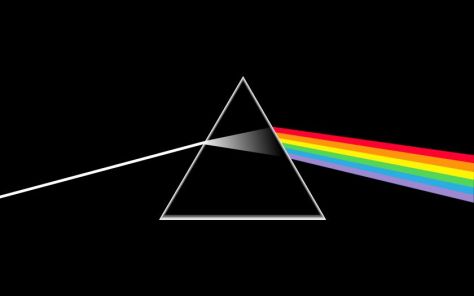
Pink Floyd, The Preacher

Dark Side of Moon

Greg West, at The Poached Egg, has a fascinating account of how a song from Pink Floyd’s classic Dark Side of the Moon album started him on a search for meaning that ultimately led to faith. Read the whole thing – it’s a nice example of how you can find evidence of God at work in the unlikeliest of places.

StoryBundle

The Weird Thrillers Bundle, curated by Kevin J. Anderson: Just when you thought it was safe to go back to your e-reader! I’ve curated an innovative new StoryBundle, imaginative thrillers, each with a fantasy twist, some funny, some nail-biting, all enjoyable.

As always with storybundle.com, you get a lot of books and you name your own price—in this case (of strange cases!) you’ll receive 14 novels for as little as $15. A portion of the income goes directly to a wonderful charity, and the rest is split among indie authors.
— Read on storybundle.com/thriller

I’m always up for supporting Kevin J. Anderson, our greatest living sci-fi author.

Presidential Libraries: Treason to a Republic ~ The Imaginative Conservative

Presidential libraries symbolize so much that is wrong about our present-day republic: abuse, corruption, and decadence. For my money, a presidential library is treason, bribery, and a high crime and misdemeanor. A real republican leads because he is needed. When he is done, he does not ask for a monument. (essay by Bradley Birzer)
— Read on theimaginativeconservative.org/2015/01/presidential-libraries-treason-republic.html

[Full confession–I have a honorific from the Reagan Presidential Library, so I’m being a bit hypocritical]

Our Presidents Have Become God-kings

If we still had a republic, we would NEVER have allowed the kind of ceremony that disgraced the very essence of the Constitution yesterday.

It’s one thing to honor a worthy man for his service, it’s another to bury him as a god-king.

Without getting into his politics, George Bush seems to have been a good father and grandfather. Certainly, his service in World War II against the Japanese imperialists was extraordinary.

But, in the end, he was just a man. And, if a republican, he should have departed as once did Cincinnatus.

President Andrew Jackson even refused a simple monument, noting that real republicans die in peace, not in stone.

Sadly, yesterday’s pageant had far more in common with Caesar than with Cicero. Disgusting and abhorrent.

The Embodied Person as Gift ~ The Imaginative Conservative

First principle. The soul is “the principle of unity of the human being, whereby it exists as a whole—corpore et anima unus—as a person” (Veritatis splendor, 48). “It is in the unity of body and soul that the person is the subject of his… acts” (VS, 48). “The human person cannot be reduced to a freedom which is self-designing, but entails a particular spiritual and bodily structure” (VS, 48).

These statements, first of all, affirm the unity of the human being as a dual, or differentiated, unity of body and soul.
— Read on theimaginativeconservative.org/2018/12/embodied-person-gift-david-schindler.html

On St. Nicholas Day

From the Lutheran Church-Missouri Synod’s calendar of commemorations for December 6:

Of the many saints commemorated by the Christian Church, Nicholas (d. A.D. 342) is one of the best known. Very little is known historically of him, although there was a church of Saint Nicholas in Constantinople as early as the sixth century. Research has affirmed that there was a bishop by the name of Nicholas in the city of Myra in Lycia (part of Turkey today) in the fourth century. From that coastal location, legends about Nicholas have traveled throughout time and space. He is associated with charitable giving in many countries around the world and is portrayed as the rescuer of sailors, the protector of children, and the friend of people in distress or need. In commemoration of “Sinte Klaas” (Dutch for Saint Nicholas, in English “Santa Claus”), December 6 is a day for giving and receiving gifts in many parts of Europe.

Benjamin Britten’s cantata Saint Nicolas was written for the 1948 centenary of Lancing College in Sussex (an independent secondary boarding school on the south coast of England).  As Paul Spicer writes,

The cantata portrays the life of the fourth-century Bishop of Myra in a work of great poetry and sensitivity. It was conceived and composed with semi-amateur performance in mind and the technical demands of the choral and orchestral writing are appropriately straightforward. The audience also gets to join in two well-known hymns, “All people that on earth do dwell” and “God moves in a mysterious way.”

For Saint Nicholas’ day, enjoy this performance of the cantata by tenor Robert Tear, the Choir of Kings’ College Cambridge and the Academy of St. Martin in the Fields, all conducted by Sir David Willcocks:

You can find Eric Crozier’s complete libretto and further program notes for Saint Nicolas here.  An excerpt of the 6th movement,  “Nicolas from Prison”:

O man! The world is set for you as for a king!
Paradise is yours in loveliness.
The stars shine down for you, for you the angels sing,
Yet you prefer your wilderness.
You hug the rack of self,
Embrace the lash of sin,
Pour your treasures out to bribe distress.
You build your temples fair without and foul within:
You cultivate your wilderness.
Yet Christ is yours. Yours!
For you He lived and died.
God in mercy gave His son to bless you all,
To bring you life,
And Him you crucified
To desecrate your wilderness.
Turn away from sin! Ah!
Bow down your hard and stubborn hearts!
Confess, yourselves to Him in penitence
And humbly vow your lives to Him, to holiness.


— RIck Krueger

Advent “is a time for being deeply shaken…”

(Image: Alex Gindin | Unsplash.com)

Advent is perhaps my favorite season of the liturgical year. One reason is that I knew nothing of Advent while growing up as a Fundamentalist—there was Christmas and Easter, and really nothing else to mark any sort of sacred day or season (that would have been “Romanish” and “pagan”). The irony, I suppose, is that we, as Fundamentalists were quite obsessed with the End Times, readily seeking out signs of impending apocalypse in a world moving from one fatalistic sign of doom to the next. And Advent is a season intimately connected with eschatology, judgment, and apocalypse, even while it is also rooted in the Incarnation, joyful anticipation, and eternal hope. In that way it readily demonstrates the “eschatological tension” reflected upon by St. John Paul II in his final encyclical, Ecclesia de Eucharistia (2003), which delves deeply into the Eucharistic character of the Church and the Kingdom. 

The reflections below were written in 2006, and have been lightly edited for this posting. 

Preparing To Meet the Lord: Reflections on the Readings for Advent

An advent, of course, is a coming; the word means “to come to.” Advent anticipates the coming–or comings–of the Son of Man: in his Incarnation two thousand years ago, in his future return in glory, and in the mystery of the sacraments, especially the Holy Eucharist. As the Catechism of the Catholic Church states, “When the Church celebrates the liturgy of Advent each year, she makes present this ancient expectancy of the Messiah, for by sharing in the long preparation for the Saviour’s first coming, the faithful renew their ardent desire for his second coming” (CCC 524). Simply put, Advent is about being prepared to meet Christ–not on our terms, but on His terms. By preparing us to meet the tiny Incarnate Word of God lying in a manger, Advent also directs our hearts and minds toward the return of that child as glorious King and Lord of all. 

In a book of reflections titled Seek That Which Is Above, Joseph Cardinal Ratzinger wrote that the purpose of Advent is “to awaken the most profound and basic emotional memory within us, namely, the memory of God who became a child. This is a healing memory; it brings hope.” Later, he states that Advent is also about shaking off spiritual slumber and sloth: “So Advent means getting up, being awake, emerging out of sleep and darkness.” In Advent of the Heart, a collection of sermons and prison writings, the priest and martyr Fr. Alfred Delp contemplates Advent from a similar perspective. “Advent,” he writes, “is a time for being deeply shaken, so that man will wake up to himself. … It is precisely in the severity of this awakening, in the helplessness of coming to consciousness, in the wretchedness of experiencing our limitations that the golden threads running between Heaven and earth during this season reach us; the threads that give the world a hint of the abundance to which it is called, the abundance of which it is capable.” 

Advent is marked by anticipation, contemplation, joy, conversion, discernment, repentance, hope, faith, and–last but never least–charity. The readings for this Advent (cycle C) aptly reflect all of this, always within the context of historical events and realities involving men and women who face difficulties and struggles similar to those that confront us today. Here, then, are seven themes and/or persons who have stood out to me as I have studied and contemplated the readings for Sunday liturgies during this Advent season. 

JPII to artists (1999)

LETTER OF HIS HOLINESS 
POPE JOHN PAUL II 
TO ARTISTS

1999

To all who are passionately dedicated 
to the search for new “epiphanies” of beauty 
so that through their creative work as artists 
they may offer these as gifts to the world
.

God saw all that he had made, and it was very good” (Gn1:31)

The artist, image of God the Creator

1. None can sense more deeply than you artists, ingenious creators of beauty that you are, something of the pathos with which God at the dawn of creation looked upon the work of his hands. A glimmer of that feeling has shone so often in your eyes when—like the artists of every age—captivated by the hidden power of sounds and words, colours and shapes, you have admired the work of your inspiration, sensing in it some echo of the mystery of creation with which God, the sole creator of all things, has wished in some way to associate you.

That is why it seems to me that there are no better words than the text of Genesis with which to begin my Letter to you, to whom I feel closely linked by experiences reaching far back in time and which have indelibly marked my life. In writing this Letter, I intend to follow the path of the fruitful dialogue between the Church and artists which has gone on unbroken through two thousand years of history, and which still, at the threshold of the Third Millennium, offers rich promise for the future.

[Please go to page 2]

Netflix Will Keep ‘Friends’ Through Next Year in a $100 Million Agreement – The New York Times

Netflix cancels Daredevil, the most thoughtful and heroic show of the last decade, but spends $100 million to stream reruns of a brain dead, amoral, insipid sitcom. What a commentary on the state of modern culture.

The streaming service and AT&T struck an agreement that raises the yearly licensing fee for the show by more than three times.
— Read on www.nytimes.com/2018/12/04/business/media/netflix-friends.html

Music, Books, Poetry, Film