Waxing Nostalgic Over Genesis

The Spirit of Cecilia dialogues continue; this one is focused on the Phil Collins-era of the massively popular music group, Genesis. Editor-In-Chief Brad Birzer and Arts Editor Tad Wert exchange thoughts and memories that were inspired by Birzer’s recent appearance on Political Beats.

Brad: Tad, I find it hard to believe that the last Phil Collins-Genesis album came out 29 years ago.  Thanks, by the way, for your comments regarding the show, Political Beats, that I did with Jeff and Scot.  I had an absolute blast talking with those guys about the Phil Collins-era of Genesis, 1976-1991.  I’m curious–in 2020–what you think of Genesis?  That is, what role do they play in the history of music, and, especially, in the history of progressive rock?

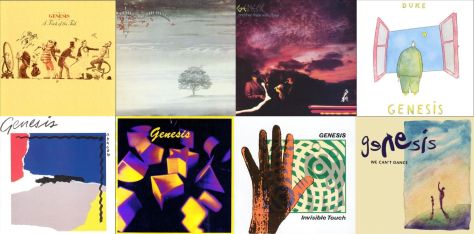
I just–as I was working on sociologist Robert Nisbet–watched and listened to Genesis, live in 1976, for the Trick of the Tail tour, with Bill Bruford on drums, and I was struck, yet again, by the beauty of the music and the vitality of the band. In some ways, they might’ve defined progressive rock.  That is, they might’ve been the quintessential prog band.

I also listened to Duke, which (aside from “Misunderstanding,” a song I despise) might also be one of those perfect (well, nearly) albums.  Thoughts?

Tad: I LOVE Genesis, in all of its incarnations. I consider their career to encompass three distinct groups or eras: the Gabriel years, the Hackett years, and the Collins years. If I consider each era on its own merits, there are many wonderful moments to enjoy in each one.

A small Genesis-related vignette: when I was 13 years old, my family spent a semester in Cambridge, England. My father had taken a sabbatical to do engineering research at the University there. I remember listening to Radio Caroline on a small transistor radio as I worked on my homework in the evening, and Selling England By The Pound was on heavy rotation on that pirate station. Even coming through the small, tinny speaker, I was struck by the exceptional music that flowed forth, and I was hooked.

When I was old enough to afford buying my own lps, A Trick of the Tail was one of the first I bought with my own money. I didn’t realize at the time that the vocalist on ATOTT was not the same as the one on SEBTP! “Dance On A Volcano” was one of the most challenging pieces of music my 14-year-old self ever encountered, but I loved it.

When Wind and Wuthering was released, I confess I wasn’t interested, because I was in my punk/New Wave phase (Ramones, Wire, and Elvis Costello!), and I had no time for prog rock “dinosaurs”. But then I heard “Turn It On Again” from Duke, and I thought, “This is something I can get into.” I bought the album and fell in love with the Phil Collins pop/rock juggernaut version of Genesis. 

So, to answer your question, yes, I think Genesis, unlike some other “big” groups of the ‘70s and ‘80s, will only grow in stature over time. Their curse in the ‘80s was to get so popular that they oversaturated the airwaves. Now that 29(!) years have elapsed, we have some space to objectively assess the quality of their music, and there are very few groups who consistently produced such challenging yet entertaining music.

What I found fascinating in your podcast conversation was the acknowledgement that the so-called “pop” releases in the ‘80s still contained some very sophisticated music.

Brad: Tad, I think our age difference is slight.  Abacab is the first album I bought from Genesis at the time of its initial release.  Then, I went back through the Phil Collins era, falling in love with And Then There Were Three especially. I can still remember listening to the tape I bought from Peaches in Kansas City and watching Bill Buckley (I’d never seen him before) on TV—Genesis and Buckley all in the same evening.

But, for me, 1981 was the year of Abacab and Moving Pictures.  They almost seemed to be two parts of a whole to my then young mind.  In 1982, I purchased Three Sides Live and, then, Duke.  I really liked Phil Collin’s first solo album as well. Indeed, I became as obsessed with Genesis as I was with Rush that year—beginning a life-long obsession with both. Soon, I had Trick of the Tail and Wind and Wuthering as well.  My debate colleague and one of my closest friends, Ron Strayer, and I used to listen to Genesis, over and over again, analyzing the lyrics and trying to figure out the song structures. We had every part of Genesis (1983) memorized, and we would shout out the lyrics as we drove around town in his yellow Toyota truck.

I have other odd memories as well—such as a video recording of Genesis in Concert, 1976, with Bill Buford as the drummer (mentioned above).  It appeared on USA network’s Nightflight, and I watched that so many times, the VHS tape began to fade.  I also had audio recordings of a few concerts that our local AOR station, Wichita’s KICT-95, often aired.  One of my prized possessions (which, stupidly, I sold) was the last release with Steve Hackett, an EP called Spot the Pidgeon.  

Funny what things stick in the mind.

I also remember the day Invisible Touch came out.  I had just received my college entrance letter (a huge thrill), and, for some reason, my high school girlfriend was put out with me because I wanted our date that night to be a serious listen of the new album!  She didn’t think that the highest form of a date, but I wanted to share that first listen with her.  Needless to write, she went home in a huff, somewhat disgusted by my priorities.

But, Tad, I’m not being very helpful in our discussion, just nostalgic. So, let me state—there was a reason Genesis meant so much to me. I loved both the seriousness and the playfulness of the band, and I often read things into the lyrics that might or might not have been there.  As a kid, I especially thought Abacab was full of hidden meanings, such as the title track being about someone committing adultery, or that the “Man on the Corner” was some kind of unrecognized prophet, or that Sarah Jane must be the kindest woman in the world. 

Ok, I’m still being nostalgic. . .

As to your question and comment regarding Genesis and pop.  I do think that once Steve Hackett left the band, the band became much more art rock rather than progressive rock.  After all, songs like “Lurker” and “Dodo” and, especially, “Mama,” should never have been hits!  They’re not pop, but they’re not prog, either.

Tad: Abacab is a very special album to me as well. I think the title track is one of the top songs they ever recorded. I also love “Man On The Corner”; it’s one of Collins’ finest vocal performances. When it was released, one of my college suitemates bought it in great anticipation. He was a big prog fan – listened to King Crimson, UK, Yes, and other British prog groups. When the Earth, Wind, and Fire horns came blasting out of his stereo on “No Reply At All”, he jumped up and yelled, “WTF is this?” and wouldn’t listen to another song. That’s how I acquired my copy of Abacab!

I also liked the tracks on the fourth side of American version of Three Sides Live. When I replaced my vinyl of that album with the CD, I was disappointed that they weren’t included. I loved “Paperlate”, “Evidence of Autumn”, and “Me and Virgil”. As a matter of fact, the only reason I bought the three-disc Platinum compilation was to have “Paperlate” on CD. I gave up ever finding a CD edition of the American album, when, lo and behold, a couple of months ago I found it in my favorite used record store!

It’s almost impossible for me to choose which album I think is better: Genesis or Invisible Touch. It depends on what mood I’m in, but I would probably give the nod to Invisible Touch. I think it more consistently excellent, even if songs like “Tonight, Tonight” are extremely dark. Genesis’ “Mama” has to be the most unlikely #1 hit ever released!

Here’s how I would rank the post-Gabriel era: 

  • A Trick of the Tail
  • Abacab
  • Invisible Touch
  • Genesis
  • Duke
  • Wind and Wuthering
  • And Then There Were Three
  • Calling All Stations
  • We Can’t Dance

The live albums I put in this order:

  • Three Sides Live
  • Seconds Out
  • The Way We Walk
  • Live Over Europe 2007

I also think the box set, Archives Volume 2 is essential.

I imagine you are outraged at my low ranking of And Then There Were Three, but I have had a hard time getting past the muddy production, and I’ve never been able to maintain interest through the whole set.

Brad: Tad, I’m not outraged in the least!  And, I’m in agreement with you about the rankings of the live albums, though I might switch one and two, depending on what day it is.

As to the studio albums, I would put them in this order:

  • A Trick of the Tail
  • Duke
  • Wind and Wuthering
  • Abacab
  • Genesis
  • And Then There Were Three
  • Invisible Touch
  • We Can’t Dance
  • Calling All Stations

We can definitely agree, Tad, that there’s a lot of aural excellence to be enjoyed!!

Tad: I could definitely move Duke up a few spots. Like you said, it depends on what day it is!

Regardless of how we rank these albums internally, I think it’s fair to say almost no other artist in rock has produced such consistently excellent music. I put And Then There Were Three relatively low among Genesis albums, but compared to other albums released in 1978, it is near the top. To my mind, only the Beatles show the same extraordinary quality control that Genesis had, and they were active for less than a decade. Genesis stuck together for more than 28 years! 

For our next dialogue, I think we owe it to Peter Gabriel to cover his solo career. Are you up for that, my friend?

The Christian Humanism of J.R.R. Tolkien ~ The Imaginative Conservative

For Tolkien, mythology touched the deepest part of our souls, and invites us to explore the beauty of creation and to discover and participate in the sacramental nature of life. Only in the True West could one find a proper understanding of order, virtue, and liberty. As Tolkien himself said, the mythology and purpose guiding The Lord of the Rings was nothing less than the return to Christendom. His Middle-earth mythology, he hoped, would serve as a wake-up call for the West, to return it to its pre-statist, pre-imperialist, pre-materialist phase. With the return of Aragorn the king, the “progress of the tale ends in what is far more like the re-establishment of an effective Holy Roman Empire with its seat in Rome,” Tolkien admitted in 1967.

Certainly Tolkien, as with most of the Augustinian Christian Humanists, had a Jacobite streak.
— Read on theimaginativeconservative.org/2020/11/christian-humanism-j-r-r-tolkien-bradley-birzer.html

A Sanguine Conversation on A Trace Of Memory

Sanguine Hum

This latest back-and-forth on Spirit of Cecilia is dedicated to discussing the new Sanguine Hum album, A Trace of Memory. Join Editor-In-Chief Brad Birzer and Arts Editor Tad Wert as they discuss this fine collection of prog tracks.

Brad: Tad, we’ve been blessed with an abundance of prog for and in the second half of 2020.  COVID has its advantages.  Not many, of course, but it–or, at least, the resulting lockdown–has manifested itself as great works of prog art!  Just goes to show that even the nastiest things have their silver lining. I really enjoyed your review of Sanguine Hum’s latest, A Trace of Memory, and I’m wondering if we could talk about it a bit more.

From my perspective, this is pretty much a perfect album.  I think at one level, the music is simply fantastic–the flow, the energy, and the complexity. I think at another level, though, the vocals are sublime–in tone as well as in content. Sadly, I don’t have the lyrics in front of me, but they sound quite good.

Tad: Brad, I am so glad you chose this album for a dialogue. I enjoyed listening to your guest appearance on the Political Beats podcast covering the post-Peter Gabriel years of Genesis, and in it you stated that you considered A Trick of The Tail a perfect album. I agree with that assessment, and I agree with your calling A Trace Of Memory another perfect album! They are very different in tone, yet each is a perfectly sequenced, composed, and performed work. Where Genesis is more romantic – Ravel or Debussy-like – in their approach, Sanguine Hum comes from a more quirky and playful tradition – I am reminded of Stravinsky or Satie. 

I have loved Sanguine Hum’s music since their debut, Diving Bell. They have a knack for writing songs that are lengthy time-wise, yet never seem over-long. The 13-minute “The Yellow Ship” is a great example of this. My interest never flags for a second as I listen to it, and I have listened to it many, many times!

I think Joff Winks, Matt Baber, Brad Waissman, and Paul Mallyon (with Andrew Booker on two tracks) have an extraordinary amount of sympathetic understanding as they play. As I listen to this album, I don’t hear individuals playing music together; I hear one entity producing a glorious, melodic sound – that flow, energy, and complexity you mentioned.

Brad: I’d not made the connection between Stravinsky and Satie and Sanguine Hum.  I think you’re absolutely right, and I think it’s an excellent connection.

I’d be really curious to know how these guys write their music.  Do they each throw a piece in, thus forming a whole?  Or, does one member of the band compose things and allow the band to fill out that composition?  Or, do they just start noodling in the studio and then see how the songs emerge, spontaneously?  

Whatever technique the band uses, it works, and it does so very well. 

The intro track, “New Light,” especially lays out the tone of the album, pulling the listener into not just the song, but into all of A Trace of Memory

But, it’s the second track, “The Yellow Ship,” with its plaintive vocals that so appeals to the listener.  At least to this listener. It’s the best track of a perfect album.

“Thin Air,” track four, reminds me a bit of mid-period Radiohead, but, ultimately, proves more interesting than Radiohead. 

And, just when the band sounds like it might become imitative, it deviates and takes us into a new direction.  A perfect example of this deviation comes in track five, “Unstable Ground,” with its peculiar time signatures (that fit the title of the song) and ominous vocals.

One of the shortest songs on the album, “Still as the Sea,” actually feels as though we’re adrift in a boat, especially with the jazzy keyboards and guitar.

The driving power of track seven, appropriately entitled “Automaton,” is relentless.

Stepping back, though, I have to scratch my head.  Just what is it about this album that works?  Some of the appeal of the band comes from the distinctiveness of the keyboards and the guitar, as well as the intricacies of the drums and bass, but especially in their mutual interplay of all four on the album. 

Yet, for me, it always comes back to the melancholic vocals with Sanguine Hum. They’re good enough as a band to be purely instrumental, but who would waste those glorious vocals?

Tad: According to the press release, keyboardist Matt Baber says they wrote all of the music quickly in the summer of 2018. All of the songs credit Winks, Baber, and Waissman as writers, so I’m assuming it’s a joint effort, perhaps stemming from jam sessions. 

I agree that “The Yellow Ship” is the standout track; it may be the best thing they’ve ever recorded. I had not caught the Radiohead influence, but now that you mention it, it’s obvious! 

For me, Sanguine Hum has a unique combination of a jazz/art rock sensibility and wistful vocals, courtesy of Winks. He is definitely not a thunderous vocalist bellowing out high notes over crunching metal accompaniment. And yet, the gentle, almost hushed timbre of his singing conveys a lot of power. As a teacher, I’ve learned the trick of speaking quietly to gain and hold my students’ attention, and Winks’ vocals do the same thing for me.

As you said at the beginning of this conversation, 2020 has been an amazing year music-wise: Bardic Depths, Days Between Stations, Kyros, Gazpacho, Glass Hammer, and now Sanguine Hum have all released incredible albums. Spirit of Cecilia is going to have some interesting “Best Of 2020” lists!

Tocqueville on America’s Colonial Experience & the Seeds of Democracy ~ The Imaginative Conservative

Though diverse, the American colonists had more in common with one another than not. Overwhelmingly Protestant, they also spoke the same language, and “the bond of language is perhaps the strongest and most durable that can unite men,” Tocqueville claimed. Further, the colonists all came from the Reformational troubles of Europe, and they “were all children of the same people.” Finally, the wilderness of North America homogenized the colonists, and “their political education was shaped in this rude school, and you saw more notions of rights, more principles of true liberty spread among them than among most of the peoples of Europe.”

Equally important, the American colonies—both North and South—proved that colonization could happen successfully even when haphazardly planned, or even when there had been a complete lack of planning. Drawing upon the work of Adam Smith, Tocqueville continued, the imperial pursuit of mineral wealth had led to nothing but societal catastrophe. “At this time, Europe was still singularly preoccupied with the idea that mines of gold and silver constituted the wealth of peoples,” Tocqueville claimed. “This destructive idea has done more to impoverish the European nations that embraced it and, in America, has destroyed more men than war and all bad laws put together.”
— Read on theimaginativeconservative.org/2020/11/tocqueville-america-colonial-experience-seeds-democracy-bradley-birzer.html

Brad Birzer Talks Genesis

Beats

Our Founder and Editor-In-Chief, Bradley Birzer, is the guest on the latest episode of Political Beats. No, it’s not a podcast about politics, but rather political writers and pundits talking about music. And in this episode, boy, do they talk! Three and a half hours’ worth of conversation regarding the Phil Collins years of Genesis! You can find it on Apple Podcasts, Stitcher, and other podcasting platforms. Or, you can listen to it online by clicking here.

In The DropBox: Kyros, Simon COllins, and Grumblewood

This week’s DropBox has couple of big wins, and a near-win. It’s also a diverse collection of music, but it wouldn’t be prog if it wasn’t diverse, right?

cover

First up is Kyros’ Celexa Dreams. Kyros hails from the UK, and they are led by vocalist/keyboardist Adam Warne. Their previous album, the two-disc Vox Humana, was a highlight of 2016, and Celexa Dreams is even better. If you miss the synth-heavy pop/rock of Thomas Dolby, Human League, and Tears For Fears, then you will love this album. Warne, along with guitarist Joey Frevola, percussionist Robin Johnson, and bassist Peter Episcopo have crafted a perfect combination of majestic ’80s anthems and 2020s production. Leadoff track “In Motion” sets the tone with an infectious synth riff and propulsive beat. “Rumour” is another upbeat earworm that wouldn’t be out of place on a Miami Vice episode.

Lest you think the album is all synthesizer confection, the 14-minute “In Vantablack” is a real prog workout that holds the listener’s interest every second. I wish Haken had gone more in the direction of this track instead of pursuing their metal side. “Technology Killed The Kids III” harks back to Vox Humana and Warne’s first iteration of Kyros, Synaethesia.

There seems to be a bit of a reappraisal of ’80s New Wave and New Romantics music happening, what with Steven Wilson’s To The Bone and other respectful homages to that era of music. Celexa Dreams is a wonderful collection of songs that take the best of synthpop and marry it to a prog sensibility. I highly recommend you check this one out.

Simon Collins

Next up is Simon Collins’ solo album, Becoming Human. Simon is Phil’s son, and there is definitely a vocal resemblance, in the same way Julian Lennon’s vocals recall his father, John. Simon was the vocalist for the prog group Sound Of Contact, which also included the marvelously talented Dave Kerzner. Unfortunately, it doesn’t look like Sound Of Contact are getting together any time soon, so we’ll have to be happy with Kerzner’s In Continuum project and Collins’ solo work.

Judging by the quality of Becoming Human, we listeners are the winners, because instead of one excellent group, we get two to enjoy. I’m not sure if Becoming Human is a concept album, but it seems to have a sci-fi theme going on with titles like “Man Made Man”, “The Universe Inside of Me”, and “Thoughts Become Matter”. The aforementioned “Man Made Man” is a steamroller of a track that really pleases. Like Kyros, Becoming Human is very keyboard driven, in a good way. Stylistically, it includes spacey interludes, dance pop (“The Universe Inside of Me), straight ahead rock (“Man Made Man”), and epic balladry (“Dead Ends”). This is another album I have no hesitation giving a strong recommendation for. If you liked Sound of Contact, then you certainly need to give Becoming Human a close listen.

cover

Finally, there is Stories of Strangers from Wellington, New Zealand. The name of the band is Grumblewood, and they obviously worship at the altar of late-60s, early-70s Jethro Tull, with lots of fuzzy Martin Barre-sounding guitar, warm baritone vocals à la Ian Anderson, and, of course, flute all over the place. This is their debut album, and it is on Robin Armstrong’s (Cosmograf) label, Gravity Dreams. It’s a lot of fun to listen to, with its English folk/blues feel. Gav Bromfield (Vocals, Flute, Guitar, Piano) , Salvatore Richichi (Guitars, Mandolin, Mandola, Banjo), Morgan Jones (Bass, Bouzouki, Harspichord), and Phil Aldridge (Drums, Percussion, Backing Vocals) definitely have the chops, as well as songwriting talent. My only quibble is the production; the drums sound like they were recorded under a blanket. However, that may be deliberate. According to their website, the album “has been recorded, mixed, and mastered using only analogue equipment and production techniques for that authentic vintage sound.” So there.

When they learn to go easy on the Tull influence and start forging their own identity, they will be formidable. Meanwhile, if you’re a Tull addict, and you need a fix, Stories of Strangers will do nicely.

Three albums, two outstanding and one very good. The DropBox had a pretty good batting average this week! I’ll leave you with Kyros’ “Rumour”:

Joe Biden’s endless wars | Spectator USA

But the only thing coming on if Biden wins is another round of hopeless foreign interventionism and nation-building. His individual votes are damning enough. Still more damning is the philosophy behind them. Joe Biden is an archetypal liberal interventionist of the post-Cold War variety. He understands war in the same terms as domestic policy: as an occasion to expand the power wielded by experts in Washington, whose moral and rational qualifications are beyond question — no matter how disastrous the consequences of their policies.
— Read on spectator.us/joe-biden-endless-wars-afghanistan-serbia/

The Flower Kings: Islands

Islands
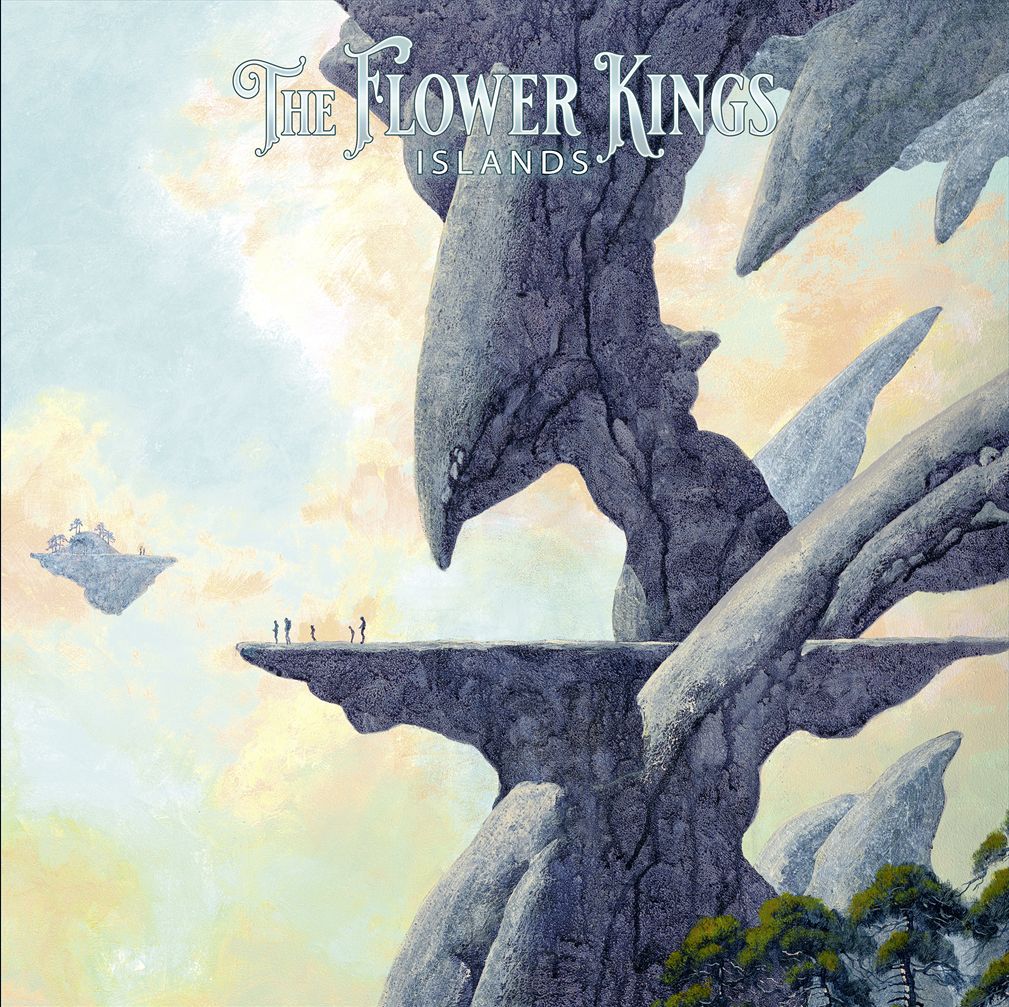
Cover art by the master of prog art, Roger Dean

Here is the latest in what will hopefully be a regular feature at Spirit of Cecilia: a conversation about a current release from a favorite artist. Once again, Arts Editor Tad Wert joins Editor-in-Chief Brad Birzer, this time to discuss the Flower Kings’ latest, Islands.

Birzer: Somewhat surprisingly–especially given how recently the band released its last album, 2019’s excellent Waiting for Miracles–The Flower Kings is just about to release its fourteenth studio album, Islands.  It comes out on October 30. 

And, it’s not just any album, but a double album.

Tad, we’ve had a few weeks to listen to the promo, and I’m really curious what you think. It’s a collection of (generally) shorter FK songs, but with all the FK trademarks and psychedelic flourishes one would expect from the band. 

Islands reminds me a bit of Stardust We Are in terms of its structure, but that album was more epic in reach and in scope. With Islands, however, it’s great (as always) to have the trademark dual vocal leads, but I think some of the instrumental passages and songs are simply stellar. Track 2 on disk 2, “A New Species,” for example, really stands out for its musical innovation and flow. I definitely would love an entire album built around this track, much like what a much younger FK did with Flower Power.  This is the kind of track that proves that FK is still a major powerhouse of prog.

Yet, there are a few moments that make me scratch my head.  The band has released as the first single from the album, “Broken,” the fifth track on disk one.  While the song has some achingly beautiful moments, especially lyrically, there are guitar and keyboard passages that are lifted almost directly from the theme song of The Simpsons!  Whether this was intentional and playful on the part of the band or not, I have no idea.

Still, while Islands is an excellent album, it’s very much rooted in third-wave prog.

Wert: Brad, I know the Flower Kings are one of your favorite groups, so I am honored you invited me to talk about them with you! I had a little chuckle when you said, “It’s not just any album, but a double album.” Looking at my music library, I have 13 studio albums of theirs, and no less than 9 are two (or more) discs. That’s almost 70%! I have enjoyed their music very much, but there are times when I wish they had an editor; I think some of their albums would be improved if they tightened them up a little.

So what about Islands? I agree that the songs are generally shorter, and that is a good thing in my opinion. The ones that immediately grabbed me were “Black Swan”, “Broken” (except now that you have pointed out the Simpsons reference, I can’t get that out of my head!), “Tangerine”, “Northern Lights”, and “Fool’s Gold”. A common thread of them is that they feature the vocals of both Roine Stolt and Hasse Froberg. I think when they collaborate the energy level really rises.

In their press release, Stolt says that the listener should approach this set as one long piece, which makes sense. When I first heard “Heart of the Valley” on the first disc, I thought it didn’t go anywhere; it sounded like a section of a larger epic. Well, on the second disc is “Telescope”, which is quoted in “Heart of the Valley”, so Islands really is one 90 minute suite. Once I approached it in that light, the songs I first considered throwaways took on more significance.

As Spirit of Cecilia’s resident FK expert, how would you rank Islands in their discography?

Birzer: Tad, great thoughts.  Thank you for them.  As much as I like Islands, I wouldn’t immediately rush it to the top in terms of rankings. My favorites from the band are Space Revolver (far and away, my favorite) and Paradox Hotel, followed closely by Stardust We Are and Unfold the Future. So, as much as I like Islands, it would rank–at least in these early stages of listening–somewhere in the low middle of their albums.  Maybe around the level of Banks of Eden.

Above, when I mentioned that the album is deeply rooted in third-wave prog, I meant this more as a statement of fact than as one of judgment. What I like about my favorite FK albums is their energy and their innovation, the chances the band takes. Overall, Islands seems low energy compared to the band’s best work and innocent of any real innovations.

It’s still a FK album and that means it’s better than 95% of the music out there.  But, within the FK discography, Islands ranks fairly low.

Wert: I’ll go with that assessment, Brad, although the more I listen to Islands, the more I like it. And I want to give a shout-out to Roger Dean for the incredible cover art! My takeaway: Islands is a solid effort by a band that is in no way in decline. They are still making vital music, and for that I am grateful.

I’m looking forward to Roine’s work with the new Transatlantic album that is slated for release soon!

Tolkien’s “On Fairy Stories”: The Setting ~ The Imaginative Conservative

It should be remembered that 1938 had been a difficult year for Tolkien. While he had written much for his Hobbit sequel, he had suffered through deep depression in August and a nasty flu in December. Tolkien had also just finished the first several writing phases—as his son Christopher has labeled them—of what would become The Fellowship of the Ring, when he began research and thought regarding his proposed lecture, “On Fairy Stories.” He had hoped to deliver a paper on the same topic to an undergraduate society at Oxford in 1938, but that had fallen through.[3] This would be his chance to rectify that, and with the added benefit of serious academic legitimacy. On the evening of March 8, 1939, Tolkien delivered his lecture at the University of St. Andrews.

To state that the lecture was important to Tolkien and, frankly, to the world of literary criticism, would be a gross understatement. Coming when it does in Tolkien’s writing career, “On Fairy Stories” reveals more about the mind and soul of the man than any other non-fiction work he produced throughout his lifetime. It is, to be certain, seminal and beautifully so. Like his own Stoic and mystical understanding of Faerie, his talk was, in turns, excellent, insightful, and brilliant. It also offers, at its most fundamental level, a counterrevolution of ideas, an image of the world directly counter to that held by the fascists, communists, and ideologues of all varieties of the twentieth century
— Read on theimaginativeconservative.org/2020/10/tolkien-on-fairy-stories-setting-bradley-birzer.html

Striking Sparks Over Gazpacho’s Fireworker

Gazpacho Fireworker

In this second dialogue between Spirit of Cecilia’s Editor-in-Chief, Bradley Birzer, and Arts Editor Thaddeus Wert, they discuss the merits of Norwegian progsters Gazpacho’s latest album, Fireworker.

Wert: Hello, Dr. Birzer! I understand you consider Fireworker to be Gazpacho’s best album since their 2007 classic, Night. That album certainly deserves its iconic status; I would say it single-handedly established a new genre of prog – “drone rock”. And when you add the incredible lyrics, it’s undeniable Night is a masterpiece. I really like Fireworker, and I have spent quite a bit of time immersing myself in it, but I’m still partial to Tick Tock, followed by Demon, if asked to rank their albums following Night. What is it about Fireworker that gets you so excited?

Birzer: Hello, Mathematician Wert! Yes, I’m finding myself rather obsessed with Fireworker.  I’m not sure how many times I’ve listened to it since it first arrived on my doorstep, but the number is getting close to uncountable. And, while I love Tick Tock (one album, I might have listened to, too much) and Demon, I’ve not been this immersed in an album since Night.

For me, Gazpacho always has great atmospherics and great vocals (Jan-Henrik Ohme).  The flow of any Gazpacho album is unparalleled in the prog world.  They linger when they need to linger, and they breathe when they need to breathe. Unlike some of their harder colleagues, Gazpacho values silence and restraint. A rare gift in any art form. 

What makes a Gazpacho album successful then–given the admittedly excellent vocals, atmosphere, and flow–is the meshing of vocals with atmosphere.  Again, each one–taken separately on any Gazpacho album–is near perfect, but how they mesh together is not always perfectly attained.  Every album is always good, but not always perfect.  As I hear it, Night might be unbeatable when it comes to the meshing. It’s a case of the vocals helping the atmosphere and the atmosphere, likewise, helping the vocals. 

On this meshing, Fireworker comes VERY close to beating Night.  This is especially true on the title track, which allows the vocals to proclaim an urgency, a weirdness, and a conviction. Take, for example, the truly bizarre insertion of Stephen King’s The Shining toward the end of the song:

Your ideal life

You’re the pilot of a dream

A fireworker’s fire regime

To illuminate

The sky’s a billion burning eyes

A final sulfurous goodbye

In The Shining

Apocalyptic overlook

Where Wendy wants to read his book

Admittedly, I’m not entirely sure what Gazpacho is doing here, lyrically, other than giving us a series of hazy utterances.  Yet, the lyrics work, and I desperately want to know what’s going on.  In large part, this is because the atmosphere and the vocals have meshed perfectly, thus making the lyrics deeply fascinating.

Tick Tock and Demon, while brilliant albums, don’t quite mesh the vocals and atmospherics quite as well as do Night and Fireworker.

Wert: Brad, I agree with your observation that on Fireworker, Gazpacho does a great job meshing vocals with atmosphere, and very few groups are as atmospheric as they are. Musically, though, I need to have something to grab onto – a melodic hook – and Fireworker doesn’t provide that for me. It is a beautiful piece of music, but if you asked me, I couldn’t hum anything from it. I probably need to spend more time listening to it.

Were you as surprised as I when the choir burst into the mix on the opening track? They have been posting some interesting insights on their Facebook page. One fan asked what the choir is singing on Space Cowboy, and they replied that they are 

“…singing randomly generated lines that were supposed to be in the “ancient language of the brain” used before words came into the picture. The choir is supposed to be the consciousness with its various voices all coming together to warn the protagonist of venturing further towards the Fireworker itself.”

I find that fascinating! I also appreciate the fact that they devote every album to a unifying theme. Fireworker’s theme is the ancestral voices that are embedded in our DNA – like the ancient “fight or flight” response we are still slaves to, even though we don’t face the same threats primitive humans did. They seem to be saying that we aren’t in control of ourselves; the “Fireworker” that is in our DNA makes demands on us we can’t resist. I find that perspective to be a little pessimistic.

Birzer: Tad, thanks  so much for such a thoughtful response.  I’m in agreement with you about most of this.  But, maybe because I’ve been listening too much, I find myself humming long parts of the album, and I especially find parts of Space Cowboy and Fireworker hummable. 

As to the album’s concept. . . I’m in agreement that it’s incredibly pessimistic and, given how free form much of Gazpacho’s music can be, strangely determinist.  You’d think an art rock band would do EVERYTHING to avoid believing in and espousing determinism.  Unfortunately, though, we’ve been a determinist society since the 1850s and Darwin.  Believe me, I long for a humanist society, one based on free will.

So, what a paradox and tension in Gazpacho’s album–free-form music with determinist lyrics.  I think, in my own mind, I can get around this because of two things.  First, the lyrics are so chaotic as to be, at times, nothing more than mere notes added to the album.  Second, I’ve been placing the album alongside H.P. Lovecraft’s works–which are equally determinist and mechanical in thought.  And, if I can love Lovecraft despite this, I can love Gazpacho.

Still. . . what would a humanist album from Gazpacho be like?  It would Night or Tick Tock!

Wert: “Paradox and tension” is the perfect description for Fireworker, as well as Gazpacho’s music in general. Like you, I love their work despite my dissent from their philosophy, and I am glad they are producing such beautiful music. And while I’m at it, I’d like to offer my appreciation for their attention to detail in the physical packaging of their albums. Each one is like a small hardbound book with exquisite art from Antonio Seijas. Each one is like a treasure trove of hints and omens. In an era when many recording artists simply throw a CD into a cardboard folder, Gazpacho obviously put great care and thought into every release, and for that I am grateful. Here’s to hoping there are many more from them in the future!

Gazpacho Discography
The Consistently Beautiful Art Books That Are Gazpacho’s CD Releases

Music, Books, Poetry, Film