
“Jerusalem, Athens, Rome, London—these are the antecedents of ordered liberty in America. Each tradition left its mark on American social and political institutions, and continue to influence them today.”
https://www.aier.org/article/the-american-tradition-of-ordered-liberty/
Burke on Monstrous Revolution and Regicide Peace ~ The Imaginative Conservative
Of Edmund Burke’s (1729-1797) four Letters on a Regicide Peace—his final work, written while he rested on his deathbed—the fourth is, by far, the weakest. Unlike the other three, it was written out of order, and it is unclear whether Burke himself ever intended to include it. It was more of a personal letter written to Earl Fitzwilliam than it was a letter for the public. It did not appear in Burke’s works until after the author’s death, and so we are left with it as somewhat of an interesting mystery and enigma. Despite these caveats, though, it is a letter written by Edmund Burke, and this means, of course, that there are fascinating aspects to it.
— Read on theimaginativeconservative.org/2020/10/burke-monstrous-revolution-regicide-peace-bradley-birzer.html
A Method, Not a Subject: Liberal Economics and the Classics
“A liberal curriculum can and should include liberal economics. Both make sense only if we refuse to interpret the past under the assumption that our ancestors were morons. Committing to rational choice, which in my framework is synonymous with liberal economics, is how we treat the Great Books with the respect they deserve.”
https://egnatiavia.blogspot.com/2020/10/a-method-not-subject-liberal-economics.html
The Astounding Pop of Max Parallax
A few weeks ago I received a pleasant surprise in the mail–an actual tangible CD submission. Being in my early 50s, I’m a huge fan of my music being real, touchable, and moveable. The CD arrived with funky, innovative layout, and I was immediately intrigued by the packaging.
As it turns out, the music is even better than the packaging.

This is pop-rock, but pop rock in the vein of Mazzy Star, Patty Smith, and Sixpence None the Richer. The music is equal parts driving and equal parts playful.
Infectious pop, the opening track “Bugs Away”–with some hilarious lyrics–grabs the listener immediately. The wall of sound on “Swell,” the second track, is perfect in every respect. Song three, “Out of Body: No Experience,” is, once again, driving, and the sound production is glorious. At a little over five minutes long, “No Time for Caution,” is the longest of the tracks, and like its fellow tracks, it’s tight and purposeful. “Amoebas,” the fifth song, is the most straight-forward in terms of being a rocker. I’m reminded a little of Pat Benetar. “What Happens in the Future Stays in the Future” is as wonderfully quirky as it sounds–packing more into two minutes and twenty-five seconds than allowed by law!
Max Parallax is a band that is here to stay, and the statement they make on this short album, NO TIME FOR CAUTION, fits perfectly with the title.
We’re in a helluva mess, and urgency must reign in our world. This is reflected in the lyrics as well as the music.
All four members of the band sing, but the real star here is Uma deSilva, lead vocalist. It wouldn’t be too much to state that her voice is divine.
Max Parallax should be in every music collection.
The Giant Achievement of Days Between Stations

It’s been 7 long years since we have heard from Oscar Fuentes Bills (keyboards) and Sepand Samzadeh (guitar), the duo who go by the moniker Days Between Stations. They have a new album out, Giants, and it is a contender for best of 2020. I love this album. It is produced by Billy Sherwood of Yes fame, who also plays bass, drums, and handles lead vocals on most of the songs. Colin Moulding, who sang The Man Who Died Two Times on their last album, returns to sing on Goes By Gravity, while Durga McBroom, who sang on several Pink Floyd songs sings lead on Witness the End of the World.
While their second album, In Extremis, was very good, Giants is a huge step forward for DBS. Did I mention I love this album? It kicks off with a clanging guitar chord reverberating from one speaker to another, and before you know it, we’re on a rollercoaster of an epic named Spark.
Spark of life
Soul expansion
Coming in waves
Point of view
Taking chances
You’re an act of God
Even though Spark lasts nearly 17:00 and is nonstop high energy, it never seems too long or forced. Samzadeh unleashes some terrific guitar solos worthy of David Gilmour, while Bills answers with vigorous organ fills.
Things calm down a bit for Witness the End of the World. Over an acoustic piano, guitar, and violin, McBroom delivers a sensitive vocal performance. This is a beautiful and tender waltz that mourns the inevitable loss all humans suffer.
Everything we once knew
Winding down
Witness the end of the world
Another Day begins with a slow tempo that gradually adds layers of instruments and vocal harmonies until it is a juggernaut of sound. It features an incredibly catchy chorus that gets in your head and won’t leave.
Goes By Gravity, sung by Moulding with his trademark wry vocals, is the poppiest song on the album, and is another earworm.
The title track is another epic, clocking in at 13:00, and is Bills’ tribute to his deceased father, the “giant” of his childhood, and a man he deeply admires. This is a tremendous song, with lots of space for Sherwood, Samzadeh, and Bills to stretch out and play off each other. Sherwood’s massed vocals are spine-tingling as he sings,
Shaking the sky
Holding on to the reins
The Great Divide
Between memories and
What remains
After the emotional experience of Giant, we are treated to an instrumental interlude that begins with a Bill Evans-like jazz passage on piano, transitions to a Bach-like fugue on acoustic guitar, and ends up with a guitar/synthesizer duet that reminds me of classic Genesis. (Side note: the cover art is by Paul Whitehead, who painted several classic covers for Genesis.)
The album wraps up with the magnificent The Common Thread. This is, hands down, the best song I’ve heard this year. Full of tricky time changes but always staying accessible and engaging, it progresses upward inexorably, gaining power with every bar. By the time we get to the final minute and the triumphant conclusion, I feel like I’ve reached the top of a mountain. This song is as good as anything Yes recorded in their classic incarnation.
Days Between Stations have only released three albums, but I’ve never seen such growth in group like they’ve accomplished with Giant. Billy Sherwood definitely deserves a lot of the credit, with his production, bass and drum work, and vocals. Their debut was all instrumental, their second was about half instrumental, whereas Giants is a full-bore progrock vocal tour de force. Album of the year? There are some strong contenders from Glass Hammer, Bardic Depths, Pendragon, Katatonia, Pain of Salvation, and Pineapple Thief, but right now Days Between Stations’ Giants is at the top of my list.
I ordered a CD from their website for my collection, and they included some DBS pencils and guitar picks. How’s that for customer service!

The video below is a nice sampler of the album:
In The DropBox: Ayreon, Flower Kings, And Short-Haired Domestic
This week, I feel like the DropBox is in a holding pattern (with one exception). We have two well-established prog artists with new albums, but neither one indicates much artistic growth. Both are solid efforts that will certainly please die-hard fans, but I don’t see them attracting many new ones.

Arjen Lucassen, the king of prog operas, has released a new magnum opus, Transitus. This is the first of his operas that isn’t tied to his Ayreon world in some way (although there is a sly reference the “The Human Equation”). Transitus is a Victorian ghost story/morality play that tells the story of two doomed lovers – one a wealthy young man and the other a servant of his – and how they overcome the barrier of death to be together.
If you’re an Ayreon fan, musically this fits in with everything Lucassen has done previously. There’s not a lot of new ground broken, but it’s hard to fault an artist for being so consistently good. Tommy Karevik (Kamelot) sings the lead role of Daniel, and Cammie Gilbert (Oceans of Slumber) takes the role of Abby.

The Flower Kings are never ones to stint their fans when it comes to providing music, and Islands is no exception. It is a big 2 CD album that features Roine Stolt’s trademark guitar work and laconic vocals. On this outing, I actually prefer the songs bandmate Hasse Froberg sings – he is a little grittier. According to Stolt, all of the songs revolve around the theme of isolation, hence the title. There are some beautiful moments in this sprawling set, particularly All I Need Is Love. Fans of the Flower Kings and Transatlantic will not be disappointed with this one.

This album is the most interesting one of this week’s batch. Short-Haired Domestic is Tim and Lee Friese-Greene, and their offering is not exactly prog, but it is some of the most delightfully quirky artpop I’ve heard in a long time. Every song is sung in a different language – Japanese, Bulgarian, Italian, German, Hindi, even Latin. It is funky, catchy as hell, and just plain fun. Tim is best known for his extraordinary production of Talk Talk’s last few groundbreaking albums, and Short-Haired Domestic makes clear he still has a few tricks to share with us.
Here’s the first single, A Song In Latin About The Importance Of Comfortable Shoes (yes, that’s the actual title):
Latest E-Book: A Biography of Miami Chief J-B Richardville

Spirit of Cecilia Books is pleased to announce its latest ebook, Entangling Empires, Fracturing Frontiers: Jean-Baptiste Richardville, 1760-1841, the life and times of a Franco-Miami Indian Chief.
Reigning in the western Great Lakes, Richardville controlled what is now known as Fort Wayne, and he navigated the Miami Indians through the hazards of the American Revolution, the War of 1812, and forced removal to western lands.
If you’re interested in a review copy (to review at amazon or elsewhere), just let us know.
A Wealth-and-welfare reading of xenophon’s estate manager
Why reading Xenophon from the perspective of contemporary economics fails to give the great Athenian his due: https://egnatiavia.blogspot.com/2020/10/a-wealth-and-welfare-reading-of.html
A Double Take on Neal Morse’s Solo Gratia

Progrock artist Neal Morse has just released his latest solo album, Solo Gratia, and it has elicited varying reactions from your Spirit of Cecilia editors. Here is a friendly dialogue about Morse’s new opus between SoC’s Editor-In-Chief Brad Birzer, and Arts Editor Tad Wert
Tad: Brad, you know what a big fan I am of Neal Morse’s work, and I was excited to listen to the new album of his last week. One thing you can say about him: he’s never boring or predictable! When I first heard he was working on a new album to be called Solo Gratia, I immediately wondered if it was going to be a sequel to his 2007 Solo Scriptura. It turns out the answer is, “Yes and no”.
Musically, it begins with a reference to a theme from Scriptura, and there are several other musical references throughout (“In the name of God, you must die”, etc.). However, instead of continuing to chronicle Martin Luther and the Reformation, in Gratia Morse decided to go back to the very beginning of the church: the conversion of St. Paul! That was a big surprise for me, and a welcome one.
Brad: Thank you so much, Tad. I always love talking with you. One of the finest evenings of my life was when you, Dedra, and I attended Morsefest together. Morse is exceptional at every level, and no one performs live better than he does. I’m a huge fan of Morse’s work, and I’m pretty sure I have everything (even the fan releases) that the man has released.
That said, I’m never quite sure how to take some of Morse’s more explicitly religious albums. Of course, in one sense, everything since Snow has been religious. The distinction for Morse’s work is not which is religious and which isn’t, but, rather, which is blatantly religious, and which is only merely religious. Sola Gratia, of course, is blatantly religious. Overall, I like the album, but I was struck by two things.
First–and, of course, this isn’t my album, so Morse has every right to make the album he wants to make–I wanted an album about St. Paul. That is, I thought what are the last three songs of Sola Gratia would make up the content of the album as a whole. I’m not really that interested in following Saul through his sordid exploits when he was persecuting Christians. The album, in this way, reminds me of a Stephen Lawhead novel, Patrick. I wanted a novel about St. Patrick, instead, the first 95% of the novel was about what a wretch the guy was before his conversion.
Second, I find Sola Gratia–even for Morse–way too heavy. I have nothing against heavy when it comes to music, and much prog demands a certain amount of heaviness. But, Sola Gratia’s heaviness seems, to me, to just be some unmitigated anger. Again, I suppose the anger fits when it comes to Saul, but I really don’t want an album about Saul.
I do, however, hunger for an album about St. Paul. Can you imagine! A double CD about the teachings of Paul, to Corinth and beyond!
Tad: Brad, I hear you! I think my favorite Morse albums are One (solo) and The Grand Experiment (Neal Morse Band), neither of which are “blatantly religious”. After a few listens of Solo Gratia, I think Sola Scriptura is heavier overall, but In The Name Of The Lord and Building A Wall are pretty crushing. In his notes to the album, he mentions how getting a Telecaster guitar really had an effect on the sound.
I also hear the anger, and I suppose that is Neal putting himself into the shoes of Saul the persecutor of Christians. I think he balances Saul’s anger nicely with St. Stephen’s faith and martyrdom. Seemingly Sincere, Saul’s ruminations on Stephen’s unwavering faith and love, is one of my favorite tracks. Now I Can See/The Great Commission is the other. That said, there really aren’t any melodies in this set that immediately grab me like Neal’s compositions usually do. It may take some more listens to sink in.
To your point about wanting the album to begin with the last three songs, I think conversion stories are very important to Neal. He’s put out two albums that deal with just his own conversion! By spending so much time on the anger and hatred of Saul towards the early Church, he is emphasizing how miraculous his transformation into St. Paul was.
This was recorded during the lockdown, and I wonder how it would have turned out if Mike Portnoy and Randy George could have been with him in his studio while they were bouncing ideas off of each other.
Here’s my takeaway: Solo Gratia is not Neal’s finest album, but it’s not his worst, not by a long shot. It’s a solid effort that I hope sets the stage for more concept albums based on St. Paul and other founders of the Church.
In The DropBox: Flying Colors, Nick Mason, Djabe with Steve Hackett, and Gazpacho
The DropBox overfloweth this week: two live sets, an interesting prog/jazz offering, and the new Gazpacho album.

First up, Flying Colors’ third live album, Third Stage: Live In London, recorded during the tour in support of 2019’s excellent Third Degree. The prog supergroup of Mike Portnoy, Steve Morse, Dave LaRue, Casey McPherson, and Neal Morse just gets better and better. This is a two-disc set featuring the cream of their crop of arena-rock style prog. The rhythm section of Portnoy and LaRue is insane, especially LaRue’s funky bass. If you aren’t familiar with Flying Colors, this is the perfect introduction. If you’re a fan, it’s the best document of their scorching live prowess yet recorded.

Next up is Nick Mason’s Saucerful of Secrets. This is a real treat: Nick Mason, original drummer for Pink Floyd, put together a talented group of musicians to play a relaxed set of pre-Dark Side Of The Moon classics at the Roundhouse. If all you know about the Floyd is DSOTM and later, these songs (with the exception of the Meddle ones) will surprise you. They are playful and psychedelic in a very charming way. Gary Kemp, of Spandau Ballet fame, handles vocals, and he is terrific. It’s obvious both the band and the audience are having a great time, and Nick Mason has not lost his chops one bit.

The Magic Stag, by Hungarian group Djabe, is hard to categorize. The first few songs sound like some sort of raga/smooth jazz hybrid, as if Bob James found himself in Bollywood. Okay, I exaggerate, but there’s definitely an Indian feel to “Power of Wings” courtesy of a sitar jamming with trumpet. Steve Hackett lends his always tasteful guitar to seven of the eleven songs, and he and his wife wrote the lyrics to the title track.
The sixth track, “Unseen Sense” is the highlight, with some outstanding acoustic guitar work supporting a beautiful melody. This is a song worthy of stellar fusion artists such as Oregon, Weather Report, or Mark Isham. The rest of the album maintains the high standard set by this track. If you are looking for a nice album to play on a lazy Sunday morning, Djabe’s The Magic Stag is a perfect choice.
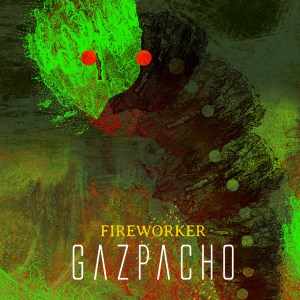
Anything new from Gazpacho is big news, and it’s been two years since we heard from them. Fireworker is their latest, and it is somewhat of a departure from previous efforts. I, for one, am glad to see them stretch out a little. The past few albums were starting to sound a little interchangeable. This one kicks off with the 20-minute epic “Space Cowboy”, which features a huge choir. It’s as if Carl Orff took his Carmina Burana and scored it for a prog rock group. That sounds ambitious, but Gazpacho pulls it off with aplomb.
This song cycle, like most of Gazpacho’s, has a unifying concept. In the words of keyboardist Thomas Andersen,
“There’s an instinctual part of you that lives inside your mind, separate from your consciousness. I call it the ‘Fireworker’ or the ‘Lizard’ or the ‘Space Cowboy.’ It’s an eternal and unbroken lifeforce that’s survived every generation, with a new version in each of us. It’s evolved alongside our consciousness, and it can override us and control all of our actions.” In order to get us to do what it wants, he clarifies, the “Fireworker” will silence the parts of our mind that feel disgust or remorse so that we’re unable to stop it. The conscious part of our mind, Andersen notes, will actually “rationalize and legitimize” those thoughts and actions so that we never discover the beast behind-the-scenes. No matter how we feel about ourselves in terms of identity, accomplishments, and value, we’re all just vessels—or “Sapiens”—that the creature uses until it no longer needs us. “If you play along,” Andersen explains, “It’ll reward you like a puppy and let you feel fantastic; if you don’t, it’ll punish you severely.”
From arena prog, through psychedelic pop, to jazz prog, and finally Norwegian choral prog (for want of a better term!), this is the most eclectic batch of music we’ve ever pulled from the DropBox. I’ll leave you with a little Djabe and Steve Hackett:


You must be logged in to post a comment.