Tag Archives: Aaron Raulston

Some Glass Hammer, Revisited

Hammer

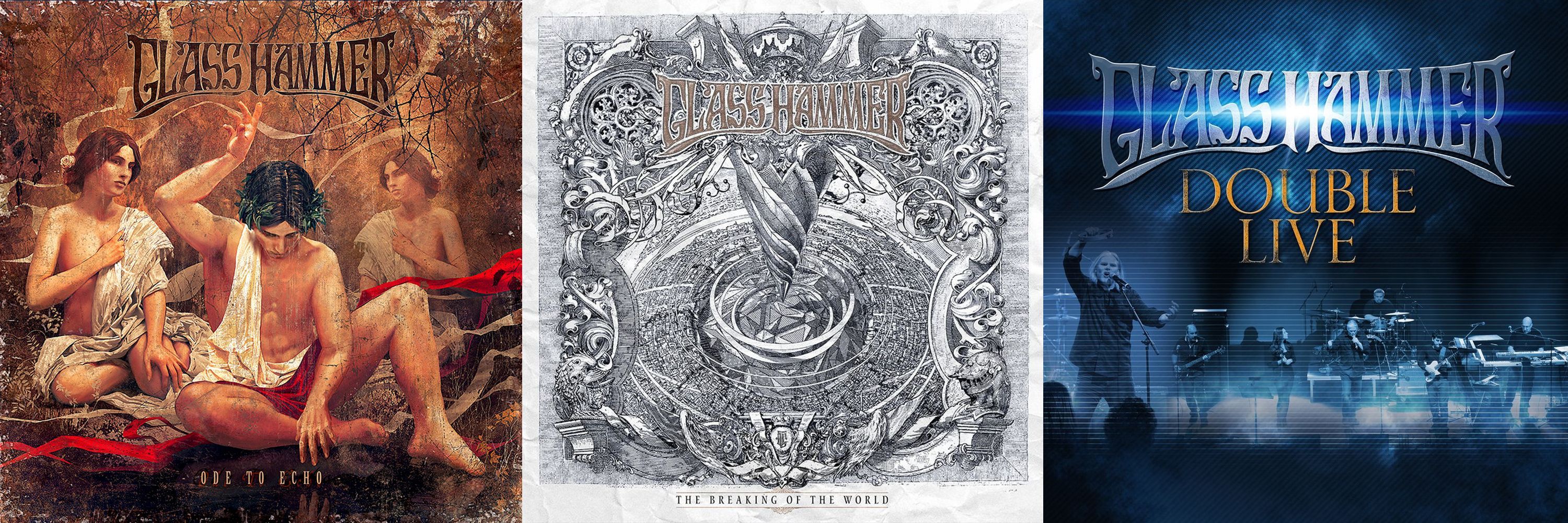
In this post, Brad Birzer and Tad Wert have a conversation about a trio of classic Glass Hammer albums, Ode To Echo, The Breaking Of The World, and Double Live. Glass Hammer is a progressive rock group whose long career has encompassed many personnel and stylistic changes. The one constant has been the core duo of the group: bassist/keyboardist/vocalist Steve Babb and keyboardist/guitarist/vocalist Fred Schendel. It’s no secret they are among Birzer’s and Wert’s all-time favorite musical artists.

Tad: Okay, Brad, I’m responsible for this topic of conversation. Over the past few days, I have been revisiting some earlier Glass Hammer albums, in particular the ones that feature Carl Groves and Susie Bogdanowicz on lead vocals. In my opinion, these three are a high point in the long career of GH – a career that has many high points! 

I know that many fans love the albums with Jon Davison, and they are excellent, but for some reason, the blend of Groves’ and Bogdanowicz’s voices are very appealing to me. I also appreciate Kamran Alan Shikoh’s outstanding lead guitar on these songs. This was, relatively speaking, a fairly stable configuration, with Aaron Raulston on board with drums. He’s still with them today, and I think his work has lifted them into the premier ranks of prog rock.

Brad:  Tad, I’m so glad you initiated this conversation.  You’re right, I’m a huge fan, and I have been ever since Amy Sturgis (an academic friend) introduced me to Lex Rex while we were at a conference in Princeton many, many years ago.  Crazily, it was also the same moment that I got Radiohead’s Hail to the Thief.  What a bizarre mix!

At the time, she told me about Steve and Fred and said I might like what they were doing.  And, here I thought I was the king of prog rock knowledge, and I didn’t–at the time–know about this seminal American band!  How mistaken I was!

Since then, I’ve happily taken the deep dive into all things Glass Hammer.  I even had the chance to have dinner with Steve Babb several years ago–one of the finest nights of my adult life.  He’s an amazingly nice and creative person!  I’m proud to count him as a friend and ally in this crazy world.  The guy is not just a wizard at bass and composition, but he’s an accomplished novelist, father, husband, and band leader.

For what it’s worth, I even take some considerable time to thank Steve (and Big Big Train as well) as huge inspirations for my book project on Tolkien and the Inklings.  Truly, Glass Hammer and Big Big Train were the essential soundtrack to that book.

Given the long history of Glass Hammer–dating back to 1992!–the albums (all wonderful) you selected are what, I guess, we would call mid-period Glass Hammer.

I’m a huge fan of all three, and I think that Double Live especially showcases everything wonderful and mighty about the band.  Groves and Bogdanowicz are in rarest fine form, and I’ve rather publicly and happily proclaimed Bogdanowicz to have the single finest voice in prog rock next to the late David Longdon’s.  I still think this.  It doesn’t hurt that Susie is also a knock-out.

I know that lots of folks like Jon Davison, but, frankly, he’s just a little too effeminate and fey for my tastes.  I tried recently to listen to the new Yes album, and I couldn’t get past the first song.  Give me Groves and Bogdanowicz any day!

Tad: Brad, I agree with you about Double Live. Most concert DVDs I have I’ll watch once or twice, but rarely more. I have watched Double Live at least half a dozen times, and here’s the interesting thing – there are no flashy special effects, lasers, or smoke machines. It’s just six very gifted musicians at the top of their form, presenting a terrific set of songs. They exude relaxed confidence, and they obviously love playing with and off each other. I wish this lineup had lasted longer!

Okay, here’s another reason I picked these three albums to revisit: I think they contain some of the best lyrics GH has come up with. Let’s face it, even with just Babb and Schendel, they have an embarrassment of riches – both are extremely literate and thoughtful lyricists, who assume their audience has the intellectual capacity to appreciate their work. That said, I think Groves sets a pretty high bar on the songs he co writes, and spurs Babb and Schendel to even greater heights on their lyrics. For example, here’s some of Groves’ lyrics to Garden of Hedon (off of Ode To Echo):

The Garden welcomes you, ma’am

Please sit down and find twice as much as you’ll eat

Cornucopia of desires

Lying there at your feet

The Garden welcomes you, sir

Please relax and find everything you want

Very little of what you need

No bread, no water, no God

Or these from Bandwagon (off of The Breaking of the World):

“We care!” Isn’t that what you said from your ocean-front home?

I know it’s got to make you feel so much nicer

“Go and be warmed.” Oh such warm charity

And these words still with no action will soothe you

Soothe you

If that isn’t a prescient condemnation of our current plague of empty virtue-signaling, I don’t know what is!

Brad: Yeah, Glass Hammer is prog for the intelligent listener, and given that prog is already rock for the intelligent listener, GH is really, really special.  More on that in a moment.  

My only complaint about Double Live is that it’s only available on DVD.  I would love a blu-ray edition, especially given the fact that Steve and Fred are two of our greatest audiophiles.  Can you imagine what the blu-ray sound quality would be like?  Simply excellent.

One of my deepest dreams is to have Glass Hammer play at Hillsdale, especially given how outstanding our music program is.  The band could use our existing choral students.  Oh, this gives me goosebumps even thinking about it.

Back to lyrics.  I’m in absolute agreement with you, Tad.  These albums just exude a powerful confidence.  Babb has such a fictional and mythic quality to his lyrics.  Here, for example, is Babb on “Ozymandias”:

The sculptor ‘neath his gaze

‘Twould be a monument of praise

Thus he enshrined the royal sneer

Of him, this Tyrant-King of Fear

I kneel to wipe away the dust of years

With trembling fingers trace the words

Found etched upon its base

They said, “I am King of Kings

See my works and know despair!”

Yet broken now he lies forgotten!

Let’s turn and leave him there

Nothing remains but this colossal wreck of stone

Round it boundless, bare stretch wide the desert sand

Forgotten, he lies

Here, his legacy dies

On “Mythopoeia,” Babb readily captures the essence of J.R.R. Tolkien’s poem of the same name and the speech given by the grand professor at the University of St. Andrew’s in the late 1930s, “On Fairy Stories.”

Maker of myth with your rhyme you weave

A tapestry of tales untold in recorded time

And though the shadows draw near

He writes as if he sees the world bathed all in sunlight

Can he keep the fеar at bay

In hope of day eternal

Hе’s dreamt of a paradise

Ruled by a thing infernal

Sub-create!

A mortal yet strives in his fallen state

He fills his world with monsters

They hide round each corner

Plotting wickedness, wreck and ruin

He fills his world with monsters

For monsters filled his world

One last thing–at least for now–about Ode to Echo and Breaking of the World.  The art for each is simply gorgeous.  For whatever reason, I didn’t buy the t-shirt for Breaking of the World, but I proudly wear my Ode To Echo t-shirt.  Indeed, over the last couple of years, I noticed I was the only one wearing a Glass Hammer t-shirt at Devil’s Tower in Wyoming and at Yellowstone.

Tad: Brad I’m glad you shared Babb’s lyrics to Ozymandias, which is the perfect ending to Ode to Echo. And yes, the art for both of these albums is some of the best in their career. One last thing I’d like to mention – in Ode to Echo, they include a marvelous cover of Goffin/King’s Porpoise Song, from The Monkees’ Head soundtrack. What a great song from the psychedelic ‘60s, and they improve on the original. In their earlier album, Three Cheers for the Brokenhearted, they covered the Zombies’ classic, A Rose For Emily; it would be great if Babb and Schendel recorded an entire album of their psychedelic favorites!

Well, my friend, hopefully our paean of praise for this brief period of Glass Hammer’s career will spur our readers to investigate these albums. It’s been a blast revisiting them with you!
Glass Hammer’s At The Gate

GH-2022-cover-1080px-PREVIEW

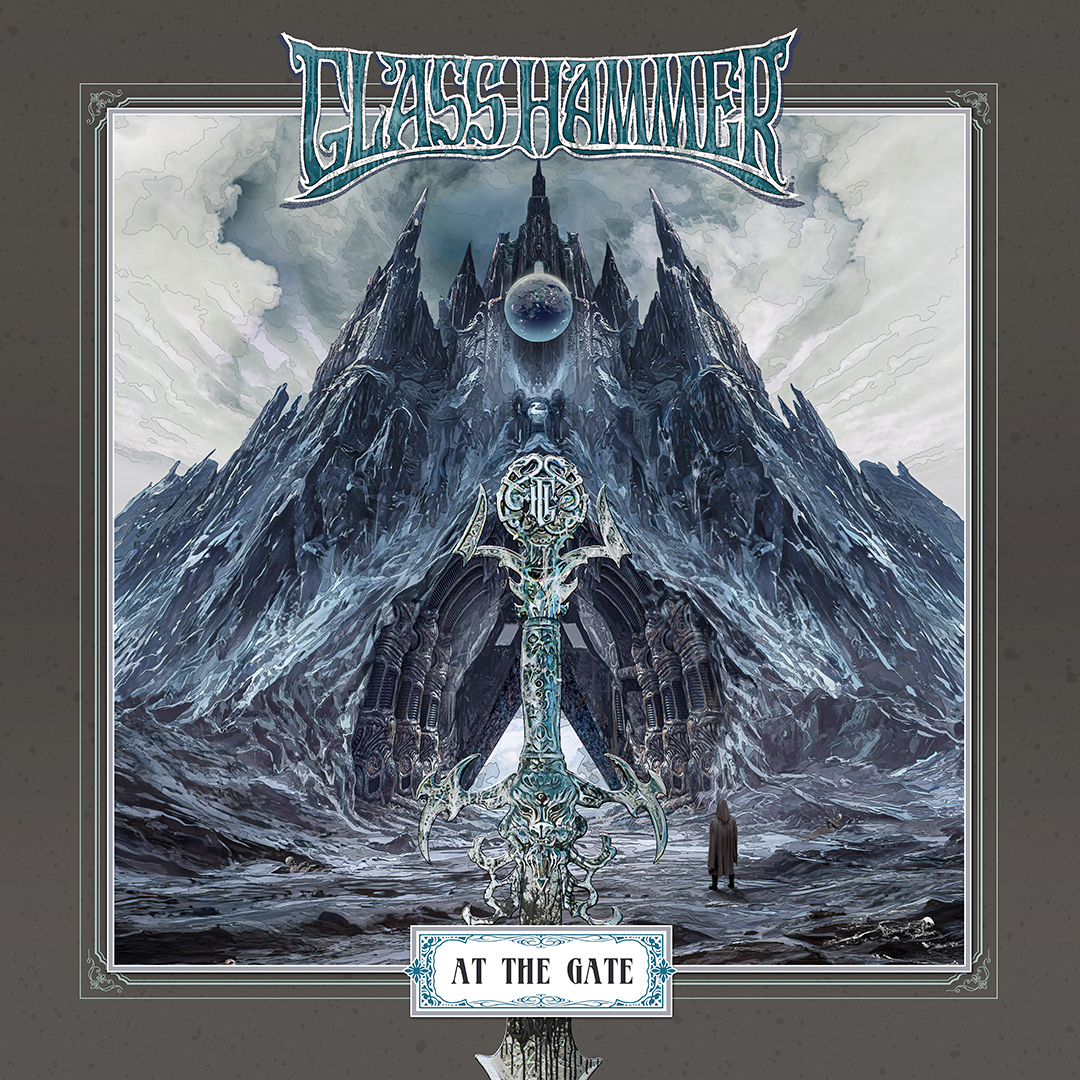
Glass Hammer is set to release the third album in their Skallagrim Trilogy, entitled At The Gate. The first album of the trilogy, 2020’s Dreaming City, heralded a new, much heavier sound for GH, which is continued in At The Gate. The albums chronicle the sword-and-sorcery adventures of a hard-bitten thief named Skallagrim who finds himself locked in a desperate struggle with forces of evil. Through his struggles to find his lost love, he matures and gains much wisdom. In this final installment, Skallagrim has been cursed to live a thousand years seeking his love. When he finally does find her, he ends up sacrificing himself so she can be free.

At The Gate begins with one of Glass Hammer’s finest songs of their long career – the beautiful The Years Roll By. This song is in more of the “classic” prog style long-time GH fans have loved – a keyboards-driven melody with majestic vocals underpinned by Aaron Raulston’s excellent percussion and Steve Babb’s energetic and inventive bass. The inimitable Babb also supplies the pipe organ and keyboards on this one. Vocalist Hannah Pryor really comes into her own on this track, and Fred Schendel is outstanding (as usual!) on guitars.

Savage is up next, and it begins with a spare, unaccompanied guitar riff that soon explodes into a heavy groove. Pryor’s voice is perfect for this crunchy, metallic style, as she can really wail while maintaining a delicate tone.

North of North continues the interesting experiments GH has been doing with their instrumentals in the trilogy. It begins with a propulsive, Tangerine Dream-like synth riff that builds and builds. I hope they continue to explore this style of music!

All Alone begins as another crushing tune reminiscent of King’s X at their heaviest. The style fits the lyrics, as Skallagrim grimly mutters, “The dark is deep and blood runs cold, so cold. Don’t leave her there all alone.” The mood lightens when the melody transforms into a bluesy riff and Pryor sings, “Think how good you’ll feel when the battle’s won, no need to roam, you’ll take her home to stay.” I like the tension between the dark and light moods in this track.

All For Love is the most “proggy” song on the album, with lots of time changes, switching from major to minor keys, and furious guitar work from Reese Boyd. From the beginning, the tempo gallops along, leaving the listener feeling like he or she has run a marathon!

Snowblind Girl keeps the up the fast and furious pace, and Raulston really shines on this track. It also creates tension between the melodic passages sung by Pryor and the dark, chaotic instrumental responses.

Standing At The Gate is the most “difficult” song on the album, with discordant organ chords opening it and the rapid tempos continuing. GH alum Jon Davison has a nice cameo here on vocals.

After four heavy, blistering songs, the last two provide some welcome relief. In The Shadows and It’s Love are combined into a single track, and they contain some of the most beautiful music Glass Hammer has produced. In The Shadows evokes Radiohead at its most gentle and melodic. It’s a terrific song with simple instrumentation that like a balm after the frenetic and dense activity of the previous four. In it, Skallagrim has vowed to sacrifice himself for the sake of his love, and he is at peace with it: “There’s no life without you, there’s no life. If I walk this life alone, if I never find a home, there’s no life without you.”

In The Shadows segues seamlessly into It’s Love with some majestic organ work by Babb and the trebly, melodic bass that he is so good at. The production is open and inviting, as Pryor sings, “What you’re longing for is waiting in Heaven up above. There is no greater act then when one lays down his life, down for love.” It’s a truly beautiful moment, and one of Glass Hammer’s career highlights. The song ends with a coda that recalls the riff from Dreaming City’s A Desperate Man, which is nice way to tie the trilogy together into a unified work.

So, to sum up, At The Gate contains some of Glass Hammer’s most ambitious and challenging music. It is a tribute to their skill and talent that they pull it off so successfully. The album opens and closes with songs that sound like classic Glass Hammer, but with a contemporary feel. Looking back over their career, it is astonishing to me that a group of musicians are able to compose and perform such consistently excellent music over such a long period. Glass Hammer never fails to satisfy discerning prog fans, while exploring new and fascinating styles of music. They never stop evolving – here’s to hoping they continue for another 20 years!

You can order At The Gate here.

Here’s the video for The Years Roll By:

Glass Hammer Set to Release New Album

GH-2022-cover-1080px-PREVIEW

Here’s the latest news from one of our favorite artists:

At The Gate, the third album of the Skallagrim trilogy, is set for release on October 7th. The new album follows Dreaming City (2020) and Skallagrim – Into The Breach (2021), bringing the story of the ‘thief with the screaming sword’  to its conclusion.

Vocalist Hannah Pyror is back to front the group and is joined by bandleader Steve Babb, keyboardist Fred Schendel, and drummer Aaron Raulston. In addition, vocalists Jon Davison (Yes) and John Beagley (Life In Digital) will contribute as well as guitarist Reese Boyd.   

Babb says to expect another 70’s metal-influenced project but also promises a return to the symphonic-prog sound the band is best known for.

“An album can be both things,” he claims. “Since the inception of the trilogy in 2020, it’s been my intention to tell this sword and sorcery-inspired tale with appropriate music. And to do that, I needed the sound to evolve toward something grand by the end of the third album. Skallagrim’s story is one of lost joy, of grief, and longing, and ultimately of a worn-down swordsman’s coming to grips with what the world can and cannot offer him. It’s probably the most important story we’ve ever told through music, so important to me that it led me to retell it in novels.” Babb’s book, “Skallagrim – In The Vales Of Pagarna,” was released in March of this year.

Babb adds, “So, for those who love our newer, edgier sound, they won’t be disappointed. But I’ve brought back the pipe organ, the choirs, and the sweeping ballads for those who miss the sounds of our earlier albums. I think it works, but the fans will be the ones to decide!”

Glass Hammer Continues Winning Streak with “Skallagrim – Into The Breach”

Skallagrim

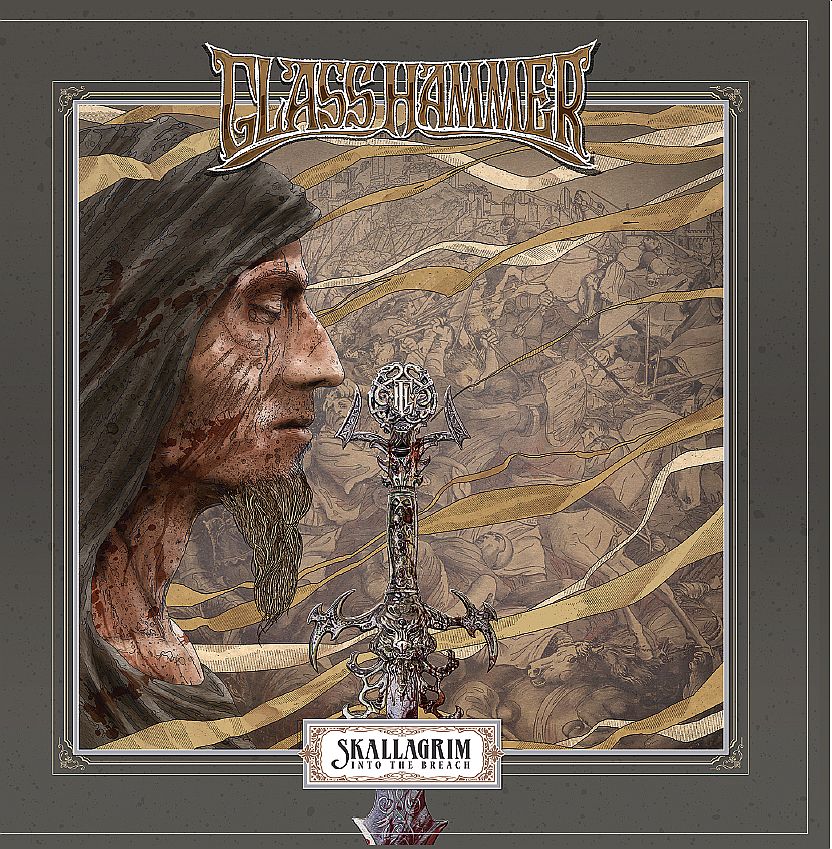
Chattanooga, TN proggers Glass Hammer are set to release the second installment of the Skallagrim Trilogy: Into the Breach. It is an eagerly awaited work, and I am happy to report that it exceeds expectations. If you thought last year’s Dreaming City was a departure from their typical sound, Into the Breach further develops their new, heavier approach to their music.

Besides the obvious elements like super heavy, crunchy guitars, new lead vocalist Hannah Pryor rocks like a …. well, you can fill in the blank. Suffice it to say that Ms. Pryor can belt out a song with the best of them, while maintaining a purity of tone that is never grating.

The lyrics continue the adventures of the jewel thief Skallagrim, this time focusing on his mercenary adventuring as he battles to lift a curse and restore his memory. He is accompanied by his comrade in arms, Hartbert, and they are financed by a mysterious powerbroker, Erling. However, you don’t need to know the story to enjoy the music.

And what glorious music Into the Breach is! It begins with the short acoustic ballad, “He’s Got A Girl”, that segues directly into the roaring “Anthem to Andorath”. This one took my breath away when I first heard it (check out the official video below). Pryor’s vocals intertwine effortlessly with Babb’s and Schendel’s to an exhilarating climax.

The musical pummeling doesn’t let up with “Sellsword” which opens with the dirtiest guitar riff Glass Hammer has ever put to tape. Maybe they’re unleashing pandemic-spawned frustrations, but Steve Babb, Fred Schendel, and Aaron Raulston have never played with this much ferocity.

Glass Hammer, v.2021: Pryor, Schendel, Babb, and Raulston

“Steel” alternates between crushing riffs and bouncy flights of Rundgrenesque popcraft. Pryor’s powerful vocals are the glue that hold all the disparate parts together.

The next two tracks, “Moon Pool” and “The Dark” are instrumentals. “Moon Pool” recalls classic Tangerine Dream, continuing the trend Glass Hammer began in Dreaming City.

“The Ogre of Archon” is another winning hard rock song, which goes directly into the blistering title track. There is an excellent section where Babb’s bass and Schendel’s organ play off of each other as Reese Boyd (or Brian Brewer, it’s not credited) plays terrific solos worthy of Alex Lifeson.

To my mind, the next three songs form a mini-trilogy. “The Forlorn Hope” is one of the best songs on the album, and it offers a bit of a respite from the heavy atmosphere of the rest of the album. “The Writing On The Wall” combines Crimsonesque melodic runs with some more spacey sections that allow Babb’s always inventive bass playing to shine. “Hyperborea” is an almost ten-minute long tour de force that is the finest track on the album, and one of the best songs Glass Hammer has ever done. It is a loving tribute to classic Rush, which in true Glass Hammer fashion, deftly pays their respects without descending into mere imitation.

The album closes with the brief “Bright Sword” which sets the scene for the conclusion of the Skallagrim Trilogy, and leaves the listener begging for more. Into the Breach clocks in at a hefty 70+ minutes, but I’ve listened to it in its entirety a dozen times, and it never feels labored or long. Every note counts, and every second is an aural pleasure.

After nearly 30 years and more than 20 albums, most artists would be exhausted. With Into the Breach, Glass Hammer are playing as if someone has lit a fire under them; this music is some of the most passionate they’ve ever put together. Their ability to constantly challenge themselves and revitalize their sound makes them the most fascinating and satisfying rock band in America. Meanwhile, Skallagrim – Into the Breach consolidates the great leap forward Glass Hammer took with Dreaming City. It is the heaviest yet most graceful music they have recorded in their long career. It is an unalloyed triumph that leaves the listener eagerly awaiting Chapter Three.

Through A Glass Hammer, Darkly

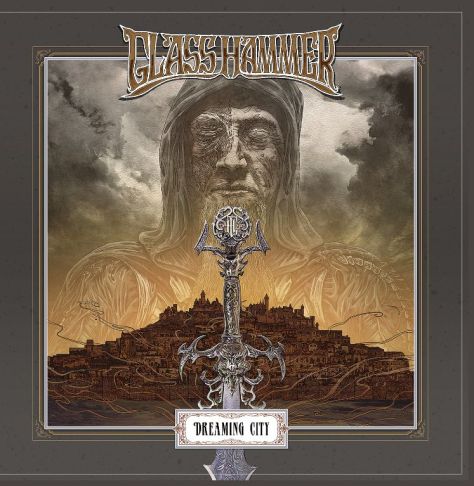
One thing I’ve learned in my eight years of being an avid Glass Hammer fan is to expect the unexpected. While every album of theirs is consistently excellent, there is not a consistent style that runs from their debut through to their latest offering, Dreaming City. So, I shouldn’t have been surprised at the onslaught of metal that greeted my ears when I cranked up the first track, The Dreaming City. Wait, is this the same group that gave us the light-hearted Chronomonaut last year? Yes, it is, and I like it. Actually, I love it! Under the massive guitar attack I can still hear Steve Babb’s melodic bass pounding away, and Fred Schendel’s keyboards providing bursts of furious punctuation.

The core group of Babb (lead vocals, bass), Schendel (guitars, vocals, keyboards), drummer Aaron Raulston, and singer Susie Bogdanowicz have augmented themselves with Reese Boyd (guitars, vocals), John Beagley (vocals), Brian Brewer (guitars), Joe Logan (vocals), James Byron Schoen (more guitar!), and Barry Seroff (flute). Dreaming City features the largest cast of contributors of any Glass Hammer album I am aware of, yet it doesn’t sound crowded or too busy. It’s a surprisingly lean production, with every instrument locked into the overall groove.

Dreaming City is the soundtrack to a very dark fantasy adventure, with the songs seamlessly flowing into each other, much like 2012’s Perilous. Our hero is a lowly thief, Skallagrim, who awakes in the land of Pagarna,  ruled by an evil sorcerer who has kidnapped his love. While in the Dreaming City, he is surrounded by evil ones who want to kill him. At the last possible moment, a sword appears over his head, which he grasps and uses it to save himself.

The sword, named Terminus, is possessed by an angel who provides the hero strength and hope during his daunting quest to rescue his love:

“And the sword is hope that comes from without by divine design, not from within.”

I won’t relate any more of the story, but there is a wonderful twist to it at the end which took me by surprise.

Musically, this is one of the most diverse and satisfying set of songs Glass Hammer has blessed us with. They are brimming with confidence and invention, and every track is a delight to listen to. The aforementioned opener, The Dreaming City, is the heaviest thing GH has ever recorded, while The Lonely World is an aural dose of pure pop. The angelic-voiced Susie Bogdanowicz sings lead on the beautiful October Ballad, while the epic closing track, The Watchman On The Wall, is a glorious and triumphant song that recalls the heyday of Permanent Waves-era  Rush.

I could rave about every single song, but I must single out Terminus for special praise. If Rush and  The Alan Parsons Project had a love child, Terminus would be it. A propulsive beat and a fantastic synth line serve a hook-laden melody to combine for a compulsive listen. Other highlights include the atmospheric instrumental tracks, Threshold of Dreams and The Tower, both of which are reminiscent of classic Tangerine Dream. But, as I wrote, every single song is outstanding.

What is most impressive about Dreaming City is how all the tracks come together to create a most satisfying whole. This is an album to listen to in its entirety, as it tells the compelling tale of an unlikely hero thrust into a desperate quest to overcome evil, and in the process find hidden strength within himself – with a little divine assistance. In Babb’s words, “This is all about evil people robbing us of our joy – holding it hostage. There can be unfortunate episodes in life where that happens and you can barely even remember what “joy” was like – may even become resigned to the thought that you may never know it again in this life, but determine to look for it nonetheless. So this was an important story for me and I hope it brings encouragement to many.”

Dreaming City is an extraordinary and career-defining work from one of America’s finest rock groups, and I can’t wait to hear what unexpected delights they have in store for us in the future.