
Greetings, Spirit of Cecilia readers! In this post, Brad Birzer and Tad Wert discuss a musical artist that may surprise you: Depeche Mode. These boys from Basildon, England burst on the scene in 1981 with the bouncy synthpop hit, “Just Can’t Get Enough”, and their first album, Speak and Spell, was a big hit. At the time, they seemed to be just one among many British synthpop groups that were popular due to MTV exposure in the US. Vince Clarke was their songwriter and synthplayer, while Martin Gore and Andrew Fletcher also handled synths and Dave Gahan provided vocals. They were famous for performing live without any guitars or drums. They also appeared to be doomed to “one-hit wonder” status when leader Vince Clarke left immediately following Speak and Spell. However, they had a secret weapon in Martin Gore, who stepped up and began writing songs. After the tentative album A Broken Frame was released, they added multitalented Alan Wilder to the lineup and released their first really great album, Construction Time Again, which contained the massive hit, “Everything Counts”.
Depeche Mode has ended up outlasting all of their ‘80s synthpop peers, releasing music of surprising depth and beauty despite suffering trials that would end most artists’ careers: Alan Wilder left in frustration after Songs of Faith and Devotion, Dave Gahan survived a near-death experience from a heroin overdose, and Andrew Fletcher passed away in 2022. And yet, Gore and Gahan continue to release new music, and they remain an outstanding live act.
Brad, I think you wanted to focus on later-era Depeche Mode, beginning with Black Celebration. Kick off the discussion!
Brad: Hello, Tad! My friend, my colleague, my writing partner, my fellow progling. Always great to dialogue with you.
Ok, I admit, I’m pretty uninformed when it comes to Depeche Mode. Of course, I’m familiar with them–as any child of the 1980s would be–but I don’t know them, really know them! That is, whereas I knew everything there was to know about Rush or Talk Talk or, later, Big Big Train, I know next to nothing about the band. I didn’t study their history or analyze their lyrics to any great degree. That is, I never obsessed over the band or considered them “my band.” They evoked in me some fascination rather than loyalty. And, when I did look them up prepping for this discussion, I find that they consider themselves Marxists. Not a winning point for me, to be sure.
That said, in high school, I was rather taken with Black Celebration (the lyrics still resonate with me, and I very much like the production and the flow of the songs–all of which struck me, at the time, as rather proggy), though I’ve not listened to it in years–though I am now as I’m typing this. I also bought Music for the Masses, which I appreciated but didn’t love. And, like almost everyone our age, I had a copy of 101. From my memory, everyone owned Black Celebration and, even more so, 101. They were just a standard part of one’s music collection at the time.
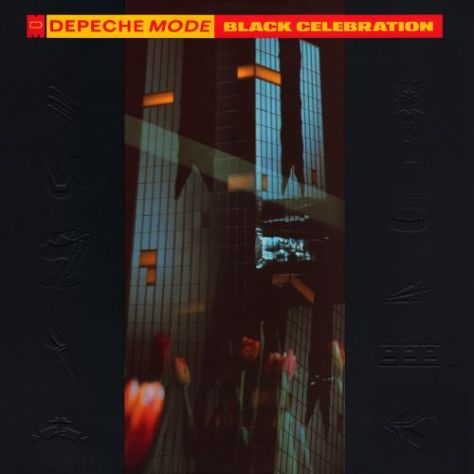
Before I get to Songs of Faith and Devotion, let me just note that I’m very much enjoying my re-listen to Black Celebration as I type all of this. It’s been years and years since I last heard it. I had forgotten that the songs really bleed one into another which is something I always appreciate. And, even though this album dates back to 1986, the production and engineering is impeccable. And, again, my memory did not deceive me–this is a very proggy album. Even the second track, Fly on the Windscreen, seems to reference Peter-Gabriel Era Genesis. Even the fourth track, the Gospel-tinged “Sometimes,” seems like a fragment, much like Yes’s “White Car” does on Drama. A pop album would’ve never taken a risk like that. Track number five, “It Doesn’t Matter Two,” sounds very much like Trevor Horn produced it.
Then, side two begins with the sixth track, “A Question of Time,” a brilliant track musically, but with very disturbing lyrics. Track seven, “Stripped,” while again quite disturbing in its lyrics, is quite proggy in its dirge-like drive. It merges quite nicely into a poppy eighth track, “Here is the House.” The ninth track, “World Full of Nothing,” one against quite innovative musically, is deeply disturbing lyrically–a song about the loss of sexual innocence. “Dressed in Black,” track 10, is about lust, and track 11, the final track, “New Dress,” is about social conformity and celebrity adoration and rather humorous in its scathing cultural critique.
Tad, what can I say? I’m glad to have returned to Black Celebration, an album of fascinating music and deeply disturbing lyrics. Because of the lyrics, I probably won’t return to this album again anytime soon.
Tad: Yes, Brad, I agree – there is always tension between the wonderful melodies Martin Gore conjures up and his very dark lyrics. I was not aware that they consider themselves Marxists – hopefully that was a youthful phase that they outgrew!
As I’ve mentioned before, for me personally, lyrics take second place behind music. However, there are times when the darkness of Gore’s lyrics are unavoidable (“Blasphemous Rumours” being the most obvious example). I have all of Depeche Mode’s albums, and Black Celebration has never been high on my list. Your pointing out its proggy aspects has piqued my interest, however, and I am listening to it now as I write.
“Stripped” has always been my favorite song from this album – the music itself is very stripped-down, and the tune is quite simple and arresting. I think Gahan’s and Gore’s vocals work together beautifully, and I love the way the production gradually adds layers of sound, while that clanking rhythm track never lets up. It also contains a great line that has turned out to be extremely prescient:
“Let me hear you make decisions without your television
Let me hear you speaking just for me”
Replace “television” with “social media” and you have our current culture nailed.
Black Celebration was followed by one of my favorite albums of theirs – Music For The Masses. The opening track, “Never Let Me Down” is probably my all-time favorite song. The opening hook is simply incredible, and I never tire of hearing it. Also, this is the album Martin decided to branch out and play some guitar! It’s interesting how incorporating that instrument immediately adds warmth to their music.

“Sacred” is a very nice song where Gore uses ecclesiastical images and metaphors to illustrate his love for someone. I think this is the album where Alan Wilder came into his own as far as contributing to the overall sound. Every song is chock-full of interesting samples (and sometimes perverse ones, like the wheezing accordion that opens “I Want You Now”!) and the array of synth sounds is employed in a more orchestral manner. “To Have and To Hold” is one of the most menacing and claustrophobic tracks they ever recorded, and it makes the more open and melodic “Nothing” a positive relief, despite the utter nihilism of the lyrics. And, again, there’s some really nice guitar work in “Nothing”. Overall, I think Music For The Masses is their strongest album to this point, even with the inclusion of the now-cringy “Little 15”.
Another reason I like MFTM is it was the album behind the tour documented in the 101 film. I love this movie! It captures mid-80s America very well. What I like most about it is that it doesn’t take itself seriously. There is a lot of humor throughout, and the footage from the final concert at the Rose Bowl is absolutely stunning. It makes it clear why Depeche Mode was such a popular band, even though they got relatively little airplay on the radio in the US. They put on an incredible show and earned their fans through touring.
On a side note, there is a scene in 101 where they go shopping on Lower Broad in my hometown of Nashville, and the sight of a leather-clad bleached-blonde Martin Gore buying country music cassettes in Ernest Tubb’s record store cracks me up every time! The sweet little lady cashier doesn’t bat an eye at him as she informs him that they can ship music all over the world.
Following Music For The Masses was the album that turned Depeche Mode into massively huge international stars – Violator. Do you have only thoughts on that one, my friend?

Brad: Tad, I’m so sorry, I really, really dislike Violator, so I’m probably not the one to review it. I heard it when it first came out, and I thought it was ok. Listening now, however, to it is, for me, painful. I very much dislike “Personal Jesus,” “Enjoy the Silence,” and “Policy of Truth.” I especially dislike the kind of spoken rather than sung lyrics, and I really dislike the lyrics, overall. The only song I like–and I do like it quite a bit, musically–is “Waiting for the Night” though its lyrics seem creepily sexual. I also somewhat like the final track, “Clean,” though I wish, lyrically, this song had come first and had erased the previous lyrics of the album.
Again, I apologize, Tad. I’m not trying to be a spoilsport here. But, the album just annoys me exceedingly.
On a more positive note, I need to listen to Music for the Masses. I’m guessing–and it is a guess–that I’ve not heard it since 1987 or so? I actually remember buying it at my local record store in Hutchinson, Kansas, and the record store owner actually gave me a hard time for it. That cracked me up rather than bothered me, but I didn’t take to the album.
Reading your review, though, makes me want to go back and listen to it. I very much appreciate your enthusiasm. I do remember liking “Never Let Me Down Again” and “Strangelove” and “Pimpf.” I’m sure I misunderstood the album, though, as I thought–at least back in the late 1980s–that it was a Gay anthem, something like “We are the Champions” by Queen.
Regardless, I did really like Songs of Faith and Devotion, though I think the production is off a bit. Whereas the production on Black Celebration is really crisp, Songs of Faith and Devotion sounds like the band was recording under heavy blankets. It could definitely use a Steven Wilson remix!
That said, I like the album both lyrically and musically. I actually really like the use of guitar on this one. I especially like “Higher Love,” the final track. A beautiful way to conclude the album.

Tad: Okay, Brad, tell us how you really feel about Violator 😄! I happen to enjoy it a lot. I agree with you about “Personal Jesus”; it was the album’s big hit, and I have never understood its popularity. It has always struck as being stupidly simplistic: twangy faux-country guitar with the shouted tagline, “Reach out and touch me!” Like you, I think “Waiting for the Night” is a good song. I imagine it as the theme song of a low budget vampire movie.
However, I have to disagree with you about “Enjoy the Silence”. I think this is a great song, with a fantastic guitar line. Instead of cheesy twang, it has just the right amount of reverb. The song’s hook is very good, but I’ll admit the lyrics are troubling: “Vows are spoken to be broken” sounds like a pathetic pickup line. I can overlook them, because the melody line is so strong. As the song progresses, it just takes off and soars.
I also like “Policy of Truth” because of its slinky bassline and swooping synths. Once again, I ignore the lyrics and just appreciate the wicked groove of this track. I cannot listen to it and sit still!
Okay, with Songs of Faith and Devotion, three years had elapsed since Violator. Dave Gahan had moved to Los Angeles and got caught up in the rock scene there. When they reconvened to record Songs, he was lobbying for a rawk and roll record. They decided to rent a villa in Spain and live and record there together. Hot young producer Flood was hired to oversee things. It was a disaster. Gahan was using heroin, Gore was barely speaking with Alan Wilder, who was doing yeoman’s work with Flood trying to pull things together. Fletcher was caught in the middle. All things considered, it’s amazing they got enough good music to release an album.
When I first heard Songs, I didn’t like it at all. Over the years, though, I’ve grown to appreciate it for what it is: an attempt to inject some raw emotion and energy into their music. I think Gahan’s vocals on “Condemnation” are some of the finest of his career. And I believe “Higher Love” is one of their all-time greatest songs. It is just so beautiful how it begins barely audible and inexorably builds to an amazing climax. It truly is a song of faith and devotion.
The SOFAD tour is legendary for the excessive indulgences Depeche Mode engaged in. After it concluded, Alan Wilder announced he was leaving the group. Dave Gahan overdosed in America, and he went into rehab. It was three years before they began work on what is another all-time favorite album of mine: Ultra. Once again, it’s a miracle they were able to cobble an album together. With Wilder gone, they were once again a trio, and the onus was on Martin Gore to come up with some decent songs. I think he delivered, but apparently Dave was barely able to sing anything. According to Tim Simenon, the producer, they had to cut and paste some of his vocals into the digital tracks line by line. That said, there are some fantastic songs here: “The Love Thieves”, “It’s No Good”, “Useless”, “Sister of Night”, and another all-time favorite, “Home”, which is sung by Martin. When I hear it in the context of the album’s genesis, I have to believe “Home” is Martin’s song of concern and caring for his friend Dave, who was struggling to overcome his drug addiction.
I love the way Ultra flows – there are a couple of short instrumental tracks that link and set up larger ones, and they help create a unified work. Ultra was a transitional album that proved Martin, Dave, and Andrew could still make great music as a trio, and it allowed them to regain their balance.
Brad: Wow, Tad, I had no idea about any of this regarding the band. I had no idea about the drugs, the fights, etc. All totally new to me. And, admittedly, it doesn’t make me like the band any more than I already didn’t.
As to Ultra, though, I think this is by far the best thing I’ve heard from the band, and I’d go even beyond this–it’s a truly great album. From its opening moments to its conclusion, this album really grips me. I had no idea that Gahan was so out of it–for the vocals perfectly match the production and flow of the album, though I like the instrumental tracks the best. I especially like “Home” with its orchestration and aching vocals, the quirky but proggy “Uselink” and “Jazz Thieves” and “Jr. Painkiller,” and the triumphant “Freestate.”

Again, though, Tad, I apologize. I generally don’t like reviewing music I don’t like, and I just find myself in very little sympathy with this band. C.S Lewis once said that no one unsympathetic to a genre should review within that genre. He was talking about literature, but I think it applies to music as well.
For what it’s worth, though, I very much appreciate your enthusiasm, and I very much appreciate that I had a chance to revisit the band, despite my own negativity.
Tad: And I appreciate your candor, Brad. It’s funny how you and I are completely in sync with so much music and so many artists, but we have wildly divergent takes on this one group. Thank you for taking the time to listen and give them a chance.
After Ultra, they took an extended hiatus, and finally released Exciter in 2001. It’s not bad, but with the exception of “Dream On”, nothing really grabs me. There is a new maturity and confidence in their music, I think. They are all healthy and seem to be comfortable making an album on their own schedule.
I will close with a brief word of praise for Exciter’s followup, Playing the Angel. This is the last “great” Depeche Mode album in my opinion (at least up to this point – they’re still releasing music!). From the opening screech of “A Pain That I’m Used To” through the bluesy “John The Revelator” and moody “Nothing’s Impossible”, this is a very good album with no filler. The best track is the single, “Precious”, which seems to be a father’s lament for an ailing child. It has a beautiful melody, and the lyrics are quite tender.
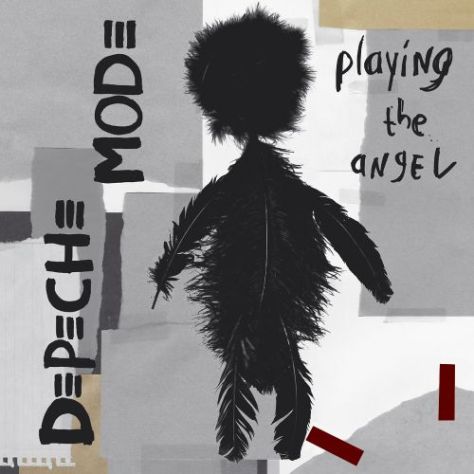
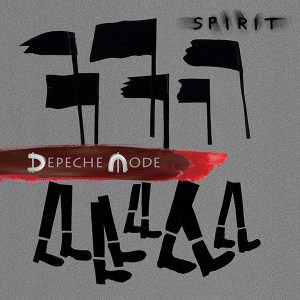
I saw Depeche Mode live on their Spirit tour, and they were full of energy as they connected with the audience. Now that Andrew has passed away, it’s just Martin and Dave carrying the torch. Dave has contributed several nice songs to the last few albums, which has relieved Martin, I imagine.
So there you have it, SoC followers – two very different perspectives on one of the longest-lived and popular groups from the ‘80s. Next, Brad and Tad will discuss another big ‘80s act, Boy George and Culture Club! Okay, I’m kidding – we will NOT be covering that one; there are some limits to even Tad’s tolerance for ‘80s pop music.








 Spirit of Cecilia
You must be logged in to post a comment.