I’m a big fan of classic British mysteries. I have read quite a few Agatha Christie novels and all of Dorothy Sayers’, but until now I had not read anything by Ngaio Marsh. I remember my Mom reading her books way back when, so I decided to start at the beginning and read her first mystery, A Man Lay Dead. I am so glad I did!
First, this book did not strike me as a tentative first effort by an inexperienced author, the way the John Bude’s The Cornish Coast Murder did. All of the characters are real and have multifaceted personalities. The murder itself is very difficult to figure out how it could have been carried out, let alone by whom. And, there is a fun side-trip into a weird conspiracy of Russian assassins!
One of my all-time favorite authors is Ray Bradbury. Beginning with The Martian Chronicles, which I read when I was in junior high, I fell in love with his imaginative writings. Wildside Press has collected 15 science fiction tales that Bradbury wrote early in his career for pulp magazines, circa 1944 – 1951. While the first few stories aren’t the greatest things he’s written, for $0.99 the collection is still a great bargain.
Included is a stone-cold Bradbury classic, The Creatures That Time Forgot, the story of a group of humans and their descendants who are stranded on a planet with properties that cause them to live their entire lives in the span of eight days. Born one day, reaching adulthood by the third day, they die of old age on the eighth. Even though it sounds implausible, even for science fiction, Bradbury makes it entirely believable and paints a realistic picture of the struggles a community would undergo to survive under such conditions.
Simon Fairfax’s 1415 is the sixth and final book in his A Knight and a Spy series. I have thoroughly enjoyed immersing myself in the medieval world of Sir James de Grispere and his comrades Mark and Cristo. All of the events of the previous five novels come to a head in this thrilling conclusion.
1415 begins where 1414 ended: Jamie is is recovering from the near-fatal poisoning he suffered at the Council of Constance, Germany. As soon as he is able to return to England, he is tasked with infiltrating a possible plot to overthrow King Henry V. Henry would like to wage war in France and reestablish English rule there, but he is threatened with possible rebellion at home. Jamie and Mark travel across the channel to acquire ships for Henry’s planned invasion, and they foil a plot to destroy the fleet.
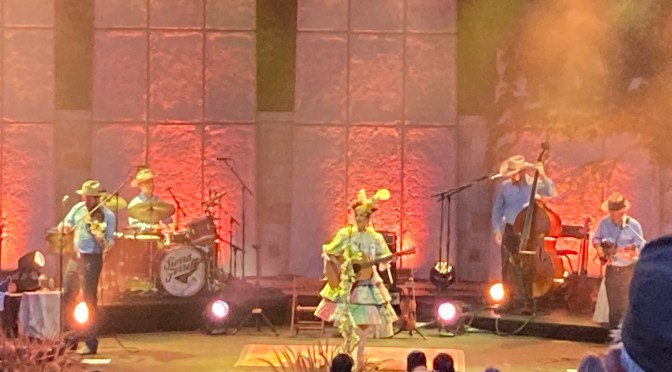
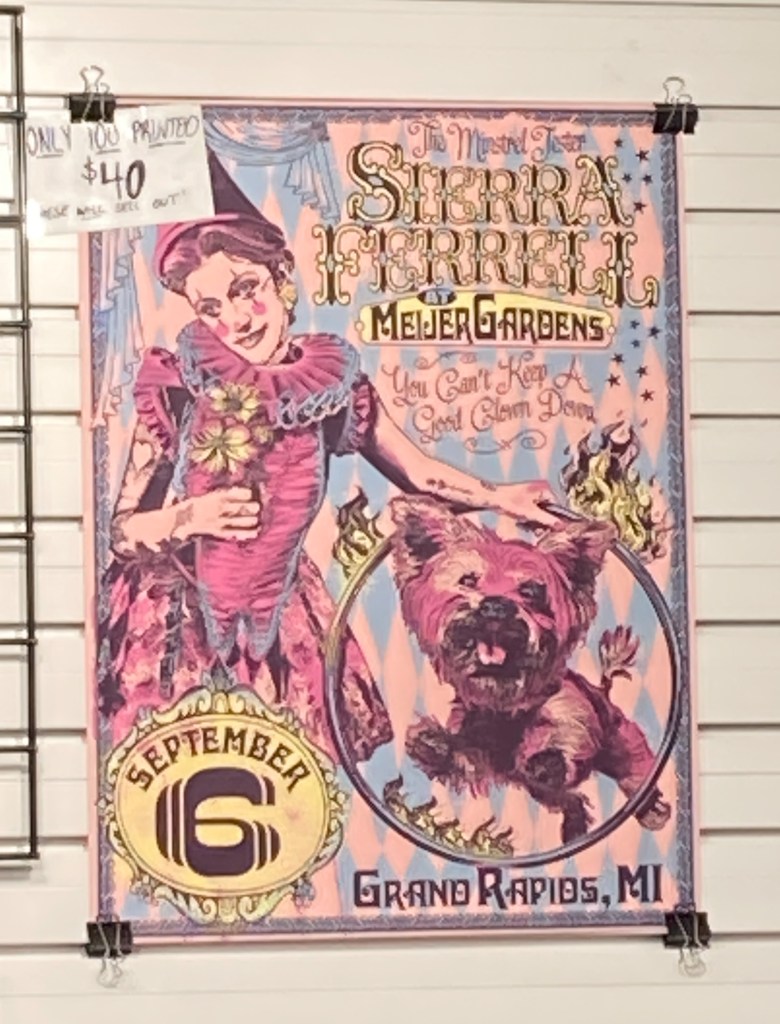
Sierra Ferrell, Meijer Gardens Amphitheatre, Grand Rapids Michigan, September 6, 2024.
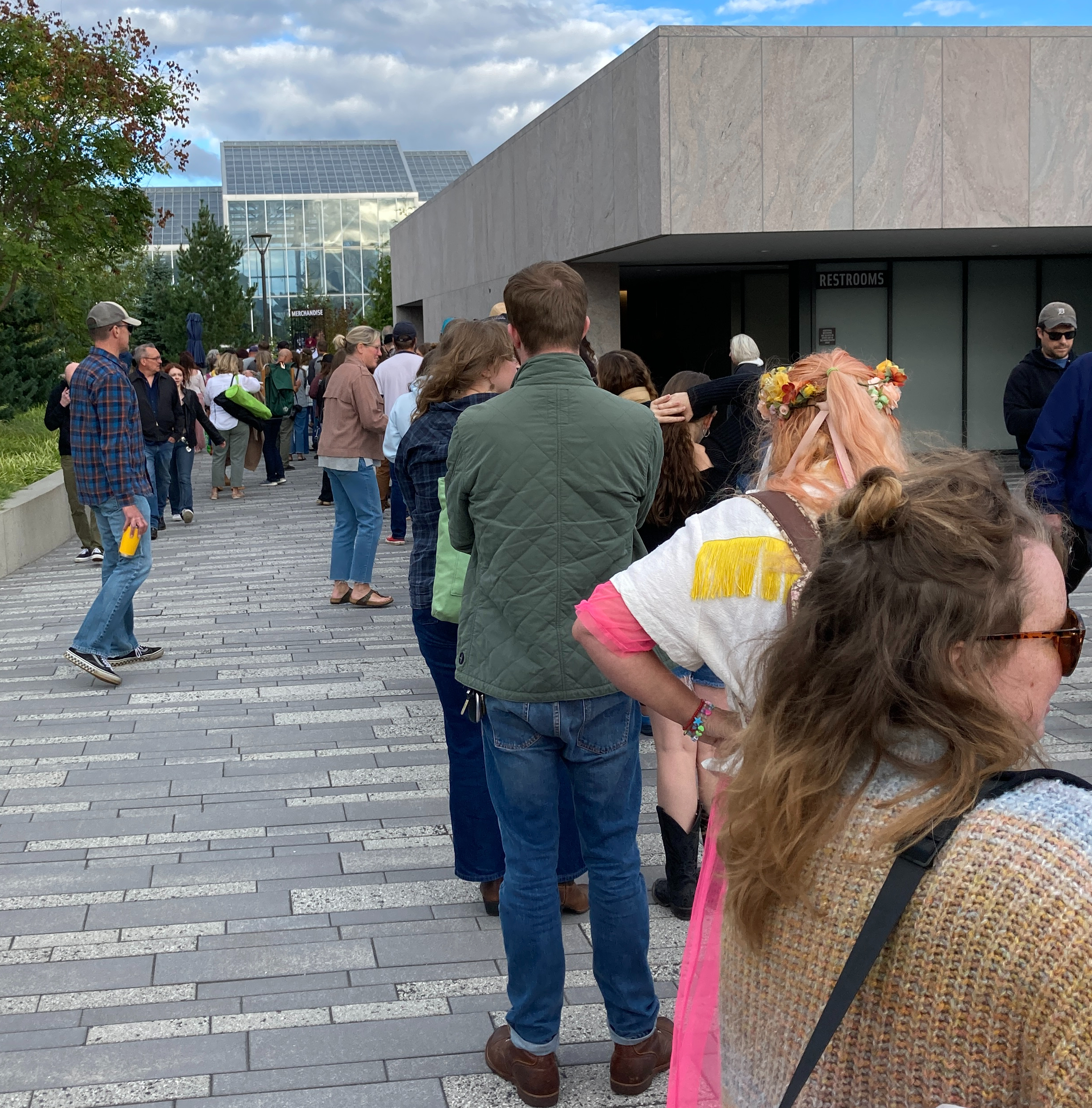
Even in the face of a predicted temperature plunge, the atmosphere at Meijer Gardens heated up as another sell-out crowd filed in for an evening with Americana siren Sierra Ferrell. You could sense the anticipation in an audience skewing considerably younger than the venue’s usual demographic — guys decked out in Deadhead or jam band shirts (with Michigan’s Billy Strings well represented) and the occasional Nudie suit, women clad in hoop skirts and adorned with flower crowns and facial glitter, cowboy boots all around — forming the longest merch line I’ve seen in these parts for many a moon.
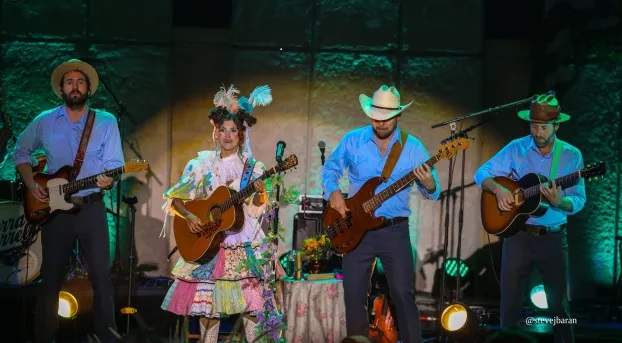
And once opener Meredith Axelrod had reeled us in with a giggly, appealingly skewed acoustic set, Ferrell wasted no time fulfilling her fans’ wildest dreams. Planted center stage at a flower-draped mike stand, resplendent in patchwork fringe dress, pancake make-up and feathers in her hair, she laid out her credentials with opener “I Could Drive You Crazy” — an unstoppably catchy, flirtatious chant, simple as a playground taunt, that morphs from Appalachian fiddle drone to “We Will Rock You” stadium stomp in less than four minutes. At which point the crowd — already on its feet and packed close to the stage — followed suit and went understandably nuts.
As she dove into a generous sampling from her two Rounder albums Long Time Coming and the new Trail of Flowers, it quickly became obvious that Ferrell is that rare real thing – a consummate performer who’s a genuine triple threat. As a singer, she’s got a powerhouse voice and the expressiveness and sensitivity that only come with experience and maturity. Her songs ring true no matter how old-timey her inspiration, packed with appealing melodies and clever, thoughtful lyrics, spanning country music’s historic shifts from cowboy songs and Western swing to bar-room weepers and Bakersfield honky-tonk. And her stage presence – whew! Giddy, yearning, heartbroken and vengeful by turns, Ferrell is all the way into her onstage role, her oversize persona more than a match for her outlandish outfit, a vaudeville turn that doesn’t hide a strong yet vulnerable heart.
Her broadest performance came on the solo murder ballad “Rosemary”, strategically placed mid-set, but Ferrell’s bluegrass-inflected backing band raised the show to an even more impressive level. On fiddle and Fender Telecaster, Oliver Bates Craven was the perfect soloist, peeling off one winning lick after another; mandolist/acoustic guitarist (and Michigan native) Joshua Rilko kept every tune gliding forward or jingle-jangling around as required; Geoff Saunders laid down a nimble, satisfying groove on electric and stand-up basses; and drummer Matty Meyer displayed a great feel for dynamics and drive, matching Ferrell mood for mood. And when the band gathered around one mike and chimed in on rich vocal harmonies for Tim O’Brien’s “The Garden”, the Osborne Brothers’ “Lonesome Feeling” and Ferrell’s open-hearted gospel throwdown “Lighthouse” — well, you could feel the sigh of delight from the 2,000 souls listening in.
But then, the whole night seemed like a non-stop highlight reel: the homespun household wisdom of “Give It Time” setting up the compulsive Spanish tinge of “Why’d Ya Do It”; an intense cover of “Me and Bobby McGee” that just kept building as Ferrell channeled Dolly Parton’s tenderness, then Janis Joplin’s fire. Then there was the closing run that showed off Ferrell’s versatility with Trail of Flowers‘ opening hat trick: “American Dreaming” (lovelorn, resigned road anthem); “Dollar Bill Bar” (femme fatale Ferrell turns the tables on the latest pick-up artist to cross her path); and “Fox Hunt” (stark string-band music that catches both the thrill of the chase and the desperation of a starving mountain man). Put simply, this was a great show; beneath the flamboyant trappings, there’s an elemental presence about Sierra Ferrell and her music that, on this night, proved outright irresistible. If you’re looking for downhome music with a sense of the past that cuts to the bone and revs up a rousing good time, don’t hesitate to check out her albums and see her live!
Dear Spirit of Cecilia readers, it’s time to dig into some prog/anti-prog/a-prog. Is Radiohead prog or not? I’m sure this question has been debated before. Let’s just say, Radiohead did something unique and did something unique several times. First, with Ok, Computer in 1997 and, then, again, in 2000 with Kid A. The following dialogue reflects our thoughts about such innovation and creativity in the world.
Brad: Well, I’m happy to begin this conversation. In the mid 1990s, I had heard the single, “Creep.” Strangely, I was more familiar with the live Tears for Fears cover version than I was with Radiohead’s original, but I still knew the song pretty well. To this day, I like the song, but I don’t love it. And, if push comes to shove, I prefer the TFF version. The unedited, R-rated Radiohead version of the song does nothing for me.
The mid-1990s were kind of wild for me, in terms of my profession as well as in my life. I didn’t get married until 1998, when I was 30. For part of the mid 1990s, then (single), I was working in Bloomington, Indiana, while working on my PHD (I loved Bloomington and my job there), and, for part of it, I was working in Helena, Montana (a city I loved, in a job that I hated; well, let me clarify. I was working at the Montana Historical Society which I hated, but I was also teaching at Carroll College, which I loved).
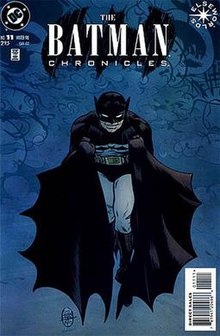
One day in Helena, I went to a local alternative shop (comics, music, etc.) to buy the latest issue of The Batman Chronicles. On display, though, they had OK Computer, advertised as a “neo prog classic.” Despite money being tight, I bought the album, went back to my apartment, and was suitably blown away by it. Though I love Kid A more, I still have great fondness for Ok, Computer and always will. Though “Karma Police” was the big single from the album, it’s the beginning of “Subterranean Homesick Alien” that I love the most.
From there, I went back and bought the first two Radiohead albums–Pablo Honey and The Bends. I also bought the two eps–by special order–My Iron Lung and Airbag. For what it’s worth, it was the two non-prog songs from the early albums–”Blowout” and “Street Spirit” that most intrigued me.
Tad: Brad, thanks for kickstarting this conversation about two albums that I like a lot. I got into Radiohead around the time of The Bends. I thought that record was wonderful, because I have always had a soft spot for Beatlesque power pop. I didn’t really enjoy OK Computer, because I felt that they had betrayed their pop roots! Of course, with the passage of time and greater perspective, I love it now (except for Fitter, Happier).
When Kid A was about to be released, I remember they put out Everything In Its Right Place as a teaser on Amazon, I think (this was years before YouTube, remember!). I listened to that one track obsessively – I couldn’t get enough of it! But when the entire album was finally released and I got a chance to listen to it, I was completely turned off. To my ears, they had completely abandoned melody and replaced it with abrasive noise. It was literally years before I would return to it and give it another chance.
I guess I have a love/hate relationship with Radiohead. I spent the past couple of days listening to Kid A and Amnesiac (along with the bonus tracks on their 2009 respective reissued editions). There are moments of incredible beauty on both albums: Everything In Its Right Place, Optimistic, Pyramid Song, Knives Out, come to mind. But Thom Yorke’s vocals grate on me in so many places. He sounds querulous and whiny; it’s as if he can’t find any joy in life at all. “Catch the mouse/crush its head/throw it in the pot”…. Is that a rant against meat eaters? I don’t know, but he sounds so desperate!
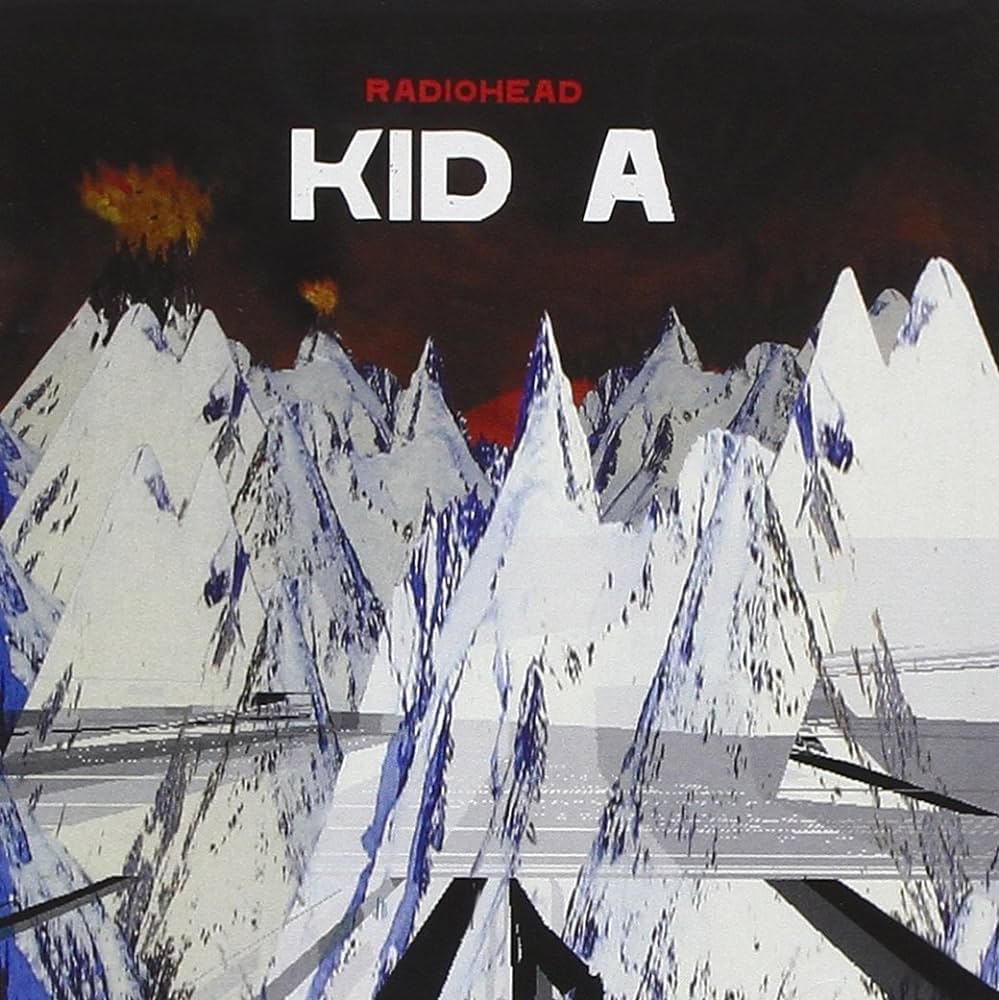
Also, Stanley Donwood’s artwork is extremely off putting to me. There is a condescension and disdain for normal people who are just trying to raise a family, earn an honest living, and not make waves. Maybe I’m reading too much into it, though. Tell me where I’m wrong, please!
Brad: Tad, thanks so much for your good thoughts. You and I almost always agree, so it’s really interesting to me when we diverge from one another. My views are almost completely opposite of yours, but I suppose timing has a lot to do with it. I mentioned earlier that I came across OK Computer really by chance – seeing it in a display in an alternative shop in Helena, Montana, of all places.
I was in my second year at Hillsdale when Kid A came out. It was the fall semester, and I remember so clearly getting the album. I not only played Kid A repeatedly, but I poured over the lyrics, the art, the booklet, anything that would offer even a smidgen more information about the band and the album. I absolutely loved it when I discovered there was a second booklet, locked under the cd tray.
I played Kid A so much–especially in the background during office hours–that it became a conversation piece with my students and me. So, the album is associated–for me at least–with extremely good memories.
And, I actually like Donwood’s artwork. I even own two books of his art, one of which I have proudly displayed on our living room bookshelf!
Carl: I know, for a fact, that I cannot be objective at all about either album! And there is some freedom in admitting that.
I can relate quite well, Tad, to two of your remarks: the one about having a “love/hate relationship with Radiohead” and your observation that “there are moments of incredible beauty on both albums…” Amen, amen!
For me, setting aside “Fitter, Happier,” which is either an act of genius or an act of cynical annoyance, I think OK Computer is one of the most beautiful, gut-wrenching albums ever recorded—regardless of genre. I don’t recall Radiohead being on my radar at all back in 1997, when I walked into CD World (R.I.P.) in Eugene, OR, and heard it on a listening station.
I was immediately transfixed by the album, which I bought and then listened to hundreds (no exaggerations) of times over the next couple of years. I would listen to it often while driving to and from Portland, from the fall of 1997 to spring of 2000, for MTS classes.
Oddly enough, the stark—but somewhat hopeful—lyrics seemed to go well with my studies, although I don’t know how to explain it. But, again, it was the sheer gorgeous quality of the album, with its amazing melodies, detailed arrangements, astonishing sonics, and the elastic voice of Thom Yorke. And the guitars! I soon bought both Pablo Honey and The Bends, and while the debut album was “okay,” I thought the sophomore release was a remarkable work, with several songs that rivaled what came along on OK Computer.
I mention the guitars because my first reaction to Kid A was simply, “What the hell is this?! Where are the guitars?!” It threw me for a loop so deep and big that I actually refused to listen to it for quite some time. For whatever reason, it did not connect with me at all.
Oddly enough, it was through some acoustic/instrumental covers of Radiohead songs—by pianists including Christopher O’Riley, Brad Mehldau, and Eldar Djangirov—that I warmed up to the album. And while it will never, for me, equal its predecessor, I now recognize just how great it is. Once again, it’s the beauty of the music—in songs such as “Morning Bell”, “Everything In Its Right Place”, and “How To Disappear Completely”—that comes to the fore.
Tad: Carl, you expressed my initial misgivings about Kid A so much better than I did. “Where are the guitars?” Yes!!! I also gained a greater appreciation for the songs on Kid A, composition-wise, through listening to Christopher O’Riley’s classical piano versions. I love the album now. As far as Donwood’s artwork, I just get such negativity from it, but that’s my personal reaction.
Looking back, it’s hard to understand these days just how influential Radiohead was. Everyone was compared to them. I don’t think there would be a Coldplay without Radiohead. Remember the British band Travis? They were a poppy, “safe” version of Radiohead. One of my favorite European groups is Kent, from Sweden. They were obviously heavily influenced by Radiohead.
What is amazing to me is how Radiohead kept their audience, no matter how left-field and out-there their music got. I also appreciate how innovative they were in marketing themselves. Remember when they released In Rainbows online, for basically free? They anticipated streaming music years before it existed.
Brad, I wish I had the same experience you had of stumbling across OK Computer and incorporating Radiohead’s music into your life. I think I feel the same way about earlier artists such Roxy Music, Depeche Mode, and New Order. I can’t imagine not having them available, and their music means so much to me on an emotional level. Listening to them still transports me to different times of my life.
Kevin: The confluence of artists assembled in the conglomerate called Radiohead is remarkable. It is rare for a musical group to emerge that gels together. It is yet rarer for one to collectively seek something new and striking, something visionary. It is the rarest of all to have one that can consistently break new territory in a way that feels always new.
In the summer of 1997, having just completed a recital and performer diploma in classical guitar, I began work on my second progressive rock album. I was seeking to break such new ground working on compositions, lyrics, instrumentation, arrangements. It was a joy and yet painful to continually do this work on my own while seeking sympathetic artists to this vision. In particular I was seeking a drummer who could capture the raw talent of my original co-conspiriator, my brother Colin.
Colin and I had literally grown together in our listening, writing, and performer during my latter school days at home. We didn’t need conversation to know when things worked—we just clicked. I didn’t realize just how rare this was until some years later when we did find a chance to regroup and perform again.
In 1997 we were thousands of miles apart and still living in the days when long-distance calls were as rare as they were expensive. But during one such rare call, I remember him mentioning that I had to get the new Radiohead album OK Computer. He knew my tastes. He knew my aversion to new music of the 90s—for the most part I found grunge to be over-blown and entitled. There were exceptions, but it all seemed unjustifiably angry and sulking and focused on screaming in the darkness because they couldn’t be bothered to look for the light switch.
OK Computer, he assured me, was “different. You have to give it a listen!”
The opening distorted guitar line of “Airbag” gripped my attention immediately. It was melodic but angular, technically adept but rough at the edges, weirdly familiar yet strangely weird. One thing was abundantly clear—these guys had it. The playing was exciting, inventive, and in-the-pocket— except when the haunting character android made its presence felt—and then it was oddly off-kilter, but consistently the band worked its magic together, as a multiple pulsing organism.
The album is brilliant and it set a new standard for creativity in the popular music realm. I could write a book on this album alone. Their use of texture, tone, timing, timbre, text, and contrast appears to flow effortlessly from their collective creative pen. These skills fully come to the fore on OK Computer, where there is a loose narrative (dare I say “Concept”) to the album. But equally on Kid A the stops and starts within and between tracks, the intros and endings, the attentiveness to sonic space. Historically there are moments of brilliance throughout the progressive rock catalog, but here, in Radiohead, was something for a new millennium. Even the contrast between OK Computer and Kid A is extraordinary.
Then there are the melodic and harmonic moments of sheer genius! The way the melodies weave from one section to another, the shift of harmonic focus from a single altered note, the blurring of lines between keys and major/minor constructions. You all know my fondness for Talk Talk’s latter work, which expresses through minimal chords and melodies and achieves artistic triumphs using very basic musical theorems combined with an incredible musical instinct. Radiohead uses maximalism in their approach and since it is a vision more of a collective than a single artist, the result is almost overwhelming to the senses. After a good listen to either of the albums of this essay I literally have to give my ears a rest—it’s so intense.
And yet, listening back, while I still love the creativity, the craft, the brilliance, the technical adeptness, I have to agree with Tad. The dark vision and tone and word with no hint of redemption anywhere suffocates. It’s one thing to work with chiaroscuro, the renaissance artistic technique of using darkness to emphasize the light. Radiohead accels at contrast from a sonic standpoint. I just wish the texts and the vision equally offered an understanding of the beauty of life and not only its tensions. I love the experience of Radiohead’s extraordinary works of human imagination, but in the end I crave the light.
Brad: All right, friends and neighbors, this concludes our discussion of Radiohead–and not just Radiohead, but classic Radiohead–OK Computer and Kid A. As is obvious, we don’t all agree, but we love one another! Here’s hoping you love us as well.
Whenever I need a restorative read, I turn to the master of comedy: P. G. Wodehouse. My favorite books of his are set at Blandings Castle, the ancestral home of the dotty Lord Clarence Emsworth, his gaggle of formidable sisters, and of course, The Empress of Blandings – Lord Emsworth’s prize-winning pig. His younger son, Freddie Threepwood usually shows up, and there are always interesting guests as well as lovestruck young couples facing insuperable hurdles to their happiness. I have already read and reviewed another Blandings Castle novel, Uncle Fred In The Springtime.
In Full Moon, Clarence’s brother, Galahad (who goes by Gally) is the guardian angel of the young lovers. One couple is Bill Lister, affectionately called “Blister” by Freddie, and Prudence Garland, daughter of Dora Garland, a sister of Clarence’s. Bill is an aspiring London artist with an unfortunate face like a gorilla, but Prudence loves him dearly and plans to elope with him. Her mother gets wind of things when she answers the telephone, and Bill, thinking Prudence has answered, calls her his “dream rabbit”. Prudence is quickly shipped off to Blandings for her safety. Did I mention Blister is Gally’s godson, and he will do anything in his power to bring him and Prudence together?
Meanwhile, Freddie, who has married American Niagara (“Aggie”) Donaldson, of Donaldson Dog-Joy dog biscuit fame, is back in England to drum up business for his father-in-law’s company across the pond. He would also like to have the American millionaire Tipton Plimsoll agree to carry Donaldson in his chain of supermarkets. To wine and dine Tipton, Freddie invites him to Blandings Castle to spend a few days enjoying the country air. Tipton agrees, because he has been partying a little too hard in the city, to the point where every time he tries to have a drink, he sees a man with a gorilla-like face out of the corner of his eye (you can see where this is heading). Once ensconced at Blandings, Tipton meets Veronica Wedge, the stunningly beautiful yet undeniably dim daughter of Colonel Egbert and Hermione Wedge. Hermione is another one of Clarence and Gally’s sisters, and, according to Wodehouse, looks just like a cook, which will lead to some humorous encounters. The Wedges are thrilled that their daughter seems to have captured the heart of one of the wealthiest young men in America. Unfortunately, he has a tendency to jealousy.






 Spirit of Cecilia
You must be logged in to post a comment.