
To complement Brad, Tad & Carl’s fine “Best of” selections, herewith a sampler of favorites and notable releases from the year in both classical music and jazz. As often as I drift away from both genres, I return to them on a regular basis — and it happened again to fine effect in 2024! Listening links are included in the album titles.
Highlights in Classical Music
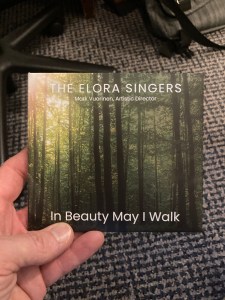
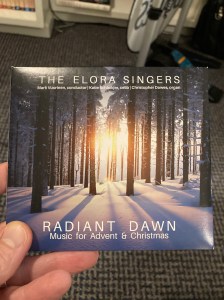
If you followed my series To the True North this past summer, you learned how impressed I was by Canada’s Elora Singers and their annual Festival. The Singers’ latest album In Beauty May I Walk was released in time for this year’s closing festival weekend; a collection of contemporary works drawing inspiration from the theme of revelation, it offers an absorbing balance of breathtaking precision and deeply felt emotion. Eriks Esenvalds “In Paradisum” and “Only in Sleep”, Jonathan Dove’s title piece and Stephanie Martin’s “A Frost Sequence” are highlights, but every composition (whether musing on nature, the search for God or time’s inevitable passage) draws in the listener and cuts to the heart. Never indulging in sentimentality, conductor Mark Vuorinen and the Singers nonetheless lay bare the human condition and affirm life’s inherent value; this is choral singing at its finest, and an official 2024 Favorite. (The Singers’ recent Christmas album Radiant Dawn is well worth hearing this time of year, too.)
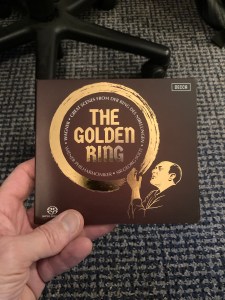
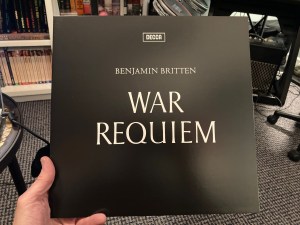
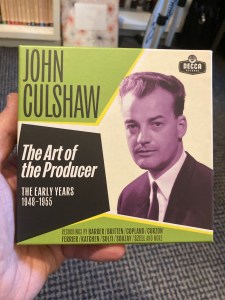
This year was the centennial of John Culshaw, who pioneered stereo recordings of opera and classical music as a producer for Decca Records in the decades following World War II. Unbeknownst to me, Decca had already completed new high-definition transfers of two Culshaw classics: the first complete set of Richard Wagner’s marathon operatic cycle The Ring of the Nibelungs (with the Vienna Philharmonic plus a bevy of postwar vocal talent, conducted by a young Georg Solti; consistently considered one of the recording industry’s greatest achievements); and the recorded premiere of Benjamin Britten’s War Requiem (the composer’s shattering anti-war masterwork, this album changed my life) — longtime Favorites which I snapped up new versions of straightaway. Now the actual centenary sees the release of John Culshaw, The Art of the Producer – The Early Years, 1948-1955. The first impression of this 12-disc set, recorded entirely in mono, is how fresh and vivid everything sounds; whether working live or in controlled conditions, Culshaw’s keen ear and finely honed production skills place you in the room with the performers. Wagner operas staged live at Bayreuth, Britten performing at his own Aldeburgh Festival and Samuel Barber conducting his music in the studio stand out, but even an underprepared Brahms German Requiem (with Solti squeezing the best he can out of overmatched forces) has its charms. Beyond sheer documentary value, this set demonstrates how essential Culshaw’s sonic discernment, organizational skills and empathetic rapport with artists was in developing the lifelike recorded sound we take for granted today.
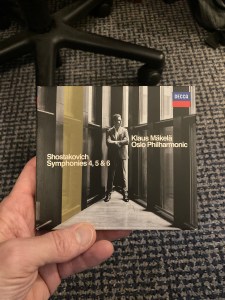
Even as it’s been swallowed up by one multinational conglomerate after another over the decades, Decca has maintained its commitment to both vivid, dynamic sound and talented artists in development. The latest case in point: the youthful Finnish conductor Klaus Mäkelä, who’s quickly made waves in the orchestral world with fully grounded yet remarkably fresh readings of 20th-century classics, from Jean Sibelius’ organically evolving symphonies to Igor Stravinsky’s kaleidoscopic early ballets. At the helm of the Oslo Philharmonic for Symphonies 4, 5 & 6 by quintessential Russian modernist Dmitri Shostakovich, Mäkelä reaches new heights: the 4th’s macabre, Mahlerian grotesquerie (suppressed for a quarter-century due to Soviet disapproval) and the 6th’s journey from ethereal beauty to dry, exhausted humor unfold relentlessly, while a less- pressurized-than-usual 5th revels in cool control that builds to an appropriately tumultuous climax, all captured for maximum impact. Recently headhunted to lead both Amsterdam’s Concertgebouw Orchestra and the Chicago Symphony (where I’ll be seeing him conduct next spring), Mäkelä is a classical superstar in the making, and this double set (definitely on the Favorites list) shows both his already prodigious skills and his rich potential.
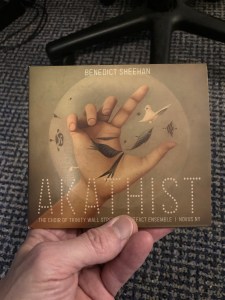
Finally, toward year’s end I stumbled across a wonderfully eclectic oratorio, Benedict Sheehan’s Akathist. Setting a lengthly Russian Orthodox prayer that literally thanks God for everything, Sheehan’s musical approach is anything but predictable: chant from both Western and Easter traditions rubs elbows with Baroque polyphony, Romantic impressionism, Gospel and jazz. And yet, the broad, inevitable arch of the piece readily encompasses the multiplicity of text and texture, gathering up protest against the wounds of the world, cameraderie as comfort amidst pain, and overwhelming gratitude for blessings great and small into a moving, integrated whole. The assembled forces of The Choir of Trinity Wall Street, Artefact Ensemble and Novus NY pull off this music with style and panache to spare. Not just a Favorite; if there’s an essential classical recording for 2024, I’d argue this is it.
(Highlights in jazz follow the jump . . .)
Highlights in Jazz
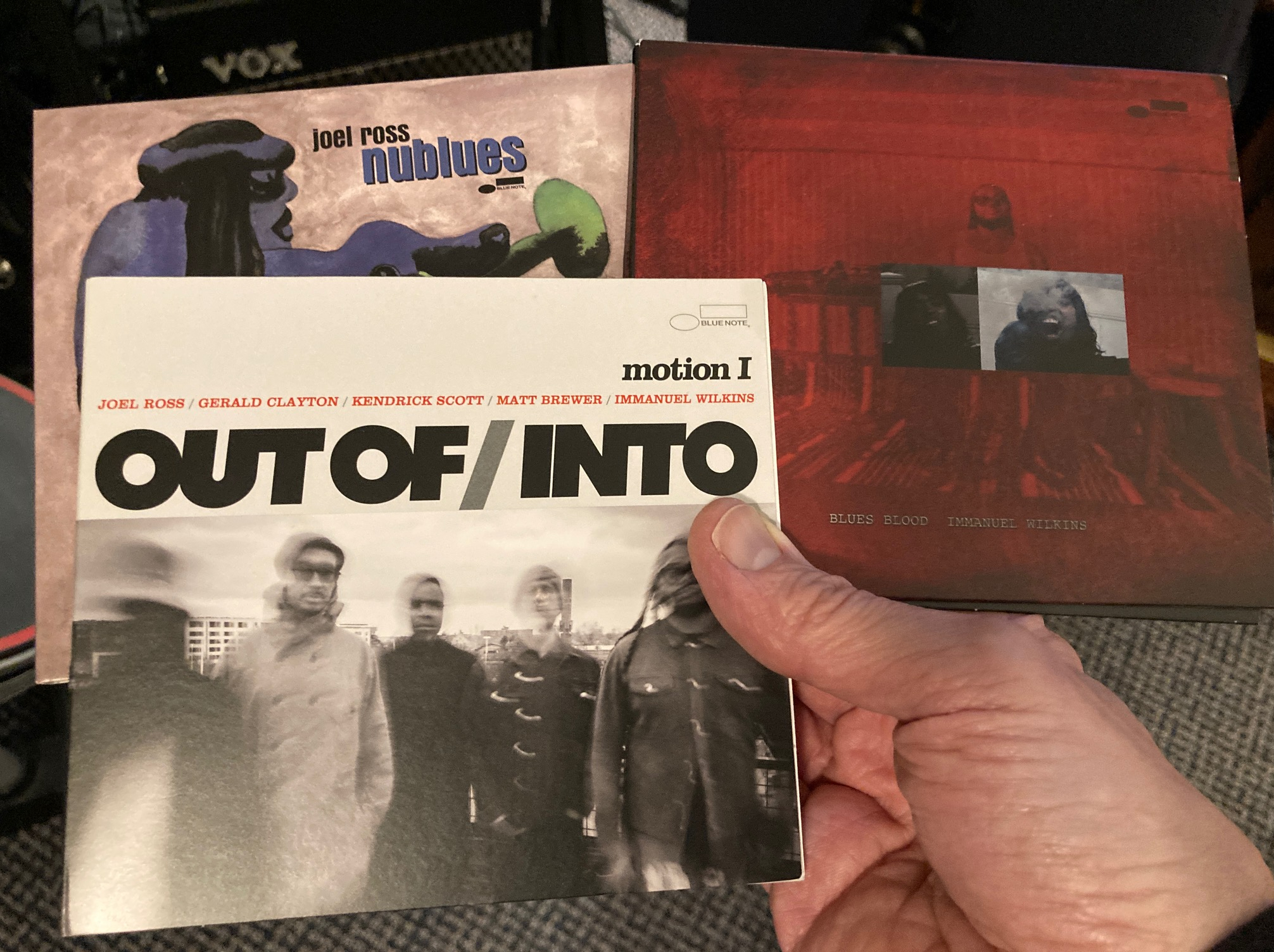
My first jazz highlight came early in 2024, when a quintet of post-Marsalis young lions — vibraphonist Joel Ross, pianist Gerald Clayton, drummer Kendrick Scott, bassist Matt Brewer and saxophonist Immanuel Wilkins — joined forces on a barnstorming tour celebrating the 85th anniversary of Blue Note Records. On the evidence of a short but compelling set played to a sold-out Grand Rapids crowd, the sky was the limit for what they might do together; fine solo albums from Ross (the abstract, delightfully contemplative nublues) and Wilkins (the pensive, seething quartet/guest vocalist suite Blues Blood) followed, but what I was really waiting for didn’t come until December. Released under the moniker Out Of/Into, the anniversary quintet’s first album Motion I slips any restraints: Brewer and Scott churn, throb and swoop while Clayton ruminates, Ross probes, and Wilkins squeezes out sparks! The upfront thrust of “Ofarii”, the slow, teasing reveal of “Aspiring to Normalcy” and the full-tilt closer “Synchrony” are just the highlights of this satisfying debut. I eagerly await more from these players, separately and together if possible, and I’m happy to have this.
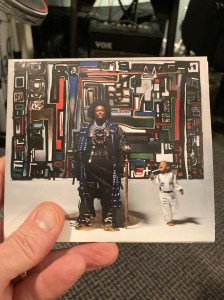
Then came Kamasi Washington’s long-awaited latest, Fearless Movement. Only a double album this time, saxophonist Washington and his West Coast confederates run the gamut from Orthodox chant through free music, r&b and tango to hip hop, blaxploitation soundtracks and more! There are slower burns ( “Asha the First”, “Together”) and looser jams, too (the Zapp cover “Computer Love” and the extended workout “Road to Self)”. Washington and his cast of dozens are still making audacious spiritual jazz, building from whispers to screams again and again while dancing across barlines like they don’t exist; but somehow this ambitious, imaginative set (an unquestioned Favorite) feels more like a spot to make a home than a monument to visit.
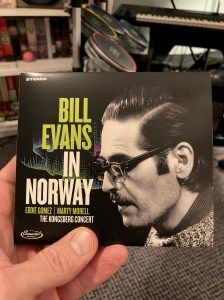
Year’s end brought the usual bevy of reissues and archival excavations. “Jazz Detective” Zev Feldman was busier than ever, responsible for 17 separate releases this year; overwhelmed by the the sheer volume available, I bailed out of keeping up – but I couldn’t resist Bill Evans, Live in Norway – The Kongsberg Concert. This latest Feldman collaboration with the storied pianist’s estate finds Evans in unusually upbeat form; at a 1970 summer festival date, his consummate lyricism is always on display, but even wistful ballads like “Autumn Leaves” and “Who Can I Turn To” are ramped up, unquestionably more energetic and animated, Matching Evans stride for stride, bassist Eddie Gomez and drummer Marty Morrell keep pace on this especially effective trio set.
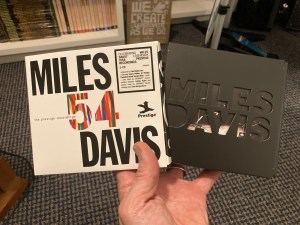
Two more reissues portray the legendary Miles Davis at vital turning points in his career. Miles ’54: The Prestige Recordings documents Davis’ year-long voyage from stalled-out journeyman to confident leader, collaborating with saxophone colossus Sonny Rollins (on Rollins originals “Oleo” and “Airegin”), pianists Horace Silver (the pivotal masterpiece “Walkin'”) and Thelonious Monk (“Swing Spring”, foreshadowing the timeless Kind of Blue), and vibraphonist Milt Jackson (the unmissable blues “Bags’ Groove”). Volume 8 of Columbia’s Bootleg Series, Miles in France, 1963 & 1964 catches Herbie Hancock, Ron Carter and Tony Williams on the way to becoming Miles’ Second Great Quintet, pushing Davis past chord changes into sheer velocity — and even loosening up hardcore bebopper George Coleman, When eternally lateral thinker Wayne Shorter replaces Coleman on saxophone for the final stretch of the set (two incandescent live gigs in Paris), all bets are off, and outer space beckons.
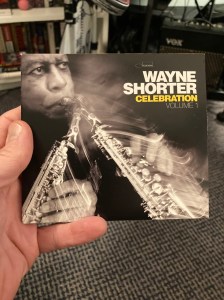
Which probably explains why, before his recent passing, Wayne Shorter titled the longest track on his posthumous album Celebration, Volume 1 “Zero Gravity to the 90th Dimension”! Working live at Stockholm in 2014, again and again Shorter, Danilo Perez on piano, John Patitucci on bass and Brian Blade on drums start from nothing, listen hard to each other, toss in whatever comes to mind — and wind up building a rocket ship to the outer limits of the idiom, brushstroke by brushstroke. (Yes, the mixed metaphor is intentional.) An improviser whose imagination refused confinement within forms and genres, Shorter was an indisputable jazz giant who took the music as far as it could go, while never abandoning its essentials. Speaking of essential, this has to be my Favorite jazz album of ’24.
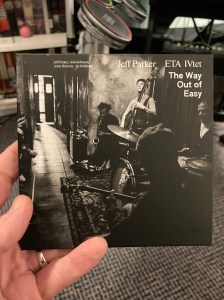
But wait — here’s one more to see out the year. Saxophonist Jeff Parker’s musical path has taken him from work with pioneer post-rockers Tortoise to an especially effective run of releases on jazz/hip-hop fusion label International Anthem. Recorded live at Los Angeles’ Enfield Tennis Academy, Parker’s new The Way Out of Easy is a total collaboration with what he’s called the ETA IVtet (Jeff Johnson on saxes and electronics, Anna Butterss on double bass, Jay Bellerose on drums). Elements of minimalism and electronica season the slow, yet insistent unfurling of this music; it’s sparse yet full of interest, low-key in its ambience yet oddly compelling. A different kind of cool jazz, this double album is chill in an utterly unique way, and well worth a listen as 2024 comes to a close.
— Rick Krueger


Excellent post! The “Out of/Into” album is one of my favorites of 2024, an exceptional album.
Re: Benedict Sheehan, whose work is fantastic: My sister studied with him at Tikhon and she and her husband now work there. She is composing various settings, etc.
LikeLike
Brilliant, Rick! Thank you so much for sharing this. Excellent stuff.
LikeLike
What a fantastic list, Rick! I will have to check out Akathist and the Wayne Shorter, at a minimum. Thanks for sharing your favorites!
LikeLike