Tag Archives: Immanuel Wilkins

Some Jazz Quick Takes

It’s a glorious Memorial Day afternoon – and, on this American holiday weekend, I’m looking back on five months of hearing and reflecting on America’s greatest musical invention. As always, there are plenty of worthwhile jazz albums (whether new or archival) easily in your reach; these are notable selections from what’s come to my attention so far this year. I’ve included listening links within album titles where available, along with a purchase link after my review where necessary.
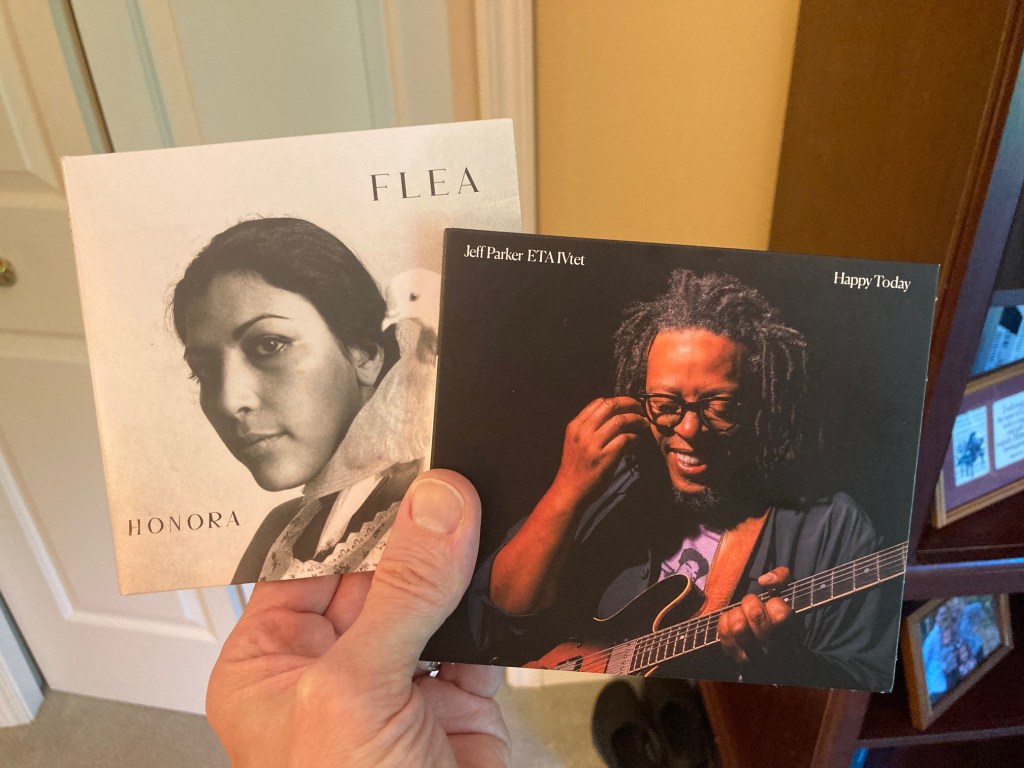
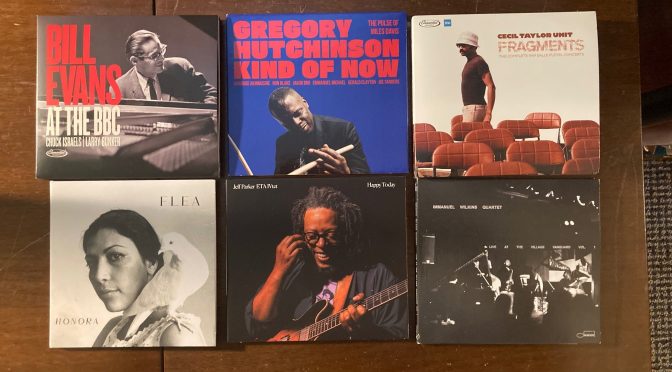
The album I’ve turned to the most (despite being released only this past month) is the Jeff Parker ETA IVTet’s Happy Today. Recorded live at a congenial Los Angeles haunt, guitarist Parker, saxophonist Jeff Johnson, bassist Anna Butterss and drummer Jay Bellerose conjure two generous portions of sheer music from silence. Guitar riffs circle and morph; sax lines are looped into shimmering chords and textures; hovering above capacious, confident rhythm work, all four players constantly listening and reacting, moving together through gradual builds and sudden tempo shifts. Whether weaving around each other’s contributions in a supple dance (“Like Swimming”) or ascending a rainbow of tone colors to a light, sweet shuffle (the title track), there’s no hurry, no contention – just a collaborative climb to lofty, inspired heights. It’s a measure of how rich this album is that every time I listen, I want to hear it again!

Parker, Johnson and Buttress also lay down understated foundations on Flea’s solo album Honora. The Red Hot Chili Peppers’ bassist returns to his heritage as a jazz trumpeter here, and while he’s boned up in recent years, he knows he’s running with thoroughbred players. Flea’s vocal features on the album’s noisier bookends “A Plea” and “Free as I Want to Be” push straight to hot emotional extremes, but his trumpet work is cool and controlled (reflecting the influence of Chet Baker); his original compositions combine understated tension with winning introspection; and his choices of cover tunes (Funkadelic to Glen Campbell to Franks Ocean & Sinatra) and guest vocalists (Thom Yorke backed by a horn section! Nick Cave singing “Wichita Lineman”!) are uniformly surprising and superb. Not what you might have expected, and all the better for it.
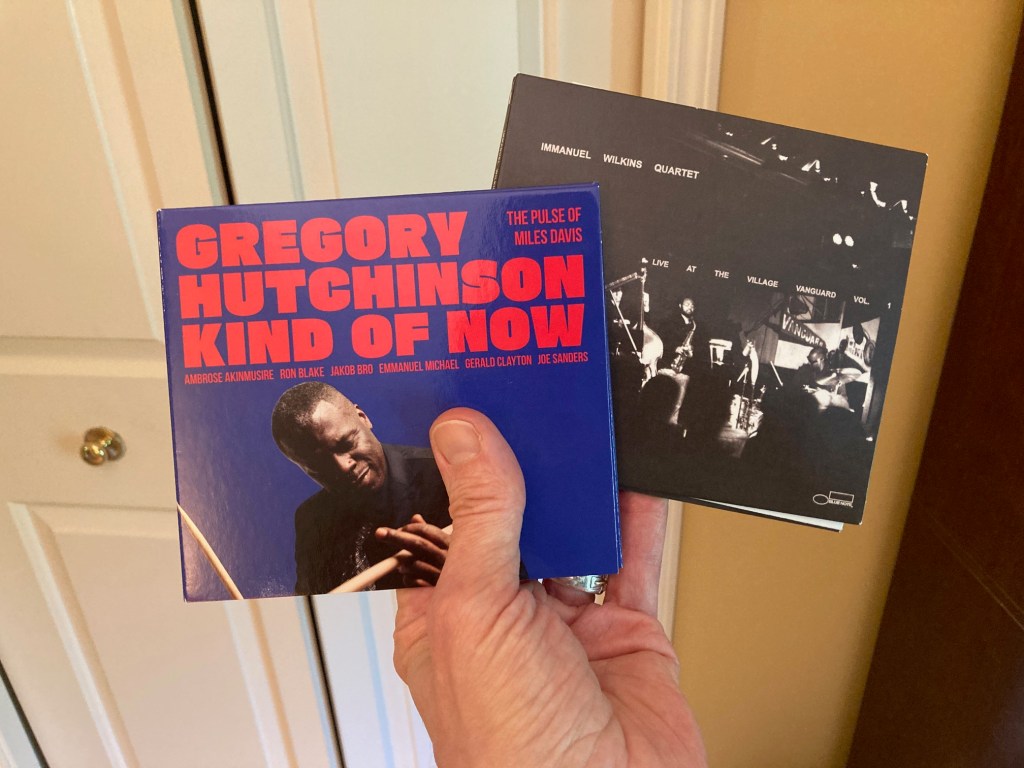
Four years ago, I thought Immanuel Wilkins might be part of jazz saxophone’s future; after hearing his quartet’s breathtaking Live at the Village Vanguard, Vol. 1, I’m convinced he’s now the present, in every sense of the term. Taking one of NYC’s most famous clubs by storm, Wilkins and his quartet (endlessly inventive pianist Micah Thomas, rock-solid bassist Ryoma Takenaga, masterful drummer Kweku Sumbury) are all in their 20s and 30s, but they’ve already lit out beyond previously explored territory to map their own exuberant course; through the modernistic postbop of “Warriors”, the Bachian interplay of “Composition XII”, the deep-rooted, ecstatic gospel of Alice Coltrane’s “Charnam” and the two-part “Eternal” (a time-bending workout that collapses into hypnotic sub-toned minimalism), there’s elegance and earthiness, mind and heart in constant dialogue. The applause after each track is unforced, the audience reacting to the Quartet’s potential unfolding into assured maturity before their ears. (Vol. 2 & Vol. 3 are equally fine, but only available via downloads or streaming. Buy Vol. 1 at Blue Note Records, — or lobby ’em for a complete box set!)

In case you hadn’t heard, Miles Davis’ centennial is this year – this week in fact. There are plenty of reissues already out and still to come, with tributes aplenty following in their wake. The best of the latter I’ve heard so far is Gregory Hutchinson’s Kind of Now: The Pulse of Miles Davis. Drummer Hutchinson’s style as a Young Lion has blossomed into a strong yet tempered sense of groove, thoroughly assimilating the work of the amazing drummers who backed up Davis; here, he leads an all-star group on a wild ride from early bebop (“Ah-Leu-Cha”) through cool school (“Fran Dance”, “Seven Steps to Heaven”) and a quartet of enigmatic Wayne Shorter tunes (including “Orbits” and “Water Babies”) to the pioneering days of jazz-rock fusion (“Bitches’ Brew” and “Circle in the Round”). Ambrose Akinmusere’s thick, liquid trumpet, Ron Blake’s consummately attentive sax work, and Gerald Clayton’s versatile, tasty piano delight throughout; it’s impossible to know what they’ll do at any given moment, but always satisfying in the aftermath. Around and through it all, there’s Hutchinson’s drive, color and sense of space. This is a thoughtful take on the breadth of Miles’ achievement that’s consistently focused and gracious, but marvelously abstract and unpredictable as well. (Buy the CD from Amazon.)
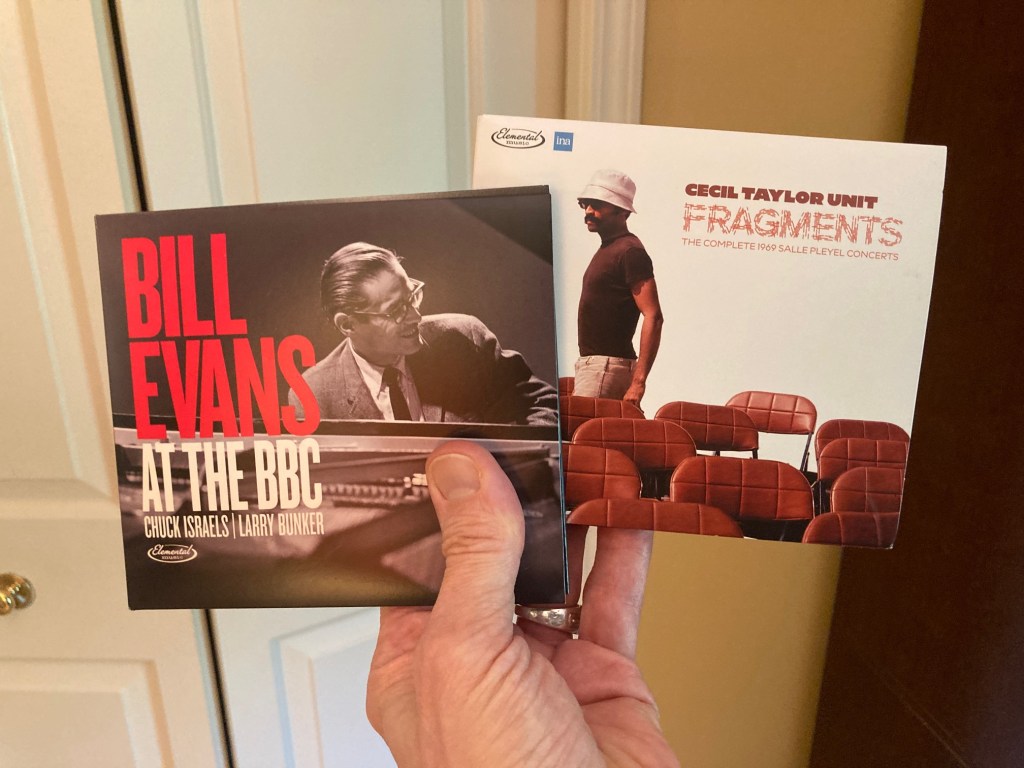
And as always, Record Store Day has brought a clutch of archival releases courtesy of jazz detective Zev Feldman. On Feldman’s 15th production of Bill Evans, At the BBC, the music is exquisite as always, despite severe sonic limitations inherent in the original 1960s television broadcast. Evans and his current trio with Chuck Israels and Larry Bunker shift moods on a dime, using dynamics as a key component in their mutual ebb and flow. Even when they take an uptempo tune like “Nardis” or turn “Waltz for Debby” into a 4/4 swinger, the rapt contemplation at the core of ballads like “My Foolish Heart” and “Who Can I Turn To?” are still winningly present. (Buy the CD from Amazon.)

Pursuing an idiom 180 degrees away from Evans, Cecil Taylor demanded the same level of attentive listening via radically different means – a sidelong take on the jazz piano tradition that reveled in fractured time and tonality, extended compositional statements and improvisations, a nigh-incessant, athletic tsunami of notes too fast to separate. On Fragments, recorded live at a French festival in 1969, Taylor prowls the keyboard like a roaring lion, endlessly pouring out riffs, chords, clusters; saxophonists Jimmy Lyons and Sam Rivers dialogue with and echo Taylor and each other, overblowing and piling up hyperspeed motifs at a frenetic pace; drummer Andrew Cyrille miraculously cooks up a flow in the absence of any downbeat – turning, shifting, reacting, leaping ahead. The two takes of Taylor’s “Fragments of a Dedication to Duke Ellington” are 50 and 90 minutes long, and you’ll feel like you’ve run a marathon after you’ve listened. This isn’t for the faint of heart or the squeamish, but trust me: Taylor’s pioneering free jazz will open up your ears and brain even as they wear them down and possibly out. (Buy the CD from Amazon.)

— Rick Krueger
A 2024 Coda: kruekutt’s Highlights in Classical & Jazz

To complement Brad, Tad & Carl’s fine “Best of” selections, herewith a sampler of favorites and notable releases from the year in both classical music and jazz. As often as I drift away from both genres, I return to them on a regular basis — and it happened again to fine effect in 2024! Listening links are included in the album titles.

Highlights in Classical Music

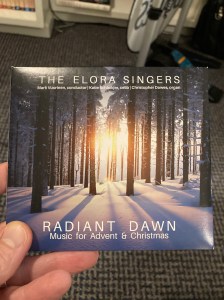
If you followed my series To the True North this past summer, you learned how impressed I was by Canada’s Elora Singers and their annual Festival. The Singers’ latest album In Beauty May I Walk was released in time for this year’s closing festival weekend; a collection of contemporary works drawing inspiration from the theme of revelation, it offers an absorbing balance of breathtaking precision and deeply felt emotion. Eriks Esenvalds “In Paradisum” and “Only in Sleep”, Jonathan Dove’s title piece and Stephanie Martin’s “A Frost Sequence” are highlights, but every composition (whether musing on nature, the search for God or time’s inevitable passage) draws in the listener and cuts to the heart. Never indulging in sentimentality, conductor Mark Vuorinen and the Singers nonetheless lay bare the human condition and affirm life’s inherent value; this is choral singing at its finest, and an official 2024 Favorite. (The Singers’ recent Christmas album Radiant Dawn is well worth hearing this time of year, too.)

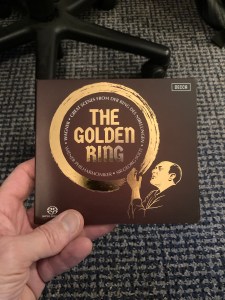
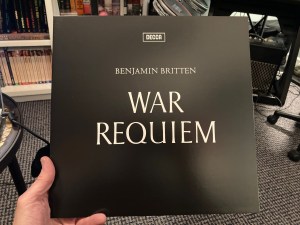
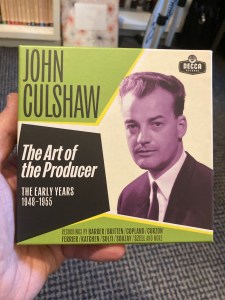
This year was the centennial of John Culshaw, who pioneered stereo recordings of opera and classical music as a producer for Decca Records in the decades following World War II. Unbeknownst to me, Decca had already completed new high-definition transfers of two Culshaw classics: the first complete set of Richard Wagner’s marathon operatic cycle The Ring of the Nibelungs (with the Vienna Philharmonic plus a bevy of postwar vocal talent, conducted by a young Georg Solti; consistently considered one of the recording industry’s greatest achievements); and the recorded premiere of Benjamin Britten’s War Requiem (the composer’s shattering anti-war masterwork, this album changed my life) — longtime Favorites which I snapped up new versions of straightaway. Now the actual centenary sees the release of John Culshaw, The Art of the Producer – The Early Years, 1948-1955. The first impression of this 12-disc set, recorded entirely in mono, is how fresh and vivid everything sounds; whether working live or in controlled conditions, Culshaw’s keen ear and finely honed production skills place you in the room with the performers. Wagner operas staged live at Bayreuth, Britten performing at his own Aldeburgh Festival and Samuel Barber conducting his music in the studio stand out, but even an underprepared Brahms German Requiem (with Solti squeezing the best he can out of overmatched forces) has its charms. Beyond sheer documentary value, this set demonstrates how essential Culshaw’s sonic discernment, organizational skills and empathetic rapport with artists was in developing the lifelike recorded sound we take for granted today.

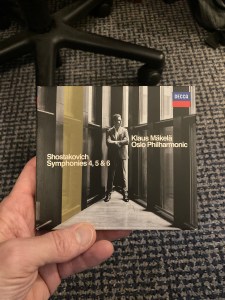
Even as it’s been swallowed up by one multinational conglomerate after another over the decades, Decca has maintained its commitment to both vivid, dynamic sound and talented artists in development. The latest case in point: the youthful Finnish conductor Klaus Mäkelä, who’s quickly made waves in the orchestral world with fully grounded yet remarkably fresh readings of 20th-century classics, from Jean Sibelius’ organically evolving symphonies to Igor Stravinsky’s kaleidoscopic early ballets. At the helm of the Oslo Philharmonic for Symphonies 4, 5 & 6 by quintessential Russian modernist Dmitri Shostakovich, Mäkelä reaches new heights: the 4th’s macabre, Mahlerian grotesquerie (suppressed for a quarter-century due to Soviet disapproval) and the 6th’s journey from ethereal beauty to dry, exhausted humor unfold relentlessly, while a less- pressurized-than-usual 5th revels in cool control that builds to an appropriately tumultuous climax, all captured for maximum impact. Recently headhunted to lead both Amsterdam’s Concertgebouw Orchestra and the Chicago Symphony (where I’ll be seeing him conduct next spring), Mäkelä is a classical superstar in the making, and this double set (definitely on the Favorites list) shows both his already prodigious skills and his rich potential.

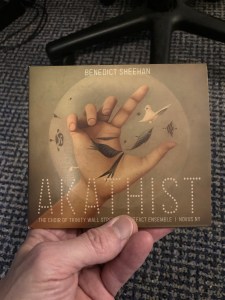
Finally, toward year’s end I stumbled across a wonderfully eclectic oratorio, Benedict Sheehan’s Akathist. Setting a lengthly Russian Orthodox prayer that literally thanks God for everything, Sheehan’s musical approach is anything but predictable: chant from both Western and Easter traditions rubs elbows with Baroque polyphony, Romantic impressionism, Gospel and jazz. And yet, the broad, inevitable arch of the piece readily encompasses the multiplicity of text and texture, gathering up protest against the wounds of the world, cameraderie as comfort amidst pain, and overwhelming gratitude for blessings great and small into a moving, integrated whole. The assembled forces of The Choir of Trinity Wall Street, Artefact Ensemble and Novus NY pull off this music with style and panache to spare. Not just a Favorite; if there’s an essential classical recording for 2024, I’d argue this is it.

(Highlights in jazz follow the jump . . .)

Continue reading A 2024 Coda: kruekutt’s Highlights in Classical & Jazz

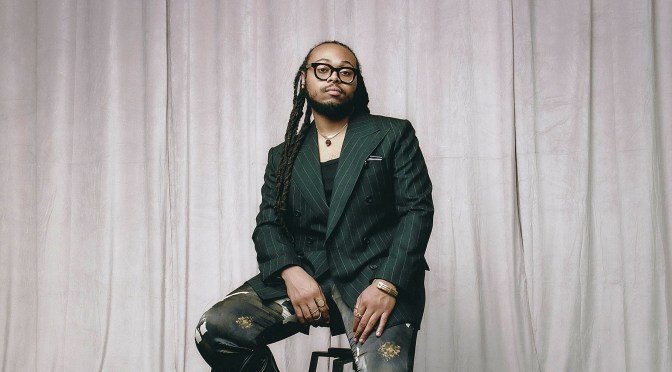
In Praise of Immanuel Wilkins

Where are the great jazz saxophonists today?

The last of the giants of the 1950s and 1960s, Sonny Rollins and Wayne Shorter, have retired from live performance (though Shorter’s operatic collaboration with bassist Esperanza Spalding, Iphigenia, is just completing its debut run). The Young Lions who made their impact in the 1980s and 1980s — Branford Marsalis, Kenny Garrett, Donald Harrison, Joe Lovano and Greg Osby among them — continue to gig and record honorably, though without the boost they received from the recording industry before its post-Napster collapse. The flame kindled by Kamasi Washington’s ambitious remounting of 1970s spiritual jazz — two triple-disc sets, 2015’s The Epic and 2018’s Heaven and Earth — seems to have sputtered in the face of mass market fame, giving way to lower profile collaborations and soundtracks.

Who might carry that torch into 2022 ? I give you Immanuel Wilkins.

I gave Wilkins’ 2020 debut for Blue Note, Omega, a cursory listen when it came out, but missed the depths on display back then. Returning to it recently, I was belatedly blown away. Steeped in the music of the black church, Wilkins’ compositions offer a fresh take on spiritual jazz, leaner and more abstract; like Thelonious Monk’s best work, there’s an interior focus to his taut, angular writing. That interior emotion is unleashed via his playing; having thoroughly assimilated Ornette Coleman and John Coltrane’s vocabularies, Wilkins sends his solos spinning in freshly oblique directions. And he’s aided and abetted by his kinetic quartet (Micah Thomas on piano, Daryl Johns on bass and Kweku Sumbry on drums) who skitter as much as they swing, astonishingly flexible and in sync with their leader, whether at their knottiest or their most romantic.

The ambition of those compositions is noteworthy as well, though not surprising if you factor in Wilkins’ mentoring by both traditionalist par excellence Wynton Marsalis and cutting-edge postmodern pianist Jason Moran. Omega’s tunes run the gamut from the painful grief of “Ferguson: An American Tradition” through the fluid lyricism of “Grace and Mercy” to the dense, richly varied ideas of a four part suite composed during Wilkins’ time at the Julliard School of Music (“The Key”, “Saudade”, “Eulogy” and “Guarded Heart”). The absolute opposite of a blowing session, Omega laid down Wilkins’ impressive jazz credentials as a writer and a player — but also could have been an extremely hard act to follow.

To my delight, Wilkins’ new album, The 7th Hand, ups the ante! First, a six-part suite bookended by seething post-bop probes and modal riffing (“Emanation” and “Lighthouse”) that explores the polyrhythms of African percussion (“Don’t Break”), gospel music (“Fugitive Ritual, Selah”), the blues (“Shadow”) and folk hymnody (“Witness”). Then “Lift”, a half-hour of committed free exploration that broods, then snaps awake and howls in catharsis before it flutters to a soft, delicate landing. The concept behind it all: does the Holy Spirit have a role in what Wilkins, his quartet and his guests (the Farafina Kan Percussion Ensemble and flutist Elena PInderhughes) are creating in the moment? Given the consistent inspiration laid down here, I wouldn’t bet against it.

As always, your mileage may vary. But if you have any interest in the present and future of jazz saxophone, I strongly suggest you check out Immanuel Wilkins for yourself. Learn more about his Blue Note releases here.

— Rick Krueger