Please forgive the brevity of this review. Maybe we could call it a micro-review. I’ve been a huge Tim Bowness fan ever since first encountering him through his extraordinary work in No-Man. Indeed, it was about 23 years ago that I first encountered him, finding him because of his association with Steven Wilson. Again, I’ve been a huge fan ever since. If anyone inherited the mantle of Mark Hollis, it’s either Tim Bowness or Kevin McCormick. Everything Bowness touches is just achingly beautiful. Gifted with a very handsome voice, he brings a certain longing to all his vocals. I should also note, like Hollis (Bowness has a better voice than Hollis, but I will never fault Hollis for that—he gave everything he had), Bowness understands the sheer importance of meaningful lyrics to music. Writing all of this right now, reminds me that I would love to write a long article on the many excellences of Tim Bowness. He deserves so much more than this micro-review. Sadly (or brilliantly actually), I’m in between big writing projects on the Declaration of Independence as well as on sociologist Robert Nisbet and on writer Ray Bradbury. That stated, my afternoon sound track has been Bowness’ s first album, My Hotel Year, originally released in 2004. I was surprised to find Bowness’s own negative recollection and assessment of the album on his personal website. “Along with Wild Opera, My Hotel Year is the least loved album I’ve ever made and, in some ways, it’s the album of mine I love least as well,” Bowness confesses. “Although 2003-2004 wasn’t a particularly bad time for me, the resulting album seemed lyrically sad and musically monochromatic. No matter what was done to sonically soften the blows, the album had an innate bleakness that seemed to dictate itself.” There’s no doubt that the album is lyrically sad, but it’s incredibly and movingly authentic. And, I would never call the music monochromatic. Rather, I would say that the music is presented in a rather cohesive fashion. That is, it’s an album rather than a collection of eleven songs. Every song bleeds into every other song, regardless of the silence between thetracks. While I like Bowness’s other albums better, I would encourage anyone and everyone to go back to this foundational album, My Hotel Year. For what it’s worth, I think it’s glorious, and it certainly inspired my other writing this afternoon. For that, I’m deeply grateful.
To order My Hotel Year, always buy from my favorite on-line retailer, The Burning Shed.
Greetings, Spirit of Cecilia readers! Brad Birzer and Tad Wert recently exchanged DMs about their favorite Simple Minds albums, and both agreed that is something worth discussing in greater detail. So, here is our conversation regarding a group both men love, including input from their friends Ivan Pongracic and Kevin McCormick!
Tad: Brad! I’ve known for years that you are a big Simple Minds fan, and you even recently saw them live. I am very envious! As we shared our thoughts on our favorite Simple Minds albums, there was some disagreement: you tend to appreciate their earlier work, whereas I gravitate to their later albums (but I have a surprise that I’ll share later). However, I think we both can agree that Jim Kerr and Charlie Burchill are two of the most talented artists to emerge from the decade of the ‘80s. I think Kerr is one of the finest vocalists ever, and Burchill is an outstanding guitarist who hasn’t always gotten his due.
Brad: Tad! So wonderful, as always, to be talking with you, especially about beautiful things. Yes, I love the band, and I’ve gone through periods of life when I was totally obsessed with them, much like my obsessions with Tears for Fears, Rush, Talk Talk, and Big Big Train.
Crazily, though, my coming to Simple Minds was a bit late. As much as I was into prog and new wave, I’d not heard of the band until I saw the 1985 movie, “The Breakfast Club.” I absolutely loved that movie (and still do), and it’s what introduced me to the band. I was so taken with “Don’t You Forget About Me” that I went back and bought several of their earlier albums. At the time, I had no idea that the band hadn’t even written “Don’t You Forget About Me,” or even liked it. In fact, as I know now, one of the main reasons that Kerr sings “la, la, la, la” is because he hated the lyrics. Since, I think the band has embraced the song. But, that’s another story.
By late 1986 or so, I would own everything the band had done–even their very early post-punk electronica. I treasure those albums, especially Life in a Day through Street Fighting Years. I also knew and liked very much Real Life, Good News from the Next World, and Cry. I’m only recently, though (and I’m embarrassed by this, as I should’ve been supporting the band all along) really discovering their more recent stuff. I have, for example, always kept up with The Cure, through all their albums and iterations. I’m not sure why I neglected Simple Minds. My loss.
Most importantly, for me, are Jim Kerr’s lyrics. I thought they were some of the most beautiful lyrics I had ever encountered, the stuff of poetry. I also loved the guitar work of Charlie Burchell, the keyboard work of Michael MacNeill, and the bass work of Derek Forbes. To me, these four were Simple Minds. That said, I was incredibly impressed–actually quite blown away–by the most recent incarnation of the band, still centered around Kerr and Burchill. Their new drummer is especially amazing.
I also have to say this and throw down the gauntlet for a moment. I think that the band produced three perfect albums in a row–Sons and Fascination/Sister Feelings Call, New Gold Dream, and Sparkle in the Rain. Few bands have accomplished such a feat. Peter Gabriel-era Genesis did, Rush did, Talk Talk did, and Big Big Train did. Yes never did. ELP didn’t. So, it’s an amazing accomplishment.
As I write this, we’re on a family vacation, and I was very proud and elated to play New Gold Dream and Sparkle in the Rain back to back, with my family singing along in the car.
As a thought experiment (I seem to need to do this once a year), I laid out my all-time top twenty-one albums. Here they are. Please note, I only chose one album per band, otherwise a few bands would totally dominate:
1. Talk Talk, The Colour of Spring
2. Big Big Train, The Underfall Yard
3. Rush, Grace Under Pressure
4. Steven Wilson, Hand.Cannot.Erase
5. Kevin McCormick, Squall
6. The Cure, Disintegration
7. Genesis, Selling England by the Pound
8. Tears for Fears, Songs from the Big Chair
9. Yes, Drama
10. Simple Minds, New Gold Dream
11. Marillion, Afraid of Sunlight
12. Kate Bush, Hounds of Love
13. The Flower Kings, Space Revolver
14. Traffic, John Barleycorn
15. Echo and the Bunnymen, Heaven Up Here
16. Gazpacho, Night
17. Porcupine Tree, Fear of a Blank Planet
18. Kansas, Point of No Return
19. XTC, Skylarking
20. Radiohead, Kid A
21. Ultravox, Rage in Eden
So, you can see, Simple Minds holds a very high place.
Tad: Brad, as always, I enjoy hearing about how a particular group came into your life. I think the first time I was aware of Simple Minds was when I heard the title track to New Gold Dream. It was in heavy rotation on my college radio station (of which I was a DJ!). I loved the slow burn it set up, inexorably building up to a huge ending.
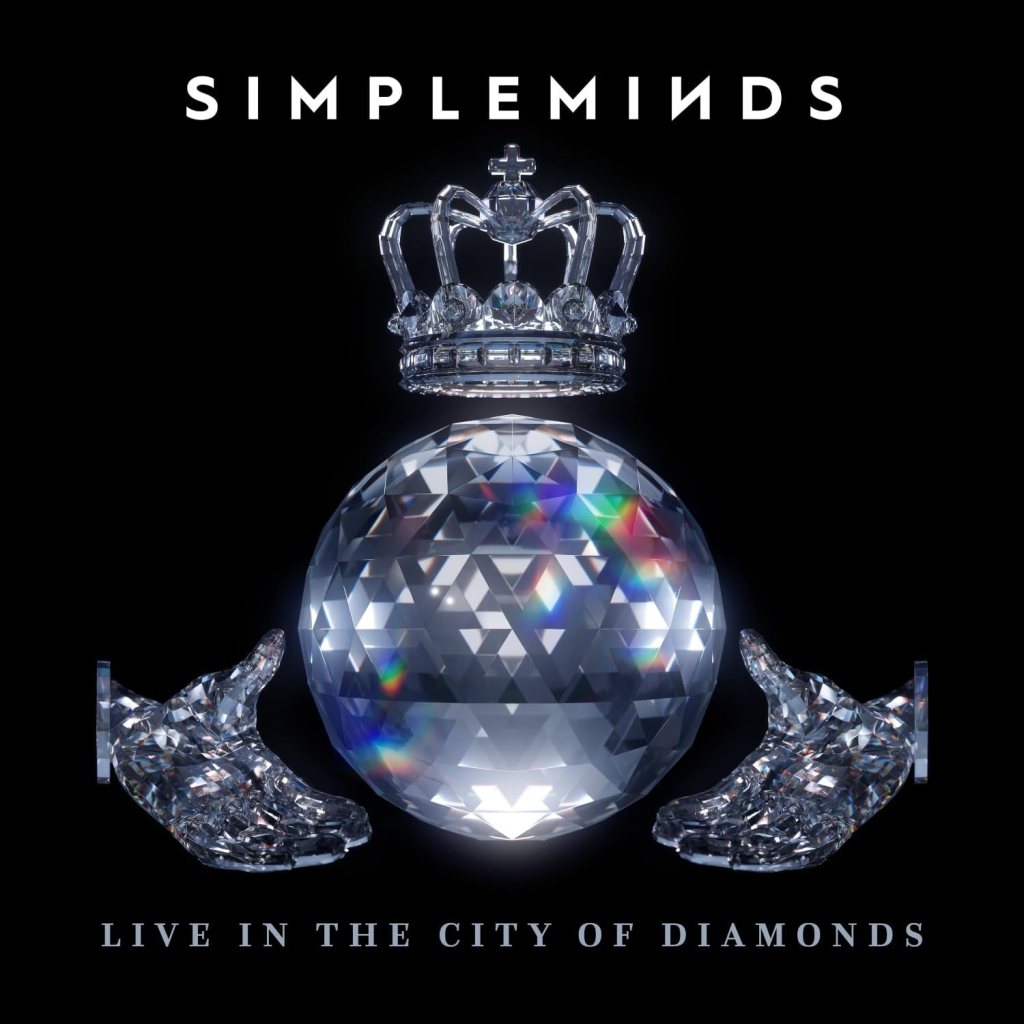
Sparkle In The Rain slipped under my radar, even though I was familiar with “Promised You A Miracle”. What made me a big fan was Once Upon A Time, which came out in 1985 – a year I consider the greatest ever for popular music (and I can’t believe it was 40 years ago!). With that album, they embraced their anthemic promise and outdid the “biggest band in the world”, U2. The following live album, Live In The City Of Light, sealed the deal for me, and I still think the version of “Book Of Brilliant Things” on that album is the definitive one.
Okay! Let’s compare notes on what sparked this conversation to begin with – our top five Simple Minds albums. Here is my list:
Good News From The Next World (1995)
Once Upon A Time (1985)
New Gold Dream (1982)
Black And White (2005)
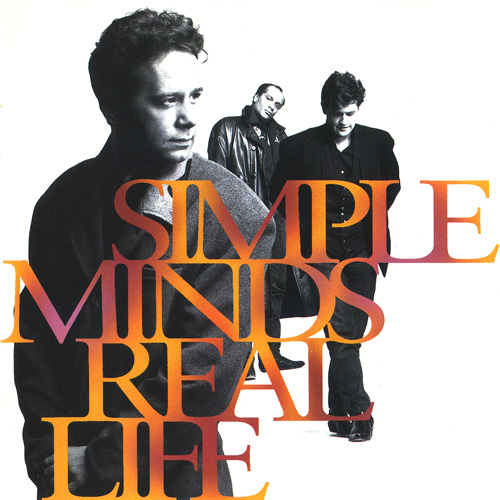
Real Life (1991)
I’ll start with why Real Life is on my list. It’s one of their most synth/keyboard-driven works, and the drums have that huge ‘80s production sound, and I love it! Also, “See The Lights” is one of the most comforting songs ever. Every time I hear it, I feel good. I can’t explain it any other way. I think every single song is perfect, and there is not a wasted note. “Ghostrider” is incredibly energetic with a great guitar hook from Charlie. But towards the end of the album, things get very special for me. I used to program my CD player to play “Real Life”, “Banging On The Door”, “Rivers Of Ice”, and “When Two Worlds Collide” in sequence, because they all featured the same descending three-note motif that stuck in my ear. Some people may have thought Simple Minds were getting lazy and using the same riff for several songs, but I thought it was the most brilliant thing I’d heard in years. It made the whole album a cohesive and consistent whole that I still love.
Black And White is one of their later albums, relatively speaking, and it is another favorite, because it’s very restrained. The songs’ melodies are all good, but somewhat subdued. At this point in their career, I figure they didn’t give a flip what the market wanted and made the music they wanted to make. Once again, every single song is a keeper. Kerr’s vocals on the opening track, “Stay Visible” are simply amazing – from a whisper to a bellow. “Home” is a very funky and fun track. “Stranger” is my favorite one, though, featuring an incredibly catchy guitar riff and vocals that send shivers down my spine when the female vocalist joins in with Kerr to sing “Sha la la la…” and then Burchill takes over with an atmospheric guitar solo.
“Different World (Taormina.me)” is another incredibly catchy song with a terrific bed of synths that drive it along. “The Jeweller Part 2” continues the winning streak with more excellent guitar work from Burchill. Mel Gaynor’s drumming is amazing on this track. The album closes with an ambient track, “Dolphins”, that is unlike anything else in their discography, and I love it. It sounds like Simple Minds if Brian Eno had produced them, but with their unique sound.
I’ll stop for now, and let you expound on the greatness of New Gold Dream, since that’s the one overlap on our two lists.
Brad: Wow, Tad, I really appreciate and love what you wrote. 1985 was a great year for music–I agree, especially because of Hounds of Love and Songs from the Big Chair. And, frankly, I’m jealous you got three more years with New Gold Dream than I did! Happy for you, too.
Let me begin this second part of our conversation noting that my brain is a bit fuzzy at the moment. We just got back from an 11-day trip through Nebraska, Kansas, and Colorado. I’m used to big skies and low humidity and all the time in the world with my family.
On an important sidenote, I spent much of our vacation with Simple Minds as our soundtrack, and I was able to listen to several of the newer Simple Minds albums.
But, for the moment, I’ll focus on New Gold Dream. Tad, for me, New Gold Dream is flawless. It is truly the quintessential New Wave album, perfectly arriving in 1982 and defining so much of that decade for me–again, though, admitting that I didn’t come to it until 1985. The doors that The Breakfast Club opened up for me! And, yet, the album is so much more than a New Wave masterpiece. Frankly, it’s a rock masterpiece that just also happens to be a New Wave masterpiece. Everything about the album–the lyrics (especially), the music, the flow, the production, the album art. Everything is perfectly in its right place.
I used to especially love playing this album while driving out into the Kansas countryside, sitting atop a hill, looking across the vast landscape of wheatfields and watching the heat lightning. The music just beautifully fit such moments. I also loved playing the album for friends; I was quite the evangelist for it.
The opening track, “Someone, Somewhere, in Summertime,” defines the album. And, the lyrics are simply the best. Kerr (I’m assuming he wrote the lyrics) knows how to create such gorgeous poetic images.
These lyrics just make me want to be on a romantic date, especially when matched with the slow burn of the music.
Indeed, all of side one of New Gold Dream is excellent. After Someone, we get “Catherine Wheel and Colours Fly,” with its incredible bassline and waterfall-like keyboards.
Next comes “Promised You a Miracle,” probably the most famous song from the album.
Oh, Jim, just what are those golden days that break wondering?
Side one continues with the mysterious Big Sleep, again so excellently defined by its bass line and keyboards.
And, then, the ultimate end of side one: the instrumental, “Someone Up There Likes You.” Let’s hope this is true! Though devoid of lyrics, the music itself becomes a tone poem, filling the listener with image after image.
Side two begins with the rousing “New Gold Dream,” the title track.
New gold dream
She is the one in front of me, the siren and the ecstasy
New gold dream
Crashing beats and fantasy, setting sun in front of me
New gold dream
And the world goes hot
And the cities take
And the beat goes crashing
All along the way
She is your friend until the ocean breaks
And when you dream, dream in the dream with me
Just who is Jim talking about? I so desperately want to meet her!
The beauty continues with the second track of side two, “Glittering Prize,” a song quite like all the tracks of side one–evoking passion and memory.
The penultimate track, “Hunter and the Hunted,” again evokes mystery. Just what is going on here?
Shooting from the hip
About our faith and love
I see it in your faces thin as shadow
See me as I figure in your late night plan
See me as I’m cocooned up in Badland
The side effects of cruising at the speed of life
The side effects of living in temptation
When only one star is waiting up on all of us
You’ll see me as I’m cocooned up in Badlands
And how do I feel living in the eighties
And do I get to see the light of day
Then, we find ourselves in Kyoto!
The final track, “King is White and In a Crowd,” continues the mystery. We’re about as far from pop as possible with this final song. Once again, the song is dominated by the bass and the keyboards.
Shot from where the action is, a rhapsody in black and blue
She puts on the film of him, King is white and in the crowd
Love lies under western eyes, powerful yet transient
She puts on the film of him, King is white and in the crowd
Again, it all fits so perfectly. A glorious album.
Tad, what are your thoughts on New Gold Dream? As we’ve both said before, the bassist makes a prog band. I think in New Wave, it’s the bassist and the keyboardist, both of whom are outstanding in Simple Minds.
Tad: Brad, thank you for your in-depth and heartfelt appreciation of New Gold Dream. It is number three on my list of all-time favorite Simple Mind albums, because it, like it does for you, captures a special time in my life. I agree that it is a perfect encapsulation of what British New Wave music was in the early ‘80s.
I absolutely love the bass on “Colours Fly and Catherine Wheel” – it carries the song, in my opinion. Perversely, “Promised You a Miracle”is my least favorite song on the album. While the melodic hook is undeniable, Kerr’s vocals sound a little too histrionic – like he’s trying too hard. That’s just my opinion, though.
I adore “Somebody Up There Likes You”. It sounds experimental and accessible at the same time, with a wonderful melody. As many times as I’ve listened to it, I never tire of it. The title track is my favorite – it is relentless in its drive! Burchill’s guitar licks, while they are way down in the mix, are perfect as they complement Kerr’s vocals.
I agree that “King Is White and In the Crowd” is certainly not pop, in any sense of the word, yet is is a fitting way to close the album. When you think about it, New Gold Dream is a transitional album between their more challenging, post-punk albums and their full embrace of radio-friendly music on Sparkle In The Rain. Which reminds that I said I had a surprise to spring on you: if I had to list six favorites, Reel To Real Cacophony would be number six. It’s completely unlike any other album in their discography with its bleeps and blurps and postpunk deadpan vocals, but there is something about it that I find very compelling.
Anyway, back to my list! My second favorite album, Once Upon A Time, is probably their most popular album, and it’s the one where they grabbed the golden ring and became arena rock stars. Everything about this album is big. The opening title track’s ringing keyboards and lush bed of synthesizers kicks things off in a grand way, and the energy never lags through the other seven songs. They had just scored a monster hit with “Don’t You Forget About Me”, which, unfortunately, they didn’t write, but it served as a fine template for this album.
Take “Ghost Dancing”. Finally, Burchill’s guitar are front and center in the mix and Kerr is singing with his usual passion,
Cities buildings falling down Satellites come crashing down
I seem to remember there was a news story of Skylab or some Soviet space junk falling to earth around the time this album came out. When the keyboards take over the tune at 1:35, it is a thrilling moment!
“Alive and Kicking” was the followup single to “Don’t You Forget About Me”, and it did very well. It’s another slow burning song that steadily builds to an incredible climax. I love their use of female vocalists in this song (and on the other tracks as well).
“Sanctify Yourself” sounds like something out of a frenzied revival meeting, and I mean that in a good way. It always carries me away whenever I hear it. “Come a Long Way” is a fantastic closer, and another showcase for Burchill’s tasteful guitar fills.
I’ll wrap up my thoughts on Simple Minds by explaining why I think Good News From The Next World is the best Simple Minds album. First, the title announces the theme and atmosphere of the entire project: this is hopeful music that embraces the listener with warmth and love. The production is huge – this is an album meant to be played loud! There are layers and layers of instrumentation – in “She’s a River” there is electric guitar, synths, keyboards, acoustic guitar, and pulsing bass, not to mention gospel-tinged backup vocals. Kerr sings like he can barely keep his balance on top of all this glorious noise.
Unbelievably, “Night Music” is even more energetic, with a faster beat and furious guitar work from Burchill. He slashes and burns his way through it from beginning to end. “Hypnotised” is a bit of welcome relief, as the band is a little more subdued in its delivery of a slinky and seductive melody. But with “Great Leap Forward”, the energy is turned up to 11 again as they lock into an irresistibly funky groove. I used to go for runs in my neighborhood listening to this album, and when “Great Leap Forward” came blasting into my ears, I would immediately pick up my pace!
Every single song on Good News From The Next World is top notch, and Simple Minds performs them like their lives depended on it. I’ll close with a quick plug for the closing track, “This Time” which features an insistent piano riff and some start/stop vocals from Kerr and his backup soul singers. Kerr works himself into a passion as he sings,
People go to war to get it This time The devil called…better forget it Never gonna say that’s wrong Cause all I know I can’t be wrong Never go to bed without it This time
Then he hands it off to Charlie, who responds with a beautiful guitar solo. A perfect way to end a perfect album.
I don’t think Simple Minds ever recorded a set of songs that sustained such energy ever again. I don’t know how well the album sold, but I know it wasn’t a huge hit. Maybe it went against the grain of mid-90s popular music. It’s a shame more people aren’t familiar with it. Thirty years later, I still listen to it and I still get thrilled by it.
Brad: What a great analysis. I could feel your passion in your words. So very much appreciated.
If I had to list my favorite SM studio albums, I would say this:
New Gold Dream
Sparkle in the Rain
Sister Feelings Call/Sons and Fascination
Street Fighting Years
Once Upon a Time
Again, though, I have to make the caveat that I’m just not as familiar with the post-1980s releases as I really should be. So, in a year–after I’ve really digested Real Life through Direction of the Heart–I might have a totally different view on my rankings.
Above, I wrote quite a bit about my love for New Gold Dream. I’d also like to write about my love for Sparkle in the Rain, though not in as much detail. As I mentioned above, I think the band produced three perfect albums in a row, an incredible feat. Sparkle in the Rain is certainly one of those perfect albums. From the opening of “Up On a Catwalk” to the final note of “Shake Off the Ghosts,” everything just works on this album. It’s no longer New Wave, but something deeply rock in the style of U2, but more clever. As much as I love the guitar work on this album, it’s really the bass, the keyboards, and Kerr’s voice that defines Sparkle in the Rain.
Once again, Kerr’s lyrics are simply spectacular. Consider “Book of Brilliant Things”
Thank you for the voice, the eyes and the memories shine
Thank you for the pictures of living in the beautiful black and the white
Some say we’ll be together for a very long time
Some say that our first impressions never will lie
I open up to take a look into the bright and shiny book
Into the open scheme of things
Book of brilliant things
Book of brilliant things
I open up to take a look into the bright and shiny book;
Into the open scheme of things
Book of brilliant things
Oh, book of brilliant things
I thank you for the shadows
It takes two or three to make company
I thank you for the lightning that shoots up and sparkles in the rain
Some say this could be the great divide
Some day some of them say that our hearts will beat
Like the wheels of the fast train, all around the world
I open up to take a look into the bright and shiny book
Into the open scheme of things
Book of brilliant things
Book of brilliant things
Some say we can be together for a very long time
Some say our hearts will beat like the wheels of a fast train
All around the world
All around the world
All around the world
Some say our hearts beat like the wheels of a fast train
All around the world
All around, all around, around, around
All around the world
Our hearts beat like the wheels of a fast train
A very long time
All around and all around and all around and all around the world
Some say we’ll be together
Some say
A very long time, some of them will say
A very long time all around the world
The humility of this song is just amazing.
Or, “East at Easter”:
We go walking, hand in hand
All across the land it’s East At Easter
People walking hand in hand
When ships are moving south it will be East at Easter
We will rock you, rock you little child
We will rock you, rock you little child
All across the land it’s East At Easter
All across the land it’s East At Easter
Things will lighten up the sky, East At Easter
Things will lighten up the sky, East At Easter
We’ll go walking hand in hand
‘Cause all across the land it will be East At Easter
Ah, we will rock you, rock you little child
We will rock you, rock you little child
All across the land it’s East At Easter
When ships go moving south it will be East At Easter
They’re gonna lighten up the sky
They’re gonna lighten up the sky
They’re gonna lighten up the sky
East At Easter
Ah, we’ll go walking hand in hand
We’ll go walking hand in hand, yes
We will rock you, rock you little child
We will rock you, rock you
Rock you little child
They’re gonna lighten up the sky
When they lighten up the sky it will be East At Easter
We will rock you, rock you, rock you
Again, the humility of the lyrics is so fetching. Kerr was really at his best. They expertly mesh with the intensity of the music.
Admittedly, my least favorite song is the cover of “Street Hassle.” Lyrically, it doesn’t fit quite right with the album, and it’s because of this that I would rank this album slightly below New Gold Dream.
But, on a positive note, I think the last three songs of the album just simply rock. “‘C’ Moon Cry Like a Baby” and the “Kick Inside Of Me” are blistering, and the instrumental “Shake Off the Ghosts”–the song that sounds most like something from New Gold Dream–beautifully ties the album together and it’s so cinematic, it feels like I can see the credits rolling as the song plays.
Ivan: I discovered Simple Minds in ’84, right around the time my family moved from Yugoslavia to the US. I had a couple of pretty hip friends back in the old country who were heavily into U2, Big Country, and Simple Minds, the new wave of guitar bands that today are sometimes grouped under the category of “The Big Music”, sparking my curiosity about them. The whole synth-pop thing came out of the UK in the early ‘80s, Depeche Mode, Yazoo, Human League, Eurythmics, New Order, OMD, etc., introducing a variety of new sounds into the world of music. My perception was that these new guitar bands were determined to do the same while primarily relying on guitars, which were increasingly dismissed at that time as being the sound of the tired and irrelevant ‘70s rock music. The new guitar bands rejected the notion that guitars could only be used in those old ways and set out to do something innovative and groundbreaking, to make them sound new, fresh, and exciting. Being a budding guitarist, I found all this intriguing.
I got the Simple Minds’ “Sparkle in the Rain” album not too long after its release in February of ’84 (my family arrived in the US only two weeks after the album’s release). I was very much a teenage metalhead at the time. That was my primary interest in music, especially since there were so many remarkable guitar developments in the world of metal in the first half of the ‘80s. Despite that, I was still able to grow an appreciation and love for U2, Simple Minds, and Big Country. I found “Sparkle in the Rain” a compelling and beautiful album, and listened to it a great deal that year. The following year saw the release of the movie “The Breakfast Club,” and suddenly, this band that I thought was very much an underground and cult act had a massive hit single with “Don’t You (Forget About Me)” from that movie. That track became one of the defining songs of the summer of ’85 – and I loved it. The album “Once Upon a Time” was released just a few months later in ’85, and I immediately got it and devoured it, listened to it over and over again. Nevertheless, I wasn’t really focused on how to play guitar like that, I just loved the songs and the overall vibe of the band. In my guitar playing, I was still practicing rapid scales and trying to sound like the metal shredders.
By ’89, my guitar playing had gotten good enough to join my first band, a hair-metal cover band (though I still had short hair, leading to my ignominious dismissal from the band just nine months later). I could play the metal stuff pretty well, but grew increasingly bored with it. This is where Simple Minds became one of my primary inspirations to leave metal behind and transition my music interests to other kinds of music. I lost interest in sounding like the thousands of big-hair metal guys and started becoming increasingly attracted to the more subtle and textural approach to guitar playing of The Edge of U2, Alex Lifeson of Rush, and Charlie Burchill of Simple Minds. These three guitarists subjugated their egos to the more important cause of their bands’ songs, but were still able to do remarkable things with their guitars, painting aural pictures with unorthodox techniques, unusual chords, and reliance on various new atmospheric digital effects. It was not about finger techniques and calisthenics, but instead about approaching the guitar as a tool for creativity and unique personal expression. All three were endlessly inventive, throwing out the proverbial rule book and showing that guitars were far from a spent musical force, that they could be just as trailblazing as the rapidly advancing synthesizers.
My North Star in this new musical quest was the two sister releases by Simple Minds: the ’87 double album “Live in the City of Light” and the “Alive in Rotterdam ’85” concert video (which I recorded off MTV). In ’89-’90, I became a bit obsessed with both, listening and watching them over and over again to try to figure out how Charlie made those sounds, leading me even to purchase my first high-quality (and new) effects pedal, Digitech PDS 2700 Double Play Digital Delay/Chorus. My ears as well as my guitar horizons began to broaden considerably, which came to serve me in good stead for the next 30+ years of my musical life. There was an additional bonus to following this new guitar path: I looked a lot more like Burchill (or even Lifeson) than I did like any metal guy! It felt much more comfortable and natural.
Another fascinating thing about those “Big Music” guitar bands was that they all seemed to come from the Celtic parts of the world: U2 from Ireland, Simple Minds and Big Country from Scotland, and the Alarm (another band often lumped in that category) from Wales. The guitarists in those bands sounded to me as if they were influenced by traditional Celtic music, often relying on drone or ‘pedal’ notes (a major aspect of bagpipes), an important technique shared by them. The way they would shape their guitar tones seemed also to draw from Celtic instruments and sounds, the two guitarists from Big Country being the most notable example of that, but certainly in evidence with the other bands’ guitarists, as well.
In the summer of ’90, I began to develop an interest in more hard-core and unusual alternative rock music, in the process gradually leaving Simple Minds behind. I also didn’t much care for the band’s next two albums, “Street Fighting Years” (’89) and “Real Life” (’ ’91), which I thought sounded more conventional and lost much of Charlie’s imaginative guitar playing and fire. The band sounded tamer and even a bit boring, even if there were some good songs on there. I did get to see them live in a fairly small club in Chicago in June of ’91, and though I enjoyed the show and it was still a thrill to see Charlie in action given his influence on my guitar playing, by then I was starting to get into shoegaze music. That was the music that was further pushing the boundaries of what could be done with guitars and how they could be made to sound, by younger, fearless, unconventional, and pathbreaking bands, and I became utterly transfixed and inspired by this new approach. However, Charlie and Simple Minds were the key bridge that allowed me to get to that point.
I was pleasantly reminded of this after getting to see Simple Minds in concert in Detroit just a few weeks ago. It brought back so many wonderful memories and feelings from that time when the guitar was the most important thing in my life, and there was endless potential for what that magical instrument could do. My ongoing fascination with the guitar is in no small part due to Charlie’s playing, and for that I’m deeply grateful. Watching him live all these many years later, I realized that he is truly one of the most underrated guitarists of the past 40+ years. He deserves more accolades and recognition than he has received. Hopefully, this short piece can make a tiny contribution to achieving that. Thank you, Mr. Burchill, you indeed were inspirational and glorious!
Kevin: Who knew we were all Simple Minds fans! Okay I’ll wrap things up with a shorter post. I would encourage anyone needing a musical pick-me-up to queue up Simple Mind’s Sparkle in the Rain on his preferred playback device and listen only to the first few seconds. Set the volume so that you can clearly hear drummer Mel Gaynor’s faint count-off and stick clicks but stop playback before he says the number “three.” Now return to the start and assume an appropriate listening position (i.e. lying on the bedroom carpet floor, hands behind your head, headphones on or reasonably centered between your speakers). Focus! Now, very carefully hit play…
It’s unclear to me exactly what I hear at the precise moment that Gaynor’s lightning crack snare and the first piano hit begins the song, but that moment is to my mind one of the most brilliant intros in all of recorded rock music. (Incidentally, if you love the song, do not, DO NOT watch the original 80s era video! I viewed it for the first time in preparation for this post and my eyes are still burning). It’s true that without “Don’t You Forget About Me” I likely would have learned of SM much later than I did. But the title track to Sparkle in the Rain leaves that theatrical trailer in the dust. And the whole album is beautifully produced, with thunderous drums being a standout feature. SM’s take on Lou Reed’s “Street Hassle” features another such brilliant moment, but this time mid-song after an introductory slow burn, builds into an anticipatory snare and tom explosion. Kerr delights in the red-light setting of the lyrics, but mercifully skips the more graphic sections, turning the lyric into something more worth celebrating.
Discovering Sparkle in the Rain led me back an album to the equally brilliant New Gold Dream. In fact I would have to say that, I almost prefer the more poetic and thoughtful tone of the latter. They are both great albums as albums. One of my favorite tracks is the gorgeous instrumental “Somebody Up There Likes You.” Such a groove!
Finally, I must admit that I never fully warmed up to the chart-busting Once Upon a Time. As with U2’s Joshua Tree and everything from REM after the left I.R.S., the bravado required for a rock singer to appeal to tens of thousands of fans steals something from the genuineness of delivery. When the artists are searching there is a sincerity in the poetry. Once they have “arrived” an artifice reveals itself and an overconfidence that feels less inviting. However I will confess to enjoying a lot of Street Fighting Years as it seemed that Kerr was once again exploring and this time more in his own back Scottish yard. And it’s interesting to hear jazz, folk, and world music elements brought into the established sound of Simple Minds. Trevor Horn’s production is more restrained that some of his work and I think it complements the music deftly.
Brad: A huge thanks to Tad, Ivan, and Kevin for their brilliant insights on Simple Minds. It looks like we all have a lot more listening to do. Dear Reader, if you’ve made it this far, congratulations. At 21 pages of a Google Doc, this is one of our largest retrospectives. We hope you’ll stick with us for more.
This is the third and final post I’ll write sharing my favorite albums of classical music. I’ll be devoting my picks to twentieth century composers, and I’d like to start with France’s Claude Debussy, and an album with a generous helping of his music
La Mer is one of Debussy’s most well known works. It is a big departure from composers like Beethoven, in that he creates an atmosphere through music that doesn’t appear to have a beginning, middle, or end. It’s beautiful and completely tonal, and it does a great job of conjuring images of the ocean. This album also includes the delightful Prélude À L’Aprés-Midi D’Un Faune. Charles Dutoit conducts the Orchestre Symphonique De Montreal in these performances from 1990.
Also from France is Maurice Ravel, and my favorite album of his music is again performed by Charles Dutoit with the Orchestre Symphonique De Montreal.
Ravel is perhaps best known for Bolero, but I find myself returning to these relatively short works. They are very melodic and soothing – like Debussy, they are evocative of various scenes. These pieces date from the early 1900s, and they are like impressionistic paintings, but in musical terms.
Another French composer (last one, I promise!) that is a favorite is Erik Satie. He was an eccentric guy, and I don’t think his contemporaries appreciated his genius. Since his death, his Gymnopedies have been recorded countless times, especially in orchestral form. He was “New Age” decades before that genre appeared.
This album is all solo piano pieces performed by Pascal Roge, and it is delightful. On first listen, the melodies seem childishly simple, but they have surprising depth. This album from 1984 is one of my all-time favorites.
While we’re on the subject of piano music, another favorite collection of pieces is Water Music of the Impressionists, performed by Carol Rosenberger. It includes water-themed works by Liszt, Griffes, Ravel, and Debussy.
Another Delos Records production, it sounds fantastic, and the program is a lot of fun and relaxing.
Over in England, a favorite composer of mine was Ralph Vaughan Williams. This album collects several serenades and suites that are all very relaxing and pleasant.
The standout track on this album is the violin showpiece, The Lark Ascending. It is nearly fifteen minutes of musical bliss, in which time seems to stand still. It is an astonishingly beautiful piece of music.
Sir Adrian Boult was one of Vaughan Williams’s most sympathetic interpreters, and if you like this album, I encourage you to get all of his symphonies performed by Boult.
It’s time to up the energy level, so let’s take a look at a classic album from the RCA Records vault: Sergei Rachmaninoff’s Concerto No. 2 and Rhapsody on a Theme of Paganini, performed by the pianist Artur Rubinstein with the Chicago Symphony Orchestra conducted by Fritz Reiner.
This is unabashedly romantic music that sounds amazing, given it was recorded in 1956. The Rhapsody got a new lease on life when it was featured in the movie Somewhere In Time, starring Christopher Reeve and Jane Seymour. It’s a beautiful and moving piece that has wonderful melodies.
Over in the United States, some strange things were happening – an insurance salesman named Charles Ives was pursuing his unique vision of a classical music that celebrated America and its optimism as it entered the twentieth century.
Ives was decades ahead of his time, and his music is weird and fun at the same time. Central Park in the Dark is meant to portray the experience of sitting on a bench in Central Park as various bands and singing groups play around you while “a fire engine, a cab horse runs away, lands ‘over the fence and out'”. You can hear snatches of popular songs like “Camptown Races” and “Turkey in the Straw” in the Holidays Symphony.
One of America’s greatest composers in the twentieth century was George Gershwin. My favorite album of his music is this one performed by Michael Tilson Thomas and the Los Angeles Philharmonic
Most people are familiar with the heavily orchestrated version of Rhapsody In Blue. Tilson went back to the original 1924 version and performs it with a small ensemble. The result is amazing, as it swings like crazy. The Preludes for Piano are fantastic, bouncy works. The closing track, Promenade, is from a Fred Astaire and Ginger Rogers movie, Shall We Dance. This is a perfect album to play during a cocktail party.
In Italy, Ottorino Respighi was resurrecting sixteenth and seventeenth century songs and incorporating them into his music. The results were his three suites of Ancient Airs and Dances.
I may be cheating here, because these melodies date from the Baroque era, but Respighi composed his suites in the twentieth. Regardless, this a wonderful album, and Seiji Ozawa with the Boston Symphony Orchestra turns in a lively performance. This is classical music music that makes you want to dance!
My favorite composer of the twentieth century is Igor Stravinsky. He is to modern classical music what Miles Davis was to jazz – a trailblazer who is not afraid to change. Stravinsky challenged the musical status quo, but he never lost his appreciation for classic forms. His later music was even very conservative, compared to what other composers were doing. I have to highlight three of his most famous works: The Firebird, Petrouchka, and Le Sacre du Printemps (The Rite of Spring).
All three are performed by Charles Dutoit and the Orchestre Symphonique De Montreal. These three works were groundbreaking when they were first performed, and they continue to be quoted from in popular culture.
Finally, a couple of albums that feature more than one composer, but they are both ones that I return to repeatedly.
First, this classic album from RCA Victor: Alan Hohvaness’s Mysterious Mountain, Prokofiev’s Lieutenant Kije Suite, and Stravinsky’s The Fairy’s Kiss: Divertimento.
Fritz Reiner and the Chicago Symphony Orchestra do an outstanding job with these three works, and the sonics are incredible for a 65-year-old recording. I could do an entire post on how much I love Hovhaness’s music. He was a very prolific composer, with at least 67 known symphonies and countless other pieces. He was a lover of tonality and melody, and his music deserves to be better known.
Prokofiev’s Lieutenant Kije Suite is an extremely enjoyable piece that sparkles and delights, while the Stravinsky piece is excellent as well. This is an album with a near-perfect program of modern music.
The last album I’ll recommend is another one from Delos, and it features Stravinsky’s The Soldier’s Tale, Prokofiev’s Classical Symphony, and Dimitri Shostakovich’s Piano Concerto No. 1.
The Soldier’s Tale is a folk tale of a Russian soldier who makes a Faustian bargain with the devil. In return for his violin, the devil gives him a book that enables him to amass a fortune. The soldier soon finds out that money does not equal happiness. Stravinsky’s soundtrack is scored for a very small ensemble. He composed it during WWI in Switzerland, and he wanted it to easy to produce. The music is very rhythmic and energetic, with lots of nice melodies.
Prokofiev’s Classical Symphony is only 13 minutes long, and it’s like a rollercoaster ride. It’s very accessible and fun. The Shostakovich Piano Concerto features Carol Rosenberger, and she turns in a fine performance.
Bonus! A Brief Look at Minimalism
At the tail end of the twentieth century, a new style of music, Minimalism became quite popular. Most people trace its origin to Terry Riley’s In C. This style is characterized by repetitive phrases under which themes gradually develop. It is the antithesis of atonality, but it also doesn’t owe much to traditional ideas of melody. I personally enjoy it, but there have been a lot derivative and unoriginal music made under the Minimalist label. Here are four albums that I think are worth checking out:
This is the one album that is the best representative of what Minimalism is about. Reich’s Variations for Winds, Strings, and Keyboards is engaging and very enjoyable, while Adams’s Shaker Loops is a classic of the genre. I highly recommend this one.
Philip Glass is probably the most famous Minimalist composer. I went to a concert of his and got a headache – the music was very amplified and relentless. This album has no electronic instruments, and it is very enjoyable. I listen to it often.
Daniel Lentz is an interesting artist. He likes to take spoken and sung phrases, chop them up, throw them back together in random ways, and see what happens. Sometimes it works, sometimes it doesn’t. On On the Leopard Altar, it mostly works. I’m including it, because it contains one of the most ethereal and incredibly calming pieces of music I’ve ever heard: Lascaux. This piece is performed entirely on rubbed and struck wineglasses. It’s indescribably beautiful.
I’ll close this long(!) post with what I consider to be a true contemporary classic: Arvo Part’s Tabula Rasa.
Part would resent my including him in the Minimalsit camp. He describes his music as tintinnabulation. Nevertheless, it has a lot of repetition, but in a way that serves a greater purpose. Part is a devout Orthodox Christian, and he is familiar with Hesychastic prayers – simple prayers that are repeated over and over. His music is an attempt to express his faith. He uses silence and simplicity, and the results are extremely moving. His music truly is timeless.
I hope this post has piqued your curiosity and you make some enjoyable new musical discoveries!
In my previous post, I explained that while I am no expert in classical music, I do know what I like, and I’m happy to share my favorites. I know there are large gaps in my recommendations – no Haydn, Wagner, Mendelsohn, opera, etc. – but if you’re new to this genre, these albums are a good way to stick your toe in the water.
This post will focus primarily on two composers: Mozart and Beethoven. To start things off for Mozart, I’m recommending Murray Perahia’s performance of his Piano Concerti Nos. 19 & 23 with the English Chamber Orchestra.
I have all of Mozart’s piano concerti by Perahia, and this album is the one I play the most often. It is sprightly, charming, and the recording itself is excellent. Every time I put it on the stereo, it’s like sitting down with an old friend.
Next is an album of three of Mozart’s symphonies, Nos. 28, 29, and 35, “Haffner”, conducted by Claudio Abbado with the Berlin Philharmonic. These were recorded in the early ’90s, and they sound terrific. No. 35, “Haffner”, especially gives my stereo system a real workout. These symphonies are all beautiful pieces of music. I appreciate how polished and precise they are: No. 29 is the longest at just 30 minutes.
Mozart also wrote wonderful string quartets, and two of my favorites are on this album: The Hunt and Dissonance. The first time I heard the latter, my jaw dropped; its intro sounds like something composed in the early twentieth century!
Next is an album of just fun works by Mozart, including one of the most recognizable pieces in all of music – his Eine Kleine Nachtmusik. These are relatively old recordings from the early 1960s, but Bruno Walter is my favorite conductor, so that’s why I listen to this album.
To conclude my Mozart favorites, I’m featuring his Requiem, once again conducted by Walter. This work gives me chills every time I listen to it. This recording is mono, but I still love it. As a bonus, the album also include Bruckner’s beautiful Te Deum.
I’ve just scratched the surface of the incredible catalog of Wolfgang Amadeus Mozart. His Horn Concertos are delightful, as well as his Clarinet, Bassoon, and Oboe Concertos. Basically, you can’t go wrong with anything he wrote – it’s all good.
Beethoven took the symphony form and made it into his own. My favorite piece of classical music, bar none, is his Symphony No. 6 “Pastorale”. I use it as my morning alarm on my phone every day. I’ve listened to it probably more than any other classical work, and I have yet to tire of it. It never fails to lift my spirit.
Naturally, I picked Bruno Walter’s performance! Don’t ask me why, but I find his conducting to be enjoyable and illuminating.
Beethoven’s Ninth Symphony,“Chorale”, with its “Ode To Joy” in the Finale is another very familiar work. I couldn’t decide which performance to recommend, so I wimped out and offer you two: Leonard Bernstein with the NY Philharmonic from 1969, and Wilhelm Furtwangler with the Beyreuth Festival Orchestra from 1955. If you ever wondered whether a conductor can make a difference in an orchestra’s performance, compare these two! Bernstein’s is relatively straightforward, while Furtwangler’s seems all over the place, yet strangely compelling. I’ve read that he made all kinds of weird gestures while conducting, yet he managed to elicit very exciting performances from his musicians.
Another classic recording by Furtwangler is his Beethoven’s Fifth Symphony, paired with Schubert’s Symphony No. 8, “Unfinished”. Both are from the 1950s and are mono, but they are great fun. Schubert was one of the most gifted composers in terms of coming up with beautiful melodies.
Leaving Beethoven, I turn to an album that features two very moving and beautiful requiems, one by Gabriel Faure and the other by Maurice Durufle. These are performed by Robert Shaw with the Atlanta Symphony Orchestra and Chorus, they are perfect to listen to on a quiet Sunday afternoon.
I’ll wrap this post up with Mahler’s Symphony No. 1 “Titan”. Mahler took the symphony to its limit, with his Symphony No. 2 “Resurrection” running over 80 minutes long. His first symphony, though, is an easy listen with lots of folk melodies to hum along to.
Which brings us to the twentieth century. In my next post, I’ll focus on some French, Russian, and American composers. I wish you pleasant listening experiences!
I would like to share some of my favorite albums of classical music. I make no claims to be an expert – I can’t play an instrument and I can’t read music. There are huge gaps in my knowledge, but I know what I like, and these recordings have given me hours of pleasure over the years. As I feature them, it will become clear that I have some definite favorites in terms of composers, conductors, and performers. I’m sure there are better performances available; all I know is what I enjoy. I have a definite bias towards 20th century composers, because that’s the century I’ve lived most of my life. That said, I’m not a fan of atonal music – if it doesn’t have a nice melody, I’m not going to spend much time with it.
Let’s begin with the earliest composer in my collection: Thomas Tallis (1505 – 1585).
This recording of Spem In Alium (“Hope in Any Other”) is incredible. It is nine minutes of sheer heaven. Performed by 8(!) 5-part choirs, the music slowly develops and blends into a complex yet comprehensible polyphonic thing of beauty. If a gothic cathedral could be transformed into music, it would sound like this.
Next is probably one of the most well-known pieces of classical music ever: Vivaldi’s The Four Seasons.
There is usually a good reason a work is enduringly popular, and The Four Seasons proves it. This is an immensely enjoyable suite of music that never fails to satisfy. Melodic and delightful, it will be eternally popular. My favorite performance of this very familiar work is by Gerard Schwarz and the LA Chamber Orchestra with Elmar Oliveira on violin. It is on the Delos label, and I have always appreciated their attention to recording details. When I hit “play”, the music explodes out of my speakers (I still listen to music primarily via Lps and CDs on a conventional stereo system). This is a very lively and energetic performance that I never get tired of.
In the ’80s, Christopher Hogwood started a bit of a craze of performing classical works in an “authentic” manner using period instruments and appropriate numbers of players in his ensemble. Handel’s Musick For The Royal Fireworks was one of the first classical works that I “got”. When I was in eighth grade (1974), my family spent a semester in Cambridge, and the poor music teacher at the school I attended had to try to instill a love of classical music in me and my classmates. We were completely into David Bowie, Bad Company, Queen, and other rock artists. However, when she explained the context in which Handel composed this music and asked us to listen to it, I found myself really enjoying it. I still do to this day. This album also includes Handel’s Water Music Suite which was performed on barges as King George I and his court floated down the Thames to a dinner party. He enjoyed it so much he had them play it twice (now we just hit <-)! I would do the same in the circumstances.
I’ll conclude this post with the composer whom I consider to be one of the three greatest in human history: Johann Sebastian Bach.
In 1955, a young Glenn Gould exploded on the classical music scene with his recording of The Goldberg Variations. They were written for a solo harpsichord – the piano hadn’t been invented yet – but Gould made them his own. According to legend, these variations were written to soothe a nobleman who suffered from insomnia. Whatever the true genesis, they are endlessly inventive and enjoyable. Gould’s performance is wonderful, and this album is one of the all-time classics of the genre. I also have the Variations as performed by Murray Perahia, and they are excellent as well, but this is album is the one I return to most often.
Bach was extremely prolific, so there is no way just a couple of albums could ever do him justice, but if you’re just starting out, having his Brandenburg Concertos is a perfect introduction. I could listen to these six concertos and never plumb their depths completely. It is such an immediately pleasurable experience to hear them, even if you don’t have any experience with classical music. The Academy of St. Martin in the Fields, conducted by Sir Neville Marriner is outstanding on these performances. They were recorded in analog in the late 1970s, but they sound crisp, clean, and clear. This album also includes Bach’s four Orchestral Suites and three Violin Concertos. What an embarrassment of riches!
As I laid out in the beginning, I am no expert when it comes to classical music; I just wanted to share some performances that I have enjoyed very much. In my next post, I’ll tackle Mozart, Beethoven, and a couple other classical composers.
Alessandro Manzoni published his magnum opus, The Betrothed, in 1824. At the time, Italy was composed of many different states with different dialects. Through the popularity of his novel, Manzoni forged a uniform version of the modern Italian language. As such, The Betrothed is one of the most important literary works in Italian culture. It’s also a delightful and wonderful novel.
It is set in northern Italy in the early seventeenth century – 1628 to 1630, to be exact. Technically, the Spanish empire is in charge of the region, but the towns are ruled by local lords – some benevolent and fair, some cruel and despotic. In a small town in Lombardy near Lake Como, young and honest Lorenzo “Renzo” Tramaglino, and the pretty and pious peasant girl, Lucia Mondella, are planning to get married. Unfortunately, the local ruler, Don Rodrigo, has noticed the beauty of Lucia, and he has a bet with his decadent cousin, Count Attilio, that he will seduce Lucia. He sends two of his “bravi” (basically thugs) to threaten Don Abbondio, the priest who is supposed to perform the wedding. Don Abbondio is a self-centered coward who takes the bravi’s warnings to heart and tells Renzo that the wedding must be postponed.
On this basic event, a massive, sprawling chronicle unfolds that takes in a famine, a plague, and political upheaval. Renzo and Lucia, with the help of her mother, Agnese, first try to trick Don Abbondio into marrying them by a subterfuge, but he sees through them, and his frantic cries for help awaken the entire village. At the same time, Don Rodrigo’s head henchman, Griso, is leading a group of bravi to kidnap Lucia. Lucia, Agnese, and Renzo barely escape, after being warned by a good friar, Fra Cristoforo. He arranges for Lucia and Agnese to take shelter at a convent, while Renzo heads to Milan seeking work.
While in Milan, the innocent and naive Renzo gets caught up in some bread riots, because prices have risen due to flour shortages resulting from the famine. Manzoni has some fun here at the expense of clueless political leaders who try to curry popularity by defying the laws of economics:
Ferrer [the Grand Chancellor of Milan] saw – and who would not? – that a fair price for bread is a very desirable thing. He thought – and this was his mistake – that all it would require was an order from him. He set the bread meta (as they called the tariff of foodstuffs) at a price that would have been fair if the average price for grain had been thirty-three liras a bushel, when in reality it sold for as much as eighty. He acted like an aging woman who thinks she can be young again by simply altering her birth certificate.
As a result of Ferrer’s folly, the bread shortages worsen, and the chapters describing the horrors of a city in the throes of a deep famine are incredibly moving. Thousands of people die from starvation, and the scenes Manzoni describes are heartrending.
As soon as there is some relief from the famine, the Thirty Years War intrudes in the form of German mercenaries who ravage and pillage the countryside. They also bring another wave of the bubonic plague, and when it strikes the densely populated city of Milan it practically wipes out everyone. Renzo manages to get out and head to the town of Bergamo, where a friend is able to employ him as a silk weaver.
Meanwhile, Don Rodrigo has not given up his obsession with Lucia. He calls on the most powerful gangster in the area to kidnap her from the convent and bring her to him. This gangster is so feared, he is only referred to as “The Nameless One”. He pulls the strings of every prominent person in northern Italy, and he is incredibly powerful. He succeeds in kidnapping Lucia, and when he first confronts her, her helpless purity and piety somehow warm his cold heart and begins a long process of repentance.
I’ll stop there, because I don’t want to spoil the tale any more. Manzoni does a masterful job of portraying the horror and suffering of those struck by the plague. Nevertheless, this is, at heart, a comic novel, so there are some truly humorous characters and scenes. The aforementioned Don Abbondio is hilarious in his efforts to avoid responsibility and save his skin. He’s a scoundrel, but a lovable one. The Archbishop of Milan, Federigo Borromeo, is a heroic an inspiring man who does everything in his power to alleviate the suffering of those around him. The underlying message throughout the book is that the meek and powerless, through the mercy of God, can eventually triumph.
Many of Manzoni’s characters are based on actual historical figures, and he has a lot of fun making comments on their actions and behavior. The premise of the novel is that he has discovered a lost manuscript, and he is retelling the story related in it to a nineteenth century audience. There are many clever asides to the reader that make the book very enjoyable.
Finally, I must praise the translator of the latest version of The Betrothed, Michael F. Moore. He has made a 200-year-old novel sound as new and up to date as any contemporary writer without losing any of Manzoni’s power and morality. Even though it is 650 pages, I zipped through it in a few days. My all-time favorite author is Charles Dickens, and The Betrothed is on a par with Dickens’ best. It’s a wonderful and moving novel that should be as widely known as any well-loved and revered English language classic.







 Spirit of Cecilia
You must be logged in to post a comment.