[Hello Spirit of Cecilia Reader. On December 2, 2025, I had the great privilege of talking with Big Big Train’s main man, Gregory Mark Spawton. As it turns out, Greg and I have been corresponding with one another since 2009–sometimes a rather frequent correspondence that often included gifts of books, etc.–but we’d never actually talked face to face. So, for me, especially, talking with Greg was an absolute thrill. It’s not often that you get to meet your heroes. I would’ve loved to have met Mark Hollis, for example, but that can never be. So, getting to meet Greg is a real treat. And, not surprisingly, he’s as kind and as intelligent as I’d always imagined him to be. We talked for an incredibly long time–a huge thanks to Greg for his time and graciousness–and the transcript of our conversation is 46 pages long in Microsoft Word. I’ve never edited a transcript before, so this has been an experiment. As such–and I hope you’ll all forgive me–I’m going to publish the interview in a series of parts, based on the topics we covered. Here’s the first part of our interview–focused on Greg’s publishing firm, Kingmaker. Please enjoy. Yours, Brad]
Brad: Well, Greg, this is fantastic that we get to talk. I mean, it’s good for my soul to see you and to talk to you. Absolutely wonderful. And you know, I mean, I don’t want to embarrass you, but I really can’t imagine my life or any of my writing without you as my soundtrack, really ever since I heard The Underfall Yard. You guys—you, David, Nick, and everybody—you’ve just been such a part of my life. Yet, it’s amazing to me that this is actually our first time talking, face to face.
You know, I had interviewed David and had a really good time doing that.
I’d like to talk a little bit about Kingmaker and if you could give me a little bit of the history of that, why you got interested in publishing, how many books a year you guys are doing, how that’s going, how it’s tied to Big, Big Train, etc.
Greg: Yeah, well, life’s a bit strange for me because, as you know, until maybe ten years ago, I still had an office job and I was doing music on the side. As it transpired, I was able to quit work and focus on being a musician full time. And then an opportunity arose to do to work in books as well. So my two sort of loves of my life aside from my wife and my kids and my cats are books and music. So I found myself in a position with Nick Shilton, the Big Big Train manager. At the time he was writing a book on Big Big Train and in order to get it published, we thought actually, you know, rather than just go down a self-publishing route, let’s set up a publisher and see if we can also publish some other music-related books.
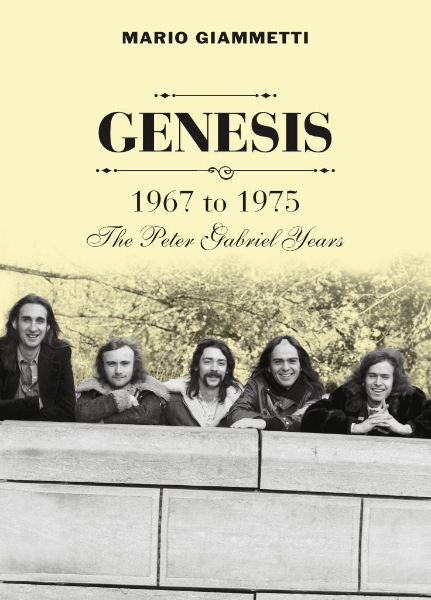
And in fact, before we got round to publishing the first Big Big Train book, we published a book by Mario Giammetti, an Italian journalist and the foremost expert on Genesis. And I’d known Mario for quite some time.
I remember I had an email from him: “Do you know any way I can get into the English publishing industry?” So we had great pleasure in publishing those two volumes on Genesis and a couple of books on Big Big Train.
And hot off the press is a huge book on Peter Hammil and Van der graaf Generator and it is really a really big thing, you know. It’s so detailed. Peter Hammond is one of the most interesting lyricists in progressive rock. So his work for me requires and benefits from quite a detailed analysis, which is what this book does.
Kingmaker is a business, so you know we have to commission or publish books that will not lose money, but, on the other hand, we want them to be things that we would want to read and that we’re interested in.
So that’s our modus operandi, you know. Would we enjoy reading that book and is it going to work for us in terms of business? And it’s been great. It’s been quite a ride. We’ve got a Yes book that we’re working on that we hope will be out next year. And we’re aiming for all of the publications to be as good as they can get in terms of how they’re written and in content. So yeah, it’s been a been a very interesting process.
Of course, you’ve been in the publishing business as an author—a published author for many, many years—but this is much more of a new experience for me.
Brad: I like it, Greg! And I I proudly own the Genesis volumes and I’ve got, of course, the Andrew Wild books—all just really, really excellent. So I’ve enjoyed what you’ve done.
I knew you loved books, but I didn’t realize that you would be so much in love with them that you would become a publisher. So I thought that was great.
Greg: Yeah, it was just one of those moments where me and Nick sort of looked at each other and just said, “let’s see what we can do here.” And then I remember Mario pitching a Genesis book to us. And so we met him in London a few years ago, liked him, got the books translated. In fact, quite a few of our books have started life in the Italian language because there’s a big prog rock community there. It’s probably the second most vibrant market, certainly in terms of 70s prog rock. And, I’m kind of at a reasonable level of Italian now myself. So, I’ve been doing a little bit of translation work.
We’ve got a new book that’s coming out on Tony Banks as the first English language biography of Tony Banks. That’s coming out in February, I think, or January. That’s another great read and it focuses on Tony’s solo work rather than his work with Genesis. It goes through the Genesis years but it focuses on an area of his work that’s not really been talked about much.
If it goes well, we’ll try and get some books together on the other members of Genesis and take it from there and see where we end up.
Brad: Yeah, I pre-ordered the Tony Banks, so I’m very much looking forward to it now.
Greg: So that said, I find Banks a bit of an enigma really because the guy that wrote, say, Firth of Fifth or Madman Moon has also written some quite cheesy pop stuff at times.
There’s nothing wrong pop music. I love pop music, but I love pop music that’s not cheesy and is well crafted.
And some of his music, some of his solo music, has kind of strayed into that and it’s slightly enigmatic for me to find a character or an individual that can do on the one hand something as absolutely sensationally written and composed as Firth of Fifth and then something on the other side of things.
And the biography is critical. It’s a critical analysis of his work. So by no means . . . we’re not putting him up on a pedestal. We tell the truth. And, so it’s interesting for me for that reason.
We’re in awe of what he can do, so we’re not completely critical, you know, just as I’ve written some terrible songs sometimes. We’ve all done it.
We’ve all done it but I struggle with him on that, the same with Mike Rutherford. I can’t see how they can’t see how I think—objectively—elements of their music from the 70s are simply more interesting, at a higher level of art, than some of their later sort of big stuff.
That’s what I struggle with there, you know, that they don’t seem to be able to see that. For me, it’s so obvious, but then we’re not always the best judges of our own material.
Brad: Yeah, I I’m reminded Neil Peart was just horrified when Asia came out—that Carl Palmer could go from ELP to Asia .
Greg: It is, you know, and Nick Shilton’s my manager’s and my publishing partner’s route into prog rock was via Asia. So, you’ll be off his Christmas list now.
Brad: I actually enjoy that first Asia album, especially Sole Survivor.
Greg: I think some of it is pretty good fun, but I, you know, it’s hard for me when you’ve got a band like UK who are still making incredible albums in 1978 and then going to Asia maybe a couple of years later.
I think the problem was the business. The music business was just headed down that money, money, money, commerce, commerce, commerce route. We all live in a capitalistic society and, you know, we have to accept that that’s how things are, but it’s a shame that they throw out the baby with the bath water.
But John Wetton, who wrote a lot of that stuff . . . he liked pop music.
I think we forget that at the root of probably the best prog rock is often very well-crafted songs rather than, you know the sort of extensive instrumentals. I think it’s when you get those two things together, that’s when I love prog rock.
So, for example, a song like Cinema Show—it’s got four or five minutes of really beautifully composed acoustic pop and then it goes into this sort of extended instrumental playout.
So you get the best of both worlds and that’s why I love prog rock really because you know you can do more than just the one thing, but you still, I think, at its best, you should have the song at the core of it in my opinion.
Brad: Thanks, Greg, that’s great. I don’t want to jump into Woodcut yet, but obviously you guys do that with the Woodcut extraordinarily well. Yeah, yeah, you succeed. Believe me.
Back on Kingmaker, do you guys have a set number of books you’re trying to publish a year or is it basically as things come to you?
Greg: we’ve made a decision to do no more than four a year.
Brad: That’s what I figured.
Greg: It’s basically three to four and we’ve got a pipeline of several books ahead so we know we’re going to be in a year’s time. We’re beginning to think of books maybe two or three years hence from now. But it’s hard, you know, it is hard work doing more than that. And I think that the focus has got to be on quality, not quantity, because, you know, we could suddenly go down a different route where we were churning out books.
That’s the interesting thing setting up a publisher—with a bit of a track record now. We get people pitching us books all the time. Nine times out of ten we just say no A) because we don’t think it’s going to work commercially or it isn’t of interest to us or B) because we just don’t have the time, you know, as we want to manage these books through from the beginning to the end and,we’re a small publisher. So you know, it’s a hands-on thing for us.
Brad: just curious about the logistics. Do you actually have a full-time layout person and are you doing the copy editing and who does your printing for you?
Greg: So we got lucky. We found a printer down in Norwich way, in the east of England. Again, a small publishing house printer—they’ve got a really good graphic designer and he’s really focused on getting it right. He will do the layouts for us.
In terms of editing, it depends on the book really. For one forthcoming book, the writer Joe, he kind of edited himself to be honest. He’s a writer editor.
And of course, then we just get Professor Geoff Parks, who’s our completely overqualified proof reader, but he goes through things, you know, proofs, and he’s really very precise in terms of both syntax and grammar and all those things that you need.
In terms of my editing role, yeah, I have actually edited a couple of the books and that’s been fun. [Greg laughs] I’m not a very detailed person. My wife would just laugh at the thought of me doing anything that requires a sense of detail. And of course editing does require that, but I tend to be more of a kind of ideas editor, I think. For example, with Mario, there’ll be times when I’ve said to him, ‘actually there’s an aspect here that I don’t think works’ or ‘I find this interesting and perhaps you could talk a bit more about it.’
That’s the kind of role I’ve had and it’s been nice, and there have been some good friendships made.
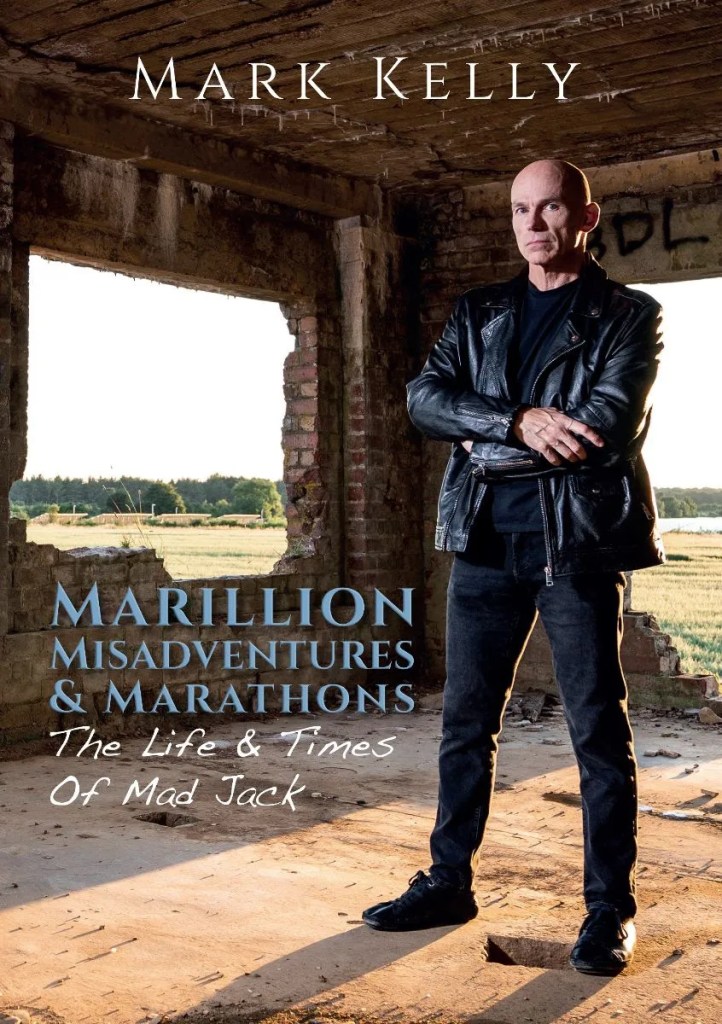
We’ve had a couple of books that have been good that have been ghost written, such as Mark Kelly from Marillion’s book. A great book. It was initially ghost written and then, I think, about halfway through, Mark began to pick up his own voice here, really. I think having been back over the chapters with the ghostwriter, he was able to say, do you know, he was able to assume the voice of the ghostwriter and his own voice. And that was quite interesting because by about halfway through, I could no longer tell who’d written what chapter. Mark’s a really clever guy. He really got it together so it was hard then to tell the difference of what had already been through the ghostwriter or what had just gone straight from Mark. So that was an evolving process as well.
And we’d like to do some more Marillion books because I think they’ve a really interesting story. Very interesting.
Brad: Yeah, I have Steve Hogarth’s two volumes as well, which I I really enjoy. It’s fun to go back to those.
Well, thanks, Greg. That’s fascinating and I’m really glad that’s working out for you guys. I think it’s just a great, great project and I’m really happy to support that.
[End interview, part I]





 Spirit of Cecilia
You must be logged in to post a comment.