All posts by bradbirzer

By day, I'm a father of seven and husband of one. By night, I'm an author, a biographer, and a prog rocker. Interests: Rush, progressive rock, cultural criticisms, the Rocky Mountains, individual liberty, history, hiking, and science fiction.

The (accidental) Christian Humanism of Steven Wilson

The Meaning of a Life: Steven Wilson’s Hand.Cannot.Erase.

An Incarnational Whole

One of the greatest things in this whirligig of a world—however fraught with a string of perilous and gut-wrenching disasters—is the mystery of the human person.  And, until God so decides to end this existence, every person is a new reflection of the Infinite.  From the Catholic Humanist perspective, every human is an unrepeatable center of dignity and freedom.  Each person, born in a particular place and time, comes only once, a life to burn as brightly or not, for one’s self or for another, in the time allotted to each of us.  “Dark and inscrutable are the ways in which we come into the world,” the grand Anglo-Irish statesman and philosopher, Edmund Burke, understood.  Fewer truths have ever been spoken in such perfect formation of the English language. 

Yet, speaking on the mystery of the person and personhood, Pope John Paul II put it even more beautifully in the penultimate month of 1996.

The mystery of the Incarnation has given a tremendous impetus to man’s thought and artistic genius. Precisely by reflecting on the union of the two natures, human and divine, in the person of the Incarnate Word, Christian thinkers have come to explain the concept of person as the unique and unrepeatable centre of freedom and responsibility, whose inalienable dignity must be recognized. This concept of the person has proved to be the cornerstone of any genuinely human civilization.

As someone who has had the privilege of teaching history and writing biography the entirety of his professional career, I hope and pray that John Paul II’s words and ideas each across everything I teach, think, and write.  As such, I am always looking at and for new ways to understand the dignity of each individual person, however tragically flawed.

Nearly six years ago, such a statement and manifestation of dignity arrived in the most unusual of ways: in the form of a rock concept album by the rather devoutly atheistic, seemingly always grumpy, and unbelievably talented English musician, Steven Wilson.  His album, a sixty-seven minute story about a lost soul, came out on February 27, 2015.  In terms of lyrics and music, Wilson’s work is extraordinary by the standards of any genre.  What should intrigue us most, however, is the subject matter and how Wilson fills it out.  The subject matter is the uniqueness of each human person, and he focuses on the life of one lost soul.

[Please scroll down a bit to go to page 2]

Best Prog of 2020, Part II

A few days ago, I attempted to create a “best of 2020” purely from memory.  My oldest daughter was driving the Honda, and I was enjoying the thrill of the quickly-moving Illinois landscape out the passenger’s window.  Honestly, at age 53, I should know better than to rely only on my memory, though, as a historian, I actually still have a pretty good one.  But, no longer great.  Just pretty good.  Even as I was typing the list in the car, I knew I’d forget all kinds of great albums, but I tried it anyway.  Pride and ego are funny things. 

Anyway. 

That list still stands (a few posts back), but I want to add some brilliant albums that I inadvertently failed to remember at the moment of writing.

Two albums this year get the spiritual successor to Talk Talk’s Laughing Stock award.  First up is Tim Bowness’s extraordinary nuanced (so glorious), Late Night Laments, an album full of meaningful lyrics and sonic soundscapes that boggle the imagination. Bowness, unfortunately, gets overshadowed by his sometime writing partner, Steven Wilson, but, frankly, the two artists are equally extraordinary. 

Following Bowness’s lead was the more recently-released Loma album, Don’t Shy Away.  Again, incredible textures mixed with intriguing lyrics.  Clearly, the band has spent a lot of good quality time listening to Talk Talk. Regardless, I owe Stephen Humphries (of the Christian Science Monitor) a huge thanks for introducing the band to me.

Nick D’Virgilio’s Invisible in an album full of surprises and full of soul.  There’s conviction behind every word and every note. I wasn’t sure what to expect before the album arrived, but I fell in love with it on the first listen. D’Virgilio is also rock’s greatest living drummer, so I was especially pleased to be reminded that the guy is just incredibly talented in all kinds of ways.

[Scroll down a bit to click on page 2 of this article. . .]

My Conflicted Relationship with Progressive Music (Prog)

By Mark Sullivan

My earliest memory is standing on my tiptoes putting Let it Be by The Beatles on my parent’s stereo. I must have been only four or five years old, and I don’t know why my parents let their pre-schooler touch their records. I wouldn’t have.

“I dig a pygmy, by Charles Hawtry on the deaf-aids. Phase one, in which Doris gets her oats.” Then the acoustic guitar, the bass drum, John and Paul singing in unison, and I’m in my happy place – laying on the floor listening to music. Looking up at the ceiling and lost in my imagination. Not much has changed in 45 years. 

Besides The Beatles, my parent’s record collection consisted of 1970s staples such as Linda Rondstadt, Neil Diamond (laugh if you’d like), Emmy Lou Harris, Glen Campbell, Loretta Lynn, Bob Dylan, Charlie Parker, the Modern Jazz Quartet, Wes Montgomery, Herbie Mann, and The Moody Blues. I listened to all of those albums except Every Good Boy Deserves Favor by The Moody Blues. The cover freaked me out and planted the seeds of suspicion about Progressive Music (Prog).

Probably as a teenager I tried to listen to it. I imagine that I picked up the needle at “Desolation, creation.” It still sounds stupid, but if I would have stayed with it and listened to “The Story in Your Eyes,” things may have been different. 

However, I wasn’t aware of Prog as a thing or deliberately avoiding it until I encountered the anti-Prog bible, The Worst Rock n’ Roll Records of All Time: A Fan’s Guide to the Stuff You Love to Hate by Jimmy Guterman and Owen O’Donnell in a used bookstore sometime in my early 20s. That book was everything a young music snob like me could want, take downs of stupid lyrics and bloated Prog bands on every page. I learned that you could always be cool by ripping on Prog.

[Scroll down a bit to click on page 2 of this article. . .]

Wounded Knee at 130

One hundred thirty years ago today, the United States military engaged—for the last time—the American Indians.  The conflict, often known as the Battle of Wounded Knee, should appropriately be called the tragedy or massacre of Wounded Knee, for it was nothing short of a travesty. The last actual battle of the Indian Wars was that at Skeleton Canyon against Geronimo and his forces, four years earlier, in 1886.

Beginning in October of 1890, tensions between a significant group of Sioux Indians and the U.S. Government reached toward the tipping point in South Dakota.  Many of the Sioux had begun to adopt a nativist religion, recently imported from Nevada, called the “Ghost Dance.”  The dance, a complicated movement that hoped for the end of the world with the intermixing of the living and the dead, had been founded by Jack “Wovoka” Wilson, a Paiute Indian.  In his famous messiah letter, he had written:

“When you get home you must make a dance to continue five days. Dance four successive nights, and the last night keep up the dance until the morning of the fifth day, when all must bathe in the river and then disperse to their homes. You must all do in the same way.

“I, Jack Wilson, love you all, and my heart is full of gladness for the gifts you have brought me. When you get home I shall give you a good cloud [rain?] which will make you feel good. I give you a good spirit and give you all good paint. I want you to come again in three months, some from each tribe there [the Indian Territory].

There will be a good deal of snow this year and some rain. In the fall there will be such a rain as I have never given you before.

Grandfather [a universal title of reverence among Indians and here meaning the messiah] says, when your friends die you must not cry. You must not hurt anybody or do harm to anyone. You must not fight. Do right always. It will give you satisfaction in life. This young man has a good father and mother. [Possibly this refers to Casper Edson, the young Arapaho who wrote down this message of Wovoka for the delegation].

Do not tell the white people about this. Jesus is now upon the earth. He appears like a cloud. The dead are still alive again. I do not know when they will be here; maybe this fall or in the spring. When the time comes there will be no more sickness and everyone will be young again.

Do not refuse to work for the whites and do not make any trouble with them until you leave them. When the earth shakes [at the coming of the new world] do not be afraid. It will not hurt you.

I want you to dance every six weeks. Make a feast at the dance and have food that everybody may eat. Then bathe in the water. That is all. You will receive good words again from me some time. Do not tell lies.”

Many of the American Indians of the Southwest had a deathly fear of ghosts, and Wilson’s faith failed to catch on there.  But it spread rapidly on the northern Great Plains, especially among the Sioux. The Sioux, of course, had not only been recently defeated as a people, but they had lost their entire way of life—the buffalo hunt—and the U.S. had brutally confined and imprisoned them on strictly (and unjustly) governed reservations.  Among the most corrupt was the Pine Ridge Reservation in South Dakota.  Here, the people not only adopted the Ghost Dance, but they added to its tenets, claiming that a “ghost shirt” would protect the wearer from bullets and other weapons of the whites.

In its attempt to control and attenuate the Ghost Dance, the U.S. military decided to arrest two of the most prominent Sioux leaders, Sitting Bull and Big Foot.  Ironically, neither man had thought much of the Ghost Dance movement, seeing it as contrary to the Sioux vision of life.  The arrest of Sitting Bull went horribly wrong, resulting in the great man’s death in his underwear.  During the subsequent arrest of Big Foot (who was deathly ill with pneumonia), the U.S. Army (the Seventh Cavalry, once led by George Armstrong Custer) demanded all the arms of the Ghost Dancers.  During the disarming, a Sioux fired a shot, and a medicine man threw dirt in the air (the signal for the end of the earth). A firefight broke out, and the U.S. military killed—very quickly—anywhere from 150 to 200 Sioux. Many of the wounded Sioux remained on the field—without aid—through harsh, freezing weather. When photographers arrived in the scene, they found the field littered with grotesque frozen warriors. Twenty-five U.S. soldiers died.

The importance of Wounded Knee cannot be exaggerated.  It was a horrible end to a horrible series of Indian Wars (most unjust and brutal) that had begun almost immediately following the Civil War. That the massacre occurred in 1890, the same year as the “closing of the American frontier,” at least as Frederick Jackson Turner understood it, has not been lost on historians. Further, the actions of the U.S. Army at the time proved many of the republican fears of a standing army as originally expressed during the Founding and Jacksonian periods. The fight with the American Indians also undid the Jeffersonian legacy of the “empire of liberty” in which the American Indians were to be treated as future citizens of the republic, as best and most brilliantly expressed by the Lewis and Clark Expedition.

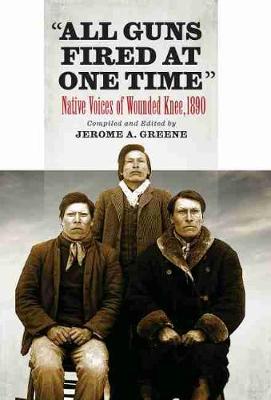
For those interested in the tragedy of Wounded Knee, see Jerome A. Greene’s most recent book, “All Guns Fired at One Time”: Native Voices of Wounded Knee, 1890, published in October 2020 by the South Dakota Historical Society Press (sdhspress.com).

A Year of Prog: A Reflection on 2020

I’m typing this as my oldest daughter is driving the CRV across I80 in Illinois. Sadly, I must recognize as I fly at terrifyingly lovely speeds across the state, my title is more a wish than a fulfillment. Much of what follows is merely what is stuck in my brain, and I don’t have my CDs in front of me.

Though a vaccine is coming, COVID is still taking its toll on the world. Never before in peacetime have Americans so willingly complied with rules and regulations and group proddings and peer pressure. Perhaps all of the conformism was necessary for health reasons, but it was still conformism.

Despite all of this, though, and despite all the unrest and tragedies of 2020, progressive rock remained. It remained as a reminder of what is good, true, and beautiful in this world, and it remained as a reality of creativity and non-conformity. Granted, prog musicians couldn’t play live (not really), but they could develop, hone, make, assemble, and innovate. Innovate they did!

Because of the limitations of my situation, I might very well forget a CD, and the following order is as they come into my brain, not as they are ranked in my heart and soul. That is, unless I state something like “yeah, this was my favorite.”

First, Dave Bandanna, Robin Armstrong, a whole host of excellent musicians, and I released a cd under the band and title, The Bardic Depths, on Robin’s label, Gravity Dream. While I recognize it’s outrageously obnoxious for me to rank my own music, it would be equally disingenuous of me to ignore it. I had intimate knowledge on this one, and I’m incredibly proud of what we produced. While I won’t go so far as to rank my CD in actual ranking terms, I will state, I loved the whole process and the end result. Here’s hoping you did as well.

Leaving aside The Bardic Depths. . .

Lunatic Soul, THROUGH SHADED WOODS. Holy schnikees, what a great and compelling listen. While there’s a folky feel to the album, there’s something immediately and permanently captivating about the album as a whole. To get the album right, you just have to imagine mid-period Jethro Tull playing Riverside’s WASTELAND.

Grumblewood. Admittedly, as I sit here in the speeding car, I can’t for the life of me remember the title of the album. I can see it in my mind’s eye, though. Brown and woodsy looking! The album—which is also folk prog—sounds quite a bit like a relatively updated early-Jethro Tull and Blodwyn Pig. The textures of the music are simply gorgeous.

Big Big Train, EMPIRE. Come on, what would a year-end list look like without a BBT entry! Plus, throw in SUMMER’S LEASE as well as the music BBT has released through its Passenger’s Club, and it’s been a verifiable utopia for us music lovers throughout 2020. BBT seems incapable of a misstep, and has been on such a course since 2009. Even the diminishment of the band’s size only makes the future all the more intriguing. As I’ve written before, Ave, Spawton!

Gazpacho, FIREWORKER. Gnostic rock! Does any band come up with more intriguing gothic themes of mystery and universal mayhem than does Gazpacho? This album, especially, feels as though the band has tapped into a Lovecraftian mystery cult. The music, though, is fluid and lush.

Sanguine Hum, A TRACE OF MEMORY. This might very well be the band’s best album, and given their catalogue, this is no where near slight praise. From the opening to the final note, the listener is captivated and immersed in a melacholic, nuanced, and beautiful world.

Glass Hammer, DREAMING CITY. As with BBT above, what list could possibly exist without at least one GH entry! The band never ceases to grow, to develop, and, yes, to progress. While this album is quite a bit heavier than any previous release, the story is a driving one, and the music captures the lyrical themes rather perfectly. The band also just released A MATTER OF TIME—reworkings of older songs. I’ve not had a chance to immerse myself in this album, but I plan to do so when I take back over the wheel of the car.

I have more albums to list, and I will come back to these informal rankings shortly. For now, let me also write: 2020 would never have been as good without the beautiful writings of two of the best reviewers in the prog world: Stephen Humphries and Jerry Ewing. I thank the Good Lord for each of them.

COVID, Woke Science—and Death – American Greatness

More ominously, we still have no idea whether far more have died due to the lockdowns than to the virus itself—given the quarantines have caused greater familial, spousal, and substance abuse, suicides, impoverishment, missed surgeries and medical procedures, educational deprivation, and long-term psychological damage. Amid this void of knowledge, state and local officials have often claimed expertise and implemented Draconian measures that may well have made things far worse.
— Read on amgreatness.com/2020/12/20/covid-woke-science-and-death/

COVID, Woke Science—and Death – American Greatness

More ominously, we still have no idea whether far more have died due to the lockdowns than to the virus itself—given the quarantines have caused greater familial, spousal, and substance abuse, suicides, impoverishment, missed surgeries and medical procedures, educational deprivation, and long-term psychological damage. Amid this void of knowledge, state and local officials have often claimed expertise and implemented Draconian measures that may well have made things far worse.
— Read on amgreatness.com/2020/12/20/covid-woke-science-and-death/

Glass Hammer News

Greetings fans and friends of Glass Hammer,

Glass Hammer’s A MATTER OF TIME Volume I Download is available now, only at the Glass Hammer Store.  We’re offering 2496 Hi-Res WAV, CD Quality, and MP3 versions, depending on your preference. I personally recommend the 2496 version for the best possible sound.
What fans are telling us: 
“The whole album “A Matter of Time” is filled with sonic delights – highly recommended!”
“The recording, mix, mastering and production is some of your best I’ve ever heard on a Glass Hammer album.”
“Love the new versions, production is impeccable as the usual GH standard”


Includes:

  1. Lliusion 8:57
  2. Shadows Of The Past 2:46
  3. Something’s Coming 3:25
  4. Song Of The Dunadan 8:34
  5. The Return Of The King 6:41
  6. Domain Walls 4:43
  7. Felix The Cat 2:31
  8. The Mayor Of Longview 5:21
  9. On To Evermore 6:22
  10. Junkyard Angels 9:11
  11. Heaven 8:17

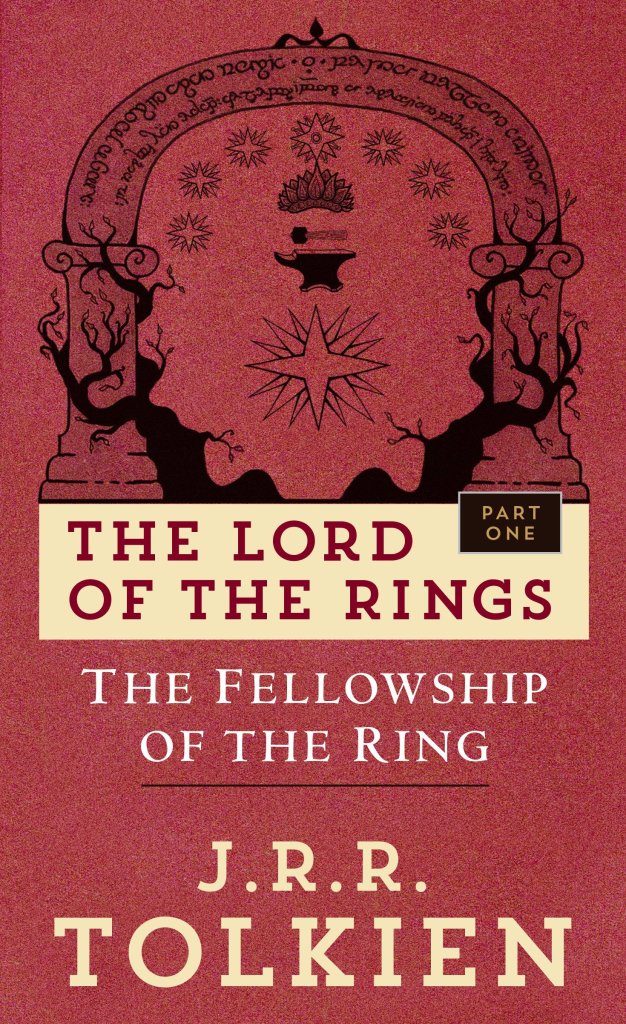
Grabbing A MATTER OF TIME is a great way to show your support and help Glass Hammer move forward with our new projects. Other downloads that are only available at our site: The Ultimate Middle Earth Download, Lex Rex Remastered, Chronomonaut (Hi-Res), Ode To Echo (Hi-Res), The Inconsolable Secret Remastered Tracks (Hi-Res), Breaking Of The World (Hi-Res), Perilous (Hi-Res) and many, many more!

Head to The Glass Hammer Store and grab one of our fantastic downloads. You’ll get a wetransfer link within 24 hours, (usually much faster!). 

Thanks,
Steve

Kirk and the Libertarians

To be fair, though, Kirk never attempted to ally with or to placate the libertarians in any way, especially after the mid-1950s.  They became nothing but “chirping sectaries.”[2]  Kirk presented his arguments against libertarianism in a fashion at once detailed and scholarly as well as vindictive and savage.  Nothing raised Kirk’s ire, especially after the 1950s, more than did libertarianism and its adherents.  Still, it must be noted that Kirk wrote little about the topic, he also spoke little to his students about it, and he maintained friendships with several persons openly tolerant of and even enthusiastic regarding it, such as Peter Stanlis and Larry Reed.[3]  He softened his critiques by distinguishing the “doctrinaire” from one who “believes in an enduring moral order, the Constitution of the United States, free enterprise, and old American ways of life.”  The latter, he argued, simply had an “imperfect understanding” of politics and were quite well-intentioned.[4]  “With them I have little quarrel,” though they, through their confusion, give strength to the genuinely mad libertarians, Kirk lamented.[5]  In each of his blatant criticisms of libertarianism, Kirk also listed what he shared with them, in terms of kinship.  As with Kirk, the libertarians “try to exert some check upon the vainglorious foreign policy of the United States” and they attempt to fight inhumanity in economics as well as in politics.[6]  The best libertarians become conservatives, Kirk hoped, or they introduced the young to good ideas.[7]

The matter of libertarianism, however, seems to have been intensely personal in his mind.  That is, Kirk willingly separated those libertarians he liked from those he despised.  To Kirk, men such as Stanlis and Reed could be wonderful, as they enjoyed a friendship.  Kirk himself had happily labeled Randolph of Roanoke an “aristocratic libertarian,” and he greatly admired J.R.R. Tolkien who identified his own politics as “anarchy (philosophically understood)” and Christopher Dawson, who grew more fearful of an unwieldy Leviathan with each passing year.[8]  Men such as Frank Meyer and Murray Rothbard, however, were loathsome to Kirk.  “One may say of them in general that they are ‘philosophical’ anarchists in bourgeois dress.”[9]  To Kirk’s mind, little if anything separated the utilitarian libertarian from the wanton libertine, and John Stuart Mill and Murray Rothbard epitomized the movement.  “Since Mill, the libertarians have forgotten nothing and learned nothing,” he wrote.[10]  Like the devil, he continued, the libertarian “can bear no authority temporal or spiritual,” and embraces, often, “sexual eccentricity.”[11]  Further, the doctrinaire libertarian is “metaphysically mad.”[12]  And, perhaps, most cuttingly, betraying prejudices at several levels, Kirk wrote, “The representative libertarian of this decade is humorless, intolerant, self-righteous, badly schooled, and dull.  At least the old-fangled Russian anarchist was bold, lively, and knew which sex he belonged to.”[13]  Hardly dangerous to society, though, Kirk concluded, most libertarians are “repellent merely.”[14] 

Frank S. Meyer, the fountainhead of “fusionism”—an attempt to reconcile traditionalism with libertarianism—fired the first salvo in a continuing war against Kirk with a questioning piece in 1953 in the American Mercury and a bitter piece in The Freeman, 1955.  The earlier piece attempted to assess The Conservative Mind in what the ex-Communist Meyer considered the dialectic of western history, the struggle between tradition or conservatism and individual liberty or “what used to be called liberalism.”[15]  While one might find much to appreciate in The Conservative Mind, the reader would also suffer aggravation as “he restricts his survey to one line of conservative thinking,” while dismissing the importance of Thomas Jefferson, Herbert Spencer, and Lord Acton.  In the end, Meyer thought, the reader could profit more from Kirk’s history than from his understanding of modern American society and its myriad of problems.[16]

Two years later, in 1955, Meyer’s editor at The Freeman, Frank Chodorov asked his writer to explore the “New Conservatism” as a movement dangerous to the libertarian cause.[17]  Entitled “Collectivism Re-baptized,” Meyer viciously attacked the “New Conservatism” as best represented by Kirk’s The Conservative Mind, Program for Conservatives, and Academic Freedom.  These appeared, successively, “in descending order of quality,” he claimed.  Led by the would-be “prophet,” Kirk—with Peter Viereck, Robert Nisbet, and Walter Lippmann merely tagging along—the “new conservatism” embraced no principles but only a “tone” and “an attitude.”  Search as much as one might, Meyer explained, he would find no “clear and distinct principle” regarding the “field of human action—the area of ethics, politics, and economics” in Kirk’s writings.  Instead, Kirk seemed to have embraced a somewhat shallow “High Anglican Christianity,” the Platonic republic “with the philosopher-king replaced by the squire or the vicar.”  The Michiganian embraced and promoted such words as authority, order, community, duty, and obedience as fetishes, neglecting freedom, Meyer continued.  In the end, Kirk’s books, published between 1953 and 1955, served as little more than “another guise for the collectivist spirit of the age.”[18] 

One early and prominent supporter of post-war conservative causes lambasted Meyer in a personal letter to Chodorov. 

We are the great conservative mass of citizens who have been dwelling in cyclone shelters for the past twenty years.  We see in Dr. Kirk the most articulate, believable, and historically most unassailable of those opposed to the welfare state.  Now . . . those who might be easily in Mr. Kirk’s camp, and he perhaps in theirs, are about to tear him apart because of some egotistical difference of opinion. . . . These splinter writers if allowed to carry on will wreck us.  Conservatism needs a structure and a home.  My concept of a home is a place which may not be so orderly but is secure and comfortable, and gives us a feeling of pride in its impregnability. . . .  Mr. Meyer and his colleagues . . . are encouraged to dynamite the home of the conservatives.[19]

In a letter to the editorial page, Needles wrote: “Meyer’s sickening attack on Russell Kirk will give much comfort and propaganda material to the statists.  I am quite sure that it will be quoted widely as evidence that conservatism is really Toryism, selfish and greedy.”  Interestingly, of the four letters The Freeman printed in response to the Meyer’s piece, three were overwhelmingly negative, while only one offered some praise of his article.[20]  Equally important, T.S. Eliot, Wilhelm Röpke, and Erik Kuehnelt-Leddihn each sent a letter of congratulations to Kirk for “being attacked by the Freeman.”  Prominent Americans such as Felix Morley, Frederick Wilhelmsen, and Richard Weaver also offered Kirk their appreciation.[21]  Clearly, a rift was becoming visible not only to the players but to the spectators as well.

According to Kevin Smant, Meyer’s biographer, Meyer felt no remorse in his views, but he did about expressing them as loudly as he had.  His response, however, was to create his own conservative platform, explicitly outlining what would become known as “fusionism,” a mixing of traditionalism with libertarianism.[22]  He soon received a Volker Grant to do just this.[23]  “There is a concerted effort to denigrate Russell Amos Kirk, which you have detected,” Kirk wrote to Bill Buckley in 1956. 

The gang with whom your pal Frank Meyer is associated seems to be most active in the fell enterprise.  There are wheels within wheels; and boring from within has not ceased to be.  Meyer has obtained a subsidy from the Volker Fund for the express purpose of undermining the influence of one Russell Kirk; and you gave him some additional cash for that worthy cause.[24]

Buckley responded, but this was the first diplomatic effort to bring the two together that would, eventually, tire him.  “I think that about one half of such diplomatic talents as I dispose of were regularly exhausted in editing a magazine that regularly published both Frank Meyer and Russell Kirk,” he admitted years later.[25]  First, he claimed via mail, Kirk just being paranoid.  Second, though, Meyer would not use the Volker money, as well as the Buckley money, to attack Kirk.  Rather, he desired to come up with a form of conservatism that incorporated but also that attempted to transcend Kirk’s ideas.[26]  Whatever motives existed in the funding of the project, Meyer eventually did, of course, both things. 

Needles also contacted Kirk, letting him know about his letter to Chodorov as well as making a contribution to the yet-to-be-born Modern Age.  Kirk revealed much in his response, casting Meyer as a typical American progressive, desiring 100% Americanism:

That silly piece by Frank Meyer in the FREEMAN is part of a curious conspiracy by Chodorov, Meyer, and certain other atheists and pacifists and anarchists—insane conjunction!—to cast your servant into limbo.  I was forwarned [sic].  These gentry will injure only themselves, of course.  Meyer is a neurotic little ferret-like creature, with the glittering eyes of fanaticism, who goes about telling everyone that he USED to be a Communist.  “Methinks the lady doth protest too much.”  I don’t know whether his conversion preceded the Smith Act.  He sees himself as the Chairman of the Supreme Soviet of 100% Americanism, conducting heroic purges.[27]

Kirk assumed Chodorov was targeting Modern Age more than Kirk, but he was uncertain.  His information, he said, came from someone working at the libertarian Foundation for Economic Education.[28]  Most likely, this was Kirk’s long-time friend, Ed Opitz. Kirk further believed that Meyer had not read The Conservative Mind, but had merely gleaned ideas regarding it from various reviews of the book.  Equally telling, Kirk believed that Chodorov had inappropriately and unjustly claimed the mantle of Albert Jay Nock.  He, Kirk, had as much right to claim the mantle as Chodorov and perhaps more, given Kirk’s close friendship with Nock’s best friend, Bernard Iddings Bell.[29]  When the Needles letter, in part, appeared in the September 1955 issue of The Freeman, Kirk wrote, “I see that a part of your first letter was printed at last.  I am told that both the FREEMAN and HUMAN EVENTS are overwhelmed with letters of protest.”  Now convinced that many libertarians represented only a fanatical sect, attempting to bolster their egos rather than the common good of the movement, Kirk concluded his comments with, “The Supreme Soviet of Libertarianism is shaken.[30]”  To William F. Buckley’s father, Kirk noted with some irony, that while he expected attacks from the liberals, he did not imagine them coming from his allies.  “It is amusing, while waging such battles on the frontier at my own expense,” he stated, “to be knifed in the back by such chairborne condottieri as Frank Meyer and Frank Chodorov.”[31]  Not without importance, William F. Buckley, Jr., recruited Frank S. Meyer to become an editor of his new National Review from its opening issue.  Meyer, along with Chodorov, “will take up their stilettos against the National [Review], once any opinion appears therein which deviates in the least degree from the Holy Writ of Cobden and Bright,” Kirk warned Buckley.[32] 

Like Kirk, Meyer rarely visited the New York offices, preferring to write from his home in Woodstock, New York, where he also homeschooled his sons.  Meyer also feared that coming to New York City might expose him to many KGB operatives, who still wanted him dead for his earlier betrayal of that cause.[33]  Priscilla Buckley, one of Bill’s sisters, thought this providential and healthy for all involved.

It was considered a lucky thing that Frank was ensconced at Woodstock, at a safe distance from New York.  He was difficult to work with in person.  Like the good ex-Communist that he was Frank could go on for hours, pacing up and down, chain-smoking cigarettes, willing to talk into the wee hours to make any point, no matter how minor.  The rest of us, with a magazine to get out every week . . . just didn’t have the time to listen, or the energy to fight every point, or the inclination to make high drama of any given point.  His visits to New York were few.[34]

Another person connected to National Review, Whittaker Chambers, who had thought highly of Kirk’s The Conservative Mind in 1953, now saw the division between Kirk and Meyer as an irrelevancy in the larger tides and movements of history.  “I have almost nothing in common with the effort of Meyer or Kirk, whose rationales, no matter how formally logical, seem to me, by contrast with teetotal reality, chiefly an irrelevant buzz.”[35]  Sadly, Chambers viewed the two men “silhouetted in a death struggle against the door to which I had left the key,” children wrestling over the love of a father.[36]  They were, he thought, as Cain and Abel must have seemed to Adam and Eve.  That only six years earlier Chambers had challenged Kirk so vigorously speaks volumes about the divisions in the movement against encroaching conformism in state, education, and corporation.

A year later, in 1956, Meyer again went after Kirk, this time for his views on John Stuart Mill.  In fairness, Kirk had written this article to spite Meyer.  “It serves, by the way, to answer Meyer, who, as a quarter-educated man, simply doesn’t understand what I’m writing about,” he wrote when submitting the piece to Buckley.[37]  Kirk, as detailed in chapter four of this biography, feared the utilitarianism of Mill’s liberalism.  Invited by Buckley to respond to the piece, Meyer claimed that his opponent had, strangely, attacked Mill by placing another Brit of the same century, James Fitzjames Stephen as the former’s better.[38]  In particular, Kirk “appears to select for praise those ideas which Stephen’s imagination dress from the Romantic pagan-Teutonic mystique of folk, community, force, and power.”  Each of these, he continued, led to the “nightmares of the twentieth century.”[39]  In his own autobiography, Kirk allowed that Meyer might have thought him a “Trojan horse within the conservative camp.”[40]

In their personal correspondence, the two were quite civil, if somewhat distant, with one another.[41]  In one letter, however, Meyer reached out in a kind of peace offering: “however much we may differ from time to time in our view of some of the problems of conservatism, I think we share a firm respect for quality and excellence.”[42]  Meyer even invited Kirk to contribute to an edited work, What is Conservatism?, and the latter accepted.[43]  By 1962, two full years before What is Conservatism? appeared, Meyer even inserted a footnote in his book, In Defense of Freedom, that read:

In the last year or two, however, in a number of his contributions to periodicals, there has been observable some weakening in his intransigent New Conservative position and some sign of a greater sympathy with the position of the American conservative consensus on individual freedom.[44]

Whatever tempering this represented, Meyer still began his book with “Collectivism Rebaptized,” making it clear that his nemesis remained Kirk.

In his private correspondence, Meyer also offered mixed views about Kirk.  This becomes especially obvious in his correspondence with even more radical libertarians such as Rose Wilder Lane, the daughter of Laura Ingalls Wilder, and a famous journalist and author in her own right.[45]  She had also been close, at one time, with Albert Jay Nock and Isabel Paterson. 

Just now, I am wary of ‘conservative’ because of the Metternich-Burke movement represented by Kirk and Viereck, among other, who call their views ‘conservative.’  They are really opportunists with lip-service to traditional[ism], as Metternich and Burke were.[46]

From Lane’s perspective, Kirk had perverted one of the most important words in American history, “revolution” by connecting it almost exclusively to the French Revolution, thus diminishing the American.  Further, she considered Kirk not only the “damndest [sic] kind of black reactionary,” he also represented one of the single most dangerous threats to the American character and to western liberty.[47]  Kirk, she continued, along with Buckley, represented the true “enemies of freedom and of all human values.”  She and Meyer, she claimed, offered true revolution.  “A person who acts to defend . . . their innate, inalienable liberty, cannot ‘conserve’ the status quo.”  Instead, she continued, “he must change it, he must abolish much of it.  He is an abolitionist, a radical, a revolutionist.”[48]  Kirk misunderstood the past, believing communism something new.  In reality, she believed, almost all of history had been communist with most of the great thinkers of history conserving such communism.  Only the Americans had broken from this.  With no real grounding in history, she concluded, Kirk could only look up to God and embrace a false mysticism.[49]  In response, Meyer actually defended Kirk, at least in a relative sense.

Kirk has thought deeply but is wrong-headed and one-sided.  You may have seen my reviews of both of these worthies [Kirk’s CONSERVATIVE MIND and a book by Viereck] in the Mercury but you may not have, and being lazy, rather than repeat here I am send you clippings of what I said.  I was perhaps a little kinder to Mr. Kirk than I should have been if I were writing a more detailed and scholarly critique.  He is particularly weak when he discusses the contemporary situation. . . . It seems to me that a great deal of what Kirk and his supporters say is based on a confusion of the relation of individual men to God and to each other in the realm of Love with particular forms of social organization—with which dogmatically, at least, the Church has no intrinsic connection.[50]

When the Volker Fund asked Meyer his opinion of Kirk and his efforts to raise money for Modern Age, Meyer recommended against him.[51] 

While Kirk did not respond immediately, when he finally did answer Meyer, nine years later, he tore him apart.  Indeed, his review of Meyer’s book, In Defense of Freedom, serves as Kirk’s apotheosis of vitrolicity.  “The reader begins to tire after the first chapter,” he wrote.  Taking his former Marxism and mutating it into an ideology, “Meyer now transfers his political passion to conservatism (of sorts)—which he would erect into an ideology, slogans and dogmas.  He burns to purge this new true faith of deviationists, to create a disciplined sect of the faithful, to become the law and all the prophets to young persons marching to Zion.”  Never having overcome his former attachment to Marx, Meyer paints his own antagonists with too broad of a brush, incapable of nuance.  After denying that he belonged to anything called the “new conservatives” or that such a group even existed, Kirk argued that Meyer would make a goddess of liberty, an abstraction to be worshipped, but leading to the anarchy found in parts of then-modern Africa.  Even in an era of political religions, Kirk sighed, Meyer “can appeal to little but to the arrogant ego.  With this last,” he concluded, “he is plentifully equipped.”[52]  Never before or after, would Kirk savage something so brutally in print.  Tellingly, Kirk only mentioned Meyer twice in his autobiography, and with almost no context or explanation of the man other than that he was a zealot, whether on the left or the right.  If Meyer thought his debate with Kirk important, Kirk did not, at least over the long run.  Others, though, have.  Critically important figures such as Whittaker Chambers viewed it as the beginning of an ending of what had started so well, only a few short years earlier. 


NOTES

            [1] A personal note.  When I told a friend of mine, a prominent member of the libertarian movement for decades now and an Ivy League graduate, that I’d been named the “Russell Amos Kirk Chair” at Hillsdale, he gave me a sad look and said, “He was really an evil man.”

            [2] RAK, “Libertarians: Chirping Sectaries,” Modern Age 25 (Fall 1981): 345-51; and RAK, “A Dispassionate Assessment of Libertarians,” originally delivered at the Heritage Foundation and later reprinted in The Politics of Prudence (Bryn Mawr, PA: ISI Books, 1993), 156-171.  See also RAK, “Professors and Politics,” National Review 28 (May 14, 1976).

            [3] In his vast corpus of writings, RAK only openly engaged libertarians in two pieces.  One of RAK’s students, Alan Cornett, has confirmed that RAK said little regarding the subject to his students.  Alan Cornett to Birzer, November 22, 2013, personal correspondence.

            [4] RAK, “Chirping Sectaries,” 278.

            [5] RAK, “A Dispassionate Assessment of Libertarians,” in Redeeming the Time, 157.

            [6] RAK, “A Dispassionate Assessment of Libertarians,” in Redeeming the Time, 157-158.

            [7] RAK, “A Dispassionate Assessment of Libertarians,” in Redeeming the Time, 157-159.

            [8] On Tolkien’s anarchism, see JRRT to Christopher Tolkien, November 29, 1943, in The Letters of J.R.R. Tolkien (Boston, MA: Houghton Mifflin, 1981), 63.  On Dawson’s move toward such a position, especially after 1935, see Birzer, Sanctifying the World: The Augustinian Life and Mind of Christopher Dawson (2007).

            [9] RAK, “Dispassionate Assessment of Libertarians,” in Redeeming the Time, 160.

            [10] RAK, “Chirping Sectarians,” 275.  On libertinism, see RAK, “Dispassionate Assessment of Libertarians,” in Redeeming the Time, 162.  Rothbard and RAK reconciled, at least in part, by 1993, as each put aside differences to advise Pat Buchanan on a possible second run for the presidency.  Their fear of a neoconservative foreign policy allowed each to overcome their mutual distrust.  See Paul E. Gottfried, Encounters: My Life with Nixon, Marcuse, and Other Friends and Teachers (Wilmington, DE: ISI Books, 2009), 170.

            [11] RAK, “Chirping Sectarians,” 275.

            [12] RAK, “Chirping Sectarians,” 279.

            [13] RAK, “A Dispassionate Assessment of Libertarians,” in Redeeming the Time, 165.

            [14] RAK, “A Dispassionate Assessment of Libertarians,” in Redeeming the Time, 165.

            [15] On his communism, see his insightful and revealing, The Moulding of Communists: The Training of the Communist Cadre (New York: Harcourt Brace, 1961).

            [16] Frank Meyer, “Conservatism and Individualism,” American Mercury (July 1953): 140-141.

            [17] Kevin J. Smant, Principles and Heresies, 32.

            [18] Frank S. Meyer, “Collectivism Rebaptized,” The Freeman (July 1955), 559-562.

            [19] Robert Needles, M.D., to Frank Chodorov, July 8, 1955, quoted in Smant, Principles and Heresies, 33.

            [20] In the “Readers Also Write” column, The Freeman: A Monthly for Libertarians 5 (September 1955): 632.

            [21] RAK to WFB, September 1, 1955, in RKCCR.

            [22] Smant, Principles and Heresies, 32ff.

            [23] See WFB to RAK, April 6, 1956, in RKCCR.

            [24] RAK to WFB, April 2, 1956, in RKCCR.

            [25] WFB, Miles Gone By: A Literary Autobiography (Washington D.C., Regnery, 2004), 288.

            [26] See WFB to RAK, April 6, 1956, in RKCCR.

            [27] RAK to Dr. Needles, July 13, 1955, in RKCCR.

            [28] RAK to Dr. Needles, July 13, 1955, in RKCCR.  RAK helped Opitz with a small group called “The Remnant,” sponsored by the Foundation for Economic Education in New York.  As RAK described it, it was “an informal association of clergymen who believe that the primary concern of the church is the ordering of souls, rather than the ordering of the state.”  See RAK, “A Few Clergymen Seem to Prefer Soapbox to Pulpit,” TTP, Ada Evening News (May 31, 1965), 4.

            [29] RAK to Dr. Robert Needles, July 21, 1955, in RKCCR.

            [30] RAK to Robert Needles, September 1, 1955, in RKCCR.

            [31] RAK to Bill Buckley’s father, July 13, 1955, in RKCCR.  In the same letter, he claimed, “I never have called myself a New Conservative, and no one ever has called me that to my face.”

            [32] RAK to WFB, September 1, 1955, in RKCCR.  By 1959, RAK’s views on Chodorov had softened somewhat, giving him guarded praise for his book, The Rise and Fall of Society, the most Nockian of his books.  RAK offered this caution, though: “Nock had nothing of the utopian in him: but Chodorov does, tho [sic] he is less utopian in this book than in some of his earlier writings.  The Chodorov utopia is society without he state, a condition in which men enjoy the benefits of voluntary community without political authority over them.”  See RAK, “Salvos Against Collectivism,” Chicago Sunday Tribune Magazine of Books (April 26, 1959), 2.

            [33] Priscilla Buckley, Living It Up at National Review: A Memoir, 187.

            [34] Priscilla Buckley to Kevin J. Smant, August 26, 1993, in Smant, Principles and Heresies, 60-61.

            [35] Whittaker Chambers to WFB, Jr., Christmas Eve 1958, in Odyssey of a Friend, 229.

            [36] Whittaker Chambers to WFB, Jr., May 7, 1959, in Odyssey of a Friend, 247.

            [37] RAK to WFB, October 5, 1955, in RKCCR.

            [38] WFB to RAK, February 13, 1956, in RKCCR.

            [39] Meyer, “In Defense of John Stuart Mill,” reprinted in In Defense of Freedom, 165.

            [40] RAK, Sword, 150.

            [41] See the few letters in the RAK-Meyer Correspondence, in RKCCR.  George Nash has put the relationship in fine perspective.  See Nash, The Conservative Intellectual Movement in America: Since 1945 (New York: Basic Books, 1976), especially chapters 5 and 6.

            [42] Frank S. Meyer to Dr. RAK, August 5, 1959, in RKCCR.

            [43] RAK, “Prescription, Authority, and Ordered Freedom,” in Frank S. Meyer, ed., What is Conservatism? (New York: Holt, Rinehart, and Winston, 1964), 23-40.

            [44] Meyer, In Defense of Freedom (1996 version), 59fn12.

            [45] Rose Wilder was born in 1886 on the homestead of her famous parents, Laura and Almanzo Wilder, near De Smet, Dakota Territory.  She worked as a journalist at several papers, including the Kansas City Post as well as the leftist San Francisco Bulletin.  After a visit to the Soviet Union in 1921, though, Lane renounced her leftist leanings, declaring: “I came out of the Soviet Union no longer a communist, because I believed in personal freedom.”  She published her most famous book, The Discovery of Freedom, a wide-sweeping examination of the Greco-Roman, Judeo-Christian tradition of liberty, in 1943.  In addition to the Discovery of Freedom, she wrote Henry Fords Own Story (1917); The Making of Herbert Hoover (1920); The Peaks of Shala (1924); Hill Billy (1926) ; Cindy (1928) ; Let the Hurricane Roar (1933) ; Old Home Town (1935); Give Me Liberty (1936); and Free Land (1938).  She also wrote numerous articles and short stories for Harpers, the Saturday Evening Post, and Ladies’ Home Journal.  Throughout her adult life, Rose remained an anti-statist, natural rights advocate.  “The revolutionary basis (of this country) is recognition of the fact that human rights are natural rights,” she wrote, “born in every human being with his life, and inseparable from his life; not rights and freedoms that can be granted by any power on earth.”   In the 1960s, Rose covered the Vietnam conflict for the Ladies’ Home Journal.  She died in 1968 in Danbury, Connecticut, as she was about to embark on a world tour.

            [46] Rose Wilder Lane, Danbury, Conn., to Frank S. Meyer, 6 October 1953, Box 9, Folder 119, in Rose Wilder Lane Papers, Hoover Presidential Library, West Branch, Iowa.  Hereafter, HPL.

            [47] Rose Wilder Lane, Danbury, Conn., to Frank S. Meyer, 28 January 1954, Box 9, Folder 120, in HPL.

            [48] Lane to Meyer, September 18, 1956, Box 9, Folder 120, in HPL.

            [49] See, also, Lane to Joan Clark, July 11, 1958, Box 2, Folder 19, in HPL; and Lane to Clark, March 11, 1960, in Box 2, Folder 19, in HPL.

            [50] Meyer to Lane, October 10, 1953, Box 9, Folder 119, in HPL.

            [51] Lane to Meyer, January 28, 1954, Box 9, Folder 119, in HPL.

            [52] RAK, “An Ideologue of Liberty,” Sewanee Review 72 (April-June 1964): 349-350.

On Free Will ~ The Imaginative Conservative

The Stoics—who inherited so much from the pre-Socratics and from Socrates—wrestled repeated and incessantly (but not fruitlessly) over the issue of free will. If everything had a nature and if everything moral and just came from the right ordering of the universe, one must learn to conform to eternal dictates. Did these dictates harm or encourage our free will? Some Stoics were predestinarians, while others believed in the sovereign individual will choosing to become one with the Natural Law and the Heraclitan Logos. To be sure, all Stoics believed that any violation of the Natural Law was a sin, a violation against creation herself.

The next great moral treatises on free will can be found in Cicero’s On Duties and On the Laws. In the former, Cicero claimed, like Socrates had, that all decisions come down to the individual human person, either abiding by eternal moral laws or rejecting them. Cicero advocated for understanding and acknowledging what was eternally true, especially through manners and decorum. In the latter work, On the Laws, Cicero argued that all things are beholden to eternal truths, but they understand those eternal truths through the exercise of reason, which is the language of man to man, man to god, and god to god. It is, for all intents and purposes, the language of civility and order, that which binds the universe together in justice.
— Read on theimaginativeconservative.org/2020/12/free-will-bradley-birzer.html