
The keyboard itself is good, though the entire keyboard surface is made of gray plastic that feels a little cheap when compared to the aluminum-framed keyboards you’ll find in Apple’s laptops (or Brydge’s iPad Pro keyboard). The keycaps have a smooth texture and typing feel that remind me of classic Apple laptop keys. (That’s a good thing.) There’s a full function row, giving you control over keyboard backlighting, screen brightness, media playback, volume, and other shortcuts that users of Apple’s own Smart Keyboard Folio don’t have access to. The arrow keys are in the familiar inverted-T configuration that Apple has unfortunately moved away from in its own laptops.
— Read on sixcolors.com/
All posts by bradbirzer
Using a Mac from iOS, Part 2 – Luna Display and macOS as an App – MacStories
These are just some examples of tasks that I need to perform for my job and apps I need to use for personal reasons that, despite my unending iOS optimism, cannot be completed in a reasonably efficient way on the iPad alone. Which means that, while I consider the iPad Pro my primary computer, I also have a use for the Mac these days, and I don’t begrudge this at all. I like using macOS for what it’s good at, and I’m having fun re-learning my way around apps like Hazel and Keyboard Maestro.
— Read on www.macstories.net/ipad-diaries/using-a-mac-from-ios-part-2-luna-display-and-macos-as-an-app/
Barnes and Noble isn’t doing enough to protect their shoppers
Almost all of these problems occured in the past few months inside Barnes and Noble bookstores and right in front of them. Obviously for any problem that actually makes the news, there are likely dozens that go unreported. This could be due to the customer feeling ashamed that they let it happen, outright denial or it isn’t worth reporting, it is easier to just leave and not come back. Retail shoppers make up the vast majority of sales, and if B&N is not protecting them, this leads to a crisis of confidence.
— Read on goodereader.com/blog/barnes-and-noble-nook-ereader-news/barnes-and-noble-is-not-doing-enough-to-protect-their-shoppers
Faith, Family, and the Future of Europe ~ The Imaginative Conservative
“Hungarians are family-oriented,” she says, “and they love their families, their culture and their traditions. We’ve been given this direction by the Hungarian people. We want to strengthen families, women and young people. We want to provide security, and we want to protect our Christian culture.”
In the light of such heart-kindling wisdom from the peoples and governments of Poland and Hungary, rooted in faith and family and the future they offer, we are seeing the sun rising in Europe’s East, even as we see it setting in its decadent West.
— Read on theimaginativeconservative.org/2019/05/faith-family-europe-joseph-pearce.html
Seeking the Humane: Big Big Train’s “Grand Tour” ~ (Birzer’s Second Review)
If all of this sounds too intelligent and too good to be a part of popular culture, it’s because it is! No, no, no. This is not pop. This is art. True, good, real, and beautiful. Imagine, for a moment, how many other manifestations of secular culture take seriously a Christian saint, let alone analyze the very stones used in the art of Byzantium? Truly, what this band offers us is a precious gem. And, while the members of the band (at least as far as I know) are not religious, they certainly take the religion of the past quite seriously. Not just Theodora, but the band has also written gorgeously on its previous releases about St. Edith, the granddaughter of King Alfred, the first great English king, the first to codify Anglo-Saxon common law, and the blessed recipient of Marian visions.
— Read on theimaginativeconservative.org/2019/05/big-big-train-grand-tour-bradley-birzer.html
What Hath the train Wrought, Part II
Part II of our symposium. A second indepth look at the philosophy and emotions behind Big Big Train’s latest album, GRAND TOUR.

***
Beginning with genteel blushings and awed whispers, David Longdon’s vocals—so plaintive and so earnest and so full of wonder—begin Grand Tour by sharing hard-earned wisdom.
After all, this story begins far from home, and the craft in question flies along shadowed paths beyond all human sight, but never beyond human imagination. By whatever measure of success or failure, the craft made the attempt. And, by necessity, so did those who launched it in the first place.
Whatever the fate of that craft, it was made by human hands, and those hands should be celebrated. And, thus we should celebrate not just the act of creation but the very life that gave the very intelligence to act.
We are, after all, ALIVE!
And thus begins Big Big Train’s latest album, Grand Tour, a masterpiece even among masterpieces. Ostensibly, this hook—which catches onto the eighteenth-century ideal of English travel throughout the European continent and, especially, into and around the Mediterranean and Aegean—ties the latest album together. By employing such a story, the band can travel not only across space but also back through time. The album explores ideas and as well as biographies.
This is, simply put, an album for the intelligent and meaningful person.
With track three, “The Florentine,” the band looks at the very core of the Italian Renaissance and one of its four greatest figures, Leonardo.
On track four, “Roman Stone,” the band digs deep back into western civilization, finding the very stones that created the Roman Republic and the various Mediterranean powers of the ancient world. There is both regret at the loss and admiration at the gain. See what we once were, the band claims. See what we could’ve been, the band asks. After all, things that have broken have often been made whole again. Sometimes even with the very material that had fallen into ruin becomes the cornerstone.
[please scroll down a bit and go to PAGE 2]
What Hath the Train Wrought, Part I
Given that this site’s patron is also the patron saint of music, it seems meet and just to review our favorite music. Thus, I give you the awesome Tad Wert’s first entry into the symposium, “What Hath the Train Wrought,” a deep look at Big Big Train’s GRAND TOUR.–Brad, editor
***
“GRAND TOUR” by Tad Wert
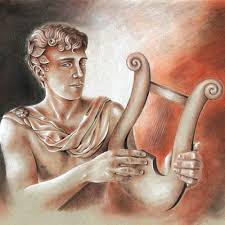
There are and can exist but two ways of investigating and discovering truth. The one hurries on rapidly from the senses and particulars to the most general axioms, and from them, as principles and their supposed indisputable truth, derives and discovers the intermediate axioms. This is the way now in use. The other constructs its axioms from the senses and particulars, by ascending continually and gradually, till it finally arrives at the most general axioms, which is the true but unattempted way.
–Francis Bacon, Novum Organum
Never let it be said that Big Big Train doesn’t think big. Their latest opus, Grand Tour, is a massive undertaking, taking the listener on a voyage from the cliffs of Dover to Italy, Constantinople, and out to interstellar space. Along the way, we pay our respects to Leonardo da Vinci, Saints Theodora and Justinian, exiled Prospero and Ariel, and Percy Bysshe Shelley. Oh, and we mustn’t forget to say hello to Francis Bacon, the first “modern” thinker.
If this project were attempted by any other artist, they would be ridiculed for their pretentiousness. To BBT’s credit, they have done their research, and every song on this amazing album is filled with respect, appreciation, and love for their subjects. In the 18th and 19th centuries, every well-educated European took a “Grand Tour”, which included visits to famous cultural and religious sites, such as Rome, Florence, Paris, etc. Thanks to BBT, we can embark upon our own grand tour via their artistry.
[Please go to the next page]
An Ode to Progressive Rock | The American Conservative
Its most famous member is Dave Gregory, formerly the lead guitarist for XTC. Like every member of the band, Gregory is an extraordinary musician pursuing a high art. He is also, I’m happy to note, a true gentleman and, like everyone in the band, a perfectionist. From the beginning of its existence, BBT has honed its complex song structures, riveting melodies, and gorgeous historical, poetic, and mythic lyrics. Almost all of the band’s songs celebrate excellence, innovation, and struggle. Typical themes include World War I and II ace fighters, beekeepers, medieval saints, architects, and survivors of trauma. Lyrically, the band is levels above almost anything being written in popular culture today, and, in the rock-pop world, certainly well beyond Elvis, Madonna, and Lady Gaga.
— Read on www.theamericanconservative.com/articles/an-ode-to-progressive-rock/
Leviathan, Inc.: Robert Nisbet & the Modern Nation-State ~ The Imaginative Conservative
By the end of his formal academic career, in the late 1970s, Nisbet considered this chance encounter with The Servile State in 1936 to be one of the most significant turning points in his professional life. Indeed, he counted The Servile State one of the five most important books he had read in his life, ranking it alongside Tocqueville’s Democracy in America; James Fitzjames Stephen’s Liberty, Equality, Fraternity; Frank Teggarts’s Processes of History; and Joseph Schumpeter’s Capitalism, Socialism, and Democracy. “Suffice it here to say that never again, after reading Belloc’s work, did I imagine that there could be genuine individual freedom apart from individual ownership of property.”[3] Equally important, Nisbet noted, it forced him to realize that the liberals of the twentieth-century had profoundly corrupted the vision of their nineteenth-century ancestors. Additionally, at least in the mind of Nisbet, The Servile State, along with Tocqueville’s Democracy in America, Thomas More’s Utopia, Smith’s Wealth of Nations, William Graham Sumner’s The Forgotten Man, and Albert Jay Nock’s Our Enemy The State as one of the most important anti-government books of the modern West.[4]
— Read on theimaginativeconservative.org/2019/05/leviathan-inc-robert-nisbet-modern-nation-state-bradley-birzer.html
America’s Urban Nightmare: Gotham City ~ The Imaginative Conservative
To create a unique atmosphere for his Gotham City, Timm’s team drew all of Gotham on black paper. Traditionally, animators use white, allowing for light to flourish somewhat naturally. That Mr. Timm and company tried, for the first time, black paper was revolutionary in terms of technology and art, but also quite successful. Even the cleanest corners of Gotham possess a brooding darkness, perfect for the entrance of a Dark Knight.“There was an architectural visionary named Hugh Ferris, who did these elaborate, futuristic cityscape architectural renderings,” Mr. Timm explains. “They were just gorgeous—these massive deco buildings rendered very moodily. That was one of our prime influences on the look of Batman: The Animated Series.“[9] One of the most innovative things the Batman: The Animated Series did, in its first feature animated movie, The Mask of the Phantasm, was an opening, computer generated at the very beginning of the use of CGI in any film, of a camera slowly making its way in reverse through the Gotham skyline as the magisterial music of the tragically unsung but brilliant composer Shirley Walker plays.[10] Walker’s soundtrack employs music from the late classical to early romantic period while incorporating faux medieval chant. As bizarre as this combination sounds, it works beautifully, especially as the camera crosses the Gotham City skyline.[11] Nothing in the comics or the movies made, before or after, has done so much to demonstrate the sheer and inhumane scope and scale of Gotham.
— Read on theimaginativeconservative.org/2019/05/americas-urban-nightmare-gotham-city-bradley-birzer.html


You must be logged in to post a comment.