All posts by Thaddeus Wert

High school math teacher and fan of all kinds of music, but most of all prog.

The Flower Kings: Space Revolver and More!

Space Revolver

One of Brad Birzer’s favorite musical artists is The Flower Kings, and one of his favorite albums of theirs is Space Revolver. In this dialog, he and Tad Wert discuss that album and its place in their discography.

Tad: Brad, it’s good to be interacting with you again on Spirit of Cecilia! I chose this classic album, because I know it’s a favorite of yours.

My first exposure to The Flower Kings was their album, Stardust We Are, which I bought because of a Mojo Magazine article on “the new wave of progressive rock”. I have to admit that I tried repeatedly to listen to the whole album, and it never held my interest enough for me to do so. I know that you love Roine Stolt and his Flower Kings, so every time a new album was released, I gave it a try, but there were always other artists’ music that took my attention.

Then, last week, I found an inexpensive copy of Space Revolver, and I don’t know exactly why, but I picked it up. Once I heard the opening chords of I Am The Sun Pt. 1, I was immediately taken with this album! I think Stolt (in my humble opinion), had hit upon a very good balance between power and grace in his music. As I continued to listen to the rest of the album, I was gratified to hear that that high quality of songwriting continued throughout.

Brad: Dear Tad, it’s been too long, my friend.  What have I been doing?  Too much teaching of the American founding period and too much grading!  Ha.  No, of course, I love my teaching and my students, but they are distractions from my love of reviewing albums with you and my love of progressive rock!  So glad to be done with the semester (and, frankly, it was a great one!!!) and back to reviewing with you.  Ahh. . . the good life.

Yes, I’ve been a fan of The Flower Kings for a long time, now, and I’ve been an evangelist of the band just as long.  Way back in the year 2000, a former student (now the head of our philosophy department) leant me a copy of Flower Power.  I was immediately taken with it, and I bought everything available at the time by the band.  I fell in love with everything.  Absolutely everything, including Roine Stolt’s solo album, The Flower King (which, I assume is just a hippy-ish name for Jesus).  

Crazily enough, the band released Space Revolver on July 4th of that year.  Coincidence?  I have no idea, but it struck me as a perfect Fourth of July album.  Especially with those queer lines in the first track–”I left my heart in San Francisco.  I left my mind in San Francisco Bay.”  Wow, did I laugh hard or what!!!  24 years later, the line still cracks me up.

I’ve had the chance to correspond a bit with Stolt, and I even sent him some books on economics (by Wilhelm Roepke) before a longish tour he took.  As far as I know, he took the books with him!  How great is that?  Frankly, I’d be happy to be his book supplier.  At the time I sent him the Roepke books, he was really interested in an anti-Marxist form of economics, that is, the creation of more private property (small family farms) rather than less.  Again, how great is that?  “Ride this bitch, that is power!”  

Anyway, Tad, this is a long way of saying, I love the music, and I love the band.  I think the world of both.

Tad: Okay, Brad, your off-hand remark about the Flower King being Jesus is something that I’ve wondered about for a while: is Roine a Christian? The 1994 album, Roine Stolt’s The Flower King, is steeped in religious imagery, specifically Christian, and, of course, he has collaborated with Neal Morse in Transatlantic. Anyway, if true, it helps make sense of a lot of his music!

Also, here’s something else that came to me while listening to Space Revolver – to my ears, it is a huge leap forward in songwriting from Stardust We Are, and I was wondering what might have caused it. Then it hit me: Space Revolver was written and recorded a few months after Stolt was involved in the first Transatlantic album SMPTE! I think Neal Morse must have had an influence on Stolt; that opening piano riff in I Am The Sun Pt. 1 is very Morsian (to coin a word!). Chicken Farmer Song, Underdog, A Slave To Money, and A King’s Prayer all feature outstanding melodies – they’re downright power poppish in their catchiness. Even the jam that closes out A King’s Prayer is focused and tight, with nary a wasted note.

The tootling mellotron that opens I Am The Sun Pt. 2 is one of my favorite moments of the entire album. I hear it, and I can’t help but smile and bob my head. Actually, the whole atmosphere of this album is one of joy. Stolt seems to be having the time of his life, and he wants the world to know it.

I also want to single out Ulf Wallander’s soprano saxophone work for praise. I love that instrument, but in the wrong hands it can be very annoying. Wallander does a great job zipping off very pleasant  improvisations that add a lot to the overall feel.

The only misstep on this album, in my opinion, is Hans Froberg’s You Don’t Know What You’ve Got, which sticks out like a sore thumb. It just doesn’t fit in with the rest of the album. That said, it’s not a bad song, it just doesn’t work for me in the context of the other tracks.

Okay, I’ve raved enough; your turn!

Brad: Tad, what a fun writeup.  Thank you–I think you clearly identify the joy and playfulness that is so prevalent in Space Revolver.  Stolt was clearly having the time of his life.  I love all the other albums – in fact, I made a meme a years ago expressing what I loved about each album (see below) – and I’m especially taken with Flower Power (the first of theirs I heard) and Paradox Hotel.  I really like Stardust We Are, too–but each of these other albums lacks the extreme playfulness of Space Revolver.

Flower Kings meme

[I made the above meme back when Desolation Rose came out.  I was rather blown away by the album when it was released, but mostly because it was so intense and lacked the characteristic mischievousness of the previous albums.  Indeed, when we were really active at Progarchy, I even planned out a book on the Flower Kings (never realized, except for some snippets, here or there), following the meme’s albums’s themes.  I was planning on arguing that The Flower Kings were to Europe what Big Big Train was to England and what Glass Hammer was to America.

The book would’ve come out before my Neil Peart biography and even before what you and I, Tad, wrote on Big Big Train.  I was, at the time, emailing with Stolt, and I was rather taken with him (still am) as an artist and as a human being.  He was extremely active on Facebook at the time, as was his wife, and they were always interesting.  We disagreed radically on the meaning and legacy of President Obama, but, again, he was always a total and intelligent gentleman.  

It’s about the time I sent him the Roepke book.  

I did try to interview Stolt about Rush, but he very kindly responded that he didn’t know enough about the band to offer anything substantive.  He was genuine, kind, and humane in his response.

One of many grand schemes never realized. . .]
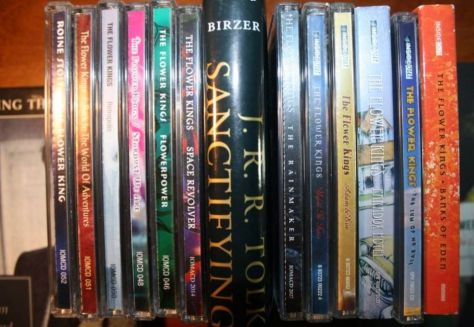
Birzer Flower Kings
Brad’s Flower Kings Collection

[Above photo, my fantasizing.  In the middle of my then-Flower Kings collection, I’ve placed three of my own books, my biographies of (right to left) Christopher Dawson, J.R.R. Tolkien, and Charles Carroll of Carrollton.  Yes, I desperately wanted my work to be tied to Roine Stolt and the Flower Kings.  I thought–and still do–that if any of my biographies could reach the majesty of Stolt’s artistry, I would truly have made a mark on the world.]

A few responses to you directly, Tad.  It’s funny, I had always assumed that Neal Morse was influenced by Roine Stolt, rather than the other way around.  And, Stolt, to me, seems deeply influenced by King Crimson, Yes, and Genesis.  This seems especially clear on his solo, The Flower King, and Retropolis, both of which came before Transatlantic.  But, I assume this is like a chicken or the egg question.  At this point (2024), the two must’ve influenced each other so completely that one can’t any longer disentangle which idea or person came first.  Together, Stolt and Morse are the heart of rambunctious third-wave prog.

As to Stolt being Christian, I have no idea.  In our brief correspondence, I obnoxiously asked him directly about his faith, and he never responded or hinted, one way or the other.  Being Swedish, he was almost certainly raised nominally Lutheran, even if the Swedes only attend services on Easter and Christmas.  

Regardless, Stolt employs Christian symbolism frequently, especially in the early The Flower King’s albums.  Again, I think that “The Flower King” is a sort of hippie Cosmic Christ.  Here are the lyrics from the first album:

Falling out of the sky, falling into a dream
All I need is the heart where it all can begin
It’s just a matter of time, it’s just a matter of trust
It’s just a matter of faith when we all sleep in the dust

Don’t deny, just verify the genius of it all
It’s the cycle of all living thing, hear the children
Hear the children call !

“We believe in the light, we believe in love every precious little thing
We believe you can still surrender you can serve the Flower King”

Going out into the grey, into purple and red
See, all the beautiful shapes flowing out of my head
It’s just a matter of time, it’s just a matter of trust
It’s just a matter of faith when we all sleep in the dust

Don’t deny, just verify the genius of it all
It’s the cycle of all living, hear the children
Hear the children call !

“We believe in the light, we believe in love every precious little thing
We believe you can still surrender you can serve the Flower King”


“We believe in the heart, we believe in healing in a house where angels sing
We’ll unite the divided and the fallen one will serve the Flower King”

“We believe in the heart, we believe in healing in a house where angels sing
We’ll unite the divided and fallen one will serve the Flower King”

Again, I don’t quite think this is the orthodox Jesus Christ of Christian faith, but a rather humanistic but still supernatural Flower King.  When the band becomes “The Flower Kings,” they’re not divinizing themselves but rather becoming disciples.  

What strikes me most, though, is that Stolt’s use of mythological symbols is not Lutheran, but deeply Roman Catholic.

On track four of Space Revolver, “Monster Within,” Stolt sings “Mother Mary, she’s left the building crying/silent tears rolling down her cheek.”  Granted, this could just be a Beatles’ reference, but Mary, here, seems more supernatural than Paul McCartney’s mother.  After all, Mary is the opposite of some kind of demagogue trying to seduce our children and who feeds on power and who controls the bats.

One of my favorite The Flower King’s albums, Unfold the Future, posits a war between the devil and Mary.  On the final track:

Clueless

Living in a business cluster, predator to suit your needs
Raven sitting on your shoulder, lurking the suburban weeds
Think I saw you in the bank, think I saw you in a talkshow
Swear I saw your mindless grin, justify the final blow

Swallowing the endless laughter, cultivate the deadly sins
Getting even altogether, hiding from the Holy Mother
This is how you raise the Cain, this is what you teach our children
Back on duty dog eat dog, they’re clueless in the Devil’s playground

Then, of course, on Space Revolver, on track 6, “Underdog,” there’s that really weird line/sound byte: “John Paul’s pizza, the biggest pizza you’ve ever seen.”  When this album came out, in the year 2000, the only John Paul that mattered was John Paul II.

So, is Stolt Christian?  I have no idea, but he’s an awesome ally, a man of integrity, and a grand myth maker.  Taken together, this is so much what I love about Stolt and the band.  Never once I have listened to them without my imagination being stimulated, expanded, and made manifest!

Tad: Wow, Brad! I knew you were a fan of Stolt, but I wasn’t aware of all the thought you’ve put into his music. I now have a much greater appreciation for his overall oeuvre than before. I think you’re probably correct about who influenced whom – Morse had to be aware of Stolt while he was in Spock’s Beard, and Stolt had to be aware of Morse. They likely influenced and appreciated each other, which led to the formation of another outstanding prog group, Transatlantic. 

I kind of like it that Stolt is mum about his faith; it allows different interpretations of his music. What’s important to me is that he seems to be a light-bearer, as opposed to a dark nihilist like so many Scandinavian death metal artists. Stolt is always positive and optimistic, even when he is singing about something he’s unhappy about. In that regard, Desolation Rose seems to be his “darkest” work, and it is still uplifting to my ears.

So here’s my takeaway on Space Revolver: it is the perfect introduction to The Flower Kings for someone who is new to them. In it, the group hits the perfect combination of melodicism, progginess, and improv jamming. Once you’ve absorbed this album, all the others make sense. They’ve had an amazingly productive run the past 30(!) years, and I hope they go for 30 more!
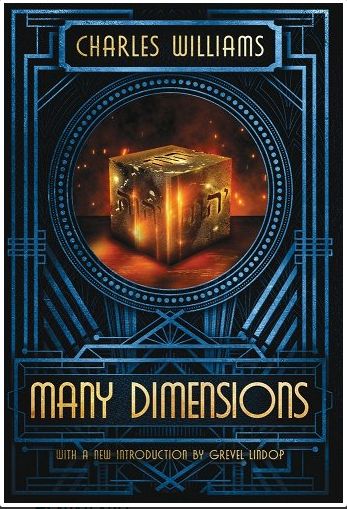
Charles Williams’ Many Dimensions – Excellent Fantasy from an Inkling

I have just finished reading Charles Williams’ second novel, Many Dimensions, and the more I read of his, the more I like it. Even though his fellow Inklings Tolkien and Lewis are more well known, Williams deserves to be more widely read. He stakes out a unique territory of weird fantasy that is imbued with his Christian faith. Here’s my review of it.

Discipline-Era King Crimson: A Conversation

Greetings, Spirit of Cecilia readers! In this post, Brad Birzer, Erik Heter, and Tad Wert revisit three progressive classics: Discipline, Beat, and Three of a Perfect Pair, from King Crimson.

Tad: Brad and Erik, I am so looking forward to hearing your thoughts on these albums! We haven’t really delved into the incredibly large and diverse discography of King Crimson, and Discipline is a personal favorite of mine. It came out in 1981, after most fans assumed Robert Fripp had put King Crimson to rest for good. As a matter of fact, on their previous album, the 1974 live set USA, Fripp put R.I.P. on the back cover. That album is another favorite of mine, featuring the formidable lineup of Fripp (guitar), Bill Bruford (percussion), John Wetton (bass and vocals), and David Cross (violin). This is the same group that recorded Lark’s Tongues In Aspic (with Jamie Muir added on percussion) and Starless and Bible Black. This group was ferocious in its ability to improvise, but apparently it was exhausting for all involved.

So it was quite surprising when word got out that Fripp was rehearsing a new lineup for King Crimson: Bruford (again), Tony Levin (bass and stick), and Adrian Belew (guitar and vocals). I was a subscriber to Musician magazine at the time, and it started running a series of “diary” entries from Fripp that detailed his excitement (and worries) about the music they were creating.

Musician Mag

As interested as I was in what this new iteration of KC was going to sound like, nothing could have prepared me for Discipline. I was familiar with Belew from his work with Talking Heads and David Bowie, but I hadn’t heard him sing before. I knew Tony Levin was a much-in-demand bassist, but I didn’t realize how much of a pioneer he was with the Chapman Stick. The shift in style from Starless and Bible Black to Discipline is one of the most radical metamorphoses in rock history. And what is so impressive is that they pull it off – pleasing long time fans and attracting new wave listeners. 

King-crimson-discipline-1500

When it came out, I was in college, and one of my suitemates got a copy. We listened to it several times in one evening, trying to understand what Fripp et al. were doing. To my ears, it was the perfect marriage of challenging, yet accessible rock. The cover art was understated and perfect: Bright red with a basic silver font simply stating, “King Crimson Discipline”, and a Celtic knot that isn’t easily untangled. Rhythmically, it was very straightforward. Melodically, it was almost minimalist in its composition, but it fit in comfortably with what groups like Talking Heads, The Police, Ultravox, and Simple Minds were producing. The more I listened, the more I was taken with it.

Okay, I’ve rambled on for too long! How did Discipline strike you, Brad, when you first heard it?

Brad: Tad, what a wonderful way to start us off.  Thank you so much for your many good thoughts on this.  Sadly, I won’t be able to match your good introduction.  Yet, I loved reading about yours.

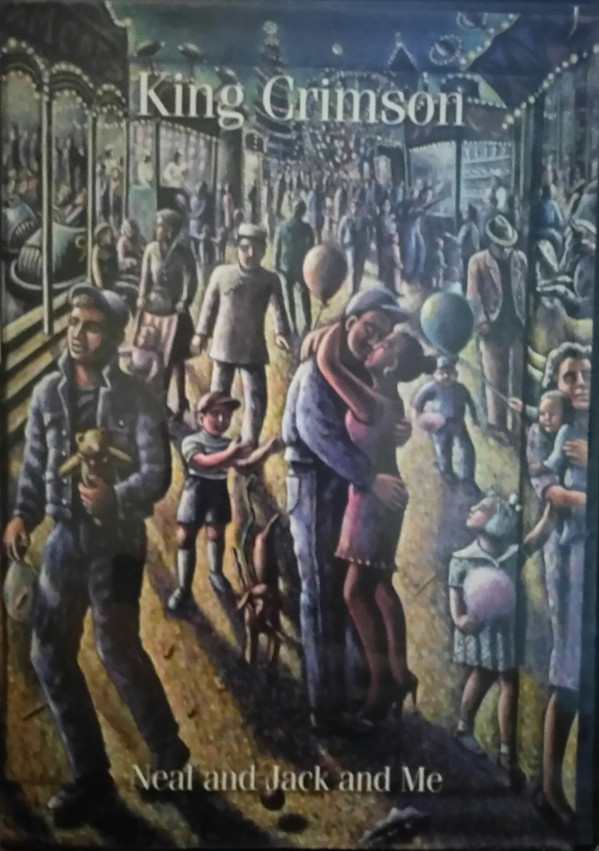
Though I grew up with progressive rock–Yes, Jethro Tull, and Kansas, in particular–I knew nothing about King Crimson until my college years.  I didn’t start college until 1986 (and the three Discipline-era albums had already come out), and I first encountered the band through a radio station copy of Beat and, in particular, the song “Neal and Jack and me”–which I instantly fell in love with.  

I remember being taken with the minimalist cover and diving into the music.  

After encountering it at the radio station, I purchased a copy of Beat, and, from there, I bought Discipline and Three of a Perfect Pair.  To me, these three albums have to go together, one followed by another.  I really have a hard time thinking of any one of the three–red, blue, and yellow–in isolation from the other.  As such, I came VERY late to In the Court of the Crimson King, and the albums had progressed so much that I had a very hard time thinking of “my” King Crimson as the King Crimson of “In the Court. . .”  Much later, I would buy Thrak–which has far more in common with Discipline-era King Crimson than the original King Crimson albums.

I knew very little about Adrian Belew or Robert Fripp, but I’d been a long time fan of Bill Bruford because of Yes and Tony Levin because of Peter Gabriel.  So, I was really curious as to what they were up to.

Additionally–should I admit this here???–though I never had a religious fundamentalist phase, I was returning to my childhood Catholicism (I’m what’s called a “revert” in Catholic circles) at the same time that I first encountered Discipline, Beat, and Three of a Perfect Pair, and I was really freaked out that the band named themselves after the devil!  I thought, what a crazy thing to do.  Why would you even mess with such a thing?

That stated. . .

I’ll do my best to focus on Discipline, though, for this dialogue.  Tad, for better or worse, I often think of Discipline-era King Crimson as New Wave Prog, in the same way I think of Rush’s Power Windows, Yes’s Drama, or The Fixx’s Reach the Beach.  It’s definitely progressive, but in such an early 1980s way.

Tad: Brad, I agree that Discipline, Beat, and Three of a Perfect Pair make a seamless trilogy. It must have been deliberate – look at the artwork for them: same font with a single icon on each. As a lover of symmetry, I have always been bowled over by this series of album covers. I even framed them when I was first married, and my understanding wife let me hang them on our den wall!

Trilogy

 Your characterization of this music as New Wave Prog is perfect. I think you’ve created a hitherto unknown genre of music, but one that, with hindsight makes sense! At the time, it seemed to just fit in with all the weird and crazy music being produced in the early 80s.

Okay, let’s discuss the songs on Discipline. It opens with “Elephant Talk”, in which Belew bellows, 

Talk, it’s only talk

Arguments, agreements, advice, answers

Articulate announcements

It’s only talk”

 while his guitar emits sheets of cascading sound. Levin lays down nimble basslines on his Stick, and Bruford plays a cacophonous yet steady racket on drums. All the while, Fripp is furiously pushing out scales on his guitar and creating a soundbed for the others to play on. Each verse is a list of synonyms for verbalizing in alphabetical order: the first is all A’s, the second all B’s, etc. This illustrates an aspect that I love so much about this iteration of KC: their sense of humor. Even though the music can be crushingly dense at times, there is a feeling of fun and sheer joy in it.

Erik: Like you, Brad, I was a latecomer to King Crimson – for the most part anyway.  I do remember hearing Discipline once or twice when it first came out, but to use a Heinlein-ism, I absolutely did not grok it at all.  So I put it aside for well over a decade and a half before finally revisiting it.  In the meantime, I had purchased In the Court of the Crimson King, Lizard, and most importantly (for the purposes of priming the pump for Discipline), Larks Tongues in Aspic.  While the latter is quite different from Discipline-era Crimson, if one listens close enough they can hear a few stylistic threads connecting them (and indeed, Three of a Perfect Pair includes Larks Tongues in Aspic Part III).  If anything, I think the music of Discipline and the subsequent two albums is where they would have ended up anyway if they hadn’t broke up in 1974.  

Another thing Brad – like Tad, I think your description of Discipline-era Crimson as New Wave Prog hits the nail on the head.  The music has so much of that quality in other 80’s music that was described by the phrase once uttered by Yes’s Tony Kaye – dimensionally sparse.  No previous Crimson album ever left as much space between the instruments as Discipline and its two successors did.  This description applies to a majority of the album, with the notable exceptions of Indiscipline and Thela Hun Ginjeet.  Because of this approach, Discipline fit in with the contemporaneous music of the early 80’s as well as the early Crimson albums fit in with that of the early 70s.  

What makes these albums familiar to Crimson fans was the presence of Fripp and Bruford, who were well-established by the release of Discipline.  What made them fresh was the presence of newcomers Belew and Levin.  Belew brought in the quirky, New Wave-y 80s vocal stylizations that he learned during his time with the decidedly non-prog Talking Heads.  Meanwhile, Levin brought in not only a new way of playing bass, but also introduced to Crimson the Chapman stick and the new sounds that came with it.  When it was all thrown into the same pot, the result was a type of music that was eclectic and often intricate.

If I had to pick some favorite songs off of the album, there are three that really stand out to me.  First is the easy, breezy Matte Kudasai, the uptempo romp of Thela Hun Ginjeet, and the instrumental The Sheltering Sky.  The latter two of these tracks include some of the best percussion work Bill Bruford has ever performed in any of the bands he’s been in – which is quite a statement considering his pedigree.  In Thela Hun Ginjeet, Brufords drumming comes in fast and furious yet with exquisite precision.  In The Sheltering Sky, Bruford’s percussion is almost understated and yet still manages to demand the listener’s attention.  This track also includes both Belew and Fripp on the weird, wonderful guitar synthesizer.

I’m still relatively new to the latter two albums of this trio, so I’ll visit those in my next entry.  For now, back to you guys!

Tad: Erik, thank you for your insights on this album! I’m glad you brought attention to Bruford’s contributions. One thing I remember from those articles Fripp published in Musician is how he kept trying to rein in Bruford, because he wanted this music to be disciplined

If I had to pick my favorite songs, it would be “Frame By Frame” and “The Sheltering Sky”. In the former, I really like the relentless groove that Fripp, Levin, and Belew set up, while Belew’s and Levin’s vocals hover delicately above it all. 

I agree with you about Bruford’s excellent percussion work in “The Sheltering Sky” – I have a DVD of a concert they performed at the time this album came out, and Bruford is masterful on congas while Fripp wigs out on guitar. I love the way the song takes its time building – it’s quite a while before Levin enters on Stick, and when he does, it brings the music to another level. I don’t think Fripp ever had another guitarist as empathetic as Belew was with him. The two of them traded phrases off each other as if they were of one mind.

Fun fact: “Thela Hun Ginjeet” is an anagram for “Heat In The Jungle”! 

Brad: Dear Tad and Erik, what excellent responses.  One of the things I love most about Discipline is that it starts off with the utterly bizarre “Elephant Talk.”  The band could’ve easily and victoriously started the album with the much more radio and listener friendly “Frame by Frame.”  

Instead, they begin with the offbeat one.  Again, I love this about the band.  They definitely define their own path.

I’m not sure I have specifics about this album.  Again, to me, it’s an intimate part of a trilogy of releases, and, Tad, I love that you had the artwork displayed.  What would we do without our loving and forgiving wives!

And, I would agree, my favorites among these tracks are “Frame by Frame” with its relentless roar, and “The Sheltering Sky” which feels like a Talk Talk song from the same period, at least in terms of its rhythm.

I mentioned this above, but my favorite album of the trilogy is Beat, as it combines the weirdness of “Elephant Talk” with the accessible and intense sounds of “Frame by Frame.”  

“I’m a 1952 Studebacker coupe!”

But, I also really love the title track of Three of a Perfect Pair.  So wonderfully quirky.

Tad: It’s a tough call, but I think this iteration of King Crimson is my favorite. At least, I come back to these three albums more than any others in Crimson’s long, long career. I don’t think Fripp ever assembled a more talented crew than these four guys, and they are at the top of their game. I never saw them live, but as I mentioned, I have a couple of concerts on DVD, and they make this difficult music look effortless.

As I have revisited this trio of albums in order, I’m struck by how much the “accessible” songs sound more accessible, while the “out-there” songs are more and more out-there. Brad, maybe that’s why Beat is your favorite – it hits the sweet spot between pop and experiment. While it contains beautiful and gentle love songs like “Heartbeat” and “Two Hands” it also has the atonal and terrifying “Requiem”. I think that’s why this iteration of King Crimson packed it in after Three of a Perfect Pair; by the third album, “things fell apart; the center couldn’t hold” (to paraphrase Yeats!). That album contains their most pop song ever, “Sleepless”, while also giving us “Industry”, which is close to pure noise in places.

Erik: While my familiarity with Discipline dates back to about the mid-90s, Beat and Three of a Perfect Pair are both relatively new to me.  Yet one thing that strikes me is the consistency of sound across these albums – it’s almost as if they could have all been released as one triple album instead of as three separate albums.  From a production standpoint, these albums really stand out as being of a particular time.  One odd thought I’ve had listening to these – particularly Beat – is how similar the production (not the music!) was to the first two solo albums of Robert Plant.  Indeed, I had to go back and look it up to find out who the respective producers were, but they were different.  It must have been just something in the air at the time.

Another observation about these three albums – they mark some of the best, if not the best work of Bill Bruford in his entire career.  As a hardcore Yes fan, I do not say that lightly.  One great example of this is Sartori in Tangier from Beat (which, for some reason, I keep reading as Santoni the Tiger … I think I need some Frosted Flakes, but I digress).  Another is Sleepless from Three of a Perfect Pair. Sleepless is also one of the songs in this trio that includes Tony Levin’s use of the Chapman Stick, along with Neurotica and The Howler (from Beat), as well as Industry and the title track of Three of a Perfect Pair.

All that said, by the end of Three of a Perfect Pair, I start to hear a certain sameness in the music, and thus it’s not surprising to me in retrospect that Fripp broke up the band again.  Maybe that’s just how Fripp worked best, in bursts followed by long breaks.  I do get the impression he wasn’t easy to work with, and have read that both Bruford and Belew were a bit miffed when Fripp split them up again in 1984.

That being said, I don’t want to close on a sour note, so here goes.  You guys, being in the same age range as me, might remember the early 80s TV show Fridays, which was basically ABCs attempt at creating their own version of Saturday Night Live.  Both had the same format – sketch comedy, a “news” break, and musical guests.  And on one glorious night during the 81-82 timeframe, they had as their musical guests Fripp, Belew, Levin and Bruford, under their collective name of King Crimson – preserved for posterity thanks to YouTube. Enjoy!

It’s Easy to Like “The Likes Of Us”

BigBigTrain_TheLikesOfUs (1)

There are a select few artists that Spirit of Cecilia will always love and greet with joy any new release. One of them is Big Big Train, who have just released a new album, The Likes Of Us. Big Big Fanboys Brad Birzer and Tad Wert discuss this latest chapter in their long and varied career, and what it means for BBT’s future.

Tad: Brad, my fellow Progling and good friend, it’s always big news when Big Big Train graces us with new music. I have you to thank for making me aware of this wonderful group of musicians. It was when The Underfall Yard had just been released, and we were connecting via social media. You insisted I check them out. I had never heard of BBT, and it was an ear-opening experience to explore all of their music. I fell in love with The Difference Machine along with The Underfall Yard, and the rest is history.

As I became familiar with their career, I soon learned that The Underfall Yard was the first album to feature vocalist David Longden. He, along with founding member Greg Spawton, went on to produce some of the finest albums of the 2010’s: English Electric, Folklore, Grimspound, Grand Tour, Common Ground. And then tragically, David Longden passed away. I was afraid this was the end for BBT as we knew them. 

However, they found a new vocalist, Alberto Bravin, and have recorded a new album! Brad, I’m really interested in hearing your first impressions of this iteration of BBT. Is it a worthy successor to previous ones?

Brad: Dear Tad, thank you so much for this, and my apologies (as usual) for being late in replying.  Things have been chaotic (good and bad chaos, it turns out–one so quickly and readily becomes the other) in the Birzer household.  Let’s just say, I’m not unhappy to see February 2024 in the rear-view mirror, and that all ills (flu and otherwise) have found happy resolutions!

As I type this on my laptop, I sit beneath an original Jim Trainer painting from The Underfall Yard that proudly adorns my college office.  Below it is an award I won over twenty years ago, and above it is an original photo of Geronimo.  Next to it is a signed and framed autograph from Neil Peart.

I first encountered The Underfall Yard fifteen years ago.  Our very own Carl Olson sent me a mix of his favorite tracks of 2009, and a song from the TUY album was included.  To say I was floored would be the understatement of my adult life.  I immediately ordered the full album, and I was completely blown away by its brilliance, its creativity, and its unique voice.  As to the latter, there’s nothing quite like a classic BBT sound–a perfect mixture of exhilaration and melancholy.  I also immediately emailed Greg Spawton, who kindly responded. For years, we had a fairly serious correspondence.  We even sent each other books we each loved.  I cherish those emails and that friendship.

From there, I closely followed the band, and, as I’ve noted elsewhere, we founded Progarchy originally as a BBT fansite.  Years later, you and I collected our various essays on the band and e-published Dream of the West through Amazon.  That little e-book did very well, I’m proud to say, and I’m deeply honored that our names will always be linked together, Tad.  I also had the chance to praise them at National Review, at The Imaginative Conservative, and elsewhere.

This is all a very long way of stating that I’ve followed the band as closely as possible for a decade and a half.  I’ve cheered with and for them, and, with the immense loss of David Longdon, I’ve mourned with and for them.

They’ve been a part of my life as much as anything else (except for family) over the past fifteen years.

This past weekend, BBT played its very first show in the United States.  It was in Fort Wayne, Indiana–just a 1.5 hour drive for me–but I was, crazily, already committed to leading a seminar/conference in Philadelphia, a commitment I made.

Big Big Train | Trieste, May 2023 | ph Massimo Goina

Ok, Birzer, shut up and tell us about the new album!!!

To be sure, BBT has had a rough couple of years, and many folks have wondered if the band could recover after the tragic loss of vocalist David Longdon.  Additionally, many of the essential bandmates–such as David Gregory–had left the band for a variety of reasons.

The Likes of Us proves that BBT is more than the sum of its parts, an idea and concept as much as a concrete band.  Whereas the band was once incredibly and quirkily English, it is now quite cosmopolitan and, well, trans-Atlantic.  I write this last bit with only the slightest bit of irony, as the new album has, in part, a Neal Morse/Spock’s Beard feel to it.

Tad: Brad, as always, I appreciate the context you provide for your love of BBT. I think you have hit the nail on the head with your preceding paragraph: Big Big Train is an idea and concept now, much like King Crimson and Yes are. The personnel may change, but there is definitely a constant thread through all of their albums that makes each one a uniquely “BBT” work. 

As I write this, I am listening to “Beneath the Masts”, Greg Spawton’s ode to the radio masts that dominated the landscape of his childhood. As long as Greg is involved, BBT will always be BBT. He truly has been the anchor of the band, regardless of who sings or plays guitar. 

I am intrigued with your reference to Neal Morse/Spock’s Beard. I love their music as well, but it has always been more, hmm… turbulent, than BBT’s in my opinion. BBT’s music has, until this album, always struck me as being pastoral. Kind of like Vaughan Williams’ music is in the classical realm. I could see BBT performing “The Lark Ascending”, but never Spock’s Beard, if that makes sense!

Okay, let’s talk about The Likes Of Us! I love the opening chords of the first song, “Light Left In The Day” – the acoustic guitars are reminiscent of Steve Hackett-era Genesis. It soon develops into quite a majestic production, and, now that you’ve mentioned it, I really hear that Morse influence in it. Another favorite moment is the seamless segue into “Oblivion”, which is a terrific rocker. According to my Spotify app, I’m not alone in really liking this track – it far and away has the most listens. I think it’s a great choice for the single, because the melody is so appealing. Bravin’s vocals are superb here, and despite my initial impulse to compare him unfavorably to Longdon, I think he does a fantastic job leading the band. He’s a wonderful choice to replace an irreplaceable artist, and I am excited for BBT’s future.

“Beneath the Masts” is the big epic, clocking in at 17:26. I have to admit that after several listens, this one hasn’t resonated as deeply with me as previous long-form BBT songs have. It’s very pretty, and there is nothing to not love, but for some reason it’s just not sticking in my memory. However, I do especially like the bit at around the 15:00 minute mark where, after a relatively quiet section, the whole band comes in again and Bravin lets loose with some very good vocals. 

“Skates On” reminds me the most of “classic Big Big Train”. It’s just a delightful little tune with wonderful vocal harmonies. The lyrics celebrate going out and having some fun: “Enjoy the Ride/It’s time to get your skates on/We’re here then gone”. I think the more I listen to the album, the more I enjoy this track.

Alright, I’ve written enough – what are your thoughts on the new songs?

Brad: What a wonderful and thoughtful response, Tad.  Thank you.  Whenever I get a new album–especially if you and I decide to review it–I immerse myself into it fully, allowing it to wash over me multiple times before writing about it.  For whatever reason, I had a really hard time getting into The Likes of Us the first few times I listened to it.  I definitely heard a Spock’s Beard influence (the new singer sounds VERY much like Nick D’Virgilio), but my initial thoughts were that the band–now labeled as an “international progressive rock collective” had lost its distinctive English voice and that the band was producing someone one might call “generic prog.”

As I’ve continued to listen to the album, though, I think I was very wrong in my initial assessment.  The band has definitely lost its distinctive English voice, but it has also adopted a new one and one that is truly international.  And, frankly, it’s quite beautiful in its own, new way.  The band really has become something more than it was.

And, you’re right, of course, Tad.  The center of the band–from its beginning–has always been Greg Spawton.  He’s the touchstone and fountainhead of all things BBT.  With his bass, his songwriting, and his voice, he will always define BBT whatever other members are there.  I’m so glad you reminded all of us of that.

This said, I’m now utterly taken with the first three tracks of The Likes of Us: “Light Left in the Day” (a pastoral gem for the first few minutes), “Oblivion” (a NVD rocker), and the magisterial “Beneath the Masts” (what BBT does best–long-form prog).  Like you, Tad, I love the segue between tracks one and two, and I also agree that “Beneath the Masts,”  while excellent, does not quite live up to “Broken English,” “The Wide Open Sea,” or “The Underfall Yard.”  Still, it’s close, and, frankly, it’s a privilege to hear such prog beauty, especially when it comes from Spawton’s pen.

As you note, “Skates On” is simply a delight, something that might have appeared on Grimspound or The Second Brightest Star.

Tad:  Brad, I’m glad you have had a slight reassessment of the album, and it looks like you and I are in agreement that the first “side” (if albums can have “sides” these days) is really nice. As far as the final four tracks go, “Miramare” is the standout song for me. The vocal harmonies are wonderful, and the guitar solo is very tasteful.

In the press release that came with the album, the band remarks that this is the first time in a long time that the members recorded the songs together in the same room: In May 2023, six members of Big Big Train left their homes in England (Spawton and Lindley), the United States (D’Virgilio), Sweden (Sjöblom) and Norway (Holldorff) to gather for a week in Bravin’s home town of Trieste in north eastern Italy, at Urban Recording, a studio recommended by Alberto, to lay down the basic tracks. Being face to face in a room, as opposed to emailing sound files, the intimacy of the process generated moments of inspiration that would otherwise have gone unheard.

 The process would prove emotional. “There were some tears; I cried a few of my own,” recalls Nick D’Virgillio, the band’s drummer since 2009. “There are many reasons to explain why we hadn’t worked that way in quite a while, but the process brought out the best in everybody.”

I’m glad that they took the time and trouble to work in person – that bodes well for future music. I always think songs are improved when musicians can bounce ideas off each other in real time.

Well, I think that is a good place to wrap this one up, Brad. I’m going to say that The Likes of Us will probably be thought of as a transitional album when put in the context of their long career; they have successfully incorporated a new vocalist/songwriter into the fold, while maintaining ties to their past. It will be interesting to see what they produce in the years to come!

Haunted by No-Man’s Schoolyard Ghosts

Schoolyard Ghosts

Greetings, Spirit of Cecilia music lovers! In this post, Brad Birzer and Tad Wert revisit a classic No-Man album, Schoolyard Ghosts, from 2008.

Tad: Brad, I’m so glad you suggested we discuss this album. I picked it up when it first came out. I had just discovered Steven Wilson’s Porcupine Tree, and I was snapping up anything I could find that he was involved in. No-Man is certainly different from Porcupine Tree, but Wilson and Tim Bowness make beautiful music in their own way.

As I listened to this album once again, I was struck by how calming it is (with the exception of that raucous opening to “Pigeon Drummer”). For me, “Truenorth” is the standout track. When I first got Schoolyard Ghosts, I didn’t take the time to appreciate how great a song it is. It slowly unfolds for nearly 13 minutes, but it never lags. Tim’s vocals are so hushed and warm, while Steven’s acoustic guitar accompaniment is perfect.

Brad: Tad, thanks so much for such a brilliant opening to this dialogue.  I think you nailed it all very perceptively.   And, I’m with you on all of this.  

The best way to describe the music is, as you so aptly put it, “hushed and warm.”  Delicate and lush also come to mind as descriptives as well, though delicate might be taken as derogatory by some readers.  I certainly mean it in only the most positive sense.

This was my first No-man album, and, at the time it came out, I was buying basically everything that the label Kscope was producing.  I had already been a Steven Wilson fan–since 2002–but I’d not delved into No-man for some reason.  Porcupine Tree, yes.  Blackfield, yes.  But, bewilderingly, not No-man.  This, of course, all changed with Schoolyard Ghosts.

Indeed, Schoolyard Ghosts rather blew me away in 2008, and it continues to do so over a decade and a half later.  I never grow tired of this album.  I love the lilt of the instruments, Bowness’s plaintively gorgeous vocals, and the fine production of the music.  I also love the vocal harmonies that Bowness and Wilson create.

I can state now, in 2024, that I’m as much a fan of Tim Bowness as I am of Steven Wilson–which is saying a lot for anyone who knows me.

Since 2008, I’ve pretty much devoured everything that Bowness has written and released.  I’ve come to the conclusion that he’s our generation’s Mark Hollis.  He was definitely influenced by Hollis and Talk Talk.  One can hear it in his phrasing and in his lyrics.  It’s clear that Bowness is in love with words as much as he is with music.  

Bowness also reminds me very much of our own Kevin McCormick.  What an incredible team they would make.

Tad: Yes, Brad, the ghost of Mark Hollis is definitely present here! I find it interesting that Schoolyard Ghosts was your first introduction to No-Man. Mine was 1994’s Flowermouth, which was the only No-Man title available at my local used record store. It’s very poppy – almost like Pet Shop Boys – and as I completed my No-Man collection, it became clear that every album had its own unique identity. Initially, I was disappointed that Bowness and Wilson didn’t sound more like Porcupine Tree, but why should they? Wilson has always been a lover of many different genres, and No-Man was a completely different entity for him than PT. As a matter of fact, No-Man was more popular, sales-wise, than PT, which, at the time, was more of a side project.

Okay! Back to the topic at hand. I’ve been listening to the 5.1 surround mix of Schoolyard Ghosts, and it is really good. There are no obvious “whooshes” from front speakers to back and left to right, but rather various sounds pop up and fade away behind me, like the static that closes out “All Sweet Things”, the steel guitar in “Song of the Surf”, or some gentle beeps in “Streaming”. The percussion in the middle section of “Truenorth” has enhanced echo, which is nice.

Speaking of “Truenorth”, I have to say again that this is a near-perfect song! The 12:48 album version puts the single version to shame. I love the “Sweet surrender to the night” section that closes it out – it brings the song to such a melodically satisfying conclusion. 

The only – literally – jarring song on the album for me is “Pigeon Drummer”. In the right context, I can appreciate raucous dissonance, but “Pigeon Drummer” feels out of place on this album. Based on Wilson’s and Bowness’s delightful podcast, The Album Years, I know they both love avant-garde music and musique concrete. However, I think that song messes with the overall flow of the album. Tell me why I’m wrong, Brad!

Brad:  Tad, I’m really impressed that you go all the way back to 1994’s Flowermouth.  Do you remember how you came to it?  I’d love to read that story.

I don’t want to make too much of the Talk Talk connection, but I really feel that “Pigeon Drummer” is No-man’s take on “Desire” from Spirit of Eden.  In that context, to me at least, the song makes perfect sense as a necessary break in an otherwise very delicate and haunting flow.  It’s intentionally jarring, thus making the rest of the album even more beautiful.  In fact, one of the many things I love about this album is the intensity of the overall flow.

I’m in complete agreement with you regarding “Truenorth.”  It is a stunning piece of music, perhaps perfect, even.  It builds so well.  I must admit, it reminds me of an updated Traffic tune.  Not as jazzy as Traffic, of course, but still in a Steve Winwood/Dave Mason vein.  And, I love the lyrics:

You survived another winter
You survived where nothing grew

The days felt cold and never changing
So you just slept the whole way through

When you think about the future
It’s like the past, but hard and small

An old idea you stole from someone
A borrowed dream that’s born to fall

Take a taxi through the snow
Tell them you love them –
Don’t let go

Through the tunnel moving slow
Tonight’s there’s nowhere
You won’t go

You survived yourself
You survived inside the lost world
The dreams of love

And, to be sure, I really love the lyrics to the opening track, “All Sweet Things”:

The run-down streets, the civil wars
You don’t go there anymore –
It’s how you used to live

The trampled hopes, the made-up laws
The itchy feet, the pub quiz bores –
It’s so hard to forgive

Weekend slimmers count their chains
Still wanting someone else to blame
You watch them come and go

Empty nightclub escapades
They tell you more than words can say –
That open doors get closed

The empty rooms, the empty house
Someday soon, you’ll work it out –
Still finding the way back home

The schoolyard ghosts, the playtime fears
You take your pills, they disappear –
The people that you’ve known

I’m curious who wrote these, Bowness or Wilson.  Either way, they’re fantastic.

Tad: Brad, Flowermouth was my introduction to No-Man, because it was the only No-Man album I could find at the record store, and I couldn’t wait for it to be delivered from an online dealer! 

Thank you for sharing the lyrics to “Truenorth” and “All Sweet Things”. I think Bowness must have written the ones to “Truenorth” at least, because there is a sweetness (for lack of a better word) to them that I can’t see Wilson pulling off. His lyrics are usually much darker, which is why he might have had a  hand in “All Sweet Things”. 

“All Sweet Things” is my second-favorite song on Schoolyard Ghosts. It’s a nice opening track, because it sets the mood for the entire album. It has a beautiful melody which slowly unfolds. The mostly acoustic instrumentation is very warm (there’s that adjective again!) and inviting. 

I’ll concede your point in defending “Pigeon Drummer”. Without the tension it adds to the overall mix, the album would probably suffer from a sameness in style and atmosphere. You can’t appreciate calm beauty without a little harshness to get through!

Brad: Tad, thanks for such a great dialogue.  I was really happy to revisit Schoolyard Ghosts, and it’s always excellent “talking” music with you.  As you’ve pointed out here and elsewhere, modern music simply would not be where it is without Bowness and Wilson.  Each have contributed so much–as creative talents and as analysts.  The current issue of PROG magazine has an excellent article on early No-man.  As Wilson notes, the two would rather talk Spirit of Eden than hit the club scene.  Amen.

Tad: Amen, indeed!

We Really Like The Bardic Depths’ “What We Really Like In Stories”!

Bardic Depths Stories

In this post, Kevin McCormick and Tad Wert discuss The Bardic Depths’ new album, What We Really Like In Stories. It is the third album from them, and it features songwriting by Dave Bandana and Gareth Cole, with lyrics by Bradley Birzer.

Tad: Kevin, it’s great to be reviewing this album with you! I know you and Brad go way back in your friendship – did you ever imagine he would someday be the lyricist for a British progressive rock group?

Kevin: Thanks Tad–great to be writing it with you as well.  It was definitely a surprise when Brad first mentioned he was writing lyrics for a rock recording—we had a good laugh! But in retrospect it seems a natural step. We shared a love of the early prog music from the start of our friendship and he writes constantly, albeit in a more academic setting than rock lyrics. So it’s not as much of a stretch as you might think. One of his favorite aspects of Tolkien’s and Chesterton’s writings are their poems. And he’s a huge fan of T.S. Eliot. But I think his collaboration with Dave on the Bardic Depths albums is a great fit and I’ve enjoyed watching the development of the concepts and sounds over the years. You know, the first album started out as just a friendly experiment. Dave had some music he had written and asked Brad for a lyric to put with it.

Tad: Kevin, I always enjoy learning the “behind the scenes” details of albums, so thanks for sharing those. 


Okay! Let’s talk about What We Really Like In Stories. As I mentioned, this is the third album from The Bardic Depths, and I think they just improve with every release. I really, really like this one. First, I think these are the best lyrics Brad has written yet. Every song is a tribute to an author, and taken as a collection they illustrate Brad’s love for various genres, primarily fantasy and science fiction. The title track refers to C. S. Lewis and J. R. R. Tolkien, who are responsible for two of the most popular fantasy series of the twentieth century: The Chronicles of Narnia and The Lord of the Rings, respectively. Birzer imagines them discussing their literary aims over a drink and a smoke in the local pub:

Could we write fiction
That might combine these things:
A love of history; a desire to debate the defenders of the modern world
Promote one’s philosophical and religious thoughts
Could a modern writer create art but not be over blatant?  

“You’ve Written Poetry My Boy” is about Ray Bradbury (The Martian Chronicles, Something Wicked This Way Comes, The Illustrated Man, among many others), and refers to some praise that Aldous Huxley gave him. “Vendetta” is dedicated to Alan Moore, who put together the graphic novel, V for Vendetta. “Old Delights” is a delightful little song in honor of midwestern American author Willa Cather, while “The Feast Is Over” recognizes the genius of pulp writer Robert E. Howard (Conan the Barbarian stories). “Stillpoint” pays tribute to Walter M. Miller (A Canticle for Leibowitz), and the last track is about British fantasist Robert Rankin. 

In other words, this is a very literate collection of songs, and they celebrate some of the greatest bards of modern times. I was an avid reader of Bradbury, Lewis, Tolkien, Howard, and Miller when I was in high school, so it is a joy to see them properly honored by The Bardic Depths. I’m not familiar with Rankin’s work, but I am certainly going to check him out now.

Kevin: Without a doubt this new album is a real step forward for the band.  Everything from the songwriting, to the instrumental performances, to the production is excellent. You can see the maturation process as the band really seems to blend and complement one another so well. The vocal harmonies are tight and solid. The lead lines are powerful and expressive and carry the songs into new spaces.

I think my favorite track at the moment is “You’ve Written Poetry My Boy.” It opens with a beautiful arpeggiating twelve-string guitar evoking memories of early Genesis. But it is soon joined by an equally-beautiful soprano sax (if this is a keyboard patch it’s an extremely natural sound). The unlikely pairing dance around each other’s lines and set up the entrance to the tune proper.  Again there are hints of Genesis here, but the band seems to have found a sound of their own.  And I love the variety in the instrumentation–string pads, piano, organ, and I think I hear some harpsichord in there. And then mid-song there is a shift to a minor section which briefly darkens the mood and serves as a platform for a sax solo, only to pass through back to the main theme. Shifts like this can be clunky sometimes in prog bands, but TBD avoid this pitfall by carefully crafting the transition compositionally.

Overall I must say that I hear hints and suggestions of so many great prog bands throughout this album. Those hints position the album in a space that sits well with other classic recordings yet still retains its own voice. Moments of the Floyd and Supertramp peak out here and there, and there’s a bluesy hard rock sensibility in the final track, “Whispers In Space,” and some even some techno in Stillpoint. Some of the vocal work has shades of Big Big Train. But again, there is a TBD color in the sound that holds everything together as a part of the larger work.

Tad: Kevin, I knew you had excellent taste – “You’ve Written Poetry My Boy” is my favorite track as well! And that is Peter Jones on clarinet and alto sax. I too hear glimmers of classic Genesis (the Steve Hackett years) in this song, and I find that very appealing. There’s no wonder they chose this track to be the first single.

I also want to give a shoutout to Gareth Cole’s guitar work throughout the album – it is truly stellar. His solos in Vendetta are spectacular – driving, melodic, and pure. His slide guitar in “The Feast Is Over” is terrific!

To wrap things up, I think we can agree that What We Really Like In Stories is a big leap forward for a group that improves upon excellence. They seem to have really gelled as a unit – Dave Bandana, Gareth Cole, and Brad Birzer are at the top of their form as far as songwriting goes, and Peter Jones’ vocal and instrumental contributions are wonderful. I also like Dave’s vocals on “The Feast Is Over” – he’s got an “everyman” sound that is quite inviting. 

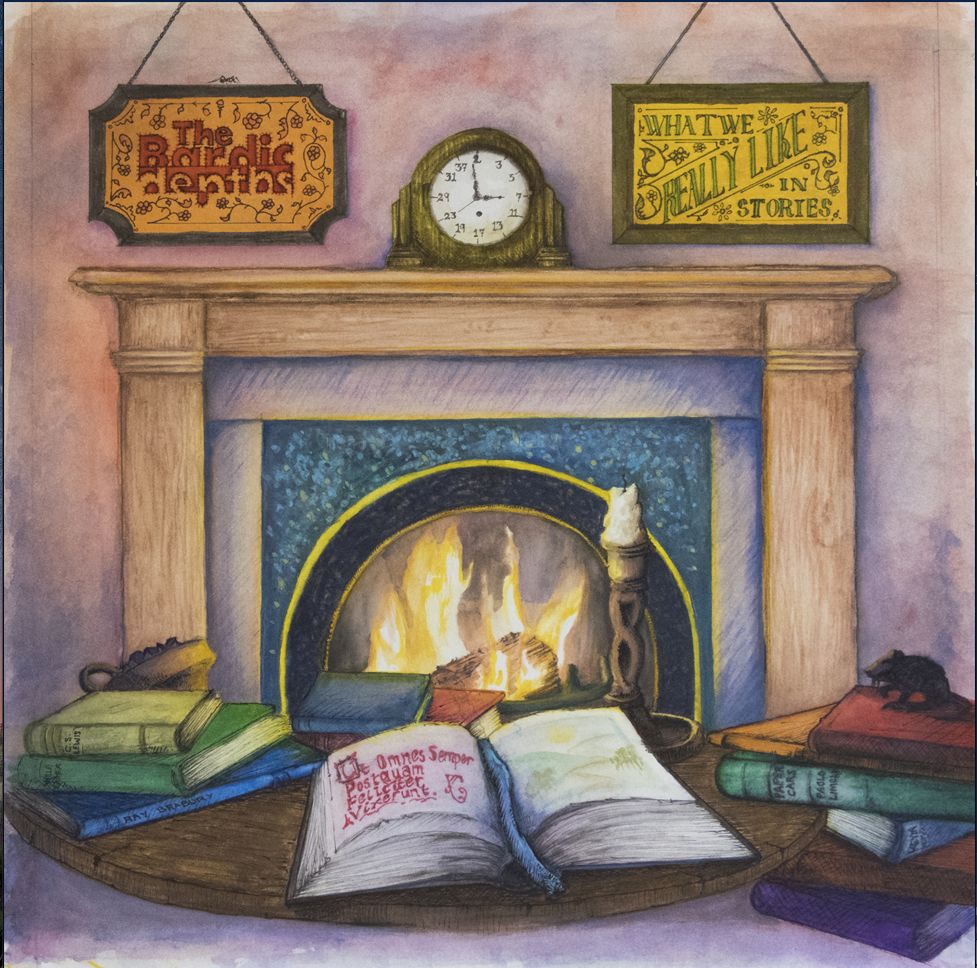
Before we close, I’d like to mention how interesting Kevin Thompson’s artwork is. The style is somewhat primitive and whimsical, which complements the songs perfectly. Stylistically, it reminds me of the cover art for the Beach Boys’ Smile album. Thompson’s painting is of a cozy room with a fire blazing away, and piles of books on a table. The authors are the ones featured in the songs, and there are needlepoint hanging that spell out the “The Bardic Depths” and “What We Really Like In Stories”. I’m intrigued by the clock on the mantel: the numbers aren’t the standard 1 through 12! Instead, they run 2, 3, 5, 7, 11, 13, 17, 19, 23, 29, 31, 37.

What We Really Like In Stories is a contender for album of the year in my book. The subject matter of the songs is thought-provoking while remaining playful, while the musicianship is first-rate. This is one album I’ll be enjoying for years to come.

Here’s the video for “You’ve Written Poetry My Boy”:

Heart Land Mines, Vol. 1: Dave Kerzner’s Love Letter to the Past

Heart Land Mines

In this, our latest dialogue, Brad Birzer and Tad Wert discuss the new album from the multi-talented Dave Kerzner, Heart Land Mines, Vol. 1. Kerzner has been involved in many different projects, all of them excellent. Besides his solo albums, he was also a member of Sound of Contact, Arc of Life, and In Continuum. He rivals Neal Morse and Mike Portnoy in the number and variety of musical ventures he participates in.

Tad: Brad, when I read Dave’s liner notes to Heart Land Mines, Vol. 1 and saw that these were songs from the 90s that he wrote after a relationship with a girlfriend broke up, I had low expectations. But I have really enjoyed this album from the first time I listened to it! It doesn’t hurt that Kerzner has a great ear for a musical hook – “Dreaming In LA” sounds like classic Bad Company to me, but better. 

This album is proggy – Kerzner’s voice has that laconic quality that always recalls David GIlmour – but it’s primarily a straightforward rock album that would be at home on an FM radio station in 1975. There’s a lot of acoustic guitar – “Back To One” sounds like an Eagles hit with its vocal harmonies. Anyway, maybe I’m emphasizing its retro qualities a little too much, but I find myself really taken with them!

Brad: Tad, thank you so much for asking me to do this review of Kerzner’s Heart Land Mines.  I’m sorry to be late in replying.  Since you first invited me to write this, I’ve been to the University of Louisville and back.  Not quite Tennessee, Tad, but still a beautiful city and state!  I gave lectures on sociologist Robert Nisbet and fabulist J.R.R. Tolkien, and I had a blast while I was there–especially seeing one of my long-time friends, Gary Gregg.  He’s not a progger, but he is a brilliant guy.

As far as I know, I have everything Kerzner has released (at least if bandcamp is to be believed), and I’ve been a huge fan of his since the deluxe edition of New World came out.  Wow, do I remember when that came out–I was utterly blown away by it.  Indeed, that album would rank as one of my all-time favorites, and I go back to it frequently.  I also really enjoyed Static and would also rank it very highly in my all-time lists.  His In Continuum albums also move me and have a high place in my rankings.

From my perspective, Kerzner is ELO progged up, and Pink Floyd popped up.  He has an infectious way about creating an ear-friendly riff while also complicating the matter in the proggiest fashion.  And, his production is always crystal clear and fetching.

For whatever reason, however, I’ve not been able to get into Heart Land Mines.  I’ve listened to it now three or four times, but it’s failed to grab me in the way that Kerzner’s previous albums have.  

I will say, however, that you’re absolutely right, if this were 1975, Kerzner would be huge on Album Rock Radio.  On the album, he clearly embraces the ethos and sound of Led Zeppelin, the Eagles, Bad Finger, etc.

Don’t get me wrong.  I really like Heart Land Mines, but it’s yet to become a part of my being in the way that his other albums have.  At this point, I’m happy to move on to his other albums and consider Heart Land Mines a labor of love, but not of genius.  

Please tell me why I’m wrong!

Tad: Brad, as always, you have the perfect phrase to describe an artist’s work: “ELO progged up, and Pink Floyd popped up” is Kerzner in a nutshell!

I wouldn’t say Heart Land Mines is a work of genius, but gosh, I think it’s a blast to listen to. It serves as a reminder of how far pop music has fallen since the 70s. We both agree Heart Land Mines would be a huge hit on mid-70s AOR. Today, it appeals to a niche audience. I know, I know – in the 70s guys our age were complaining about how great big band music was, and how awful radio was!

Anyway, I have enjoyed Kerzner’s semi-autobiographical musical journey here. He took what seems to be an ugly breakup of a relationship and turned it into a very catchy set of songs. “Manic Calm” has an irresistible guitar riff (I’m a sucker for a descending scale) that I can listen to over and over. “Eye Of The Storm” is the best Pink Floyd song since “High Hopes”. And I love the way he reprises a couple of songs to pull everything together into a cohesive package.

Like you, I’ve tried to buy everything Kerzner has put out, but it’s hard to keep up with the guy!  Sound of Contact’s eponymous album was near-perfect progressive rock, but it looks like personality clashes have kept them from ever getting together again. I have both of his In Continuum albums, and I like them a lot, but to my ears, neither of them have any melodies that are as memorable as some of the ones on Heart Land Mines

I agree that Heart Land Mines is a labor of love (or maybe broken love!), but I find it to be a thoroughly pleasurable listen. Sometimes, that’s all I want or need. I’ve always had a soft spot for power pop, and if a song’s melody doesn’t grab me, I have a hard time getting into it. Kerzner is a fantastic songwriter, I am so glad he decided to dust off these old tunes and record them.

Brad: thanks for the good words and the reminder, Tad.  You’re absolutely right, Heart Land Mines is a work of AOR genius, and it would’ve been a massive hit–along with Hotel California–in the 1970s.  Too bad for Kerzner that he’s temporarily out of joint!

For what it’s worth, I’ve given Heart Land Mines a few more listens since I wrote the first reaction, and the album very much continues to grow on me.  I would say that the album not only embraces The Eagles and Bad Company, but also, to a certain extent, Elvis Costello.  

Overall, it’s a delight of influences.  I even hear bits of Stone Temple Pilots and Steely Dan and other bands from the 1980s and the 1990s.

Kerzner is never shy about his debt to other bands, but these debts seem quite blatant and serious.  

Regardless, I’m so glad to live in the same world as Dave Kerzner  Whatever I think of this particular album, I know that my life is immensely better because of his music.

Tad: And on that note, I think we’ll bring this joint review to a close. Spirit of Cecilia readers, if you haven’t yet experienced the magic of Dave Kerzner’s music, you should check out his first solo album, New World; if you like it (and we think you will!), then Heart Land Mines is a worthy followup.

Here’s the official video for “Eye Of The Storm”:


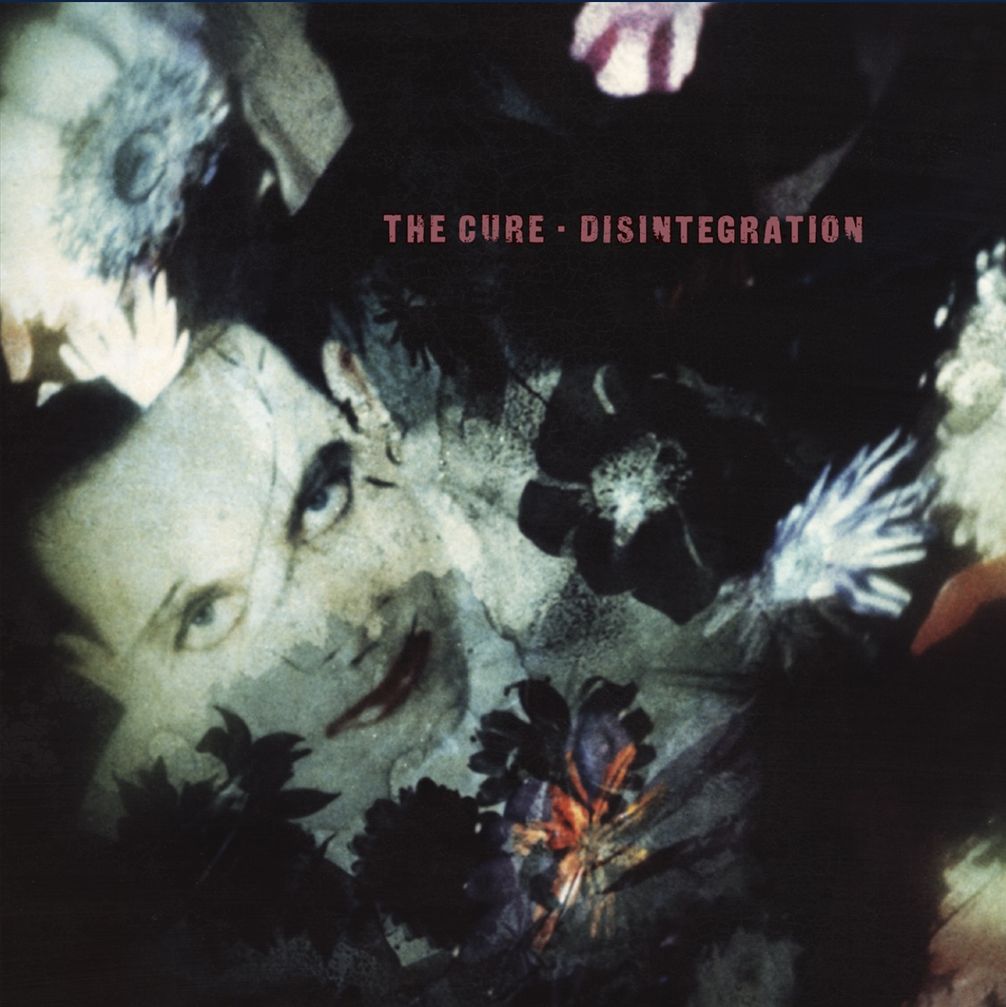
The Cure’s Disintegration: An Appreciation

disintegration

Greetings, Spirit of Cecilia readers! In this post, Brad Brizer and Tad Wert discuss their love for another classic album – in this case, The Cure’s Disintegration.

Tad: Brad, we’re reviewing this album at your suggestion, and I’m glad we’re giving it its due! I have to admit that Disintegration slipped by me at the time it was released. I was listening to the B-52s’ Cosmic Thing, Don Henley’s The End of Innocence, Paul McCartney’s Flowers In The Dirt, Todd Rundgren’s Nearly Human…in other words, a lot of “pop” music. Up to that point, the only Cure album I had listened to extensively was 1985’s The Head On The Door

However, many years later I eventually caught a bug that only The Cure could fix (did you catch that? 🙂 and I dove into their entire catalog. Disintegration is definitely a peak of their long career. For me, it’s rare that an album creates an overall mood and atmosphere as consistently good as Robert Smith and company do with this album.

Brad: Dear Tad, thank you so much for agreeing (happily, I take it!) to review Disintegration.  Ever since it came out–way back in 1989–I’ve been in love with the album.  Indeed, from my first listen, it grabbed me rather hard and has held on for thirty-five years.  It is, I think, the proggiest of The Cure’s albums, which helps explain why I like it so much.  A kind of pop-prog or prog-pop, in the vein (though sounding nothing like) Pet Sounds by the Beach Boys or Skylarking by XTC.

The Cure is also famous for truly poppy songs–such as “Friday, I’m in Love.”  I like these songs, but I don’t love them.  These are almost entirely absent from Disintegration, which is another plus to my mind.  I definitely much prefer a song like “Disintegration” to “Friday, I’m in Love.”  I’d be pretty disappointed if the former didn’t exist in my life, but if I never hear the latter again, I won’t be upset.

Even the poppier songs on Disintegration–such as “Love Song”–aren’t that poppy, and they fit perfectly into the flow of the album.  The album is almost perfectly produced, and the track order allows for the album to build and build (more on this in a later comment).

Again, I love this Disintegration as an album, and I always include it in my top 10 favorite albums of all time, along with several by Rush, Talk Talk, Kate Bush, Yes, Genesis, and Tears for Fears.

The album first came out in May 1989, at the very end of my junior year of college, and I was introduced to it by my great friend, Ron Strayer, then a student at the University of Kansas.  We had been debate partners throughout high school, and we often shared our loves in common–science fiction novels, movies, and music.  Ron’s tastes were always a little more poppier (in the alternative/college scene), and mine were always proggier (toward Genesis, Yes, etc.), but we mixed well.

This is, of course, the 35th anniversary of the album, but on the 20th anniversary, Roger O’Donnell of The Cure wrote an 11,000 (!!!) word reminiscence–complete with lots of great photos–of the making of the album.

I will admit, I’ve read this through twice, and I find it an amazing story.  A weird story, but an amazing one.

Tad: Brad, thanks for sharing O’Donnell’s memoir of the recording of Disintegration. I love learning about the background of great albums. One thing he mentioned, and I kind of agree with, was his disappointment with the mastering – he says it sounded compressed and flat. He suggests that the live versions recorded at Entreat Plus (available on the 3-disc Deluxe Edition) are better representations. I don’t know about that, but the live versions are very good – a more open sound.

Okay, let’s discuss the songs. The one track that I absolutely love is “Lullaby”. Referring again to O’Donnell’s piece, I was surprised to learn that the band had all of the instrumental tracks completed before Robert Smith sang any lyrics. That means they had no idea that “Lullaby”, with its bouncy melody would end up being such a creepy song about spiders and death! Still, it is my favorite song on the album.

I also love the majestic opener, “Plainsong”. It is a perfect mood-setter for the entire album, with its massive, dirge-like chords that never relent. “Lovesong” is a nice respite from all the gloom, but I prefer the darker songs. I especially like “Prayers for Rain” – it slowly builds and builds into a beautiful edifice of sound. “Homesick” is one of the prettiest songs The Cure ever recorded, and “Untitled” is a wonderful closing track. It sounds like a musical postscript to a long letter, if that makes sense. [Brad: yes, this makes perfect sense]

I’m looking at the track times of these songs, and I never realized how lengthy they are! “Lovesong” at 3:29 is the shortest, while half of them are longer than 6 minutes. It’s a credit to the strength of the songs that I never feel like the album drags or is too long.

Brad: Excellent response, Tad.  It’s funny (in a strange kind of way), I just finished Steven Hyden’s This Isn’t Happening: Radiohead’s Kid A . . . and I loved it.  

But, it struck me several times in reading the book that when The Cure is experimental–especially as they were with Disintegration–they’re as innovative as the best of them.  

You reminded me in email about our three-way conversation three years ago about whether or not The Cure were prog.  In some ways, bands like The Cure and Radiohead are beyond prog.  They simply are.  They’re unique, and the music they create, overall, transcends musical boundaries.  

Much of what The Cure has written has been very much in the pop vein, but much of it is just weird and experimental and wonderful and unique.  One of my favorite collections is The Cure, Join the Dots, a four-disk exploration of their b-sides.  Many of the b-sides are straight-up pop, but several are really experimental and proggy.  Needless to write, The Cure’s b-sides would be almost anyone else’s a-sides.

Back to Disintegration.  I’ve never noticed the mix as sounding flat or compressed, but I do love the dark consistency of the album.  From the opening track, “Plainsong,” to the final track, “Untitled,” it feels as though we’re barely breathing–perhaps just on the surface of a lake, grasping for air.  There’s a brilliant suffocation to the production of the album.  The album, in some mysterious way, just feels “alive” but, again, grasping.

I wonder if Disintegration just happens to be the last of the great analog recordings, while digital would become the norm after 1989?  I have no idea–just a thought.

Agreed, though, that The Cure sound amazing live.  I’ve never seen them in concert in real time, but I own all the DVD/Blu-ray concerts the band has released, and they are among my favorites.  Again, the pop songs are fun, but it’s the more intense, experimental songs live that really grab me.  I love watching the interplay of the band members, especially on the more complicated songs.

Earlier, I mentioned how much I love the flow of Disintegration.  The track order seems, in large part, to make this album.  You’re absolutely right to call much of it “dirge like.”  Again, I would call it grasping for life, perfect headphones in a dark room kind of music.  

I especially appreciate the sequence of the second half of the album: “Fascination Street” to “Prayers for Rain” to “The Same Deep Water as You” to “Disintegration” to “Homesick” to “Untitled.”  It’s as dark as dark can get, but so relentlessly driving.  Even the one moment of hope, when it starts to rain at the beginning of “The Same Deep Water as You,” and after “Prayers for Rain,” begs the question: did our prayers get answered only to have us drown?

Even the transition from “The Same Deep Water as You” to “Disintegration” is treacherous.  After all, the couple seems to die kissing in the former, but in the latter we have:

Yeah, I miss the kiss of treachery

The shameless kiss before I feed

The stench of a love for younger meat

And the sound it makes when it cuts in deep

The holding up on bended knees

The addiction of duplicities

As bit by bit, it starts the need

To just let go, my party piece

Brutal.  And, together, the two songs take up nearly 18 minutes of the album.

Tad: Brad, thanks for making me aware of Join The Dots; now I have something else to add to my wishlist!

I agree with you that The Cure is best when they aren’t trying to be anything except experimental. And your Radiohead comparison is most apt. I originally thought The Head On The Door and Kiss Me, Kiss Me, Kiss Me were better than Disintegration, but over time I’ve reversed my opinion. On the first two, I get the feeling they are deliberately striving for a more pop sound, while on Disintegration, they had no plans to make a bestseller (if O’Donnell’s memory can be trusted!). I hated Kid A when it first came out, thinking it was pretentious and noisy. Now, it is my favorite album of theirs.

You also capture the same feeling I have when I listen to Disintegration – it is almost suffocating in its density. I mean that in a good way, believe it or not. All of its songs are of a piece, and it is one of those albums that is an album – every track adds to the whole, and the sum is much greater than its parts. In this age of streaming, I don’t believe artists think in terms of albums any more – except for proggers. Maybe that’s why you and I are so enamored of that genre; it’s still creating suites of songs that should be listened to as albums, and not as separate tracks.

Well, my friend, I think we’ve done The Cure’s Disintegration justice. As the years go by, it seems to gain in stature, and rightfully so. And to our Spirit of Cecilia readers, thanks so much for stopping by. If you have any suggestions for what you’d like us to discuss, let us know in the comments!

Yet Another Best Of List (2023)

2023 is coming to a close, so I’d like to take stock of some great music I’ve enjoyed over the past 12 months. These are my personal favorites, not the official list of Spirit of Cecilia (but we have reviewed quite a few of them!)

#10 – Haken: Fauna

Halen Fauna

Have these guys ever made a bad record? I don’t think so. No band better combines heaviness with soaring vocals and great melodies. There are moments of true beauty – the intro to “Nightingale” – alongside blistering guitar-driven rock – “Beneath the White Rainbow”. And the artwork is a total hoot!

#9 – Galahad: The Long Goodbye

Galahad Goodbye

Brad Birzer and I reviewed this excellent album recently here at Spirit of Cecilia. You can read our thoughts on it here.

#8 – Downes Braide Association: Celestial Songs

DBA Celestial

I know that Yes released a new album in 2023, but I ended up listening to this one much, much more. I think Geoff Downes is saving his best songs for DBA, and Chris Braide is the perfect collaborator for him. This is a uniformly excellent set of pop-prog songs. Majestic, intimate, and altogether pleasing to the ear. Also, it features one of Roger Dean’s finest album covers.

#7 – Cyan: Pictures From The Other Side

Cyan Pictures

Again, Brad Birzer and I reviewed this one recently. It is a rerecording of earlier songs, but what a fine set of songs to work with! You can read our thoughts on it here

#6 – Kite Parade: Retro

Retro

I reviewed this delightful album back in April. What a fun blast of “retro” sounding songs that please the power pop lover in me.

#5 – Bruce Soord: Luminescence

Luminescence

This offering from the Pineapple Thief’s frontman impressed Carl Olson, Brad Birzer, and me so much that we posted a discussion of it back in early November. Check it out here.

#4 – Riverside: ID.Entity

Riverside ID

Our own Erik Heter wrote a masterful review of this phenomenal album in January. I couldn’t possibly improve on it, so check it out here.

#3 – Glass Hammer: Arise

Arise

Glass Hammer is a perennial favorite of Spirit of Cecilia, and Arise continues their streak of excellence. Steve Babb and company blast off for a very spacey adventure in this album. You can read my detailed review of it here.

#2 – North Atlantic Oscillation: United Wire

NAO Wire

It is Brad Birzer’s and my firm belief that Sam Healy is a musical genius.  United Wire confirms that belief. You can read our discussion of this wonderful suite of songs here

#1 – Southern Empire: Another World

Southern Empire Another World

I only recently was able to listen to this, Southern Empire’s third album, and it has not left my CD player and car stereo. What an achievement! Sean Timms has really come into his own as a composer, and wow, what a terrific sound he and his group create here. Sean Holton is the vocalist now, and he is amazing. The 20-minute epic “White Shadows” is the finest song I have heard in a long, long time. The overall feel of the album reminds me of Spock’s Beard when they had Neal Morse writing all of their material.  Another World is one of those rare albums that I can listen to multiple times in a row and not tire of it. In a year of incredibly good music, Southern Empire has jumped out to lead the pack.

Well, that’s it for another year. If I sat down to do this again tomorrow, I’d probably come up with a different one (that included, perhaps, Steven Wilson’s Harmony Codex, Steve Thorne’s Malice in Plunderland, Katatonia’s Sky Void Of Stars, or Damanek’s Making Shore)! 

Happy New Year, and thank you for following us at Spirit of Cecilia!

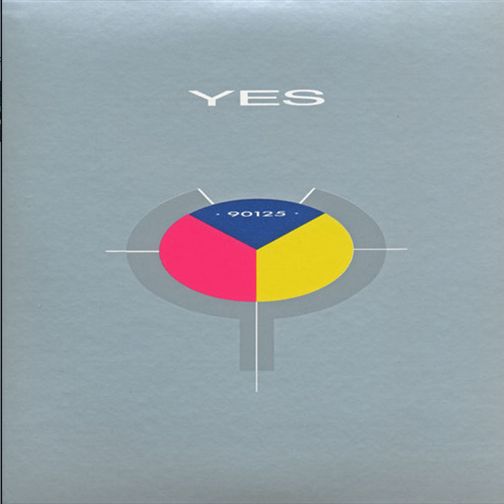
90125 At 40

90125

Once again, the resident music aficionados of Spirit of Cecilia (Brad Birzer, Tad Wert, Erik Heter, Kevin McCormick, and Carl Olson) turn their gazes onto a prog classic – this time discussing Yes’ best-selling album, 90125.

Tad: Gentlemen, this album came out 40(!) years ago. In 1983, I was a senior at Vanderbilt University and compact disc players were just beginning to become affordable. Against all common sense, I bought a Sanyo player for $399 and three cds: Roxy Music’s Avalon, Pink Floyd’s The Final Cut, and Yes’ 90125. I still remember the awed looks on my dormmates’ faces when I popped in 90125 and “Owner of a Lonely Heart” came blasting out of my stereo without any preliminary hiss or scratching from a vinyl lp.

At the time, this album was a huge hit for Yes, and it jumpstarted their career after it had flagged somewhat (even though I would argue that its predecessor, Drama, was a terrific work). However, we now know that the recording of 90125 was not all sweetness and light. In fact, I believe it wasn’t even supposed to be a Yes album! But I’ll let someone else who is more knowledgeable give us the details of that.

Erik: Sometime around August, 1983, I was hanging out in the rec room of one of the barracks at the ASW (anti-submarine warfare) base in San Diego, a city where I had spent several months prior and would spend a few more learning the intricacies of submarine sonar.  Someone had left a music magazine hanging around, it might have been Rolling Stone, but I’m not 100% sure on that.  Anyway, I picked it up and started thumbing through it and saw a news item entitled “Yes – No.”  A picture of Steve Howe accompanied the short piece, which relayed the news that Yes was reforming, with Jon Anderson on vocals, Chris Squire on bass, Alan White on drums, and newcomer Trevor Rabin on guitar.  While much of the piece focused on Howe’s disapproval of the new lineup, I swept that aside for the news of a Yes reunion – I was absolutely thrilled.  

Later, in October of that year, I departed San Diego, training complete, and headed back to what was then home in Charlotte, NC, for a few weeks of leave before, in late November, I would make my way to my boat (the USS Olympia, SSN 717) that was then under construction in the shipyard at Newport News, VA.  During my leave, Yes released the first single from the new album, followed a few weeks later by the album itself.

Oddly, I was a little bit hesitant when I first heard Owner of a Lonely Heart. While the voice was familiar, as was the bass tone, this was something radically different from anything they had done before.  This one particular song was more commercial sounding than anything they had done, although it was hardly a lowest-common denominator hit.  And the guitar sound (especially that solo) was nothing like I’d ever heard on a Yes album.  There was, however, a bit of a fear that the sound of the album would be so unrecognizable as to not sound anything like Yes.  

That fear was firmly put to rest the night before the album’s release.  Listening to one of the local FM rock stations, a DJ started talking about the new Yes album, 90125, and decided to play another song off the album – Leave It.  I was hooked before they even finished the first verse with that huge, wall of sound vocal harmony that opened the song.  After that, I was ecstatic as I was bombarded to “doos” and “dums” and “deets” coming at me from different vocalists in a number of different directions in a vocal arrangement so complex, innovative, and interesting that only a band like Yes could even dream such a thing up, much less execute it so flawlessly.  This was the music I had been waiting for since the Drama album of three years prior.

The next day (of course!) I wasted no time getting to the mall record store to buy the first of many copies of the album in cassette format that I would own – many copies because I tended to wear them out from so many listens.  In my days of using a Sony Walkman, there isn’t another album that spent as much time being wound and rewound as 90125.  

The first listen to the full album was absolutely magical, revealing a perfect mix of sounds that were simultaneously familiar to Yes fans and yet totally new and different.  Moreover, the sound was very 1980’s contemporary.  And yet even now, 40 years later, the album holds up very well without sounding dated.  90125 showed that Yes could adapt to changing times, that they were anything but dinosaurs as critics had accused them of being.  It showed they could innovate in ways even Yes fans – accustomed to musical innovation – couldn’t have imagined.  It showed they could be commercially relevant in a new decade without devolving into banal hitmaking.  

Oh sure, there were many old school Yes fans that didn’t like the album, the ones who were probably hoping for a redux of Tales from Topographic Oceans.  You can count me out of that group though, because I am one old school fan that loved the album and couldn’t get enough of it.  And while there is some debate about whether the album itself should be classified as prog, the importance of 90125 to the genre cannot be overstated.  A whole new generation of fans was lured in by this album, fans that began venturing into the band’s back catalog and then into the wider world of prog.  Even when I consider the contemporaneous output of another one of my favorite bands – Rush – it’s hard for me to think of a single album that did more to keep the prog flame alive in the 1980’s after critics had gleefully – and, obviously, prematurely – declared the genre dead at the end of the 1970’s.

I’ll get into more of the particulars of the album itself in my next entry, but for now I’m going to turn the floor over to another one of the distinguished participants.

Carl: By reason of age, chance, and the mysterious forces of radio whims, “90125” was my introduction to Yes. I was fourteen and was just getting into pop and rock music, to the horror of my parents, who that same school year—1983-84—made me throw away some cassettes gifted by a friend. Those deeply subversive albums were by Elton John (early, mellow Elton), Pat Benatar, and Foreigner (4, of course). There was only one rock station that reached my small town in western Montana—a bucolic village with a population of 1100, no stop lights, no fast food, and (shockingly) no music scene. 

I recall, quite clearly, being at church youth group one evening and someone, after the more serious stuff, cranking said radio station in their car, doors open in the parking lot. “90125” came on. It immediately grabbed my attention. “What is that?!” I thought. And then came the breakdown, and I was hooked. This was interesting music! It took a while, but I eventually got a tape of the album, and I started to learn more about the convoluted history of Yes and its connections to another favorite group: Asia. Styx, Kansas, Supertramp, Queen, and ELP all followed. I was officially into prog! (And my parents finally gave up trying to control my musical tastes.)

 My years in college—split between Phoenix (1987-88), southern Idaho (1988-89), and Saskatchwan, Canada (1989-91) were filled with musical exploration, ranging from brief flirtations with metal and Bruce Springstreen to more serious dives into Pink Floyd, Rush, Rick Wakeman, Steve Howe, Steve Morse, Queensryche, Kerry Livgren, and so forth. But Yes was always a constant, and I gradually became acquainted with all the earlier work, as well as Trevor Rabin’s excellent solo album “Can’t Look Away” (1989), which I literally wore out. Then, in 1991, having moved to Portland and living with my cousin for a while, I bought my first CD: “90125”. That was a great choice, of course, because it’s a sonic marvel, with Trevor Horn (who I knew a bit about because of his previous work with Yes) at the helm. 

Erik mentioned Rabin’s guitars. As I’ve listened to the album a few times in recent days, they stand out the most to me; they mark the biggest difference between Yes with Howe and the “90125”-era Yes. That’s not a knock on Howe, of course, who is fantastic in countless ways. But the stylistic differences are immense. That, in turn, informs the songs, which are more anthemic and are simply BIG in sound and intention, while containing plenty of complicated parts, harmonies, and arrangements. We’ve all read about how the album came about, how many challenges there were, and how Anderson kind of slipped into the mix; it’s a tribute to Horn and the musicians that they could overcome so much discord and paralyzing circumstances to create one of the great prog-rock albums of the 1980s. 

If Rabin’s guitars set it apart, it is, in my view, Anderson’s vocal contributions that hold it together and make it a real Yes album. It would have been very good without Jon; it is a classic with him. And, again, there is the work of Horn, whose production genius is impossible to overstate. Ironically (or perhaps fittingly?), the same year (1991) I bought “90125” on CD, I discovered the first Seal album and was instantly hooked. It was, of course, produced by Horn, who has been at the helm for several Seal albums—the first three, for me, being one of the finest pop/rock trifectas ever created.

Kevin: Somehow my first memory of 90125 was the hype for the world-premier of their new music video on MTV. “Owner of a Lonely Heart” immediately received heavy rotation on the channel, in part due to the relatively-high production values for a single by an “old” group like Yes were in 1983. The avant-garde film-noir theme seemed an unlikely pairing with the lyrics but somehow it worked and captured a huge new following for the band. But it was simply a great new sound for the band and for the times.

I was fascinated with this new sound and found it to be an engaging blend of progressive and pop. Being in my mid-teens at the time, I don’t think I was as keenly aware of the importance of the “production” of a studio-recorded song, but I was aware that this was definitely a new adventure for Yes. I missed hearing Steve Howe’s guitar, but I also intuited that without Trevor Rabin in the mix this would be a completely different song.

I wholeheartedly concur with both Erik and Carl, that Rabin’s guitar really stands out on that opening track and throughout the album. I love the way the opening track begins with the “heavy distortion” Rabin sound and then quickly pulls back to the clean sound more reminiscent of Howe’s earlier contributions for the band. Whether intentional or not, it was a great way of signaling that this was something new and yet it retains those components that make it Yes.

I caught them live for this tour in Austin in 1984, and they did a great job of capturing that same energy on stage. Rabin seemed comfortable in his new role and had no trouble filling Howe’s shoes on the older material. It was a different style for those tunes, but they were well-played. This being my first chance to catch them live, I had no direct comparison, but I thought it was a tremendous performance.

But that brings up a component of this that I don’t want to miss.  I’ve read various articles about Rabin and Yes and their early incarnation as Cinema. Some accounts claim that Rabin came in with much of the album finished and the band just kind of recorded what he wrote. This is an unjust assessment and really underplays what makes the album so exciting.  I know this not because I was there, but because in 2003 Rabin released his demos as 90124. You can find some of them on YouTube–though I no longer see some of the tracks that better illustrate the point.

What is clear from the demos when compared to the final recording is that his ideas were seeds (some of them quite plain)  waiting to be nurtured and to sprout into full bloom. There was plenty of fluff needing to be pared down. There were plenty of tweaks needed. This was not a collection of hit songs waiting to be recorded; it was a mishmash of some good ideas that needed the rest of the band to make great. Not only did Squire and White bring these germs to life with a powerful rhythm section, but Trevor Horn’s production makes every track completely blossom. Then Jon Anderson arrived in the last few weeks of recording and, as Carl noted, turned a good album into “a classic.” His lyrical contributions alone changed the whole tenor of the work and his vocals are captivating in a way that is simply not there without him.

This was a band effort, an incredible symbiotic musical creation worthy of review forty years on. It will be remembered because it captured and launched the sound of the times both into the prog realm and beyond.

Tad: Kevin, thank you for providing the context in which Trevor Rabin’s contributions were made. It’s interesting to me how a consistent thread in all of our reminiscences has emerged: about how crucial Trevor Horn’s production was. I was a fan of his from his Buggles days – when he and Geoff Downes joined Yes for Drama I was really surprised, because I thought of them as synthpop artists, not progressive rockers! I ended up buying everything Horn produced for his ZTT record label: Frankie Goes To Hollywood (they have not aged well), Propaganda (amazing German group – A Secret Wish remains a favorite 80s album), Art of Noise, and Grace Jones (Slave to the Rhythm). Anyway, I agree that without Horn, 90125 would not be the success it is.

Okay, I’d like to share what my favorite moments on this album are! First, on “Owner of a Lonely Heart”, the opening muffled drum fill that is overtaken by Rabin’s clean guitar riffing, punctuated by Horn’s stabs of synthesized orchestral noise. That mix still sounds new and exciting to me 40 years later.

Second, the massive vocal harmonies on “Hold On” around the 4-minute mark, where they sing “Sunshine, shine on, shine on you”.

Third, the intro to “Changes” where a motif on vibes is played as various other instruments enter playing King Crimson-esque patterns until Rabin’s guitar takes control and gets the proper melody underway.

Fourth, all of “Leave It”. This song is such a vocal and instrumental tour de force! A wall of sound that leaves me wishing it would never end.

Finally, the moment at 5:30 into “Hearts” where the melody transforms from an aggressive, plodding riff to a beautiful, warmhearted tune that is carried by some of Jon Anderson’s finest vocals.

As is my wont, I need to remark on the artwork – what an iconic representation of early 80s fascination with technology! It’s obviously computer-generated graphics that, at the time, seemed futuristic and edgy. And the title came from the catalog number assigned to the album by the label. About as far as you can get from Roger Dean’s fantasy landscapes.

All in all, just a superb album, and I’m thankful all the musicians with their various agendas were able to gel into a cohesive unit and get it done.

Brad: Well, I’m late coming to this conversation, but I love seeing what Tad, Kevin, Erik, and Carl have all contributed.  Thanks to you each for such great thoughts.

I have this album on CD now as well, but I very much remember buying the vinyl back in early November 1983.  I loved the Apple-esque cover of the album (though, I grew up loving Roger Dean’s work, especially for Yessongs), and, like all of us, I was already taken with “Owner of a Lonely Heart.”  I had grown up with Yes (but had somehow misse free d Tormato and Drama, I wouldn’t come back to both until after 90125).  One of my fondest memories is listening to 90125, whole and complete, with my headphones on during that November and December of 1983.  The lights off in my bedroom, the headphones on, and Yes playing beautifully, me absorbing it all..

As much as I loved “Owner of a Lonely Heart” at the time, it was the album as a whole that really grabbed me.  I remember being utterly moved by “Hold On”–”constitution screwup, shattering the dreams” and thinking it one of the deepest songs I’d ever encountered.

Talk the simple smile, such platonic eye

How they drown in incomplete capacity

Strangest of them all, when the feeling calls

How we drown in stylistic audacity

Charge the common ground

Round and round and round, we living in gravity

Shake – We shake so hard, how we laugh so loud

When we reach, we believe in eternity

I believe in eternity.

These were (and remain) pretty heady lyrics for a sixteen year old.  Yes’s 90125 made me realize the possibilities of rock music, just as Rush’s Grace Under Pressure soon would

Then, “It Can Happen”:

You can mend the wires

You can feed the soul apart

You can touch your life

You can bring your soul alive

It can happen to you

It can happen to me

It can happen to everyone eventually

Followed by the brilliant “Changes.”  

Flip the record over.  

Side two, roaring into life with “Cinema.”  As I understand it, this was originally the introduction to what might have been a twenty-minute epic, “Time.”  As it was, though, it stood alone in its gorgeous production, leading into the magisterial “Leave It.”

“Our Song” is a great rocker.

​​Toledo was just another good stop

Along the good king’s highway

My fortification took me by surprise

And hit me sending me sideways

Spellbound – Roundly – Good for sunshine

Can’t help thinking

Singing the Rule Britannia

And this is where it grabs you

There’s method in the key of C

Toledo’s got to be the silver city

In this good country

“City of Love” and “Hearts” perfectly close the album.

Many moons cascade one river

They light from side to side

As we cross in close proximity

Like rivers our hearts entwine

How we talk – How we teach our children

How we move – We direct our eyes

All the senses tuned discovery

As and as and when our hearts decide

Be ready now – Be ye circle

Be the central force ye life

As the game extends the cycle

Be ready to move

Kevin, I’m jealous that you got to see them live  in 1984.  I’m sure that was an extraordinary concert, capturing all the energy of a reborn-band.  Speaking of which, I’ve always liked 9012-Live: The Solos, the live album that came out in 1985.  Again, it just exudes energy and creativity, a band at its best.

Erik: Great comments all, and a lot of fodder to work off of as I discuss the album proper.  

We’ve talked about Rabin’s guitar, it’s contrast to Howe’s work, and its impact on the music.  But there is another contribution that is also quite notable, and that’s Rabin’s contribution to the vocal landscape of this album.  I am adamant in my opinion that from a purely vocal perspective, the Rabin-era lineup is far and away the best Yes lineup.  Consider a few of the songs.  First, Leave It is simply not possible without Rabin.  Not only does he trade lead vocals with Anderson, but his contributions to the harmonies are critical.  Changes is another song that is not possible without Rabin, due to the lead vocalist role alternating between him and Anderson.  And the “talk the simple smile” section of Hold On is yet another harmony that would not sound anywhere near as good without Rabin’s contribution.

This ability to switch back and forth between Rabin and Anderson on lead vocals, as well as the ability to create the vocal harmonies that permeated 90125 made Rabin’s vocals an excellent addition to the Yes sound.  It’s almost as if Rabin was put on this Earth to harmonize with Anderson and Squire, because his voice fits with them so perfectly.  It’s another reason why the version of the pre-Rabin Yes classic I’ve Seen All Good People from 9012Live is my favorite version of this song – Rabin’s contributions to the vocal harmonies makes what is primarily a vocal-driven song all that much better.  

I’ll also throw in more on Horn’s production with regard to a couple of additional observations to go with those given above by Tad, Carl, and Kevin.  First, neither Rabin nor the band in general was all that fond of Owner of a Lonely Heart in its demo form, but Horn would have none of it.  While he wanted a reworking of the lyrics, he nevertheless recognized the song as a hit – in part due to the intro, and in part due the chorus – where the band did not.  Horn didn’t merely want this song on the album, he insisted on it.  Working with the band to rewrite some of the lyrics (for which Horn himself received partial credit) as well as arrangements on the final recording, Horn helped mold the song into the first #1 single Yes ever had, and one that propelled this album into the stratosphere (also, the band’s only #1 album).

Another aspect where Horn excelled as the producer of 90125 was the underappreciated role of track sequencing, upon which he conducted a clinic of how it’s done.  The sequence of songs begins by a delightful punch to the listener’s face (and ears!) with Owner of a Lonely Heart, especially with the intro guitar riff, before moving into the slow but heavy Hold On.  Similarly, the beginning of side 2 with the instrumental Cinema flowing seamlessly into Leave It is just chef’s kiss perfection.  And closing the album with Hearts was a fitting conclusion to Yes’s 80’s rebirth.  Overall, every track on the album feels like it is placed exactly where it should be.  While such sequencing always seems obvious to us in retrospect, the producer had to start with a collection of songs and figure out what would go where.  To ask Horn to do a better job than he did on 90125 is to ask the impossible.  

I also like Kevin’s observation with regard to Anderson’s impact on the album.  Like him, I’ve listened to the demos, and the contrast between those and the finished product is striking, with Anderson’s influence being undeniable.  It was his presence and his contributions that made 90125 truly a Yes album and not just an album performed by some musicians who had been in that band.  There are lyrical passages throughout the album that the seasoned Yes fan will instantly recognize as Anderson’s words.

As far as some of the other tracks go, I’ll first start with It Can Happen, a track which I absolutely love.  This is one track that encapsulates the old Yes spirit of the 1970’s into the new Yes sound of the 1980’s.  Tying to the previous paragraph, this song is one that really demonstrates Anderson’s imprint on the lyrics when compared to the pre-Anderson demo.

Hearts pulls off the same feat of encapsulating the old spirit in the new sound in a different form, hinting at some of Yes’s earlier long-form epics while keeping things economical.  I love the “explosion” in the middle of that song that leads into the “who would believe you, wise men do” section.  Our Song is a deep cut favorite, featuring a driving, tour de force performance by Squire on bass.  Changes was a perfect FM radio staple for the era, with an ear-catching introduction and huge, dynamic swings between the quiet and heavy sections, along Rabin singing lead on the verses while Anderson takes the lead role on the choruses.  

I’m going to cut myself off right here, because I could go on and on (and on) about this album and I need to give some space for the rest of you.  I enjoy reading your contributions as much as I like writing mine!  But in conclusion, when I think of albums of the 80’s that really define the decade (at least for me personally), this one is alway at or near the top. And as a Yes fan, I continued to be thrilled all these decades later that they were able to pull off an album like this, a commercial and artistic triumph that happened in the context of the band navigating a radically different musical landscape from the one in which they had achieved their previous great successes.

Tad: Erik, I think your remarks are the perfect way to conclude this discussion. Gentlemen, it’s been a blast revisiting this album!