All posts by Mahesh Sreekandath

Exploring dissonance and the outdoors.

The Road to Serfdom at 75 Years Young

Peter Boettke writes

“Key to his argument is that in a democratic liberal society, there’s no overarching single scale of values. Society cannot achieve a single hierarchy of ends we all agree on. In fact, the great strength of democratic liberal societies is a multiplicity of values that are respected among diverse and often divergent, even distant, individuals”

I used to have this bumper sticker on my Jeep — ‘If we are on a road to serfdom, hope it’s bumpy and bureaucrats are driving lowriders’


Music and Motorcycling

Years ago an engineering schoolmate brought up the topic of life goals, my terse and quick response was, “owning a wall of music CDs and a high displacement motorcycle”. His reaction was actually terser and quicker – “that’s it?” – And wasn’t exactly devoid of that patronizing tone. But, what can I say, that was indeed my life goal. To cite Chris Nolan’s Joker“You see, I’m a guy of simple taste. I enjoy, uh, dynamite, and gunpowder…and gasoline!” — In my case, it’s heavy metal and motorcycling.

Also, people usually fall into two categories, ones with specific objectives and agendas, and then there are those with more abstract motivations. Specific goals could be anything, but it will be absolute and measurable – like retirement by age of 45, or making 200 Million dollars, or filing 20 patents etc. Abstract goals are not specific and tend to be subjective — like pursuit of an interesting career or pursuit of knowledge etc.

Meticulously working towards some specific objective requires long term planning, it requires making calculated trade-offs. These specific goals are usually irreconcilable with abstract goals, especially in the long run. For instance, you cannot expect to be a millionaire, or retire by 45, if you are only going to do interesting jobs. Actually those driven by abstract pursuits might just find it meaningless to state specific goals.

Our general approach to life will reflect in everything we do. It’s unlikely someone who targets specific life goals will take a laissez-faire attitude towards other recreational activities. Whether it’s discovering music or exploring the great outdoors on a motorcycle or any similar adventures. Over the years both these pursuits have increasingly moved from specific goals to more abstract. Instead of exploring specific sub-genres, now it’s about discovering broad qualities, like rich layering, structural progression and dynamics of influences. Riding has also similarly moved, from destination driven to exploration driven.

These days it’s just about looking at a map to identify winding roads, most likely involving unexpected unpaved miles, or rustic routes cutting through state parks or bordering that coastal stretch. You will inevitably get a bit lost or run into restricted access roads, or get close to running out of fuel. You will also inevitably run into another solo motorcyclist, traversing the same path, but from the opposite direction. In short, it rarely goes according to the plan. But as the cliché goes –abstract experiences and the journey matters, but the specific destination, not so much.

The Hayek Auction

You will find them here, for instance Hayek’s copy of Wealth of Nations went for almost 200k, it was estimated in the 4k to 6k range.

“Desktop ephemera and personal effects” were estimated at 200-300 British pounds, went for 87,500 British pounds.  Crazy!  Many of the items went for 10x or 20x their original estimates.

From Marginal Revolution

Friedrich_Hayek_portrait

The original uploader was DickClarkMises at English Wikipedia. [CC BY-SA 3.0], via Wikimedia Commons

Read, and then Ride

Adaptation is the key to survival — at work, home, or for that matter in any social environment. The exact adaptive mechanism depends on the situation. But a causal explanation for a problem always helps. Essentially why did something happen? Explanations to that `Why` can happen through therapy, through study, or it can also happen when they are combined with motorcycling.  

Understanding the cause requires theory, and adequate explanations mandate good theories applied to correct contexts. Reading provides us with theories. But, hardest part is internalizing those theories and applying them to real life. Marvin Minsky famously said – “You don’t understand anything until you learn it more than one way”. There is a certain depth and significance to this quote. Any relatively complex theory has several implicit assumptions. One way to discover those implicit assumptions is to apply those theories in multiple contexts and see the predictive power. For instance, here is a theory — ‘”Apocalypse Now” is a great war movie’. But is it great because it’s a war movie? Not all war movies are great, so is it because it’s three hours long and well edited? But, then there are other mediocre movies which share the same qualities. We are discovering implicit assumptions by applying our theories to multiple contexts. This is a lot similar to how basic scientific process works in a lab. 

Beyond the specific question of a movie, we can also apply this refining process to higher levels of abstraction. For example : “Apocalypse Now” is gritty, atmospheric and sufficiently dark. This can be interpreted as an abstract artistic model which now can be applied to paintings, music, lyrics, and poetry! Can we now say someone who enjoys “Apocalypse Now” will also enjoy doom metal? When sufficiently abstracted, a model can be applied to various contexts to discover new information – details about the context where it’s applied and about the model itself.  

To illustrate this principle beyond art — here’s another example of a social theory – `democracy is an effective process to make decisions`. But, if we generalize that to all decision-making, we’d soon be subjected to the whims and fancies of the majority. No organization can function by making all decisions via voting. Sufficiently abstracting an observation into a model, then applying that into a new context enables transfer of learning. It’s a process which is not limited by the boundaries of genres, or scientific disciplines, and is instead tested by limits of our own cognitive boundaries. 

Eventually — abstract, apply, test, and progressively refine mental models can be a universal motto. Higher levels of pattern recognition through consciously articulated theories can lead to a unified causal view of reality. Just like how someone can apply Darwin’s individual and group selection process to multiple layers of a system – biology to social order. Eventually these unified theories provide us with an arsenal to fast track root cause analysis. Every experience cannot be a totally new learning opportunity, instead it should be simply about classifying and integrating into a previously known pattern. This enables us to arrive at the same conclusion through multiple paths of reasoning and live up to Minsky’s advice to `learn it more than one way`. 

Reading is a way to get exposed to new ideas, but as we can see, internalizing them requires reflection. Everyone has their own assumptions and beliefs – own mental models, often with internal contradictions — developed through accidents of nature, nurture, and life experience. So, no matter how good the book is, new ideas need to always take root and evolve within our own mental context. They need to be progressively refined and adapted to fit within our own minds. To get there — some prefer meditation, or just `sleeping over it`, but for restless minds it can be some activity — like rock climbing or hiking — or motorcycling.  

Someone said — you are never on a motorcycle; you are always a part of it. Riding forces us to be outside the cage, vehicular and metaphorical both. At 70mph, reflexes related neural layers are dedicated to sensing impending dangers, while higher levels of cognition are reserved for refining mental models with a picturesque backdrop of passing landscapes. In that sense, when you are a totally different entity, different ways of connecting, interpreting, and unifying ideas simply emerge.  So, the scientific excuse for motorcycling would be to live up to Minsky’s sage advice. 


Libertarian Transformers

For some reason people gasp when I mention the dominant Libertarian themes in Transformers 4 : Age of Extinction. Buried beneath inane comedy and not so sleek Budweiser advertisements are some stunning Hayekian/Misesian ideas. Contrasting to the first three Transformers movies, Age of Extrinction refuses to glamorize military. Instead of Marines fighting evil aliens in Middle-East, we have CIA black ops oppressing an innovative Texan inventor. From Cade Yeager (played by Mark Wahlberg) emphasizing to the black cloaked agents to get off his property, to ignorant bureaucrat Harold Attinger (played by Kelsey Grammer) destabilizing planet with his foreign policy, Michael Bay’s U-Turn on politics cannot be more evident.

Govt propping up bad guys in an alien war, or private firms profiting from war, or having an elected US President become subservient to career bureaucrats – this movie cuts close to reality in numerous subtle and different ways. How a private weapons manufacturer, Joshua Joyce (played by Stanley Tucci), changes his mind when confronted with reality. But, a bureaucrat constantly refusing to confront his own folly is worth noting. In this case Hollywood illustrating how private sector can get corrupted by govt incentives — quite uncommon! Not to mention, Kelsey Grammer comforting the US President by claiming the all-powerful alien bounty hunter as his “asset”, a genuine black comedy moment!

Essentially the whole movie is about an individualistic inventor trying to stabilize the world, while govt busy-bodies propping up chaos. Sounds like it appeals to all our civilized human instincts. Café intellectuals might disagree, but Hollywood is among the best Western institutions. They’re  more effective than any military in spreading liberal ideas across the globe. Niall Fergurson’s ‘The West and the Rest’ quite aptly sums up this sentiment through a quote from the French philosopher Régis Debray — “more power in blue jeans and rock and roll than the entire Red Army”.

Bjoern Kommerell [CC BY-SA 4.0], via Wikimedia Commons

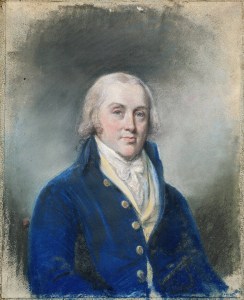
James Madison Won the Shutdown

To grasp the constitutional importance of the moment, it is necessary to set aside partisan or policy preferences. Every constitutionalist, even those who wished a different outcome, can celebrate the proper functioning, for the first time in nearly a generation

https://www.lawliberty.org/2019/01/29/congress-constitution-shutdown/


1811,_sharples,_james,_james_madison


James Sharples [Public domain]

Ghost Rider

“Parking my motorcycle in front of a motel at the end of a long day on the road could certainly be sweet, like finally exhaling after holding my breath all day, but best of all was setting out in the morning. Whatever torments the night had brought; whatever weather the new day threw at me, when I loaded up the bike and swung my leg over the saddle, my whole perspective changed. Focus tightened into the mechanics and mentality of operating the machine, and awareness contracted to that demanding paradigm. As I let in the clutch and turned the throttle, my world-view expanded as i moved into a  whole new paradigm of landscapes, highways and wildlife. Infinite possibilities” p42, Ghost Rider

Not just the perspective, Neil Peart manages to express the very exact thoughts, emotions and even words any long distance motorcyclist would have endured. Brought back very distinct memories, even though my own experiences are from a totally different part of the globe.

Album from the archives — circa 2008-2010.

IMG_20201126_180808_481

Harmony in Discord

“Rising from the concrete to the abstract, Greek geometry disengaged the intelligible essence from the particular observable details, or accidents, as such particulars were later to be called. In this it exercised the proper function of intelligence: the faculty of abstracting, of grasping the unity of a concept in a number of particular cases, the constancy of relationships and permanence of structures amid the diversity of sensible patterns; in a word, finding unity in multiplicity and harmony in discord. With the Greek language was born the language of abstraction.”

p6, The Genius of the West

What makes us all civilized is that ability to move from specifics to the abstract, in all spheres.

Why Are We Still in Afghanistan? – Reason.com

Cultural interventionism v/s Guns

“There is ‘more power in blue jeans and rock and roll than the entire Red Army’ said French philosopher Régis Debray”

Soviet Denim Smuggling – The History of Jeans Behind the Iron Curtain https://www.heddels.com/2014/09/soviet-denim-smuggling-history-jeans-behind-iron-curtain/

bradbirzer's avatarSpirit of Cecilia

Our options have fallen into two categories: bad and worse.
— Read on reason.com/archives/2018/11/29/why-are-we-still-in-afghanistan

View original post

History and Turning Points

“The history of mankind is the history of ideas. For it is ideas, theories and doctrines that guide human action, determine the ultimate ends men aim at, and the choice of the means employed for the attainment of these ends. The sensational events which stir the emotions and catch the interest of superficial observers are merely the consummation of ideological changes. There are no such things as abrupt sweeping transformations of human affairs. What is called, in rather misleading terms, a “turning point in history” is the coming on the scene of forces which were already for a long time at work behind the scene. New ideologies, which had already long since superseded the old ones, throw off their last veil and even the dullest people become aware of the changes which they did not notice before.” – Ludwig von Mises

https://mises.org/library/planned-chaos-0