Category Archives: History

Submit Your Proposals: Fifth Annual Midwestern History Conference

The Midwestern History Association and the Hauenstein Center at Grand Valley State University invite proposals for papers to be delivered at the Fifth Annual Midwestern History Conference, to be held May 30-31, 2019 in Grand Rapids, Michigan.

This conference continues a discussion which has grown significantly over the last four years, at collaborative conferences designed to spark – and sustain – a revival of Midwestern studies in American historiography. Infused with varieties of original research pursued by scholars from many different career paths and stages, this annual gathering strives to cultivate rigorous historical understanding of a complex, dynamic, changing, and often misunderstood region.
— Read on mailchi.mp/c52375433445/call-for-proposals-fifth-annual-midwestern-history-conference-1262039

Sponsored and created by two great men: Gleaves Whitney and Jon Lauck.

When In Gotham . . . | Front Porch Republic

So far as the politics of our debased republic go, the mid-twentieth century quarrel of the leftist C. Wright Mills with his liberal critics comes to mind.  Said Mills by way of response to their demand for what he acidly termed “A Balanced View”: “I feel no need for, and perhaps am incapable of arranging for you, a lyric upsurge, a cheerful little pat on the moral back.”2  In our pitiable circumstance, we all, whether we’re making policy or casting votes, face nothing more immediately hopeful than prudential choices for compromised parties, positions, and politicians—which is not to say that all such options are equal.  We have real choices to make.  To my mind, the most urgent political action today centers on our systemic needs: protecting and promoting (negatively) the separation of powers and (positively) citizen rule.  Such a stance at least will keep us, whatever our take on globalism, from succumbing to nationalist fantasies of repristinated bliss.
— Read on www.frontporchrepublic.com/2018/12/when-in-gotham/

The Bigotry Inherent in American Progressivism | The American Conservative

Tellingly, it is impossible to separate Progressivism from racial and religious bigotry, especially in the United States. Eugenics and social engineering come directly from America’s progressives, who firmly believed in a lily white, Protestant America. One of progressivism’s most famous scholars—a man who supported and received the support of Teddy Roosevelt as well as Woodrow Wilson—was Edward Alsworth Ross, author of the wretched The Old World in the New (1914). “In this sense it is fair to say that the blood now being injected into the veins of our people is ‘sub–common,’” Ross asserted. “To one accustomed to the aspect of the normal American population, the Caliban type shows up with a frequency that is startling.”
— Read on www.theamericanconservative.com/articles/the-bigotry-inherent-in-american-progressivism/

Manifest Destiny and the American Nimrods ~ The Imaginative Conservative

Whatever one wants to label it, American expansion has led to the habit of empire, expansion, and war. As Americans, we might very well cover our actions and deeds in fair, liberal, and republican language, but these adornments cannot change the essence of imperialism, by whatever name. The repeated government removal of American Indians is certainly one blatant example of this imperialism in the 19th century, which often failed even to discriminate against those Indian tribes hostile to American interests (such as the Sioux) and those in admiration and alliance (the Nez Perce).
— Read on theimaginativeconservative.org/2018/11/manifest-destiny-american-nimrods-bradley-birzer.html

Tolkien and Carroll bios half price

Hello Readers of Spirit of Cecilia, believe it or not, I’m going to be self-promotional (shock, horror!).  The publisher of my biographies of J.R.R. Tolkien and Charles Carroll of Carrollton, ISI Books, is currently offering each for 1/2 price.  How great is that?  Now, you can have your Shire and your Philadelphia!  

https://isibooks.org/author/index/books/id/611

Just imagine.  Rather than a quote or a snippy comment, you actually get me at my thoughtful best (well, thoughtful most).  

Enjoy!

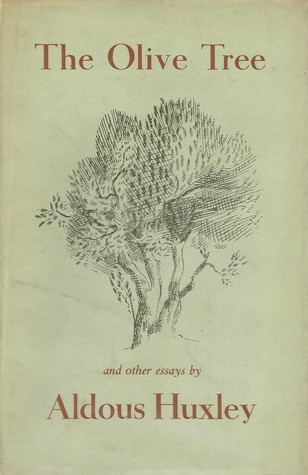
Aldous Huxley on TIME

Time, as we know it, is a very recent invention. The modern time-sense is hardly older than the United States. It is a by-product of industrialism–a sort of psychological analogue of synthetic perfumes and aniline dyes.

Time is our tyrant. We are chronically aware of the moving minute hand, even of the moving second hand. We have to be. There are trains to be caught, clocks to be punched, tasks to be done in specified periods, records to be broken by fractions of a second, machines that set the pace and have to be kept up with. Our consciousness of the smallest units of time is now acute. To us, for example, the moment 8:17 A.M. means something—something very important, if it happens to be the starting time of our daily train. To our ancestors, such an odd eccentric instant was without significance–did not even exist. In inventing the locomotive, Watt and Stevenson were part inventors of time. [Please go to page 2]

Propaganda as Mechanization

“What caused the disturbances in people’s minds [in the 1920s and 1930s] was that we were all subjected to propaganda of a kind the human race had never before experienced; we were subject to two deliberate scientifically-organised lie-machines, the Nazi one and the Soviet one, operated in the interests of two tyrants who were also demagogues. 

What made things unique is the they told opposite lies. 

It was like having two anti-Christs contradicting one another. 

The machines plunged on whatever anyone said, however young or unauthoratative that person might be.”

—Bernard Wall, Headlong into Change (London: Harvill Press, 1969), 79.

In Defense of Historical Complexity: A Meditation on the Old South

“Sing me a song of a lass that is gone,” the Outlander theme song begins (“The Skye Boat Song”). The show, based on Diana Gabaldon’s romantic history novels, depicts a lost world of 18th century adventure, Scottish highland clans, and loyalty shaped around various allegiances. The protagonist, Claire, is a 20th century woman who has been cast back in time to the different world of 18th century Scotland; she is the “lass” of the title song. At the same time, “lass” symbolizes the whole world of excitement that Claire finds herself living. The world of the past “is gone,” and Outlander is a song contrasting modernity with a specific moment in the past.

In the midst of such a contrast, what is the person with an active historical imagination called to do? Does the past become an extended store of ethical examples demanding moral judgement? Or is there something more to developing an imaginative vision of an alternative time? I propose that there is something more, and that at a minimum an engagement in a formal study of the past should begin with understanding which moves to love. Rather than asking “Were X-group-of-people right or wrong to do Y-action?” the proper historical question is “Why did X believe they should do Y, and what can we find that is admirable in their choices or convictions?” Permit me to illustrate this approach to history using the antebellum and Civil War eras (roughly 1848-1865).

As a boy growing up in Virginia, I developed a love for the Old South. The remnants of the material culture of the South were all around me – historical signs, the iron factory in Richmond, VA., battlefields of minor victories and substantial losses. But perhaps the most formative encounter I had with a vision of southern culture came from the novel Gone with the Wind. One summer I set myself the goal of reading a novel of more than 1000 pages, and the romance of Scarlett and Rhett, the fate of Tara, and the fight to defend home and live in the aftermath of its loss captivated my imagination. Here was a different world, filled with different values, different reactions, different dreams than my own; here was a way of life people fought to protect.

As I grew older, I began formally studying the events of the Civil War. I learned about sectionalism, the economic systems which enabled both the high plantation lifestyle and the poor white farmer to coexist, the evils of slavery, and division which threatened to wreck the Union. I read sermons from pastors in the North who drew from their theological traditions a deep respect for the dignity of the human person to support the abolitionist cause; and then I read speeches from southerners who saw in their aristocratic hierarchical society the hand of God locating each person within a specific place for the good of the body politic. Reading first hand accounts and scholarly interpretations, I observed the complexities of the moment. Stalwart men of virtue (Robert E. Lee and Stonewall Jackson) fought for their homes, their land, and their way of life. Northern generals (Tecumseh Sherman and Ulysses S. Grant) lacked virtue but delivered victories through their scorched earth, “rape of the south” give-no-quarter tactics. Not only did the North win the war, but in doing so the Union set southern economic activity backwards by over a century.

The complexities of this era fascinated me, and to this day I get passionate when confronted with simplistic understandings of the Civil War. This struggle was about slavery, but that issue represented a constitutional question. Could the states break the Union? Which was primary: the people, or the states? Secondarily, this war was also the struggle of two different economies: agrarianism vs. industrialism, and the life of the farm vs. the life of the city. Wrapped into these political and economic concerns were substantial philosophical questions: do all human beings have dignity? If so, how does that dignity work itself out in political life? What is the nature of governing authority? Is it bound by the Constitution? Can the highest authorities violate the source of their authority for a good purpose? What does it mean to be created “equal?” Paired with philosophy, politics, and economics were the rise of abolitionist rhetoric and the power dynamics of an entrenched 19th century racism. These complexities resist simple answers.

Between 1848 and 1865, the United States engaged in a trial by combat to answer fundamental questions. By the end of the Civil War, several questions received answers sealed in blood: the states were subordinate to the Union, the people were the primary political power in the United States, equality meant equal freedom and self-responsibility before the law, and the American economy was one of increased industrial, urbanized patterns of material production and consumption. The South lost, and in its loss passed a way of life. Rather than settling the conflicts once and for all, Northern victory only deepened the complexities which brought the United States to this point. Studying the Civil War era must be more than a formal engagement in condemning the practice of slavery; such a study should be an opportunity to grow in understanding and love.

Historical study begins with seeking understanding through primary text engagement. Reading the works of John C. Calhoun, Jefferson Davis, Abraham Lincoln, Stephen Douglas, Robert E. Lee, Ulysses S. Grant, and the other men of the day emerses the student in the richness of that other moment. For good or ill, these were real men and women seeking to live life well, and in coming to understand their motivations we are moved not to agreement, but to love. It rather resembles a wayward brother – by understanding the choices my brother has made and the circumstances which motivated those choices, I develop a compassion, a desire to suffer alongside him. Were I to teach an American Civil War class, I would not expect students to agree with Southerners (or Northerners necessarily), but I would expect them to search out the motivations which caused hundreds of thousands on both sides to march against each other. And if we reach the level of understanding, a love for fellow human beings is the natural outgrowth of historical study.

Reading of the antebellum South is rather like reading Homer’s Iliad for the first time. One goes to it knowing the Greeks win, but the nobility and grace of Hektor in contrast to the puerile childishness of Achilles forces the reader to sympathize with the doomed city. The South fell, and, for many reasons, rightly so. It’s economic system was untenable: large parts of Southern life were based on a racist anthropology, and failed to align with reality; agrarian life could not keep pace with the technological productivity of an industrialized economy. At the same time, the cultural loss in the post-1865 South was real, and  the costs of that loss merit remembrance. The southern way of life, rooted in the seasons necessary for agriculture and bound up with values of honor, delicacy, and hierarchy contained goods no longer found in American patterns of living. It is only by appreciating the value in what was lost that we see the price of “progress,” and in that sense the history of this period is as tragic as it is victorious in terms of moral or political philosophy.

The tension in how we view the Civil War era and its aftermath came to light in recent years with the publication of Harper Lee’s Go Set a Watchman. Lee tells the story of an adult Scout who returns home to Atticus and learns that her father is more complex than she remembers. The book troubled many who read it, because they expected the simplistic dialectic of To Kill a Mockingbird to return; instead, Lee presents us with a realistic racially minded Atticus Finch, a man who is concerned that African-American progress is happening too fast and causing essential change to the civilization he loves. To Kill a Mockingbird is a beloved classic. Who does not find his heart soaring in Atticus’ defense of Tom Robinson? But when Lee forces us to see that Atticus is a more complex figure, it causes the reader to wrestle with the question of change. How should change occur? At what pace should things change? And when change become the new norm, can we not pause and remember what was?

There is also the opposite danger. The Southern Agrarians (including one of my intellectual heroes Richard Weaver) romanticized the South, and in doing so constructed their critique of modernity on shaky ground. This romanticization is also bad history. Here Aristotle provides sound advice: moderation in all things. We cannot glorify the South or embrace the Myth of the Lost Cause; neither can we reduce the Civil War to a triumphant crusade to liberate the slave. The truth of the period will be found in the heart of its complexities.

“Sing me a song of a lass that is gone” encapsulates the enduring attraction of the South. Indeed, the old South has died, and in its death a greater equality for all Americans has developed. It remains for the historian not to pass on a catechesis ensuring that all students understand that the abolitionists were right, but rather to cultivate a desire to understand why the Civil War occurred, and in that understanding that we might exercise “the love which moves the sun and other stars” towards our benighted past.