I’m sure like many of us who love progressive rock, we’re always looking for music that actually progresses. Of course, we love and adore The Yes Album and Trick of the Tail and Songs from the Wood, but we also want something rooted in that music that goes beyond it as well.
Well, my search, at least for 2026, has ended. It ended when I discovered the Finnish band, Onsegen Ensemble. I knew absolutely nothing about them until the great Karisma Records sent Spirit of Cecilia a review copy.
Here’s what the band says about itself:
“ONSÉGEN ENSEMBLE IS A GROUP OF MUSICIANS FROM NORTHERN FINLAND. BEING FAITHFUL TO ITS OWN PURPOSE, THE SPIRITUAL HOME OF ONSÉGEN KEEPS ITS DOORS OPEN FOR EVERYONE TO ENTER. THE MUSIC TAKES YOU TO A MYSTICAL TRIP WITH EXCURSIONS INTO WONDERFULLY CINEMATIC AND FLAMBOYANT LANDSCAPES.”
From the very opening few seconds of the latest album, A Tale, I was hooked. I’ve remained hooked for all 42 minutes of A Tale now too many times to count. For what it’s worth, I always buy a personal copy of an album sent to me for review if I love it. That is, I very much want to support the artists, especially when they trust me with a review copy. It’s an honor to be on the receiving end of such beauty, and I never want to break that trust. Just so you know, I bought three copies of A Tale—one for me, and two to give to friends. That’s how much I love this band and album.
As to specifics. . . the instruments, the vocals, the lyrics are all astounding. The production is outstanding, a true aural delight. Truly, I felt like I was being drawn into the musical equivalent of Tolkien’s profound essay “On Fairy Stories.” Yes, I was entering fairy by listening to this band.
The lyrics are pretty minimal, but they’re excellent nonetheless. I’m especially taken by the lyrics of track no. three, “A thought”:
“Peace is a thought
Followed by the word. . . .
Peace is a flame
Lit by devastation
Dependent on shelter
Never meant to fade.”
I have no idea if the word is a Word in the Stoic or Christian or just hippie sense, but I like it nonetheless. It’s evocative of truth, beauty, and goodness.
As to the music? Well, it’s original, to be sure. I hear bits of Traffic, bits of Jethro Tull, bits of Talk Talk, bits of Kate Bush (especially side 2 of Hounds of Love), and bits of David Gilmour. But, in the end, this is original music. Something straight from the northern most parts of the world.
If you’re looking for something beautiful and original, look no further. You have reached your destination.
If you’re in the U.S., make sure to patronize our best prog rock store, Band Wagon USA. Elsewhere in the world, get it from Bandcamp.
For the past few months, I have been working on a hobby project —reworking all my posts at SpiritOfCecilia. Took each one of them and did an AI editorial review for internal consistency and structure. The Machine pointed out the flaws, and I addressed them. Inputs related to flow, bridging sentences, and tone. Essentially, the logic, ideas, and structure are still a human creation. In fact, there were instances where I had to correct the Machine’s understanding of Friedrich Hayek.
As always, the whole exercise of writing brought additional structure to my own thinking. I also realized that the posts can be organized into three larger essays, each dealing with different aspects of reality. Once completed, I provided this content layout, along with motorcycling photos, to the Machine, and it generated HTML pages. Uploaded those pages to my personal WordPress blog with a custom domain name.
Kevin, Tad, Rick, and I had the immense pleasure of speaking with Steve Babb of Glass Hammer this morning. 61 minutes about music, family, and faith. Enjoy!
It’s a glorious Memorial Day afternoon – and, on this American holiday weekend, I’m looking back on five months of hearing and reflecting on America’s greatest musical invention. As always, there are plenty of worthwhile jazz albums (whether new or archival) easily in your reach; these are notable selections from what’s come to my attention so far this year. I’ve included listening links within album titles where available, along with a purchase link after my review where necessary.
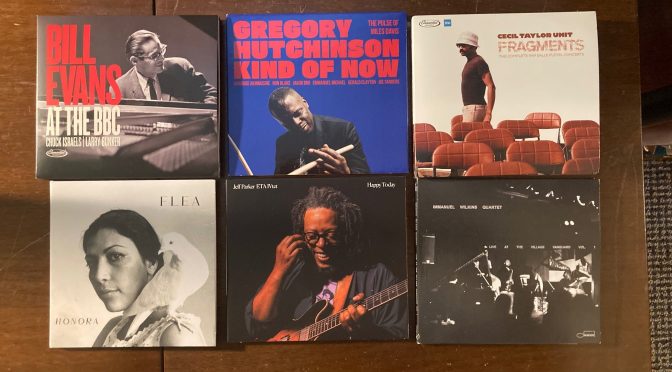
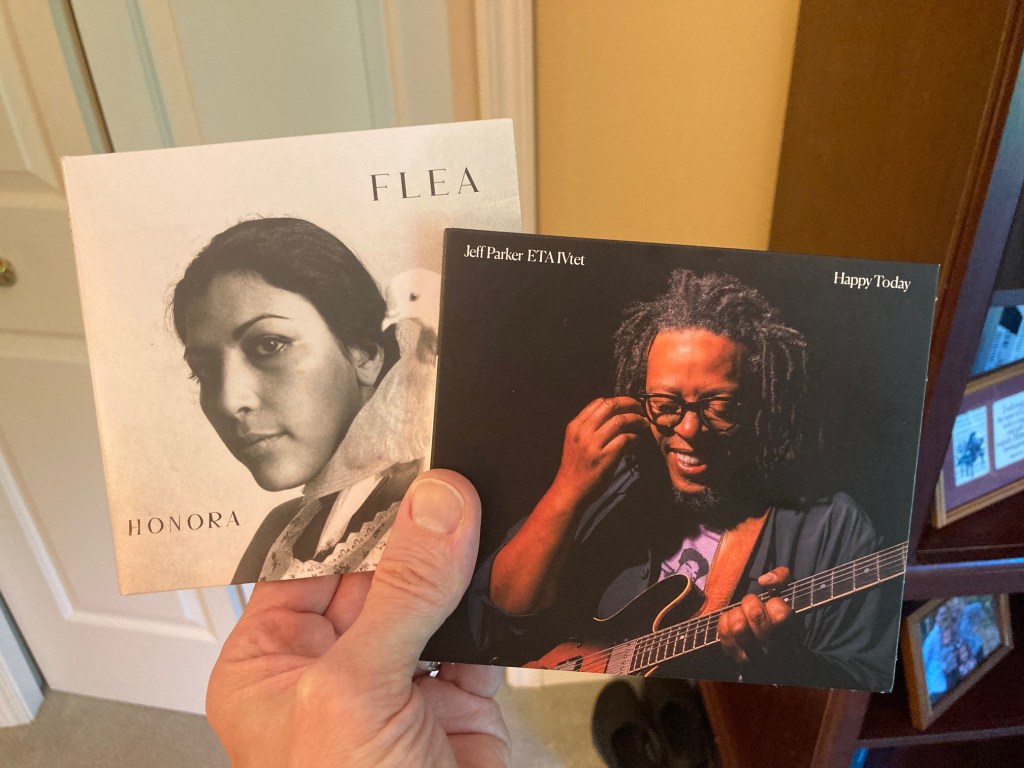
The album I’ve turned to the most (despite being released only this past month) is the Jeff Parker ETA IVTet’s Happy Today. Recorded live at a congenial Los Angeles haunt, guitarist Parker, saxophonist Jeff Johnson, bassist Anna Butterss and drummer Jay Bellerose conjure two generous portions of sheer music from silence. Guitar riffs circle and morph; sax lines are looped into shimmering chords and textures; hovering above capacious, confident rhythm work, all four players constantly listening and reacting, moving together through gradual builds and sudden tempo shifts. Whether weaving around each other’s contributions in a supple dance (“Like Swimming”) or ascending a rainbow of tone colors to a light, sweet shuffle (the title track), there’s no hurry, no contention – just a collaborative climb to lofty, inspired heights. It’s a measure of how rich this album is that every time I listen, I want to hear it again!
Parker, Johnson and Buttress also lay down understated foundations on Flea’s solo album Honora. The Red Hot Chili Peppers’ bassist returns to his heritage as a jazz trumpeter here, and while he’s boned up in recent years, he knows he’s running with thoroughbred players. Flea’s vocal features on the album’s noisier bookends “A Plea” and “Free as I Want to Be” push straight to hot emotional extremes, but his trumpet work is cool and controlled (reflecting the influence of Chet Baker); his original compositions combine understated tension with winning introspection; and his choices of cover tunes (Funkadelic to Glen Campbell to Franks Ocean & Sinatra) and guest vocalists (Thom Yorke backed by a horn section! Nick Cave singing “Wichita Lineman”!) are uniformly surprising and superb. Not what you might have expected, and all the better for it.
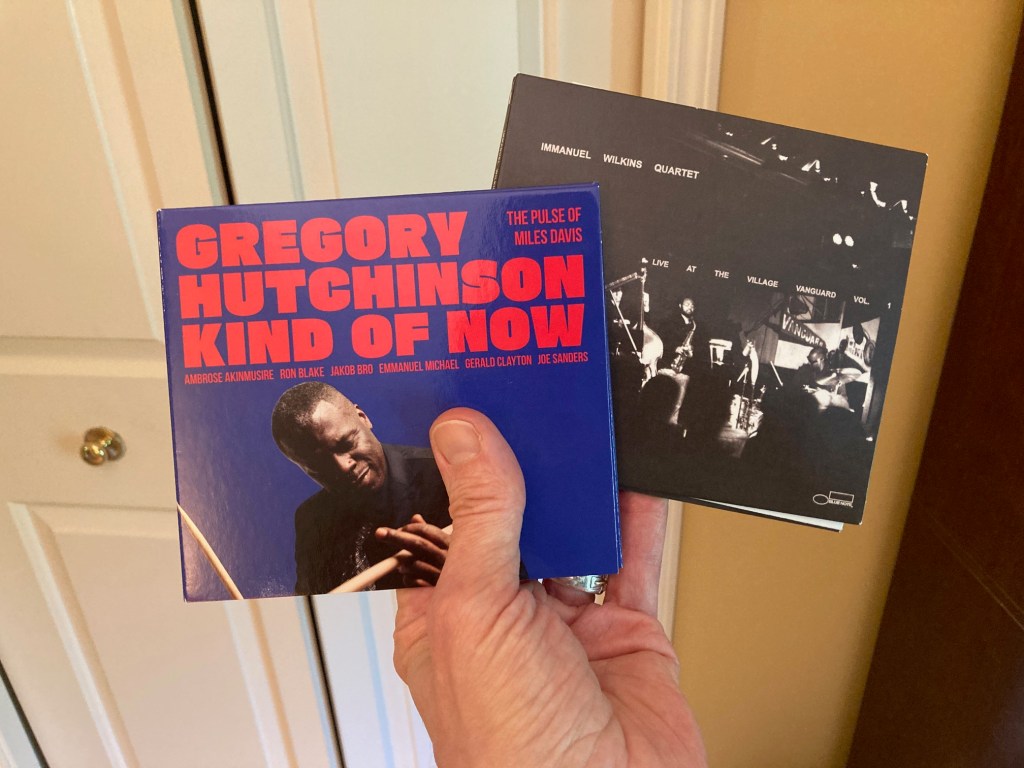
Four years ago, I thought Immanuel Wilkins might be part of jazz saxophone’s future; after hearing his quartet’s breathtaking Live at the Village Vanguard, Vol. 1, I’m convinced he’s now the present, in every sense of the term. Taking one of NYC’s most famous clubs by storm, Wilkins and his quartet (endlessly inventive pianist Micah Thomas, rock-solid bassist Ryoma Takenaga, masterful drummer Kweku Sumbury) are all in their 20s and 30s, but they’ve already lit out beyond previously explored territory to map their own exuberant course; through the modernistic postbop of “Warriors”, the Bachian interplay of “Composition XII”, the deep-rooted, ecstatic gospel of Alice Coltrane’s “Charnam” and the two-part “Eternal” (a time-bending workout that collapses into hypnotic sub-toned minimalism), there’s elegance and earthiness, mind and heart in constant dialogue. The applause after each track is unforced, the audience reacting to the Quartet’s potential unfolding into assured maturity before their ears. (Vol. 2 & Vol. 3 are equally fine, but only available via downloads or streaming. Buy Vol. 1 at Blue Note Records, — or lobby ’em for a complete box set!)
In case you hadn’t heard, Miles Davis’ centennial is this year – this week in fact. There are plenty of reissues already out and still to come, with tributes aplenty following in their wake. The best of the latter I’ve heard so far is Gregory Hutchinson’s Kind of Now: The Pulse of Miles Davis. Drummer Hutchinson’s style as a Young Lion has blossomed into a strong yet tempered sense of groove, thoroughly assimilating the work of the amazing drummers who backed up Davis; here, he leads an all-star group on a wild ride from early bebop (“Ah-Leu-Cha”) through cool school (“Fran Dance”, “Seven Steps to Heaven”) and a quartet of enigmatic Wayne Shorter tunes (including “Orbits” and “Water Babies”) to the pioneering days of jazz-rock fusion (“Bitches’ Brew” and “Circle in the Round”). Ambrose Akinmusere’s thick, liquid trumpet, Ron Blake’s consummately attentive sax work, and Gerald Clayton’s versatile, tasty piano delight throughout; it’s impossible to know what they’ll do at any given moment, but always satisfying in the aftermath. Around and through it all, there’s Hutchinson’s drive, color and sense of space. This is a thoughtful take on the breadth of Miles’ achievement that’s consistently focused and gracious, but marvelously abstract and unpredictable as well. (Buy the CD from Amazon.)
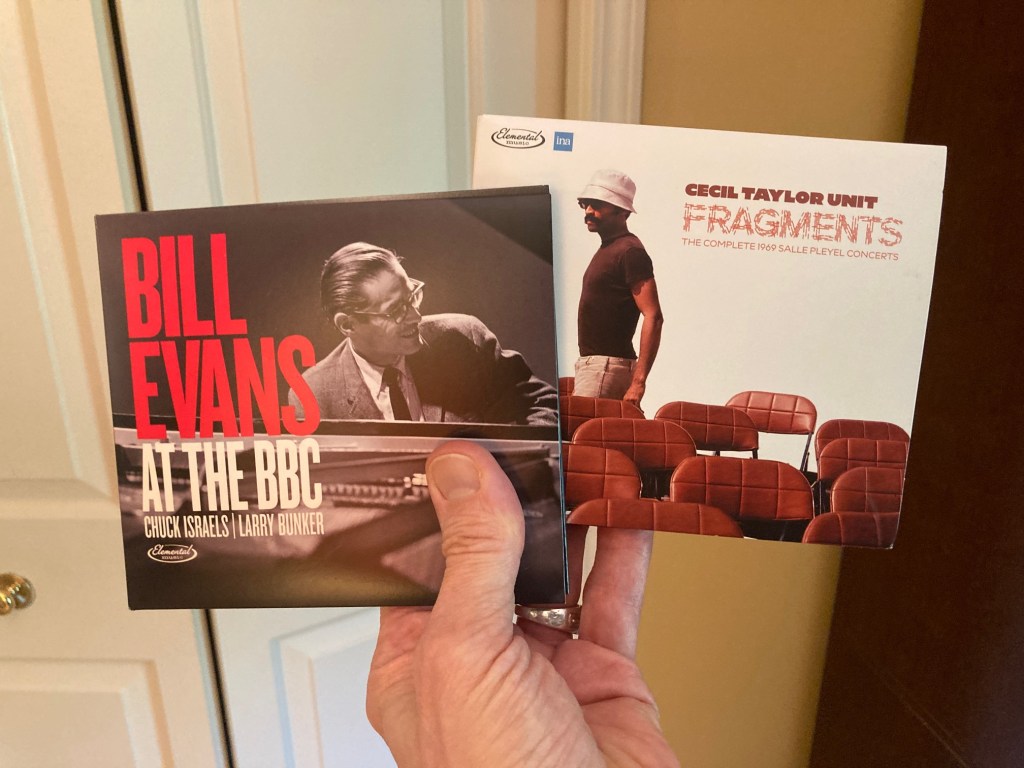
And as always, Record Store Day has brought a clutch of archival releases courtesy of jazz detective Zev Feldman. On Feldman’s 15th production of Bill Evans, At the BBC, the music is exquisite as always, despite severe sonic limitations inherent in the original 1960s television broadcast. Evans and his current trio with Chuck Israels and Larry Bunker shift moods on a dime, using dynamics as a key component in their mutual ebb and flow. Even when they take an uptempo tune like “Nardis” or turn “Waltz for Debby” into a 4/4 swinger, the rapt contemplation at the core of ballads like “My Foolish Heart” and “Who Can I Turn To?” are still winningly present. (Buy the CD from Amazon.)
Pursuing an idiom 180 degrees away from Evans, Cecil Taylor demanded the same level of attentive listening via radically different means – a sidelong take on the jazz piano tradition that reveled in fractured time and tonality, extended compositional statements and improvisations, a nigh-incessant, athletic tsunami of notes too fast to separate. On Fragments, recorded live at a French festival in 1969, Taylor prowls the keyboard like a roaring lion, endlessly pouring out riffs, chords, clusters; saxophonists Jimmy Lyons and Sam Rivers dialogue with and echo Taylor and each other, overblowing and piling up hyperspeed motifs at a frenetic pace; drummer Andrew Cyrille miraculously cooks up a flow in the absence of any downbeat – turning, shifting, reacting, leaping ahead. The two takes of Taylor’s “Fragments of a Dedication to Duke Ellington” are 50 and 90 minutes long, and you’ll feel like you’ve run a marathon after you’ve listened. This isn’t for the faint of heart or the squeamish, but trust me: Taylor’s pioneering free jazz will open up your ears and brain even as they wear them down and possibly out. (Buy the CD from Amazon.)
Our first regular podcast–but we don’t have a name yet! Any suggestions? We introduce ourselves and then talk a bit about the progressive rock band, Frost*.
Hello Spirit of Cecilia Readers. The editors of Spirit of Cecilia are having a blast reminiscing about their music tastes in their high school years. Please enjoy our conversation as we take a deep dive into our respective nostalgias.
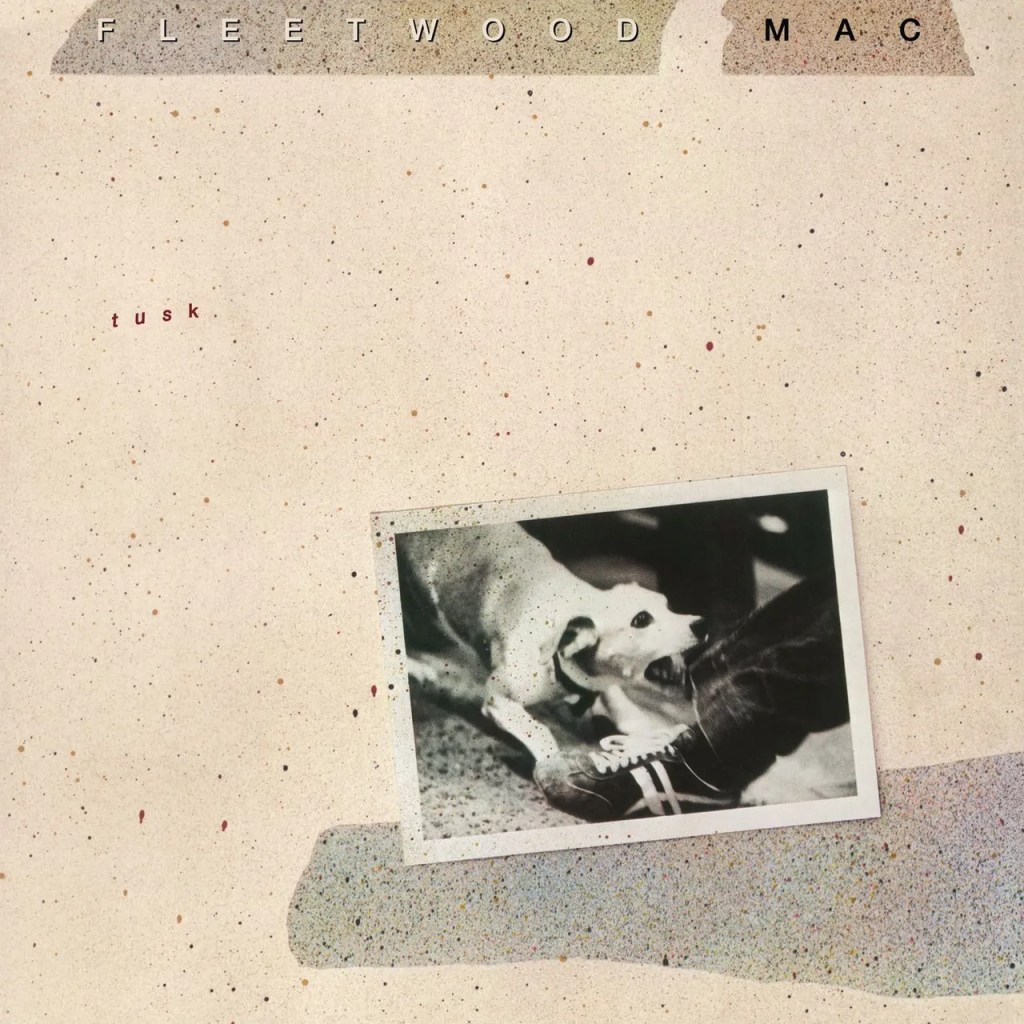
Tad: Okay, since I’m probably the oldest person here (Class of 1979), I’ll kick things off. My high school years started with glam, eased into arena rock, and ended up with punk and new wave. Early on, I loved Todd Rundgren, David Bowie, Mott the Hoople, and Badfinger. I still listen to those guys and enjoy them. I subscribed to Rolling Stone magazine, because it was actually good in the ‘70s and had fairly reputable music critics. The Eagles and Fleetwood Mac were probably the most popular artists at the time, but they were too laid back for me. I did like (and still do) Fleetwood Mac’s Tusk album, because it was so weird. Once New Wave hit in the late ‘70s/early ‘80s ,though, I was in heaven! There were so many new artists popping up, I could hardly keep up!
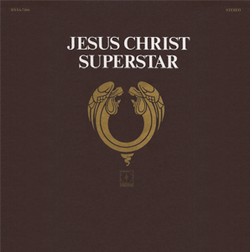
Carl: I was born in 1969 and had very little exposure to popular music until I was 12 or 13. There was church music (the robust, older Protestant hymns) and my parents’ very limited collection of what I call “white gospel music,” which ranged from cringe-inducing to not much better. Thankfully, a family that I was close to (Catholic!) got me listening to some classical in junior high, which was wonderful—and stuck—because most of the public school music curriculum revolved around schmaltzy, light pop from the Seventies (Barry Manilow! Debbie Boone! Jesus Christ Superstar!).
Then, in junior high, I started to hear and pay attention to pop/rock music, often via a jukebox (!) at the local ice cream place, or a boombox during recess or after school. Songs that made a lasting impression on me were Queen’s “Another Bites the Dust,” Kenny Roger’s “The Gambler,” Joan Jett’s “I Love Rock ‘n’ Roll,” and Toto’s “Africa”. The dam broke for me in my first year in high school; that’s when my obsession with music went from 1 to 10. I would listen to whatever I could and by any means possible: radio, 8-tracks (Beach Boys!), cassettes, and tunes played by friends.
Looking back, I was fortunate that I had older friends and a couple of teachers who introduced me to “classic rock” (of course, some of it was very new then) by groups including the Eagles, Journey, Moody Blues, ELO, Kansas, Foreigner, Elton John, Pat Benatar, Van Halen, and so forth. And 1982-84 was a great time for classic albums by The Police, Men at Work, Michael Jackson, Toto, Def Leppard, and Big Country. But the music that I was drawn to most strongly was “90125” by Yes, anything I could find by Kansas, Elton John, Queen, and some Contemporary Christian Artists, including Michael W. Smith.
The one thing I avoided like the plague was harder rock or metal; I had no interest in AC/DC, Quiet Riot, Iron Maiden, Metallica, etc. Still don’t. It was a while before I discovered more prog-gish groups like Rush and Asia. In my final two years of high school (‘85-87), I was a big fan of Steve Winwood, Bruce Hornsby, ELO (which was some of the soundtrack for my senior year), Alan Parsons Project, Styx, Mr. Mister, and similar AOR groups. I had no interest in jazz and didn’t care for most new wave music, with a couple of exceptions (Spandau Ballet stands out). It wasn’t until “Momentary Lapse of Reason” came out in late 1987 that I first paid any attention to Pink Floyd.
In sum, much of this was simply “in the water”; however, I see now that I was increasingly drawn to the sort of prog-gish groups that would open the door to my deep plunge into prog in the early to mid-1990s, which then (in ways) opened the door to jazz. But that’s another story for another time!
Brad: Hey guys, great to be talking with you all! Always a privilege and an honor.
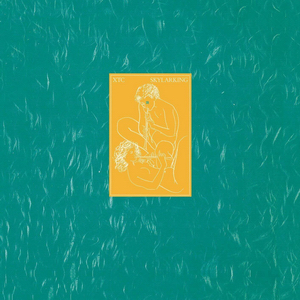
So, I was born in late 1967, and I was in high school, 1982-1986. These years were deeply formative for me, and I look back on them fondly. Like all of us, I was a total music nerd and freak, and I had a huge record collection–one I inherited from two older brothers, but which I expanded by huge degrees. I also worked at the local radio station, KWHK-1260AM/Adult Rock, but we had briefly flirted with a New Wave format–so we still got demos and Advanced Review Copies of XTC, The Cure, B-Movie, Echo and the Bunnymen, etc. No one at the radio station had any interest in these, so I got them all, adding them to my private collection. Really, when it came to owning music, I couldn’t have asked for anything better.
The two things–inheriting music tastes from my brothers and my acquisitions at the radio station–fundamentally shaped my music tastes. Admittedly, though, my music tastes would evolve even more–or perhaps refine?–when I met our own beloved Kevin McCormick. Another step in evolution came from meeting my great grad school friend, Craig Breaden, who had, for lack of a better way of putting it, retro tastes, introducing me to some of the best psychedelic rock of the late 1960s and early 1970s: Jimi Hendrix Experience, Blodwyn Pig, Traffic, Spooky Tooth, and others.
But, back to high school. My favorite bands in high school were, at least until 1985, Rush, Yes, Genesis, Kansas, Thomas Dolby, ABC, and the Fixx. I was pretty obsessed with each of these bands, and I played each on constant repeat. I knew and liked U2 (especially War), but I wouldn’t become really taken with them until I met Kevin. I can say the same about The Cure. I really liked them, but I didn’t fall in love with them until Disintegration in 1989. 1985, though, really changed much for me–mostly because I heard Kate Bush, Simple Minds, and Tears for Fears for the first time. I was utterly blown away by both Hounds of Love and Songs from the Big Chair–each a perfect (utterly perfect) blending of pop and prog. Man, those are good memories. I also really liked Simple Minds, but true love for that band didn’t occur until I met Kevin.
Other albums I totally obsessed over during high school: Golden Age of Wireless, The Look of Love, Signals, Grace Under Pressure, Reach the Beach, and 90125. I was also really into the Police, especially Synchronicity.
Even then, I was most taken with lyrics, analyzing every one of them, always looking for deeper meanings. For me, 90125 was a comment on the state of the American republic (I’m not saying my interpretations were correct; only deeply held), the Golden Age of Wireless was the putting of Ray Bradbury short stories into music form; Hounds of Love was about Satan’s attempt to dominate the world; Grace Under Pressure was about Reagan’s struggle to win the Cold War; and Songs from the Big Chair was a deep exploration of an individuals psychological strengths and weaknesses. Yeah, I was probably totally wrong about each of these.
Erik: I love to make playlists with my music collection, and if you scrolled through the music app on my iPhone, you would find a lot of them. Some are based on musical styles, some are based on lyrical themes, and some are based on time periods. I have one playlist called Nostalgia 79-82 which is dedicated to music I own that came out during my high school years of 1979-1982. While my tastes were not limited to those years, that playlist nevertheless serves as a great example of what I was listening to at the time. The list includes a wide variety of music, from AC/DC to Yes, with Black Sabbath, Rush, Van Halen, Triumph, and others in between.
The first year of that era, 1979, was more consequential in developing my long term musical tastes than any other. That was the year I discovered Yes, Rush, and Pink Floyd. Yes was discovered through a concert that left an impression on me that reverberates to this day. I also stumbled across Rush through the 2112 album (seeing them later that year in concert as well), and had my first listen of Floyd’s Dark Side of the Moon. Toward the end of that year, I purchased Pink Floyd’s new release, The Wall. The net effect of these discoveries was to bifurcate my musical tastes into “prog” and “not prog,” establishing a certain yin and yang to my listening habits.
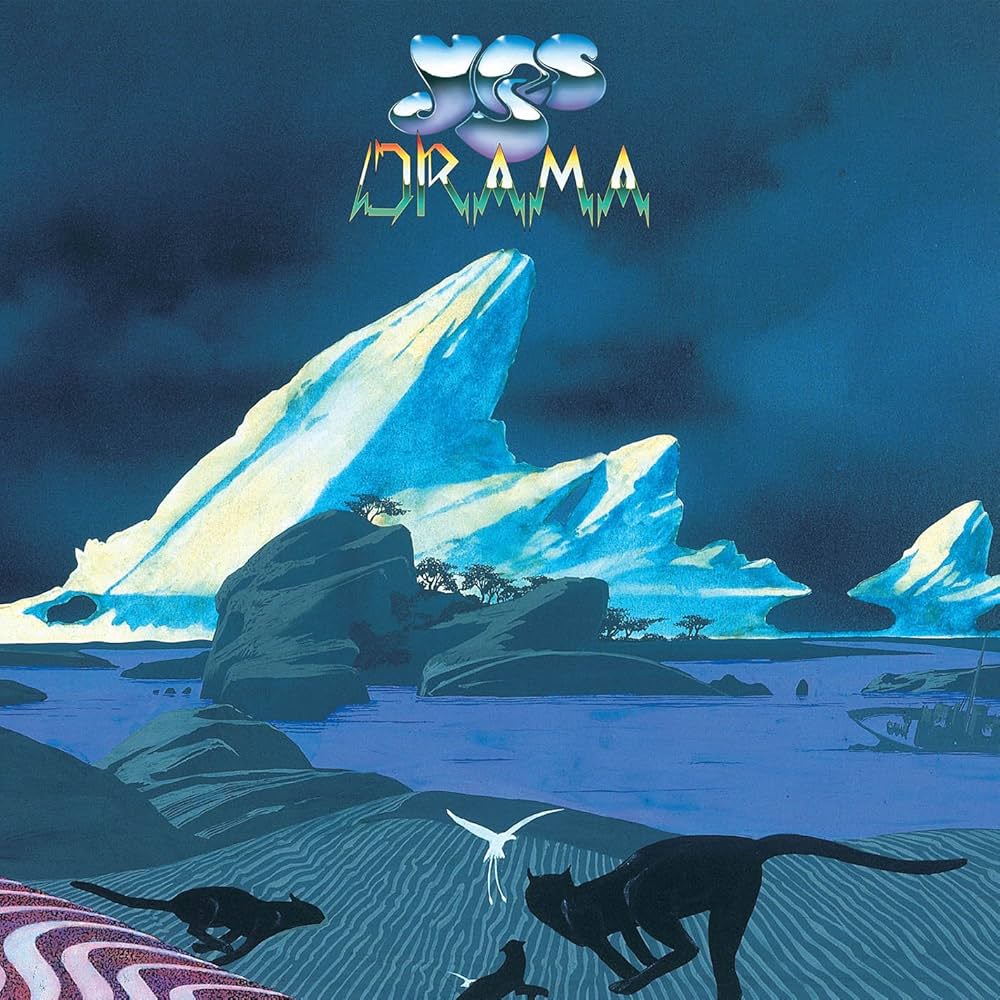
Prog was the yin, and it quickly became my favorite genre, as I devoured Yes’s back catalog and eagerly purchased Drama (despite the loss of Anderson and Wakeman) upon its release in the summer of 1980. A similar dynamic repeated with Rush and Pink Floyd, and soon I had Rush albums like A Farewell to Kings, All the World’s a Stage, Hemispheres, and Permanent Waves, while Pink Floyd albums like Ummagumma, Meddle, and Wish You Were Here also made it into my collection. Before long, I was also getting into Jethro Tull and Emerson, Lake and Palmer, and on occasion, dabbling into some King Crimson and Genesis music, while Kansas became a regular in my musical rotation. Prog also turned into the gateway drug that led me first to liking classical guitar, and eventually to classical music in general.
The yang was everything else. I’m an outlier in this group, as I’ve always had a taste for harder rock, occasionally veering into heavy metal, and I’ll always have a sweet spot for loud, dirty, distorted electric guitars. I also like plenty of blues-based classic rock. Thus, when I was in a yang mood, you might have caught me listening to AC/DC, Aerosmith, Van Halen, Styx, The Who, and so on. Like many of my generation, I was already into Led Zeppelin, whose music spanned multiple genres. Black Sabbath released two new albums with Ronnie James Dio on vocals, both of which received a period of heavy rotation. Judas Priest had what I consider their first truly heavy album, British Steel, during this time, which blasted out from many a car in my high school parking lot. And although geographically, Lexington, Kentucky (where I attended high school) is not the deep south, culturally it seemed indistinguishable from Alabama. As a result, it wasn’t unusual to hear me listening to some twangy-guitar southern rock from Lynard Skynard, Molly Hatchett, The Outlaws, or the Allman Brothers.
Music was changing a lot during my high school years, as punk had taken its shot at prog, while new wave was emerging. My own tastes were a little slower to change. A lot of the new wave music that became popular during that era was not as sonically dense as the music from the previous decade. Because of that, the music often times gave me a similar feeling of eating gourmet food that, while tasty and well presented, left me hungry. Eventually, I came to like some of it though, and The Police were the first to break through with their Ghost In The Machine album, and particularly the songs Spirits in the Material World and Invisible Sun.
To this very day, my listening bounces between the yin and the yang. I will go for periods in which I listen to prog and nothing but prog, while I go through other periods where I will listen to other types of music while prog is on the back burner. The yin music and the yang music both serve as palette cleansers for the other, and that’s one thing that keeps the music sounding fresh, even in the decades that have passed.
Tad: Erik, I have always had a soft spot for hard rock – especially AC/DC, who I thought were hilarious while coming up with terrific riffs.
I’m going to cut to the chase and list my favorite ten albums that I loved at the time, starting with 1977:
Steely Dan: AJA
Brian Eno: Before and After Science
Pink Floyd: Animals
Yes: Going For the One
Alan Parsons Project: I Robot
Cheap Trick: In Color
Ramones: Leave Home
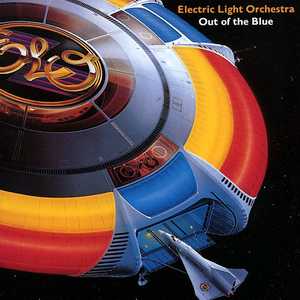
Electric Light Orchestra: Out of the Blue
Peter Gabriel: Peter Gabriel (Windshield cover)
Talking Heads: ‘77
These came out when I was a high school sophomore, and looking back there was an amazing variety of genres to choose from back then. It’s pretty clear that Rolling Stone and Musician Magazine had a big influence on me; how else would I have known about Eno’s Before and After Science (an album I still adore) or The Ramones? I think I was the only kid in my high school who listened to them and Talking Heads.
For me, 1978 was a transitional year, where I listened to established artists while enjoying some music from some new ones like The Police:
David Bowie: “Heroes”
The Cars: The Cars
Bebop Deluxe: Drastic Plastic
Jethro Tull: Heavy Horses
Todd Rundgren: Hermit of Mink Hollow
Talking Heads: More Songs About Buildings and Food
Police: Outlandos D’Amour
Cheap Trick: Heaven Tonight
Ramones: Rocket To Russia
Rolling Stones: Some Girls
Little Feat: Waiting For Columbus
!979, my senior year, is where I embraced New Wave pretty much to the exclusion of everything else:
Buggles: The Age of Plastic
Elvis Costello: Armed Forces
The B-52s: The B-52s
Supertramp: Breakfast in America
Devo: Duty Now For the Future
Talking Heads: Fear of Music
George Gershwin: Manhattan (Woody Allen’s movie soundtrack)
Roxy Music: Manifesto
Gary Numan: The Pleasure Principle
Police: Regatta De Blanc
Joni Mitchell: Shadows and Light
Fleetwood Mac: Tusk
Fischer-Z: Word Salad
I still love all of these albums! Well, I guess I don’t listen to the B-52s that much any more, but I don’t dislike them. Dropping the needle on Roxy Music’s Manifesto immediately transports me back to that time in my life.
Brad: Tad, Carl, and Erik, I absolutely love reading through your memories. Frankly, it’s amazing that even though we’re different ages, we have very similar tastes in music and all came to a similar spot. One thing that’s absolutely clear is that we all love prog and New Wave–frankly, we love our music to be artful and far from simple pop.
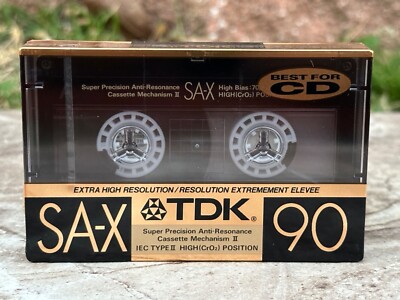
I’ve already told you guys about my radio station experience, but I have to mention two other things–which is so terribly Gen X–I absolutely loved making mixed tapes for my friends. I would buy the 10 or 20 packs of blank TDKs and give them to anyone and everyone who would listen. Frankly, it was a kind of love note to each of my friends. I especially loved making mixed tapes for my girl/female friends.
I would guess that I was pretty known for doing this, and I was pretty good at it, I think. At least in memory, I was good at it. It’s been years and years since I’ve done such a thing. I also made some mixed CDs, but that simply wasn’t as joyful as a mixed tape. I’m not sure why.
I also made mixed tapes for myself–my “best of” Yes or The Doors or Genesis, stuff that I thought should run together that wasn’t on the original albums.
I have nothing but great memories of high school when it comes to music.
But, the second thing I did in high school was dance like a mad man. The good Lord knows I was not created to be coordinated or athletic. I’m as gangly as they come, and I look like a total fool on the dance floor. But, I never cared. I told myself to have a good time, and, by God, I had a great time dancing. I went to every dance possible in high school and college, and my friends and I–when we got together–would have house dances.
Again, I’m so very, very Gen X.
Kevin: Well I’m once again late to the party, but it would appear that our stories are all quite different, which really makes it interesting.
My earliest years were in Fort Worth, Texas and so the influences around me were more in the style of popular country music at the time than anything else. But my parents were from other places and so the music at home was a bit different. My mom had studied piano in college so there was a lot of classical around and my dad was a huge fan of the music of the 50s and 60s. Full disclosure: there was also a lot of 70s schmaltz.
But it was my older brother, Matt, who really shaped my early understanding of rock. He was a pianist himself and so I heard a great deal of Elton John, who I could tell had the cool factor over my country interests and even my Dad’s classic albums.
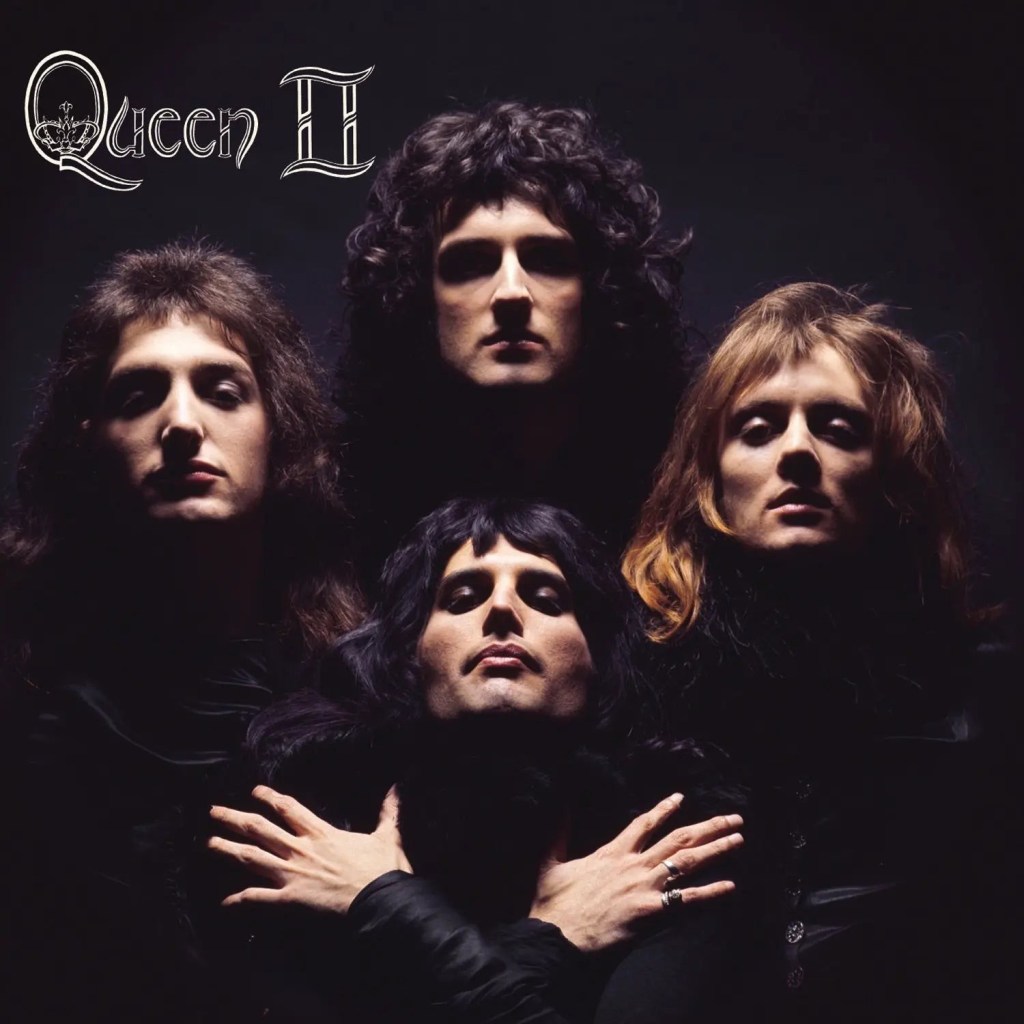
We moved to St. Louis when I was eight and I became friends with a classmate named Pat Malacek who had two older brothers with a load of amazing albums at his disposal. He introduced me to Queen who quickly became shot to the top of my list. As a guitarist, I was in awe of the spectacular craft of Brian May and since there was piano too my brother and I could pick out tunes from their songbook. We also listened to the classic rock station KSHE 95 which included all of the great (and some not so great) music of the era: Boston, Foreigner, the Eagles, Zeppelin, Kansas, Genesis, Yes, and the like. We avoided disco like the plague, but it somehow still made it onto our car radio when mom was driving.
For me Queen seemed to have the whole package though. The music was hugely varied and yet somehow held together. Both the songs and albums flowed like art films, sometimes one side at a time, incredible playing and vocals. It was the jam!
All the while I was studying classical guitar which served me well in learning rock on my own.
And then one day on the ride home from school I heard an extraordinary other-worldly flourish of sound (it wasn’t until a couple of years later that Matt revealed to me that it wasn’t a synth—it was a guitar!) The opening 10 seconds of “The Spirit of Radio” was all it took: I was captivated. Rush usurped Queen (who had begun to drift from what I had liked about them). I bought every album and began using them to teach myself electric guitar. Alex Lifeson was my “absentee” instructor. For a while in high school I would listen to one album a day. It was my electric homework.
We also moved to San Antonio in 1981 and I encountered MTV for the first time. This opened up my musical world profoundly and the new music out of Europe began to take over my playlist. It would be impossible to list them all, but U2 and The Police were huge influences. Since my brothers and I were starting to play gigs, a lot of music I listened to was connected to the clubs we were playing: Blancmange, R.E.M., Depeche Mode, Psychedelic Furs, Simple Minds and many more.
My brother Colin and I went to see the Furs at the Majestic Theater and the opening act was a band that I knew of, but knew very little about. Talk Talk stole the show. I can’t fully express the impact this moment had on me. They were so present on stage and the music was intense, the melodies delivered with sincere passion, fretless bass, powerful drums, inventive-jazzy key lines. It seemed to bring together my entire musical history in a single sound and yet the guitar was only lightly in the background of the mix. It changed my understanding of rock composition!
In college, Bradley and I met while studying rocks (okay geology class) and our friendship spurred a whole new angle: jazz! Particularly Pat Metheny and the artists of Windham Hill. And of course we connected on so many of the prog bands! Eventually this included regular mix tapes he would send. So much music! He kindly welcomed me onto his radio show and we laughed a lot and he spun great tunes. And the rest is…history!
Brad: A huge thanks to everyone for participating. All five editors of Spirit of Cecilia. We hope you, gentle reader, have enjoyed this utter blast of nostalgia.
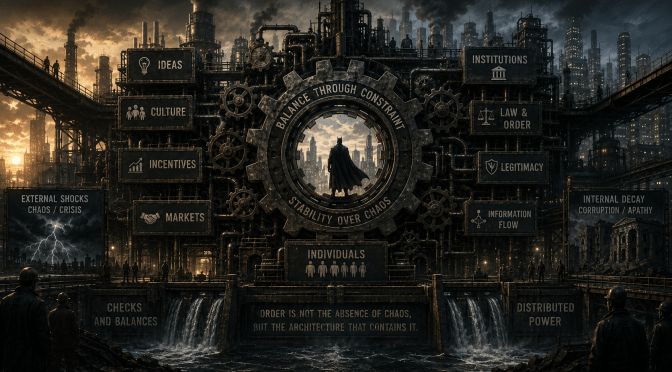
An AI generated summary of an evening conversation with ChatGPT on Chris Nolan’s Batman trilogy.
Christopher Nolan’s Dark Knight trilogy stands apart from most superhero films because it functions simultaneously as psychological drama, political allegory, and systems-level exploration of order and instability. Beneath the action and spectacle lies a deeper question: how does civilization preserve itself when confronted with corruption, chaos, fear, and institutional decay?
The trilogy’s central conflict is not simply hero versus villain. Instead, each film examines a different form of systemic instability and Batman’s role as a force attempting to restore equilibrium without becoming tyrannical himself.
At the center of this structure is Batman — not merely as a vigilante, but as a stabilizing force operating outside formal institutions while paradoxically protecting their legitimacy. Unlike traditional heroes driven primarily by revenge or personal glory, Nolan’s Batman is motivated by the need to understand and repair structural disorder. Bruce Wayne’s journey in Batman Begins is therefore less a conventional origin story and more an intellectual and psychological search for reality itself.
The death of his parents destroys Bruce’s early assumptions about justice and social order. Gotham appears corrupted at multiple levels: criminals dominate the streets, institutions are compromised, and fear shapes behavior everywhere. Instead of reacting impulsively, Bruce travels, studies criminality, and joins the League of Shadows. This phase of the film is critical because Bruce behaves less like a future superhero and more like a student attempting to understand the architecture of civilization and decay.
Ra’s al Ghul represents the trilogy’s first philosophical challenge. His worldview assumes civilizations inevitably become corrupt and therefore require periodic destruction and renewal. Gotham, in his eyes, has become irredeemable. Bruce rejects this conclusion. Importantly, he does not reject the observation that Gotham is corrupt — he rejects the solution. This distinction defines Batman’s entire philosophy throughout the trilogy. He acknowledges darkness within society but refuses to embrace destruction or absolutism as the answer.
This tension becomes even more explicit in The Dark Knight. The Joker is not primarily interested in money, political control, or territorial conquest. He is obsessed with exposing what he believes to be the true nature of humanity. According to the Joker, moral order is merely performance. Under sufficient pressure, ordinary people abandon ethics, institutions collapse, and civilization reveals itself as fragile theater.
The Joker functions almost like a philosophical stress test placed upon Gotham. The ferry scene perfectly captures this idea. By forcing civilians and prisoners into a mutual destruction dilemma, he attempts to demonstrate that human beings are fundamentally self-preserving and morally weak. Throughout the film, he repeatedly targets systems of trust: law enforcement, public morality, political leadership, and even Batman himself.
Batman’s response is not to deny the Joker’s observations. In many ways, he understands them. Gotham is corrupt. Human beings are imperfect. Fear and self-interest are real forces. Yet Batman believes civilization survives through the preservation of structure despite these flaws. His role becomes that of a stabilizer absorbing chaos before it cascades into institutional collapse.
This is why Batman’s refusal to kill is so important within Nolan’s interpretation. The no-kill rule is not merely sentimental morality; it functions as a structural boundary. If Batman allows himself to become judge, jury, and executioner, he ceases to be a guardian of the system and instead becomes sovereign power outside all restraint. His refusal to cross that line preserves the distinction between corrective intervention and authoritarian domination.
Harvey Dent’s arc further reinforces the trilogy’s concern with institutional fragility. Dent initially represents lawful reform from within the system — Gotham’s hope that legitimate institutions can still function. His eventual corruption demonstrates how even idealistic structures can fracture under sufficient psychological pressure. Batman ultimately absorbs the blame for Dent’s crimes in order to preserve Gotham’s belief in lawful institutions. Whether morally correct or not, the decision reveals Batman’s willingness to subordinate his personal reputation to broader systemic stability.
The Dark Knight Rises expands the trilogy’s focus from individual morality to institutional legitimacy itself. Bane operates at a different structural level from the Joker. The Joker attacks human nature; Bane attacks the foundations of Gotham’s political order. He exposes the hidden compromises underlying the Dent Act and weaponizes public resentment against the city’s elite structures.
Bane’s revolution is built upon delegitimization. Gotham collapses not simply because Bane is physically powerful, but because the city’s institutional confidence fractures. Courts become performative, law enforcement is neutralized, and the public narrative sustaining Gotham’s order disintegrates.
Bruce Wayne’s condition at the beginning of the film mirrors Gotham’s stagnation. In peacetime, Batman loses clarity and purpose. His return initially reflects overconfidence and attachment to an outdated understanding of the threat. Bane defeats him not merely physically but structurally. Bruce is forced to confront the limitations of his own assumptions.
The prison pit sequence symbolizes recalibration rather than simple rebirth. Bruce rediscovers fear, mortality, and purpose. He no longer fights to preserve his identity as Batman, but to restore balance to Gotham itself. This distinction matters because Nolan consistently portrays Batman not as a ruler or conqueror, but as a temporary corrective force designed to stabilize systems under extraordinary stress.
What makes the trilogy conceptually rich is that it operates simultaneously across multiple layers. At the psychological level, it explores trauma, fear, identity, and moral boundaries. At the political level, it examines institutional legitimacy, surveillance, emergency power, and corruption. At the societal level, it studies how narratives, trust, and fear shape collective behavior.
Most importantly, Nolan’s trilogy refuses simplistic conclusions. The films acknowledge that civilization is fragile, institutions are imperfect, and human beings are deeply flawed. Yet they also reject nihilism and absolutism. Batman ultimately represents disciplined constraint: a figure who understands darkness but refuses to surrender to it.
That tension — between chaos and order, truth and stability, fear and responsibility — is what gives the Dark Knight trilogy its enduring conceptual power.
Dear Spirit of Cecilia Reader, greetings from southern Michigan.
I just want to let you know that my (Brad’s) new book is out today from Stone House Press: The Declaration of Independence: A Radical Experiment in Liberty.
I’m pretty proud of it.
If you’re interested in it at all, you can order it at Amazon.
Amazingly enough, it’s the no. 1 release in Modern Western Philosophy. Pretty cool!
So far, I’ve discussed the lack of any real intelligence in AI, the fact that it’s a compute hog of the highest order, and as a result, also a power/infrastructure hog and a money hog. But at least, for the enormous price of all that computer/power/infrastructure, AI gives us accurate information and quality answers on a regular basis, right? Right??
Um, not so fast.
AI Follies
You’d hope for all the resources AI consumes, it would at least be reliable. And at times, it can provide some quality answers. But at other times, the information it returns is just bonkers. A bad query, one that is too long, or one that generates too much information can end up causing AI to hallucinate like a Grateful Dead fan in Haight-Asbury circa Summer 1967.
Take for example this recent incident: lawyers submitted a motion that cited nine different cases, with the motion itself being generated by AI. Problem? Of the nine cases cited, eight were complete fiction. They didn’t exist, and were wholly the creation of the AI that prepared the motion. The lawyers were sanctioned. And despite this, it’s happened numerous times since then, as other lawyers have failed to learn from the mistakes of their predecessors.
OpenAI has a transcription tool called Whisper which is used in hospitals. It is known to hallucinate, inserting words or even entire phrases into text that were never actually uttered. Do you want to take medical advice based on a hallucination-riddled transcript? I’ll pass.
The Chicago Sun-Times once used AI to generate a summer reading list of 15 books. We cannot fault anyone for not completing the list, since only 5 of the 15 were actual books, while the rest were pure fabrications. However, the fabrications were attributed to real authors. One wonders if they could get real royalty checks from the AI-run accounting department of their publishers.
Go play around with one of the prominent AI chatbots yourself. Give it a few off-kilter queries and see what it does. With a little effort, you can make it hallucinate too.
How worried about your job should you be when AI makes such massive mistakes? And if you are thinking about replacing workers with AI, should you? Should you rely on a tool that makes stuff up out of thin air? You wouldn’t hire a person who does that, so why would you pay for a machine to do the same thing?
Even worse, some people are using AI as therapists, girlfriend/boyfriend, and so on. Those are terrible, awful, no good very bad uses of AI and NOBODY should do any of those things. If you think AI is actually conscious and your friend, you couldn’t be more wrong and I urge you to both stop right away and also really look at what’s under the AI hood. AI is not your therapist, and it’s not your friend. It’s not even a conscious entity, and if you think otherwise, you are badly mistaken. Seek help – human help.
But What About All the Neat Stuff I’ve Heard AI Can Do?
When you look at these hallucinations, you wonder why there is all of this hype about how AI is going to take over everything. Some of it has to do with some other feats that AI has accomplished. However, one needs to look beyond the surface to figure out why. Take chess for example – AI has been known to be able to defeat some of the world’s best chess players. But is that because it actually thinks through the game? No. It’s because it uses computational brute force and database access. Using various mathematical algorithms, the AI can calculate probabilities and also accesses databases that include information about opening and endgame moves. Meanwhile, the human opponent is limited to what’s inside their head.
But here’s another aspect of the AI-chess nexus. Chess has predictable, stable rules. It has a very sturdy and well-defined framework, which suits it well to the types of training that is performed on AI models. But the real world, the world we live in is messy, not always stable, with the rules changing all the time. And when edge cases are encountered, they require actual thought – not merely predictions based on massive numbers of matrix multiplications until some convergence is reached. When the street you drive down unencumbered every day suddenly has road construction, you need to actually think your way through how to get through safely. AI can be good with those things that have a solid, well-defined and unchanging framework. But with fluid and changing circumstances that required nuanced thinking, AI falls apart very fast.
So is AI Good for Anything?
Yeah, I’ve been pretty tough on AI. I hate all the hype from the tech bros, especially snake-oil salesmen like Sam Altman and Dario Amodei (of Anthropic, maker of Claude AI), as these guys have massively oversold AI’s capabilities while spreading irrational fears of the AI jobs apocalypse with everybody ending up out of work. But that thing we call AI does have some uses, and it’s not going to go away.
I’ve used a few AI tools in my line of work (patents). And some of them are excellent tools that are very useful. Are they perfect? No, not even close. Would I trust them to fully finish a patent application or a response to the US Patent and Trademark office during the prosecution of a patent application? No way. What these tools are great at is augmenting my efforts. They are wholly inadequate for fully replacing them though. The tools are particularly useful in sifting through reams of documentation and rapidly accelerating the finding of a metaphorical needle in a haystack. And sometimes, these tools provide some extra insight into a topic that I hadn’t really thought about.
I’ve heard of others in various lines of work having similar tools at their disposal, expressing opinions similar to those expressed here. The commonality of all of these tools is they are not directed to, nor trying to emulate anything approaching general intelligence. Instead, they are narrowly focused on a particular area of inquiry. They are focused and limited to certain tasks where they can produce mostly repeatable results. Some of them use what are called small language models (SLMs), as opposed to the LLMs underlying AI chatbots like ChatGPT, Claude, Microsoft Copilot, and so forth.
These limited-focus tasks are where I think the current generative AI may become legitimately useful and make its biggest impact. Even AI chatbots can sometimes be useful for limited inquiries in carrying out technical research. Problems that can be reduced in some manner to computational mathematics will lend themselves well to the current AI regime.
But revolutionary? Something that is going to eliminate some huge percentage of jobs, become self-aware, and go Skynet on us? That’s not happening, particularly not with the current trajectory of AI development and the computer hardware technology upon which it runs. You can train an AI model with lots of data, amounts that are incomprehensible to most of us. But you can give it neither wisdom, nor common sense. You certainly cannot give it emotion. And therefore, you can’t ever make it truly intelligent.
Wrapping Up
When I started this, I originally intended to write only a single installment about AI. As I wrote though, I found I had more and more to say about the topic, especially in the onslaught of ridiculous AI hype, both utopian and dystopian. I still have more to say, but I’ve said enough for now. And over the time I have been writing these various installments, cracks have begun to appear in the armor of the AI hype machine.
One of the cracks is the admission by Sam Altman that GPT5 did not result in AGI. There is more open talk about there being an AI bubble and the financial headwinds the industry is facing. Michael Burry, the investor made famous by short-selling the U.S. housing market during the bubble that popped in 2008, has made a $1 billion dollar bet (in the form of short selling) that the AI bubble will also pop. People are waking up.
Those that are not waking up usually base their belief in the eventual omnipotence of AI (for good, evil, or both) in the idea that technology advances linearly, if not exponentially. But such is not the case. In mathematical terms, technologies usually advance somewhat logarithmically, i.e., big gains in the early days, followed by diminishing returns in future advances. Think of other technologies, such as household appliances. Early on, the mere appearance of appliances such as dishwashers, refrigerators, etc., represented big technological leaps. But as time has gone on, the rate of improvement in the basic functioning of these machines has slowed to a crawl, so much so that their manufacturers are adding all kinds of other technological bells and whistles to make people think they are improving, even though such improvements are at best incremental (and small increments at that). You can apply this same idea to many things, such as automobiles, aircraft, smartphones, and so on.
The same trajectory applies to the generative AI that has burst onto the scene in the last several years. The early improvement in successive models was huge and significant. But as the release of GPT5 illustrated, such improvements are slowing. And as discussed in earlier installments, there are hard, physical limits on how far the current generative AI can advance.
Again, I don’t think AI is simply going to disappear. It’s here to stay. Nor do I think AI will be useless, as it will definitely result in some very useful tools. But to the utopians that think AI will lead to a labor-free future in which you are simply provided sufficient income for merely existing? Well, I’ve got disappointing news for you. And to the dystopians who think that AI is going to lead to a bleak, cyberpunk future where most of us eke out an existence while under the rule of corporate overlords? You can probably breathe a little easier.
For both the utopian and dystopian scenarios, a huge dose of skepticism is warranted. In fact, skepticism is warranted for most of the area between these two extremes. For all the amazing things AI seems to do, it isn’t magic and it isn’t truly intelligent, no matter how well it seems to mimic intelligence. It’s just a tool. Humans, however, are still irreplaceable. People who are dazzled by the AI hype forget that at their own peril. Let’s hope it doesn’t imperil the rest of us.





You must be logged in to post a comment.