Category Archives: Republic of Letters

Classic Radiohead: Prog, Alt, or Simply Creative Art Rock?

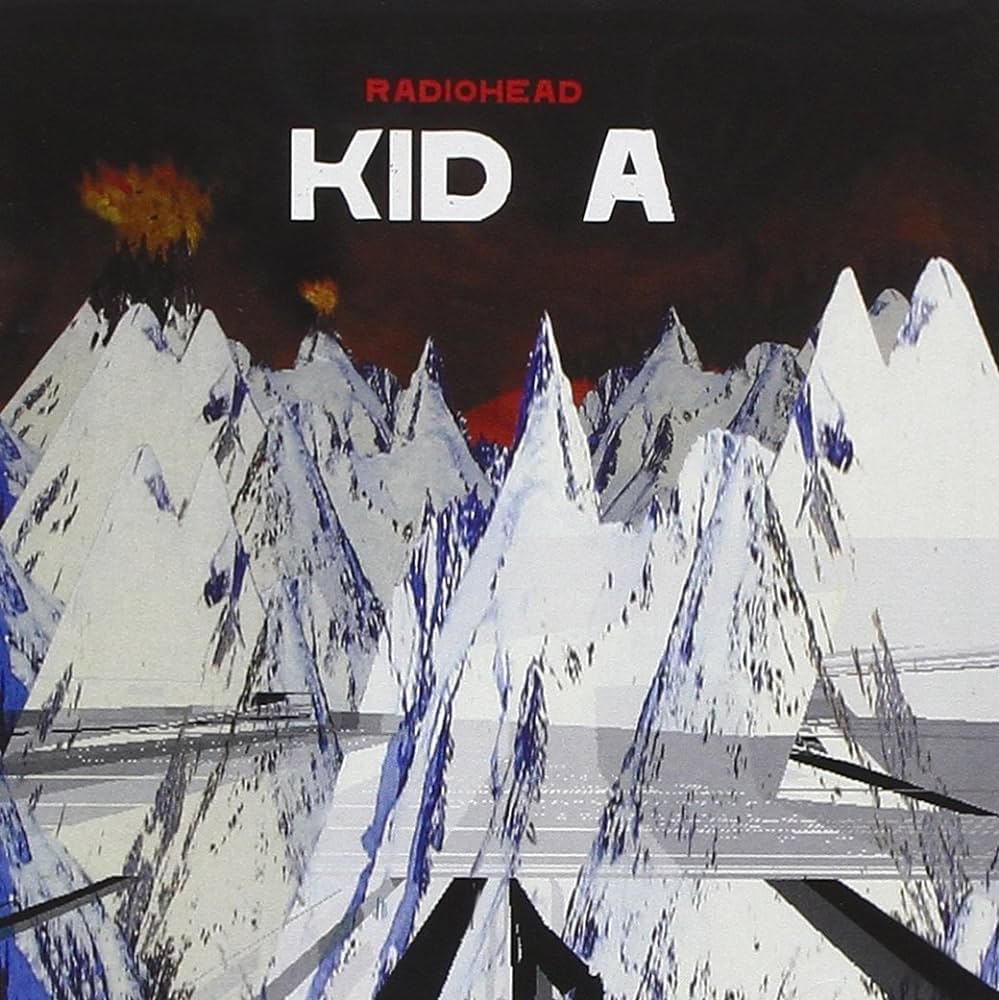
Dear Spirit of Cecilia readers, it’s time to dig into some prog/anti-prog/a-prog.  Is Radiohead prog or not?  I’m sure this question has been debated before.  Let’s just say, Radiohead did something unique and did something unique several times.  First, with Ok, Computer in 1997 and, then, again, in 2000 with Kid A.  The following dialogue reflects our thoughts about such innovation and creativity in the world.

Brad: Well, I’m happy to begin this conversation.  In the mid 1990s, I had heard the single, “Creep.”  Strangely, I was more familiar with the live Tears for Fears cover version than I was with Radiohead’s original, but I still knew the song pretty well.  To this day, I like the song, but I don’t love it.  And, if push comes to shove, I prefer the TFF version.  The unedited, R-rated Radiohead version of the song does nothing for me.

The mid-1990s were kind of wild for me, in terms of my profession as well as in my life.  I didn’t get married until 1998, when I was 30.  For part of the mid 1990s, then (single), I was working in Bloomington, Indiana, while working on my PHD (I loved Bloomington and my job there), and, for part of it, I was working in Helena, Montana (a city I loved, in a job that I hated; well, let me clarify.  I was working at the Montana Historical Society which I hated, but I was also teaching at Carroll College, which I loved).  

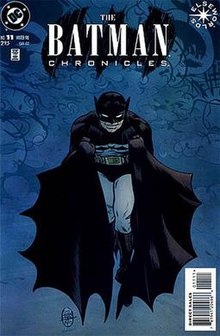
One day in Helena, I went to a local alternative shop (comics, music, etc.) to buy the latest issue of The Batman Chronicles.  On display, though, they had OK Computer, advertised as a “neo prog classic.”  Despite money being tight, I bought the album, went back to my apartment, and was suitably blown away by it.  Though I love Kid A more, I still have great fondness for Ok, Computer and always will.  Though “Karma Police” was the big single from the album, it’s the beginning of “Subterranean Homesick Alien” that I love the most.

From there, I went back and bought the first two Radiohead albums–Pablo Honey and The Bends.  I also bought the two eps–by special order–My Iron Lung and Airbag.  For what it’s worth, it was the two non-prog songs from the early albums–”Blowout” and “Street Spirit” that most intrigued me.

Tad: Brad, thanks for kickstarting this conversation about two albums that I like a lot. I got into Radiohead around the time of The Bends. I thought that record was wonderful, because I have always had a soft spot for Beatlesque power pop. I didn’t really enjoy OK Computer, because I felt that they had betrayed their pop roots! Of course, with the passage of time and greater perspective, I love it now (except for Fitter, Happier).

When Kid A was about to be released, I remember they put out Everything In Its Right Place as a teaser on Amazon, I think (this was years before YouTube, remember!). I listened to that one track obsessively – I couldn’t get enough of it! But when the entire album was finally released and I got a chance to listen to it, I was completely turned off. To my ears, they had completely abandoned melody and replaced it with abrasive noise. It was literally years before I would return to it and give it another chance.

I guess I have a love/hate relationship with Radiohead. I spent the past couple of days listening to Kid A and Amnesiac (along with the bonus tracks on their 2009 respective reissued editions). There are moments of incredible beauty on both albums: Everything In Its Right Place, Optimistic, Pyramid Song, Knives Out, come to mind. But Thom Yorke’s vocals grate on me in so many places. He sounds querulous and whiny; it’s as if he can’t find any joy in life at all. “Catch the mouse/crush its head/throw it in the pot”…. Is that a rant against meat eaters? I don’t know, but he sounds so desperate!

Also, Stanley Donwood’s artwork is extremely off putting to me. There is a condescension and disdain for normal people who are just trying to raise a family, earn an honest living, and not make waves. Maybe I’m reading too much into it, though. Tell me where I’m wrong, please!

Brad: Tad, thanks so much for your good thoughts.  You and I almost always agree, so it’s really interesting to me when we diverge from one another.  My views are almost completely opposite of yours, but I suppose timing has a lot to do with it.  I mentioned earlier that I came across OK Computer really by chance – seeing it in a display in an alternative shop in Helena, Montana, of all places.  

I was in my second year at Hillsdale when Kid A came out.  It was the fall semester, and I remember so clearly getting the album.  I not only played Kid A repeatedly, but I poured over the lyrics, the art, the booklet, anything that would offer even a smidgen more information about the band and the album.  I absolutely loved it when I discovered there was a second booklet, locked under the cd tray.

I played Kid A so much–especially in the background during office hours–that it became a conversation piece with my students and me.  So, the album is associated–for me at least–with extremely good memories.

And, I actually like Donwood’s artwork.  I even own two books of his art, one of which I have proudly displayed on our living room bookshelf!

Carl: I know, for a fact, that I cannot be objective at all about either album! And there is some freedom in admitting that.

I can relate quite well, Tad, to two of your remarks: the one about having a “love/hate relationship with Radiohead” and your observation that “there are moments of incredible beauty on both albums…” Amen, amen! 

For me, setting aside “Fitter, Happier,” which is either an act of genius or an act of cynical annoyance, I think OK Computer is one of the most beautiful, gut-wrenching albums ever recorded—regardless of genre. I don’t recall Radiohead being on my radar at all back in 1997, when I walked into CD World (R.I.P.) in Eugene, OR, and heard it on a listening station. 

I was immediately transfixed by the album, which I bought and then listened to hundreds (no exaggerations) of times over the next couple of years. I would listen to it often while driving to and from Portland, from the fall of 1997 to spring of 2000, for MTS classes. 

Oddly enough, the stark—but somewhat hopeful—lyrics seemed to go well with my studies, although I don’t know how to explain it. But, again, it was the sheer gorgeous quality of the album, with its amazing melodies, detailed arrangements, astonishing sonics, and the elastic voice of Thom Yorke. And the guitars! I soon bought both Pablo Honey and The Bends, and while the debut album was “okay,” I thought the sophomore release was a remarkable work, with several songs that rivaled what came along on OK Computer.

I mention the guitars because my first reaction to Kid A was simply, “What the hell is this?! Where are the guitars?!” It threw me for a loop so deep and big that I actually refused to listen to it for quite some time. For whatever reason, it did not connect with me at all. 

Oddly enough, it was through some acoustic/instrumental covers of Radiohead songs—by pianists including Christopher O’Riley, Brad Mehldau, and Eldar Djangirov—that I warmed up to the album. And while it will never, for me, equal its predecessor, I now recognize just how great it is. Once again, it’s the beauty of the music—in songs such as “Morning Bell”, “Everything In Its Right Place”, and “How To Disappear Completely”—that comes to the fore. 

Tad: Carl, you expressed my initial misgivings about Kid A so much better than I did. “Where are the guitars?” Yes!!! I also gained a greater appreciation for the songs on Kid A, composition-wise, through listening to Christopher O’Riley’s classical piano versions. I love the album now. As far as Donwood’s artwork, I just get such negativity from it, but that’s my personal reaction.

Looking back, it’s hard to understand these days just how influential Radiohead was. Everyone was compared to them. I don’t think there would be a Coldplay without Radiohead. Remember the British band Travis? They were a poppy, “safe” version of Radiohead. One of my favorite European groups is Kent, from Sweden. They were obviously heavily influenced by Radiohead. 

What is amazing to me is how Radiohead kept their audience, no matter how left-field and out-there their music got. I also appreciate how innovative they were in marketing themselves. Remember when they released In Rainbows online, for basically free? They anticipated streaming music years before it existed.

Brad, I wish I had the same experience you had of stumbling across OK Computer and incorporating Radiohead’s music into your life. I think I feel the same way about earlier artists such Roxy Music, Depeche Mode, and New Order. I can’t imagine not having them available, and their music means so much to me on an emotional level. Listening to them still transports me to different times of my life.

Kevin: The confluence of artists assembled in the conglomerate called Radiohead is remarkable.  It is rare for a musical group to emerge that gels together. It is yet rarer for one to collectively seek something new and striking, something visionary. It is the rarest of all to have one that can consistently break new territory in a way that feels always new.

In the summer of 1997, having just completed a recital and performer diploma in classical guitar, I began work on my second progressive rock album. I was seeking to break such new ground working on compositions, lyrics, instrumentation, arrangements. It was a joy and yet painful to continually do this work on my own while seeking sympathetic artists to this vision. In particular I was seeking a drummer who could capture the raw talent of my original co-conspiriator, my brother Colin.

Colin and I had literally grown together in our listening, writing, and performer during my latter school days at home. We didn’t need conversation to know when things worked—we just clicked. I didn’t realize just how rare this was until some years later when we did find a chance to regroup and perform again.

In 1997 we were thousands of miles apart and still living in the days when long-distance calls were as rare as they were expensive. But during one such rare call, I remember him mentioning that I had to get the new Radiohead album OK Computer. He knew my tastes. He knew my aversion to new music of the 90s—for the most part I found grunge to be over-blown and entitled. There were exceptions, but it all seemed unjustifiably angry and sulking and focused on screaming in the darkness because they couldn’t be bothered to look for the light switch.

OK Computer, he assured me, was “different. You have to give it a listen!”

The opening distorted guitar line of “Airbag” gripped my attention immediately.  It was melodic but angular, technically adept but rough at the edges, weirdly familiar yet strangely weird. One thing was abundantly clear—these guys had it. The playing was exciting, inventive, and in-the-pocket— except when the haunting character android made its presence felt—and then it was oddly off-kilter, but consistently the band worked its magic together, as a multiple pulsing organism.

The album is brilliant and it set a new standard for creativity in the popular music realm. I could write a book on this album alone. Their use of texture, tone, timing, timbre, text, and contrast appears to flow effortlessly from their collective creative pen. These skills fully come to the fore on OK Computer, where there is a loose narrative (dare I say “Concept”) to the album. But equally on Kid A the stops and starts within and between tracks, the intros and endings, the attentiveness to sonic space. Historically there are moments of brilliance throughout the progressive rock catalog, but here, in Radiohead, was something for a new millennium. Even the contrast between OK Computer and Kid A is extraordinary. 

Then there are the melodic and harmonic moments of sheer genius! The way the melodies weave from one section to another, the shift of harmonic focus from a single altered note, the blurring of lines between keys and major/minor constructions. You all know my fondness for Talk Talk’s latter work, which expresses through minimal chords and melodies and achieves artistic triumphs using very basic musical theorems combined with an incredible musical instinct. Radiohead uses maximalism in their approach and since it is a vision more of a collective than a single artist, the result is almost overwhelming to the senses.  After a good listen to either of the albums of this essay I literally have to give my ears a rest—it’s so intense.

And yet, listening back, while I still love the creativity, the craft, the brilliance, the technical adeptness, I have to agree with Tad. The dark vision and tone and word with no hint of redemption anywhere suffocates. It’s one thing to work with chiaroscuro, the renaissance artistic technique of using darkness to emphasize the light. Radiohead accels at contrast from a sonic standpoint. I just wish the texts and the vision equally offered an understanding of the beauty of life and not only its tensions. I love the experience of Radiohead’s extraordinary works of human imagination, but in the end I crave the light.

Brad: All right, friends and neighbors, this concludes our discussion of Radiohead–and not just Radiohead, but classic Radiohead–OK Computer and Kid A.  As is obvious, we don’t all agree, but we love one another!  Here’s hoping you love us as well.

As always, we recommend you buy from Burning Shed, our go-to online store: https://burningshed.com/product/search&sort=p.viewed&order=DESC&filter_tag=Radiohead

Guest Posting on The Reading Palette

Amisha Goel runs the beautiful and interesting site dedicated to all things literary, The Reading Palette. She was kind enough to invite me to contribute an essay to it, so I decided to write about the time I immersed myself in Shakespeare’s world. You can read it here:

Take a Trip to Glass Island

I don’t know what’s in the water in Poland, but between Riverside and Glass Island, there is some terrific music being produced there. Glass Island is the project of one Wojciech Pieluzec, who writes, sings, and plays everything.  I first became aware of Glass Island’s work via a Spotify algorithm: I have a personal playlist called “Melodic Prog Music”, and based on the songs in it, Spotify recommended Glass Island’s “Almost Human”, from their Lost Media album.

Glass Island Lost Media

“Almost Human” immediately grabbed my attention with its excellent melody, Pieluzek’s winsome vocals, and his fluid lead guitar work. It’s an instant prog classic, in my opinion. I love the lyrics, which warn of the dangers of AI-powered social media:

I follow all your actions
Observe your manner, steal your style
Inspect your gestures predict your movements
Write your songs, sing your lines

Forgive me if I seem a bit peculiar
I need a little time to end up just the same as you

So trust in me, I’m almost human
I’ll recreate what goes on in your mind
Just trust in me, I’m almost human
I’ll make up for the mess you’ve left behind

With me, the best lyrics aren’t worth beans if they aren’t delivered in a good melody, and in that department Glass Island delivers. They have a unique sound, but I can hear hints of classic Genesis, Pink Floyd, and Porcupine Tree. Pieluzek possesses the talent to place him at the same level as Steven Wilson; he’s that good. Of the seven tracks on Lost Media, there isn’t a single throwaway. I love how he has mixed the first three songs to seamlessly flow one into the next, making for an immersive listening experience.

Other than “Almost Human”, the other standout track is the 9-minute “Past the Truth”, which features some very nice piano navigating some clever chord progressions. I also admire the multitracked vocals that Pieluzek has put together here.

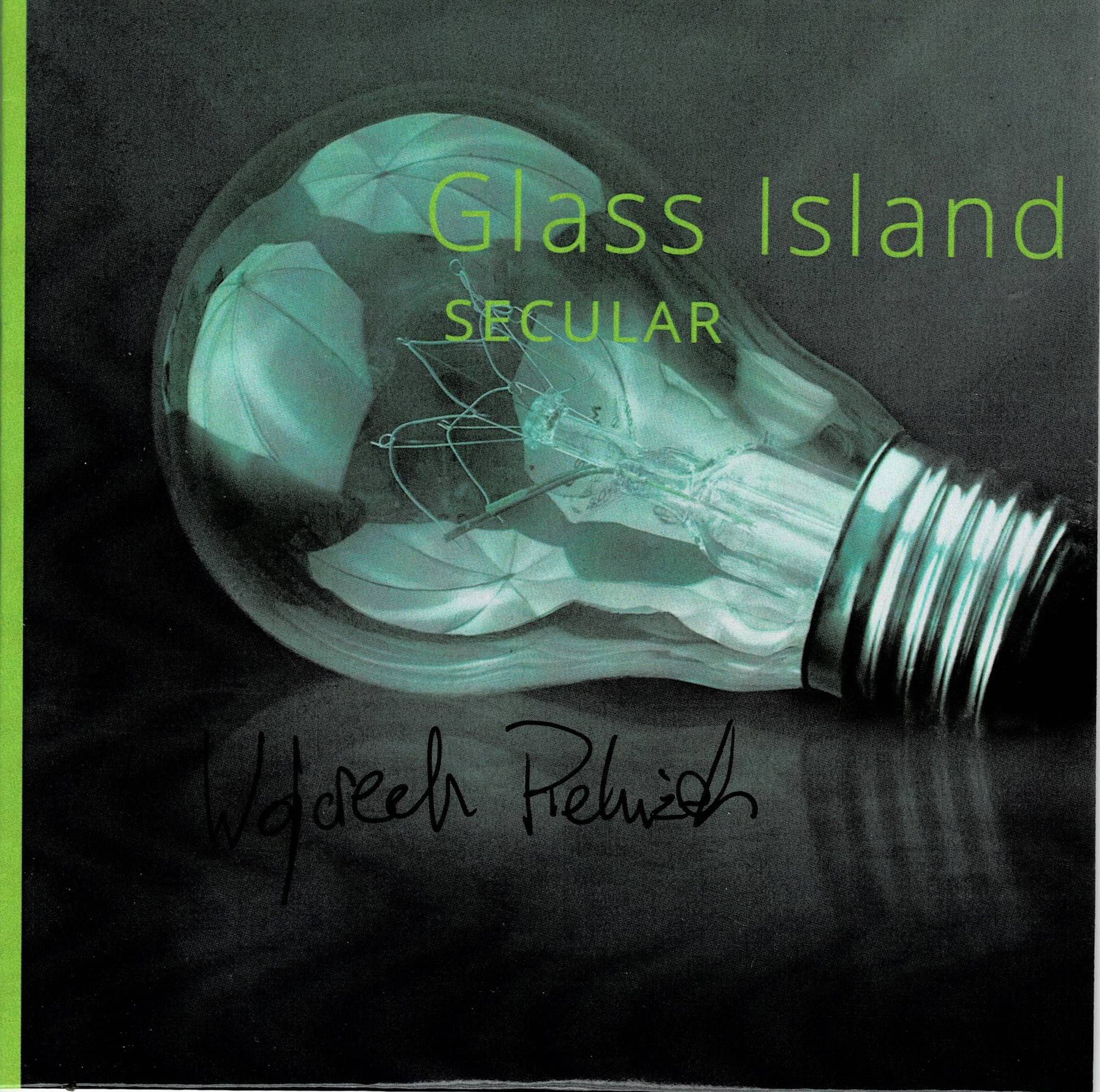
Whenever I come across a new artist I like, I try to support them by purchasing a hard copy of their album, if available. Sure enough, Glass Island has media available on Bandcamp, and I quickly placed an order for Lost Media. When it arrived in my mailbox, Mr. Pieluzek was kind enough to include a copy of the EP Secular. It’s just as good as any song from Lost Media!

Glass Island Secular

The title track is an aural blast of fun that gets in my ear and stays there. There’s a terrific vocal interlude that recalls the Beach Boys at their best, and it’s followed by an outstanding guitar solo that is a model of melodic economy. Okay, I’ve raved enough – time for you to check Glass Island out on your favorite music service. And if you find yourself enjoying his work as much as me, consider supporting Pieluzek by purchasing some hard media. He’s obviously put a lot of thought into the booklet’s artwork, and artists like him deserve prog fans’ support, so he can continue to produce such fine music!

Simon Fairfax’s 1414: Medieval Cloak and Dagger (literally!)

1414

1414 is the fifth and penultimate book in Simon Fairfax’s A Knight and a Spy series. I have really enjoyed the entire series, and I will be sorry to come to its end with 1415. I recommend that any reader new to these adventures of Sir Jamie de Grispere begin with the first book, 1410. In it, the main characters of Jamie, Mark of Cornwall, and Christofor Corio of Italy are introduced. In 1414, Fairfax refers quite a few times to events that occurred in the earlier novels, so familiarity with them will definitely enhance the reader’s experience.

So, what happens in 1414? The novel opens with a grim scene: a large group of adherents to a religious sect, Lollardism, is about to be executed for heresy and treason. The new king of England, Henry V, is consolidating his power, even as some of his closest advisors and courtiers scheme to overthrow him.

Sir Richard Whittington once again turns to Jamie de Grispere for a delicate assignment: accompany an English embassy traveling to France to negotiate a treaty with the French king, Charles of Aragon. He is offering his daughter to wed Henry V. The Armagnacs support Charles, but Duke John of Burgundy is still threatening to pull a coup. He is also offering his daughter as a bride to Henry. Lord Scrope is leading the English embassy, but Jamie has doubts regarding his loyalty to Henry V. The negotiations end in disaster, with the French insulting the honor of Henry. They consider him to be young, overly pious, and reluctant to use force. They plan to take advantage of his perceived weakness.

Back in England, Henry is having trouble getting enough ships to form a navy. He needs a strong maritime force to back up his planned invasion of France. Meanwhile, in Cornwall, there are some suspicious things happening. Mark learns that his father has been “approved” (accused by a person awaiting trial) of arson and thrown in jail. The legal system is very corrupt, and he is danger of losing all of his land, which will be taken over by the local lord. Jamie and Christo accompany Mark to his hometown to try to unravel all of the legal machinations being used to strip his family of their land.

On the continent, the geopolitical situation is heating up. The Armagnacs and Burgundians are reaching an agreement that will allow a united France to face England. King Sigismund of Germany has called a religious council to meet at Constance, and England, Germany, Italy, and Scandinavia have gathered there to discuss how to deal with France and the schismatic popes. As always at these diplomatic gatherings, there are all kinds of deadly intrigue.

In 1414, Jamie has matured into a formidable courtier as well as knight. He is fully aware of the potential treachery everyone is capable of, and he is able to anticipate assassination plots before they can be carried out. He also owns land and has a title, bestowed on him by a grateful King Henry V after the trials he underwent in 1413.

Fairfax has researched life in medieval England and France extensively, and even though Jamie, Christo, and Mark are fictional characters, they act within known historical events. There is not much swordplay in 1414, but the stage has been set for Henry’s invasion of France to reclaim the lands he believes he rightfully rules. 1415 should be quite an adventure!

War and Peace

War and Peace

Book Number 38 of 2024

I know it’s been a while since I posted a book review, but I have a good excuse – my latest book is Leo Tolstoy’s War and Peace! Why did I choose to tackle this famously large tome? Well, I read War and Peace many years ago when I was a senior in college. One of my roommates was a Russian Studies major, and he got me hooked on Russian literature: Tolstoy, Dostoyevsky, and Bulgakov, primarily. I decided to reread War and Peace to see if the benefit of age and experience would increase my appreciation of it. I can definitely say “Yes” to that question!

My immediate takeaway is what a wonderful job Tolstoy does of describing his main characters’ development and maturation. The story revolves primarily around two families, the Rostovs, and the Bolkonskys. The Kuragins and Pierre Bezukhov are also major players. My Kindle edition had a helpful listing of the main characters, which I printed out and referred to often:

BEZUKHOVS
COUNT Cyril BEZUKHOV.
PIERRE, his son, legitimized after his father’s death, becomes Count Peter BEZUKHOV.
Princess CATICHE, Pierre’s cousin.

ROSTOVS
COUNT Ilya ROSTOV.
COUNTESS Nataly ROSTOVA, his wife.
Count NICHOLAS Rostov (Nikolenka), their elder son.
Count Peter ROSTOV (PETYA), their second son.
Countess VERA Rostova, their elder daughter.
Countess Nataly Rostova (Natasha), their younger daughter.
SONYA, a poor member of the Rostov family circle.
BERG, Alphonse Karlich, an officer of German extraction who marries Vera.

BOLKONSKYS
PRINCE Nicholas BOLKONSKY, a retired General-in-Chief.
PRINCE ANDREW Bolkonsky, his son.
PRINCESS MARY (Masha) Bolkonskaya, his daughter.
Princess Elizabeth Bolkonskaya (LISE), Andrew’s wife.
TIKHON, Prince N. Bolkonsky’s attendant.
ALPATYCH, his steward.

KURAGINS
PRINCE VASILI Kuragin.
Prince HIPPOLYTE Kuragin, his elder son.
Prince ANATOLE Kuragin, his younger son.
Princess HELENE Kuragina (Lelya), his daughter, who marries Pierre.

OTHERS
Princess Anna Mikhaylovna Drubetskaya.
Prince BORIS Drubetskoy (Bory), her son.
JULIE Karagina, an heiress who marries Boris.
MARYA DMITRIEVNA Akhrosimova (le terrible dragon).
BILIBIN, a diplomat.
DENISOV, Vasili Dmitrich (Vaska), an hussar officer.
Lavrushka, his batman.
DOLOKHOV (Fedya), an officer and desperado.
Count Rostopchin, Governor of Moscow.
ANNA PAVLOVNA Scherer (Annette), Maid of Honour to the ex-Empress Marya Fedorovna.
Shinshin, a relation of Countess Rostova’s.
Timokhin, an infantry officer.
Tushin, an artillery officer.
Platon KARATAEV, a peasant.

So what can I possibly add to all that’s been written about one of the most famous works of literature ever? Well, first of all, I’m not sure exactly what War and Peace is – it’s not strictly a novel, even though one could say that Pierre Bezukhov is the “hero” of it; it’s sort of an historical account of Napoleon’s invasion of Russia, covering the period from 1809 – 1813; it’s a philosophical treatise where Tolstoy uses various characters to espouse his religious and sociopolitical beliefs. Which is why, I think, War and Peace is such an enduring classic: the reader can enjoy it on multiple levels.

Superficially, it’s an adventure story. As it becomes clear that war with Napoleon is inevitable, all the young men in Russia are thrilled for the opportunity to display their bravery. Battles are grand fun:

“Now then, let’s see how far it will carry, Captain. Just try!” said the general, turning to an artillery officer. “Have a little fun to pass the time.” “Crew, to your guns!” commanded the officer. In a moment the men came running gaily from their campfires and began loading. “One!” came the command. Number one jumped briskly aside. The gun rang out with a deafening metallic roar, and a whistling grenade flew above the heads of our troops below the hill and fell far short of the enemy, a little smoke showing the spot where it burst. The faces of officers and men brightened up at the sound. Everyone got up and began watching the movements of our troops below, as plainly visible as if but a stone’s throw away, and the movements of the approaching enemy farther off. At the same instant the sun came fully out from behind the clouds, and the clear sound of the solitary shot and the brilliance of the bright sunshine merged in a single joyous and spirited impression.

LEO TOLSTOY. War and Peace (Kindle Locations 3473-3482). Delphi Classics. Kindle Edition.

However, it isn’t long before we are plunged into the horrific chaos and carnage that occurs during the battle of Borodino. No one knows what they are supposed to be doing, and men are getting slaughtered by bullets and cannonballs. Over and over again, Tolstoy explains that Napoleon and the Russian Supreme Commander, Kutuzov, are not in control of events, but merely fulfilling roles that the moment requires. As a matter of fact, in the second and final epilogue, Tolstoy spends fifty pages exploring the paradox of humanity exercising free will in a universe that seems to be moving with inevitability towards some end. Tolstoy believes that a benevolent God is in control, and he doesn’t give much credit to “great men” like Napoleon for affecting history.

As I mentioned earlier, Tolstoy uses characters to illustrate various beliefs. Pierre is the main person who develops and matures throughout the book. In the opening scene, he is at a fashionable salon party, and it is clear he is out of his depth. Everyone around him is having witty conversation and impressing each other. Pierre is physically large and clumsy, and verbally uncultured. To top things off, he is the illegitimate son of the fabulously wealthy Count Bezukhov. Also at this party is Prince Andrew Bulkonsky, who is another main character. He is married to Lise, who fits right in with fashionable Petersburg high society. Andrew, however, despises that social scene, and he no longer loves his wife.

The other main family are the Rostovs. The father, Count Ilya Rostov, is very popular in Moscow high society, because he and his wife throw extravagant parties. Unfortunately, they cannot afford them, and are increasingly mired in debt. The elder son, Nicholas, goes off to war as a superficially principled but callow youth. In one scene, he takes offense at something Prince Andrew says, but the older and wiser prince puts him in his place:

“And I will tell you this,” Prince Andrew interrupted in a tone of quiet authority, “you wish to insult me, and I am ready to agree with you that it would be very easy to do so if you haven’t sufficient self-respect, but admit that the time and place are very badly chosen. In a day or two we shall all have to take part in a greater and more serious duel, and besides, Drubetskoy, who says he is an old friend of yours, is not at all to blame that my face has the misfortune to displease you. However,” he added rising, “you know my name and where to find me, but don’t forget that I do not regard either myself or you as having been at all insulted, and as a man older than you, my advice is to let the matter drop.

LEO TOLSTOY. War and Peace (Kindle Locations 5253-5256). Delphi Classics. Kindle Edition.

Fortunately, as Nicholas gains experience in battle, he matures into a fine young man, even rescuing Prince Andrew’s sister, Mary, who is caught between the advancing French forces and rebellious serfs.

Nicholas’ sister, Natasha, is another major character. Early in the story, she is a charming 13-year-old who already turns heads. She is beautiful, talented, and sincere. As the book progresses, she undergoes trials that forge her into a strong and outstanding person.

All of these characters will come into contact with each other and separate multiple times, each time having undergone some degree of transformation and maturation.

Pierre is the one person who undergoes the most varied trials. Before his father, Count Cyril, dies, he makes Pierre legitimate so that he can inherit his estate. Suddenly, all of Petersburg high society that previously looked down on him, decides he is now the most fascinating man in Russia! He is taken under Prince Vasili Kuragin’s wing and married to Vasili’s daughter, Helene. Vasili takes advantage of Pierre, using his wealth to pay off his family’s debts, while Pierre’s marriage to the beautiful Helene is a disaster. There is no love on either side, and Pierre’s friend, Dolokhov, has an open affair with Helene.

Pierre dabbles in Masonic philosophy, then devotes himself to reforming his estates so that his serfs are treated better, then lives a life of dissipation with a group of high-living men. None of these satisfy him. He then gets caught in the middle of the horrifically bloody battle at Borodino. It isn’t until he spends time as a prisoner of the French and becomes friends with the wise and stoic peasant, Platon Karataev, that Pierre finally finds peace.

Meanwhile, there is a war going on! The French consider themselves to be invincible, and after they take the city of Smolensk, they turn to Moscow. They incur enormous losses at Borodino, but the Russians lose even more men. However, the French have been dealt a mortal blow. Even though the Russian general retreats beyond Moscow and leaves it undefended, he knows that the French are on their last legs.

There is a humorous scene where Napoleon marches triumphantly into Moscow, only to find it deserted. He can’t find any official delegation to surrender to him. He is disappointed and angered that the Russians didn’t fall at his feet the way the Austrians and Prussians did. The French soldiers disperse and begin sacking the city, while fires spring up everywhere. All military discipline is gone, and Napoleon realizes he is like a dog who has caught the car: he doesn’t have the resources to govern an ungovernable people. So, he turns and flees back to France. The rest of the book details the privations the Russian people and the ragged French armies undergo while the French retreat in chaotic fashion.

War and Peace is a fascinating, sprawling work that tries to capture an entire people’s character in a time of extreme distress. Most of the book’s characters are drawn from the Russian upper class, so they, for the most part, have no worries about money. They all own serfs, who are portrayed as happy and content with their lot. Throughout the book, each character wrestles with timeless questions: “What is the purpose of life?”, “How should a virtuous person live?” At one point, Tolstoy writes of Pierre,

He had the unfortunate capacity many men, especially Russians, have of seeing and believing in the possibility of goodness and truth, but of seeing the evil and falsehood of life too clearly to be able to take a serious part in it.

LEO TOLSTOY. War and Peace (Kindle Locations 11631-11633). Delphi Classics. Kindle Edition.

By the end of the tale, though, Pierre has peace and the answers to his anguish:

He could not see an aim, for he now had faith — not faith in any kind of rule, or words, or ideas, but faith in an ever-living, ever-manifest God. Formerly he had sought Him in aims he set himself. That search for an aim had been simply a search for God, and suddenly in his captivity he had learned not by words or reasoning but by direct feeling what his nurse had told him long ago: that God is here and everywhere. In his captivity he had learned that in Karataev God was greater, more infinite and unfathomable than in the Architect of the Universe recognized by the Freemasons. He felt like a man who after straining his eyes to see into the far distance finds what he sought at his very feet. All his life he had looked over the heads of the men around him, when he should have merely looked in front of him without straining his eyes.

In the past he had never been able to find that great inscrutable infinite something. He had only felt that it must exist somewhere and had looked for it. In everything near and comprehensible he had only what was limited, petty, commonplace, and senseless. He had equipped himself with a mental telescope and looked into remote space, where petty worldliness hiding itself in misty distance had seemed to him great and infinite merely because it was not clearly seen. And such had European life, politics, Freemasonry, philosophy, and philanthropy seemed to him. But even then, at moments of weakness as he had accounted them, his mind had penetrated to those distances and he had there seen the same pettiness, worldliness, and senselessness. Now, however, he had learned to see the great, eternal, and infinite in everything, and therefore — to see it and enjoy its contemplation — he naturally threw away the telescope through which he had till now gazed over men’s heads, and gladly regarded the ever-changing, eternally great, unfathomable, and infinite life around him. And the closer he looked the more tranquil and happy he became. That dreadful question, “What for?” which had formerly destroyed all his mental edifices, no longer existed for him. To that question, “What for?” a simple answer was now always ready in his soul: “Because there is a God, that God without whose will not one hair falls from a man’s head.”

LEO TOLSTOY. War and Peace (Kindle Locations 23766-23782). Delphi Classics. Kindle Edition.

War and Peace is deservedly a literary classic. It engages the reader, and forces him or her to wrestle with difficult questions. At the same time, it’s a lot of fun to read – I found myself truly caring about Andrew, Natasha, and Pierre, as well as a host of lesser characters. There’s a reason some works survive for centuries; they address, in an entertaining way, the eternal questions that humanity has been asking since time began.

I mentioned at the beginning of this post that I originally read War and Peace when I was 21 and in college. At the time, I enjoyed it because it was full of adventure and intrigue with some humor and romance thrown in. Now that I am on the downhill side of my life, I have a much greater appreciation for what Tolstoy is trying to convey. Life is so much more than worrying about what others think of you, or how much wealth you have accumulated. The Epilogue of War and Peace is one big joyous celebration of family: the delight of raising small children, the pleasure of good conversation with friends and relatives, the mutual love and respect of husband and wife. Tolstoy’s vision of the good life is one that we should still aspire to.

Hope on a Rose

[Dear Spirit of Cecilia Readers, as some of you might know, our website is named not only for St. Cecilia, the patron saint of music, but also for my deceased daughter, Cecilia Rose. Today would’ve been her 17th birthday. We visited her grave just now, and, as my wife so wisely noted, in some ways, it’s been a hundred years since she died, and, in some ways, it’s been 24 hours.

I can be perfectly fine on August 7 and August 9, but I’m always rather down on August 8. Every year without exception. It’s like a huge weight is on my shoulders, and I can only describe this feeling as a form of depression.

Weird how time works. I say this as a professional historian who thinks about the steadiness, the fluctuations, and the chaos of time on a daily basis.

Anyway, here’s a piece I wrote about her on what would’ve been her eleventh birthday. As much as I love the Catholic Church and God, I still can’t but be confused by His Providence. Cecilia Rose was always His, but I just can’t fathom why he would give Dedra and me charge over her, only to take her away at the last moment. All I can do is trust in Him and His ways.

Happy Feast of Little Cecilia Rose, our precious saint.

Yours, Brad]

HOPE ON A ROSE: Had things worked or happened differently, I would be celebrating the eleventh birthday of my daughter, Cecilia Rose Birzer, today. I can visualize exactly what it might be like. A cake, eleven candles, hats, cheers, goofiness, photos, and, of course, ice cream. I imagine that she would love chocolate cake–maybe a brownie cake—and strawberry ice cream. Her many, many siblings cheer here, celebrating the innumerable smiles she has brought the family. As I see her at the table now, I see instantly that her deep blue eyes are mischievous to be sure, but hilarious and joyous as well. Her eyes are gateways to her soul, equally mischievous, hilarious, and joyous. She’s tall and thin, a Birzer. She also has an over abundance of dark brown curls, that match her darker skin just perfectly. She loves archery, and we just bought her first serious bow and arrow. No matter how wonderful the cake, the ice cream, and the company, she’s eager to shoot at a real target. 

She’s at that perfect age, still a little girl with little girl wants and happinesses, but on the verge of discovering the larger mysteries of the teenage and adult world. She cares what her friends think of her, but not to the exclusion of what her family thinks of her. She loves to dance to the family’s favorite music, and she knows every Rush, Marillion, and Big Big Train lyric by heart. She’s just discovering the joys of Glass Hammer. As an eleven-year old, she loves princesses, too, and her favorite is Merida, especially given the Scot’s talents and hair and confidence. She has just read The Fellowship of the Ring, and she’s anguished over the fate of Boromir. Aragorn, though—there’s something about him that seems right to her.

If any of this is actually happening, it’s not happening here. At least not in this time and not on this earth. Here and now? Only in my dreams, my hopes, and my broken aspirations.

Eleven years ago today, my daughter, Cecilia Rose Birzer, strangled on her own umbilical cord. That which had nourished her for nine months killed her just two days past her due date.

On August 6, 2007, she came to term. Very early on August 8, my wife felt a terrible jolt in her belly and then nothing. Surely this, we hoped, was Cecilia telling us she was ready. We threw Dedra’s hospital bag into the car as we had done four times before, and we drove the 1.5 miles to the hospital. We knew something was wrong minutes after we checked in, though we weren’t sure what was happening. Nurses, doctors, and technicians were coming in and out of the room. The medical personnel were whispering, looking confused, and offering each other dark looks. Finally, after what seemed an hour or more, our beloved doctor told us that our child—a girl, it turned out—was dead and that my wife would have to deliver a dead child. 

We had waited to know the sex of the baby, but we had picked out names for either possibility.  We had chosen Cecilia Rose for a girl, naming her after my great aunt Cecelia as well as St. Cecilia, the patron saint of music, and Rose because of St. Rose of Lima being the preferred saint for the women in my family and because Sam Gamgee’s wife was named Rosie.

I had never met my Aunt Cecelia as she had died at age 21, way back in 1927.  But, she had always been a presence in my family, the oldest sister of my maternal grandfather.  She had contracted tetanus, and the entire town of Pfeifer, Kansas, had raised the $200 and sent someone to Kansas City to retrieve the medicine.  The medicine returned safely to Pfeifer and was administered to my great aunt, but it was too late, and she died an hour or two later. Her grave rests rather beautifully, just to the west of Holy Cross Church in Pfeifer valley, and a ceramic picture of her sits on her tombstone. Her face as well as her story have intrigued me as far back as I can remember. Like my Cecilia Rose, she too had brown curly hair and, I suspect, blue eyes. She’s truly beautiful, and her death convinced her boyfriend to become a priest.

The day of Cecilia Rose’s death was nothing but an emotional roller coaster. A favorite priest, Father Brian Stanley, immediately drove to Hillsdale to be with us, and my closest friends in town spent the day, huddled around Dedra.  We cried, we laughed, and we cried some more–every emotion was just at the surface. I’m more than certain the nurses thought we were insane. Who were these Catholics who could say a “Hail Mary” one moment, cry the next, and laugh uproariously a few minutes later? Of course, the nurses also saw just how incredibly tight and meaningful the Catholic community at Hillsdale is. And, not just the Catholics—one of the most faithful with us that day was a very tall Lutheran.

Late that night, Dedra revealed her true self.  She is—spiritually and intellectually—the strongest person I know. She gave birth with the strength of a Norse goddess. Or maybe it was just the grace of Mary working through her. Whatever it was, she was brilliant. Any man who believes males superior to females has never seen a woman give birth.  And, most certainly, has never seen his wife give birth to a dead child. Cecilia Rose was long gone by the time she emerged in the world, but we held her and held her and held her for as long as we could. With the birth of our other six children, I have seen in each of them that unique spark of grace, given to them alone. Cecilia Rose was a beautiful baby, but that spark, of course, was absent, having already departed to be with her Heavenly Father.

For a variety of reasons, we were not able to bury her until August 14.  For those of you reading this who are Catholic, these dates are pretty important. August 8 is the Feast of St. Dominic, and August 14 is the Feast of St. Maximilian Kolbe.

Regardless, those days between August 8 and August 14 were wretched. We were in despair and depression. I have never been as angry and confused as I was during those days. Every hour seemed a week, and the week itself, seemed a year. I had nothing but love for my family, but I have never been that angry with God as I was then and, really, for the following year, and, frankly, for the next nine after that. We had Cecilia Rose buried in the 19th-century park-like cemetery directly across the street from our house. For the first three years after her death, I walked to her grave daily. Even to this day, I visit her grave at least once a week when in Hillsdale.  In the first year after her death, I was on sabbatical, writing a biography of Charles Carroll of Carrollton. Every early afternoon, I would walk over to her grave, lay down across it, and listen to Marillion’s Afraid of Sunlight.  Sometime in the hour or so visit, I would just raise my fist to the sky and scream at God.  “You gave me one job, God, to be a father to this little girl, and you took it all away.” In my fury, I called Him the greatest murderer in history, a bastard, an abortionist, and other horrible things. I never doubted His existence, but I very much questioned His love for us.

Several things got me through that first year: most especially my wife and my children as well as my friends.  There’s nothing like tragedy to reveal the true faces of those you know. Thank God, those I knew were as true in their honor and goodness as I had hoped they would be. A few others things helped me as well. I reread Tolkien, and I read, almost nonstop, Eliot’s collected poetry, but especially “The Hollow Men,” “Ash Wednesday,” and the “Four Quartets.” I also, as noted above, listened to Marillion. As strange as it might seem, my family, my friends, Tolkien, Eliot, and Marillion saved my life that year. I have no doubt about that. And, nothing gave me as much hope as Sam Gamgee in Mordor.  “Sam saw a white star twinkle for a while. The beauty of it smote his heart, as he looked up out of the forsaken land, and hope returned to him that in the end the Shadow was only a small and passing thing: there was light and high beauty forever beyond its reach.” As unorthodox as this might be, we included Tolkien’s quote in the funeral Mass.

A year ago, my oldest daughter—the single nicest person I have ever met—and I were hiking in central Colorado. We were remembering Cecilia Rose and her death. Being both kind and wise, my daughter finally said to me, “You know, dad, it’s okay that you’ve been mad at God. But, don’t you think that 10 years is long enough?” For whatever reason—and for a million reasons—my daughter’s words hit me at a profound level, and I’m more at peace over the last year than I’ve been since Cecilia Rose died. I miss my little one like mad, and tears still spring almost immediately to my eyes when I think of her. I don’t think any parent will ever get over the loss of a child, and I don’t think we’re meant to. But, I do know this: my Cecilia Rose is safely with her Heavenly Father, and, her Heavenly Mother, and almost certainly celebrating her birthday in ways beyond our imagination and even our hope. I have no doubt that my maternal grandmother and grandfather look after her, and that maybe even Tolkien and Eliot look in on her from time to time. And, maybe even St. Cecilia herself has taught my Cecilia Rose all about the music of the spheres. Indeed, maybe she sees the White Star. Let me re-write that: I know that Cecilia Rose sees the White Star. She is the White Star.

Happy birthday, Cecilia Rose.  Your daddy misses you like crazy, but he does everything he can to make sure that he makes it to Heaven–if for no other reason than to hug you and hug you and hug you.

Spirit of Cecilia Visits Kansas

Happy Summer, Spirit of Cecilia readers! In this post, our panel of music lovers takes a look back at two very popular and influential albums from the 1970s: Leftoverture and Point of No Return, by those proggers of the prairie, Kansas! Brad Birzer, Kevin McCormick, Carl Olson, and Tad Wert discuss what they love (and maybe not so love) about these works.

Brad: Carry on, my wayward sons!  The cry of my childhood.  Tad, thanks so much for setting this up.  I’m eager to talk all-things Kansas, especially Kansas in the mid 1970s.  As I’ve had the privilege of writing here and elsewhere, I grew up in central Kansas with two older brothers who collected prog.  My mom encouraged good reading and good music.  My earliest prog memory is of Yessongs, but Kansas and Jethro Tull rank up there.  Of course, growing up in Kansas, it would have been impossible to miss the band.  They were everywhere in the 1970s and proudly so.  As it is, “Carry On, My Wayward Sons” might have been the very first song–as a kid–whose lyrics I memorized.

On a side note, President Arnn of Hillsdale College once introduced me and said, “Carry on, my wayward son,” to which I responded, “Yes, Larry, there will be peace when you are done.”

On another side note, in 1950, the Knights of Columbus erected a huge cross commemorating the priesthood and exploration of Father Padilla.  My grandfather was one of the Knights at the installation ceremony.

A third side note.  Every Fourth of July celebration in my hometown of Hutchinson was always held at the State Fairgrounds and always included “Song for America”–despite it not being very pro-American lyrically–as a part of the soundtrack for the fireworks.

But back to Leftoverture.  I love the album.  It’s a personal favorite and really has been as far back as I can remember.  The interplay of bass, organ (well, moog and keyboards), and violin, I suppose, is the trademark of the band, and it’s done so expertly on this album.  And, Kerry Livgren, who wrote most of the tracks, was simply on fire as a composer.  The album as a whole flows so beautifully, and the lyrics are extraordinary.

Tad: I was a sophomore in high school when Leftoverture came out, and I remember listening to WKDF, Nashville’s “progressive rock radio” station, with my tape deck nearby. As soon as those opening chords of “Carry On, My Wayward Son” came over the airwaves, I hit Record! I still love that song – it’s something I will never tire of. 

Brad, I never imagined that Father Padilla was a real person! With a name like that, I figured he had to be part of the “Magnum Opus” tongue in cheek humor. Speaking of “Magnum Opus”, that is one of my favorite Kansas songs ever. You are right – the album has a perfect flow to it, and “Magnum Opus” is an excellent closer.

Leftoverture was my first exposure to Kansas – I bought that album not long after it came out, but it was years before I listened to any of their earlier ones. Song for song, it’s an incredibly strong offering. I know that Point of Know Return was a huge seller and more popular, but I will always like Leftoverture more.

Brad: Tad, Kansans are as proud of their state as Texans are; they’re just not as loud about it!  Yes, Kansans know Father Padilla.  So, it’s definitely a joke on the part of the band, Kansas, but, to be sure, an inside joke.

In my previous note, I only talked about Leftoverture, but I also love Point of Know Return.  “How long???  To the point of no return.”  

As a kid, this opening track completely and utterly sparked my imagination.  Exactly what was a journey, and what was a journey into unknown?  Now, of course, we have Interstates 35 and 70 that cross Kansas, as well as US281–all glorious highways.  But, connecting Point of No Return as the logical sequel to Leftoverature, one must wonder about the glories of exploration.  What about Cortes and Coronado?  

If Leftoverature ends with exploration of Father Padilla into central Kansas, Point of No Return is nothing if not exploration itself–to the farthest reaches of the globe.  Maybe even more importantly, to the farthest reaches of the very heart of the soul itself.  

“He was off on another plane. . . . no one was sure if he was sane . . . but he knew, he knew more than me or you.”

It must be noted, these lyrics were written long before Kerry Livgren converted to Christianity, but he so clearly longed for it.

I must also note, the best scene of the terribly bad hilarious movie Old School, involves Will Farrell singing “Dust in the Wind” at the funeral of Ol’ Blue.  Again, a terrible movie that I would never recommend, but one that made me laugh so much, I thought I was going to lose my stomach.

Carl: I also listened to both of these albums while in high school—in 1986 and 1987, specifically, which were my junior and senior years. I was first introduced to Kansas via the Best of Kansas compilation, which came out in 1984. Then I found these two and began to play them continuously (on cassette, of course!). The album Power came out in 1986, and I added that to my steady play routine; it introduced me to Steve Morse, which led to Dixie Dregs and Morse’s solo work. And 1988’s In the Spirit of Things is one of my favorite Kansas albums, despite some over production (by Bob Ezrin), as I’ve detailed here.

Kansas, as we all know, is the most famous and popular of the American prog-rock bands of the 1970s and ‘80s, and it is also almost completely dismissed or derided by the coastal critics. I won’t dwell on that point too much, but will note that this critical snobbishness is a bit strange as Kansas really eschewed the sort of pretentious noodling and overplaying that the same critics hated in groups such as Yes and ELP. Yes, Kansas—as these two albums readily demonstrate—composed and performed intricate and even rather epic instrumental passages (or even entire songs), but they were not, in my estimation, works for instrumental virtuosos, as none of the original band members could be fairly described as such. Rather, they were exceptional musicians who often played several instruments (Livgren on guitar and keys, Walsh on vocals, keys, and percussion, etc).

So, what sets them apart? There are many reasons, but I’ll just hone in on three that have really stood out to me over the years. 

First, the writing. Livgren (as Brad notes) was a brilliant writer and arranger, employing an eclectic mix of classic rock, Southern rock, and (quite essential in the big picture) classical motifs and structures. The violin of Robby Steinhardt was essential to the mix, not just tonally, but as an almost cinematic character that held together passages employing hard rock, organ flourishes and solos, and some odd time signatures. And Livgren was also a brilliant lyricist, whose journey from searcher and seeker to (c. 1980) born-again Evangelical Christian is captured throughout the first several Kansas albums. It is one reason that 1975’s Song for America is such a fascinating album (it is also, to my ears, the most “out there” of the Kansas albums, thus holding a special place in my heart).

And so, in Leftoverture (1976) and Point of Know Return (1977) we encounter much existential tension (“Dust in the Wind” is an obvious, but hardly solitary, example), ruminations on mortality and one’s place in the world (“Questions of My Childhood,” “Hopelessly Human” and “Nobody’s Home”), and a sort of romanticized nostalgia threaded through the needle of Native American perspectives, as in “Cheyenne Anthem” (the historicity of which I will leave to Brad!). 

A perfect example of this constant focus on meaning and place is the exceptional track “The Wall”, worth quoting in full here:

I’m woven in a fantasy, I can’t believe the things I see

The path that I have chosen now has led me to a wall

And with each passing day I feel a little more like something dear was lost

It rises now before me, a dark and silent barrier between

All I am and all that I would ever want to be

It’s just a travesty, towering, marking off the boundaries

My spirit would erase.

To pass beyond is what I seek, I fear that I may be too weak

And those are few who’ve seen it through to glimpse the other side
The promised land is waiting like a maiden that is soon to be a bride
The moment is a masterpiece, the weight of indecision’s in the air
It’s standing there, the symbol and the sum of all that’s me
It’s just a travesty, towering, blocking out the light and blinding me
I want to see

Gold and diamonds cast a spell, it’s not for me to know it well

The treasures that I seek are waiting on the other side

There’s more that I can measure in the treasure of the love that I can find

And though it’s always been with me

I must tear down the wall let it be

All I am, and all that I was ever meant to be, in harmony

Shining true and smiling back at all who wait to cross

There is no loss

That’s good stuff, as they say, and it also demonstrates something that separates Kansas from many other prog (and other) rock bands: while the songs grapple with big questions and existential tensions, they do not partake in cynicism, nihilism, or a flippant “who the hell cares?” posturing. They are sincere, and I think such sincerity (quite midWestern and very rooted, it seems to me) is not what the Left Coast types smoke or the East Coast elites drink. 

Secondly: the vocal prowess of Steve Walsh. The man, in his prime, had few equals. He possessed effortless power, beautiful tone, great control, impressive range, and (perhaps most underappreciated) emotional connectivity. He’s easy on the ears and people like his voice! As I think Livgren once put it, Walsh was a soul singer. He had vocal chops aplenty, but he did what all of the band members did (to their everlasting credit): he used them in service of the songs. He didn’t show off or “do his own thing”. Considering that Walsh is apparently, by many accounts, a rather difficult guy, that’s remarkable. And it makes sense he spent so much time itching to make solo records (which have ranged from strongly “okay” to strangely fascinating). His sound and style were perfectly suited to Livgren’s writings and lyrics; further, he and Robbie harmonized with perfect ease. It’s an instantly recognizable voice and yet, in some ways, an underrated voice.

Thirdly: speaking of underrated, let’s give some love to the Ehart-Hope rhythm section. The adjective “underrated” is used often when it comes to Ehart’s drumming, and for good reason. Like Walsh, he has plenty of chops, but always uses them in and for the song. He propels and accents Livgren’s instrumental passages with a marvelous efficiency (not a note too many) and elegance (not a note out of place). And his sound—the snare and toms comes immediately to mind—has aged really well. As for Dave Hope, he is a bit like John Deacon of Queen: nobody knows a thing about him (Hope would eventually be ordained an Anglican minister!), but he held things down perfectly, with a warm, sometimes “fat” sound (a bit like Chris Squire in places) that melded seamlessly with Ehart’s playing. And the two of them laid down some very involved passages in songs such “Carry on My Wayward Son,” “Miracles Out of Nowhere,” “Magnum Opus,” “Paradox,” and “Closet Chronicles.” But they are never in the way; they are always there to support, accent, and propel, which they nail again and again across these two albums.

A final thought, anecdotal in nature: in June 1987, fresh out of high school, I drove down to Phoenix (1262 miles), in my 1976 (!) Buick Skylark. For nearly the entire trip, I played these two albums. While the trip was exhausting (and increasingly hot as we approached Phoenix), I have wonderful memories of listening to Kansas while driving through beautiful country. The sometimes cinematic quality of the music, as well as the spiritual themes, perfectly matched the journey. Thank you, Kansas!

Kevin: For sure Carl! What immediately stands out on listening to these albums again is the tightness of the band, which involves the critical work of the rhythm section. Stop me if I’ve stood on this soapbox too many times, but what separates these “pre-digital era” performances is that the band is totally in the sonic pocket—not because the drummer has a computer clicking in his ears, but because he knows how to lay down a groove regardless of the meter.  These guys have a sense for themselves as a band. It doesn’t sound like egos competing for space, but a “band of gypsies” who know each other with their ears and their instruments.

I must confess that while I’ve heard plenty of both albums, I never actually owned either of them. My earliest memories of Leftoverture are of hearing the songs through the walls of my older brother’s bedroom in our St. Louis home.  Matt had a sophisticated album collection and eclectic tastes, most of which I imbibed vicariously. I was struck by Leftoverture’s complex counterpoint on tracks like “Miracles Out of Nowhere.” The tight vocal harmonies, the shifting meters and phrasing, virtuosic lead runs—all the stuff of classic prog—are infused with sensibilities and themes of the American West from which the band takes its moniker. 

Perhaps extending Carl’s point regarding the lyrics, these two albums both explore heavy themes with real personal connection. It’s not the detached, calculated prog of King Crimson, nor the whimsy of early Genesis. Truth be told, it has occasional hints of Queen’s Broadway bombast, but also their musical penchant for storytelling. One gets the flashing images of Steve Walsh decked out in tennis shorts and knee-high tube socks  illuminated on stage in a solitary spotlight with Kansas performing in the pit below him. Despite the potential for silliness here, it really works more often than not, because they are so committed to the music they are creating. 

Brad: After Carl’s and Kevin’s brilliant exposition about Kansas (and Tad’s love as well), there’s not much to add.  Again, being a Kansas native, I’ll always have (and always have had) a special affinity for the band.  A few years ago, the rockumentary, Miracles Out of Nowhere, came out, and I was completely floored by it.  I could so very much relate to the story of the band.

Over the last several days, a meme about driving across Kansas has appeared a couple of times on my various social media accounts.  The meme is a map of Kansas, with the route from Kansas City to Denver being marked as the most boring route in America.  Sadly, this is the way most people think about the state, and it’s the way many people think about the band.  Kansas is big sky country, and the people are the friendliest people imaginable.  I feel the same about the band–Kansas is big sky rock, and its people are some of the most interesting in the profession.

Miracles out of nowhere, indeed.

New Wave Prog: The Missing Sub-genre?

Admittedly, I might have given this way too much thought, but I wonder if there’s a historical sub-genre of music that we all mislabeled at the time.  The historical orthodoxy is that we went from prog to punk to new wave and post-punk and, then, by the mid 1990s, into third-wave prog. 

Could there have existed a third way, though, a melding of prog and new wave and post-punk?  As such, I think of albums by traditional prog groups such as Yes (Drama and, to a lesser extent, 90125), Genesis (Abacab), or Rush (Moving PicturesSignalsGrace Under Pressure, and, especially, Power Windows) that all benefitted greatly from new wave and post-punk.  

But, I can also think of a number of new wave bands that employed very serious prog elements such as Modern English (After the Snow), Tears for Fears (The HurtingSongs from the Big Chair), The Fixx (Reach the BeachPhantoms, and Walkabout), Ultravox (ViennaRage in Eden, and Lament), Thomas Dolby (The Flat Earth), New Order (Low-Life), XTC (Skylarking), Echo and the Bunnymen (Over the WallOcean Rain), Simple Minds (Sons and Fascination, Sister Feelings Call, and New Gold Dream), and Talk Talk (Colour of Spring).  One might also think of a band like B-Movie.

Maybe, just maybe, Yes and Thomas Dolby have far more in common than we thought.

And, if there was such a sub-genre of New Wave Prog, it would help us understand shoegaze (Cocteau Twins, My Bloody Valentine, Lush) in the late 1980s and early 1990s as well as bands such as Catherine Wheel and even early No-man and Porcupine Tree.

Just my two cents. . .

Pleasant activities that make one lose track of time.

BY RICHARD K. MUNRO

I think it important to have pastimes and hobbies. I enjoy reading, listening to baseball games on the radio, listening to music and studying languages. My sister has an expression “being lost in grammar land” by what she means doing language study and being completely engrossed in it.

I am currently listening to SPOTIFY (BRAHMS) in a few minutes I will be back in my easy chair reviewing languages and studying new ones. I review GERMAN, PORTUGUESE, SPANISH every day for about 10-15 minutes each then dedicate time to study ITALIAN, MODERN GREEK and SCOTTISH GAELIC. I primarily use DUOLINGO but also have dictionaries and Teach Yourself Books to read and study points of grammar and vocabulary. With Duolingo I am more active than merely reading because I have to LISTEN, to REPEAT, to WRITE and RESPOND. I usually do it after some morning reading. I sip on coffee or tea. I do my oral review first and then I go to my notebooks and I keep track of new vocabulary (often drawing pictures in color). English is always in pencil and the target language in a dark color. I use red for emphasis. Especially for Greek it is important to practice writing. My goal is to advance to read the New Testament and then Homer so I have years ahead of me. I already read Spanish and Portuguese poetry as well as Latin and I enjoy German art songs and Gaelic Orain Mora (big songs). When I am reading and studying languages while listening to classical music I am truly in another world. No commercials. No interruptions. No phone calls. I check any texts afterwards. I find it very satisfying and soothing. And of course if the spirit calls the end of the afternoon I may sing along or recite a poem. Some of the songs and poems I have known for forty or fifty years and of course have fond associations with people and places I have known.

Now I am listening to RESPIGHI. Just gorgeous.

Daily writing prompt
Which activities make you lose track of time?

Political Beats – Yes!!

Our founder, Brad Birzer, recently did a two-part episode of National Review’s music podcast, Political Beats. If you are not familiar, this podcast usually features a guest and a discussion of a particular band.
For this two-parter, Brad and the normal panel discuss the career of progressive rock giants Yes, album-by-album. I’ve conversed with Brad in a group chat about the episode, and he liked my comments enough to ask me to present them here. As such, here they are, unedited save for a few interjections.

First comment, after listening fully to Part 1 and a little bit of Part 2 (in italics, my additional interjections in brackets]:

Hi Brad – I just finished listening to the first Yes episode and have listened up through the discussion on GFTO in the second episode. I loved the discussion on TFTO, and I think “beautiful failure” is an apt description, although I would also add it was a necessary failure. They found their limits on that album because they tested those limits, and I think that allowed them to be more concise and focused with their next two albums. [Tales from Topographic Oceans was Yes’s most ambitious album, and to paraphrase what Jon Anderson said about it, it was the meeting of high ideals and low energy. It certainly has some brilliant music on it but also has a lot of mindless noodling. Most of the panel thought the first and last pieces of the album – The Revealing Science of God and Ritual, respectively – were the best pieces. For my money, it’s actually the second piece, The Remembering, which holds together best (although even it suffers a little from needless padding). On that note, I think the bass playing in that piece is brilliant, often subtle and understated (not often a Chris Squire trademark), and he says as much that he was proud of that in YesStories by Tim Morse]

I also liked the observation that at times on TFTO, they were fitting the art to the format instead of just letting it flow organically. That’s one reason I’m not as down on the digital formats as some are today, because it essentially removes such restraints an allows the artist to just create without having to adapt the art to the format. I think Gazpacho’s Night is a great example of that, as I just don’t think it would flow anywhere near as well if it had to be adapted to (and possibly compromised by) the LP format. [In line with the discussion above, I think a lot of the problem with TFTO was directly related to this observation. Multiple panelists stated this album could have been better with some editing, but such editing within the limitations of the LP format would have been much more difficult.]

I would have been a slightly dissenting voice in the GFTO discussion with regard to Awaken, which I think is pure, magical, utter freakin’ brilliance and even in a catalog that includes Close to the Edge, it’s my favorite Yes composition. The production, the dynamics of the piece, the playing, the shifts in mood … all of that adds up to me as just an incredible musical journey that leaves me satisfied every time I hear it, and yet wanting more of it at the same time. [This was my biggest dissent with the panel. Not that they disrespected Awaken, but they certainly didn’t see it the way I do. Progressive rock (particularly, symphonic progressive rock) was often described as the fusion of rock and classical music, and this piece more than any exemplifies that fusion in its best form to my ears. The tone and timbre of the instrumentation here (especially with the harp and the church organ) really give it a classical feel in a way that exceeds event hat of Close to the Edge. The crescendo that consumes the second half of the piece, beginning with a few quiet plucks of the harp by Anderson is brilliance, slowly, patiently building to a powerful conclusion. Give it another try. On the other hand, I loved that they all showed so much love to Parallels, my second favorite song on this album, which features incredible playing (and interplay) among Howe’s guitar, Squire’s bass, and Wakeman’s keyboards. I had a lot more to say about this album some years ago on Progarchy, that piece can be found here.]

Will let you know what I think of the rest of it when I finished. Really looking forward to the discussions of Drama and 90125.

Second Comment after listening to Part 2:

Finished the second episode now. Definitely enjoyed the discussion and agreed with a majority of the takes. After Magnification, the only Yes album that has interested me is Fly From Here: Return Trip because of the Drama connection. Drama, BTW, might be my favorite Roger Dean cover. I love the album, although I will admit that the overselling of “Yes” on Tempus Fugit wore on my after a while (but instrumentally, it’s an incredible song). [That’s about my only issue at all with Drama, which is a great album in its own right. I share the sentiments with others on the panel that wonder what might have been had that lineup continued.]

Thought the observation that some of the ideas on Tormato were good ideas poorly executed was a good one. My pick for that would by Onward, which I actually liked much better on Keys to Ascension when Howe brought in the nylon string guitar in place of the electric in the studio version. [Onward is one of many pieces by bands I love that seem to come off better live than in the studio, and Howe’s nylon string guitar on the KTA version is the reason why here. Gates of Delirium is another Yes piece l like better live than in the studio due to some production issues (although the Steven Wilson remaster seemed to fix most of those).]

As for Release Release, I’ve always preferred a cover by Shadow Gallery (from the tribute album Tales from Yesterday) to the original studio version, as it has the punch that the original was lacking. [That song just needed to rock more. While Howe was excellently versatile in many styles of guitar, he didn’t seem to have an affinity for the kind of bone-crunching power chords that song needed, or at least he saved that for Machine Messiah on the next album]

Like you and the rest of the panel, I was pretty disappointed with Big Generator, other than Shoot High Aim Low, it was pretty forgettable. Trivia note: I heard a Rabin interview where he stated that Love Will Find a Way was a song he had originally written for Stevie Nicks, but the rest of the band wanted to keep it for themselves. [Yeah, what a disappointment after 90125. On the other hand, I loved the discussion of 90125, and was happy that nobody on the panel was such a prog snob that they dismissed the album as other prog snobs are wont to do. Sure, it was a lot different from their previous work, but it was undoubtedly Yes, and it was the kind of reinvention that only a band like Yes could pull off in such a spectacular fashion.]

If you’re a Yes fan and haven’t listened to these this two-part episode, I strongly recommend you do so. You won’t be sorry!