Category Archives: Poetry

At the Stratford Festival: Romeo & Juliet (To the True North, Part 7)

This is why my wife and I return to Stratford. The bells and whistles of featured musicals like Something Rotten are typically engaging, farcical fun; our mileage will vary on time-travel takes on classics (like the current “Summer of Love” production of Twelfth Night) and unsubtly Urgent Cultural Message plays (looking at you, La Cage aux Folles). But what draws us here again and again is what Sam White’s production of Romeo and Juliet provides in plenty: Shakespeare’s archetypal tragedy, presented with unwavering commitment, designed with minimalist period flair, expertly staged and acted. This is a refreshingly down and dirty exploration of a play that resonates down the centuries, not only in its high-spirited vision of young love, but in its taut portrayal of the fears and passions that ultimately thwart its star-crossed lovers.

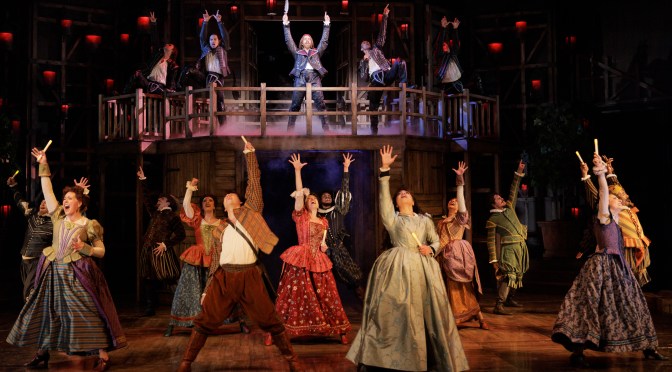
Members of the company in Romeo and Juliet. Stratford Festival 2024. Photo: David Hou.

A sung prologue sets the table for a whirlwind first half, with White’s deft command of the intimate, surprisingly bare Festival Theatre stage was powerfully evident. Whether in the opening scene’s street brawl or at the masquerade where Romeo meets Juliet, crowd movements are vibrant, organic, purposeful, frequently cued by Graham Hargrove & Jasmine Jones-Ball’s thrusting onstage percussion. Individuals’ speeches fluently unpack each character’s motivation and reactions: a blustering Tybalt (Emilio Vieria), a cautious Benvolio (Steven Hao), the exasperation of Prince Escalus (Nick Dolan), the defensive crouch of the senior Capulets and Montagues — all establish the underlying powder keg of anger and resentment, ready to go off at an antagonist’s tiniest slight to personal honor.

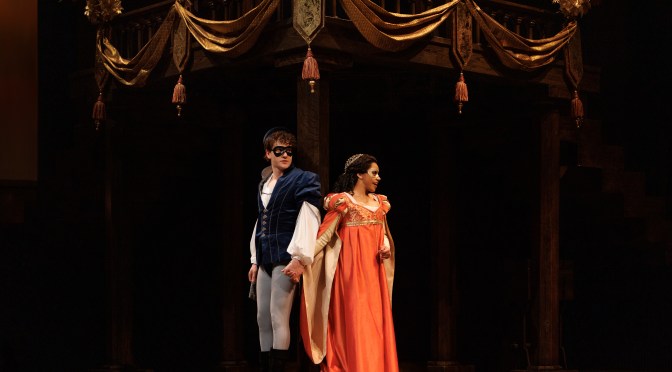
Jonathan Mason as Romeo and Vanessa Sears as Juliet in Romeo and Juliet. Stratford Festival 2024. Photo: David Hou.

Which is the reason Jonathan Martin’s lovesick Romeo and Vanessa Sears’ passionate Juliet stand out; in clans obsessed with judgment and rejection of the other, their soliloquies mark how they crave hope, yearn for a lasting acceptance. And when they find each other, the attraction is immediate, magnetic, unstoppable. The inspired duet of their balcony scene exhilarates; their capricious browbeating of Friar Laurence (consummate Festival veteran Scott Wentworth) into a clandestine wedding feels inevitable in the sweep of their mounting passion. But then, the explosion: with the hair-trigger murders of Andrew Iles’ Mercutio by Tybalt and Tybalt by Romeo — tumbling over each other in a brutal, riveting flash of violence — fear wins out, tragedy gathers momentum. Blackout!

From left: Emilio Vieira as Tybalt, Andrew Iles as Mercutio and Derek Kwan as Tybalt Follower in Romeo and Juliet. Stratford Festival 2024. Photo: David Hou.

This was the moment when my stomach knotted — and even though I’ve known this play since high school, as the second half slammed one door after another and the lovers’ scheming grew more desperate, it refused to untwist. When Graham Abbey’s Capulet compels Juliet’s consent to marry Austin Eckert’s Paris by callous words and physical force; when Juliet threatens suicide, then grasps at the straw of Friar Laurence’s stupefying potion; when Glynnis Ranney’s Nurse keens an anachronistic snatch of Henry Purcell (testimony to White’s love for opera) over Juliet’s grave; when Romeo’s turbulent emotions solidify around his own suicide mission, the tension ratchets up and up, to unbearable heights.

Scott Wentworth as Friar Laurence in Romeo and Juliet. Stratford Festival 2024. Photo: David Hou.

Which is why the final bloodbath in the Capulet vault — as Paris, then Romeo, then Juliet die at the hands of misdirected honor and folly under pressure, to the belated horror of Capulets, Montagues and Prince alike — ultimately feels inescapable, and remarkably universal. In White’s sure, determined hands, this tragedy could be playing out anywhere at anytime, be it Renaissance Mantua or 21st-century Detroit (where her mother kickstarted her passion for Shakespeare at the age of 8, as a disciplinary consequence for catching her listening to Salt’n’Pepa). As she tosses out to close her program notes: “Remember what happens when we don’t love our neighbor as ourselves. Just saying.”

I’m deeply grateful for this production of Romeo & Juliet — its primal commitment to Shakespeare as an artist speaking across and into multiple cultures, its understated opulence and fleet pace, its vivid characterizations and exuberant performances, its cataclysmic clash of the deepest forces at work in our fallen, idealistic, conflicted psyches and societies. For those with ears to hear and eyes to see, it’s a thrill, a warning, and maybe even a necessary passage from heights of joy through depths of despair to chastened, repentant grief. Above all, it’s well worth your time and travel to experience.

— Rick Krueger

Romeo & Juliet plays at Stratford’s Festival Theatre through October 26. Click here for production information. Click here for ticket availability.

At the Stratford Festival: Something Rotten! (To the True North, Part 6)

I thought there were three genuinely great things about the Tony Award-winning musical Something Rotten, as currently playing at the Stratford Festival:

1. Mark Uhre’s frenetic take on struggling Elizabethean playwright Nick Bottom. Between his oversized desire for fame, his strained interactions with enterprising wife Bea (a confident Starr Dominque) and poetic little brother Nigel (Henry Firmston in the boy-next-door role), and his obsessive drive to take down William Shakespeare and win the Renaissance fame game, Nick is desperation personified, thoroughly uncomfortable in his own skin and all the funnier for it. Uhre plays him as a live-action version of Daffy Duck, spluttering with unbounded rage at his situation, and thus completely susceptible to any bizarre idea that crosses his path – like inventing the musical – and thus totally willing, no matter how insane the consequences that follow, to “commit to the bit”.

2. The thing is, in this universe, Nick’s right! Framing Shakespeare as a vain, manipulative rock star (continuing the parallel, think Bugs Bunny without redeeming qualities) is Something Rotten’s masterstroke. Trailed by his own theme song and a crew of dancing Bard Boys, basking in the adulation of a solo stadium gig (with hilariously low-tech special effects), scheming against Nick to the point of donning a fatsuit disguise and a Northern accent, stealing Nigel’s best lines and passing them off as his own, Jeff Lillico is a utter hoot, England’s greatest dramatist as an egotistical, over-the-top pantomime villain. Even when he lets his guard down in his big solo “Hard to Be the Bard”(“I know writing made me famous, but being famous is just so much more fun”) , this is a Shakespeare you can love to hate.

3. Speaking of over-the-top, director Donna Feore and her creative team absolutely chose the right path by leaning into the Broadway musical’s inherent absurdities, as foreseen by cut-rate soothsayer Nostradamus (Festival veteran Dan Chameroy in a giddy, disheveled supporting turn):

You could go see a musical
A musical
A puppy piece, releasing all your blues-ical
Where crude is cool
A catchy tune
And limber-legged ladies thrill you ’til you swoon
Oohs, ahhs, big applause, and a standing ovation
The future is bright
If you could just write a musical

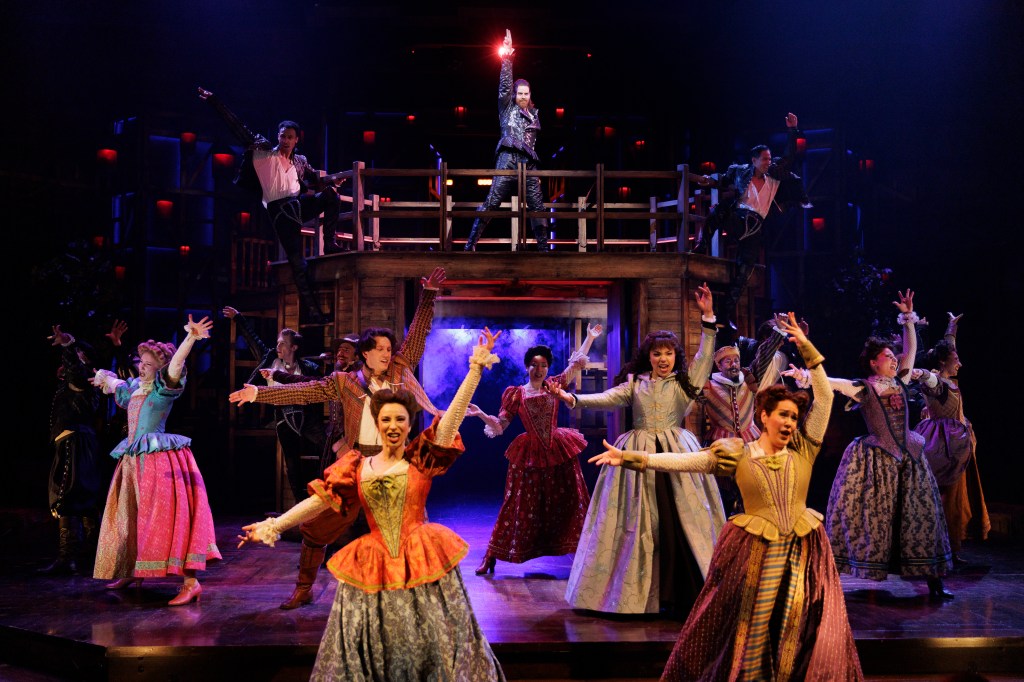
Dan Chameroy as Nostradamus with members of the company in Something Rotten!. Stratford Festival 2024. Photo: David Hou.

Every possible cliché you can think of is there onstage for those six minutes: Sung recitatives (with self-mocking asides)! Bawdy double-entendres and suggestive choreography! Costume changes (including nonsensical hats and wigs)! Jazz hands! Synchronized high-kicking (with callbacks goofing on Feore’s 2016 Festival production of A Chorus Line)! It all worked to perfection at this matinee, the capacity audience (including your scribe) yelling and applauding for more (which the company obligingly provided) as if Pavlov had just rung his biggest, shiniest bell. And the places Nick and Nostradamus find themselves going in the second act’s big number scale even zanier heights. Complete the sentence yourself: “When life gives you eggs . . .” Then imagine the costumes!

Where Something Rotten falls short? Compared to the sublime ridiculousness of the main story, the supporting characters’ arcs bog down in vapid sentimentality and already-stale contemporary memes. Bea’s occasional empowerment shoutouts pale in comparison to what she actually does out of love for her husband and his brother, subtly undercutting her role as the true hero of the piece. Nigel’s emergence from Nick’s shadow is a bit of a damp squib; his main solo turn “To Thine Own Self Be True” proves an shallow, unearned manifesto of self-actualization instead of a rite of passage. And the meet-cute romance between Nigel and Portia (Olivia Sinclair-Brisbane, winningly portraying a budding poetry fangirl under the thumb of Juan Chioran, a Puritan father given to pre-Freudian slips) sputters, toggling between aren’t-we-transgressive smuttiness and, in “We See the Light”, a Big Message about tolerance, tediously staged as a clumsy cross between Sister Act and Rent — Feore’s only directorial misfire.

But that said, Something Rotten’s full-on commitment to farce and totally bonkers energy (with Feore, Uhre, Lillico and Chameroy setting the pace for a young, frisky cast) carries the day. Productions about Shakespeare at the Stratford Festival are typically on or about at the same level as their productions of Shakespeare, and this delightfully nutty escape into a toe-tapping alternate version of the Renaissance is no exception.

Members of the company in Something Rotten!. Stratford Festival 2024. Photo: David Hou.

— Rick Krueger

Something Rotten continues at Stratford Festival’s Theatre, with its run now extended through November 17th. Click here for ticket availability.

Music Crossing Continents: Constantinople & A Filetta at the Elora Festival (To the True North, Part 3)

Park your car in the biggest paved lot you can find in Elora, Ontario — the one adjoining the horse racing track & casino just southwest of downtown. Then, cross the road to the municipal Gambrel Barn — transformed into an unlikely concert hall for three weekends in July.

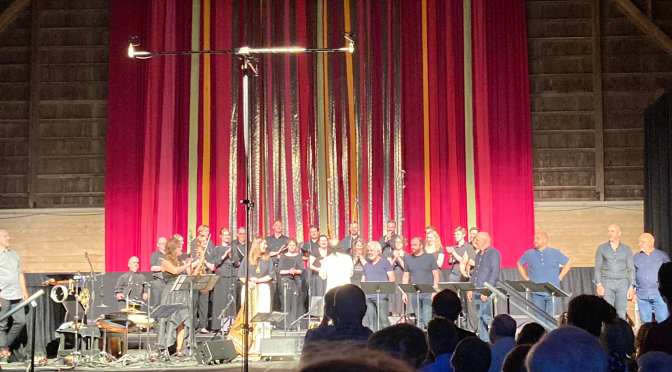
Filing onstage: Constantinople, an instrumental quartet from Montreal that plays medieval, Renaissance and Baroque instruments from Persia, Turkey, Japan, Europe and Ireland; A Filetta, a male vocal sextet from Corsica, an island ruled by France (Napoleon came from there) where the native language developed from Italian and Greek roots; and The Elora Singers, a impeccably polished, 21-voice Canadian choir. How, you might think, is this all gonna come together?

As it turns out, the answer last night was: in an exceptionally intense, immersive way. Introducing the program Clair-obscur, Constantinople’s music director Kiya Tabassin noted its title and content came into being just before 2020’s worldwide pandemic. After its first performances, in Tabassin’s words, its purpose became “to bring light (clair) to darkness (obscur)“. And over the next 90 minutes, the assembled forces proceeded to do just that, crossing a continent to meld the sounds of disparate times and places into a satisfying whole.

The music, mainly assembled by Tabassin and A Filetta’s leader Jean-Claude Acquaviva, proved thoroughly cosmopolitan and eclectic. The sextet’s singing was the obvious heart of the evening; their sturdy blend of dominant bass drones, fleet interweaving lines stacking up into glancing consonances and luxuriant melodic melismas were consistently riveting, whether voices were raised in a show of strength or hushed in breathtaking tenderness. Tabassin’s 3-stringed setar and Didem Basar’s kanun (a 78-stringed Turkish zither) danced lithely around and about the rugged vocal base, with forthright support from Tanya LaPerriere’s Baroque violin & viola and supple grounding in Patrick Graham’s ten-fingered, two-footed percussion; each player had their evocative solo moment and earned delighted applause from the crowd.

Atop this entrancing musical scaffold, the sung texts unfurled a dizzying collage of Senecan drama, Renaissance epic, Near Eastern poetry from Rumi and Hafez, traditional ponderings on the passion of Christ and Primo Levi’s meditation on the memory of the Holocaust. Here was history stripped of its timeline, collapsed into its component catastrophes and passions — pride, devotion, horror, absurdity, yearning for calm and deliverance – compounded into the moment’s expression and emotions. And when Tabassin raised his reedy voice to cavort over A Filletta’s firm foundations or the Elora Singers enriched the soundscape with supportive reinforcement and embellishments, the chamber effect broadened out to opulent symphonic proportions.

Clair-obscur (the nearest English equivalent would be chiaroscuro, the play of light and shadow in the art of painting) proved a unique mix of folk music and high art, calmly unhurried vocal prowess and upbeat improvisation, a journey through the heart of human life to a resting place of connection, catharsis and celebration. You can check out a sample of this program for yourself below (the complete concert, without The Elora Singers, can be found here):

— Rick Krueger

To the True North!

Perhaps you might remember that, for twenty years now, my wife and I have been regular attendees at the Stratford Festival in Ontario, Canada. This week, we’re off to the north (and east) for another adventure in world-class theatre! But this time around, there’ll be additions to an already ambitious arts-going itinerary:

Now in its 45th season, the Elora Festival has established a reputation as Canada’s international choral festival, presenting world-class choirs and vocal ensembles over two weeks in July in the artists village of Elora, “Ontario’s most beautiful village”.

We’re looking forward to experiencing the Elora Festival for the first time, taking in these mouth-watering programs:

Then we’ll double back to Stratford – but before we settle into our theatre seats we’ll catch world-renowned Canadian pianist Angela Hewitt as she performs Bach, Beethoven, Scarlatti and Brahms (no pressure!) under the auspices of Stratford Summer Music.

And the plays on tap?

Watch this space for reviews and impressions, beginning later this week!

— Rick Krueger

Sunday

I’m not a particularly good poet. In fact, I’ve very rarely dabbled in writing poetry. But a couple years ago as a way of processing some difficult emotions, I found poetry flowing from my pencil, rhyme and all. I shared it with a friend (and Twitter) a couple months ago, and that friend asked if he could publish it on the Conciliar Post. Since I was about to move from St. Louis to Bowling Green, Kentucky, I had to delay that since it was handwritten. When I got a chance to transcribe it, I found it needed more melancholy at the beginning to balance out the joy of the Sabbath. And some of the rhyming needed help. A very recent breakup inspired some new melancholy, too. Anyways here’s the beginning stanzas, with the rest at the link: https://conciliarpost.com/the-arts/poetry/sunday/

The rolling emptiness of a Sunday afternoon,
The deafening silence of a vacant room,
The brutal roar of a mind gone mad,
After years of loneliness leave a soul unclad.

Reaching a loved one in search of a friend,
An unforeseen blow reveals this is the end.
A vacuous pang sucking life from my eyes,
But after all else this should have been no surprise.

Disjointed and pondering, unsteady and shamed,
Bloodcurdling abuse tearing a heart that’s been maimed,
Crying and tearing the sheets on the bed,
Pained by a future that only fills me with dread.

Suffering drowned by years of neglect,
A soul grown numb longing to connect,
When out of the silence a trumpet rings clear
Letting me know my Messiah is near.

Stratford Festival Preview: The Miser by Molière

Harpagon, the title character of Molière’s The Miser, is a flat-out fool. Money — getting it, keeping it, hoarding it — is his obsession; in the presence of his stash, he kneels in abject devotion. But he also projects that obsession onto everyone else in his life. He berates his adult son and daughter for their “spendthrift” ways; he lends cash only at exorbitant rates (with outrageous stipulations in the small print); his fear of both having his treasure with him and letting it out of his sight easily slides into wholesale paranoia that everyone is out to part him from it.

The thing is, Harpagon isn’t completely wrong; his single-mindedness warps how everyone in his life approaches him. Both his children hesitate to reveal their new loves to him, for fear he’ll deny access to their trust funds. His household servants (including his son’s shady buddy and his daughter’s lover) suck up to him and diss their colleagues to his face, bitching behind his back and battling for dominance all the while. The local matchmaker (who Harpagon has tasked with finding him a new, young wife) and moneylender butter him up outrageously, hoping against hope to profit from their flattery. Even the ingenue both Harpagon and his son are after wants the miser’s money — to provide for her ill mother’s medical care, but still! The farcical complications of the play flow naturally and wittily from this set-up; in the company of a master fool who has what they desire, everyone’s foolishness will out.

Where the Stratford Festival’s new production of The Miser is faithful to that core revelation of Molière’s wry fable, it sparkles with a sneaky glee — even through two layers of adaptation (Ranjit Bolt’s Anglicized translation of 2001, further updated to contemporary Canada by director Antoni Cimolino). Guarding not only his briefcase full of Canadian $100s, but every absurd knick-knack in his Victorian horror of a house, Colm Feore’s Harper is the blazing star of this show; his alternating mania about Mammon and cluelessness about everything else send everyone around him into their own eccentric orbits. The household servants — ne’er do well Fletcher (a phlegmatic, sly Emilio Vieira), butler/secret lover Victor (Jamie Mac, confident and bewildered in turn), and chef/chauffeur Jack (Ron Kennell in full clowning mode) — alternately brazen their way through Harper’s whims and unleash their frustrations on each other; matchmaker Fay (Festival stalwart Lucy Peacock, in what amounts to a well-deserved star cameo) puts on a show of managerial competence for everyone else while gingerly fumbling with Harper like he’s about to explode; love interest Marianne (an empathetic, determined Beck Lloyd) stands up for herself and her mother appealingly, even as Harper and his son Charlie scrap over her like kids on a playground.

The characterizations of Charlie and Harper’s daughter Eleanor were what struck me as the weakest part of this production. While Qasim Khan and Alexandra Lainfiesta hit the right notes of frustration and futility (aided by the campy thrift-store chic of their costuming), their amped-up desperation comes across as shrill and brittle. The struggle between a serenely ignorant father and his deprived yet somehow spoiled children — the heart of the play’s satire — is where Cimilono least trusts Molière to connect. Instead, he crams gratituous Boomer vs. Millenial references into both the program notes and the script, saddling Charlie with a petty consumerist materialism and Eleanor with a string of cliche “woke yet broke” slogans. It has to be said that Khan and Lainfiesta sell this material with all their considerable ability; but for me, the insistence on painfully present-tense content is what keeps a funny production from crossing over into the hysteria that Molière generates when played with trust. There are plenty of simmering chuckles and outright hoots here, but not as many unstoppable guffaws as I had hoped for.

That said, this production of The Miser (complete with an over-the-top fairy-tale ending that does retain its hilarious impact through the layers of updating, as David Collins’ wonderfully deadpan Sir Arthur Edgerton sticks the landing) had the Festival Theatre audience in stitches, attested by the generous, heartfelt ovation for Feore and his supporting cast. If you can peer through the alternately opaque and overripe references to “the next Bezos” and “the land of Tim’s” (oh, and Harper’s distrust of safes — they attract the FBI as well as burglars!), you may well find yourself reflected in Molière’s unflattering yet strangely revealing mirror.

The Miser is currently in previews at the Stratford Festival Theatre. It officially opens on August 26th, playing through October 29th. Tickets are available at stratfordfestival.ca.

— Rick Krueger

Podcast: The Return of the King

Our three-part series on The Lord of the Rings comes, sadly, to an end. A huge thanks to John J. Miller for bringing me onto his excellent show and allowing me to talk and talk and talk about some of the things I love most in this crazy whirligig of a world. A true and meaningful honor.

Here is part III:

https://www.nationalreview.com/podcasts/the-great-books/episode-163-the-return-of-the-king-by-j-r-r-tolkien/

Tolkien, Wagner, Nationalism, and Modernity

“Both rings were round, and there the resemblance ceases”–J.R.R. Tolkien

[Originally delivered at an ISI Conference, “Modernists and Mist Dwellers,” on Friday, August 3, 2001.]

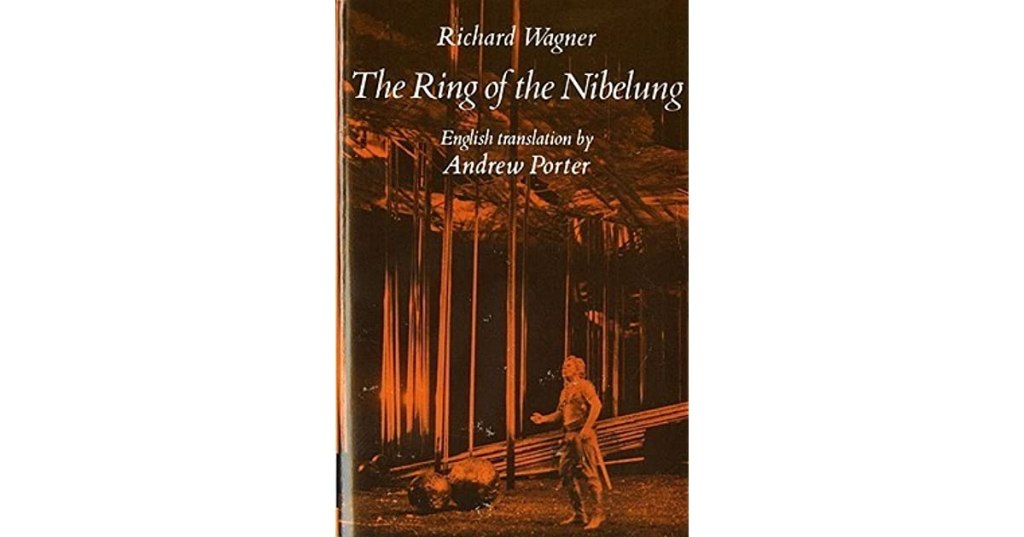
     When the Swedish translation of The Lord of the Rings appeared in 1961, its author was appalled.  Fluent in Swedish, J.R.R. Tolkien found no problems with the translation.  Indeed, Tolkien often considered the various Scandinavian languages as better mediums for his Middle-earth stories than English, as the medieval Norse and Icelandic myths had strongly influenced them.  His disgust, instead, came from the presumption found within the introduction to the Swedish edition.  The crime: translator Åke Ohlmark had compared Tolkien’s ring to Wagner’s ring.  “The Ring is in a certain way ‘der Niebelungen Ring,’” Ohlmark had written. Indignant, Tolkien complained to his publisher: “Both rings were round, and there the resemblance ceases.”  The translator’s commentary was simply “rubbish,” according to Tolkien.[i]

     Ohlmark was not the only critic to make the comparison.  A Canadian English professor, William Blissett, reviewing The Lord of the Rings for the prestigious South Atlantic Quarterly, found several parallels between the two legends but was unwilling to preclude “any direct Wagnerian influence.”[ii]  By the early 1960s, the comparison was becoming common.  In his last interview before his death, Tolkien’s closest friend C.S. Lewis claimed to have wanted to write a new prose version of Wagner’s Ring Opera.  Lewis feared, though, that “at the mention of the word Ring a lot of people might think it was something to do with Tolkien’s ‘Lord of the Rings.’”[iii]  Since the first comparisons in the 1950s, many critics have used Wagner’s Ring against Tolkien.  One famous English poet referred to The Lord of the Rings as “A combination of Wagner and Winnie-the-Pooh.”[iv]

[Scroll down a bit to go to page 2 of this lecture]

THE STRATFORD FESTIVAL GOES DIGITAL

From Broadway World:

The Stratford Festival is following up on the success of its recent Shakespeare Film Festival with a $10-a-month digital content subscription, Stratfest@Home, offering more Shakespeare and more films, along with new commissions, music, conversation, cooking and comedy. A free film festival, with a theme of Hope Without Hope, will once again be offered on Thursday evenings.

“At this particular moment of pandemic, with social isolation once more upon us, nights growing longer and winter approaching, we need the consolation of community like never before. With these viewing parties and the many related artistic programs in Stratfest@Home, we invite you to enter the warmth of the Festival bubble,” says Artistic Director Antoni Cimolino.

The subscription cost will include:

  • access to the 12 Shakespeare films streamed on YouTube this past spring;
  • a growing library of Festival-related legacy films, interviews & discussions;
  • new content like the filmed-in-Stratford mini-soap opera Leer Estates, holiday specials for Halloween and U.S. Thanksgiving, and video introductions to the young actors currently studying at the Festival’s Birmingham Conservatory;
  • coming in 2021, the game show Undiscovered Sonnets and the concert series Up Close and Musical.

The free film festival begins this Thursday on YouTube. Already on the schedule are:

  • October 22: The 2011 production of Shakespeare’s Twelfth Night featuring the late Brian Dennehy (a great version that my wife & I saw in person – it includes cool songs by then-artistic director Des McAnuff, who worked with Pete Townshend on the Broadway version of Tommy);
  • October 29: The Stratford Festival Ghost Tours Halloween binge.
  • November 5: The 1994 production of Eugene O’Neill’s Long Day’s Journey Into Night. This one’s a legendary part of Festival history.
  • November 12: The 1992 production of Shakespeare’s Romeo & Juliet, with a young Antoni Cimolino as Romeo and Anne of Green Gables’ star Megan Follows as Juliet.
  • November 19: The 2000 production of Timothy Findley’s Elizabeth Rex, a Festival commission. Playwright Findley was in the acting company with Sir Alec Guinness for the Festival’s inaugural season in 1953.
  • November 26: The Early Modern Cooking Show U.S. Thanksgiving binge.
  • December 3: The 2010 production of Shakespeare’s The Tempest, starring Christopher Plummer. (Another great version that we saw live — and also got Plummer’s autograph on his memoirs!)
  • December 10: The 2008 production of George Bernard Shaw’s Caesar and Cleopatra, starring Christopher Plummer.
  • December 17: All the Sonnets of Shakespeare, a lecture with readings.

You can learn more about Stratfest@Home and subscribe at https://www.stratfordfestival.ca/AtHome

— Rick Krueger