Tag Archives: album-reviews

The Flower Kings: Space Revolver and More!

Space Revolver

One of Brad Birzer’s favorite musical artists is The Flower Kings, and one of his favorite albums of theirs is Space Revolver. In this dialog, he and Tad Wert discuss that album and its place in their discography.

Tad: Brad, it’s good to be interacting with you again on Spirit of Cecilia! I chose this classic album, because I know it’s a favorite of yours.

My first exposure to The Flower Kings was their album, Stardust We Are, which I bought because of a Mojo Magazine article on “the new wave of progressive rock”. I have to admit that I tried repeatedly to listen to the whole album, and it never held my interest enough for me to do so. I know that you love Roine Stolt and his Flower Kings, so every time a new album was released, I gave it a try, but there were always other artists’ music that took my attention.

Then, last week, I found an inexpensive copy of Space Revolver, and I don’t know exactly why, but I picked it up. Once I heard the opening chords of I Am The Sun Pt. 1, I was immediately taken with this album! I think Stolt (in my humble opinion), had hit upon a very good balance between power and grace in his music. As I continued to listen to the rest of the album, I was gratified to hear that that high quality of songwriting continued throughout.

Brad: Dear Tad, it’s been too long, my friend.  What have I been doing?  Too much teaching of the American founding period and too much grading!  Ha.  No, of course, I love my teaching and my students, but they are distractions from my love of reviewing albums with you and my love of progressive rock!  So glad to be done with the semester (and, frankly, it was a great one!!!) and back to reviewing with you.  Ahh. . . the good life.

Yes, I’ve been a fan of The Flower Kings for a long time, now, and I’ve been an evangelist of the band just as long.  Way back in the year 2000, a former student (now the head of our philosophy department) leant me a copy of Flower Power.  I was immediately taken with it, and I bought everything available at the time by the band.  I fell in love with everything.  Absolutely everything, including Roine Stolt’s solo album, The Flower King (which, I assume is just a hippy-ish name for Jesus).  

Crazily enough, the band released Space Revolver on July 4th of that year.  Coincidence?  I have no idea, but it struck me as a perfect Fourth of July album.  Especially with those queer lines in the first track–”I left my heart in San Francisco.  I left my mind in San Francisco Bay.”  Wow, did I laugh hard or what!!!  24 years later, the line still cracks me up.

I’ve had the chance to correspond a bit with Stolt, and I even sent him some books on economics (by Wilhelm Roepke) before a longish tour he took.  As far as I know, he took the books with him!  How great is that?  Frankly, I’d be happy to be his book supplier.  At the time I sent him the Roepke books, he was really interested in an anti-Marxist form of economics, that is, the creation of more private property (small family farms) rather than less.  Again, how great is that?  “Ride this bitch, that is power!”  

Anyway, Tad, this is a long way of saying, I love the music, and I love the band.  I think the world of both.

Tad: Okay, Brad, your off-hand remark about the Flower King being Jesus is something that I’ve wondered about for a while: is Roine a Christian? The 1994 album, Roine Stolt’s The Flower King, is steeped in religious imagery, specifically Christian, and, of course, he has collaborated with Neal Morse in Transatlantic. Anyway, if true, it helps make sense of a lot of his music!

Also, here’s something else that came to me while listening to Space Revolver – to my ears, it is a huge leap forward in songwriting from Stardust We Are, and I was wondering what might have caused it. Then it hit me: Space Revolver was written and recorded a few months after Stolt was involved in the first Transatlantic album SMPTE! I think Neal Morse must have had an influence on Stolt; that opening piano riff in I Am The Sun Pt. 1 is very Morsian (to coin a word!). Chicken Farmer Song, Underdog, A Slave To Money, and A King’s Prayer all feature outstanding melodies – they’re downright power poppish in their catchiness. Even the jam that closes out A King’s Prayer is focused and tight, with nary a wasted note.

The tootling mellotron that opens I Am The Sun Pt. 2 is one of my favorite moments of the entire album. I hear it, and I can’t help but smile and bob my head. Actually, the whole atmosphere of this album is one of joy. Stolt seems to be having the time of his life, and he wants the world to know it.

I also want to single out Ulf Wallander’s soprano saxophone work for praise. I love that instrument, but in the wrong hands it can be very annoying. Wallander does a great job zipping off very pleasant  improvisations that add a lot to the overall feel.

The only misstep on this album, in my opinion, is Hans Froberg’s You Don’t Know What You’ve Got, which sticks out like a sore thumb. It just doesn’t fit in with the rest of the album. That said, it’s not a bad song, it just doesn’t work for me in the context of the other tracks.

Okay, I’ve raved enough; your turn!

Brad: Tad, what a fun writeup.  Thank you–I think you clearly identify the joy and playfulness that is so prevalent in Space Revolver.  Stolt was clearly having the time of his life.  I love all the other albums – in fact, I made a meme a years ago expressing what I loved about each album (see below) – and I’m especially taken with Flower Power (the first of theirs I heard) and Paradox Hotel.  I really like Stardust We Are, too–but each of these other albums lacks the extreme playfulness of Space Revolver.

Flower Kings meme

[I made the above meme back when Desolation Rose came out.  I was rather blown away by the album when it was released, but mostly because it was so intense and lacked the characteristic mischievousness of the previous albums.  Indeed, when we were really active at Progarchy, I even planned out a book on the Flower Kings (never realized, except for some snippets, here or there), following the meme’s albums’s themes.  I was planning on arguing that The Flower Kings were to Europe what Big Big Train was to England and what Glass Hammer was to America.

The book would’ve come out before my Neil Peart biography and even before what you and I, Tad, wrote on Big Big Train.  I was, at the time, emailing with Stolt, and I was rather taken with him (still am) as an artist and as a human being.  He was extremely active on Facebook at the time, as was his wife, and they were always interesting.  We disagreed radically on the meaning and legacy of President Obama, but, again, he was always a total and intelligent gentleman.  

It’s about the time I sent him the Roepke book.  

I did try to interview Stolt about Rush, but he very kindly responded that he didn’t know enough about the band to offer anything substantive.  He was genuine, kind, and humane in his response.

One of many grand schemes never realized. . .]
Birzer Flower Kings
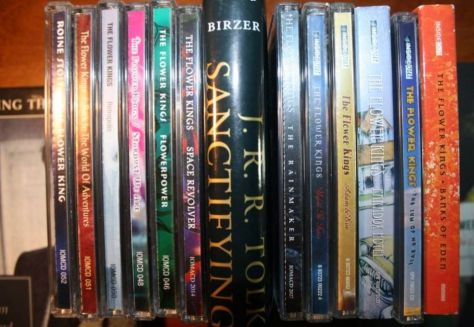
Brad’s Flower Kings Collection

[Above photo, my fantasizing.  In the middle of my then-Flower Kings collection, I’ve placed three of my own books, my biographies of (right to left) Christopher Dawson, J.R.R. Tolkien, and Charles Carroll of Carrollton.  Yes, I desperately wanted my work to be tied to Roine Stolt and the Flower Kings.  I thought–and still do–that if any of my biographies could reach the majesty of Stolt’s artistry, I would truly have made a mark on the world.]

A few responses to you directly, Tad.  It’s funny, I had always assumed that Neal Morse was influenced by Roine Stolt, rather than the other way around.  And, Stolt, to me, seems deeply influenced by King Crimson, Yes, and Genesis.  This seems especially clear on his solo, The Flower King, and Retropolis, both of which came before Transatlantic.  But, I assume this is like a chicken or the egg question.  At this point (2024), the two must’ve influenced each other so completely that one can’t any longer disentangle which idea or person came first.  Together, Stolt and Morse are the heart of rambunctious third-wave prog.

As to Stolt being Christian, I have no idea.  In our brief correspondence, I obnoxiously asked him directly about his faith, and he never responded or hinted, one way or the other.  Being Swedish, he was almost certainly raised nominally Lutheran, even if the Swedes only attend services on Easter and Christmas.  

Regardless, Stolt employs Christian symbolism frequently, especially in the early The Flower King’s albums.  Again, I think that “The Flower King” is a sort of hippie Cosmic Christ.  Here are the lyrics from the first album:

Falling out of the sky, falling into a dream
All I need is the heart where it all can begin
It’s just a matter of time, it’s just a matter of trust
It’s just a matter of faith when we all sleep in the dust

Don’t deny, just verify the genius of it all
It’s the cycle of all living thing, hear the children
Hear the children call !

“We believe in the light, we believe in love every precious little thing
We believe you can still surrender you can serve the Flower King”

Going out into the grey, into purple and red
See, all the beautiful shapes flowing out of my head
It’s just a matter of time, it’s just a matter of trust
It’s just a matter of faith when we all sleep in the dust

Don’t deny, just verify the genius of it all
It’s the cycle of all living, hear the children
Hear the children call !

“We believe in the light, we believe in love every precious little thing
We believe you can still surrender you can serve the Flower King”


“We believe in the heart, we believe in healing in a house where angels sing
We’ll unite the divided and the fallen one will serve the Flower King”

“We believe in the heart, we believe in healing in a house where angels sing
We’ll unite the divided and fallen one will serve the Flower King”

Again, I don’t quite think this is the orthodox Jesus Christ of Christian faith, but a rather humanistic but still supernatural Flower King.  When the band becomes “The Flower Kings,” they’re not divinizing themselves but rather becoming disciples.  

What strikes me most, though, is that Stolt’s use of mythological symbols is not Lutheran, but deeply Roman Catholic.

On track four of Space Revolver, “Monster Within,” Stolt sings “Mother Mary, she’s left the building crying/silent tears rolling down her cheek.”  Granted, this could just be a Beatles’ reference, but Mary, here, seems more supernatural than Paul McCartney’s mother.  After all, Mary is the opposite of some kind of demagogue trying to seduce our children and who feeds on power and who controls the bats.

One of my favorite The Flower King’s albums, Unfold the Future, posits a war between the devil and Mary.  On the final track:

Clueless

Living in a business cluster, predator to suit your needs
Raven sitting on your shoulder, lurking the suburban weeds
Think I saw you in the bank, think I saw you in a talkshow
Swear I saw your mindless grin, justify the final blow

Swallowing the endless laughter, cultivate the deadly sins
Getting even altogether, hiding from the Holy Mother
This is how you raise the Cain, this is what you teach our children
Back on duty dog eat dog, they’re clueless in the Devil’s playground

Then, of course, on Space Revolver, on track 6, “Underdog,” there’s that really weird line/sound byte: “John Paul’s pizza, the biggest pizza you’ve ever seen.”  When this album came out, in the year 2000, the only John Paul that mattered was John Paul II.

So, is Stolt Christian?  I have no idea, but he’s an awesome ally, a man of integrity, and a grand myth maker.  Taken together, this is so much what I love about Stolt and the band.  Never once I have listened to them without my imagination being stimulated, expanded, and made manifest!

Tad: Wow, Brad! I knew you were a fan of Stolt, but I wasn’t aware of all the thought you’ve put into his music. I now have a much greater appreciation for his overall oeuvre than before. I think you’re probably correct about who influenced whom – Morse had to be aware of Stolt while he was in Spock’s Beard, and Stolt had to be aware of Morse. They likely influenced and appreciated each other, which led to the formation of another outstanding prog group, Transatlantic. 

I kind of like it that Stolt is mum about his faith; it allows different interpretations of his music. What’s important to me is that he seems to be a light-bearer, as opposed to a dark nihilist like so many Scandinavian death metal artists. Stolt is always positive and optimistic, even when he is singing about something he’s unhappy about. In that regard, Desolation Rose seems to be his “darkest” work, and it is still uplifting to my ears.

So here’s my takeaway on Space Revolver: it is the perfect introduction to The Flower Kings for someone who is new to them. In it, the group hits the perfect combination of melodicism, progginess, and improv jamming. Once you’ve absorbed this album, all the others make sense. They’ve had an amazingly productive run the past 30(!) years, and I hope they go for 30 more!

Haunted by No-Man’s Schoolyard Ghosts

Schoolyard Ghosts

Greetings, Spirit of Cecilia music lovers! In this post, Brad Birzer and Tad Wert revisit a classic No-Man album, Schoolyard Ghosts, from 2008.

Tad: Brad, I’m so glad you suggested we discuss this album. I picked it up when it first came out. I had just discovered Steven Wilson’s Porcupine Tree, and I was snapping up anything I could find that he was involved in. No-Man is certainly different from Porcupine Tree, but Wilson and Tim Bowness make beautiful music in their own way.

As I listened to this album once again, I was struck by how calming it is (with the exception of that raucous opening to “Pigeon Drummer”). For me, “Truenorth” is the standout track. When I first got Schoolyard Ghosts, I didn’t take the time to appreciate how great a song it is. It slowly unfolds for nearly 13 minutes, but it never lags. Tim’s vocals are so hushed and warm, while Steven’s acoustic guitar accompaniment is perfect.

Brad: Tad, thanks so much for such a brilliant opening to this dialogue.  I think you nailed it all very perceptively.   And, I’m with you on all of this.  

The best way to describe the music is, as you so aptly put it, “hushed and warm.”  Delicate and lush also come to mind as descriptives as well, though delicate might be taken as derogatory by some readers.  I certainly mean it in only the most positive sense.

This was my first No-man album, and, at the time it came out, I was buying basically everything that the label Kscope was producing.  I had already been a Steven Wilson fan–since 2002–but I’d not delved into No-man for some reason.  Porcupine Tree, yes.  Blackfield, yes.  But, bewilderingly, not No-man.  This, of course, all changed with Schoolyard Ghosts.

Indeed, Schoolyard Ghosts rather blew me away in 2008, and it continues to do so over a decade and a half later.  I never grow tired of this album.  I love the lilt of the instruments, Bowness’s plaintively gorgeous vocals, and the fine production of the music.  I also love the vocal harmonies that Bowness and Wilson create.

I can state now, in 2024, that I’m as much a fan of Tim Bowness as I am of Steven Wilson–which is saying a lot for anyone who knows me.

Since 2008, I’ve pretty much devoured everything that Bowness has written and released.  I’ve come to the conclusion that he’s our generation’s Mark Hollis.  He was definitely influenced by Hollis and Talk Talk.  One can hear it in his phrasing and in his lyrics.  It’s clear that Bowness is in love with words as much as he is with music.  

Bowness also reminds me very much of our own Kevin McCormick.  What an incredible team they would make.

Tad: Yes, Brad, the ghost of Mark Hollis is definitely present here! I find it interesting that Schoolyard Ghosts was your first introduction to No-Man. Mine was 1994’s Flowermouth, which was the only No-Man title available at my local used record store. It’s very poppy – almost like Pet Shop Boys – and as I completed my No-Man collection, it became clear that every album had its own unique identity. Initially, I was disappointed that Bowness and Wilson didn’t sound more like Porcupine Tree, but why should they? Wilson has always been a lover of many different genres, and No-Man was a completely different entity for him than PT. As a matter of fact, No-Man was more popular, sales-wise, than PT, which, at the time, was more of a side project.

Okay! Back to the topic at hand. I’ve been listening to the 5.1 surround mix of Schoolyard Ghosts, and it is really good. There are no obvious “whooshes” from front speakers to back and left to right, but rather various sounds pop up and fade away behind me, like the static that closes out “All Sweet Things”, the steel guitar in “Song of the Surf”, or some gentle beeps in “Streaming”. The percussion in the middle section of “Truenorth” has enhanced echo, which is nice.

Speaking of “Truenorth”, I have to say again that this is a near-perfect song! The 12:48 album version puts the single version to shame. I love the “Sweet surrender to the night” section that closes it out – it brings the song to such a melodically satisfying conclusion. 

The only – literally – jarring song on the album for me is “Pigeon Drummer”. In the right context, I can appreciate raucous dissonance, but “Pigeon Drummer” feels out of place on this album. Based on Wilson’s and Bowness’s delightful podcast, The Album Years, I know they both love avant-garde music and musique concrete. However, I think that song messes with the overall flow of the album. Tell me why I’m wrong, Brad!

Brad:  Tad, I’m really impressed that you go all the way back to 1994’s Flowermouth.  Do you remember how you came to it?  I’d love to read that story.

I don’t want to make too much of the Talk Talk connection, but I really feel that “Pigeon Drummer” is No-man’s take on “Desire” from Spirit of Eden.  In that context, to me at least, the song makes perfect sense as a necessary break in an otherwise very delicate and haunting flow.  It’s intentionally jarring, thus making the rest of the album even more beautiful.  In fact, one of the many things I love about this album is the intensity of the overall flow.

I’m in complete agreement with you regarding “Truenorth.”  It is a stunning piece of music, perhaps perfect, even.  It builds so well.  I must admit, it reminds me of an updated Traffic tune.  Not as jazzy as Traffic, of course, but still in a Steve Winwood/Dave Mason vein.  And, I love the lyrics:

You survived another winter
You survived where nothing grew

The days felt cold and never changing
So you just slept the whole way through

When you think about the future
It’s like the past, but hard and small

An old idea you stole from someone
A borrowed dream that’s born to fall

Take a taxi through the snow
Tell them you love them –
Don’t let go

Through the tunnel moving slow
Tonight’s there’s nowhere
You won’t go

You survived yourself
You survived inside the lost world
The dreams of love

And, to be sure, I really love the lyrics to the opening track, “All Sweet Things”:

The run-down streets, the civil wars
You don’t go there anymore –
It’s how you used to live

The trampled hopes, the made-up laws
The itchy feet, the pub quiz bores –
It’s so hard to forgive

Weekend slimmers count their chains
Still wanting someone else to blame
You watch them come and go

Empty nightclub escapades
They tell you more than words can say –
That open doors get closed

The empty rooms, the empty house
Someday soon, you’ll work it out –
Still finding the way back home

The schoolyard ghosts, the playtime fears
You take your pills, they disappear –
The people that you’ve known

I’m curious who wrote these, Bowness or Wilson.  Either way, they’re fantastic.

Tad: Brad, Flowermouth was my introduction to No-Man, because it was the only No-Man album I could find at the record store, and I couldn’t wait for it to be delivered from an online dealer! 

Thank you for sharing the lyrics to “Truenorth” and “All Sweet Things”. I think Bowness must have written the ones to “Truenorth” at least, because there is a sweetness (for lack of a better word) to them that I can’t see Wilson pulling off. His lyrics are usually much darker, which is why he might have had a  hand in “All Sweet Things”. 

“All Sweet Things” is my second-favorite song on Schoolyard Ghosts. It’s a nice opening track, because it sets the mood for the entire album. It has a beautiful melody which slowly unfolds. The mostly acoustic instrumentation is very warm (there’s that adjective again!) and inviting. 

I’ll concede your point in defending “Pigeon Drummer”. Without the tension it adds to the overall mix, the album would probably suffer from a sameness in style and atmosphere. You can’t appreciate calm beauty without a little harshness to get through!

Brad: Tad, thanks for such a great dialogue.  I was really happy to revisit Schoolyard Ghosts, and it’s always excellent “talking” music with you.  As you’ve pointed out here and elsewhere, modern music simply would not be where it is without Bowness and Wilson.  Each have contributed so much–as creative talents and as analysts.  The current issue of PROG magazine has an excellent article on early No-man.  As Wilson notes, the two would rather talk Spirit of Eden than hit the club scene.  Amen.

Tad: Amen, indeed!

The Cure’s Disintegration: An Appreciation

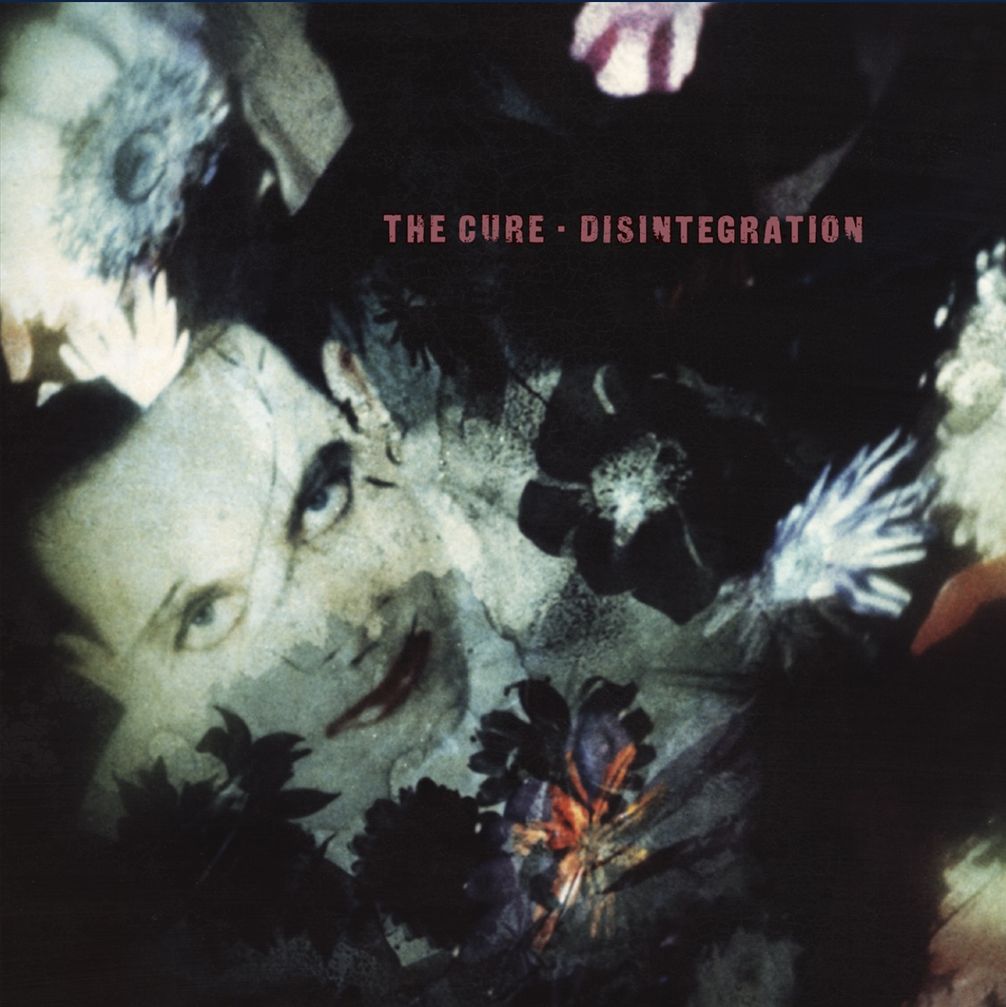
disintegration

Greetings, Spirit of Cecilia readers! In this post, Brad Brizer and Tad Wert discuss their love for another classic album – in this case, The Cure’s Disintegration.

Tad: Brad, we’re reviewing this album at your suggestion, and I’m glad we’re giving it its due! I have to admit that Disintegration slipped by me at the time it was released. I was listening to the B-52s’ Cosmic Thing, Don Henley’s The End of Innocence, Paul McCartney’s Flowers In The Dirt, Todd Rundgren’s Nearly Human…in other words, a lot of “pop” music. Up to that point, the only Cure album I had listened to extensively was 1985’s The Head On The Door

However, many years later I eventually caught a bug that only The Cure could fix (did you catch that? 🙂 and I dove into their entire catalog. Disintegration is definitely a peak of their long career. For me, it’s rare that an album creates an overall mood and atmosphere as consistently good as Robert Smith and company do with this album.

Brad: Dear Tad, thank you so much for agreeing (happily, I take it!) to review Disintegration.  Ever since it came out–way back in 1989–I’ve been in love with the album.  Indeed, from my first listen, it grabbed me rather hard and has held on for thirty-five years.  It is, I think, the proggiest of The Cure’s albums, which helps explain why I like it so much.  A kind of pop-prog or prog-pop, in the vein (though sounding nothing like) Pet Sounds by the Beach Boys or Skylarking by XTC.

The Cure is also famous for truly poppy songs–such as “Friday, I’m in Love.”  I like these songs, but I don’t love them.  These are almost entirely absent from Disintegration, which is another plus to my mind.  I definitely much prefer a song like “Disintegration” to “Friday, I’m in Love.”  I’d be pretty disappointed if the former didn’t exist in my life, but if I never hear the latter again, I won’t be upset.

Even the poppier songs on Disintegration–such as “Love Song”–aren’t that poppy, and they fit perfectly into the flow of the album.  The album is almost perfectly produced, and the track order allows for the album to build and build (more on this in a later comment).

Again, I love this Disintegration as an album, and I always include it in my top 10 favorite albums of all time, along with several by Rush, Talk Talk, Kate Bush, Yes, Genesis, and Tears for Fears.

The album first came out in May 1989, at the very end of my junior year of college, and I was introduced to it by my great friend, Ron Strayer, then a student at the University of Kansas.  We had been debate partners throughout high school, and we often shared our loves in common–science fiction novels, movies, and music.  Ron’s tastes were always a little more poppier (in the alternative/college scene), and mine were always proggier (toward Genesis, Yes, etc.), but we mixed well.

This is, of course, the 35th anniversary of the album, but on the 20th anniversary, Roger O’Donnell of The Cure wrote an 11,000 (!!!) word reminiscence–complete with lots of great photos–of the making of the album.

I will admit, I’ve read this through twice, and I find it an amazing story.  A weird story, but an amazing one.

Tad: Brad, thanks for sharing O’Donnell’s memoir of the recording of Disintegration. I love learning about the background of great albums. One thing he mentioned, and I kind of agree with, was his disappointment with the mastering – he says it sounded compressed and flat. He suggests that the live versions recorded at Entreat Plus (available on the 3-disc Deluxe Edition) are better representations. I don’t know about that, but the live versions are very good – a more open sound.

Okay, let’s discuss the songs. The one track that I absolutely love is “Lullaby”. Referring again to O’Donnell’s piece, I was surprised to learn that the band had all of the instrumental tracks completed before Robert Smith sang any lyrics. That means they had no idea that “Lullaby”, with its bouncy melody would end up being such a creepy song about spiders and death! Still, it is my favorite song on the album.

I also love the majestic opener, “Plainsong”. It is a perfect mood-setter for the entire album, with its massive, dirge-like chords that never relent. “Lovesong” is a nice respite from all the gloom, but I prefer the darker songs. I especially like “Prayers for Rain” – it slowly builds and builds into a beautiful edifice of sound. “Homesick” is one of the prettiest songs The Cure ever recorded, and “Untitled” is a wonderful closing track. It sounds like a musical postscript to a long letter, if that makes sense. [Brad: yes, this makes perfect sense]

I’m looking at the track times of these songs, and I never realized how lengthy they are! “Lovesong” at 3:29 is the shortest, while half of them are longer than 6 minutes. It’s a credit to the strength of the songs that I never feel like the album drags or is too long.

Brad: Excellent response, Tad.  It’s funny (in a strange kind of way), I just finished Steven Hyden’s This Isn’t Happening: Radiohead’s Kid A . . . and I loved it.  

But, it struck me several times in reading the book that when The Cure is experimental–especially as they were with Disintegration–they’re as innovative as the best of them.  

You reminded me in email about our three-way conversation three years ago about whether or not The Cure were prog.  In some ways, bands like The Cure and Radiohead are beyond prog.  They simply are.  They’re unique, and the music they create, overall, transcends musical boundaries.  

Much of what The Cure has written has been very much in the pop vein, but much of it is just weird and experimental and wonderful and unique.  One of my favorite collections is The Cure, Join the Dots, a four-disk exploration of their b-sides.  Many of the b-sides are straight-up pop, but several are really experimental and proggy.  Needless to write, The Cure’s b-sides would be almost anyone else’s a-sides.

Back to Disintegration.  I’ve never noticed the mix as sounding flat or compressed, but I do love the dark consistency of the album.  From the opening track, “Plainsong,” to the final track, “Untitled,” it feels as though we’re barely breathing–perhaps just on the surface of a lake, grasping for air.  There’s a brilliant suffocation to the production of the album.  The album, in some mysterious way, just feels “alive” but, again, grasping.

I wonder if Disintegration just happens to be the last of the great analog recordings, while digital would become the norm after 1989?  I have no idea–just a thought.

Agreed, though, that The Cure sound amazing live.  I’ve never seen them in concert in real time, but I own all the DVD/Blu-ray concerts the band has released, and they are among my favorites.  Again, the pop songs are fun, but it’s the more intense, experimental songs live that really grab me.  I love watching the interplay of the band members, especially on the more complicated songs.

Earlier, I mentioned how much I love the flow of Disintegration.  The track order seems, in large part, to make this album.  You’re absolutely right to call much of it “dirge like.”  Again, I would call it grasping for life, perfect headphones in a dark room kind of music.  

I especially appreciate the sequence of the second half of the album: “Fascination Street” to “Prayers for Rain” to “The Same Deep Water as You” to “Disintegration” to “Homesick” to “Untitled.”  It’s as dark as dark can get, but so relentlessly driving.  Even the one moment of hope, when it starts to rain at the beginning of “The Same Deep Water as You,” and after “Prayers for Rain,” begs the question: did our prayers get answered only to have us drown?

Even the transition from “The Same Deep Water as You” to “Disintegration” is treacherous.  After all, the couple seems to die kissing in the former, but in the latter we have:

Yeah, I miss the kiss of treachery

The shameless kiss before I feed

The stench of a love for younger meat

And the sound it makes when it cuts in deep

The holding up on bended knees

The addiction of duplicities

As bit by bit, it starts the need

To just let go, my party piece

Brutal.  And, together, the two songs take up nearly 18 minutes of the album.

Tad: Brad, thanks for making me aware of Join The Dots; now I have something else to add to my wishlist!

I agree with you that The Cure is best when they aren’t trying to be anything except experimental. And your Radiohead comparison is most apt. I originally thought The Head On The Door and Kiss Me, Kiss Me, Kiss Me were better than Disintegration, but over time I’ve reversed my opinion. On the first two, I get the feeling they are deliberately striving for a more pop sound, while on Disintegration, they had no plans to make a bestseller (if O’Donnell’s memory can be trusted!). I hated Kid A when it first came out, thinking it was pretentious and noisy. Now, it is my favorite album of theirs.

You also capture the same feeling I have when I listen to Disintegration – it is almost suffocating in its density. I mean that in a good way, believe it or not. All of its songs are of a piece, and it is one of those albums that is an album – every track adds to the whole, and the sum is much greater than its parts. In this age of streaming, I don’t believe artists think in terms of albums any more – except for proggers. Maybe that’s why you and I are so enamored of that genre; it’s still creating suites of songs that should be listened to as albums, and not as separate tracks.

Well, my friend, I think we’ve done The Cure’s Disintegration justice. As the years go by, it seems to gain in stature, and rightfully so. And to our Spirit of Cecilia readers, thanks so much for stopping by. If you have any suggestions for what you’d like us to discuss, let us know in the comments!

Yet Another Best Of List (2023)

2023 is coming to a close, so I’d like to take stock of some great music I’ve enjoyed over the past 12 months. These are my personal favorites, not the official list of Spirit of Cecilia (but we have reviewed quite a few of them!)

#10 – Haken: Fauna

Halen Fauna

Have these guys ever made a bad record? I don’t think so. No band better combines heaviness with soaring vocals and great melodies. There are moments of true beauty – the intro to “Nightingale” – alongside blistering guitar-driven rock – “Beneath the White Rainbow”. And the artwork is a total hoot!

#9 – Galahad: The Long Goodbye

Galahad Goodbye

Brad Birzer and I reviewed this excellent album recently here at Spirit of Cecilia. You can read our thoughts on it here.

#8 – Downes Braide Association: Celestial Songs

DBA Celestial

I know that Yes released a new album in 2023, but I ended up listening to this one much, much more. I think Geoff Downes is saving his best songs for DBA, and Chris Braide is the perfect collaborator for him. This is a uniformly excellent set of pop-prog songs. Majestic, intimate, and altogether pleasing to the ear. Also, it features one of Roger Dean’s finest album covers.

#7 – Cyan: Pictures From The Other Side

Cyan Pictures

Again, Brad Birzer and I reviewed this one recently. It is a rerecording of earlier songs, but what a fine set of songs to work with! You can read our thoughts on it here

#6 – Kite Parade: Retro

Retro

I reviewed this delightful album back in April. What a fun blast of “retro” sounding songs that please the power pop lover in me.

#5 – Bruce Soord: Luminescence

Luminescence

This offering from the Pineapple Thief’s frontman impressed Carl Olson, Brad Birzer, and me so much that we posted a discussion of it back in early November. Check it out here.

#4 – Riverside: ID.Entity

Riverside ID

Our own Erik Heter wrote a masterful review of this phenomenal album in January. I couldn’t possibly improve on it, so check it out here.

#3 – Glass Hammer: Arise

Arise

Glass Hammer is a perennial favorite of Spirit of Cecilia, and Arise continues their streak of excellence. Steve Babb and company blast off for a very spacey adventure in this album. You can read my detailed review of it here.

#2 – North Atlantic Oscillation: United Wire

NAO Wire

It is Brad Birzer’s and my firm belief that Sam Healy is a musical genius.  United Wire confirms that belief. You can read our discussion of this wonderful suite of songs here

#1 – Southern Empire: Another World

Southern Empire Another World

I only recently was able to listen to this, Southern Empire’s third album, and it has not left my CD player and car stereo. What an achievement! Sean Timms has really come into his own as a composer, and wow, what a terrific sound he and his group create here. Sean Holton is the vocalist now, and he is amazing. The 20-minute epic “White Shadows” is the finest song I have heard in a long, long time. The overall feel of the album reminds me of Spock’s Beard when they had Neal Morse writing all of their material.  Another World is one of those rare albums that I can listen to multiple times in a row and not tire of it. In a year of incredibly good music, Southern Empire has jumped out to lead the pack.

Well, that’s it for another year. If I sat down to do this again tomorrow, I’d probably come up with a different one (that included, perhaps, Steven Wilson’s Harmony Codex, Steve Thorne’s Malice in Plunderland, Katatonia’s Sky Void Of Stars, or Damanek’s Making Shore)! 

Happy New Year, and thank you for following us at Spirit of Cecilia!

Cyan and Galahad: Double Fun and Greatness

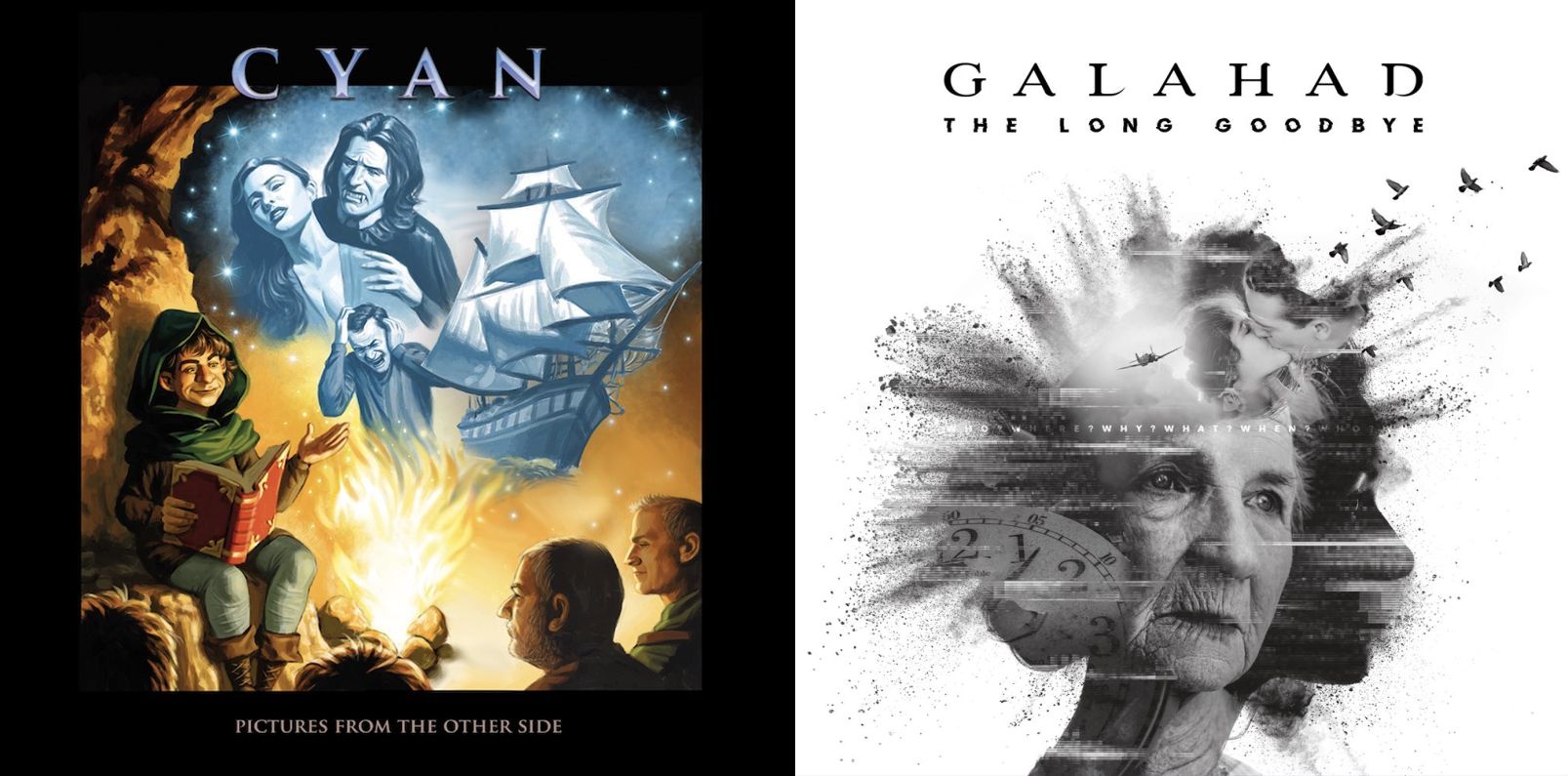
Cyan_Galahad

There are two new releases that have created a buzz here at Spirit of Cecilia: Cyan’s Pictures From the Other Side, and Galahad’s The Long Goodbye. The usual Proglings take some time to share their impressions.

Tad: Gentlemen, I suggested we pair these two albums together, because in some unexplainable way they seem to complement each other. To my ears, both are extremely enjoyable listening experiences, and I’m eager to see what you think of them.

I’ll start things off with Cyan’s Pictures From the Other Side. This is a resurrection of an old Rob Reed (Magenta) project, but it is a totally new sound. What immediately leapt out to me was Peter Jones’ (Camel) terrific vocals. He has a bit of that Peter Gabriel/David Longdon vibe, and he is incredibly powerful. Angharad Brinn joins him on several songs, and her soprano melds beautifully with Jones’ baritone. 

The first song, “Broken Man” is an awesome starter to the set – it begins so softly I can barely hear it, then what sounds like Celtic bagpipes show up, and then the entire band explodes! The melody is first-rate, as well as the lyrics:

A broken man always knows what he’s lost

A broken man always counting the cost

A broken man on his knees always prays out loud,

“Give me one more, give me one more chance.”

Brad: What a great suggestion, Tad.  When it comes to Cyan, it’s hard to do better than either Rob Reed or Peter Jones.  Both are men with incredible vision and incredible integrity, exuding class.  I, too, am really taken with “Broken Man” as the opening track.  I’m so glad that the band didn’t turn it into a three-minute pop song, but instead gave it some real life.  I say this as a compliment–the song lingers when it should linger.  It comes to a head when it should come to a head.

As to influences, I hear a lot of Big Country, a lot of U2, and a lot of The Call.  Not sure if Reed or Jones would see it that way, but all three bands sound like forerunners to me.

It’s probably unfair of me–of all people to say this–but the second track, the title track, “Pictures from the Other Side,” sounds very much like a Bardic Depths song.

“Solitary Angel,” track three, just feels like solid rock, a Journey-esque ballad, but with a bit of Marillion (vocals, especially) thrown in.

Track four, “Follow the Flow,” continues in a ballad-esque way, soft but captivating.  Again, I’m hearing a lot of Marillion in this track.  Delicate without being prissy.

Again, track five, “Tomorrow’s Here Today,” continues the intense but soft sound.  And, again, I can only state this is precious in the best sense.  I feel like I’m holding the most fragile flower imaginable while listening to it.  Then, about ½ through the song, it really, really picks up, becoming a rather blistering prog and rock song.  Excellent guitar work here, but also keyboards, bass, and drums.  The last third of the song feels a bit like a Yes/Jon Anderson track.

Not surprisingly, given its name, the sixth and final track, “Nosferatu,” rocks, possessing a Glass Hammer or post-Neal Morse Spock’s Beard sound.  At nearly 18 minutes long, this track gives everything a prog fan would want.  An amazing journey through music.  The keyboards and guitar are especially well-finessed!  Towards the end of the song, there’s even a glorious Star Wars moment!  Or, maybe it’s inspired by Queen.  Regardless, it’s epic.

Tad: Brad, that is very perceptive of you to make the connection to 80s groups like U2, The Call, and Big Country. I did a little research, and these songs were actually first done on Cyan’s second album in the early 90s, and then rerecorded for this album. 

I agree with you that the overall sound of Pictures From The Other Side is good, solid rock. It is definitely prog, but prog grounded in the tuneful hard rock of the 70s and 80s. I think we both give it a strong recommendation for our readers.

Okay – on to Galahad’s latest! Brad, I am so impressed with the music Galahad is producing these days. I thought their previous album, The Last Great Adventurer, was terrific, and the song, “Blood, Skin, and Bone”  off of it was just fantastic.

Their latest offering, The Long Goodbye, is just as strong. The title track, in particular, really moved me. I think it is about saying goodbye to a loved one who is dealing with senile dementia, and it is an outstanding track.

I also think the first three songs are a 1-2-3 tour de force. The opening track, “Behind the Veil of a Smile” is a synth-laden beauty that sets the energy level at high. It has an addictive hook for a melody, and I hit “Repeat” a couple of times before I even listened to the rest of the album! The second song, “Everything’s Changed” is just as good – a perfect mix of retro synths and crunchy guitars. The third track, “Shadow In The Corner” is my favorite. Once again, it starts with some retro-sounding synths and sequencers before a killer guitar riff jumps in. This is the kind of music U2 should be making now! As a matter of fact, I think that’s what links the Cyan album to this one – they both take what’s best from 80’s rock and combine it with 21st century production sensibilities. In both cases, there is no question of sounding nostalgic or cheesy – both groups have an appreciation for the music that was made nearly 40 years ago (Oh my gosh, can you believe that?!) and have brought it into the contemporary prog scene.

Brad: Dear Tad, I very much appreciate your enthusiasm regarding the new Galahad.  I must admit, it’s taken me a bit longer than usual to appreciate.  I’m on several listens now, and I like it very much, but I’m still–even after numerous listens–surprised by just how electronic the album is.  Galahad has had this side to them as far back as I can remember, but it was always on the sides and in parts of the albums rather than at the core.

“Behind the Veil of a Smile” reminds me very much of Steven Wilson and Porcupine Tree but without Wilson’s trademark scratchingly-hard guitars.  And, I very much appreciate the lyrics, which Galahad always excels at writing.

Track two is really pop excellence, reminding me a bit of New Order, especially from the mid-1980s.  The refrain, “everything is changed and nothing will ever be the same again. . . the same again” is pop perfection.

I like very much how track three, “Shadow in the Corner,” steps back from the hyperactivity of the first two songs and gives us something intense and low.  Again, I’m very much reminded of New Order and, even possibly, all the way back to Joy Division, especially at the beginning of the track.  After about a minute, it resumes hyperactivity, becoming a more “mainstream” Galahad song.

Track Four, an acapella-esque folk song, “The Righteous and the Damned,” lovingly takes us back to Galahad’s masterpiece, “Empires Never Last.”  The middle of the track sounds very central European, right before becoming a brilliant flaring guitar track that sounds very much like Fish-era Marillion.

The longest song on the album, track five, the title track, “The Long Goodbye” incorporates a number of different musical styles.  As you note, Tad, the song deals with the very difficult topic of dementia and Alzheimers.  It is a beautiful wrought exploration of the subject, and Galahad should be praised for handling it with such class and delicacy.

Track six, “Darker Days“ takes us back to pretty straight-forward Galahad electronica, sounding here like a harder version of 1980’s Asia.

The album ends with “Open Water,” a gorgeous and gentle tune and ballad–absent all electronica and ending the album on a positive note.

Tad, I’m in full agreement with you, Galahad has very successfully bridged the past and the present with The Long Goodbye.  What seemed jarring to me on the first listen now seems incredibly complex and clever on the 10th listen.  This album took a bit to grow on me, but now that it has, I’m deeply thankful for it.

Tad: Brad, I don’t have as much experience hearing Galahad’s music as you do, so your perspective is very interesting. The Last Great Adventurer was my first exposure to them, so, as far as I’m concerned, the electronics are all good! I hear the New Order vibe you mention, and I think that is a feature. Hopefully, we’ve put enough distance between us and the 80s to appreciate the innovation and variety in music that blossomed during that decade. Yes, some music from then can sound “dated”, but that doesn’t mean it wasn’t great music.

Okay! So it looks like we have two thumbs up for both Cyan’s and Galahad’s new offerings. Dear Spirit of Cecilia readers, take some time to check these two albums out. And, like Brad, give yourself time to really absorb them. They will repay the effort – we promise!