Ross Douthat is a New York Times columnist who opines regularly on issues of morality, faith, and culture. His latest book, Believe, is an interesting entry in the crowded catalog of Christian apologetics.
Douthat chooses to devote most of his book to making the case for a higher reality than the one we can measure scientifically. As he puts it in the introduction,
Whatever mysteries and riddles inhere in our existence, ordinary reason plus a little curiosity should make us well aware of the likelihood that this life isn’t all there is, that mind and spirit are just an illusion woven by our cells and atoms, that some kind of supernatural power shaped and still influences out lives and universe. (p. 7)
Believe is not a long book – eight chapters, 206 pages – but it is packed with weighty argument and evidence for a “supernatural” reality. The chapter titles outline his thesis:
The Fashioned Universe
The Mind and the Cosmos
The Myth of Disenchantment
The Case for Commitment
Big Faiths and Big Divisions
Three Stumbling Blocks
The End of Exploring
A Case Study: Why I Am a Christian
What is welcoming about Douthat’s approach is his invitation to simply accept the evidence around you and acknowledge that some sort of creative intelligence is the likeliest explanation for our universe. He doesn’t even get into why he believes Christianity fits the bill until the final chapter. As a matter of fact, he posits that belief in any of the major religions – Judaism, Christianity, Buddhism, Islam – can lead a person to ultimate truth better than nonbelief:
Your choice might be the wrong one ultimately but the right one for you in that moment, or the wrong one but with enough that’s right in it to make an important difference in your life. And if, in the end, your initial conversion doesn’t convert you the the true faith, the religion you enter will have hopefully acquired enough truth and wisdom in its long development to make a ladder upward, from the mire of meaninglessness and the snares of indecision toward whatever the full plan of your life is meant to be. (p. 149)
In The Mind and the Cosmos chapter, Douthat points out that
It isn’t merely that the universe appears improbably fine-tuned to enable our existence. It’s that our own consciousness seems improbably capable when it comes to discovering that fine-tuning, like a key fitted to a lock. (p. 61)
In other words, it’s a miracle that the universe is habitable for us and we are able to discern that habitability.
From that basic argument, Douthat builds his case, eventually addressing three “stumbling blocks” that prevent people from believing in God:
Why Does God Allow So Many Wicked Things to Happen?
Why Do Religious Institutions Do So Many Wicked Things?
Why Are Traditional Religions So Hung Up on Sex?
His answers to these questions are thoughtful, comprehensive, and convincing.
It isn’t until the last chapter that Douthat makes the case for Christianity as the best explanation for reality and how we should live. As he acknowledges, he’s a Christian because that was the dominant religion of the culture in which he was raised. At no point in the book does Douthat promote Christianity at the expense of the other major religions (although he is careful to warn the reader against getting involved in cults or Satanism!). This fair-minded approach is very effective, in my opinion, making his points hard to refute.
Believe is the latest in a long line of Christian apologetics (the first of which is probably Augustine’s Confessions, but I’m not sure), but it is somewhat unusual in its acceptance of other ways of reaching the truth. Douthat is primarily concerned with winning people over to a belief in a Creator God who cares about his creation. Once one has made the commitment to that belief, Douthat is confident that a sincere seeker will eventually be rewarded with a greater understanding of how we should order our lives, and, as a result, live much more fulfilling lives.
“To believe that there must be a Creator is merely a lack of imagination, but to go so far as to think that he cares about humans at any level strikes me as supremely arrogant.” A non-believer.
Ah, of course, but it is a fond hope of many. However, it is a matter of faith, not science. And yes there is much pride and arrogance in religion -this is a grievous fault. I have no final answers …there is great mystery in life and death and creation. RICHARD K MUNRO
NON-BELIEVER: “I agree about mystery — it seems to me that confronting life, the universe, and everything head-on with reason is more powerful and more honest and more challenging than relying on faith to explain away certain mysterious aspects of nature.”
·
Richard K. Munro:
“That is the enlightenment view. But as a survivor who has seen death and killings and has beaten cancer and unemployment and near homelessness, I am glad to say that man’s final weapon -prayer is a powerful instrument. “Except for the Lord the watchman waketh in vain.” (Ps 127)
(Friend )MurphyWong:
Richard, if God did not exist, he would have to be invented for people like you and me, for we have become “fine-tuned” for God.
San Joaquin Valley, California, USA February16, 2015 and 2025
As I have written before there aren’t many atheists in foxholes.
Hard experiences in life -brushes with death- tend to bring out the religious and philosophic view of life. We accept many things on faith. God’s voice is not audible to all. Someone hard of hearing in his soul will not hear God speaking. Jesus said, “Let him who has ears hear” (Matt 11:15) The Manichees, like Tom Paine, were proud of their emancipation from tradition and boasted they had no need to defend their teachings by appealing to tradition, authority, or any sacred scriptures. For them reason alone was sufficient.
But as I have said we all rely on faith, for example for historical knowledge. There is no way to prove that Caesar was murdered by the Senators or Cicero was executed by Mark Anthony. We know seven times seven is 49. But any event that happens in the long past of human history is always dependent on sources which are someone else’s word. The distinctive feature of historical knowledge is that it is based on testimony or sources that are “worthy of trust.” The rest usually works itself out. That’s true for the historical examples, but frequently NOT true in science. Often there are direct remains from past events (e.g., fossils, geological formations), which can be examined firsthand, not having to take someone else’s word for it. And in astronomy, we see the past directly, due to the time it has taken for light from distant objects and events to reach us.
I recall Augustine spoke of AUTHORITY in his discussion on faith. We owe our beliefs to a large extent on AUTHORITY. I am for example an authority on Spanish grammar and accentuation (I’=am an AP Reader for ETS in essays). But all my life I have relied on Spanish grammars and dictionaries. In everyday life, we all have to accept the authority or special opinion or knowledge of someone else. Without faith, that is without confidence in the truthfulness of others, the “sacred bond of the human race” would be broken. Nothing is stable if we are stubbornly determined to believe NOTHING can be believed with absolute certainty. As a teacher my student has to believe me that I know English grammar that I know Spanish grammar and that I know things about history.
I wanted to clean my DE pool filter. At first I wanted to rely only on my reason. But upon examining it I determined I needed the advice of someone with experience in cleaning DE filters. I did research on the Internet and found a “how to do it with photographs.” And with the help of my wife I did it. But I also learned that by doing what I did I risked permanently damaging the filter and making it useless.
I determined that it wasn’t worth it to spend almost seven hours cleaning and reassembling the filter. So I pay a certain amount of money to a workman who is an expert in this. Now I watch him to see what I can learn but I know what I can do successfully and without economic risk and what is not worth the economic risk.
In other words, I have learned that reason alone is not the way to fix my roof or maintain my car. Because not all can be known. But I was glad for the experience. I have learned a lot about pool maintenance and do most of it myself. However, I seek the experience of experts and specialists to resurface the pool or repair the pump and vacuum. Those things I can clean and maintain and troubleshoot but I know the limits of my skill and knowledge.
Authority in religion at its best and wisest does not impose or coerce.
Similarly, I cannot command someone to learn Spanish or English. I can only invite them to enjoy the wonderful adventure it is to learn and study and use languages. I delight in my grandchildren writing me notes in Spanish and the best I can do is praise them and encourage them!
A good teacher does not strong arm students and say like Hitler OBEY ME because I AM THE TEACHER. A good teacher is patient and earns the confidence of his students by experience ,by reputation, my knowledge, by insight and of course by the truth. And a student cannot merely memorize (or cheat); he has to understand and understand how to learn. I think there can be no knowledge of God without faith for faith is the only way we can know God. Faith in this life is always incomplete. As Paul said, “Now we believe in part.” “Happy is the people whose God is the Lord.” PS 144·
FAITH vs REASON. I remember as a young man tending towards the enlightenment/skeptical/Tom Paine point of view.
But I was never entirely atheistic. I tended towards agnosticism-perhaps I still do.
But life experience plus Thomas Merton plus C.S. Lewis plus Chesterton built upon what tendency I had towards Christianity. I also experienced directly and indirectly sectarian hatred of evangelical Protestants versus Catholics and hatred towards Jews. (as a young man I had little or no contact with Mormons, Muslims or Buddhists) This hatred and prejudice almost turned me against religion entirely.
But then I gradually realized that the sectarian feeling of Irish Catholics against Scottish Protestants for example was more political and nationalistic than theological. And similarly, hatred of the Jews was pathological and based on jealousy. I have always felt Christians ought to be very grateful to the Jews for giving us the philosophic and literary and religious basis of our faith. So falling into a prideful hatred of others is an unfortunate tendency found in many but one we should reject.
But the true message of Christianity is love. I did not really understand love as a boy or young man. When Eros awoke in me in my teens I sensed that kind of love was the most powerful love.
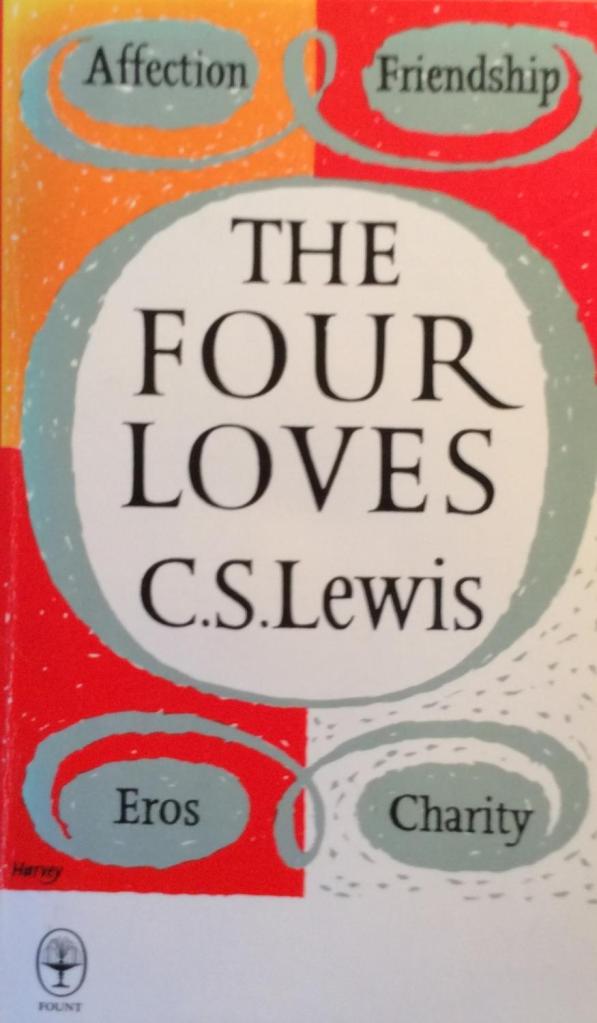
However I became aware of the fact that there were many kinds of love -I am sure you know them -storge for affection, agape (caritas) for altruistic love or care for others, philia or the love of comrades or friendship and of course eros or erotic physical love. Philia love I learned both in the service and as a faculty member at my schools and as a coach. Storgic love and agape love I learned from my mother; eros became a fixation in late adolescence as I became physically infatuated with women aged 16 to 30 plus. I suppose I always like mature women more than silly girls so even as a young man voluptuous 30-something women were very attractive to me. But I quickly learned that erotic attraction was as much a thing of imagination and passing fancy as anything else.
And I found, in my experience, most very beautiful women were not necessarily kind or good. But I was lucky in a way. I did not travel in rich circles and nor did I have much money of my own or glorious career aspirations. So the most physically beautiful women just passed me by and did me a favor.
And of course looks don’t last. Some women have a high lifetime batting average -they are attractive from age 17 to 60 and some are flashes in the pan who lose their looks and figures early . There are women who are stunningly beautiful from late adolescence until their early20’s and then completely let themselves go. I could tell you stories of my near escapes.
But I think it true that I was basically a kind man who did not take advantage of women or mistreat them. If anything women used their sexuality to take advantage of me (at least briefly). But I was wise enough not to get caught up in that honey trap. It is a card women play if they really want something. But of course unless they aren’t sincere it isn’t worth much.
If a man wants a spouse for life -he should choose character and someone with a prospects of a good lifetime batting average for attractiveness.
Money per se was not important to me. I think to marry for money is even more stupid than to marry for sex. One should avoid people who have MONEY PROBLEMS (huge debts; spending problems). But one should ignore financial gain when one marries. It is better to marry for love ,in my opinion.
My father said to me, “#1 never date a woman who would not be a good mate -you won’t get dragged down or distracted that way.
#2 Look at the mother and aunts. That probably is that the daughter will look like in her 30’s 40’s and 50’s. Say to yourself if you would be satisfied with a woman like that.” I think this was wise advice. I also think the family of a woman (or man) says a lot about that person. My wife, for example, was the favorite niece of her uncles, and much beloved by her grandfather.
She was very kind to her younger cousins; she was involved in teaching young people in a religious youth program. She was religiously devout much more so than I was. But gradually I changed my views and realized I was comfortable with her worldview and I wanted to share her faith totally. I had seen a lot of divorce a lot of bitter breakups in New York and I did not want that to be part of my life. We talked about marriage and she considered it a sacrament something holy and something for life.
Of course, that was exactly how my non-Latin but Catholic parents and grandparents felt and I realized that my views on marriage were strongly influenced by my parent’s experience even though I did not, at the time, think those values were especially “Catholic” merely “traditional.”
Of course, in my life it was a balance between character and intellectual interests and sexual attraction. I knew women who were attractive to me but I was not attractive to them “no chemistry”they said.
And similarly I liked women who were nice, had nice families and were good cooks and pleasant companions but I didn’t think we could ever have children. In this case there was little chemistry on myside. One need not burn with erotic passion like a wild rutting beast all of one’s life but I think it is good to have shared young passionate love with a spouse. The memory of that passion and that oneness is the basis for a sense of permanent connection and gratitude, particularly when that passion is not merely what my grandfather called “dud in the mud sex” that is contracepted sex that produces no children.
I suppose for me the chief qualification for a woman is that I wanted her physically to be the mother of my children and spiritually and intellectually the mother of my children.
I crossed out any ZPGer’s or Radical Feminists and it is true that in time when on I only dated women from my faith tradition. I tried to date women from other backgrounds but our philosophies of life were too different. In variably we would argue. I was called “medieval” (and worse).
I found personally, that I liked Latin women better than the American women I met chiefly because they had more traditional values and I realized as a son of an immigrant I had more traditional values than the average New Yorker, certainly.
Interestingly enough my son also married a Latin and our daughter also married a Latin. It is a cognate fact that no one in my family for a thousand years has married a native-English speaking woman. Of course, my people came from the fringe of the English-speaking (and Protestant) world. Prior to 1890-1920 most of my family were non-native speakers of English. Because of this we have always tended to be “amphibious” and cosmopolitan. Working in Latin America we learned Spanish; living in Canada we learned French. Serving in the 27th Division (1914-1919) my grandfather learned spoken Hindi and Punjabi. Serving in the Philippines, my father who already spoke French learned Spanish and Tagalog. Even as we lost to old language we retained an openness and interest in other languages and a love of music, song and poetry. So I can never remember a time when I lived in a monolingual English-only household. There is no question as a Gael (by ancestry) I feel a connectedness to the ancient bonds of Christendom and to Rome. We never looked exclusively to London or Paris or New York or Washington.
And I suppose if one grows up with stories of saints and missionaries one never loses that connectedness entirely. And like a loadstone, the wandering heart drifts back to true north.
And faith and love. My grandfather came to America with very little except a strong faith and a strong desire to work and thus remain free. Though we no longer share his nationality nor his native language with our children I think he would be very satisfied that we were ‘bydan free’ (saorsa gu brath/ forever free) and that we were stable in our faith traditions. I believe his faith inheritance was more important to him than his race or nationalist considerations. This is expressed in the fact that he did not marry a woman of his national origin (nor did I). There was never a question that we would marry people only from his region of Scotland or his language –in our faith life there were people from every race and every corner of the globe. And in the 21st century I fully expect to have grandchildren who bear the races and lines of many peoples and three or four continents. But as my grandfather, Auld Pop, used to say, “the important thing about grandchildren is HAVING THEM; the next important thing is that they are HEALTHY; the last important thing is that they are LOVED and CARED FOR.”
The rest usually works itself out. That seems REASONABLE TO ME by experience
But It all began with FAITH that all will yet be well and knowledge that one of the most powerful wisdoms is REVERENCE FOR LIFE and REVERENCE FOR GOD. The earliest Bible quote I knew was this: “DREAD GOD and OBEY his commandments for that is the whole duty of man. “
“How much better to get wisdom than gold, to get insight rather than silver!” Proverbs 16:16




 Spirit of Cecilia
You must be logged in to post a comment.